
At first glance, Teachers Pay Teachers, a monetized lesson plan site, appears to be a win-win offering. There are lesson plans and educational materials marketed by vendors (teachers) who make a small profit on the sale.
The first win is for the teachers selling the plans. Many teachers could use extra income from selling their lesson plans on monetized sites. Perhaps that extra income may even be put back into the classroom in the form of resources for students.
The other win might be in the time “saved.” With a few clicks, a hit on the Paypal or credit card, there can be a complete set of prepared materials delivered to a teacher’s inbox.
From this perspective, a monetized lesson plan site could be compared to a fast food restaurant, a solution for teachers who did not have the time to prepare lessons. And just as there are different kinds of fast food restaurants, there are menus of grade level prepared lessons in multiple content areas that can be fed to students at minimal cost.
These purchases offer immediate gratification. A solution with little to no effort. No mess to clean up. Problem solved. ..(and fries are delicious!)
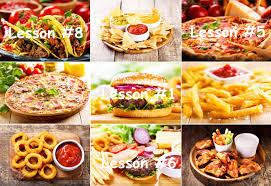
But too much fast food is bad for you. That is a fact.
Fast foods are high in calories, fat, salt, and sugar. Fast food is linked to health risks (Type 2 diabetes, heart disease). Fast food is associated with weight gain and obesity.
Curricula Weight Gain
A similar weight gain is happening in classrooms.
If a teacher feels there is not enough time to prepare lessons or materials, the option of a complete take-out lesson can be appealing…and that’s how these materials are marketed:
- “…requires NO PREP!”
- “A lot of time and effort went into this product!”
- “Exhausted by prep?”
- “Tired of spending nights and weekends reinventing the curriculum wheel?”
Creating good lessons takes time, and the promise of reduced planning time is enticing. Emergencies happen. Substitute teachers need direction. The computer lab is not available. For realistic reasons, an occasional stop into the lesson take-out market is tempting. Such a purchase can have a mental health side effect in reducing teacher stress.
But for those school districts that already provide grade-level curricula or a scripted program to teachers, those materials purchased on monetized websites have the potential to increase the full helpings in a curriculum by adding more…bell-ringers, task cards, handouts, packets and worksheets, worksheets, worksheets. Each stop in the lesson take-out lane can contribute to a glut of activities.
Ironically, the grade level curriculum is not the only thing getting fat from these extra helpings. Adding materials increases a teacher’s workload: finding, downloading, copying, preparing, and distributing. That pile of handouts will result in a pile of student work to correct and grade. Even when teachers use these activities as a timesaver, they might require more time to correct.
Then there are the other questions: Should any purchased material carry the same weight in assessment as the materials that a school district provides in a curriculum? Are these materials providing valuable data on student performance that can inform instruction? Are materials differentiated for student ability? OR are they busy work, empty calories collecting in unit binders?
Sadly, for under-resourced schools with few materials, the stuff on a monetized website might be the curriculum.
“Why remake the wheel?”
Teachers have always shared materials. But the reality is that the person doing the lesson planning is the person who understands how the lesson will work in the classroom in meeting the needs of the students. One purchased lesson plan may not fit all student needs.
In addition, there is also no oversight or quality control of the materials online. While a lesson plan shared with the teacher next door may carry credibility, the user reviews on a website from buyers can be suspect. There is no quality control or regulation on the seller’s platform.
Plagiarism and Knock-offs
Regulation might stop the level of plagiarism on monetized websites that border on copyright infringement. For example, the TPT platform claims:
“Teachers Pay Teachers is an online marketplace where teachers buy and sell original educational materials.”
For example, there are links to teachers offering materials that are “based” on the materials in the reading or writing kits from Heinemann’s Units of Study. These kits were developed by Lucy Calkins and other educators. Heinemann’s grade level workbooks and unit sessions (not lessons) explain the purpose of reading and writing workshops in narrative form. Unit guides in each kit detail the assessments, rubrics, and learning progressions. Teachers who read the materials and use the resources provided in the kit should have little need for additional worksheets, slides, or packets.
But there are vendors who offer reduced versions of this material. According to one vendor, “because reading through the narrative from Lucy Calkins in each session can be time-consuming” or from another vendor “you know it can be difficult to grasp everything to teach from the manual.” Given the popularity of academic shortcuts such as Sparknotes, Cliffnotes, or Schmoop, perhaps this kind of offering was inevitable. Nevermind that reading the narrative from the books in the Heinemann kits are what best prepares the teacher to implement the sessions, even if it is hard to grasp.
Then there is the language used to market for these products. One such promotional tag line: “Will have you teaching the Lucy Calkins Curriculum with sniper precision and silky smoothness.” Sniper precision? Silky smoothness? One wonders if vendors understand that the materials are used to improve reading and writing skills, not for something more ominous.
Finally, there are expanded versions of the Units of Study with supplemental materials. Some vendors promote “entire years worth of powerpoint slides” and “extra grammar lessons for writing workshop” neither of which were included by the original designers, probably for a reason. Expansion kits offer extra vocabulary cards, journal prompts, interactive notebooks, and, yes, more worksheets.
The sheer number of these Units of Study knock-offs (2,677 results under a “Lucy Calkin” search on TPT) represent thousands of links to unvetted materials. As a result, school districts that have approved and adopted the Lucy Calkins Units of Study might now have a modified “lite version” or the “fattened version” of the original kits taught in their classrooms.
Heinemann takes notice
Most recently (12/10/18), Heinemann has taken notice. Duplicating their published materials is plagiarism, a practice that should be shunned by any academic enterprise. There is a statement on the publisher’s blog:
“Lifting text, illustrations, and/or charts directly from a published author’s work can be considered intellectual property infringement, as can some adaptations….Although the seller simply intends to offer fellow teachers something ready-made to save time, the material is sometimes downloaded and used by teachers who do not have the original material and will therefore lose sight of the related purpose, intention, and research basis.”
Ironically, there are even Units of Study knockoffs that claim “All rights reserved by the author” including one bold vendor whose repackaged Units of Study bears the warning:
“This product may not be distributed or displayed digitally for public view. Failure to comply is a copyright infringement and a violation of the Digital Millennium Copyright Act (DMCA).”
Unfortunately, Heinemann’s Units of Study are not the only copyrighted materials that have been reproduced or repackaged for resale. Searches for other licensed literacy programs on the TPT website yield the following:
- Wordly Wise (4,018 results)
- Words Their Way ( 172,010 results)
- Sadlier Vocabulary (489 results)
- Handwriting Without Tears (872 results)
- Fundations (2,669 results)
- Patterns of Power (2,672 results )
There may be some original material in those numbers, but there are many knock-offs. Some of these copied materials are as expensive as the licensed originals!
The lesson plan marketplaces were created to support a teacher exchange, putting original ideas out for a small fee. There are vendors who are abiding by this exchange. Many sellers offer creative materials that can enhance a station, center, or activity; bulletin boards have never looked better! Some of these items for sale might spark new ideas that can help novice and veteran teachers alike. But there are also pages and pages of mediocre material that can pack on the pounds and clog the arteries of curricula and ultimately block the delivery of the vetted materials.
Like the tempting commercials of sizzling hamburgers, cheesy stuffed burritos, or frosty mugs of bubbling colas that can be had in minutes, the monetized lesson plan site offers the consumer the promise of a quick, easy serving, especially when the time is limited. But a steady diet of fast food calories is not healthy for the body or for the unit binder. Before investing, teachers should decide if these lessons and materials are just packing on the pounds of busy work. Will these timesavers demand additional attention or correcting? Do they serve the needs of the students?
While there are resources on monetized websites that may make lesson planning easier, there is no guarantee that these resources make lessons better. And while fries may be delicious, if they are consumed regularly over time, they are a health risk.






 Used Books in Class