Archives For November 30, 1999

In New England this winter and in many other areas of the United States, we are experiencing the Polar Vortex, a phenomenon of cold-core low-pressure areas that strengthen during the winter. That is the scientific explanation for the record cold of early 2014.

A literary lens would suggest this uncomfortable freeze is akin to Dante’s ninth circle of Hell detailed in the Inferno section of The Divine Comedy. This last inner circle of Hell is reserved for those whose sins are related to treachery. The ninth circle is divided into four sections, and all sinners are trapped in the frozen lake, Cocytus. Satan himself is frozen waist deep in the lake with an icy wind ensuring his immobility.

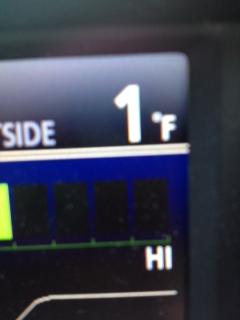
That icy wind sound familiar? Looking at my dashboard this morning, I noted the following temperature reading:

photo (18)Welcome to Hell!

Robert Frost, a New England man himself, considered the destructive power of cold and ice in his short poem “Fire and Ice” (read here by Richard Burton)

Fire and Ice

Some say the world will end in fire,
Some say in ice.
From what I’ve tasted of desire
I hold with those who favor fire.
But if it had to perish twice,
I think I know enough of hate
To say that for destruction ice
Is also great
And would suffice.

Frost’s association of fire with desire is recognizable. There are fires of passion or fires to make something “pure”. One symbol for knowledge is a lamp on fire, and a warm place by the fire is welcome during this recent freeze. Ending in fire may mirror the beginning, if one holds to the Big Bang Theory.

In contrast, his association of ice with hate creates a hostile tone. This association is also recognizable, describing someone as having  an icy heart or with ice in his/her veins leaves an unpleasant impression. The break-up song “Cold as Ice” by Foreigner lyrics state, “You’re as cold as ice/You’re willing to sacrifice our love…”. Economically, there is the dreaded “black ice,” a costly force of destruction on roads that sends thousands of vehicles to body shops annually. Scenes like these have played out all too frequently this year:

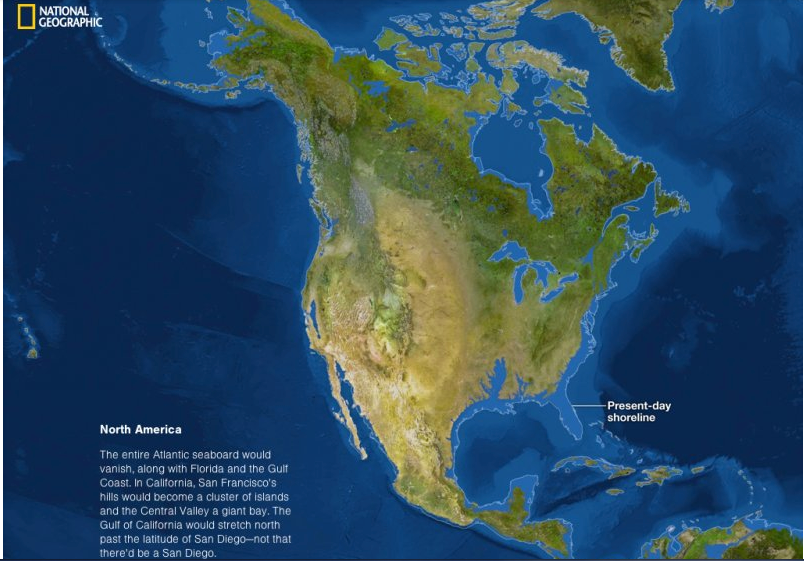
One final destructive power of ice to consider is the “melting” danger. National Geographic featured interactive maps in the story If All the Ice Melted  demonstrating what North America and the other six continents would look like if all the ice in the world melted. The result would increase the sea level by an estimated 216 feet.

Screenshot 2014-02-28 08.06.12

Frost’s short poem suggests that destruction by either ice or fire has the same result. However, I would like to point out that in the above-mentioned ice-melting scenario, my home would finally be waterfront, possibly with an ocean view!

Continue Reading…

January weather forecast? Frigid.
Blogger forecast? Sunshine.
Specifically, “Sunshine Awards.”
Nominating or receiving a Sunshine Award is a way for bloggers to get to know each other. There are unlimited winners to this award because this operates much like the chain letters of old. Get an award from a fellow blogger, and then nominate 11 other bloggers to participate. I suspect that sooner or later, every blogger in the world will be nominated proving the blogging universe has no degrees of separation blogger to blogger.
That said, I was delighted to get a mention….really!!
The Sunshine award does give other bloggers an opportunity to learn about each other, although I am not sure any of the following random facts on me will be useful.
There are five “official” rules (in green):

RULE #1 Acknowledge the nominating blogger:

For me, that was Vicki Vinton of To Make a Prairie “A blog about reading, writing, teaching and the joys of a literate life.” Her blog is an amazing combination of education application and literature tie-ins. Her blog looks so organized and engaging. I know if I am thinking that something might be possible, Vicki proves that what I am thinking is doable. I will reread her posts before I write on a topic (ex: Cautionary Tale Close Reading).You owe it to yourself to visit her blog.

RULE #2 Share 11 random facts about yourself.
Okay…..11 random facts about me:

a. I have 31 nieces and nephews (no twins) from my eight younger brothers and sisters.

b. I made my prom dress in high school; I thought pink calico was adorable!

c. The famous clown Emmett Kelly, Jr. patted me on the head when I was a toddler; I am terrified of clowns.

d. I learned to drive a stick shift on my family’s white 68 VW bus that we called “Moby Dick”; consequently, I also know how to jump start a car with a stick shift.

e. I have one “attached” ear lobe and one “unattached” earlobe which is not the genetic abnormality  you might think.
Kindergarten

Kindergarten narrator

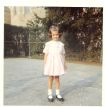
f. I was the “lead”narrator in my kindergarten play which surprised my mother and father. NOTE: I am still comfortable onstage.

g. I can recite Marc Anthony’s speech from Julius Caesar III.i.253-275(“O pardon me, thou bleeding piece of earth…”) because my high school teacher made me memorize a soliloquy.

DSCN0868

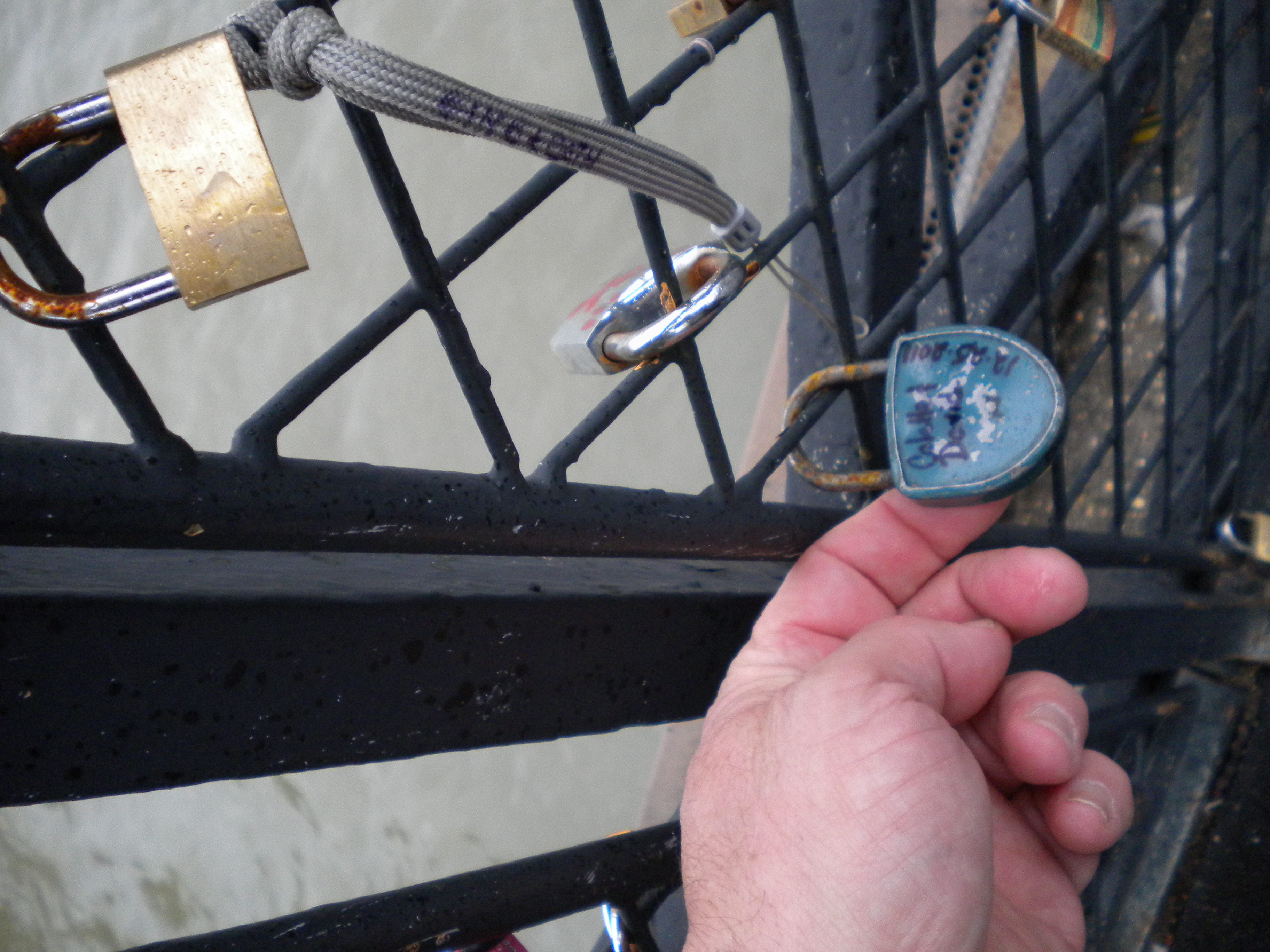
Lock on the Pont L’Archevêché in Paris

h. My husband and I (married 32 years) left a lock on a bridge fence in Paris near Notre Dame in 2011.

i. I tear up at at flash-mob videos. Example? (USAirForce Band at Air & Space Museum)

j. I buy white cars because I want to be seen at night. Paradoxically, these cars always look cleaner than black cars.

Haunted House

My Halloween Haunted House

k. For many years,I had a haunted house for Halloween in my barn while my two sons were young. Now, I shut off all the lights on October 31st and pretend I am not home.

RULE #3. Answer the 11 questions the nominating blogger has created for you.

(Yikes….11 more facts? Aren’t you tired of all this?)

1. What book would you want with you if you were stranded on a deserted island?
How to Build a Ship and Navigate if You Are Ever Stuck on a Desert Island. The more romantic answer, however, would be James Joyce’s Ulysses or Ulysses S. Grant’s letters. Both are on a “to do” list that would require hours of uninterrupted reading time (the connection to Ulysses trying to get back home should not overlooked either…)

2. What did you learn from your mother?
I learned how to cook for a family of eleven; food was plentiful at our dinner table. Cooking is a great skill, but this early training resulted proportion miscalculations and substantial weight gain for my husband. I just cannot get used to cooking for two.

3. Where do you write?
There is a small table in my kitchen where I do much of my writing, but when the weather is nice, I will write on my back patio table. I imagine if I was driving by, I would think, “Oh! I would like to be writing there!”

4. Where do I find joy in my classroom or my work?
When I hear a student correct another student by saying, “a lot is two words.”

5. What do I do to recharge?
I watch movies. I am a movie addict which is not surprising given my addiction to stories.

6. What was my favorite book as a child and why did I love it?
Without question, my favorite book as a child was Little Women. I am the first born, the practical Meg, but in my heart, I am the second born Jo March.

7. If you could have dinner (or coffee or drinks) with anyone living or dead, who would it be and what would you want to ask him or her?
Sister Ella, my first grade school teacher who taught me to read. I want to know if she predicted my interest in reading. She was incredibly -almost frighteningly- tall, and I could never tell if she was smiling or not.

8. Do you have a quote that you keep (in your mind, a notebook, a pocket, your desk, etc.) that captures something that seems important to you? If so, what is it?
The most recent is by Carl Sagan, “What an astonishing thing a book is. It’s a flat object made from a tree with flexible parts on which are imprinted lots of funny dark squiggles. But one glance at it and you’re inside the mind of another person, maybe somebody dead for thousands of years. Across the millennia, an author is speaking clearly and silently inside your head, directly to you.” That’s impressive.

9. How do you feel about the age you are currently in?
Emotionally, I am fine with being 57. I have come to terms with things I will never accomplish (play piano, hike the Appalachian Trail) and still hopeful on other things I want to accomplish (PhD in English, speak French). Physically, I am surprised at how often I need to get up from reading or writing so I don’t get stiff and cramp up. Mentally, I am surprised that 57 sounds old, but 58 sounds wise.

10. What are you afraid of?
I do not like turning off the lights downstairs. To this day, I will race up the stairs as if something is chasing me.

11. If you could go back to one moment in time, when & where would that be & why?
In Our Town Thornton Wilder cautions against revisiting the past; the character Emily finds it too painful. Therefore, I would choose to relieve something I did as a child but not go as myself. I would go back to the 1964-65 World’s Fair in NYC and spend the day with all the exhibits that “predicted” our future.

Now for the fun part:

RULE #4. List 11 bloggers. They should be bloggers you believe deserve some recognition and a little blogging love!

NOTE: Should any of the following bloggers want to accept this award WITHOUT the chain letter-like activities, they have my permission. I have no demands for their participation in what could be a Ponzi-scheme of blogging. These bloggers represent a cross-section of  Bloggers and Tweeters that I read regularly.

 HOWEVER, readers who visit these blogs will benefit. I learn so much from all of these writer/educators…I feel their “love”:

1. First and foremost, my dear friend Catherine Flynn blogged so often in 2013 on Reading to the Core that I could not keep up. I walk with Catherine on the weekends (and I can hardly keep up!), so I am always interested in how our conversations show up in a post. She is a literacy specialist…and a specialist in keeping me focused on the real issues in literacy.

2. I love Bryan Crandall, Connecticut Writing Project (CWP) Director at Fairfield University. He supervised my CWP experience in 2012. His blog this year is Creative Crandall and his entry for January 1st, 2014, reads: “I will spend the next 365 pontificating what creativity means to my world, the people I love, the students I work with, and the teachers that need desperate rejuvenation. The goal is to counter the dreary, maddening, and absolutely criminal doings of governmental leaders and corporate partners who are undoing public schools.” Love that.

3.  Another amazing Connecticut Writing Project Director is Jason Courtmanche at the University of Connecticut. His blog is The Write Space. His posts on Facebook/Twitter alert me to any gem I might overlook in the news that is tied to literature/education. He has worked very hard to outline the transitions of Common Core State Standards to the Early College Experience at UCONN for hundreds of high school teachers.

4.  I met Kate Baker of Baker’s B.Y.O.D.– Bring Your Own Device, Dog, & Deconstruction of Literature in person at the Council of English Leadership (#CEL13) this fall. I had seen many of her posts/tweets. The meeting was kismet…in minutes we had covered The Odyssey, Moby Dick, and other classics. She gave a dynamite presentation of Stop Bleeding Red Ink! at the conference. (FYI: Kate already has posted 11 random facts about herself on her blog!)

5. My mom is in Idaho…and so is Glenda Funk at Evolving English Teacher. I first read her entries on the English Companion Ning; then, I stalked her at the National Conference of English Teachers in 2011.  I LOVED her post about the impact of high school sports on academics: “What We Don’t Talk about When We Talk about Ed Reform in the U.S.A.” In that post she discusses the everyday impact of sports from practice schedules to concussions. Very informative.

6. I read Judy Artz at her blog  Intergrating Learning and Technology-“Here you will find ideas for promoting literacy through the use of technology.” I met her in person also at Council of English Leadership (#CEL13) where I greeted her as an old friend. That is because she tweets (@JudyArtz) at a rapid fire pace, and sometimes mentions me!

7. I also met Daniel Weinstein of The Creativity Core at the National Conference of Teachers of English (@NCTE13) this November. I have used his ideas in my classroom, especially the semantic mapping, with enormous success. The blog is gorgeous with student work as exemplars.

8. Guilty pleasure? The observations of the Anonymous Blogger @ English Teacher Confessions. Entry “This book made me vomit” about Cormac McCarthy’s Child of God is an intriguing homage to McCarthy’s genius as well as a warning. Reading this post will give you an appreciation for this blog writer’s style…who is no slouch herself!

9. Buffy Hamilton, former high school English Teacher and current school librarian, writes at The Unquiet Librarian. She provides interesting and very practical ways to engage students in literacy (Writing Around Texts) through this dual lens. I am more appreciative of advice from educators who have actually been in a classroom.

10. I have participated in the “Slice of Life” challenge series originated by Ruth & Stacey:Two Writing Teachers this year. I admit, I do not always follow the rules (responding to others?!?), but I appreciate their tireless support of teacher writing. I have found that writing my blog (and slices) are the most educational experience I can have. They are to be congratulated for pushing teachers to engage in writing regularly.

11. Not sure where to start? Try The Reading Zone, Sarah Mulhern Gross who writes, “My blog focuses on reading, with a lot of writing and writing workshop thrown in. I also talk about my classroom and classroom projects.” What makes her blog even more legit? She is a regular contributor to The New York Times Learning Network Blog, my “go-to” spot for literacy in content area classrooms. (See how I snuck in two blogs on one entry?)

RULE #5. Post 11 questions for the bloggers you nominate to answer and let all the bloggers know they have been nominated. You cannot nominate the blogger who nominated you.

Here are Vicki’s 11 questions to me, and they are as good as anything I could design. I am plagiarizing them:

  1. What book would you want with you if you were stranded on a deserted island?
  2. What did you learn from your mother?
  3. Where do you write?
  4. Where do you find joy in your classroom or work?
  5. What do you do to recharge?
  6. What was your favorite book as a child and why did you love it?
  7. If you could have dinner (or coffee or drinks) with anyone living or dead, who would it be and what would you want to ask him or her?
  8. Do you have a quote that you keep (in your mind, a notebook, a pocket, your desk, etc.) that captures something that seems important to you? If so, what is it?
  9. What are you afraid of?
  10. How do you feel about being the age you currently are?
  11. If you could go back to one moment in time, when & where would that be & why?

So, dear selected Sunshine Award recipient, here is YOUR choice. You can answer any or all of the 11 questions listed above OR (and I am breaking the rules here) answer this ONE important question….

1. Why write on a blog?

Thanks again, Vicki of To Make a Prairie….this was fun to do on a bitterly cold winter afternoon!

Expecting allusions to Herman Melville’s Moby Dick during the National Teachers of English Conference (NCTE) is like (pardon the pun) shooting fish in a barrel. Okay, I know…the whale is a mammal, but once this white whale has been sighted, he keeps surfacing!

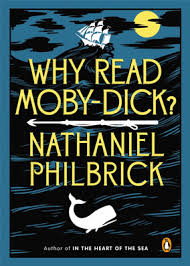
First Sighting: Nathaniel Philbrick’s 2011 slim book Why Read Moby-Dick?

Moby DickThe exhibitors at the NCTE conference were interested in putting books into the hands of teachers who would then put books into the hands of student readers. Once such vendor enthusiastically suggested the book based on its size; “See. you could carry this  book around the convention and hardly know it’s in your bag!”

He was right.  Philbrick’s 127 page argument as to why “this classic tale waits to be discovered anew” fit nicely in my convention bag and was perfect for reading during breaks between sessions.

The book is divided into 28 short chapters each devoted to topics such as setting, characters, or themes. Chapter titles include:

  • Nantucket
  • The View from the Masthead
  • A Mighty Messy Book
  • Queequeg
  • Pulling Dictatorship Out of a Hat

Philbrick is already familiar with the real life incident that was the inspiration for Herman Melville’s literary classic. His non-fiction book In the Heart of the Sea: The Tragedy of the Whaleship Essex in 2000 recounts the loss of the whaling ship Essex in the Pacific Ocean in 1820.  Heart of the Sea won the National Book Award for non-fiction that year, fleshing out the details of the whale attack on the boat, the fateful decision to avoid islands allegedly populated by cannibals, and the ironic turn to cannibalism that claimed the lives of several surviving crew members.

In Why Read Moby Dick?, Philbrick turns to the literary contributions Melville gave American literature, particularly in the creation of Captain Ahab, who in a pre-appearance had been rumored by other sea captains to have “been in colleges as well as ‘mong the cannibals.” In one chapter, “The Anatomy of a Demagogue”, Philbrick analyzes Ahab’s rhetorical craftiness in convincing the crew to hunt and kill the white whale. In discussing first mate Starbuck’s stunned realization that the Pequod is not out on a commercial venture, but rather a mission to settle the score of Ahab’s lost limb, Philbrick engages in a cross-culture reference that is both humorous and insightful:

Starbuck responds by asking what Ahab’s vengence will get ‘in our Nantucket market?’ It’s then, to borrow from the film This is Spinal Tap, that Ahab dials his charisma to eleven. ‘But come closer, Starbuck,’ he says, ‘thou requirest a little lower layer?’ It’s not about the money, he explains; this is personal. Thumping his chest he cries out. ‘My vengeance will fetch a great premium here!’ “(40)

Philbrick also aligns the story as a metaphor for the political turmoil of the United States. In discussing the chapter where Stubbs, the second mate, raises a shiver of sharks by cutting into a whale for a steak, Philbrick writes,

“The job of government, of civilization, is to keep the shark at bay….Here lies the source of the Founding Fathers’ ultimately unforgivable ommission. They refused to contain the great, ravaging shark of slavery, and more than two generations later, their grandchildren and great-grandchildren were about to suffer the consequences.” (78)

Philbrick moves between cultures, between ideologies, between philosophies, and theories in order to encourage more people to actually read Melville’s great American novel. A encouragement that may be necessary, because soon after I received the book, I had whale sighting #2.

Whale sighting #2:  A statement during a key note address at the Conference for English Leadership (CEL):

“We all know the opening line of Moby Dick, but how many of us have actually read the book?” posed speaker Donalyn Miller to the crowd of English teachers. There was a murmur of agreement, and more than a few guilty looks. Miller was discussing her passion and the topic of her two books: how to get students to read for school and independently.

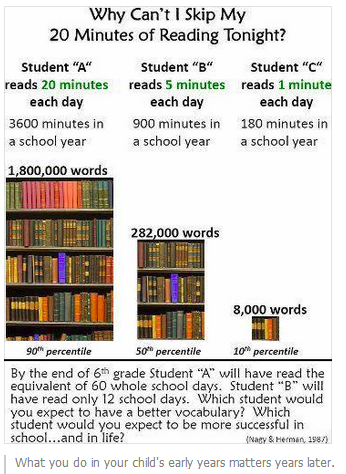
20-minMost notably, Miller is known as the author of The Book Whisperer and the recently released Reading in the Wild. Her keynote address was to encourage students to become the independent readers that could-on their own- pick up a tome like Moby Dick. She discussed the characteristics of “wild readers” and pushed teachers to engage students in examining their reading lives. She advocated for literacy rich environments for students to develop the habits to make them life-long readers. Miller’s assertion that preparing students to read independently is the best guarantor of standardized test success was supported with the graphic she presented. (see left: Nagy & Herman study).

Her point about Moby Dick was that most people know the first line, “Call me Ishmael,” but only those who live literate lives know why the book is so critical to understanding American literature. Students who have not developed the reading endurance necessary for the book may be turned off by both the intimidating size and the 19th Century styled language of the text. Considering that most high schools shy away from teaching Moby Dick to anyone but their best students means that the novel will most likely be an independent choice book for a student who develops into a life-long reader. Miller wants them to be prepared so they can will have the pleasure of sitting back in a comfy chair, perhaps with a cup of coffee, to read.

Whale sighting #3: Coffee at Starbucks.
starbucks

Named for the First Mate of the “Pequod”

Speaking of coffee, I am not sure why I never realized this before, but this coffee company is named for the first mate of the Pequod, Starbuck. I Googled this fact while waiting in the long line of English teachers eager to fuel up before attending the day of sessions at NCTE. According to the company’s website, “The name, inspired by Moby Dick, evoked the romance of the high seas and the seafaring tradition of the early coffee traders.” How did I not put this together?

Whale sightings, continued…….

Once I returned home from NCTE and CEL, the white whale sightings did not stop. A blog post on To Make a Prairie by Edblog award nominee Vicky Vinton summarized a session she had attended at NCTE called “Reading the Visual and Visualizing the Reading” chaired by Tom Newkirk and presented by Louise Wrobleski, Tomasen Carey, and Terry Mohera. Vinton explains the ideas based their mentor text, Moby-Dick in Pictures by the self-taught artist Matt Kish were “too inspiring not to spread around.” Their presentation highlighted the amazing results in student work when students chose one quote from each chapter of the The Scarlet Letter and create an image for it. Vinton notes that, “Mohera was surprised by the depth of the students’ thinking and how, once she’d gotten them started, they took full ownership of the book, the assignments and the whole process.”  The richness of their illustrations shows how literature can inspire new creations, just as Kish’s illustrations were inspired by Melville.

As if on cue, as in the final pages of Melville’s drama, the white whale surfaced dramatically again this morning when I came across another artist who is under Melville’s spell. While perusing the December 16th issue of The New Yorker, there was Mick Stevens’s cartoon of the whale himself (p56), a cross expression behind his spectacles, with his front fins holding a copy of Moby Dick. The caption underneath read, “Oh, C’mon, I wasn’t that terrible!”

Coincidence? I think not. Melville’s white whale is everywhere, but to appreciate him? You have to read the book.

Screen Shot 2013-11-29 at 12.50.41 PMThe National Council of Teachers of English (NCTE) and the Council on English Leadership (CEL) met for a convention last week (11/21-26/13) at the Hynes Convention Center in Boston, Massachusetts. Thousands of English teachers and educators (happily) put aside their piles of essays and their red pens in order to attend to participate in a nationwide conversation on teaching English/Language Arts at all grade levels. This annual conference runs the weekend before the Thanksgiving holiday, and this year there were many reasons to be thankful that such a great opportunity exists. Here are our specific thanks to all of those who made this conference amazing.

Thanks to our Regional School District #6 in Connecticut for allowing us to attend:

Our first and most important thanks is to the administration, Board of Education, and staff from Regional School District #6 that allowed five members of the English Department at Wamogo Middle/High School to attend the conference and select from over 700 sessions offered from Thursday night-Sunday afternoon.  District support for such great professional development is truly appreciated!

Thanks to the program chairs who selected our proposals:

Members of Wamogo Middle/High School English/Language Arts department submitted a variety of proposals last year to demonstrate how we use technology in our classrooms. We are grateful that four of our proposals were chosen to share as presentations for other educators. The explanations of our presentations with links to these presentations are included below:

The Blog’s the Thing! (NCTE) roundtable discussion

This presentation demonstrated the use of the blog platform for students to engage in thoughtful discussion on characters and themes from Hamlet by having students “stop the action” of the play to offer advice to characters during different scenes.

Reinventing the Writing Workshop with Digital Literacy to Improve Student Engagement (NCTE)

Technology has reinvented the Writing Workshop in meeting the needs of 21st Century learners with the addition of digital literacies. This presentation features open source software platforms appropriate to the different tasks, purposes and audiences for writing instruction along with examples of student work and grading criteria.

How We Mooo-ved Our District from Cows to Computer (CEL)

This presentation illustrated how professional development in our district was organized on the ED Camp model to allow any teacher who would like to share their expertise or simply discuss a problem with fellow staff or faculty members.These technology initiatives have allowed members of the English Department to help teachers assess, organize, deliver context materials and related readings (fiction and non-fiction) that improve students’ digital literacy as well as foster independence in each student’s growth in reading.

Digital Writing with Collaboration (CEL)

This presentation showed how preparing students to write for the real world  (21st Century skills) must include the collaborative experience, from the initial creation to the final product. The use of digital platforms allows students to be college and career ready through the production and distribution of collaborative writing.

Thanks to the many teachers and educators who presented:

We are also thankful that so many other classroom teachers and educators from all over the USA shared their best classrooms practices. Our collective regret is that we could not attend every session that appealed to us; the jam-packed schedule defied our best attempts at strategic selection. We agreed, however, that quality of the presentations we did get to attend was amazing and relevant to what we do every day. The conference reinforced the importance of teacher-to-teacher professional development.

Thanks to the book publishers who made books available for classroom libraries:

The NCTE Convention offers book publishers opportunity to put advanced reader copies of fiction and non-fiction into the hands of teachers at every grade level. While publishers hope to catch the attention of teachers who will recommend the book to students, teachers look for books to add to their classroom library collection. Many publishers also make books available at a reduced cost  for the same reason. For example, I picked up several copies of books in the “After the Dust Settled” series (apocalyptic young adult literature) by Jonathan Mary-Todd for $2/copy, a purchase made necessary because these books keep disappearing off our classroom library shelves.

Screen Shot 2013-11-29 at 12.51.29 PM

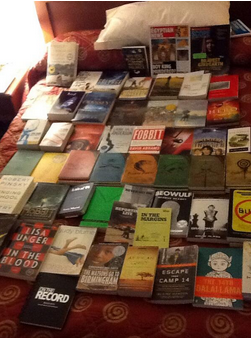
Our “haul” from the NCTE Convention from book publishers and authors…headed for our classroom libraries.


Thanks to the authors who gave away signed copies of their books:

The tote bags distributed free to all registrants bore popular author Nicholas Spark’s imprimatur, a visual testament to the celebrity draw of authors at this convention. Authors are the rock stars at this convention: the children’s book authors rock, the young adult authors rock, and the educator trade book authors rock. Attendees stood in lines snaking around booths on the convention floor waiting to meet authors and have books signed. In the past, my request to an author is to have the book signed with the phrase “READ ME!” on the inside cover. I had the same done this year, so when a student asks what to read, I will point that the author has already made a suggestion to read the book.

There were also a number of authors representing a variety of genres who served as keynote speakers including: Neal ShustermanTeri Lesesne, Laurie Halse AndersonKelly Gallagher, Walter Dean MyersIshmael Beah, and Robert Pinsky. 

We are so thankful to have the opportunity to personally meet and mingle with the rock stars of the convention!

Thanks for the Tweeters:

Finally, the fingers of dedicated Tweeters attending the convention kept us abreast of all the events at the conference. There was a steady stream of information from sessions we could not attend, summaries of keynotes addresses, and updates as to upcoming book signings. The hashtags #NCTE13 and #CEL13 were invaluable sources for notes and quotes during the convention and for well after we left Boston.  For example, some Friday session tweets were archived onto the Storify platform for later use.

Next year, the NCTE Convention is scheduled for Washington, D.C., which gives me one more reason to be thankful…the convention is within driving distance!

We have been discussing loss a great deal in English class. In order to begin our  study of King Lear, students had to create lists of their 10 favorite things while I played the song “My Favorite Things” from The Sound of Music. After they made their lists, I  had them “lose” -one at a time- an item off the list.

“Cross off #7,” I announced with great seriousness.
There were immediate groans from students.
“That’s Starbucks!” one whined.
“My truck!” claimed another, “How will I drive?”
“Cross off #3,” I called out.
More protestations. More groans.
“No way I am crossing off my dog,” another retorted.

Soon, their lists were down to two items each. They stirred uncomfortably; they were unsettled by the mere thought of being separated from things or people they valued.

“Maybe I value my stuff over people too much,” mused one thoughtfully looking over her list.

In this short exercise, my students conveyed some of the same sentiments that are expressed in Elizabeth Bishop’s poem “One Art”:

One Art

by Elizabeth Bishop

The art of losing isn’t hard to master;
so many things seem filled with the intent
to be lost that their loss is no disaster,

Lose something every day. Accept the fluster
of lost door keys, the hour badly spent.
The art of losing isn’t hard to master. (continued…)

My students were struck by the repetition of the words “master” and “disaster” in the poem, a result of the villanelle* (see below) format. They noted the progression of items lost in the poem: the car keys, the watch, the houses, the cities, rivers, and finally, the loss of continents.

They noted the choice of hyphens and parentheses in the poem. The hyphen at the beginning of the final stanza was a “hesitation” according to one student, “because she doesn’t even want to write the last stanza.”

“How do you know?” I asked.

“Because she has to command herself,” the student replied, “See the parentheses and the words ‘(Write it!)’ on the last line?”

“Why? What is she losing in the last stanza?” I asked. They called out their ideas:
“Love.”
“You.”
“Her life…”

“So is the art of losing hard to master or not?” I asked them. They thought, and wrote the following in their notebooks:

  • “No one wants to  master losing things…who wants to be a loser, literally?”
  • “She is taking about the loss of physical objects in comparison to the loss of people, and no one wants to lose people…like a friend or lover.”
  • “The speaker is rushing towards the end, speaking faster with ‘shan’t’ and ‘losing’s’ as if things are slipping away, and out of control, until she writes down the losses….and commits them to memory.”
  • “She is trying to convince herself.”

Elizabeth Bishop’s poem brought my class back to the many themes we had been discussing in our unit on King Lear. We had spent several classes focused on the tragedy of a king who in dividing his kingdom, upends the order of the realm. In the process, he loses his daughters, his knights (protectors), his friends, his mind, and finally, his life. The students concluded that Lear was no “master of disaster.”

“Pretty cool that 19 lines can say almost the same thing as Shakespeare’s five act play,” concluded one student as he wrapped up his books  to leave.

Pretty cool, Elizabeth Bishop.

*villanelle: The villanelle has 19 lines, 5 stanzas of three lines and 1 stanza of four lines with two rhymes and two refrains. The 1st, then the 3rd lines alternate as the last lines of stanzas 2, 3, and 4, and then stanza 5 (the end) as a couplet. It is usually written in tetrameter (4 feet) or pentameter.

Literally….David Coleman

August 24, 2013 — 2 Comments

Literally added a new meaning this past month….literally.

A quick look at the Cambridge Dictionaries Online indicates that while the meaning of literally as ” having the real or original meaning of a word or phrase” will now include use of the word “to emphasize what you are saying”. A similar entry from an authority across the pond, Oxford Dictionaries notes:

In recent years an extended use of literally (and also literal) has become very common, where literally (or literal) is used deliberately in non-literal contexts, for added effect, as in they bought the car and literally ran it into the ground. This use can lead to unintentional humorous effects (we were literally killing ourselves laughing) and is not acceptable in formal contexts, though it is widespread.

This chatter about literally and literalness came to mind when I read the Frizzleblog on the Scholastic website ten “takeaways” from a presentation given by David Coleman, an architect of the Common Core State Standards (CCSS) and the current College Board president, to a group of New York City teachers. The blog entry was titled 10 Things Worth Doing in Your Classroom by  Suzanne McCabe, Editor in Chief at Scholastic, and she listed ten summaries from Coleman’s presentation on how to enrich classroom instruction.

Her summary statement #4 stopped me cold…literally.
4. Only draw conclusions that can be substantiated by the words on the page. Scrape away terms like “metaphorical,” and talk as simply as possible. Once you bring up metaphor and meaning, kids are out of the game.
McCabe may be misrepresenting Coleman in this statement, however, the Common Core State Standards promoted by Coleman centers on textual evidence, so the “conclusions substantiated by the words on the page” summarizes his preferred reading strategy.  In addition, his lack of classroom experience at any grade level explains why he may have said something akin to “kids are out of the game” when metaphors are discussed.
To the contrary, children of all ages understand metaphor according to Maria Popova in her post The Magic of Metaphor: What Children’s Minds Teach Us about the Evolution of the Imagination on her Brain Picking’s blog:

During pretend play, children effortlessly describe objects as other objects and then use them as such. A comb becomes a centipede; cornflakes become freckles; a crust of bread becomes a curb.

The combination of life experience and practice with similes (“pancakes are like nickels,”  “A roof is like a hat,”“Plant stems are like drinking straws,”) builds a student’s understanding of metaphors that are more complex (“”I am the good shepherd; I know my sheep and my sheep know me” John 10:14). 

So why would a teacher want to “scrape” away metaphorical terms at this important stage in developing a student’s understanding of more sophisticated metaphors?
Furthermore, how could Coleman reconcile an author’s choice in using a metaphor if that metaphor is scraped away in order to talk as “simply as possible”? McCabe’s summary of Coleman’s position reduces students to reading “literally”, rendering them unable to appreciate an author’s craft .
For example, if students had to scrape away the  metaphorical ideas in some of Shakespeare’s most recognized literary comparisons, what would they say?

“All the world’s a stage, and all the men and women merely players. They have their exits and their entrances.” As You Like It

Students may determine through textual evidence that Shakespeare was literally referring to the stage.

Night’s candles are burnt out, and jocund day
Stands tiptoe on the misty mountain tops.” Romeo and Juliet

Students may determine through textual evidence that Shakespeare was literally writing about candles.

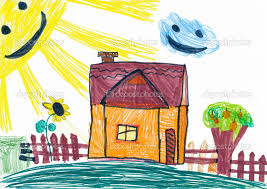
Smiling sunStudents are more creative than Coleman recognizes in his untested design of the CCSS. From the beginning of their academic careers, they draw their metaphors: smiling suns, hearts in hands, trees with large red dots. They start simply “Freddie is a pig when he eats,” before moving to more sophisticated constructs on their own such as “Love is a chocolate fountain that never runs out.” They are capable of sustaining elaborate metaphors to explain the writing process:

I choose my audience very carefully when playing for an audience for the first time. I want constructive criticism, and therefore I prefer to have my peer musicians as well as my conductor or private instructor hear me play aloud for the first time. . . .When I have read and reread [the paper] so many times that I am unable to find any mistakes, I then like to read my paper aloud to my family or a group of my close friends in order to get their reactions. Maria, National Writing Project website

These students knew they were not writing about a pig, chocolate fountains, or conducting music. If Coleman had classroom experience, he would have first hand evidence about student creativity.

Finally, many of the most beloved children stories are saturated with metaphor.  Lewis Carroll’s Alice in Wonderland is filled with metaphors that address life’s absurdities, and one specific metaphor brings me back to an entry I wrote titled  David Coleman, the Cheshire Cat of Education.

While I did not mean that Coleman is a cat literally, I do mean that his philosophy of education is as contradictory as the character in Carroll’s imaginative classic. “Curiouser and curiouser,” wonders Alice, when the enigmatic Cheshire Cat appears and reappears at critical moments in the story. Likewise, Coleman’s curious contradictions may be the reason for any inaccuracies in McCabe’s summary of his presentation. On the other hand McCabe may have accurately recorded these contradictions and illustrated how Coleman’s inexperience makes his statements about how to teach in a classroom ridiculous…literally.

birthday11July 3rd is this blog’s third anniversary.

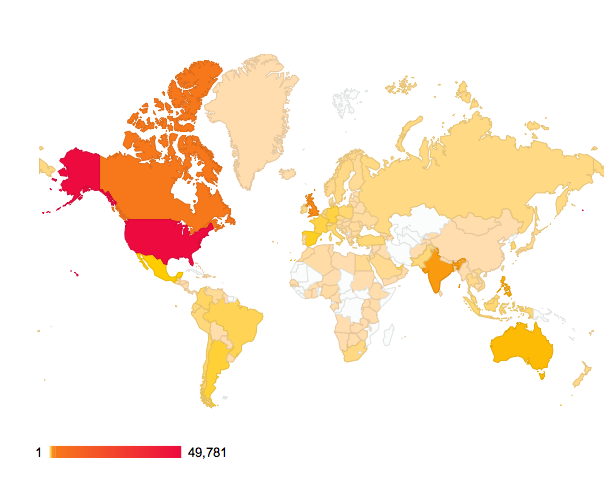
WrdPress provides a map of where visitors accessed this blog.

WrdPress provides a map of where visitors accessed this blog since 2012.

One way of determining whether this three year venture has been successful is to look at the overwhelming amount of statistical information provided by the host of this site, WordPress.com. To date, the stat page notes that there have been over 70,000 hits, the most popular search term has been Of Mice and Men, the most popular post has been Teaching Elie Weisel’s Night with Choice Books, and the most frequently used category for this teacher, not surprisingly, has been EDUCATION.

The other way to determine the success of this blog, however, is to reflect on how well writing has served as my own professional development for the past 36 months. In writing each post, I have tried to find links that support or refute a position. I have searched and researched all elements of the Common Core State Standards; read journals or policy statements from educators and education reformers; and cited hundreds of quotes, graphics, and statistics to support my ideas. Even if no one read this blog, the writing experience has been important.

Many of the ideas for blog posts come from links provided by other educators on Twitter. Many ideas come from the students in my classes or from news stories that are related to education reform. Then there are the ideas I have while I walk with fellow educator on weekends.
For example, I will notice how the ripples on the pond create an interesting pattern, and I will casually remark, “that reminds me of how students can create ripples when they discuss their book choices!”
“Well, that’s a great idea for a blog post!” she will respond.

I have discovered that I have little control over my need to write; that the impulse to set things into print is hard to ignore. In addition, the motivation to write comes at the most inconvenient times, often late in the evening, and I have seen many digital clocks click into the AM hours of the morning as I polish a piece.
“Are you still awake?” my husband complains.
“Just finishing,” and I huddle to hide the glow of the screen while I reflect and revise.

Nothing has taught me more about how to teach writing than my writing this blog. Nothing.
Nothing has made me appreciate how hard it is to meet the deadlines and requirements of assignments given to students. Nothing.
Nothing has made me more aware of how important developing confident writers is in preparing students for the real world. Nothing.

My friend, who also writes on her own blog, often quotes the scientist Louis Pasteur who said,

“In the fields of observation chance favors only the prepared mind.”

On this third anniversary, I am confident that writing on this blog has helped me to become a more informed educator. Writing what I think about education prepares me to say what I think when I am at leadership meetings, or department meetings, or when I am teaching. I am primed to discuss any number of issues related to education because my mind has been prepared, and the chances that I will talk about these education issues is more than good.

On this blog’s third anniversary, I am convinced that the best professional development I have is to write what I think.

Freshman year is hard: new school, new people, increased responsibilities, increased work load. By June, however, most freshmen feel a sense of accomplishment. They are 1/4 of the way through high school, and they are no longer intimidated by the urban legends of pool passes or promises of being stuffed in lockers by seniors.

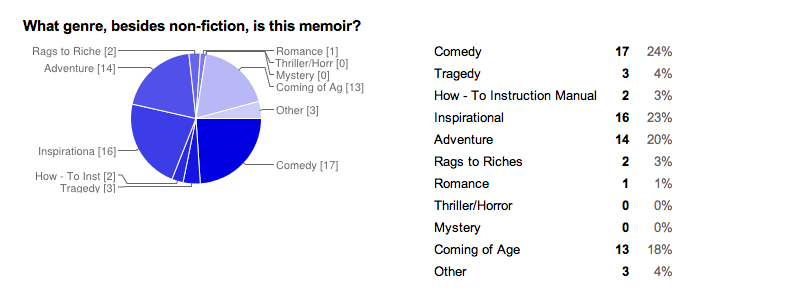
Successful completion of Grade 9 is indicated by a final grade, a percent that indicates the material student earned in each subject. There are other ways, however, to measure success and self-reflection is an excellent way to wrap-up the year. One way to have students to reflect is using a Google Doc form. The form can be tailored for subjective or objective questions. The quantitative data collected (checkboxes, multiple choice, polls, true/false) can be summarized in graphics (see picture below). Students can write longer responses in paragraph form or short answers.

Screen Shot 2013-06-19 at 9.47.21 PMGoogle Doc forms were used all year to measure student understanding or to allow students to record opinions. In September, the 9th grade had started with the theme “Journeys”, therefore, we returned to this theme to have them reflect on their year’s journey. They took this survey after they completed the final exam for credit points only.

The form was titled “My Memoir of 9th grade” and featured 10 questions that required the students to imagine writing a memoir or autobiography about 9th grade. Several of the responses were very “21st Century” addressing the complications of living with the temptations of social media, but other responses from students were timeless and not entirely different from the high school experiences of generations of students before them. Some responses were funny. Many were very clever.  At least one was alarming. Each response captured both a student’s self-awareness in reflecting on the year and a willingness to be critically, sometimes painfully, honest.

There were 79 responses to the questions; here are some highlights:

What is the title of your memoir?

  • No Procrastinating 
  • Thank God for 9th grade
  • The Spin-Cycle that this Year has Been
  • The Story of a Teenage Drama Queen: Or Something Like That

What is the significance of the title?

  • Like a spin-cycle on a washing machine, everything in my freshman year seemed to be moving very rapidly around me as I was caught up in it.
  • This means that the year was torture but in the end I have learned so much more than I did in middle school.
  • The significance is that some parts of this year will be wounds turning into scars that will be with me forever. The wounds weren’t caused by bad things but good things and that’s why I would want the ever lasting scars so I can remember.
  •  It shows how to get through 9th grade without being stupid like some other people because they could do something stupid and not make it through the year and will have to repeat it sophomore year.
  • It is the first level of your high school campaign.
  • I want my memoir to be named the dirt road because a dirt road is bumpy and rough this had been one of the hardest years for me and I want to show that by showing that the road is bumpy and hard to drive on and this year has been bumpy and hard and there is no way to make it go by any faster.

To what novel, myth, epic, fairy tale, or other non-fiction work will critics compare your story? WHY? What is the connection?

  • I’d compare it to Icarus. I’m not the best at listening
  • Of Mice and Men because I go through struggles that many other people are going through at some times I mostly feel like the main character George because sometimes I have to clean up my friends or my own mistakes and live with them behind me.
  • They will compare this story to Phaeton because he has something great that he is using to proceed but it might be the end of him.
  • Probably The Odyssey because of some of the trickery.
  • This can be compared to Hercules because people always told him he couldn’t do it, but in the end he finished strong no matter what other people thought.
  • This would be like The Odyssey because of my constant battle with each teacher in every class, some harder than others.
  • The Wizard of Oz because I always get home in the end. And being here really makes me realize that there is NO place like home. (Not that I hate school I’m just really over it by June)

What would the synopsis or description say? What is your memoir about?

  • This memoir is all about freshman who find out high school isn’t as easy as middle school.  They have to grow up to get all their work done, and not to mention worry about other stuff like sports, extracurricular activities, and friends.
  • My memoir is about my experience in 9th grade and how I got to where I am now. (Maturity, strength, knowledge, etc.)
  • Basically the adventures of this year but in more detail, the fast flying year for a 9th grader who has had fun on field trips and days when there has been a sub or no work.
  • i think it would say that if you are stressed out in high school and need some metaphorical advice then read this book.
  • A young man new to the world of high school embarks on the greatest adventure to see how any ways he could get in trouble. You will be with him in the ups the downs the tragedy the success.

What is your protagonist’s (your) greatest challenge or conflict? What is the goal?

  • The Internet, so alluring and wonderful, but deadly and destructive to my career.
  • The weakness that interfered with my goal is that I was too overwhelmed with after school activities that I had no time to do my homework. I think by next year I’ll figure out.
  • Annoying kids
  • Weaknesses include: being annoying and clingy, losing your best friend over something that you don’t even know what happened like really what happened ugh, being lied to about important things, holding extremely long grudges, and being bothered by simple memories from like years ago, and never having enough video games.
  • Not wanting to talk to new people at first.

What strengths help your protagonist (you) succeed?

  • Some days I just do the work to get through it, not because I actually care about it. You’ve got to keep going through the stuff you don’t like to get to the stuff you do like.
  • My strength is my stubbornness because no matter what the challenge I refuse to give up.
  • Probably not having a phone, that stunk so I made sure I did all of my work to try and get it back.
  • I have a great ability to focus when I wants to. I need a little bit of a push to get going but after that it’s smooth sailing.
  • Time management.
  • Getting sleep helped me succeed alot because I could never focus when I was tired.
  •  My family and my teacher.

Self-reflection is a great way to have students express what they feel they learned, and a Google Doc form is easily created and accessed. The student answers are digitally recorded and because of the Google Docs platform, these responses will be available for the freshmen in 2016, when they are graduating seniors. Hopefully their entire high school experience remains 0% horror!

Catcher-in-the-rye-red-cover“I heard about this book called ‘Catcher in the Rye,” said Peyton. She was lining up a “book buddy” extra credit assignment to read with Madison.
I reached for two dog-eared copies with the familiar brick red cover, “Meet Holden Caufield,” I said.

Requests for Catcher in the Rye happen every year. Since we do not teach the novel as a whole class read, I am always happy to see the many copies we have circulating for independent reading. J.D. Salinger passed away in 2010, almost sixty years after his bildungsroman, (coming of age story) of a young man’s wanderings one day in New York City captured the angst of late adolescence for an audience familiar with that angst. Houlden Caufield’s voice was unlike any other, and readers adopted the book with a fervor that bordered on fanaticism. As evidence, there are well-worn copies at every used book sale.

In most high schools today, Catcher in the Rye has a reputation, a cult status. Its “banned book” pedigree  interests both conformist and non-conformists. According to World.edu:

Between 1961 and 1982, The Catcher in the Rye was the most censored book in high schools and libraries in the United States. In 1981, it was both the most censored book and the second most taught book in public schools in the United States.

Many of my students know about the book’s banning history from the South Park episode from Season 14: The Tale of Scrotie McBoogerballs.  In this episode, the students at South Park Elementary are given copies of Catcher in the Rye and learn that the book is “filthy, is inappropriate, and made a guy shoot the king of hippies.”
“Can we PLEASE read this book now?” Cartman pleads.
(View at: http://www.southparkstudios.com/clips/267355/lets-read-it-now )
Very quickly, however, the South Park students learn that 60 years after its publication, the language and themes in the story of Holden Caufield’s day are tame by today’s standards; they are dumbfounded and more than a little annoyed that anyone would consider the book inappropriate. My students have expressed the same puzzlement.

With only one major book to his credit, Salinger still commands the media’s attention. A tweet last week by OpenCulture linked the video below of the reclusive 91-year-old Salinger out for a stroll in Windsor, Vermont (2010):

Under the video, Open Culture also posted a series of anecdotes about Salinger, for example, a story about Nicholas Carr (Is Google Making Us Stupid?)

Nicholas Carr, who was working behind the circulation desk at the college library one summer when “a tall, slender, slightly stooped man” walked in. He remembers his boss whispering, “That’s J.D. Salinger”:

Holy crap, I thought. I just saw J.D. Salinger.

About ten minutes later Salinger suddenly reappeared at the desk, holding a dollar bill. I went over to him, and he said he needed change for the Xerox machine. I took his dollar and gave him four quarters.

That’s my claim to fame: I gave J.D. Salinger change for a buck.

Another recent news item on Salinger was published in the New York Times April 23, 2013, “The Young Salinger, Mordant Yet Hopeful” by Dave Itzkoff. The article described that a recent discovery of nine letters by a 22-year-old Salinger “revealed himself to be as playful, passionate and caustic as Holden Caulfield, the self-questioning adolescent who would become his most enduring creation.” The letters refer to other stories “unpublished and presumably lost works from this period”, tantalizing clues that will set Salinger fans hoping for yet unpublished materials to surface.

Salinger’s reclusiveness fascinates my students. In this day and age, his deliberate choice for isolation starkly contrasts from their uber-connected world of social media. Ironically, social media is a place where Holden thrives today. There are several facebook pages devoted to him. A Google map of his adventures complete with quotes details each step of his journey from the Wicker Bar at the Seton Hotel through the Central Park Zoo and into the Museum of Natural History. He would probably appreciate the myriad of Sparknotes, or Schmoop Notes, that help students who fail to complete assigned reading, or fail to listen to the audio book as available on YouTube. Holden has a Twitter account, @holdencaulfield, and a Tumblr account.  A  blog post on Flavorwire in July 2012 lists 10 Things Holden Caulfield Hates About Everyone including phonies:

“You never saw so many phonies in all your life, everybody smoking their ears off and talking about the play so that everybody could hear and know how sharp they were.”

Predictable, we know. But no Holden Caulfield hate list would be complete without it.

Holden is out there mingling with audiences of this connected age, and now he is mingling with two more. Heads down, they are engrossed with his misadventures during our 20 minute silent sustained reading period.
“How’s Holden?” I ask quietly.
“Good,” they chorus without looking up. They have been caught by Salinger, caught by The Catcher in the Rye.

Spoiler alertEnter the spoiler alert. Because the number of ways people hear about stories is increasing, spoiler alerts for books and films are offered as a “heads-up”, a means to prevent plot details from becoming public.  Knowing the end of a story might mean that the strategy of “predicting” a story has been compromised, however, there are genres of stories that absolutely count on predictability, for example, Nancy Drew will always solve a mystery with her best friend, Bess and George, while on TV, predictability has a time limit; the shipwrecked crew will never leave Gilligan’s Island (30 mins) and House will solve a medical mystery (60 mins).

Predictability means to state, tell about, or make known in advance, especially on the basis of special knowledge, and students are taught at an early age that making predictions can help them to determine what will happen in a story.

I noticed how predictions are important even if the end has already been decided when my six-year-old niece was watching the Disney film Running Brave. This was her favorite film, and she watched the VHS tape every afternoon. On one such afternoon, I noticed she was drifting asleep, so I made a move to turn off the video.

“Wait,” she cried out, “I think….I think he’s going to win again.”

From her perspective, the outcome of the race was still in doubt. The cinematic elements, the tight editing of shots , and a triumphant soundtrack created suspense where the viewer might doubt the inevitable. Krista had seen the movie hundreds of times, but she still was “testing” her prediction.

I admit that I have felt the same way watching Miracle, holding my breath for the final seconds wondering if the US ice hockey team would still win the Olympic medal. Krista’s experience is also mirrored in the classes where students often choose books based on a movie that they have seen.

In the independent reading allowed in our curriculum, the 9th graders can choose contemporary fiction or non-fiction, and many of the titles have movies in circulation, for example:

Some students purposefully choose these books because they know the endings, and in knowing how the book ends allows the reader to pay more attention to the craft of the author in bringing all the plot points together in a conclusion. Take for example, the Harry Potter series. Most readers predicted with certainty that Harry Potter would finally face his nemesis, Voldemort. The how and when, however, were still very much in the air, and J.K.Rowling’s crafting of the series’s magical settings and character development kept readers in a willing suspension of disbelief for the length of seven volumes. The final conclusion was satisfying to her fans who knew all along that Harry would prevail, after all, Good’s triumph over Evil is a predictable plot. Readers and filmgoers were not disappointed in following the story of a boy with the scar on his forehead because in each volume and subsequent film release, they correctly predicted that “I think…I think he will win again.”

So when I teach a whole class novel, I know there are some students who already know the ending. They may have reached the conclusion before others, or been informed by older students who notoriously share their opinions and critical information with younger students. In this case, my role is to impress on students that knowing the outcome will not destroy a well-told story, and to focus their attention on the other elements. This was the case with John Steinbeck’s Of Mice and Men.

“I heard this is a sad book,” one student said when I assigned the first chapter, “One guy kills another guy.”
Other students looked up for my confirmation.
“Yes, this is a sad book, but the reason for the sadness is really about caring. We will grow to care for these characters.”
“I already don’t care if I already know what happens,” was his reply.
Four weeks later, this student refused to watch the final scene in the film version.
“I know what happens, and I cannot watch,” he said sadly as he walked out into the hall.

The same sentiments are expressed at the beginning of our study of Shakespeare’s Romeo and Juliet.
“Guess what? They die,” said a student as I passed out the books.
“Yes, they die,” I kept passing out the copies.
“So why are reading this?” another asked.
“Because this is a great story,” I responded, “and the story’s ending will mean more after we finish because we will have read how Shakespeare writes about these ‘star-cross’d lovers’.”
“But we already know how it ends!” they whined.

Now that we are in Act III, no one cares that they know the end, instead, they are recognizing how Shakespeare creates the tragedy. They notice the “hints”: Juliet seeing Romeo “As one dead in the bottom of a tomb”, Friar Lawrence’s herbs of “Violent delights”, and “Love devouring death”.

This discovery of an author’s details makes students more appreciative of the craft in writing as they still try to predict. They notice Shakespeare’s allusions: “Such a wagoner/As Phaeton would whip you to the west/And bring in cloudy night immediately” (3.2.2-4), because we had studied the Phaeton myth earlier in the year.

“Uh-oh. That’s not good,” I heard one say, “Romeo’s gonna crash and burn like Phaeton.”

That kind of analysis is exactly what the English Language Arts Common Core would like to see in a close reading of a text. How interesting that students who already know “what happens” may be better at picking up on an author’s craft that a close reading generates.

Spoiler alerts do warn those readers or viewers who want to be surprised, but knowing the ending does not necessarily ruin the reading or viewing experience. Want to experiment? Here are 50 plot spoilers for 50 novels. I predict that each novel will not disappoint, even if you already know the ending.