Archives For November 30, 1999

A question was posed on the Education Week column run by Larry Ferrlazzo. On this particular posting, he asked the question, “How Can We Teach Social Studies More Effectively?”

This year, I am the interim Social Studies Department Chair in addition to my role as English Department Chair.  As an academic interloper, I have had the opportunity to study how the scope and sequence of our middle/high school social studies program (7-12)  is delivered. I humbly offered  the following suggestions to Ferrlazzo’s question:

To be an effective Social Studies teacher, a teacher must be inter-disciplined.  The definition of social studies adopted by the National Council of Social Studies (NCSS)  in 1992 addresses the broad reach of the subject:

“Social studies provides coordinated, systematic study drawing upon such disciplines as anthropology, archaeology, economics, geography, history, law, philosophy, political science, psychology, religion, and sociology, as well as appropriate content from the humanities, mathematics, and natural sciences.”

In other words, social studies is the most interdisciplinary subject in our curriculum, therefore:

1. Collaborate:

Although English is  natural fit, social studies teachers should not stop there, but look to collaborate with all disciplines. Some subjects pair well (Renaissance=science+art), but do not discount the math necessary for economics and statistics needed to understand any period of history.Social studies teachers have the opportunity to collaborate with other departments in delivering curriculum using either the familiar chronological approach or by using a thematic approach (“Revolutions”). These teachers can help students make the connections between subject areas rather than see each information limited to four classroom walls.  For example, students in grade 10 were reading All Quiet on the Western Front in English at the same time when WWI was being studied in Modern World History. I was trying to make a point about how the narrator was confronting the shift from the man to man combat to the  battlefield which featured increasing mechanized warfare when a student interrupted me, “Mrs. P says that WWI showed that the increasing the technology and machines in war gets you get farther and farther from your enemy.” There was a pause, and then another student chimed in ,“And now we use drones in Afghanistan and we are farther from the enemy than ever before.”  I didn’t have to make my point at all. Mrs. P, 10th grade social studies teacher, had already covered weapons introduced in WWI and  was making connections from WWI to the war in Afghanistan. She was providing the setting while I was introducing the emotional impact on people/characters, and our collaboration made for greater student understanding.

2. Ditch the Textbook and Increase Non-Fiction Reading:

I have come to view the social studies textbooks as heavy…too heavy and too costly. I suggest social studies teachers use these in a classroom as a resource for note-taking only. These textbooks are ideal for teaching students about sub-headings, how to read charts and maps, and information sidebars in class, but there are other resources for delivering content. Use Livebinders.com to create online textbooks for reading home, perhaps in a flipped model, with a variety of reading materials-newspaper articles, magazine links, and websites. Use wikis to post links, upload materials, and receive comments from students. Check out the amazing amount of materials on Larry Ferrlazzo’s blog and Richard Byrne’s blog (updated almost hourly!) or Greg Kulowiec’s blog to see what software can be used for research or content delivery.  Place materials in Google Docs for student access and collaboration. After looking at all the new software available today, I am fully in favoring of ditching the textbook!

Of course, losing the textbook means a teachers can also assign more authentic reading. The Common Core State Standards require 70% informational texts for students by grade 12. The anchor standards and high school standards for reading and writing in social studies (history) in literacy work in tandem to define college and career readiness expectations. Increasing student access to reading materials is key to meeting increased requirements in reading of informational texts. I would suggest organizing classroom libraries with non-fiction materials and providing time in class to read these materials. Coordinate with the school librarian to pull books that deal with a topic currently studied and suggest students  choose a book off the cart. For example, we have added numerous popular trade non-fiction titles in the English classroom libraries that could be easily used in a social studies classroom such as:

Longitude: The True Story of a Lone Genius Who Solved the Greatest Scientific Problem of His Time by Dava Sobel
Patriots by Joseph J. Ellis
Hiroshima by John Hershey
Salt: A World History by Mark Kurlansky
Kaffir Boy: The Story of a Black Youth’s Coming of Age in Apartheid South Africa by Mark Mathebane
The Devil in the White City by Erik Larsson
Kon Tiki by Thor Heyerdahl

3. Increase the Project Based Learning:

There’s a lot to be said for the diorama. Every student has made at least one, and despite the loss of precious classroom real estate to 30 shoebox recreations of a medieval castle, these projects are incredibly powerful learning experiences because they are “hands-on”.  Debate, trials, and simulations are also all ways that project based learning can be used. Our 8th grade recreated the Ellis Island experience in the gym and hallways last month.  Teachers were “medical inspectors” and  Ellis Island staff asking questions about employment possibilities and each immigrant’s finances.  Each 8th grade student had prepared an immigration profile based on research on the Ellis Island website http://www.ellisisland.org/ and was “processed” individually or in family “groups.” This experience was only one of several simulations our teachers have used to immerse students in a historical context.

Project based learning can be delivered as games, in role-playing, or in developing living museums. Students need to BE the people of history to better understand how people and events from the past effect and connect to their present circumstances in their “study of the social sciences and humanities to promote civic competence.” (NCSS, 1992)

I have enjoyed this year of working with my social studies colleagues. They are responsible for many of the skills that are necessary for literacy, specifically writing and note-taking. They are critical to successfully implementing the newly adopted Common Core State Standards at every grade level. What joins our disciplines in English and social studies are the fundamental elements of story; while English teachers are centered on the individual character and “his-story”, the social studies teachers are responsible for what happens to the individual in “history”. Ours can be the continuing of a “beautiful friendship” in education.

NEWLY EDITED 12/29/12:
I hate Reader Response Theory, one that considers readers’ reactions to literature as vital to interpreting the meaning of the text.

CHANGED TO:
I hate how Reader Response Theory has been abused by standardized testing. Two most annoying questions for me in the Connecticut standardized testing for reading (CAPT-Response to Literature) are reader response based questions to a short story prompt:

  • CAPT #1:What are your thoughts and questions about the story? You might reflect upon the characters, their problems, the title, or other ideas in the story.
  • CAPT #4: How successful was the author in creating a good piece of literature?  Use examples from the story to explain your thinking.

After 10 years of teaching with this standardized test, I can recognize how many of my students struggle with these questions. Many lack the critical training gained from extensive reading experiences in order  to judge the quality of a text. Combine this lack of reader experience with the see-saw quality of the text on the exam year to year.  Since classic short stories such as those by Saki, Anton Chekhov, Kate Chopin, Stephen Crane, and Jack London, to name a few, are considered too difficult for independent reading by 3rd quarter 10th grade students, more contemporary selections have been used on the exam. For example, these stories in the past years have included Amanda and the Wounded Birds by Colby Rodowsky, Catch the Moon by Judith Ortiz Cofer, and a story written by Jourdan U Playing for Berlinsky published in Teen Ink. While some stories are well-written, many lack the complexity and depth that would generate thoughtful responses to a prompt that asks about “good literature.”  My students are in the uncomfortable position of defending an average quality story as good; the prompt promotes intellectual dishonesty.

So, I use a formula. I teach my students how to answer the first question by having them list their intellectual (What did you think?) and emotional (What did you feel?) reactions to the story. I have them respond by listing any predictions or questions they have about the text, and I have them summarize the plot in two short sentences. The formula is necessary because the students have only 10-15 minutes to answer this in a full page handwritten before moving to another question. The emphasis is one that is reader’s response; what does the reader think of the story rather than what did the author mean?

I teach how to answer the evaluation question much in the same way. Students measure the story against a pre-prepared set of three criteria; they judge a story’s plot, character(s) and language in order to evaluate what they determine is the quality of the story. Again, this set of criteria is developed by the student according to reader response theory, and again there is little consideration to author intent.

The newly adopted Common Core State Standards (CCSS) in Language Arts is designed differently. The  focus is back on the text; what the reader thinks is out of favor. For example, in three of the ten standards, 10th grade students are required to:

  • Analyze how complex characters (e.g., those with multiple or conflicting motivations) develop over the course of a text, interact with other characters, and advance the plot or develop the theme;
  • Determine a theme or central idea of a text and analyze in detail its development over the course of the text, including how it emerges and is shaped and refined by specific details; provide an objective summary of the text;
  • Cite strong and thorough textual evidence to support analysis of what the text says explicitly as well as inferences drawn from the text.

Please note, there is nothing in the language of the standards that asks what the student thinks or feels about the text.

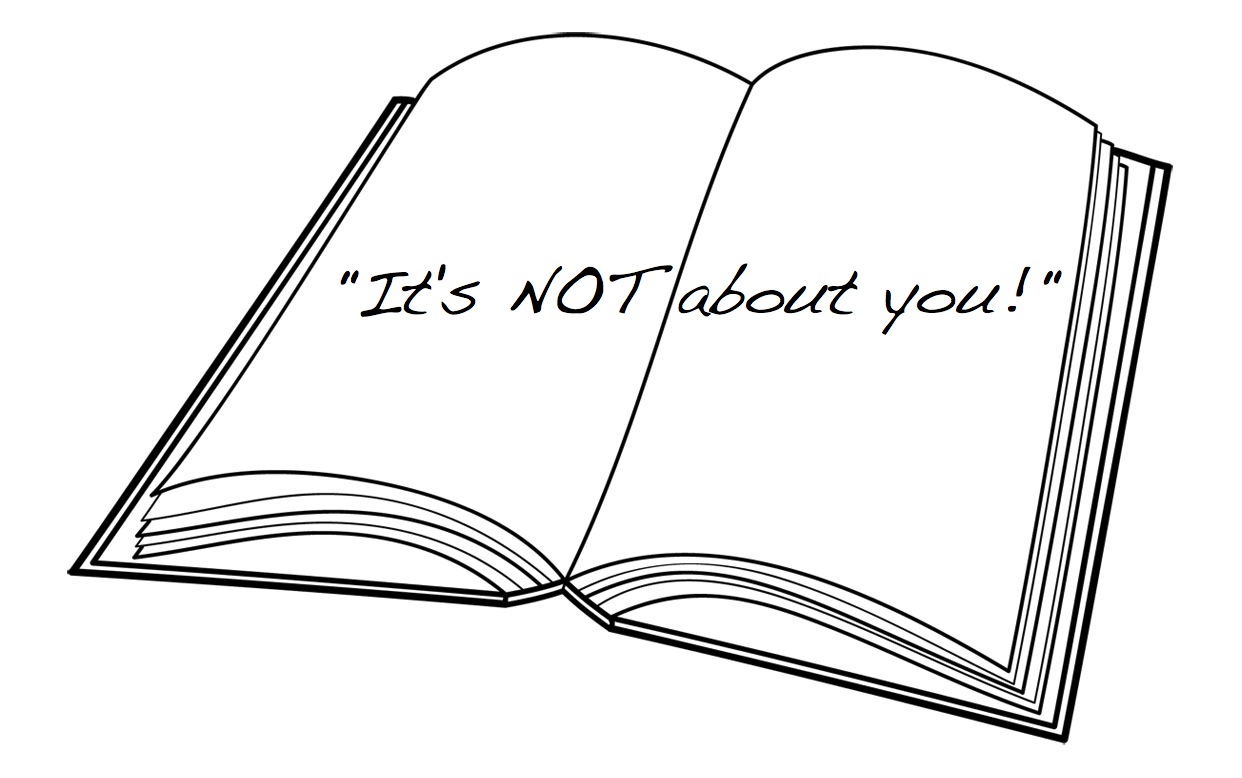
In an article titled, “How Will Reading Instruction Change When Aligned to the Common Core?” on The Thomas B. Fordham Institute website (1/27/2012), Kathleen Porter-Magee  discusses the shift from the student centered response to the CCSS  “challenges to help students (and teachers) understand that reading is not about them.”

Porter-Magee  describes how David Coleman, one of the architects of the CCSS ELA standards, is promoting the close reading of texts, sometimes over extended periods of several days. The article notes that currently, “teachers often shift students’ attention away from the text too quickly by asking them what they think of what they’re reading, or how it makes them feel. Or by asking them to make personal connections to the story.” Coleman states that, “Common Core challenges us to help students (and teachers) understand that reading is not about them.” Instead, he advocates the practice of close reading, a practice that  “challenges our overemphasis on personal narrative and personal opinion in writing classrooms.”

In addition to the movement away from reader response criticism, the CCSS will be upgrading the complexity of the texts. Porter-Magee notes that,

“Of course, there’s only value in lingering on texts for so long if they’re worthy of the time—and that is why the Common Core asks students to read texts that are sufficiently complex and grade-appropriate. Yes, such texts may often push students—perhaps even to their frustration level. That is why it’s essential for teachers to craft the kinds of text-dependent questions that will help them break down the text, that will draw their attention to some of the most critical elements, and that will push them to understand (and later analyze) the author’s words.”

In other words, the quality of the texts will be substantively different than the texts used in the past on the Response to Literature section of the CAPT. This should make the response about the quality of text more authentic; a genuine complex text can be analyzed as “good literature.” How the more complex text will be used in testing, however, remains to be seen. A student trained in close reading will require more time with a complex text in generating a response.

I confess, the movement away from reader response is a move I applaud. A student’s response to a complex text is not as important in for the CCSS as what the text says or what the author intended, evidence will supplant opinion.

However, I am very aware that the momentum of the every swing of the educational pendulum brings an equal and opposite reaction. Swish! Out with reader response. Swoop! In with close reading of complex texts. Students,this swing is not about you.

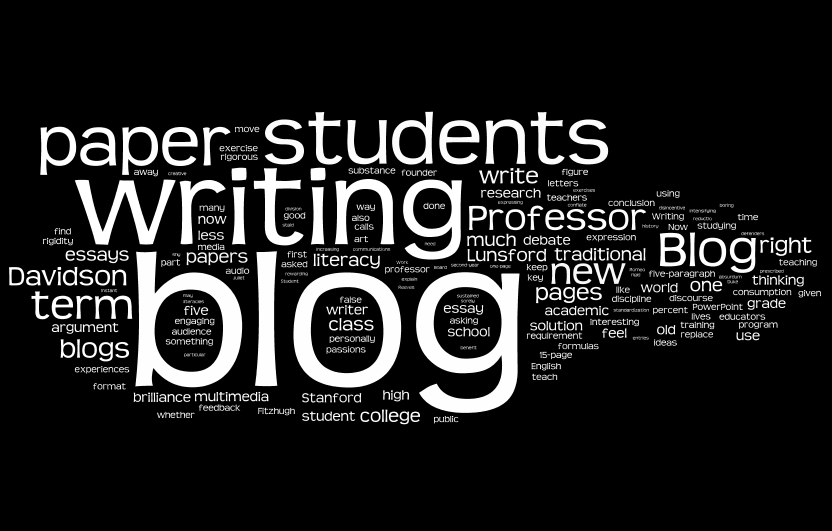
Is a writing a blog as valuable a writing experience as writing an academic term paper? Can the writing of a blog be made academically more rigorous in order to compete with the more traditional term paper? Or does the blog vs. term paper argument cloud a more critical academic problem… that our students do not read well enough to write in either format?

Matt Richtel, a reporter who writes about technology in education in the NY Times, recently published a piece, Blogs vs. Term Papers (1/20/12) regarding Duke University’s English professor Cathy N. Davidson’s embrace of the blog in place of the traditional term paper.  He writes that, “Professor Davidson makes heavy use of the blog and the ethos it represents of public, interactive discourse. Instead of writing a quarterly term paper, students now regularly publish 500- to 1,500-word entries on an internal class blog about the issues and readings they are studying in class, along with essays for public consumption.”

The traditional term paper in any number of disciplines of prescribed lengths of 5, 7, 10 or more pages has been centered for decades on a standard formula incorporating thesis, evidence, argument and conclusion.  In the article, Davidson expresses her dislike for formula writing, including the five paragraph essay taught in middle and high schools and claims that, “This mechanistic writing is a real disincentive to creative but untrained writers.”  She notes that, “It’s a formula, but good writing plays with formulas, and changes formulas.”

Davidson is not alone. Ritchel claims that “across the country, blog writing has become a basic requirement in everything from M.B.A. to literature courses.” This movement from term paper to blog has many academics up in arms.

Running parallel to this argument of academic writing was the position offered by William H. Fitzhugh, author and founder of The Concord Review, a journal that publishes high school students’ research papers. In the NY Times article, Fitzhugh discussed how high school educators “shy away from rigorous academic writing, giving students the relative ease of writing short essays.”  Fitzhugh makes the argument that students are required to read less which directly impacts their ability to write well.

Fitzhugh wrote about academic writing in  Meaningful Work for American Educator (Winter 2011-2012) taking the position that reading is at the core of good academic student writing; “To really teach students how to write, educators must give them examples of good writing found in nonfiction books and require students to read them, not skim them, cover to cover.” Good writing reflects knowledge and understanding that comes from reading, not skimming. Fitzhugh recommends that, “Reading nonfiction contributes powerfully to the knowledge that students need in order to read more difficult material—the kind they will surely face in college. But more importantly, the work of writing a research paper will lead students to read more and become more knowledgeable in the process. As any good writer knows, the best writing emerges from a rich store of knowledge that the author is trying to pass on. Without that knowledge and the motivation to share it, all the literacy strategies in the world will not make much difference.”

From my experiences in the classroom, I see the veracity of both Davidson and Fitzhugh’s positions. I believe that the form of student writing is not the problem, and the blog vs. term paper debate, at least at the high school level where I teach, is not as controversial as at the college level.  My job is to teach students to write well, and a great deal of my average school day is currently given to encouraging students to write in these multiple formats in order to prepare them for the real world.  I know that students can be taught to write well in term papers, blogs, essays, letters or any other format.However, the students need to read well in order to write well about a topic. The conundrum is that unless today’s high school students are provided time in class, they do not read the material.

A student’s inability to read independently for homework results in a reduction in both the amount of reading assigned and the class time to process the reading.  Students who do not read well at the high school level are unprepared for the rigors of college curriculum which requires much more independent reading in non-fiction. Ultimately, the problem for teachers in high school is not the form in which students write.  The problem is getting students to both read and understand assigned readings that come from many disciplines-fiction and non-fiction. Only then can the blog vs. term paper debate be addressed as a measure of academic writing.