Archives For November 30, 1999

Mother’s Day is coming! There will be tributes and flowers and cards and perfume and candy and breakfasts, brunches, suppers, dinners given in honor of mothers. The phone networks will run white hot with continental and international calls with phone calls to mom.

I too will send flowers, and I will make a phone call, but I have already given her a little tribute in person this past month. Mom lives in Idaho, and I spent spring break with her and other members of my (large) family. We had lunch, I cooked dinners, and we did a little shopping. At night we would sit at the dining table and talk. Since April is poetry month, I decided to share one of my favorite poets, Billy Collins.

I found Billy Collins back in 2004 when he contacted teachers to participate in the Poetry 180 project, a poem a day for students in schools to be shared during daily announcements or posted on bulletin boards. Collins believes:

“Poems can inspire and make us think about what it means to be a member of the human race. By just spending a few minutes reading a poem each day, new worlds can be revealed.”

Just the thought of sharing a Billy Collins poem makes me start to grin. His verse is so wise and often very funny. The added benefit is that there are plenty of recordings of him reading his poems. His dead pan delivery of his poetry is priceless. Even hearing him give the explanation for a poem’s genesis makes me start to chuckle; on the video below, you can hear the audience do the same.

box stich

How to make a box stitch lanyard

Collins introduces the poem The Lanyard by downplaying his efforts. “I did what most poets tend to do,” he notes in the opening explanation, “which is  write about a topic that is rather large, to choose an image as a point of entry rather than take on the topic in a frontal way.”

That is an understatement since in this poem, the topic is large: “How can you repay your mother?”

The Lanyard – Billy Collins

The other day I was ricocheting slowly
off the blue walls of this room,
moving as if underwater from typewriter to piano,
from bookshelf to an envelope lying on the floor,
when I found myself in the L section of the dictionary
where my eyes fell upon the word lanyard.

No cookie nibbled by a French novelist
could send one into the past more suddenly—
a past where I sat at a workbench at a camp
by a deep Adirondack lake
learning how to braid long thin plastic strips
into a lanyard, a gift for my mother.

I had never seen anyone use a lanyard
or wear one, if that’s what you did with them,
but that did not keep me from crossing
strand over strand again and again
until I had made a boxy
red and white lanyard for my mother.

She gave me life and milk from her breasts,
and I gave her a lanyard.
She nursed me in many a sick room,
lifted spoons of medicine to my lips,
laid cold face-cloths on my forehead,
and then led me out into the airy light

and taught me to walk and swim,
and I, in turn, presented her with a lanyard.
Here are thousands of meals, she said,
and here is clothing and a good education.
And here is your lanyard, I replied,
which I made with a little help from a counselor.

Here is a breathing body and a beating heart,
strong legs, bones and teeth,
and two clear eyes to read the world, she whispered,
and here, I said, is the lanyard I made at camp.
And here, I wish to say to her now,
is a smaller gift—not the worn truth

that you can never repay your mother,
but the rueful admission that when she took
the two-tone lanyard from my hand,
I was as sure as a boy could be
that this useless, worthless thing I wove
out of boredom would be enough to make us even.

from The Trouble with Poetry. Purchase from Amazon (here).

Like the speaker in the poem, I have given my mother a lanyard I made during day camp. I also have given her a pile of acrylic woven potholders that could not possibly protect a hand against the heat of a pan, several cigarette ashtrays when no one in our immediate family smoked, a plethora of pasta strung on elastic cords that she could wear around her neck, and several tile trivets that left specks of powdery plaster of Paris on the dining table when it was brought out only for special occasions. I understand Billy Collin’s taste in art.

I also understand that I can never repay my mother. I find that hard to communicate to her directly, and so I too have to take on the large topic of a mother’s love with smaller points of entry. I cleaned out the spice rack, consolidating jars and removing a can of mace spice from the A & P that had travelled West with her some 30 years earlier. We found letters, some written by my father or to my father who passed away 23 years ago;  we listened to my brother read the letters aloud and remembered how well my father had cared for all of us. We sat in the sun, and we marveled at her view of the city of Boise on a clear spring afternoon. And I shared Billy Collin’s poem, “The Lanyard” knowing full well that nothing could ever make us even.

sols_6Why do I stay? This question is circulating on blogs and in videos by teachers from across the country. My friend Catherine, a teacher and literacy specialist, brought this question to my attention in her post this week. She was participating in a challenge organized by Two Writing Teachers called  The Slice of Life. The instructions for participating are on a link that goes first to a definition (“Slice of life is a phrase describing the use of mundane realism depicting everyday experiences in art and entertainment“) while other links provide procedures:

WRITE your slice. SHARE your link. GIVE some comments to (at least three) other slicers.

On one post she linked her Slice of Life post to blogger Beth Shaum’s video “Why I Stay”.  Catherine listed her reasons for staying and noted that other teachers have written about their reasons for remaining in the classroom, “despite changes in curriculum because of Common Core State Standards, new testing, and new evaluations that are being imposed on educators.” The video on Shaum’s blog addresses startling statistics about the teaching and the education profession:

More than 30% of new educators quit teaching after three years, and nearly 50% leave before hitting the five-year mark. (USNews.com)

Shaum’s video showed dozens of teachers from around the country sharing their reasons for staying in education.

I have not written to The Slice of Life challenge, but I did think the idea of recording my personal reasons as to why I have stayed and taught for 22 years in grades 6-12 would be an exercise that could both help me frame my own thinking and possibly encourage younger teachers who are often overwhelmed.

My reason for “why I stay” is purely selfish.…I want to share the stories.

I want to share with children, teens, and adults the stories they have read, seen, or heard.

I want to share the stories in picture books.
I want to share the stories in chapter books.
I want to share the stories in the canon.

So, I teach students to read stories so that we can talk and share the stories that make us human..

I want to share books.

I want to share books at every grade level.

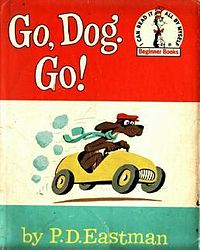
hungry Whales Go_Dog_Go

I want to share books:

  • Go, Dog, Go
  • Hungry Hungry Sharks
  • The Whales Go By

I want to share more books:

  • Nancy Drew’s The Password to Larkspur Lane
  • The Twenty-One Balloons
  • A Wrinkle in Time

Larkspur wrinkle 21 balloons

I want to share novels:

  • Of Mice and Men
  • The Road
  • The Curious Incident of the Dog in the Night-time

I want to share stories written as dramas. I want to talk about:

  • Hamlet
  • Medea
  • The Importance of Being Ernest

I want to share stories made into film. I want to talk about:

  • One Flew Over the Cuckoo’s Nest
  • The Wizard of Oz
  • The Shawshank Redemption

I want to share stories in poems. I want to talk about:

  • The Odyssey
  • Paradise Lost
  • The Cremation of Sam McGee

Guernica Fall of Icarus

GW Delaware

I want to share the stories in paintings. I want to talk about:

  • Guernica
  • The Fall of Icarus
  • George Washington Crossing the Delaware

I want to share the stories that were responsible for essays and speeches. I want to talk about:

  • The Gettysburg Address
  • A Modest Proposal
  • Self-Reliance

I want to share the stories of people’s lives, stories about nature, and stories that mark cultural trends. I want to share:

  • Will You Sign Here, John Hancock?
  • Silent Spring
  • The Tipping Point

From the ancient lights of the campfires to the soft glow from a Kindle, our stories record our humanity.I stayed 22 years in teaching because I want students to understand that record of humanity. I stayed 22 years in teaching because I want students to respond to stories through writing and through speaking. And I stayed because I wanted to encourage students to record their own stories. I want to read and hear and see their stories.

In this great cultural experiment of public education for ALL, I stay to share the stories.

There are many great reasons to teach at the high school level: no outdoor recess duty, college level content, plus, a teacher never has to choose a “line leader”. Best of all, there are no bulletin board requirements.

While most elementary school classroom walls are crammed with colorful thematic cut-outs (apples, shamrocks, stars), high school walls are monochromatic. While middle school classrooms have student work displayed regularly, an essay hung in September will curl and fade on the wall of a high school classroom twisting in the air like an ancient leaf of papyrus.

Generally speaking, high school teachers do not spend a lot of time decorating the classroom. Subject content or motivational posters are the wall covering of choice, unchanged for the requisite 181 days of instruction. Perhaps it is inevitable that teachers who share classrooms do not personalize classrooms.

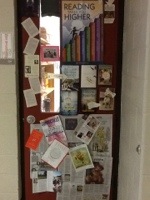
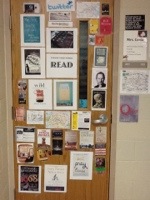
However, for one brief part of the 3rd grading quarter, Read Across America Week (February 25-March 1st) changed the decorating habits of the faculty at Wamogo Middle/High School.

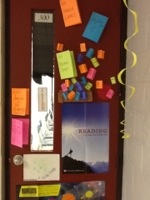
English teacher door...a wide rang of reading complete with motivational poster!

English teacher door…a wide rang of reading complete with motivational poster!

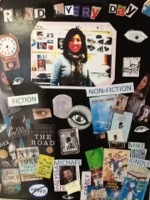
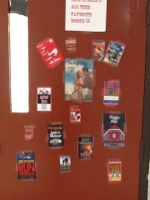
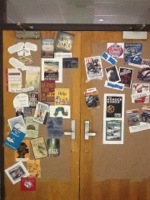
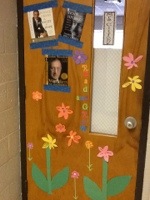
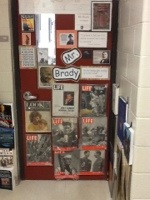
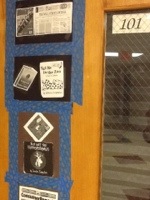
In a collective effort to demonstrate the importance of reading to students, teachers from every discipline decorated their classroom doors with materials they have read or are currently reading.

20130301-112618.jpg

When sharing a door meant less space, this resource room teacher used a poster.

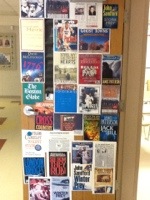
Social Studies (Gr 7) had this door and the side wall as well!

Social Studies (Gr 7) had this door and the side wall as well! The genre range (politics-humor-sports) was astounding!

20130301-112656.jpg

The Art teacher door centered around the command “READ”.

20130301-112713.jpg

Health and Physical Ed teacher revealed a “retro” fondness for the books that contributed to her growing up including Erich Segal’s “Love Story”

20130301-112741.jpg

Alternative education students had to walk through a double door display! Students selected the books they read as well in this display.

20130301-112806.jpg

The resource room mixed decorative flowers with John Wooden “On :Leadership”

20130301-112843.jpg

One Social Studies teacher took the assignment to heart by hanging what he reads, quite literally, onto the door and walls….He was considered the “winner!”

Admittedly, when the “Doors of Wamogo” was announced, there was a little hesitation. What would go on the door? When was this “due”?

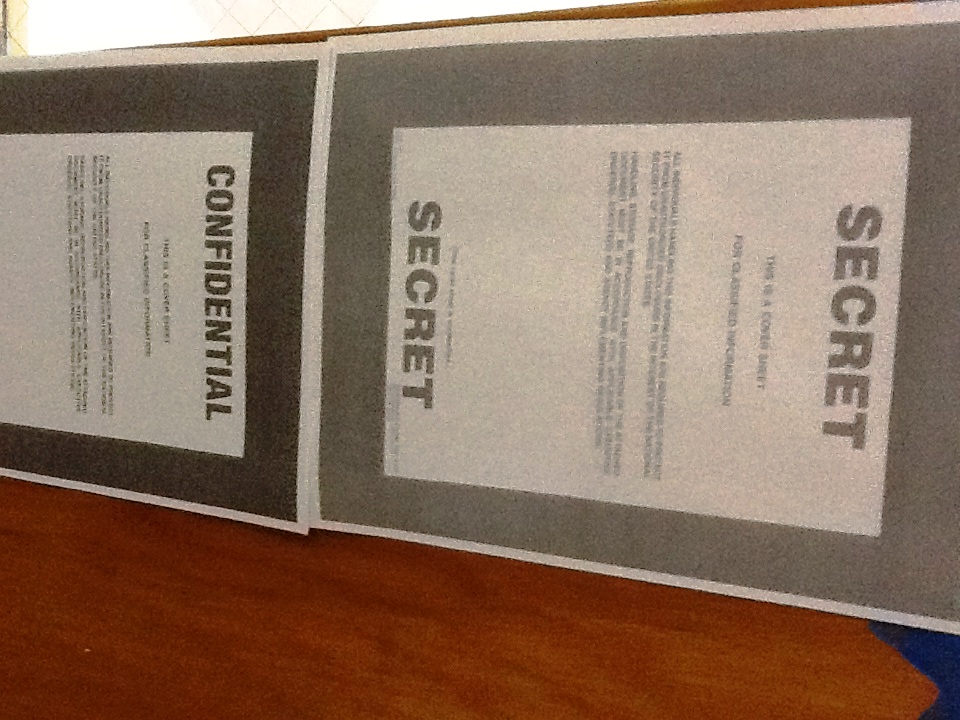
Finally, a few brave souls stepped up. First, there was the Social Studies teacher, an Army Reserve Colonel, who started by hanging “classified” documents on his door. His display was followed by the Business and Career Department teacher, also a basketball coach, who hung sports magazines and the cover of a Bobby Knight memoir.

The English Department members, the Literary Specialist, and the media center Librarian displayed a range of the reading, from Where the Wild Things Are to Great Expectations.

As the week went on, the competition became a little more intense. Finally,  the Grade 8 Social Studies teacher simply emptied out his bookshelf and placed all his favorite texts alongside the door in addition to the door.

Side shot of the "Classified" materials read by a Social Studies teacher

Side shot of the “Classified” materials read by a Social Studies teacher

Perhaps one of the more interesting outcomes was the sharing of titles between faculty and staff. “Oh, I loved that book!” one teacher would say to another. “This is a hard book, but well worth the effort,” said one teacher. “Yes, we read this in our ‘book club’!” exclaimed another. “Who is the Jody Picoult freak?” questions a science fiction reader. “How much Stephen King can you read?” was the retort.

20130301-112826.jpg

Math teacher places “Put Me in the Zoo” on his door; hopefully. this says more about his new baby daughter than the classes!

Students had a chance to look at all the titles: assigned reading from high school that they currently are reading (Romeo and Juliet, Animal Farm), political/history books, and sports memoirs. There were magazine covers, newspaper mastheads, and comic strips. Blogger, WordPress, Twitter, Facebook logos were prominent, social media as informational texts.

So what the “Doors of Wamogo”  created for Read Across America Day in our small rural school was a very large window. The doors provided a window into the lives of our faculty, a window for our students to see us as readers, and for our students to see what books made us successful.

These doors illustrate how reading gave each teacher and staff member a chance to at the window of opportunity; reading = individual success.

We had so much fun, we might try decorating again next year!

Happy Read Across America Day, 2013!

20130301-112923.jpg

Taking the playfulness of a Dr. Seuss motif to heart with replicas of books shared by students.

tragedy“On Friday noon, July the twentieth, 1714, the finest bridge in all Peru broke and precipitated five travelers into the gulf below.”

That is the opening sentence from Thornton Wilder’s novel The Bridge of San Luis Rey. A monk who witnesses the fall of those travelers searches for answers as to whether the accident was simply chance or an act of the Divine. In writing The Bridge of San Luis Rey, Wilder was addressing the genre of tragedy which was defined by Aristotle in his Poetics as “an imitation of a serious act” in literature. The purpose of tragedy is to provide the reader, or viewer in the case of drama, an experience of loss without having to suffer what a fictional character suffers. Through his literature, Wilder, like the authors and playwrights before him, provided the experience and language to us to respond when there is a tragedy. Great literature does this well which may be why the literature taught in high school classrooms is, more often than not, tragedy.

Of course, tragedy is not always a popular curriculum choice. I am always being confronted by students,  “Why do we have to read such depressing books?” or “Why does every book we read in English have to be so sad?” Predictably, when I hand out a book for a whole class read, student will examine the cover, the length of the text, and ask, “So, who dies?” Through literature, students learn a number of different approaches or definitions of  tragedy. In grades 9-12, students are taught about Greek tragedy (Oedipus, Antigone, Medea) where fate or Nemesis cannot be avoided. They learn about catharsis, the purging of pity and fear, and pathos, the empathy one has for the tragic hero. Students are taught about how the Shakespearean tragedy (King Lear, Macbeth, Richard III) centers on the willful downfall of a character who brings about the destruction of others. We have also included a modern interpretation of tragedy by Otto Reinherdt as students read contemporary works of literature (Death of a Salesman, The Road):

“Tragic Man demands that an imperfect world conform to his notions of right and good, and he is defeated because discord, injustice, pain, and moral evil are the world’s warp and woof. The final paradox is man in his tragic vision saying, ‘I do not believe in the invincibility of evil but in the inevitability of defeat’.. . . But in the absoluteness of his commitment, the tragic hero triumphs in the very inevitability of his defeat.”

The indoctrination to tragedy as a “serious action imitated” begins early in the student’s educational career. In grade 5, whole class reads can be The Giver, a dystopian novel that features the euthanasia of a small child. In grade 6, students may read The Devil’s Arithmetic, a book that brings students closer to an authentic understanding of the Holocaust and the deaths of six million Jews. In young adult (YA) literature, there are so many stories about the deaths of pet dogs  (Old Yeller, Where the Red Fern Grows, Love that Dog) that author Gordon Korman fought back against that literary trope with his  YA novel, No More Dead Dogs. Our 7th grade reads that book as an opening bonding experience in September, but they also read Pearl Buck’s short story “The Big Wave” about a tsunami that wipes out a small coastal village in Japan. The recent tsunami in Japan gave our young readers a new appreciation for the tragedy caused by nature.

In high school curriculums everywhere, students decry the death of a character, “Why does the author make us like him and then kill him?” They rail against the death of Johnny in The Outsiders (grade 8); the death of Lenny in Of Mice and Men (grade 9); the death of Kat in All Quiet on the Western Front (Grade 10); the death of John Proctor in The Crucible  (Grade 11); and the death of Hamlet (Grade 12). They claim to want a happy ending.

But do English teachers force an unwanted genre on students? Do students hate tragedy? Not really. Look at the two most popular series of books students chose to read independently. The Harry Potter series began with two deaths, the sacrifice of Lily and James Potter for their infant son, Harry. Seven books later,  JR Rowling had bumped off over 50 characters, and one beloved owl Hedwig (although, admittedly the death of Bellatrix Lestrange was satisfying). Student loved these novels. In Suzanne Collin’s The Hunger Games trilogy, killing and death is a form of entertainment, an entertainment made even more horrific when teenagers are the assassins. In the first book, eleven “tributes” are killed on the first day of the games. The protagonist Katniss kills four tributes herself before she “wins” this round of games with Peeta; the deaths pile up as the series continues with Collins disposing of major characters at a furious clip. I cannot keep these books on my classroom shelf.

Ultimately, tragedy in literature prepares a reader for the experience of tragedy in life. My own first experience with death was from Louisa May Alcott in Little Women when the sickly Beth March finally succumbed to illness:

“As Beth had hoped, the `tide went out easily’, and in the dark hour before dawn, on the bosom where she had drawn her first breath, she quietly drew her last, with no farewell but one loving look, one little sigh.”

I remember reading and re-reading that passage over and over and thinking: “Had I read correctly? Were there only three March sisters left? How could Alcott do this to me?” Well, she did this to me and millions of other readers because in real life people die. Nice people. Good people. Young people. Beth’s death was not a tragedy in the literary sense, but the hole left by her death for the fictional family was “a serious act imitated in literature” like the many real deaths that leave holes in the lives of real families.

Our society confronts news that is tragic everyday.  The recent death of 20 schoolchildren and six teachers in a school shooting not far from where I teach just before the Christmas holiday season is a tragedy so horrific that many have been left speechless; I hear, “There are no words.” But there are words, words in great literature written to prepare us, from a young age through high school and beyond, for exactly this experience. Thornton Wilder’s fictional story of The Bridge of San Luis Rey concludes with a paragraph that offers his response to a tragedy. Through literature, Wilder provides a language for readers to respond to a tragedy such as the one in Newtown, Connecticut, and other heartbreaking events:

“We ourselves shall be loved for awhile and forgotten. But the love will have been enough; all those impulses of love return to the love that made them. Even memory is not necessary for love. There is a land of the living and a land of the dead and the bridge is love, the only survival, the only meaning.”

As the first semester begins to draw to a close, I need to check in and see what progress the 9th grade students are making with Silent Sustained Reading (SSR). Our school’s move to a block schedule (A/B) days of 83 minute classes has given us the opportunity to provide students with 10-20 minutes of SSR every English class period. I try very hard not to put any restriction on what students read, although I still urge them to try and “read up” to more complicated texts. I wrote about the rationale for this program in a previous post, “Be Vewy, Vewy Quiet…We’re Reading”.

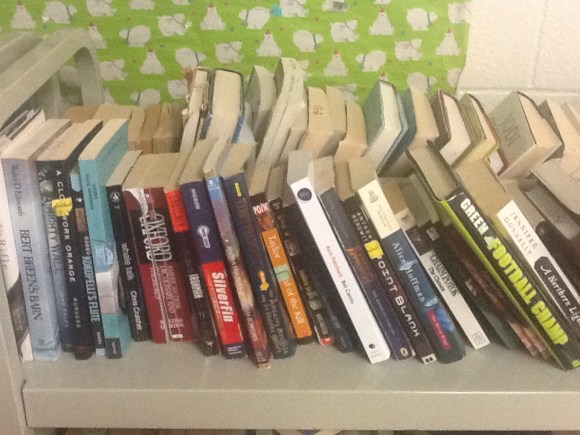
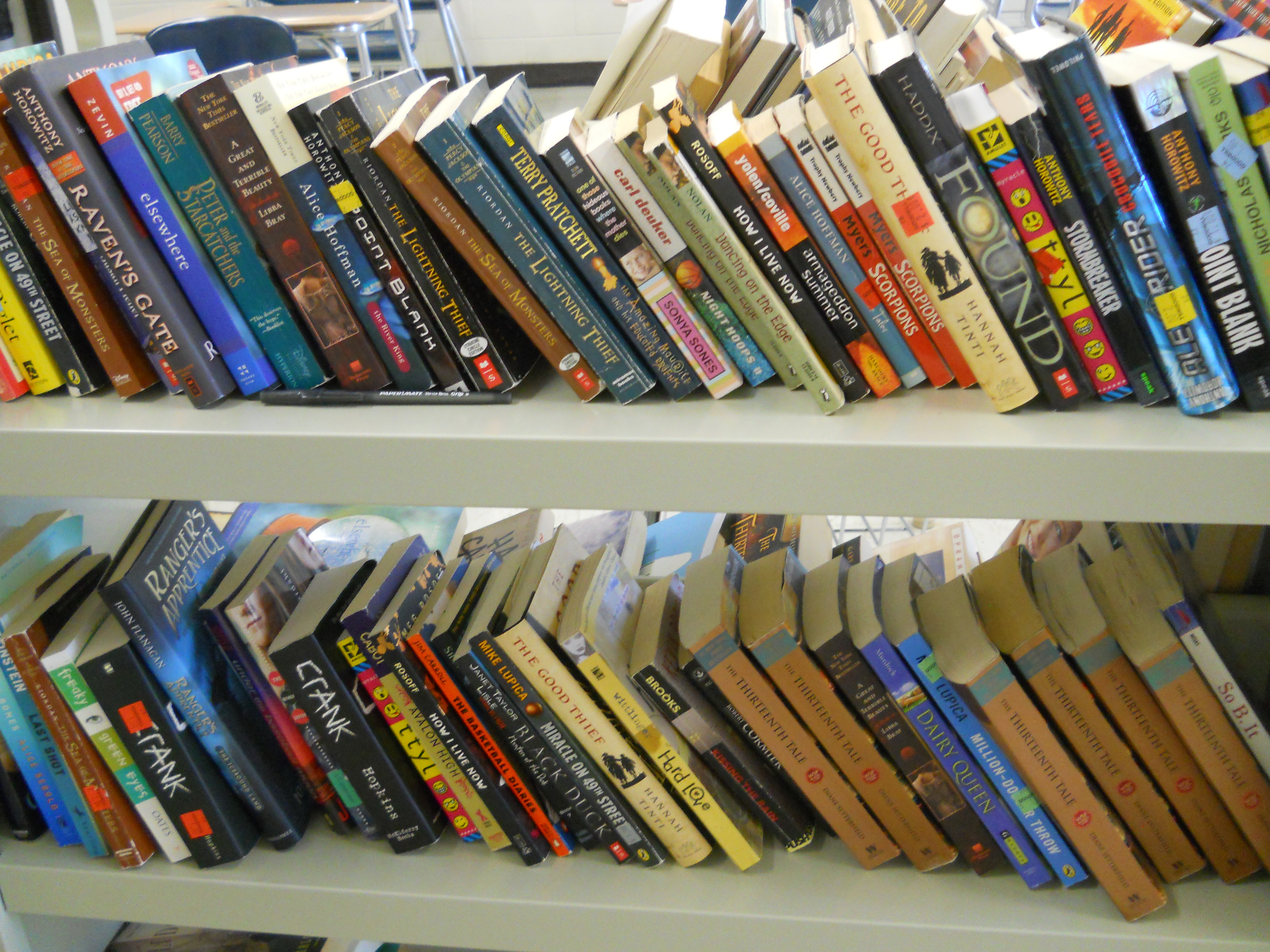
To facilitate the SSR program, there are two carts in the room with books I have purchased through the secondary market, mostly thrift stores and public library book sales (hence the title of the blog “Used Books in Class”). Each cart holds about 150 books; at $1-$2 a book, I have spent about $500 on the 300 books available for SSR.

A wide selection

A wide selection

The most popular titles in circulation these past few months have been:

Lauren Myracle’s TTFN and TTYL
John Flanagan’s Ranger’s Apprentice (any one in the series)
Catherine Gilbert Murdock ‘s Dairy Queen
Gabrielle Zevin’s Elsewhere
Alice Sebold’s The Lovely Bones
Patricia McCormack’s Cut
Carl Deuker’s Gym Candy
S. A. Bodeen’s The Compound
Sarah Dressen’s  Dreamland
Nicholas Sparks’s Dear John
Suzanne Collins’s The Hunger Games Trilogy (pick any one of these; they are on EVERYONE’S shelf)

The students are keeping their responses to the books they read on the Shelfari website this year. This is a commercial site tied to the retail giant Amazon, but there are ways to lock down the private groups we have established for each class. Last year, we used Blogger, but there were some glitches with Internet Explorer and Blogger; unless we used a browser like Firefox, the pages kept jumping and commenting was impossible. When students are on the Shelfari site, they can see what other students in the class are reading, and posting titles they have read or plan on reading is really easy. In addition, there are already reviews of the books, so students are forced to add something original to a review of the book. They can read recommendations (for and against the text) and they can participate in a discussion.

This morning I posted the following discussion prompt on Shelfari:

Hello,
You have had 16 weeks of SSR in class-most of the time with your choice of reading materials.
Tell me how you are progressing as a reader. Are you finding enough materials to read? Have you read at least ONE good book? Are you a better reader now that you were in September? Why or why not?

Some of the responses made my teacher’s heart pound proudly:

Over the past 16 weeks of SSR, I’ve probably read 5 or 6 books. Some of them were short, but some were a reasonable length. I’ve really been enjoying the SSR time we’ve been getting because the quiet period of time we get is really beneficial to my reading skills.

I am progressing in my reading. So far I have read three books this year. I am finding plenty to read. I have found many good books, including “Prom & Prejudice” and “Awkward”. I feel I am a better reader than I was in September because I am reading more difficult books than I was before and in September.

Yes I am better reader because last year I read even slower than I do now and I understand more because of the vocabulary words. I am finding enough materials to read. A good book I read this year was Miracle on 49th Street, this was good because it was a very suspenseful book.

But then, there are the honest appraisals that make me concerned about how students select books and a student’s ability to stay focused in a class for 10-20 minutes:

I’m an average speed reader, but I tend to get distracted. I’ve read a lot of good books, but they were in a lot of different genres. It’s hard for me to find books that interest me lately. I feel that my reading skills have changed a little, I’ve been able to understand things a little more.

During the past 16 weeks of SSR I haven’t really improved very much with my reading. I have only finished one book and I am working on another the first was a pretty good length and didn’t take long to read and the other is pretty long. I am a slow reader and I also just never find the time to sit down and read my book. Also, I get distracted while reading my book sometimes, so I haven’t progressed very much in the weeks of SSR.

And then, there are the even more painfully honest appraisals:

I’m a really really slow reader, and tend to get very distracted while reading, so I have a hard time making lots of progress in books. Books that are available to me don’t interest me. There was only one book that I’ve read and liked in my whole life; but there are no sequels. No I’m not a better reader, my reading skills never change, I’m always a slow and easily distracted reader.

The quiet time in SSR may not be “quiet” enough for some students, so I need to think about the physical space being more reader friendly. Apparently, I also need to have some students develop an understanding of what they like to read, and see how I can get those books onto my book carts.

Success with SSR is monitored through student self-appraisal, so I will be checking back in a few months to see if students note any changes in how they are reading. If nothing else, I know that there is power in the shared quiet reading experience we have twice or three times a week. When their heads are bent down in a book, I can feel them read.

In the classroom, the authors of children’s books are celebrities; the authors of young adult literature are rock stars. So when the National Conference of English Teachers (NCTE) and associated independent organizations the Council of English Leadership (CEL) and the The Assembly on Literature for Adolescents (ALAN) converged on Las Vegas last week, publishers made sure their authors were front and center, delivering keynote addresses and personally meeting and signing books for some of their greatest fans-teachers.

Highlights of the convention included Sherman Alexie (The Absolutely True Diary of a Part-Time Indian) delivering a keynote address to an enthusiastic audience of readers who know how he can reach their reluctant readers. Scott Westerfield (Uglies, Pretties) was there representing the oh-so-popular dystopian fiction. Nicholas Sparks (The Notebook) was there for the older readers, including the teachers themselves, with new educational materials for high school classrooms. Newbery Award winning Lois Lowery (The Giver, Number the Stars) spoke to an enthralled crowd of middle school teachers at ALAN.

The convention had invited many authors; book publishers arranged to bring even more to the exhibition hall. There were over 200 “signing” stations in exhibitor booths advertised in the conference program to alert teachers where to purchase and get books autographed.

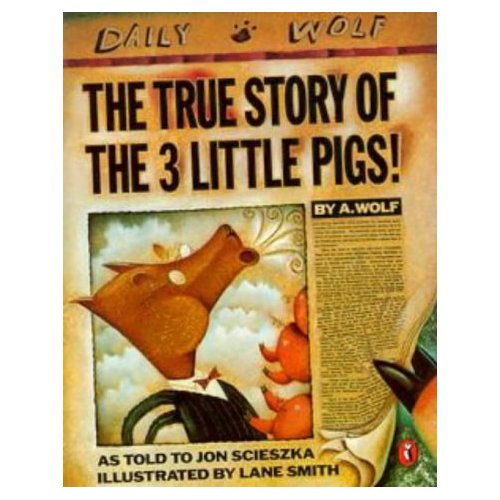
Most booths were mobbed, but on Sunday morning, I came upon a table where a solitary Jon Scieszka sat with a exhibitor. I could not believe my luck. For those who do not know, Scieszka is the author of  Math Curse,  The Stinky Cheese Man and Other Fairly Stupid Tales,and the series The Time Warp Trio, which was made into a TV series. His retelling of the The Three Little Pigs is told from the point of view of A.Wolf. The True Story of the Three Little Pigs was my first Scieszka book experience.In the book, A. Wolf explains how his requests for a cup of sugar from each of the pigs eventually led to his “sneezing” not “huffing and puffing” which sets off the unfortunate demise of the pigs. Illustrated by Lane Smith, this book was one of the “Top 100 Picture Books” of all time in a 2012 poll by School Library Journal. I concur, and I use the book to explain literary point of view to all grade levels. In 2008, Scieszka was named the National Ambassador for Young People’s Literature by the Librarian of Congress.

There Jon Scieszka sat, and there was no teacher in sight!

“Jon Scieszka!” I exclaimed, ” I can’t believe you are alone!”
“Neither can I,” he grinned.
“Me either,” said the exhibitor with him, much more uncomfortably..
“Well, now that I have you all to myself,” I was ready with a question I had asked so many times in my head, “Can I ask how you know so much about my brothers?” I was referring to his hilarious YA memoir Knuckleheads in which Scieszka relates his

experiences growing up. The publisher’s review:

“Growing up as one of six brothers was a good start, but that was just the beginning. Throw in Catholic school, lots of comic books, lazy summers at the lake with time to kill, babysitting misadventures, TV shows, jokes told at family dinner, and the result is Knucklehead. Part memoir, part scrapbook, this hilarious trip down memory lane provides a unique glimpse into the formation of a creative mind and a free spirit.”

The book is almost a mirror reflection of watching my younger siblings compete with each other, set fire to things, and survive Catholic school (with fewer nuns). “I swear you must have been watching my three brothers grow up!” I babbled on.
“You’d be surprised how many people say that,” he chuckled.
“And your short stories in Guy’s Read?” By this time, I was positively gushing, “they are exactly what I need for my 9th grade boys who only want a short read.”
“That’s why we wrote them,” he nodded appreciatively, “for short reads. Now, what name do you want in this book?”
Yes, I got a signed book Spaceheadz by Jon Scieszka! For free. A conversation and a book.

20 minutes later, I passed by the table again, but I caught only a glimpse of him. He was surrounded by a throng of teachers,the serpentine line of fans waiting to talk to him went down the long aisle. My brief and personal moment was obviously a fluke. That’s because he’s Jon Scieszka, children’s book author. Jon Scieszka, Rock Star.

Jack Gantos stood on the steps of the altar at NYC Riverside Chapel blinking through large black glasses as he addressed the large crowd of educators who sat eager to hear him speak, “I feel compelled to throw a little fairy dust teaching into this…to educate and illuminate simultaneously.” Then, looking back at the large screen that projected the cover of his Newbery Award winning book, Dead End in Norvelt, he grinned broadly, “Yes, I wrote this book!”

Jack Gantos was the final keynote speaker at the Teachers College 83rd Saturday Reunion on Saturday, October 27th, and he was clearly enjoying this opportunity to talk about his evolution as a reader and as a writer.  The large screen projected other images, handwritten notes and neatly drawn “spy” maps. “Here are some pages from a journal I kept,” explained Gantos, “ and you should know, that the boy that wrote this journal in fifth grade is the same man who writes today.” And write he does. Gantos is the author of the Rotten Ralph series and several books dedicated to the character Joey Pigza. In addition to this most recent Newbery Award, Gantos has also won Michael L. Printz and Robert F. Sibert honors, and he has been a National Book Award Finalist.

“The very first award you give yourself to set the bar high,” he intoned earnestly. “What everybody needs to do is to honestly come to some sense of literary standards, and those standards are defined by your reading.”

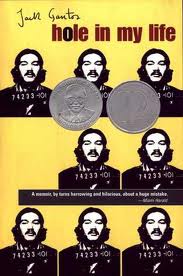
As a teacher, I am most familiar with Gantos’s memoir A Hole in My Life, which is a core text for our 12th grade Memoir elective. At 208 pages, the small paperback is much less intimidating than other memoirs, but its small size packs an amazing punch. With brutal honesty, Gantos details the year when just out of high school he became involved in smuggling drugs, and how he survived his prison sentence. A pattern of his prison mug shots covers the front of the text, and Gantos remarks about that picture early in the memoir:

“The prisoner in the photograph is me. The ID number is mine. Th ephoto was taken in 1972 at the medium-security Federal Correctional Institution in Ashland, Kentucky. I was twenty-one years old and had been locked up for a year already -the bleakest year of my life-and I had more time ahead of me” (3).

The memoir also chronicles Gantos’s development as a writer, and how, “dedicating himself more fully to the thing he most wanted to do helped him endure and ultimately overcome the worst experience of his life.” (Amazon)

I have one class set (30) of these memoirs, and I occasionally find additional copies at used book sales which indicates that the book is often assigned for summer reading.

When they read A Hole in My Life, many students have strong reactions to the prison scenes, which take place in the last third of the memoir. “This is NOT a kid’s book,” more than one of them has told me, “this guy cannot be a children’s author!”  They are notorious for trying to “protect” younger readers from any sordid incidents recounted in a book, and Gantos spares no details in describing some of the violent injuries he witnessed while working in the prison’s hospital ward. A Hole in My Life carries differences in age recommendations. Publisher’s Weekly suggests ages 12 and up, the book is a 2003 Bank Street – Best Children’s Book of the Year, and the Amazon recommendation is for ages 14 and up.

During his address, Gantos talked about the importance talking to teachers and students had in his creative process. Pointing to a picture of the cover, he said proudly, “This is the book that gets me into the front door of some high school where I can I get to talk about books and writing. This book is just like a key where I get to meet those high school kids.”

Usually, I usually assign the memoir to be read and discussed in literature circles and frequently students take these instructions to simply restate plot, “what happened? What happened next?” However, since Gantos was eager to share his structure with his audience, I may employ this strategy with this text. “When you think about a story,” he paused to show a graph projected on the big screen, ”you don’t think about the 50% invisible side called the structure. When I write, I draw 16 boxes and I fill them” he gestured to his sketches, “Beginning, middle,…action, story, character,” proving to this audience that their time pushing graphic organizers onto their students is still a worthwhile endeavor. As for the ending? “A book always has a double ending; the first is the physical ending, but the second is the emotional ending.” This is true in A Hole in My Life. Gantos relates the heartbreaking loss of his prison diary, written in between the lines of The Brother’s Karamazov, Gantos sharing the page space with the words of Dostoevsky. This diary was the more expensive the price to pay for his felonious actions, not the physical time he had spent behind bars.

He explained to his audience, “the reader wants to know how has the character been changed by an experience…the reader wants to have been inspired.” Gantos continued with more passion as he continued, “You read a book, and the next day, the book will be the same, but that you won’t. The that book will infects you and add to that little Library of Congress you have in your head.”

Gantos’s use of the Library of Congress, with the marble and beautiful domed ceiling as a metaphor for the reader’s brain is particularly vivid. The Library of Congress is the largest library in the world, with millions of books, recordings, photographs, maps and manuscripts in its collections. That powerful image is one every teacher in the room hopes for their students.  After all, what could be better than producing a nation of graduates who have the resources of Library of Congress readily available in their brains?

The cover is not at all frightening, but the contents are. I had found two copies of Max Brooks’s World War Z: An Oral History of the Zombie Wars at summer book sales ($1.00 each) and placed them on the 9th grade independent reading book carts.  There was not much interest; the paperback measures a hefty 342 pages. But lately, the book is gaining some tractions with some of the freshmen boys.

“It’s about these interviews with survivors of the Zombie apocalypse ” explained Paul to the class yesterday when he volunteered to share what he was reading, “and it is really realistic. You hear how the zombie plague started and how the governments are corrupt.”

When a classmate endorses a book, the other students listen; first person testimonials are very powerful in our independent reading program. I had touted the book early in September to students when they were first perusing the book carts  The storyline was compelling enough for me, a squeamish reader, to appreciate how Brooks made a zombie war a study in political science. How would governments react to an epidemiological disaster? What would our military do to contain a potent virus? What rules would govern the survivors? I found the book to be a heart pounding read, and I read a few paragraphs to the class who listened with interest.

World War Z is told through a series of eye-witness accounts that occasionally connect characters and events. For example, there is the testimony of the fictional Dr. Kwang Jingshu, Greater Chongqing, United Federation of China:

“I found ‘Patient Zero’ behind the locked door of an abandoned apartment across town. . . . His wrists and feet were bound with plastic packing twine. Although he’d rubbed off the skin around his bonds, there was no blood. There was also no blood on his other wounds. . . . He was writhing like an animal; a gag muffled his growls. At first the villagers tried to hold me back. They warned me not to touch him, that he was ‘cursed.’ I shrugged them off and reached for my mask and gloves. The boy’s skin was . . . cold and gray . . . I could find neither his heartbeat nor his pulse.”

There is also very realistic testimony from the fictional General Travis D’Ambrosia, Supreme Allied Commander, Europe:

“Two hundred million zombies. Who can even visualize that type of number, let alone combat it? . . . For the first time in history, we faced an enemy that was actively waging total war. They had no limits of endurance. They would never negotiate, never surrender. They would fight until the very end because, unlike us, every single one of them, every second of every day, was devoted to consuming all life on Earth.”

What was most frightening as I read was my increasing doubt that the hundreds of characters interviewed in this story were fictional at all. Brooks has written post-zombie war interviews of doctors, generals, mayors, and newspaper reporters with remarkable authenticity.

But World War Z is not the only post-apocolyptic zombie book making the rounds in class. Another popular book making the rounds is Jonathan Mayberry’s Rot and Ruin (Benny Imura) the first novel in a series. I often see the rather grotesque cover art sitting on a desk, one eyeball staring up at the ceiling.

A review of Rot and Ruin on Amazon states:
In the zombie-infested, post-apocalyptic America where Benny Imura lives, every teenager must find a job by the time they turn fifteen or get their rations cut in half. Benny doesn’t want to apprentice as a zombie hunter with his boring older brother Tom, but he has no choice. He expects a tedious job whacking zoms for cash, but what he gets is a vocation that will teach him what it means to be human.
Zombie literature seems to cross our class’s gender lines, although Rot and Ruin seems to be more popular with the girls in the class. At present, there are only a few copies available through our school library, so I will be looking out for it at book sales. In addition to these titles, we also have several copies of James Dashner’s The Maze Runner, a series also loosely connected to the zombie phenomenon.
I am not entirely sure what my students’ fascination with zombies means. There are always trends or fads in literature; several years ago handsome vampires were all the rage, and several year before that, wizards ruled the reading lists. So I am aware that this infatuation with all things zombie will eventually fade, but maybe I can convince them to use their own brains as “food” for thought.

Smartblogs recently ran a post by Bill Ferriter titled “Reading Nonfiction is not Optional ” where he argued that there is too much fiction in a student’s reading diet. “The sad truth,” he wrote, “is that fiction still dominates the literacy lives of young readers. Whether they are wrapped up in fantastic exploits written by guys like Rick Riordan or churning through the latest release in the hottest new vampire series, today’s kids rarely make room for nonfiction in their book bags.”

Sad truth? Why is this a “sad truth”? What is wrong with reading fiction? Fiction, like its counterpart non-fiction, offers our student readers valuable life lessons. For example, in an online article in guardian.co.uk September 7, 2011 Reading Fiction ‘Improves Empathy’, Study Finds, Professor Keith Oatly at the University of Toronto who studies the psychology of fiction reports that:

“I think the reason fiction but not non-fiction has the effect of improving empathy is because fiction is primarily about selves interacting with other selves in the social world. The subject matter of fiction is constantly about why she did this, or if that’s the case what should he do now, and so on. With fiction we enter into a world in which this way of thinking predominates. …. In fiction, also, we are able to understand characters’ actions from their interior point of view, by entering into their situations and minds, rather than the more exterior view of them that we usually have.”

Annie Murphy Paul noted the same study in her article in The New York TimesYour Brain on Fiction (3/17/12) writing that, “Brain scans are revealing what happens in our heads when we read a detailed description, an evocative metaphor or an emotional exchange between characters. Stories, this research is showing, stimulate the brain and even change how we act in life.” Apparently, our brains cannot differentiate between the fictional experience and the real life experience, “in each case, the same neurological regions are stimulated.” Furthermore, the simulation of social experience in fiction through a character’s point of view  helps prepare our brains for real-life social interactions.

In other words, while the genre of non-fiction may be the recording of real life, the genre of fiction is critical in preparing readers for real life.

In his post, Ferriter also quoted young adult (YA) writer Walter Dean Myers:

“We all know we should eat right and we should exercise, but reading is treated as if it’s this wonderful adjunct…We’re still thinking in terms of enticing kids to read with a sports book or a book about war. We’re suggesting that they’re missing something if they don’t read but, actually, we’re condemning kids to a lesser life. If you had a sick patient, you would not try to entice them to take their medicine. You would tell them, ‘Take this or you’re going to die.’ We need to tell kids flat out: reading is not optional.”

Ferriter’s paraphrase of Myers’s statement, the title of his post, “Reading Nonfiction is not Optional,” strikes the wrong tone. Myers, a writer of both YA fiction and non-fiction, did not specify as to the genre he endorsed for student reading. Myers was advocating reading, period. Both fiction and non-fiction are critical to our students’ growth and development, not one genre at the expense of another.

Independent reading means a student can choose to read non-fiction OR fiction

Yes, the English Language Arts Common Core State Standards (ELA CCSS) call for an increase in non-fiction. The authors of the ELA CCSS created a little chart on page 5 of the ELA CCSS that notes that students should be reading 70% non-fiction and 30% fiction by grade 12. But this is not the ratio for reading in an English Language Arts classroom. That is the ratio for a whole school curriculum.

I am particularly sensitive to the increasing number of attacks on fiction and the need to reducing fiction from the English classroom. Ferriter’s post makes a similar argument and could be associated with the myth that “English teachers will be asked to teach non-fiction”. This myth is directly repudiated in the ELA CCSS document:

“Fact: With the Common Core ELA Standards, English teachers will still teach their students literature as well as literary non‐fiction. However, because college and career readiness overwhelmingly focuses on complex texts outside of literature, these standards also ensure students are being prepared to read, write, and research across the curriculum, including in history and science. These goals can be achieved by ensuring that teachers in other disciplines are also focusing on reading and writing to build knowledge within their subject areas.”

In other words, reading must be offered in every discipline, students must read across the curriculum.While Ferriter’s Reading Nonfiction is Not Optional makes the important point that all teachers are responsible for modeling reading, he oversteps when he says, “If you want students to love nonfiction — and you should considering the important role that nonfiction plays in learning — you really do need to stop spending all of your sustained silent reading time figuring out what’s going to happen next to Origami Yoda.” Good SSR programs allow for independent choice in any genre by students. What Ferriter could have suggested that the expansion of SSR to other disciplines would increase reading of non-fiction while having the additional benefit of satisfying the ELA CCSS.

Of course, I often hear arguments from teachers in other disciplines moaning, “What do I drop out of my course to include reading?” which could be interpreted as the reason why the authors of the ELA CCSS felt the need to develop reading and writing standards for History, Social Studies, Science and the Technical Areas. These disciplines need to step up the reading in their classrooms.

But who said reading non-fiction was an option? I can assure Ferriter that English/Language Arts teachers are dedicated to improving student reading. They are not hung up on genre, but when they teach fiction, English/Language Arts teachers are teaching their subject matter. The adoption of the ELA CCSS means that all disciplines must offer for opportunities to share their subject matter. To re-frame Ferriter’s argument to align with the new standards, reading non-fiction in every classroom is not an option, and reading non-fiction in an English/Language Arts classroom can be a choice. After all, that growing body of research shows that fiction is just as important as non-fiction for our students, including what happens in Origami Yoda.

Be vewy, vewy quiet….we’re reading!

Our new block schedule at Wamogo High School has made the school much quieter. We have alternating days, four periods of 85 minute classes; the traffic in the hallway is less, and, thankfully, so are the announcements. This quiet provides an excellent environment for us to continue our practice of silent sustained reading (SSR) at all grade levels, 7-12. We embarked on our SSR program two years ago, and we have noted both the anecdotal success with the program through participant surveys and the reading scores on the CMT/CAPT (State of CT mandated tests).

There are a number of texts on the incorporation of an SSR program in a language arts classrooms. Janice Pilgreen’s book (2000) The SSR HandbookHow to Organize and Manage a Sustained Silent Reading Program has an eight point checklist for successfully implementing SSR.

Using Pilgreen’s checklist (her suggestions in red), here is an explanation of how Wamogo is implementing the SSR program this year:

  • “Students need to be flooded with reading materials.”Our classroom libraries of whole class reads and independent reads are full. We have several carts that we can roll into classrooms of independent reading materials. Some carts are dedicated to specific grade levels or classes. For example, our Memoir class have a cart full of memoirs of all reading levels that students can select. Our school library is one of the few in the state to offer Overdrive® to all of its schools. Region 6 students and staff can easily download ebooks to a variety of devices from our Overdrive® catalog with over 15,000 titles. Students and staff can borrow free ebooks and read them on their iPod, iPad, laptop, Kindle or Nook. Creating a flood of reading materials is discussed also in Kelly Gallagher’s book Readicide. 
  • Appeal: The reading materials should be geared toward the interests of the students who are reading them.” We are sensitive to the wide variety of interests in our school. Many of our students are vocational agriculture students who are interested in non-fiction selections. We include all genres: manuals, graphic novels, historical non-fiction, fiction (YA titles) in trying to find books that interest our students.
  • Conducive Environment: The physical setting should be quiet and comfortable.” The new block schedule has benefitted the SSR program in an welcomed level of quiet in the school day. We do have the students read at their desks; we do not have “comfy chairs”.
  • Encouragement: Students need supportive adult role models who can offer assistance in locating reading material.” Our English Department teachers read with the students. We read the books during SSR so that we can make recommendations and discuss books with our students. Our amazing library media specialist comes in and gives book talks. She has also successfully incorporated popular author booktalks, in person or on SKYPE, with popular writers such as Neil Schusterman, Gordan Korman,and  Laurie Halse Anderson. (I am hoping for a Jon Szeiska interview one day *hint-hint*)
  • Staff Training: SSR doesn’t just happen; the staff of a school should be well versed in the goals and procedures used at the school.” Our department has seen the benefits of the SSR program, and we support each other with strategies to make the program work for us. There are teachers who use SSR time to confer with students, however, we found conferencing  distracted other readers. We also discuss the best times to implement an SSR activity in a block period, and how to measure results. 
  • Non-accountability: This is perhaps the most controversial factor. Pilgreen found that students read more, and had more positive attitudes toward reading, when book reports and such were not required.” In today’s data driven classrooms, this is a difficult, even risky, decision. In 9th grade, we do require one book review per quarter to be placed on a shared class blog, and we do require students to read more than one book per quarter. I also record the start page and the end page (students provide this number) as a way of keeping track of their progress. But, there are no other assessments of their independent reading.
  • “Follow-up Activities: Pilgreen found that follow-up activities such as conversations about books read by students or the teacher encouraged other to try them out.” We do spontaneous book talks. “Anyone reading a good book?” I will ask, “Any recommendations?” Students will share their reactions to a book when asked.
  •  “Distributed Time to Read: A common error made by schools new to SSR is that they have one long SSR period a week, rather than shorter periods that occur daily. Pilgreen found that successful programs have students read for fifteen to twenty minutes daily.” We have found that 15-20 minutes of reading time is ideal. On an alternating block schedule, this gives our students 30-60 minutes a week of quality reading time.

A classroom book cart in Grade 9 with high interest titles

Robert Marzano’s book Building Background Knowledge for Academic Achievement, ASCD, (2004) references Pilgreen’s eight steps; he  suggests a 5-Step Process for implementing SSR:

Step 1: Students identify topics of interest to them.
Step 2: Students identify reading material.
Step 3: Students are provided with uninterrupted time to read.
Step 4: Students write about or represent the information in their notebooks.
Step 5: Students interact with the information.

The major difference between Pilgreen and Marzano is the use of a notebook (step 4) for recording which we may incorporate this year in having students respond to prompt. These prompts are centered on story elements (“What similarities do you notice between your character and the archetypal character we study who is on a journey?”) . Our students are using writing notebooks for free-writes (front to back) and notes/vocabulary/grammar (back to front). Their first assignment was to “decorate” the notebooks, and already there are some enthusiastic participants for both decorating and free-writes!Finally Doug Fisher and Nancy Frey make a case for including SSR as a means to acquire content vocabulary in their book  Word Wise and Content Rich, Grades 7-12: Five Essential Steps to Teaching Academic Vocabulary, Fisher and Frey consider SSR as a means to contribute to gains in both background knowledge and vocabulary.

One more reason to implement SSR? The world is noisy. Students have their individual soundtracks plugged into their ears wherever they go; all venues from public transportation to shopping to sporting events have soundtracks; phone ring tones abound. There is a cacophony of sound in a student’s brain during the waking, perhaps even the sleeping, hours.The daily 15-20 minutes we offer students to read may be the only 15-20 minutes in a day where they are forced to be quiet. SSR allows them to absorb information without distraction. Ultimately, SSR at every grade level provides the opportunity for students to shut out the noise of school; SSR teaches our students to be vewy, vewy quiet. They’re reading.