Archives For November 30, 1999

Jack Gantos stood on the steps of the altar at NYC Riverside Chapel blinking through large black glasses as he addressed the large crowd of educators who sat eager to hear him speak, “I feel compelled to throw a little fairy dust teaching into this…to educate and illuminate simultaneously.” Then, looking back at the large screen that projected the cover of his Newbery Award winning book, Dead End in Norvelt, he grinned broadly, “Yes, I wrote this book!”

Jack Gantos was the final keynote speaker at the Teachers College 83rd Saturday Reunion on Saturday, October 27th, and he was clearly enjoying this opportunity to talk about his evolution as a reader and as a writer.  The large screen projected other images, handwritten notes and neatly drawn “spy” maps. “Here are some pages from a journal I kept,” explained Gantos, “ and you should know, that the boy that wrote this journal in fifth grade is the same man who writes today.” And write he does. Gantos is the author of the Rotten Ralph series and several books dedicated to the character Joey Pigza. In addition to this most recent Newbery Award, Gantos has also won Michael L. Printz and Robert F. Sibert honors, and he has been a National Book Award Finalist.

“The very first award you give yourself to set the bar high,” he intoned earnestly. “What everybody needs to do is to honestly come to some sense of literary standards, and those standards are defined by your reading.”
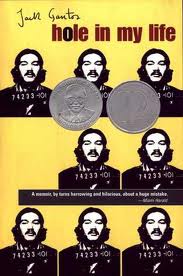
As a teacher, I am most familiar with Gantos’s memoir A Hole in My Life, which is a core text for our 12th grade Memoir elective. At 208 pages, the small paperback is much less intimidating than other memoirs, but its small size packs an amazing punch. With brutal honesty, Gantos details the year when just out of high school he became involved in smuggling drugs, and how he survived his prison sentence. A pattern of his prison mug shots covers the front of the text, and Gantos remarks about that picture early in the memoir:

“The prisoner in the photograph is me. The ID number is mine. Th ephoto was taken in 1972 at the medium-security Federal Correctional Institution in Ashland, Kentucky. I was twenty-one years old and had been locked up for a year already -the bleakest year of my life-and I had more time ahead of me” (3).

The memoir also chronicles Gantos’s development as a writer, and how, “dedicating himself more fully to the thing he most wanted to do helped him endure and ultimately overcome the worst experience of his life.” (Amazon)

I have one class set (30) of these memoirs, and I occasionally find additional copies at used book sales which indicates that the book is often assigned for summer reading.

When they read A Hole in My Life, many students have strong reactions to the prison scenes, which take place in the last third of the memoir. “This is NOT a kid’s book,” more than one of them has told me, “this guy cannot be a children’s author!”  They are notorious for trying to “protect” younger readers from any sordid incidents recounted in a book, and Gantos spares no details in describing some of the violent injuries he witnessed while working in the prison’s hospital ward. A Hole in My Life carries differences in age recommendations. Publisher’s Weekly suggests ages 12 and up, the book is a 2003 Bank Street – Best Children’s Book of the Year, and the Amazon recommendation is for ages 14 and up.

During his address, Gantos talked about the importance talking to teachers and students had in his creative process. Pointing to a picture of the cover, he said proudly, “This is the book that gets me into the front door of some high school where I can I get to talk about books and writing. This book is just like a key where I get to meet those high school kids.”

Usually, I usually assign the memoir to be read and discussed in literature circles and frequently students take these instructions to simply restate plot, “what happened? What happened next?” However, since Gantos was eager to share his structure with his audience, I may employ this strategy with this text. “When you think about a story,” he paused to show a graph projected on the big screen, ”you don’t think about the 50% invisible side called the structure. When I write, I draw 16 boxes and I fill them” he gestured to his sketches, “Beginning, middle,…action, story, character,” proving to this audience that their time pushing graphic organizers onto their students is still a worthwhile endeavor. As for the ending? “A book always has a double ending; the first is the physical ending, but the second is the emotional ending.” This is true in A Hole in My Life. Gantos relates the heartbreaking loss of his prison diary, written in between the lines of The Brother’s Karamazov, Gantos sharing the page space with the words of Dostoevsky. This diary was the more expensive the price to pay for his felonious actions, not the physical time he had spent behind bars.

He explained to his audience, “the reader wants to know how has the character been changed by an experience…the reader wants to have been inspired.” Gantos continued with more passion as he continued, “You read a book, and the next day, the book will be the same, but that you won’t. The that book will infects you and add to that little Library of Congress you have in your head.”

Gantos’s use of the Library of Congress, with the marble and beautiful domed ceiling as a metaphor for the reader’s brain is particularly vivid. The Library of Congress is the largest library in the world, with millions of books, recordings, photographs, maps and manuscripts in its collections. That powerful image is one every teacher in the room hopes for their students.  After all, what could be better than producing a nation of graduates who have the resources of Library of Congress readily available in their brains?

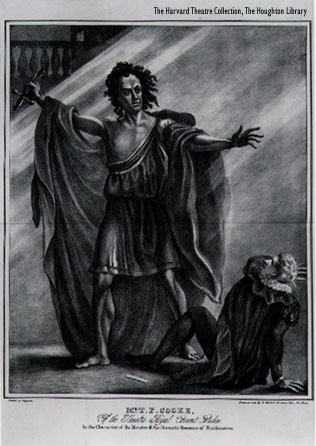
It’s Halloween…what is the most frightening story you have ever read?

“I busied myself to think of a story, — a story to rival those which had excited us to this task. One which would speak to the mysterious fears of our nature, and awaken thrilling horror — one to make the reader dread to look round, to curdle the blood, and quicken the beatings of the heart. ……. I thought and pondered — vainly. I felt that blank incapability of invention which is the greatest misery of authorship, when dull Nothing replies to our anxious invocations. Have you thought of a story?” (Shelley, Preface)

Yes. Frankenstein. Mary Shelley’s masterpiece drafted when she was18 years old.  Teaching Mary Shelley’s “ghost story” always elicits the most interesting responses from my students. I have taught the novel every year for the past 12 years to students in grades 10-12, in AP or unleveled curriculums, and the results are always satisfying.

Note: I did not say easy.

Since I am now familiar enough with the text and the pitfalls that catch most students, I know that I will need to summon an enormous amount of energy to begin teaching Frankenstein. First, there is the baggage of the pop culture monster with its green skin, bolted neck and squared boots. That baggage must be “unpacked” first. Then, there is Robert Walton’s epistolary start of the novel, coupled with Victor Frankenstein’s lengthy autobiography.  References to Cornelius Agrippa, Lake Geneva, and Galvanism are more stumbling blocks.

  • “So, where is the Monster?”
  • “When does this book get good?”
  • “I’m sorry, but this is just boring!”

Okay, Chapter Five.  On a dark and stormy night,

“With an anxiety that almost amounted to agony, I collected the instruments of life around me, that I might infuse a spark of being into the lifeless thing that lay at my feet. It was already one in the morning; the rain pattered dismally against the panes, and my candle was nearly burnt out, when, by the glimmer of the half-extinguished light, I saw the dull yellow eye of the creature open; it breathed hard, and a convulsive motion agitated its limbs”(Shelley, 5).

The Monster lives! Like the Creator in Genesis who “formed the man of dust from the ground and breathed into his nostrils the breath of life, and the man became a living creature” (Genesis 2:8), Shelley breathes life into her creation without regard to hard science.  In both stories, the empirical data or formulas, which led to these creations, express leaps of faith understood by the reader. The spark of life is imbued; the creation lives and breathes. The Creator of Genesis differs immediately from Victor when he, “planted a garden in Eden, in the east, and there he put the man whom he had formed”(Genesis 2:8), In contrast, the reader can hear Victor’s sudden gasp, “Beautiful!–Great God!” so repulsed is he once the creature comes to life. Victor weakly admits that all this work has been a failure, and comments almost apologetically, “The different accidents of life are not so changeable as the feelings of human nature” (Shelley, 5). Unfortunately, the creation has been loosed upon the earth; he will not easily be unmade simply because his creator has changed his mind.

Exhausted, Victor sleeps only to be wakened by

“when, by the dim and yellow light of the moon, as it forced its way through the window shutters, I beheld the wretch — the miserable monster whom I had created… His jaws opened, and he muttered some inarticulate sounds, while a grin wrinkled his cheeks. He might have spoken, but I did not hear; one hand was stretched out, seemingly to detain me, but I escaped, and rushed down stairs” (Shelley, 5).

Rejection! Abandonment! Isolation.

The Creator in Genesis does not abandon his creations, despite their disastrous decision to disobey. Rather, the reader finds this Creator “made for Adam and for his wife garments of skins and clothed them (Genesis 3:21) before banishing them from the Garden.Victor, in contrast, flees from the sound and the touch of the Monster who was trying to say….what? Creator?….Father?

  • Daddy.”
  • “Victor is a jerk.”
  • “He ran away because he didn’t want the responsibility.”

Exactly. And that is why Frankenstein gets to the heart of so many of the issues that our students, our culture, our world must deal with today. There are questions of responsibility. The responsibilities of a creator for the created can be extended to include the responsibilities of parents to children, of scientists to inventions, of writers to literature, of politicians to policies, and of pundits to sound bytes. What happens when the “creation” goes bad?

  • “If Victor kills the Monster, is it murder?”
  • “It’s Victor’s fault that the Monster is a murderer.”

Is the Monster a human? Shelley allows that the Monster eats, reads, and pines for a companion; he is alone, and miserable. A critical scene has the Monster pleading with Victor for a friend, a companion, a mate. Shelley has her Monster claim to have a soul; is the Monster a human? What makes a human a human?

  • Having a mate will mean monster babies!”
  • “Why didn’t Victor think about what the Monster would do?”
  • “This is just like Jurassic Park !”

Shelley’s novel also considers related ethical questions. These include what is the result of unleashing a new technology on earth? Because the technology exists to create, should the technology be used? How far should technology go in helping humanity?

In our brave new world, the “lyger” has been created because geographically separated tigers and lions can be crossbred in labs. Genetically altered crops are in the mainstream food source. These technological advancements have moved into our world with a ripple. But what of the advancements that will follow? Will human cloning become a reality, and will society deal ethically with clones? How far are we from artificial intelligence and should-or can- this intelligence be controlled? What does Frankenstein teach the reader about making ethical decisions today or in the near future? Why is literature such a great predictor for what will happen in the future?

We feel pathos. The Monster’s story is one of tragedy.

  • “Victor is the real monster.”
  • “I feel bad for the Monster…he didn’t want to be a Monster.”

By the end of the novel, my students have dealt with some very profound ideas. They have asked some very important questions about responsibility, humanity, and ethical behavior. They feel a sense of accomplishment in reading a difficult 19th Century text. They have confronted contemporary issues through literature, and isn’t that what is supposed to happen in the classroom?

Mary Shelley was only 18 years old when she attempted to answer some of the questions about the limits of man.  She was young and ambitious, like many of our students. Her “hideous progeny” is extraordinarily prescient; then novel is in every way a Modern Prometheus-a modern myth. Mary Shelley’s Frankenstein is a must read, and a cautiously frightening tale, for Halloween or for any other day.

The cover is not at all frightening, but the contents are. I had found two copies of Max Brooks’s World War Z: An Oral History of the Zombie Wars at summer book sales ($1.00 each) and placed them on the 9th grade independent reading book carts.  There was not much interest; the paperback measures a hefty 342 pages. But lately, the book is gaining some tractions with some of the freshmen boys.

“It’s about these interviews with survivors of the Zombie apocalypse ” explained Paul to the class yesterday when he volunteered to share what he was reading, “and it is really realistic. You hear how the zombie plague started and how the governments are corrupt.”

When a classmate endorses a book, the other students listen; first person testimonials are very powerful in our independent reading program. I had touted the book early in September to students when they were first perusing the book carts  The storyline was compelling enough for me, a squeamish reader, to appreciate how Brooks made a zombie war a study in political science. How would governments react to an epidemiological disaster? What would our military do to contain a potent virus? What rules would govern the survivors? I found the book to be a heart pounding read, and I read a few paragraphs to the class who listened with interest.

World War Z is told through a series of eye-witness accounts that occasionally connect characters and events. For example, there is the testimony of the fictional Dr. Kwang Jingshu, Greater Chongqing, United Federation of China:

“I found ‘Patient Zero’ behind the locked door of an abandoned apartment across town. . . . His wrists and feet were bound with plastic packing twine. Although he’d rubbed off the skin around his bonds, there was no blood. There was also no blood on his other wounds. . . . He was writhing like an animal; a gag muffled his growls. At first the villagers tried to hold me back. They warned me not to touch him, that he was ‘cursed.’ I shrugged them off and reached for my mask and gloves. The boy’s skin was . . . cold and gray . . . I could find neither his heartbeat nor his pulse.”

There is also very realistic testimony from the fictional General Travis D’Ambrosia, Supreme Allied Commander, Europe:

“Two hundred million zombies. Who can even visualize that type of number, let alone combat it? . . . For the first time in history, we faced an enemy that was actively waging total war. They had no limits of endurance. They would never negotiate, never surrender. They would fight until the very end because, unlike us, every single one of them, every second of every day, was devoted to consuming all life on Earth.”

What was most frightening as I read was my increasing doubt that the hundreds of characters interviewed in this story were fictional at all. Brooks has written post-zombie war interviews of doctors, generals, mayors, and newspaper reporters with remarkable authenticity.

But World War Z is not the only post-apocolyptic zombie book making the rounds in class. Another popular book making the rounds is Jonathan Mayberry’s Rot and Ruin (Benny Imura) the first novel in a series. I often see the rather grotesque cover art sitting on a desk, one eyeball staring up at the ceiling.

A review of Rot and Ruin on Amazon states:
In the zombie-infested, post-apocalyptic America where Benny Imura lives, every teenager must find a job by the time they turn fifteen or get their rations cut in half. Benny doesn’t want to apprentice as a zombie hunter with his boring older brother Tom, but he has no choice. He expects a tedious job whacking zoms for cash, but what he gets is a vocation that will teach him what it means to be human.
Zombie literature seems to cross our class’s gender lines, although Rot and Ruin seems to be more popular with the girls in the class. At present, there are only a few copies available through our school library, so I will be looking out for it at book sales. In addition to these titles, we also have several copies of James Dashner’s The Maze Runner, a series also loosely connected to the zombie phenomenon.
I am not entirely sure what my students’ fascination with zombies means. There are always trends or fads in literature; several years ago handsome vampires were all the rage, and several year before that, wizards ruled the reading lists. So I am aware that this infatuation with all things zombie will eventually fade, but maybe I can convince them to use their own brains as “food” for thought.

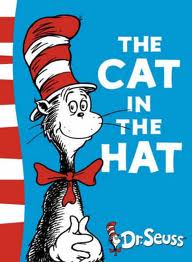
One of my favorite units from the National Council of Teachers of English website (NCTE-http://www.readwritethink.org/) is the unit,“Id, Ego, and the Superego in Dr. Seuss’s The Cat in the Hat” by Junius Wright of Charleston, South Carolina. The lessons in this unit use The Cat in the Hat “as a primer to teach students how to analyze a literary work using the literary tools of plot, theme, characterization, and psychoanalytical criticism.” The unit is stretched over eight 50 minute sessions, complete with handouts and worksheets for grades 9-12. I have completed the unit with my Advanced Placement English Literature students, however, in a shorter period of time of two 80 minute sessions, since many of my seniors are taking psychology or took psychology as juniors, and they are already familiar with Freud’s seminal work The Interpretation of Dreams.

The premise is that students will read The Cat in the Hat and analyze the development of characters (Narrator, Cat in the Hat, Fish) from the picture book through the stages of id, ego, and superego or analyze the static nature of characters (Thing 1 & Thing 2) locked in one stage.

Wright provides student friendly definitions and commentary for each psychoanalytic stage in one of the handouts on the Read, Write, Think website:

Id
The id is the part of the personality that contains our primitive impulses—such as thirst, anger, hunger—and the desire for instant gratification or release. According to Freud, we are born with our id. The id is an important part of our personality because as newborns, it allows us to get our basic needs met. Freud believed that the id is based on our pleasure principle. The id wants whatever feels good at the time, with no consideration for the other circumstances of the situation. The id is sometimes represented by a devil sitting on someone’s shoulder. As this devil sits there, he tells the ego to base behavior on how the action will influence the self, specifically how it will bring the self pleasure.
Superego
The superego is the part of the personality that represents the conscience, the moral part of us. The superego develops due to the moral and ethical restraints placed on us by our caregivers. It dictates our belief of right and wrong. The superego is sometimes represented by an angel sitting on someone’s shoulder, telling the ego to base behavior on how the action will influence society.
Ego
The ego is the part of the personality that maintains a balance between our impulses (our id) and our conscience (our superego). The ego is based on the reality principle. The ego understands that other people have needs and desires and that sometimes being impulsive or selfish can hurt us in the end. It is the ego’s jobto meet the needs of the id, while taking into consideration the reality of the situation. The ego works, in other words, to balance the id and superego. The ego is represented by a person, with a devil (the id) on one shoulder and an angel (the superego) on the other.

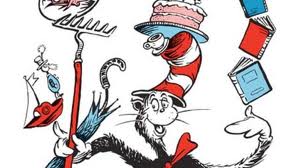
I usually read the story aloud, although there are several websites that have The Cat and the Hat with audio read-aloud for teachers who do not want to get swept up in Seuss iambic rhythms and rhymes. I have collected about 30 copies of The Cat in the Hat at used book sales over the past two years; each copy has cost between $.50-$2.00, so the total investment has been $25.00. Making sure each student has a copy of the text is tremendously important, because it is through the illustrations that the students can successfully analyze the characters.

“So we sat in the house. We did nothing at all. So all we could do was to Sit! Sit! Sit! Sit! And we did not like it. Not one little bit.”

“Look how bland their faces are,” notes Alex, “I think this is really the ego stage.”

“I know some good games we could play,” Said the cat. “I know some new tricks,” Said the Cat in the Hat. “A lot of good tricks. I will show them to you. Your mother Will not mind at all if I do.”

“Now, that’s just creepy!” says Skye. “The Cat walks in and starts convincing them that their Mother won’t mind?”
“That Cat is in id,” replies Mike, “he’s going to do what ever he wants.”

 “No! Not in the house!” Said the fish in the pot. “They should not fly kites In a house! They should not. Oh, the things they will bump! Oh, the things they will hit! Oh, I do not like it! Not one little bit!”

“Look at the Fish,” laughs Nancy, “He is out of the water, risking his life for the kids.”
There is a chorus of “Superego.” Everyone agrees.

After the unit, and once the students have a clear sense of how to analyze the characters in this story, I ask them to take this idea and analyze a different piece of literature. My students have just completed a reading of Antigone, so I asked them to psychoanalyze the actions of one character. Not surprisingly, most of them chose to study Creon’s movement from ego on his first day on the job as the King of Thebes, through his dissolution into id when he fights with both Antigone and his son Haemon.

“But, isn’t he really in superego?” asks Tom, “I mean, Creon is trying to uphold the law as king; he is trying to do what is right, or at least what is politically smart.” Other students consider his point….and this is the reason I love teaching this lesson. The use of psychological criticism humanizes literary characters, and our discussions after this lesson are always more informed by our deepening understanding of human nature. Students will use their understanding of id, ego, and superego from this lesson and apply these understandings to Frankenstein, Paradise Lost, Dr. Jekyll and Mr. Hyde, Richard III, and other important works of literature.

So, thank you, Junius Wright, for a wonderful unit on psychological criticism, but more importantly, thank you, Dr. Seuss. Not only did you teach my students to read, but you continue to teach them to think. And what did they think of the ending of The Cat in the Hat?

Should we tell her The things that went on there that day? She we tell her about it? Now, what SHOULD we do? Well… what would YOU do If you mother asked YOU?

Not one would confess. Sadly, there is not one superego in the entire class.


…..the little mermaid’s tongue was cut out by the sea witch.”

…..the stepsisters cut off parts of their feet in order to fit into the golden shoe.”

…..the prince’s eyes were pierced by thorns after he was thrown from the tower.”

…..the children will not find the way home again, and we shall be rid of them.”

“Eugh,” says Nick. “These are horrible stories”

“They are so bloogory, …a combination of bloody and gory!” exclaims Loghan.

“Really, really gory,” adds Cassie.

We are in the middle of a fairy tale unit for my 9th grade English class which was designed so that students can begin to identify patterns in classical stories and match those patterns to the contemporary stories they read independently.

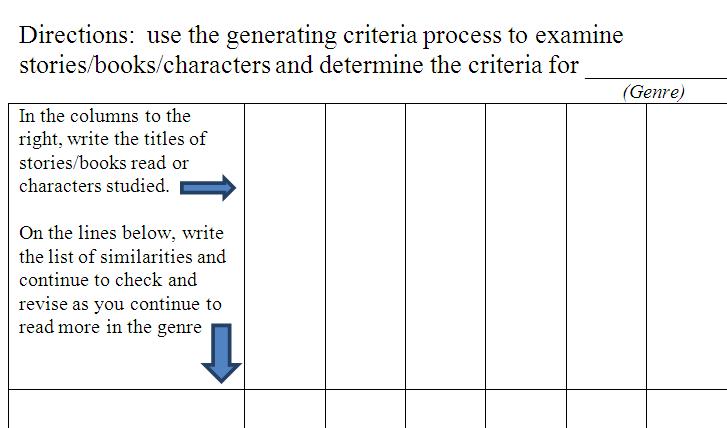
Each student has a “criteria” sheet to complete while reading the fairy tales in this unit. We share these lists of  repeated elements in fairy tales in class after reading.

Our form for generating the criteria for fairy tales


So far they have listed elements that would be expected from comparison by reading fairy tales such as castles, giants, and magic objects from their readings of Jack and the Beanstalk, Rapunzel, The Valiant Little Tailor, and Cinderella. They have also compiled a list of elements I did not expect: birds; thieves and lies; trees and bushes; and wives, not mothers. There is also a great deal of “love at first sight” discussion.

“Cinderella only saw the prince once!” says Casey. While Louisa notes that the prince is the only man Rapunzel has ever seen, “and the next time she sees him, she has a set of twins!”

Our fairy tale unit is a first exposure to the genre without the Disney treatment for many of my students, and a number of the students have commented how they think these original  fairy tales are too frightening for children. On the other hand, there are a few students who have enjoyed the dark and edgy nature of Grimms (aptly named) fairy tales. “At least the characters aren’t breaking out in song,” muttered Christopher reading The Little Mermaid.

We have no trade books or anthologies on fairy tales and have been using online texts only. Some of the texts are difficult, so we have posted resources such as the site Lit2go where most of the stories in the Andrew Lang fairy tale books and Grimm’s collection of stories have been recorded; clicking on links brings a student to the text and supporting audio.

Once the students have generated the criteria for the genre of fairy tales, we have asked them to match the fairy tale story plot to one of the  “Seven Plots in Storytelling.” Students need to explain why the fairy tale plot matches one of the seven plots in literature:

  • Overcoming the Monster
  • Rags to Riches .
  • The Quest 
  • Voyage and Return 
  • Comedy 
  • Tragedy
  • Rebirth

The “rags to riches” plot is easily understood by most students through the story of Cinderella. Similarly, they easily identify the “overcoming the monster” plot with Jack and the Beanstalk. The more tricky plots of “redemption” and “tragedy” challenge them to incorporate evidence from the story. For example, Michael suggested that the Giant’s fall from the beanstalk, “was tragic for the Giant”, but others in the class argued back that tragedy means the main character suffers the tragedy. Other students put The Little Mermaid into the “redemption” plot because, as Cassie noted, “she gave up her life to spare the life of the Prince, and she becomes immortal as a result.”

We have also had the students create original stories that address one of the seven plots using the software Storybird. The art on this website helps to inspire the story; according to the website, “Storybird reverses the process of visual storytelling by starting with the image and ‘unlocking’ the story inside.” The stories are quick to produce, but they do require Adobe Flash. So far, we have watched several “rags to riches” stories, but no student has written a “quest.” However, I am not worried about the “quest” plot because the conclusion of this fairy tale unit will bring us to the unit on Greek myths before we begin The Odyssey.

Michael was looking ahead at the syllabus and asked suspiciously, “Is The Odyssey any good?”

“Oh, yes,” I assured him, “the Odyssey is the ultimate quest!”

He looked unconvinced until I added,  “and there are parts that are really gory!”