Archives For June 30, 2012

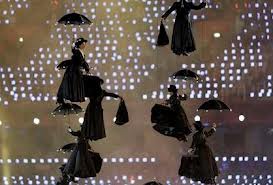
Mary Poppins to the rescue:
Photo from A Guide to the London 2012 Summer Olympics Opening Ceremonies
theblaze.com

The London 2012 Olympic Games Opening Ceremony was broadcast at 9pm on 27 July 2012 (EST). As a platoon of  Mary Poppins clones decended clutching their iconic umbrellas to vanquish the Lord Voldemort mid-ceremony, I was suddenly struck by an idea. How would the Common Core English Language Arts Standards view this production? The extravanganza developed by world-class directors Danny BoyleBradley Hemmings and Jenny Sealey and their teams was an eclectic mix of information  and fiction that “celebrated contributions the UK has made to the world through innovation and revolution.”

What grade, however, would the Common Core State Standards (CCSS) give London’s Olympic Games Opening Ceremonies? To make this assessment, a set of criteria needs to be established.  Informational texts are factual and real. Add a touch of whimsy or artistic interpretation and informational texts blur into that fuzzy blend of the literary genre of fiction. Lyrics in music are often considered poetry, so music also falls in the realm of fiction, and for the purposes of this assessment, so will an artistic dance that expresses a story.
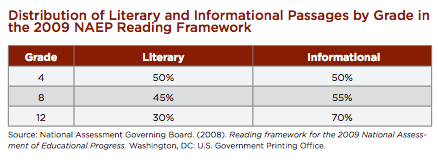
Recommended ratios of informational texts to fiction by grade level.

The CCSS suggest a decreasing ratio of fiction  to an increasing ratio of informational texts  for students in grade 4, grade 8, and grade 12. (see chart) This does not mean that English/Language Arts classes must drop literary fiction, but that other disciplines (History/Social Studies, Math, Science, Health, etc) should include more informational texts in their instruction in order to achieve the suggested ratios. The London 2012 Opening Ceremony was a blend of information and fiction (literally!).

Did London’s “Isles of Wonder” Opening Ceremony meet the recommended ratios of fiction to informational text according to Common Core State Standards?

A quick tally of the highlights as they appeared as either  fiction or informational text:
  • James Bond at Buckingham Palace escorting Queen and Corgis-fiction
  •  Skydiving Queen Elizabeth II-fiction
  • Thames River origin marker, Thames waders, Thames rowers, Thames boat traffic, Thames on a Google map -informational text
  • A flyby of Mr. Rat and Mr. Toad from Kenneth Grahame’s Wind in the Willows arguing in a boat on the Thames-fiction
  • The Pink Floyd Tribute pig  seen floating above the Battersea Power Station-fiction
  • London landmarks Big Ben and London Bridge-informational text
  • Big Ben’s hour and minute hand rapidly spinning and time traveling in London’s Tube- fiction
  • Posters of past Olympics contrasted with posters advertising 2012 Games-informational texts
  • Fluffy White Clouds held with string on a set of an English meadow –fiction
  • Tribute to the Agrarian Society featuring a very busy sheepdog with livestock -informational text
  • Tribute to the Industrial Revolution with Kenneth Branagh as Isambard Kingdom Brunel, the man who was responsible for England’s Industrial Revolution-informational text
  • Kenneth Branagh as Kenneth Branagh reading Caliban’s speech from Shakespeare’s The Tempestfiction
  • Forging of Tolkien’s “One Ring to rule them all” leading to the Forging of the Olympic Rings-fiction
  • Song by Scotland singer Emeli Sandé  and  dance British choreographer Akram Khan: fiction; their performance pre-empted by a silly interview by Ryan Seacrest of Michael Phelps-informational text
  • Tribute to National Health Service replete with backlit hospital beds filled with bouncy children, and dancing nurses and orderlies-informational text
  • Arrival of villainous characters from children’s literature (Including The Child Catcher from Chitty Chitty Bang-Bang, The Queen of Hearts Alice in Wonderland, and an inflated Voldemort from Harry Potter) chased away by PT Traver’s famous nanny, and all replaced by one giant sleeping baby-fiction
  • Rowan Atkinson’s,  (Mr. Bean), imagination running amuck in Chariots of Fire –fiction
  • A “Tube” made of tubes to highlight a contemporary romance: boy meets girl via cell phone-fiction
  • Musical hits from the 60′s, 70′s, 80′s, 90′s with unnecessary extended rap performance-fiction
  • Clothing from  the 60′s, 70′s, 80′s, 90′s (with the exception of the fictional Sgt. Pepper Costumes and Freddie Mercury Bobbleheads)  informational text
  • The big reveal of the creator of Sir Timothy John “Tim” Berners-Lee also known as “TimBL”, computer scientist, MIT professor and the inventor of the World Wide Web -informational text
  • Soccer great David Beckham arriving in a speedboat to hand the torch to Steve Redgrave, a five-time Olympic champion in rowing-informational text
  • The Olympic Cauldron, formed of 205 copper petals (one for each country) ignited by seven young torchbearers nominated by Britain’s past and present Olympic and sporting greats-informational text
  • Paul McCartney’s appearance for a British pound -informational text;  Lyrics of “Hey, Jude” sung by all athletes and audience –fiction
  • Pyrotechnics exploding from every conceivable platform in and around the stadium-informational text

My quick tally of 25 selected moments of the opening games comes to a total of 15 fictional texts (55% ) compared to 13 informational texts (48%)-(including two “blended information and fiction”). These percentages indicate that the production was too heavy in fiction. However, perhaps this high number of fictional texts is not really a surprise as Danny Boyle was hired specifically for his talents with stories (Slumdog Millionaire). According to a CNN report, Bill Morris, director of Ceremonies for the London Games said, “His ability as a storyteller, as a creator of spectacle, his background in both theater and film and the passion he has for this city and this project — they all just screamed at us. It wasn’t a difficult choice.”

Ultimately, London’s Opening Ceremony would not meet the suggested ratio of genres for the Common Core State Standards. According to my criteria and chosen highlights, the elements of the Opening Ceremony would not meet the suggested ratio of 50%  fictional texts to 50% informational texts in Grade 4, and certainly would not meet the ratio of fiction (30%) to informational texts (70%)  for students by grade 12.

There is one more informational fact that could be added to tilt the ratio.  The cost of the opening ceremonies was  27 million British pounds. That cold economic fact could be assessed against the joy of watching the Danny Boyle’s frenetic and spectacular celebration of Great Britain, both real and imagined. However, even this ratio would still not satisfy the recommendations for reading genres. When judging Olympic Opening Ceremonies, the Common Core is not the gold medal standard.


Peqout Library in Southport, CT

The 2012 summer tri-athlon  of Fairfield County, Connecticut, Friends of the Public Library book sales is over! Hundreds of book buyers have visited Newtown’s C.H.Booth’s Library, Westport’s Public Library, and finally, Southport’s Pequot Library in search of bargains and great reads. Each book sale has its own distinctive  level of organization and quality of merchandise. Newtown is “uber”-organized, and Westport caters to large crowds of book buyers with an enormous selection. Southport’s claim to fame is the quality of the texts.

Newtown and Westport book sales offer holding areas for book buyers to place filled boxes or bags. Southport has quality texts. Westport and Newtown book sales have well-organized tables and books sorted into correct genres. Southport has quality texts. Westport and Newtown book sales have volunteers  that move with the crowd and refresh tables. Southport has quality texts.

Quality texts are perhaps the only reason to attend the Pequot Library’s book sale. In two hours, I spent $306.00 on four boxes of books for different grade levels. For example:

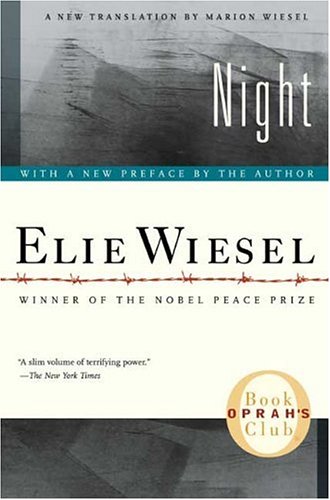
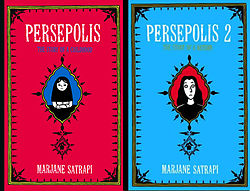
  • 4 copies of Persepolis: The Story of a Childhood- Grade 10 World Literature
  • 12 copies of The Help– Grade 11-Civil Rights unit
  • 5 copies of Speak-Grade 9
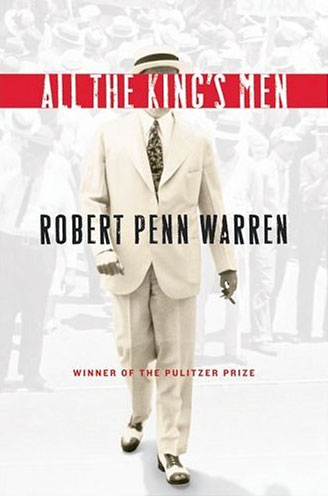
  • 6 copies of All the King’s Men-AP English Language and Literature
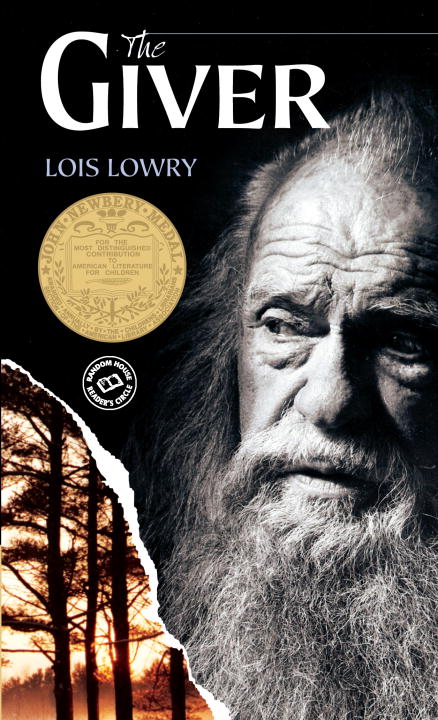
  • 6 copies of The Giver-Grade 7
  • 7 copies of Night-Grade 10-Interdisciplinary unit
  • 5 copies of Tuesdays with Morrie-Grade 9 Independent read  or Grade 11 Coming of Age unit
  • 2 copies of The Odessey (Fitzgerald)-Grade 9
  • 4 copies of Beowulf (Heaney)-Grade 10 -World Literature

Each text was in mint condition. More than a few looked “unread” by students who must have purchased the text for class. All copies were free of notes or highlighting. I do suspect that there are students in Southport, like my students in Litchfield, who may be opting for Sparknotes support!

Southport offers a Friday preview day with books at double the cost, but by the following Tuesday, books are $5.00/bag.

2012 Hours and Pricing:
Friday, July 27 – 9am to 8pm – All items double the marked price
Saturday, July 28 – 9am to 5:30pm – All items priced as marked
Sunday, July 29 – 9am to 5:30 pm – All items priced as marked
Monday, July 30 – 9am to 6pm – All items half price
Tuesday, July 31 – 9am to 2pm – $5 per bag day!

The volunteers were gracious, but many seemed to be “in-training” or waiting for an authority to make a decision. That did not take away from the quality of the texts. There were books -particularly fiction-that had been placed on the ends of the tables left partially covered by the large tent. Unfortunately, many of these books did get saturated by the soaking rain the night before. This has happened in years past. One wonders what the volunteers could do in the future to avoid the damage that happens when there are texts uncovered; it is sad to see so many good quality books damaged when they could bring a profit to the library or more literature to a classroom.

There are discounts  offered to teachers in Bridgeport and New Haven, but with education budgets receiving cuts around the state, perhaps consideration can be given to teachers in other towns as well? Most teachers pay out of pocket for school supplies, not the school districts. Teacher discounts would help support literacy in classrooms throughout the state by creating “book floods” in each school.

My tri-athalon of book sales is over for the summer. My classroom libraries grades 7-12 are almost filled in preparation for 2012-2013. I have collected my goal-a class set of The Help, and added a number of new titles for independent reading or literature circles. There is a book flood at Wamogo Middle/High School And, thanks to Southport, many of these books are quality texts.

A series of links took me to a lesson plan  on the Edsitement! The Best of the Humanities on the Web site that is associated with the National Council of Teachers of English (NCTE) . The lesson “Vengeful Verbs in Shakespeare’s Hamlet”  is entirely too disturbing. The opening lines of the lesson plan begin, “Shakespeare’s Hamlet  is an excellent source of instruction for students at the middle school level.”

My thoughts? Sorry. Middle school students, grades 6-8, should not read Hamlet. Teachers, leave that play for high school. Middle schools students need to read. They need to read many, many books.  They need young adult literature. They need to read for pleasure to build up their literary skills.

The lesson plan continues:

It [Hamlet] is a tale full of mystery and suspense and peppered with elements of the supernatural. Everyone loves a good ghost story! The popularity of the ghosts in the Harry Potter series and in The Graveyard Book attests to the appeal of the paranormal for this age group. These ghosts manifest as translucent spirits, yet they impact the physical world and certainly add life to the story line. Figments such as Rowling’s histrionic Moaning Myrtle and Gaiman’s mysterious Silas provide guidance for the young adults in their time of need.

My thoughts? Yes, these are the books they SHOULD be reading! Add the ghost stories Hereafter and Anna Dressed In Blood to the list of well written young adult novels. And yes, Harry Potter and The Graveyard Book are stories that will guide young adults in their time of need. But Hamlet?

Back to the lesson plan:

What better way to expose middle school students to a first taste of Shakespeare than from the angle of the ghost story? The first time Hamlet sees his father’s ghost (Hamlet, act 1, scene 5, lines 13–31) is one of the most dramatic moments in theatre and a prime opportunity to teach the often dry and boring subject of verbs.

My thoughts: Whaa…??? This lesson is turning a critical moment of drama into a lesson on verbs? This idea is dry and boring regardless of the content!

Finishing the description of the lesson plan:

Through the ghost of Hamlet’s father, students receive an introduction to the language of Shakespeare in a context they can understand. In this lesson, they will learn to distinguish generic verbs from vivid verbs by working with selected lines in Hamlet’s Ghost scene. Students will then test their knowledge of verbs through a crossword interactive puzzle.

My thoughts: A crossword puzzle. Yup. That will help them appreciate the play. I can hear the rattling from Stratford on Avon; Shakespeare’s bones are disturbed.

The objectives of the lesson are:

  • Students will be able to identify and define the verbs Shakespeare uses to convey the meaning of the scene
  • Students will exchange the verbs from the scene and replace with more vivid and more generic ones to see how that changes intention of the scene
  • Student will be assess their ability to define vivid and generic verbs used by Shakespeare by solving a crossword puzzle

Yes, readers, in this lesson students will replace Shakespeare’s language with bland or generic verbs using a worksheet.

WHY?

There is little consideration as to how all the language in this scene defines each character. No consideration of motive. No moral or ethical discussion about what the Ghost is asking Hamlet do.   The Harvard scholar Steven Greenblatt wrote an entire book, Hamlet in Purgatory,  wrestling with the central question offered in this scene, is the Ghost from Hell or Purgatory? But no, this lesson is on verbs.

Here are the lines: (Act I.V.13-31)

Father’s Ghost. I am thy father’s spirit,
Doom’d for a certain term to walk the night,
And for the day confin’d to fast in fires,
Till the foul crimes done in my days of nature
Are burnt and purg’d away. But that I am forbid
To tell the secrets of my prison house,
I could a tale unfold whose lightest word
Would harrow up thy soul, freeze thy young blood,
Make thy two eyes, like stars, start from their spheres,
Thy knotted and combined locks to part,
And each particular hair to stand on end
Like quills upon the fretful porcupine.
But this eternal blazon must not be
To ears of flesh and blood. List, list, O, list!
If thou didst ever thy dear father love-
Hamlet. O God!
Father’s Ghost. Revenge his foul and most unnatural murther.
Hamlet. Murther?
Father’s Ghost. Murther most foul, as in the best it is;
But this most foul, strange, and unnatural.

In this passage, the Ghost is very cagey about where he is coming from literally and figuratively. The Ghost plays the ultimate guilt card “If thou didst ever thy dear father love-” Hamlet anticipates the request and interjects a prayer “O God”. The Ghost then, you choose: a. asks, b. demands, c. commands the Prince, Hamlet, to revenge.

Another consideration as to the appropriateness of the use of Hamlet is the berating of Hamlet’s mother, Gertrude sixteen lines later:

Father’s Ghost. Ay, that incestuous, that adulterate beast,
With witchcraft of his wit, with traitorous gifts-
O wicked wit and gifts, that have the power
So to seduce!- won to his shameful lust
The will of my most seeming-virtuous queen.
O Hamlet, what a falling-off was there,
From me, whose love was of that dignity
That it went hand in hand even with the vow
I made to her in marriage, and to decline
Upon a wretch whose natural gifts were poor
To those of mine!
But virtue, as it never will be mov’d,
Though lewdness court it in a shape of heaven,
So lust, though to a radiant angel link’d,
Will sate itself in a celestial bed
And prey on garbage.

There are accusations of incest (a thought of Hamlet’s given voice by the Ghost), witchcraft, and adultery for Claudius. Gertrude acts with “lewdness” and “sates” herself in Claudius’s bed of figurative garbage. The Ghost cannot contain his fury at being replaced by Claudius; he has lost kingdom and queen and his fury spills over and exploits Hamlet’s depression. There is much here to discuss.

But for grades 6-8?  To replace the language of Shakespeare and make it “bland” to prove a distinction about verbs in Elizabethan English and today’s English? To measure the student understanding of the language with a crossword puzzle? Is it any wonder that with lessons like this one, many students come to a high school classroom “hating” Shakespeare? I have to work very hard to convince them otherwise.

There is something rotten on the Edsitement! site, and NCTE should be ashamed for endorsing this lesson. This lesson about verbs, not motivation or ethical dilemmas, disregards the dramatic tension of the scene and is wrong at any grade level!

What next? A lesson on the comma during Macbeth’s “Is this a dagger I see before me? /Come, let me clutch thee”?

There are  better lessons on heaven and earth for students in this age group then are dreamt of in this lesson plan!

NCTE must be aware that we have a nation of students who are not reading in part because many teachers kill the pleasure of a book. Hamlet is not the material that will bring middle school students a love of reading, and the literary analysis skills for these students in grades 6-8 are not sophisticated enough to bring them to an understanding of The Ghost’s manipulations. A grammar lesson plucked from a dramatic moment with a brilliant seduction by a spirit from beyond the grave is just so wrong.

This lesson is out of joint. O cursed spite
That ever I was born to set it right!

I am sitting through a professional development session on how to use peer to peer writing conferences. I want to believe there will be a moment in this workshop when the “ah-ha” moment will happen, when I finally unlock the formula for successful in class peer to peer writing conferences at the high school level. The presenter reiterates how important this process is for writers to hear critical feedback to their writing. I hear again that “sticking with it and training students” to peer to peer conference are key ingredients that will improve student writing. Then I think of my students….my 9th, 10th and 11th grade students. This unspoken heresy forms in my mind:

Forgive me, well-intended and passionate presenter, but in my experience, in class peer to peer writing conferences do not work.

There, I admit it. Success in implementing face to face, peer to peer writing conferences, real critical encounters, has eluded me. I have 20 plus years in the English classroom, grades 6-12, and I have always come away from peer to peer writing conference sessions with the uncomfortable opinion that I have been wasting class time.

I now know why.
This summer, I am participating in the Connecticut Writing Project, and I have to write on demand, and then I must share that work. This is a horrible experience for me. I pass my paper wondering, “What will this person think of me?” and “What if there is a grammar error? I’m an English teacher!!” I have to provide feedback on a fellow teacher’s work, and I see the same kind of panic in her eyes.
I quickly reflect. How does my adolescent, pimply, over-stimulated teen-age boy feel as he hands in his rough draft for a critique by the fair skinned, sweet smelling young girl who sits behind him? How does that painfully shy artist who doodles his responses but has yet to complete a paragraph in writing feel about sharing his work with the amazingly popular class jock (boy or girl)?
I mention this to the presenter who says, “Yes, sometimes, there are student combinations that do not work.” That confirms my problem.

Problem #1: My struggle with peer to peer conferencing begins with setting up partnerships. Do I put the uneven writer with the good writer? Does the good writer need another good writer for good editing? Do I put two poor writers together and expect a miracle? Do I let the students choose their partners? How effective is the conference if friendship is in play?

Problem #2: The research shows that students should learn how to peer conference in the elementary and middle school grades to carry that behavior into the high school grades.However, I have found that training in writing conferences in the elementary and middle school grades is  erased in the high school environment. Many high school students claim to hate sharing their work with other members of the class; participation is mixed.

Problem #3: I teach in a regional school where one third of our freshman class comes from out of district schools. Several of these students have not had any training  in peer conferencing. The number of incoming students who are already uncomfortable in moving to a new regional school requires that I need to start at square one and  train everyone how to conference effectively.

Ultimately, I do not want to give up on students providing critical feedback to other student; I just want to take away the awkward immediacy of that face to face encounter. Since I teach in a 1:1 school district with digital literacy embedded in my curriculum, I will continue to use the solutions that have worked in place of those face to face, peer to peer writing conferences. I use digital conferencing.

Solution #1: I use blogs. Each blog is organized for a small group (8-10 students)   to use as a team. Only members of their team see their posts and comments over a period of time, say a semester or a school year. Students post book reviews, and other students comment on that post by asking questions about the book, or by making recommendations to improve the original book review  post. Each student must respond to the posted book reviews. Writing on the blogs allow students the physical distance they need to comfortably respond to each other. Written comments take time to construct, and students are more thoughtful if they know what they write will have a larger audience. Blogs let me  monitor the comments as well and determine which students are the most effective in providing good critical feedback to a student and which students are simply putting down, “great job!” or “I like what you wrote!” I might not have this information if the students were having face to face conferences. During my writing conferences with students I can follow up with the comment stream and target what is necessary to improve a critical response.

Solution #2: I use wikis. Students upload a report or story to a wiki page, and their peers can respond with questions and provide feedback in the comment section at the bottom of the digital page. Here too, the wiki page and the comment section will be seen by a larger audience and students are more thoughtful if they know their work will be read by an entire class. Responses in the comment section of the wiki also allows me to monitor who has provided good critical feedback to the writer.

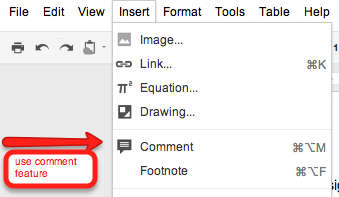
Solution #3: I use Google docs. Students can upload their work to a Google doc and share that link with one or more students. Each peer reviewer can use the comment feature to provide feedback. This feature also identifies the peer conference partner on each comment he or she makes. All  comments by the peer reviewer are recorded on the document’s margin. An student author can even post questions about his or her writing in a comment box. The document can be also shared with multiple students who could work on the same document at the same time if necessary. All  comments are part of the document’s history, and I can monitor changes made by the student writer before and after a peer review. This method is particularly helpful if I have specific students who are hesitant about facing another student in a peer review.

Of course, all this digital peer to peer conferencing is improved if I provide students with  guiding questions (“Did the opening engage you as a reader?”) they would use in written conferences or if they prepare specific questions for the peer reviewer.

Digital platforms: wikis, blogs, and Google docs, allow me the means to provide peer to peer writing conferences by removing those awkward face to face conferences that I have found so unproductive in my high school classrooms. These digital platforms also let me organize students across class periods, and if I found a teacher in a cooperating school who wanted to peer conference, the digital platforms would allow my students to conference outside the classroom. Students still have plenty of opportunities for face to face encounters during class discussions and presentations, but they are comfortable communicating their feedback about a peer’s writing in a digital environment. And, heresy or not, I am finally comfortable with the productive peer to peer (via the Internet) writing conference.

The Friends of the Westport Public Library book sale never disappoints a reader. In fact, many of the books that I have purchased at this sale in previous summers (2009-2011) now stock our classroom libraries for grades 7-12. Our Grade 10 World Literature class now has entire class sets of The Life of Pi and The Curious Incident of the Dog in the Night-time. The same can be said for the Grade 12 Memoir Class with The Glass Castle. This means that I have had to become more selective and pluck out only the titles that we need to replace or increase. Now, when I see the covers of these texts, I have to stop my hand from its automatic reach; our shelves are already full! So, if there are schools looking to add these titles, I left many great titles on the tables.

This Westport Public Library book sale is massive and almost professionally run; the volunteers could consider running training classes for other library book sales. There are legions of volunteers who straighten tables of books or count purchases. Be aware, however, there are also legions of shoppers; parking is at a premium.

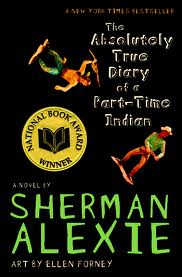
This year, I found copies of books for the Grade 11 Native American Unit: Larry Watson’s Montana 1948, Sherman Alexie’s The Absolutely True Diary of a Part Time Indian.  I suspect these books are also taught in the Westport school system because of the number of copies. Montana 1948 is “about a middle-class Montana family torn apart by scandal during the summer of 1948” and was awarded the Milkweed National Fiction Prize. The Absolutely True Diary of a Part Time Indian was reviewed by School Library Journal as a semi-autobiographical chronicle of Arnold Spirit, aka Junior, a Spokane Indian “whose determination to both improve himself and overcome poverty, despite the handicaps of birth, circumstances, and race, delivers a positive message in a low-key manner.” Both receive high marks from our students.

There were also two copies of A World Lit Only by Fire: The Medieval Mind and the Renaissance: Portrait of an Age by William Manchester which is a new text for our AP European World History course.

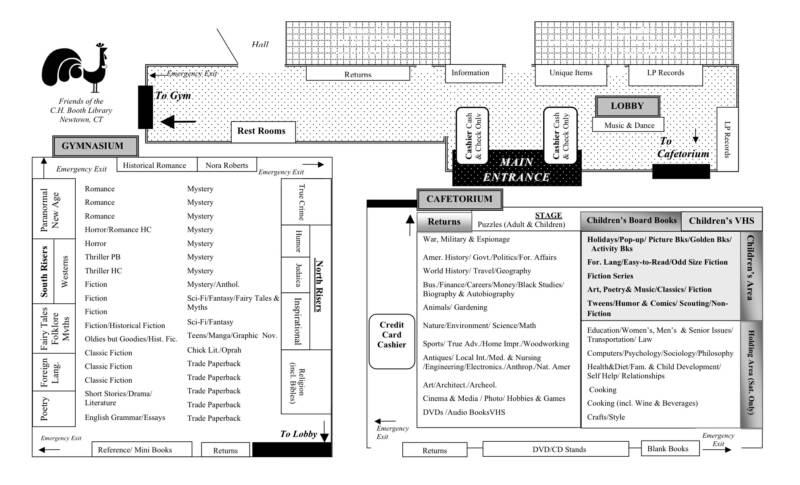
The large tents for the Westport book sale provide enough room for patrons and the tables full books. Maps are distributed at the entrance; a mountain of empty boxes is available for shoppers to fill.  Hard to tell if the organizing committee has chosen not to alphabetize because of the number of books titles or because they want to encourage more browsing, I am not sure. I know I visited every table! There were far more book vendors there this year who load up large bags using professional scanners. This sale makes it easy for them to return books they do not want by genre; there are clearly labeled containers; if you cannot find a title, check these containers!

Books are priced at $.50-$3.00 on Saturday, the first day of the sale; there are discount days through Tuesday, June 24.

Saturday & Sunday 9 am to 6 pm
Monday (everything 1/2 price) 9 am to 6 pm
Tuesday (free day: suggested cash donation $5/bag) 9 am to 1 pm

Signs marking each genre were placed on the tables, but the maps were more reliable. I used the map to locate the young adult section which were filled with great choices for independent reading. As a bonus, the children’s section has its own separate tent. Picture books are raised on shelves, smaller chapter books are laid spines up for easier browsing.

I spent $80.50 in total for four bags of carefully selected books.

As I left, the local newspaper photographer was taking candid shots of students in the Children’s section. One young girl, about 11 years old,  had her arms so full of book, the photographer could not see her face.

“Where are you?” she joked with the girl.
“I’m lost in these books,” the girl giggled in response.

I left smiling.

I read a tweet by the National Education Association’s (NEA) president, Dennis Van Roekel, which brought me to this quote: “I’m so tired of OTHERS defining the solutions….without even asking those who do the work every day of their professional life.”

Consider how solutions determined by others have determined the profound changes in education in the past 12 years. The legislation for No Child Left Behind (NCLB) and Common Core State Standards (CCSS), have come from stakeholders who are looking into  the classroom as if they are looking through a one-way window. This one-way window prevents the sounds of education, limits other visual perspectives, and prevents dialogue with teachers. The one way also window prevents the teachers from seeing or communicating with those stakeholders who have made these changes.

This past week, in my Twitter feed, I found links to information which made me wonder, with the increasing adoption of technology in education, how might this one-way window dynamic change?

The first piece of information came from a tweet by @webenglishteach. On a recent post titled “My career by the numbers (so far)” on her Chalkboard blog, Carla discussed her retirement as an English teacher and reflected on the numbers in her educational career, for example, the number of papers she had corrected or numbers of students she taught over the course of her 32 year career. She has spent the past year with the Department of Education (DOE), and noted:

“People at the DOE like to identify themselves as teachers. ‘I taught 2 years.’ They’re good people, but teachers make more decisions that affect other people on Monday than someone at DOE does all week. Be proud of what we do.”

The second piece of information came from a link in the article The Gates Foundation’s Education Philanthropy: Are Profit Seeking and Market Domination a Public Service?  tweeted by Education Week . The article comprehensively argued against the agenda of wealthy philanthropic enterprises that partner with public institutions, a public-private partnership.This article by Anthony Cody contained a link to a April 2011 article by Sam Dillon in the New York Times Foundations Join to Offer Online Courses for Schools  that described how the Bill and Melinda Gates Foundation will be working with the textbook and testing firm Pearson:

“In his educational work, Bill Gates has explored ways that new technologies can transform teaching. Vicki Phillips, a director at the Gates Foundation, said the partnership with Pearson was part of a ‘suite of investments’ totaling more than $20 million that the foundation was undertaking, all of which involve new technology-based instructional approaches. The new digital materials, Ms. Phillips said, “have the potential to fundamentally change the way students and teachers interact in the classroom.”

This investment will be extremely profitable for Pearson, a large corporation that also houses the publishing companies Penguin and the Financial Times; $330 million in Department of Education financing. The partnership with the Gates Foundation could give Pearson a considerable advantage as textbook and learning technology companies position themselves in an education marketplace upended by the creation of the common standards. Finally, Susan Neuman, a former Education Department official with the Bush Administration commented in the story, “Pearson already dominates, and this could take it to the extreme. This could be problematic for many of our kids. We could get a one size fits all.”
In both these instances, the classroom teachers are clearly not involved solutions. There are Department of Education employees with fleeting experience in the classroom  determining educational policy.  Public-private partnerships are fundamentally changing how content is delivered in the classroom. Finally, education services companies are developing both the texts and the tests for use in the classroom.
So why are teachers, those with years of expertise in the classroom, not leading to challenge the solutions offered by others?   That is what Van Roekel was asking when he addressed the NEA Annual Meeting and Representative Assembly  at the 2012 convention:
“I’m so tired of OTHERS defining the solutions… without even asking those who do the work every day of their professional life.
I want to take advantage of this opportunity for US to lead – and I’m not waiting to be asked, nor am I asking anyone’s permission.
Because if we are not ready to lead, I know there are many others ready, willing, and waiting to do it for us. Or maybe I should say, do it ‘to’us.There are plenty of people outside our profession who have their own ideas about what we should be doing, how we should be evaluated, and how to improve public education…”
Teachers could define the solution if they had time and the ability to effectively dialogue with other teachers. Unfortunately, there is little teachers can do about the finite elements of time, however, teachers can communicate with teachers much more effectively today through numerous platforms. Research has proved that peer to peer professional development is successful, and one platform for such dialogue is  Twitter. No, not the “Katie Holmes vs Tom Cruise” Twitter or the #justsayin  Twitter trend. Twitter provides teachers a means to communicate (140 characters) quickly, to link content, to help research, or to celebrate success. Twitter can be an effective a part of a  PLN (personal learning network) for a teacher who has only a few minutes to spare each day, weekends included, during the school year and can be part of self-directed professional development mandated in some state teacher evaluations.
Twitter offers evening “chats” by subject, grade level, or on educational topics simply by using a hashtag (EX: #edchat, #engchat, #sschat). A complete schedule of educational chats is available on technology guru Jerry Blumengarten’s (alias Cybraryman)  Twitter page .
Using Twitter as my PLN, I found each of the articles I referenced above through Twitter. I will Tweet this blog. I may be re-Tweeted so that the information finds its way to other teachers.
Now consider that there are more than 7.2 million teachers (US Census in 2009)  , and then consider how Twitter could be used to connect teachers in dialogue (quickly), so that solutions in education can be proposed from the inside the classroom with the one-way window. Twitter PLNs can keep teachers informed (quickly) when “others define solutions” and help teachers generate their response in shared dialogues.  Twitter can be a tool for teachers in creating the powerful voice of those “who do the work every day of their professional life” and lead them to share their solutions to the problems in education. The decible level of collective teacher Tweets can be the noise to shatter the glass of that one-way window that “others” use to see into the classroom.

With one broad sweep of a word-processing program, NY Times Columnist David Brooks brushed off the Newbery Award collection of the best children’s novels as containing some “exquisitely sensitive novellas” in his essay Honor Code (July 5, 2012). He should reconsider this judgment on several counts.

The premise of his editorial was to bring attention to recent statistics that suggest young boys are falling behind in the American education system. First, he compared the contemporary American schoolboy to the rambunctious Prince Hal of William Shakespeare’s history plays, Henry IV parts I and II and Henry V. This comparison proved an apt metaphor, although Brookes failed to call attention to the irony of his allusion; Prince Hal and the American schoolboy are both out of place in their respective educational institutions. Unfortunately, he over- stepped his position when he mischaracterized the  prestigious Newbery Award given to excellence in children’s literature by stating: “If schools want to educate a fiercely rambunctious girl, they can’t pretend they will successfully tame her by assigning some of those exquisitely sensitive Newbery award-winning novellas.”

Simply because a book is  written for young audiences (elementary through middle school) and is shorter in length than an adult novel does not mean the book is a novella; the Newbery Award books are novels. However, on several occasions the Newbery has been awarded to books of poetry (1989 Medal Winner: Joyful Noise: Poems for Two Voices by Paul Fleischman) or short stories, songs and poems (2008 Medal Winner: Good Masters! Sweet Ladies! Voices from a Medieval Village by Laura Amy Schlitz).

As to the charge that some of the Newbrry novels are “exquisitely sensitive,” well, yes, some are. I am “exquisitely sensitive” myself when I remember my reading the 1963 Medal Winner: A Wrinkle in Time by Madeleine L’Engle. However, while I can only comfortably include those titles that I have read or recommended to my students, there are fewer “sensitive” novels than one might suspect, in fact, some of the Newbery Award novels are brash, outrageous, or disturbingly violent. More than a few of them have been banned.

Consider that Mr. Brookes began reading Newbery books in 1969; he would be eight or nine years old.  The “exquisitely sensitive” 1967 Medal Winner: Up a Road Slowly by Irene Hunt would be available to him as would 1947 Medal Winner: Miss Hickory by Carolyn Sherwin Bailey However, during a 10 year school reading career, ages 8-18, he could have also encountered:

  • 1969 Medal Winner: The High King by Lloyd Alexander
  • 1970 Medal Winner: Sounder by William H. Armstrong
  • 1972 Medal Winner: Mrs. Frisby and the Rats of NIMH by Robert C. O’Brien
  • 1974 Medal Winner: The Slave Dancer by Paula Fox
  • 1976 Medal Winner: The Grey King by Susan Cooper
  • 1977 Medal Winner: Roll of Thunder, Hear My Cry by Mildred D. Taylor
  • 1979 Medal Winner: The Westing Game by Ellen Raskin

These are seven books that do not qualify as “exquisitely sensitive” books “to tame” rambunctious students. If Brooks had continued to read the canon of Newbery award winning novels as an adult, he would have encountered the following “definitely NOT exquisitely sensitive” books as well:

  • 1987 Medal Winner: The Whipping Boy by Sid Fleischman
  • 1991 Medal Winner: Maniac Magee by Jerry Spinelli
  • 1990 Medal Winner: Number the Stars by Lois Lowry
  • 1994 Medal Winner:  The Giver by Lois Lowry
  • 1999 Medal Winner:  Holes by Louis Sachar
  • 2000 Medal Winner: Bud, Not Buddy by Christopher Paul Curtis
  • 2003 Medal Winner:  Crispin: The Cross of Lead by Avi
  • 2009 Medal Winner: The Graveyard Book by Neil Gaiman

I would also like to give a shout out to the one book that was read by every “rambunctious” boy I ever taught, the  1988 Newbery Honor book Hatchet by Gary Paulsen. For many boys, this is the ONLY book they remember.

Newbery authors do not write in order “to tame” rambunctious youth, boys or girls, and I would suspect that several would take great offense to that statement.  Authors for children and adults alike write to tell an extraordinary story, to share an experience, or to give voice to a character or person from the “margin”, an outsider who has a voice through the written word.

Many authors are not “tame” themselves, in fact, this year’s Newbery Award winning writer was Jack Gantos for Dead End in Norvelt. Gantos has a fascinating back story. He  was convicted as a young man of smuggling drugs and spent time in a federal prison. His behavior, in fact , was very much like the  behavior of Prince Hal of Shakespeare’s plays. However,Gantos was a reader and found great literature to guide him during times of trouble. While in prison, he was without a notebook and wrote in the margins of The Brothers Karamazov, intertwining his words with Dostoevsky . His memoir of his felonious behavior  is called A Hole in My Life, and we teach the text as a required read in our Grade 12 Memoir class.

The Newbery Award winners reflect the rich diversity of literature that is available to students, rambunctious or not. These novels are not assigned “to tame” , but they are assigned, or recommended, to comfort a reader, to entertain a reader, to challenge a reader’s beliefs, or to incite a reader to action. They may be short, but they are not novellas, and no teacher “pretends” they are the solution to educating a fiercely rambunctious student.  Most teachers know that these Newbery Award novels, and their Newbery Award honorees companions, may be the  only solution for educating that fiercely rambunctious student.

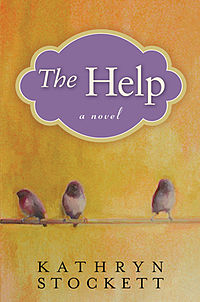
Yes, there were seven (7) copies of Kathryn Stockett’s The Help waiting for me to pluck them from the table at the Friends of the CH Booth Library book sale this morning. I have been hunting down this text for several months for use in conjunction with To Kill A Mockingbird, and -surprise!-there were 18 brand new copies of those as well.

This massive book sale provides easy shopping in the gym and the all purpose rooms of the Reed Elementary School in Newtown, CT, and offers convenient “holding areas”, carts, and plenty of empty boxes for readers to fill. The sale will continue from July 14-17, 2012. Organization is the key to a great library book sale, and this sale is extremely well organized. As I shopped, volunteers kept the books in order, alphabetizing as fast as book were replaced and loading additional copies of texts onto large tables. Their system made finding “sets” of books easy. The tables were laid out with wide aisles to allow for passing other browsers and there was a published floor plan on the website for shoppers to preview as well.

This year, all the trade paperbacks, fiction and non-fiction alike, were loaded onto the tables closest to the entrance., which seemed a logical choice as these books receive the most attention from browsers. At first I was a little disturbed seeing Lucy Grealey’s Autobiography of a Face and Erik Larsson’s The Devil in the White City next to Sue Monk Kidd’s The Secret Life of Bees, but I soon got over the blend of genres, in fact, this choice made my shopping for texts a little easier.

There were plenty of copies of books for me to “add” to our collection: Precious by Sapphire, Dairy Queen by Catherine Gilbert Murdock, All the Pretty Horses by Cormac McCarthy, A Tree Grows in Brooklyn by Betty Smith. In fact, if teachers wanted to add The Kite Runner to their collection, there was a box of 30 or more copies under the table, ready to replace the five copies already up.

But my goal was Kathryn Stockett’s The Help, and it was goal achieved with the seven copies of The Help that I got! The bonus of getting 18 new copies of To Kill a Mockingbird, our core text for the unit for juniors, was icing on the cake (or pie?) The Help was reviewed in 2009 by Publisher’s Weekly:


“What perfect timing for this optimistic, uplifting debut novel set during the nascent civil rights movement in Jackson, Miss., where black women were trusted to raise white children but not to polish the household silver. Eugenia Skeeter Phelan is just home from college in 1962, and, anxious to become a writer, is advised to hone her chops by writing about what disturbs you. The budding social activist begins to collect the stories of the black women on whom the country club sets relies and mistrusts enlisting the help of Aibileen, a maid who’s raised 17 children, and Aibileen’s best friend Minny, who’s found herself unemployed more than a few times after mouthing off to her white employers. The book Skeeter puts together based on their stories is scathing and shocking, bringing pride and hope to the black community, while giving Skeeter the courage to break down her personal boundaries and pursue her dreams.”

As I shopped the animal section, a volunteer asked me, “Do you like the signs on the tables?”
“Yes, I like the signs on the table,” I replied (our conversation mimicking one from Go, Dog, Go which I had in my bag)
“Well, they were much more in order this morning,” she continued as she busily straightened the table.

If the books and signs were in better order in the morning, then this was the UBER-organized sale when the gates opened; I had arrived at 11:15 AM. The place was humming with shoppers, but the books sat neatly in their genres, signs clearly delineating where “Tween HC” (Teenage books-hard cover) sat and where “Non-Fiction PB” (paperback) began.
Needless to say, having a holding area and capable volunteers to tally a purchase is key to customer satisfaction. I had six bags plus one box (over 300 books) for a total of $314.00. My trunk was loaded easily from the front sidewalk of the sale, and no one complained that I ran over one of the pylons blocking the entrance.

So thank you, Friends of the CHBooth Library. Your book sale was a pleasure to attend and The Help that I needed!

This weekend July 13-15, 2012 is the annual Friends of the New Milford Public Library summer book sale (alert to nearby Connecticut/NY residents), and even after I cleaned them out of some great trade paperbacks,there are many bargains to be had. The sale is held in the New Milford High School on Route 7 in a large all-purpose room that has ample room for browsers. The books are very well organized on large spacious tables and very clearly labeled, and, more importantly, the labels are correct-there is no mixing of genres.

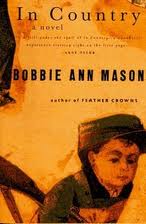
I picked up two copies of Bobbie Ann Mason’s In Country  (1993) to use with Tim O’Brien’s The Things They Carried. This is a very popular text with many of the girls in Grade 11; The School Library Journal reviewed this text:

“Sam Hughes, whose father was killed in Vietnam, lives in rural Kentucky with her uncle Emmett, a veteran whom she suspects is suffering from exposure to Agent Orange. Sam is a typical teenager, trying to choose a college, anticipating a new job at the local Burger Boy, sharing intimacies with her friend Dawn, breaking up with her high school boyfriend, and dealing with her feelings for Tom, one of Emmett’s buddies….Her father’s diary finally provides the insight she seeks insight she cannot accept until she has visited the Vietnam War Memorial in Washington, D.C.”

There were also five brand new copies of Barbara Ehrenreich’s Nickled and Dimed: On (Not) Getting By in America. Obviously, this was a book assigned for a course at a local high school or read by a local book group. These five copies mean that we can continue the tradition and assign the reading for one of our courses! Publisher’s Weekly reviewed this book in 2001:

Determined to find out how anyone could make ends meet on $7 an hour, Ehrenreich left behind her middle class life as a journalist except for $1000 in start-up funds, a car and her laptop computer to try to sustain herself as a low-skilled worker for a month at a time..Delivering a fast read that’s both sobering and sassy, she gives readers pause about those caught in the economy’s undertow, even in good times.

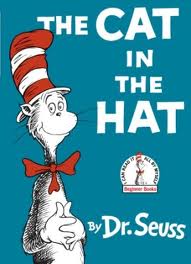
This book sale always has a great selection of  children’s books. Last year, I met a friend with two small children of her own who was hauling out at least 100 titles; she had barely made a dent in the collection. This year my bargain was a set (3) of The Cat in the Hat books. There is a great lesson on the Read, Write, Think website for the National Council of Teachers of English (NCTE) that explains Freudian psychology using this children’s text. The lesson is called Id, Ego and Superego and the Cat in the Hat and my students love looking at the pictures to see how the wild “ids” of Thing 1 and Thing 2 almost cause a disaster.

I spent $42.50 for two bags filled with books (38 total). As I checked out, I mentioned to a volunteer that I blogged about this book sale last year.

“Well,” she challenged me, “did you notice the books are all on the tables?”
I looked around. Sure enough there were no books on the floor.
“Last year, you complained about the books on the floor being hard to reach,” she continued, “So we put them all on tables!”
“Oh, I didn’t mean…” my voice trailed.
“When someone criticizes what needs to be fixed, we fix it,” she stated proudly.

So, go to the Friends of the New Milford Public Library Book Sale if you are in the area. This is a good book sale….made even better with better browsing tables!

David Brooks recently wrote a column in The NYTimesHonor Code (July 5, 2012),  describing a crisis in education for boys. He suggested that Shakespeare’s character Henry V would not have been a success if he had attended an American School. But how different really was Henry V’s education?  Consider that Shakespeare’s Henry V spends his youth in Henry IV Parts I and II as Prince Hal, an irresponsible squanderer of his good fortune.

Brooks lays out his premise that if little Prince Hal had been placed in an American school, and I am assuming he means an American public school, Hal’s boisterous level of pre-school/kindergarten physical play would mean that he would receive recommendations from “sly” teachers for medication for attention deficit hyperactivity disorder. As Prince Hal made his way through our American public school system, Brooks predicts that he would be deprived of the necessary physical outlets such as recess, so he would act out, he would be “rambunctious”. That would result in numerous suspensions for the vigorous heir.

Eventually, Brooks supposes, Prince Hal would “withdraw” and “decide that the official school culture is for wimps and softies and he’d just disengage…by junior high, he’d lose interest in trying and his grades would plummet.” Well, perhaps Brooks should look at Shakespeare’s storyline of Prince Hal who rejected the official British monarchy culture and disengaged for the pubs with his drinking buddies. His “grades” did plummet without the benefit of the American public school.

Prince Hal  had little interest in trying to please his father, he rejected the lessons of his tutors, and he found company with the gregarious Falstaff and other London low-life. In one memorable scene, he “lifts” the crown before his father had passed, a stage metaphor for his immaturity and unreadiness for the responsibilities of Kingship. His education was abysmal; his honor code was lacking.

After the death of the king, however, when Prince Hal becomes Henry V, he engages in a “hands-on” education, one which is gained at the expense of his former friends and at his discovery of the betrayal of allies whom he has executed. He is long past school age when his lack of military strategy catches him outnumbered after the Battle of Harfleur. All these experiences harden him for his ultimate victory at Agincourt, but not before he gets to deliver those wonderful lines from the St. Crispin Day speech, “We few, we happy few, we band of brothers…”. Immediately after the battle, where 10,000 French soliders lay dead as compared to roughly 29 Englishmen, the more battle-hardened Henry V immediately turns around and (twice) orders his men to kill all the French prisoners (Act IV; sc iv).

According to Wikipedia, in March 2010, Supreme Court Justices Samuel Alito and Ruth Bader Ginsburg participated in a mock trial of Henry V for the crimes associated with the legality of the invasion and the slaughter of  the French prisoners. The trial  used evidence from the  historical record and Shakespeare’s play:

“The outcome was originally to be determined by an audience vote, however, due to a draw it came down to a judges’ decision. The court was divided on Henry’s justification for war, but unanimously found him guilty on the killing of the prisoners after applying ‘the evolving standards of the maturing society’.”

Therefore, I am confident that Henry the V is the not the best model to describe an honor code.

All this makes me question Brooks’s intent for using Henry V to attack the public school system. While schools are not entirely responsible for the crisis where boys are falling according to the Organization for Economic Cooperation and Development, his comment that teachers would give “sly little hints dropped” about medicating students casts teachers as covert operators. Why pick on the teachers?

He does have legitimate reasons for concern about how boys are falling behind in education citing:

  • By 12th grade, male reading test scores are far below female test scores.
  • Boys used to have an advantage in math and science, but that gap is nearly gone.
  • An article as far back as 2004 in the magazine Educational Leadership found that boys accounted for nearly three-quarters of the D’s and F’s.

In laying out his argument, Brooks complains that,

“The education system has become culturally cohesive, rewarding and encouraging a certain sort of person: one who is nurturing, collaborative, disciplined, neat, studious, industrious and ambitious. People who don’t fit this cultural ideal respond by disengaging and rebelling.”

Well, yes. Brooks has described the corporate business model that has driven education, the business model that educators have been trained to use to prepare students when they enter the “real world.” What employer does not want an employee with these qualities? Yet, there are many teachers who recognize this model is not ideal for the diversity in attitude and aptitude for their students. Sadly, many of the educational opportunities that engage disaffected boys and girls including art, music, sports, and after-school programs are the first cut in times of economic hardship.

Additionally, teachers are keenly aware that not all students fit a cultural ideal, so they use multiple teaching strategies (differentiation, student success plans, response to intervention, etc) to reengage the withdrawn student. Mr. Brooks might have discovered these had he attended a classroom session and seen teachers working with students like little Prince Hal. Instead, he lays the blame for the failure of boys in the school system solely on teachers when there are other stakeholders, namely parents, who are primarily responsible.

Brooks’s suggestion that teachers celebrate competition might not meet with a school administration’s approval if a school’s mission statement celebrates cooperation. His suggestion that teachers should honor military virtues over environmental virtues might raise some eyebrows of parents, and his disparate suggestion that teachers should ditch friendship circles in favor of boot camps indicates that he has experienced neither.

In Shakespeare’s play, on the night before the battle of Agincourt,  Henry V walks unnoticed through the camp; he is finally and painfully aware of the responsibilities he has to his men and to his country and says, ““What infinite heartsease / Must kings neglect that private men enjoy?” As more pressures: economic, social, cultural and philosophical, are applied to the American public education system, teachers could paraphrase Henry V’s thoughts and say,  ““What infinite heartsease for those who criticize without being on the front lines in the classroom every day?”

Continue Reading…