Educators have been responding to the article Why Kids Can’t Write (8/2/17) in Education Life, a piece by Dana Goldstein, education reporter for The NY Times.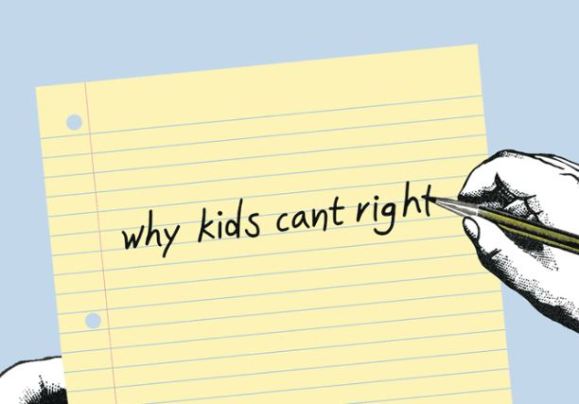
I suspect that Goldstein may choose to expand this topic later in a book. She already has published the bestseller The Teacher Wars: A History of America’s Most Embattled Profession.(2015)
A book would allow her a chance to expand her thesis as to why kids can’t write. Because she is an education reporter, however, she has not had the learning experience the same way a classroom teacher learns in teaching writing. An education reporter is not an educator.
That was the point taken by education blogger PL Thomas (Radical Scholarship). He responded to her article with his own argument, Why Journalists Shouldn’t Write about Education. He has a point.
Goldstein’s article is 2621 words long with some analysis on opposing arguments on the teaching of writing. She includes educator interviews as to why kids can’t write. She identifies a point of agreement, that teachers have “little training in how to teach writing and are often weak or unconfident writers themselves.” But overall, the article does not deliver what its title implies, an answer to the question why kids can’t write.
As a classroom teacher, I know there are many reasons kids can’t write. Blogger Thomas offered his ideas as to what is missing; I am adding my own here.
First, Goldstein uses data from the National Assessment of Educational Progress (NAEP test) and the writing section of the ACT writing exam as evidence in addressing the claim, “three-quarters of both 12th and 8th graders lack proficiency in writing.”
In teaching writing, classroom teachers do not rely solely on evidence taken from standardized tests such as the NAEP or ACT. They know that this evidence represents only one kind of writing, created for circumstances found only in schools.
The writing portions of these standardized tests are timed and that ticking clock can truncate the prewriting, drafting, revising, and editing steps in the writing process that they present in class.
Teachers know that the example provided by the ACT is, like other pre-college assessments, a DRAFT:
- “Well Machines are good but they take people jobs like if they don’t know how to use it they get fired.” (ACT response)
Teachers know more about a student (reading level, EL status, etc) to help better understand why a student may be confused in verb tense/or to or too in the grade one example:
- “Plants need water it need sun to” (1st grade)
Both examples are responses to a prompt-(I am guessing mechanized labor for the ACT- plants in grade 1) and the content appears correct but under-developed. In less stressful circumstances, given time necessary for authentic writing, each student should be able to follow the writing process, elaborate and make corrections.
Consider that as a professional writer, Goldstein had the advantage of time (even with a deadline) in writing Why Kids Can’t Write. She had the opportunity to pre-write (pitch), draft, revise, and edit. There’s a reason she did not put her first draft up for everyone to see; it is the same reason this response has taken me a few hours to write before I hit publish. Writing takes time.
But ask any teacher…in testing, in the classroom, there is never enough time to write. Dedicated blocks of extended thinking and writing time do not exist. Instead, there is a steady stream of disruptions or interruptions: announcements, slow word processors, scheduled specials, student behavior, etc. when students write.
A second reason that contributes to why kids can’t write is choice. In testing situations, students have no choice in their response to a prompt, and their (draft) work is collected (finished or unfinished) and sent off to a testing center, never to be seen again.
Research suggests that choice is directly connected to student motivation. Goldstein probably had some choice in writing this article; her motivation comes from her profession, a paycheck.
Now add authenticity to choice. The prompts given to students in standardized testing vary in authenticity. They are written to determine a student’s proficiency with a genre, not for publication. Some examples of genre related prompts (grades 5-8) I found on released exams given in the past two years include:
- argumentative: discuss the pros and cons of cursive writing.
- expository: compare and contrast response about the potential benefits and drawbacks involved in organic farming as a vocation.
- narrative: a multi-paragraph story about a robot that all of a sudden comes alive.
The quality of the response to any of the above will not only depend on a student’s grasp of the standards of English (conventions) but also on a student’s interest, a student’s understanding of the task, and a student’s background knowledge. By middle school, students know test responses are “one and done” high stakes exercises. Practice for testing without choice only reinforces test prep as inauthentic classwork…a kind of fake news in education assessment.
Goldstein also included in a sidebar a student response to the pre-assessment prompt, “Explain why we study the past.” The instructions for this broad topic read, “write a complete paragraph that contains a topic sentence, supporting detail sentences, and a closing sentence.” While this pre-assessment is given to see what a student may or may not know, there will be some students who will struggle with such a prescribed writing formula in such a way that it defeats the purpose for writing. The average student cannot demonstrate (with details) all he or she knows about the past in a short paragraph.
In contrast, writing an article for the NYTimes is an authentic writing exercise. There is no paragraph formula. Goldstein’s paragraphs vary in length, and there are a few one sentence paragraphs.
Moreover, Goldstein’s article reached an audience outside of the classroom (1445 comments to date). The same cannot be said for the reader of responses for standardized testing; that single reader does not comment back to the student except through a grade.
Goldstein also glosses over another critical element in the teaching of writing. She mentions feedback only once in the article stating, “At every level, students benefit from clear feedback on their writing.” This statement grossly understates the critical importance of feedback in the form of the writing conference as the single most important tool in the writing teacher’s toolkit.
If a teacher wants to improve a student’s writing, a writing conference (teacher to student; peer to peer) is the best solution. A conference with constructive feedback allows for teacher and student to focus on a skill that needs attention. The writing conference is more effective in addressing repeated errors made by a percentage of the class rather than whole class instruction. Whole class instruction and worksheets may be counter-productive; not every student needs to repeat the same grammar lesson.
Goldstein is even-handed in presenting the arguments of opposing factions in the teaching of writing. These arguments should sound familiar to those education veterans of the phonics wars (1983-2000) where explicit instruction in the foundations of language (phonics devotees) was pitted against meaning and strategy instruction (whole language devotees).
In framing a similar confrontation in writing instruction, Goldstein introduces writing experts who support “focusing on the fundamentals of grammar” in teaching writing versus writing experts who advocate “exposing them [students] to great writing.”
Arguing for the fundamentals of grammar side is Judith C. Hochman, the founder of a non-profit organization called the Writing Revolution. At the time of the interview, Hockman was facilitating a workshop where teachers were developing worksheets that would help children learn to write. “It all starts with a sentence,” Dr. Hochman explained. Writing Revolution offers subscription based support to teachers trained in their methods for a fee.
For the counter-argument on exposing students to great writing, Goldstein interviewed high school teacher Meredith Wanzer with the Long Island Writing Project, who intentionally “limits the time she spends covering dull topics like subject-verb agreement.” She was attending a program sponsored by the National Writing Project (NWP) that offers training to an estimated 100,000 teachers each summer.
Full disclosure: I am most familiar with this argument of exposing students to great writing. I attended a summer session for teachers sponsored by the NWP at Fairfield University (Thanks, Bryan Crandall). Like Wanzer, I participated in writing and revising my own work over the summer so that I would be more comfortable in understanding the needs of my student writers. After all, I reasoned, it is hard to expect students to write if I did not write myself.
Over the course of the article, Goldstein presents both arguments, one for teaching structure (grammar) against the other informed by great writing (literature). She settles on a compromise, much like the compromise that ended the phonics wars: teaching writing is a blend. Goldstein concludes, “All of this points toward a synthesis of the two approaches.”
One final twist that is not included in this article is that students are expected to meet the same standards of English as a professional writer. That professional writer, ironically, has the benefit of an editor…or maybe even a team of editors. Goldstein had an editor for this article. Moreover, the editor for this piece was not an English teacher….one who could have corrected her use of the informal “kids” rather than “students” or her use of a contraction “can’t” in formal published piece.
Perhaps the publishing constraints of print space are what limited Goldstein’s reasons as to Why Kids Can’t Write. She does include teacher training, grammar instruction, free writing, and the Common Core, but maybe her explanation falls short because of the most obvious reason, no experience as a teacher.
If she does choose to write that book, I hope tries her hand at writing instruction herself. She is a good writer and will appreciate how these everyday reasons- requiring students to write without time, without choice (motivation), without authenticity, and without feedback- are at the heart of why kids can’t write.







 Used Books in Class