Archives For November 30, 1999

Books read in Grade 10- World Literature

Next week, English II students will begin reading All Quiet on the Western Front by Erich Maria Remarque in tandem with the World War I unit on taught in social studies classes. This collaboration is a great opportunity to have the context of a WWI novel explained from another point of view. The social studies classes cover the causes of WWI, many of the battles, and the results of WWI on Europe and American foreign policy while the English classes follow the lives of a few soldiers engaged in the conflict. Social studies can cover the macrocosm setting, the geography of WWI, while we can cover the microcosms of the novel-the intimate settings   of Paul and Kat feasting on a goose they caught or Paul visiting the bedside of Franz Kemmerich, his mortally wounded companion.
The older edition cover; copies are always found in the YA section of a book sale

Our copies of the book are fairly old, so I am always looking for additional books to replace those who have become too worn for use in class. The e-book (through Questia) is only available as a free trial. There are always copies of the novel in used book sales including the more recent edition, and the book is almost always located in the young adult section rather than on a table or section dedicated to military history or adult fiction. This placement could be attributed  to the popularity of this novel in curriculum around the country; obviously, the person placing the book on the YA table read the book in high school.  The popularity of the book in schools defies many conventions. First, the novel is a translation from German, which distinguishes it from the multitude of British and American titles that crowd middle school and high school reading lists. Second, the point of view is from an enemy combatant; the French, English and American troops are the enemy. Including this novel acknowledges Remarque’s universal message that the consequence of war is devastation, a message that may be even more important for a nation that has been at war for over 10 years.
The new edition cover

Many technological advances made WWI a brutal war: aerial combat, machine guns, mustard gas. Last year, we were reading one of the passages that described a mustard gas attack,  looking for language that described how lethal this weapon was for the foot soldiers.  Suddenly a startled look came across the face of a  student. His hand shot up as he blurted,  “Ms. P told us that the more technology that’s used in war, the further a soldier gets away from the enemy in combat.”  There was a pause-other students had heard the same in class, and the consequence of increasingly sophisticated weaponry used against Paul and his companions was suddenly very real. His point hung there until another student chimed in, “And now we use drones.”  Suddenly, the WWI novel was not dated. The students understood that military drones currently used in combat would certainly have targeted Paul and his companions if they had been available to Allied forces in 1917.

There are several activities that we pair with reading the text, but the most powerful for students is the NY Times Magazine photo essay (Ashley Gilbertson)  of soldier’s bedrooms titled “The Shrine Down the Hall” (there is a video clip as well) In the novel, Paul returns for a visit home. Instead of being a sanctuary, however, the bedroom is a painful reminder of the innocence he has lost after months of combat of the Western Front. Our assignment is to compare the elements of Paul’s bedroom (items, his feelings, his memories) to the elements in the photos of the bedrooms of American soldiers who had been killed in Iraq or Afghanistan. This photo essay brings the impact of war’s devastation to an intense personal level. Many of the students have bedrooms with the same posters, layouts, or furniture, and they note these similarities in their responses.
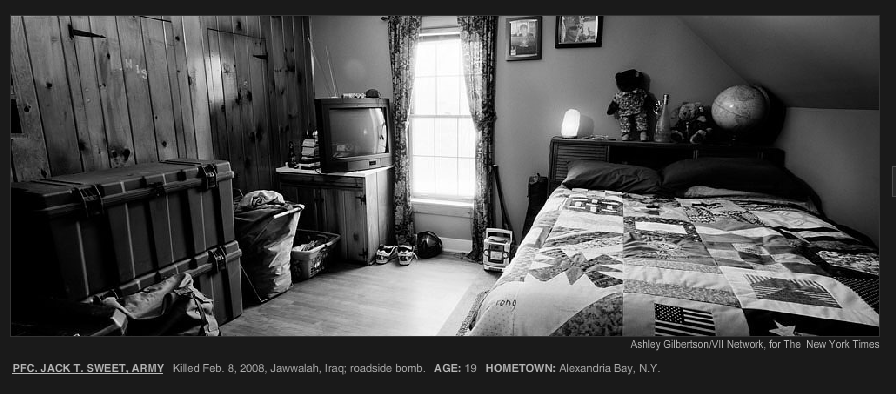
A photo from Ashley Gilbertson's "The Shrine Down the Hall" photo essay in the NY Times Magazine section

Students are instructed to choose one of the soldier’s bedrooms from the photo essay, and make a connection with text from Chapter 7 (Paul’s visit home) by answering the following questions:

  • How are the text of the novel and the photo alike?
  • How do the text and the photo differ?
  • What is the photographer’s message? What is Remarque’s message? How are they the same? How do they differ?

The students’ responses included:

I chose picture 15, of Matthew J. Emerson’s bedroom. His room is just waiting for him to come home but it never happens. The room also has pictures cut out on the wall, from what appears high school sports, as well as trophies on the shelf. Paul gets to return home one last time, unlike the soldier who was killed in Iraq who returned in a casket with an American Flag on it. Paul feels like a stranger in his own room. War changes people; you can’t go blasting heads off for 2 years and come home and live the normal everyday life again.They come home, changed, forever.

I choose photo 17. The man who died was Sergeant Gilbert who was killed in 2006.  The photographers message is saying that an ordinary young person, even a teenager, can go to war and be killed. The photographer expresses the loneliness, silence, and emptiness that the room has. Remarque’s message is saying that the average soldier has a very hard time coming back because he or she has to make decisions that don’t involve killing, that don’t involve defusing a bomb. These two messages are the same because they both describe the difficulty of coming back home, but they are different because these two messages are set in different times with different technology of warfare.

When I see picture #3 I think of Paul the most. Here are a bunch of pictures everywhere on the walls of all different kinds of things, like “Then below are periodicals, papers, and letters all jammed together with drawings and rough sketches.” When I read this it makes me think of a cluster of a bunch of different things, also when I look at room #3 I see a cutter of a bunch of posters, hats, books, and many other things. I think the picture and Remarque’s  are both saying that life is not the same when you get home and many of the soldiers cannot come home and have everything be the same as when they left.

I chose photo 14 because it is surprisingly similar to the book. The text talks about Paul’s book shelf and his school books all thumbed through. the room has a book shelf and other references to school. What looks like a degree is hanging on his desk. This room however has a poster of the marines in the background which shows that this boy was obviously thinking of joining the military before hand. Paul has no mention to wanting to join the army before Kantorek takes them down to the recruiting office. I think the photographer’s message is to show how innocent the soldier was before.

He was on a sports team and appeared to be quite good, he won a trophy. Remarque’s message is very similar. The soldier is changed after war, he cannot go home and just drink some beers and pretend everything is all right. It’s not.

I chose picture 14. This room was occupied by Nathanial D. Windsor who died on March 11, 2007. He was only 20 years old (about the same age as Paul). T. The photographer said was trying to portray a lonely room that is not occupied anymore. Remarque’s trying to portray that Paul’s room is lonely too. They are both alike because they are lonely.

Christopher Scherer’s room reminded me of when Paul went home. Paul had a nice life before the war he felt at home, when he returned from the war he felt like he was looking through a veil. He tried on his clothes, his civilian clothes, that made him feel like he had nothing. After the two years of war he cannot have that connection to his home, he relates everything back to the war. The war has given him the thought of death and destruction, Paul is no longer himself, he cannot connect to his home, where he is supposed to be.

In the picture a bookshelf was not full which could mean that the soldier was as Paul was did, collecting them gradually.  The solider also has a clear view of the outside that he can sit and watch, just as Paul has in the story. Remarque and the photographer have different views. Remarque tries to display that after the soldiers return home they are never the same people and their rooms do not represent them. While the photographer’s message is that all the pieces of  soldiers’ lives are preserved in their rooms and are now gone forever because they have died.

Remarque’s novel transcends time perhaps because of the intensity the reader feels for one soldier caught up in a conflict beyond his control.  While the social studies classes are required to cover the history of World War I, the English classes are free to cover Paul and “his”-story.

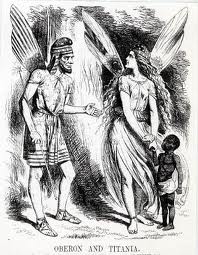
"Ill met by Moonlight, proud Titania"

Ill met by moonlight, proud Titania,” reads Karl off the script. He looks confused, “I’m ill?” he looks puzzled. “Am I sick?”

“You’re not sick…We are having a fight!” responds an irritated Nicole, who is playing the fairy queen. She continues to read: “What, jealous Oberon! Fairies, skip hence:/I have forsworn his bed and company.”

“Whoa, looks like someone is sleeping on the couch tonight!” chimes in Sam from the audience.

Students in English II are acting out scenes from William Shakespeare’s A Midsummer Night’s Dream in preparation for a field trip. Their response to the play is not unlike the response of Shakespeare’s original audiences; there is no high browed reverence here but rather a steady stream of commentary coming from the “groundlings” sitting in desks.

A fight between a fairy queen and a fairy king as part of a comedy by Shakespeare is a break from the too serious literature of adventure, war, and tragedy (Animal Farm, Night, Beowulf, All Quiet on the Western Front, Lord of the Flies) that is usually featured in the sophomore curriculum. For two weeks, the students are wrapping themselves in costume tulle, strapping on  wings, donning crowns while they stumble through the language of Elizabethan comedy. Their experience is not a singular one. Today, a student’s first introduction to the bard usually takes takes place in the classroom. On any given day, at any school hour in classrooms all over this country, students from elementary grades through high school are struggling with iambic pentameter in decoding Shakespeare’s poetic language. This indoctrination is part of a long standing American tradition.  Since the beginning of America’s history, Shakespeare has lived on American soil.

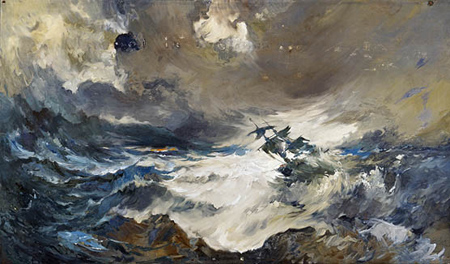
W. H. Harrington. Wreck of Sea Venture. Painting, 1981. Courtesy of Bermuda National Trust and Bermuda Maritime Museum.

Perhaps it was Shakespeare’s fascination with the new colonies in the Americas that initiated the relationship. His play, The Tempest, is loosely based on the 1609  wreck of the Sea Venture near the Bermudas on its way to Jamestown. Prospero and his daughter Miranda are shipwrecked on a island for many years. When visitors arrive after a storm to break their exile, Miranda marvels at the meeting by proclaiming “O brave new world/ that has such people in it.” In the play, Miranda’s line is ironic; she is unaware that several of these visitors were less than desirable types. However, for the British and people in the countries of Europe, the American colonies were the brave New World, full of hope and promise laced with a tantalizing dash of danger and adventure.  Americans reciprocated this compliment with a slavish devotion to Shakespeare that continues to this day.

This relationship between Americans and Shakespeare is detailed on the National Endowment for the Arts (NEA) website, “The earliest known staging of Shakespeare’s plays in the colonies was in 1750. By the time of the American Revolution, more than a dozen of his plays had been performed hundreds of times in thriving New England port cities and nascent towns and villages hewn from the wilderness.” By the 1830’s, Alexis de Tocqueville, visiting from France, wrote extensively about his travels in the United States (Democracy in America) noting, “There is hardly a pioneer’s hut that does not contain a few odd volumes of Shakespeare. I remember that I read the feudal drama of Henry V for the first time in a log cabin.”

Shakespeare was embraced by the Americans through their nation’s rapid expansion beyond the original 13 colonies, and the NEA states that “plays were produced in large and opulent theaters and on makeshift stages in saloons, churches, and hotels. From big cities on the East Coast to mining camps in the West, his plays were performed prominently and frequently.”  Mark Twain took advantage of American’s familiarity with the troupes of English actors who traveled to the colonies, and incorporated Shakespeare into his classic Huckleberry Finn. Twain’s Huck travels with a pair of con men who practice the balcony scene from Romeo and Juliet and the sword fight from Richard III on the raft while they botch Hamlet’s “to be or not to be” soliloquy. Twain counted on his audience’s acquaintance with Shakespeare’s texts in order to set up this parody.

Interesting historical trivia about Shakespeare in America includes the casting of Lieut. Ulysses S. Grant on the eve of the Mexican War into the role of Desdemona from the play Othello. Apparently he never performed, lacking “the proper sentiment”, and a female was recruited at the last minute to replace him. Edwin Booth, the elder bother of John Wilkes Booth, toured the Western United States during the Gold Rush, and enjoyed enormous acclaim performing plays by Shakespeare. Apparently, the best theaters in the East were not as profitable as performing in the raucous camps where theater tickets were paid for in gold nuggets and bags of gold dust. Edwin is also credited with saving the life of Abraham Lincoln’s son, Robert, on a train platform the same year his brother John Wilkes assassinated Lincoln in 1865.

Contemporary Americans have a deep love for Shakespeare by producing his plays in theaters and in film with more frequency than any other playwright. Almost every state has a theater dedicated to exclusively performing Shakespeare’s plays.  Films of his plays, most recently The Tempest starring Helen Mirren as as a female Prospero, or with remakes of his material. The Taming of the Shrew was memorably relocated to an urban high school in Ten Things I Hate about You with Julia Stiles as the intractable Kate, a film that remains popular with American audiences. The Common Core Standards in Language Arts require his plays be taught in classrooms at the high school level. All this attention explains why students willingly (or unwillingly) wrap themselves in costume tulle, wear wings, don crowns and stumble through the language of Elizabethan drama. Like Kyle and Nicole, they may fight in the roles of the Fairy King and Fairy Queen, or they may analyze the reasons  Macbeth usurps the throne. They may research the origins for Henry the V’s “Band of Brothers” speech, or  memorize the prologue to Romeo and Juliet. Because watching, performing, and learning Shakespeare is an American classroom tradition.

Danbury, Connecticut, is the closest metropolitan area near me (population 80893), and this past weekend, the Friends of the Danbury Public Library held their annual sale. The first remarkable fact about this event is that the 80,000 books available to the public for sale, transported several miles from the library location to the Danbury PAL building at the other side of town, arrived in alphabetical order! This was a very well-organized sale; browsing the fiction tables was a breeze.

The second remarkable fact about this event would be the surprisingly large number of biographies, auto-biographies, and memoirs donated by Danbury residents. Three long tables laid end to end were laden with all manner of biographical materials, and under these tables, there were boxes filled to overflowing with additional selections. Interestingly enough, most of these books were “solo” copies; duplicates, with the exception of  Angela’s Ashes by Frank McCourt (an area favorite) and The Glass Castle by Jeanette Walls, were hard to find. A cultural anthropologist attending the sale could speculate as to what the fascination biographies, auto-biographies, and memoirs have for Danbury readers. Are the residents “people”-people? Is there a strain of  voyeurism running through their veins? Or are they simply curious about the lives of the rich and/or famous? (Did former Danbury resident Robin Leach have anything to do with this trend?)

One of the many titles available to add to Memoir class

The plethora of memoir titles provided the following as selections for independent reading for the 12th grade memoir class:
Madhur Jaffrey– Climbing The Mango Trees: A Memoir Of A Childhood In India.
Gail Caldwell- A Strong West Wind
Ann Patchett- Truth and Beauty
Lucy Grealy- Autobiography of a Face
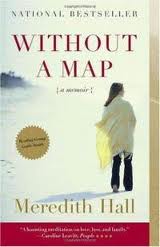
Meredith Hall –Without a Map: A Memoir
Patrick Moore-Tweaked: A Crystal Meth Memoir
Rory Stewart- The Prince of the Marshes: And Other Occupational Hazards of a Year in Iraq
Janice Erlbaum- Girlbomb: A Halfway Homeless Memoir
Claire Fontaine and Mia Fontaine- Come Back: A Mother and Daughter’s Journey Through Hell and Back (P.S.)
Linda Greenlaw- The Hungry Ocean: A Swordboat Captain’s Journey 

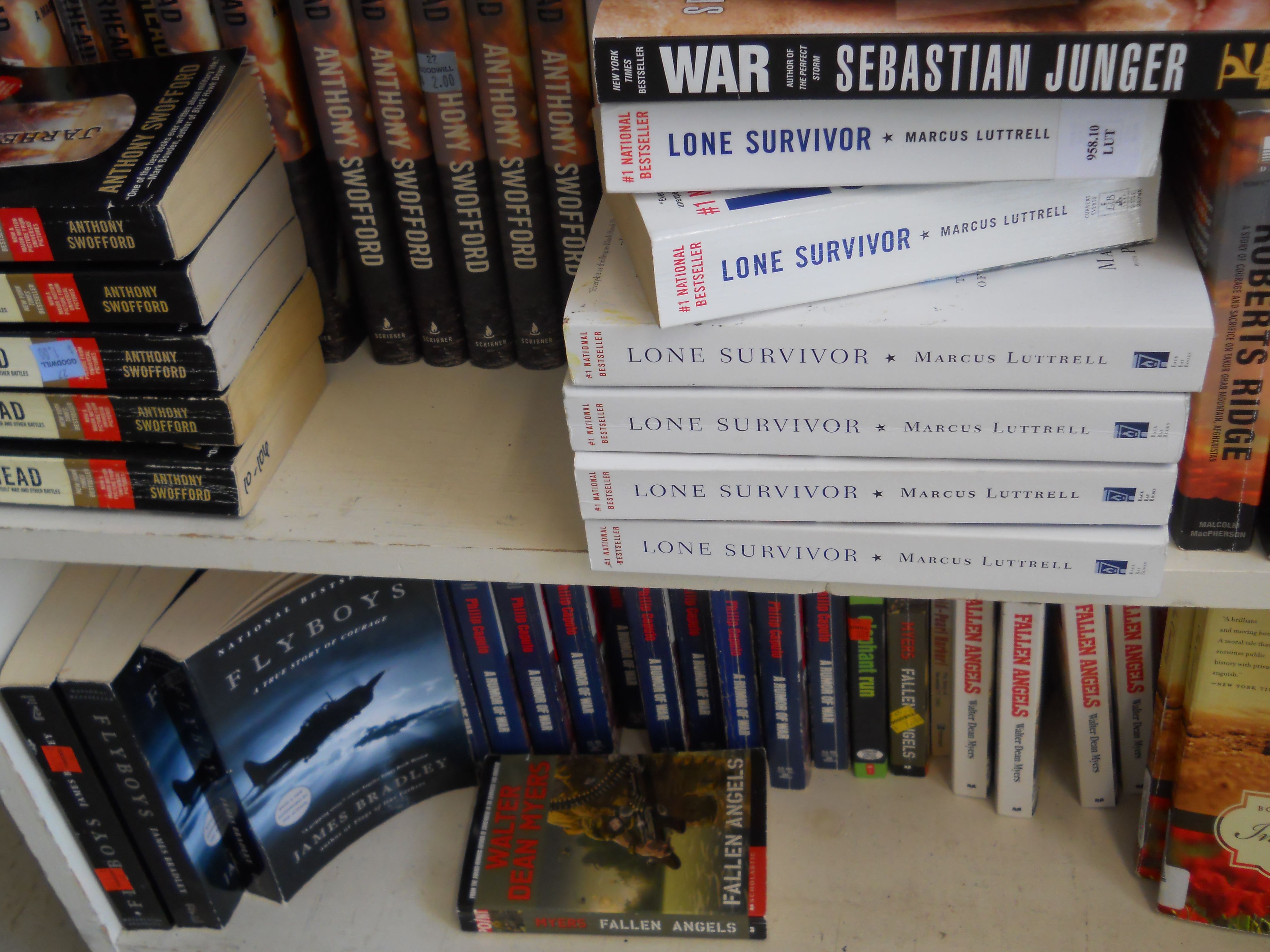
For Grade 11, there were multiple copies of  Louise Erdrich’s Love Medicine Sebastian Junger’s War, and Michael Sharra’s The Killer Angels.

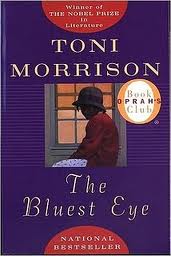
Multiple copies of The Bluest Eye were available. This text is under a book challenge by a neighboring community

There were also multiple copies of Nobel prize winning author Toni Morrison’s The Bluest Eye, an indication that the book is on a Danbury school or local book club’s reading list. Currently, this book is being challenged by parents in the neighboring town of Brookfield. According to the local media, the Brookfield challenge to have the book removed (Honors Grade 11 class) is largely led by individuals who have not read the book but who have read, and are circulating, excerpts of some graphic scenes; one complainant does claim to have read the SparkNotes.

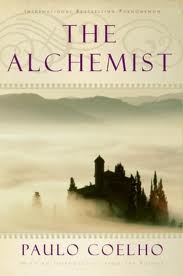
For grade 10, there were multiple copies of Ishmael Baeh’s A Long Way Gone, Paulo Coelho’s The Alchemist, Mark Haddon’s The Curious Incident of the Dog in the Night-Time, and Deborah Rodriguez and Kristin Ohlson’s Kabul Beauty School.  There also multiple copies of William Golding’s Lord of the Flies and  Erich Maria Remarque’s All Quite on the Western Front in the same editions we have in our classroom libraries.

For Grade 12 independent reading, usually Creative Writing classes, I found multiple copies of Garth Stein’s The Art of Racing in the Rain, and enough copies of Melissa Bank’s The GirlsGuide to Hunting and Fishing as a “test” to see what students think.

I located some “hard to find” titles of books that are always needed including Persepolis: The Story of a Childhood by Marjane Satrapi, Bobbi Ann Mason’s In Country, Cormac McCarthy’s All the Pretty Horses, Joseph Bruchec’s Codetalker, and Laurie Halse Andersen’s Chains. Since we are a vocational-agriculture school, an elective under consideration for seniors is Animals in Literature.  Both of Ken Foster’s books Dogs I Have Met: And the People They Found and his other book Dogs Who Found Me will be added to that bookshelf.

I have noticed that a number of books that currently occupy positions on the NY Times best seller lists have been available at these local library sales. At Danbury’s sale, these titles included Like Water for Elephants by Sara Gruen, Little Bee by Chris Cleave, and The Kite Runner by Khaled Hossani. The Girl with the Dragon Tatoo by Stieg Larsson, and its sequels The Girl Who Played with Fire, and The Girl Who Kicked the Hornet’s Nest escaped the stigma of being limited to the mystery table; all three were placed for readers of fiction who may want to “cross-over” for a thrilling mystery.

An entire side wall was dedicated to VHS tapes. Given the current state of technology, I wonder how much longer VHS will be featured at these sales; their value must be falling as the popularity of online movie streaming or DVD/Blu-ray grows. There were also two tables of audio books, CDs and DVDs. The organizers of the sale had a rather uncoventional approach to the literary canon; the classic literature section was divided from the poetry section with an expansive section of books devoted to humor. Was this placement a commentary on humor as the offspring of the classics? Or was this partition a statement about the lack of humor in the classics? I am not sure.

Unlike other area sales, there was no admission charge for early arriving buyers, so shopping during the first hours of the sale meant contending with book dealers and their ISBN readers. Fortunately, the aisles were wide enough to accommodate people carrying large bags filled with books. Prices ranged from $.50-$2.00;rare books had their own section and were priced accordingly. Volunteers wearing blue shirts and aprons were plentiful. By noon many were engaged in re-stacking tables and filling in gaps created by eager shoppers. Checkout was a breeze. The bill for five large bags of books, roughly 87 books, came to $101.00. The Friends of the Danbury Public Library will reduce the number of books to pack up by having a “bag sale” on Monday, 10/17.

80,000 books donated by residents in a city of 80893 means at least one donated book for each person. That is also remarkable; make this 80,000 Books and Three Remarkable Facts.


Sophomore English is centered on the study of World Literature and is organized to complement Modern World History classes taught by members of the Social Studies Department. This means, when students are taught about World War I, the English classes read All Quiet on the Western Front.

One of the goals this year for every member of the English Department is to increase the amount of reading opportunities. To meet this goal, the EnglishII classes have just completed a unit where they chose books written by world (not American) authors or books about world events. The unit ran for 18 days-11 days class periods designed with 20 minutes of silent sustained reading combined with lit circles for a total of 3 hours and 40 minutes of in-class reading time.
Students choose the book they wanted to read after researching book titles with reviews (from Amazon) promoted in a prepared folder on Livebinders. Literature circles were organized by student selection of titles; teachers made recommendations for low-level readers.

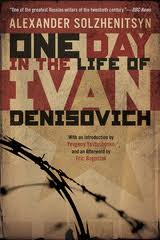
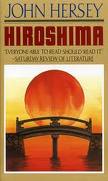
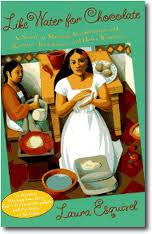
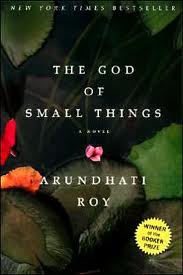
80% of the texts offered in this unit were added to the classroom library as used books. Books were purchased for $.50-$4.00 each over the period of two years through visits to thrift stores, public library sales, and online used book vendors. The remaining 20% of texts were already purchased for classroom libraries through the retail market. The most popular titles selected by the students included: A Day in the Life of Ivan Denisovich, The Alchemist, Hiroshima, and The Life of Pi (titles initially purchased at retail price); Like Water for Chocolate, City of Thieves, The Girl with the Pearl Earring, The God of Small Things and Ella Minnow Pea (all titles added through used book markets).

Literature activities were designed to encourage student creativity and to be simple enough so that students could complete the tasks during the period. Students were continually reminded that they need to read for homework as well as in class.
Once the literature circles were organized, students kept all group work in folders. Literature circles were not divided with assigned roles; all members of the group participated in the daily scheduled activity.

Daily activities included:

  • Members of the group developed five questions each which were shared in the group. All members chose three question from this pool and responded to them;
  • Members of the group each located a passage with figurative imagery and used that passage to create a found poem;
  • Members of the group illustrated a scene from the book as a six-panel comic strip;
  • Members of the group researched 14 facts about the text they chose, the author, and the context when the book was published;
  • Members of the group each wrote three character haikus;
  • Members of the group created one timeline of 10 events from the text and organized these on Timetoast.com interactive software.

Once students had chosen their texts, they were given an index card to record data about their reading habits. Students recorded their progress on these cards with the following data: page # at the beginning of a reading session, page # at the conclusion of a reading session; the number of minutes for the reading session; the location of the reading session. At the conclusion of the unit, this card was used as a self-reflection exercise, and the data card attached to a sheet with the following questions:

1. According to the data you recorded on the card, how long did it take you to read this book?
2. What was your average reading rate (pages per minute)?
3. In which location did you read most frequently?
4. If you had to take a detailed multiple choice quiz or test on this book, would you have scored well? WHY or WHY NOT?
5. Who would you recommend should read this book?

As a final assessment, students completed a dialectical journal of 10 quotes (5 from the beginning of the book; 5 from the end of the book).

The unit was successful in having students engage with their texts daily; students would enter the classroom saying, “We get to read first, right?” while literature circles allowed for student centered activities. Assessments of responses collected in literature circles allowed teachers an opportunity to monitor student understanding. Several students completed their chosen text early. These students were given one page book review sheets to complete for extra credit; no other assessments were given for extra credit reading.

The goal was to increase student engagement in texts with SSR and literature circles while exposing students to author voices from around the world. This unit has proven to be flexible and teachers will schedule this unit with some changes to literature circle activities during standardized state testing and again at the end of of the school year. The 20 minutes a day also provided time for teachers to familiarize themselves with many of the texts as well. Why should students be the only ones enjoying a book? What teacher wouldn’t want a little reading time for themselves?

The New Fairfield Public Library Book Sale  took place on a lovely fall day; a crisp and cool Connecticut beauty of a day. Unfortunately, the sale also took place in the same locale where the local highway department was painting the parking lot lines at the front of the building,  and where the soccer club practice with team coordinators were handing out team jerseys at the back of the building. The actual book sale was held in a meeting room and a small entry hallway. At 10:00 AM, shopping at the sale was challenging between finding a spot to park outside and negotiating cramped quarters inside.

There were, however, some bargains to be had. Browsing was a shared experience with several other buyers; I would remove a box piled with books to one section, while another person would replace that box with another. Crawling along the front hallway floor which held boxes of trade paperbacks, I was able to locate copies of Codetalkers by Joseph Bruchac and A Yellow Raft in Blue Water-Michael Dorris for the Contemporary Native American unit that is being taught this month in Grade 11. I was also able to add to our curriculum collection:

The Giver- Lois Lowery
Night-Elie Wiesel
The Great Gatsby-F. Scott Fitzgerald
Lord of the Flies-William Golding
Brave New World-Aldous Huxley
The Road-Cormac McCarthy
The Handmaid’s Tale- Margaret Atwood

An independent choice book for Grade 11.

The “score” of the morning was a new copy of Winter’s Bone by Daniel Woodrell.  This is the fourth copy I have found this summer, and the book will be placed in the “Coming of Age” unit in Grade 11 as an independent choice novel. The School Library Journal reviewed this book for high school students saying, “In the poverty-stricken hills of the Ozarks, Rees Dolly, 17, struggles daily to care for her two brothers and an ill mother. When she learns that her absent father, a meth addict, has put up the family home as bond, she embarks on a dangerous search to find him and bring him home for an upcoming court date. Her relatives, many of whom are in the business of cooking crank, thwart her at every turn, but her fight to save the family finally succeeds. Rees is by turns tough and tender. She teaches her brothers how to shoot a shotgun, and even box, the way her father had taught her. Her hope is that these boys would not be dead to wonder by age twelve, dulled to life, empty of kindness, boiling with mean.”  When I read the novel, images of the witches from Macbeth came to mind!

For the independent reading shelves, I also located a copy of Dairy Queen by Catherine Gilbert Murdock, Book Two The Ruins of Gorlan in The Ranger’s Apprentice Series by John Flanagan , After by Francine Prose, and Ape House by Sara Gruen (surprising since this is a recent release).

New Fairfield’s sale offered far more hardcover fiction texts than trade paperbacks, and the children’s picture books were overflowing the small table to which they had been assigned. This could be an indication of a shift in population to more elementary aged choices….the New Fairfield babies are growing up!

Once I brought my two baskets to the counter, the volunteers at the checkout were gracious and accommodating. They were prepared with bags for purchases, and at my request  one quickly designed a receipt for me. (“Last year, I had a pile of receipts, but no one need them, wouldn’t you know?”)

Hardcovers were $2.00, trade paperbacks were $1.00, and small paperbacks were $.50. Sunday was “Bag day”-all books in a bag for $10.00.  I purchased only trade and small paperback on this trip and spent $26.00 for 32 books. These will be added to the school’s “book flood“.

The volunteers picked a perfect weekend for people looking for book bargains. Perhaps next year there will be better coordination of traffic outside the library and inside the sale so the efforts of the Friends of the New Fairfield Public Library are fully supported.

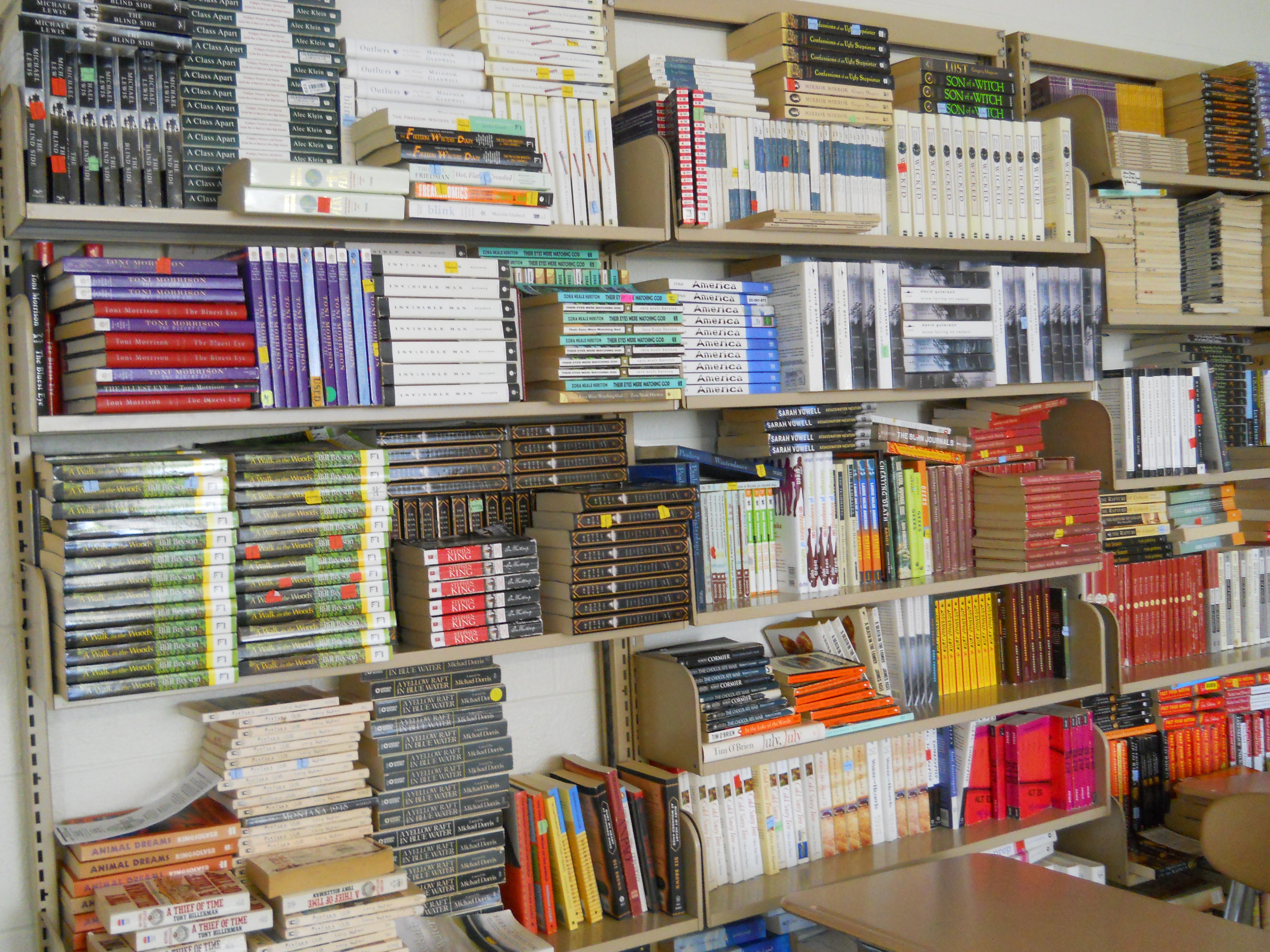
Classrooms are several feet deep in a “book flood” at the Wamogo Middle and High School.

Junior classroom library created with used books

While there has been a torrent of late summer rains that have closed roads and delayed schools in the Northwest corner of Connecticut, our students are experiencing a deluge of an entirely different nature. Gently used books spill over in classroom bookcases; they slop on to counters and swamp several double-sided carts.

The term “book flood” is used by Kelly Gallagher in Readicide.  He states, “Let me be clear: if we are to have any chance of developing a reading habit in our students, they must be immersed in a K­12 ‘book flood’–a term coined by researcher Warwick Elley (1991)” (43). Book flood is a theory, recently tested in countries (Fiji, Sri Lanka, Singapore) where English is not part of the culture.  The theory is that students exposed to quantities of literature will learn English as a second language more effectively.

The abstract for The Potential of Book Floods for Raising Literacy Levels by Warwick B. Elley states that “the evidence is now strong that it is possible to double the rate of reading acquisition of Third World primary school pupils with a ‘Book Flood’ of about 100 high-interest books, per class, and short teacher training sessions. The benefits for reading skill and enthusiasm are consistent across diverse cultures, mother tongues and age levels, and they appear to generate corresponding improvements in children’s writing, listening comprehension, and related language skills. Such skills are typically found to develop very slowly under traditional textbook styles of teaching.”

Gallagher suggests that American educators do the same in their classrooms by asking, “Do students at your school have access to a wide range of interesting reading materials? Is providing access to interesting text a priority among your administration and faculty? Are students on your campus immersed in a book flood? Are we giving them every opportunity, via reading, to build vital knowledge capital?” (49).

Well, we are.

11th grade choices that accompany the Contemporary War unit with The Things They Carried

Over the course of one year (June 2010-2011), the Wamogo English Department had added 2,500 books previously used books to the classroom collections. Many of these books are familiar titles that are taught in grades 9-12 (EX: The Great Gatsby, Lord of the Flies, Animal Farm, Speak, The Glass Castle, A Lesson before Dying, The Bean Trees, To Kill a Mockingbird, The Handmaid’s Tale) or titles taught in  grades 7 & 8 (EX: Stargirl, Nothing but the Truth, The Giver, The Light in the Forest, The Outsiders, No More Dead Dogs).

Additionally, class sets of books (20 -30 copies) that were already purchased as new books were expanded with used copies for each student at grade level. For example, the 10th grade library started with 20 copies of The Kite Runner. After two years, there are now 116 copies for 10th graders, one for every student, plus all teachers and teachers’ aides. There are also 15 copies of A Thousand Splendid Suns for students who would like to read another novel by Khaled Hossani. Similarly, 20 copies of Mark Haddon’s The Curious Incident of the Dog in the Night-Time were purchased new in 2009. An additional 67 used copies have been added since; 13 more copies will make a grade level set of 100 copies.

Books offered to Advanced Placement English Literature students for independent reading

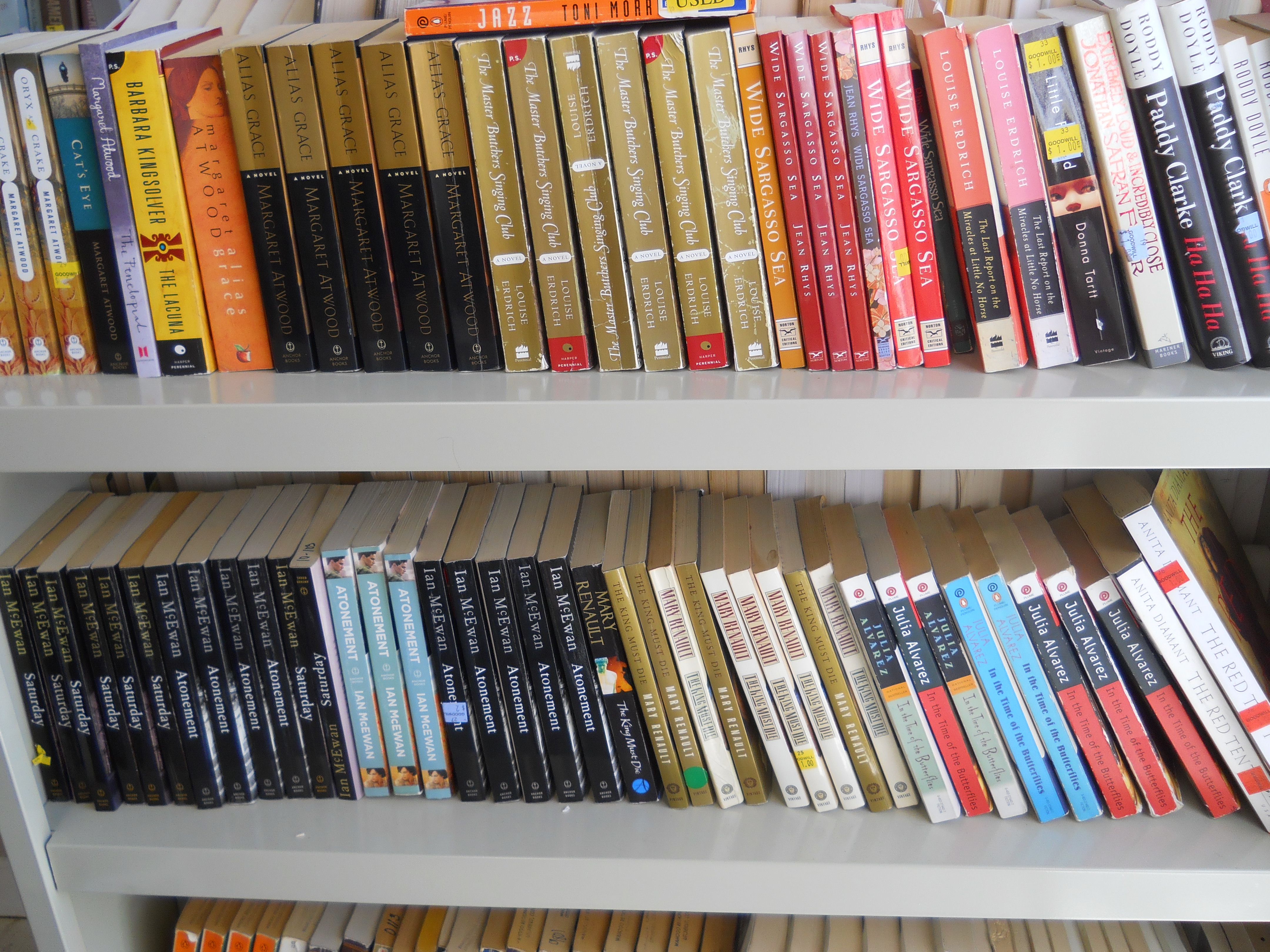
In order to offer independent choices for the Advanced Placement English Literature and English Language classes, newer titles have been added including multiple copies (4-30) of  The Plot Against America, Alias Grace, The Adventures of Kavalier and Clay, Middlesex, The Story of Edgar Sawtelle, The Poisonwood Bible, In Cold Blood, Love in the Time of Cholera, Paddy Clarke Ha-Ha,  Dinner at the Homesick Restaurant, The Elegance of the Hedgehog, Cold Mountain, Ironweed, The Wide Sargasso Sea, Gertrude and Claudius, Atonement, The Hours, and The Memory Keeper’s Daughter.

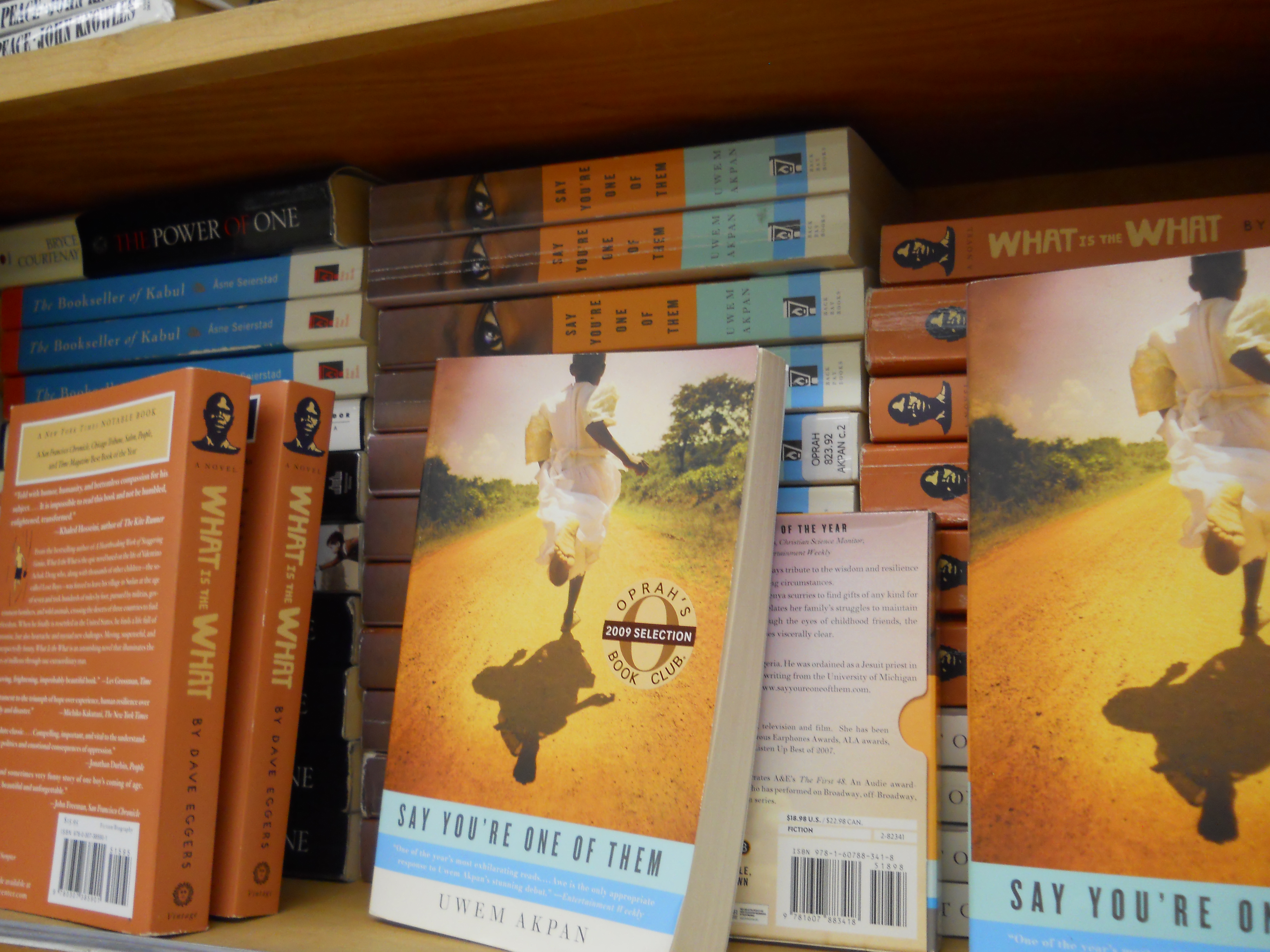
There are thematically connected texts for 10th grade World Literature such as a unit centered on adolescents growing up in conflict. These books include A Long Way Gone, The Power of One, What is the What, and First They Killed My Father. Students can choose to read one of these titles in literature circles. There are also thematically connected texts for non-fiction (A Walk in the Woods, Into the Wild, The Perfect Storm, Touching the Void, The Hungry Ocean, Between a Rock and a Hard Place) and fiction  (The Bluest Eye, Their Eyes Were Watching God, The Color Purple, Invisible Man, The Known World, Monster, Precious, Native Son) for students in English III American literature to read independently or in groups.

10th grade "choice" books for Adolescents in Conflict unit

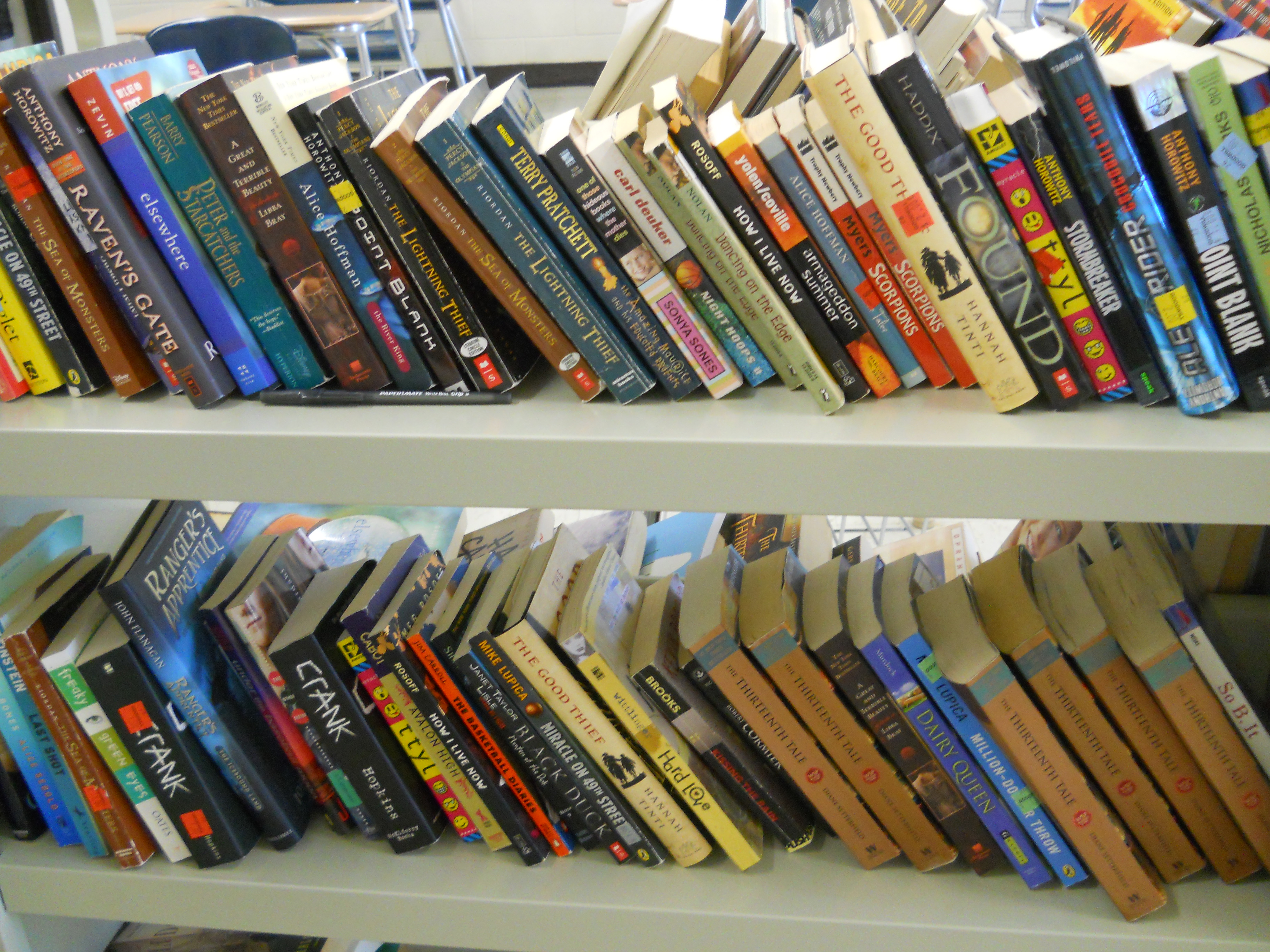
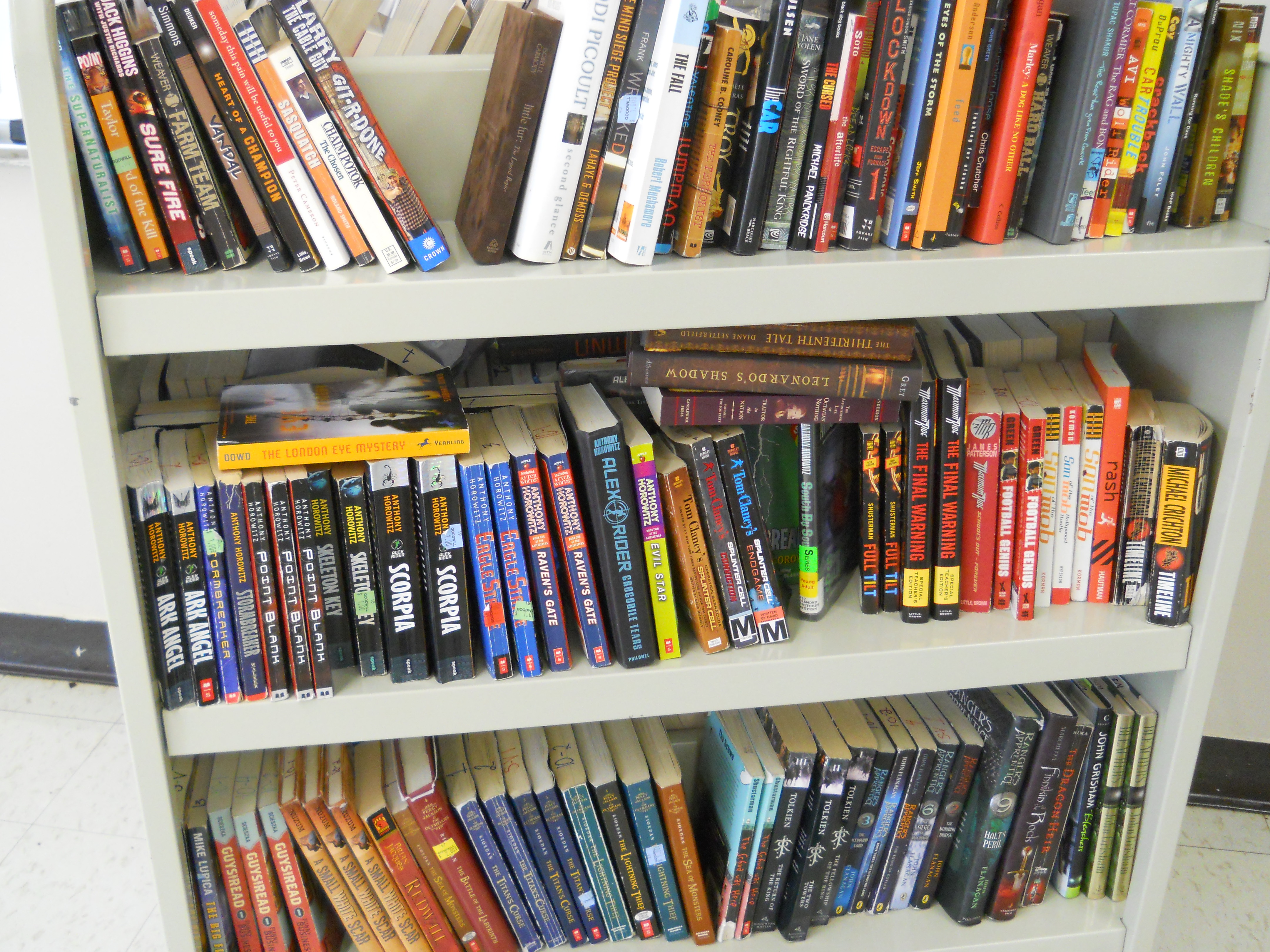
But, it is in the area of providing book choice for independent reading that the largest gains have been made in the classroom collections. There are book series (Percy Jackson and the Olympians, The Ranger’s Apprentice, Maximum Ride) available for 9th students to choose during Silent Sustained Reading (SSR) sessions. There are many different titles from popular teen authors: Meg Cabot, Anthony Horowitz, Jodi Picoult, Sarah Dessen and Scott Westerfield.

There are several (5-10) copies of books such as The Lovely Bones, Dairy Queen, So Be It, Where the Heart Is, and The Thirteenth Tale. There are pairs of books such as The Chosen, The Good Thief, Bad Kitty, Shadow of the Wind, Sleeping Freshmen Don’t Lie, Prom, and Life As We Knew It. There are single copies of The London Eye Mystery, The Off Season, The Compound, The Maze Runner, Black Duck, and Copper Sun.

Independent reading texts for SSR Grade 9

More Independent SSR choices for Grade 9

At the conclusion of the summer of 2011, after trips to thrift stores and public library book sales throughout Connecticut, another 1,700 copies of books have been added to our shelves at a cost of  approximately $2,300.00.

The “book flood” straining the banks of Wamogo’s classroom shelves is, as Gallagher suggests, wide-ranging; it is a flood saturated with interesting material to read. Our students are now inundated with titles; our teachers have an overflow of suggestions. We have created the one flood in which I could happily watch students drown.

The pressure is on. School starts in another two weeks. Summer reading still needs to be done!

Right about this time, there are some parents who are reminding (nagging?) students about their summer reading assignments, there are librarians and book stores scrambling to locate books posted on reading list, there are some students trying to cram in a little reading, while there are some students trying to cram in a few Spark Notes instead of the summer reading book. Is this commotion necessary? Is all this activity to have students read books over the summer vacation a worthwhile endeavor?

Yes. Yes, it is.

On the New York State Department of Education website, there is a summary of research on summer reading:

“In a 2009 government web cast, Secretary of Education Arne Duncan described summer learning loss as ‘devastating.’ This is what researchers have often referred to as the “summer slide.” It is estimated that school summer breaks will cause the average student to lose up to one month of instruction, with disadvantaged students being disproportionately affected (Cooper, 1996).”

“Researchers conclude that two-thirds of the 9th grade reading achievement gap can be explained by unequal access to summer learning opportunities during the elementary school years, with nearly one-third of the gap present when children begin school (Alexander, Entwistle & Olsen, 2007).”

“The body of existing research demonstrates the critical importance that the early development of summer reading habits can play in providing the foundation for later success.”

We assign summer reading for all grades 7-12. Academic level students in grades 7-11 have a choice of books, fiction and non-fiction, from suggested lists. Our excellent media specialist is a great resource for making recommendations and coordinating these lists for distribution. Honors level students are required to read specific titles; Advanced Placement students are assigned four to five books. Seniors read books that are directly connected to the elective they have chosen. All summer reading is due the first week of school.

We use the dialectical journal as an assessment tool. Students are required to find passages (5 from the first half of the book, 5 from the second half) that they think help them better understand the bigger issues of the book– theme, characterization, narrative voice, the author’s attitude towards his subject (tone), etc. The passages can be either narration or dialogue. Students respond to each passage in one of several ways such as:
1. Make a connection
2. Interpret/make a prediction
3. Ask a question (attempt to answer it)
4. Extend the meaning
5. Challenge the text

Dialectical_Journal Instructions
The first weeks of school are all about assessing individual student and evaluating class learning. Reading student responses in dialectical journals is one method a teacher can use to quickly assess a student’s comprehension and writing skills at the beginning of the school year.

I have located many of the required texts for summer reading in the used book market to make access easier for honors level students. We are able to offer gently used copies of all of the assigned texts including:
Grade 9 Honors: The Alchemist, Paul Coehlo
Grade 10 Honors: Nectar in a Sieve, Kamala Markandaya OR The God of Small Things by Arundhati Roy OR The Life of Pi by Yann Martel
Grade 11 AP Language: On the Road, by Jack Kerouac AND The Memory Keeper’s Daughter by Kim Edwards AND On Writing by Stephen King AND The Grapes of Wrath by John Steinbeck
Grade 12 AP Literature: The Grapes of Wrath by John Steinbeck AND The Tempest Shakespeare AND The Story Of Edgar Sawtelle by David Wroblewski OR The Poisonwood Bible by Barbara Kingsolver AND Reservation Blues by Sherman Alexie OR Ceremony by Leslie Marmon Silko
Grade 11 & 12 Journalism:
Zeitoun by Dave Eggers OR Firehouse by David Halberstam
Grade 12 Drama
: Our Town, Thornton Wilder
Grade 12 Creative Writing: On Writing, Stephen King
Grade 12 Memoir: A Girl Named Zippy by Haven Kimmel OR Lost in Place by Mark Salzman OR Running with Scissors by Augusten Burroughs OR Lucky by Alice Sebold

Unfortunately, the agrarian school calendar has created summer months where many students do not engage in any academic activity. Summer reading requirements for students at any grade level, choice or assigned, are speed bumps in slowing down the “summer slide.”

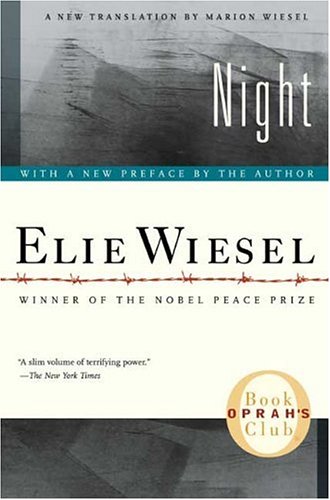
Elie Wiesel’s memoir Night is taught in coordination with a social studies unit on the Holocaust.  The 10th grade English curriculum attempts to capitalize on teaching world literature through historical contexts; Night is one text that bridges the educational objectives of English and social studies.

The new translation by Marion Wiesel made popular by Oprah's Book Club

The memoir begins as the Jews of the little town of Sighet, Hungary, are rounded up and taken in cattle cars to the camps at Auschwitz and Buchenwald in 1944–1945. Wiesel remembers how the prison guard called out and separated the incoming Jews:


“Eight short, simple words… Men to the left, women to the right.”
To the left meant assignment in the prison labor camp; to the right meant extermination in the gas chambers and ovens.
Wiesel continues:
“For a part of a second I glimpsed my mother and my sisters moving away to the right. Tzipora held Mother’s hand. I saw them disappear into the distance; my mother was stroking my sister’s fair hair … and I did not know that in that place, at that moment, I was parting from my mother and Tzipora forever.”

At 15 years old, Wiesel endured starvation, injury, and disease, conflicted by his need to protect his father and his frustration with his father’s deteriorating condition.  He was tormented by the relief he felt when his father passed away. The final image of Wiesel’s ghostly reflection in a mirror shortly after liberation is haunting.

Students living in rural Connecticut have a difficult time comprehending the horrors of the Holocaust; they are safely separated by time, circumstance, and geography from this event. Night helps to personalize the experience of genocide; while the book itself is slender, the impact on our students is tremendous.

Last year, students were given the chance to select an independent book to read with Night. These books varied in reading level and genre. They chose from the following list:
Fiction
Soldier Boys by Dean Hughes
The Boy in Striped Pajamas by John Boyne
Briar Rose by Jane Yolan
Milkweed by Jerry Spinelli
The Book Thief by Markus Zusak
Non-fiction
Anne Frank: Diary of a Young Girl
Maus: A Survivor’s Tale by Art Spiegelman (graphic novel)
I Have Lived a Thousand Years by Livia Bitton-Jackson

All of the books offered were added through used book sales except for Maus and The Boy in Striped Pajamas, which we borrowed from the Connecticut Library Council, and The Book Thief which we purchased new (30 copies).

There are two best selling books related to the Holocaust that have begun to show up in used book sales. The Guernsey Literary and Potato Peel Pie Society by Mary Ann Shaffer and Annie Barrows; and Sarah’s Key by Tatiana de Rosnay have been popular with book clubs. I also have several copies of Stones from the River by Ursula Hegi for Advanced Placement students.  I have picked up a few copies of each and could also offer these  books to the more experienced readers.

During the Holocaust unit, students had four weeks to complete their independent book and Night. We offered silent sustained reading twice weekly, and there was a showing of the film Schindler’s List (parental permission required). When students completed both the independent reading and Night, they wrote essays that compared a section of the independent reading to a section from Night.

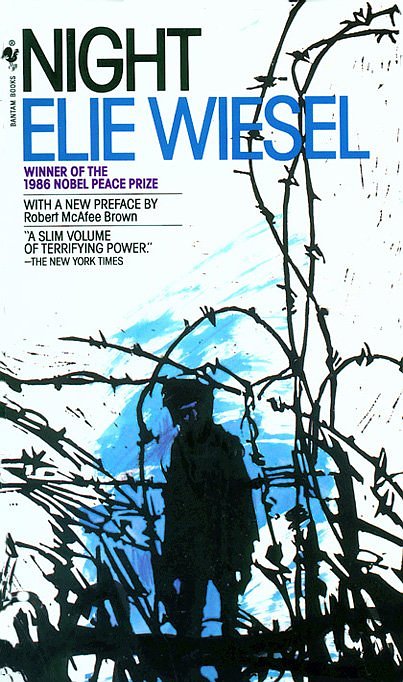
The older edition of Night; we have switched over to the newer edition pictured above

We are moving from the older Bantam paperback edition to the recent translation by Marion Wiesel which was made popular when Oprah chose Night for her book club. Oprah also filmed a visit to Auschwitz with Wiesel; his narration is so quiet I need to put the audio setting on close captioned.

This summer I have located about 20 copies of the recent translation of  Night, many of which were brand new, in the CT book sales in Westport, New Milford, Newtown and in Boise, Idaho. In addition, I recently placed an order with Better World Books for 46 “gently used” copies of Night.  Combining the 20 copies I have located at summer book sales and used book stores with the 46 used copies, the department library now has 66 copies of the latest edition of the text for a total of  $311.53 which is roughly $4.72/text.

Night is an important book in our curriculum, at any price. Elie Wiesel makes that important connection beyond geography, beyond time, and beyond circumstances for my students; his voice against genocide is eloquent and memorable.

If you happen to find yourself in Boise, Idaho, as I frequently do, and you need a used book, check out Rainbow Books at 1310 West State Street. My family lives in Boise, and I have driven past Rainbow Books for about 20 years. I am sorry it took so long for me to discover this little  book store.

Rainbow Book Store in Boise, Idaho....in case you are ever in Boise!

According to its website, “Rainbow Books was moved to its current location at 1310 West State Street in 1993 and continues to add more shelves for more books all the time. Rainbow Books was chosen ‘Best of Treasure Valley’ in 2003 not only for its incredible selection, but also because of the staff’s unbelievable knowledge of its stock.”

On this very hot afternoon, the store had several “browsers” including a young couple canoodling in the air-conditioned book stacks. They were quite preoccupied and paid little attention to me as I crawled along the expansive classic section. The store is a reconverted house, and there are many different rooms to explore; all are well lit, and there is no musty odor one sometimes associates with used books.

I found the shelves very well organized by genre. The children’s literature was appropriately divided into sections: picture books, chapter books and YA literature; and there were many “finds” for my classroom. The military section was small, but there was an entire room shelving unit devoted to Westerns. Should I discover that my students would like to read Westerns, I will certainly be in touch with Rainbow Books! The biography and memoir section also had a wide range of titles. I did ask if they had a copy of October Sky by Homer Hickam, but I was informed that if there was a copy available, it would be shelved under a section called “Men’s Books”; apparently, most people do not look for this title as a memoir, so the staff adopted a genre change!

There were nearly all of the trade books I pick up at used book sales (The Bean Trees, The Road, The Kite Runner), but since I am traveling, all  purchases will be mailed to the school, so I was careful to select books that were both “hard to find” and in excellent condition.

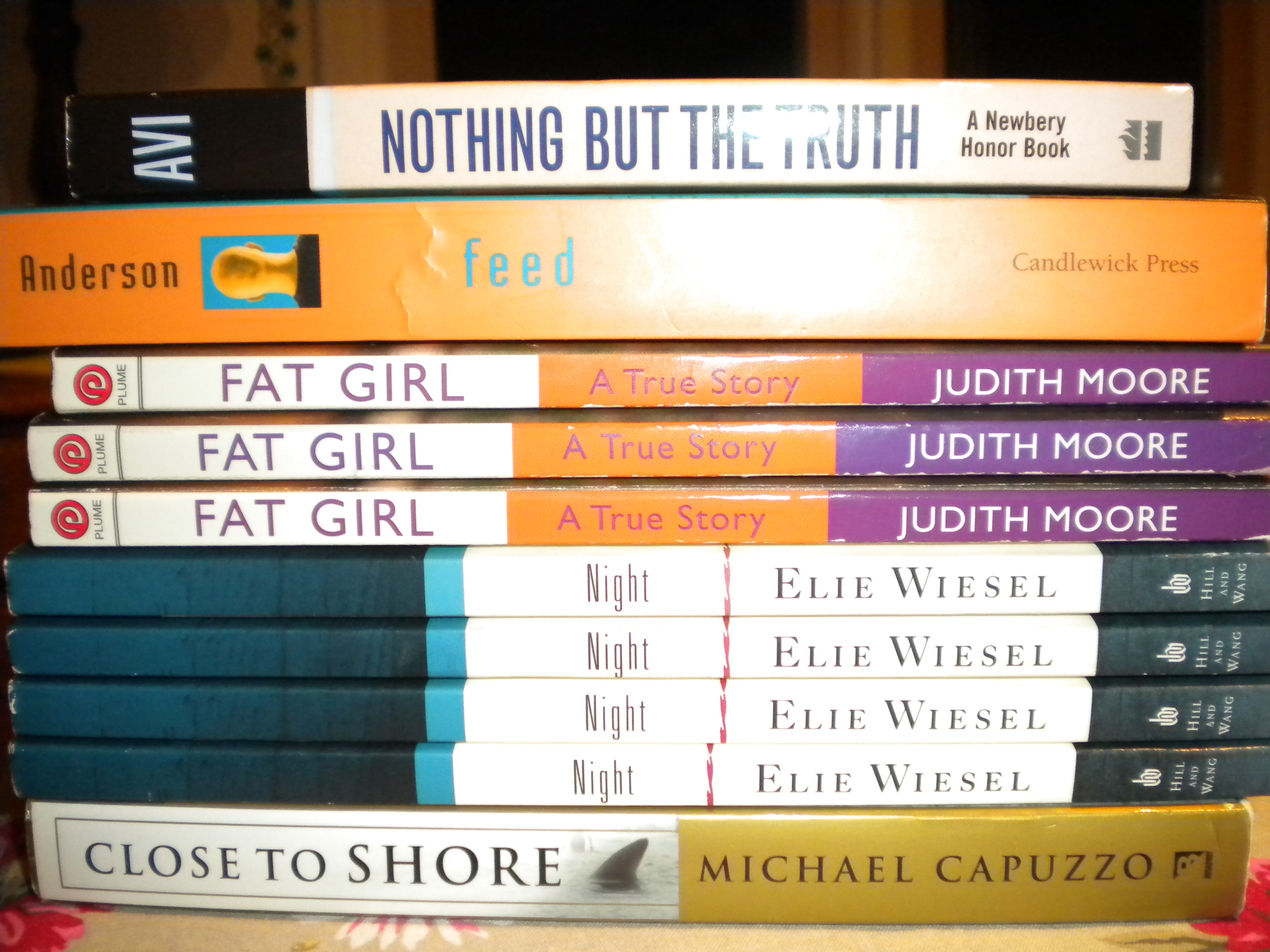
What books go into the used book classroom? I found a copy of Feed by M.T. Anderson (9th grade), Nothing but the Truth by Avi (8th grade), and Close to Shore by Michael Capuzzo (summer reading). All these titles are hard to find.

Books purchased at Rainbow Books for $44.30

The best discovery was locating four copies of the newest edition of  Night by Elie Wiesel which is a required reading text in grade 10. I also picked up three copies of Fat Girl: A True Story by Judith Moore to add to the independent reading selections for the 12th grade memoir class.

These 10 books cost $44.30 with a 10% teacher’s discount, or a little under $5.00 per book. I will have to spend $7.99 in postage (USPO media mail), bringing total expenses to $52.29. What did I save by shopping at Boise’s oldest, friendliest, and most generous used bookstore? Well, the retail price for these texts $108.60; so, including the postage, my total savings $56.31.

There are buying, trading, and selling policies listed on the Rainbow Books website; a sign at the register also indicated they sell through Amazon as well.  However, shopping online means you miss a great opportunity to shop in this pleasant used book store….or buy doughnuts next door….or ice cream up the street!

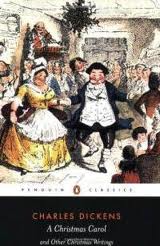
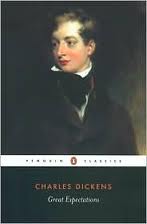
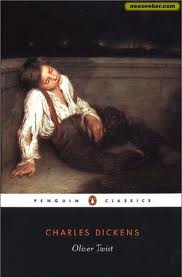
A Christmas Carol and Great Expectations by Charles Dickens are in the 9th grade honors curriculum at Wamogo High School.  Selections (chapters 1 -3) of Oliver Twist are in the 10th grade college prep curriculum to complement the Industrial Revolution unit taught by the Social Studies Department.

A Christmas Carol: 9th Grade Honors Reading

Great Expectations: 9th Grade Honors Reading

Oliver Twist: 10th Grade College Prep Reading

Our student do like the novels by Dickens…once the book is completed.  They enjoy the complicated plot twists…once the twists have ended. They remember the quirky characters…once the book has been turned in.

A problem with all novels by Dickens is the length. Simply, he got paid by the word. A problem with Dickens is the vocabulary. He liked to use long and complicated words. A problem with Dickens is his sentence structure. He used complex sentences.

The problem of length is difficult to address. His novels cannot be satisfactorily shortened; abridged editions lack his satire and comic touch.  The problems of vocabulary and complicated sentence structure, however, are reasons to teach any Dickens novel. There hundreds of  SAT/ACT words in any Dickens’ text. A quick review of a several words from Oliver Twist should prove my point:
panegyric- a formal expression of praise
asseverate-state categorically
asperity- something hard to endure
rapacity– extreme gluttony
myrmidon-a follower who carries out orders without question
pule-cry weakly or softly
postilion-someone who rides the near horse of a pair in order to guide the horses pulling a carriage (especially a carriage without a coachman)
seneschal-the chief steward or butler of a great household
imprecation-the act of calling down a curse that invokes evil (and usually serves as an insult)
saveloy-a ready-cooked and highly seasoned pork sausage (probably not an SAT/ACT word, but fun to know!)

Dickens sentences are complex:

“The evening arrived; the boys took their places. The master, in his cook’s uniform, stationed himself at the copper; his pauper assistants ranged themselves behind him; the gruel was served out; and a long grace was said over the short commons. The gruel disappeared; the boys whispered each other, and winked at Oliver; while his next neighbours nudged him. Child as he was, he was desperate with hunger, and reckless with misery. He rose from the table; and advancing to the master, basin and spoon in hand, said: somewhat alarmed at his own temerity:
‘Please, sir, I want some more'” (Oliver Twist)

From a student’s point of view,  sentences like these appear puzzling.  Young Oliver’s adventures are just starting in  Chapter 2…and there are 51 more chapters like this one! Reading a Dickens’ novel or a passage requires focus and determination.

There is much to be gained by sticking with Dickens, to pushing students out of their comfort zone of 21st Century twittering and texting. Students can develop skills in following the main idea in a selected passage of text. Students can rephrase Dickens’ sentences to better understand his satire. Students can imitate his writing the way painters imitate great artists using his work as “mentor texts”. Finally, students can comment on Dickens’ characters and make connections of these characters to contemporary people, because that is exactly what Dickens did to his own contemporaries.

Since all literature by Dickens is in the public domain, students have access to an e-text; I do not need copies for each student when students choose to download the book to an e-reader device, and digital copies are excellent when students need to read only a few passages or chapters. The classroom libraries already do contain enough copies of Great Expectations, Oliver Twist, and A Christmas Carol for those students who choose a paper copy. The copies of Dickens’ novels that are available in used book sales are often quite old and musty, but Oprah’s recent selection of Great Expectation and A Tale of Two Cities for her book club may result in newer editions entering the used book market

To date, the cost for these titles? Nothing. The results of teaching the most popular English novelist of the Victorian Era? Priceless.