Archives For November 30, 1999

This weekend July 13-15, 2012 is the annual Friends of the New Milford Public Library summer book sale (alert to nearby Connecticut/NY residents), and even after I cleaned them out of some great trade paperbacks,there are many bargains to be had. The sale is held in the New Milford High School on Route 7 in a large all-purpose room that has ample room for browsers. The books are very well organized on large spacious tables and very clearly labeled, and, more importantly, the labels are correct-there is no mixing of genres.
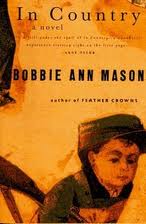
I picked up two copies of Bobbie Ann Mason’s In Country  (1993) to use with Tim O’Brien’s The Things They Carried. This is a very popular text with many of the girls in Grade 11; The School Library Journal reviewed this text:

“Sam Hughes, whose father was killed in Vietnam, lives in rural Kentucky with her uncle Emmett, a veteran whom she suspects is suffering from exposure to Agent Orange. Sam is a typical teenager, trying to choose a college, anticipating a new job at the local Burger Boy, sharing intimacies with her friend Dawn, breaking up with her high school boyfriend, and dealing with her feelings for Tom, one of Emmett’s buddies….Her father’s diary finally provides the insight she seeks insight she cannot accept until she has visited the Vietnam War Memorial in Washington, D.C.”
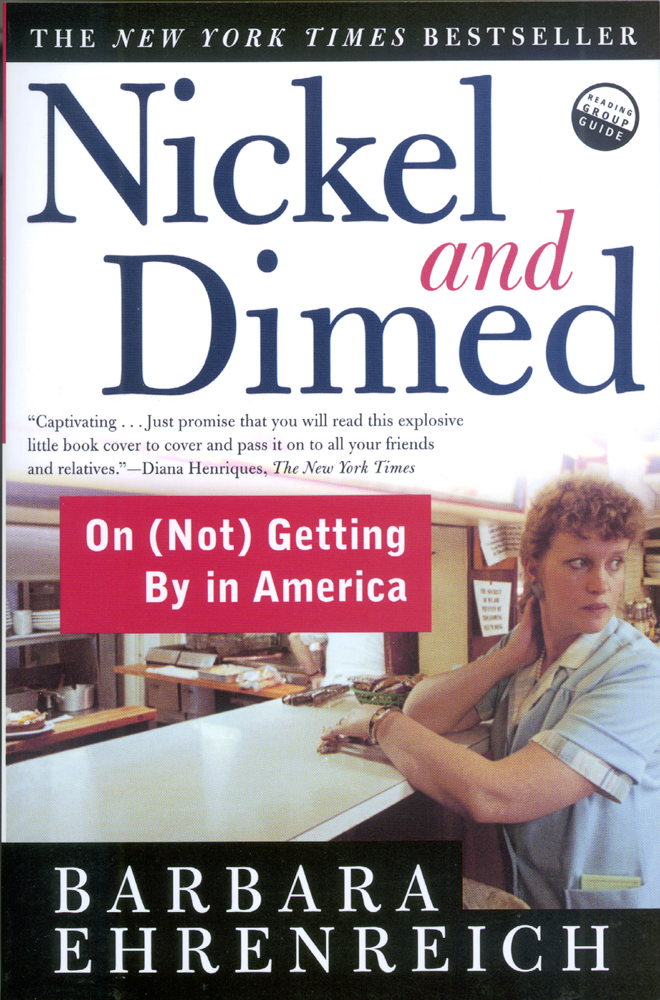
There were also five brand new copies of Barbara Ehrenreich’s Nickled and Dimed: On (Not) Getting By in America. Obviously, this was a book assigned for a course at a local high school or read by a local book group. These five copies mean that we can continue the tradition and assign the reading for one of our courses! Publisher’s Weekly reviewed this book in 2001:

Determined to find out how anyone could make ends meet on $7 an hour, Ehrenreich left behind her middle class life as a journalist except for $1000 in start-up funds, a car and her laptop computer to try to sustain herself as a low-skilled worker for a month at a time..Delivering a fast read that’s both sobering and sassy, she gives readers pause about those caught in the economy’s undertow, even in good times.
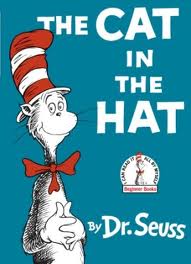
This book sale always has a great selection of  children’s books. Last year, I met a friend with two small children of her own who was hauling out at least 100 titles; she had barely made a dent in the collection. This year my bargain was a set (3) of The Cat in the Hat books. There is a great lesson on the Read, Write, Think website for the National Council of Teachers of English (NCTE) that explains Freudian psychology using this children’s text. The lesson is called Id, Ego and Superego and the Cat in the Hat and my students love looking at the pictures to see how the wild “ids” of Thing 1 and Thing 2 almost cause a disaster.

I spent $42.50 for two bags filled with books (38 total). As I checked out, I mentioned to a volunteer that I blogged about this book sale last year.

“Well,” she challenged me, “did you notice the books are all on the tables?”
I looked around. Sure enough there were no books on the floor.
“Last year, you complained about the books on the floor being hard to reach,” she continued, “So we put them all on tables!”
“Oh, I didn’t mean…” my voice trailed.
“When someone criticizes what needs to be fixed, we fix it,” she stated proudly.

So, go to the Friends of the New Milford Public Library Book Sale if you are in the area. This is a good book sale….made even better with better browsing tables!

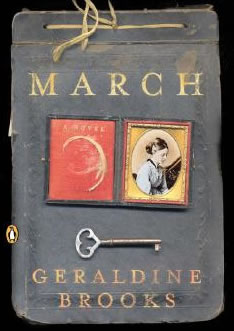
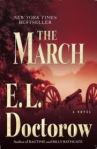
A series of miscommunications left the eight members of the local Burnham Library Book Club wondering which book they should prepare to read for the next meeting. The month before, a decision was made to read a novel that shared the name of the next meeting; we would read a book titled  The March by E.L Doctorow for our March meeting date. How clever! Unfortunately, our plans went awry when the librarian posted the selection as March by Geraldine Brooks. Members arrived with copies of one or the other novel.

No matter. As it turned out, we could discuss both books easily, not only because of the similarity of each fictional story arc but because of the numerous historical references to people and the events in the Civil War.  What struck all members of the book club during the discussion was the amount of research that had gone into creating these works of historical fiction, since both contained a notable fidelity to events, customs, and manners of the Civil War era.

March-Geraldine Brooks

In March, Geraldine Brooks borrows her title character, Peter March, from Louisa May Alcott’s story Little Women. Her narrative is told from the alternating point of views of Marmee and the father of the March girls: Meg, Jo, Beth and Amy. In her explanation for his prolonged absence, the idealistic March enlists as a Union clergyman in 1861, at the beginning of the Civil War.

E. L. Doctorow’s The March is centered on real-life Union General William Tecumseh Sherman in his infamous “march to the sea”, as he burns Atlanta before pivoting north into the Carolinas. Multiple narrators are employed in this novel including a Union regimental surgeon, Colonel Sartorius; Emily Thompson, a daughter of a Southern judge; and Arly and Will, two soldiers who care little about loyalty and more about staying alive.  The scope of  this novel is epic as Sherman’s sixty thousand troops burn, pillage, and choke to death the final throes of the Civil War in 1864.

The similarity of major characters from each novel was uncanny: the mixed-race beautiful protagonist Pearl in The March and the strikingly attractive, educated slave Grace who captivates the title character in March. There were historical figures to people each novel: John Brown, the famous abolitionist; Henry David Thoreau; and Ralph Waldo Emerson make appearances in March. General Sherman, General Joseph E. Johnson, and Abraham Lincoln are present in The March. Both novels also extensively featured field hospitals as settings. March is a a Union chaplain who is wounded and ends up in a Civil War hospital; The March features a Union regimental surgeon, Colonel Sartorius  who curiously employs a number gruesome surgical procedures.

The novels reflected the tumult of a civil war, the hair-raising escapes from danger and the chaos and brutality that ensued from bitter and divided rivalries. Both novels highlighted the technological advancements that made each side more efficient killing machines, and Doctorow in particular noted the historical progress of mechanized warfare:

 “This in America was to be seen with one’s own eye’s. And as bloody and brutal were the contests of the Lancasters and York, they were hand to hand- battle-aves, pikes, maces. These chaps were industrial age killers: they had repeating rifles that could kill at a thousand yards, grape that could decimate an advancing line, cannon, field-pieces, munitions that could bring down entire cities. Their war was so impersonally murderous as to make quaint anything that had gone on before. (214)

Another element of comparison was the reflection in both novels on ancient wars that had preceded the Civil War. Brooks has her narrator, the cerebral Peter March, contemplate the historical continuum, from the Ancient World to the present, noting the how painful is the loss of loved one due to war:

“The waste of it. I sit here, and I look at him, and it is as if a hundred women sit beside me: the revolutionary farm wife, the English peasant woman, the Spartan mother-‘Come back with your shield or on it,’ she cried, because that was what she was expected to cry. And then she leaned across the broken body of her son and the words turned to dust in her throat.” (211)

In contrast, Doctorow uses a visiting English journalist in order to comment on how the echoes of  ancient conflicts are heard in the progression of battles he sees:

“Yet some of the ancient military culture endured. The brutal romance of war was still possible in the taking of spoils. Each town the army overran was a prize. In this village was an amazing store of wine, in that granary brimming to the rafters, a herd of beef here, an armory there, homes to loot, slaves to incorporate. There was something undeniably classic about it, for how else did the armies of Greece and Rome supply themselves? How else had Alexander’s soldiers made an empire? The invading army, when it camped, sat on the land as its owners, with all the elements of domesticity, including women, enlarging the purely martial function of their social order” (215)

The reasons for the Civil War are addressed more clearly in Brook’s tale. She incorporates the arguments offered by the real-life American Transcendentalist Branson Alcott in her creation of the  character of the naive March who is just beginning to doubt his involvement with the conflict he little understands:

“If war can ever be said to be just, then this war is so; it is action for a moral cause, with the most rigorous of intellectual underpinnings. And yet everywhere I turn, I see injustice done in the waging of it…”(65).

In contrast , Doctorow’s characterization of the West Point educated General Sherman suggests his weary recognition that while the physical act of war will run to its exhausted conclusion, the battlefield will move to another plane where the dispute will continue:

“And so the war had come down to words. It was fought now in terminology across a table. It was contested in sentences. Entrenchments and assaults, drum taps and bugle calls, marches, ambushes, burnings and pitched battles were transmogrified into nouns and verbs.  It is all turned very quiet, Sherman said to Johnson, who, not understanding, lifted his head to listen.

No cannonball or canister but has becomes the language here spoke, the words written down, Sherman thought. Language is war by other means” (348).

Ultimately, the members of book group determined that both books provided a fascinating blend of historical fact with fiction. As an educator, I was impressed about how much more effective both novels were in communicating the experiences of living through the Civil War from its beginning (1861) to its inevitable end concluding with Lincoln’s assassination in 1865. A textbook would have covered the information, but not provided the visceral quality a reader gains through a story….both novels succeeded in recreating history using a “his story” model. Both novels complement the study of the Civil War by blending each author’s thematic development and literary technique with historical fact. As a result, both novels will be placed on the 11th grade classroom shelves along with two other wonderful Civil War novels The Killer Angels by Michael Shaara (Gettysburg) and Cold Mountain by Charle Frazier.

All these books appeal to the imagination in recreating the  particulars in the  time and places of the Civil War. As a bonus,  how serendipitous that despite the near duplication of titles, both novels were so similar in subject matter as to allow for a great discussion? How surprising that the story of two “Marches” would ultimately be so similar?

Student: “Is this another unhappy book?”
Me:*sigh* “Yes.”

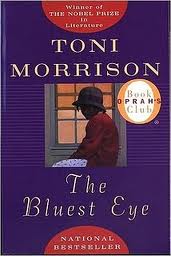
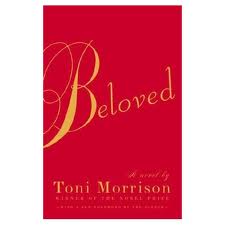
Toni Morrison is on my mind. The Advanced Placement English Literature Class (12th grade) has just finished reading her novel Beloved; the Advanced Placement English Language Class (11th grade) is currently offering The Bluest Eye. These are most certainly not written from a happy Ken and Barbie point of view. These novels are complex and difficult reads because the Nobel Prize winning Morrison makes the reader uncomfortable…yes, even unhappy.

In an interview on Oprah,  Morrison explained how she began her first novel, The Bluest Eye:

“Things were going very fast in 1965, so I decided I wanted to write a novel that was not a warning but was just literature, and I wanted to put at the center of that story the most helpless creature in the world—a little black girl who doesn’t know anything, who has never been center stage. I wanted it to be about a real girl, and how that girl hurts, and how we are all complicitous in that hurt. I didn’t care what white people thought, because they didn’t know anything about this. This was the age of ‘black is beautiful,’ and, well, yeah, that is certainly the case; however, let us not forget why that became a necessary statement.”

The Bluest Eye is set in Post-Depression America, 1941, in the author’s hometown of Lorain, Ohio.  Eleven year-old Pecola Breedlove, a black girl, longs to be a white child with blonde hair and blue eyes. In a particularly graphic scene, the reason the book is so controversial, she is raped and impregnated by her own father.  Much of the book centers on the ideal of beauty and Pecola’s inability to accept herself. She is exposed to the perfect life portrayed in the Dick and Jane series of reading primers at school which increases her conflict about her self-image as seen in an excerpt from The Bluest Eye:

 “I destroyed white baby dolls. But the dismembering of dolls was not the true horror. The truly horrifying thing was the transference of the same impulses to little white girls. The indifference with which I could have axed them was shaken only by my desire to do so. To discover what eluded me, the secret of the magic they weaved on others. What made people look at them and say, ‘Awwwww,’ but not for me.”

The other book, Beloved, is based on the true story of Margaret Garner, a runaway slave who crossed the frozen Ohio River to Cincinnati in January 1856 with her four children. Confronted by a slave catcher, Garner killed her daughter rather than have her returned to be a slave. In the novel, Sethe escapes with her newborn daughter, Denver, to meet up with her other three children, one of them the already-crawling? toddler who is known as Beloved. Sethe has 28 days of freedom where she is able to love her children for the first time:

“I was big, Paul D, and deep and wide and when I stretched out my arms all my children could get in between. I was that wide. Look like I loved em more after I got here. Or maybe I couldn’t love em proper in Kentucky because they wasn’t mine to love. But when I got here, when I jumped down off that wagon-there wasn’t nobody in the world I couldn’t love if I wanted to. You know what I mean?”

Soon after, the plantation owner School Teacher and a slave catcher arrive to claim their property, Sethe and her children. In an act of savage desperation taken in order to keep her children from a life of slavery, Sethe uses a saw to slice open the toddler’s neck , but she is prevented from killing her other children. In addition to this gruesome scene, the novel is also rife with rape, mutilations, and the supernatural. These elements  make its choice for a school curriculum as controversial as The Bluest Eye. However, both texts are often listed on the Advanced Placement Open Essay list, an indication that these books are exactly the kind of complex texts students should be reading. The demanding Advanced Placement prompts from past years are not answerable with less weighty books.

Teachers themselves struggle with complex and demanding texts, and the English Companion Ning often features posts from teachers who are looking for information on a topic or lesson plans on a text. There are always several posts about the use of Toni Morrison books in the high school curriculum. Many of these posts discuss the controversy these books cause for teachers who want to teach Morrison’s complex and compelling literature while addressing the concerns of  parents about the appropriateness of each novel’s content.

One teacher posted:

“I think it’s funny how we sometimes find things more shocking as adults than as kids.  I read The Bluest Eye in 11th grade and never thought about it being objectionable or age-inappropriate.  I actually read quite a bit of Toni Morrisson in HS.  As an adult, I think The Bluest Eye should be taught.  That said, any book with sensitive subject matter does need to be introduced in a thoughtful, open, and contextualized manner.”

While another offered a very balanced approach:

“Just want to mention that it is the parents’ responsibility to train up their children. It is not the responsibility of the school or the state. I worry that we teachers tend to forget that, making our relations with parents far more adversarial than they ought to be. Why not let the parents choose the appropriate novel for their child? Focus the classwork on skills that can be used with any novel, on practicing the thinking that will help students get through tough texts more independently, rather than on specific-novel content.

That said, strong instruction and discussion on what distinguishes great literature from not-so-great literature — literary fiction from commercial fiction, will help students see the difference between the great novels we English teachers want them to read and the … um, lightweight? novels they want to read.”

Morrison novels are demanding. They do not depict happiness. Their settings depict a world in stark contrast to the world of Ken and Barbie. While Ken and Barbie as fictional characters are perfectly formed, coiffed representatives of all that is perfect in the world, they have have not been marginalized as the fictional characters who people Morrison’s work; they have not experienced rejection, brutality, pain or suffering.

In the Oprah interview, Morrison attempts to explain a human’s want for acceptance by others but more importantly, by the self:

“I think a lot has changed since the ’60s in terms of self-image. But there’s still a lot of pain young girls feel because the bar is always being raised. The stakes are always higher….We don’t have the vocabulary to tell children what to value. We do say, “Oh, you’re so beautiful. Oh, you’re so pretty. Oh—that’s not really what we really ought to be saying. What do you tell a child when you want to say, “You are good, and I like that. You are honest and I like that. [Y]ou are courageous. I really like that. I really like the way you behave. I like the way you do yourself. Now. The way you are.’ That’s the vocabulary we need.”

Morrison’s admits that when she first started writing, she was writing for a different audience:
 “I guess I was just that arrogant. Nobody was going to judge me, because they didn’t know what I knew. No African-American writer had ever done what I did—none of the writers I knew, even the ones I admired—which was to write without the White Gaze. My writing wasn’t about them.”
 Morrison’s  The Bluest Eye and Beloved unapologetically stand in stark contrast to the world of Dick and Jane or Ken and Barbie. Her writing has received national and international praise for exactly that reason.

“Chance favors the prepared” in the used book market.

Saturday is my day for running errands which takes me to Brookfield or New Milford, two Northwest Connecticut communities. Each of these towns has a their own Goodwill store located on Route 7, and I make regular stops to their bookshelves of donated books looking to see what has been most recently donated.

This past Saturday morning, I did just that. In fact, I stopped at both stores and purchased a total of 47 books for $41.43. WhenI came home, I noticed that WebEnglish Teacher had posted a link to a website listing the 100 Essential Reads for the Lifelong Learner  organized by Online Schools. These books were organized by discipline: fiction, non-fiction, autobiography/memoir, biography, world literature literary theory, history, political science,science/math/social science. Her question was “How many of these essential books have you read?” I was happy to see some familiar titles on the list, but many were new to me.

I could not help but notice that I had just purchased five of the suggested titles on this list for different classroom libraries that very day! There were other titles on the list available on thrift store shelves that I did not get since our libraries either already had enough copies or the titles are available online in the public domain.  The Online Classroom Essential Reads List is organized so that each title had a designated number, not a rank, and link provided for each book with a short explanation. Some of the links are helpful.

Here is a list of the 5 PURCHASED ESSENTIAL READS and the grade or class that uses them:

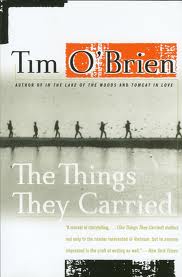
35. The Things They Carried by Tim O’Brien. This fictional account of a platoon in Vietnam is based on Tim O’Brien’s experience in the war himself and explores the fear and courage that are necessary to bring one through to the other side.

-This is a text that is used in our Grade 11-American Literature classes. The book is one of the few texts that students will willingly complete; once they finished the first story, they are hooked which is a tribute to O’Brien’s writing style. The prose is artistic but not difficult for even our lowest readers. Our students are curious about Vietnam, a part of history that is chronologically left for those lazy days of June. We use film clips (Platoon, Apocolypse Now, The Deer Hunter) in our unit with this text. We also eat MREs in class, and organize lists as to what each of use “carries.”

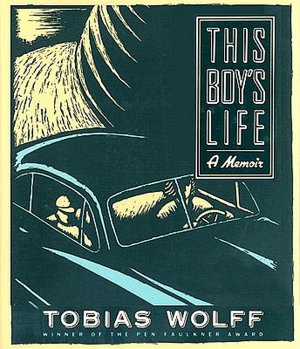
43. This Boy’s Life by Tobias Wolff. Wolff recounts his life as a boy and teen struggling with his identity as he lives with his divorced mother and her second husband in the 1950’s.

-This text will go into the English IV elective Memoir. There is a possibility that a 9th grader will choose this as an independent reading book in the non-fiction unit. The narration captures teen angst very well, and could work as a non-fiction companion piece to Catcher in the Rye in Grade 11. If Common Core wants classrooms to integrate more non-fiction, this is an excellent piece to add.

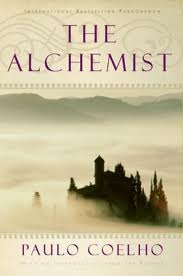
61. The Alchemist by Paulo Coelho. Discover how to find the beauty in life no matter what your experience as you follow the life of a young shepherd who gains so much from his journey of life.

-This book is assigned as summer reading for incoming English II honor students. We require a dialectic journal with 30 quotes from the texts as the summer reading assignment. Despite the burden of writing, students really enjoy this book which allows us to segue from “the journey” archetype taught in Grade 9 to the different types of perspectives in Grade 10 World Literature.

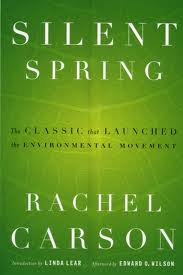
94. Silent Spring by Rachel Carson. Carson’s powerful writing on the topic of environmental justice creates a book that will make the reader think seriously about humanity’s relationship to the Earth.

-I got this book for the environmental studies teacher. So far, I have found five nice copies this past year. She offers this as optional reading to her students, and I think this should be required reading for students interested in pursuing an environmental science…or any science, for that matter.

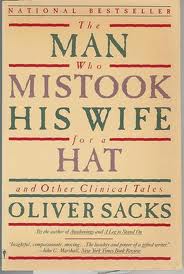
100. The Man Who Mistook His Wife for a Hat by Oliver Sacks. Psychology student or not, this book will appeal to anyone who has an interest in the curious way the mind works–and how it does not work. Several of the most bizarre cases are detailed here.

-I rarely find copies of this book, so finding one in good condition is a score! The psychology/sociology teacher loves to lend this book to her students; they are fascinated by the case studies. I am always excited to find a gently used copy for her to share.

Here is a list of the 10 essential reads I LEFT ON THE SHELVES (and where they are used in our curriculum)

1. The Great Gatsby by F. Scott Fitzgerald.-Grade 11; we have enough copies

12. Heart of Darkness by Joseph Conrad. -AP English Literature; text is in the public domain so students read this online.

14. The Call of the Wild by Jack London.- Grade 9;  text is in the public domain so students read this online.

15. To Kill a Mockingbird by Harper Lee. -Grade 11; we have enough copies

28. The Poisonwood Bible by Barbara Kingsolver.- AP English Literature; we have enough copies

33. Middlesex by Jeffrey Eugenides.- Optional read for Grade 11 Coming of Age unit OR Advanced Placement English

34. Life of Pi by Yann Martel. -Grade 10; We have enough copies

58. One Hundred Years of Solitude by Gabriel Garcia Marquez. AP English Literature; we have enough copies

82. The Elements of Style by William Strunk and E. B. White.- Resource for AP English Language and AP English Literature and Creative Writing

98. The Interpretation of Dreams by Sigmund Freud.-I will need to check with the psychology teacher!

 Both Goodwill stores, Brookfield and New Milford, regularly offer a wide variety of used books, and our classroom libraries are currently well-stocked with titles puchased used for $.50-$2.00.
This past Saturday, the  total cost for the five  “essential” titles I did purchase? $5.18. Getting these essential reads into the hands of our students? Priceless.

The original purpose of this blog was to explain how used books were purchased in order to increase the classroom libraries at Wamogo Middle and High School, grades 7-12. The name of the blog, “Used Books in Class”, was initially chosen to indicate the condition of the texts. The term “used”, however, can also serve to mean how the text are used in class. In other words, how are the used books being used in the English Language Arts Classrooms at each grade level?

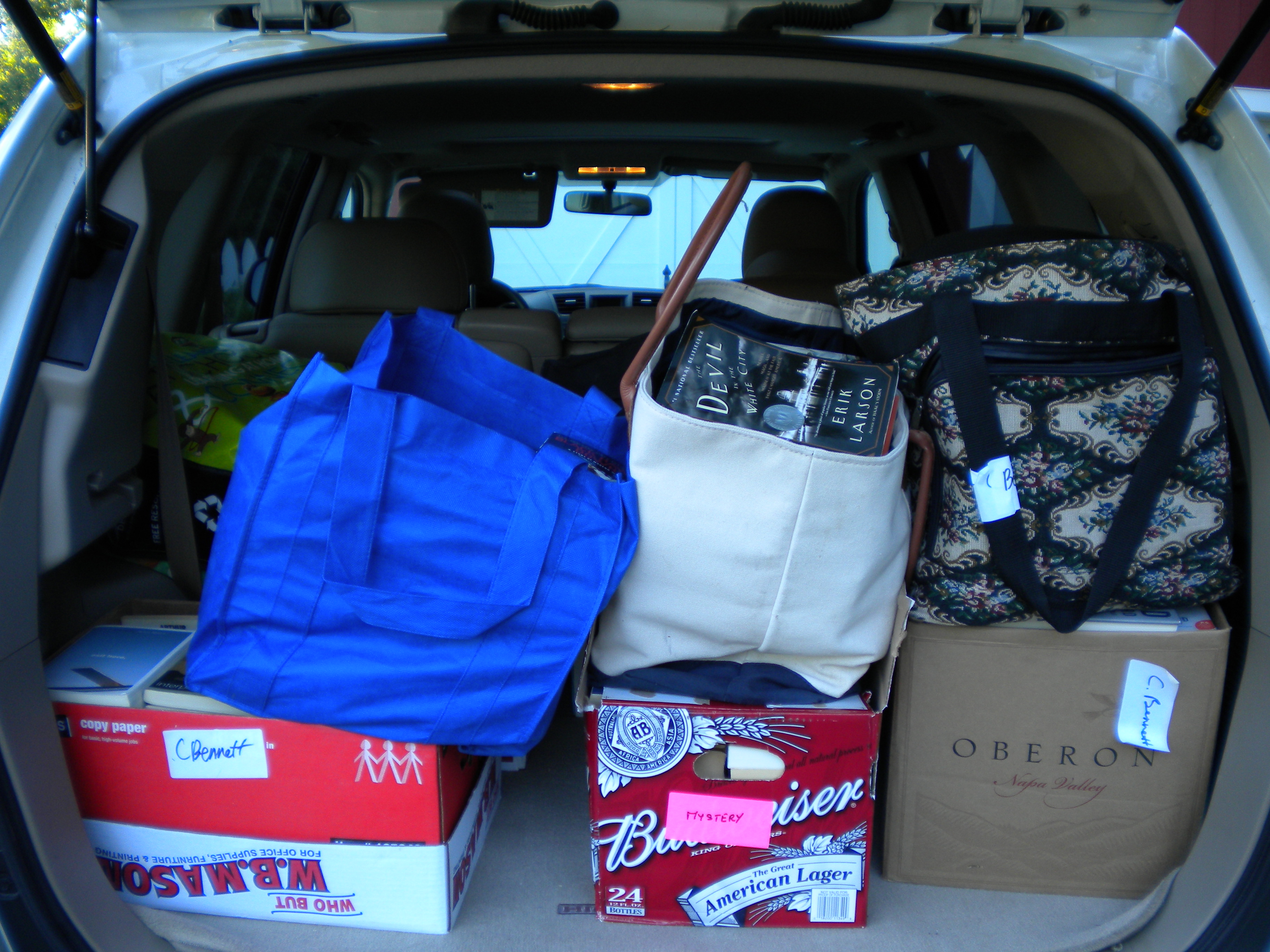
A carload of Used Books after a summer book sale!

In writing this blog, I have found myself increasingly commenting on English/language arts curriculum, lesson plans, and current issues in education. This means the purpose of the blog has grown to include topics that are all related to the use of reading materials in the classroom, and reading is the most important skill that students will need to be successful students at every grade level. Providing a wide variety of books-new and used- is critical to engaging readers.

To date, the used books purchased in the secondary markets have helped in four specific ways:

Used books have replaced copies at each grade level. Used books have been used to replace lost or damaged copies of books assigned to a particular curriculum. For example, there have been replacement copies of The Giver for Grade 7, Of Mice and Men in 9th grade, and Animal Farm in Grade 10. These titles are taught in almost every school system in Connecticut, and are titles that are relatively easy to find locally in the secondary market. These are also titles that are readily available in large quantities online on used book dealer sites such as Better World Books.

-Used books have increased selections for independent reading in classrooms. The English Department has incorporated more time for silent sustained reading (SSR) in class at each grade level, and classroom libraries have been increased to allow students the opportunity to choose books to read. For example, students in grade 9 are provided 40-45 minutes each week to read self-selected books during the school year. Students may choose a book from the school’s library media center, or choose a book from one of the carts in the classroom.  Titles vary in genre, subject and reading level in order to meet student interest. Students are responsible for blogging reviews about the books they read at least twice a quarter.

Other classes that take advantage of independent reading are the Advanced Placement English Language and English Literature classes. Students select independent reading that meets the critical standards of the Advanced Placement program. These selections range from the classics (Dostoevsky’s Crime and Punishment) to more contemporary titles (Roth The Plot Against America) and write responses to these books.

-Used books are added titles as “satellite texts”. English teachers have extended thematic units to include titles that complement a text from the literary canon. For example, the 11th grade thematic unit “Coming of Age” is usually associated with Salinger’s Catcher in the Rye. Purchasing used books have increased selections to include Sittenfield’s Prep, Cormier’s The Chocolate War, Lamb’s She’s Come Undone, Gibbons’s Ellen Foster, and Chbosky’s Perks of Being a Wallflower. Students select a text to explore the thematic idea through the lens of another author.

Score! A set of books for Grade 10

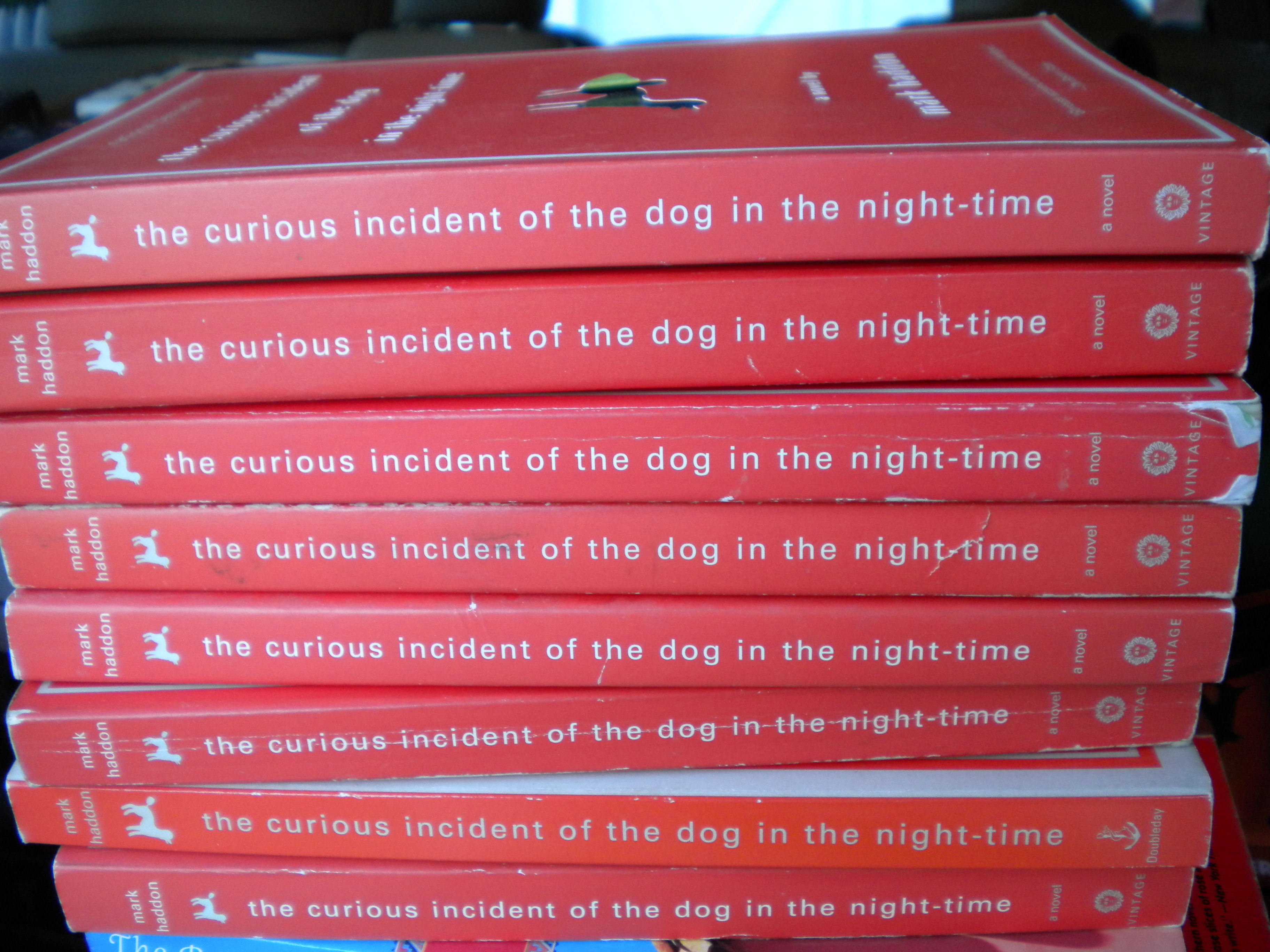
-Used books have allowed for the addition of new texts. The purchase of used books has expanded curriculum at several grade levels with high interest titles.  For example, Hosseini’s The Kite Runner, Coelho’s The Alchemist and Haddon’s The Curious Incident of the Dog in the Night-time (see picture) have been added to the World Literature curriculum in grade 10. In addition, Walls’s The Glass Castle has been added to Grade 12 Memoir class while Farmer’s The House of the Scorpion will be added to grade 7.

Ultimately, the re-stated purpose of this blog will be to continue to discuss the inclusion of specific used book titles in English/language arts classrooms as well as discuss how we are working to improve reading in and out of the classroom  at every grade level. Used books in class is also about using books in class to improve reading!

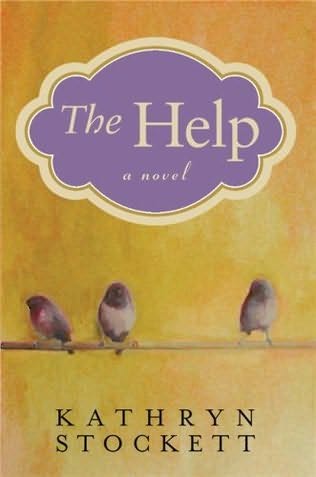
Just had a first sighting of The Help by Kathryn Stockett in a local Goodwill store. This best-selling fictional account of maids and the young reporter who records their stories during the Civil Rights decade (1960s) was first published in 2009 and has remained on the New York Times Best Seller List since then. Granted, this particular copy was a moderately water-damaged paperback selling for $2.00, but this sighting marks the moment when the book is cleared from the reading shelf to the donation shelf in order to make way for other titles.

Paperback copy of The Help sighted at local Goodwill store.

We are hoping to get a class set (30+ copies) of The Help over the next two years to offer with the English III Civil Rights unit (To Kill a Mockingbird; A Lesson Before Dying; The Bluest Eye; Mississippi Trial, 1955; Warriors Don’t Cry; The Color Purple). Thrift stores and public library book sales will probably be the best venues for getting inexpensive copies.

Currently, the book retails for $9.60 at Amazon.  That would be an expense of $288.00. We hope to get these copies for under $50.00 total.

Stay tuned for sighting #2.

There are standard “core” texts taught in English Language Arts classrooms, but should that text be the ONLY text students should be reading? Generally speaking, the pace for a book taught in class may be slower for some members of the class. There maybe a text, specifically a play by  Shakespeare where students cannot be expected to read by themselves. 183 teaching days in a school year does limit the number of texts a class can read as a group. Of course, a teacher can adjust the speed of unit dedicated to teaching a text, but occasionally a unit can stretch over seemingly endless weeks. Interruptions to a schedule (snow days, assemblies, etc.) can contribute to the “drag” on teaching a particular text.

So, how does a teacher keep up with student reading skills when the unit slows down? What to do to keep students reading independently? What to offer higher level readers when a taught text is lower than their reading ability? What to offer lower level readers when the taught text is to high? Use satellite texts!
Satellite texts are books that are connected to a taught text either by context or theme or author.  I wish I had coined this name, but full credit belongs to Stephanie, our grade 11 English teacher. In using satellite texts, she selects a multitude of texts and offers these to students to choose to read in conjunction with a taught text.

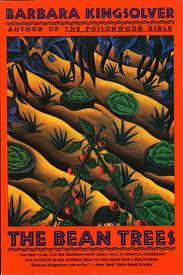
The core text or whole class novel for the Native American Influence and Culture unit in Grade 11

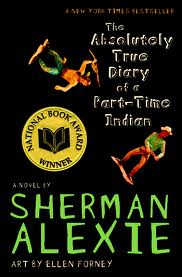
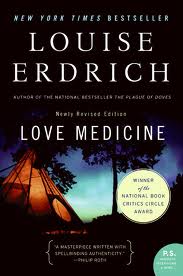
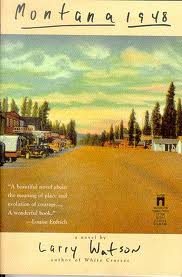
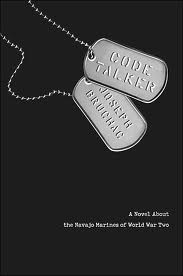
For example, for her unit on Native Americans Influence on Culture, Barbara Kingsolver’s novel The Bean Trees is the core text or whole class novel. Students are offered 10-15 other titles to read independently including (but not limited to)  Sherman Alexie’s The Absolutely True Diary of a Part-Time Indian or  Reservation Blues; Larry Watson’s Montana 1948; Louise Erdrich’s Love Medicine; Leslie Marmon Silko’s Ceremony; Tony Hillerman’s A Thief of Time; Dee Brown’s Bury My Heat at Wounded Knee; Kingsolver’s other two novels Pigs in Heaven and Animal Dreams; and Codetalker by Joseph Bruchac.

Independent reading choice or satellite text

Independent reading choice or satellite text

Independent reading choice or satellite text

Independent reading choice or satellite text

There are several ways to effectively use satellite texts to complement a taught text. The most obvious use in the above scenario is to have students compare and contrast the contexts, themes, and/or  characters between a whole class novel and the text they have chosen on their own. Stephanie can choose to have students work in literature circles, work with a book-buddy or communicate through blogs; she can have students work independently.
Satellite texts are the books that students can read during scheduled SSR period. Students are encouraged to set reading goals based on the number of pages in a text and their reading rate which is usually determined after reading the first 20 pages in a text. Satellite texts are not designed to provide assessments the same way that a taught text would; quizzes and tests should never be the focus. Instead, a satellite text is designed to increase opportunities to practice reading. Students may record their progress on an index card (# of pages read at a location, # of minutes) as a means of assessing their reading progress and reflect on this data.
Ideally, students should be able to draw comparisons (plot, character, theme, setting) from their satellite text to the text being taught. These comparisons can be made in class discussions or in written responses to the taught text. For example, students can draw conclusions about setting on a character’s coming of age or notice similarities in an author’s writing style. Contrasts can be made in recognizing differences by evaluating language or theme from the taught text to the satellite text.
Using satellite texts can expand a unit by an additional week, however, this additional time can provide some flexibility for a teacher in transitioning from one unit to another. Students in a class can be still be engaged in a book while the needs of a few students who need individual attention to improve understanding, or who may have make-up work, or who need more time to finish the taught text can be addressed. Using satellite texts is ideal for employing mini-lessons, or for transitioning from one unit to another that may overlap in theme or content.
Our classroom libraries are loaded with satellite texts purchased through the used book markets (thrift stores, public library book sales, online used book vendors) that sell books for $.50-$4.00. After two years of collecting, there are roughly 5-20 copies of each of the texts listed above; our total investment for this unit has been under $300.00.
Employing satellite texts in a classroom is a way to increase reading in the classroom and provide (limited) choice in texts. These books allow teachers the opportunities to expand reading beyond core texts…to increase a student’s reading experience….to infinity and beyond!

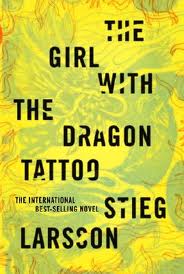
As I shop for used books in area thrift stores and local book sales, I cannot help but notice when a book title “jumps the shark”, a term coined by the TV series Happy Days to mean when something has lost its “cool” factor.  The first book in the Millennium series, The Girl with the Dragon Tattoo, by Swedish journalist and writer Stieg Larsson illustrates this phenomenon. Books lose their "cool" factorMultiple copies of Larssen’s trilogy The Girl with the Dragon Tattoo are now appearing on used book tables. While the book currently remains on the New York Times best seller lists at #17 , copies are available for $1.00-2.00 in the used book market, sometimes available well into day two or three of a library book sale. Simply put, the book has reached a critical mass saturation of readers, and like Dan Brown’s uber-popular The DaVinci Code, this series has become disposable.
Beginning in 2006, people were purchasing copies of The Girl with the Dragon Tattoo in Britain and Europe where publishers released copies earlier than here in the US. The Girl with the Dragon Tattoo and its sequels, The Girl Who Played with Fire and The Girl Who Kicked the Hornet’s Nest, were almost required reading in airports from 2008-2011; they were de rigor on beaches as summer reads.
The trilogy followed Lizbeth Salander, a fiercely independent computer savant, a grown-up Pippi Longstocking with attitude, and her involvement with the disgraced magazine editor Mikael Blomkvist, in solving a series of crimes. Larsson’s had the ability to place the reader in suspense with unexpected plot twists featuring a plethora of vile characters intent on eliminating Salander and Blomkvist.
Although there were critically acclaimed Swedish films made for the series, a US movie version will be released this year which will most likely result in an uptick of book sales with movie-tie in editions.
Despite their compelling plots and character, I have not put any of these texts into classroom libraries for students. Some of the language and plot points include disturbing sexual violence towards women; the original title was Men Who Hate Women. That said, I have not banned the book should a student choose to read one of the books independently.
In shopping for used books, I have watched other titles “jump the shark”, and my classroom libraries have benefited from these swings in popular reading trends. Entire classrooms have been outfitted with $1.00 copies of books that were initially embraced by the general reading public, and then just as quickly, disposed into the used book market. These fiction and non-fiction titles include:
The Kite Runner by Khaled Hossani
The Secret Life of Bees by Sue Monk Kidd
Cold Mountain by Charles Frazier
Snow Flower and the Little Fan by Lisa See
The Lovely Bones by Alice Sebold
The Memory Keeper’s Daughter by Kim Edwards
Three Cups of Tea by Greg Mortenson and David Oliver Relin
The Devil in the White City by Erik Larson
Nickle and Dimed by Barbara Ehrenreich
The Blind Side by Michael Lewis
A Walk in the Woods by Bill Bryson
The Glass Castle by Jeanette Walls

The most recent titles currently on the best seller list that have “jumped the shark” have been added as independent reading choices. These books are usually placed in grades 11 and 12:
The Art of Racing in the Rain by Garth Stein
Water for Elephants by Sara Gruen
Little Bee by Chris Cleave

Young adult literature (YA Lit) also experiences these ebbs and flows in book titles. Three summers ago, finding a copy of Twilight on a used book table was a coup. Today, one could fill a classroom with copies of any one of Twilight trilogy. Similarly, any one of the titles in JK Rowling’s Harry Potter series can be located as a used book, however, it should be noted that these used copies show much more wear and tear than any other series of books. Whether their condition is an indicator of the careless nature of adolescents towards the care of books or the degree to which Harry Potter books were read and re- read, it is hard to determine.

As I write this, I am impatiently waiting for The Help by Katherine Stockett which I want to pair with To Kill a Mockingbird or place in a unit focused on Civil Rights in Literature. This fictional account of interviews conducted with maids of Jackson, Mississippi, during 1960s is ideal for placing readers into the mindsets of households contending with the demands for racial equality which dominated the culture of the time.
Based on the 34 weeks this book has spent at the top of the best seller list (where it still is #1 in paperback trade books), I know there are copies in a multitude of households. When copies of The Help are finally discarded into the used book market, I will jump for them….like a shark.

Danbury, Connecticut, is the closest metropolitan area near me (population 80893), and this past weekend, the Friends of the Danbury Public Library held their annual sale. The first remarkable fact about this event is that the 80,000 books available to the public for sale, transported several miles from the library location to the Danbury PAL building at the other side of town, arrived in alphabetical order! This was a very well-organized sale; browsing the fiction tables was a breeze.

The second remarkable fact about this event would be the surprisingly large number of biographies, auto-biographies, and memoirs donated by Danbury residents. Three long tables laid end to end were laden with all manner of biographical materials, and under these tables, there were boxes filled to overflowing with additional selections. Interestingly enough, most of these books were “solo” copies; duplicates, with the exception of  Angela’s Ashes by Frank McCourt (an area favorite) and The Glass Castle by Jeanette Walls, were hard to find. A cultural anthropologist attending the sale could speculate as to what the fascination biographies, auto-biographies, and memoirs have for Danbury readers. Are the residents “people”-people? Is there a strain of  voyeurism running through their veins? Or are they simply curious about the lives of the rich and/or famous? (Did former Danbury resident Robin Leach have anything to do with this trend?)

One of the many titles available to add to Memoir class

The plethora of memoir titles provided the following as selections for independent reading for the 12th grade memoir class:
Madhur Jaffrey– Climbing The Mango Trees: A Memoir Of A Childhood In India.
Gail Caldwell- A Strong West Wind
Ann Patchett- Truth and Beauty
Lucy Grealy- Autobiography of a Face
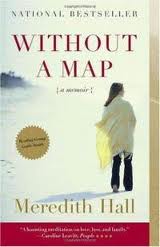
Meredith Hall –Without a Map: A Memoir
Patrick Moore-Tweaked: A Crystal Meth Memoir
Rory Stewart- The Prince of the Marshes: And Other Occupational Hazards of a Year in Iraq
Janice Erlbaum- Girlbomb: A Halfway Homeless Memoir
Claire Fontaine and Mia Fontaine- Come Back: A Mother and Daughter’s Journey Through Hell and Back (P.S.)
Linda Greenlaw- The Hungry Ocean: A Swordboat Captain’s Journey 

For Grade 11, there were multiple copies of  Louise Erdrich’s Love Medicine Sebastian Junger’s War, and Michael Sharra’s The Killer Angels.

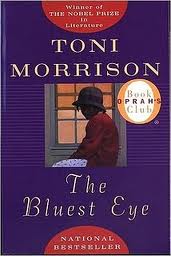
Multiple copies of The Bluest Eye were available. This text is under a book challenge by a neighboring community

There were also multiple copies of Nobel prize winning author Toni Morrison’s The Bluest Eye, an indication that the book is on a Danbury school or local book club’s reading list. Currently, this book is being challenged by parents in the neighboring town of Brookfield. According to the local media, the Brookfield challenge to have the book removed (Honors Grade 11 class) is largely led by individuals who have not read the book but who have read, and are circulating, excerpts of some graphic scenes; one complainant does claim to have read the SparkNotes.

For grade 10, there were multiple copies of Ishmael Baeh’s A Long Way Gone, Paulo Coelho’s The Alchemist, Mark Haddon’s The Curious Incident of the Dog in the Night-Time, and Deborah Rodriguez and Kristin Ohlson’s Kabul Beauty School.  There also multiple copies of William Golding’s Lord of the Flies and  Erich Maria Remarque’s All Quite on the Western Front in the same editions we have in our classroom libraries.

For Grade 12 independent reading, usually Creative Writing classes, I found multiple copies of Garth Stein’s The Art of Racing in the Rain, and enough copies of Melissa Bank’s The GirlsGuide to Hunting and Fishing as a “test” to see what students think.

I located some “hard to find” titles of books that are always needed including Persepolis: The Story of a Childhood by Marjane Satrapi, Bobbi Ann Mason’s In Country, Cormac McCarthy’s All the Pretty Horses, Joseph Bruchec’s Codetalker, and Laurie Halse Andersen’s Chains. Since we are a vocational-agriculture school, an elective under consideration for seniors is Animals in Literature.  Both of Ken Foster’s books Dogs I Have Met: And the People They Found and his other book Dogs Who Found Me will be added to that bookshelf.

I have noticed that a number of books that currently occupy positions on the NY Times best seller lists have been available at these local library sales. At Danbury’s sale, these titles included Like Water for Elephants by Sara Gruen, Little Bee by Chris Cleave, and The Kite Runner by Khaled Hossani. The Girl with the Dragon Tatoo by Stieg Larsson, and its sequels The Girl Who Played with Fire, and The Girl Who Kicked the Hornet’s Nest escaped the stigma of being limited to the mystery table; all three were placed for readers of fiction who may want to “cross-over” for a thrilling mystery.

An entire side wall was dedicated to VHS tapes. Given the current state of technology, I wonder how much longer VHS will be featured at these sales; their value must be falling as the popularity of online movie streaming or DVD/Blu-ray grows. There were also two tables of audio books, CDs and DVDs. The organizers of the sale had a rather uncoventional approach to the literary canon; the classic literature section was divided from the poetry section with an expansive section of books devoted to humor. Was this placement a commentary on humor as the offspring of the classics? Or was this partition a statement about the lack of humor in the classics? I am not sure.

Unlike other area sales, there was no admission charge for early arriving buyers, so shopping during the first hours of the sale meant contending with book dealers and their ISBN readers. Fortunately, the aisles were wide enough to accommodate people carrying large bags filled with books. Prices ranged from $.50-$2.00;rare books had their own section and were priced accordingly. Volunteers wearing blue shirts and aprons were plentiful. By noon many were engaged in re-stacking tables and filling in gaps created by eager shoppers. Checkout was a breeze. The bill for five large bags of books, roughly 87 books, came to $101.00. The Friends of the Danbury Public Library will reduce the number of books to pack up by having a “bag sale” on Monday, 10/17.

80,000 books donated by residents in a city of 80893 means at least one donated book for each person. That is also remarkable; make this 80,000 Books and Three Remarkable Facts.


The Wamogo classroom libraries have many new titles, so perhaps an explanation as to how these titles are allowed into the classrooms at Wamogo for independent reading is in order.  Most of the books in the classroom libraries are books already available in the school library’s main collection. Unfortunately, like most schools, there have been, on occasion, challenges to titles taught or made available in classrooms in grades 7-12. Book challenges are made when a parent or guardian objects to content in a book, and there are some titles that receive challenges more frequently than others.

There are two steps that our English Department members employ in order to meet the requirements of a reading curriculum with the requests of parents or guardians. The first step is to offer students a choice in selecting independent reading or to offer an alternate core text. Because of our extensive used book collection, (see our book flood!), our English teachers are often able to offer another title instead.

The second step employed is the focus on lessons that develop skills rather then then lessons that dwell on content. Our curriculum incorporates activities and prompts that address similar themes or topics, so that the difference in titles does not impact a lesson. Prompts such as, “What is the role of the main character in his or her family? Does that role change?” are designed so that students do not always need to be reading the same text in order to participate.  For example, the Contemporary Native American unit in Grade 11 is centered on Barbara Kingsolver’s The Bean Trees as the core text. Titles offered as alternates or for independent reading include Sherman Alexie’s The Absolutely True Diary of a Part-Time Indian or  Reservation Blues, Larry Watson’s Montana 1948, Louise Erdrich’s Love Medicine, Leslie Marmon Silko’s Ceremony, Tony Hillerman’s A Thief of Time, Dee Brown’s Bury My Heat at Wounded Knee, and Codetalkers by Joseph Bruchac. Students can choose a different book in this unit and still answer the prompts and participate in activities individually or in literature circle groups. One topic that connects these titles is how Native Americans view others and how they are viewed by others in society.

Unfortunately, book challenges are often in schools made against many of the books that are in the classical canon of literature.

A YouTube compilation quickly lists the top 100 banned books:

In fact, it would be impossible to teach a survey of American literature without incorporating at least one challenged title; most are on the Advanced Placement Literature recommendation’s list. The American Library Association (ALA) keeps a record of book challenges throughout the United States.  There are lists of books that have been banned; one such  web page  is titled The Top Ten Banned or Challenged Classics.

The reasons for challenging a book are as varied as the books themselves. The entire Harry Potter series has been challenged for a number of reasons dealing with witchcraft; one challenge called the series “evil” attempt to indoctrinate children in the Wicca religion. Harper Lee’s To Kill a Mockingbird has been repeatedly challenged for containing profanity. Mark Twain’s Huck Finn was recently challenged in Connecticut for the repeated use of a derogatory term. These challengesdiffer from the specific objections leveled against Nabokov’s Lolita which has been banned for the obsessive relationship of the middle-aged Humbert Humbert’s with the 12 year old “Lolita”. These examples illustrate the breadth of topics than can result in book challenges or having the book banned entirely.

As a result, most teachers “self-censor”, choosing materials that they consider not objectionable, harmful, or insensitive for students.  However, there are instances where a teacher may not anticipate a challenge; what one group of parents deems inappropriate may not concern another group of parents.

Our solution is to offer a student choice in reading materials which necessitates that more titles representing a wide variety of reading levels are made available to students. Book choices for students are often advertised on websites such as Livebinders  or on a class wiki which is public.  Concerns about the merits of a book should be weighed by all stakeholders- parents, students and teachers- if there should be a question about a student selecting a text. Having a title available may not be enough of a reason to incorporate the book into a lesson plan or unit. Confronting concerns immediately in the teaching of any text is a priority.

In order to draw attention to book challenges in schools and public libraries, the American Library Association publicizes a Banned Books Week. This year, banned book week will run from September 24- October 1, 2011.They organize activities and materials in order “to highlight the benefits of free and open access to information while drawing attention to the harms of censorship by spotlighting actual or attempted bannings.” Educators are often the first to encounter challenges for book removal. Offering choice may be the most successful way to accommodate the parent and still engage the reader.