Archives For November 30, 1999

The New Fairfield Public Library Book Sale  took place on a lovely fall day; a crisp and cool Connecticut beauty of a day. Unfortunately, the sale also took place in the same locale where the local highway department was painting the parking lot lines at the front of the building,  and where the soccer club practice with team coordinators were handing out team jerseys at the back of the building. The actual book sale was held in a meeting room and a small entry hallway. At 10:00 AM, shopping at the sale was challenging between finding a spot to park outside and negotiating cramped quarters inside.

There were, however, some bargains to be had. Browsing was a shared experience with several other buyers; I would remove a box piled with books to one section, while another person would replace that box with another. Crawling along the front hallway floor which held boxes of trade paperbacks, I was able to locate copies of Codetalkers by Joseph Bruchac and A Yellow Raft in Blue Water-Michael Dorris for the Contemporary Native American unit that is being taught this month in Grade 11. I was also able to add to our curriculum collection:

The Giver- Lois Lowery
Night-Elie Wiesel
The Great Gatsby-F. Scott Fitzgerald
Lord of the Flies-William Golding
Brave New World-Aldous Huxley
The Road-Cormac McCarthy
The Handmaid’s Tale- Margaret Atwood
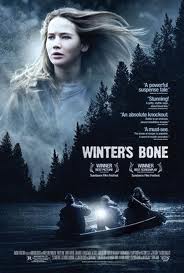
An independent choice book for Grade 11.

The “score” of the morning was a new copy of Winter’s Bone by Daniel Woodrell.  This is the fourth copy I have found this summer, and the book will be placed in the “Coming of Age” unit in Grade 11 as an independent choice novel. The School Library Journal reviewed this book for high school students saying, “In the poverty-stricken hills of the Ozarks, Rees Dolly, 17, struggles daily to care for her two brothers and an ill mother. When she learns that her absent father, a meth addict, has put up the family home as bond, she embarks on a dangerous search to find him and bring him home for an upcoming court date. Her relatives, many of whom are in the business of cooking crank, thwart her at every turn, but her fight to save the family finally succeeds. Rees is by turns tough and tender. She teaches her brothers how to shoot a shotgun, and even box, the way her father had taught her. Her hope is that these boys would not be dead to wonder by age twelve, dulled to life, empty of kindness, boiling with mean.”  When I read the novel, images of the witches from Macbeth came to mind!

For the independent reading shelves, I also located a copy of Dairy Queen by Catherine Gilbert Murdock, Book Two The Ruins of Gorlan in The Ranger’s Apprentice Series by John Flanagan , After by Francine Prose, and Ape House by Sara Gruen (surprising since this is a recent release).

New Fairfield’s sale offered far more hardcover fiction texts than trade paperbacks, and the children’s picture books were overflowing the small table to which they had been assigned. This could be an indication of a shift in population to more elementary aged choices….the New Fairfield babies are growing up!

Once I brought my two baskets to the counter, the volunteers at the checkout were gracious and accommodating. They were prepared with bags for purchases, and at my request  one quickly designed a receipt for me. (“Last year, I had a pile of receipts, but no one need them, wouldn’t you know?”)

Hardcovers were $2.00, trade paperbacks were $1.00, and small paperbacks were $.50. Sunday was “Bag day”-all books in a bag for $10.00.  I purchased only trade and small paperback on this trip and spent $26.00 for 32 books. These will be added to the school’s “book flood“.

The volunteers picked a perfect weekend for people looking for book bargains. Perhaps next year there will be better coordination of traffic outside the library and inside the sale so the efforts of the Friends of the New Fairfield Public Library are fully supported.

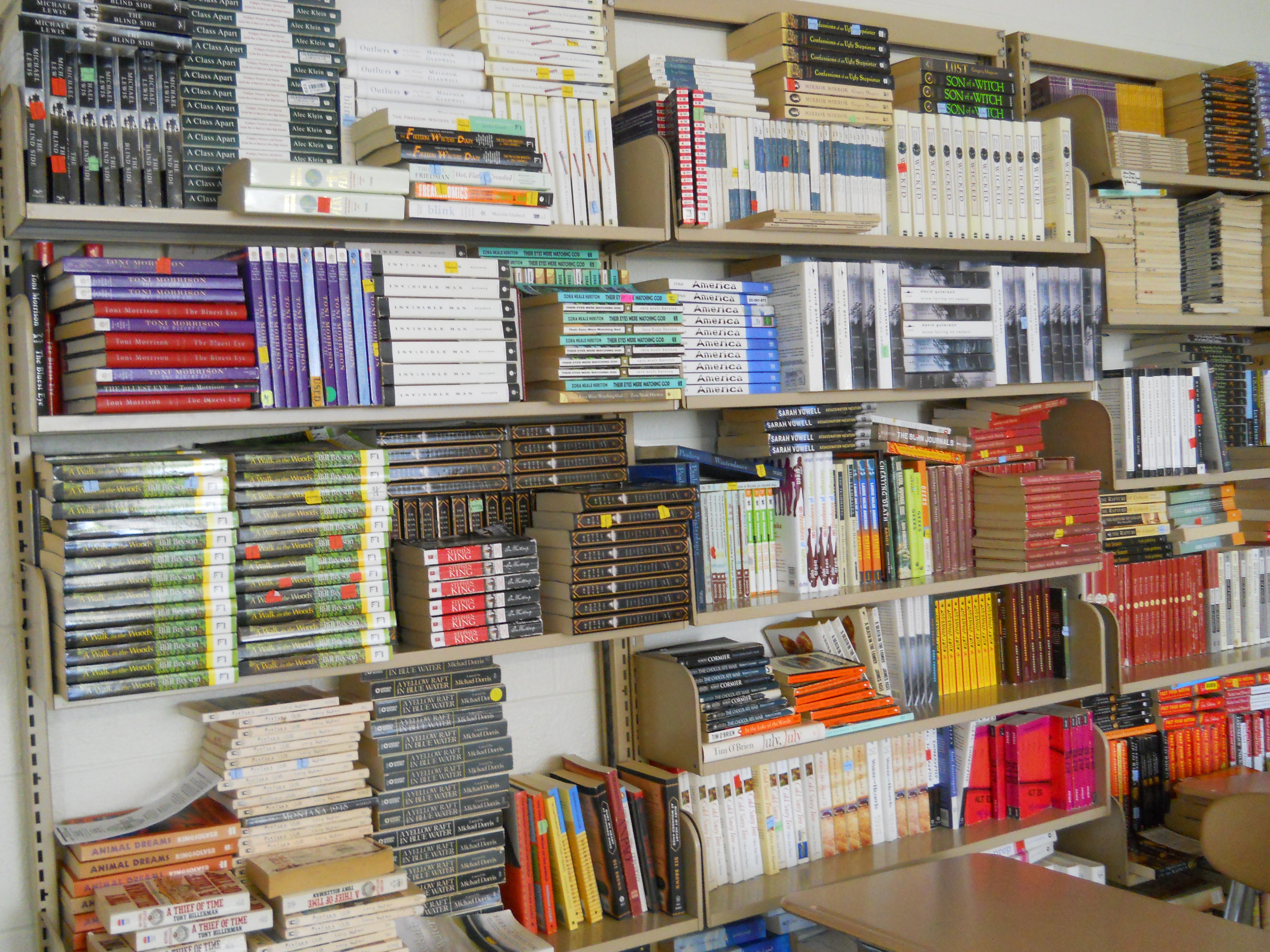
Classrooms are several feet deep in a “book flood” at the Wamogo Middle and High School.

Junior classroom library created with used books

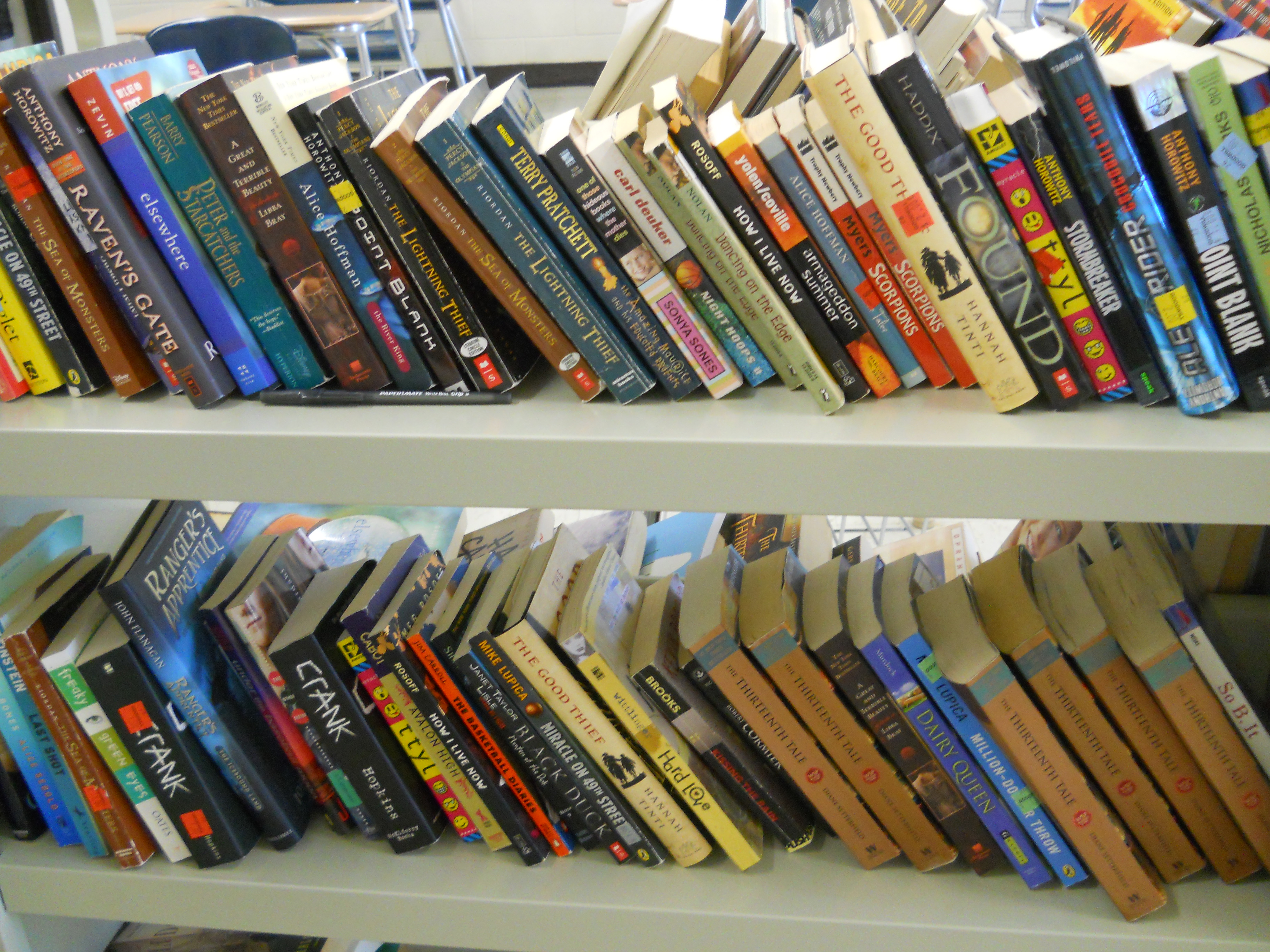
While there has been a torrent of late summer rains that have closed roads and delayed schools in the Northwest corner of Connecticut, our students are experiencing a deluge of an entirely different nature. Gently used books spill over in classroom bookcases; they slop on to counters and swamp several double-sided carts.

The term “book flood” is used by Kelly Gallagher in Readicide.  He states, “Let me be clear: if we are to have any chance of developing a reading habit in our students, they must be immersed in a K­12 ‘book flood’–a term coined by researcher Warwick Elley (1991)” (43). Book flood is a theory, recently tested in countries (Fiji, Sri Lanka, Singapore) where English is not part of the culture.  The theory is that students exposed to quantities of literature will learn English as a second language more effectively.

The abstract for The Potential of Book Floods for Raising Literacy Levels by Warwick B. Elley states that “the evidence is now strong that it is possible to double the rate of reading acquisition of Third World primary school pupils with a ‘Book Flood’ of about 100 high-interest books, per class, and short teacher training sessions. The benefits for reading skill and enthusiasm are consistent across diverse cultures, mother tongues and age levels, and they appear to generate corresponding improvements in children’s writing, listening comprehension, and related language skills. Such skills are typically found to develop very slowly under traditional textbook styles of teaching.”

Gallagher suggests that American educators do the same in their classrooms by asking, “Do students at your school have access to a wide range of interesting reading materials? Is providing access to interesting text a priority among your administration and faculty? Are students on your campus immersed in a book flood? Are we giving them every opportunity, via reading, to build vital knowledge capital?” (49).

Well, we are.

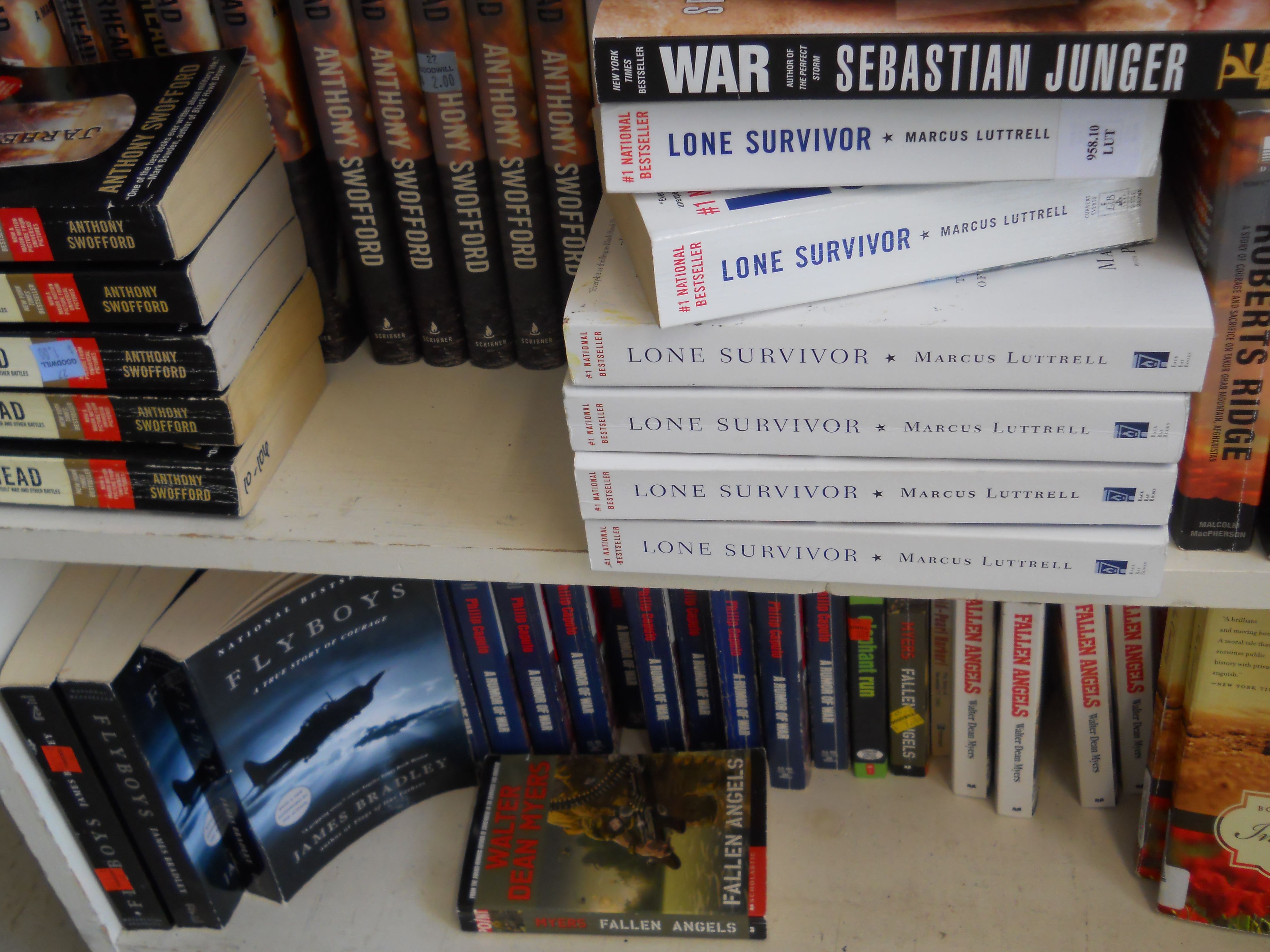
11th grade choices that accompany the Contemporary War unit with The Things They Carried

Over the course of one year (June 2010-2011), the Wamogo English Department had added 2,500 books previously used books to the classroom collections. Many of these books are familiar titles that are taught in grades 9-12 (EX: The Great Gatsby, Lord of the Flies, Animal Farm, Speak, The Glass Castle, A Lesson before Dying, The Bean Trees, To Kill a Mockingbird, The Handmaid’s Tale) or titles taught in  grades 7 & 8 (EX: Stargirl, Nothing but the Truth, The Giver, The Light in the Forest, The Outsiders, No More Dead Dogs).

Additionally, class sets of books (20 -30 copies) that were already purchased as new books were expanded with used copies for each student at grade level. For example, the 10th grade library started with 20 copies of The Kite Runner. After two years, there are now 116 copies for 10th graders, one for every student, plus all teachers and teachers’ aides. There are also 15 copies of A Thousand Splendid Suns for students who would like to read another novel by Khaled Hossani. Similarly, 20 copies of Mark Haddon’s The Curious Incident of the Dog in the Night-Time were purchased new in 2009. An additional 67 used copies have been added since; 13 more copies will make a grade level set of 100 copies.

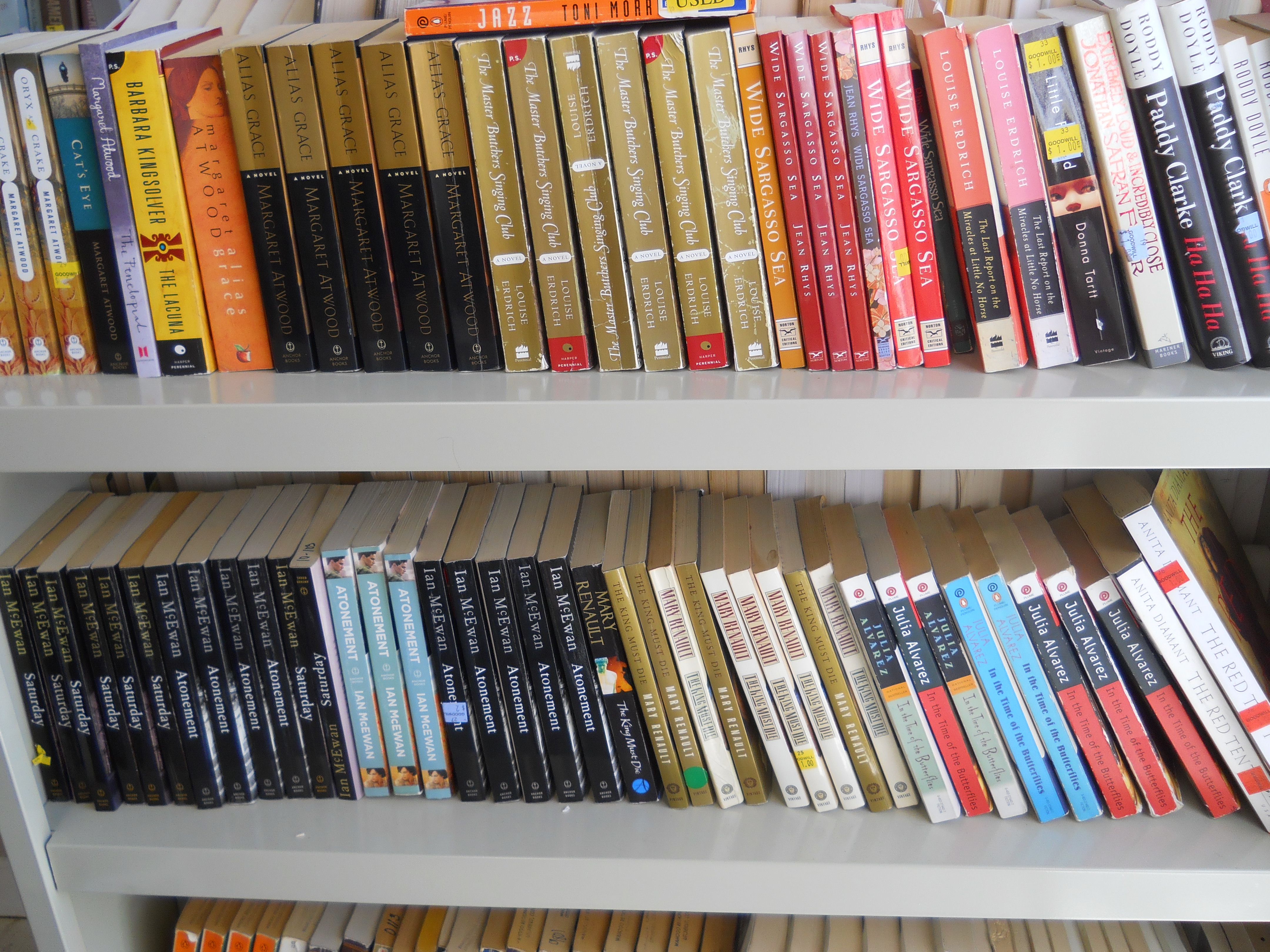
Books offered to Advanced Placement English Literature students for independent reading

In order to offer independent choices for the Advanced Placement English Literature and English Language classes, newer titles have been added including multiple copies (4-30) of  The Plot Against America, Alias Grace, The Adventures of Kavalier and Clay, Middlesex, The Story of Edgar Sawtelle, The Poisonwood Bible, In Cold Blood, Love in the Time of Cholera, Paddy Clarke Ha-Ha,  Dinner at the Homesick Restaurant, The Elegance of the Hedgehog, Cold Mountain, Ironweed, The Wide Sargasso Sea, Gertrude and Claudius, Atonement, The Hours, and The Memory Keeper’s Daughter.

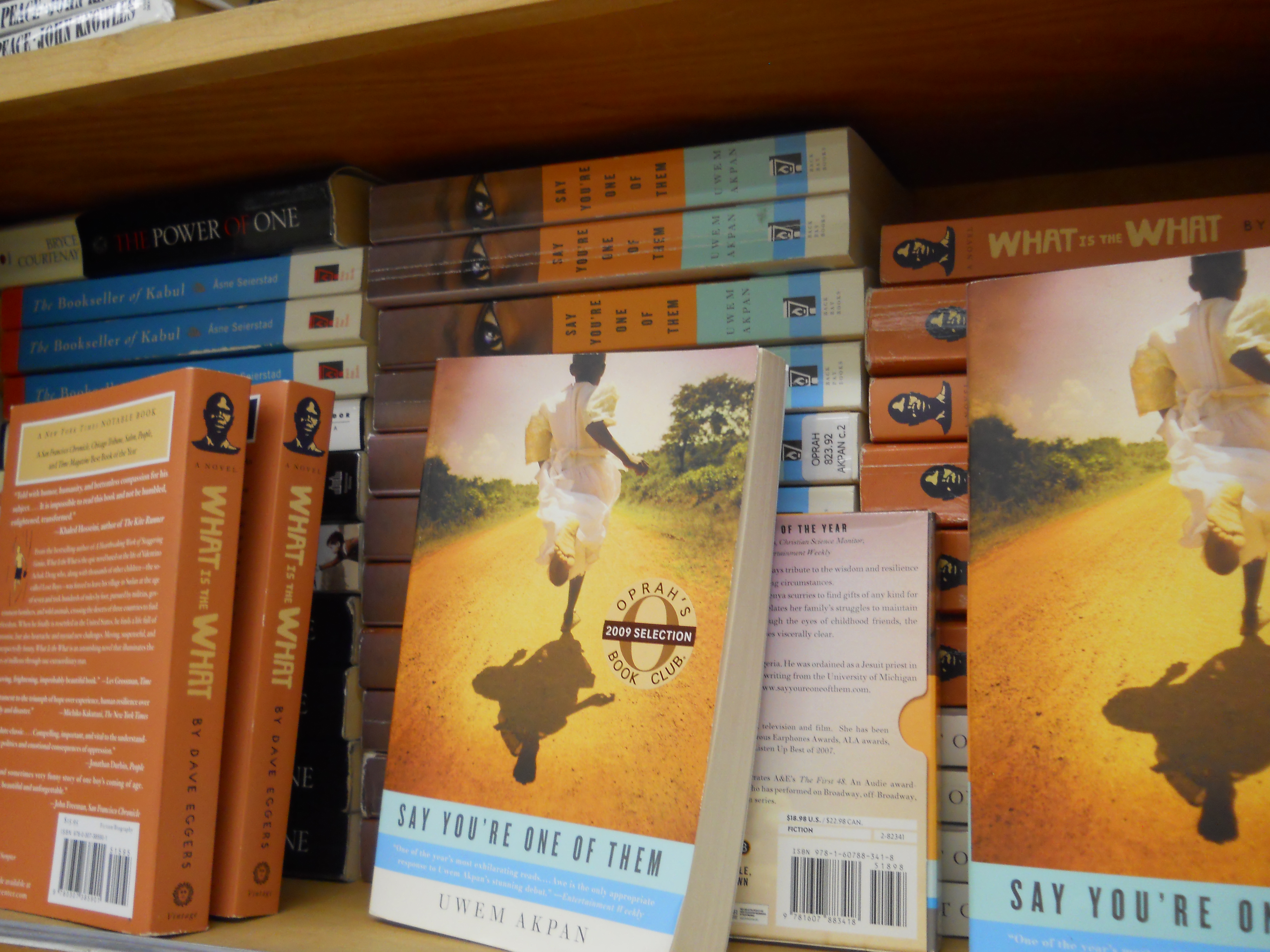
There are thematically connected texts for 10th grade World Literature such as a unit centered on adolescents growing up in conflict. These books include A Long Way Gone, The Power of One, What is the What, and First They Killed My Father. Students can choose to read one of these titles in literature circles. There are also thematically connected texts for non-fiction (A Walk in the Woods, Into the Wild, The Perfect Storm, Touching the Void, The Hungry Ocean, Between a Rock and a Hard Place) and fiction  (The Bluest Eye, Their Eyes Were Watching God, The Color Purple, Invisible Man, The Known World, Monster, Precious, Native Son) for students in English III American literature to read independently or in groups.

10th grade "choice" books for Adolescents in Conflict unit

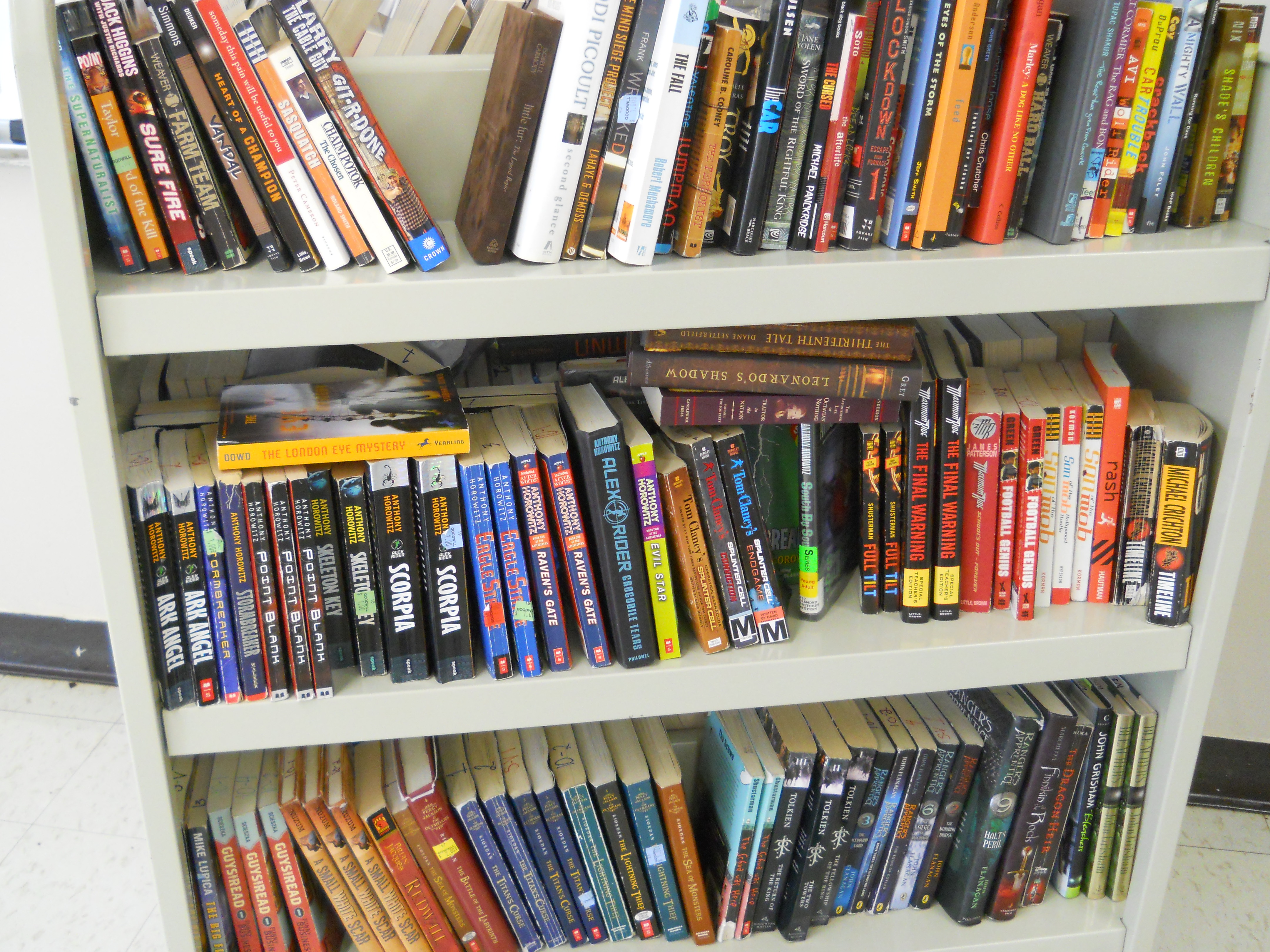
But, it is in the area of providing book choice for independent reading that the largest gains have been made in the classroom collections. There are book series (Percy Jackson and the Olympians, The Ranger’s Apprentice, Maximum Ride) available for 9th students to choose during Silent Sustained Reading (SSR) sessions. There are many different titles from popular teen authors: Meg Cabot, Anthony Horowitz, Jodi Picoult, Sarah Dessen and Scott Westerfield.

There are several (5-10) copies of books such as The Lovely Bones, Dairy Queen, So Be It, Where the Heart Is, and The Thirteenth Tale. There are pairs of books such as The Chosen, The Good Thief, Bad Kitty, Shadow of the Wind, Sleeping Freshmen Don’t Lie, Prom, and Life As We Knew It. There are single copies of The London Eye Mystery, The Off Season, The Compound, The Maze Runner, Black Duck, and Copper Sun.

Independent reading texts for SSR Grade 9

More Independent SSR choices for Grade 9

At the conclusion of the summer of 2011, after trips to thrift stores and public library book sales throughout Connecticut, another 1,700 copies of books have been added to our shelves at a cost of  approximately $2,300.00.

The “book flood” straining the banks of Wamogo’s classroom shelves is, as Gallagher suggests, wide-ranging; it is a flood saturated with interesting material to read. Our students are now inundated with titles; our teachers have an overflow of suggestions. We have created the one flood in which I could happily watch students drown.

The impending arrival of Hurricane Irene made many of the good people of Fairfield County a little insane. I have watched Connecticut, the “land of steady habits”, develop a paranoid streak since the advent of 24/7 weather coverage. Media hyped hysteria ensues whenever a storm-summer or winter- approaches. So, there was no surprise in witnessing gridlock for the gas stations and deteriorating conditions in grocery aisles this weekend.

Instead of confronting the hysteria, I traveled to the Friends of the Bethel Public Library’s annual summer sale (August 27-29, 2011) where I found calm and order among the patrons quietly shopping for books, videos, records, DVDs and other media.

This sale was held in a large room in the municipal center across the street from the Bethel Public Library. I know the room as the “GP” room (general purpose) since I attended grades 7 & 8 in this building; I even performed on the stage which housed the young adult collection of books for sale!

The books were organized on tables by genres, and there were signs on each table that indicated genre. There were very few “misplaced” books; obviously the organizers know their titles.  The fiction tables were a mix of hardcover and trade copies, and they were not in any particular order. I was an early attendee of the sale, and there were several boxes of fiction trade books under the tables. I imagine the volunteers planned on filling in the tables with these books as the sale went on, and there were many volunteers already busy at work. These volunteers demonstrated a remarkable resistance to apocalyptic predictions of  weathermen; one even was quite confident that the sale would go on as scheduled on Sunday despite the predictions of tropical storm winds and steady rain.

Books for the Wamogo classroom libraries from the Bethel Library Book Sale

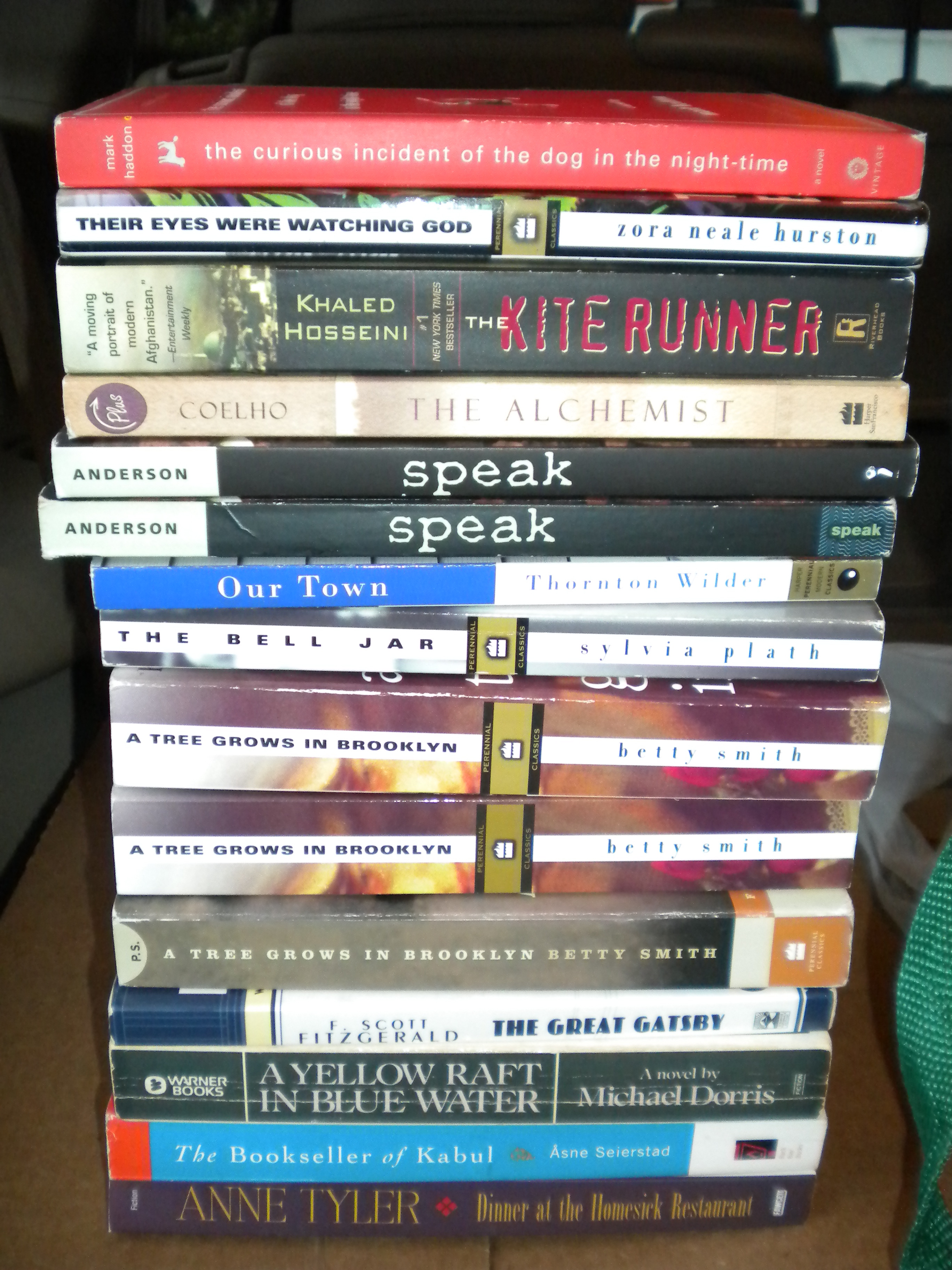
There were many good books at the sale that I can add to the classroom libraries. There were three new copies of A Tree Grows in Brooklyn by Betty Smith, a copy of Yellow Raft in Blue Water by Michael Dorris, and a copy of Anne Tyler’s Dinner at the Homesick Restaurant for independent reading by juniors. There were also copies of books that we teach including:

Speak by Laurie Halse Anderson
The Kite Runner by Khaled Houssani
The Curious Incident of the Dog in the Night-Time by Mark Haddon
The Great Gatsby by F. Scott Fitzgerald
Our Town by Thornton Wilder

There were also five copies of classic story The Light in the Forest by Conrad Richter which we use in our Native American unit in Grade 8. The coming of age story was published in 1953, and combines historical places and incidents centered in Northeastern Ohio in the 1750s. The book has been in continued use in middle school curriculum largely due to Richter’s ability to  portray the consequences of hostilities between the Native Americans and early European settlers of the American Midwest.

In little under 30 minutes, I picked up 72 books for $105.00; prices ranged from .50 -$2.00. The retail price at Amazon for the 15 books in the picture above would have been $158.38. My cost for these 15 books PLUS  57 other books was $105.00.

Community book sales provide an opportunity for a buyer to do a little cultural study on the reading habits of its residents. Obviously, Bethel residents enjoy fiction and the number of cookbooks was greater than the number of military history books. However, the biggest surprise was the number of tables dedicated to the genre of romance novels. I grew up in Bethel (on Grand Street from 1972-1980), and I would never have suspected that the town has developed such “passionate” interests!

I received a postcard to remind me of the upcoming sale, but I had already planned to attend since the sale was also listed on BookSaleFinder.com . Even Hurricane Irene could not stop the calm and dedicated volunteers of the Friends of the Bethel Public Library from succeeding in putting on a great sale with donated books.

The pressure is on. School starts in another two weeks. Summer reading still needs to be done!

Right about this time, there are some parents who are reminding (nagging?) students about their summer reading assignments, there are librarians and book stores scrambling to locate books posted on reading list, there are some students trying to cram in a little reading, while there are some students trying to cram in a few Spark Notes instead of the summer reading book. Is this commotion necessary? Is all this activity to have students read books over the summer vacation a worthwhile endeavor?

Yes. Yes, it is.

On the New York State Department of Education website, there is a summary of research on summer reading:

“In a 2009 government web cast, Secretary of Education Arne Duncan described summer learning loss as ‘devastating.’ This is what researchers have often referred to as the “summer slide.” It is estimated that school summer breaks will cause the average student to lose up to one month of instruction, with disadvantaged students being disproportionately affected (Cooper, 1996).”

“Researchers conclude that two-thirds of the 9th grade reading achievement gap can be explained by unequal access to summer learning opportunities during the elementary school years, with nearly one-third of the gap present when children begin school (Alexander, Entwistle & Olsen, 2007).”

“The body of existing research demonstrates the critical importance that the early development of summer reading habits can play in providing the foundation for later success.”

We assign summer reading for all grades 7-12. Academic level students in grades 7-11 have a choice of books, fiction and non-fiction, from suggested lists. Our excellent media specialist is a great resource for making recommendations and coordinating these lists for distribution. Honors level students are required to read specific titles; Advanced Placement students are assigned four to five books. Seniors read books that are directly connected to the elective they have chosen. All summer reading is due the first week of school.

We use the dialectical journal as an assessment tool. Students are required to find passages (5 from the first half of the book, 5 from the second half) that they think help them better understand the bigger issues of the book– theme, characterization, narrative voice, the author’s attitude towards his subject (tone), etc. The passages can be either narration or dialogue. Students respond to each passage in one of several ways such as:
1. Make a connection
2. Interpret/make a prediction
3. Ask a question (attempt to answer it)
4. Extend the meaning
5. Challenge the text

Dialectical_Journal Instructions
The first weeks of school are all about assessing individual student and evaluating class learning. Reading student responses in dialectical journals is one method a teacher can use to quickly assess a student’s comprehension and writing skills at the beginning of the school year.

I have located many of the required texts for summer reading in the used book market to make access easier for honors level students. We are able to offer gently used copies of all of the assigned texts including:
Grade 9 Honors: The Alchemist, Paul Coehlo
Grade 10 Honors: Nectar in a Sieve, Kamala Markandaya OR The God of Small Things by Arundhati Roy OR The Life of Pi by Yann Martel
Grade 11 AP Language: On the Road, by Jack Kerouac AND The Memory Keeper’s Daughter by Kim Edwards AND On Writing by Stephen King AND The Grapes of Wrath by John Steinbeck
Grade 12 AP Literature: The Grapes of Wrath by John Steinbeck AND The Tempest Shakespeare AND The Story Of Edgar Sawtelle by David Wroblewski OR The Poisonwood Bible by Barbara Kingsolver AND Reservation Blues by Sherman Alexie OR Ceremony by Leslie Marmon Silko
Grade 11 & 12 Journalism:
Zeitoun by Dave Eggers OR Firehouse by David Halberstam
Grade 12 Drama
: Our Town, Thornton Wilder
Grade 12 Creative Writing: On Writing, Stephen King
Grade 12 Memoir: A Girl Named Zippy by Haven Kimmel OR Lost in Place by Mark Salzman OR Running with Scissors by Augusten Burroughs OR Lucky by Alice Sebold

Unfortunately, the agrarian school calendar has created summer months where many students do not engage in any academic activity. Summer reading requirements for students at any grade level, choice or assigned, are speed bumps in slowing down the “summer slide.”

While not exactly on vacation in Idaho, I have a little free time to read or to look for book bargains for the English Department back home. Since I will have to mail purchases (media mail at the US Post Office), the books must be a hard to find titles and/or be in excellent condition at extremely low cost to qualify as a bargain out-of-state. In a short time, I found many bargains at the Idaho Youth Ranch Thrift Stores, with several books selling for as little as $.25.

According to the web site, The Idaho Youth Ranch is a non-profit corporation that services troubled children ages 8-18 by providing “long-term residential care to young people who are traumatized by abuse and/or neglect or an adverse experience, and as a result, this trauma interferes with their ability to control behavior and manage emotions. The program is based on an early intervention model to help at-risk youth who are in the beginning stages of behavior problems. The sliding fee schedule, coupled with donor-based support, accommodates youth and families who are not served through county or state-funded programs, and/or can’t afford the cost of care.” The program began working with children in 1957 and currently has three residential homes.

The thrift stores are part of a network “located throughout Idaho to provide substantial revenue, work opportunities, and goodwill for The Ranch and its nearby citizens and communities.” I shopped at three locations:

  • 1417 Main Street, Boise
  • 3840 Chinden Blvd. Garden City
  • 250 N. Orchard, Boise

All three stores were well organized with cheerful staff who were quite chatty as I checked out. Books were separated by genre in each store, and in the N. Orchard location, the fiction books were alphabetized by author. All three stores had impressive children’s picture  book collections.

28 books for $29.25; all copies in excellent condition and heading East!

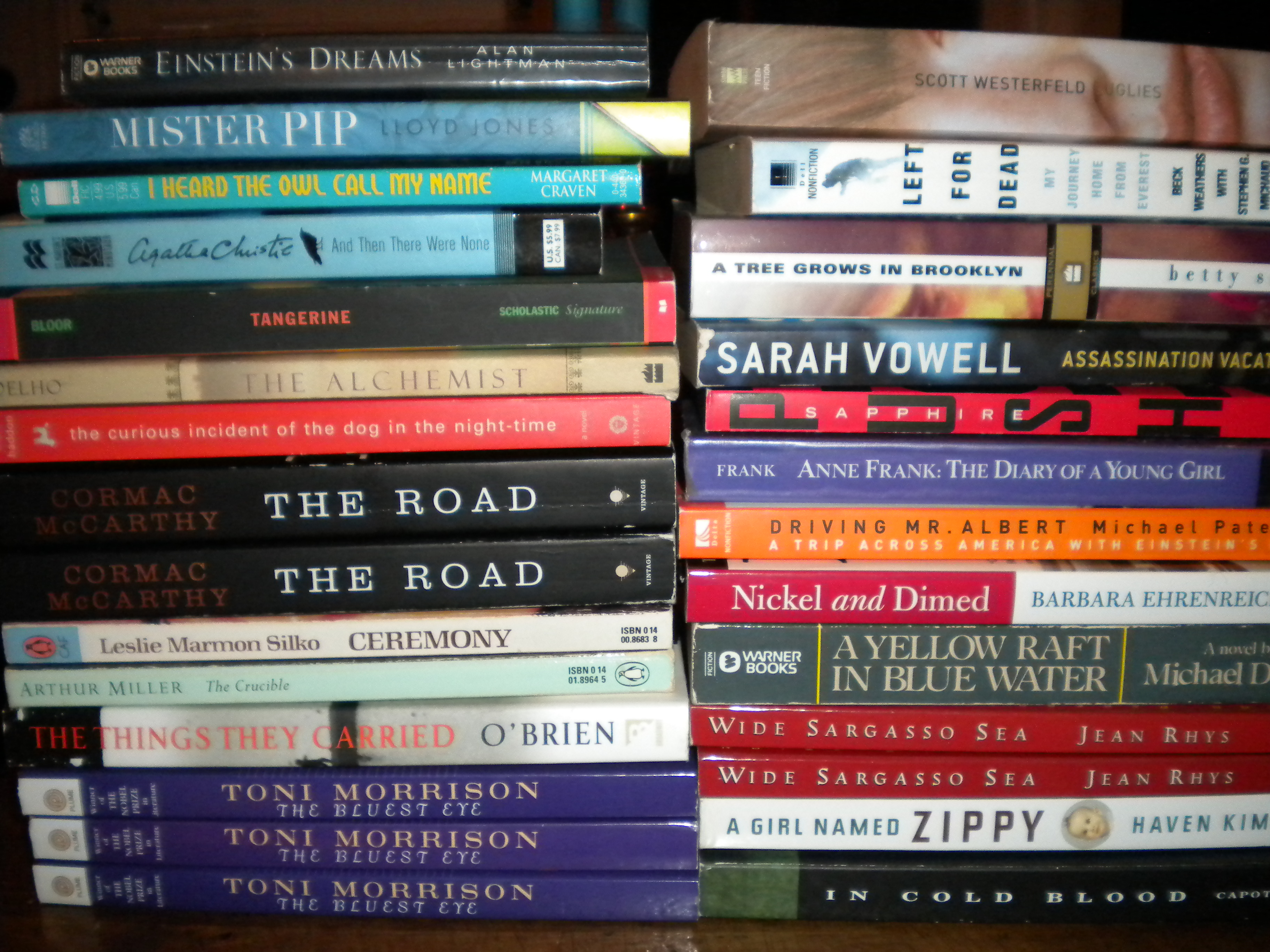
Visiting the Idaho Youth Ranch Thrift Stores,  I picked up 28 books altogether for the department’s libraries, and I left a copy of Pride and Prejudice and Zombies with my niece. There were three copies of The Bluest Eye by Toni Morrison,  two copies of The Road by Cormac McCarthy, and a copy of The Things They Carried by Tim O’Brien for grade 11. The retail price at Amazon for these six texts alone would be $68.98; the entire cost for 28 books purchased at the Idaho Youth Ranch Store? $29.25. The best find? A brand new copy of In Cold Blood by Truman Capote for the Advanced Placement Language class for $1.50.

What is most interesting about finding donated books is speculating about the communities that have used books for sale. In many ways, the reading communities of Boise, Idaho, are very similar to reading communities in the western part of Connecticut. There must be some common interests to see the same titles offered in thrift stores separated by 2,500 miles. More likely, there must be common reading assignments given to students from coast to coast.

Back in Connecticut, Wamogo High School has an agricultural program which offers equine classes; many of our students own their own horses as well. The Idaho Youth Ranch Thrift Stores support a horse program for the students who attend school at their ranch.  The website notes that, “An important adjunct to therapy and a regular part of the school day at The Ranch, residents learn about all aspects of life with horses–from grooming, feeding, and tack to animal psychology, biology and riding. Classes are held on breeding and care of a horse. Residents experience ‘hands on’ training in foaling, imprinting, and halter breaking, as well as preparing young foals for sale.”

The books that are going to Connecticut were donated to support a horse program for students in Idaho. My horse loving students will be happy to know that.

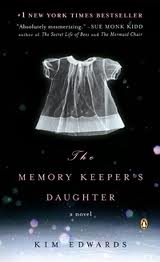
Answers.com defines a good beach book as “engaging and a quick enough read that you can finish most of it on the beach before your sunscreen wears off. A beach book isn’t necessarily literature, but a beach book will entertain.”So, what book could be assigned for summer reading that engages students but isn’t necessarily great literature? The Memory Keeper’s Daughter by Kim Edwards is a good choice.

Summer Reading Assignment for grades 11 and 12

The story opens with a snowstorm on the night Norah Henry goes into labor. On the way to the hospital, she anticipates that, “when we come back, we’ll have our baby with us…our world will never be the same,” not knowing how dramatically accurate that statement will be in the novel. Because of a staff shortage that wintry night, her husband, Dr. David Henry, delivers his twin children, Paul and Phoebe. However, while Norah is unconscious, David recognizes that Phoebe is a Down Syndrome baby, and decides to tell Norah that the little girl dies in childbirth. David instructs Caroline Gill, a nurse, to place the child for adoption. Caroline, however, keeps Phoebe as her own. The novel centers on David’s decision and its consequences for Norah and Caroline.

Edwards is a skilled writer, and there are many descriptive passages that qualify the book for its inclusion in a high school curriculum. For example, as Caroline Gill prepares to take the baby Phoebe to an adoption agency:

“There was an unnatural welling quite in the nearly empty lot, a silence that seemed to emanate from the cold itself, to expand in the air and flow outwards like ripples from a stone thrown in water. Snow billowed, stinging her face, when she opened the car door. Instinctively, protectively she curved herself around the box and wedged into the backseat where the pink blankets fell softly on the white vinyl upholstery. The baby slept, a fierce, intent newborn sleep, its face clenched, its eyes slits, its nose and chin mere bumps. You wouldn’t know, Caroline thought, if you didn’t know, you wouldn’t know” (21).

Edwards had published short fiction prior to her debut novel. The Memory Keeper’s Daughter was published in June 2005 and gained great interest via word of mouth in the summer of 2006. Apparently, the book was very popular as a beach read with book groups as well! There was also a made-for-television movie  on Lifetime Television in 2008 with Dermot Mulroney as David, Gretchen Mol as Norah, and Emily Watson as Caroline. This was the most watched movie of the week that April, and the film was released as a DVD.

There are always multiple copies of this title at used book sales. In one year, I have collected enough copies of the text so that Advanced Placement students each took home a copy to read this past June. In total, I have purchased over 40 copies of this text which retail for $9.20 at Amazon. I have spent $40-50 to have this text as summer reading; the same copies new would have cost $368.00.

So what if the copies of The Memory Keeper’s Daughter happen to get a little sand or salt water on them? I have enough back up copies to replace any summer-damaged texts. In fact, I am counting on them being read on the beach!

First impressions are made in seconds, which is why a book’s cover design is so important. While there are some wonderful book covers for the texts used in the high school classroom, there are are also some unappealing cover designs. Usually, the less attractive cover is the movie-tie in cover, and as I collect used texts for the classroom, I try to avoid these commercial texts.

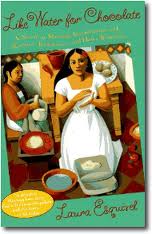
Original Cover for hardcover and tradeFor example, Like Water for Chocolate  was published in 1989 by first-time Mexican novelist Laura Esquivel. This book is an independent choice in grade 10, and there are several trade paperback versions available.

The book’s original cover is a lovely tribute to Diego Rivera; a lovely turquoise border frames a painting of a two women preparing food in a kitchen. One woman sits stirring in a bowl on the left side of the painting; the central figure is dressed in white wistfully stares out to the reader as she molds a tortilla.

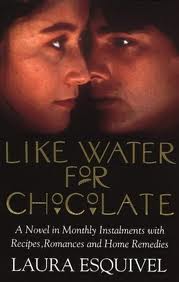
Cover with movie tie-in

The novel follows the story of a young girl named Tita is unable to marry Pedro, the man she loves, because a family tradition which requires her to care for her mother until the day she dies. The book is organized recipe by recipe, each marking Tita’s longing for Pedro. As Tita expresses herself when she cooks, the foods are bewitched with her emotions.

The movie tie-in cover for Like Water for Chocolate is not as charming. There is a close-up photo of Lumi Cavazos (Tita) and Marco Leonardi (Pedro) staring past each other; the effect is rather unsettling rather than engaging.

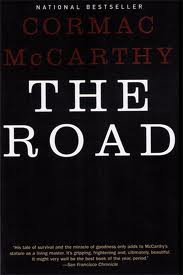
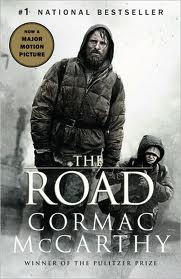
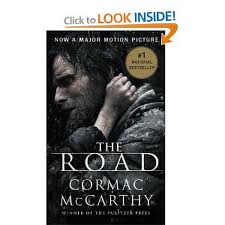
Likewise, the post-apocalyptic novel The Road by Cormac McCarthy, published in 2006, also has several cover versions. We teach this book in Grade 11. The original design is distinctive and bold with McCarthy’s name (brown ink) and title of the book (white ink) printed large across the front; there are no illustrations. This dramatic choice impresses the reader of both the book’s importance and the starkness of the world contained within. A father and his young son travel down through the Eastern states of a destroyed America. The environment has been destroyed, society has been destroyed, but the man and the boy struggle on maintaining a last hope for humankind. Their relationship, one of tenderness and compassion, is in sharp contrast to the nightmarish future McCarthy creates.

The film The Road was released in 2009 and the trade book movie tie-in cover depicts a weary Viggo Mortensen (the man) and Kodi Smit-McPhee (the boy) trudging down a road against a grey landscape. The mass-market tie-in is even worse with a close up profile of a filthy and distressed Mortensen. Both movie-tie in covers are commercial attempts to capture the book’s hostile setting and compassionate relationship between father and son.

The original bold cover for hardcovers and trade paperbacks in 2006

The trade paperback movie tie-in

The mass-market movie tie-in cover

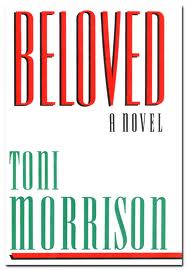
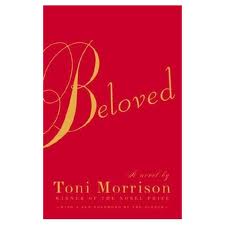
However, there are some movie-tie in covers which are more suited for the material within. The covers for the novel Beloved by Nobel prize-winning author Toni Morrison have undergone multiple transformations, which is confusing at first to many of my Advanced Placement students who may have one of several copies. The 1987 release simply has the title across the cover. This release was an over-sized trade that does not stack well with other books.

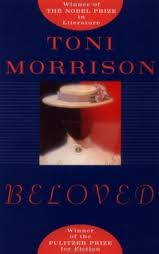
Then, there were two paperback covers (1988 and 1994) that shared the same image of a faceless woman in a hat centered on the front.  This design more artistically captured a central theme in the novel. When the book was chosen by Oprah for her book club, the book was released again with a red cover and the word Beloved in gold script across the cover.

1987 Paperback Cover

1988 Paperback cover was similar to this cover in 1994

2004 Paperback cover

Of these three designs, the most appropriate cover was the faceless woman whose ghostly image alludes to the character of Beloved, a child murdered in order to prevent her return to slavery. Opening in a post Civil War South, the main character Sethe confronts the ghosts and people from her past, and the evils of slavery are described in painful detail.

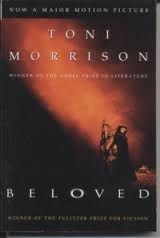
Beloved Movie-tie in paperback cover

The movie-tie paperback cover for the film Beloved (1998) is far more dramatic; the actress Thandie Newton is pictured in side profile, back arched, against distorted tree branch. The result is dramatic without focusing on the film’s actress; this cover is not a blatant movie tie-in.

I rarely buy these movie-tie in paperbacks for two reasons. The art design usually features the actor or actress and not the elements of the story, and these covers immediately alert students that there is a film to watch rather than a book to read! However, the contrast in covers is an interesting lesson for students, and I have asked them which cover they prefer. Can they judge the book by its cover?

Southington Goodwill Store book haul....16 quality texts for $33.33!

Traveling back from an afternoon in Massachusetts, I stopped for quick break at exit 32 on I-84 (Queen Street) in Connecticut. Lucky for me, I noticed the Southington Goodwill Store store. In ten minutes, I collected a bagful of titles worth bringing back to school.

This Easter Seals Goodwill Industries store opened in January 2006 with 8100 square feet of space. According to the website, the mission of the store is to “to enhance employment, educational, social and recreational opportunities for people with disabilities and other challenges in the greater New Haven area.”

The prices for the books at this location were a little more expensive than the $1.00 or $2.00  books at the Goodwill Stores in Danbury, Brookfield, and New Milford. Maybe the Easter Seals affiliation has a different pricing criteria? Books here were marked $2.99, $1.99 or .99. These prices are still far below retail, and there were many bargains I left on the shelves for others to find. The organization of the books was excellent at this location.  Titles were correctly placed in genres (non-fiction, fiction, children’s literature, cookbooks, etc) and the quality of the books was very good.

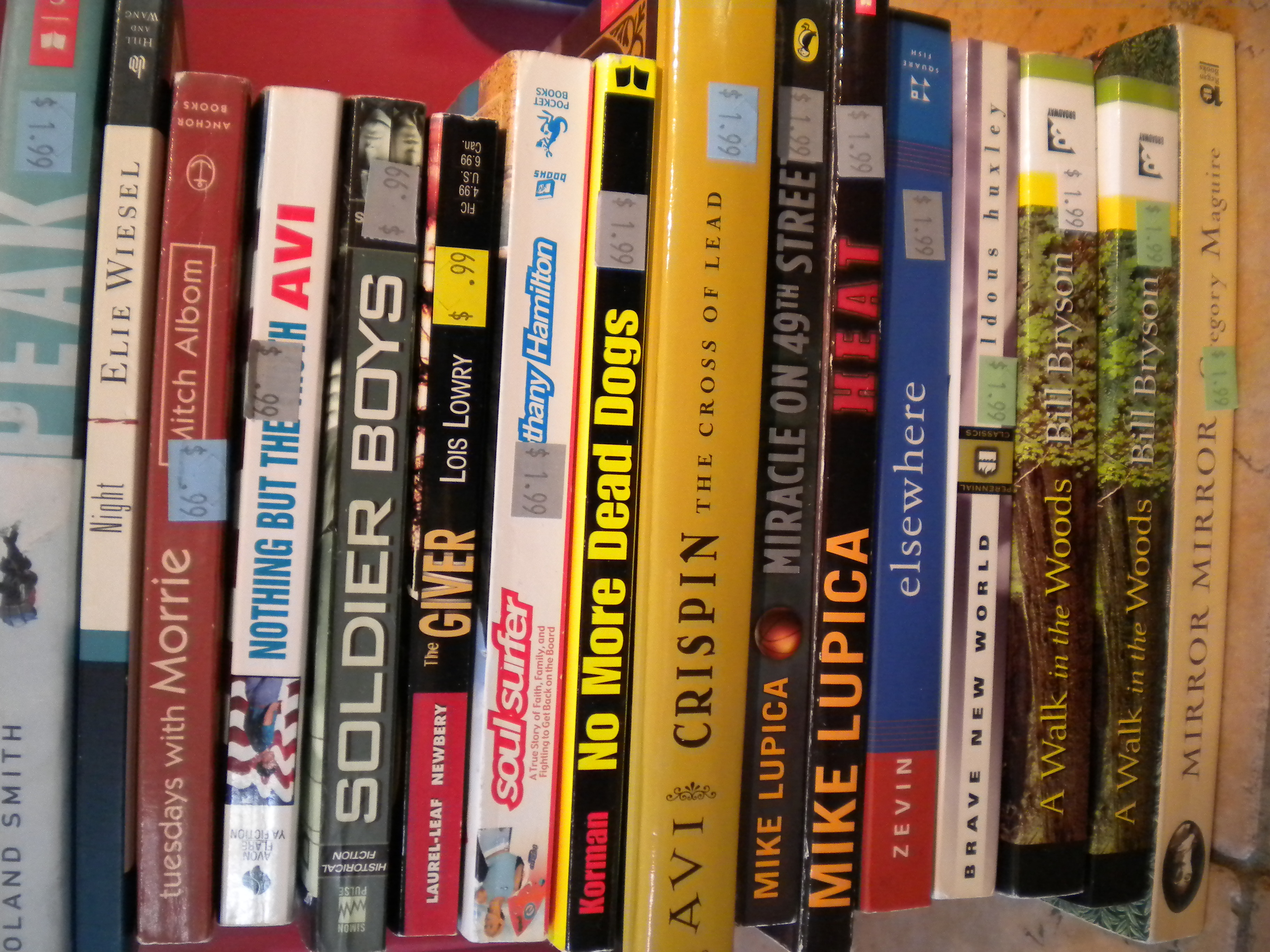
I located five core texts: The Giver by Lois Lowery, No More Dead Dogs by Gordon Korman (Grade 7), Nothing but the Truth by Avi (grade 8), Night by Elie Wiesel and an edition of Brave New World (grade 10) by Aldous Huxley that matches our collection.

I also located a copy of Soldier Boys by Dean Hughes for our War and Conflict unit and two copies of A Walk in the Woods by Bill Bryson for our junior year Adventure unit or Transcendentalism study and a copy of Tuesdays with Morrie by Mitch Albom for Coming of Age. Soul Surfer by Bethany Hamilton, Peak by Roland Smith and two texts by Mike Lupica, Miracle on 49th Street and Heat, can be placed in literature circles for grade 7.  Mirror, Mirror by Gregory Maguire, and Elsewhere by Gabrielle Zevin (we now have four copies) will go into 9th grade independent choice. Finally, I am looking to include a historical fiction unit in middle school; Crispin: The Cross of Lead by Avi is a possible choice.

While I was on the webite for the Southington, CT store, I noted that Goodwill sells books on Amazon under the heading of Ivy League Books. The proceeds from sales on this site “help Easter Seals Goodwill Industries to enhance employment, educational, social and recreational opportunities for people with disabilities and other challenges.” Visit books.ctgoodwill.org to see a list of  available titles.

The Easter Seals branch of Goodwill Industries also “owns and operates 11 secondhand retail stores and 1 outlet throughout south-central and eastern Connecticut. All proceeds from store sales directly support the mission of Easter Seals Goodwill Industries. The stores also provide employment to Easter Seals Goodwill Industries’ clients with disabilities and other special needs.”

I am always pleased to shop at Goodwill. The budget for my department is stretched even farther with great bargains, and all proceeds help a worthy organization. I will make sure that Queen Street in a regular place for me to take a break on 1-84 because shopping at the Southington Goodwill location was a win-win!

There is not enough non-fiction reading assigned in high schools. There are textbooks and fiction, which is mostly assigned by English Departments, but there is a dearth of good non-fiction texts offered to students. However, there is one safe text to assign, Bill Bryson’s A Walk in the Woods first published in 1998.

The book chronicles Bryson’s attempts to walk the Appalachian Trail (2181 miles) which runs from Georgia to Maine with a friend “Stephen Katz” (according to Wikipedia , a pseudonym for Matthew Angerer). The book is informative, easy to read, and incredibly funny.  Bryson’s ability to move fluidly between the history of the trail and the encounters he has with people and animals makes the book very accessible to all readers.  Students make connections from the book to a wide variety of topics: geography, ecology, psychology and animal science. More importantly, the book can be added to different English Department curriculum units of adventure or memoir or the American Transcendental Movements.

A favorite non-fiction text for high school students

In preparing for the hike, Bryson discusses all the possible dangers, none of which seem more frightening than bear attacks:

“Imagine, if you will,” he writes, “lying in the dark in a little tent nothing but a few microns of trembling nylon between you and the chill night air listening to a 400-pound bear moving around your campsite. Imagine its quiet grunts and mysterious snufflings, the clatter of upended cookware, and sounds of moist gnawings, the pad of its feet and the the heaviness of its breath, the singing brush of its haunch along your tent side. Imagine the hot flood of adrenaline, that unwelcome tingle in the back of your arms, at the sudden rough bump of its snout against the foot of your tent, the alarming wide wobble of your frail shell as it roots through your backpack that you left casually propped by the entrance-with, you suddenly recall, a Snickers in the pouch. Bears adore Snickers.”

When Bryson’s friend Katz asks to join him on the trip, they agree to do a three day practice run, and Bryson happily realizes, “I would not have to do this on my own!” Katz flies in arriving at the airport carrying a 75-pound green army surplus bag; “Snickers,” he [Katz] explained, “lots and lots of Snickers.” Hilarious.

The book has had great success in the adult market, and there are always copies in the secondary market in one of three forms: hardcover, trade and mass-market paperbacks. I initially started collecting all three types in order to have enough copies for all students, but now I limit purchases to the trade copy which retails at Amazon for $9.59. We now have 54 copies which would cost $581.56 retail; our cost $55 dollars, a savings of $462.86.

I have also collected a dozen copies of Bryson’s other book, I’m a Stranger Here MyselfNotes on Returning to America After 20 Years Away published in 2000, which has the same humorous observations and interesting facts for students who might want to continue with this author. I only find the trade paperback copies in the used book market that are available retail at Amazon for $10.87. I have spent $12.00 instead of $130.44, but only one student has been tempted so far.

Bryson only covers about 500 miles of the Appalachian Trail, reasoning that amount of hiking was sufficient for him to understand the enormity of his goal. In undertaking this journey he brings all readers to an new appreciation for our nation’s East Coast geography and ecology. Students do enjoy his writing style and his running commentary on current ecological challenges along the trail. And he is very, very funny.

As I anticipated, The Westport Book Sale offered the variety of texts I need to create the “book flood” in my classrooms. After two hours of “grazing” through three tents of books, I had another 10 bags of books to add to the department’s collections for grades 7-12. A quick breakdown of titles included:

Adding to mystery unit

Grades 7 & 8: Copies of The Giver by Lois Lowrey (6) , The Schwa Was Here by Neil Shusterman (2), and Stargirl by Jerry Spinelli (4).  All these are core texts. I also found a copy of the London Eye Mystery by Siobhan Dowd which is a great mystery for this age level. I am considering getting a set of 20 to add to our 8th grade mystery unit, but I would like some student feedback first.

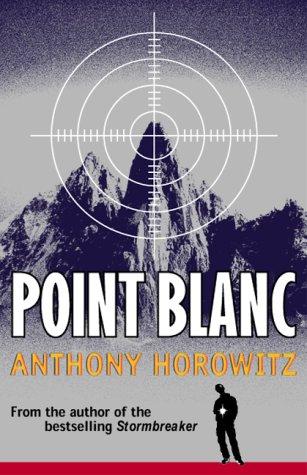
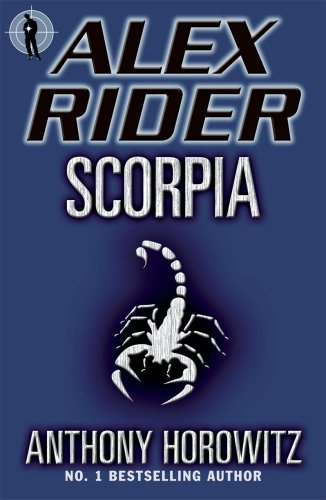
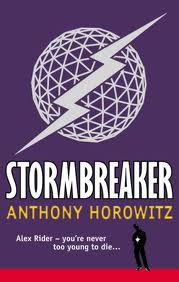
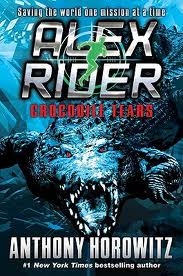
Grade 9: The curriculum for 9th grade is centered around independent reading and choice, but there are units devoted to Greek/Roman Mythology and Anglo-Saxon legends such as King Arthur. I did find a dozen assorted copies of The Lightning Thief, The Sea of Monsters and The Titan’s Curse all by Rick Riordan. While these books are a little below 9th grade level, they dovetail very nicely into the mythology units, and students who may have missed these books in middle school can now make connections to the gods and goddesses of ancient cultures. I also picked up a bagful (20+!) of Anthony Horowitz books: Point Blanc, Scorpia, Crocodile Tears, and Stormbreaker. Thank you to those avid Alex Rider fans!

Grade 10: Night by Elie Wiesel is a core text, as it is in most high schools, and I picked up 11 copies of this memoir. I added 14 almost new copies of Khaled Hosseini’s  The Kite Runner; we almost have 100 copies now for this core text for world literature.

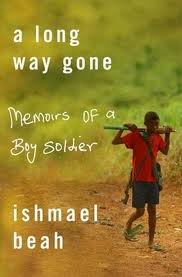
A popular text for 10th grade boys

I found five copies of A Long Way Gone: Memoir of a Boy Soldier by Ishmael Beah.Many of my sophomore students, mostly boys, read this book as an independent read. When I asked them what was good about this book, several indicated the pace and action kept their interest. Perhaps the most important testimony came from a student who said the worst part of the book was, “that what happened to Ishmael was real.” Savings on this text ($7.20/paperback) alone was $31.00.

Grade 11: I found two brand new copies of Bury My Heart at Wounded Knee by Dee Brown. I was pleased to see this book re-released and I am planning on adding a few more copies to the Native American unit that starts the year. To complement this non-fiction classic, I located four copies of Michael Dorris’s Yellow Raft in Blue Water, a more contemporary view on Native American life.

Adding this to Memoir class

Adding this to Memoir class

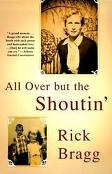
Grade 12: The Memoir class is the easiest to find books for independent reading. I found two copies of It’s all over but the Shoutin‘ by Rick Bragg which came highly recommended. I also located more copies of Alice Sebold’s Lucky which is very popular with my female students. After today, I now have enough copies (50+) of our core text of The Glass Castle by Jeanette Walls, so other buyers will not have any more competition from me.

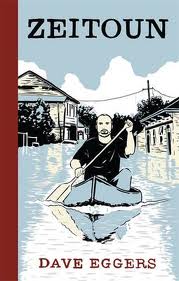
Will be a core Text in Journalism

I found one copy of Dave Egger’s Zeitoun which will be a core text for Journalism in 2011. This amazing story follows Abdulrahman Zeitoun, a successful Syrian-born painting contractor, who stays in New Orleans after Hurricane Katrina. Eggers recounts Zeitoun’s journey through the city in acts of heroism, compassion, and tragedy in a riveting narrative. This text is always a “find” for me.

Other: I found five copies of Dava Sorbel’s Longitude, which I plan to share with some science class….not sure who will be the lucky group? The gentleman who tallied up my large order (Thank you, Dick L.?) asked if he could have the sixth copy I had found. I would have happily paid for that copy based on his service; tallying ten bags of books is serious work, but he was happy to have a copy to purchase on his own to give to his grandson. For the psychology teacher, I collected four copies of Deborah Tannen’s You Just Don’t Understand, and for social studies department, I located five copies of Founding Brothers by Joseph Ellis.

There was something for every reader at this book sale. The efficiency of the volunteers re-stacking the tables (always appreciated)  and those working the cashier’s tables made for a smooth event. The chairman of the sale, Mimi Greenlee, and her team of volunteers are to be credited for their efforts. Book dealer “return” bins, well-marked  sections for literary genres, and an express lane for smaller orders made the sale run efficiently. A tent full of Children’s Literature separated from the other genres this year was also appreciated; my biggest competitor here was an eleven year old girl with an armful of paperbacks, which is always a wonderful sight for a teacher.

Total cost for 10 bags of QUALITY TEXTS? $306.00 Several of these books retail for substantially more than $10.00 copy; I figure that my retail cost would have been over $3,000.00.

I felt like Julius Caesar: I came, I choose, I conquered!