Archives For November 30, 1999

Books read in Grade 9-Three core texts and lots of student selected reading

The Simpson’s creator Matt Groening is a great satirist. In one episode in an exchange between the cartoon character Lisa Simpson and her Grandmother, he also demonstrates his ability to be a great literary critic:

Grandma Simpson: Don’t be bashful. When I was your age, kids made fun of me because I read at the 9th grade level.
Lisa: Me too!
Grandma Simpson: Although I hardly consider A Separate Peace the ninth-grade level.
Lisa: Yeah, more like preschool.
Grandma Simpson: I hate John Knowles.
Lisa: Me too.

I value Lisa Simpson’s opinion on literature, after all, this is a character who has been seen clutching copies of  The Bell JarEthan FromeMan and SupermanThe Corrections, and the more age appropriate Pippi Longstocking. So when she says she hates John Knowles, I feel validated. I have always disliked John Knowles’s A Separate Peace.
However, there are others who call this same book  “A masterpiece”(National Review) or ” deeply felt and beautifully written” (The Observer) or “Intense, mesmerizing, and compelling” (School Library Journal). The English Language Arts Common Core State Standards gives its recommendation since the novel has been, “Hailed as a literary masterpiece,” and that ” A Separate Peace is a classic novel with numerous teaching resources available.” The CCSS analysis of the text complexity reads:
“When considering the qualitative measures and the reader-task considerations, this novel is well placed at the 9th-10th grade complexity band. The complex themes, use of first person narrative—but with multiple flash backs and flash forward indicate higher level reading skills are needed by the reader. The Common Core Standards Text Exemplars also place the novel in the 9th -10th grade complexity band.”
 In a  2004 study titled A SeparatePeace:Four Decades of Critical ResponseLois Rauch Gibson writes:

“Rejected at first by American publishers, John Knowles’ A SeparatePeace appeared in England in 1959, where critics admiringly compared it to Salinger’s writings. American critics, responding in 1960 to the American edition, generally noted its depth, sensitivity, and ‘disturbing allegories'(Aitken 754). They did not entirely agree about what the allegories might be, nor have the four decades of critics since.”

I would argue there are no allegories in this short story “Phineas” that was expanded (unnecessarily) by Knowles into a full length novel. This is a fairly straightforward story of young white males at an exclusive prep school and their conflicts and competition during a last summer before entering the very grown up world of competition and World War II. I found the story dated when I read it in 1973, but Gibson felt the novel could  speak to today’s readers:

“As we approach the forty-fifth anniversary of the American edition of A Separate Peace,in a world where the all-male, all-white prep school environment has become exceedingly rare, John Knowles’ novel nonetheless continues to speak to adolescents. Once we fought wars against fascism, then against communism, now against terrorism. Before this background, teenagers attend school, bond with peers, lose their innocence, encounter hate and ignorance and what Knowles calls blind impulses; and each one inevitably struggles to develop an identity-sexual and otherwise. As the world continues to change, no doubt the next four decades of critics will have much to say about this resilient and compelling novel.”

I have always considered A Separate Peace to be the poorer literary cousin to J.D. Salinger’s 1951 classic Catcher in the Rye. Unfortunately, I like A Separate Peace’s  Gene less than I like the deluded Holden from Catcher in the Rye, and I like the object of Gene’s angst, Phineas or Finny, even less. This is a critical problem in the novel according to Slate Magazine’s Dec 2009 review The Secret of A Separate Peace by Stephen Metcalf:

“We do not love Phineas as Gene does. His charm for Gene exceeds his charm for us. The less we are seduced by Phineas, the more we experience him not as an Apollonian boy-god lacking the normal ratio of ill-character but as a love object for Gene, and Gene alone.”
I remember reading the climatic moment of the novel, when Gene reflects back on the accident in the tree:
 “He [Phineas/Finny] had never been jealous of me for a second. Now I knew that there never was and never could have been any rivalry between us. I was not of the same quality as he. I couldn’t stand this. . . . Holding firmly to the trunk, I took a step toward him, and then my knees bent and I jounced the limb. Finny, his balance gone, swung his head around to look at me for an instant with extreme interest, and then he tumbled sideways, broke through the little branches below and hit the bank with a sickening, unnatural thud. It was the first clumsy physical action I had ever seen him make. With unthinking sureness I moved out on the limb and jumped into the river, every trace of my fear of this forgotten.”
“What the heck?” I distinctly remember thinking, “He intentionally caused him to fall! What kind of friend is that?” He lost me at “forgotten.” I considered the final “apology” of the novel a fraud:
“I never killed anybody and I never developed an intense level of hatred for the enemy. Because my war ended before I ever put on a uniform; I was on active duty all my time at school; I killed my enemy there. Only Phineas never was afraid, only Phineas never hated anyone.”
It’s a lie. Gene was responsible (indirectly) for the death of Phineas, and in this statement he is contradictory about killing his “enemy.” Apologetically glorifying Phineas at the end is probably meant to be sincere, but to me the conclusion reeks of Freudian dishonesty. Gene could never really know Phineas, so he destroyed him and then made him a god.
 Still, our 9th grade honors classes read A Separate Peace.
When I asked the teacher why she replied casually, “Well, they can read it in a weekend. They like it.”
“Do you do any real lessons with it?” I pressed her.
“No. They generally get it.”
“Get what?”
“Friendship, betrayal. Teenage angst.”
Ah, yes. A Separate Peace is awash in teenage angst. So is high school, which probably is the reason the book remains in the high school canon. That and the accumulated hundreds of copies available in English Department libraries. Of course, this wallowing in the imposed angst of teenagers reminds me of another brilliant Matt Groening observation, this time provided by Lisa’s brother Bart. Heading into an alternative rock and roll concert, Bart is heard commenting, “Lisa, making teenagers depressed is like shooting fish in a barrel.” Which explains why Lisa hates John Knowles.
Me too.

Shhhhh….We’ve been very, very quiet in grade 9 this year with our Silent Sustained Reading (SSR) academic experiment in the college prep 9th grade class. 77 students were asked to read a minimum of eight (8)  independent reading books of their choice as part of the curriculum, and to facilitate reading, students were provided 20 minutes twice a week (40 mins total/week) of SSR.  Responses to the independent books were recorded later on blogs or presented in class.

The inclusion of independent student choice texts with the time made available for SSR meant a reduction in the number of whole class reads; four texts remained in the curriculum: Romeo and Juliet, Of Mice and Men, Speak, and selections from The Odyssey. Classroom libraries were augmented with high interest texts (used books in class) with support from the school library and Overdrive software to allow for a wide selection by students.

So, what were the results? At the beginning of the school year, students took a survey based on questions suggested in Kelly Gallagher’s Readicide. This week, (June 2012) the same students retook the same survey. In order to account for percentage differences in attendance and enrollments, results were also checked using a t-test calculator to determine statistical significance. While there was only little change in students viewing reading as “fun” or “easy,” 57% to 59% or a 2% increase in the affirmative, the other data gathered from the survey indicates a positive shift in the attitude of our students towards themselves as better readers coupled with an increase in time spent reading  outside of class.

According to our September survey, 39% of our students rated themselves as “good” readers, 42% rated themselves as “average” readers, and 21% rated themselves as “poor” readers. The difference in June was very statistically significant (t-test) with 66% of students rating themselves as good readers; 30% of students rating themselves as average readers, and only 8% of students rating themselves as poor readers.

Responding to the prompt “I read independently every day and look forward to my reading time” in September;  9% of students responded “usually”, 35 % of students responded “sometimes”, and 56% of students responded “rarely”. However, by June, the difference in student attitudes her was also very statistically significant (t-test) with 19% of students responding “usually” (up 10%),  53% of students responding “sometimes” (up 21%), and 33% responding “rarely” (down 23%).

Finally, not only did the SSR program did increase the number of books read  by students for class, students indicated (very statistically significant) that they increased the number of additional independent books they read over the course of the year. Students reading no addditional books dropped from 32% to 11% while students reading 1-2 books increased from 52% to 58%, students reading  3-4 books increased from 13% to 22%, and students reading over 4 books increased from 3% to 8%.  These numbers complemented the finding of students who increased their overall “not for school reading/reading for pleasure” for 60 minutes or more (5%), for 30-60 minutes (17%) , and for 30 minutes or less (17%). The number of students who admitted to doing no additional reading dropped from 22% to 15%.

So what are the implications of this data? There are numerous studies that support independent reading for academic achievement. Students who read independently may also have an advantage as adults in the workplace. Author Stephen D. Krashen writes in The Power of Reading:

What the research tells me [about SSR] is that when children or less literate adults start reading for pleasure… good things will happen. Their reading comprehension will improve, and they will find difficult, academic-style texts easier to read. Their writing style will improve, and they will be better able to write prose in a style that is acceptable to schools, business, and the scientific community. Their vocabulary will improve, and their spelling and control of grammar will improve.

Additionally, high school is not too late to start an SSR program. Author  Steven Gardiner defended the practice when he  responded to questions about his book Building Student Literacy Through Sustained Silent Reading and discussed the use of SSR at the high school level:

On more than one occasion, I’ve started class by simply reading aloud. I didn’t explain what I was doing or why, I just started reading. They may be 15 or 17 years old, but they quickly get quiet and listen, trying to understand what is going to happen next, just like youngsters in story hour. They aren’t too old for reading aloud, and they aren’t too old for SSR. Most students are grateful for the time. When I look at changes in modern society, I understand why.

So do I. Our students occupy a digitally distracting universe: tweeting, texting, tethered to some instant communication that generates a almost compulsive nervous response. Carving out time, 10-20 minutes a class, for quiet SSR is necessary for students who need to focus when they read. Sadly, this may be the only time during a day when students read.

The significance of our efforts to increase our students’ independent and voluntary reading is addressed in the 2007 NEA report To Read or Not To Read: A Question of National Consequence:

Voluntary reading involves personal choice, reading widely from a variety of sources, and choosing what one reads. Aliterates, people who have the ability toread but choose not to, miss just as much as those who cannot read at all. Individuals read to live life to its fullest, to earn a living, to understand what is going on in the world, and to benefit from the accumulated knowledge of civilization. Even the benefits of democracy, and the capacity to govern ourselves successfully, depend on reading.

Our practice of  good reading habits,  SSR provided twice weekly with student selected texts, can lead to improved attitudes towards reading, and we now have the data to prove that one academic year of SSR has improved our 9th grade student attitudes towards reading. SSR will be included as an important part of our literacy efforts at other grade levels as well.

When I asked a question in class this year, I had to directly address a student: “Christina, what do you think….” or “Patrick, how does…”. I could not just toss out a question to the entire class. In fact, if I failed to individualize the Socratic method, the result was a chorus of dissonance, a cacophony of responses, a gabble of student voices directed towards no particular audience.  I also noted this year that a great number of students would reason aloud rather than think  before speaking.  This year my students did not discuss as much as transmit. What I was hearing was the  sound of student voices broadcasting as individual program streams. I needed to train my students in the art of discussion, when to contribute to conversation, and how to share communal air time.

I wondered how to account for this phenomenon and concluded my students had an “I” problem. They are the “I” tech pioneers students who grew up with multiple digital devices marketed to that 1st person singular pronoun.

Consider that the I-pod was released to the public on November 10, 2001. My 9th grade students who have proven incapable of clicking into a shared conversational stream were two or three years old at that time. My students have grown up listening to a self-selected soundtrack piped through earphones singularly and directly into their ears. They have had complete control over each musical track all of their lives. There has been no “B” side option to their playlist.

My students have been able to control all other forms of media as well, choosing to watch video content commercial-free selected  from multiple streaming websites. They watch TV shows from any  number of platforms (Hulu, Netflix, Amazon), yet few admit to watching TV during regular broadcasting on a TV screen at all.  They design their own video channels or post their own videos online. Pronoun marketing abounds for this generation: YouTube’s use of the 2nd person singular has been an invitation for them to post their content since they were 8-11 years old. How individualized my students’ experiences are from the collective experiences of their elder siblings, their parents, and their grandparents.

They have “friends” they have never met, they play games against people without regards to age or gender, and they cannibalize photos and files from other sources to create “personal” websites. They were 6-9 years old when My Space came online; now they now have a plethora of choices: Facebook, Tumblr, Pinterest, etc.

Yet, for all of their posting and tweeting, they are still communication-impaired. They have difficulty in developing or engaging in a discussion in class. Of course, students in previous years have required guidance on class discussion rules, but this past year was substantively different.  I believe all of this “I”-serving technology has led an increase in personalized content but a decline in knowing how to share “we”-time.

By way of contrast, I am a child of AM radio. I was one pair of the million ears that heard the DJ chatter of Harry Harrison or Cousin Bruce Morrow. I grew up to a prescribed soundtrack that would reverberate in pop record synchronicity on city streets, sidewalks, parks and beaches. In 1970 the air pulsed hourly with The Carpenters Close to You even though I hated the song. I was part of a collective experience whether I wanted that experience or not. I am a child of network television who remembers when one evening’s broadcast of Ed Sullivan or Walter Cronkite would be the following week’s discussion.  I played with peers I could touch; I could see my friends. We talked in person, and we had long extensive conversations. I was in an environment that conditioned me to wait my turn and share my time. I knew I was in a collective, and for good or for bad, I was connected but “unconnected.”

So when I read Sherry Turkle’s opinion piece “The Flight from Conversation” in the NYTimes on Sunday, April 12, 2012, I saw one line that described a symptom I recognize in my students, “A 16-year-old boy who relies on texting for almost everything says almost wistfully, ‘Someday, someday, but certainly not now, I’d like to learn how to have a conversation.’

 In the piece, Turkle describes how an increasing reliance on technology reflects the “I” centered experience:
“We want to customize our lives. We want to move in and out of where we are because the thing we value most is control over where we focus our attention. We have gotten used to the idea of being in a tribe of one, loyal to our own party.”

The daily environment for the “tribes of one”, my students,  in and out of school is filled with digitally enhanced communication, but there is little serious conversation.  My students have few opportunities outside of the classroom to practice the art of discussion without a digital device in hand. So I have been taking “baby steps” in the classroom by first asking them to respond to each other.

“Do you agree with Mackenzie?” ”
“Can you add to what Matt said?”
“Please restate what Breanne said.”

There are popsicle sticks with each name to insure I have each member of the class speak during the day. On some questions,  I also ask them to pause 30 seconds before responding and remind them they are graded on not only what they say but by the attention they give to others. These techniques have helped control the immediate response impulse- the noisy nonsense of 25 incomplete thoughts spark-plugging aloud in the room. Only recently, however, have  I asked them to look at each other when they respond. The first three exchanges were awkward, but Nick’s full on attention to Logan was so comical that  “making eye contact” became fun. I hope that continuing eye contact will help the interchange of ideas which is the basis for conversation.

Turkle’s concern is that, “We are tempted to think that our little ‘sips’ of online connection add up to a big gulp of real conversation. But they don’t. E-mail, Twitter, Facebook, all of these have their places — in politics, commerce, romance and friendship. But no matter how valuable, they do not substitute for conversation.”

I agree with Turkle and recognize that teaching the “I” generation requires changing the way we, teachers and students, communicate in the classroom. Successful participation in conversation and discussion are the critical skills students need to counterbalance the social media that Turkle says continually asks us what’s “on our mind,” but allows us  “little motivation to say something truly self-reflective.” Our students need to move from the digital ease of self-expression to a stage of self-reflection in order to demonstrate understanding and to share that understanding with others. To insure all student have these skills, the recently adopted Common Core Standards in English Language Arts will require teachers to improve the speaking and listening skills from K-12 grades. For example, requirements for grades 9 and 10:

CCSS  SL.9-10.1.Propel conversations by posing and responding to questions that relate the current discussion to broader themes or larger ideas; actively incorporate others into the discussion; and clarify, verify, or challenge ideas and conclusions.

Our students cannot continue the experience of dancing solo to the selected soundtrack of their own “I”-device in the classroom without learning how to either share that experience with others or reflect on how that experience defines them. Educators need to teach all students that they should appreciate the many ways we now communicate but learn to recognize that the limitations “I” center devices have in communicating. We need to encourage those who are like Turkle’s 16 year old student example,  a student who wants “someday”to participate in conversation “but, certainly not now,” to see themselves as social beings.They must learn that their use of technology’s social media can not replace the in-person interaction that happens in social and academic conversation. They need to practice the act of conversation now rather than “someday,” and the classroom is a great starting place. Oh, and we need to remind everyone  to make eye contact.

While my freshmen students knew Romeo and Juliet is a tragedy, the details on the relationship of the “star-crossed lovers” were a little fuzzy.  Romeo and Juliet is often a student’s first introduction to Shakespeare for not so surprising reasons. The characters Romeo and Juliet  are young-she is 13 years old. They are in love. Their families stand in the way of their love. They must meet in secret. They defy the authority of their parents. Many of these elements appealed to my 9th grade students. But there were surprises everyday when we performed scenes from the play in class.

The biggest surprise for me was the willingness of my students to take on the difficult meter and vocabulary of Shakespeare in order to play one of the parts in the play. Hands would go up, “I want to be Mercutio!” or “Can I be the Messenger?” and “Can’t a guy play the Nurse?”

Of course, they were almost always terrible. Shakespeare’s verse is difficult to read “cold”.

Billy stumbled but persisted in his reading Benvolio’s  lines while we patiently waited:

The fiery Tybalt, with his sword prepared,
Which, as he breathed defiance to my ears,
He swung about his head and cut the winds,
Who nothing hurt withal hiss’d him in scorn.

Each of the students stumbled over the strange vocabulary: prolixity, holp, God gi’ god-den, tetchy, sirrah, obsequy. Matthew wondered aloud why Capulet is always saying, “What? ho!” Michael regularly referred to the language of the play as Old English; he would not be convinced otherwise.

When we turned the page to Act Two, scene 3,  I saw Logan take big breath, visibly steeling himself to read Friar Lawrence’s lengthy speech. In Act Three Scene 5,  completely unaware of pace and more interested in finishing the scene before the bell rang, Malia raced through the Nurse’s teasing of Juliet. Not one of them (thankfully) really understood the allusions in Mercutio’s “Queen Mab” speech in Act One scene 5. Yet, everyday they entered the classroom asking, “Are we acting out the play today?”

We played the balcony scene three times in the large hallway on the stairs to the auditorium’s upper level seating. Students paired up to read a reduced script, so several Juliets had the chance to meet their Romeos that class period. Back in the classroom, I played the soundtrack to the Zefferelli film (“A Time for Us”) during Act Three scene 5 as Alexa asked her Romeo:

Wilt thou be gone? it is not yet near day:
It was the nightingale, and not the lark,

They memorized the Prologue; they wrote haikus to summarize each act to review the action of the play:

Act I:
Annoying Prologue
Romeo met Juliet,
Romeo loves her

Act II:
Balcony kisses,
They are married secretly,
The nurse keeps it quiet

Act III:
Tybalt is now dead,
Romeo must run away,
Juliet is scared

Act IV:
Juliet fakes death
Capulets are deeply hurt
Marriage is off

Act Five began last week, and the students were following the complicated plans of  Friar Lawrence and making predictions as to the plan’s success. There was a brief discussion about what an apothecary was in Shakespeare’s time, and the actual distance from Verona to Mantua, Italy. It was obvious, they all wanted the plan to work.

Then, Nick as Romeo entered Juliet’s “tomb” and  several lines later, he stepped over Chase who lay on the floor, slain as Paris.  Nick began his soliloquy with great seriousness. Holding the  dry erase marker, our stage prop for the vial, high in one hand, he read the verse aloud, “Here’s to my love! O true apothecary!/Thy drugs are quick.” He dramatically uncorked the marker, and then “drank”.  He gasped, ” Thus, with a kiss,” he leaned down to the sleeping Juliet, and quietly said,” I die.” Staggering, he fell to the ground.

Several students following along in the text, started and then sat in a palpable stunned realization.“He dies?”

“But Juliet’s still alive!”started as a murmur.

The chorus of voices grew louder. “He’s dead!” “She doesn’t know!”

There was a collective pause, followed by an audible, “This sucks.”

I was surprised. I thought they knew.

The final speech of the play begins, “A glooming peace this morning with it brings”; that speech captured the mood of my students. Of course they understood at some literal level that the play was a tragedy; this fact was clearly stated on the back cover of their text: This is the tragedy of Romeo and Juliet. However, until that moment of Romeo’s willful self-destruction, followed by Juliet’s suicide, my students did not appreciate the  play’s heartbreaking conclusion.

I was surprised by the level of their reaction. Ours was not a polished performance, the staging was clumsy and the actors read the lines without understanding much of what was being said. However, they did feel for the characters, always willing to summarize what had just happened or wanting to give advice. Despite our failures to interpret the language, the result was that the play made them grow up a little.

No one should ever be surprised at the ability of this Shakespeare play-however rudimentary in performance- to engage an audience.

The question started innocently enough. An assignment for a class I am taking offered through The Critical Thinking Community required that I integrate one of the elements of reasoning in a lesson. I chose the element of purpose and decided to ask my 9th grade students what was the purpose of reading a non-fiction essay ,”My Mother”, by Amy Tan. Several students dutifully raised their hands.

To know about her mother?”
“It’s a memory?”
“To remember what her mom said?”

Their responses were predictable and did not sound thoughtful; they sounded like they were guessing. I hate playing “Guess What the Teacher Wants to Hear”, so I shifted the question: “What is the purpose of reading an essay?”

Hesitation. Some disconcerted looks. A few timid hands.

“To read?”
“To understand what’s a good essay?”

I must have looked a little frustrated. “Why are you here?” I demanded.

Blank stares.

“Well, what is the purpose of English class? Why are you here?”

Then it hit me. They really had not given a thought as to why they were in English. I mean, they know what English class is, they have been in English every year they have attended school-nine years to date. They looked perplexed.

“Because, we are forced to come,” said Chris.
“Yes, we have to come,” agreed Mike.

They shifted nervously in their seats.

“That’s not purpose. That’s a result of someone else’s purpose,” I replied.

“To learn….(student voice trails off)…English?”

So, I took the cup of popsicle sticks labeled with each student’s name. “What is the purpose of English Class?” I asked each student after I called out a name. One by one they offered suggestions:

  • “….to learn…how to…write”
  • “…to learn how… to read?”
  • “…to learn about the comma?”
  • “…so we can go to college.”
  • “…to learn what is in a book…characters.”

After each response,  I asked the next student “Do you agree with that reason?” before I asked “What is the purpose of English class?”

As we went around the room, I explained there could be “no repeats“; the responders had to think more critically about what I was asking. Slowly, their responses became more sophisticated. Their responses did not have the sound of a question. They were answering my repeated question as a statement. They began to stir and leaned forward in interest trying to see who could come up with the “answer”.

  • “To learn about how characters are like people”
  • “To experience stories that we cannot really be in”
  • “To read and write about how we are all connected.”
  • “To be able to write so that other people can understand what we are saying and maybe believe what we write.”

They started to raise their hands to adding new ideas to this brainstorming sessions. They wanted to give the correct answer….to stop my interrogation. Honestly,  I did not have an answer. I had no idea where this exercise was going, I was simply letting them critically think about why they came into my class day after day. They were suddenly engaged and eager to answer. At some level, they understood the importance of English class, they just had not thought about the purpose. In defining the purpose, they suddenly understood the purpose of my original question. I went back and asked, “What was the purpose of Amy Tan’s essay?”

  • “She is feeling guilty and she wants to make it up to her mom.”
  • “Her mother was important to her, and now that her mother has dies, she wants to tell others about how they should appreciate their mother.”
  • “Regret is hard, and she is living in regret like so many people who make mistakes when they are young…this is a confession.” 

My spontaneous shift  from asking about an essay to the larger topic  of why they were in English demonstrated how important the element of purpose is  to teaching. My next step will be to have students internalize the question, “What is the purpose of this _______(book, essay, poem, article, assignment, class)?” on their own, every day, semester after semester.

In the courtroom, the saying is “Never ask a question if you don’t know the answer.” But in education, we ask questions as a means to discover the answer. The Critical Thinking Community website states, “We must continually remind ourselves that thinking begins with respect to some content only when questions are generated by both teachers and students. No questions equals no understanding.”

So go ahead and ask, “What’s the purpose of English class?” Get the students thinking.

Our English classrooms have been provided net books to use in class this year, making each classroom  a 1:1 classroom. Teachers have been using these net books for student blogs with seniors, or in responses to literature. The Freshman class was blogging about Of Mice and Men using Google’s Blogger software. The combination of reading with authentic writing was the incentive for one of my New Year’s resolutions in 2012, to improve student blogging beyond the “I like your post” response.

Our 9th grade team blogs are organized across the grade; students from different class periods or with different teachers collaborate as a team on the blog. For this assignment, we developed four journal questions in order to engage the students in discussions related to the universal themes of  Steinbeck’s novel; questions were centered on the ideas of goals, dreams, loneliness, privacy, and companionship. These journals were posted two or three days apart as students read the novel in class during silent sustained reading (SSR) or at home. An audio tape of the book was also available for some students who needed support with reading independently.

In order to begin the discussions, students first needed to post a response to each journal question, then they need to respond to another teammate’s post. Since the goal was to improve student responses to another student’s post, a set of criteria was suggested to help student in their response:

Good Student Response to another student on a blog will be:

  • thoughtful
  • consistently positive
  • respectful

Good Student Response to another student on a blog will also:

  • clearly add to the original discussion (compare, contrast, contribute, ask questions)
  • take advantage of the medium (linking, video, audio)
  • follow the standards of good writing

There were four journal prompts to Of Mice and Men; student responses to another student’s post are below each journal prompt:

Journal One:  What is your hope for life, goal, or even dream?  What do you think you want from the future?  Not the fairytale, but the reality?   What could you live without, dream-wise?  What couldn’t you live without? What matters, what are your priorities?

Patrick, I think your blog is good! It shows that you really want to be stable with your life. That you don’t need big things but you just need the things that make you happy and not stressful. We both don’t want to be stressed out and that’s something that a lot of people don’t want I think!

Sean, I think that my house would be similar to yours. I too would like to live in the woods away from big cities and government. I think it would be great to live in a log cabin style house with a large woodstove too. It would really give off that self dependent feeling, were you would have to chop your own wood, and produce many of your necessities.

Sara, It seems to me that you seem to know what you want to do when you grow up. Well, I have no idea really, so I envy you. I am disappointed to see you would move away from here, I love it here. good luck with all your plans!

Journal Two:  Do you have a pet? a younger sibling or cousin?  If so, describe your feelings and relationship with them.  If not, what do you think it would be like to have them?  How do/would you feel as the one on whom they depend?  How important do you think it is to care for or nuture others?  Do you want to be a mother/father?  Why?  What do you think about the role of parents, brothers, sisters, and family?

Johnny, I think you need to appreciate your sisters a little bit more!! Even though they can be a pain, they’re still always there for you and won’t leave your side.

I am commenting on Regan’s post: She did a very good job, she went into detail about each question such as when she explains how it makes her feel “It makes me feel good when he looks up to me and tries to do stuff that I do because It lets me know that I do have an effect on his life and when he does.” It is simular to mine because our brothers act the same way, she gets along with her brother too and we both have younger brothers.

 I’m commenting on Sara’s…I can definitely relate to when people say they want a sibling and you’re thinking ‘NO WAYYY….’ because they haven’t lived with one their whole life! But I’m also the same way with how I realize that I do have an effect on my little brother’s life and choices… it just wakes you up and helps you make good decisions.
Journal Three:    How important is privacy and space to you?  Can having privacy get too much like being lonely?  What about being with people all the time?  Which is worse, being always with or always without others?  How much alone vs. social time do YOU need?  Why?  When do you most need each (alone/social)?

I agree with you, Zach. Like when I was around mt best friend. We did EVERYTHING together. At first, it didn’t really bother either one of us. We where content always being in each others business. We knew EVERYTHING about each other. And by accident one of us (not saying who), spilled a big secret. That’s why it’s not a good idea to be around the same person ALL the time!

Riley I think your take on privacy is very good. I agree with you about how there are times that you dont want to be around people and if you are it can be annoying and distracting at a time where you’re trying to do your homework. What are some times that you do like being around people? Would you rather be alone or with someone else? Overall, you did a good job, those are just some things you could have included.
Journal Four:  What would you do to avoid losing your dream?  Are dreams easy to replace?  What would life be like if you didn’t have a goal, dream, or hope?  Can others take away your dream or not?
I am responding to Taylor’s blog. I have similar dreams to Taylor’s, how I dream of what I like to do. I dream a lot about going to the beach with my friends. Also I agree with Taylor’s thought of dreams being “easily replaceable”. I think that some dreams are hard to replace if they mean a great deal to you. Other than that dreams come and go very often. I also agree with Taylor that life without goals will not be very boring and you would not have anything to achieve!
 Agreed, Emily. I haven’t really thought about it that way, but after hearing your opinion, I have to say, I agree. If your dream doesn’t come true, it means that your destiny lies somewhere else. Unfortunately, destiny rules over dreams. Just like with Lennie, it wasn’t his destiny to “tend to the rabbits”, he was too strong and dumb to do that.
Ultimately, there has been some improvement in student responses on the blog. Many students wrote thoughtful responses which indicates that they understood that simply praising another writer’s blog was not sufficient. Students did like reading the post responses, however, I was actually surprised how empowered some of the students became and did not anticipate how seriously they would enforce the criteria in the original posts.
The only problem I see here is that you did not describe how you look up to your family… Everything else is very well done. I see no errors in spelling and no errors with how you described the way they acts, but remember to try and stay on topic” 
Your blog was good but it was not 200 words and it needs more detail so you should answer more questions in your blog to make it flow and so you make it longer and to answer the question more clearly.”
One month into the New Year 2012, and the 9th grade students are improving their ability to respond on a blog with something other than “good work!”
I’d say that is “great work”…but I obviously need to improve on my response!

“Chance favors the prepared” in the used book market.

Saturday is my day for running errands which takes me to Brookfield or New Milford, two Northwest Connecticut communities. Each of these towns has a their own Goodwill store located on Route 7, and I make regular stops to their bookshelves of donated books looking to see what has been most recently donated.

This past Saturday morning, I did just that. In fact, I stopped at both stores and purchased a total of 47 books for $41.43. WhenI came home, I noticed that WebEnglish Teacher had posted a link to a website listing the 100 Essential Reads for the Lifelong Learner  organized by Online Schools. These books were organized by discipline: fiction, non-fiction, autobiography/memoir, biography, world literature literary theory, history, political science,science/math/social science. Her question was “How many of these essential books have you read?” I was happy to see some familiar titles on the list, but many were new to me.

I could not help but notice that I had just purchased five of the suggested titles on this list for different classroom libraries that very day! There were other titles on the list available on thrift store shelves that I did not get since our libraries either already had enough copies or the titles are available online in the public domain.  The Online Classroom Essential Reads List is organized so that each title had a designated number, not a rank, and link provided for each book with a short explanation. Some of the links are helpful.

Here is a list of the 5 PURCHASED ESSENTIAL READS and the grade or class that uses them:

35. The Things They Carried by Tim O’Brien. This fictional account of a platoon in Vietnam is based on Tim O’Brien’s experience in the war himself and explores the fear and courage that are necessary to bring one through to the other side.

-This is a text that is used in our Grade 11-American Literature classes. The book is one of the few texts that students will willingly complete; once they finished the first story, they are hooked which is a tribute to O’Brien’s writing style. The prose is artistic but not difficult for even our lowest readers. Our students are curious about Vietnam, a part of history that is chronologically left for those lazy days of June. We use film clips (Platoon, Apocolypse Now, The Deer Hunter) in our unit with this text. We also eat MREs in class, and organize lists as to what each of use “carries.”

43. This Boy’s Life by Tobias Wolff. Wolff recounts his life as a boy and teen struggling with his identity as he lives with his divorced mother and her second husband in the 1950’s.

-This text will go into the English IV elective Memoir. There is a possibility that a 9th grader will choose this as an independent reading book in the non-fiction unit. The narration captures teen angst very well, and could work as a non-fiction companion piece to Catcher in the Rye in Grade 11. If Common Core wants classrooms to integrate more non-fiction, this is an excellent piece to add.

61. The Alchemist by Paulo Coelho. Discover how to find the beauty in life no matter what your experience as you follow the life of a young shepherd who gains so much from his journey of life.

-This book is assigned as summer reading for incoming English II honor students. We require a dialectic journal with 30 quotes from the texts as the summer reading assignment. Despite the burden of writing, students really enjoy this book which allows us to segue from “the journey” archetype taught in Grade 9 to the different types of perspectives in Grade 10 World Literature.

94. Silent Spring by Rachel Carson. Carson’s powerful writing on the topic of environmental justice creates a book that will make the reader think seriously about humanity’s relationship to the Earth.

-I got this book for the environmental studies teacher. So far, I have found five nice copies this past year. She offers this as optional reading to her students, and I think this should be required reading for students interested in pursuing an environmental science…or any science, for that matter.

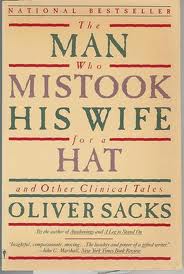
100. The Man Who Mistook His Wife for a Hat by Oliver Sacks. Psychology student or not, this book will appeal to anyone who has an interest in the curious way the mind works–and how it does not work. Several of the most bizarre cases are detailed here.

-I rarely find copies of this book, so finding one in good condition is a score! The psychology/sociology teacher loves to lend this book to her students; they are fascinated by the case studies. I am always excited to find a gently used copy for her to share.

Here is a list of the 10 essential reads I LEFT ON THE SHELVES (and where they are used in our curriculum)

1. The Great Gatsby by F. Scott Fitzgerald.-Grade 11; we have enough copies

12. Heart of Darkness by Joseph Conrad. -AP English Literature; text is in the public domain so students read this online.

14. The Call of the Wild by Jack London.- Grade 9;  text is in the public domain so students read this online.

15. To Kill a Mockingbird by Harper Lee. -Grade 11; we have enough copies

28. The Poisonwood Bible by Barbara Kingsolver.- AP English Literature; we have enough copies

33. Middlesex by Jeffrey Eugenides.- Optional read for Grade 11 Coming of Age unit OR Advanced Placement English

34. Life of Pi by Yann Martel. -Grade 10; We have enough copies

58. One Hundred Years of Solitude by Gabriel Garcia Marquez. AP English Literature; we have enough copies

82. The Elements of Style by William Strunk and E. B. White.- Resource for AP English Language and AP English Literature and Creative Writing

98. The Interpretation of Dreams by Sigmund Freud.-I will need to check with the psychology teacher!

 Both Goodwill stores, Brookfield and New Milford, regularly offer a wide variety of used books, and our classroom libraries are currently well-stocked with titles puchased used for $.50-$2.00.
This past Saturday, the  total cost for the five  “essential” titles I did purchase? $5.18. Getting these essential reads into the hands of our students? Priceless.

The original purpose of this blog was to explain how used books were purchased in order to increase the classroom libraries at Wamogo Middle and High School, grades 7-12. The name of the blog, “Used Books in Class”, was initially chosen to indicate the condition of the texts. The term “used”, however, can also serve to mean how the text are used in class. In other words, how are the used books being used in the English Language Arts Classrooms at each grade level?

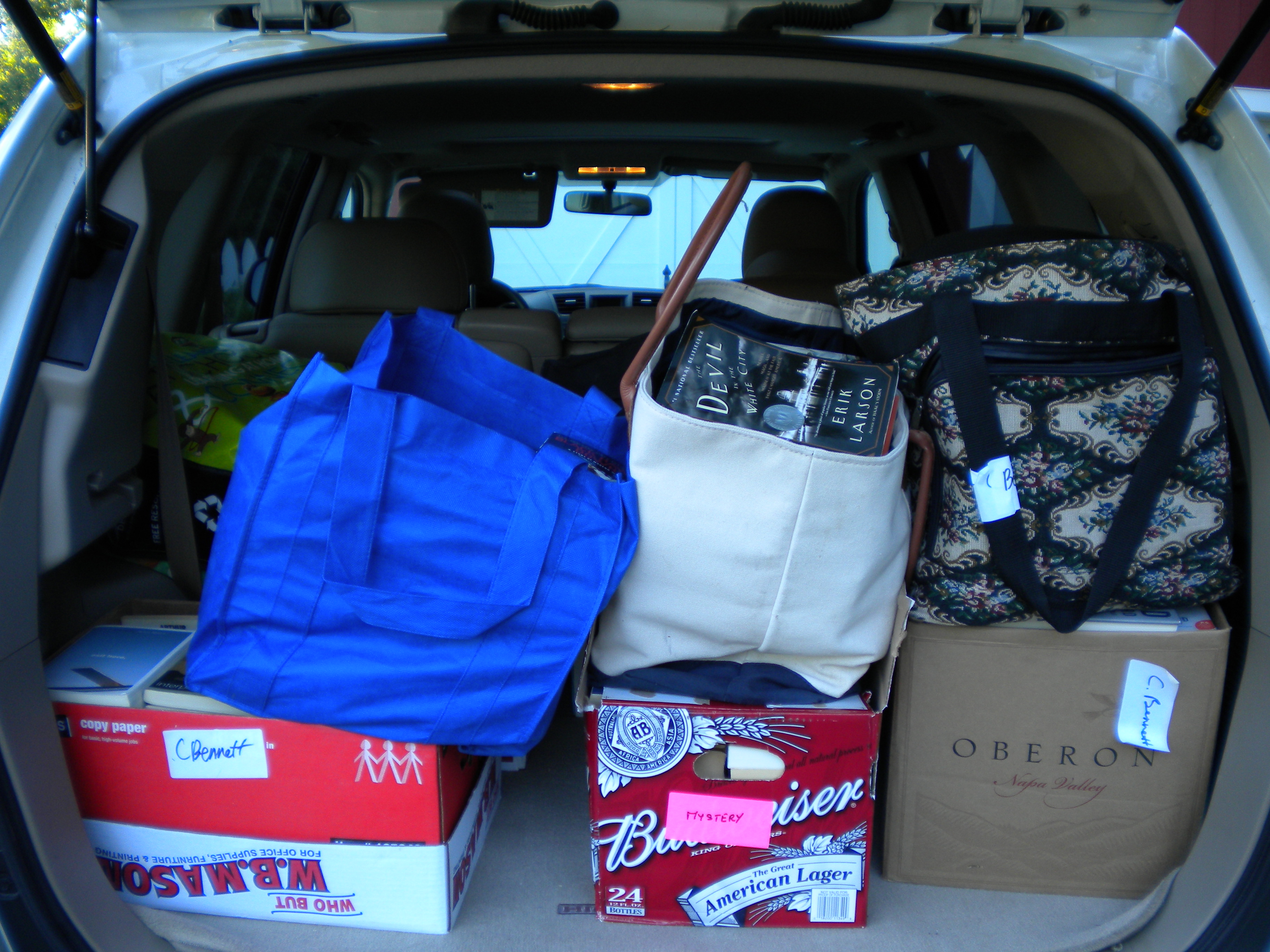
A carload of Used Books after a summer book sale!

In writing this blog, I have found myself increasingly commenting on English/language arts curriculum, lesson plans, and current issues in education. This means the purpose of the blog has grown to include topics that are all related to the use of reading materials in the classroom, and reading is the most important skill that students will need to be successful students at every grade level. Providing a wide variety of books-new and used- is critical to engaging readers.

To date, the used books purchased in the secondary markets have helped in four specific ways:

Used books have replaced copies at each grade level. Used books have been used to replace lost or damaged copies of books assigned to a particular curriculum. For example, there have been replacement copies of The Giver for Grade 7, Of Mice and Men in 9th grade, and Animal Farm in Grade 10. These titles are taught in almost every school system in Connecticut, and are titles that are relatively easy to find locally in the secondary market. These are also titles that are readily available in large quantities online on used book dealer sites such as Better World Books.

-Used books have increased selections for independent reading in classrooms. The English Department has incorporated more time for silent sustained reading (SSR) in class at each grade level, and classroom libraries have been increased to allow students the opportunity to choose books to read. For example, students in grade 9 are provided 40-45 minutes each week to read self-selected books during the school year. Students may choose a book from the school’s library media center, or choose a book from one of the carts in the classroom.  Titles vary in genre, subject and reading level in order to meet student interest. Students are responsible for blogging reviews about the books they read at least twice a quarter.

Other classes that take advantage of independent reading are the Advanced Placement English Language and English Literature classes. Students select independent reading that meets the critical standards of the Advanced Placement program. These selections range from the classics (Dostoevsky’s Crime and Punishment) to more contemporary titles (Roth The Plot Against America) and write responses to these books.

-Used books are added titles as “satellite texts”. English teachers have extended thematic units to include titles that complement a text from the literary canon. For example, the 11th grade thematic unit “Coming of Age” is usually associated with Salinger’s Catcher in the Rye. Purchasing used books have increased selections to include Sittenfield’s Prep, Cormier’s The Chocolate War, Lamb’s She’s Come Undone, Gibbons’s Ellen Foster, and Chbosky’s Perks of Being a Wallflower. Students select a text to explore the thematic idea through the lens of another author.

Score! A set of books for Grade 10

-Used books have allowed for the addition of new texts. The purchase of used books has expanded curriculum at several grade levels with high interest titles.  For example, Hosseini’s The Kite Runner, Coelho’s The Alchemist and Haddon’s The Curious Incident of the Dog in the Night-time (see picture) have been added to the World Literature curriculum in grade 10. In addition, Walls’s The Glass Castle has been added to Grade 12 Memoir class while Farmer’s The House of the Scorpion will be added to grade 7.

Ultimately, the re-stated purpose of this blog will be to continue to discuss the inclusion of specific used book titles in English/language arts classrooms as well as discuss how we are working to improve reading in and out of the classroom  at every grade level. Used books in class is also about using books in class to improve reading!

There are more than 30 copies of Edith Hamilton’s Mythology in the Wamogo English Department Library; they are ancient, yellowing slowly in the catacombs of the bookroom, yet these copies are still a valuable resource for a student who may want to read about Greek and Roman Mythology. There is a patchwork collection of Homer’s Odyssey:  a class set of a prose re-telling  (McCaughrean) of the Odyssey, 25 very battered copies of the Richard Lattimore translation, and five highly prized copies of Robert Fitzgerald’s translation.  Two years ago we added a dozen copies of two books from Scholastic Mythopedia: O My Gods and She’s All That!: A Look-It-Up Guide to the Goddesses of Olympus. Like many schools, we have a mixed selection of materials in our resource library for Greek and Roman mythology.

Independent reading books added to the mythology book shelves tend to be those which”modernize” the myths. We have added 20 copies of books in Rick Riordan’s series Percy Jackson and the Olympians through the used book markets. The five books in the series follow a teenager who discovers he’s the descendant of a Greek god and sets out on an adventure to settle an on-going battle between the gods. There are five books in this series and they are very popular with students. In addition, our school hosted a visit from the author Neal Schusterman two years ago, so copies of his modern version of the Medusa story, Dreadlocks, were made available for students. Over the past five years, our total cost for new materials in the mythology unit have been minimal.

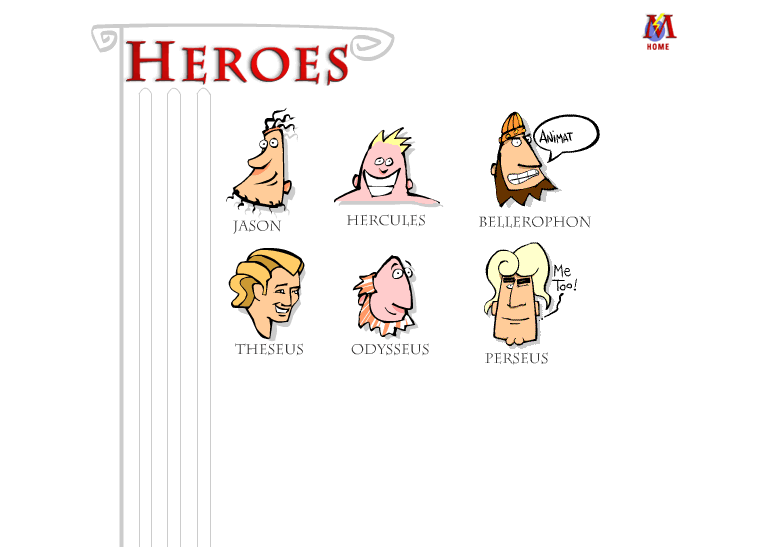
Screenshot of Mythweb.com page: All text and images on this site are copyright 1993-2011 Mythweb. Published by Fleet Gazelle. Students can click on the link and read the adventures of any of the heroes from the Ancient World.

However, if there was not a single book on the Greek and Roman gods in our classroom libraries, teaching a unit on Greek and Roman mythology would still be possible.There are a plethora of resources on the Internet for any teacher looking to teach mythology today.

One of the best resources we used was Mythweb, a site that is “kid friendly” for students and teachers. The author of the site Joel Skidmore and Advisor: William Saturno operate the site from the “real world” location of San Francisco, CA. Clever graphics depict the characters from Greek mythology; easy to read text makes th myths understandable to all levels of readers. Our students read the biographies of the gods and goddesses, and also many of the different myths on this site.

Another site that provided a great number of resources on myths is the History for Kids website. This site is a little less secure with pop-up ads, but the stories of human interaction with the gods and goddesses (Arachne, Pandora, Icarus) are all there with easy to read text that is interactive with links to background information.

This year, there were no quizzes or tests on the mythology materials. Instead, the final assessment for the mythology unit was a project titled “A Holiday Dinner Party with the Greek Gods and Goddesses.” The students were provided a graphic of a rectangle table with twelve seats positioned around the table. The assignment prompt read:

“Congratulations! You have been hired as a party planner by Dionysus, Greek god of wine, for a formal dinner on Mount Olympus.

One of your responsibilities is to set up the seating plans for one of the tables at the dinner party.

For this assignment, you need to demonstrate your ability to place six (6) gods or goddesses and six (6) mortals at a table that seats 12. You may choose the gods, goddesses, and mortals from the myths we have studied and from the Pantheon, however, you must have reasons as to why you would place these characters next to each other.”

The students were required to write a short paragraph explaining each seat placement, label the seating plan, and to design an invitation using any medium they wanted.

Some of the responses from students demonstrated diplomatic tendencies with careful placement of all mortals and deities in order to not offend.

One student suggested,”On the other side of Aphrodite is Ares. They were not only good friends but they had a fling a few different times!”

Another noted, ” Demeter is the goddess of agriculture and I put her next to Apollo to heal the crops and Poseidon to water them. They should be good friends if he meets with her to water his crops. ”

Other students had a “reality show” approach where classical antagonists are purposely placed in order to engage them in conflict. For example, “Arachne is next to Pandora. Arachne thought she was the best at everything and she thought she was the most beautiful person and no one was better than her. She was wrong though because since her attitude was so bad, she ended up turning ugly. They both think they’re always right and because of that I think it would make a good conversation at the dinner table.

Another wrote, “Next, Eros is next to Aphrodite and Psyche. It will be good to put these three next to each other because Aphrodite is furious at Eros for making it so he and Psyche were in love. It should cause a good fight and that would be fun to see. Also he is next to Psyche because they are in love.”

Finally, a student moralized, “Pandora next to Persephone because like Persephone who did not do as she was told neither Pandora when she was told not to open the box she did.  When you don’t follow direction bad things happen.”

The project was completed right after the Thanksgiving break when students had several days to experience their own celebrations. We considered how their decisions on seating the Greek gods and goddesses may have been influenced by holiday dinner with family relatives.Apparently, there is nothing more risky than a family get-together, for mortals or immortals!

There are a surprising number of students who have never seen The Wizard of Oz, and so as an introduction to the freshman (9th grade) unit dedicated to the power of “The Story”, we showed the film in class. However, in order to keep students engaged and focused on the lessons objective, a software program (G-snap) was set up to allow students the opportunity to live blog during the film.

Our students are fortunate enough to have the use of net books in class or they may bring their own digital device in order to access the materials used in class. G-snap is a free website that allows anyone to set up a live blogging event; access to the event can be posted by a link or directly embedded on a webpage. There is no registration required, comments can be saved, and the event can run for several days. During an event, questions can be posted and participant responses can be moderated before they are shared.

Students were engaged in the film from the moment the opening soundtrack began and several students joined Dorothy in singing Somewhere Over the Rainbow.  Then Almeria Gulch appeared to take Toto away in her bicycle basket and, despite my best efforts to keep everyone quiet, the comments began:

“I was so scared of her on her bike!”
“She is so mean!”
“I can’t watch her change into the witch…I just can’t watch!”

The tornado scene that followed kept them speechless. When the house landed, there was an audible “oh!” from Dorothy. Students flinched as well; they had arrived in OZ.

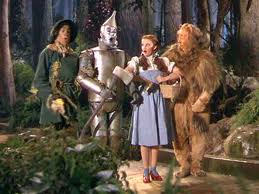
"We're off to See the Wizard" as a way to study character motivation

The lesson’s objective was to have students identify character motivation, specifically motivation that reveals a character’s weaknesses and strengths. We wanted students to recognize that in very often in stories, the qualities that character thinks he or she lacks is exactly the unrecognized quality the character possesses. Of course, the film makes this objective easy to meet.  Frank Baum’s story is all about motivation and character qualities.

For some students, there was a sense of nostalgia as they watched the film. Lines that they missed as children suddenly made sense (“Oil can? Oil can what?”). Other students finally caught on that the doorman, carriage driver, doorman and Wizard were played by one actor. As for the students who had never seen the film, they were both engaged with the film and the enthusiasm of their more knowledgeable peers.

Using G-snap software, I posed a series of questions at different times during the film

What motivates Glinda to place the ruby slippers on Dorothy’s feet? Is this in Dorothy’s best interest?

What happens when one strays off the path of The Yellow Brick Road?

What qualities does the Scarecrow exhibit? How is this connected to his motivation?

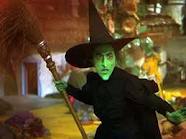
Margaret Hamilton Played The Wicked Witch of the West. Was her performance too frightening for small children?

I also wanted them also to reflect on the intensity of the Wicked Witch’s dialogue.  For example: “those slippers will never come off . . . as long as you’re alive!” or “The last to go will see the first three go before her.”

I posted:  Was this film appropriate for children? Was the film too scary?

In responding to this question, their responses were mixed.  Many felt the film was fine for children, but some students had second thoughts as they considered that the dialogue was really much more frightening then they had remembered:

“I do think some parts are scary for children. I think I was about 5 years old and I remember hiding under a blanket when the flying monkeys came on TV.”

“No I don’t think that children should be protected from watching this movie. There are many violent movies that children shouldn’t see but this movie is classic.”

“Well most Disney movies kill the parents so this isn’t too bad compared to that plus a lot of people saw this when they were really little and didn’t scare them.”

“I was about 6. I think they should watch it. It is ok if they learn about death because it is a part of everybody’s life at any age.”

“I saw this film when I was a little kid, and I was frightened for days, I had nightmares about this horrible witch, so I think it might be a little extreme for little kids.”

“I saw it when was like 4 and no its not that bad, they will get over it. It’s not like a death threat, well it kinda is but never mind. I don’t think it’s that bad.”

“I saw this film first when I was 4 and it was my favorite movie, EVER.”

Overall, the screening of the film was a success and the use of live-blogging allowed students to stay focused on noting character motivation.  Their responses included:

“The Tinman does have a heart. He is the most ‘emo’ character of them all!”

“Scarecrow has a brain and when Dorothy says she will miss him the most she means being smart is what people should look for in friends.”

“The companions represent different things: Lion-Courage, Tin Man-Heart/Love. So it shows that even though you don’t think you have it you still do because the Lion still stood up for himself. And Tin Man loved his friends, so they just thought they did not have them when they really did.”

The power of The Wizard of Oz makes it an ideal classroom tool, and character motivation is only one of the lessons that can be learned. Is it any surprise than that Margaret Hamilton who played the Wicked Witch of the West was a school teacher by profession?