Archives For November 30, 1999

The year 2013 provided one of the best examples of real life detective work as well as real-life application of the Common Core Mathematical Practice Standard #7:

CCSS.Math.Practice.MP7 Look for and make use of structure.

The investigation was initiated because of structures and patterns, specifically the writing patterns of the author J.K. Rowling of Harry Potter fame. This mathematical practice standard MP#7 calls for students to “look closely to discern a pattern or structure,” and noticing a pattern was exactly what a computer program did in unmasking Rowling as the author of The Cuckoo’s Calling. The mystery novel, had been published under the name Robert Gailbraith, and the novel had begun to generate some critical acclaim. Only there was no Robert Gailbraith; Gailbraith was the pseudonym Rowling had chosen for her new foray into the mystery genre.

The ruse did not last long. In true detective fashion, two university professors, acting on a anonymous tip, wrote a computer code that used algorithms to compare patterns in the writing from The Cuckoo’s Calling with titles from Rowling’s Harry Potter series and the works of other mystery writers. The algorithms targeted several possible mystery writers, but Rowling’s name came up most consistently with language patterns that matched word length, 100 most common words, pairs of words, and the patterns of letters, spaces and grammatical marks known as “four character strings.”

The steps to identifying were outlined in an article in Popular Science, “How Computer Algorithms Uncovered J.K. Rowling’s Pseudonymous Novel.” Writer Francie Diep explained that, “Some of the individual tests found authors other than Rowling were the best match. Nevertheless, Rowling came up the most consistently.” 

The methods of the professors investigating Rowling belong to a practice known as the digital humanities, a field of study that “aims at developing and using the digital resources and tools for solving the research questions in the Humanities.”— Takafumi Suzuki (For other definitions check out whatisdigitalhumanities.com)

As texts become available digitally, they can be deconstructed into parts in order to answer research questions such as word origins (etymology), locating primary sources, and determining authorship. In the journal A Companion to Digital Humanities an article titled “Stylistic Analysis and Authorship Studies” author Hugh Craig points out that,

“There are enough successes to suggest that computational stylistics and non-traditional attribution have become essential tools, the first places one looks to for answers on very large questions of text patterning, and on difficult authorship problems.”

Yet, these patterns can do more than identify authorship. Patterns can be used to support an author’s purpose. For example, in the play Julius Caesar by Shakespeare, the character Marc Anthony, a wily politician, deepens the character Brutus’s involvement with the murder of Julius Caesar through the use of the phrase “honorable.” Here, the actor Marlon Brando plays Marc Anthony and recites the speech (1951 film):

The famous speech begins “Friends, Romans, Countrymen; Lend me your ears..” (3.2.) and Shakespeare employs the rhetorical device, an antistrophe or repetition of the same word phrase at the end of successive clauses, repeating “that Brutus is an honorable man.” In the opening 30 lines of the speech, Marc Anthony also connects “ambition” with the death of Julius Caesar.  Four times, Marc Anthony refers to Brutus “an honorable man,” but links each mention of honor with an “ambitious man”. By the end of his oration, Marc Anthony’s rhetorical accusations have inferred Brutus’s less than honorable behavior was an ambitious grab for power, and an incensed mob storms the streets of Rome seeking revenge. A final analysis reveals that Shakespeare’s use of rhetoric, a textual pattern, provided the tool that Marc Anthony used to attack Brutus very publicly for political gain.

Employing a pattern of repetition can serve an author’s purpose, and understanding this purpose requires the stylistic analysis that is embedded in the English Language Arts Literacy Reading Standard 4 where students “interpret words and phrases as they are used in a text, and analyze how specific word choices shape meaning or tone.” Patterns reveal the author’s craft; patterns also reveal author’s purpose.

images (1)You can find a textual pattern in any one of seven basic sentence types. You can find a textual pattern on any one of the seven days of the week on any one of the seven continents. Using Mathematical Practice Standard #7, helps find the purpose of a text or find the author of a text…like J.K. Rowling, who wrote seven books in the Harry Potter series. Coincidence? No. Pattern.

The villanelle is a nineteen-line poem with two repeating rhymes and two refrains. The form originated in France in the late 1800s, and the structure is comprised of five tercets followed by a quatrain. The most famous villanelle is by the Welsh poet Dylan Thomas, “Do Not Go Gentle into That Good Night.”

Do not go gentle into that good night, 

Do not go gentle into that good night,
Old age should burn and rave at close of day;
Rage, rage against the dying of the light.

Though wise men at their end know dark is right,
Because their words had forked no lightning they
Do not go gentle into that good night.

Good men, the last wave by, crying how bright
Their frail deeds might have danced in a green bay,
Rage, rage against the dying of the light.

Wild men who caught and sang the sun in flight,
And learn, too late, they grieved it on its way,
Do not go gentle into that good night.

Grave men, near death, who see with blinding sight
Blind eyes could blaze like meteors and be gay,
Rage, rage against the dying of the light.

And you, my father, there on the sad height,
Curse, bless, me now with your fierce tears, I pray.
Do not go gentle into that good night.
Rage, rage against the dying of the light.

I recently taught this poem to a class of Advanced Placement English Literature seniors who after some discussion were able to determine audience (“And you, my father..”), the form of address (imperative “Do not go“) and the poem’s paradox (“Curse, bless, me now“). They were intrigued by the most striking element of the poem, the repetition of the lines “Do not go gentle into that good night” (1, 6, 12, 18) and “Rage, rage against the dying of the light” (lines 3, 5,15,19). The ferocity of Thomas’s repeated exhortations increase because of the structure of the villanelle.

Structure matters. Structure, that “fundamental, tangible or intangible notion referring to the recognition, observation, nature, and permanence of patterns and relationships of entities” is not limited to poetry. Structure is in all the arts, and in all the sciences.

Structure matters in mathematics. Common Core Mathematic Practice Standard #7 requires students to:

Look for and make use of structure.

This standard details that “proficient students look closely to discern a pattern or structure,” and suggests, “young students, for example, might notice that three and seven more is the same amount as seven and three more.” Promoting this practice standard beyond the math classroom will have students noticing structure in other classes in every grade level. Students will be better equipped to recognize and use the structure of the periodic table or the color spectrum; they will be be prepared to identify and to employ patterns in pronouncing vowels and consonants. Students will be empowered to discover coordinates in longitude and latitude or to categorize the ingredients in food groups.

Recognizing and using structure is the critical academic skill that can help a student unravel both a problem in geometry or the complexity of a poetic structure like the villanelle. Once they understand the structure, they can evaluate the poet’s purposeful choice such as the one made by Dylan Thomas who selected the villanelle for this powerful poem.

The Common Core’s Mathematic Practice Standard #7 is in math and poetry. Note the same letters MP? Pattern? PossiblyCoincidence? Maybe not!

Continue Reading…

I admit that I am the first to have heart palpitations the moment I hear a problem begin, “Say, a train leaves a station 500 miles east of the city traveling at 60 m.p.h…..”.

Yet, given time, I am confident I can calculate the answer to a word problem, in part because my early teaching career included two years in a grade 8 pre-algebra class. At that time, I feared my expertise in English/Language Arts was not helpful for covering the math curriculum, so I taught as close to the textbook as anyone can imagine. I depended on worksheets. I was inflexible in my methods. I did exactly what the book suggested I do.

Several weeks into the pre-algebra class, I told a fellow faculty member that I was concerned I could be doing more harm then good. Ms. C had graduate degrees in math, and she was responsible for the more advanced math classes.

keep-calm-and-persevere-13“Nonsense,” she advised, “just make sure they know their math facts; students who do not know their multiplication tables will never succeed in higher math.”
I nodded.
Multiplication tables…I could do that.
“That, and never, ever let them give up.” She was firm, “all problems have a solution.” 

Ms. C was right. I could never let them give up, which meant that I could never give up either. Her prescience about the Common Core State Standards, adopted some 20 years later, is reflected in Mathematic Practice Standard #1:

CCSS.Math.Practice.MP1 Make sense of problems and persevere in solving them.

I now understand that this standard should not be not limited to applications in math classes; I believe this standard should be shared with multiple academic disciplines.  As evidence, I offer a “retranslation” of this standard’s descriptors, explained on the Common Core Website, that I use in every lesson everyday:

Mathematically proficient students start by explaining to themselves the meaning of a problem and looking for entry points to its solution.

If you drop the word “mathematically”, this standard measures any student’s ability to comprehend a problem, or question, in any subject area, and encourages students to be self-selective on determining the best way to solve a problem. In the English/Language Arts class, this “entry point for a solution” could be anything from selecting an independent book to read, to choosing a thesis for a research paper, or to picking a presentation software for an oral report to name a few examples.

Mathematically proficient students analyze givens, constraints, relationships, and goals.

In the English Language Arts classrooms, I teach students to analyze literary texts, fiction and non-fiction, for givens and constraints crafted by an author; to analyze the relationships between characters or author and audience; and to evaluate the goals these characters or authors achieve or fail to achieve.

Mathematically proficient students monitor and evaluate their progress and change course if necessary.

In the English/Language Arts classrooms, a student often begins writing with one idea or thesis, but by the end of the paper, the idea has changed; the thesis must be re-written. Students must monitor the progression of their ideas, and when the ideas cannot be supported or expressed, then they must change course in their writing.

Mathematically proficient students can explain correspondences between equations, verbal descriptions, tables, and graphs or draw diagrams of important features and relationships, graph data, and search for regularity or trends.

In the English Language Arts classroom, students should be able to explain the correspondence created with parts of speech in each sentence construction; they should understand the features and relationships created with punctuation; they should look for patterns in rhetoric; and they should be able to recognize the purpose of a selected genre used to communicate.

Mathematically proficient students check their answers to problems using a different method, and they continually ask themselves, “Does this make sense?”

English Language Arts students must read their writing and the writings of others while keeping in mind the question, “Does this make sense?”For the record, I add the question, “So what?” as well.

The particulars in the MP#1 standard are not limited to mathematics as demonstrated in this almost line by line interpretation. All academic disciplines incorporate the ideas in this standard which, when combined, are the tools of perseverance. Teaching students to persevere is the ultimate goal of MP#1, and there are plenty of opportunities to practice perseverance in the classroom. The incorporation of technology in lessons at any grade level and in any subject can be such an opportunity.

My school has a B.Y.O.D. (Bring Your Own Digital Device) policy for grades 9-12. Our grading system is online, assignments are visible to stakeholders, and almost all of my lessons incorporate some technology during the class period. I have learned first hand, however, that the use of any technology in the classroom requires perseverance because no matter how well a lesson is planned, SOMETHING WILL GO WRONG!

For example: a link on a web page will not work; a platform selected by a student might need Java, which is not available on every device; another student will forget a password; or the network becomes overloaded when 30 students try and access a program at the same time.

I think of the MP#1 when I work on these problems everyday, and I know I am modeling perseverance for my students when I persevere and deal with each problem. I cannot give up and blame technology; I cannot blame the Internet. I must model how to problem solve, how to look for solutions, and show how I regularly ask myself if what I am doing “makes sense.”

“Use a different browser,” I suggest when a link does not work.
“Let’s reset your password,” I advise a student.
“OK, Row 3? You will have to wait a minute before trying to log on…we can’t all access this site at once,” I might recommend.
Sometimes I discover the problem is simply the power supply,
“Wait….is this even plugged in?”

Every day, I consider what Ms. C told me years ago as I model the MP#1 standard in my English/Language Arts classroom. From her words to the Common Core Mathematical Practice Standard #1: “Never, ever let them give up. All problems have a solution.”

In the spirit of all end of the year reviews, I have condensed the year 2013 by offering month by month posts from this blog that illustrated the best student (and subsequently, teacher) learning:

January 2013: A Freshman’s Modern Odyssey in the Style of Homer

"Dawn spread her rosy fingers..."

“Dawn spread her rosy fingers…”

The Freshmen final project after reading The Odyssey is a narrative that students complete called “The Wamogossey: A Day in the Life of a Freshman at Wamogo High School.” Writing narratives are once again favored in  Common Core State Standards, and this post explained how students made their own attempt at an epic adventure.

February 2013:  Spilling Over the Corners of a Six Word Text

Short Story in 6 words

Short Story in 6 words

This exercise proves that keeping students “within the four corners of the text” is impossible, even when the text, attributed to Ernest Hemingway, is only six words long. This post also serves as evidence that that admonitions on best practices should be limited to those with actual classroom experience, not to the “architects of the Common Core.”

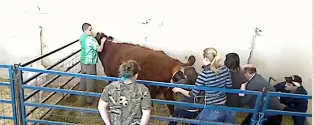
March 2013 If You Want to Watch the Cow Give Birth

Watching the arrival of our latest calf

Watching the arrival of our latest calf

Yes, “If you want to watch the cow give birth, turn on U-stream now!” was an announcement over the PA system. Normally, I am irritated by interruptions to class time, but this announcement cued students about opportunity watch the birth of a calf in the Agricultural Science wing of our high school. The combination of technology in broadcasting and recording the birth of the newest member of the agricultural program with old-fashioned “hands on” physical labor illustrates 21st Century authentic learning.

April 2013 You Never Forget Your First Hamlet

Members of the senior class were fortunate enough to see Paul Giamatti’s “Hamlet” at Yale Repertory Theatre. I’ll let their words speak for the experience:

The performance was a wonderful experience, especially since it was my first time to see Shakespeare.

I wouldn’t mind going to another because it was so enjoyable that I didn’t even realize the 4 hours passing by.

I like the way that a play has a certain kind of vibe. It’s like a live concert, where there’s a certain kind of energy.

It was like seeing a live performance of a film. I would especially like to see another Shakespeare because it is the way that he intended his works to be portrayed.

After seeing Hamlet so well done, it would definitely be worth going to see another one whether it be Shakespeare or a different kind of performance.

May 2013 Kinesthetic Greek and Latin Roots

Spelling "exo"=outside

Spelling “exo”=outside

Understanding Greek and Latin roots is critical to decoding vocabulary, so when the freshman had a long list of roots to memorize, we tried a kinesthetic approach. The students used their fingers to spell out Greek roots: ant (against), tech (skill), exo (outside).  They twisted their bodies into letters and spread out against the wall spelling out xen (foreign), phob (fear). They also scored very well on the quizzes as a result!

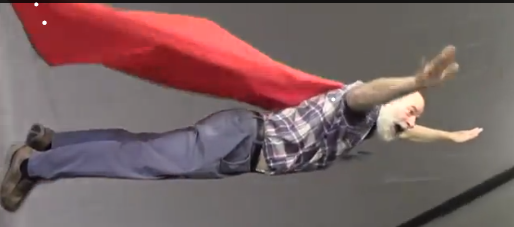
June 2013 Superteachers!

Superteacher!

Superteacher!

At the end of the 2012-2013 school year, teachers rose to a “friendship and respect” challenge to make a video. With a little help from a green screen, 27 members of the faculty representing a wide variety of disciplines jumped into the nearby closet wearing the big “W” (for Wamogo). Students in the video production class watched and filmed in amazement as, bearing some artifact from a particular subject area, each teacher donned a flowing red cape.

July 2013 Library Book Sales: Three Bags Full!

The original purpose of this blog was to show how I filled classroom libraries with gently used books. The Friends of the C.H. Booth Library Book Sale in Newtown, Connecticut, is one of the premier books sales in the state: well-organized tables filled with excellent quality used books, lots of attentive check-out staff, and great prices. This year, I added three large bags of books to our classroom libraries for $152.00, a discount of 90% off retail!

August 2013 Picture Books Are not for Kindergarten Any More!Cat in Hat book cover

At used book sales, I am always looking for picture books I can use in high school classrooms. For example, I use The Cat in the Hat to explain Freud’s theory of the Id, Ego and Superego . Thing #1 and Thing #2 represent Id, and that righteous fish? The Superego. Yes, Dr. Seuss is great for psychological literary criticism, but he is not the only picture book in my repertoire of children’s literature used in high school. This post features a few of my favorite picture books to use and why.

September 2013 Close Reading with Saki and the Sophomores

Saki’s short stories open our World Literature course in which our students will be reading complex texts required by the English Language Arts Common Core State Standards (CCSS). After a “close reading” the conversations in the room showed the text’s complexity. Saki’s The Interlopers has all the elements suggested by the CCSS:  figurative language, the ironic wish, and multiple meaning in the revenge sought by man versus the revenge exacted by Nature. Our close reading should have been “textbook”. The evidence proved the characters’ demise…or did it? The ensuing discussion forced the class to consider other positions.

October 2013 Close Reading Art

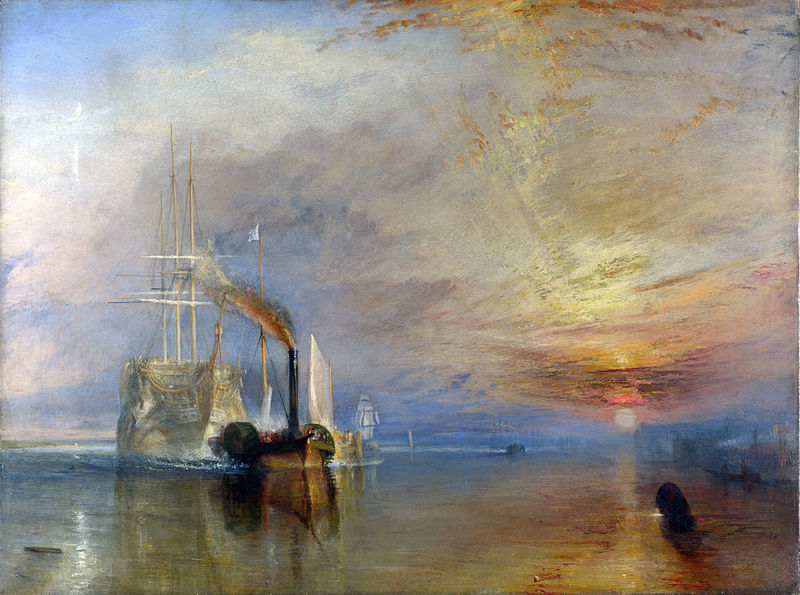
The Fighting Temeraire

The Fighting Temeraire

After “close reading” short stories, the sophomores were asked to use the same skills to “close read” several paintings that thematically connected to the Industrial Revolution. They studied a Constable pastoral painting, before J.M.W. Turner’s famous painting, The Fighting Temeraire. While some called attention to the the dirty smoke stack, others saw the energetic paddling as a sign of progress. They noticed the ghost-like ship hovering in the background, the light created by the sunset which gave the painting “warmth”or “light extinguishing”. When they were asked to use these elements as evidence to determine the artist’s message, there were some succinct responses to the painting’s “text.”

November 2013 Thanks for the NCTE Conference

Five members of the English Department attended the conference and selected from over 700 sessions at the National Council of Teachers of English and the Conference on English Leadership.  District support for such great professional development is truly appreciated. We are also grateful that four of our proposals were chosen to share as presentations for other educators. The explanations of our presentations with links to these presentations are included in this post.

December 2013 Drama Class Holiday Miracle

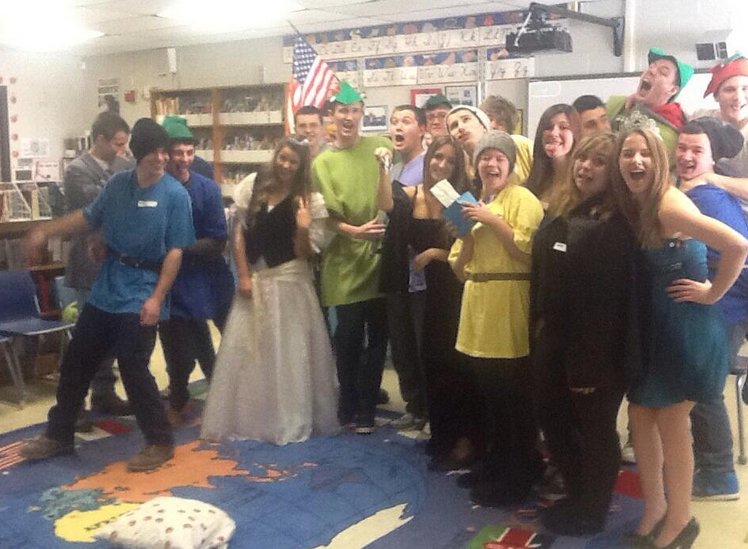
Cast photo!

Cast photo!

An ice storm two weeks before performance caused a car pile-up, and the drama club teacher was left with a concussion. She could not be in school; the students were on their own, and I was left to supervise their performances of Snow White and the Seven Dwarves at three local elementary schools.

Their “dress rehearsal” was a disaster, but, as the adage says, “The show must go on!” and once they arrived at the elementary schools, the students were anxious to do well. They naturally changed their staging moving from gym floor to library floor, the Evil Queen tossed her hair with anger, and the Prince strode onto the stage with more confidence. The dwarves were a source of comic relief, intentionally or not. I watched the holiday miracle of 2013 repeated three times that day. The students in drama class at each school were applauded, with congratulatory e-mails from the principals that offered praise.

End of the year note:

I am grateful to be an educator and to have the privilege to work with students that I learn from everyday. In this retrospective, I can state unequivocally that 2013 was a memorable year… as you can see from many of the reasons listed above.

Welcome to 2014! May this coming year be even more productive!

If nothing else, the Common Core State Standards’ (CCSS) contribution to the academic lexicon will be the renaming of the genre known as non-fiction to a larger genre of informational texts. This renaming expanded the genre to include many forms of reading: textbooks, letters, speeches, maps, brochures, memoirs, biographies, and news articles, to name a few.

So where to find these informational texts? What is appetizing enough to make middle school students want to read a story, and then, answer the questions to check their understanding? What kind of high interest texts appeal to high school students who prefer to “Google” or “Sparknote” answers rather than read a text closely? What multi-media elements could be added to make an informational text palatable enough to be consumed by all levels of readers?

Screen Shot 2013-11-11 at 6.30.17 PM

The 2:12 video for accompanies the story

Well, teachers should look no further than the October 1, 2013, New York Times‘ feature article dedicated to Doritos Tortilla Chip titled That Nacho Dorito Taste. This short feature article combined photography and graphics;  a short video: and even shorter text that combined to provide an explanation on how this particular food is engineered so that “you can’t eat just one.”

The article is timely since the CCSS  requires that the student diet of reading should be 70% informational texts and 30% fiction by the time they graduate from high school.  The Literacy Standards specifically address reading in math, science, social studies, and the technical areas and recommends the increase in reading informational texts be completed in these classes. One of the technical areas content area classes could be a culinary arts class, a marketing class, or a health science class, but consider this particular informational text as scrumptious for any class.

In organizing this story, New York Times reporter Michael Moss, who also narrates the embedded video, interviewed food scientist Steven A. Witherly, author of “Why Humans Like Junk Food,” in order to better understand how all of the chemical elements combine in the Nacho Cheese Doritos chip to make it alluring to our taste buds.  According to Witherly, the mixing of flavors on this particular chip is purposeful:

 “What these are trying to do is excite every stinking taste bud receptor you have in your mouth.”

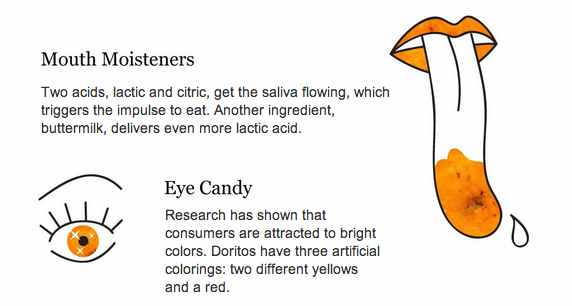
The graphics for the article by Alicia DeSantis and Jennifer Daniel are cleverly combined with photographs by Fred R. Conrad, also from the The New York Times. A separate page layout with the graphic/photo mix delivers tidbits of information about the Dorito chip. Each detail is organized by topic, as this example shows:

Screen Shot 2013-11-10 at 9.46.47 PM

A teacher does not even have to work at organizing questions for students to answer since the New York Time Learning Network, a free educational blog offered by the paper, organized an entire lesson plan on this article. The lesson is titled 6 Q’s About the News | The Science Behind Your Craving for Doritos, organized by Katherine Schulten. The questions on the blog include:

WHAT is psychobiology?
WHAT is “dynamic contrast”?
HOW do the acids in Doritos work on the brain?

WHAT is “sensory-specific satiety”?

WHERE do half the calories in Doritos come from, and, according to the graphic, HOW does that work on the brain?

WHY is “forgettable flavor” so important to Doritos’ success?

The higher order questions invite students to consider:

Now that you know the formula behind Doritos, are you more likely to eat more or less of them? WHY?
HOW many processed foods do you eat a day?
WHAT might a graphic explaining the effects of this food look like?

So go ahead. Read the Nacho Cheese Doritos article. See how irresistible an informational text can be. Once you read one this good, you will be searching to find another!

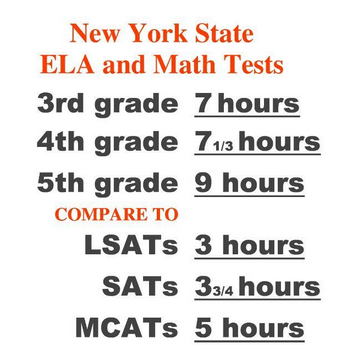
An interesting graphic came across my screen this week. The purpose was to call attention to the hours spent testing elementary students by comparing them to the tests for college or graduate school:

Screen Shot 2013-10-29 at 8.28.06 PM

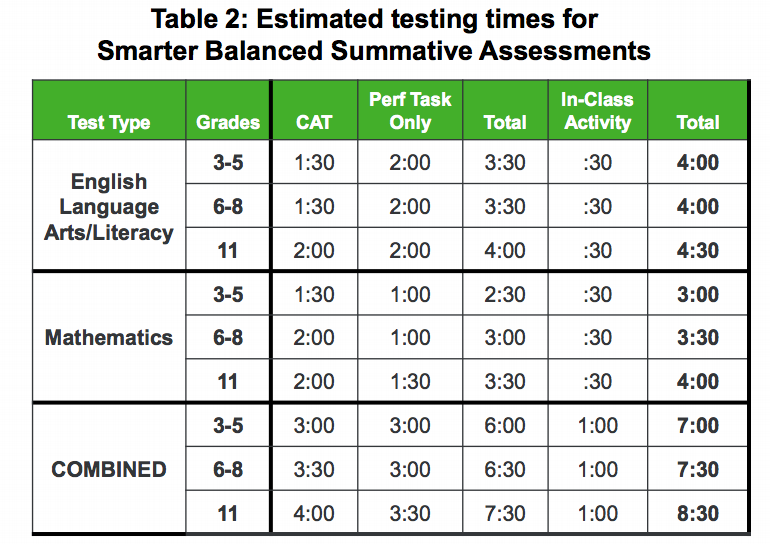
Standardized testing is not new to schools in the State of Connecticut. Many schools will be using the Smarter Balance Assessment (SBAC) this year (pilot) for state testing. The new testing schedule will be the same as the NY State tests. The SBAC website provides testing times:

Screen Shot 2013-10-30 at 8.26.11 PM

Both charts illustrate the number of hours that elementary, middle, and high school students will sit in order to take tests to measure their achievement in meeting the Common Core State Standards (CCSS). The SBAC tests will be given over a period of week(s), and scheduling may depend on the number of available computers that meet the testing software criteria.

Each sitting will match the minimum amount of time an older student sits for college and law school entrance exams. While these entrance exams (SAT, LSAT, and MCATs) are taken only once, the SBACS are taken annually in grades 3-8 and again in grade 11. Consider that an average student’s experience taking the SAT is a little under four hours, while a student will take the SBAC repeatedly for a total of 52 hours over the course of one academic career. Yet, the hours spent taking a test are not the only hours committed.

Washington Post education reporter, Valerie Strauss, cited a study by the American Federation of Teachers in her July 25, 2013, article How much time do school districts spend on standardized testing? This much.”  The report compared “two unnamed medium-sized school districts — one in the Midwest and one in the East” and determined that:

The grade-by-grade analysis of time and money invested in standardized testing found that test prep and testing absorbed 19 full school days in one district and a month and a half in the other in heavily tested grades.

The percentage of time for SBAC testing is roughly .07% of the school year (based on an average of 1100 school hours/year), but when when test preparation is added, (ex:19 days), that percentage jumps to 11%. This jump is enough to make the time for test preparation equivalent to a year of physical education classes. Ironically, research is proving that physical education may be the best kind of test preparation.

An article by Dr. Catherine L. Davis and Dr. Norman K. Pollock  detailed some of the more recent studies on the relationship between physical education and cognition, noting that “benefits have been detected with 20 minutes per day of vigorous physical activity”.

Their paper, Does Physical Activity Enhance Cognition and Academic Achievement in Children? determined that, “incorporating 40 minutes per day of vigorous activity to attain greater cognitive benefits would require additional programs available to children of all skill levels.” They concluded that:

In a period when greater emphasis is being placed on preparing children to take standardized tests, these studies should give school administrators reasons to consider investing in quality physical education and vigorous activity programs, even at the expense of time spent in the classroom. Time devoted to physical activity at school does not harm academic performance and may actually improve it.

Schools are motivated to try different strategies in order to improve test scores. The data from standardized tests are used to determine the effectiveness of curriculum as well as individual student performance. Standardized test scores are also an increasing metric in teacher evaluations. In the State of Connecticut, test scores could count as much as 40% in a teacher’s performance review, with the spotlight on those educators who teach in testing grades 3-8 and grade 11.

Paradoxically, the focus on standardized testing as an evaluation tool is a contributing factor to the increasing commitment of time and resources to test preparation. Next generation tests like the SBACs will be taken on computers that will require school systems to invest in computer hardware that meets specific criteria. The cost of the hardware and practice software could be justified by increasing the number of students who will take the tests.

Additionally, those who fund education want tests that run on this hardware to be an effective measure of student achievement, and these tests must be of a substantive duration to make the expense worthwhile. Given the commitment of time and money, students will continue to sit for tests and test preparation, perhaps for even longer periods in the future.

What might students be thinking about sitting for all these standardized tests?

They might borrow the words of their favorite author, Dr. Seuss, “And we did not like it. Not one little bit.”

The education reformers often look back to see what lessons can be learned from the past in order to direct the future, and the recent article in The Wall Street Journal  “Why Tough Teachers Get Good Results” (9/27/2013) by Joanne Lipman integrates current research to the old-fashioned teaching techniques of her former music teacher, Jerry Kupchynsky. After creating a nostalgic portrait of a demanding educator, Lipman posed the questions, “What did Mr. K do right? What can we learn from a teacher whose methods fly in the face of everything we think we know about education today, but who was undeniably effective?“ She continued:

Comparing Mr. K’s methods with the latest findings in fields from music to math to medicine leads to a single, startling conclusion: It’s time to revive old-fashioned education. Not just traditional but old-fashioned in the sense that so many of us knew as kids, with strict discipline and unyielding demands. Because here’s the thing: It works.

In responding to her own questions, Lipman listed out the eight factors that were the hallmark of Kupchynsky’s teaching style, a style that Lipman admits would be controversial. She writes, “Today, he’d be fired.”

The tenets of Kupchynsky teaching method were summarized by Lipman as:

  • 1. A little pain is good for you.
  • 2. Drill, baby, (kill and) drill.
  • 3. Failure is an option.
  • 4. Strict is better than nice.
  • 5. Creativity can be learned.
  • 6. Grit trumps talent.
  • 7. Praise makes you weak…
  • 8.…while stress makes you strong.

I also grew nostalgic reading the article. I doubt Kupchynsky ever had to mention his objective. He never was mandated to place the Common Core Teaching Standards in a visible location at all times or worry about collecting data from formative assessments to inform his instruction. This was a man who knew his discipline and was disciplined in his teaching. The evidence was in the success of his students:

Some were musicians, but most had distinguished themselves in other fields, like law, academia and medicine. Research tells us that there is a positive correlation between music education and academic achievement.

This story about Jerry Kupchynsky’s teaching came to mind when I heard Teacher’s College Reading and Writing Project  (TCRWP) Director Lucy Calkins speak this past Saturday at Columbia University at the 85th Reunion (10/19/2013).

Calkins offered an afternoon session about “Leading From Within: Turning Schools into Places Where Everyone’s Learning Curve Is Sky High” and her opening wry comment, “This session could be titled ‘Staying Alive in a Toxic World’,” was met with appreciative laughter by the audience of educators jammed into the large meeting room.

Calkins immediately addressed the reform efforts, teacher evaluation programs, and the Common Core State Standards.  “We cannot control what happens to us,” she stated clearly, “but we can control our reactions.”

She discussed how her acceptance of the Common Core, detailed in her book Pathways to the Common Core, has put her on the outs with many education reformers, and she acknowledged with some frustration that the “350 billion on tests and technology…nothing left for support for teachers and kids,” angers many educators.

Against these controversies, she asked, “Is there a way for us to move students/our work forward?”  and she explained that in trying to find that way, many opportunities have been presented to TCRWP, and that the pressures in this environment, “Can lead you to do really problematic things.”

She paused for a moment and then said, “Sometimes to say ‘no’ is good.”

The room was quiet as the teachers in the crowded room considered what Calkins meant.

“The ‘nos’ protect your brand,” she said emphatically, “the ‘nos’ define your brand. If you do not say no, then you have no brand…but we must be evidence based when we say ‘no’.”

Lipman’s music teacher Kupchynsky had a brand.  I imagine he said “no” quite a bit. Consider how easily “no” fits into seven of the eight ways his brand was defined. For example, “no pain, no gain” is the same as “a little pain is good for you.” Even the idea that “creativity can be learned” refutes the commonly held belief that people are born with creativity or they are not.

The Kupchynsky model worked because he knew his discipline and the direction he wanted for his students; he had a brand.

The Calkins model works because she knows her discipline and the direction she takes as she pushes the teacher leaders at the TCRWP; she has a brand.

noThe toughest teacher in the room, however, does not have to employ the Kupchynsky methods of teaching; given today’s climate, the behaviors detailed in the article could lead to a dismissal.  The toughest teacher in the room can be quiet and unassuming, yet someone who is passionate and skilled in a discipline.

The toughest teacher in the room has a brand, and like all brands, one that is defined by “nos”. The toughest teacher in the room says “no” to excuses from any stakeholder that stops student achievement in the classroom.  The result can be a brand of teaching that possesses the “unyielding demands” like those made by Kupchynsky, the brand of teaching that provides evidence reported in a newspaper article some twenty years later by a former student.

The recent invitation to respond to the statement “Don’t Teach the Test” was under discussion in the New York Times: Invitation to a Dialogue series. The question was posed by Peter Schmidt,  the director of studies at Gill St. Bernard’s School, and he singled out two tests in particular: the SAT and the Advanced Placement Tests.

Schmidt suggested that the SAT should be eliminated as a requirement for college on the basis of economic inequality.  Students who have the finances to take prep courses or hire tutors have an advantage, and Schmidt suggests that, “our colleges are further promoting the inequities of our society.”

Schmidt also called for the end to  Advanced Placement  (A.P.) courses in high school, saying that they

“too often fail to prepare students adequately for college-level course work. They also put pressure on students to perform well on the A.P. exams in the spring, leaving them exhausted and lacking a spirit of intellectual curiosity.”

Full disclosure: I teach Advanced Placement English Literature, and I have served as an A.P. Reader.

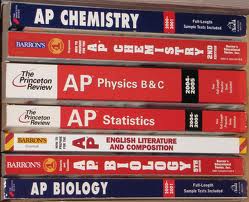
AP TestsThat said, I believe Schmidt is right about the pressure the testing for these courses places on students. I agree that these students are exhausted the first two weeks of May since students who take A.P. courses often take more than one A.P. class. Many students are scheduled for two separate tests on the same day. But as to his assessment that the A.P. courses do not prepare students for college level work, I must respectfully disagree.

Students who take A.P. courses recognize that they may or may not receive college credit for the course. College credit is given based on a student’s test score (minimum a level “3” on the A.P. English Language or Literature) and the willingness of the college to accept that score in lieu of an undergraduate course.  As a result, there are no guarantees of college credit in an A.P. class; however, colleges do look to see if students are taking A.P. classes as an indication of their academic ambitions.

The A.P. exams in all subject areas are a mix of multiple choice questions and essay responses questions.  In the A.P. English Literature exam, there are 55 challenging questions on five or six literature selections. Students need a command of vocabulary and the ability to “close read”, a skill that was the hallmark of A.P. courses long before the Common Core State Standards. But the most demanding part of the AP English Literature exam is the essay section where students write three essays in response to three prompts in two hours. 

My students practice writing to these prompts throughout the school year.  They learn to read, annotate, and draft quickly, but Schmidt raises a good question.

Does the A.P. test prepare students for college?

In responding to Schmidt’s concern, I have thought about how my student’s responses to the essay test questions are not the only measure for determining student understanding. A good A.P. course incorporates the practice of revising drafts written for a practice test. There is always a gem of an idea in these hasty constructions. There is always some hypothesis that student will discover as he or she “writes into” the prompt, something I have previously referred to as a “manifesto in the muck.” A good A.P. course provides a student with the chance to take that essay draft, and expand and revise. A good A.P. course gives students the chance to start again with the end of the draft in order to begin a better essay.

Schmidt complains about “the  lack of  imagination and creativity” that “are the cornerstones of genuine learning,”but these generalizations are not true.  I know first-hand that there is nothing to stop a student’s imagination or creativity in responding to a work of literature in an A.P. course. Some of the most amazing statements or ideas I have read have come from students undergoing the intellectual crucible of writing an organized essay in under 40 minutes. In reading these practice drafts, some ripe with grammatical errors and misspellings,  I will pause with my red pen suspended, repeating to myself, “First do no harm”, as I leave a draft untouched. A.P. advises instructors to “reward the student for what they do well”, even on a practice test.

There are too many reasons to not like the standardized tests that are choking education today; the limited data that standardized testing yields is often not worth the time and expense. Frankly, I am no fan of the College Board. The limitations of the A.P. test, however, does not mean that an A.P. course is not valuable.

The A.P. test, like all standardized tests, is a single metric measure, but an A.P. course is a much broader experience.  So, yes, I teach to the test, but I also teach the A.P. course as a preparation for the rigors of college level work, and in particular, I teach the course so that my students will have the option to waive a 100 level composition class giving them the option to take a course in their major field of study.

Schmidt concluded his invitation with an impassioned plea,

As E. M. Forster wrote more than a century ago in Howards End, in addressing the shortcomings of British universities: “Oh yes, you have learned men who collect … facts, and facts, and empires of facts. But which of them will rekindle the light within?”

I would argue that my A.P. class is the only place in my curriculum where I can offer the writings of E.M Forster, if for no other reason than to see how students would respond to that literary prompt.  I know that in their responses, there could be one from a student who, writing under intense pressure, could draft a sentence or two that would reveal a “kindle of light within.”  Whether that student response would be in a test booklet written during the A.P. test or not does not matter.

Our English II World Literature course complements the World History course, so when the students are learning about the Industrial Revolution, our English course has students read the opening chapters to Charles Dickens’s Oliver Twist.

Reading Dickens, however, is a challenge for many students, particularly if they lack background knowledge on the story’s setting. In order to help them better understand the context of England during the Industrial Revolution, we incorporated several famous paintings to illustrate the shift from the pastoral setting to the urban setting.

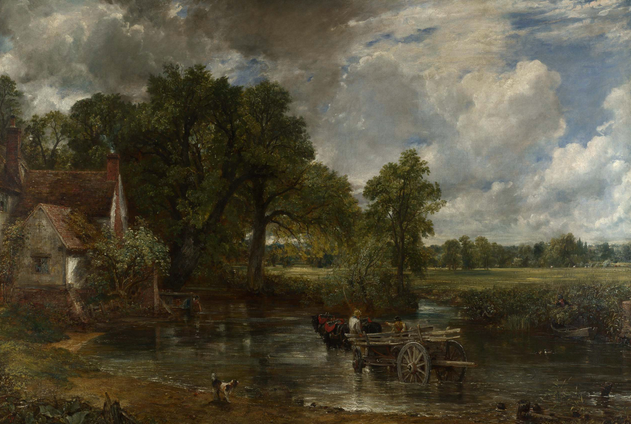
Rather than show a painting in its entirety at first, we made screenshots of different sections of each painting and had the students “read” what they saw. For example, we began with John Constable’s painting The Hay Wain (1821) which hangs in the National Gallery in London, England.

Screen Shot 2013-10-02 at 9.23.04 PM

upper left corner of Constable’s “The Hay Wain”

Students looked at the information communicated in the upper left quadrant  of the painting and discussed the architecture of the roof and the large empty tree branches. They noted the gathering storm clouds in the background; “a tone of danger” noted one student. 

We then had students look at the lower right quadrant of the painting where a farmer’s cart was being driven along a stream bed. They noted the details of the team of horses and speculated as to why the men would be walking upstream. 

Screen Shot 2013-10-02 at 9.23.46 PM

lower right corner of Constables “The Hay Wain”

They speculated that there might be no road because a road might not have been necessary if transportation was easier by water, and one student called attention to a small canoe on the stream’s bank. They called attention to the earth tone colors that contrasted with the red harnesses of the horses.

Then we showed the students the full painting.

Screen Shot 2013-10-02 at 9.49.07 PM

Constable’s painting is based on a site in Suffolk. The hay wain, a type of horse-drawn cart, stands in the water in the foreground. (National Gallery Picture Library
St Vincent House, 30 Orange Street, London)

When the students saw the entire painting, they were already familiar with some of the smaller details. They were able to locate these smaller details and suggest how they contributed to the larger “story” of the painting. They determined Constable’s painting celebrated the pastoral life outside London, a striking contrast from the setting of Oliver Twist where impoverished street children were placed in workhouses or recruited by criminals.

The painting that best illustrates the cultural shift caused by the Industrial Revolution, however,  is J. M. W. Turner’s The Fighting Temeraire. The oil painting depicts the gunship with her sails tightly wrapped to the rigging being tugged  by a steam powered paddle-wheel to the shipyard before being broken up for scrap. Turner painted the tribute to the end of sailing ships in 1838, the same year that Dickens published Oliver Twist. Both works brought attention to the drastic change in the way of life as a result of the Industrial Revolution.

“The Fighting Temeraire”, an oil painting by the English artist J. M. W. Turner (1938) National Gallery, London

Since the students had practiced close reading the Constable pastoral painting, they were ready to close read Turner’s painting. While some called attention to the the dirty smoke stack, others saw the energetic paddling as a sign of progress. One noticed the ghost-like ship hovering in the background; another noted a potential danger of a submerged obstacle in the foreground floating in the right corner of the painting. Most commented on the light created by the sunset which gave the painting “warmth”or “a glow” for some or a “light extinguishing” for others. When they were asked to use these elements as evidence to determine the artist’s message, there were some succinct responses:

  • “It’s out with the old!”
  • “The coal fire is the new light; the sun is the old light”
  • “Coal power, not wind power”
  • “Beauty fades”

Turner’s The Fighting Temeraire was voted England’s favorite painting in a 2005 poll organized by BBC Radio 4’s Today.  The painting was also highlighted in the recent James Bond film Skyfall. In the scene in the National Gallery, Bond meets his new handler, Q, while both sit on a bench opposite the painting:

Q: It always makes me feel a bit melancholy. Grand old war ship. being ignominiously haunted away to scrap… The inevitability of time, don’t you think? What do you see?
Bond:  A bloody big ship. Excuse me.
Q: 007. I’m your new Quartermaster.
Bond: You must be joking.
Q:  Why, because I’m not wearing a lab coat?
Bond: Because you still have spots.
Q: My complexion is hardly relevant.
Bond: Your competence is.
Q: Age is no guarantee of efficiency.
Bond:  And youth is no guarantee of innovation.

Skyfall (http://www.imdb.com/title/tt1074638/quotes)

After watching the film clip, the students were in agreement that they are living in a new digital revolution, and that technology has changed their culture from that of their parents. If they want a sunset, they don’t need a painting by Turner….they have Instagram.

Open House: OMG!

September 15, 2013 — 1 Comment

September is Open House Month, and the welcoming speech from a teacher could sound like this:

“Welcome, Parents! Let me show you how to access my website on the SMARTboard where you can see how the CCSS are aligned with our curriculum. You can monitor your child’s AYP by accessing our SIS system, Powerschool. In addition, all of our assignments are on the class wiki that you can access 24/7.  As we are a BYOD school, your child will need a digital device with a 7″ screen to use in class.”

OMG!

How parents may feel during Open House listening to education acronyms

The result of such a speech is that parents may feel like students all over again. The same people who sat in desks, perhaps only a few years ago, now are on another side of the classroom experience, and the rapid changes caused by the use of technology in education necessitate a need for education primer, a list of important terms to know. While attending the Open House, parents can observe that there are still bulletin boards showcasing student work. They can note how small the desks appear now, if there are desks. Perhaps the lunch lady is the same individual who doled out applesauce and tater tots onto their school lunch trays.  Yet, listening to how instruction is delivered, monitored, and accessed may make parents feel that they are in some alien experience with instructors and administrators spouting a foreign language. Just what is a wiki? they may wonder, and what does BYOD stand for?

So, let’s begin with some of the acronyms.  At Open House, educators may casually throw around some of the following terms to explain what they teach or how they measure what they teach:

  • PBL (Project Based Learning) a hands-on lesson;
  • SIS (Student Information System);
  • Bloom’s Taxonomy: a sequence of learning based on complication of task and level of critical thinking which is being replaced by the DOK;
  • DOK (Depths of Knowledge) complication of task and level of critical thinking required
  • ESL (English as a Second Language);
  • AYP (Adequate Yearly Progress);
  • WIKI: a web application which allows people to add, modify, or delete content in a collaboration with others; and
  • SMARTboard: interactive white board

Subject area names may also seem unfamiliar since they now reflect a different focus on areas in education. English is now ELA (English/Language Arts) while science and math have merged like the Transformers into the mighty STEM (Science, Technology, Engineering, and Math). The old PE class may now bear the moniker Physical Activity and Health (PAH), but  History has already dealt with the shift to the more inclusive term Social Studies coined in the 1970s.

Assessment (testing) brings about another page in the list of education acronyms that parents may hear on Open House, including these few examples:

DRP (Degrees of Reading Power) reading engagement, oral reading fluency, and comprehension younger elementary students;
DRA (Developmental Reading Assessment) reading engagement, oral reading fluency, and comprehension in elementary and middle grade students;
STAR: new skills-based test items, and new in-depth reports for screening, instructional planning, progress monitoring;
PSAT/SAT/ACT:designed to assess student academic readiness for college 

Parents, however, should be aware that they are not alone in their confusion. Educators often deal with acronym duplication, and  state by state the abbreviations may change. In Connecticut, some students have IEPs (Individual Education Plans), but all students have SSP (Student Success Profiles) which shares the same acronym with the SSP (Strategic School Profile). Connecticut introduced the teacher evaluation program SEED known as the System for Educator Evaluation and Development, which is an acronym not to be confused with SEED, a partnership with urban communities to provide educational opportunities that prepare underserved students for success in college and career.

Federal programs only add to the list of abbreviations. Since 1975, students have been taught while IDEA (Individuals with Disabilities Education Act) has been implemented. NCLB (No Child Left Behind) has been the dominating force in education for the length of the Class of 14’s time in school, along with its partner SSA (Student Success Act) which is similar to, but not exactly like, the SSP mentioned earlier. The latest initiative to enter the list of reform movements that parents should know  is known as the CCSS the Common Core State Standards.

The CCSS are academic standards developed in 2009 and adopted by 45 states in order to provide “a consistent, clear understanding of what students are expected to learn, so teachers and parents know what they need to do to help them.” Many of the concepts in the CCSS will be familiar to parents, however, the grade level at which they are introduced may be a surprise. Just as their parents may have been surprised to find the periodic tables in their 5th grade science textbooks, there are many concepts in math (algebra) and English (schema) that are being introduced as early as Kindergarten.

So when a student leaves in the morning with a digital device for school, BYOD or BYOT (Bring Your Own Technology) and sends a “text” that they will be staying late for extra help or extra-curricular activities, parents should embrace the enhanced communication that this Brave New World of technology in education is using. If at Open House a parent needs a quick explanation of the terms being used by a teacher, he should raise his hand;  in spite of all these newfangled terms and devices, that action still signals a question.

Above all, parents should get to know the most important people in the building: the school secretary (sorry, the Office Coordinator) and the school custodian (sorry, FMP: Facility Maintenance Personnel). They know where your child left her backpack.