Archives For November 30, 1999

Tributes for teachers during Teacher Appreciation Week are welcome coming just as the school year comes to a close when very tired teachers are looking back to see student progress over the past eight months. Many of the tributes are touching, and some are comical. Comedy was the intent of the The Late Show with David Letterman, when the producers invited ten (10)  Teach For America teachers to deliver Letterman’s Top Ten List. In introducing the selected ten teachers, Letterman prefaced the performance with his own tribute,

“My God! If there is a future, it is in the hands of our teachers doing thankless work day after day (APPLAUSE) …..and by the way thankless is the wrong word… we should be grateful, eternally grateful, for the work these people do…”

After his heart-felt introduction, each of the ten Teach for American teachers stepped forward to deliver one entry on the list:

The Top 10 Reasons I Decided to Become a Teacher

  • 10. I hope to live up to the teachers who inspired me. . .like Ms. What’s Her Name
  • 9. It’s no fun saying the Pledge of Allegiance every day by myself.
  • 8. Honestly, I didn’t pay much attention the first time through school.
  • 7. Kids need to know the moon landing was faked. 
  • 6. If I could make a difference in just one student’s life–well, that wouldn’t be a very good average. 
  • 5. The glamour. 
  • 4. You work long hours, but at least the pay is bad.
  • 3. Hoping to teach in an all song-and-dance high school, like on “Glee.” 
  • 2. In the summer, I can watch all you losers go to the office. 
  • 1. I want to help kids talk good. 

This very funny video was posted on the Teach for America website, listing participating teachers as members of the Class of ’13. Teach for America is a not for profit organization established in 1990 under a proposal by Wendy Kopp. The original objective is explained on their website:

We recruit a diverse group of leaders with a record of achievement who work to expand educational opportunity, starting by teaching for two years in a low-income community.                 

Teach for America sent 500 teachers to low-income schools in its first year. To date, over 33,000 have completed the program, however, Teach for America has come under some criticism for the “temporary” nature of the assignments. Two years of teaching is not enough, argued David Greene in an editorial featured in the New York Times (4/30/13),Invitation to a Dialogue: The Art of Teaching”:

Corps members should intern for a year under the supervision of a talented mentor teacher, then teach for at least four years, not two. That may discourage some. Good. We want career teachers. A “temp” work force does not improve education or erase the achievement gap. Rather it helps to create havoc in schools desperately trying to gain stability, a key factor in any school’s success.

Greene explained that he has served in the past as a mentor to Teach for America corps members, and that he has seen their “tears, anxieties, heartaches, successes and achievements.” He claims, however, that the preparation for these teachers now includes “simple, formulaic scripts” instead of letting these teachers be “creative, independent, spontaneous, practical and rule-bending.” He noted:

Scripts and rules and models strictly followed cannot replace what the best teachers have: practical wisdom. In our anti-teacher world and scripted teaching climate perpetuated by corporate reformers, what room is there for the teachers we want for our kids?

Greene cautioned that the today’s Teach for America has “morphed into more of a leadership institute”, with too little classroom experience to inform the members as they move quickly from the classroom into higher levels in education administration and in educational reform.

Letterman’s producers must be applauded for focusing attention on teachers during Teacher Appreciation Week, but in the future, they might consider a different group to represent teachers. Perhaps they could recruit seasoned veteran teachers who made this career choice, or if new teachers are what they want, they might look to spotlight new teachers who do not have the benefits of training and continuing support from Teach for America. Or, they might look to recruit the teacher described below in a letter published in the NYTimes written by Derl Clausen, a high school student, in a response to Greene’s editorial:

He walks in five minutes late to first period, half-shaven, cup of coffee in hand. He walks over to the white board, his stage, puts his coffee down, and looks into the eyes of every student. He’s not given the best students, and so his standardized test scores are average. Instead, they leave with something more; they leave inspired.

He tells them about life: the challenges, the problems, the reason he’s half-shaven. He turns “Romeo and Juliet” into a lesson on love, algebra into a philosophy discussion, and science into an art appreciation class. Vocabulary, equations and historical dates will enter and leave children’s memories, but the inspiration, motivation and wisdom that he gives them will remain throughout their lives.

It’s that teacher who is worth the five-minute wait, the smell of coffee — and if anyone questions his half-shaven beard, he’ll learn a whole lot more about life.

Clausen’s describes a teacher who goes “off script”, a teacher that fits Greene’s observation that, “Often it is the least orthodox teacher who most engages and excites students.” Clausen’s portrait could be a choice worth of a Top Ten List, or maybe even a guest appearance. Clausen and the half-shaved teacher as guests on The Late Show with David Letterman for Teacher Appreciation Week 2014? Not a satirical list, but one real teacher-student relationship as part of a Teacher Appreciation Week “Top Ten”.

Catcher-in-the-rye-red-cover“I heard about this book called ‘Catcher in the Rye,” said Peyton. She was lining up a “book buddy” extra credit assignment to read with Madison.
I reached for two dog-eared copies with the familiar brick red cover, “Meet Holden Caufield,” I said.

Requests for Catcher in the Rye happen every year. Since we do not teach the novel as a whole class read, I am always happy to see the many copies we have circulating for independent reading. J.D. Salinger passed away in 2010, almost sixty years after his bildungsroman, (coming of age story) of a young man’s wanderings one day in New York City captured the angst of late adolescence for an audience familiar with that angst. Houlden Caufield’s voice was unlike any other, and readers adopted the book with a fervor that bordered on fanaticism. As evidence, there are well-worn copies at every used book sale.

In most high schools today, Catcher in the Rye has a reputation, a cult status. Its “banned book” pedigree  interests both conformist and non-conformists. According to World.edu:

Between 1961 and 1982, The Catcher in the Rye was the most censored book in high schools and libraries in the United States. In 1981, it was both the most censored book and the second most taught book in public schools in the United States.

Many of my students know about the book’s banning history from the South Park episode from Season 14: The Tale of Scrotie McBoogerballs.  In this episode, the students at South Park Elementary are given copies of Catcher in the Rye and learn that the book is “filthy, is inappropriate, and made a guy shoot the king of hippies.”
“Can we PLEASE read this book now?” Cartman pleads.
(View at: http://www.southparkstudios.com/clips/267355/lets-read-it-now )
Very quickly, however, the South Park students learn that 60 years after its publication, the language and themes in the story of Holden Caufield’s day are tame by today’s standards; they are dumbfounded and more than a little annoyed that anyone would consider the book inappropriate. My students have expressed the same puzzlement.

With only one major book to his credit, Salinger still commands the media’s attention. A tweet last week by OpenCulture linked the video below of the reclusive 91-year-old Salinger out for a stroll in Windsor, Vermont (2010):

Under the video, Open Culture also posted a series of anecdotes about Salinger, for example, a story about Nicholas Carr (Is Google Making Us Stupid?)

Nicholas Carr, who was working behind the circulation desk at the college library one summer when “a tall, slender, slightly stooped man” walked in. He remembers his boss whispering, “That’s J.D. Salinger”:

Holy crap, I thought. I just saw J.D. Salinger.

About ten minutes later Salinger suddenly reappeared at the desk, holding a dollar bill. I went over to him, and he said he needed change for the Xerox machine. I took his dollar and gave him four quarters.

That’s my claim to fame: I gave J.D. Salinger change for a buck.

Another recent news item on Salinger was published in the New York Times April 23, 2013, “The Young Salinger, Mordant Yet Hopeful” by Dave Itzkoff. The article described that a recent discovery of nine letters by a 22-year-old Salinger “revealed himself to be as playful, passionate and caustic as Holden Caulfield, the self-questioning adolescent who would become his most enduring creation.” The letters refer to other stories “unpublished and presumably lost works from this period”, tantalizing clues that will set Salinger fans hoping for yet unpublished materials to surface.

Salinger’s reclusiveness fascinates my students. In this day and age, his deliberate choice for isolation starkly contrasts from their uber-connected world of social media. Ironically, social media is a place where Holden thrives today. There are several facebook pages devoted to him. A Google map of his adventures complete with quotes details each step of his journey from the Wicker Bar at the Seton Hotel through the Central Park Zoo and into the Museum of Natural History. He would probably appreciate the myriad of Sparknotes, or Schmoop Notes, that help students who fail to complete assigned reading, or fail to listen to the audio book as available on YouTube. Holden has a Twitter account, @holdencaulfield, and a Tumblr account.  A  blog post on Flavorwire in July 2012 lists 10 Things Holden Caulfield Hates About Everyone including phonies:

“You never saw so many phonies in all your life, everybody smoking their ears off and talking about the play so that everybody could hear and know how sharp they were.”

Predictable, we know. But no Holden Caulfield hate list would be complete without it.

Holden is out there mingling with audiences of this connected age, and now he is mingling with two more. Heads down, they are engrossed with his misadventures during our 20 minute silent sustained reading period.
“How’s Holden?” I ask quietly.
“Good,” they chorus without looking up. They have been caught by Salinger, caught by The Catcher in the Rye.

Spoiler alertEnter the spoiler alert. Because the number of ways people hear about stories is increasing, spoiler alerts for books and films are offered as a “heads-up”, a means to prevent plot details from becoming public.  Knowing the end of a story might mean that the strategy of “predicting” a story has been compromised, however, there are genres of stories that absolutely count on predictability, for example, Nancy Drew will always solve a mystery with her best friend, Bess and George, while on TV, predictability has a time limit; the shipwrecked crew will never leave Gilligan’s Island (30 mins) and House will solve a medical mystery (60 mins).

Predictability means to state, tell about, or make known in advance, especially on the basis of special knowledge, and students are taught at an early age that making predictions can help them to determine what will happen in a story.

I noticed how predictions are important even if the end has already been decided when my six-year-old niece was watching the Disney film Running Brave. This was her favorite film, and she watched the VHS tape every afternoon. On one such afternoon, I noticed she was drifting asleep, so I made a move to turn off the video.

“Wait,” she cried out, “I think….I think he’s going to win again.”

From her perspective, the outcome of the race was still in doubt. The cinematic elements, the tight editing of shots , and a triumphant soundtrack created suspense where the viewer might doubt the inevitable. Krista had seen the movie hundreds of times, but she still was “testing” her prediction.

I admit that I have felt the same way watching Miracle, holding my breath for the final seconds wondering if the US ice hockey team would still win the Olympic medal. Krista’s experience is also mirrored in the classes where students often choose books based on a movie that they have seen.

In the independent reading allowed in our curriculum, the 9th graders can choose contemporary fiction or non-fiction, and many of the titles have movies in circulation, for example:

Some students purposefully choose these books because they know the endings, and in knowing how the book ends allows the reader to pay more attention to the craft of the author in bringing all the plot points together in a conclusion. Take for example, the Harry Potter series. Most readers predicted with certainty that Harry Potter would finally face his nemesis, Voldemort. The how and when, however, were still very much in the air, and J.K.Rowling’s crafting of the series’s magical settings and character development kept readers in a willing suspension of disbelief for the length of seven volumes. The final conclusion was satisfying to her fans who knew all along that Harry would prevail, after all, Good’s triumph over Evil is a predictable plot. Readers and filmgoers were not disappointed in following the story of a boy with the scar on his forehead because in each volume and subsequent film release, they correctly predicted that “I think…I think he will win again.”

So when I teach a whole class novel, I know there are some students who already know the ending. They may have reached the conclusion before others, or been informed by older students who notoriously share their opinions and critical information with younger students. In this case, my role is to impress on students that knowing the outcome will not destroy a well-told story, and to focus their attention on the other elements. This was the case with John Steinbeck’s Of Mice and Men.

“I heard this is a sad book,” one student said when I assigned the first chapter, “One guy kills another guy.”
Other students looked up for my confirmation.
“Yes, this is a sad book, but the reason for the sadness is really about caring. We will grow to care for these characters.”
“I already don’t care if I already know what happens,” was his reply.
Four weeks later, this student refused to watch the final scene in the film version.
“I know what happens, and I cannot watch,” he said sadly as he walked out into the hall.

The same sentiments are expressed at the beginning of our study of Shakespeare’s Romeo and Juliet.
“Guess what? They die,” said a student as I passed out the books.
“Yes, they die,” I kept passing out the copies.
“So why are reading this?” another asked.
“Because this is a great story,” I responded, “and the story’s ending will mean more after we finish because we will have read how Shakespeare writes about these ‘star-cross’d lovers’.”
“But we already know how it ends!” they whined.

Now that we are in Act III, no one cares that they know the end, instead, they are recognizing how Shakespeare creates the tragedy. They notice the “hints”: Juliet seeing Romeo “As one dead in the bottom of a tomb”, Friar Lawrence’s herbs of “Violent delights”, and “Love devouring death”.

This discovery of an author’s details makes students more appreciative of the craft in writing as they still try to predict. They notice Shakespeare’s allusions: “Such a wagoner/As Phaeton would whip you to the west/And bring in cloudy night immediately” (3.2.2-4), because we had studied the Phaeton myth earlier in the year.

“Uh-oh. That’s not good,” I heard one say, “Romeo’s gonna crash and burn like Phaeton.”

That kind of analysis is exactly what the English Language Arts Common Core would like to see in a close reading of a text. How interesting that students who already know “what happens” may be better at picking up on an author’s craft that a close reading generates.

Spoiler alerts do warn those readers or viewers who want to be surprised, but knowing the ending does not necessarily ruin the reading or viewing experience. Want to experiment? Here are 50 plot spoilers for 50 novels. I predict that each novel will not disappoint, even if you already know the ending.

Tuesday nights are #edchat nights on Twitter, and educators across the country, even across the globe, discuss topics of general interest for an hour. Last night (5/7) the topic was posted: What is BIG Shift in ed that everyone is looking for? Is there 1 idea that can positively affect education? While I was surfing the column of tweets that piling up, I was alarmed by one of the “tweets” in one of the sidebar discussions that break out between tweeters.The topic began with a comment about high school teachers by one tweeter”

Do they [teachers] need to be experts OR can they be great teachers instead?

The response to this question caught my eye and made me a little concerned: 

 HS Ts need not be content experts, but rather good directors and literate within their subject.

The brevity in Twitter-language communication often makes the tone in tweets sound dogmatic; many read like proclamations, and this was a proclamation I found startling. Yes, teachers need to be good directors, but the standard for literate is “being able to  know how to read and write” in a subject area? That definition sets a low bar for teachers.  My own experience in school guided my response; I tweeted back:

I respectfully disagree; my best HS teachers were content experts. Made me want to know what they knew.

The return tweet by was unsettling:

Good T[teachers] facilitate learning & help S[students] engage. With tech, a content-expert is less imp. 

Captured in the dialogue above is a contemporary problem in education, a growing separation between skills or content created by the exponential growth of information.  For example, in 2011, The Telegraph published “Welcome to the Information Age – 174 Newspapers a Day” which began:

The growth in the internet, 24-hour television and mobile phones means that we now receive five times as much information every day as we did in 1986.

The article written by Richard Alleyne, illustrated the explosion in the increase of information using a variety of statistics:

  • Every day the average person produces six newspapers worth of information compared with just two and a half pages 24 years ago – nearly a 200-fold increase. 
  • We now each have the equivalent of 600,000 books stored in computers, microchips and even the strip on the back of a credit card.
  • In 1986 we received around 40 newspapers full of information every day- this rocketed to 174 in 2007.
  • The ability to process all this information with computers has doubled every 18 months.

Today’s information overload is the major reason that many educators are promoting 21st Century skills; there is little hope that any human could manage the amount of information available. Instead there is every reason to believe that developing the necessary skills to access information is critical in education. However, to declare that teachers do not need to be content experts is a step in the wrong direction. 

Would anyone want a doctor or lawyer who was skilled but lacked content knowledge? Would anyone want a business manager or a craftsman who had content knowledge but no skills?  Why then do respected educators suggest that there should be a preference for skills over content in the teaching profession ? The problem appears to be that many people, educators included, connect content knowledge in the classroom with “lecture”. This association is evidenced by another tweeter who continued the conversation:

Content I agree, but just trying to focus away from “content expert” = lecturer. That’s not best role.

Really? For thousands of years, information was passed from one generation to another through the lecture format. Each subsequent generation added more knowledge in lecture formats, preparing the next generation for an undefined future. So did the Socratic method (5th C BCE) which encouraged debate and inquiry between teacher and students in order to stimulate critical thinking and to illuminate ideas. Instructors used dialectic methods, arguments to persuade and inform. Now, suddenly, because there is an over-abundance of information, the lecture is dead?

Well, certainly the long and dry lecture delivered to students without their participation has always been deadening. Contemporary educators have adapted and improved the lecture by delivering content through different strategies to accomodate different learning styles.  Successful instruction is not delivered from the podium, but delivered in mini-lessons, project-based assessments, literature circles, reading and writing workshops, and labs. Yet, there was one more concern about the teacher as content expert, a concern about teacher control:

T[teachers]s direct content. S[students]s don’t have total control, but the emphasis needs to shift to the S[students]s.

While this tweet sounded blunt, the reality is that teachers do direct a great deal of content in delivering content knowledge as outlined in curriculum, and that content could be lost in turning control over to the students. There are many ways students can be offered choice in content: choice in independent reading, choice in research, choice in project presentation. Students must first have some content to make decisions and to take control of their learning. This sentiment was reflected in one of the last tweets in the conversation:

I agree content experts are important, but not as important as allowing S[students}s to access and struggle to understand.

I added my final comment:

Sure, if they [teachers] give them [students] the answers all the time. But a content expert knows questions-what to ask & where to help guide.

That struggle for understanding is exactly what has happened for millenium, from instructor to student. This Twitter conversation had come full circle, a full Socratic circle. Through Twitter’s #edchat, educators discussed the teacher as content expert or as a skilled instructor. We were participating in reasoned debate from our different points of view about a subject in order to establish a truth.

balanceThe sidebar conversation on #edchat had begun with the question, “Do they [teachers] need to be experts OR can they be great teachers instead?” This answer to this question is not a choice between content knowledge or being “great” with skill. Furthermore, the skill to dispense knowledge is enhanced not replaced by technology.

In determining what makes a teacher great, on #edchat or in any other forum, there is no “or”…the balanced combination of content and skills is what makes a teacher great.

The Twitter English Chat (#engchat) last night (5/6/13) was on vocabulary, and I was too late to join the conversation. There was, however, one tweet went by that I would like to answer. Shawn White (@swpax) posted:

Does anyone have fun, effective ways to teach/learn Latin & Greek roots?

Yes. Try a kinesthetic approach.

This past January, I posted two sets of Greek Root vocabulary words on Quizlet. This free software allows anyone to “study anything” or “find or create what you need to learn.” I found two sets of Greek roots that were already posted. Quizlet allows teachers to share materials, so I copied the words and posted them to an account that students could access.

Set I:http://quizlet.com/14668765/greek-root-list-i-flash-cards/

Set II: http://quizlet.com/14668889/greek-root-list-iii-flash-cards/

Quizlet also posts the lists to Twitter so students can access the lists. There are a variety of ways that students and teachers can use Quizlet. The flashcard mode has an audio mode which is really helpful for students to hear the correct pronunciation.

Screen Shot 2013-05-06 at 8.32.41 PM

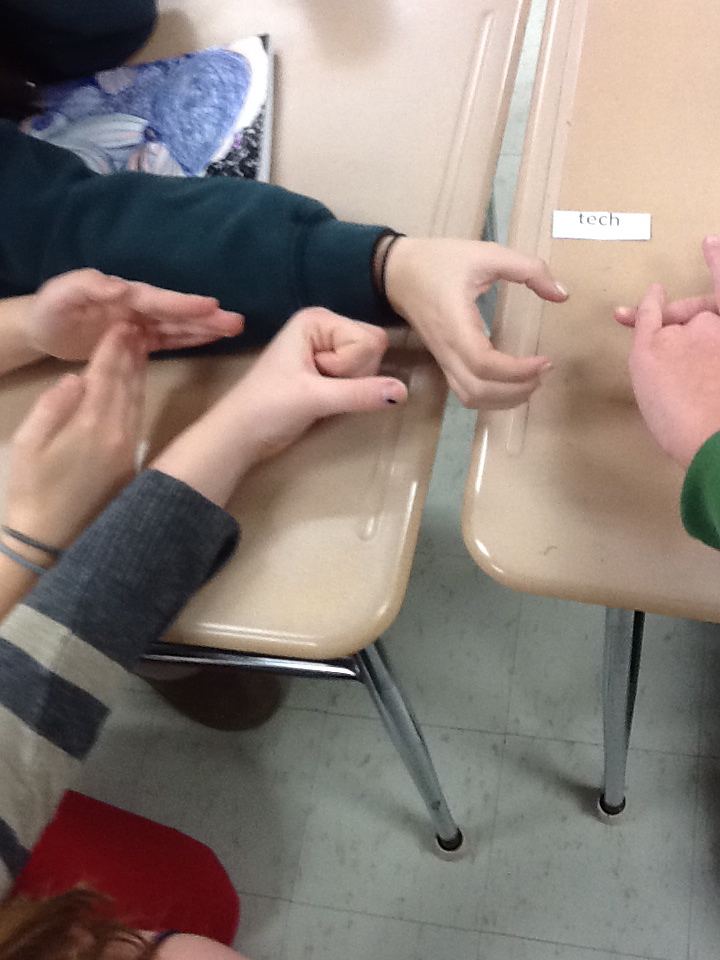
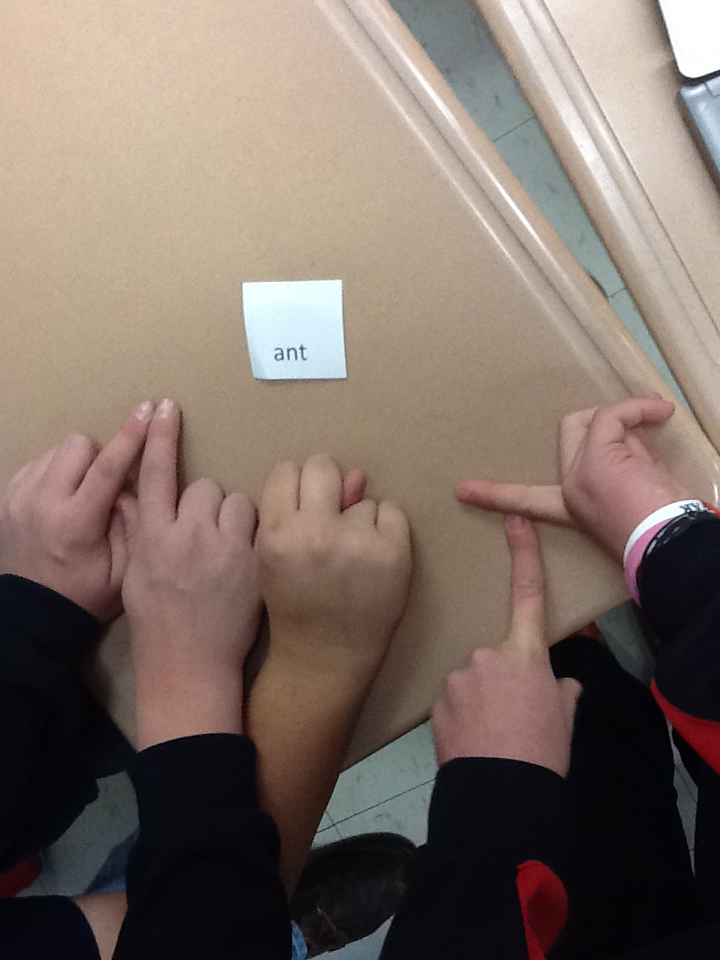
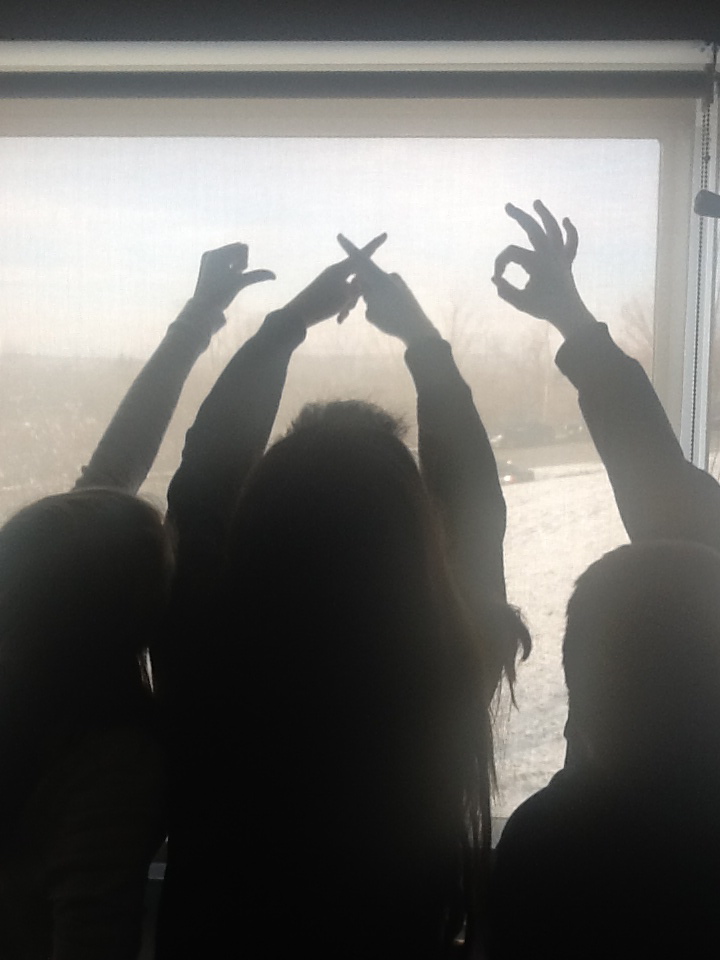
After the 9th graders had the lists, we practiced the words and their meanings kinesthetically. The students used their fingers to spell out Greek roots: ant (against), tech (skill), exo (outside).

TECH-(Skill)

TECH-Skill

ANT-against

ANT-against

ORTH-Correct

ORTH-Correct

EXO- Outside

EXO- Outside

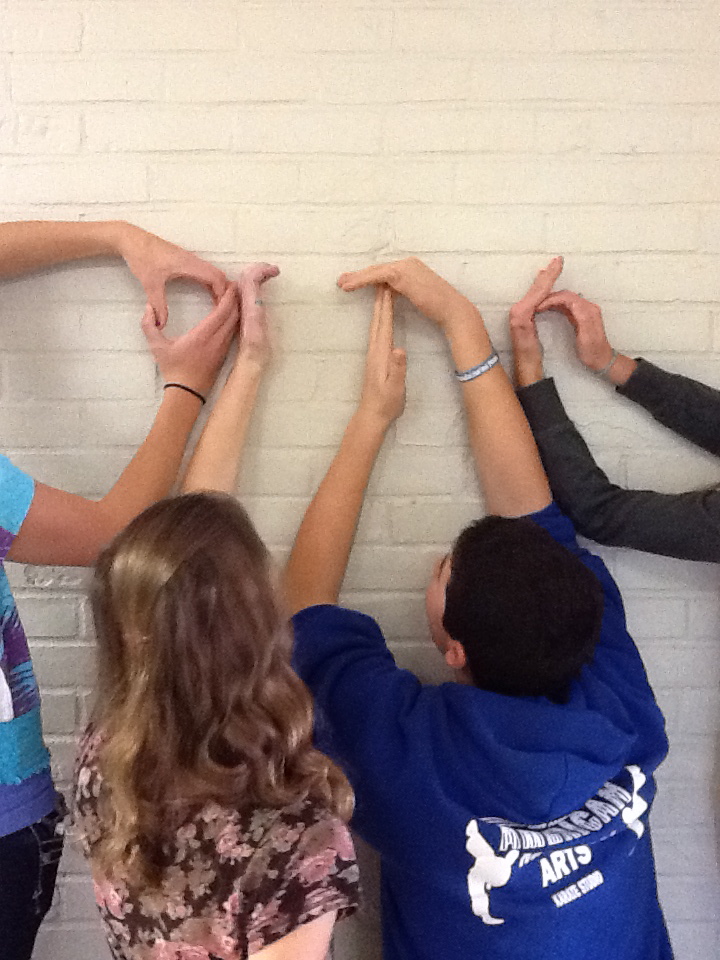
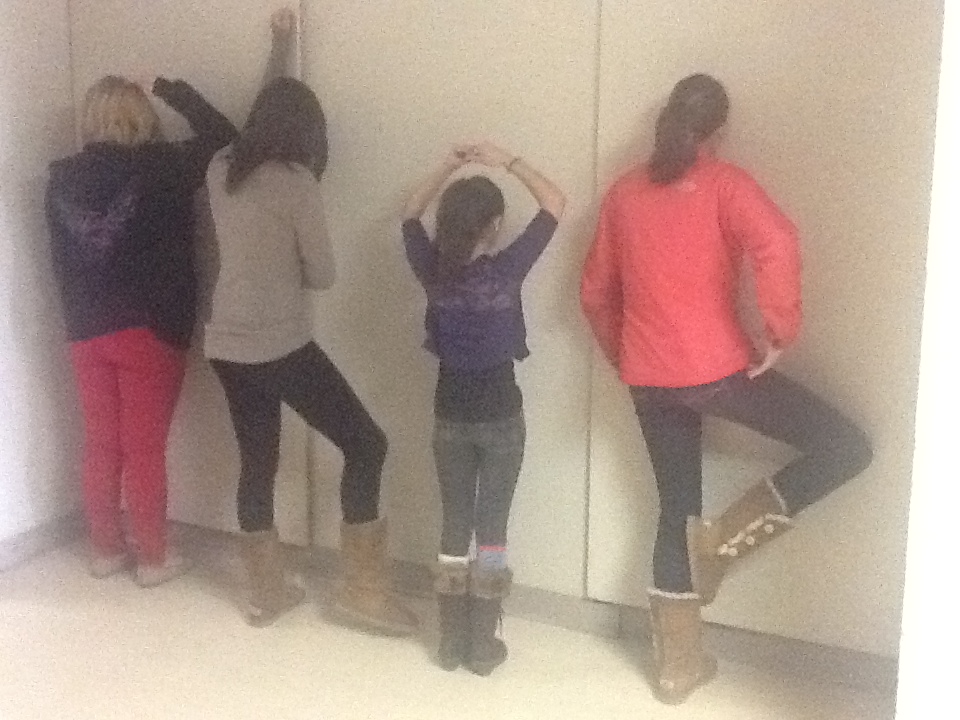
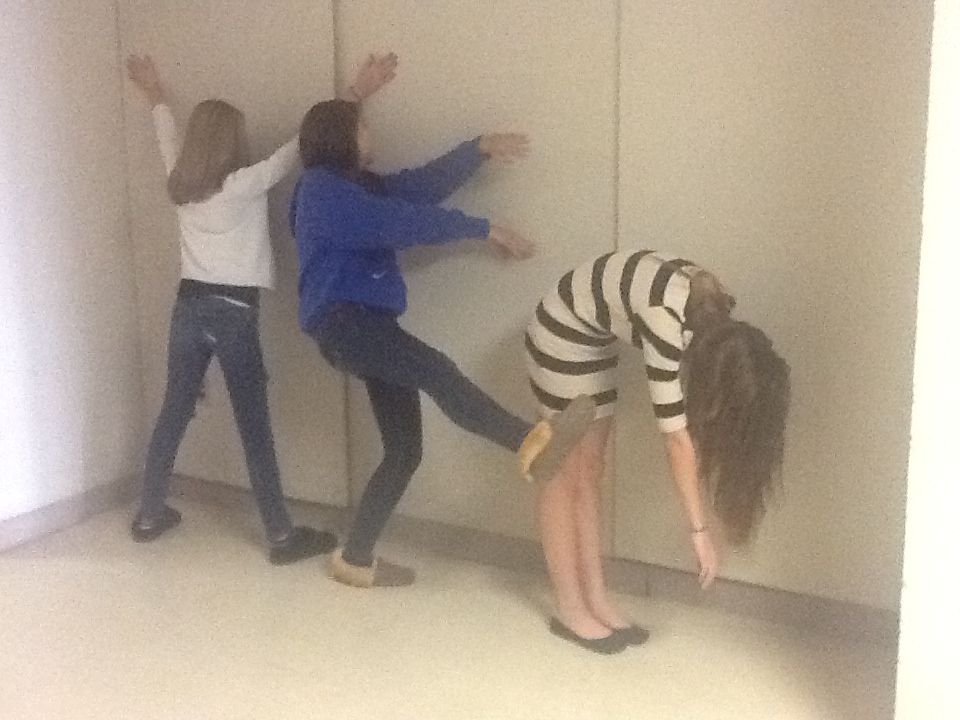
They twisted their bodies into letters and spread out against the wall spelling out xen (foreign), phob (fear).

This was fun. (Sorry you cannot see their smiles)

This was also effective. The class average was  96% on Set I and 87% on Set II.

Greek roots are difficult to memorize, but they are essential to decoding other vocabulary words. Between 5-25% of English words are derived from the Greek. The Greek roots are particularly important in understanding today’s vocabulary in science and medicine.

How fitting, then, that kinesthetic is a synonym for biomechanics. And guess what the etymology of biomechanics is? Greek, of course!  Bios (living organism) + mechane, (machine).

This connection between my activity and the root might just be Greek fate…. but that’s another lesson!

PHOB-Fear

PHOB-Fear

XEN-Foreign

XEN-Foreign

Wikipedia-logoA short-lived category sub-set in a Wikipedia entry set off a feminist firestorm at the end of April. In an editorial for the New York Times titled “Wikipedia’s Sexism“,  the writer Amanda Filipacchi noted the removal of women writers from the Wikipedia web page category “American Novelists”; women writers had been regrouped under a new web page, “American Women Novelists”. Filipacchi wrote:

 “I looked up a few female novelists. You can see the categories they’re in at the bottom of their pages. It appears that many female novelists, like Harper Lee, Anne Rice, Amy Tan, Donna Tartt and some 300 others, have been relegated to the ranks of ‘American Women Novelists’ only, and no longer appear in the category ‘American Novelists.’ If you look back in the “history” of these women’s pages, you can see that they used to appear in the category ‘American Novelists,’ but that they were recently bumped down. Male novelists on Wikipedia, however — no matter how small or obscure they are — all get to be in the category ‘American Novelists.’ It seems as though no one noticed.”

The category “American Women Novelists” was created by a 32-year-old history student at Wayne State University, John Pack Lambert.  His editing was violation of Wikipedia’s rules that categories should not be based on gender.

Yet, this regrouping called attention to other “gender-biased” incidents that have happened at “the free encyclopedia that anyone can edit.” Apparently “anyone” is not editing.  In an interview on NPR by Lynn Neary,”What’s In A Category? ‘Women Novelists’ Sparks Wiki-Controversy”, Wikipedia editor Ryan Kaldari admitted:

“Only about 10 percent or less of the editors at Wikipedia are women. And so a lot of times there’s this subconscious, white, male, privileged sexism that exists on Wikipedia that isn’t really acknowledged.”

While that admission is startling in its honesty and frightening implications about editors at Wikipedia, another interesting story seems to have gone unnoticed. At age 12, Wikipedia is “coming of age”. The repercussions from this incident mark another step towards Wikipedia’s gradual movement towards acceptability; Wikipedia is learning how to becoming academically legitimate.

For example, what difference would it have made years or even several months ago if a Wikipedia editor had decided to create gender based subsets within categories if the Wikipedia was used primarily as a source to “settle a bet with a roommate“? In addition, as the web becomes more collaborative in the sharing of information, is the information on Wikipedia less valid because the more than one writer is responsible for the article? Moreover, do the “real time” corrections like those made every day on Wikipedia improve the validity of information available or do these corrections even matter since research from Ohio State University shows that many people cling to misinformation despite corrections? And up until last April, would any scholar or academic have cared how a Wikipedia editor organized one of the 4,325 categories currently available?

In the article “Wikipedia’s Woman Problem”, James Gleick in the New York Review of Books explained that Wikipedia has logged thousands of pages of discussions on categories:

“It’s fair to say that Wikipedia has spent far more time considering the philosophical ramifications of categorization than Aristotle and Kant ever did.”

Aristotle? Kant? Wikipedia is philosophical? That sounds almost scholarly.

Gleich makes the point that categories matter to Wikipedia:

“Categories are a big deal. They are an important way to group articles; some people use them to navigate or browse. Categories provide structure for a web of knowledge—not a tree, because a category can have multiple parents, as well as multiple children.”

The creation of the “American Women Novelist” category briefly separated Toni Morrison, Anne Rice, Nora Roberts, and Annie Dillard from their category counterparts such as Isaac Asimov, Ernest Hemingway, Hunter S. Thompson, Truman Capote,and Zane Gray. The result was that many scholarly people did care, especially female novelists. Joyce Carol Oates (novelist, short story writer, playwright, poet, literary critic, professor, editor) expressed her views on Twitter:

“Wikipedia bias an accurate reflection of universal bias. All (male) writers are writers; a (woman) writer is a woman writer.”

“New idea for Wikipedia sex-bias: list names alphabetically only of those Americans who ARE NOT writers/ poets.”

Similarly, the novelist Amy Tan, mentioned in the NY TImes editorial by Filipacchi, tweeted her response:

#WikipediaFail I have been reduced to a Lady Novelist. American novelists=only men. 1990s ghettoization returns!

These comments among others are an indication of broader academic conversations generated by Lambert’s changes to the “American Novelists” page and the exponential growth of information available online today. Who is in charge of information, the organization of information, and the accuracy of information? Salon’s Andrew Leonard’s considers an argument that the editing process for Wikipedia entries is public and that the process of continuous editing brings about accuracy. In his commentary “Wikipedia’s Shame” Leonard points out:

“…hardcore Wikipedia advocates argue that no matter how dumb or ugly the original bad edit or mistake might have been, the process, carried out in the open for all to see, generally results, in the long run, in something more closely resembling truth than what we might see in more mainstream approaches to knowledge assembly.”

But this is not the only incident involving authors and their dissatisfaction with decisions by Wikipedia, and gender bias is not the only controversy. There was also a recent incident involving the novelist Philip Roth. In August 2012, Roth contacted Wikipedia about a misstatement on an entry dedicated to his novel The Human Stain. Wikipedia would not authorize the change, and Roth wrote about the editors’ decision in an open letter published in The New Yorker:

SEPTEMBER 7, 2012

Dear Wikipedia,

I am Philip Roth. I had reason recently to read for the first time the Wikipedia entry discussing my novel “The Human Stain.” The entry contains a serious misstatement that I would like to ask to have removed. This item entered Wikipedia not from the world of truthfulness but from the babble of literary gossip—there is no truth in it at all.

Yet when, through an official interlocutor, I recently petitioned Wikipedia to delete this misstatement, along with two others, my interlocutor was told by the ‘English Wikipedia Administrator’—in a letter dated August 25th and addressed to my interlocutor—that I, Roth, was not a credible source: ‘I understand your point that the author is the greatest authority on their own work,’ writes the Wikipedia Administrator—’but we require secondary sources.'”

Really? The primary word of the author requires secondary sources? That definitely sounds like Wikipedia’s step towards the scholarly; the kind of instructions a teacher might given to a student doing a research paper.  With Roth’s situation, however, the editor’s decision seems incongruous, and the explanation reads more like text written by George Orwell, author of the prescient novel 1984.

If that Wikipedia’s editor’s response is Orwellian, then consider another comment made by Wikipedia editor Kaladari that the “American Woman Novelist” vs. “American Novelist” controversy has “about 33,000 words of discussion on it which is quite a lot.” Then he added, “It’s actually more than the novel Animal Farm.

Mr. Kaladari’s comparison may not have been intended to be ironic, but Orwell’s allegorical novel Animal Farm about a brutal regime that tries to rewrite history may be closer to this heart of this incident that readers realize. Think back to high school and remember the revolutionary speech by the pig, Old Major:

“There, comrades, is the answer to all our problems. It is summed up in a single word–Man.” 

“Exactly,” respond female writers everywhere.

muckRight about now, the last week of April, my Advanced Placement English Literature students are noticing a frantic tone creeping into my voice.

“No, finish this multiple choice practice FIRST, then complete the essay prompts. Any questions? No? Let’s go, now. Hurry….hurry….HURRY!!”
“Geez, you are so crabby lately,” notes one.

I am crabby; I understand the pressure they will be under during the AP exam in May, and I want them prepared. In contrast, they just want to be fourth quarter seniors.

These weeks are the “boot camp” weeks before the exam, and I am trying to improve their ability to respond quickly and decisively to a prompt. They will be writing three separate essays; each read by an audience of one, a reader who will grade hundreds of essays a day. They need to make a clear argument.

For practice, I offered a choice of four prompts to students. We just finished reading Eugene O’Neil’s A Long Day’s Journey into Night, and each prompt touched on one aspect of the play: the text, the characters, the theme. Rather than have them write a full essay response to a specific prompt, I had them write two separate opening and concluding paragraphs for their two chosen prompts. I gave them forty minutes to do both. The whining began immediately:

“I have a hard time just writing a beginning and an opening.”
“I always start in one place and end in another.”
“I need to write the middle or I can’t write the end!”

“That’s because you write to find out what you think,” I respond, “and that should show up in the introduction or the conclusion.”

Since the AP exam is a timed test, 120 minutes for three prompt analysis and response questions, timed practices are helpful. These truncated practice essays are incomplete and rough, but they do help students practice how to reconcile an introduction with a conclusion in a short time. In these hastily written drafts of beginnings and endings, I can help them distinguish their good ideas from linguistic clutter so an AP reader will better appreciate their argument. I do not want my students to make a thesis so hidden that the AP Reader is hunting for the “manifesto in the muck”.

What “muck” you ask? Essays cluttered with empty words:  a lot, kind of, sort of, actually, stuff, thing, very, really, quite

Essays cluttered with the muck of empty phrases:

  • Because of the fact of
  • The reason…is because

Essays cluttered with the muck of statements of the obvious:

  • The author uses diction and syntax to communicate his meaning.
  • The theme is the message the author is trying to communicate.
  • Words have meaning.

In one block period, the students wrote the truncated essays of introductions and conclusions in response to O’Neill’s semi-autobiographical play,  A Long Day’s Journey into Night.  We reviewed each draft to find the one powerful statement that publicly declared that student’s view, a statement that could get an AP reader’s attention. The prompts are in bold; student’s statements below each prompt:

PROMPT #1: Select a line you find especially memorable; analyze the reasons for its effectiveness.

  • When I read about this family, it reminded me of the advice, “only the strong survive’; the Tyrone family lives like a pack of animals, not a family.
  • If the characters in the play had the ability to leave behind their past, forget the things that made them lesser, they would be better off.

PROMPT #2: Describe how the author manages to give internal awakenings, discoveries, changes in consciousness the sense of excitement, suspense, and climax usually associated with external action.

  • James is struck with the conflict of having someone say his greatest fear is being in a class he does not think he belongs. 
  • The choice presented to each character is which moral or ethical barrier to shatter in order to overcome the cycle of insanity.
  •  Literature is an extension of human understanding and comes from our musings, our curiosities, and our imaginations.

PROMPT #3: Discuss the contribution scenes of social occasions reveal about the values of the characters and the society in which they live.

  • Whether these experiences dealt with alcohol abuse, substance abuse, or general unhappiness in life, all topics were acted out to be ignored or forgotten about, yet these [experiences] remained the most memorable. O’Neill wanted the conflicts to be pushed aside, which then caused the audience to latch on and never forget.
  • We seek out the approval and forgiveness of others when our own soul’s condition is purely of our own pilot.

PROMPT #4: Explain how the tragic figure functions as an instrument of the suffering of others and that the suffering brought upon others by that figure contributes to the tragic vision of the work.

  • In this way, each individual’s poisoned action spreads like a virus and affects all those in its proximity devouring them to the point of self destruction.
  • Edmund’s sickness is not just  source of unwanted strains on the family; it is an object to represent the family relationship.

When I come upon one of the above statements, in the beginning or the end of the draft, I can almost hear the “clink” that went on in the student’s head (and hand) as he or she drafted the essay.  At a point in the writing conferences that followed, a student will agree, “Yeah, that was when I figured out what I was writing about.” My experience is that students write their way into a thesis, and it is important for the student to recognize that statement, so he or she can parse away the clutter, removing the muck so that the AP Reader can find that statement too.

During this last week of AP English Literature practice, students will work at drafting responses to prose and poetry prompts. They will be writing their responses quickly, and I will still be crabby. But because of the practice, there will be less muck that covers a student’s manifesto in an AP literature essay response. After that, they can go back to being 4th quarter seniors.

ScantronThe New York State Department of Education’s new standardized tests were administered last week. The tests for grades 3-8 were developed by the educational testing company Pearson and contained new “authentic” passages aligned to the new Common Core State Standards. State tests might have been routine news had not several teachers also noticed that the English Language Arts “authentic” passages mentioned products and trademark names including Mug ©Root Beer and Lego ©.

Product placement on standardized tests in elementary schools is bigger news. The public has grown accustomed to advertisements on webpages, before videos, on scoreboards, and with the well-placed beverage during a movie. Subtle and direct advertising to the youth market to develop brand loyalty at an early age is the goal of almost every corporation.

Consider a survey by Piper Jaffray, a leading investment bank and asset management firm, the  “Taking Stock With Teens” survey (taken March 1–April 3, 2013), that gathered input from approximately 5,200 teens (average age of 16.3 years). The survey is used to determine trends, and the most recent results note:

“Spending has moderated across discretionary categories for both upper-income and average-income teens when compared to the prior year and prior season. Yet nearly two-thirds of respondents view the economy as consistent to improving, and just over half signaled an intent to spend ‘more’ on key categories of interest, particularly fashion and status brand merchandise.”

Much attention, therefore, is placed on the youth market, and product placement on standardized testing could be a new marketing strategy. For example, corporations in the fashion industry could read this report and be inclined to offer some news stories or commission a short story that mentioned clothing brand names in the future to Pearson or another testing company in order to provide “authentic” passages. What better opportunity for corporations to build brand loyalty then to an audience, captive in a classroom during a state-mandated test?

The education reporter for the Washington Post, Valerie Strauss, reported on the “authentic” passages that mentioned products as “author’s choices”; Pearson’s response to her query:

As part of our partnership with NYSED, Pearson searches for previously published passages that will support grade-level appropriate items for use in the 3-8 ELA assessments. The passages must meet certain criteria agreed upon by both NYSED and Pearson in order to best align to Common Core State Standards and be robust enough to support the development of items. Once passages are approved, Pearson follows legal protocols to procure the rights to use the published passages on the assessment on behalf of NYSED. If a fee is required to obtain permission, Pearson pays this fee. NYSED has ultimate approval of passages used on the assessment.

Strauss’s report, “New Standardized Tests Feature Plugs for Commercial Products” also indicated that this practice is not exclusive to NY, and that “several different assessment programs have instances of brand names included due to use of authentic texts.” There were no specifics mentioned.

Following up with the NY Department of Education, Beth Fertig from the blog Schoolbook (WNYC),  Stories from the Front Line of Testing asked about the recent product placement:

“This is the first time we have had 100 percent authentic texts on the assessments,” said spokesman Tom Dunn. “They were selected as appropriate to measure the ELA standards. Any brand names that occurred in them were incidental and were cited according to publishing conventions. No one was paid for product placements.”

Perhaps no one was paid this year, but an unwritten taboo was broken with these standardized test. The New York Post reported one teacher response in the article  “Learn ABC’s – & IBM’s: Products in Kid Exams” by Yoav Gonen and Georgett Roberts

“I’ve been giving this test for eight years and have never seen the test drop trademarked names in passages — let alone note the trademark at the bottom of the page,” said one teacher who administered the exam.

They also reported that other commercial enterprises including the TV show “Teen Titans” and the international soccer brand FIFA  were also included on the tests.

While gaining the loyalty of the youth market is a necessary step for major corporations, the appearance of these brands on standardized tests brings our students one step closer to the future as envisioned by Stephen Spielberg in the film Minority Report. In one scene, the fugitive John Anderton (Tom Cruise) walks along a corridor while animated billboards market directly to him by calling his name:

The possibility of this kind of marketing exists and perhaps personalized advertising will call to us everyday; a cacophony of advertisements designed to keep brand names in our consciousness. Similarly, even the youngest students are the target of marketing campaigns as part of any corporation’s long term economic strategy; advertisements on multiple platforms are the “white noise” of their lives. So frequent are advertisements in students’ lives that any product placement, paid or unpaid, on these standardized tests may contribute to the definition of what is “authentic”. Students are exposed to ads so frequently and in so many genres that a text is not real without some brand name mentioned.

And if that product placement is a small part of what makes a passage “authentic” on a standardized test, can talking “authentic” billboards in the school hallways be far behind?

Once the snow has melted, and mud dries up enough so wearing flip flops is possible, the season of dress code violations begins. Whether your school dress code policy is ultra conservative or lassiez faire, every spring, there will be one or two students, usually female, who will challenge the dress code with an alarmingly inappropriate outfit.

Part of the problem is that middle and high school females come in all shapes and sizes. A T-tank may be perfectly acceptable on one boyish girl’s figure, but eye-popping on a more buxom girl. A short skirt that looks sporty on one girl can look like taut athletic bandage wrap on another. Showing a little skin, say a an upper arm or a long leg may look healthy on one student while baring a large middle abdominal area or the top of the derriere provides more information than necessary.

I have often wondered how any student could think that the off the shoulder or midriff display is acceptable in school. Lately, I have been assigning the blame to Disney. Specifically, I blame the Disney princesses.

Consider how the Disney princesses of older generations were fully clothed. These princesses were:

  • Snow White (1937)
  • Sleeping Beauty (1959)
  • Cinderella (1950)

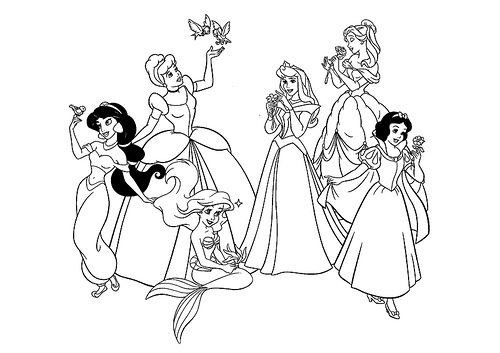
disney-princess-coloring-pages-7-comThese old-fashioned Disney princesses twirled with full skirted gowns, short or full sleeves, and accessorized their looks with gloves, capes, and the occasional scarf for cleaning.  There was an open neckline, but no décolletage. Princess Aurora (Sleeping Beauty) had a slight “over the shoulder” design that was covered by a large white collar in the pink/blue/pink/blue ballgown. The only character to reveal much flesh was Peter Pan’s Tinkerbell (1953) in a strapless gymnastic tight of sparkling citrus green. In subsequent generations, and without the benefit of a singing voice, Tinkerbell has been upgraded from fairy to princess. Her more melodious princess cousins were more modest dressers.

The next round of Disney princesses began in 1989. These princesses looked and acted very differently beginning with:

  • The Little Mermaid (1989) 
  • Beauty and the Beast (1991) 
  • Aladdin (1992) 
  • Pocahontas (1995)
  • The Hunchback of Notre Dame (1996) 
  • Hercules (1997) 
  • The Frog Princess (2009)

Recall the fashion influences of each of these princesses on students for the past 24 years:

  • The Little Mermaid‘s Princess Ariel’s species (born mermaid/part-time human) dictated that she wore little clothing, but the clamshells and low cut waist on her tail left little to the imagination. In creating such a daring outfit, the irony of Ariel’s lyrics,”Bet’cha on land they understand/That they don’t reprimand their daughters” appears to have been lost on her costume designers.
  • Beauty and the Beast‘s Princess Belle was a throwback to the princesses of the previous generation with the exception of her bare shoulders and a plunging neckline, a daring choice for dancing with a (possibly hungry?) “Beast”.
  • Aladdin‘s Princess Jasmine drew from the Ariel model; her cropped top and low cut balloon pants left a large expanse of middle, a surprising choice for a princess from a culture that suggests head to toe coverage for females in public.
  • In Pocahontas, the athletic Princess Pocahontas was designed as an American-Tarzan-ette. Dressed organically in a one-shoulder playsuit of buckskin and shells, she was lean, muscular, and barefoot; there was little clothing to hamper her progress through Colonial Virginia’s brush and briar.
  • In The Hunchback of Notre-Dame, the Gypsy Princess Esmerelda was dressed as the seductress Victor Hugo created; with her dark eyes smoldering over a daring low neckline and her shawl wrapped provocatively at her hips over a high slit skirt to jingle as she swayed. 
  • Princess Megera from Hercules had a body design lifted from the Barbie model with an equally impossible ratio of bust to hips size that allowed her to squeeze into her tight toga. While other princesses swayed, Megera sashayed into her hero’s life.
  • In The Frog Princess, Disney removed the racial barrier in creating Tiana. An African American Princess, Tiana was dressed in a gown mashup of Belle’s flowing ball gown skirt sitting below Tinkerbell’s bodice, that is when she was not on screen as a naked frog.

The fashions of these Disney princesses (1989-2009) were generally less modest than the fashions of previous generations. Their costumes had plunging necklines, bared midriffs, and high skirts. Their outfits, however, could also indicate the kinds of princesses they were, not castle-bound beauties, but more hands-on active counterparts to their princes.

For a quarter of a century, girls have grown up with the images of Ariel, Belle, Jasmine, Megera, Esmerelda, Pocohantas, and Tiana. They have dreamed of swimming “Under the Sea” or running with the “Colors of the Wind” or dancing with teapots to “Be Our Guest”.

So what would be the outfit of choice for school boards trying to design policy for  female students who have imitated the fashions of their beloved princesses since childhood? What princess outfit could pass muster?

There could be a vote for the clothing of Mulan (1998) a warrior princess who was forced to remain clothed top to bottom in order to hide her gender during warrior training and battle. Even when she returned to her role as a dutiful daughter, she was completely covered in a beautiful kimono. This choice, however, may be too much of a cultural stretch.

Finally, there could be a vote for the Princess Rapunzel from Tangled (2010) whose hair was the fashion statement. Part costume and part weapon, Rapunzel’s hair kept the audience from noticing any exposed body parts, however hair like hers could make movement through the crowded school hallways difficult.

Oh, Disney, if only you knew the consternation caused by your princess fashion designs. Maybe school boards could send your animators their dress codes so future princesses would dress accordingly. Better yet, Disney, you could stick to animating animals. We don’t mind seeing Dory (Finding Nemo) or Nala (The Lion King) naked; in fact, we like them better that way.

sols_6Why do I stay? This question is circulating on blogs and in videos by teachers from across the country. My friend Catherine, a teacher and literacy specialist, brought this question to my attention in her post this week. She was participating in a challenge organized by Two Writing Teachers called  The Slice of Life. The instructions for participating are on a link that goes first to a definition (“Slice of life is a phrase describing the use of mundane realism depicting everyday experiences in art and entertainment“) while other links provide procedures:

WRITE your slice. SHARE your link. GIVE some comments to (at least three) other slicers.

On one post she linked her Slice of Life post to blogger Beth Shaum’s video “Why I Stay”.  Catherine listed her reasons for staying and noted that other teachers have written about their reasons for remaining in the classroom, “despite changes in curriculum because of Common Core State Standards, new testing, and new evaluations that are being imposed on educators.” The video on Shaum’s blog addresses startling statistics about the teaching and the education profession:

More than 30% of new educators quit teaching after three years, and nearly 50% leave before hitting the five-year mark. (USNews.com)

Shaum’s video showed dozens of teachers from around the country sharing their reasons for staying in education.

I have not written to The Slice of Life challenge, but I did think the idea of recording my personal reasons as to why I have stayed and taught for 22 years in grades 6-12 would be an exercise that could both help me frame my own thinking and possibly encourage younger teachers who are often overwhelmed.

My reason for “why I stay” is purely selfish.…I want to share the stories.

I want to share with children, teens, and adults the stories they have read, seen, or heard.

I want to share the stories in picture books.
I want to share the stories in chapter books.
I want to share the stories in the canon.

So, I teach students to read stories so that we can talk and share the stories that make us human..

I want to share books.

I want to share books at every grade level.

hungry Whales Go_Dog_Go

I want to share books:

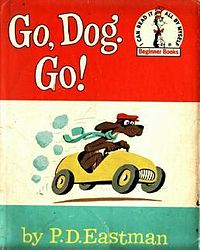
  • Go, Dog, Go
  • Hungry Hungry Sharks
  • The Whales Go By

I want to share more books:

  • Nancy Drew’s The Password to Larkspur Lane
  • The Twenty-One Balloons
  • A Wrinkle in Time

Larkspur wrinkle 21 balloons

I want to share novels:

  • Of Mice and Men
  • The Road
  • The Curious Incident of the Dog in the Night-time

I want to share stories written as dramas. I want to talk about:

  • Hamlet
  • Medea
  • The Importance of Being Ernest

I want to share stories made into film. I want to talk about:

  • One Flew Over the Cuckoo’s Nest
  • The Wizard of Oz
  • The Shawshank Redemption

I want to share stories in poems. I want to talk about:

  • The Odyssey
  • Paradise Lost
  • The Cremation of Sam McGee

Guernica Fall of Icarus

GW Delaware

I want to share the stories in paintings. I want to talk about:

  • Guernica
  • The Fall of Icarus
  • George Washington Crossing the Delaware

I want to share the stories that were responsible for essays and speeches. I want to talk about:

  • The Gettysburg Address
  • A Modest Proposal
  • Self-Reliance

I want to share the stories of people’s lives, stories about nature, and stories that mark cultural trends. I want to share:

  • Will You Sign Here, John Hancock?
  • Silent Spring
  • The Tipping Point

From the ancient lights of the campfires to the soft glow from a Kindle, our stories record our humanity.I stayed 22 years in teaching because I want students to understand that record of humanity. I stayed 22 years in teaching because I want students to respond to stories through writing and through speaking. And I stayed because I wanted to encourage students to record their own stories. I want to read and hear and see their stories.

In this great cultural experiment of public education for ALL, I stay to share the stories.