Archives For November 30, 1999

In order to familiarize English teachers with the Common Core Language Arts Standards, education policy expert David Coleman has been making the rounds with sample lessons and explanations. A video taken in NY , Close Reading of Text: Letter from Birmingham Jail, Martin Luther King, Jr. from EngageNY on Vimeo, has been posted on the English Companion Ning with the caption, “David Coleman leads a sample exploration of a complex text utilizing strategies outlined within the six shifts in instruction.” The text he discusses is Martin Luther King’s Letter from a Birmingham Jail; the video takes 15 1/2 minutes to watch. One point he makes about extended close reading is particularly alarming. But first, a quick bio on David Coleman (supplied for seminar):

David Coleman is a Founding Partner of Student Achievement Partners, a non-profit  organization that assembles leading thinkers and researchers to design actions to substantially improve student achievement. Most recently, Mr. Coleman and Jason Zimba of Student Achievement Partners played a lead role in developing the Common Core State Standards in math and literacy. Mr. Coleman and Jason Zimba also founded the Grow Network – acquired by McGr aw-Hill in 2005 – with the mission of making assessment results truly useful to teachers, school leaders, parents, and students. Mr. Coleman spent five years at McKinsey & Company, where his work focused on health care, financial institutions, and pro bono service to education. He is a Rhodes Scholar and a graduate of Yale University, Oxford University, and Cambridge University.

Coleman is also on the board of directors of The Equity Project Charter School (TEP), a 480-student middle school in the Washington Heights neighborhood of New York City that opened in September 2009. The school has received much attention because of the  $125,000 salaries paid to teachers. The 2010-2011 results of NY English-Language Arts Assessment given to 5th graders saw a passing rate of  31.3%, below average for comparable schools. The school, however, has moved up 127 ranking points from 2009-2010, and its current standing in ELA assessment is 1972 out of 2291 NY state schools.

I think it is important to note that Coleman is not a teacher. He has not taught in a classroom.
Back to Letter from a Birmingham Jail.

Coleman spends a great deal of time using a New Criticism approach, which is defined at the Bedford St. Martin VirtuaLit website as one that, “…stresses close textual analysis and viewing the text as a carefully crafted, orderly object containing formal, observable patterns…New Critics are more likely than certain other critics to believe and say that the meaning of a text can be known objectively.” This marks a shift from Reader Response Criticism, defined by proponent Stanley Fish as recognizing that the reader is active, and that “Literature exists and signifies when it is read,and its force is an affective one. Furthermore, reading is a temporal process, not a spatial one as formalists assume when they step back and survey the literary work as if it were an object spread out before them.”

Paragraph by paragraph, Coleman analyzes the language and structure of King’s letter, occasionally suggesting  that the letter can be a jumping off point for further study into historical injustice or to Socrates. Exactly how a teacher positions the students to make the intellectual jump to recognizing the strategies of King’s moral argument is not explained in Coleman’s video.  Instead, Coleman offers his possible interpretations of King’s letter. He models a lesson he would give, but he is not providing a strategy. Strategy is a plan of action designed to achieve a vision; Coleman provides an example, not a plan of action. To be clear, critical thinking is a strategy and students need to have critical thinking skills. For example, at the Critical Thinking Community, there are eight elements of reasoning that could serve as strategy, a plan of action, for analyzing King’s letter:

  • What is the text’s purpose?
  • What questions does the text generate or try to answer?
  • What information is contained in this text to answer these questions?
  • What inferences are being made in the text?
  • What key concepts does the reader need to know when reading the text?
  • What assumptions can the reader make about the text (and its author, purpose)?
  • What are the consequences of having read this text?
  • Whose point of view is seen in the text? Whose point of view would be different?

I have not taught King’s letter, but I have taught challenging texts of similar length and complexity. I have taught Elie Wiesel’s 1999 speech to Congress The Perils of Indifference and George Orwell’s 1946 essay, Politics and the English Language. Both pieces were taught in conjunction with a work of fiction rather than “stand alone” pieces. Both texts took one or two periods to have students understand the purpose of the text and the information in the texts. I did not take students through all of the elements of reasoning; these were supplemental texts I chose to support fiction were we studying.

So when I heard Coleman’s position that a teacher should spend six to eight days on this letter, I was taken aback. Really? Six to eight days is two weeks in “school time”, the same amount of time I usually spend teaching the entire memoir Night by Elie Wiesel. Six to eight days represents the class time used for several grammar mini-lessons and two polished essays. Six to eight days represents a unit on (8) sonnets, or a unit on (5) short stories, or the in-class reading of three acts of Shakespeare’s Macbeth.

Again, I must reiterate that Coleman is not a teacher. He has not taught in a classroom.

Back to Letter from a Birmingham Jail.

The genius of King’s letter is how he combines the political and moral argument in an emotional appeal that is, like all great literature, immediately evident. I see the protracted dissection of his letter as akin to tearing a delicious muffin apart in order to reduce the muffin to its ingredients, all that is left are the (still delicious) crumbs. Furthermore, focusing so much attention on this one letter  could be construed as a little insulting to King. I sense he, like any author, did not intend for his work to be parsed in classrooms for such extended periods of time. Close reading is important, but inspection is another. Students generally are not interested in the minutiae of rhetorical composition. I also envision a cadre of dead American authors similarly frustrated rolling in their graves as students are forced to slog through weeks upon weeks of literature study…”Once upon a  midnight dreary…” .

In my classrooms, Coleman’s suggested time of processing extended reading over six to eight days would be met with frustration by many of my students, regardless of reading level. I speak from experience in the classroom where three days (reading, responding, discussing, and writing) in a 9th grade classroom spent on Edgar Allen Poe’s Cask of the Amontillado is sufficient; a fourth day would make them as mad as Montresor. Furthermore, his blithe remark that extended time will better allow all students to participate and make contributions again places the emphasis on time rather than on the engaging strategies that need to be in place.Yes, close reading is a skill, but that skill must be practiced with a multitude of texts. The application of close reading skills from one selection to another is where many students falter.  Strategies that improve a student’s close reading skills from one selection to another, from one genre to another, from one discipline to another should be the focus of teachers implementing Common Core standards. The disproportioned allotment of time to one text reduces the amount of time practicing with other texts. While Coleman could argue that a close reading of six to eight days would be taught only once in order to model close reading skills, the likelihood that students would replicate that lengthy  process on their own is unlikely.

A student’s level of appreciation of a text is still often tied to personal experience. Deep engagement with a text for student is,  as with many adults, a personal experience that cannot be forced. Coleman’s six to eight day formula may make a student aware of elements in a text but not necessarily personally engage in the same manner he espouses. His personal engagement with King’s letter is obviously one of reverence; his video explaining King’s letter borders on proselytizing. In comparison, King did that better-and he didn’t take six days.


NEWLY EDITED 12/29/12:
I hate Reader Response Theory, one that considers readers’ reactions to literature as vital to interpreting the meaning of the text.

CHANGED TO:
I hate how Reader Response Theory has been abused by standardized testing. Two most annoying questions for me in the Connecticut standardized testing for reading (CAPT-Response to Literature) are reader response based questions to a short story prompt:

  • CAPT #1:What are your thoughts and questions about the story? You might reflect upon the characters, their problems, the title, or other ideas in the story.
  • CAPT #4: How successful was the author in creating a good piece of literature?  Use examples from the story to explain your thinking.

After 10 years of teaching with this standardized test, I can recognize how many of my students struggle with these questions. Many lack the critical training gained from extensive reading experiences in order  to judge the quality of a text. Combine this lack of reader experience with the see-saw quality of the text on the exam year to year.  Since classic short stories such as those by Saki, Anton Chekhov, Kate Chopin, Stephen Crane, and Jack London, to name a few, are considered too difficult for independent reading by 3rd quarter 10th grade students, more contemporary selections have been used on the exam. For example, these stories in the past years have included Amanda and the Wounded Birds by Colby Rodowsky, Catch the Moon by Judith Ortiz Cofer, and a story written by Jourdan U Playing for Berlinsky published in Teen Ink. While some stories are well-written, many lack the complexity and depth that would generate thoughtful responses to a prompt that asks about “good literature.”  My students are in the uncomfortable position of defending an average quality story as good; the prompt promotes intellectual dishonesty.

So, I use a formula. I teach my students how to answer the first question by having them list their intellectual (What did you think?) and emotional (What did you feel?) reactions to the story. I have them respond by listing any predictions or questions they have about the text, and I have them summarize the plot in two short sentences. The formula is necessary because the students have only 10-15 minutes to answer this in a full page handwritten before moving to another question. The emphasis is one that is reader’s response; what does the reader think of the story rather than what did the author mean?

I teach how to answer the evaluation question much in the same way. Students measure the story against a pre-prepared set of three criteria; they judge a story’s plot, character(s) and language in order to evaluate what they determine is the quality of the story. Again, this set of criteria is developed by the student according to reader response theory, and again there is little consideration to author intent.

The newly adopted Common Core State Standards (CCSS) in Language Arts is designed differently. The  focus is back on the text; what the reader thinks is out of favor. For example, in three of the ten standards, 10th grade students are required to:

  • Analyze how complex characters (e.g., those with multiple or conflicting motivations) develop over the course of a text, interact with other characters, and advance the plot or develop the theme;
  • Determine a theme or central idea of a text and analyze in detail its development over the course of the text, including how it emerges and is shaped and refined by specific details; provide an objective summary of the text;
  • Cite strong and thorough textual evidence to support analysis of what the text says explicitly as well as inferences drawn from the text.

Please note, there is nothing in the language of the standards that asks what the student thinks or feels about the text.

In an article titled, “How Will Reading Instruction Change When Aligned to the Common Core?” on The Thomas B. Fordham Institute website (1/27/2012), Kathleen Porter-Magee  discusses the shift from the student centered response to the CCSS  “challenges to help students (and teachers) understand that reading is not about them.”

Porter-Magee  describes how David Coleman, one of the architects of the CCSS ELA standards, is promoting the close reading of texts, sometimes over extended periods of several days. The article notes that currently, “teachers often shift students’ attention away from the text too quickly by asking them what they think of what they’re reading, or how it makes them feel. Or by asking them to make personal connections to the story.” Coleman states that, “Common Core challenges us to help students (and teachers) understand that reading is not about them.” Instead, he advocates the practice of close reading, a practice that  “challenges our overemphasis on personal narrative and personal opinion in writing classrooms.”

In addition to the movement away from reader response criticism, the CCSS will be upgrading the complexity of the texts. Porter-Magee notes that,

“Of course, there’s only value in lingering on texts for so long if they’re worthy of the time—and that is why the Common Core asks students to read texts that are sufficiently complex and grade-appropriate. Yes, such texts may often push students—perhaps even to their frustration level. That is why it’s essential for teachers to craft the kinds of text-dependent questions that will help them break down the text, that will draw their attention to some of the most critical elements, and that will push them to understand (and later analyze) the author’s words.”

In other words, the quality of the texts will be substantively different than the texts used in the past on the Response to Literature section of the CAPT. This should make the response about the quality of text more authentic; a genuine complex text can be analyzed as “good literature.” How the more complex text will be used in testing, however, remains to be seen. A student trained in close reading will require more time with a complex text in generating a response.

I confess, the movement away from reader response is a move I applaud. A student’s response to a complex text is not as important in for the CCSS as what the text says or what the author intended, evidence will supplant opinion.

However, I am very aware that the momentum of the every swing of the educational pendulum brings an equal and opposite reaction. Swish! Out with reader response. Swoop! In with close reading of complex texts. Students,this swing is not about you.

Beware the Ides of March!
March Madness!
Mad as a March Hare!

Why so much warning about March?
Well, here in Connecticut, our students are preparing for the Connecticut Mastery Tests (CMT) in grades 3-8 and the Connecticut Academic Performance Test (CAPT) in grade 10 which are given every March. While every good teacher knows that “teaching to the test” is an anathema, there is always that little nagging concern that there should be a little practice in order to anticipate performance on a standardized test. So, we “practice” to the test.

In English, 10th grade students participate in a Response to Literature section of the test where they read a selected fiction story (2,000-3,000 words; RL 10th) and respond to four questions that ask:

  • a student’s initial reaction;
  • to note a character change or respond to a quote;
  • to make a connection to another story, life experience, or film;
  • to evaluate the quality of the story.

Unfortunately, an authentic practice for this test is time consuming, requiring 70 minutes which includes the reading of the story and the four essays, roughly a full hand-written page response to each question. Needless to say, our students do not like multiple practice tests for the CAPT, so developing the skills needed to pass the Response to Literature must be addressed throughout the school year.

When practice time does arrive,  students can be “deceived” into CAPT practice through technology. We have been trying two abbreviated practice approaches using our class netbooks where students actively read a text using hyperlinks or use quiz/test taking software. In these practice assessments the student responses are typed and shorter in length, but still cover the same questions. A hyperlinked test practice, including the sharing of results, can be done in one  40 minute class period.
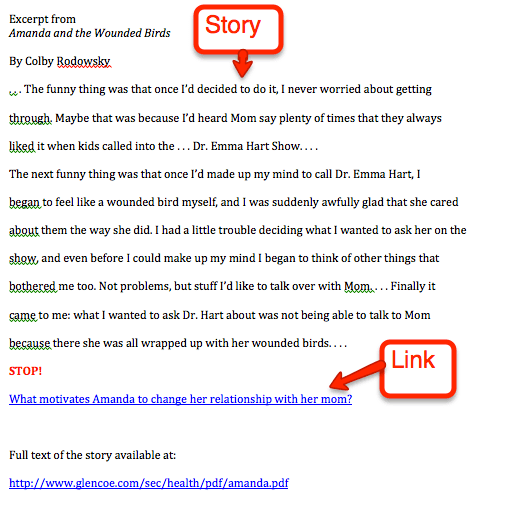
In the first approach, we select a short story that can be read in under 15 minutes and embed questions at critical points in the text that are tied directly to the Response to Literature questions. The students then respond to these questions as they read. The easiest software to use in creating a hyperlinked text is Google Documents using the “form” option to create individual questions. Each question’s URL link can be hyperlinked at specific moments in the text. An example is seen below. Multiple choice , scale or grid question are alternate selections that can be embedded in a story in order to provide a quick snapshot of a group’s understanding by looking at the “show summary of responses” option once the assessment is complete. There are many short stories in the public domain which can be posted on a site such as Google Docs for  student access in order to not conflict with copyright laws.

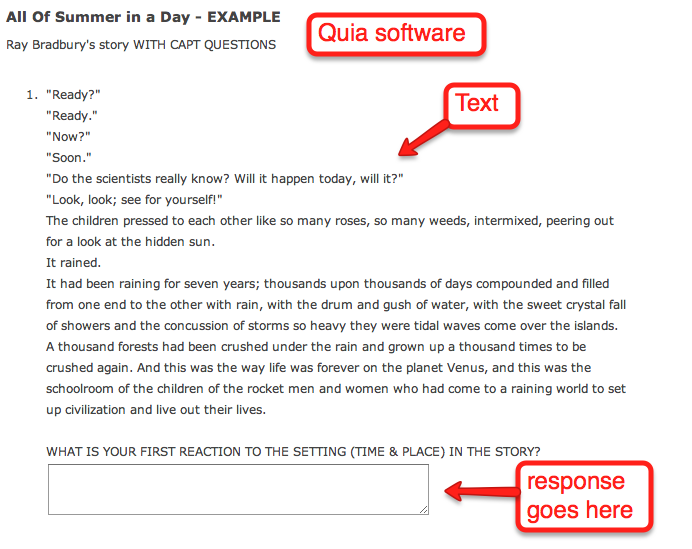
The second approach uses quiz and test taking software, such as Quia, where a teacher can paste sections of the text with question posed at the end of each section. Ray Bradbury’s All of Summer in a Day  (under Creative Commons license) is one story we are currently using for CAPT practice next week; the practice test (section seen below) can be taken at http://www.quia.com/quiz/3525412.html

The use of hyperlinks to monitor student understanding or to practice a procedure that will be helpful in a standardized test is not difficult to implement. Teachers are able to choose the kinds of questions and the placement of questions at critical sections of a text, and students like the ability to respond as they read in short answers rather than in practice essays.

While there is nothing that can be done to stop the onslaught of tests that come in March, the embedded hyperlink provides ways to satisfy that urge to practice and still engage the students.  You can even try a hyperlink response to a text by clicking here!

See? Wasn’t that easy?

The question started innocently enough. An assignment for a class I am taking offered through The Critical Thinking Community required that I integrate one of the elements of reasoning in a lesson. I chose the element of purpose and decided to ask my 9th grade students what was the purpose of reading a non-fiction essay ,”My Mother”, by Amy Tan. Several students dutifully raised their hands.

To know about her mother?”
“It’s a memory?”
“To remember what her mom said?”

Their responses were predictable and did not sound thoughtful; they sounded like they were guessing. I hate playing “Guess What the Teacher Wants to Hear”, so I shifted the question: “What is the purpose of reading an essay?”

Hesitation. Some disconcerted looks. A few timid hands.

“To read?”
“To understand what’s a good essay?”

I must have looked a little frustrated. “Why are you here?” I demanded.

Blank stares.

“Well, what is the purpose of English class? Why are you here?”

Then it hit me. They really had not given a thought as to why they were in English. I mean, they know what English class is, they have been in English every year they have attended school-nine years to date. They looked perplexed.

“Because, we are forced to come,” said Chris.
“Yes, we have to come,” agreed Mike.

They shifted nervously in their seats.

“That’s not purpose. That’s a result of someone else’s purpose,” I replied.

“To learn….(student voice trails off)…English?”

So, I took the cup of popsicle sticks labeled with each student’s name. “What is the purpose of English Class?” I asked each student after I called out a name. One by one they offered suggestions:

  • “….to learn…how to…write”
  • “…to learn how… to read?”
  • “…to learn about the comma?”
  • “…so we can go to college.”
  • “…to learn what is in a book…characters.”

After each response,  I asked the next student “Do you agree with that reason?” before I asked “What is the purpose of English class?”

As we went around the room, I explained there could be “no repeats“; the responders had to think more critically about what I was asking. Slowly, their responses became more sophisticated. Their responses did not have the sound of a question. They were answering my repeated question as a statement. They began to stir and leaned forward in interest trying to see who could come up with the “answer”.

  • “To learn about how characters are like people”
  • “To experience stories that we cannot really be in”
  • “To read and write about how we are all connected.”
  • “To be able to write so that other people can understand what we are saying and maybe believe what we write.”

They started to raise their hands to adding new ideas to this brainstorming sessions. They wanted to give the correct answer….to stop my interrogation. Honestly,  I did not have an answer. I had no idea where this exercise was going, I was simply letting them critically think about why they came into my class day after day. They were suddenly engaged and eager to answer. At some level, they understood the importance of English class, they just had not thought about the purpose. In defining the purpose, they suddenly understood the purpose of my original question. I went back and asked, “What was the purpose of Amy Tan’s essay?”

  • “She is feeling guilty and she wants to make it up to her mom.”
  • “Her mother was important to her, and now that her mother has dies, she wants to tell others about how they should appreciate their mother.”
  • “Regret is hard, and she is living in regret like so many people who make mistakes when they are young…this is a confession.” 

My spontaneous shift  from asking about an essay to the larger topic  of why they were in English demonstrated how important the element of purpose is  to teaching. My next step will be to have students internalize the question, “What is the purpose of this _______(book, essay, poem, article, assignment, class)?” on their own, every day, semester after semester.

In the courtroom, the saying is “Never ask a question if you don’t know the answer.” But in education, we ask questions as a means to discover the answer. The Critical Thinking Community website states, “We must continually remind ourselves that thinking begins with respect to some content only when questions are generated by both teachers and students. No questions equals no understanding.”

So go ahead and ask, “What’s the purpose of English class?” Get the students thinking.

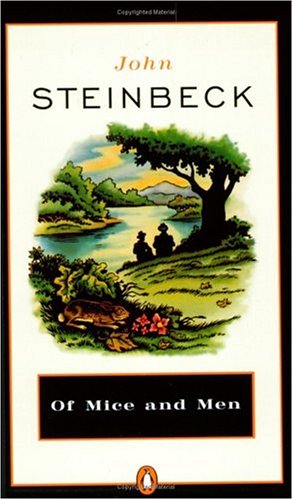
Current efforts to improve our students’ love of reading is allowing them the opportunity to choose what they want to read.  Since the amount of time available to teachers in a school year is finite, the inclusion of independent choice reading materials in a curriculum means that some things, usually whole class novels, have to go. In the case of our 9th grade students, the curriculum has been reduced to  three whole class reads: Romeo and Juliet, Speak, and Of Mice and Men. The remainder of the year is devoted to student choice, fiction and non-fiction. In other words, I am running a blended reading curriculum of student choice with whole class novels. I am convinced my students need this balanced approached to literacy.

Balancing between whole class novels and independent reading

Those who advocate student choice in the classroom make some excellent points. Last fall (2011), Kelly Gallagher (Readicide) in an audio interview with Mike McQueen on the Reading on the Run website said,

” I want to know does my child’s school have expectation that my child will read recreationally? Do they support that by giving kids time to read? Do they support that by giving kids interesting books to read not just academic books to read? Those are kind of questions that I would ask in looking at my child’s school.”

Gallagher’s most recent tweets on his KellyGtogo@Twitter demonstrate his continued campaign against language arts curriculum that are limited to whole class readings:

  • gr. 4-12: half the books our students read should be recreational in nature. We don’t want to raise test takers; we want to raise readers. 
  • more books = more reading = better reading. nothing happens without books.
  • Dear Common Core, where are recreational reading expectations? 

Yet, Gallagher still recognizes the importance of the whole class novel stating, “I am a proponent of academic reading, I do believe that kids should read you know, rich academic text. You know, I want my 9th graders to read Romeo and Juliet or my 12th graders to read Hamlet.”

There are, however, some educators who have eliminated whole class reading in an attempt to either engage students with choice only or as a differentiated approach to addressing reading levels in a class. In an article in Education Week  (7/2011) titled, Against the Whole Class Novel, Pam Allyn takes the position that whole class novels do not encourage reading and instead lead to alienation and isolation. She writes, “We have now reached a point at which teaching with neither the whole-class novel nor the basal reader, in which the whole class reads a selection together, is viable. We must end these practices. They are not benefiting our students.” She illustrates her position with the story of Sam who struggled with To Kill a Mockingbird saying, “…no way was this book a refuge for him, or an inspiration. It did not help him learn to read, nor did it help him to become a lifelong lover of text.”

Instead, Allyn suggests,

“If a student has found 16 blogs about boats, let him read those in school. And maybe that student will follow one of those blogs to a newspaper series about a regatta, or to Dove, Robin Lee Graham’s personal account of sailing around the world as a teenager. In these ways, our students will be exposed to a wider variety of genres than the whole-class novel ever allowed, and they will be more compelled to think critically across genres, as the common-core standards will require of them.”

While I agree with Allyn that not every book will make a student a lifelong reader, I believe she is clouding the issue of whole class reading with bad teaching of a whole class novel.Yes, it is true that some books are very difficult for reluctant or low level readers, so it is surprising that she suggests a student may choose Graham’s Dove  (RL 6.6) given her earlier reference the isolation a low level reader may have with to To Kill a Mockingbird (RL 5.6)  Regardless, a low level reader will struggle with a high level text unless there is some instruction or support. And while I agree that her suggestion of more inclusive reading materials (blogs, magazines, non-fiction) is important,  I also believe the communal experience that occurs in the reading of a whole class novel is equally important.

I am not suggesting the unit that beats a novel to death for week upon week, or what I refer to as the “it takes as long to read The Hobbit as it did Bilbo to get to his confrontation with the dragon, Smaug”. I am promoting the whole class novel experience where students work collaboratively to decode a text, share opinions, make comparisons, or criticize plot points. I promote the whole class novel with support for the low level readers and supplemental activities for the less engaged students. Reading levels should not limit student accessibility to a text when there is support available, for example, an audiobook. Please note: I did not say vocabulary and worksheets are supplemental activities.

Ideally, I advocate the whole class novel to capitalize on contexts or issues in other subject areas. Students can read All Quiet on the Western Front while they are studying World War I in Modern World History classes. Students can read Silent Spring as a companion piece to an enviormental studies course. Students can share the stories in Warriors Don’t Cry or Mississippi 1951 when they are studying a Civil Right’s unit. Whenever possible, I advocate a interdisciplinary read as a whole class novel.

I see great benefit in asking students to recall the themes, characters, settings or plot points with something they read earlier in their lives, particularly with the more complex texts at the middle or high school level. I will ask about the dystopia of The Giver when we read Brave New World, or the societies represented by animals in Charlotte’s Web when we read Animal Farm. A shared understanding of a previous reading experience with others provides immeasurable insights into a new reading experience.

Another argument for whole class reading comes from educator, Mrs_Laf in her blog post Confessions of an English Teacher who recently admitted that while, “I am the first person to champion individual and small group reading and used to be the first to decry the whole-class novel…I’m teaching a whole-class novel.”

She explains that her immersion into choice only reading resulted in many students selecting reading that did not challenge them. Students chose “fun books”, which she compared to beach reads noting that her students were not reading as closely as she wanted. In other words, “not all reading is the same.”  She decided that many students still needed to be taught to read a novel, just the same as students are taught to read a poem or short story. Her solution? Well, first she picks high interest books (The Hunger Games) which students purchase for annotation. Students make notes in the margin, put question marks next to the text they find confusing. In using this approach, “The trick is to get them to be patient with it.  This is a different kind of reading and we are reading for a different purpose.” Her point is a good one. Many students may need to be taught to read a more challenging text if all they read is what interests them.

I see reading as a community for my students as both academic and social.  I need to prepare students for the rigors of college and the real world since there is an expectation of cultural literacy  in our society. Students will encounter references to texts that compare relationships to the doomed Romeo and Juliet or the awkward Holden Caufield or the fair-minded  Atticus Finch or the the skin-flint Ebenezer Scrooge; they should understand those references. Teaching complex texts that students would not select independently ensures they can be included in conversations that extend beyond the classroom.

Teaching a whole class novel can be successful if, like any subject matter, students can be engaged. Language arts teachers need to seek a balance in in allowing for student choice while still teaching students how to read a challenging text. Every wave of innovation in teaching such as the recent calls for independent choice has an opposite one, such as traditional whole class novel instruction. Maintaining balance with these waves is what makes education successful. Balance means emotional stability; calmness of mind; harmony in the parts of a whole. Providing for independent choice plus whole class reading equals a balanced student.

Homework-Eugh!

February 8, 2012 — 4 Comments

Add my voice to the growing number of teachers who admit to hating homework. The most recent admission came from  NY Times blogger Jessica Lahey’s  in her column (Motherlode) on 2/3/2012 titled “I Hate Homework. I Assign It Anyway”. In this confession, she articulates both her dislike of assigning homework along with her recognition of homework in education as necessary to “achieve the same mastery of the material.”

I know how she feels. Over the past 10 years, I have been assigning less and less homework in my English classrooms, but not for the reasons she gives. Lahey reflects how she has always assigned homework  “because that is what teachers do; if I didn’t, word would get around that I am a pushover, or don’t care enough about my students to engage their every waking moment with academics.” She now measures an assignment’s worth against her son’s schedule.  She calls this the “Ben test” and states, “if an assignment is  not worthy of my own son’s time, I’m dumping it.”

For me, assigning less homework is a process of adaptation. I have been assigning less and less homework because fewer and fewer students actually complete homework. In grades 9-12, in the college-prep classes, I find myself collecting smaller percentages of homework assignments in class for any one of a number of reasons. Students are busy with sports. Students are busy with work after-school. Students have life responsibilities that take priority over homework. Students forget.

There is also the reality that there exists a cacophony of  demands for their attention after school. These “digital natives” are tied to their social media, their music, their video games, their movies, and their own intellectual pursuits. Homework’s nagging voice lacks the seductive glamor of  Twitter, YouTube, Facebook, Tumblr and the adrenaline rush provided by Call of Duty, Madden NFL, or even Angry Birds. The quiet necessary for assignments that require focused writing and reading simply does not exist for many of my students.

So, I adapt. I must teach the students who are in my class today, not the students from a different time. I must prepare the students to accept responsibilities in ways that are not always punitive. After all, a teacher cannot look in a grade book and see a series of incompletes or zeros in the homework column and feel successful.

Much of the reading content that had in the past been assigned for overnight reading is done in the classroom during silent sustained reading (SSR)sessions of 25 minutes twice weekly. Should a student want to read to “catch up”, audio book recordings are made available for students to access after school. Study guides are combined in packets that are completed over a period of several weeks as extended project assignments. Assignments are begun in class and “polished” overnight.

I also try and make assignments that are exciting and original enough to engage a student to want to complete. So, I have them write (and sing?) protest songs, create mock Facebook pages, bring in childhood pictures for essays, or retell a fable. I do not have worksheets; I have video clips for them to watch and discuss the next day.

As a result, there are fewer “homework” assignments in my gradebook, and I have developed a new category “class participation/homework” to reflect the way homework is blended into classwork. I find this category  an easier explanation for parents who ask if their student is doing his or her homework. There are of course the students enrolled in the honors classes or Advanced Placement programs who still accept the more traditional demands of homework. And there are students in the college prep classes who still understand the opportunity homework, really well designed homework, offers in order to reflect on what was taught during the school day.

I just hate assigning homework to students that is not done. I hate homework that becomes an obstacle, not a teaching tool. Like Charlie Brown and the Peanuts Gang, I hate homework.

Our English classrooms have been provided net books to use in class this year, making each classroom  a 1:1 classroom. Teachers have been using these net books for student blogs with seniors, or in responses to literature. The Freshman class was blogging about Of Mice and Men using Google’s Blogger software. The combination of reading with authentic writing was the incentive for one of my New Year’s resolutions in 2012, to improve student blogging beyond the “I like your post” response.

Our 9th grade team blogs are organized across the grade; students from different class periods or with different teachers collaborate as a team on the blog. For this assignment, we developed four journal questions in order to engage the students in discussions related to the universal themes of  Steinbeck’s novel; questions were centered on the ideas of goals, dreams, loneliness, privacy, and companionship. These journals were posted two or three days apart as students read the novel in class during silent sustained reading (SSR) or at home. An audio tape of the book was also available for some students who needed support with reading independently.

In order to begin the discussions, students first needed to post a response to each journal question, then they need to respond to another teammate’s post. Since the goal was to improve student responses to another student’s post, a set of criteria was suggested to help student in their response:

Good Student Response to another student on a blog will be:

  • thoughtful
  • consistently positive
  • respectful

Good Student Response to another student on a blog will also:

  • clearly add to the original discussion (compare, contrast, contribute, ask questions)
  • take advantage of the medium (linking, video, audio)
  • follow the standards of good writing

There were four journal prompts to Of Mice and Men; student responses to another student’s post are below each journal prompt:

Journal One:  What is your hope for life, goal, or even dream?  What do you think you want from the future?  Not the fairytale, but the reality?   What could you live without, dream-wise?  What couldn’t you live without? What matters, what are your priorities?

Patrick, I think your blog is good! It shows that you really want to be stable with your life. That you don’t need big things but you just need the things that make you happy and not stressful. We both don’t want to be stressed out and that’s something that a lot of people don’t want I think!

Sean, I think that my house would be similar to yours. I too would like to live in the woods away from big cities and government. I think it would be great to live in a log cabin style house with a large woodstove too. It would really give off that self dependent feeling, were you would have to chop your own wood, and produce many of your necessities.

Sara, It seems to me that you seem to know what you want to do when you grow up. Well, I have no idea really, so I envy you. I am disappointed to see you would move away from here, I love it here. good luck with all your plans!

Journal Two:  Do you have a pet? a younger sibling or cousin?  If so, describe your feelings and relationship with them.  If not, what do you think it would be like to have them?  How do/would you feel as the one on whom they depend?  How important do you think it is to care for or nuture others?  Do you want to be a mother/father?  Why?  What do you think about the role of parents, brothers, sisters, and family?

Johnny, I think you need to appreciate your sisters a little bit more!! Even though they can be a pain, they’re still always there for you and won’t leave your side.

I am commenting on Regan’s post: She did a very good job, she went into detail about each question such as when she explains how it makes her feel “It makes me feel good when he looks up to me and tries to do stuff that I do because It lets me know that I do have an effect on his life and when he does.” It is simular to mine because our brothers act the same way, she gets along with her brother too and we both have younger brothers.

 I’m commenting on Sara’s…I can definitely relate to when people say they want a sibling and you’re thinking ‘NO WAYYY….’ because they haven’t lived with one their whole life! But I’m also the same way with how I realize that I do have an effect on my little brother’s life and choices… it just wakes you up and helps you make good decisions.
Journal Three:    How important is privacy and space to you?  Can having privacy get too much like being lonely?  What about being with people all the time?  Which is worse, being always with or always without others?  How much alone vs. social time do YOU need?  Why?  When do you most need each (alone/social)?

I agree with you, Zach. Like when I was around mt best friend. We did EVERYTHING together. At first, it didn’t really bother either one of us. We where content always being in each others business. We knew EVERYTHING about each other. And by accident one of us (not saying who), spilled a big secret. That’s why it’s not a good idea to be around the same person ALL the time!

Riley I think your take on privacy is very good. I agree with you about how there are times that you dont want to be around people and if you are it can be annoying and distracting at a time where you’re trying to do your homework. What are some times that you do like being around people? Would you rather be alone or with someone else? Overall, you did a good job, those are just some things you could have included.
Journal Four:  What would you do to avoid losing your dream?  Are dreams easy to replace?  What would life be like if you didn’t have a goal, dream, or hope?  Can others take away your dream or not?
I am responding to Taylor’s blog. I have similar dreams to Taylor’s, how I dream of what I like to do. I dream a lot about going to the beach with my friends. Also I agree with Taylor’s thought of dreams being “easily replaceable”. I think that some dreams are hard to replace if they mean a great deal to you. Other than that dreams come and go very often. I also agree with Taylor that life without goals will not be very boring and you would not have anything to achieve!
 Agreed, Emily. I haven’t really thought about it that way, but after hearing your opinion, I have to say, I agree. If your dream doesn’t come true, it means that your destiny lies somewhere else. Unfortunately, destiny rules over dreams. Just like with Lennie, it wasn’t his destiny to “tend to the rabbits”, he was too strong and dumb to do that.
Ultimately, there has been some improvement in student responses on the blog. Many students wrote thoughtful responses which indicates that they understood that simply praising another writer’s blog was not sufficient. Students did like reading the post responses, however, I was actually surprised how empowered some of the students became and did not anticipate how seriously they would enforce the criteria in the original posts.
The only problem I see here is that you did not describe how you look up to your family… Everything else is very well done. I see no errors in spelling and no errors with how you described the way they acts, but remember to try and stay on topic” 
Your blog was good but it was not 200 words and it needs more detail so you should answer more questions in your blog to make it flow and so you make it longer and to answer the question more clearly.”
One month into the New Year 2012, and the 9th grade students are improving their ability to respond on a blog with something other than “good work!”
I’d say that is “great work”…but I obviously need to improve on my response!

“Chance favors the prepared” in the used book market.

Saturday is my day for running errands which takes me to Brookfield or New Milford, two Northwest Connecticut communities. Each of these towns has a their own Goodwill store located on Route 7, and I make regular stops to their bookshelves of donated books looking to see what has been most recently donated.

This past Saturday morning, I did just that. In fact, I stopped at both stores and purchased a total of 47 books for $41.43. WhenI came home, I noticed that WebEnglish Teacher had posted a link to a website listing the 100 Essential Reads for the Lifelong Learner  organized by Online Schools. These books were organized by discipline: fiction, non-fiction, autobiography/memoir, biography, world literature literary theory, history, political science,science/math/social science. Her question was “How many of these essential books have you read?” I was happy to see some familiar titles on the list, but many were new to me.

I could not help but notice that I had just purchased five of the suggested titles on this list for different classroom libraries that very day! There were other titles on the list available on thrift store shelves that I did not get since our libraries either already had enough copies or the titles are available online in the public domain.  The Online Classroom Essential Reads List is organized so that each title had a designated number, not a rank, and link provided for each book with a short explanation. Some of the links are helpful.

Here is a list of the 5 PURCHASED ESSENTIAL READS and the grade or class that uses them:

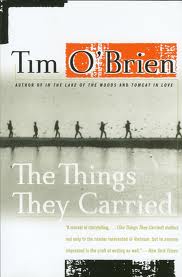
35. The Things They Carried by Tim O’Brien. This fictional account of a platoon in Vietnam is based on Tim O’Brien’s experience in the war himself and explores the fear and courage that are necessary to bring one through to the other side.

-This is a text that is used in our Grade 11-American Literature classes. The book is one of the few texts that students will willingly complete; once they finished the first story, they are hooked which is a tribute to O’Brien’s writing style. The prose is artistic but not difficult for even our lowest readers. Our students are curious about Vietnam, a part of history that is chronologically left for those lazy days of June. We use film clips (Platoon, Apocolypse Now, The Deer Hunter) in our unit with this text. We also eat MREs in class, and organize lists as to what each of use “carries.”

43. This Boy’s Life by Tobias Wolff. Wolff recounts his life as a boy and teen struggling with his identity as he lives with his divorced mother and her second husband in the 1950’s.

-This text will go into the English IV elective Memoir. There is a possibility that a 9th grader will choose this as an independent reading book in the non-fiction unit. The narration captures teen angst very well, and could work as a non-fiction companion piece to Catcher in the Rye in Grade 11. If Common Core wants classrooms to integrate more non-fiction, this is an excellent piece to add.

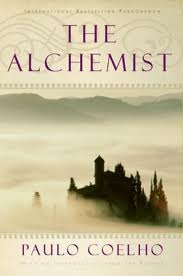
61. The Alchemist by Paulo Coelho. Discover how to find the beauty in life no matter what your experience as you follow the life of a young shepherd who gains so much from his journey of life.

-This book is assigned as summer reading for incoming English II honor students. We require a dialectic journal with 30 quotes from the texts as the summer reading assignment. Despite the burden of writing, students really enjoy this book which allows us to segue from “the journey” archetype taught in Grade 9 to the different types of perspectives in Grade 10 World Literature.

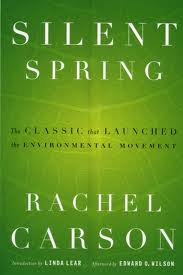
94. Silent Spring by Rachel Carson. Carson’s powerful writing on the topic of environmental justice creates a book that will make the reader think seriously about humanity’s relationship to the Earth.

-I got this book for the environmental studies teacher. So far, I have found five nice copies this past year. She offers this as optional reading to her students, and I think this should be required reading for students interested in pursuing an environmental science…or any science, for that matter.

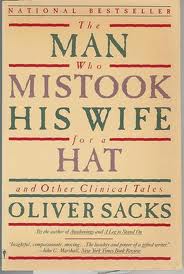
100. The Man Who Mistook His Wife for a Hat by Oliver Sacks. Psychology student or not, this book will appeal to anyone who has an interest in the curious way the mind works–and how it does not work. Several of the most bizarre cases are detailed here.

-I rarely find copies of this book, so finding one in good condition is a score! The psychology/sociology teacher loves to lend this book to her students; they are fascinated by the case studies. I am always excited to find a gently used copy for her to share.

Here is a list of the 10 essential reads I LEFT ON THE SHELVES (and where they are used in our curriculum)

1. The Great Gatsby by F. Scott Fitzgerald.-Grade 11; we have enough copies

12. Heart of Darkness by Joseph Conrad. -AP English Literature; text is in the public domain so students read this online.

14. The Call of the Wild by Jack London.- Grade 9;  text is in the public domain so students read this online.

15. To Kill a Mockingbird by Harper Lee. -Grade 11; we have enough copies

28. The Poisonwood Bible by Barbara Kingsolver.- AP English Literature; we have enough copies

33. Middlesex by Jeffrey Eugenides.- Optional read for Grade 11 Coming of Age unit OR Advanced Placement English

34. Life of Pi by Yann Martel. -Grade 10; We have enough copies

58. One Hundred Years of Solitude by Gabriel Garcia Marquez. AP English Literature; we have enough copies

82. The Elements of Style by William Strunk and E. B. White.- Resource for AP English Language and AP English Literature and Creative Writing

98. The Interpretation of Dreams by Sigmund Freud.-I will need to check with the psychology teacher!

 Both Goodwill stores, Brookfield and New Milford, regularly offer a wide variety of used books, and our classroom libraries are currently well-stocked with titles puchased used for $.50-$2.00.
This past Saturday, the  total cost for the five  “essential” titles I did purchase? $5.18. Getting these essential reads into the hands of our students? Priceless.

 Why don’t schools routinely tap their best teachers to organize and deliver custom-tailored professional development to their peers?

This was the question posed  by Nancy Flanagan regarding teacher professional development in an article  titled , “Who’s Developing Whom?” posted in  this week’s Education Week Teacher (1/28/2012).

Well, in response to her question, I would like to suggest that she visit my school (virtually, of course) where faculty, staff, and students have collaborated in delivering excellent professional development opportunities on several occasions this past year (2011) .

But first, some background is in order. Less than four years ago, Regional School District #6 in CT was just a small rural school district with limited technology. There were shared computer labs, overhead projectors, and TVs in every room. Now we are a district with Smartboards in every classroom, with a netbook 1:1 initiative for designated classrooms, with iPads for teachers, all combined with a “bring your own digital device” policy at the middle and high school. More importantly, however, our faculty and staff has been trained in the use multiple platforms for collaboration such as wikis, and blogs; and we are completing our transition using Google educator apps. How did this shift happens?
First our administration, a dedicated superintendent and cooperative principals, with the blessings of our regional school board, concentrated efforts to increase the hardware necessary to meet the needs in delivering 21st Century instruction.  Then, the technology specialists in the elementary schools and  library media specialist at the high school joined forces to create a super-technology team: Alisha, Amy and Abbe (with an acronym AAA-a triple A threat!). They have organized professional development in our district on the ED Camp model, which is described on the Ed Camp wiki website as “a free (or very cheap), democratic, participant-driven professional development for teachers.” This model allows teachers to post sessions they will host on a grid that designates time and session locations. A video on the Ed Camp website details the procedure.
During this past school year, our district has utilized the Ed Camp model to allow any teacher who would like to share their expertise or simply discuss a problem with fellow staff or faculty members; we have also included students who have expertise in some software to offer sessions in this model.

In her commentary  “Who’s Developing Whom” Flanagan put in clips from a Twitter stream which could represent any number of districts; several years ago, ours probably would have been included:

@BreaktheCurve (Craig Jerald): Never been able to figure out why teachers don’t revolt & protest against time-wasting PD

@TeacherBeat (Stephen Sawchuk, of Education Week): I wrote a whole series on this last year. PD terrible, districts don’t even know what they spend on it

Flanagan notes that, “There is a dominant mindset that Professional Development (caps intentional) is something delivered to teachers, rather than cultivated by them, as practitioners striving to improve their practice. Professional Development assumes that someone knows better than a teacher.” 

That is a problem that is changing. Mindshift,a website by KQED (NPR affiliate) in Northern California reposted a education blog by Shelly Blake-Plock titled “21 Things That Will be Obsolete in 2020”  The post was written in December 2009, and according to the website, “Blake-Plock says he’s seeing some of these already beginning to come to fruition.”

Out of the 21 things that will be obsolete that he listed,  #14 and #15  caught my eye:

“14. EDUCATION SCHOOLS THAT FAIL TO INTEGRATE TECHNOLOGY
This is actually one that could occur over the next five years. Education Schools have to realize that if they are to remain relevant, they are going to have to demand that 21st century tech integration be modeled by the very professors who are supposed to be preparing our teachers.

15. PAID/OUTSOURCED PROFESSIONAL DEVELOPMENT
No one knows your school as well as you. With the power of a PLN (professional learing networks) in their back pockets, teachers will rise up to replace peripatetic professional development gurus as the source of schoolwide professional development programs. This is already happening.”

Teachers in hands on professional development in Region 6 in CT; tech specialist on right in the picture!

Flanagan asks, “Will teachers really learn something new if it’s not fed to them by a talking head in front of a room? Would they waste time, if it wasn’t structured for them?” If our administration was worried about this, they now have evidence that teachers not only learned something new, but that many teachers worked harder during the Ed Camp model of professional development than ever before.

Please read the description of our professional development experience (“Starting the Year with Teacher-Driven Professional Development”) on the AAA Team’s blog (RSD6 Tech Times) to know that, ” Teachers exceeded our expectations in creating sessions, even creating an extra column when they ran out of rooms….Concurrent sessions were held throughout the day by our teachers on the following topics:

Google Maps, Macs, Digital Storytelling with StoryBird/Photostory,  Edmodo, Screencasting, Livebinders, Photoshop, Fakebook, Photo editing, blogging, Twitter, World Book, Windows Movie Maker, Quia, Quizlet, Apps, Lexia, , Discovery Education, SuccessNet, Kidblog, Skype, Literature Videoconferencing, and  Prezi.”
And did I mention that our small, one-man IT department was there to facilitate this great success?

There are are some who anticipate that teacher to teacher professional development may be difficult because of teacher egos, and Flanagan warns that, “There can also be a false elitism around teacher-led professional development–the ‘who does she think she is?’ syndrome. While teachers are perfectly willing to swipe good ideas and practices shared by colleagues in the lunchroom, a teacher who’s put his reputation on the line for a respected credential standing in front of the room violates some teachers’ sense of egalitarianism’.” However, Flanagan’s anticipated concerns did not materialize, and our experience was quite to the contrary. There were many surprises within the faculty as to the level of expertise some teachers had developed because of a particular interest or demand. Our Region 6 Ed Camp model of professional development brought new appreciation and respect to the many faculty members and students who shared their expertise.

Finally, Flanagan asks, “What would happen if teacher development happened internally, entirely site-based and tailored to particular schools and populations? It would require demonstrated, deep teacher expertise in instruction and curricular issues. Which could shift the balance of power. And it would cost very little.” She’s right; the teachers and administrators with the help of a team of technology specialists in Region 6 have the exercised the power, found the teacher to teacher model a great professional development experience,  and received excellent usable training at very minimal cost.

Is a writing a blog as valuable a writing experience as writing an academic term paper? Can the writing of a blog be made academically more rigorous in order to compete with the more traditional term paper? Or does the blog vs. term paper argument cloud a more critical academic problem… that our students do not read well enough to write in either format?

Matt Richtel, a reporter who writes about technology in education in the NY Times, recently published a piece, Blogs vs. Term Papers (1/20/12) regarding Duke University’s English professor Cathy N. Davidson’s embrace of the blog in place of the traditional term paper.  He writes that, “Professor Davidson makes heavy use of the blog and the ethos it represents of public, interactive discourse. Instead of writing a quarterly term paper, students now regularly publish 500- to 1,500-word entries on an internal class blog about the issues and readings they are studying in class, along with essays for public consumption.”

The traditional term paper in any number of disciplines of prescribed lengths of 5, 7, 10 or more pages has been centered for decades on a standard formula incorporating thesis, evidence, argument and conclusion.  In the article, Davidson expresses her dislike for formula writing, including the five paragraph essay taught in middle and high schools and claims that, “This mechanistic writing is a real disincentive to creative but untrained writers.”  She notes that, “It’s a formula, but good writing plays with formulas, and changes formulas.”

Davidson is not alone. Ritchel claims that “across the country, blog writing has become a basic requirement in everything from M.B.A. to literature courses.” This movement from term paper to blog has many academics up in arms.

Running parallel to this argument of academic writing was the position offered by William H. Fitzhugh, author and founder of The Concord Review, a journal that publishes high school students’ research papers. In the NY Times article, Fitzhugh discussed how high school educators “shy away from rigorous academic writing, giving students the relative ease of writing short essays.”  Fitzhugh makes the argument that students are required to read less which directly impacts their ability to write well.

Fitzhugh wrote about academic writing in  Meaningful Work for American Educator (Winter 2011-2012) taking the position that reading is at the core of good academic student writing; “To really teach students how to write, educators must give them examples of good writing found in nonfiction books and require students to read them, not skim them, cover to cover.” Good writing reflects knowledge and understanding that comes from reading, not skimming. Fitzhugh recommends that, “Reading nonfiction contributes powerfully to the knowledge that students need in order to read more difficult material—the kind they will surely face in college. But more importantly, the work of writing a research paper will lead students to read more and become more knowledgeable in the process. As any good writer knows, the best writing emerges from a rich store of knowledge that the author is trying to pass on. Without that knowledge and the motivation to share it, all the literacy strategies in the world will not make much difference.”

From my experiences in the classroom, I see the veracity of both Davidson and Fitzhugh’s positions. I believe that the form of student writing is not the problem, and the blog vs. term paper debate, at least at the high school level where I teach, is not as controversial as at the college level.  My job is to teach students to write well, and a great deal of my average school day is currently given to encouraging students to write in these multiple formats in order to prepare them for the real world.  I know that students can be taught to write well in term papers, blogs, essays, letters or any other format.However, the students need to read well in order to write well about a topic. The conundrum is that unless today’s high school students are provided time in class, they do not read the material.

A student’s inability to read independently for homework results in a reduction in both the amount of reading assigned and the class time to process the reading.  Students who do not read well at the high school level are unprepared for the rigors of college curriculum which requires much more independent reading in non-fiction. Ultimately, the problem for teachers in high school is not the form in which students write.  The problem is getting students to both read and understand assigned readings that come from many disciplines-fiction and non-fiction. Only then can the blog vs. term paper debate be addressed as a measure of academic writing.