Archives For November 30, 1999

There is a gap between writing for school and authentic writing.

Just how big is that gap? If you consider an NPR interview with E.L. Doctorow that was recently replayed on the airwaves, the gap is a chasm….nay, an unmeasurable abyss.

What Doctorow said about his approach to the writing process, leads to only one conclusion about the teaching of writing:

We’re doing it wrong.

Doctorow’s original interview was replayed after his death on July 21st, 2015. His initials E.L. stood for Edgar Lawrence, and he was noted for his work with historical fiction including  Ragtime (1975), Billy Bathgate (1989), and The March (2005).
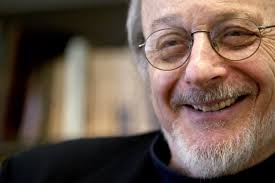
E.L. Doctorow: American historical fiction writer, 1931-2015

E.L. Doctorow: American historical fiction writer, 1931-2015

The NPR broadcast (7/22/15) was created from a collection of interviews from their archives. In one exchange with Scott Simon, Doctorow had responded to a question about his writing process by saying,

DOCTOROW: The ideal way to get involved in this sort of work is to write in order to find out what you’re writing. You don’t start with an outline and a plan.

Maybe you can feel the shudder of writing teachers everywhere, especially those insist that students first draft an outline or use a five paragraph template for any piece of writing. Of course, Doctorow was writing in the narrative format, where his plan started with the use of particularly “vocative images” to begin his stories:

And in this case, it’s the first line in the book where Andrew’s saying I can tell you what I’m about to tell you, but it’s not pretty. And suddenly you find yourself with your character.

The narrative genre may lend itself to Doctorow’s approach of “finding yourself with your character,” but writing in schools, especially at the secondary level, is in the expository/informational or persuasive genres. The Common Core State Standards have reinforced very deliberate borders between these genres. But Doctorow confounds these boundaries, incorporating factual information into his historical imaginings that play with the “myth of history” as an end product.

In a 2008 interview with George Plimpton published in the Paris Review (“The Art of Fiction, No.94″), Doctorow boasted about his use of history:

So to be irreverent to myth, to play with it, let in some light and air, to try to combust it back into history, is to risk being seen as someone who distorts truth.

History teachers may get sidetracked with Doctorow’s argument that history is a battlefield, “constantly being fought over because the past controls the present.” Yet, in taking the risks in “letting in light and air” to history,  Doctorow’s created another truth, a truth that did not require writing from his own experiences:

Writing teachers invariably tell students, Write about what you know. That’s, of course, what you have to do, but on the other hand, how do you know what you know until you’ve written it? Writing is knowing.

Again, there may be a palpable shudder from writing teachers who have used “writing from your experience” as a mantra.

Analysis of literature was another area that Doctorow explained to NPR’s Steve Inskeep (in archived interviews) that almost kept him from being a writer:

That kind of analytical action of the mind is not the way you work when you write. You bring things together, you synthesize, you connect things that have had no previous connection when you write. So, all in all, as valuable as my [analysis] training was, it took me through language in the wrong direction.

Apparently, all those literary essays assigned by English teachers could be stifling this next generation of writers.

In making the connection between reading and writing, however, Doctorow described his own experience and this would win approval from teachers:

 I was reading constantly everything I could get my hands on. And, you know, at that age, something else happens if you’re going to be a writer. You’re reading for the excitement of it and to find out what happens next, just racing along. And then another little line of inquiry comes into your head. You say, well, how is this done?

So, what can writing teachers learn from one of America’s most celebrated novelists? What advice might they consider in writing instruction?

  1. Students should not limit themselves to write from experience;
  2. In narratives, students should not use an outline as they find the story through a character instead;
  3. Students should know that history is flexible enough for play, and for letting in  “air and light”;
  4. Analysis essays can take writers in the wrong direction;
  5. To be writers, students must read;
  6. Writing is knowing.

Whether teachers heed the advice of Doctorow from these interviews may not matter, as it is acknowledged that each writer differs in approach and style. Without question, however, the writing process for Doctorow flies in the face of any prescribed writing instruction. As he explained to Inskeep:

I seem to appreciate quiet. And when I’m writing I like to seal everything off and face the wall and not to look outside the window so that the only way out is through the sentences.

In the bell-to-bell day of today’s classroom, with a constant stream of interruptions during timed essay writing or writing on demand, we are doing it wrong.
It is unlikely that a student writer will find the quiet that Doctorow appreciated.
There is no blank wall.

Students will have to find their own way out of the narrative through sentences, but teachers should try to give them the time and space to let that happen.

This summer, I plan to spend time organizing question stems to spark critical thinking and post them on a number of slides to share with teachers.
OR
I could shorten the process and use just one slide. I could ask one question that is guaranteed to drive critical thinking. I could ask:

So what?”

To be honest, the first time I was asked this question in an academic setting, I was appalled. I felt I was being taunted. I was sure the professor was just being rude.

I was uncomfortable…I could not give an effective response.

“So what?”

I hated the question. I hated that the professor was goading me. I hated Dr. Steven D. Neuwirth. 

I was taking a graduate course (560) Literature of the American South, what I thought would be a “fun” course as I completed my Master’s Degree in English.

I remember distinctly the moment that was not fun…the evening of the second class.

“So what?” Dr. Neuwirth wrote on the chalkboard; he snapped a piece of chalk as he underlined the question for emphasis.

So what? he repeated in class after I offered what I thought was a brilliant observation on the evidence of dignity as a character trait in a discussion on William Falkner’s As I Lay Dying.

I was irritated. I had worked very hard on my responses.

So what? he scrawled in big letters on the paper I handed in three weeks later.

I was angry. I had worked even harder on that response.

My frustrations continued. Nothing in my training had prepared me for his persistence with the So what? question.

I had done what had worked in every other class. I had developed a thesis. I had used evidence. I had proved my thesis.

Regardless, my answers did not satisfy his challenge. So what? He found my reasoning lacking, and because he was not satisfied, neither was I.

I needed to think how to explain better.
I had to think differently.
I had to think critically.

It was then I realized that Dr. Neuwirth’s So what?” question was making me think critically.

Dr. Neuwirth’s irritating challenge brought me to recognize that it was not enough for me to develop and prove a thesis in a paper. I had to prove why my argument mattered.

For example, it was not enough to prove that Faulkner’s characters displayed dignity despite their social status, I had to question so what is the reader to take from his writing?

I had to ask the question So what?” not with attitude but with curiosity. Curiosity led to inquiry:

  • So what was my point? 
  • So what was missing from my response?
  • So what should I want the reader to know or do?
  • So what happens next?
  • So what do I do to cause or prevent something from happening ? 
  • So what makes this work or not work?
  • So what will this information lead me to study next?

Such inquiries led to me to make conclusions. I had always found conclusions difficult to write. I had always followed the predictable formula of restating the thesis, but I found that when I used the critical question So what? I could offer a broader conclusion.

For example, when I developed a thesis on the dignity of Faulkner’s characters and provided evidence from the text, I was really posing the question “Why should anyone read novels by Faulkner?” When I asked myself so what? I could conclude that Faulkner’s characters spark empathy in the reader.

It turned out that I did not hate theSo what? question.

I did not hate Dr. Neuwirth …although, admittedly, liking him took a little longer. While I did understand the importance of being challenged, I still found him a brilliant but abrasive teacher.

Four years after that class, I  became a teacher, and I taught literature. My students wrote predictable and boring conclusions that restated the thesis. They were not thinking critically. I had to do something.

Dr. Steven Neuwirth, Western Connecticut State University-created the University's Honors Program and served as its first director; he passed away February, 2004.

Dr. Steven Neuwirth, Western Connecticut State University-created the University’s Honors Program and served as its first director; he passed away February, 2004.

I asked my students So what?

And I scrawled So what? on their papers.

And I wrote So what? on the Smartboard -without chalk.

My students also hated theSo what? question.

They complained to me, but their conclusions improved.

So here is one question, one irritating question, for critical thinking for sharing on one slide:

So what?


The Southport Pequot Library in Southport, Connecticut, hosts a summer book sale every July under large tents that cover most of the lawn and in the library’s auditorium. Browsing for books under this acreage, one can only imagine “Where did all these books come from?”

The most logical conclusion I can come to is that Southport residents must do nothing all day but read.

They must read a book a day…maybe more.

I tried as hard as I could to lessen the load of titles on the young adult tables, but the six boxes (approximately 250 books) I hauled out from the sale barely made a dent. These books will go into classroom libraries for independent reading (silent sustained reading -SSR), literature circles, book clubs, etc. The premise of bringing these books to the classroom is to make sure that students at all grade levels have access to books at any given moment during the school day.

In under two hours, I filled six boxes with plenty of favorites (grades 5-10) from authors Gary Paulson, Meg Cabot, Ann Brashares, Jerry Spinelli, Laurie Halse Anderson, and Rick Riordan. I also grabbed selections of book series that fall into the “popular culture categories” such Goosebumps (RL Stine) , Captain Underpants (Dav Pilkey), Ranger’s Apprentice (John Flanagan), and Alex Rider (Alex Horowitz).

These are not the books that teachers will “teach” but they are the books students will read; the difference is described in an earlier post.

There was a box of a dozen copies of The Boy Who Harnessed the Wind by William Kamkwamba and Bryan Mealer. I picked up 10 clean copies of this best seller as a reading choice for students groups who prefer non-fiction. This is the story of a young boy in Malawi (Africa) who developed a contraption that would provide his village with electricity and running water:

With a small pile of once-forgotten science textbooks; some scrap metal, tractor parts, and bicycle halves; and an armory of curiosity and determination, he embarked on a daring plan to forget an unlikely contraption and small miracle that would change the lives around him. (The Boy Who Harnessed the Wind)

There is increased attention to incorporate informational texts such as this book because of the design of the  Common Core State Standards in Literacy which suggest that by 12th grade, 70% of a reader’s diet should be non-fiction. The copies I have are enough for a small group(s) to read in literature circles or book clubs.

I also collected copies of Cormac McCarthy’s The Road for the American Literature classes (grade 10). This apocalyptic novel is worth including in a curriculum because of McCarthy’s style and message. In an earlier post I describe how The Road was the first book I collected for use in the classroom; its integration into curriculum was very successful. Copies of the book with its distinctive black cover and bold lettering were easily found among the 10 or 12 tables of donated fiction….as if there had been a massive book club after-party.

Screenshot 2015-07-26 14.16.55There were large crowds attending the Southport Pequot Library’s annual sale on Saturday, and the long lines of patrons waiting patiently to check out at the volunteer cashier tables might cause one to wonder if the sale has become a victim of its own success?

On the other hand, as they slowly snaked past the tables of nature books and cookbooks, patrons continued to browse and added even more purchases to the piles in their arms or bags. No one complained as there was always something to read.

Overflow of books or marketing geniuses??…those long lines on a Saturday afternoon could just be another successful marketing technique by the Friends of the Pequot Library.

Baseball is America’s sport, but I do not have a baseball “favorite team”.
My favorite team is whoever is playing the New York Yankees.
I hope that team wins…and wins big.

I hate the New York Yankees.

That said, I do have an appreciation for the cultural contributions of individual Yankee team members.
For example, I liked Babe Ruth…but the Yankees got rid of him.
I liked the architecture of the “House that Ruth built”…but the Yankees got rid of that, too.

I liked Lou Gehrig…and I especially liked how gracious he was when he retired from baseball after he was diagnosed with ALS amyotrophic lateral sclerosis.Before the diagnosis, Lou Gehrig was known as the “iron horse” of baseball, and according to the official Lou Gehrig website,   

….Gehrig’s consecutive game streak of 2,130 games (a record that stood until Cal Ripken, Jr. broke it in 1995) did not come easily. He played well every day despite a broken thumb, a broken toe and back spasms.

Other statistics on the website highlight his remarkable career:

  • Gehrig’s 184 RBIs in 1931 remains the highest single season total in American League history.
  • He batted .361 in 34 World Series games with 10 homers, eight doubles and 35 RBIs.
  • He also holds the record for career grand slams at 23.
  • He hit 73 three-run homers and 166 two-run shots, giving him the highest average of RBI per homer of any player with more than 300 home runs. 

When Gehrig’s illness forced him to retire, the sportswriter Paul Gallico suggested to the New York Yankees management that there should be a  “Recognition Day” to honor Gehrig.

On July 4, 1939, 62,000 fans watched in Yankee Stadium as Gehrig delivered a short speech during which he described himself as “the luckiest man on the face of the earth.”

When Gehrig spoke that day, there were multiple microphones, but only a small section of the speech was recorded.

The text and audio from the speech are on the American Rhetoric website.

During the speech, Gehrig listed the relationships he had with others repeatedly as “a blessing”.

First, he thanked the fans:

“I have been to ballparks for seventeen years and I have never received anything but kindness and encouragement from you fans.”

He thanked his fellow teammates:

“Look at these grand men. Which of you wouldn’t consider it the highlight of his career just to associate with them for even one day? Sure I’m lucky.”

He thanked the NY Yankee’s management team, and he thanked the members of the rival team, the NY Giants:

“When the New York Giants, a team you would give your right arm to beat and vice versa, sends you a gift, that’s something.”

He thanked the grounds keepers:

“When everybody down to the groundskeepers and those boys in the white coats remember you with trophies, that’s something.”

He thanked his parents:

“When you have a father and mother who work all their lives so that you can have an education and build your body, it’s a blessing.” 

And, he thanked his wife:

“When you have a wife who has been a tower of strength and shown more courage than you dreamed existed, that’s the finest I know.”

In the brief text of only 286 words, Gehrig demonstrated both incredible grace and excellent speech-craft.

On June 2, 1941, Lou Gehrig succumbed to ALS.

The speech he left is a great literary text to share with students in middle or high school. The readibility of this speech is about a grade 7, and there are several rhetorical devices worth noting. For example, Gehrig’s rhetorical strategies in the speech included the anaphora, which is the repetition of a first word or phrase in successive phrases (“when”) and epistrophe,  a stylistic device in which a word or a phrase is repeated at the end of successive clauses (“it’s a blessing…”).

Giving students speeches to analyze is one way for teachers in all subject areas to increase background knowledge about history and American culture. Teaching this farewell address meets the Common Core Literacy Standards English Language Arts and for History, Social Studies, Science and the Technical Subject Areas, that require students to determine word meanings, appreciate the nuances of words, and steadily expand their range of words and phrases.

On July 4th, we celebrate all things American. What could be more American than baseball…even if it is a farewell to baseball address? Lou Gehrig’s speech is one of the great American inspirational speeches…even if he was a NY Yankee.

Oh, and one more thing I can say that I like about the Yankees?

I like my husband.. he grew up as a Yankee fan.

There are a number of people who are fundamental to our judicial system: Thomas Jefferson, author of the Declaration of Independence; John Jay, first Supreme Court Justice; William of Wilton, canon and scribe at Salisbury Cathedral…..wait, William of Wilton?

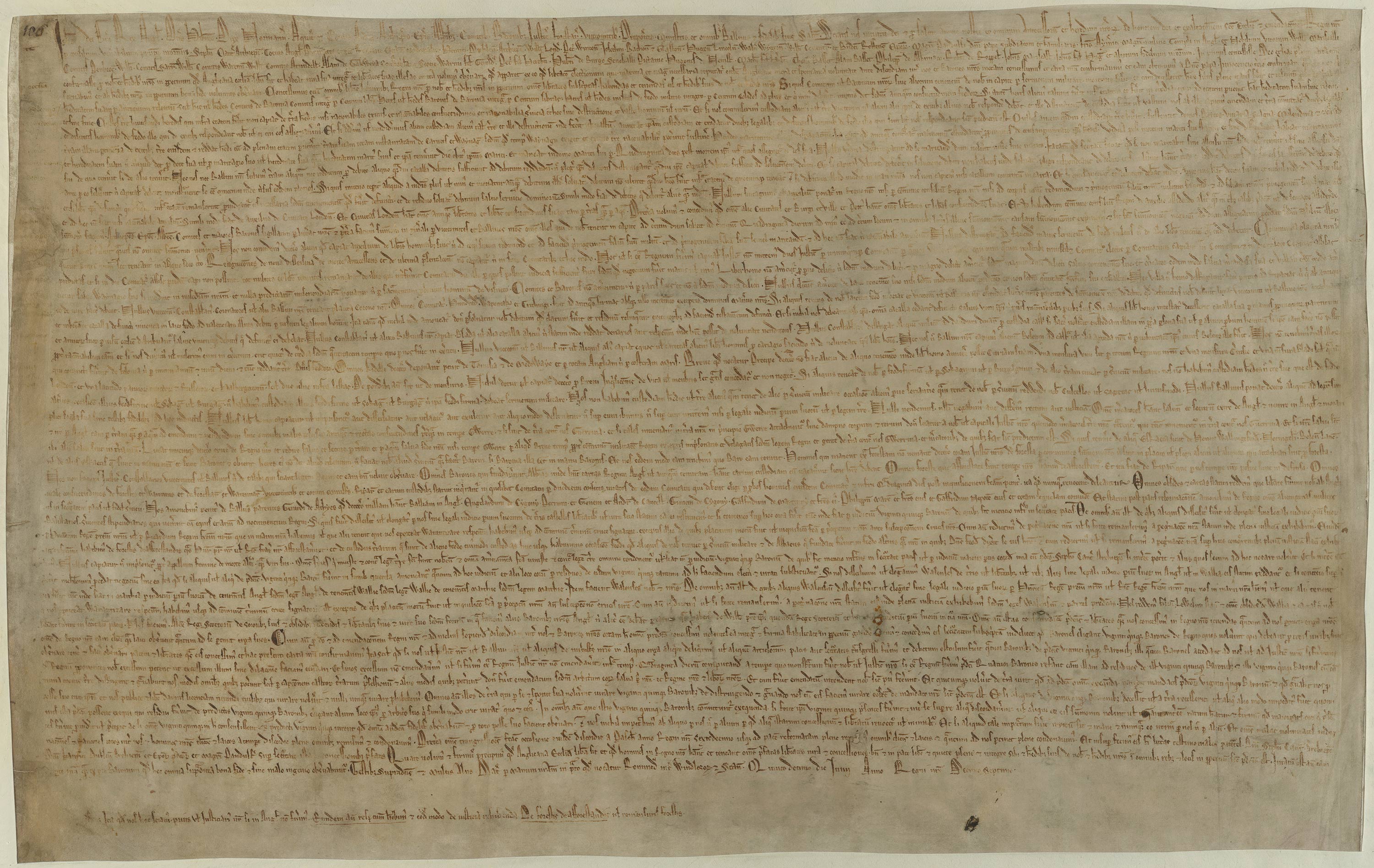
Yes, William of Wilton has recently been identified as one the scribes who is responsible for one of four original copies of the Magna Carta. As a scribe, William of Wilton would have been educated in the arts of writing and copying manuscripts, an important job to have before the invention of printing. He may not have understood the significance of the document, but perhaps his employer, the English bishop of Salisbury Cathedral, Herbert Poer, did. New research indicates that it was the Church that was largely responsible for circulating copies of the Magna Carta shortly after it was signed by King John of England.

Copy of the Magna Carta on display at the British Library: Chttp://www.bl.uk/collection-items/magna-carta-1215

Copy of the Magna Carta on display at the British Library: Chttp://www.bl.uk/collection-items/magna-carta-1215

The Magna Carta, the “great charter”, was a peace treaty agreement made when  King John was forced to give into a large rebellion led by barons. They were in revolt because of heavy taxation that came as a result of unsuccessful foreign policies.

According to History.com on June 15, 1215, “John met the barons at Runnymede on the Thames and set his seal to the Articles of the Barons, which after minor revision was formally issued as the Magna Carta.” Months later, King John, supported by the Church, nullified the agreement. Despite negation, the document and its provisions survived.

There is a great deal of attention being paid to the Magna Carta as it celebrates its 800th birthday, and The British Library is currently displaying two original copies of the Magna Carta. Their website lists a number of interesting facts about the Magna Carta including:

  • the documents are written on sheepskin parchment;
  • One of the British Library’s 1215 Magna Carta manuscripts was damaged in a fire in the 18th century, the other was found in a London tailor’s shop in the 17th century; 
  • Magna Carta was annulled by the Pope just 10 weeks after it had been issued, being described as “shameful, demeaning, illegal and unjust” and declared “null and void of all validity for ever”.

As part of the publicity for this celebration, The British newpaper The Independent featured interviews with Professor Nicholas Vincent of the University of East Anglia and Professor David Carpenter of King’s College London who are making the claim that the Church, not the royal government, was largely responsible for seeing that copies of the charter were circulated.

According to the article, Magna Carta: New Research Sheds Light on the Church’s Role in Publishing World-famous Charter,(6/14/15) a careful comparison of different handwriting led to the discovery of William of Wilton using royal documents still surviving in English and French archives and ecclesiastical documents surviving in English cathedrals and in the National Archives.

They are confident that it was William of Wilton’s pen that copied the document, including the sentence that became the foundation of our judicial system:

“No free man shall be arrested or imprisoned save by the lawful judgment of their equals or by the law of the land. To no one will we sell, to no one will we deny or delay right or justice.”

There were many other scribes who also copied the manuscript in 1215, but is the copy that contains the DNA of William of Wilton that survived. It is his handiwork that is is enshrined in a place of honor in the British Library today.

So what is history?

The definition of history is a continuous, systematic narrative of past events as relating to particular people, country, period, person, etc., usually written as chronological account. 

We do not know much about William of Wilton, but we can share this story of the Magna Carta with our students to show them how one man’s story makes history real. Here is the story of a man who reproduced documents for a living. He is responsible for the copy of a document that is the foundation of our legal system.

His story is a part of our history as well.

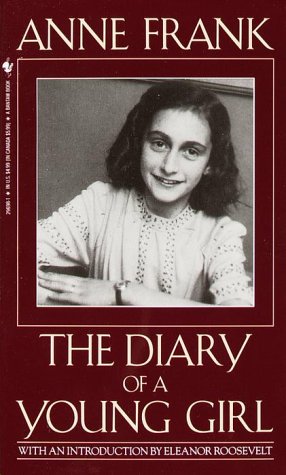
 Anne Frank: The Diary of  Young Girl transcends the labels of genre. anne Frank book

Yes, as the title suggests, it is a diary, but it is also a memoir, a narrative, an argument, an expository journal, an informational text, and much more.

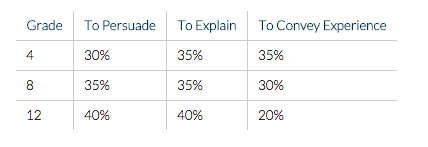
Yet, these genres listed are treated as separate and distinct in the reading and writing standards of the Common Core (CCSS). The standards emphasize the differences between the literary and informational genres. The standards also prescribe what percentages much students should read (by grade 12 30% literary texts/ 70% informational texts), what genres of writing they should practice (narrative, informative/explanatory, argumentative) and the percentages students should expect to communicate  in these genres by grade level.

Distribution of Communicative Purposes by Grade supported by the Common Core

Distribution of Communicative Purposes by Grade supported by the Common Core

In the real world, however, the differences between genres is not as clear and distinct as neatly outlined in the standards. The real world of Nazi occupied Holland was the setting that produced the defiant Diary of Anne Frank.

On June 12, 1942,  Anne Frank received a red and white check autograph book as a birthday gift. This small volume was soon filled by Anne as a diary, the first of three separate volumes, as she her family and friends hid in the secret annex.

A diary is a daily record, usually private, especially of the writer’s own experiences, observations, feelings, attitudes.

Anne’s narrative in these diaries provides a sequence of events and experiences during the two years she spent hiding with others behind the bookcase in the attic where her father had been employed.

A narrative is a story or account of events, experiences, or the like, whether true or fictitious.

In June of 1947 Anne’s father Otto Frank published The Diary of Anne Frank, and it has become one of the world’s best-known memoirs of the Holocaust.

A memoir is a written account in which an individual describes  his or her experiences.

In one entry Anne explains she is aware of what was being done with Jews throughout Europe and those who resisted the Nazis. She refers to radio reports from England, official statements, and announcements in the local papers. There are expository style entries throughout the diary that help the reader understand how much she and others knew about the Holocaust:

“Our many Jewish friends and acquaintances are being taken away in droves. The Gestapo is treating them very roughly and transporting them in cattle cars to Westerbork, the big camp in Drenthe to which they’re sending all the Jews….If it’s that bad in Holland, what must it be like in those faraway and uncivilized places where the Germans are sending them? We assume that most of them are being murdered. The English radio says they’re being gassed.” October 9, 1942

“All college students are being asked to sign an official statement to the effect that they ‘sympathize with the Germans and approve of the New Order.” Eighty percent have decided to obey the dictates of their conscience, but the penalty will be severe. Any student refusing to sign will be sent to a German labor camp.”- May 18, 1943

Expository writing’s purpose is to explain, inform, or even describe.

Finally, there are excerpts taken from the diary where Anne makes a persuasive argument for the goodness of people, even in the most awful of circumstances:

“Human greatness does not lie in wealth or power, but in character and goodness. People are just people, and all people have faults and shortcomings, but all of us are born with a basic goodness.  If we were to start by adding to that goodness instead of stifling it, by giving poor people the feeling that they too are human beings, we wouldn’t necessarily have to give money or material things, since not everyone has them to give.” March 26, 1944

A persuasive argument is a writer’s attempt to convince readers of the validity of a particular opinion on a controversial issue.

Anne’s opinion about the goodness of people during the horrors of the Holocaust is a remarkable argument.

The Diary of Anne Frank gave rise to other genres. Anne’s diaries served as the source material for a play produced in 1955 and then as a film in 1959.

The genre of The Diary of Anne Frank, however, should not be the focus, or the reason for its selection into a curriculum or unit of study. Instead, it is the quality of the writing from a young girl that makes the diary a significant contribution to the literature of the 20th Century.Screenshot 2015-06-11 18.50.33

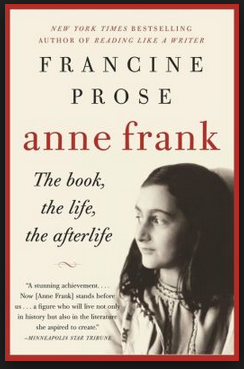
Novelist and former president of the PEN American Center, Francine Prose revisited the diary and was “struck by how beautiful and brilliant it is.” Prose’s research on Anne Frank as a writer culminated with her own retelling, Anne Frank: The Book, the Life, the Afterlife, in which she makes a strong case for the literary quality of Anne’s writing:

“And the more I thought about it, the more I realized how rarely people have really recognized what a conscious, incredible work of literature it is.”

In an interview on the PBS website, Prose was asked, “Do you think there is something about Anne Frank’s voice that continues to resonate with young people today?” Her response,

“I do. Because the diary was written by a kid, it is almost uniquely suited to be read by a kid. Salinger and Mark Twain certainly got certain things right about being a kid; but they weren’t kids when they wrote their books. The diary works on so many different levels.”

When selections from The Diary of Anne Frank were first published in the “Het Parool” on April 3, 1946, the historian Jan Romein also recognized how Anne’s young literary voice rose above the inhumanity that caused in her death at 15 years in the Bergen-Belsen concentration camp. In his review, he writes:

“… this apparently inconsequential diary by a child… stammered out in a child’s voice, embodies all the hideousness of fascism, more so than all the evidence at Nuremberg put together.”

Romein’s review elevates the “apparently inconsequential diary” as testimony in making a legal case against the Nazi regime. It is that power in Anne’s voice that makes her diary a powerful text to offer students, whether it fits the percentages in a CCSS aligned unit of study for an informational text or not.

Her entry on July 15, 1944, written 20 days before she and her family are betrayed to the Nazis reveals yet another genre:

 “I see the world being slowly transformed into a wilderness, I hear the approaching thunder that, one day, will destroy us too, I feel the suffering of millions. And yet, when I look up at the sky, I somehow feel that everything will change for the better, that this cruelty too shall end, that peace and tranquility will return once more.”

For there is poetry in that entry as well.

That letter “O” morphing on your search engine for Mother’s Day?
That spinning Globe for Earth Day?
Those jigging leprechauns for St. Patrick’s Day?
These are all the Google Doodles from 2015 to celebrate holidays.

There are also Google doodle tributes to individuals. Emmy Noether (physicist), Laura Ingalls Wilder (author), and Anna Atkins (botonist), have been featured in doodles this year (2015) as individuals whose work was celebrated as having made an impact in our lives today. Each of the doodles represents the individual artistically using elements that best represent their work.

Some of the Google doodles are interactive. The Google doodle for Martha Graham is a 15 second celebration of dance. The Google doodle for Robert Moog provides a miniature electronic analog Moog Synthesizer (keyboard) that the viewer can play. The tribute to journalist Nellie Bly features a Youtube video scored with an original song (Music: “Nellie” by Karen O).

There are also international tributes not seen here in the United States with Google doodles for surrealist artist Leonora Carrington (Latin America/Australia); the oldest primary grade student at 84 years old, Kimani Maruge (Kenya); and womens’ rights activist, Henrietta Edwards (Canada).

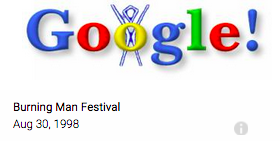
The first Google Doodle celebrating a vacation at the Burning Man Festival

The first Google doodle celebrated a vacation by Google founders Larry and Sergey at the Burning Man Festival

The first Google Doodle (right) was a comical message that the Google founders Larry Page and Sergey Brin were out of the office attending the Burning Man Festival. The Google Doodle Archive houses the entire collection (1998-present). A scroll through the graphics shows how Google’s primary colored logo is changed in a way that is often surprising or magical. Clicking on the Google doodle takes the reader to a page with information about the event or person, and information about the graphic design and artist for the page.

There are hundreds of doodles, and information on the archive states:

Creating doodles is now the responsibility of a team of talented illlustrators (we call them doodlers) and engineers. For them, creating doodles has become a group effort to enliven the Google homepage and bring smiles to the faces of Google users around the world.

Now, consider that a key shift of the Common Core State Standards (CCSS) is to build knowledge through content-rich nonfiction. The explanation on the CCSS website is:

Students must be immersed in information about the world around them if they are to develop the strong general knowledge and vocabulary they need to become successful readers and be prepared for college, career, and life. Informational texts play an important part in building students’ content knowledge. Further, it is vital for students to have extensive opportunities to build knowledge through texts so they can learn independently.

Students at all grade levels can independently develop an interpretation of the Google doodle graphic. After studying the logo created by Google illustrators (doodlers), teachers can determine if the link that takes students information on the holiday, the anniversary, or the biography is appropriate for age or grade level reading. Each link contains general information that aligns to the CCSS shift to “build knowledge through content-rich nonfiction.” There is information on these links that might lead students to investigate the person or topic on the doodle even further.

Should a student have an idea for a Google doodle, “The doodle team is always excited to hear ideas from users – they can email proposals@google.com with ideas for the next Google doodle.” There are hundreds of suggestions daily, but the information of the website assures students that, “…rest assured that we’re reading them :)”

Another opportunity for students to submit ideas for a Google doodle (Doodle 4 Google) will be available in September 2015. The details for the 8th annual US competition will be announced then, and examples of student entry winners in 2014 are available for viewing on the website as well.

A quick click on the Google doodle can be an engaging mini-lesson for students in building background knowledge….especially when the information is offered in a logo that is dancing, leaping, morphing, twisting, falling, jumping, running, exploding, singing, growing….

Oliver Wendell Holmes Jr, a Civil War veteran and a future Supreme Court Justice, delivered a Memorial Day Speech on May 30, 1884, at Keene, New Hampshire, as a tribute to fallen soldiers from the War Between the States. Educators can take an opportunity to use this speech, a primary source document, with their students to study both the historical events that Holmes references as well as his rhetorical style.

First page of Holmes's speech published in book format

First page of Holmes’s speech published in book format

In the first part of the speech, Holmes lays out his belief that twenty years after the Civil War, reunification of the States was possible because of the respect each side had for the other’s convictions:

We believed that it was most desirable that the North should win; we believed in the principle that the Union is indissoluable; we, or many of us at least, also believed that the conflict was inevitable, and that slavery had lasted long enough. But we equally believed that those who stood against us held just as sacred conviction that were the opposite of ours, and we respected them as every men with a heart must respect those who give all for their belief.

Knowing that many in the audience where from the John Sedgwick Post No. 4, Grand Army of the Republic and they had also served in the war, Holmes connected his battlefield memories to theirs, “But you all have known such; you, too, remember!

Holmes poetically recalled his fallen comrades who were killed on the battlefield: a 19-year-old 2nd lieutenant, a fair-haired lad, a surgeon, a captain:

I see them now, more than I can number, as once I saw them on this earth. They are the same bright figures, or their counterparts, that come also before your eyes; and when I speak of those who were my brothers, the same words describe yours.

Holmes then paid tribute to those women who suffered the loss of their husbands, fathers, and brothers; those “…whose sex forbade them to offer their lives, but who gave instead their happiness.” His rhetorical question about the women left behind because of the consequences of war is timeless:

Which of us has not been lifted above himself by the sight of one of those lovely, lonely women, around whom the wand of sorrow has traced its excluding circle–set apart, even when surrounded by loving friends who would fain bring back joy to their lives?

In concluding the speech, Holmes recalls the passion of those young men who entered the Civil War when their “hearts were touched with fire” only to learn that life is “a profound and passionate thing.”

For Social Studies teachers, the speech references different locations where battles took place: Petersburg, Antietam, Port Hudson, and the White Oak Swamp. Holmes also mentions the men killed at those battles: Col. Paul Revere, Jr.; Lt. James. J. Lowell; William L. Putnam; and the suicidal charge of the 20th Massachusetts Regiment. Each location, each name provides students an opportunity for research.

For English Language Arts teachers, the speech is filled with rhetorical devices that students can identify, and then evaluate each devices’s effectiveness in supporting Holmes’s message:

  • Comrades, some of the associations of this day are not only triumphant, but joyful. (direct address)
  • Such hearts–ah me, how many!–were stilled twenty years ago. (caesura-any interruption or break.)
  • Not all of those with whom we once stood shoulder to shoulder–not all of those whom we once loved and revered–are gone.(Anaphora – repeats a word or phrase in successive phrases)
  • Who does not remember the leader of the assault of the mine at Petersburg? (rhetorical question)

In the final lines of the speech, Holmes leans heavily on a literary conceit (elaborate metaphor) of life as music:

Our dead brothers still live for us, and bid us think of life, not death–of life to which in their youth they lent the passion and joy of the spring. As I listen , the great chorus of life and joy begins again, and amid the awful orchestra of seen and unseen powers and destinies of good and evil our trumpets sound once more a note of daring, hope, and will.

Of the 3600 words in Holmes’s speech, the most frequently used words are man, life, and day. By repeating these words, his tribute on Memorial Day in 1884 calls attention to the sacrifices of fallen soldiers in his century, and in ours.

The first 10 days in the National Day Calendar of May 2015 have been crowded with days of tributes and appreciation. A few of the more notable days include:Screenshot 2015-05-10 14.59.14

While several of these day are associated with historical events: (May Day, Cinco de Mayo, VE WWII Day) or other worthwhile causes (World Press Freedom, National Day of Prayer, World Red Cross/Red Crescent) many of the other days have been designated as tribute those who occupy professions dedicated to serving others.

According to the Online Etymological Dictionary,  the word “service” originates from the verb “to serve” (v.) in the late 12th Century originating from the Old French verb servir meaning “minister, give aid, give help,” and from the Latin servus “to do duty toward” or “show devotion to.” This verb took on a sense of “be useful, be beneficial, be suitable for a purpose or function” before shifting to that sense of “take the place or meet the needs of, be equal to the task” during the 14th Century.

By the mid-13th Century, the noun service meant the “state of being bound to undertake tasks for someone or at someone’s direction; labor performed or undertaken for another” which eventually led to its association with military service. In keeping with this theme of service, please note the May 9th calendar date above dedicated to appreciating military spouses.public-service

Today’s definition of service as a verb is “to provide (someone) with something that is needed or wanted,” or as a noun, “the occupation or function of serving.” This definition of service is at the heart of the efforts of teachers, nurses, and those in the military. Everyday, men and women in these professions “give aid” or “help”; everyday they provide what is needed in “labor performed or undertaken for another.”

Teacher DayAs as teacher, I am pleased that there was an entire week for Teacher Appreciation (May 3-9th) with National Teacher’s Day on May 5th. May 6th of this week was designated as National Nurses Day, including school nurses, celebrated during National Nurses Week (May 6-12).   Perhaps it is not so strange that these weeks should have overlapped in paying tribute to those who help or serve others. I am often reminded by how much the fields of education and nursing attract people drawn to similar service, and as an example, I offer the following story.

Several years ago, when my two sons were attending the United States Naval Academy at Annapolis, my husband and I took a number of midshipmen out to dinner. There were 13 young men and women seated around us that night, and the conversation turned to what their parents did for a living.

“What does your mother do?” I asked one of the midshipmen.
“She’s a nurse,” he replied.
“So is mine,” added the young women next to him; she seemed surprised.
“Mine is in education, a special ed teacher,” stated the young man opposite me.

And so it went around the dinner table: “a nurse’s aide” or “a teacher” or “a teacher’s aide” or “a nurse.” Out of the 13 young men and women who would be entering the military service (US Navy or United States Marine Corps) after graduating the Naval Academy, all 13 had mothers who were either in nursing or education. I am convinced that 13 for 13 is not coincidence, but rather an illustration of how one life dedicated to public service in nursing or in education influences other lives to enter public service.

The informal survey taken around the dinner table that night also illustrated the influence of mothers, and so it should come as no surprise that paying tribute to those who serve during the month of May would culminate in the ultimate day of appreciation to the paramount profession of service called Mother’s Day. Literally and figuratively, mothers are those who have served in “labor performed or undertaken for another”!Screenshot 2015-05-10 14.56.40

While National Holiday Calendar sets up days to appreciate the indispensable efforts of teachers, nurses, and mothers in the first weeks of May, it also had designated May 4th as National Star Wars Day.

How fitting that we take time to celebrate the efforts of teachers, of nurses, and of mothers everywhere….May the Fourth be with them all throughout the year!

All hail.extol.…laud the mighty Roget’s Thesaurus!

Any one struggling with trying to find the right word can attest to the support that he or she may have found in the pages of Roget’s Thesaurus, a reference book that celebrates its birthday every April 29th. Writers pour through its pages in the hunt to find an alternate to “said” (articulated, phonated, viva voce) or establish the kind of “sleep” (catnap, doze, trance) or select the state of being “happy” (elated, joyous, upbeat).

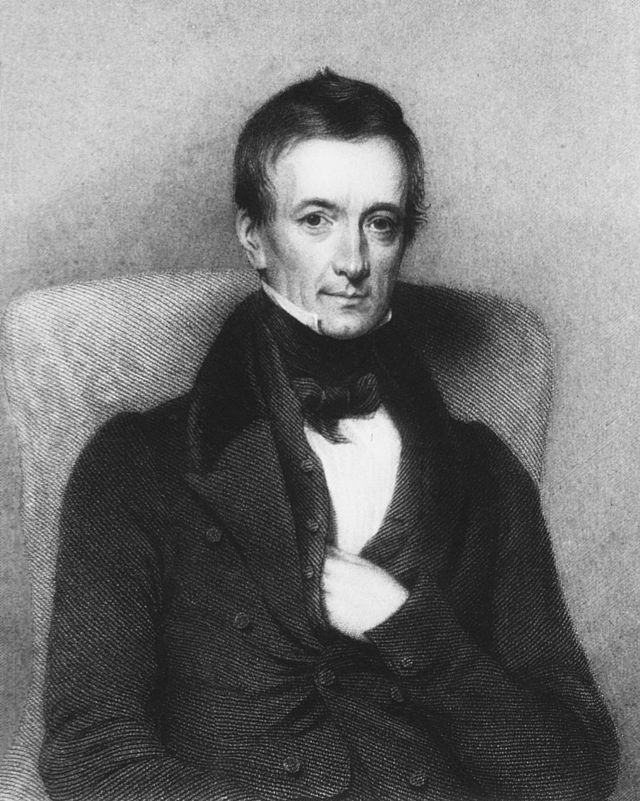
Paul Mark Roget, Creator of the thesaurus

Paul Mark Roget, Creator of the thesaurus

Like its cousin the dictionary, the synonyms and antonyms of Roget’s Thesaurus are arranged alphabetically. That decision was made by its originator, Peter Mark Roget who published the first thesaurus in 1852, some 100 years after Samuel Johnson published the successful Dictionary of the English Language.

Roget’s objective with the thesaurus was to help the writer or speaker “to find the word, or words, by which [an] idea may be most fitly and aptly expressed.”

In the forward to the first edition, Roget wrote:

“It is now nearly fifty years since I first projected a system of verbal classification similar to that on which the present work is founded. Conceiving that such a compilation might help to supply my own deficiencies, I had, in the year 1805, completed a classed catalogue of words on a small scale, but on the same principle, and nearly in the same form, as the Thesaurus now published.”

The word “thesaurus” is derived from the Greek θησαυρός (thēsauros), “treasure, treasury, storehouse”, and the thesaurus is indeed a treasure of language. A word of caution, however, to those who use this treasure trove improperly; fancy words do not guarantee academic writing.

For example, there is a danger of overuse, as demonstrated in this dialogue from a episode of Friends when the character Joey wanted to appear “smart”. He had replaced every ordinary word in an application letter with its synonym from the thesaurus:

Joey: I wrote, “They’re warm nice people with big hearts.”

Chandler: “And that became, ‘They’re humid pre-processing Homo sapiens with full-sized aortic pumps’?”

Students often make these same kinds of novice errors. In their attempts to sound “smart”, they include words they do not understand, adding “verdant” to  “green” grasses. They create contradictory combinations such as “nimbly lethargic” or “exigent tolerance.” Then, there is the tale of the student whose creative writing assignment featured a woman eating a delicious chignon, a bun one puts in one’s hair.

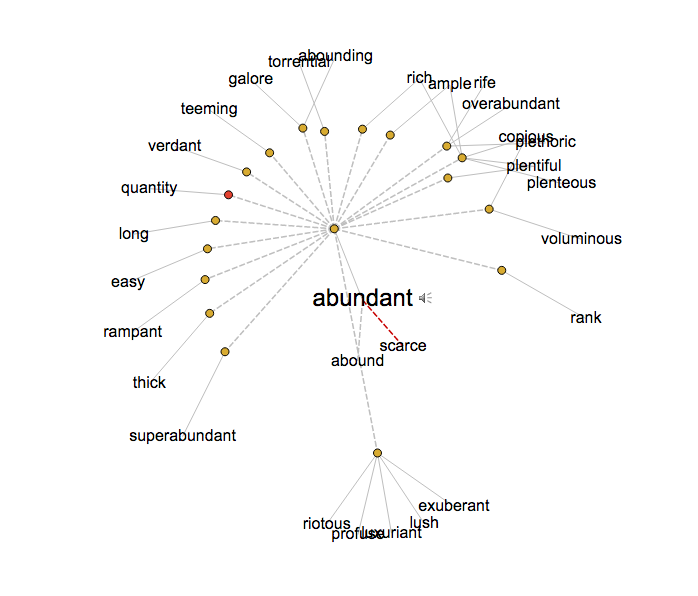
Click on any word to create new word blossoms or "daisies"

Click on any word to create new word blossoms or “daisies”

Now, with software available on multiple platforms, students can choose to hunt through pages of a text or try one of several online thesaurus tools that help them find the perfect word.

There is the subscription based VisualThesaurus which is an “interactive dictionary and thesaurus which creates word maps that blossom with meanings and branch to related words.” Clicking on any word allows students to see an abundance of alternatives. A free version of this form of interactive thesaurus is found at Visuwords.

Merriam-Webster also offers a student friendly thesaurus at WordCentral which offers many other interactive features such as word-of-the-day or student-created disctionaries.

Interactive activities for students

Interactive activities for students

Simpler versions can be found at  BigHugeLabs or at Thesaurusland offer stripped down versions  that require only that a student enters a word in the search box to get synonyms or antonyms.

Screenshot 2015-04-27 21.40.53

Simple version of an online thesaurus


 Students can jubilate or rejoice or revel or solemnize in marking the 163rd anniversary of the thesaurus.  They can acknowledge or appreciate or enjoy or welcome how the thesaurus has helped their writing.
However, as intently or as meticulously or as scrupulously as they search in texts or search online, students will not be able to answer the question, what’s another word for thesaurus?