Archives For November 30, 1999

Elie Wiesel’s memoir Night is taught in coordination with a social studies unit on the Holocaust.  The 10th grade English curriculum attempts to capitalize on teaching world literature through historical contexts; Night is one text that bridges the educational objectives of English and social studies.
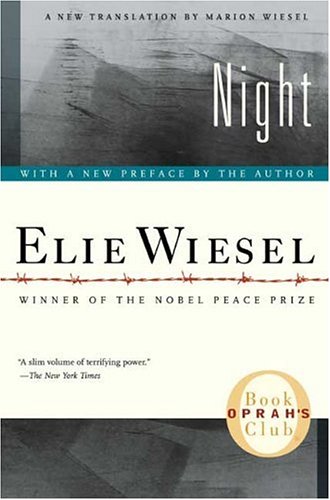
The new translation by Marion Wiesel made popular by Oprah's Book Club

The memoir begins as the Jews of the little town of Sighet, Hungary, are rounded up and taken in cattle cars to the camps at Auschwitz and Buchenwald in 1944–1945. Wiesel remembers how the prison guard called out and separated the incoming Jews:


“Eight short, simple words… Men to the left, women to the right.”
To the left meant assignment in the prison labor camp; to the right meant extermination in the gas chambers and ovens.
Wiesel continues:
“For a part of a second I glimpsed my mother and my sisters moving away to the right. Tzipora held Mother’s hand. I saw them disappear into the distance; my mother was stroking my sister’s fair hair … and I did not know that in that place, at that moment, I was parting from my mother and Tzipora forever.”

At 15 years old, Wiesel endured starvation, injury, and disease, conflicted by his need to protect his father and his frustration with his father’s deteriorating condition.  He was tormented by the relief he felt when his father passed away. The final image of Wiesel’s ghostly reflection in a mirror shortly after liberation is haunting.

Students living in rural Connecticut have a difficult time comprehending the horrors of the Holocaust; they are safely separated by time, circumstance, and geography from this event. Night helps to personalize the experience of genocide; while the book itself is slender, the impact on our students is tremendous.

Last year, students were given the chance to select an independent book to read with Night. These books varied in reading level and genre. They chose from the following list:
Fiction
Soldier Boys by Dean Hughes
The Boy in Striped Pajamas by John Boyne
Briar Rose by Jane Yolan
Milkweed by Jerry Spinelli
The Book Thief by Markus Zusak
Non-fiction
Anne Frank: Diary of a Young Girl
Maus: A Survivor’s Tale by Art Spiegelman (graphic novel)
I Have Lived a Thousand Years by Livia Bitton-Jackson

All of the books offered were added through used book sales except for Maus and The Boy in Striped Pajamas, which we borrowed from the Connecticut Library Council, and The Book Thief which we purchased new (30 copies).

There are two best selling books related to the Holocaust that have begun to show up in used book sales. The Guernsey Literary and Potato Peel Pie Society by Mary Ann Shaffer and Annie Barrows; and Sarah’s Key by Tatiana de Rosnay have been popular with book clubs. I also have several copies of Stones from the River by Ursula Hegi for Advanced Placement students.  I have picked up a few copies of each and could also offer these  books to the more experienced readers.

During the Holocaust unit, students had four weeks to complete their independent book and Night. We offered silent sustained reading twice weekly, and there was a showing of the film Schindler’s List (parental permission required). When students completed both the independent reading and Night, they wrote essays that compared a section of the independent reading to a section from Night.
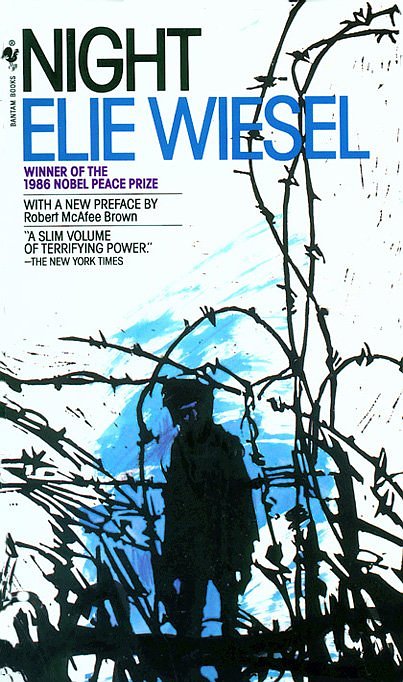
The older edition of Night; we have switched over to the newer edition pictured above

We are moving from the older Bantam paperback edition to the recent translation by Marion Wiesel which was made popular when Oprah chose Night for her book club. Oprah also filmed a visit to Auschwitz with Wiesel; his narration is so quiet I need to put the audio setting on close captioned.

This summer I have located about 20 copies of the recent translation of  Night, many of which were brand new, in the CT book sales in Westport, New Milford, Newtown and in Boise, Idaho. In addition, I recently placed an order with Better World Books for 46 “gently used” copies of Night.  Combining the 20 copies I have located at summer book sales and used book stores with the 46 used copies, the department library now has 66 copies of the latest edition of the text for a total of  $311.53 which is roughly $4.72/text.

Night is an important book in our curriculum, at any price. Elie Wiesel makes that important connection beyond geography, beyond time, and beyond circumstances for my students; his voice against genocide is eloquent and memorable.

I have recently completed the Critical Thinking Conference in Berkley, California, so I have been trying to “think critically.” As I sat though several of the sessions, I considered how our school’s used book classroom libraries, with their increase in titles,  might be viewed by students in grades 7-12 this coming September.  Could I use a step on a critical thinking “logic wheel” where a topic or idea is consider from one or multiple points of view in order  to prepare for student response this coming school year? I thought about our most recent reading survey.

The English Department developed and gave a reading survey  for grades 7-11 in March 2011. Our students were asked to rate themselves as a reader and explain that rating.  The students were very candid in their responses.

There were  students who rated themselves as self-motivated readers:

“I rated myself  as a good reader because I love to read and spend a lot of time doing it.”
“I rated myself with Eager Reader because I love to read! I have read about 10-12 books in a 2 month period. I read every night and whenever I have extra time.”

I anticipate that these students will enjoy having choice, however, I also realize these students would be just as happy reading assigned core novels.

In contrast, there were students who rated themselves as reluctant readers who were quite blunt in stating they did  not like to read or did not read at all:

“because i usually never read. It shows in my english grade.”
“not a good reader i have an xbox 360.”
 “I would rather sleep.”

I anticipate that the increase in titles for these  readers will probably be overwhelming. These students will probably need more time to explore what books they should choose and will need serious coaching to see they complete reading at all!

Over 60% of our students, however, indicated that they would like to have more choice in what they read. They rated themselves as good, casual or average readers  across all grade levels. They expressed their frustrations with assigned reading quite clearly:

“I only want to read books I pick out for myself. There is a rare chance that my peers and myself will like the book the teacher picks out.”
“Sometimes I want to read, sometimes I don’t. Most of the time, I enjoy reading the books that I have to read for class. I always enjoy reading the books I pick because I only pick books that I like. I read when I want to, where I want to, and what I want to.”
” Sometimes the books we read in school aren’t interesting and that gets me to dislike reading. I used to read more.”
“I am almost a “reluctant reader” because I do not like to read the books we are assigned in school.”
“Because I often feel like im forced to read something when i was like 5 years old so now I have that habit.”
“I really do love to read, however, I hate most of the books assigned to me in the classroom.  The only material I usually like to read is sociology or psychology related.  I have enjoyed only a few books that I have been assigned in class, one of them being Wuthering Heights.”

These voices are the target audience for the used book classroom. 60% of students said they will read if given the choice; they will practice good reading habits if, like adults, they select what interests them enough to read. Choice is a step to being a life-long reader.

There will still be assigned reading, but the focus in the coming year will be to allow for more student choice in reading. In order to meet student needs and interests, we will be offering more independent reading, more titles, and hopefully, engaging more readers.  As I try to “think critically”, I am more convinced that the used book market will continue to be a resource for us in meeting the demands of students’ multiple points of view in how -and what- they read.

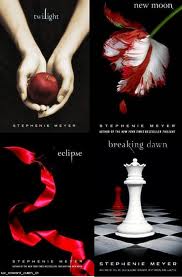
The Twilight books have been flooding into the secondary market recently, but I have not added these titles (New Moon, Eclipse, Breaking Dawn) to my selection of independent reads for students. While I would not censor a book a student wanted to read, there are some texts that are unnecessary in a classroom.

The Twilight series is popular with students without adding copies in the classroom

Fortunately, author Stephanie Meyer does not need to worry that my decision to exclude her books will damage her readership. In fact, my exclusion might even help the book’s cache.

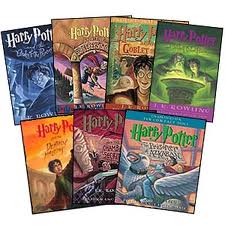
Simply put, there are some titles that have become so popular with my students, that I do not need to provide copies. For example, many students, elementary through high school, purchased their own copies of titles in JK Rowlings’ Harry Potter series. There is now a multitude of “well used” to “completely abused” copies of any one of the seven Potter books in the secondary market.

There are many Potter books in the used book market

The Harry Potter series was so heartily embraced and so well read by millions that I do not need to encourage these readers to read more about Harry. Similarly, students who began with Twilight went on to read New Moon, Eclipse and Breaking Dawn at their own expense.  Additionally, film releases for both Harry Potter and Twilight have kept these titles on best sellers lists, so used copies will continue to flood into the used book market.

Recently, several of my sophomore students were reading The Girl with the Dragon Tattoo, one of a series that is just starting to hit the secondary market. Again, I will not add this series of mysteries, but not for the same reason. The material in this series require  mature readers. However, if a student brought in a personal copy for independent reading, I would have no objection.

The Harry Potter and Twilight series are often stepping stones to other kinds of literature. I try to make the connections between Harry Potter and the epic adventures of other classic heroes who have been marked from birth: King Arthur, Theseus, and Achilles to name a few. I also try and make connections with Twilight, matching the book with the dark brooding romance between Heathcliff and Catherine in Emily Bronte’s Wuthering Heights rather than the more obvious vampire classic Dracula by Bram Stoker. In Eclipse, Bella Swan even borrows a line said by Catherine in Wuthering Heights in order to describe her love for the vampire Edward Cullen, “If all else perished, and he remained, I should still continue to be; and if all else remained, and he were annihilated, the Universe would turn to a mighty stranger.” Meyer knew Bronte had the ability to have her readers swooning!

While some titles need to be promoted in order to gain a reader’s attention, the Twilight and Harry Potter series need no help from me. I leave those books on the tables knowing they will hook readers on their own.

There are always some concessions when a film is made based on a book rather than an original screenplay. A plot may be reduced to fit a film’s running time or plot altered to “please” an audience. Of course, there are exceptions of great adaptation of books to film: Margaret Mitchell’s Gone with the Wind, Larry McMurtry’s Lonesome Dove, and the 1946 version of of Charles Dickens’s Great Expectations. But there are also particularly heinous film versions of classic works of literature. Nathaniel Hawthorne’s The Scarlet Letter was released with Demi Moore as Hester Prynne in 1995, and Edith Wharton’s Ethan Frome was released with Liam Neeson in the title role in 1993. Both films included scenes that damage the integrity of the original work. Film versions of Mary Shelley’s Frankenstein starting in 1931 have brainwashed audiences into thinking The Monster cannot speak or has a square, green or bolted head. Other films have captured the spirit of a text, but renamed characters or rearranged events to the point of confusion such as the 1993 version featuring Daniel Day-Lewis in James Fenimore Cooper’s Last of Mohicans. There are students who watch these versions instead of reading, and they usually do poorly on quizzes or tests.

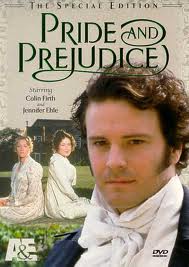
5.5 hours of viewing pleasure

Reduced to 2 hours of viewing

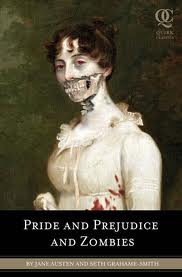
Zombies?? Not yet a movie; only a matter of time!

Students will always look for any “easy” way to complete an assignment and watching a film is certainly easy, but they cheat themselves of a wonderful reading experience. For example, there are many excellent versions of Jane Austen’s Pride and Prejudice. A student can commit to the 5.5 hours of the BBC 1995 mini-series starring Colin Firth and Jennifer Ehle or spend two hours watching the more recent 2005 film starring Keira Knightley and Matthew Macfadyen.Watching either film however, does not provide an appreciation for Austen’s language, her use of comic understatement. In the text, Elizabeth Bennet is confronted by her distant cousin, a Mr. Collins, who insists on proposing marriage. Despite her initial protestations, he relentlessly presses his case saying, “You may assure yourself that no ungenerous reproach shall ever pass my lips when we are married.” At that moment, Austen slips in the most hilarious one-sentence statement: “It was absolutely necessary to interrupt him now.” How cleverly Austen chose that word absolute: (adj)  not mixed or adulterated; pure, complete; outright; (noun) something that is free from any restriction or condition. Elizabeth does interrupts him…with comic genius.

When I want to add a popular contemporary novel, I do consider about how a film adaptation will impact student understanding. Should I invest department funds in this text when there is a well-publicized film available? When I introduced The Road by Cormac MacCarthy, there was no film. Once the film was released in 2009, however, I worried if students would have the same appreciation for the text. Thankfully, they do, thanks to a very bleak film production.

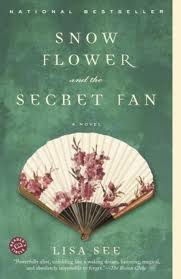
The book offered for independent reading

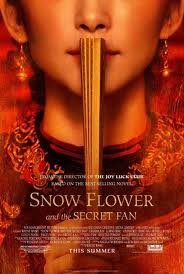
Snow Flow film; will students watch rather than read?

This past year, I accumulated 20 used copies of Lisa See’s Snow Flower and the Little Fan for my world literature curriculum. Several girls liked the story of friendship between women who have endured the Chinese custom of foot-binding, and a teachers’ book club also used the texts. The investment was $20-$30 rather than the retail cost $8.91/copy or $178.20 at Amazon. Unfortunately, the movie release is scheduled for this weekend, July 2011. I wonder the impact the film may have on my students. Will they read the book because of the film? Will they read the book despite the film? Will the film matter at all in their understanding?

Currently, classic novels are available as free downloads on the Internet (public domain), and in all likelihood, my department will not be purchasing new copies of the works of Jane Austen, Thomas Hardy, Upton Sinclair, Charlotte Bronte, or Stephen Crane. We will rely on the secondary market to provide copies for students who do not have electronic devices or who prefer reading a paper text. Teachers are painfully aware that there are films based on adaptations on the novels of these authors, but we hope to convince students that the films are no substitute for the original work. The message of the author is best understood in the written word. Absolutely.

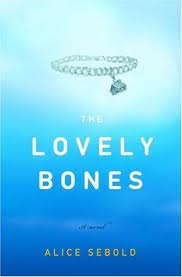
I could hardly breathe while reading the first chapters of The Lovely Bones by Alice Sebold. The novel was first published in 2002; the paperback was released in 2006, followed by a film release in 2010. The original cover of the novel features a charm bracelet centered against a calm, sky blue background, an image which belies the horror inside. The narrator, 14 year old Susie Salmon, calmly narrates how she was lured to an underground den by a neighbor where she was raped, murdered and then disembodied. The bulk of the novel focuses on her observing the effect this crime has on her family and friends from a distant setting – her personal Heaven. Sebold is a a victim of rape herself, an event she details in her memoir Lucky which was published in 1999. Her reading audience can trust her as a guide in confronting such acts of violence, in both fiction and non-fiction, which speaks to her power as a writer.

Pretty cover; frightening plot, but popular with students

Once I first heard the plot, I had no intention of reading the book, but other (adult) readers assured me that I once I got passed the murder (which was as gruesome and graphic as I feared), I would find comfort in the character of Susie. I note that many students, all girls, have a similar attitude. When they read The Lovely Bones, they do not focus on the horrible murder. Instead they share Susie’s curiosity of what is happening on Earth now that she is gone. What will happen to her parents? Her sister? Her friend Ruth? Will her murderer ever be discovered? These questions drive their interest. They are fascinated with the absent but “present-ness” of the main character. Susie is very self-aware; her observations are what make the tragic circumstances bearable.

There are always copies of The Lovely Bones at every used book sale, and I only pick the trade paperbacks with the original cover. The paperback had a re-release with the film with a less attractive cover featuring an ominous Stanley Tucci looking back at the young actress Saoirse Ronan.  That book is bargain priced at Amazon for $6.00. Sebold’s novel is one of a growing number of contemporary novels, adult and young adult, where the a deceased narrator observes or interacts with the living. She was not the first to use this technique, but I think she made this point of view commercially viable.

We offer The Lovely Bones at the high school level (grades 9 and up only) as an independent read; I do not think we will ever teach this book, but we have enough copies for a group discussion or book buddy read. The title was one of the first I began collecting in 2009 once I heard from enough students who thought others would like to read the book. We have a set of 20 copies now, enough for several more years of use by students.  While they may not be  upset by the novel’s opening, I am still squeamish whenever I pick up a copy  remembering how my heart raced at the story’s nightmarish beginning.