Archives For November 30, 1999

I planned a “Poetry Passion Smack-down” for Valentine’s Day 2014, but the Nor’easter that roared across the state of Connecticut kept the school shuttered over an extended President’s Day weekend. So, here is a chance for you, the reader, to be in the class and vote.

The plan was to pit 16th Century poet Christopher Marlowe against 21st Century Pop Star Justin Bieber in a “wooing” contest. The question?: Which poem speaks to you?

Each artist tries to persuade his beloved of his desire using the same two arguments:

  1. I’ll buy you anything;
  2. If you agree, we’ll spend lots of time dancing and singing.

Each artist also sounds a bit desperate. Marlowe’s “Passionate Shepherd” escalates his promises, maybe because of her lack of response to each line. His intentions intensify from one quatrain to the next, offering gifts from “beds of roses” to “silver dishes for thy meat.” One wonders, however, how likely such riches would be if one married a shepherd, passionate or not.

Bieber, on the other hand, works the pity angle, pleading that he will be “going down, down, down, down” because his “…first love won’t be around.” To establish the level of his desperation, he drags in his friend and rap artist Ludacris who makes the metaphorical connection between love and a caffeine rush from Starbucks, and who suggests there’s a headache coming from caffeine withdrawal.

But let us allow the poets to entreat their own cases:

First up, Christopher Marlowe making his petition from “The Passionate Shepherd to His Love”:

The Passionate Shepherd to His Love

Come live with me and be my Love,
And we will all the pleasures prove
That hills and valleys, dale and field,
And all the craggy mountains yield.

There will we sit upon the rocks
And see the shepherds feed their flocks,
By shallow rivers, to whose falls
Melodious birds sing madrigals.

There will I make thee beds of roses
And a thousand fragrant posies,
A cap of flowers, and a kirtle
Embroider’d all with leaves of myrtle.

A gown made of the finest wool
Which from our pretty lambs we pull,
Fair linèd slippers for the cold,
With buckles of the purest gold.

A belt of straw and ivy buds
With coral clasps and amber studs:
And if these pleasures may thee move,
Come live with me and be my Love.

Thy silver dishes for thy meat
As precious as the gods do eat,
Shall on an ivory table be
Prepared each day for thee and me.

The shepherd swains shall dance and sing
For thy delight each May-morning:
If these delights thy mind may move,
Then live with me and be my Love.

Next up, The Bieber’s plea, with his catchy refrains that are easily remembered in a song that was the first ever to go 12-times platinum. They may be simple lyrics, but there is no doubting the economic riches that came with this hit:

Baby, Baby

You know you love me, I know you care
Just shout whenever, and I’ll be there
You are my love, you are my heart
And we will never ever ever be apart

Are we an item? Girl, quit playing
We’re just friends, what are you saying?
Say there’s another and look right in my eyes
My first love broke my heart for the first time
And I was like…

Baby, baby, baby oooh
Like baby, baby, baby nooo
Like baby, baby, baby oooh
I thought you’d always be mine (mine)

Baby, baby, baby oooh
Like baby, baby, baby nooo
Like baby, baby, baby oooh
I thought you’d always be mine (mine)

Oh, for you I would have done whatever
And I just can’t believe we ain’t together
And I wanna play it cool, but I’m losin’ you
I’ll buy you anything, I’ll buy you any ring
And I’m in pieces, baby fix me
And just shake me ’til you wake me from this bad dream
I’m going down, down, down, down
And I just can’t believe my first love won’t be around

And I’m like
Baby, baby, baby oooh
Like baby, baby, baby nooo
Like baby, baby, baby oooh
I thought you’d always be mine (mine)

Baby, baby, baby oooh
Like baby, baby, baby nooo
Like baby, baby, baby oooh
I thought you’d always be mine (mine)

[Ludacris:]
Luda! When I was 13, I had my first love,
There was nobody that compared to my baby
And nobody came between us or could ever come above
She had me going crazy, oh, I was star-struck,
She woke me up daily, don’t need no Starbucks.
She made my heart pound, it skipped a beat when I see her in the street and
At school on the playground but I really wanna see her on the weekend.
She knows she got me dazing cause she was so amazing
And now my heart is breaking but I just keep on saying…

Baby, baby, baby oooh
Like baby, baby, baby nooo
Like baby, baby, baby oooh
I thought you’d always be mine (mine)

Baby, baby, baby oooh
Like baby, baby, baby nooo
Like baby, baby, baby oooh
I thought you’d always be mine (mine)

I’m gone (Yeah Yeah Yeah, Yeah Yeah Yeah)
Now I’m all gone (Yeah Yeah Yeah, Yeah Yeah Yeah)
Now I’m all gone (gone, gone, gone…)
I’m gone

To be sure his public understood the lyrics, Bieber shared the message of the song with MTV News, “I’m chasing her around, trying to get her, and she’s kind of playing hard to get, but I’m persistent. I keep going.”

Over four hundred years earlier, Marlowe said much the same; he did not have the advantage of MTV to explain.


Continue Reading…

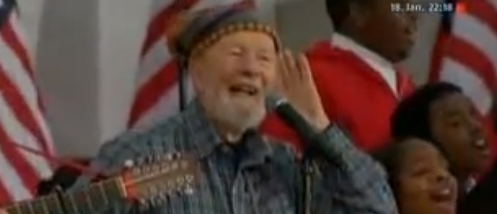
Screenshot 2014-01-31 07.06.53Pete Seeger was a collaborator. Someone acting with others to achieve a goal.

He collaborated in songwriting. The song “Where Have All the Flowers Gone?” was written with Joe Hickerson, “If I Had a Hammer” was written with Lee Hays of the Weavers, and “Turn! Turn! Turn!” was written with a little help from the Old Testament (Ecclesiastics).

He collaborated in performances with other singers: Dylan, Cash, Baez, and frequently with Woody Guthrie. He was a relentless promoter of Guthrie’s music as a tool for social change. His dedication was illustrated in a story told by Bruce Springsteen in a speech at the South By Southwest Festival in 2012. (Read entire speech at SpringsteenKeynoteNPRTranscript)

Springsteen recalled performing with Seeger on the steps of the Lincoln Memorial during the inauguration celebration for President Obama. He recalled the power of singing Guthrie’s “This Land is Your Land” with Seeger that day:

“So four years ago, I found myself in an unusual situation. It was a cold winter day. I was standing alongside of Pete Seeger. It was 25 degrees. Pete had come to Washington. Pete carries a banjo everywhere he goes — the subway, the bus — and comes out in his shirt. I said, “Man, Pete, put on a jacket. It’s freezing out here.” He’s ninety years old — living embodiment of Woody’s legacy.

“There were several hundred thousand of our fellow citizens in front of us. We had the Lincoln Memorial behind us, and a newly-elected president to our right. We were going to sing, “This Land is Your Land” in front of all these Americans. And Pete insisted — he says, “No, we have to sing all the verses. We have to sing all the verses, man. You can’t leave any of them out.”

“I said, ‘I don’t know, Pete.’ We had a crowd of six-year-old school kids behind us. He says, “No, we’re all gonna sing all the verses.” And so we got to it.

At this point in the speech, Springsteen picked up the guitar and began singing: “This Land Is Your Land”

As I was walking I saw a sign there
And on that sign said We’re trespassing
And on the other side It didn’t say nothing.
That side was made For you and me.
This land is your land This land is my land 

He paused to admonish the crowd, “This song is meant to be sung by everybody.” They began to join him:

From California To the New York island
From the Redwood Forest
To the Gulf Stream waters
This land was made for you and me.

Springsteen concluded playing and explained to the crowd:

On that day Pete and myself, and generations of young and old Americans — all colors, religious beliefs — I realized that sometimes things that come from the outside, they make their way in, to become a part of the beating heart of the nation. On that day, when we sung that song, Americans — young and old, black and white, of all religious and political beliefs — were united, for a brief moment, by Woody’s poetry.

Woody’s poetry is American poetry, and Pete Seeger was his American troubadour. Listen:

As a collaborator, Seeger worked with others on many causes: workers’ rights, civil rights, environmental conservation, and world peace. In supporting these causes, he encouraged all others to sing along.
So, here are the words Seeger promoted; the words to Guthrie’s contribution to the American Songbook, the words to “This Land is Your Land.”
Feel free to hum along as you read:

This land is your land, this land is my land
From California to the New York Island
From the Redwood Forest to the Gulf Stream waters
This land was made for you and me.

As I was walking that ribbon of highway
I saw above me that endless skyway
I saw below me that golden valley
This land was made for you and me.

I roamed and I rambled and I followed my footsteps
To the sparkling sands of her diamond deserts
While all around me a voice was sounding
This land was made for you and me.

When the sun came shining, and I was strolling
And the wheat fields waving and the dust clouds rolling
A voice was chanting, As the fog was lifting,
This land was made for you and me.

This land is your land, this land is my land
From California to the New York Island
From the Redwood Forest to the Gulf Stream waters
This land was made for you and me.

Thank you, Pete Seeger, for reminding us to sing about America and to sing ALL the verses.

Continue Reading…

The villanelle is a nineteen-line poem with two repeating rhymes and two refrains. The form originated in France in the late 1800s, and the structure is comprised of five tercets followed by a quatrain. The most famous villanelle is by the Welsh poet Dylan Thomas, “Do Not Go Gentle into That Good Night.”

Do not go gentle into that good night, 

Do not go gentle into that good night,
Old age should burn and rave at close of day;
Rage, rage against the dying of the light.

Though wise men at their end know dark is right,
Because their words had forked no lightning they
Do not go gentle into that good night.

Good men, the last wave by, crying how bright
Their frail deeds might have danced in a green bay,
Rage, rage against the dying of the light.

Wild men who caught and sang the sun in flight,
And learn, too late, they grieved it on its way,
Do not go gentle into that good night.

Grave men, near death, who see with blinding sight
Blind eyes could blaze like meteors and be gay,
Rage, rage against the dying of the light.

And you, my father, there on the sad height,
Curse, bless, me now with your fierce tears, I pray.
Do not go gentle into that good night.
Rage, rage against the dying of the light.

I recently taught this poem to a class of Advanced Placement English Literature seniors who after some discussion were able to determine audience (“And you, my father..”), the form of address (imperative “Do not go“) and the poem’s paradox (“Curse, bless, me now“). They were intrigued by the most striking element of the poem, the repetition of the lines “Do not go gentle into that good night” (1, 6, 12, 18) and “Rage, rage against the dying of the light” (lines 3, 5,15,19). The ferocity of Thomas’s repeated exhortations increase because of the structure of the villanelle.

Structure matters. Structure, that “fundamental, tangible or intangible notion referring to the recognition, observation, nature, and permanence of patterns and relationships of entities” is not limited to poetry. Structure is in all the arts, and in all the sciences.

Structure matters in mathematics. Common Core Mathematic Practice Standard #7 requires students to:

Look for and make use of structure.

This standard details that “proficient students look closely to discern a pattern or structure,” and suggests, “young students, for example, might notice that three and seven more is the same amount as seven and three more.” Promoting this practice standard beyond the math classroom will have students noticing structure in other classes in every grade level. Students will be better equipped to recognize and use the structure of the periodic table or the color spectrum; they will be be prepared to identify and to employ patterns in pronouncing vowels and consonants. Students will be empowered to discover coordinates in longitude and latitude or to categorize the ingredients in food groups.

Recognizing and using structure is the critical academic skill that can help a student unravel both a problem in geometry or the complexity of a poetic structure like the villanelle. Once they understand the structure, they can evaluate the poet’s purposeful choice such as the one made by Dylan Thomas who selected the villanelle for this powerful poem.

The Common Core’s Mathematic Practice Standard #7 is in math and poetry. Note the same letters MP? Pattern? PossiblyCoincidence? Maybe not!

Continue Reading…

Best two words in winter? “Snow Day”.

Yes. I will look back in mid-June and see the extension of school days to meet mandatory requirements, and I will sigh. I  might question the wisdom of school administrators who would keep students cooped up in classrooms on warm sunny summer afternoons, but even then I will still admit, I love a snow day.

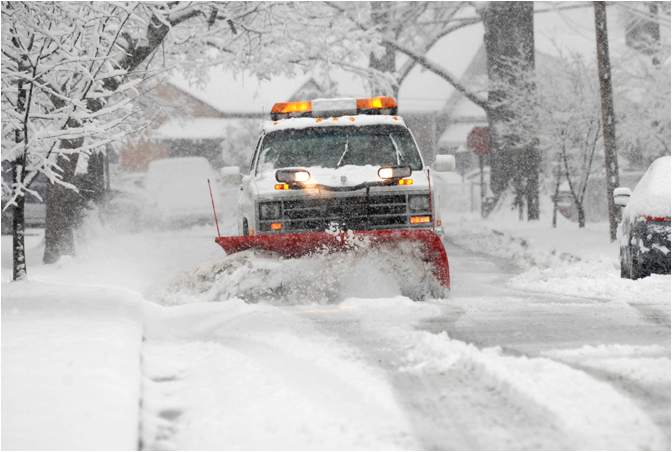
snowremovalThe outside lights were on all night so I could check on the progress of snow mounting on the barn roof. I could hear the town’s plows, chained tires rattling, working throughout the night. My eyeglasses were handy so that I could grab them and read the small print of scrolling school closings on the TV screen, but this morning I did not need them since my school district thoughtfully sent a robo-call.

I am not surprised that one of my favorite poets, Billy Collins, has a poem titled “Snow Day” where he expresses his appreciation of weather-induced holidays. In stanzas 4-6, he mimics the listings of school closings on the radio:

But for now I am a willing prisoner in this house,
a sympathizer with the anarchic cause of snow.
I will make a pot of tea
and listen to the plastic radio on the counter,
as glad as anyone to hear the news
that the Kiddie Corner School is closed,
the Ding-Dong School, closed.
the All Aboard Children’s School, closed,
the Hi-Ho Nursery School, closed,
along with—some will be delighted to hear—
the Toadstool School, the Little School,
Little Sparrows Nursery School,
Little Stars Pre-School, Peas-and-Carrots Day School
the Tom Thumb Child Center, all closed,
and—clap your hands—the Peanuts Play School.
                    …read more from “Snow Day”
Sailing Alone Around the Room: New and Selected Poems (New York: Random House, 2001).

I have written about Collins’s poetry (see links below) several times in this blog for Poetry Friday. His lyrics run parallel to my experiences of growing up, so there is a sense of nostalgia, a familiarity, when I read his poems. His poetry is accessible to all grade levels, but it is his wry humor in his observations on the universal human experience that makes me want to share him with students. So much of literature can be serious, or downright depressing, that I am grateful, even a little giddy, to have several books of Collins’s poetry on my shelf ready for an opportune moment.

“Look,” I will say, “here’s a funny poem about Emily Dickinson!” or “Hey, want me to read a comic take on the elements of a sonnet?

This snow day is one more excuse to share Collins’s poetry with others- whatever the climate. And for just a day, I can pity those in those waking up in sunny Southern California who are going to school. They may have the warm sun on their toes sticking out of their sandals, but they will never know the pleasure of warm toes stretching out under warm blankets just as there is the announcement of a school cancellation….to roll over…and to hit the snooze button.

Sleep in. It’s a snow day.

Continue Reading…

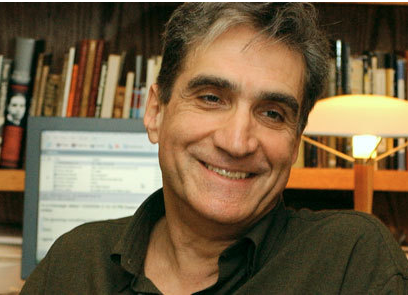
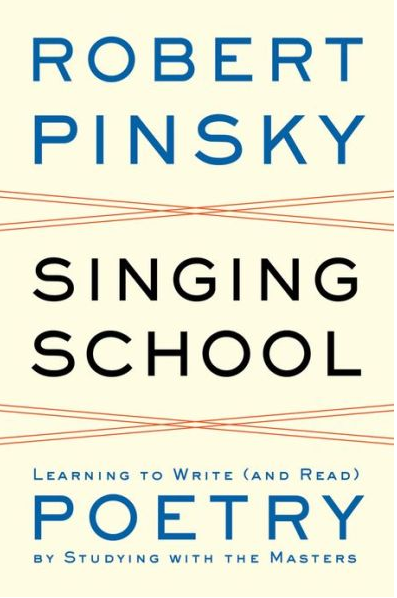
Screen Shot 2013-12-05 at 11.08.36 PMThe sonorous voice delivering the keynote address at the Conference on English Leadership (CEL) on Sunday, November 24, 2013, belonged to the poet Robert Pinsky. He was there to promote his latest book Singing School, which is promoted as, “A bold new approach to writing (and reading) poetry based on great poetry of the past.” This collection of 80 poems includes selections from  Sappho to Allen Ginsberg, Shakespeare to Emily Dickinson. In an interview on NPR,  Pinsky explained that the poems for the book were selected “because of the music of the language, and not from the meaning of the words.” In the interview he explained:

“Even just the cadence of pauses,” he explains. “I stop. I think. I wait. I wait a little longer. Then less. … Something like that generates the poem. And for me, if anything I do is any good, it’s carried by that kind of cadence or melody.”

To prove his point, Pinsky filled his address with reciting lines of poetry, once challenging the crowd of English teachers in attendance to identify the poet; “That was Robert Frost, your New England poet,” he gently chastised when no one responded correctly. (To give you a taste of the experience, you can hear Pinskey read Frost’s poem “Mowing” courtesy of Slate Magazine by clicking here.)

As we listened, I heard someone remark that Pinsky could make a parking ticket sound lyrical.

Screen Shot 2013-11-29 at 2.27.16 PM

Pinsky’s voice was not the only one reciting poems in his keynote. He turned to the presentation screen to show videos from the Favorite Poem Project website. This project  is “dedicated to celebrating, documenting and encouraging poetry’s role in Americans’ lives.”

Pinsky founded the project when he served as the 39th Poet Laureate of the United States, from 1997-2000. The Favorite Poem Project website details how,

“During the one-year open call for submissions, 18,000 Americans wrote to the project volunteering to share their favorite poems — Americans from ages 5 to 97, from every state, of diverse occupations, kinds of education and backgrounds.

Pinsky purposely selected a video to show as a tribute to the City of Boston, host of the CEL. The selected video featured John Ulrich, a student from South Boston, MA, reading Gwendolyn Brooks’s  “We Real Cool”:

We Real Cool
by Gwendolyn Brooks

THE POOL PLAYERS.
SEVEN AT THE GOLDEN SHOVEL.

We real cool. We
Left school. We

Lurk late. We
Strike straight. We

Sing sin. We
Thin gin. We

Jazz June. We
Die soon.

Each video available on the Favorite Poem Project’s website begins with the reader’s reason for choosing the a particular poem. Ulrich provided a touching admission of how Brooks’s short poem reminds him about several childhood friends he lost to suicide. He read her 1950s tribute to the players in a pool hall in the South Side of Chicago with a heavy South Boston accent twice. The defiance on his face during the second reading is visible in the video.

I have taught this poem in my classes, and inevitably one of the more musical students, usually a drummer, will notice, “Hey, this is written in jazz!” The brevity of Brooks’s verse belies the amount of discussion the poem generates for students, particularly with the ending line, “We/ Die soon.”

Pinsky shared other videos: Nick and the Candlestick by Sylvia Plath read by Seph Rodney and Poem by Frank O’Hara read by Richard Samuel. The production quality of these videos garnered admiration from the crowd.

“Are you still taking entries for this project?” one teacher asked.
“We may be,” replied Pinsky.

His final comment sent a ripple that went through the audience as people considered, “What poem could I read for the project?”

Continue Reading…

We have been discussing loss a great deal in English class. In order to begin our  study of King Lear, students had to create lists of their 10 favorite things while I played the song “My Favorite Things” from The Sound of Music. After they made their lists, I  had them “lose” -one at a time- an item off the list.

“Cross off #7,” I announced with great seriousness.
There were immediate groans from students.
“That’s Starbucks!” one whined.
“My truck!” claimed another, “How will I drive?”
“Cross off #3,” I called out.
More protestations. More groans.
“No way I am crossing off my dog,” another retorted.

Soon, their lists were down to two items each. They stirred uncomfortably; they were unsettled by the mere thought of being separated from things or people they valued.

“Maybe I value my stuff over people too much,” mused one thoughtfully looking over her list.

In this short exercise, my students conveyed some of the same sentiments that are expressed in Elizabeth Bishop’s poem “One Art”:

One Art

by Elizabeth Bishop

The art of losing isn’t hard to master;
so many things seem filled with the intent
to be lost that their loss is no disaster,

Lose something every day. Accept the fluster
of lost door keys, the hour badly spent.
The art of losing isn’t hard to master. (continued…)

My students were struck by the repetition of the words “master” and “disaster” in the poem, a result of the villanelle* (see below) format. They noted the progression of items lost in the poem: the car keys, the watch, the houses, the cities, rivers, and finally, the loss of continents.

They noted the choice of hyphens and parentheses in the poem. The hyphen at the beginning of the final stanza was a “hesitation” according to one student, “because she doesn’t even want to write the last stanza.”

“How do you know?” I asked.

“Because she has to command herself,” the student replied, “See the parentheses and the words ‘(Write it!)’ on the last line?”

“Why? What is she losing in the last stanza?” I asked. They called out their ideas:
“Love.”
“You.”
“Her life…”

“So is the art of losing hard to master or not?” I asked them. They thought, and wrote the following in their notebooks:

  • “No one wants to  master losing things…who wants to be a loser, literally?”
  • “She is taking about the loss of physical objects in comparison to the loss of people, and no one wants to lose people…like a friend or lover.”
  • “The speaker is rushing towards the end, speaking faster with ‘shan’t’ and ‘losing’s’ as if things are slipping away, and out of control, until she writes down the losses….and commits them to memory.”
  • “She is trying to convince herself.”

Elizabeth Bishop’s poem brought my class back to the many themes we had been discussing in our unit on King Lear. We had spent several classes focused on the tragedy of a king who in dividing his kingdom, upends the order of the realm. In the process, he loses his daughters, his knights (protectors), his friends, his mind, and finally, his life. The students concluded that Lear was no “master of disaster.”

“Pretty cool that 19 lines can say almost the same thing as Shakespeare’s five act play,” concluded one student as he wrapped up his books  to leave.

Pretty cool, Elizabeth Bishop.

*villanelle: The villanelle has 19 lines, 5 stanzas of three lines and 1 stanza of four lines with two rhymes and two refrains. The 1st, then the 3rd lines alternate as the last lines of stanzas 2, 3, and 4, and then stanza 5 (the end) as a couplet. It is usually written in tetrameter (4 feet) or pentameter.

Poetry Friday: Invictus

July 19, 2013 — 4 Comments

The film Invictus tells the story of how in 1995 Nelson Mandela enlisted the help of South Africa’s National Rugby team in order to unite the country and end prejudices associated with Apartheid. The film stars Morgan Freeman as Mandela and Matt Damon as South African rugby star Francois Pienaar, but this is more than a sports film. One mise-en-scene features a visit to the real Robben’s Island Prison, where Mandela was held as a political prisoner for 27 years.

The film footage shows the cell where Mandela served his sentence before his release in February 1990. As the camera pans around the prison, the voice of Freeman recites William Ernest Henley’s poem Invictus

Out of the night that covers me,
Black as the Pit from pole to pole,
I thank whatever gods may be
For my unconquerable soul.

In the fell clutch of circumstance
I have not winced nor cried aloud.
Under the bludgeonings of chance
My head is bloody, but unbowed.

Beyond this place of wrath and tears
Looms but the Horror of the shade,
And yet the menace of the years
Finds, and shall find, me unafraid.

It matters not how strait the gate,
How charged with punishments the scroll.
I am the master of my fate:
I am the captain of my soul.

I am familiar enough with the poem that I do not need to look it up or “cut and paste” the text.
I can recite this poem cold.
So can the grade 12 seniors at Brookfield High School in CT (my tenure 1999-2008) who traditionally memorized the poem and recited its 16 lines for an English grade.

The “Invictus Day” tradition was begun to honor an English teacher who had passed away; the tradition was sustained by her colleague, Carole Smith, who would prepare “Invictus” sheets for students to carry with them to practice. A rubric was on the back that provided selected teachers a rubric to grade the quality of the recitation: A for a spectacular recitation (with feeling; no errors); B for a good recitation (one error allowed); C for an average recitation (errors allowed). A student had only one shot for an A; a teacher would sign off on the quality, but if there was a single flub, the highest grade that could be achieved was a B. Fortunately, the weight of the “Invictus” grade was nominal, however, the honor of getting an A for recitation was an achievement regardless of weight.

“Invictus Day” was an unannounced event held usually in late October or early November. Members of the faculty wore black, and seniors went scurrying to their lockers for their sheets. In Harry Potter-esque fashion, teachers would point at a senior with a finger and command, “INVICTUS”! The senior would be required to drop everything, hand over the sheet, and begin reciting, “Out of the night that covers me…”

There was a great deal of cowering, creeping, lurking,  prowling, skulking, and stalking on “Invictus Day”…on the part of both students and faculty. Some students took full advantage of the dramatic encounters by shouting the poem at the top of their lungs or climbing on tables or desks to recite for a crowd of delighted underclassmen. Others clung together to recite chorally, while the more timid seniors were given the opportunity to pull a teacher aside to recite and “get this over with!” Every year, a student would sing the poem to a familiar tune; one year, a student had a completely original melody with back-up singers. Once a student was graded, or “invicted”, he or she could show the sheet as a pass. Once invicted, a student could not be forced to recite again.

My favorite story of “Invictus Day” was of a one student who advertised his plans for presenting the poem. He prepared to recite the poem holding a heavy plaster skull, a la Hamlet. Hearing this, I convinced the members of the faculty not to invict him. The idea that he would carry the skull for several days was amusing to the faculty and to the student body. November came and went, and so did December and January. By late March, the student was pleading for someone to “invict me” so that he could rid himself of the skull he had been toting for months. Fortunately, he had been cast as a lead in the school musical. One warm April night, at the end of the final night’s production, he ran forward to take his well-deserved bow. As he stood up, I stepped out from the wings and onto the stage and cried, “Invictus!” There was a split second of shock in his eyes, but he bounded backstage and seconds later reappeared with the skull to recite the poem to a full house. There was a standing ovation; his performance for both the musical and the poem deserved the audience’s applause.

The obvious message of the poem is the control of one’s fate, and that makes the poem perfectly suited for seniors who will be steering their own destinies once they graduate. They may go to colleges, training schools, the military, or they make seek their futures in other pursuits, but who they will be after the thirteen years of mandated education is largely up to them. Holding the poem’s message in their heads, and in their hearts, can serve to guide them through rough waters of adulthood.

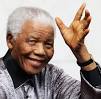
Mandela The same could be said for the use of the poem in the film Invictus. Four years after his release from his 27 years in Robben Island’s prison, Nelson Mandela was elected president of South Africa. He had made great sacrifices in bringing the horrors of Apartheid to an end, but his belief in a united South Africa had prevailed.

This past Thursday, July 18, 2013, Mandela turned 95 years old.

Happy Birthday, Mr. Mandela, your life story is affirmation of Henley’s message:

I am the master of my fate:
I am the captain of my soul.

In my youth I thought Nights in White Satin by the Moody Blues (1967) was a song about knights who galloped on horseback wearing white satin, so I am no longer surprised when the attraction of a song’s melody overrides my understanding of the lyrics.
Such is the case with Bruce Springsteen’s Born in the USA (1984).
This song rates a spin up on the volume of my car radio or a little dance in the kitchen to that driving beat when the CD is playing.
Born in the USA..ay” I will sing along with Bruce, Clarence Clemons and the E-Street Band*, “I was born in the USA..ay.”
I had always thought that this was a paean to America.
Then I read the lyrics.

Born in the USA

Born down in a dead man’s town
The first kick I took was when I hit the ground
You end up like a dog that’s been beat too much
Till you spend half your life just covering up

Born in the U.S.A.
I was born in the U.S.A.
Born in the U.S.A.

Got in a little hometown jam so they put a rifle in my hand
Sent me off to a foreign land to go and kill the yellow man

Born in the U.S.A.
I was born in the U.S.A.
Born in the U.S.A.

Come back home to the refinery
Hiring man says “Son if it was up to me”
Went down to see my V.A. man
He said “Son don’t you understand now”

I had a brother at Khe Sahn fighting off the Viet Cong
They’re still there he’s all gone
He had a woman he loved in Saigon
I got a picture of him in her arms now

Down in the shadow of the penitentiary
Out by the gas fires of the refinery
I’m ten years burning down the road
Nowhere to run ain’t got nowhere to go

Born in the U.S.A.
I was born in the U.S.A.
Born in the U.S.A.
I’m a long gone Daddy in the U.S.A.
Born in the U.S.A.
Born in the U.S.A.
Born in the U.S.A.
I’m a cool rocking Daddy in the U.S.A.

*E-street Band

  • Roy Bittan – piano, synthesizer
  • Danny Federici – organ, glockenspiel, piano on “Born in the U.S.A.”
  • Garry Tallent – bass
  • Steven Van Zandt – acoustic guitar, mandolin, harmony vocals
  • Max Weinberg – drum
(sorry about the advertisement!)
Springsteen’s Born in the USA is not a tribute,  but is instead a grim recollection of a man’s hard life in America; a life that began in abuse, involved a scuffle with the law, a tour in Vietnam, the loss of a friend at Khe Sahn, the return home to unemployment, and a life that still has the shadow of a penitentiary hovering over him as a possible end.

The poetry in the lyrics are a collision with the song’s percussive call to celebrate.
The quick-march tempo complements the song’s narrator’s movement; he is still moving, running, on an endless search for truth that Springsteen says is the true American way.
That truth, however, is full of irony.
While elements of the “American Dream” have eluded him, he remains stubbornly proud of his heritage.
While his service in Vietnam is not reciprocated by a grateful nation, he remains stubbornly proud of his country.
While there is the looming shadow of a penitentiary or unemployment at the refinery, the man has chosen to move down the road in a country where such movement is possible.
While he drifts with Nowhere to run, ain’t got nowhere to go, there is pride in American independence in the last line, I’m a cool rocking daddy in the U.S.A. 
Trust Springsteen to capture the paradox of America, a place where fate and the land of opportunity collide. That collision is captured in this song where we are left hopeful that something good will happen to the man who, despite the odds, remains proud to have been Born in the USA.

Since the end of the Civil War, the last Monday in May has been set aside as Memorial Day, a day to honor all Americans who have died in military service for their country. There will be opportunities to celebrate by singing patriotic songs, wave flags in time with bands in parades, and eat barbecue.

There is, however, little to celebrate in the details of a death that occurs in military combat.  The specifics in a soldier’s death are painful to hear or to read, but our discomfort should not prevent us from acknowledging the depth and breadth of each soldier’s sacrifice. Many of the returning veterans from Iraq and Afghanistan are writing about their personal experiences and noting the sacrifices made by their fellow soldiers.  These veterans write memoirs and include stories about friends who were killed. They recall their intimate thoughts when they themselves confronted death. They write about the grisly horrors they witnessed in war. Some write about people they killed in conflict. Some fictionalize accounts of their military experiences.  Brian Turner writes poetry.

Brian Turner was an infantry team leader with the 3rd Stryker Brigade Combat Team, 2nd Infantry Division from November 2003 where he served in Iraq. He already had an MFA from the University of Oregon before he joined to serve seven years in the U.S. Army. His first book of poetry, Here, Bullet, chronicles his time in Iraq. In the video below, he reads the title poem at Bowdoin College (November 29, 2005) in a film by documentary filmmaker Eric Herter, sponsored by From the Fishouse, an online audio archive of emerging poets, http://www.fishousepoems.org.

Here, Bullet

If a body is what you want
then here is bone and gristle and flesh.
Here is the clavicle-snapped wish,
the aorta’s opened valves, the leap
thought makes at the synaptic gap.
Here is the adrenaline rush you crave,
that inexorable flight, that insane puncture
into heat and blood.

(continue on his site…)

Our 11th graders review this poem and several other Turner poems when they read Tim O’Brien’s novel The Things They Carried, another piece of literature that is dedicated to the sacrifices made by soldiers during war. O’Brien’s connected short stories about an Army platoon during the Vietnam War also comes from his personal experience. In both works, images are painfully raw; some of the language in each is vulgar. Our students appreciate the authenticity and the authority of these voices in capturing the images of war. In O’Brien’s stories and in Turner’s poetry, war does not provide reasons for celebration other than the celebration of war’s end and the return of soldiers to their homes.

Consequently, Turner’s poetry does not give the reader the parade, picnic, or flag waving poetry that people recall in images about Memorial Day. His poetry is a painful tribute; an agonizing truth that people must remember. His poetry reminds us that our freedom has been purchased at a cost, and that cost may be through another’s suffering. His voice reminds us why we should never forget that cost, why there is a Memorial Day.

Mother’s Day is coming! There will be tributes and flowers and cards and perfume and candy and breakfasts, brunches, suppers, dinners given in honor of mothers. The phone networks will run white hot with continental and international calls with phone calls to mom.

I too will send flowers, and I will make a phone call, but I have already given her a little tribute in person this past month. Mom lives in Idaho, and I spent spring break with her and other members of my (large) family. We had lunch, I cooked dinners, and we did a little shopping. At night we would sit at the dining table and talk. Since April is poetry month, I decided to share one of my favorite poets, Billy Collins.

I found Billy Collins back in 2004 when he contacted teachers to participate in the Poetry 180 project, a poem a day for students in schools to be shared during daily announcements or posted on bulletin boards. Collins believes:

“Poems can inspire and make us think about what it means to be a member of the human race. By just spending a few minutes reading a poem each day, new worlds can be revealed.”

Just the thought of sharing a Billy Collins poem makes me start to grin. His verse is so wise and often very funny. The added benefit is that there are plenty of recordings of him reading his poems. His dead pan delivery of his poetry is priceless. Even hearing him give the explanation for a poem’s genesis makes me start to chuckle; on the video below, you can hear the audience do the same.

box stich

How to make a box stitch lanyard

Collins introduces the poem The Lanyard by downplaying his efforts. “I did what most poets tend to do,” he notes in the opening explanation, “which is  write about a topic that is rather large, to choose an image as a point of entry rather than take on the topic in a frontal way.”

That is an understatement since in this poem, the topic is large: “How can you repay your mother?”

The Lanyard – Billy Collins

The other day I was ricocheting slowly
off the blue walls of this room,
moving as if underwater from typewriter to piano,
from bookshelf to an envelope lying on the floor,
when I found myself in the L section of the dictionary
where my eyes fell upon the word lanyard.

No cookie nibbled by a French novelist
could send one into the past more suddenly—
a past where I sat at a workbench at a camp
by a deep Adirondack lake
learning how to braid long thin plastic strips
into a lanyard, a gift for my mother.

I had never seen anyone use a lanyard
or wear one, if that’s what you did with them,
but that did not keep me from crossing
strand over strand again and again
until I had made a boxy
red and white lanyard for my mother.

She gave me life and milk from her breasts,
and I gave her a lanyard.
She nursed me in many a sick room,
lifted spoons of medicine to my lips,
laid cold face-cloths on my forehead,
and then led me out into the airy light

and taught me to walk and swim,
and I, in turn, presented her with a lanyard.
Here are thousands of meals, she said,
and here is clothing and a good education.
And here is your lanyard, I replied,
which I made with a little help from a counselor.

Here is a breathing body and a beating heart,
strong legs, bones and teeth,
and two clear eyes to read the world, she whispered,
and here, I said, is the lanyard I made at camp.
And here, I wish to say to her now,
is a smaller gift—not the worn truth

that you can never repay your mother,
but the rueful admission that when she took
the two-tone lanyard from my hand,
I was as sure as a boy could be
that this useless, worthless thing I wove
out of boredom would be enough to make us even.

from The Trouble with Poetry. Purchase from Amazon (here).

Like the speaker in the poem, I have given my mother a lanyard I made during day camp. I also have given her a pile of acrylic woven potholders that could not possibly protect a hand against the heat of a pan, several cigarette ashtrays when no one in our immediate family smoked, a plethora of pasta strung on elastic cords that she could wear around her neck, and several tile trivets that left specks of powdery plaster of Paris on the dining table when it was brought out only for special occasions. I understand Billy Collin’s taste in art.

I also understand that I can never repay my mother. I find that hard to communicate to her directly, and so I too have to take on the large topic of a mother’s love with smaller points of entry. I cleaned out the spice rack, consolidating jars and removing a can of mace spice from the A & P that had travelled West with her some 30 years earlier. We found letters, some written by my father or to my father who passed away 23 years ago;  we listened to my brother read the letters aloud and remembered how well my father had cared for all of us. We sat in the sun, and we marveled at her view of the city of Boise on a clear spring afternoon. And I shared Billy Collin’s poem, “The Lanyard” knowing full well that nothing could ever make us even.