Archives For November 30, 1999

It’s Halloween…what is the most frightening story you have ever read?

“I busied myself to think of a story, — a story to rival those which had excited us to this task. One which would speak to the mysterious fears of our nature, and awaken thrilling horror — one to make the reader dread to look round, to curdle the blood, and quicken the beatings of the heart. ……. I thought and pondered — vainly. I felt that blank incapability of invention which is the greatest misery of authorship, when dull Nothing replies to our anxious invocations. Have you thought of a story?” (Shelley, Preface)

Yes. Frankenstein. Mary Shelley’s masterpiece drafted when she was18 years old.  Teaching Mary Shelley’s “ghost story” always elicits the most interesting responses from my students. I have taught the novel every year for the past 12 years to students in grades 10-12, in AP or unleveled curriculums, and the results are always satisfying.

Note: I did not say easy.
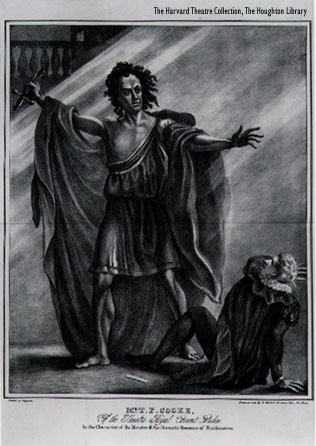
Since I am now familiar enough with the text and the pitfalls that catch most students, I know that I will need to summon an enormous amount of energy to begin teaching Frankenstein. First, there is the baggage of the pop culture monster with its green skin, bolted neck and squared boots. That baggage must be “unpacked” first. Then, there is Robert Walton’s epistolary start of the novel, coupled with Victor Frankenstein’s lengthy autobiography.  References to Cornelius Agrippa, Lake Geneva, and Galvanism are more stumbling blocks.

  • “So, where is the Monster?”
  • “When does this book get good?”
  • “I’m sorry, but this is just boring!”

Okay, Chapter Five.  On a dark and stormy night,

“With an anxiety that almost amounted to agony, I collected the instruments of life around me, that I might infuse a spark of being into the lifeless thing that lay at my feet. It was already one in the morning; the rain pattered dismally against the panes, and my candle was nearly burnt out, when, by the glimmer of the half-extinguished light, I saw the dull yellow eye of the creature open; it breathed hard, and a convulsive motion agitated its limbs”(Shelley, 5).

The Monster lives! Like the Creator in Genesis who “formed the man of dust from the ground and breathed into his nostrils the breath of life, and the man became a living creature” (Genesis 2:8), Shelley breathes life into her creation without regard to hard science.  In both stories, the empirical data or formulas, which led to these creations, express leaps of faith understood by the reader. The spark of life is imbued; the creation lives and breathes. The Creator of Genesis differs immediately from Victor when he, “planted a garden in Eden, in the east, and there he put the man whom he had formed”(Genesis 2:8), In contrast, the reader can hear Victor’s sudden gasp, “Beautiful!–Great God!” so repulsed is he once the creature comes to life. Victor weakly admits that all this work has been a failure, and comments almost apologetically, “The different accidents of life are not so changeable as the feelings of human nature” (Shelley, 5). Unfortunately, the creation has been loosed upon the earth; he will not easily be unmade simply because his creator has changed his mind.

Exhausted, Victor sleeps only to be wakened by

“when, by the dim and yellow light of the moon, as it forced its way through the window shutters, I beheld the wretch — the miserable monster whom I had created… His jaws opened, and he muttered some inarticulate sounds, while a grin wrinkled his cheeks. He might have spoken, but I did not hear; one hand was stretched out, seemingly to detain me, but I escaped, and rushed down stairs” (Shelley, 5).

Rejection! Abandonment! Isolation.

The Creator in Genesis does not abandon his creations, despite their disastrous decision to disobey. Rather, the reader finds this Creator “made for Adam and for his wife garments of skins and clothed them (Genesis 3:21) before banishing them from the Garden.Victor, in contrast, flees from the sound and the touch of the Monster who was trying to say….what? Creator?….Father?

  • Daddy.”
  • “Victor is a jerk.”
  • “He ran away because he didn’t want the responsibility.”

Exactly. And that is why Frankenstein gets to the heart of so many of the issues that our students, our culture, our world must deal with today. There are questions of responsibility. The responsibilities of a creator for the created can be extended to include the responsibilities of parents to children, of scientists to inventions, of writers to literature, of politicians to policies, and of pundits to sound bytes. What happens when the “creation” goes bad?

  • “If Victor kills the Monster, is it murder?”
  • “It’s Victor’s fault that the Monster is a murderer.”

Is the Monster a human? Shelley allows that the Monster eats, reads, and pines for a companion; he is alone, and miserable. A critical scene has the Monster pleading with Victor for a friend, a companion, a mate. Shelley has her Monster claim to have a soul; is the Monster a human? What makes a human a human?

  • Having a mate will mean monster babies!”
  • “Why didn’t Victor think about what the Monster would do?”
  • “This is just like Jurassic Park !”

Shelley’s novel also considers related ethical questions. These include what is the result of unleashing a new technology on earth? Because the technology exists to create, should the technology be used? How far should technology go in helping humanity?

In our brave new world, the “lyger” has been created because geographically separated tigers and lions can be crossbred in labs. Genetically altered crops are in the mainstream food source. These technological advancements have moved into our world with a ripple. But what of the advancements that will follow? Will human cloning become a reality, and will society deal ethically with clones? How far are we from artificial intelligence and should-or can- this intelligence be controlled? What does Frankenstein teach the reader about making ethical decisions today or in the near future? Why is literature such a great predictor for what will happen in the future?

We feel pathos. The Monster’s story is one of tragedy.

  • “Victor is the real monster.”
  • “I feel bad for the Monster…he didn’t want to be a Monster.”

By the end of the novel, my students have dealt with some very profound ideas. They have asked some very important questions about responsibility, humanity, and ethical behavior. They feel a sense of accomplishment in reading a difficult 19th Century text. They have confronted contemporary issues through literature, and isn’t that what is supposed to happen in the classroom?

Mary Shelley was only 18 years old when she attempted to answer some of the questions about the limits of man.  She was young and ambitious, like many of our students. Her “hideous progeny” is extraordinarily prescient; then novel is in every way a Modern Prometheus-a modern myth. Mary Shelley’s Frankenstein is a must read, and a cautiously frightening tale, for Halloween or for any other day.

The cover is not at all frightening, but the contents are. I had found two copies of Max Brooks’s World War Z: An Oral History of the Zombie Wars at summer book sales ($1.00 each) and placed them on the 9th grade independent reading book carts.  There was not much interest; the paperback measures a hefty 342 pages. But lately, the book is gaining some tractions with some of the freshmen boys.

“It’s about these interviews with survivors of the Zombie apocalypse ” explained Paul to the class yesterday when he volunteered to share what he was reading, “and it is really realistic. You hear how the zombie plague started and how the governments are corrupt.”

When a classmate endorses a book, the other students listen; first person testimonials are very powerful in our independent reading program. I had touted the book early in September to students when they were first perusing the book carts  The storyline was compelling enough for me, a squeamish reader, to appreciate how Brooks made a zombie war a study in political science. How would governments react to an epidemiological disaster? What would our military do to contain a potent virus? What rules would govern the survivors? I found the book to be a heart pounding read, and I read a few paragraphs to the class who listened with interest.

World War Z is told through a series of eye-witness accounts that occasionally connect characters and events. For example, there is the testimony of the fictional Dr. Kwang Jingshu, Greater Chongqing, United Federation of China:

“I found ‘Patient Zero’ behind the locked door of an abandoned apartment across town. . . . His wrists and feet were bound with plastic packing twine. Although he’d rubbed off the skin around his bonds, there was no blood. There was also no blood on his other wounds. . . . He was writhing like an animal; a gag muffled his growls. At first the villagers tried to hold me back. They warned me not to touch him, that he was ‘cursed.’ I shrugged them off and reached for my mask and gloves. The boy’s skin was . . . cold and gray . . . I could find neither his heartbeat nor his pulse.”

There is also very realistic testimony from the fictional General Travis D’Ambrosia, Supreme Allied Commander, Europe:

“Two hundred million zombies. Who can even visualize that type of number, let alone combat it? . . . For the first time in history, we faced an enemy that was actively waging total war. They had no limits of endurance. They would never negotiate, never surrender. They would fight until the very end because, unlike us, every single one of them, every second of every day, was devoted to consuming all life on Earth.”

What was most frightening as I read was my increasing doubt that the hundreds of characters interviewed in this story were fictional at all. Brooks has written post-zombie war interviews of doctors, generals, mayors, and newspaper reporters with remarkable authenticity.

But World War Z is not the only post-apocolyptic zombie book making the rounds in class. Another popular book making the rounds is Jonathan Mayberry’s Rot and Ruin (Benny Imura) the first novel in a series. I often see the rather grotesque cover art sitting on a desk, one eyeball staring up at the ceiling.

A review of Rot and Ruin on Amazon states:
In the zombie-infested, post-apocalyptic America where Benny Imura lives, every teenager must find a job by the time they turn fifteen or get their rations cut in half. Benny doesn’t want to apprentice as a zombie hunter with his boring older brother Tom, but he has no choice. He expects a tedious job whacking zoms for cash, but what he gets is a vocation that will teach him what it means to be human.
Zombie literature seems to cross our class’s gender lines, although Rot and Ruin seems to be more popular with the girls in the class. At present, there are only a few copies available through our school library, so I will be looking out for it at book sales. In addition to these titles, we also have several copies of James Dashner’s The Maze Runner, a series also loosely connected to the zombie phenomenon.
I am not entirely sure what my students’ fascination with zombies means. There are always trends or fads in literature; several years ago handsome vampires were all the rage, and several year before that, wizards ruled the reading lists. So I am aware that this infatuation with all things zombie will eventually fade, but maybe I can convince them to use their own brains as “food” for thought.

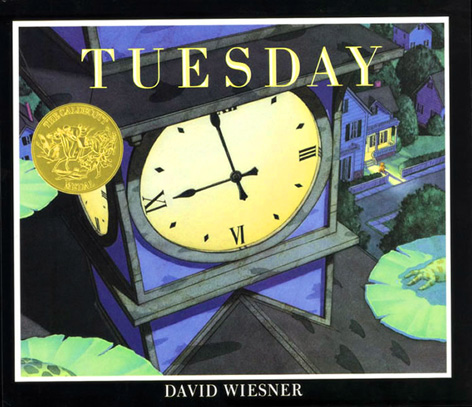
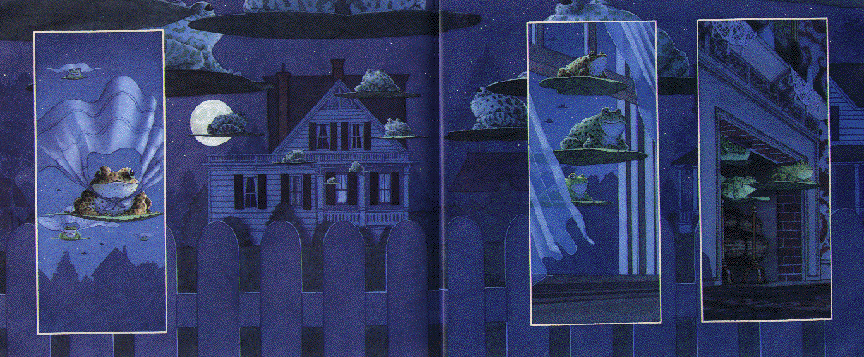
David Weisner’s Tuesday is one of the funniest picture books ever. Really. Watch the video. The funniest pictures, ever, hands down.  The few words in this picture book are only for context when an invasion of frogs floating on lily pads invade a small town on a Tuesday night.

I was so happy when I found a copy for $.25 at the New Milford Public Library book sale this summer. I have a well-worn hardcover of my own that I do not want to lose; this paperback will be perfect to share in class. Wiesner’s picture book is ideal to start the 9th grade mythology unit which leads up to students reading Homer’s Odyssey (Fitzgerald translation).

Our 9th grade curriculum centers on the idea that stories make us human, so our freshmen will spend the year studying the elements of stories and archetypes. For example, in each story they read, they will be able to identify the “call to action” and the moment the protagonist or hero “crosses the threshold”. They will recognize the “challenges” for the hero as being a repeated pattern, especially when the hero is confronted with “temptations”. The students will be familiar with the ideas of “redemption” and “atonement” as the hero travels on the journey from the comfort of the known world to the trials of the unknown world. They will develop an appreciation for the wisdom of the hero’s mentor and the importance of the “elixir” that helps the hero succeed.  They will look for these patterns in the stories they will read throughout high school.  They will review myths as traditional stories that are accepted as history which serve to explain a phenomenon. The flying frogs in Tuesday are most certainly a phenomenon.

We want the students to appreciate the “call to adventure” as demonstrated in the lily pads which lift the frogs from their “known” locale, the swamps and ponds outside the town to the “unknown” territories of living rooms. We want students to predict consequences as the  lilypads float the enthusiastic frogs literally “cross the threshold” of many of the homes.

We also want them to enjoy how Wiesner’s frogs cheerfully wave at disbelieving occupants or cavort using the lily pads as F-16s performing barrel rolls in backyard airspace, while other frogs sit comfortably and devise methods for changing channels in order to watch late night TV. We want them to note how all the frogs are “transformed” from their natural swampy state into comical caricatures.

The flight of the frogs is “challenged” by sheets hung on laundry lines or more directly by a slobbering guard dog. The frogs’ inexplicable journey is cut short when the “elixir” that made this incident possible mysteriously ends the spell. The frogs return to their “known” habitat. The mystery of the remaining lily pads scattered on the concrete roads and sidewalks all over town is wonderfully illustrated in the perplexed look on a detective’s face. Weisner uses a Orsen Welles look-alike in a rumpled raincoat who puzzles holding a dripping wet lily pad, a cadre of police officers and bloodhounds behind him ready to track down the invaders.

Tuesday, by David Wiesner (New York: Clarion, 1991)

Tuesday will provide the students an opportunity to “write  the myth” of what made the frogs fly. The student will need to reference the illustrations in the text as evidence in creating their own personal myth about the flying frogs. We are interested in the explanations the students will need to develop for why the lily pads floated so effortlessly from the pond.  How will the detective explain the limp lilypads strewn around the streets and sidewalks? What predictions do they have for the next possible phenomenon? Some early suggestions started in class are:

  • A new species of lilly pads grew legs and carried the frogs all over the town
  • The lily pads are lunar charged when the moon comes up, then when the sun comes up, the power wears off.
  • Lily pads were made radioactive when a battery fell off the space shuttle into their pond

David Wiesner’s picture book Tuesday provides my students an opportunity to identify universal story elements and create their own myths for the phenomenon of the hilarious frog invasion. This year is the year when they will recognize the elements of this story are the elements in all of literature.  Thus, the picture book Tuesday prepares students for the epic poem The Odyssey, where the equally magic flights and fantastic adventures of the hero Odysseus await their explanations.

But before we start out for Ithaca, we had to spend Tuesday with some frogs.

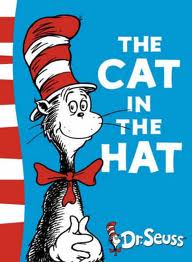
One of my favorite units from the National Council of Teachers of English website (NCTE-http://www.readwritethink.org/) is the unit,“Id, Ego, and the Superego in Dr. Seuss’s The Cat in the Hat” by Junius Wright of Charleston, South Carolina. The lessons in this unit use The Cat in the Hat “as a primer to teach students how to analyze a literary work using the literary tools of plot, theme, characterization, and psychoanalytical criticism.” The unit is stretched over eight 50 minute sessions, complete with handouts and worksheets for grades 9-12. I have completed the unit with my Advanced Placement English Literature students, however, in a shorter period of time of two 80 minute sessions, since many of my seniors are taking psychology or took psychology as juniors, and they are already familiar with Freud’s seminal work The Interpretation of Dreams.

The premise is that students will read The Cat in the Hat and analyze the development of characters (Narrator, Cat in the Hat, Fish) from the picture book through the stages of id, ego, and superego or analyze the static nature of characters (Thing 1 & Thing 2) locked in one stage.

Wright provides student friendly definitions and commentary for each psychoanalytic stage in one of the handouts on the Read, Write, Think website:

Id
The id is the part of the personality that contains our primitive impulses—such as thirst, anger, hunger—and the desire for instant gratification or release. According to Freud, we are born with our id. The id is an important part of our personality because as newborns, it allows us to get our basic needs met. Freud believed that the id is based on our pleasure principle. The id wants whatever feels good at the time, with no consideration for the other circumstances of the situation. The id is sometimes represented by a devil sitting on someone’s shoulder. As this devil sits there, he tells the ego to base behavior on how the action will influence the self, specifically how it will bring the self pleasure.
Superego
The superego is the part of the personality that represents the conscience, the moral part of us. The superego develops due to the moral and ethical restraints placed on us by our caregivers. It dictates our belief of right and wrong. The superego is sometimes represented by an angel sitting on someone’s shoulder, telling the ego to base behavior on how the action will influence society.
Ego
The ego is the part of the personality that maintains a balance between our impulses (our id) and our conscience (our superego). The ego is based on the reality principle. The ego understands that other people have needs and desires and that sometimes being impulsive or selfish can hurt us in the end. It is the ego’s jobto meet the needs of the id, while taking into consideration the reality of the situation. The ego works, in other words, to balance the id and superego. The ego is represented by a person, with a devil (the id) on one shoulder and an angel (the superego) on the other.

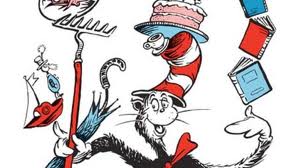
I usually read the story aloud, although there are several websites that have The Cat and the Hat with audio read-aloud for teachers who do not want to get swept up in Seuss iambic rhythms and rhymes. I have collected about 30 copies of The Cat in the Hat at used book sales over the past two years; each copy has cost between $.50-$2.00, so the total investment has been $25.00. Making sure each student has a copy of the text is tremendously important, because it is through the illustrations that the students can successfully analyze the characters.

“So we sat in the house. We did nothing at all. So all we could do was to Sit! Sit! Sit! Sit! And we did not like it. Not one little bit.”

“Look how bland their faces are,” notes Alex, “I think this is really the ego stage.”

“I know some good games we could play,” Said the cat. “I know some new tricks,” Said the Cat in the Hat. “A lot of good tricks. I will show them to you. Your mother Will not mind at all if I do.”

“Now, that’s just creepy!” says Skye. “The Cat walks in and starts convincing them that their Mother won’t mind?”
“That Cat is in id,” replies Mike, “he’s going to do what ever he wants.”

 “No! Not in the house!” Said the fish in the pot. “They should not fly kites In a house! They should not. Oh, the things they will bump! Oh, the things they will hit! Oh, I do not like it! Not one little bit!”

“Look at the Fish,” laughs Nancy, “He is out of the water, risking his life for the kids.”
There is a chorus of “Superego.” Everyone agrees.

After the unit, and once the students have a clear sense of how to analyze the characters in this story, I ask them to take this idea and analyze a different piece of literature. My students have just completed a reading of Antigone, so I asked them to psychoanalyze the actions of one character. Not surprisingly, most of them chose to study Creon’s movement from ego on his first day on the job as the King of Thebes, through his dissolution into id when he fights with both Antigone and his son Haemon.

“But, isn’t he really in superego?” asks Tom, “I mean, Creon is trying to uphold the law as king; he is trying to do what is right, or at least what is politically smart.” Other students consider his point….and this is the reason I love teaching this lesson. The use of psychological criticism humanizes literary characters, and our discussions after this lesson are always more informed by our deepening understanding of human nature. Students will use their understanding of id, ego, and superego from this lesson and apply these understandings to Frankenstein, Paradise Lost, Dr. Jekyll and Mr. Hyde, Richard III, and other important works of literature.

So, thank you, Junius Wright, for a wonderful unit on psychological criticism, but more importantly, thank you, Dr. Seuss. Not only did you teach my students to read, but you continue to teach them to think. And what did they think of the ending of The Cat in the Hat?

Should we tell her The things that went on there that day? She we tell her about it? Now, what SHOULD we do? Well… what would YOU do If you mother asked YOU?

Not one would confess. Sadly, there is not one superego in the entire class.


…..the little mermaid’s tongue was cut out by the sea witch.”

…..the stepsisters cut off parts of their feet in order to fit into the golden shoe.”

…..the prince’s eyes were pierced by thorns after he was thrown from the tower.”

…..the children will not find the way home again, and we shall be rid of them.”

“Eugh,” says Nick. “These are horrible stories”

“They are so bloogory, …a combination of bloody and gory!” exclaims Loghan.

“Really, really gory,” adds Cassie.

We are in the middle of a fairy tale unit for my 9th grade English class which was designed so that students can begin to identify patterns in classical stories and match those patterns to the contemporary stories they read independently.

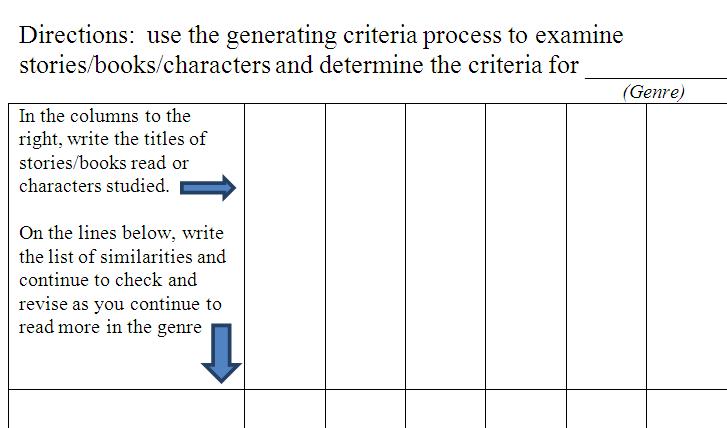
Each student has a “criteria” sheet to complete while reading the fairy tales in this unit. We share these lists of  repeated elements in fairy tales in class after reading.

Our form for generating the criteria for fairy tales


So far they have listed elements that would be expected from comparison by reading fairy tales such as castles, giants, and magic objects from their readings of Jack and the Beanstalk, Rapunzel, The Valiant Little Tailor, and Cinderella. They have also compiled a list of elements I did not expect: birds; thieves and lies; trees and bushes; and wives, not mothers. There is also a great deal of “love at first sight” discussion.

“Cinderella only saw the prince once!” says Casey. While Louisa notes that the prince is the only man Rapunzel has ever seen, “and the next time she sees him, she has a set of twins!”

Our fairy tale unit is a first exposure to the genre without the Disney treatment for many of my students, and a number of the students have commented how they think these original  fairy tales are too frightening for children. On the other hand, there are a few students who have enjoyed the dark and edgy nature of Grimms (aptly named) fairy tales. “At least the characters aren’t breaking out in song,” muttered Christopher reading The Little Mermaid.

We have no trade books or anthologies on fairy tales and have been using online texts only. Some of the texts are difficult, so we have posted resources such as the site Lit2go where most of the stories in the Andrew Lang fairy tale books and Grimm’s collection of stories have been recorded; clicking on links brings a student to the text and supporting audio.

Once the students have generated the criteria for the genre of fairy tales, we have asked them to match the fairy tale story plot to one of the  “Seven Plots in Storytelling.” Students need to explain why the fairy tale plot matches one of the seven plots in literature:

  • Overcoming the Monster
  • Rags to Riches .
  • The Quest 
  • Voyage and Return 
  • Comedy 
  • Tragedy
  • Rebirth

The “rags to riches” plot is easily understood by most students through the story of Cinderella. Similarly, they easily identify the “overcoming the monster” plot with Jack and the Beanstalk. The more tricky plots of “redemption” and “tragedy” challenge them to incorporate evidence from the story. For example, Michael suggested that the Giant’s fall from the beanstalk, “was tragic for the Giant”, but others in the class argued back that tragedy means the main character suffers the tragedy. Other students put The Little Mermaid into the “redemption” plot because, as Cassie noted, “she gave up her life to spare the life of the Prince, and she becomes immortal as a result.”

We have also had the students create original stories that address one of the seven plots using the software Storybird. The art on this website helps to inspire the story; according to the website, “Storybird reverses the process of visual storytelling by starting with the image and ‘unlocking’ the story inside.” The stories are quick to produce, but they do require Adobe Flash. So far, we have watched several “rags to riches” stories, but no student has written a “quest.” However, I am not worried about the “quest” plot because the conclusion of this fairy tale unit will bring us to the unit on Greek myths before we begin The Odyssey.

Michael was looking ahead at the syllabus and asked suspiciously, “Is The Odyssey any good?”

“Oh, yes,” I assured him, “the Odyssey is the ultimate quest!”

He looked unconvinced until I added,  “and there are parts that are really gory!”

Smartblogs recently ran a post by Bill Ferriter titled “Reading Nonfiction is not Optional ” where he argued that there is too much fiction in a student’s reading diet. “The sad truth,” he wrote, “is that fiction still dominates the literacy lives of young readers. Whether they are wrapped up in fantastic exploits written by guys like Rick Riordan or churning through the latest release in the hottest new vampire series, today’s kids rarely make room for nonfiction in their book bags.”

Sad truth? Why is this a “sad truth”? What is wrong with reading fiction? Fiction, like its counterpart non-fiction, offers our student readers valuable life lessons. For example, in an online article in guardian.co.uk September 7, 2011 Reading Fiction ‘Improves Empathy’, Study Finds, Professor Keith Oatly at the University of Toronto who studies the psychology of fiction reports that:

“I think the reason fiction but not non-fiction has the effect of improving empathy is because fiction is primarily about selves interacting with other selves in the social world. The subject matter of fiction is constantly about why she did this, or if that’s the case what should he do now, and so on. With fiction we enter into a world in which this way of thinking predominates. …. In fiction, also, we are able to understand characters’ actions from their interior point of view, by entering into their situations and minds, rather than the more exterior view of them that we usually have.”

Annie Murphy Paul noted the same study in her article in The New York TimesYour Brain on Fiction (3/17/12) writing that, “Brain scans are revealing what happens in our heads when we read a detailed description, an evocative metaphor or an emotional exchange between characters. Stories, this research is showing, stimulate the brain and even change how we act in life.” Apparently, our brains cannot differentiate between the fictional experience and the real life experience, “in each case, the same neurological regions are stimulated.” Furthermore, the simulation of social experience in fiction through a character’s point of view  helps prepare our brains for real-life social interactions.

In other words, while the genre of non-fiction may be the recording of real life, the genre of fiction is critical in preparing readers for real life.

In his post, Ferriter also quoted young adult (YA) writer Walter Dean Myers:

“We all know we should eat right and we should exercise, but reading is treated as if it’s this wonderful adjunct…We’re still thinking in terms of enticing kids to read with a sports book or a book about war. We’re suggesting that they’re missing something if they don’t read but, actually, we’re condemning kids to a lesser life. If you had a sick patient, you would not try to entice them to take their medicine. You would tell them, ‘Take this or you’re going to die.’ We need to tell kids flat out: reading is not optional.”

Ferriter’s paraphrase of Myers’s statement, the title of his post, “Reading Nonfiction is not Optional,” strikes the wrong tone. Myers, a writer of both YA fiction and non-fiction, did not specify as to the genre he endorsed for student reading. Myers was advocating reading, period. Both fiction and non-fiction are critical to our students’ growth and development, not one genre at the expense of another.

Independent reading means a student can choose to read non-fiction OR fiction

Yes, the English Language Arts Common Core State Standards (ELA CCSS) call for an increase in non-fiction. The authors of the ELA CCSS created a little chart on page 5 of the ELA CCSS that notes that students should be reading 70% non-fiction and 30% fiction by grade 12. But this is not the ratio for reading in an English Language Arts classroom. That is the ratio for a whole school curriculum.

I am particularly sensitive to the increasing number of attacks on fiction and the need to reducing fiction from the English classroom. Ferriter’s post makes a similar argument and could be associated with the myth that “English teachers will be asked to teach non-fiction”. This myth is directly repudiated in the ELA CCSS document:

“Fact: With the Common Core ELA Standards, English teachers will still teach their students literature as well as literary non‐fiction. However, because college and career readiness overwhelmingly focuses on complex texts outside of literature, these standards also ensure students are being prepared to read, write, and research across the curriculum, including in history and science. These goals can be achieved by ensuring that teachers in other disciplines are also focusing on reading and writing to build knowledge within their subject areas.”

In other words, reading must be offered in every discipline, students must read across the curriculum.While Ferriter’s Reading Nonfiction is Not Optional makes the important point that all teachers are responsible for modeling reading, he oversteps when he says, “If you want students to love nonfiction — and you should considering the important role that nonfiction plays in learning — you really do need to stop spending all of your sustained silent reading time figuring out what’s going to happen next to Origami Yoda.” Good SSR programs allow for independent choice in any genre by students. What Ferriter could have suggested that the expansion of SSR to other disciplines would increase reading of non-fiction while having the additional benefit of satisfying the ELA CCSS.

Of course, I often hear arguments from teachers in other disciplines moaning, “What do I drop out of my course to include reading?” which could be interpreted as the reason why the authors of the ELA CCSS felt the need to develop reading and writing standards for History, Social Studies, Science and the Technical Areas. These disciplines need to step up the reading in their classrooms.

But who said reading non-fiction was an option? I can assure Ferriter that English/Language Arts teachers are dedicated to improving student reading. They are not hung up on genre, but when they teach fiction, English/Language Arts teachers are teaching their subject matter. The adoption of the ELA CCSS means that all disciplines must offer for opportunities to share their subject matter. To re-frame Ferriter’s argument to align with the new standards, reading non-fiction in every classroom is not an option, and reading non-fiction in an English/Language Arts classroom can be a choice. After all, that growing body of research shows that fiction is just as important as non-fiction for our students, including what happens in Origami Yoda.

Be vewy, vewy quiet….we’re reading!

Our new block schedule at Wamogo High School has made the school much quieter. We have alternating days, four periods of 85 minute classes; the traffic in the hallway is less, and, thankfully, so are the announcements. This quiet provides an excellent environment for us to continue our practice of silent sustained reading (SSR) at all grade levels, 7-12. We embarked on our SSR program two years ago, and we have noted both the anecdotal success with the program through participant surveys and the reading scores on the CMT/CAPT (State of CT mandated tests).

There are a number of texts on the incorporation of an SSR program in a language arts classrooms. Janice Pilgreen’s book (2000) The SSR HandbookHow to Organize and Manage a Sustained Silent Reading Program has an eight point checklist for successfully implementing SSR.

Using Pilgreen’s checklist (her suggestions in red), here is an explanation of how Wamogo is implementing the SSR program this year:

  • “Students need to be flooded with reading materials.”Our classroom libraries of whole class reads and independent reads are full. We have several carts that we can roll into classrooms of independent reading materials. Some carts are dedicated to specific grade levels or classes. For example, our Memoir class have a cart full of memoirs of all reading levels that students can select. Our school library is one of the few in the state to offer Overdrive® to all of its schools. Region 6 students and staff can easily download ebooks to a variety of devices from our Overdrive® catalog with over 15,000 titles. Students and staff can borrow free ebooks and read them on their iPod, iPad, laptop, Kindle or Nook. Creating a flood of reading materials is discussed also in Kelly Gallagher’s book Readicide. 
  • Appeal: The reading materials should be geared toward the interests of the students who are reading them.” We are sensitive to the wide variety of interests in our school. Many of our students are vocational agriculture students who are interested in non-fiction selections. We include all genres: manuals, graphic novels, historical non-fiction, fiction (YA titles) in trying to find books that interest our students.
  • Conducive Environment: The physical setting should be quiet and comfortable.” The new block schedule has benefitted the SSR program in an welcomed level of quiet in the school day. We do have the students read at their desks; we do not have “comfy chairs”.
  • Encouragement: Students need supportive adult role models who can offer assistance in locating reading material.” Our English Department teachers read with the students. We read the books during SSR so that we can make recommendations and discuss books with our students. Our amazing library media specialist comes in and gives book talks. She has also successfully incorporated popular author booktalks, in person or on SKYPE, with popular writers such as Neil Schusterman, Gordan Korman,and  Laurie Halse Anderson. (I am hoping for a Jon Szeiska interview one day *hint-hint*)
  • Staff Training: SSR doesn’t just happen; the staff of a school should be well versed in the goals and procedures used at the school.” Our department has seen the benefits of the SSR program, and we support each other with strategies to make the program work for us. There are teachers who use SSR time to confer with students, however, we found conferencing  distracted other readers. We also discuss the best times to implement an SSR activity in a block period, and how to measure results. 
  • Non-accountability: This is perhaps the most controversial factor. Pilgreen found that students read more, and had more positive attitudes toward reading, when book reports and such were not required.” In today’s data driven classrooms, this is a difficult, even risky, decision. In 9th grade, we do require one book review per quarter to be placed on a shared class blog, and we do require students to read more than one book per quarter. I also record the start page and the end page (students provide this number) as a way of keeping track of their progress. But, there are no other assessments of their independent reading.
  • “Follow-up Activities: Pilgreen found that follow-up activities such as conversations about books read by students or the teacher encouraged other to try them out.” We do spontaneous book talks. “Anyone reading a good book?” I will ask, “Any recommendations?” Students will share their reactions to a book when asked.
  •  “Distributed Time to Read: A common error made by schools new to SSR is that they have one long SSR period a week, rather than shorter periods that occur daily. Pilgreen found that successful programs have students read for fifteen to twenty minutes daily.” We have found that 15-20 minutes of reading time is ideal. On an alternating block schedule, this gives our students 30-60 minutes a week of quality reading time.

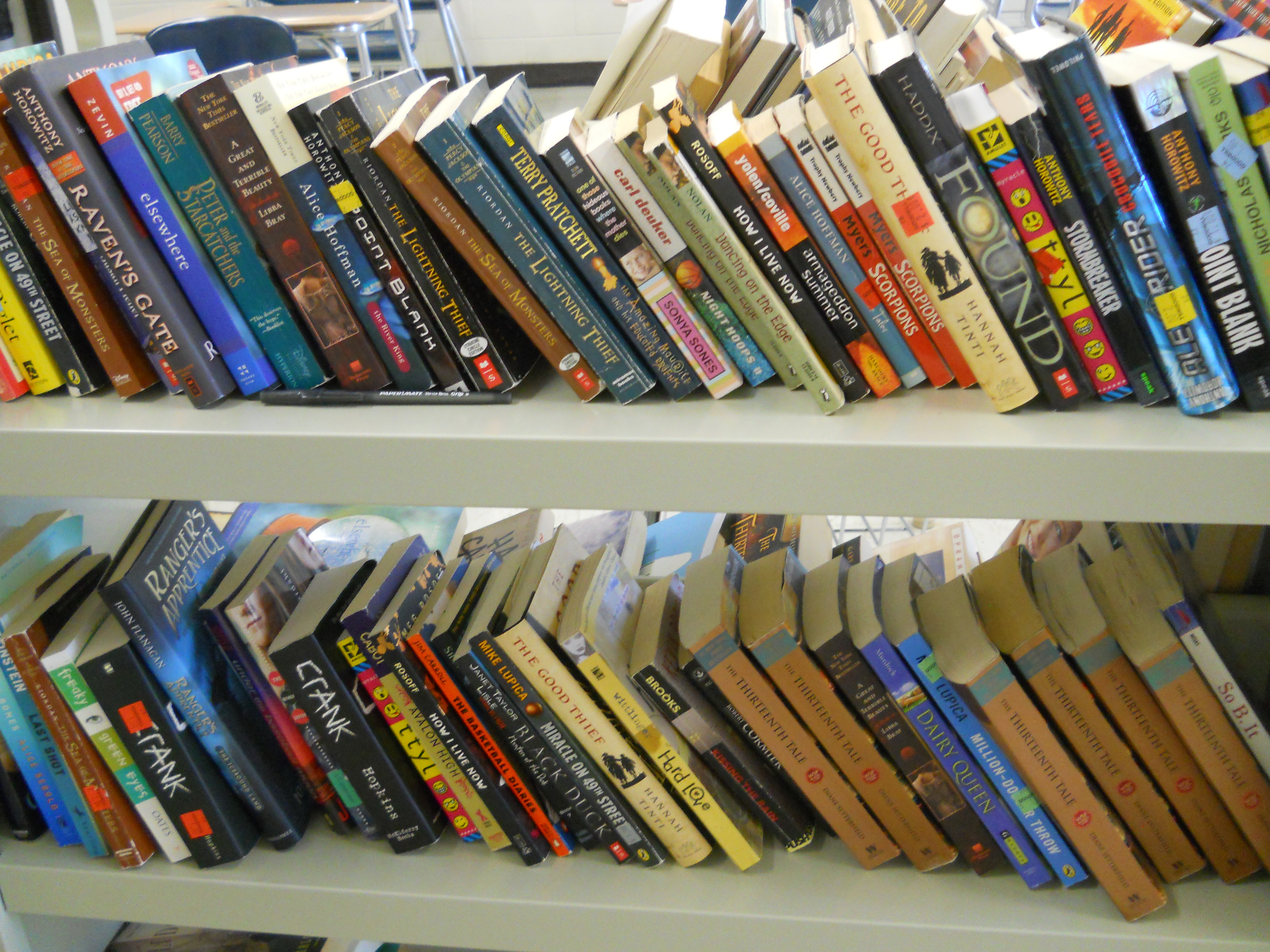
A classroom book cart in Grade 9 with high interest titles

Robert Marzano’s book Building Background Knowledge for Academic Achievement, ASCD, (2004) references Pilgreen’s eight steps; he  suggests a 5-Step Process for implementing SSR:

Step 1: Students identify topics of interest to them.
Step 2: Students identify reading material.
Step 3: Students are provided with uninterrupted time to read.
Step 4: Students write about or represent the information in their notebooks.
Step 5: Students interact with the information.

The major difference between Pilgreen and Marzano is the use of a notebook (step 4) for recording which we may incorporate this year in having students respond to prompt. These prompts are centered on story elements (“What similarities do you notice between your character and the archetypal character we study who is on a journey?”) . Our students are using writing notebooks for free-writes (front to back) and notes/vocabulary/grammar (back to front). Their first assignment was to “decorate” the notebooks, and already there are some enthusiastic participants for both decorating and free-writes!Finally Doug Fisher and Nancy Frey make a case for including SSR as a means to acquire content vocabulary in their book  Word Wise and Content Rich, Grades 7-12: Five Essential Steps to Teaching Academic Vocabulary, Fisher and Frey consider SSR as a means to contribute to gains in both background knowledge and vocabulary.

One more reason to implement SSR? The world is noisy. Students have their individual soundtracks plugged into their ears wherever they go; all venues from public transportation to shopping to sporting events have soundtracks; phone ring tones abound. There is a cacophony of sound in a student’s brain during the waking, perhaps even the sleeping, hours.The daily 15-20 minutes we offer students to read may be the only 15-20 minutes in a day where they are forced to be quiet. SSR allows them to absorb information without distraction. Ultimately, SSR at every grade level provides the opportunity for students to shut out the noise of school; SSR teaches our students to be vewy, vewy quiet. They’re reading.

To some educators, the Common Core State Standards (CCSS) could be consider the work of control freaks. To other educators, the CCSS could be interpreted like the line spoken by Captain Barbossa in Pirates of the Carribean, “the code is more what you’d call ‘guidelines’ than actual rules.”

At my core I am a control freak with strong tendencies towards being a perfectionist. However, 21 years of teaching in real classrooms with real students has informed me to deal with these tendencies in order to achieve realistic educational outcomes. I must teach the student in front of me, not the student I want to teach. I must deal with each student’s  particular mix of strengths and weaknesses. As I deal with that reality, I have learned to hand over more control to my students in their choice of reading and their choice to demonstrate understanding at each grade level.

When I give up control, the results are often unexpected, occasionally raw, and generally more than I planned every year. However, this  process is messy and individualized which is probably why policymakers cannot wrap their neat little statements around what really happens in a classroom. I have learned teaching  in the classroom is more like following the guidelines rather than following a strict set of rules.

But there are those policymakers who claim that following the rules is more important. One argument for this ideology recently was posted by Kathleen Porter-Magee who argues for text complexity in a blog post on the Thomas B. Fordham Institute website, “Common Core Opens a Second Front in the Reading Wars” (8/15/12):

But the Common Core ELA standards are revolutionary for another, less talked about, reason: They define rigor in reading and literature classrooms more clearly and explicitly than nearly any of the state ELA standards that they are replacing. Now, as the full impact of these expectations  starts to take hold, the decision to define rigor—and the way it is defined—is fanning the flames of a debate that threatens to open up a whole new front in America’s long-running “Reading Wars.”

Her missive across the bow of education uses the motif of war, the subject of a 2007 post “Reading Wars Redux”  which scratches at the scab of the phonics vs. whole language debate associating a student’s “natural” selection of a text with whole language; a student’s reading choice does not fit with scientifically-based reading research reading programs. Porter-Magee references that argument as part of a strict adherence to text complexity as outlined in English Language Arts Standard 10 and the complexity determining software.

The ELA Standard 10’s arc begins in kindergarten where students will, “Actively engage in group reading activities with purpose and understanding.” By grades 11-12, students should, “Read and comprehend literature, including stories, dramas, and poems, in the grades 11–CCR text complexity band proficiently, with scaffolding as needed at the high end of the range.” Determination of a text’s rigor is suggested through six different computer programs that factored in the research study: ATOS by Renaissance Learning; Degrees of Reading Power® (DRP®) by Questar Assessment, Inc.; Flesch-Kincaid; The Lexile® Framework For Reading by MetaMetrics; Reading Maturity by Pearson Education; SourceRater by Educational Testing Service; and the Easability Indicator by Coh-Metrix. These educational commercial enterprises (only the Flesh-Kincaid is in the public domain) are the means to determine what Porter-Magee argues is critical to developing rigor in our classrooms.

I would argue differently. A curriculum is not rigorous because of a text; a curriculum is rigorous because of what a student does with a text. Assigning students a rigorous text, say Narrative of the Life of Frederick Douglass, an American Slave in grades 6-8 does not mean the curriculum is rigorous. However, a curriculum with a lesson that has students read the narrative, compare this autobiography with  narratives from former slaves that were recorded in the 1930’s as part of the Federal Writers’ Project, and then have students conduct research on slavery and tell a story based on their findings could be considered rigorous. This lesson would be an example of a whole class read.

This lesson, however, does not promote a critical learning experience. The lesson does not address a student’s love of reading. Students may enjoy the Autobiography of Frederick Douglass, but I would venture that few 6-8th graders would choose to read the text independently. That is why there needs to be a place in every curriculum for independent choice where students may read above, on, or maybe even below grade level. Teachers are educating students so that we will be a nation of readers. My experience in the classroom informs me that handing a low level reader a complex text for close reading does not lead to a love of reading. Moreover, forcing rigor is not authentic; many adults do not choose complex texts, in fact, many admit to avoiding text complexity as a result of being force fed the literary canon in a misguided attempt to enforce rigor.

The ELA CCSS itself does not require the forced rigor that Porter-Magee implies. Appendix A of the ELA CCSS “Key Considerations in Implementing Text Complexity” notes the flexibility that educators have:

The tools for measuring text complexity are at once useful and imperfect. Each of the tools described above—quantitative and qualitative—has its limitations, and none is completely accurate. The question remains as to how to best integrate quantitative measures with qualitative measures when locating texts at a grade level. The fact that the quantitative measures operate in bands rather than specific grades gives room for both qualitative and quantitative factors to work in concert when situating texts. The following recommendations that play to the strengths of each type of tool—quantitative and qualitative—are offered as guidance in selecting and placing texts.

Quantitatively, a book may be at the level for a grade 10 student; qualitatively, the book may be too mature in theme, or the student may need additional support. The ELA CCSS recognizes this difference. That is why Appendix A offers guidelines rather than rules; suggested texts rather than required reading.

This is not a war. This should not be a skirmish. The ELA CCSS can be met with a blend of independent reading and complex texts. (see my earlier post  on blending independent student selected reading with whole class novels) Porter-Magee’s hyperbolic statement about a second front in a reading war is  one of ideology not reality. Teachers, even the most controlling, have an understanding of how text complexity can be balanced in the classroom today with the real students in front of them. Policymakers who see rigor through the addition of texts are distanced from the classroom. Magee-Porter’s post should be met with the same level of criticism as given to the pirates of the Caribbean, “You’re teachers. Hang the code, and hang the rules. They’re more like guidelines anyway.”

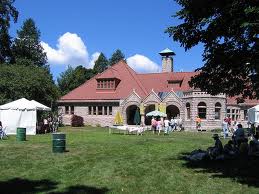
Peqout Library in Southport, CT

The 2012 summer tri-athlon  of Fairfield County, Connecticut, Friends of the Public Library book sales is over! Hundreds of book buyers have visited Newtown’s C.H.Booth’s Library, Westport’s Public Library, and finally, Southport’s Pequot Library in search of bargains and great reads. Each book sale has its own distinctive  level of organization and quality of merchandise. Newtown is “uber”-organized, and Westport caters to large crowds of book buyers with an enormous selection. Southport’s claim to fame is the quality of the texts.

Newtown and Westport book sales offer holding areas for book buyers to place filled boxes or bags. Southport has quality texts. Westport and Newtown book sales have well-organized tables and books sorted into correct genres. Southport has quality texts. Westport and Newtown book sales have volunteers  that move with the crowd and refresh tables. Southport has quality texts.

Quality texts are perhaps the only reason to attend the Pequot Library’s book sale. In two hours, I spent $306.00 on four boxes of books for different grade levels. For example:

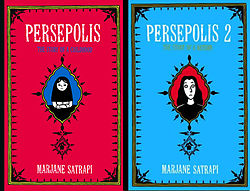
  • 4 copies of Persepolis: The Story of a Childhood- Grade 10 World Literature
  • 12 copies of The Help– Grade 11-Civil Rights unit
  • 5 copies of Speak-Grade 9
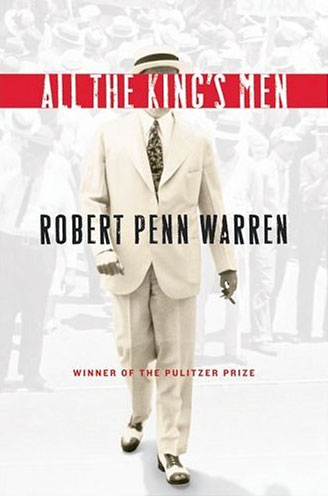
  • 6 copies of All the King’s Men-AP English Language and Literature
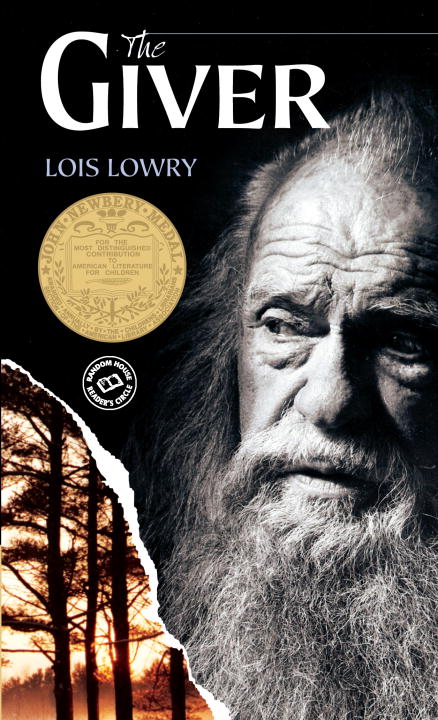
  • 6 copies of The Giver-Grade 7
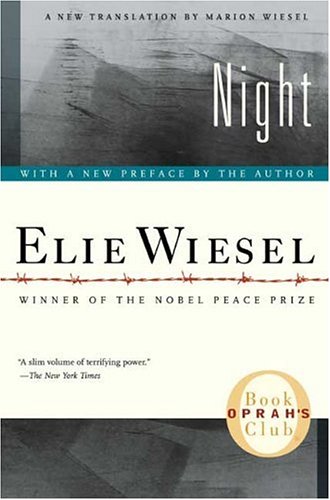
  • 7 copies of Night-Grade 10-Interdisciplinary unit
  • 5 copies of Tuesdays with Morrie-Grade 9 Independent read  or Grade 11 Coming of Age unit
  • 2 copies of The Odessey (Fitzgerald)-Grade 9
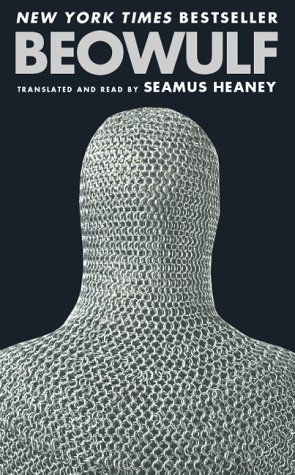
  • 4 copies of Beowulf (Heaney)-Grade 10 -World Literature

Each text was in mint condition. More than a few looked “unread” by students who must have purchased the text for class. All copies were free of notes or highlighting. I do suspect that there are students in Southport, like my students in Litchfield, who may be opting for Sparknotes support!

Southport offers a Friday preview day with books at double the cost, but by the following Tuesday, books are $5.00/bag.

2012 Hours and Pricing:
Friday, July 27 – 9am to 8pm – All items double the marked price
Saturday, July 28 – 9am to 5:30pm – All items priced as marked
Sunday, July 29 – 9am to 5:30 pm – All items priced as marked
Monday, July 30 – 9am to 6pm – All items half price
Tuesday, July 31 – 9am to 2pm – $5 per bag day!

The volunteers were gracious, but many seemed to be “in-training” or waiting for an authority to make a decision. That did not take away from the quality of the texts. There were books -particularly fiction-that had been placed on the ends of the tables left partially covered by the large tent. Unfortunately, many of these books did get saturated by the soaking rain the night before. This has happened in years past. One wonders what the volunteers could do in the future to avoid the damage that happens when there are texts uncovered; it is sad to see so many good quality books damaged when they could bring a profit to the library or more literature to a classroom.

There are discounts  offered to teachers in Bridgeport and New Haven, but with education budgets receiving cuts around the state, perhaps consideration can be given to teachers in other towns as well? Most teachers pay out of pocket for school supplies, not the school districts. Teacher discounts would help support literacy in classrooms throughout the state by creating “book floods” in each school.

My tri-athalon of book sales is over for the summer. My classroom libraries grades 7-12 are almost filled in preparation for 2012-2013. I have collected my goal-a class set of The Help, and added a number of new titles for independent reading or literature circles. There is a book flood at Wamogo Middle/High School And, thanks to Southport, many of these books are quality texts.

A series of links took me to a lesson plan  on the Edsitement! The Best of the Humanities on the Web site that is associated with the National Council of Teachers of English (NCTE) . The lesson “Vengeful Verbs in Shakespeare’s Hamlet”  is entirely too disturbing. The opening lines of the lesson plan begin, “Shakespeare’s Hamlet  is an excellent source of instruction for students at the middle school level.”

My thoughts? Sorry. Middle school students, grades 6-8, should not read Hamlet. Teachers, leave that play for high school. Middle schools students need to read. They need to read many, many books.  They need young adult literature. They need to read for pleasure to build up their literary skills.

The lesson plan continues:

It [Hamlet] is a tale full of mystery and suspense and peppered with elements of the supernatural. Everyone loves a good ghost story! The popularity of the ghosts in the Harry Potter series and in The Graveyard Book attests to the appeal of the paranormal for this age group. These ghosts manifest as translucent spirits, yet they impact the physical world and certainly add life to the story line. Figments such as Rowling’s histrionic Moaning Myrtle and Gaiman’s mysterious Silas provide guidance for the young adults in their time of need.

My thoughts? Yes, these are the books they SHOULD be reading! Add the ghost stories Hereafter and Anna Dressed In Blood to the list of well written young adult novels. And yes, Harry Potter and The Graveyard Book are stories that will guide young adults in their time of need. But Hamlet?

Back to the lesson plan:

What better way to expose middle school students to a first taste of Shakespeare than from the angle of the ghost story? The first time Hamlet sees his father’s ghost (Hamlet, act 1, scene 5, lines 13–31) is one of the most dramatic moments in theatre and a prime opportunity to teach the often dry and boring subject of verbs.

My thoughts: Whaa…??? This lesson is turning a critical moment of drama into a lesson on verbs? This idea is dry and boring regardless of the content!

Finishing the description of the lesson plan:

Through the ghost of Hamlet’s father, students receive an introduction to the language of Shakespeare in a context they can understand. In this lesson, they will learn to distinguish generic verbs from vivid verbs by working with selected lines in Hamlet’s Ghost scene. Students will then test their knowledge of verbs through a crossword interactive puzzle.

My thoughts: A crossword puzzle. Yup. That will help them appreciate the play. I can hear the rattling from Stratford on Avon; Shakespeare’s bones are disturbed.

The objectives of the lesson are:

  • Students will be able to identify and define the verbs Shakespeare uses to convey the meaning of the scene
  • Students will exchange the verbs from the scene and replace with more vivid and more generic ones to see how that changes intention of the scene
  • Student will be assess their ability to define vivid and generic verbs used by Shakespeare by solving a crossword puzzle

Yes, readers, in this lesson students will replace Shakespeare’s language with bland or generic verbs using a worksheet.

WHY?

There is little consideration as to how all the language in this scene defines each character. No consideration of motive. No moral or ethical discussion about what the Ghost is asking Hamlet do.   The Harvard scholar Steven Greenblatt wrote an entire book, Hamlet in Purgatory,  wrestling with the central question offered in this scene, is the Ghost from Hell or Purgatory? But no, this lesson is on verbs.

Here are the lines: (Act I.V.13-31)

Father’s Ghost. I am thy father’s spirit,
Doom’d for a certain term to walk the night,
And for the day confin’d to fast in fires,
Till the foul crimes done in my days of nature
Are burnt and purg’d away. But that I am forbid
To tell the secrets of my prison house,
I could a tale unfold whose lightest word
Would harrow up thy soul, freeze thy young blood,
Make thy two eyes, like stars, start from their spheres,
Thy knotted and combined locks to part,
And each particular hair to stand on end
Like quills upon the fretful porcupine.
But this eternal blazon must not be
To ears of flesh and blood. List, list, O, list!
If thou didst ever thy dear father love-
Hamlet. O God!
Father’s Ghost. Revenge his foul and most unnatural murther.
Hamlet. Murther?
Father’s Ghost. Murther most foul, as in the best it is;
But this most foul, strange, and unnatural.

In this passage, the Ghost is very cagey about where he is coming from literally and figuratively. The Ghost plays the ultimate guilt card “If thou didst ever thy dear father love-” Hamlet anticipates the request and interjects a prayer “O God”. The Ghost then, you choose: a. asks, b. demands, c. commands the Prince, Hamlet, to revenge.

Another consideration as to the appropriateness of the use of Hamlet is the berating of Hamlet’s mother, Gertrude sixteen lines later:

Father’s Ghost. Ay, that incestuous, that adulterate beast,
With witchcraft of his wit, with traitorous gifts-
O wicked wit and gifts, that have the power
So to seduce!- won to his shameful lust
The will of my most seeming-virtuous queen.
O Hamlet, what a falling-off was there,
From me, whose love was of that dignity
That it went hand in hand even with the vow
I made to her in marriage, and to decline
Upon a wretch whose natural gifts were poor
To those of mine!
But virtue, as it never will be mov’d,
Though lewdness court it in a shape of heaven,
So lust, though to a radiant angel link’d,
Will sate itself in a celestial bed
And prey on garbage.

There are accusations of incest (a thought of Hamlet’s given voice by the Ghost), witchcraft, and adultery for Claudius. Gertrude acts with “lewdness” and “sates” herself in Claudius’s bed of figurative garbage. The Ghost cannot contain his fury at being replaced by Claudius; he has lost kingdom and queen and his fury spills over and exploits Hamlet’s depression. There is much here to discuss.

But for grades 6-8?  To replace the language of Shakespeare and make it “bland” to prove a distinction about verbs in Elizabethan English and today’s English? To measure the student understanding of the language with a crossword puzzle? Is it any wonder that with lessons like this one, many students come to a high school classroom “hating” Shakespeare? I have to work very hard to convince them otherwise.

There is something rotten on the Edsitement! site, and NCTE should be ashamed for endorsing this lesson. This lesson about verbs, not motivation or ethical dilemmas, disregards the dramatic tension of the scene and is wrong at any grade level!

What next? A lesson on the comma during Macbeth’s “Is this a dagger I see before me? /Come, let me clutch thee”?

There are  better lessons on heaven and earth for students in this age group then are dreamt of in this lesson plan!

NCTE must be aware that we have a nation of students who are not reading in part because many teachers kill the pleasure of a book. Hamlet is not the material that will bring middle school students a love of reading, and the literary analysis skills for these students in grades 6-8 are not sophisticated enough to bring them to an understanding of The Ghost’s manipulations. A grammar lesson plucked from a dramatic moment with a brilliant seduction by a spirit from beyond the grave is just so wrong.

This lesson is out of joint. O cursed spite
That ever I was born to set it right!