Archives For November 30, 1999

There is no surprise in reading the word “precision” in the language of the Common Core’s Mathematical Practice Standards. Mathematics requires precision:

CCSS.Math.Practice.MP6 Attend to precision.

Mathematically proficient students try to communicate precisely to others. They try to use clear definitions in discussion with others and in their own reasoning.

Writing requires precision as well. Proficient writers in every genre communicate precisely to others. Yet, one of the most difficult concepts to teach to students in recognizing the precision in an author’s craft. Word choice and punctuation are committed with intent by an author, yet, there are students who doubt these steps of precision made by an author. They believe that any text has stepped, as if full-formed or Athena-like, from the mind of an author. They think that novels pop into existence…unless, they are reading Toni Morrison.
Screenshot 2014-02-27 21.57.19

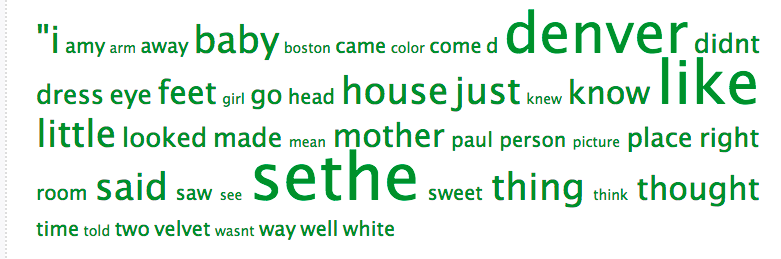
A “Wordsift” of precise language in Chapter 3 of “Beloved”; Denver and Sethe dominate as does the simile generator “like”.

My Advanced Placement English Literature students are currently reading Morrison’s 1988 Pulitzer Prize winning novel, Beloved. This story confronts the horrors of slavery by fictionalizing the true story of Margaret Garner who, in a failed bid for freedom, killed her baby daughter rather than have her returned to slavery.

A look at the opening two lines to Toni Morrison novel Beloved demonstrate her power as a storyteller and highlight her precision with language:

“124 was spiteful. Full of baby venom.”

An quick analysis of the specificity of language in these two short statements reveals:

  • 124 is the address (setting) where Paul D arrives looking for the run-away slave, Sethe.
  • 124 is also a combination of 1and 2 and 4…the first-born, the second-born, and the fourth-born children of Sethe. The third-born child (3), the child named Beloved, is missing numerically. That child chooses to make her presence known in more ghostly ways.
  • Morrison is exacting in her selection of word choice from her opening personification of the house as spiteful (“having or showing a desire to harm, anger, or defeat someone; malicious”) to the incongruous pairing of the words “baby” and “venom”.

So, when I asked students to write about the precision in word choice Morrison uses to craft imagery in the novel in the first 100 pages, they had much to choose from:

“In describing the choke cherry tree of scars on Sethe’s back, Morrison writes, ‘See, here’s the trunk it’s red and split wide open, full of sap and here’s the parting for the branches'(79). A history textbooks do not give details of slave wounds like that.”

“Sethe and Denver even accept ‘the lively spite the house felt for them'(3) …. Morrison utilizes this personification to show how objects took on the role of companionship when Sethe and Denver were ignored by their community.

“Sethe describes seeing the sunrise as menacing with ‘red baby blood’ with ‘pink gravestone chips'(34)  instead of seeing the colors as warm and inviting.”

In making these and other observations, students called attention to Morrison’s specific use of dialect, alliteration, hyperbole, synecdoche, repetition, smilies, symbols as well as the differences in syntax to serve her purpose in making the reader confront the irreparable harm of slavery. The closer the students read, and they were “close reading”, the more appreciative they became of Morrison’s style. They became more appreciative of her power to select specific words in creating a particular image. They had no idea they could have just as easily be applying a mathematical practice standard (“attend to precision”) in their literary analysis.

Morrison was awarded the Nobel Prize in 1993 in for her body of work that included the novel Beloved. In her acceptance speech, she addressed how precise language is used to describe; to depict [as if] by painting or drawing:

The vitality of language lies in its ability to limn the actual, imagined and possible lives of its speakers, readers, writers. … When a President of the United States thought about the graveyard his country had become, and said, “The world will little note nor long remember what we say here. But it will never forget what they did here,” his simple words are exhilarating in their life-sustaining properties because they refused to encapsulate the reality of 600, 000 dead men in a cataclysmic race war. Refusing to monumentalize, disdaining the “final word”, the precise “summing up”, acknowledging their “poor power to add or detract”, his words signal deference to the uncapturability of the life it mourns.

Morrison’s admiration for Lincoln’s precise language in the Gettysburg Address is a shared admiration. The speech is a suggested 9th/10th grade text for the Common Core Common Core State Standards for Literacy in History/Social Studies. Moreover, educators should note the literary connection between the president who led the nation to abolish slavery with authors like Morrison who use their craft in pressing the reader to face the horrors of slavery.

Finally, the Mathematical Practice Standard #6 states that by high school, students will “have learned to examine claims and make explicit use of definitions.” There could be no better claim on the damage inflicted on humans in bondage than Morrison’s story of Sethe and her Beloved.  The last lines of the novel, “This is not a story to pass on” communicates “You [reader] may not pass [or avoid] this story.” She explicitly defines the experiences of those “60 million or more” and captures their love and their longing for familial bonds by writing precisely what they could not.


There are waves from England that reach America’s shores.

There are literary waves.
George Orwell’s Animal Farm was published in America in 1946.

There are musical waves.
The Beatles came to America in 1964.

George Orwell used satire as a commentary on Communism in the USSR and the rise of Stalin in his allegory Animal Farm.

John Lennon used the lyrics in the song Revolution as a response to the increase of protests against the Vietnam War, specifically student riots in Paris in May of 1968.

Satire, politics, protests….so many connections. Why not share them in class?
Why not share the Beatles’ song Revolution while students read Orwell’s Animal Farm?

“Revolution”

You say you want a revolution
Well you know
We all want to change the world
You tell me that it’s evolution
Well you know
We all want to change the world
But when you talk about destruction
Don’t you know you can count me out

Don’t you know it’s gonna be alright
Alright, alright

You say you got a real solution
Well you know
We don’t love to see the plan
You ask me for a contribution
Well you know
We’re doing what we can
But if you want money for people with minds that hate
All I can tell you is brother you have to wait (Revolution lyrics continued…)

After we read first chapter of Animal Farm aloud in class, I played the video of the Beatles performing the song Revolution. For some, this was the first time they had ever heard the song; for some, this was the first time they had seen the Beatles perform.

After watching the video, I posted an assignment to use the power of music – “to write a song for your cause.” The directions given to the students were:

You say you want a Revolution….?
Well, you have to write your song!! (for extra credit)

Step 1: Identify your cause. What makes you angry? What do you see as a problem in society? What is your Pet Peeve? What would you like to change about your world? This can be something big or little.

Step 2: The power of music! To persuade people to join your revolution, (like Major’s Beasts of England) you have to write a song.

Step 3: Share your lyrics, and we will join you in song (karaoke tunes preferred)

Their protest songs came in. In their songs the students protested: homework, English class (*sigh*), the school parking lot ban on underclassmen, bad weather, cafeteria food, Twilight movies, dirt clods in the hallways from steel-toed boots, the ban on cupcakes in class, and (and there were several of these), Justin Bieber.

While their songs were unlikely to inspire a revolution, they did appreciate the power of music in communicating a message. Their reactions to their own songs of protest were positive, but they admitted that their songs did not have the same power as the Beatle’s Revolution. They recognized Orwell’s statement on the power of song in Animal Farm “The Beasts of England” sung at the end of Chapter One. That song (sung to the tune of My Darling Clementine) was a take-off on the famous socialist anthem, The Internationale:

Beasts of England, Beasts of Ireland,
Beasts of every land and clime,
Hearken to my joyful tidings
Of the Golden future time.

Soon or late the day is coming,
Tyrant Man shall be o’erthrown,
And the fruitful fields of England
Shall be trod by beasts alone…….(continued )

 “…The singing of this song threw the animals into the wildest excitement…. And then, after a few preliminary tries, the whole farm burst out into Beasts of England in tremendous unison….” (Ch1:Orwell)

Orwell was demonstrating how the lyrics in a song could motivate. The student protest songs, however, were more entertaining than motivating. The Beatle’s song Revolution is both entertaining and motivating, a song written four years after their momentous arrival in America.

From the moment the Beatles disembarked from Pan-Am flight 101 on February 7, 1964, they were a force in American music. Yet, according to TIME magazine’s story, Beatlemania Begins: The Beatles First U.S. Visit to Play Ed Sullivan, the Beatles were surprised by how their music had made thousands of frenetic fans:

Just before 1:30 p.m., Flight 101 taxied to a stop outside the terminal and the aircraft door popped open. An explosion of cheers and screams rang out as the crowd stormed forward….

“We heard that our records were selling well in America,” George [Harrison] noted, “but it wasn’t until we stepped off the plane … that we understood what was going on. Seeing thousands of kids there to meet us made us realize just how popular we were there.”

Their first appearance on The Ed Sullivan Show (February 9) featured a set list that set fans shrieking:

  • All My Loving 
  • Till There Was You (Sue Raney cover)
  • She Loves You 
  • I Saw Her Standing There 
  • I Want to Hold Your Hand

Those five songs began the domination of pop music charts, coined the term “Beatlemania”, and changed the culture of a generation. The Beatles proved the power of music, so our protest song assignment capitalized on student awareness of this power. The students shared what they would protest if given the opportunity. They had a chance to make connections between two genres, between a set of music lyrics and a set of lyrics from a novel-both of which were penned by Englishmen.

This was also an opportunity for me to highlight the Beatles. Students watched and listened to a recording of the “Fab Four” who created a revolution in music here in America; they saw those “lads from Liverpool” who invaded America from England many Yesterday’s ago.

The end of each year is always marked by a roundup or ranking of the year’s most memorable stories. 2013 was no exception. For example, CNN.com ran a poll on the top 10 news stories of 2013 which were then ranked by CNN.com readers:

  1. NEW POPE
  2. BOSTON MARATHON ATTACKS
  3. MANDELA DIES
  4. EDWARD SNOWDEN LEAKS NSA
  5. FEDERAL GOVERNMENT SHUTDOWN
  6. OBAMACARE ROLLOUT DEBACLE
  7. PHILIPPINES TYPHOON
  8. SYRIA CIVIL WAR
  9. CLEVELAND KIDNAPPINGS
  10. SAME-SEX MARRIAGE

All of these stories showed up on other news websites, perhaps ranked differently, but there was remarkable consistency nationally and internationally on how we will remember the year 2013. Pope Francis, the Boston Marathon, and the conflict in Syria dominated the top of most lists.

Screen Shot 2013-12-29 at 2.46.50 PMMany of these stories will soon be, or are already, the subject of non-fiction books, and some of these stories could be retold with such excellence as to be considered for the Samuel Johnson Prize. This prize is an award given annually for the best writing in current affairs, history, politics, science, sport, travel, biography, autobiography and the arts. This prize, named for the 18th Century English author Samuel Johnson is associated with the BBC (British Broadcasting Company) and awards author(s) of any nationality “whose work is published in the UK in English.” The most striking quality of the Samuel Johnson Prize is its motto that “All the best stories are true.”

There is truth in fiction as well. For example, even 2013’s most outlandish film Sharknado, has a degree of truth. The film detailed a supernatural phenomenon where thousands of sharks, scooped from their watery environment, twisted into another force of nature. The film generated waves of chatter on social media sites, so much so that the website Deepseanews.com speculated about the film’s implausibilities and calculated the physics of tornados holding great white sharks aloft. Researchers concluded in a post titled “Recipe for a Sharknado” that, “Winds in the most intense tornadoes are strong enough to keep a shark airborne.” Unlikely? Yes. Impossible? Physics suggests how.

The year 2013 provided many true stories that also lend themselves to possible re-tellings. The following three true stories of 2013 get my votes as the best potential candidates for future re-tellings, either as fiction or non-fiction:

1. NY TimesDiscovery of Art Looted by the Nazis:
The upcoming film The Monuments Men (February 2014,) where “a World War II platoon is tasked to rescue art masterpieces from Nazi thieves,” is a timely example of the storytelling potential about looted art. This past November, Bavarian authorities arrested an art dealer in his  Munich apartment uncovering a horde of art stolen during WWII. The recovered 1,500 works by Pablo Picasso, Max Liebermann, Ernst Ludwig Kirchner, Marc Chagall, Henri de Toulouse-Lautrec, Gustave Courbet, Auguste Renoir and Canaletto are estimated to be worth $1.4 billion. Since the discovery was made public, there are suspicions as to when authorities first knew about the stockpile. The intrigue abounds in this latest episode of Nazi treachery that continues to today.

2.Amazon.com:  Commercial Delivery using Drones:
While today’s science fiction writers may scoff at so pedestrian an example of technology, delivery drones could be fictionalized as key characters, featured perhaps in dystopian literature. While Hedwig, Harry Potter’s delivery owl, was a fantasy, a writer may consider that the possibility for pet drones has potential. The CEO of Amazon, Jeff Bezos, demonstrated that drones could be used for delivery purposes, in 30 minutes or less, and what better audience in a consumer culture motivated by immediate gratification than an audience of young adults? Storytelling or story-commercials…or both?

3. NYTimes: Richard III Rediscovered
My favorite story this year was the discovery of the bones of Britain’s medieval monarch, Richard III, paved over in a parking lot. He had been killed in 1485, at the Battle of Bosworth Field, the last king of England killed on a battlefield. This archaeological find, also dubbed the “King in a Car Park” in the video from the British Channel 4, put an end to the search for remains of the former king of York. A shorter version of the discovery is available from the University of Leicester:

Richard III had been characterized as a brutal tyrant by Shakespeare in the historical play Richard III, but an organization known as the Richard III Society  has tried to clear his reputation. The remains found so ingloriously buried were identified by his hunchback and the bones that bore the scars of the battle that killed him, including eight wounds on his skull.

Richard IIIThe subject of Richard III has already been fictionalized by the great writer Josephine Tey in her 1951 detective story The Daughter of Time. In this novel, she directly confronted Richard III’s sordid reputation in an attempt to clear him of any misdeeds. This latest archeological find is also ripe with storytelling possibilities.

In the end, though, how we will remember 2013 will be through the stories that we created ourselves. We will remember the births, deaths, accomplishments, failures, celebrations, and losses we experienced over the past 365 days of 2013. We will remember because we have, individually and collectively, made the stories of 2013, and the best stories are true.

Expecting allusions to Herman Melville’s Moby Dick during the National Teachers of English Conference (NCTE) is like (pardon the pun) shooting fish in a barrel. Okay, I know…the whale is a mammal, but once this white whale has been sighted, he keeps surfacing!

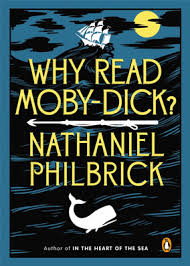
First Sighting: Nathaniel Philbrick’s 2011 slim book Why Read Moby-Dick?

Moby DickThe exhibitors at the NCTE conference were interested in putting books into the hands of teachers who would then put books into the hands of student readers. Once such vendor enthusiastically suggested the book based on its size; “See. you could carry this  book around the convention and hardly know it’s in your bag!”

He was right.  Philbrick’s 127 page argument as to why “this classic tale waits to be discovered anew” fit nicely in my convention bag and was perfect for reading during breaks between sessions.

The book is divided into 28 short chapters each devoted to topics such as setting, characters, or themes. Chapter titles include:

  • Nantucket
  • The View from the Masthead
  • A Mighty Messy Book
  • Queequeg
  • Pulling Dictatorship Out of a Hat

Philbrick is already familiar with the real life incident that was the inspiration for Herman Melville’s literary classic. His non-fiction book In the Heart of the Sea: The Tragedy of the Whaleship Essex in 2000 recounts the loss of the whaling ship Essex in the Pacific Ocean in 1820.  Heart of the Sea won the National Book Award for non-fiction that year, fleshing out the details of the whale attack on the boat, the fateful decision to avoid islands allegedly populated by cannibals, and the ironic turn to cannibalism that claimed the lives of several surviving crew members.

In Why Read Moby Dick?, Philbrick turns to the literary contributions Melville gave American literature, particularly in the creation of Captain Ahab, who in a pre-appearance had been rumored by other sea captains to have “been in colleges as well as ‘mong the cannibals.” In one chapter, “The Anatomy of a Demagogue”, Philbrick analyzes Ahab’s rhetorical craftiness in convincing the crew to hunt and kill the white whale. In discussing first mate Starbuck’s stunned realization that the Pequod is not out on a commercial venture, but rather a mission to settle the score of Ahab’s lost limb, Philbrick engages in a cross-culture reference that is both humorous and insightful:

Starbuck responds by asking what Ahab’s vengence will get ‘in our Nantucket market?’ It’s then, to borrow from the film This is Spinal Tap, that Ahab dials his charisma to eleven. ‘But come closer, Starbuck,’ he says, ‘thou requirest a little lower layer?’ It’s not about the money, he explains; this is personal. Thumping his chest he cries out. ‘My vengeance will fetch a great premium here!’ “(40)

Philbrick also aligns the story as a metaphor for the political turmoil of the United States. In discussing the chapter where Stubbs, the second mate, raises a shiver of sharks by cutting into a whale for a steak, Philbrick writes,

“The job of government, of civilization, is to keep the shark at bay….Here lies the source of the Founding Fathers’ ultimately unforgivable ommission. They refused to contain the great, ravaging shark of slavery, and more than two generations later, their grandchildren and great-grandchildren were about to suffer the consequences.” (78)

Philbrick moves between cultures, between ideologies, between philosophies, and theories in order to encourage more people to actually read Melville’s great American novel. A encouragement that may be necessary, because soon after I received the book, I had whale sighting #2.

Whale sighting #2:  A statement during a key note address at the Conference for English Leadership (CEL):

“We all know the opening line of Moby Dick, but how many of us have actually read the book?” posed speaker Donalyn Miller to the crowd of English teachers. There was a murmur of agreement, and more than a few guilty looks. Miller was discussing her passion and the topic of her two books: how to get students to read for school and independently.

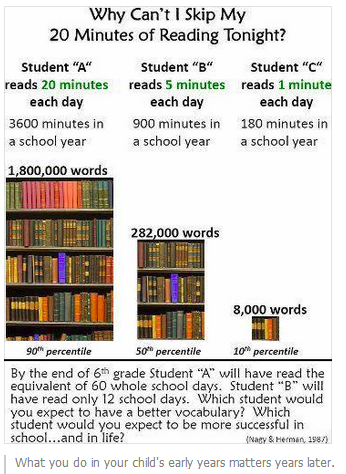
20-minMost notably, Miller is known as the author of The Book Whisperer and the recently released Reading in the Wild. Her keynote address was to encourage students to become the independent readers that could-on their own- pick up a tome like Moby Dick. She discussed the characteristics of “wild readers” and pushed teachers to engage students in examining their reading lives. She advocated for literacy rich environments for students to develop the habits to make them life-long readers. Miller’s assertion that preparing students to read independently is the best guarantor of standardized test success was supported with the graphic she presented. (see left: Nagy & Herman study).

Her point about Moby Dick was that most people know the first line, “Call me Ishmael,” but only those who live literate lives know why the book is so critical to understanding American literature. Students who have not developed the reading endurance necessary for the book may be turned off by both the intimidating size and the 19th Century styled language of the text. Considering that most high schools shy away from teaching Moby Dick to anyone but their best students means that the novel will most likely be an independent choice book for a student who develops into a life-long reader. Miller wants them to be prepared so they can will have the pleasure of sitting back in a comfy chair, perhaps with a cup of coffee, to read.

Whale sighting #3: Coffee at Starbucks.
starbucks

Named for the First Mate of the “Pequod”

Speaking of coffee, I am not sure why I never realized this before, but this coffee company is named for the first mate of the Pequod, Starbuck. I Googled this fact while waiting in the long line of English teachers eager to fuel up before attending the day of sessions at NCTE. According to the company’s website, “The name, inspired by Moby Dick, evoked the romance of the high seas and the seafaring tradition of the early coffee traders.” How did I not put this together?

Whale sightings, continued…….

Once I returned home from NCTE and CEL, the white whale sightings did not stop. A blog post on To Make a Prairie by Edblog award nominee Vicky Vinton summarized a session she had attended at NCTE called “Reading the Visual and Visualizing the Reading” chaired by Tom Newkirk and presented by Louise Wrobleski, Tomasen Carey, and Terry Mohera. Vinton explains the ideas based their mentor text, Moby-Dick in Pictures by the self-taught artist Matt Kish were “too inspiring not to spread around.” Their presentation highlighted the amazing results in student work when students chose one quote from each chapter of the The Scarlet Letter and create an image for it. Vinton notes that, “Mohera was surprised by the depth of the students’ thinking and how, once she’d gotten them started, they took full ownership of the book, the assignments and the whole process.”  The richness of their illustrations shows how literature can inspire new creations, just as Kish’s illustrations were inspired by Melville.

As if on cue, as in the final pages of Melville’s drama, the white whale surfaced dramatically again this morning when I came across another artist who is under Melville’s spell. While perusing the December 16th issue of The New Yorker, there was Mick Stevens’s cartoon of the whale himself (p56), a cross expression behind his spectacles, with his front fins holding a copy of Moby Dick. The caption underneath read, “Oh, C’mon, I wasn’t that terrible!”

Coincidence? I think not. Melville’s white whale is everywhere, but to appreciate him? You have to read the book.

If nothing else, the Common Core State Standards’ (CCSS) contribution to the academic lexicon will be the renaming of the genre known as non-fiction to a larger genre of informational texts. This renaming expanded the genre to include many forms of reading: textbooks, letters, speeches, maps, brochures, memoirs, biographies, and news articles, to name a few.

So where to find these informational texts? What is appetizing enough to make middle school students want to read a story, and then, answer the questions to check their understanding? What kind of high interest texts appeal to high school students who prefer to “Google” or “Sparknote” answers rather than read a text closely? What multi-media elements could be added to make an informational text palatable enough to be consumed by all levels of readers?

Screen Shot 2013-11-11 at 6.30.17 PM

The 2:12 video for accompanies the story

Well, teachers should look no further than the October 1, 2013, New York Times‘ feature article dedicated to Doritos Tortilla Chip titled That Nacho Dorito Taste. This short feature article combined photography and graphics;  a short video: and even shorter text that combined to provide an explanation on how this particular food is engineered so that “you can’t eat just one.”

The article is timely since the CCSS  requires that the student diet of reading should be 70% informational texts and 30% fiction by the time they graduate from high school.  The Literacy Standards specifically address reading in math, science, social studies, and the technical areas and recommends the increase in reading informational texts be completed in these classes. One of the technical areas content area classes could be a culinary arts class, a marketing class, or a health science class, but consider this particular informational text as scrumptious for any class.

In organizing this story, New York Times reporter Michael Moss, who also narrates the embedded video, interviewed food scientist Steven A. Witherly, author of “Why Humans Like Junk Food,” in order to better understand how all of the chemical elements combine in the Nacho Cheese Doritos chip to make it alluring to our taste buds.  According to Witherly, the mixing of flavors on this particular chip is purposeful:

 “What these are trying to do is excite every stinking taste bud receptor you have in your mouth.”

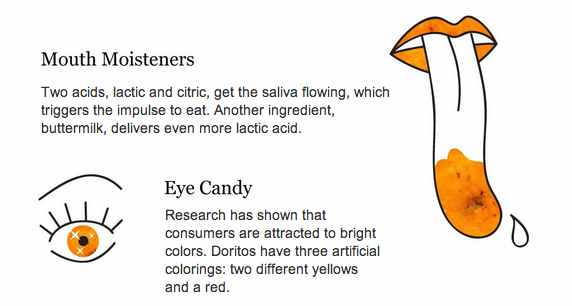
The graphics for the article by Alicia DeSantis and Jennifer Daniel are cleverly combined with photographs by Fred R. Conrad, also from the The New York Times. A separate page layout with the graphic/photo mix delivers tidbits of information about the Dorito chip. Each detail is organized by topic, as this example shows:

Screen Shot 2013-11-10 at 9.46.47 PM

A teacher does not even have to work at organizing questions for students to answer since the New York Time Learning Network, a free educational blog offered by the paper, organized an entire lesson plan on this article. The lesson is titled 6 Q’s About the News | The Science Behind Your Craving for Doritos, organized by Katherine Schulten. The questions on the blog include:

WHAT is psychobiology?
WHAT is “dynamic contrast”?
HOW do the acids in Doritos work on the brain?

WHAT is “sensory-specific satiety”?

WHERE do half the calories in Doritos come from, and, according to the graphic, HOW does that work on the brain?

WHY is “forgettable flavor” so important to Doritos’ success?

The higher order questions invite students to consider:

Now that you know the formula behind Doritos, are you more likely to eat more or less of them? WHY?
HOW many processed foods do you eat a day?
WHAT might a graphic explaining the effects of this food look like?

So go ahead. Read the Nacho Cheese Doritos article. See how irresistible an informational text can be. Once you read one this good, you will be searching to find another!

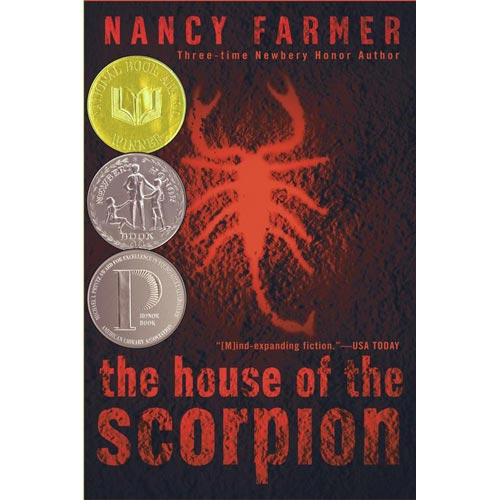
House of the ScorpionThere they were. Four used copies of Nancy Farmer’s The House of the Scorpion, and they were my find of the day at the Friends of the Danbury Public Library Fall Book Sale last weekend in Danbury, Connecticut. The unmistakeable bright red-orange and black spines were scattered in the author-alphabetized “F” section of the fiction offerings. They should have been in the young adult (YA) section, but a volunteer’s shelving error was probably why they were still available when I arrived. In this case, chance favored me.

I first became acquainted with Farmer’s science fiction novel two summers ago when I heard the plot involved cloning. I was looking for YA literature that could be used as a companion pieces to  Frankenstein; novels that incorporated many of the ethical questions raised by recent advances in the science of cloning. Science fiction was the genre that offered the most obvious choices. Farmer herself recognizes how science fiction anticipates the problems created by real science, saying:

“Science fiction allows you to approach a lot of social issues you can’t get to directly. If you wrote a book about how cloning is horrible, it would read like a sermon and no one would pay attention to it. “

The genre of science fiction is amazingly prescient in predicting technological advances.  H. G. Wells’ offered  The First Men in the Moon in 1901, 68 years before Neil Armstrong exited Apollo 11 and took steps on the lunar surface.  Digital books, submarines, droids and robots were features in science fiction novels before they became real nouns in our vocabulary. Credit for dreaming up the Internet is given to a wide spectrum of  fiction writers, from Mark Twain to Arthur C. Clarke, and manipulating human life has its genesis with 18 year old Mary Shelley’s Frankenstein. Therefore, Farmer is following the successful literary tradition of predicting man’s future. Her prediction takes the form of another dystopia, the equivalent of a political science crash course in failed nation-states for young readers.

Her opening mimic another great science fiction read, Aldous Huxley’s Brave New World. His great satire’s opening scene is in a factory that is manufacturing embryos. With streamlined industrialized precision, conveyor belts carry embryos that are then deprived of oxygen in order to create a caste of mindless workers. Farmer borrows some of Huxley’s ideas and begins her story with images that recall that frightening scenario:

A dull, red light shown on the faces of the workers as they watched their own arrays of little glass dishes. Each one contained a drop of life. (1.2)

In addition, Farmer’s predictions of a territory between the United States and Mexico controlled by drug cartels is plausible. That is the setting for her “coming of age” story of a young clone named Matt. The medical breakthroughs that create Matt, a clone of the drug lord El Patrón, are also feasible. Matt is unaware that his life is both protected by his status as the clone for the most powerful man in the land of Opium and endangered by El Patrón’s mortality…and at 146 years old, El Patrón is very mortal.

Farmer combines the issues of organ-harvesting, the economics of drug use, and adds a few Zombies for an exciting read that contains several amazing plot twists. I remember my jaw dropping…I didn’t see one twist coming at all. Farmer’s inventiveness with plot and skills as a storyteller resulted in the book receiving both a National Book Award for Young Adult Literature and a Newbery Honor in 2002. 

Last year, we offered 7th grade independent choices in literature circles centered on their interest in dystopias. The House of the Scorpion was one title offered along with other science fiction novels including Orson Scott Card’s Ender’s Game, M.T. Anderson’s Feed, Neil Shusterman’s Unwind, and several of Scott Westerfield’s selections from his Pretties series. Students fresh from reading Suzanne Collins’s The Hunger Game Trilogy were ready for other predictions for the future, and those who had not completed the series were given the opportunity to read these as well.

The cost for the four gently used copies at the book sale was $8.00; copies normally retail for $8.10, so this was a “buy one get three free” bargain in comparison. Based on other used book sales, we now have a class set (30) of The House of the Scorpion. The novel could be an all class read, however, as some of the topics in the novel require mature readers, we opt to make this and the novel Feed independent choice books.

The ethical questions raised in Frankenstein and The House of the Scorpion makes them good companion pieces, but that is not the only reason to pair them together. Our English Department’s essential question is “What does it mean to be human?” Literature gives students the language and the models for answering that question. The Monster in Frankenstein and the protagonist Matt in The House of the Scorpion are “non-human” characters that make students consider that being human may not be limited by the definitions in science, but by the possibilities in science fiction.

Since the end of the Civil War, the last Monday in May has been set aside as Memorial Day, a day to honor all Americans who have died in military service for their country. There will be opportunities to celebrate by singing patriotic songs, wave flags in time with bands in parades, and eat barbecue.

There is, however, little to celebrate in the details of a death that occurs in military combat.  The specifics in a soldier’s death are painful to hear or to read, but our discomfort should not prevent us from acknowledging the depth and breadth of each soldier’s sacrifice. Many of the returning veterans from Iraq and Afghanistan are writing about their personal experiences and noting the sacrifices made by their fellow soldiers.  These veterans write memoirs and include stories about friends who were killed. They recall their intimate thoughts when they themselves confronted death. They write about the grisly horrors they witnessed in war. Some write about people they killed in conflict. Some fictionalize accounts of their military experiences.  Brian Turner writes poetry.

Brian Turner was an infantry team leader with the 3rd Stryker Brigade Combat Team, 2nd Infantry Division from November 2003 where he served in Iraq. He already had an MFA from the University of Oregon before he joined to serve seven years in the U.S. Army. His first book of poetry, Here, Bullet, chronicles his time in Iraq. In the video below, he reads the title poem at Bowdoin College (November 29, 2005) in a film by documentary filmmaker Eric Herter, sponsored by From the Fishouse, an online audio archive of emerging poets, http://www.fishousepoems.org.

Here, Bullet

If a body is what you want
then here is bone and gristle and flesh.
Here is the clavicle-snapped wish,
the aorta’s opened valves, the leap
thought makes at the synaptic gap.
Here is the adrenaline rush you crave,
that inexorable flight, that insane puncture
into heat and blood.

(continue on his site…)

Our 11th graders review this poem and several other Turner poems when they read Tim O’Brien’s novel The Things They Carried, another piece of literature that is dedicated to the sacrifices made by soldiers during war. O’Brien’s connected short stories about an Army platoon during the Vietnam War also comes from his personal experience. In both works, images are painfully raw; some of the language in each is vulgar. Our students appreciate the authenticity and the authority of these voices in capturing the images of war. In O’Brien’s stories and in Turner’s poetry, war does not provide reasons for celebration other than the celebration of war’s end and the return of soldiers to their homes.

Consequently, Turner’s poetry does not give the reader the parade, picnic, or flag waving poetry that people recall in images about Memorial Day. His poetry is a painful tribute; an agonizing truth that people must remember. His poetry reminds us that our freedom has been purchased at a cost, and that cost may be through another’s suffering. His voice reminds us why we should never forget that cost, why there is a Memorial Day.

Here is an educational policy riddle: How much background knowledge does a student need to read a historical text?

According to New York Engage website: None.

The Common Core State Standards (CCSS) are being implemented state by state, and there is an emphasis from teaching students background knowledge to teaching students skills, specifically the skill of close reading.

The pedegogy is explained by The Partnership for Assessment of Readiness for College and Careers (PARCC):

Close, analytic reading stresses engaging with a text of sufficient complexity directly and examining meaning thoroughly and methodically, encouraging students to read and reread deliberately. Directing student attention on the text itself empowers students to understand the central ideas and key supporting details. It also enables students to reflect on the meanings of individual words and sentences; the order in which sentences unfold; and the development of ideas over the course of the text, which ultimately leads students to arrive at an understanding of the text as a whole. (PARCC, 2011)

There are many lessons that strongly advocate the use of close reading in teaching historical texts on the EngageNY.com website, including a set of exemplar lessons for Lincoln’s Gettysburg Address promoted by CCSS contributor and now College Board President, David Coleman. The lesson’s introduction states:

The idea here is to plunge students into an independent encounter with this short text. Refrain from giving background context or substantial instructional guidance at the outset. It may make sense to notify students that the short text is thought to be difficult and they are not expected to understand it fully on a first reading–that they can expect to struggle. Some students may be frustrated, but all students need practice in doing their best to stay with something they do not initially understand. This close reading approach forces students to rely exclusively on the text instead of privileging background knowledge, and levels the playing field for all students as they seek to comprehend Lincoln’s address.

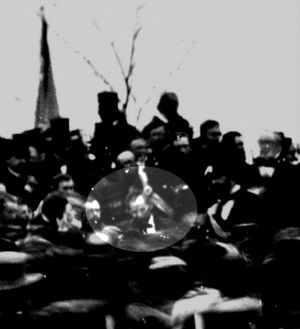
Photo of Lincoln delivering Gettysburg Address- (www.wikipedia.org)

Photo of Lincoln delivering
Gettysburg Address- (www.wikipedia.org)

The lesson plan is organized in three sections. In the first, students are handed a copy of Lincoln’s Gettysburg Address and perform several “cold” readings, to themselves and then with the class.

Lesson Plan SECTION 1 What’s at stake: a nation as a place and as an idea

Students silently read, then the teacher reads aloud the text of the Gettysburg Address while students follow along.

  • Students translate into their own words the first and second paragraph. 
  • Students answer guiding questions regarding the first two paragraphs

Please note, there is no mention of any historical context for the speech. Students will come to this 273-word speech without the background knowledge that the Battle of Gettysburg was fought from July 1 to July 3, 1863, and this battle is considered the most important engagement of the American Civil War. They will not know that the battle resulted in “Union casualties of 23,000, while the Confederates had lost some 28,000 men–more than a third of Lee’s army” (History.com). They will not know how the Army of Northern Virginia achieved an apex into Union territory with “Pickett’s Charge,” a failed attempt by General George Pickett  to break through the Union line in South Central Pennsylvania, and that the charge resulted in the death of thousands of rebel soldiers. They will not know how the newly appointed Major General George Gordon Meade of the Army of the Potomac met the challenges of General Robert E. Lee by ordering responses to skirmishes on Little Round Top, Culp’s Hill, and in the Devil’s Den. They will not know that Meade would then be replaced by General Ulysses S. Grant in part because Meade did not pursue Lee’s troops in their retreat to Virginia.

Instead of referencing any of this historical background, the guding questions in the lesson’s outline imagine the students as blank slates and mention another historical event:

A. When was “four score and seven years ago”? B. What important thing happened in 1776?

The guiding responses for teachers seem to begrudge an acknowledgement that keeping students bound to the four corners of a text is impossible, and that, yes, a little prior knowledge of history is helpful when reading a historical text:

This question, of course, goes beyond the text to explore students’ prior knowledge and associations. Students may or may not know that the Declaration of Independence was issued in 1776, but they will likely know it is a very important date – one that they themselves have heard before. Something very important happened on that date.  It’s OK to mention the Declaration, but the next step is to discover what students can infer about 1776 from Lincoln’s own words now in front of them.

In addition, there are admonishments in Appendix A of the lesson not to ask questions such as, “Why did the North fight the civil war?”

Answering these sorts of questions require students to go outside the text, and indeed in this particular instance asking them these questions actually undermine what Lincoln is trying to say. Lincoln nowhere in the Gettysburg Address distinguishes between the North and South (or northern versus southern soldiers for that matter). Answering such questions take the student away from the actual point Lincoln is making in the text of the speech regarding equality and self-government.

The lesson plan continues:

Lesson Plan SECTION 2  From funeral to new birth

  • Students are re-acquainted with the first two paragraphs of the speech.
  • Students translate the third and final paragraph into their own words.
  • Students answer guiding questions regarding the third paragraph of the Gettysburg Address.

Please note this does not provide the context of the speech that was given that crisp morning of November 19, 1863, at the dedication of the National Cemetery on a damp battlefield that only months before had been dampened red with the blood of tens of thousands of soldiers from either side. The students would be unaware that Lincoln had taken the train from Washington the day before and was feeling slightly feverish on the day of the speech. There is some speculation that he may have been suffering from the early stages of smallpox when he delivered the speech reading from a single piece of paper in a high clear voice. The students would not know that Lincoln’s scheduled time at the podium followed a two hour (memorized) speech by Edward Everett, who later wrote to Lincoln stating, “I should be glad if I could flatter myself that I came as near the central idea of the occasion in two hours as you did in two minutes.” The students would not know that many of the 15,000 crowd members did not hear Lincoln’s two minute speech; the 10 sentences were over before many audience members realized Lincoln had been speaking. The students would not know that this speech marked Lincoln’s first public statement about principles of equality, and they would not know that he considered the speech to be a failure.

Lesson Plan SECTION 3  Dedication as national identity and personal devotion

  • Students trace the accumulated meaning of the word “dedicate” through the text
  • Students write a brief essay on the structure of Lincoln’s argument

The lesson provides links to the five handwritten copies of the text, in the “Additional ELA Task #1: Comparison of the drafts of the speech” so that students can see drafts of the speech and the inclusion of “under God” in the latter three versions. There is also an additional Social Studies task that incorporates the position of respected historian Gary Wills from his book Lincoln at Gettysburg: The Worlds that Remade America. This activity suggests students use excerpts from Wills’s book and an editorial from the Chicago Times (November 23, 1863) to debate “Lincoln’s reading of the Declaration of Independence into the Constitution”. One excerpt from Wills’s book includes the statement,”The stakes of the three days’ butchery are made intellectual, with abstract truths being vindicated.” Finally, here is information about the battle itself; the battle lasted three days and soldiers died.

The enterprise of reading the Gettysburg Address without context defeats PARRC’s stated objective of having the students “arrive at an understanding of the text as a whole”. The irony is that in forwarding their own interpretation of the speech, David Coleman and the lesson plan developers have missed Lincoln’s purpose entirely; Lincoln directs the audience to forget the words of the speech, but never to forget the sacrifices made by the soldiers during that brutal conflict:

The world will little note, nor long remember what we say here, but it can never forget what they did here.

Lincoln wrote and delivered the Gettysburg Address to remind his audience “that these dead shall not have died in vain”. Analyzing the language of the address isolated from the Civil War context that created the tone and message is a hollow academic exercise. Instead, students must be taught the historical context so that they fully understand Lincoln’s purpose in praising those who, “gave the last full measure of devotion.”

“It is altogether fitting and proper that we should do this.”

Continue Reading…

What better way to celebrate International Women’s Day 2013 but to pay tribute to Canadian author Margaret Atwood? Poet, novelist, lecturer, inventor, tweeter, and celebrity ice hockey goalie, Atwood’s achievements in each of these roles is accomplished with wit, grace, and aplomb.

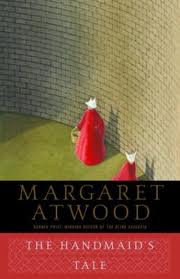
Handmaid's tale

There are other earlier covers, but this one is my personal favorite.

My Advanced Placement English Literature class just finished reading her novel, The Handmaid’s Tale. The novel is set in the dystopia of Gilead, where in response to political and ecological upheaval, a quasi-Christian theocracy is organized in the eastern section of the United States. Astute Sparknote writers, graduates of Harvard, recognized many of the landmarks in the novel’s setting (the brick wall, the gymnasium) as that of their alma mater, an indication of Atwood’s wry sense of irony. In the novel, fertility is an obsession. Rituals and “ceremonies” are enforced; offenders and outliers are publicly executed or sent to labor in toxic waste dumps. The main character Offred, who had a daughter before the establishment of the Republic of Gilead, is valued only for her ability to reproduce.

Because of the mature themes, The Handmaid’s Tale is often taught in senior high school classes. The title is often suggested on the exam for the open-ended Question #3 on the AP Literature exam which means other schools assign the book. There are always plenty of copies available in the secondary market. Our classroom library has over 60 copies from a variety of library book sales and thrift stores. I have spent under $100.00 in adding this title to our curriculum; I’d like to think that Atwood might be pleased with this “ecological” way to have students read the text despite her loss of possible retail revenue. However, if one wanted a new copy, they are available at Amazon for $10.20 paperback or an audio recording by Claire Danes is available  at Audible.com  for $24.95.

When we discuss the clothing that marks the different “castes” of people in Gilead,  I always use the endpaper story Atwood published in the New York Times Magazine published “When Afghanistan Was at Peace”

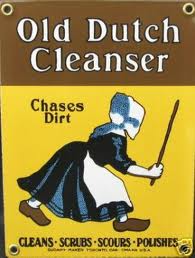
Six years after our trip, I wrote ”The Handmaid’s Tale,” a speculative fiction about an American theocracy. The women in that book wear outfits derived in part from nuns’ costumes, partly from girls’ schools’ hemlines and partly — I must admit — from the faceless woman on the Old Dutch Cleanser box, but also partly from the chador I acquired in Afghanistan and its conflicting associations. As one character says, there is freedom to and freedom from. But how much of the first should you have to give up in order to assure the second? All cultures have had to grapple with that, and our own — as we are now seeing — is no exception. Would I have written the book if I never visited Afghanistan? Possibly. Would it have been the same? Unlikely.”

Dutch Cleanser

The combination of the Dutch Cleanser girl with the chador is the inspiration for Offred’s clothing; the story and the visual always sparks a discussion on the symbolic effect of clothing.

My students always argue about the genre of The Handmaid’s Tale. This year there were a number of votes for political science book, others for a dystopian love story; no one said science fiction. Atwood would be relieved; she has always drawn the distinction between science fiction and her writing which she calls “speculative fiction”. Several of my students also read the other books Oryx and Crake and The Year of The Flood that are speculative fiction.

Here is Atwood with her take on the genre of specultive fiction.

The conclusion of The Handmaid’s Tale ends in an allusion to the story of Orpheus and Eurydice:

“We may call Eurydice forth from the world of the dead, but we cannot make her answer; and when we turn to look at her we glimpse her only for a moment, before she slips from our grasp and flees.”

After we finished the novel, the class read Atwood’s poem Eurydice. I asked them what they thought.

  • “There is a sense of longing in both.”
  • “The language is so similar. There is the white curtain…the gauze.”
  • “‘It is not through him you will get your freedom’ is just like
    from and freedom to…that is Offred’s problem”
  • “We could have just read the poem! They’re almost the same!”

One other area of speculative fiction where Atwood has shared her thoughts is on the topic of modernity…and Zombies. In an interview on George Stroumboulopoulos Tonight, Atwood was quite clear on the limits of Zombie stories:

“No zombie story is ever told from the zombie point of view… they’re not narrative…they don’t have language and that impedes one from telling a story.”

Outside of fiction, Atwood has also written about debt. Her non-fiction book Payback: Debt and the Shadow Side of Wealth came from her 2008 Massey Lectures. Not surprisingly, her interest in debt began in from her study of Victorian Literature. In an interview with Suzanne Ellis, CityLine “Margaret Atwood On Payback And The Concept Of Debt”  Atwood discussed how the Victorian stories that are on the surface about love and romance are really all about financial arrangements:

“In [Jane Austen’s] Sense and Sensibility, Marianne can’t marry the love of her life because he needs to marry a rich person. He doesn’t have any money. She’s devastated by that and gets a bad cold,” Atwood muses. “You start following the money in these novels and it takes you to the most amazing places. Where did Heathcliff get the money that he uses to buy Wuthering Heights, or I should say to gamble the owner of it out of it? How does he do that? We’re not quite sure but it’s something pretty shady.”

The book was made into a documentary and released in the spring of 2012. The New York Times critic A.O. Scott opens his film review with the premise of the documentary:

A glance at the headlines from Europe, the news from Washington or this month’s bills will confirm that we live in an age of debt. Debt, a concept at once straightforward and almost metaphysically complex, is a source of personal, national and global anxiety, and forms a link between the individual and the worldwide economic system.

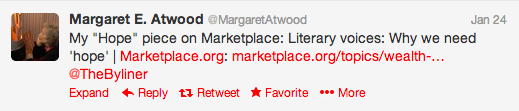
While the film did not receive critical acclaim, Atwood’s ability to connect herself and link to the world through Twitter is often lauded.  She is an avid twitterer with 383,430 followers and over 15,000 tweets of her own. She links to political issues, comments on travels, and gives recipe advice:

Screen Shot 2013-03-08 at 11.06.17 AM Screen Shot 2013-03-08 at 11.07.07 AM Screen Shot 2013-03-08 at 11.08.58 AM Screen Shot 2013-03-08 at 11.09.56 AM

She also is the inventor of the “long pen”, a device that allows her to attend book signings from distances and sign books “virtually”. When she is tired of traveling to sign books, she can now meet her adoring public in virtual space and provide them with an authentic signature. Fortunately, I saw her before the “long pen” at a Barnes and Noble reading/book signing for her short story collection Moral Disorder. She was amazingly articulate; in the 40 minute talk, she never hesitated or once said “um”.

And just when you thought that Atwood could not be more accomplished, she starred in a video explaining “How to Stop a Hockey Puck” for the comedian reporter Rick Mercer. I put the video below. (Too bad her “Dance Party Video” was removed from YOUTube for copyright violations.)

So, on this International Woman’s Day, let’s hear a cheer for Margaret Atwood!

She writes. She tweets. She scores!

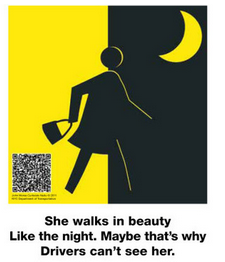
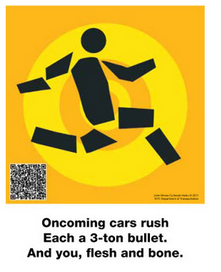
Mash-up are usually the blending of music from two or more sources. However a different mash-up was featured in a story by National Public Radio (NPR) where street signs in New York City were rewritten into Haiku poetry, Haiku Traffic Signs Bring Poetry To NYC Streets. This story illustrated how a mashup could be made of a very basic informational text with a strict poetic form. “Caution: Oncoming Traffic” was expanded into a poem of  of 5 syllables/7 syllable/5 syllables of “8 million swimming/The traffic rolling like waves/Watch for undertow.” In the NPR story,

“Traffic warning street signs written as haiku are appearing on poles around the five boroughs, posted by the New York City Department of Transportation. The poems and accompanying artwork were created by artist John Morse.”

Screen Shot 2013-03-03 at 5.35.21 PM Screen Shot 2013-03-03 at 5.35.31 PM Screen Shot 2013-03-03 at 5.35.39 PM

NYC’s Department of Transportation hoped the signs would catch new eyes in order to communicate important information. The unusual combination of graphics and verse on street signs presented pedestrians with additional information, a different point of view. The reordering of information is just one example of how presenting information in a different genre also provides new writing opportunities for new audiences.

Since the English Language Arts Common Core is rattling its standards calling for an increase in informational texts, the 9th grade curriculum is including a non-fiction unit where students choose a non-fiction text of their own to read. The CCSS  require this increase based on:

“…extensive research establishing the need for college and career ready students to be proficient in reading complex informational text independently in a variety of content areas. Most of the required reading in college and workforce training programs is informational in structure and challenging in content…”

Our students may choose a text to read on topics that range from animal or adventure topics to travel or war. There are titles that have been made available in bulk on the secondary market, such as public library book sales or thrift stores and added to our classroom book carts. The books purchased for $1.00 each (see how) include:

  • Girl Interrupted-Keysen
  • Guts-Paulsen
  • Tuesdays with Morrie-Albom
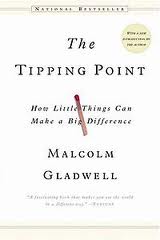
  • The Tipping Point– Gladwell
  • Left for Dead-Nelson
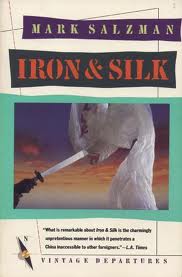
  • Iron and Silk-Salzman
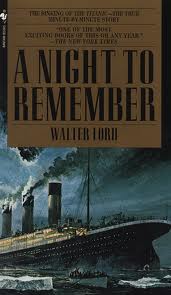
  • A Night to Remember-Lord
  • Hiroshima-Hersey
  • The Teammates-Halberstam

iron and silk Night to remember dog year Tipping

There are also a number of books that deal with animal literature that are stocked on the classroom book cart. Many of these texts will also be available for the senior elective, “Critter Lit”:

  • With Love from Baghdad-Kopelman
  • Tell Me Where It Hurts-Trout
  • Seabiscuit-Hillebrand
  • Winterdance– Paulsen
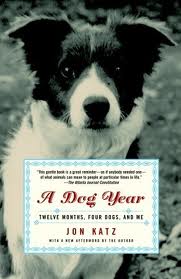
  • A Dog Year-Katz
  • Wesley the Owl-O’Brien
  • Alex and Me-Royte
  • Modoc-Helfer
  • The Pig Who Sang to the Moon-Masson

Students may chose from these titles or another non-fiction choice though the school library, which also offers the online book shelf Overdrive. The students organize themselves into thematic groups while the unit runs for four weeks (block schedule) with some overlap during the standardized testing weeks. The students spend time reading in class, and they organize themselves into thematic groups. Rather than respond in essays or traditional research papers, the students are given an opportunity to create genre mash-ups.

First, to prepare for writing mash-ups, the students generated a list of the kinds of non-fiction writing they see everyday including:

  • License plate
  • Newspaper article
  • Letter to the editor
  • Ad
  • food labels
  • Menu
  • Directions
  • Q&A Interview
  • Diary
  • Weather report
  • Sports report
  • Billboard
  • Tweet
  • Blog post
  • Directions

Next, the mini-lessons that begin each class are quick( 5-10 minutes) and focus on the characteristics of a particular genre from the list so that students can create rewrite each text in that genre. For example, students review how information is arranged on a food label before creating a “food label” for the books they are reading. Students read billboards and street signs before creating the same.  After each mini-lesson, students write about their text in the assigned genre and use a Google Docs folder to develop a portfolio of authentic writing. The result is a portfolio of mash-ups of informational texts rewritten by students into other genres.

Like the haiku and street sign mash-up, these mashups will still communicate essential information. Students can write about the texts they choose to read in the authentic genres they encounter everyday.

Finally, when April comes around, the students may try writing their essential information in poetry: sonnets, limericks, villanelles and even haikus. After all, April is National Poetry Month!