Archives For November 30, 1999

“Why is every story we read in school so depressing?” lament my students, “Everyone dies!”

My response is usually a flip, “Because happy people don’t write great literature.”

I have always held the theory that great literature is born from discontent; that great literature finds its genesis in the mind of the outsider, that great literature is written from the margins. In other words, great literature reflects the real-life experiences of an author, and some of these life experiences can be miserable.

Generally, readers understand that they can slip into a narrative unbound by gender, age, or background. Literature is a way for readers to participate in an experience that may not otherwise be possible. Often, these experiences can be painful.

But is my theory correct?

There are many sites on the Internet that have compiled a “Top Ten” rating of literature, with many of the same titles included. One such list is posted on the TIME website. Occupying the #1 place with Anna Karenina AND the #3 place with War and Peace is Leo Tolstory. These titles certainly meet the criteria of “depression”; the first ends in suicide, the second ends in critiquing the nature of power in history. While it is unlikely that either of these titles would ever be taught in a high school, I have taught his novella The Death of Ivan Illyich with great success, and several of his short stories are included in world literature anthologies in our English classrooms.

So, was Tolstoy happy?
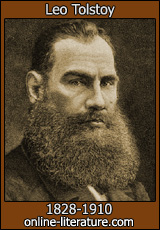
He was born in Russia, orphaned before the age of 12, and educated at home. He enrolled, but never graduated from the University of Kazan, and he served in the army during the  Crimean War. He wrote in his diaries, “I put men to death in war, I fought duels to slay others. I lost at cards, wasted the substance wrung from the sweat of peasants, punished the latter cruelly, rioted with loose women, and deceived men. Lying, robbery, adultery of all kinds, drunkenness, violence, and murder, all were committed by me, not one crime omitted, and yet I was not the less considered by my equals to be a comparatively moral man. Such was my life for ten years” ( Ch. VI)

He married Sofya (Sonya) Andreyevna Bers, and together they had 13 children, however, only 10 of them survived infancy. The year Anna Karenina was published, Tolstoy became depressed and suicidal. Six years later he wrote in his diary:

“I am now suffering the torments of hell: I am calling to mind all the infamies of my former life—these reminiscences do not pass away and they poison my existence. Generally people regret that the individuality does not retain memory after death. What a happiness that it does not! What an anguish it would be if I remembered in this life all the evil, all that is painful to the conscience, committed by me in a previous life….What a happiness that reminiscences disappear with death and that there only remains consciousness.”

His diaries were subject of great controversy; ownership was disputed until his death. The Online Literature website notes, “For as the last days of Tolstoy were playing out, he still at times agonised over his self-worth and regretted his actions from decades earlier. Having renounced his ancestral claim to his estate and all of his worldly goods, all in his family but his youngest daughter Alexandra scorned him.”

So, was Tolstoy’s state of happiness a factor in his writing? Do his life experiences support my theory that great literature come an author’s from painful life experiences? Given the evidence above, Tolstoy does meet the standard of having miserable moments in his life. Would he agree that that great literature comes from the pens of unhappy writers?

Perhaps the answer is one of empathy. A great writer demonstrates empathy in creating an experience for the reader. Which goes to my point made in the title; Ken and Barbie, or the Ken and Barbie “types”, do not write great literature because they lack empathy. Those perfectly formed, coiffed representatives of all that is perfect in the world have not been marginalized; they have not experienced rejection or have  been misunderstood. Instead, their very success depends on their unfamiliarity with loneliness, victimization, exploitation, pain and suffering. Ignorance is bliss, but ignorance on the part of a writer is also ignorance of the human condition, and great writers are not ignorant.

That is not to say that great writers are unhappy either, even Tolstoy.  He did understand the paradoxical nature of pain and sadness and reader enjoyment; he reveals an empathy born from experience for both. Consider his opening line for the magnificent, and tragic, Anna Karenina, “Happy families are all alike; every unhappy family is unhappy in its own way.” Sounds like a family living nowhere near Barbie’s penthouse.


“Chance favors the prepared” in the used book market.

Saturday is my day for running errands which takes me to Brookfield or New Milford, two Northwest Connecticut communities. Each of these towns has a their own Goodwill store located on Route 7, and I make regular stops to their bookshelves of donated books looking to see what has been most recently donated.

This past Saturday morning, I did just that. In fact, I stopped at both stores and purchased a total of 47 books for $41.43. WhenI came home, I noticed that WebEnglish Teacher had posted a link to a website listing the 100 Essential Reads for the Lifelong Learner  organized by Online Schools. These books were organized by discipline: fiction, non-fiction, autobiography/memoir, biography, world literature literary theory, history, political science,science/math/social science. Her question was “How many of these essential books have you read?” I was happy to see some familiar titles on the list, but many were new to me.

I could not help but notice that I had just purchased five of the suggested titles on this list for different classroom libraries that very day! There were other titles on the list available on thrift store shelves that I did not get since our libraries either already had enough copies or the titles are available online in the public domain.  The Online Classroom Essential Reads List is organized so that each title had a designated number, not a rank, and link provided for each book with a short explanation. Some of the links are helpful.

Here is a list of the 5 PURCHASED ESSENTIAL READS and the grade or class that uses them:

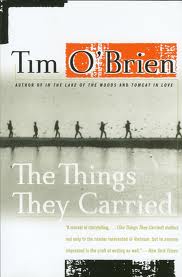
35. The Things They Carried by Tim O’Brien. This fictional account of a platoon in Vietnam is based on Tim O’Brien’s experience in the war himself and explores the fear and courage that are necessary to bring one through to the other side.

-This is a text that is used in our Grade 11-American Literature classes. The book is one of the few texts that students will willingly complete; once they finished the first story, they are hooked which is a tribute to O’Brien’s writing style. The prose is artistic but not difficult for even our lowest readers. Our students are curious about Vietnam, a part of history that is chronologically left for those lazy days of June. We use film clips (Platoon, Apocolypse Now, The Deer Hunter) in our unit with this text. We also eat MREs in class, and organize lists as to what each of use “carries.”

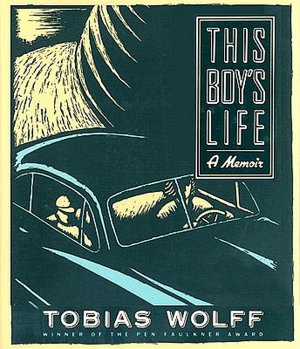
43. This Boy’s Life by Tobias Wolff. Wolff recounts his life as a boy and teen struggling with his identity as he lives with his divorced mother and her second husband in the 1950’s.

-This text will go into the English IV elective Memoir. There is a possibility that a 9th grader will choose this as an independent reading book in the non-fiction unit. The narration captures teen angst very well, and could work as a non-fiction companion piece to Catcher in the Rye in Grade 11. If Common Core wants classrooms to integrate more non-fiction, this is an excellent piece to add.

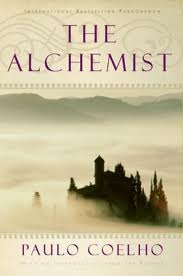
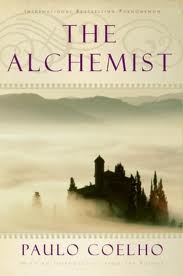
61. The Alchemist by Paulo Coelho. Discover how to find the beauty in life no matter what your experience as you follow the life of a young shepherd who gains so much from his journey of life.

-This book is assigned as summer reading for incoming English II honor students. We require a dialectic journal with 30 quotes from the texts as the summer reading assignment. Despite the burden of writing, students really enjoy this book which allows us to segue from “the journey” archetype taught in Grade 9 to the different types of perspectives in Grade 10 World Literature.

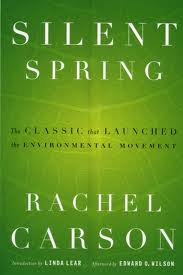
94. Silent Spring by Rachel Carson. Carson’s powerful writing on the topic of environmental justice creates a book that will make the reader think seriously about humanity’s relationship to the Earth.

-I got this book for the environmental studies teacher. So far, I have found five nice copies this past year. She offers this as optional reading to her students, and I think this should be required reading for students interested in pursuing an environmental science…or any science, for that matter.

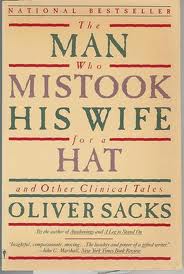
100. The Man Who Mistook His Wife for a Hat by Oliver Sacks. Psychology student or not, this book will appeal to anyone who has an interest in the curious way the mind works–and how it does not work. Several of the most bizarre cases are detailed here.

-I rarely find copies of this book, so finding one in good condition is a score! The psychology/sociology teacher loves to lend this book to her students; they are fascinated by the case studies. I am always excited to find a gently used copy for her to share.

Here is a list of the 10 essential reads I LEFT ON THE SHELVES (and where they are used in our curriculum)

1. The Great Gatsby by F. Scott Fitzgerald.-Grade 11; we have enough copies

12. Heart of Darkness by Joseph Conrad. -AP English Literature; text is in the public domain so students read this online.

14. The Call of the Wild by Jack London.- Grade 9;  text is in the public domain so students read this online.

15. To Kill a Mockingbird by Harper Lee. -Grade 11; we have enough copies

28. The Poisonwood Bible by Barbara Kingsolver.- AP English Literature; we have enough copies

33. Middlesex by Jeffrey Eugenides.- Optional read for Grade 11 Coming of Age unit OR Advanced Placement English

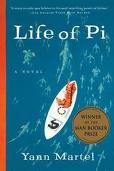
34. Life of Pi by Yann Martel. -Grade 10; We have enough copies

58. One Hundred Years of Solitude by Gabriel Garcia Marquez. AP English Literature; we have enough copies

82. The Elements of Style by William Strunk and E. B. White.- Resource for AP English Language and AP English Literature and Creative Writing

98. The Interpretation of Dreams by Sigmund Freud.-I will need to check with the psychology teacher!

 Both Goodwill stores, Brookfield and New Milford, regularly offer a wide variety of used books, and our classroom libraries are currently well-stocked with titles puchased used for $.50-$2.00.
This past Saturday, the  total cost for the five  “essential” titles I did purchase? $5.18. Getting these essential reads into the hands of our students? Priceless.

The original purpose of this blog was to explain how used books were purchased in order to increase the classroom libraries at Wamogo Middle and High School, grades 7-12. The name of the blog, “Used Books in Class”, was initially chosen to indicate the condition of the texts. The term “used”, however, can also serve to mean how the text are used in class. In other words, how are the used books being used in the English Language Arts Classrooms at each grade level?

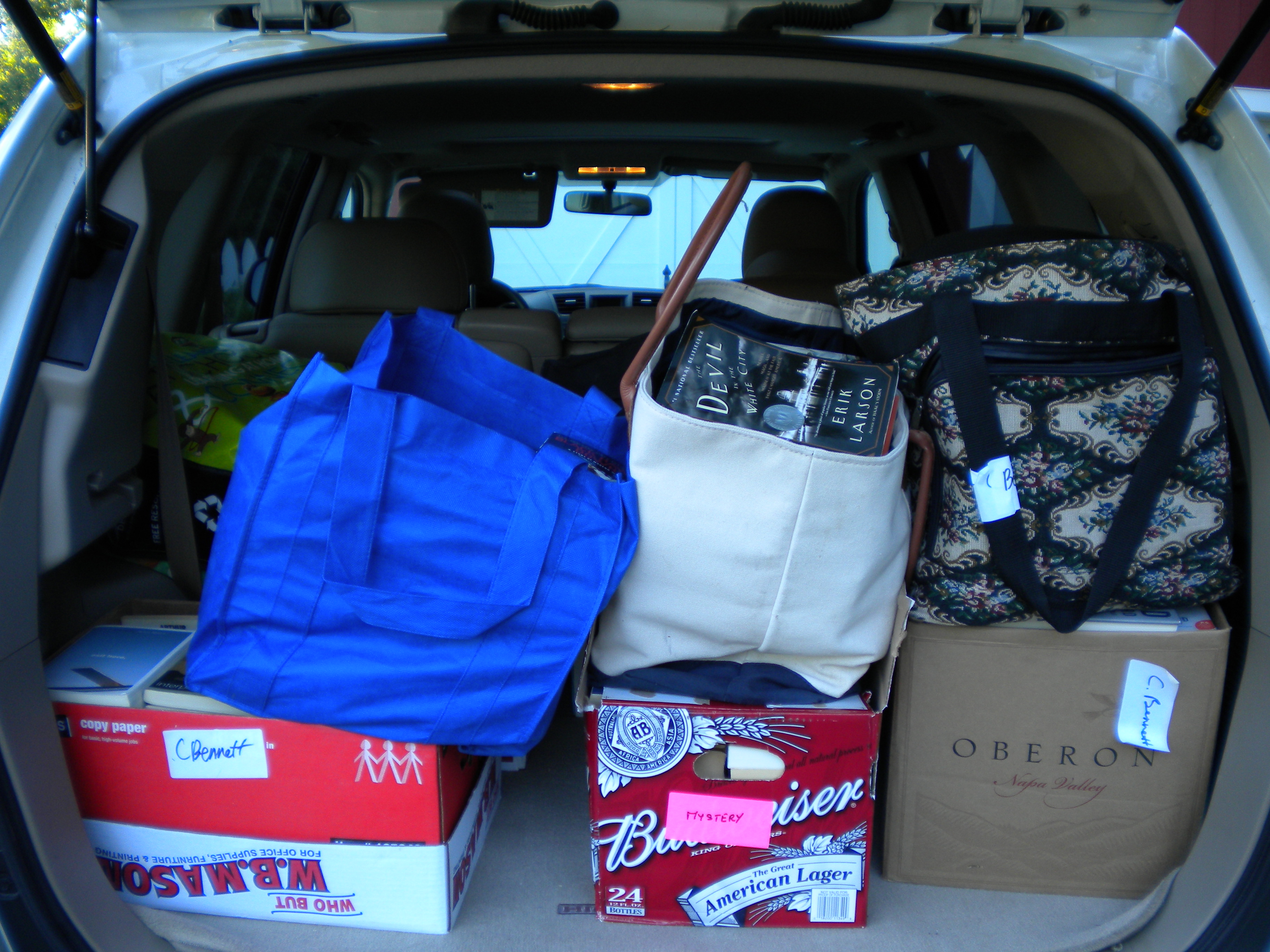
A carload of Used Books after a summer book sale!

In writing this blog, I have found myself increasingly commenting on English/language arts curriculum, lesson plans, and current issues in education. This means the purpose of the blog has grown to include topics that are all related to the use of reading materials in the classroom, and reading is the most important skill that students will need to be successful students at every grade level. Providing a wide variety of books-new and used- is critical to engaging readers.

To date, the used books purchased in the secondary markets have helped in four specific ways:

Used books have replaced copies at each grade level. Used books have been used to replace lost or damaged copies of books assigned to a particular curriculum. For example, there have been replacement copies of The Giver for Grade 7, Of Mice and Men in 9th grade, and Animal Farm in Grade 10. These titles are taught in almost every school system in Connecticut, and are titles that are relatively easy to find locally in the secondary market. These are also titles that are readily available in large quantities online on used book dealer sites such as Better World Books.

-Used books have increased selections for independent reading in classrooms. The English Department has incorporated more time for silent sustained reading (SSR) in class at each grade level, and classroom libraries have been increased to allow students the opportunity to choose books to read. For example, students in grade 9 are provided 40-45 minutes each week to read self-selected books during the school year. Students may choose a book from the school’s library media center, or choose a book from one of the carts in the classroom.  Titles vary in genre, subject and reading level in order to meet student interest. Students are responsible for blogging reviews about the books they read at least twice a quarter.

Other classes that take advantage of independent reading are the Advanced Placement English Language and English Literature classes. Students select independent reading that meets the critical standards of the Advanced Placement program. These selections range from the classics (Dostoevsky’s Crime and Punishment) to more contemporary titles (Roth The Plot Against America) and write responses to these books.

-Used books are added titles as “satellite texts”. English teachers have extended thematic units to include titles that complement a text from the literary canon. For example, the 11th grade thematic unit “Coming of Age” is usually associated with Salinger’s Catcher in the Rye. Purchasing used books have increased selections to include Sittenfield’s Prep, Cormier’s The Chocolate War, Lamb’s She’s Come Undone, Gibbons’s Ellen Foster, and Chbosky’s Perks of Being a Wallflower. Students select a text to explore the thematic idea through the lens of another author.

Score! A set of books for Grade 10

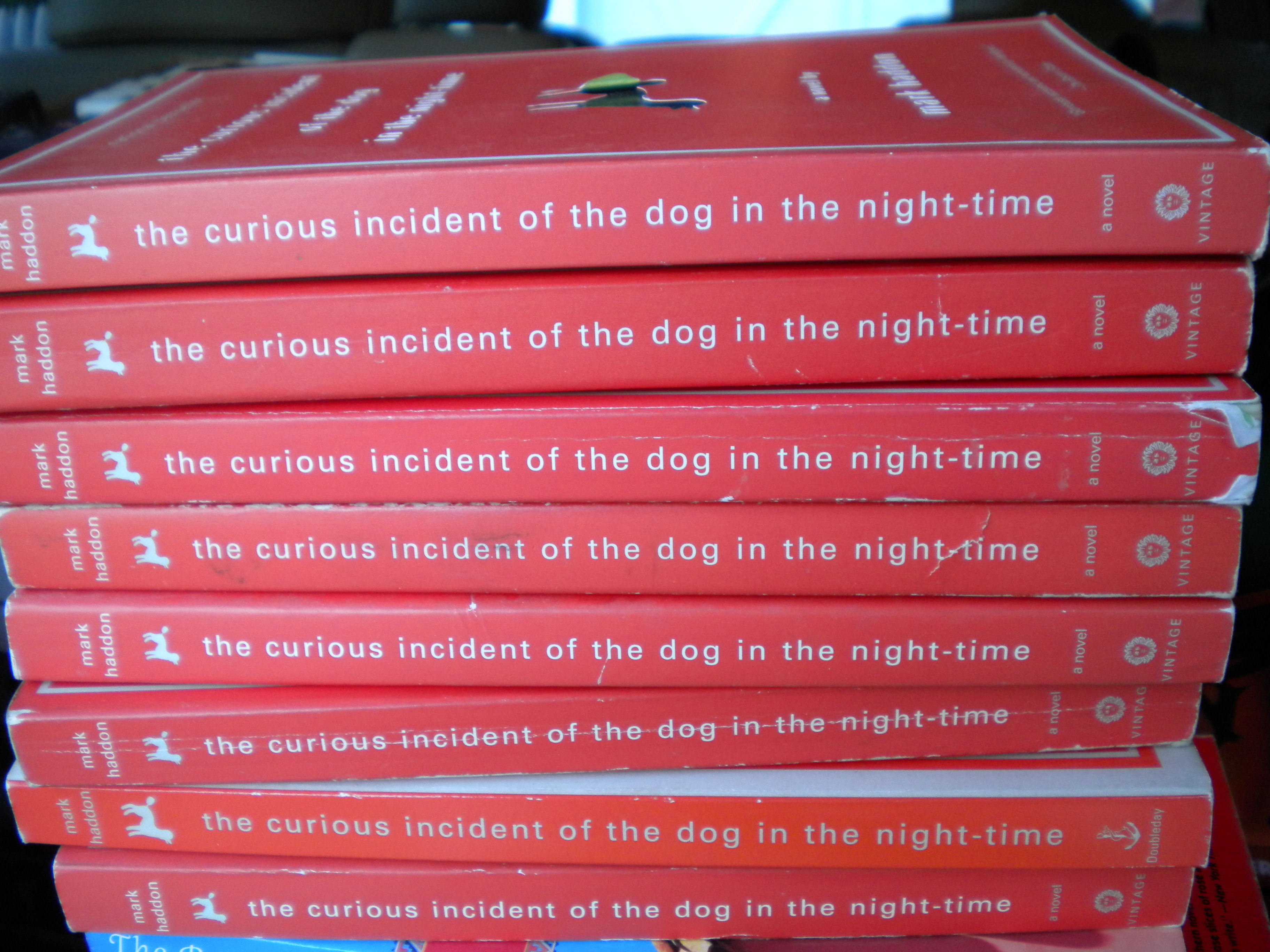
-Used books have allowed for the addition of new texts. The purchase of used books has expanded curriculum at several grade levels with high interest titles.  For example, Hosseini’s The Kite Runner, Coelho’s The Alchemist and Haddon’s The Curious Incident of the Dog in the Night-time (see picture) have been added to the World Literature curriculum in grade 10. In addition, Walls’s The Glass Castle has been added to Grade 12 Memoir class while Farmer’s The House of the Scorpion will be added to grade 7.

Ultimately, the re-stated purpose of this blog will be to continue to discuss the inclusion of specific used book titles in English/language arts classrooms as well as discuss how we are working to improve reading in and out of the classroom  at every grade level. Used books in class is also about using books in class to improve reading!

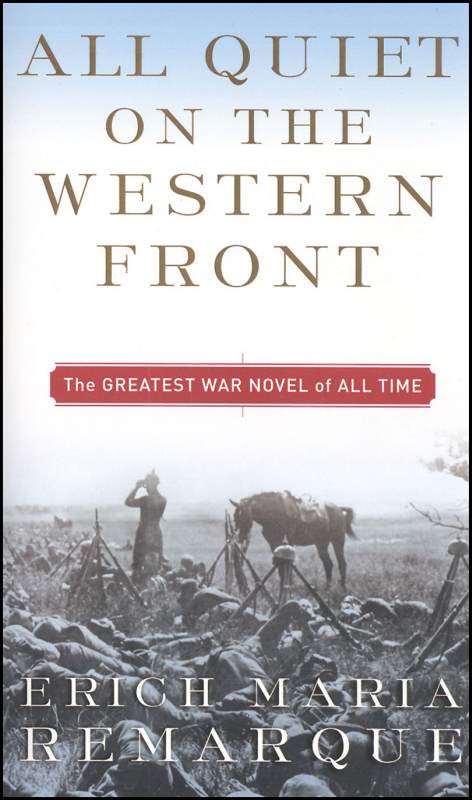
Next week, English II students will begin reading All Quiet on the Western Front by Erich Maria Remarque in tandem with the World War I unit on taught in social studies classes. This collaboration is a great opportunity to have the context of a WWI novel explained from another point of view. The social studies classes cover the causes of WWI, many of the battles, and the results of WWI on Europe and American foreign policy while the English classes follow the lives of a few soldiers engaged in the conflict. Social studies can cover the macrocosm setting, the geography of WWI, while we can cover the microcosms of the novel-the intimate settings   of Paul and Kat feasting on a goose they caught or Paul visiting the bedside of Franz Kemmerich, his mortally wounded companion.

The older edition cover; copies are always found in the YA section of a book sale

Our copies of the book are fairly old, so I am always looking for additional books to replace those who have become too worn for use in class. The e-book (through Questia) is only available as a free trial. There are always copies of the novel in used book sales including the more recent edition, and the book is almost always located in the young adult section rather than on a table or section dedicated to military history or adult fiction. This placement could be attributed  to the popularity of this novel in curriculum around the country; obviously, the person placing the book on the YA table read the book in high school.  The popularity of the book in schools defies many conventions. First, the novel is a translation from German, which distinguishes it from the multitude of British and American titles that crowd middle school and high school reading lists. Second, the point of view is from an enemy combatant; the French, English and American troops are the enemy. Including this novel acknowledges Remarque’s universal message that the consequence of war is devastation, a message that may be even more important for a nation that has been at war for over 10 years.

The new edition cover

Many technological advances made WWI a brutal war: aerial combat, machine guns, mustard gas. Last year, we were reading one of the passages that described a mustard gas attack,  looking for language that described how lethal this weapon was for the foot soldiers.  Suddenly a startled look came across the face of a  student. His hand shot up as he blurted,  “Ms. P told us that the more technology that’s used in war, the further a soldier gets away from the enemy in combat.”  There was a pause-other students had heard the same in class, and the consequence of increasingly sophisticated weaponry used against Paul and his companions was suddenly very real. His point hung there until another student chimed in, “And now we use drones.”  Suddenly, the WWI novel was not dated. The students understood that military drones currently used in combat would certainly have targeted Paul and his companions if they had been available to Allied forces in 1917.

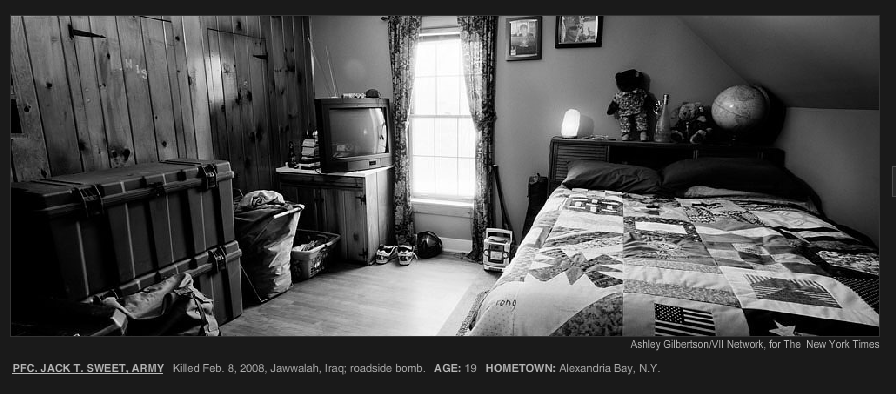
There are several activities that we pair with reading the text, but the most powerful for students is the NY Times Magazine photo essay (Ashley Gilbertson)  of soldier’s bedrooms titled “The Shrine Down the Hall” (there is a video clip as well) In the novel, Paul returns for a visit home. Instead of being a sanctuary, however, the bedroom is a painful reminder of the innocence he has lost after months of combat of the Western Front. Our assignment is to compare the elements of Paul’s bedroom (items, his feelings, his memories) to the elements in the photos of the bedrooms of American soldiers who had been killed in Iraq or Afghanistan. This photo essay brings the impact of war’s devastation to an intense personal level. Many of the students have bedrooms with the same posters, layouts, or furniture, and they note these similarities in their responses.

A photo from Ashley Gilbertson's "The Shrine Down the Hall" photo essay in the NY Times Magazine section

Students are instructed to choose one of the soldier’s bedrooms from the photo essay, and make a connection with text from Chapter 7 (Paul’s visit home) by answering the following questions:

  • How are the text of the novel and the photo alike?
  • How do the text and the photo differ?
  • What is the photographer’s message? What is Remarque’s message? How are they the same? How do they differ?

The students’ responses included:

I chose picture 15, of Matthew J. Emerson’s bedroom. His room is just waiting for him to come home but it never happens. The room also has pictures cut out on the wall, from what appears high school sports, as well as trophies on the shelf. Paul gets to return home one last time, unlike the soldier who was killed in Iraq who returned in a casket with an American Flag on it. Paul feels like a stranger in his own room. War changes people; you can’t go blasting heads off for 2 years and come home and live the normal everyday life again.They come home, changed, forever.

I choose photo 17. The man who died was Sergeant Gilbert who was killed in 2006.  The photographers message is saying that an ordinary young person, even a teenager, can go to war and be killed. The photographer expresses the loneliness, silence, and emptiness that the room has. Remarque’s message is saying that the average soldier has a very hard time coming back because he or she has to make decisions that don’t involve killing, that don’t involve defusing a bomb. These two messages are the same because they both describe the difficulty of coming back home, but they are different because these two messages are set in different times with different technology of warfare.

When I see picture #3 I think of Paul the most. Here are a bunch of pictures everywhere on the walls of all different kinds of things, like “Then below are periodicals, papers, and letters all jammed together with drawings and rough sketches.” When I read this it makes me think of a cluster of a bunch of different things, also when I look at room #3 I see a cutter of a bunch of posters, hats, books, and many other things. I think the picture and Remarque’s  are both saying that life is not the same when you get home and many of the soldiers cannot come home and have everything be the same as when they left.

I chose photo 14 because it is surprisingly similar to the book. The text talks about Paul’s book shelf and his school books all thumbed through. the room has a book shelf and other references to school. What looks like a degree is hanging on his desk. This room however has a poster of the marines in the background which shows that this boy was obviously thinking of joining the military before hand. Paul has no mention to wanting to join the army before Kantorek takes them down to the recruiting office. I think the photographer’s message is to show how innocent the soldier was before.

He was on a sports team and appeared to be quite good, he won a trophy. Remarque’s message is very similar. The soldier is changed after war, he cannot go home and just drink some beers and pretend everything is all right. It’s not.

I chose picture 14. This room was occupied by Nathanial D. Windsor who died on March 11, 2007. He was only 20 years old (about the same age as Paul). T. The photographer said was trying to portray a lonely room that is not occupied anymore. Remarque’s trying to portray that Paul’s room is lonely too. They are both alike because they are lonely.

Christopher Scherer’s room reminded me of when Paul went home. Paul had a nice life before the war he felt at home, when he returned from the war he felt like he was looking through a veil. He tried on his clothes, his civilian clothes, that made him feel like he had nothing. After the two years of war he cannot have that connection to his home, he relates everything back to the war. The war has given him the thought of death and destruction, Paul is no longer himself, he cannot connect to his home, where he is supposed to be.

In the picture a bookshelf was not full which could mean that the soldier was as Paul was did, collecting them gradually.  The solider also has a clear view of the outside that he can sit and watch, just as Paul has in the story. Remarque and the photographer have different views. Remarque tries to display that after the soldiers return home they are never the same people and their rooms do not represent them. While the photographer’s message is that all the pieces of  soldiers’ lives are preserved in their rooms and are now gone forever because they have died.

Remarque’s novel transcends time perhaps because of the intensity the reader feels for one soldier caught up in a conflict beyond his control.  While the social studies classes are required to cover the history of World War I, the English classes are free to cover Paul and “his”-story.

Sophomore English is centered on the study of World Literature and is organized to complement Modern World History classes taught by members of the Social Studies Department. This means, when students are taught about World War I, the English classes read All Quiet on the Western Front.

One of the goals this year for every member of the English Department is to increase the amount of reading opportunities. To meet this goal, the EnglishII classes have just completed a unit where they chose books written by world (not American) authors or books about world events. The unit ran for 18 days-11 days class periods designed with 20 minutes of silent sustained reading combined with lit circles for a total of 3 hours and 40 minutes of in-class reading time.
Students choose the book they wanted to read after researching book titles with reviews (from Amazon) promoted in a prepared folder on Livebinders. Literature circles were organized by student selection of titles; teachers made recommendations for low-level readers.

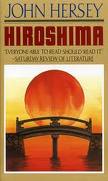
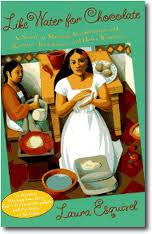
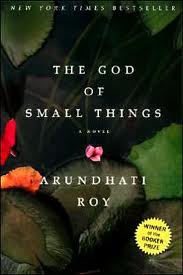
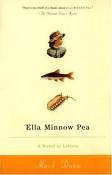
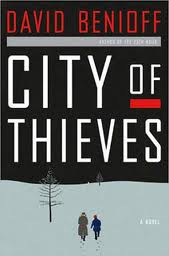
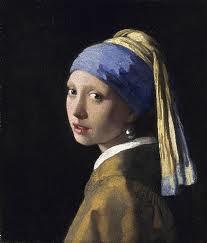
80% of the texts offered in this unit were added to the classroom library as used books. Books were purchased for $.50-$4.00 each over the period of two years through visits to thrift stores, public library sales, and online used book vendors. The remaining 20% of texts were already purchased for classroom libraries through the retail market. The most popular titles selected by the students included: A Day in the Life of Ivan Denisovich, The Alchemist, Hiroshima, and The Life of Pi (titles initially purchased at retail price); Like Water for Chocolate, City of Thieves, The Girl with the Pearl Earring, The God of Small Things and Ella Minnow Pea (all titles added through used book markets).

Literature activities were designed to encourage student creativity and to be simple enough so that students could complete the tasks during the period. Students were continually reminded that they need to read for homework as well as in class.
Once the literature circles were organized, students kept all group work in folders. Literature circles were not divided with assigned roles; all members of the group participated in the daily scheduled activity.

Daily activities included:

  • Members of the group developed five questions each which were shared in the group. All members chose three question from this pool and responded to them;
  • Members of the group each located a passage with figurative imagery and used that passage to create a found poem;
  • Members of the group illustrated a scene from the book as a six-panel comic strip;
  • Members of the group researched 14 facts about the text they chose, the author, and the context when the book was published;
  • Members of the group each wrote three character haikus;
  • Members of the group created one timeline of 10 events from the text and organized these on Timetoast.com interactive software.

Once students had chosen their texts, they were given an index card to record data about their reading habits. Students recorded their progress on these cards with the following data: page # at the beginning of a reading session, page # at the conclusion of a reading session; the number of minutes for the reading session; the location of the reading session. At the conclusion of the unit, this card was used as a self-reflection exercise, and the data card attached to a sheet with the following questions:

1. According to the data you recorded on the card, how long did it take you to read this book?
2. What was your average reading rate (pages per minute)?
3. In which location did you read most frequently?
4. If you had to take a detailed multiple choice quiz or test on this book, would you have scored well? WHY or WHY NOT?
5. Who would you recommend should read this book?

As a final assessment, students completed a dialectical journal of 10 quotes (5 from the beginning of the book; 5 from the end of the book).

The unit was successful in having students engage with their texts daily; students would enter the classroom saying, “We get to read first, right?” while literature circles allowed for student centered activities. Assessments of responses collected in literature circles allowed teachers an opportunity to monitor student understanding. Several students completed their chosen text early. These students were given one page book review sheets to complete for extra credit; no other assessments were given for extra credit reading.

The goal was to increase student engagement in texts with SSR and literature circles while exposing students to author voices from around the world. This unit has proven to be flexible and teachers will schedule this unit with some changes to literature circle activities during standardized state testing and again at the end of of the school year. The 20 minutes a day also provided time for teachers to familiarize themselves with many of the texts as well. Why should students be the only ones enjoying a book? What teacher wouldn’t want a little reading time for themselves?