Archives For November 30, 1999

There are more than 30 copies of Edith Hamilton’s Mythology in the Wamogo English Department Library; they are ancient, yellowing slowly in the catacombs of the bookroom, yet these copies are still a valuable resource for a student who may want to read about Greek and Roman Mythology. There is a patchwork collection of Homer’s Odyssey:  a class set of a prose re-telling  (McCaughrean) of the Odyssey, 25 very battered copies of the Richard Lattimore translation, and five highly prized copies of Robert Fitzgerald’s translation.  Two years ago we added a dozen copies of two books from Scholastic Mythopedia: O My Gods and She’s All That!: A Look-It-Up Guide to the Goddesses of Olympus. Like many schools, we have a mixed selection of materials in our resource library for Greek and Roman mythology.

Independent reading books added to the mythology book shelves tend to be those which”modernize” the myths. We have added 20 copies of books in Rick Riordan’s series Percy Jackson and the Olympians through the used book markets. The five books in the series follow a teenager who discovers he’s the descendant of a Greek god and sets out on an adventure to settle an on-going battle between the gods. There are five books in this series and they are very popular with students. In addition, our school hosted a visit from the author Neal Schusterman two years ago, so copies of his modern version of the Medusa story, Dreadlocks, were made available for students. Over the past five years, our total cost for new materials in the mythology unit have been minimal.
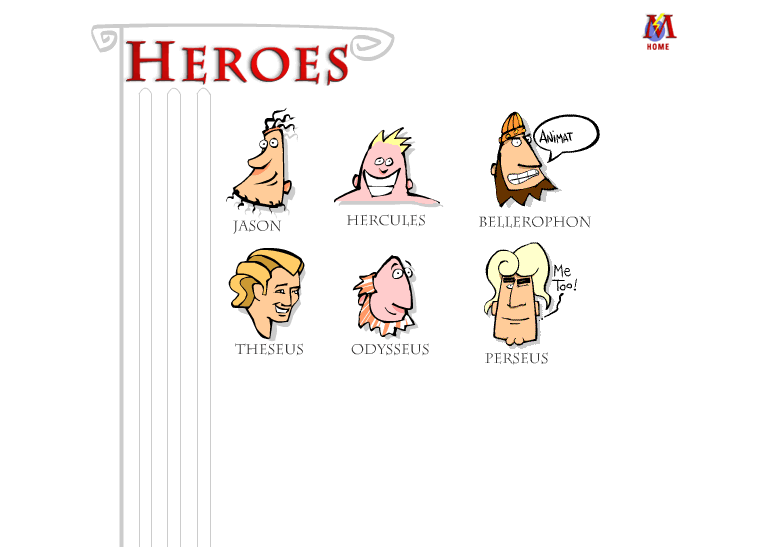
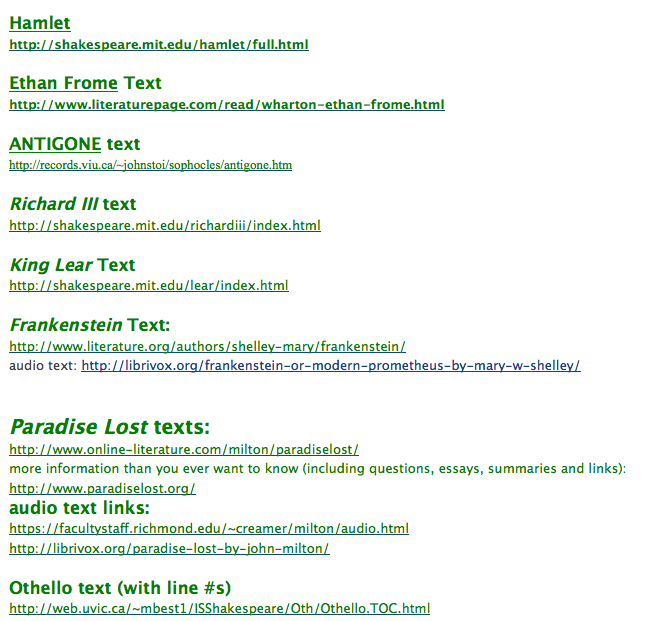
Screenshot of Mythweb.com page: All text and images on this site are copyright 1993-2011 Mythweb. Published by Fleet Gazelle. Students can click on the link and read the adventures of any of the heroes from the Ancient World.

However, if there was not a single book on the Greek and Roman gods in our classroom libraries, teaching a unit on Greek and Roman mythology would still be possible.There are a plethora of resources on the Internet for any teacher looking to teach mythology today.

One of the best resources we used was Mythweb, a site that is “kid friendly” for students and teachers. The author of the site Joel Skidmore and Advisor: William Saturno operate the site from the “real world” location of San Francisco, CA. Clever graphics depict the characters from Greek mythology; easy to read text makes th myths understandable to all levels of readers. Our students read the biographies of the gods and goddesses, and also many of the different myths on this site.

Another site that provided a great number of resources on myths is the History for Kids website. This site is a little less secure with pop-up ads, but the stories of human interaction with the gods and goddesses (Arachne, Pandora, Icarus) are all there with easy to read text that is interactive with links to background information.

This year, there were no quizzes or tests on the mythology materials. Instead, the final assessment for the mythology unit was a project titled “A Holiday Dinner Party with the Greek Gods and Goddesses.” The students were provided a graphic of a rectangle table with twelve seats positioned around the table. The assignment prompt read:

“Congratulations! You have been hired as a party planner by Dionysus, Greek god of wine, for a formal dinner on Mount Olympus.

One of your responsibilities is to set up the seating plans for one of the tables at the dinner party.

For this assignment, you need to demonstrate your ability to place six (6) gods or goddesses and six (6) mortals at a table that seats 12. You may choose the gods, goddesses, and mortals from the myths we have studied and from the Pantheon, however, you must have reasons as to why you would place these characters next to each other.”

The students were required to write a short paragraph explaining each seat placement, label the seating plan, and to design an invitation using any medium they wanted.

Some of the responses from students demonstrated diplomatic tendencies with careful placement of all mortals and deities in order to not offend.

One student suggested,”On the other side of Aphrodite is Ares. They were not only good friends but they had a fling a few different times!”

Another noted, ” Demeter is the goddess of agriculture and I put her next to Apollo to heal the crops and Poseidon to water them. They should be good friends if he meets with her to water his crops. ”

Other students had a “reality show” approach where classical antagonists are purposely placed in order to engage them in conflict. For example, “Arachne is next to Pandora. Arachne thought she was the best at everything and she thought she was the most beautiful person and no one was better than her. She was wrong though because since her attitude was so bad, she ended up turning ugly. They both think they’re always right and because of that I think it would make a good conversation at the dinner table.

Another wrote, “Next, Eros is next to Aphrodite and Psyche. It will be good to put these three next to each other because Aphrodite is furious at Eros for making it so he and Psyche were in love. It should cause a good fight and that would be fun to see. Also he is next to Psyche because they are in love.”

Finally, a student moralized, “Pandora next to Persephone because like Persephone who did not do as she was told neither Pandora when she was told not to open the box she did.  When you don’t follow direction bad things happen.”

The project was completed right after the Thanksgiving break when students had several days to experience their own celebrations. We considered how their decisions on seating the Greek gods and goddesses may have been influenced by holiday dinner with family relatives.Apparently, there is nothing more risky than a family get-together, for mortals or immortals!

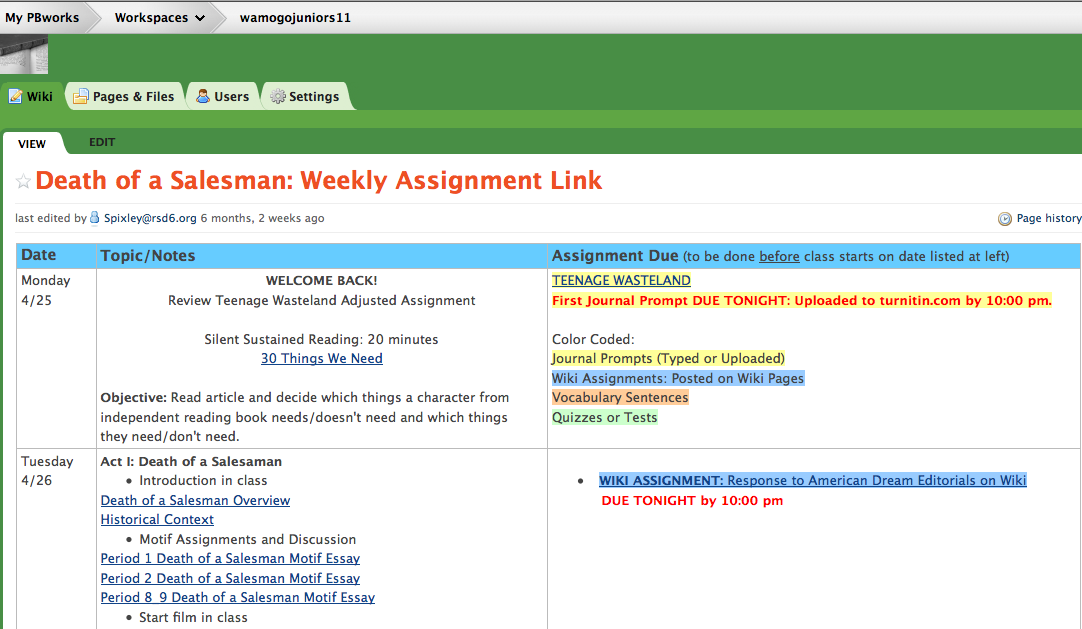
In three short years, the Region 6 School District in Connecticut has rolled out several technology initiatives at the Wamogo High School -1:1 netbooks  in English/Social Studies classrooms, Smartboards in all classrooms, I-pads for teachers- in order to prepare all students with 21st Century skills.

These technology initiatives have allowed members of the English Department to incorporate wikis,  specifically wikis hosted on the PBWorks site, in providing instruction to students in grades 7-12. These wikis serve in different ways in each of the English classrooms. Teachers can post assignments, provide links to websites or resources; students can make their own webpages with information or make comments on other students’ works.

Junior Wiki assignment page with links

One of the many advantages to using a wiki for a teacher is the ability to go “paperless” since worksheets can be uploaded to the wiki for students to download and complete.  Webpages can be developed by individual students, and students can comment on other student pages. Pages can be created collaboratively and teachers will have an accurate record of who contributed based on time stamp entries on a web page.

Students can also access their reading assignments through the wiki since teachers can post links to digital texts. The wiki can expand a school library by promoting the links to materials that can be read on any Internet ready device. Students, and parents, can access the wiki 24/7 from any Internet device.

Of course, the use of a classroom wiki means that much more of the responsibility for student learning is placed on the student.

Advanced Placement English Literature digital texts

Not surprisingly, there are some students who are not as enthused about the wikis as teachers are. Some are a little insulted that educators have co-opted the Internet for education. However, all of our students are becoming used to the following mantra, “It’s on the wiki!”

For example:

A student will ask what homework is due for tomorrow.

(“It’s on the wiki!”)

A student who has been out ill for a few days might ask what he/she has missed.

(“It’s on the wiki!”)

A student may say he/she left the assigned book in a locker.

(“It’s on the wiki!”)

A student may claim he was not sure exactly how long an essay response had to be for an assignment or she may say that she lost the worksheet that needed to be completed.

(“It’s on the wiki!”)

The wiki does hold the student more accountable for participation. Of course, this participation means that they actually have to go to the wiki.

Around this time of year, Edublogs, a free educational blogging platform that claims to be the, largest, most trusted, best supported and widely used way for teachers and students to engage with the world of blogging” asks for nominations for the best educational wikis. The Edublog Awards accept nominations also for the best blogs, web tools, twitter feed and educational use of social networks for the year. These awards were created “in response to community concerns relating to how schools, districts and educational institutions were blocking access of learner and teacher blog sites for educational purposes.  The purpose of the Edublog awards is promote and demonstrate the educational values of these social media.

I would love to share any one of the excellent wikis being used at Wamogo High School, by the English Department or by any other discipline at the school, but most of our subscription wikis are private for student and parent use only. While our wikis cannot be seen by the general public, which means they could not be nominated, there are a plethora of other educational wikis available that promote teacher professional development and/or student learning. Many of our teachers’ best ideas come from exploring the wonderful resources in blogs, wikis, and other social media available on the Internet. Sites that have won an Edublog Award are always exceptional in providing these resources.

Wamogo High School wikis will not win any of the Edublog Awards for 2011, however, our teachers already know how the use of wikis has improved delivery of material and student engagement these past three years. We chant a 21st Century mantra for success… “It’s on the wiki!”

Over the Thanksgiving weekend, Story Corps, “an independent nonprofit whose mission is to provide Americans of all backgrounds and beliefs with the opportunity to record, share, and preserve the stories of our lives”, organized a National Day of Listening.   Story Corps, whose stories are heard on National Public Radio (NPR) suggested that everyone reach out to their favorite teacher or mentor to say “Thank you for changing my life.”

Everyone has at least one favorite teacher. I have two.

I loved my 5th grade teacher, Mrs. Rowland, who made every task in class seem effortless. She was the Mary Poppins of my educational career who embodied the lyric, “in every task that must be done, there is an element of fun..” I was devastated when I had to leave her class midway through a school year to move to Connecticut. She was the teacher who impressed me in that short period of time as someone who visibly cared for each and every one of her students. My memories of the class are of a happy mixture of camaraderie and learning.

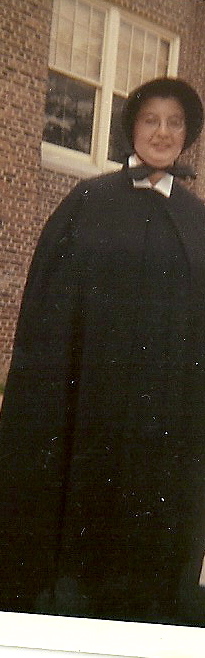
Sister Ella-1st Grade Teacher at Resurrection Elementary School in Rye NY, 1963

In contrast, my other favorite teacher, although I did not know this at the time, was the towering and imposing Sister Ella from first grade at Resurrection Elementary School in Rye, NY.

Sister Ella’s height was exaggerated by the dark pleated habit worn by the Sisters of Charity; yards of black fabric draped from her imposing shoulders to a breadth of an inch off the floor. Soaring atop this living obelisk was the commanding bonnet that framed a stern face and a set of steely black eyes. There was no hyperbole in seeing her as a Colossus; our small statures exaggerated her presence, but she could peer down on terrified parents as well. One glance from her could stop a speeding train, or more usefully, 33 six-year-olds lining up for recess…I am not exaggerating.

Sister Ella taught my classmates and me how to read. She accomplished this amazing feat with what I know now was an unsurpassed instinct for child psychology. At the beginning of the school year, she strategically placed the most challenging and difficult books, which I speculated by default must be the most interesting, well out of reach. We were allowed to access these treasures only by proving our reading prowess. The competitive streak in me was ignited at the onset of the school year, and so I speedily consumed the “easy readers” on the lower shelves as fast as I could. I poured through The Whales Go By, Sam the Firefly, and Go, Dog, Go. I plowed through the Dick and Jane series. I chugged through The Biggest Bear, Andy and the Lion and a multitude of Madeline stories. Determined to get to the prized collection ahead of the others, I lugged piles of books home to return them completed the following day.

Not all reading instruction was enjoyable. There was the tedious work in SRA workbooks which required a student read a nonfiction passage and answer multiple choice questions. Every student started at level purple, an infuriatingly slow level with terribly dull passages. Level Gold, the top level, was impossibly far away. Several months into SRA practice, I figured how to cheat by slipping the multiple choice answer keys from the next level into my workbook for easy access. Sister Ella caught on quickly, a terrifying moment in my nascent educational career. I was trembling when she silently moved me several levels ahead. In crossing out levels purple, blue, and green, she had acknowledged my frustration. I was promoted to level Aqua! I was skipped to the middle of the SRA series, my cheating days behind me.

By midyear, I had proved my reading was up to her exacting standards, and I was allowed to read the books from the top of the shelves while others students worked in more intermediate reading groups. She had correctly assessed my competitive nature and allowed me the freedom to read from the top shelf those books that I wanted. There were copies of  The Boxcar Children and the Bobbsey Twins series, Ginger Pye, and a copy of Charlotte’s Web.

By the end of the school year, the other students in class had joined me. Reading time was respected in 1st grade. We would read daily-quietly in groups or in read-alouds.  The Weekly Reader was introduced that year, I learned to appreciate reading the news as well.

Sister Ella had absolutely none of the warm characteristics that usually denote a first grade teacher, however, in retrospect, I came to recognize that her ability to stimulate intellectual curiosity in her students was above par. Her gift of reading has sustained me in all of my life’s activities. To foster a love of reading is the greatest gift a teacher can give. So, thank you Sister Ella.  I hope to do the same.

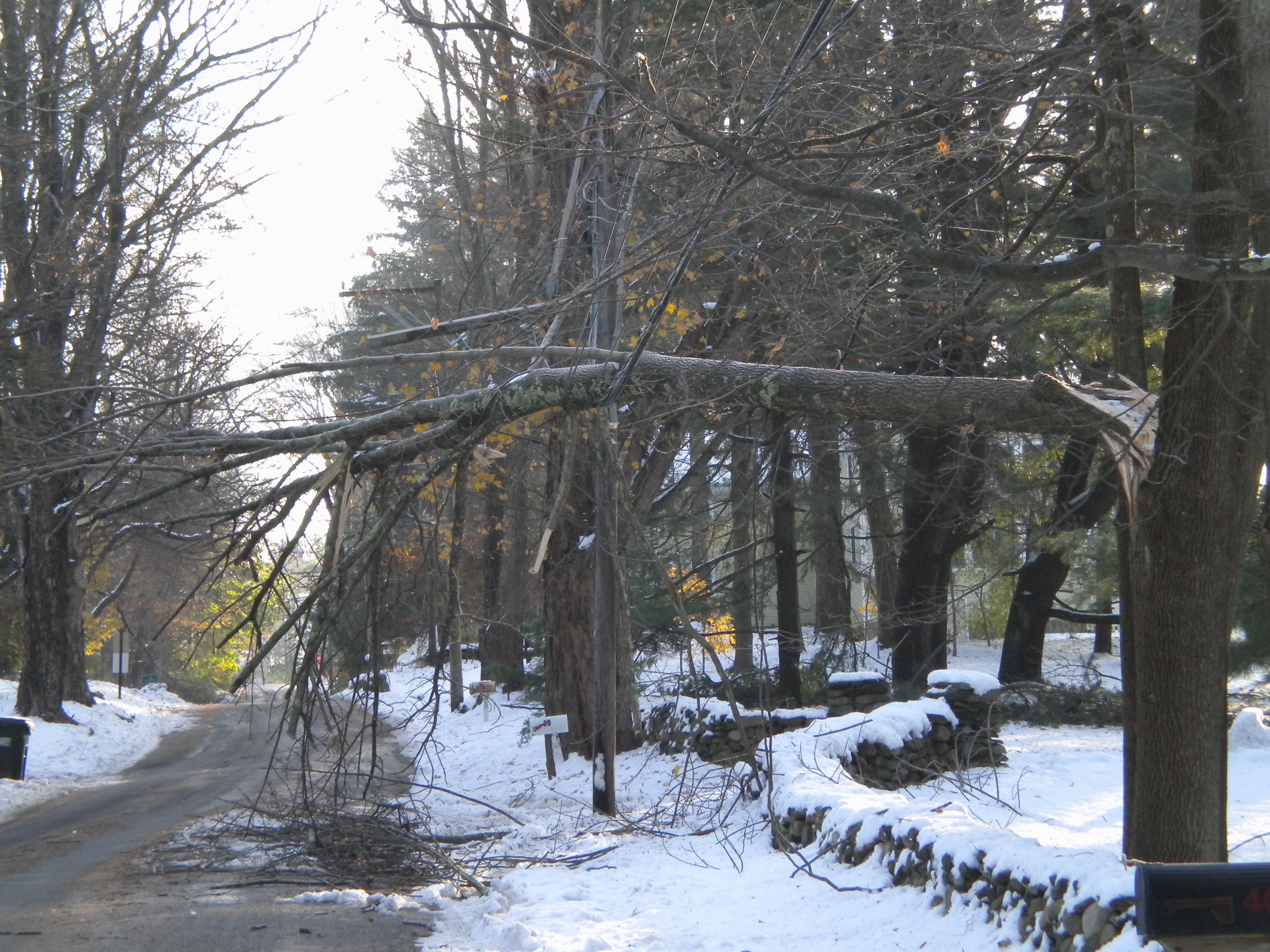
Damage to neighborhood trees and power lines

By now, most of the US knows about the damage caused in the Northeast by Winter Storm Albert. On October 29th, the entire state of Connecticut was WWF’d by a heavy wet snow. That night tree limbs snapped with M80 sound effects. By morning, residents were powerless-literally and figuratively.

Teachers, like their students, generally love a snow day. A sudden snowstorm can provide an opportunity to grade a stack of papers, plan lessons, or catch up on reading. A snow day grants a leisurely reading of the morning paper and an extra cup of coffee. A snow day permits the wearing pajamas and and the testing of a new soup recipe. A snow day is a collective opportunity to “catch one’s breath.”

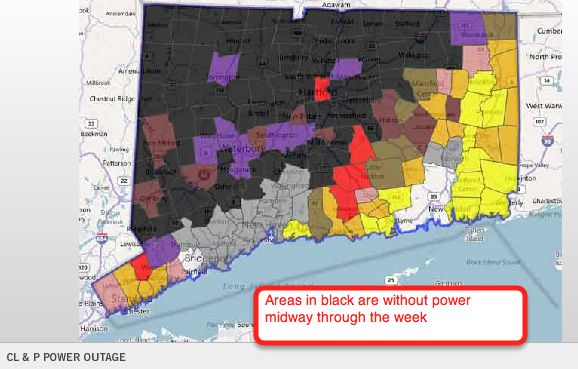
Unless the power goes out. Winter Storm Albert knocked out the power in our area for five…six…seven…eight days, depending on the local street address.

Of course, when the power goes out, the sudden separation from all modern conveniences seems to put the 21st Century brain on hold. Habits of convenience, the flicking of on/off switches or pushing reheat on microwaves, are hard to break. But I have discovered that the disconnect from the Internet, however, is almost intolerable…particularly if one lives in an area without cell towers for 3G, and the power, phone and cable lines are down.

Our school has a 1:1 initiative for English classrooms. We have netbooks in our classes. Students are also encouraged to bring their digital devices to class in order to participate. Responses to prompts are uploaded to one open source software program (we use Edmodo.com), essays and vocabulary sentences are uploaded to a subscription software program (we use turnitin.com), and information is delivered to students by way of a wiki, another software program (we use PBWorks.com). When the power went out, I was unable to access student work or lessons….for five whole days!

Map of Connecticut's Winter Storm Albert power outages

The storm came at the end of a marking period, a time when there is always too much to do, and I had no access to any student work. I found myself driving many, many miles out of town to set up in areas of the state, and out of state, that had power and free wi-fi. I scouted and found seats in malls, Panera’s restaurants, Starbucks, and 24-hour diners. Once I found the free wi-fi, I would set up my computer and read student work. I was not alone. I met many teachers who have also moved student work into a digital format who were in search of a signal in order to stay on track with student work. Several woefully admitted that they actually longed for a pile of actual papers to correct. The expression “digital divide” took on new meaning; we were divided from our students’ work in cyberspace.

When school reopened this past week (11/7), I was already behind. I had lost precious classroom time, but that time will be recovered by adding more five school days to the calendar, the harsh retribution for the aforementioned pleasures of a snow day. I mourn instead grading and planning time that was lost due to a growing dependance on the Internet.

The use of technology in the classroom is required in education; all students should be engaged in 21st Century skills. There are standards developed by the International Society for Technology in Education (ISTE) that must be met in districts throughout the state. My lessons almost always require some form of technology, from word-processing to Internet research. The assignments that can be create with technology are engaging, and the use of technology to post assignments can promote student independence and responsibility. Technology in the classroom is necessary if teachers are to prepare students for the future…unless the power goes out, and the Internet is not accessible.

The use of technology in the classroom will certainly increase as the amount of technology adults and students use in the real world is on the rise. These trends will not change, but some consideration should be given to the perplexing problem of what happens when the power goes down for an extended time. How can the business of educating students continue without the hiccups caused by Mother Nature?

Winter Storm Albert may be the harbinger of winter in the 2011-2012 school year and for those school years yet to come. There will be snowstorms, hurricanes, and other natural disasters in our state’s future that will separate students and teachers from the technology that joins them in 21st Century education.

And when that happens, when the power goes out for an extended time, I find myself parodying Shakespeare’s interpretation of the 15th Century Richard III. There I am, struggling along on my snow-covered Bosworth Field crying out, “A signal! A signal! My kingdom for a wi-fi signal!”

I recently read that Leonard Marcus, a childrens literature historian, is completing a book about Madeleine L’Engle, called Listening for Madeleine. He explains that the book will be “a ‘portrait in many voices’ of the author A Wrinkle in Time, presented through a series of interviews with fifty friends, family members, and colleagues who knew her well.”

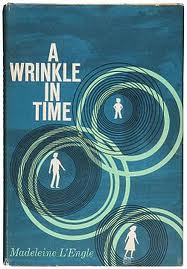
My 1963 copy of A Wrinkle in Time had this cover

A Wrinkle in Time was one of my favorite young adult reads, a fact I have noted in earlier blogs. I discovered my hardcover copy  under the Christmas tree, and although I finished reading the book that same day, I spent wonderful hours rereading the story of Meg Murray, her “boyfriend” Calvin,  and her younger brilliant brother Charles Wallace who “tesser” to the planet Camazotz to save Meg’s father. I loved the story.

But I have never confessed publicly how on one occasion twenty years ago, my love for the book completely undermined my sensibilities.

In 1991, a local bookstore advertised that they would host authors for book signings. To my great joy, one of the authors invited was Madeline L’Engle. I was delighted; my favorite YA literature author was coming to a local bookstore!

I immediately called my mother in Boise, Idaho, to see if she could locate my childhood copy of A Wrinkle in Time and mail it to me so that I could have the book signed? She spent several hours looking through boxes of books that had been shipped from Connecticut two years earlier when the family relocated to Boise. Once she located the book, she called to tell me that my copy was really in a very worn condition.
“I’m not sure that the author is going to want to see how badly you treated this book,” she chuckled.
I assured her that the condition of this text was confirmation of my love of the book. I even recited a few lines over the phone could recite lines from the book (“Wild nights are my glory!” and “‘Mrs. Whatsit hates you,’Charles Wallace said”). I recounted L’Engle’s  literary joke, “It was a dark and stormy night….!”
She mailed the book back to me.

I marked the date for the author’s visit on my calendar. No appointment, soccer game, or relative get-together would keep me from this meeting. I would tell Madeline L’Engle how she had been such an influence on me. I would recount to her how I imagined myself as Meg, a brilliant outsider, fighting for the return of her equally brilliant father and brother. In reality, I was not brilliant, and my family was rather average in intelligence, but I very definitely felt like an outsider. I even rehearsed how I would greet her, “Ms. L’Engle? When I was a teen, I read your book a thousand times!”
The day before the author visit, I was suddenly seized with the notion that reservation were required for the event. I panicked. Did I miss something in the notice? I quickly called the bookstore to make sure I would not be shut out of this event.

“Oh, I am so sorry to tell you that Ms. L’Engle will not be coming,” said the voice at the end of the phone.
“What? Why not?” I was immediately upset.
“Ms. L’Engle was in a serious car accident this past week and has been hospitalized.”
There was a pause.

Ms. L’Engle was not coming? I would not get my book signed? I had the book! I had the book sent from Boise, Idaho!
“Well,” I stammered, “when will she be be here? I mean..will you reschedule?  I wanted to get….”

WAIT! What was I saying?? My favorite author was nearly killed, and I was still worried about having a book signed?
Where was my sense of compassion?
Where was my sympathy?

“I mean…I…I am so sorry!” I finally blurted out a proper sentiment. “I mean, I hope she she will get better soon.”
I hung up quickly, lest the call be traced back to me.
I was terribly disappointed, but I became increasingly distressed about my reaction. I could not believe how selfish and clueless I must have sounded on the phone.
My mother called later that week.
“Well, what did the author say about your copy of the book?” she asked.
I had to confess my inappropriate behavior to my mother… to my mother, for goodness sakes!
She offered her sympathy for Ms. L’Engle, scolded my lack of compassion, and reminded me to take better care of my books.

Several months later, as an anniversary gift, my husband sent my copy to Ms. L’Engle, who was still recuperating, to have the book signed.

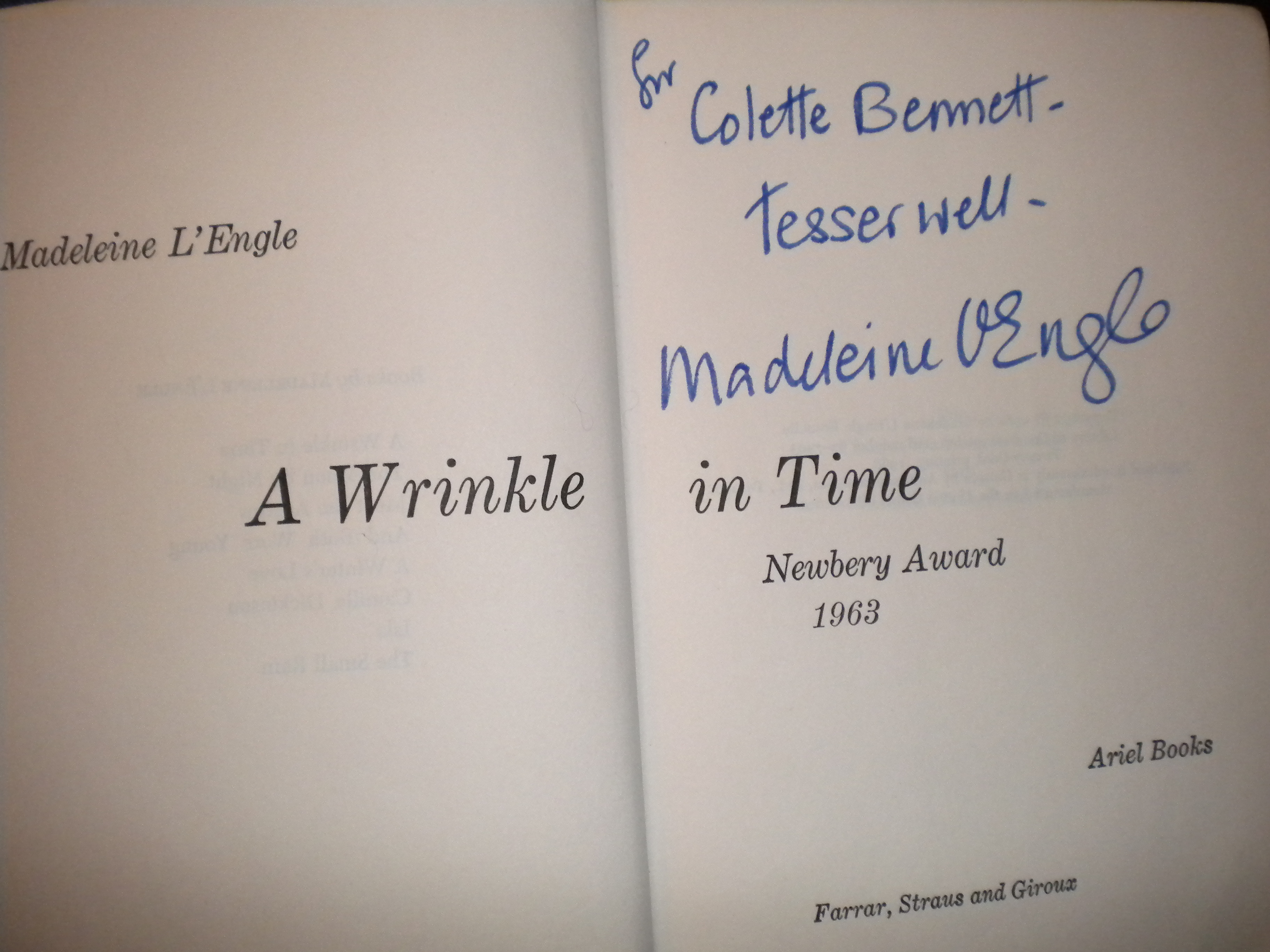
On the title page, in large curvasive script is the inscription, “for Colette Bennett-Tesser well-Madeline L’Engle”

I never did meet her. I hope the condition of my copy showed how much I cared.

As I shop for used books in area thrift stores and local book sales, I cannot help but notice when a book title “jumps the shark”, a term coined by the TV series Happy Days to mean when something has lost its “cool” factor.  The first book in the Millennium series, The Girl with the Dragon Tattoo, by Swedish journalist and writer Stieg Larsson illustrates this phenomenon. Books lose their "cool" factorMultiple copies of Larssen’s trilogy The Girl with the Dragon Tattoo are now appearing on used book tables. While the book currently remains on the New York Times best seller lists at #17 , copies are available for $1.00-2.00 in the used book market, sometimes available well into day two or three of a library book sale. Simply put, the book has reached a critical mass saturation of readers, and like Dan Brown’s uber-popular The DaVinci Code, this series has become disposable.
Beginning in 2006, people were purchasing copies of The Girl with the Dragon Tattoo in Britain and Europe where publishers released copies earlier than here in the US. The Girl with the Dragon Tattoo and its sequels, The Girl Who Played with Fire and The Girl Who Kicked the Hornet’s Nest, were almost required reading in airports from 2008-2011; they were de rigor on beaches as summer reads.
The trilogy followed Lizbeth Salander, a fiercely independent computer savant, a grown-up Pippi Longstocking with attitude, and her involvement with the disgraced magazine editor Mikael Blomkvist, in solving a series of crimes. Larsson’s had the ability to place the reader in suspense with unexpected plot twists featuring a plethora of vile characters intent on eliminating Salander and Blomkvist.
Although there were critically acclaimed Swedish films made for the series, a US movie version will be released this year which will most likely result in an uptick of book sales with movie-tie in editions.
Despite their compelling plots and character, I have not put any of these texts into classroom libraries for students. Some of the language and plot points include disturbing sexual violence towards women; the original title was Men Who Hate Women. That said, I have not banned the book should a student choose to read one of the books independently.
In shopping for used books, I have watched other titles “jump the shark”, and my classroom libraries have benefited from these swings in popular reading trends. Entire classrooms have been outfitted with $1.00 copies of books that were initially embraced by the general reading public, and then just as quickly, disposed into the used book market. These fiction and non-fiction titles include:
The Kite Runner by Khaled Hossani
The Secret Life of Bees by Sue Monk Kidd
Cold Mountain by Charles Frazier
Snow Flower and the Little Fan by Lisa See
The Lovely Bones by Alice Sebold
The Memory Keeper’s Daughter by Kim Edwards
Three Cups of Tea by Greg Mortenson and David Oliver Relin
The Devil in the White City by Erik Larson
Nickle and Dimed by Barbara Ehrenreich
The Blind Side by Michael Lewis
A Walk in the Woods by Bill Bryson
The Glass Castle by Jeanette Walls

The most recent titles currently on the best seller list that have “jumped the shark” have been added as independent reading choices. These books are usually placed in grades 11 and 12:
The Art of Racing in the Rain by Garth Stein
Water for Elephants by Sara Gruen
Little Bee by Chris Cleave

Young adult literature (YA Lit) also experiences these ebbs and flows in book titles. Three summers ago, finding a copy of Twilight on a used book table was a coup. Today, one could fill a classroom with copies of any one of Twilight trilogy. Similarly, any one of the titles in JK Rowling’s Harry Potter series can be located as a used book, however, it should be noted that these used copies show much more wear and tear than any other series of books. Whether their condition is an indicator of the careless nature of adolescents towards the care of books or the degree to which Harry Potter books were read and re- read, it is hard to determine.

As I write this, I am impatiently waiting for The Help by Katherine Stockett which I want to pair with To Kill a Mockingbird or place in a unit focused on Civil Rights in Literature. This fictional account of interviews conducted with maids of Jackson, Mississippi, during 1960s is ideal for placing readers into the mindsets of households contending with the demands for racial equality which dominated the culture of the time.
Based on the 34 weeks this book has spent at the top of the best seller list (where it still is #1 in paperback trade books), I know there are copies in a multitude of households. When copies of The Help are finally discarded into the used book market, I will jump for them….like a shark.

One of my first jobs was as a waitress. The job was physically demanding. The variety of customers meant that no one day was like any other day. There were usually three “waves” during mealtimes. The hourly rate was a little below minimum wage, but there were tips.

My job now is to teach. The job is physically and mentally demanding. The variety of students means that no one day will be like any other. But there are four to six “waves” a day depending on a school’s schedule, and I certainly make more now than the minimum wage an hour.

In a recent discussion about teacher training, I made the observation that being a waitress was great training for preparing a teacher for managing the classroom. My colleagues were surprised, so I made the following argument.

Picture this. In a restaurant customers arrive and are seated at tables with every expectation of a great meal. Hopefully, the arrivals are staggered, but quite often there is a rush of customers who are presented with a menu to make selections. The waitress manages several tables at once.

In contrast, in the classroom, students arrive en masse with a variety of expectations. They seat themselves at desks or tables and are given an opening set of instructions. The teacher engages every student in the activity at once.

Back at the restaurant, customers make their selections from the menu; their individual requests are recorded by the waitress. The clock is “running” once the order is taken.

Back in the classroom, the students’ attendance is recorded, homework collected, and lesson materials distributed by the teacher. The length of class is fixed; once the bell rings, the clock is running.

At the restaurant, the waitress delivers the meals in the order the patrons arrived, the patrons eat accordingly at their own pace. Their progress in monitored by the attentive waitress. Once the patrons are done, the meals are cleared away….leisurely.

In the classroom, the lesson is delivered to an entire group of students, perhaps the students participate together or perhaps there is differentiated instruction. The attentive teacher monitors the students’ progress while keeping all students on pace to complete the lesson. At the end of the lesson, the materials are put away….in haste!

In completing the meal, the customers pay their bills and leave, planning to return soon because of their great experience at the restaurant. Because of the waitress, they have been served good food and provided good service.

In contrast, at the bell, the students scramble to leave the classroom. They are required to return for another learning experience in the classroom. Hopefully, because of the teacher, student learning has been accomplished and good academic habits reinforced.

In retrospect, being a waitress was a great way to develop the skills of timing and monitoring, the skill of delivering materials, and the skill of closure that are needed in the management of a classroom. I did enjoy being a waitress. I liked the busy pace and interaction with people, but I love teaching as a profession much more. However, I  miss the tips.

This first day of October in Connecticut was not emblematic of classic cool crisp fall days. Instead, a blanket of humidity hung over the rain-soaked state which received another several inches the night before the Saturday book sales in Brookfield and Washington.  Separated by 17 miles but sharing the same weather, the make-up of the two sales could not have been more different.

Brookfield Library

I arrived several minutes early to the Brookfield Public Library and found volunteers poking a rain-saturated tent that was bowed holding several gallons of water and looming precariously over a table. Fortunately, the bulk of the sale was held indoors in the community room.  Tables were filled with books; boxes were stacked below. This year residents donated generously and as a former resident myself, I was also familiar with many of the volunteers who year after year tirelessly support the library. They were very helpful with other patrons, (“Jodi Picoult books? Oh, we have as many as you want…take them, take them all, please!”). They restacked tables and manned the checkout tables very efficiently. Some titles were misplaced (non-fiction slipped into the fiction section and vice versa) which meant that a careful perusing of the titles was necessary.  However, this strategy could also be a clever sales ploy, so I spent time and examined books on every table on the off chance there would be a misplaced book that I could use. Such diligence paid off because I found copies of Bill Bryson’s A Walk in the Woods on five separate tables.

Five additional copies brings the classroom library total to 75 copies for the English II classes

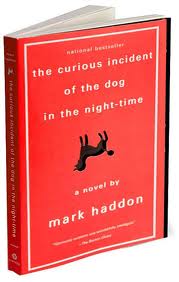
Bargains at this sale included five copies of Mark Haddon’s The Curious Incident of the Dog in the Night-Time, four copies of Alice Walker’s The Color Purple, and two copies of Toni Morrison’s The Bluest Eye. There were also multiple copies of Mark Salzman’s Lost in Place from a town-wide read several years ago. I also turned up a boxful of copies of Khaled Hossani’s The Kite Runner but left them for others; we already have a class set!  The presence of multiple copies means, of course, that Brookfield has many book groups (I am speaking from personal experience). Only book clubs can explain the multiple copies of titles such as Elizabeth Strout’s Olive Kitterage, and Sue Monk Kidd’s The Secret Life of Bees. Other excellent finds in the young adult section included Nancy Farmer’s The House of the Scorpion, M.T. Anderson’s Feed, and Jarry Spinelli’s Stargirl. I filled two bags.

Washington, CT-Gunn Library

In contrast, the book sale at Washington’s Gunn Library was filled with singular copies of books. The basement of this deceptively large library was filled to capacity with books, which was surprising given the steady stream of people leaving with bags filled with books. Titles were displayed along the walls on well-marked shelves and on tables, and the variety of titles was impressive. There was an array of biographies, history, fiction, self-help and cookbooks, but duplicate copies of titles were almost impossible to find.  Performing arts literature was subdivided into music, art and dance on an overflowing table. Romance was relegated to two boxes under the fiction paperback table. A section of the sale at the entrance was dedicated to autographed copies of books. Rare books were provided a separate space. All of these genres contained singletons. Considering the number of solo copies, one wonders about the reading habits of the residents of Washington.  Is breadth of literature a community goal? Do they pass single copies from resident to resident rather than buy in bulk? Is this book sale a giant exchange site?

In any event, there were excellent new choices to add to the memoir class shelves including Ying Ma’s Chinese Girl in the Ghetto and Meredith Hall’s Without a Map: A Memoir. There were also new copies of Ishmael Beah’s A Long Way Gone, Anthony Swofford’s Jarhead and Michael Paterniti’s Driving Mr. Einstein. The young adult’s section included a copy of Suzanne Collins’s Gregor the Overlander. Needed titles located included Bobbie Anne Mason’s In Country, Arthur Miller’s Death of Salesman, Zora Neale Hurston’s Their Eyes Were Watching God  and Leslie Marmon Silko’s Ceremony. In addition, I located a a copy of Tim O’Brien’s Going after Cacciato and Cormac MacCarthy’s Cities of the Plain to add to English III independent reads. Volunteers at the sale were also efficient re-stacking the tables throughout the morning, while wisely choosing to keep their distance from the heavily trafficked children’s section.

The difference in titles available from each of these communities in the Northwest corner of Connecticut could not have been more different, but I spent the exact same amount at each (about $62.00)  for almost the exact same number of books. In total, I purchased 111 books for $123.50. It was the best of book sale days; it was the worst of weather starts for October.

The New Fairfield Public Library Book Sale  took place on a lovely fall day; a crisp and cool Connecticut beauty of a day. Unfortunately, the sale also took place in the same locale where the local highway department was painting the parking lot lines at the front of the building,  and where the soccer club practice with team coordinators were handing out team jerseys at the back of the building. The actual book sale was held in a meeting room and a small entry hallway. At 10:00 AM, shopping at the sale was challenging between finding a spot to park outside and negotiating cramped quarters inside.

There were, however, some bargains to be had. Browsing was a shared experience with several other buyers; I would remove a box piled with books to one section, while another person would replace that box with another. Crawling along the front hallway floor which held boxes of trade paperbacks, I was able to locate copies of Codetalkers by Joseph Bruchac and A Yellow Raft in Blue Water-Michael Dorris for the Contemporary Native American unit that is being taught this month in Grade 11. I was also able to add to our curriculum collection:

The Giver- Lois Lowery
Night-Elie Wiesel
The Great Gatsby-F. Scott Fitzgerald
Lord of the Flies-William Golding
Brave New World-Aldous Huxley
The Road-Cormac McCarthy
The Handmaid’s Tale- Margaret Atwood

An independent choice book for Grade 11.

The “score” of the morning was a new copy of Winter’s Bone by Daniel Woodrell.  This is the fourth copy I have found this summer, and the book will be placed in the “Coming of Age” unit in Grade 11 as an independent choice novel. The School Library Journal reviewed this book for high school students saying, “In the poverty-stricken hills of the Ozarks, Rees Dolly, 17, struggles daily to care for her two brothers and an ill mother. When she learns that her absent father, a meth addict, has put up the family home as bond, she embarks on a dangerous search to find him and bring him home for an upcoming court date. Her relatives, many of whom are in the business of cooking crank, thwart her at every turn, but her fight to save the family finally succeeds. Rees is by turns tough and tender. She teaches her brothers how to shoot a shotgun, and even box, the way her father had taught her. Her hope is that these boys would not be dead to wonder by age twelve, dulled to life, empty of kindness, boiling with mean.”  When I read the novel, images of the witches from Macbeth came to mind!

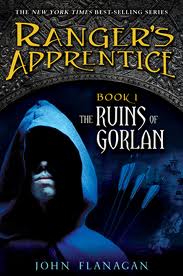
For the independent reading shelves, I also located a copy of Dairy Queen by Catherine Gilbert Murdock, Book Two The Ruins of Gorlan in The Ranger’s Apprentice Series by John Flanagan , After by Francine Prose, and Ape House by Sara Gruen (surprising since this is a recent release).

New Fairfield’s sale offered far more hardcover fiction texts than trade paperbacks, and the children’s picture books were overflowing the small table to which they had been assigned. This could be an indication of a shift in population to more elementary aged choices….the New Fairfield babies are growing up!

Once I brought my two baskets to the counter, the volunteers at the checkout were gracious and accommodating. They were prepared with bags for purchases, and at my request  one quickly designed a receipt for me. (“Last year, I had a pile of receipts, but no one need them, wouldn’t you know?”)

Hardcovers were $2.00, trade paperbacks were $1.00, and small paperbacks were $.50. Sunday was “Bag day”-all books in a bag for $10.00.  I purchased only trade and small paperback on this trip and spent $26.00 for 32 books. These will be added to the school’s “book flood“.

The volunteers picked a perfect weekend for people looking for book bargains. Perhaps next year there will be better coordination of traffic outside the library and inside the sale so the efforts of the Friends of the New Fairfield Public Library are fully supported.

Many literacy experts recommend that the first step in designing a reading program is seek information on the reading habits of students or to survey the students. So, on Day 2 of school, 76 freshmen at Wamogo High School in Connecticut took a survey, 16 questions (taken from Kelly Gallagher’s Readicide) prepared on Google Docs, titled, “How I Feel about Reading”. Their responses to the survey were candid and may, in fact, represent the reading habits of high school  students in the class of 2016 in general.

The first question was encouraging. 2/3 of the students responded positively to the question “I think reading is fun” by checking off “usually” or “sometimes”. However, this statistic means that 33% said they “rarely” thought reading is fun. Hopefully, providing choice and support with Silent Sustained Reading (SSR) will improve attitudes towards reading.

64% do understand the importance of reading when asked if  “being a good reader is important for success in school”; 34% indicated “sometimes” while only 2% were in the negative. In responding to this question, the students included the following interesting observations.

  • “I think reading is worthwhile because there are so many types of books in the world. Whether they are feeding you information or keeping you entertained books are definitely worthwhile!”
  • “It’s fun to read a good book. you totally get sucked into the book and you don’t even realize your reading. Reading is important because usually, jobs require you know how to read. and some jobs require that you read a lot. reading also strengthens grammar, spelling, writing, reading, and even the way you talk.”

The best response was to this question was, “It’s [reading] like a movie in your head, and I think that it is great to be able to imagine what the setting looks like, along with other things like the characters. It’s like the perfect world that you wish you where in. Sometimes I even think of myself as the main character, and it’s just amazing what you feel when you get into a book.” Such enthusiasm, however, was countered with the practical statement, “It [reading]  makes you sleep.”

While  71% felt strongly that “being a good reader is important for success in life,” and 24% chose  “sometimes”,  the number of those in the negative unexpectedly rose to 5%.

Students were also asked in the survey as to how they choose a book. Their advice centered on the length of books, covers, and topics:

  • “When I want to find a good book, I always check the back of the book where there is a short summary of it to see if it interests me. I also look to see who the author is and if I have read anything by them yet. Sometimes I ask my friends if they had read it and if they have a recommendation about it. And last but not least I check the pages on the middle and see if I am ok with the work type, and if I understand everything.”
  • “I like books about people who have gone through tragedies and are just moving on from it. I also like the books that have a little romance in it, and if they take place during the summer.”
  • “When is time for me to read a good book, I know that I don’t want to stop reading because it’s very good book.Sometimes when its not good book it takes me more time then anything. But I love books that are very interesting.”
  • “When I want to find a good book, I look at the length or the cover… sometimes I will go to a page and turn to it and see if it makes sense… and if the cover looks good.”
  • “Find a small book, (like 200 pages) and it has to be the right topic.”
  • “Go to the library and look for what I like in a good book. I usually look at the cover, the title, and the paraphrase on the back.”

Students also recommended books. Titles that received multiple votes (4 or more recommendations) included:

Hatchet
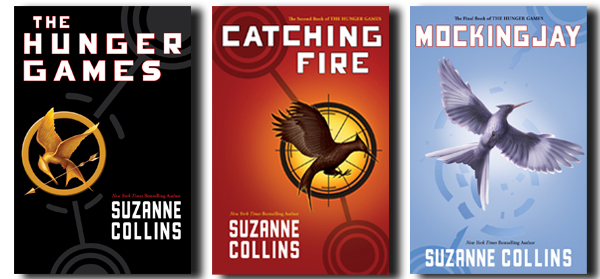
The Hunger Games
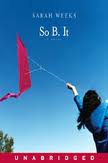
S0 Be It
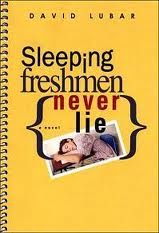
Sleeping Freshmen Never Lie
Compound
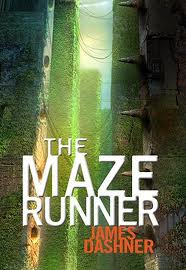
The Maze Runner
The Rangers Apprentice series
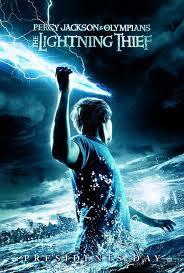
Percy Jackson and the Olympians series (any title)

Copies of all of the above titles have been added to the 9th grade classroom library through used book sales, especially copies of books in the Percy Jackson and the Olympians series. These books, and several hundred others, are on (2) portable carts in the classroom ready for SSR periods.

Sadly, the most depressing statistic came from the results of the question, “I read every day and look forward to my reading time”. Here, only 9% of 9th grade students replied “usually” in contrast to the 91% of student who responded “sometimes” or “rarely”.

The goal is to change that particular statistic this year!