Archives For November 30, 1999

Books read in Grade 11-American Literature

March Madness is not exclusive to basketball.Screen Shot 2014-03-15 at 1.38.50 PM
March Madness signals the season for standardized testing season here in Connecticut.
March Madness signals the tip-off for testing in 23 other states as well.

All CT school districts were offered the opportunity to choose the soon-to-be-phased-out pen and paper grades 3-8 Connecticut Mastery Tests (CMT)/ grade 10 Connecticut Academic Performance Test (CAPT) OR to choose the new set of computer adaptive Smarter Balanced Tests developed by the federally funded Smarter Balanced Assessment Consortium (SBAC). Regardless of choice, testing would begin in March 2014,

As an incentive, the SBAC offered the 2014 field test as a “practice only”, a means to develop/calibrate future tests to be given in 2015, when the results will be recorded and shared with students and educators. Districts weighed their choices based on technology requirements, and many chose the SBAC field test. But for high school juniors who had completed the pen and paper CAPT in 2013, this is practice; they will receive no feedback. This 2014 SBAC field test will not count.

Unfortunately, the same can not be said for counting the 8.5 hours of testing in English/language arts and mathematics that had to be taken from 2014 academic classes. The elimination of 510 minutes of instructional time is complicated by scheduling students into computer labs with hardware that meets testing  specifications. For example, rotating students alphabetically through these labs means that academic classes scheduled during the testing windows may see students A-L one day, students M-Z on another. Additional complications arise for mixed grade classrooms or schools with block schedules. Teachers must be prepared with partial lessons or repeating lessons during the two week testing period; some teachers may miss seeing students for extended periods of time. Scheduling madness.

For years, the state standardized test was given to grade 10, sophomore students. In Connecticut, the results were never timely enough to deliver instruction to address areas of weakness during 10th grade, but they did help inform general areas of weakness in curriculum in mathematics, English/language arts, and science. Students who had not passed the CAPT had two more years to pass this graduation requirement; two more years of education were available to address specific student weaknesses.

In contrast, the SBAC is designed to given to 11th graders, the junior class. Never mind that these junior year students are preparing to sit for the SAT or ACT, national standardized tests. Never mind that many of these same juniors have opted to take Advanced Placement courses with testing dates scheduled for the first two full weeks of May. On Twitter feeds, AP teachers from New England to the mid-Atlantic are already complaining about the number of delays and school days already lost to winter weather (for us 5) and the scheduled week of spring break (for us, the third week of April) that comes right before testing for these AP college credit exams. There is content to be covered, and teachers are voicing concerns about losing classroom seat time. Madness.

Preparing students to be college and career ready through the elimination of instructional time teachers use to prepare students for college required standardized testing (SAT, ACT) is puzzling, but the taking of instructional time so students can take state mandated standardized tests that claim to measure preparedness for college and career is an exercise in circular logic. Junior students are experiencing an educational Catch 22, they are practicing for a test they will never take, a field test that does not count. More madness.

In addition, juniors who failed the CT CAPT in grade 10 will still practice with the field test in 2014. Their CAPT graduation requirement, however, cannot be met with this test, and they must still take an alternative assessment to meet district standards. Furthermore, from 2015 on, students who do not pass SBAC will not have two years to meet a state graduation requirement; their window to meet the graduation standard is limited to their senior year. Even more madness.

Now, on the eve of the inaugural testing season, a tweet from SBAC itself (3/14):

Screen Shot 2014-03-15 at 1.28.22 PM

This tweet was followed by word from CT Department of Education Commissioner Stefan Pryor’s office sent out on to superintendents from Dianna Roberge-Wentzell, DRW, that the state test will be delayed a week:

Schools that anticipated administering the Field Test during the first week of testing window 1 (March 18 – March 24) will need to adjust their schedule. It is possible that these schools might be able to reschedule the testing days to fall within the remainder of the first testing window or extend testing into the first week of window 2 (April 7 – April 11).

Education Week blogger Stephen Sawchuk provides more details in his post  Smarter Balanced Group Delays in the explanation for the delay:

The delay isn’t about the test’s content, officials said: It’s about ensuring that all the important elements, including the software and accessibility features (such as read-aloud assistance for certain students with disabilities) are working together seamlessly.

“There’s a huge amount of quality checking you want to do to make sure that things go well, and that when students sit down, the test is ready for them, and if they have any special supports, that they’re loaded in and ready to go,” Jacqueline King, a spokeswoman for Smarter Balanced, said in a March 14 interview. “We’re well on our way through that, but we decided yesterday that we needed a few more days to make sure we had absolutely done all that we could before students start to take the field tests.”

A few more days is what teachers who carefully planned alternative lesson plans during the first week of the field test probably want in order to revise their lessons. The notice that districts “might be able to reschedule” in the CT memo is not helpful for a smooth delivery of curriculum, especially since school schedules are not developed empty time slots available to accommodate “willy-nilly testing” windows. There are field trips, author visits, assemblies that are scattered throughout the year, sometimes organized years in advance. Cancellation of activities can be at best disappointing, at worst costly. Increasing madness.

Added to all this madness, is a growing “opt-out” movement for the field test. District administrators are trying to address this concern from the parents on one front and the growing concerns of educators who are wrestling with an increasingly fluid schedule. According to Sarah Darer Littman on her blog Connecticut News Junkie, the Bethel school district offered the following in a letter parents of Bethel High School students received in February:

“Unless we are able to field test students, we will not know what assessment items and performance tasks work well and what must be changed in the future development of the test . . . Therefore, every child’s participation is critical.

For actively participating in both portions of the field test (mathematics/English language arts), students will receive 10 hours of community service and they will be eligible for exemption from their final exam in English and/or Math if they receive a B average (83) or higher in that class during Semester Two.”

Field testing as community service? Madness. Littman goes on to point out that research shows that a student’s GPA is a better indicator of college success than an SAT score and suggests an exemption raises questions about a district’s value on standardized testing over student GPA, their own internal measurement. That statement may cause even more madness, of an entirely different sort.

Connecticut is not the only state to be impacted by the delay. SBAC states include: California, Delaware,  Hawaii, Idaho, Iowa, Maine, Michigan, Missouri, Montana, Nevada, New Hampshire, North Carolina, North Dakota, Oregon, Pennsylvania, South Carolina, South Dakota, U.S. Virgin Islands, Vermont, Washington, West Virginia, Wisconsin, Wyoming.

In the past, Connecticut has been called “The Land of Steady Habits,” “The Constitution State,” “The Nutmeg State.” With SBAC, we could claim that we are now a “A State of Madness,” except for the 23 other states that might want the same moniker. Maybe we should compete for the title? A kind of Education Bracketology just in time for March Madness.


Book Choice Questions

March 1, 2014 — 1 Comment

book loveIndependent reading in our school grades 7-12 means students read books of their own choosing, make recommendations, and keep records of what they read. Recently, however, one of the English teachers in my department suffered a concussion and while the substitutes delivered the curriculum (John Steinbeck’s Of Mice and Men and Laurie Halse Anderson’s Speak), student independent reading had fallen out of regular practice.

Our latest substitute (Natalie) is an enthusiastic graduate of our high school school who has a BS degree in Creative Writing. She has been serious in tackling her lack of experience in the classroom through her best characteristic…she asks questions. She asks a lot of questions.

One of the latest questions she asked was about independent reading. When I expressed my concerns about having the practice reestablished, she seemed doubtful. I suggested that she have students use books they read independently to make connections with the most recent whole class novels.

“You can ask them if they can make a generic ‘coming of age’ connection between Speak and a book of their choosing,” I suggested.

“But what if they choose a book that doesn’t have that connection? What if they choose a book that is too young for them?” she continued, “or a book that they already read? How do I know what they should be reading?”

I recognized her questions; I had those same questions myself several years ago.

So, I sat her down and showed her the following Penny Kittle video that is available through Heinemann Publishers on YouTube under the title “Why Students Don’t Read What is Assigned in Class”:

She had the same reaction I did when I first saw that video.

“Wow,” she said, “I get it. They should read what they want.”

Question answered.

My department is just noticing the benefits after a few years of implementing book choice. We are lucky to have an 80 minute block schedule with the luxury of offering 15-30 minutes a class for Silent Sustained Reading (SSR) independent choice books. We have large classroom libraries with high interest titles and a wonderful school library (with Overdrive e-books available)  to offer students choice in what they read. When we tell students to pull out their SSR book, they are prepared and settle in to read.

Some classes suggest that a book be in a particular genre. Our English IV-Memoir class reads memoirs or biographies. The English II class is based on World Literature, and students read at least one book during the year by an author who is not American. The critical requirement is that each student chooses a book. There is no leveled reading; students can choose a book below their reading ability or they can attempt a book above their lexile level. They learn what to choose to read because they have control of what they want to read.

Penny Kittle, an English teacher and literacy coach at Kennett High School in North Conway, New Hampshire, wrote a guide to helping students read independently titled Book Love. In this text, Kittle offers strategies to help teachers increase the volume of what students read and to deepen student thinking about what they read.

One of the strategies several of our teachers use is to have students respond to reading through the software Shelfairi (Amazon) where they record what they are reading and make connections to other books. I can organize each class in virtual groups and pose general questions for responses. These short responses prepare me for conferences or allow me to respond directly on the software with links or information or suggestions. For example, the English IV Mythology/Fantasy class reads mythologies or fantasies, and I posed a simple question last week and left quick responses for a conference:

How are you doing with your book? What are the connections to myth/fantasy that can you make?

STUDENT: Eragon: So far I am doing well with this book. My book connects with mythology because it is about Eragon who finds a stone which ends up being a dragon egg, and he bonds with the dragon over time. He and Saphira (the dragon) learn to communicate with one another and have a good connection. Saphira and Eragon create a good relationship with one another.

My response: This is a great fantasy…and a series. This novel has elements of the hero’s journey: http://www.thewritersjourney.com/hero’s_journey.htm

STUDENT: Ranger’s Apprentice-The Royal Ranger: Good. I have 10 pages left until its over. Its the final book in the series. There is a giant myth that rangers have special and mystical powers. But that is just false. They are just super stealthy which gives them the appearance of just appearing out of no where.

My response: Now what will you read? Another series?

STUDENT: The Alchemist: The Alchemist is a good book. It has to do more with fantasy than mythology, but there is a myth about a treasure in the pyramids.

My response: And the “stones” have a story behind them as well. Did you know this book is on the NY Times Bestseller list for 291 weeks?

While there are multiple software platforms for sharing book choices, I also find that the features on Shelfari are helpful in having students “shop” for books (without purchasing) and/or write responses using evidence. There are tabs for a book’s Description, a Ridiculously Simplified Synopsis, Characters/People, Quotes, and First sentence. There are recommendations and reviews by other readers for each title as well. The student responses can agree or refute other reviews; they can add information to a book’s page as well.

Regardless of platform, sharing what students choose to read is critical to helping them develop a love of reading. The advertisement for Kittle’s Book Love states,

“Books matter.  Stories heal.  The right book in the hands of a kid can change a life forever.  We can’t wait for anyone else to teach our students a love of books—it’s up to us and the time is now.  If not you, who?”

And that is a very good question.

The recent invitation to respond to the statement “Don’t Teach the Test” was under discussion in the New York Times: Invitation to a Dialogue series. The question was posed by Peter Schmidt,  the director of studies at Gill St. Bernard’s School, and he singled out two tests in particular: the SAT and the Advanced Placement Tests.

Schmidt suggested that the SAT should be eliminated as a requirement for college on the basis of economic inequality.  Students who have the finances to take prep courses or hire tutors have an advantage, and Schmidt suggests that, “our colleges are further promoting the inequities of our society.”

Schmidt also called for the end to  Advanced Placement  (A.P.) courses in high school, saying that they

“too often fail to prepare students adequately for college-level course work. They also put pressure on students to perform well on the A.P. exams in the spring, leaving them exhausted and lacking a spirit of intellectual curiosity.”

Full disclosure: I teach Advanced Placement English Literature, and I have served as an A.P. Reader.

AP TestsThat said, I believe Schmidt is right about the pressure the testing for these courses places on students. I agree that these students are exhausted the first two weeks of May since students who take A.P. courses often take more than one A.P. class. Many students are scheduled for two separate tests on the same day. But as to his assessment that the A.P. courses do not prepare students for college level work, I must respectfully disagree.

Students who take A.P. courses recognize that they may or may not receive college credit for the course. College credit is given based on a student’s test score (minimum a level “3” on the A.P. English Language or Literature) and the willingness of the college to accept that score in lieu of an undergraduate course.  As a result, there are no guarantees of college credit in an A.P. class; however, colleges do look to see if students are taking A.P. classes as an indication of their academic ambitions.

The A.P. exams in all subject areas are a mix of multiple choice questions and essay responses questions.  In the A.P. English Literature exam, there are 55 challenging questions on five or six literature selections. Students need a command of vocabulary and the ability to “close read”, a skill that was the hallmark of A.P. courses long before the Common Core State Standards. But the most demanding part of the AP English Literature exam is the essay section where students write three essays in response to three prompts in two hours. 

My students practice writing to these prompts throughout the school year.  They learn to read, annotate, and draft quickly, but Schmidt raises a good question.

Does the A.P. test prepare students for college?

In responding to Schmidt’s concern, I have thought about how my student’s responses to the essay test questions are not the only measure for determining student understanding. A good A.P. course incorporates the practice of revising drafts written for a practice test. There is always a gem of an idea in these hasty constructions. There is always some hypothesis that student will discover as he or she “writes into” the prompt, something I have previously referred to as a “manifesto in the muck.” A good A.P. course provides a student with the chance to take that essay draft, and expand and revise. A good A.P. course gives students the chance to start again with the end of the draft in order to begin a better essay.

Schmidt complains about “the  lack of  imagination and creativity” that “are the cornerstones of genuine learning,”but these generalizations are not true.  I know first-hand that there is nothing to stop a student’s imagination or creativity in responding to a work of literature in an A.P. course. Some of the most amazing statements or ideas I have read have come from students undergoing the intellectual crucible of writing an organized essay in under 40 minutes. In reading these practice drafts, some ripe with grammatical errors and misspellings,  I will pause with my red pen suspended, repeating to myself, “First do no harm”, as I leave a draft untouched. A.P. advises instructors to “reward the student for what they do well”, even on a practice test.

There are too many reasons to not like the standardized tests that are choking education today; the limited data that standardized testing yields is often not worth the time and expense. Frankly, I am no fan of the College Board. The limitations of the A.P. test, however, does not mean that an A.P. course is not valuable.

The A.P. test, like all standardized tests, is a single metric measure, but an A.P. course is a much broader experience.  So, yes, I teach to the test, but I also teach the A.P. course as a preparation for the rigors of college level work, and in particular, I teach the course so that my students will have the option to waive a 100 level composition class giving them the option to take a course in their major field of study.

Schmidt concluded his invitation with an impassioned plea,

As E. M. Forster wrote more than a century ago in Howards End, in addressing the shortcomings of British universities: “Oh yes, you have learned men who collect … facts, and facts, and empires of facts. But which of them will rekindle the light within?”

I would argue that my A.P. class is the only place in my curriculum where I can offer the writings of E.M Forster, if for no other reason than to see how students would respond to that literary prompt.  I know that in their responses, there could be one from a student who, writing under intense pressure, could draft a sentence or two that would reveal a “kindle of light within.”  Whether that student response would be in a test booklet written during the A.P. test or not does not matter.

Since the end of the Civil War, the last Monday in May has been set aside as Memorial Day, a day to honor all Americans who have died in military service for their country. There will be opportunities to celebrate by singing patriotic songs, wave flags in time with bands in parades, and eat barbecue.

There is, however, little to celebrate in the details of a death that occurs in military combat.  The specifics in a soldier’s death are painful to hear or to read, but our discomfort should not prevent us from acknowledging the depth and breadth of each soldier’s sacrifice. Many of the returning veterans from Iraq and Afghanistan are writing about their personal experiences and noting the sacrifices made by their fellow soldiers.  These veterans write memoirs and include stories about friends who were killed. They recall their intimate thoughts when they themselves confronted death. They write about the grisly horrors they witnessed in war. Some write about people they killed in conflict. Some fictionalize accounts of their military experiences.  Brian Turner writes poetry.

Brian Turner was an infantry team leader with the 3rd Stryker Brigade Combat Team, 2nd Infantry Division from November 2003 where he served in Iraq. He already had an MFA from the University of Oregon before he joined to serve seven years in the U.S. Army. His first book of poetry, Here, Bullet, chronicles his time in Iraq. In the video below, he reads the title poem at Bowdoin College (November 29, 2005) in a film by documentary filmmaker Eric Herter, sponsored by From the Fishouse, an online audio archive of emerging poets, http://www.fishousepoems.org.

Here, Bullet

If a body is what you want
then here is bone and gristle and flesh.
Here is the clavicle-snapped wish,
the aorta’s opened valves, the leap
thought makes at the synaptic gap.
Here is the adrenaline rush you crave,
that inexorable flight, that insane puncture
into heat and blood.

(continue on his site…)

Our 11th graders review this poem and several other Turner poems when they read Tim O’Brien’s novel The Things They Carried, another piece of literature that is dedicated to the sacrifices made by soldiers during war. O’Brien’s connected short stories about an Army platoon during the Vietnam War also comes from his personal experience. In both works, images are painfully raw; some of the language in each is vulgar. Our students appreciate the authenticity and the authority of these voices in capturing the images of war. In O’Brien’s stories and in Turner’s poetry, war does not provide reasons for celebration other than the celebration of war’s end and the return of soldiers to their homes.

Consequently, Turner’s poetry does not give the reader the parade, picnic, or flag waving poetry that people recall in images about Memorial Day. His poetry is a painful tribute; an agonizing truth that people must remember. His poetry reminds us that our freedom has been purchased at a cost, and that cost may be through another’s suffering. His voice reminds us why we should never forget that cost, why there is a Memorial Day.

Stephen King scares me. I have read only a handful of his books: Christine, The Green Mile, Carrie, but those have left a residue in my brain. My fear, created by the gruesome images in his fiction, would probably please him: he likes to tell stories that unsettle the reader.

I have, however, become a fan of his non-fiction book On Writing. While I am not as rabid as Annie Wilkes of Misery, I push this book on as many readers as possible. When I mention King’s name, however, I recognize the same uncomfortable flicker in their eyes. King scares them.

“No, really,” I urge, “this is nothing like the Stephen King books you don’t like. This is the Stephen King book you will like.”

On the surface, On Writing: A Memoir of the Craft is King’s memoir mixed with writing tips. The book is divided into three parts; the second part has two subsets of witty literary criticism.

In section one, the reader learns about King’s childhood, the history of his writing career, and the inspiration for several stories. He discusses his addictions, his stories, and his marriage to Tabitha, an author and his chief literary critic. In the second section, King discusses the craft of writing, first through the use of a “toolbox” of grammar  and then with application of these tips in various works of literature. The third and final section of the book covers his near death experience in June of 1999 when he was hit by a motorist on a side road in Maine.

We assign this book to our juniors who are taking the Advanced Placement English Language class, a course in familiarizing students with rhetoric and argument. The critical commentaries he offers in his “toolbox” section are especially helpful in helping students develop a style of writing.

He lectures the reader in a voice that is informal and wise. He gets the respect that English teachers struggling to impart the importance of subject-verb agreement crave to have from students. Plus, he swears; he swears a lot:

“You’ll also want grammar on the top shelf of your toolbox, and don’t annoy me with your moans of exasperation or your cries that you don’t understand grammar, you never did understand grammar, you flunked that whole semeste rin Sophomore English, writing is fun but grammar sucks the big one. Relax. Chill. We won’t spend much time here because we don’t need to. One either absorbs the grammatical principles of one’s native language in conversation and in reading or not.”

Some of his other observations include:

“Remember that the basic rule of vocabulary is use the first word that comes to your mind, if it is appropriate and colorful. If you hesitate and cogitate, you will come up with another word — of course you will, there’s always another word — but it probably won’t be as good as your first one, or as close to what you really mean.”

“Bad grammar produces bad sentences.”

The adverb is not your friend. … Adverbs, like the passive voice, seem to have been created with the timid writer in mind.”

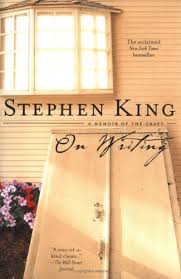
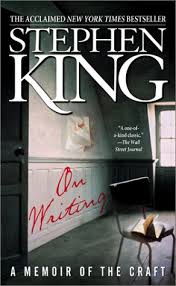
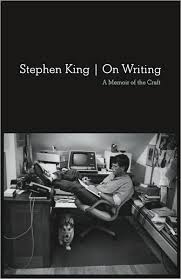
I have had some success in locating used copies of the book in its various editions. There are hardcovers and paperbacks in the secondary markets of thrift stores and library book sales, but I need to look close at the book spines since they are different in size and appearance. Our class set is a mish-mash of all editions.  The most frequent edition’s cover art is a picture of the cellar door, and if there was a book cover design that was dead wrong for the contents, this cover gets my vote. The cellar door may mean entrance to the “foundation” of writing, but the cream colored clapboards, bright window, and potted plant are an odd chice for King. The cover art with the letters of rejection nailed to a wall is macabre, perhaps a better choice for King and the contents. My favorite cover, though, is the most recent and centers on a photo of King working at his desk.

Cover simply did not match content!

Cover disconnect from content.

The macabre cover with rejection letters nailed to the wall

The macabre cover with rejection letters nailed to the wall; blood red title.

The most appropriate cover; one that matches the content

The most appropriate cover; one that matches the content-King writing On Writing

Last week, I offered this book to my own book group, an adult group of educated readers. Our discussion led to the question, “What is good writing?” We failed like so many others to come up with a definitive answer, but we did appreciate KIng’s four pages of suggested titles listed at the end of the memoir to read as examples of good writing. This list brings me to a major point in On Writing, King likes to read. This is repeated many times in the text:

“If you don’t have time to read, you don’t have the time (or the tools) to write. Simple as that.”

“If you want to be a writeryou must do two things above all others: read a lot and write a lot.

King’s dedication to the craft of writing is inspiring; the final paragraph captures his passion:

“Writing isn’t about making money, getting famous, getting dates, getting laid, or making friends. In the end, it’s about enriching the lives of those who will read your work, and enriching your own life, as well. It’s about getting up, getting well, and getting over. Getting happy, okay? Getting happy.”

On Writing has changed how I write. Because of On Writing, I hesitate to add an adverb (see? I consciously did not use “frequently hesitate”). I hear his voice say “I believe the road to hell is paved with adverbs” when I craft sentences,

My favorite part of the “toolbox” deals with his disdain for the passive voice. King tells the writer to “energize your prose with active verbs. … good writing is often about letting go of fear and affectation.”  My students tell me they write in write in passive voice to sound smart, so I need to counter with a clear example of why the use active voice is more powerful. King provides me a hilarious example:

“Everyone’s entitled to his/her opinion, but I don’t believe ‘With a hammerhe killed Frank‘ will ever replace ‘He killed Frank with a hammer.’”

“But how do you know when you are using passive voice?” my students ask. I offer my new “tool” to test, a tool I found on a Facebook post.

“If you can put ‘by Zombies’ after the verb, then you have passive voice,” I respond.

“Frank was killed…by Zombies?”

“Passive voice. To make the sentence active, you would have to write, ‘The Zombies killed Frank’. Much clearer, don’t you think?”

Passive voice and Zombies? I think Stephen King would enjoy that discussion.

003-Great-Gatsby

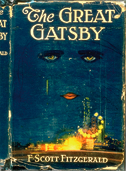
Charles Scribner’s and Son issued the first hardback edition in April 1925, adorning its cover with a painting of a pair of eyes and lips floating on a blue field above a cityscape.

The Great Gatsby film is coming out soon….” the English teacher said to me, “Can you believe Gatsby is almost 90?”

Wait, 90? The Great Gatsby is almost 90? That debonair, handsome American icon we met in his 30’s could be well over 100 years old?

“He had one of those rare smiles with a quality of eternal reassurance in it, that you may come across four or five times in life. It faced, or seemed to face, the whole external world for an instant and then concentrated on you with an irresistible prejudice in your favor. It understood you just as far as you wanted to be understood, believed in you as you would like to believe in yourself.”

F. Scott Fitzgerald began writing his great American novel in 1922, with some of the elements surfacing in the story “Absolution” in the June 1924 issue of the magazine The American Mercury.  During the years 1923–1924, Fitzgerald, his wife Zelda, and their baby daughter, Frances “Scottie”,  traveled from New York to the French Riviera, where the novel was finished. Fitzgerald went through several revisions between 1923 to 1925 before the  novel was finally published.

According to Brant Mangum in a publication from Virginia Commonwealth University: 

Fitzgerald’s ambitious goal as he approached the composition of The Great Gatsby was to “write something new–something extraordinary and beautiful and simple + intricately patterned.”

The reaction of the critics was harsh; one early review ran with the headline:

 “F. SCOTT FITZGERALD’S LATEST DUD.”

Praise, however came from recognized writers T. S. Eliot, Edith Wharton and Willa Cather. Ten days after the book came out, Maxwell Perkins, Fitzgerald’s editor, sent the telegram: “SALES SITUATION DOUBTFUL EXCELLENT REVIEWS.” The first printing of 20,870 copies was a slow seller; Scribner’s printed another 3,000 copies four months late and finished the run. According to an article Living on $500,000 a Year: What F. Scott Fitzgerald’s tax returns reveal about his life and times by William J. Quirk in American Scholar over 12 million copies have been sold, with approximately 300-400 hundred thousand sold annually. However, Fitzgerald never did match his famous protagonist’s wealth:

“Royalties from The Great Gatsby totaled only $8,397 during Fitzgerald’s lifetime. Today Gatsby is read in nearly every high school and college and regularly produces $500,000 a year in [F. Scott Fitzgerald’s daughter] Scottie’s trust for her children.”

Fitzgerald died young, age 44, in December of 1940.

“His estate was solvent but modest—around $35,000, mostly from an insurance policy. The tax appraisers considered the copyrights worthless. Today, even multiplying Fitzgerald’s estate by 30, it would not require an estate tax return.”

He did write other novels, stories, essays, but The Great Gatsby remains his most important addition to the canon. So why call this work the great American novel?

Jonathan Yardley makes his case by calling attention to the distinctively American elements in the novel in the Washington Post book review Gatsby”: The Greatest Of Them All (1/2/07) writes:

In an extraordinarily compressed space — the novel is barely 50,000 words long — Fitzgerald gives us a meditation on some of this country’s most central ideas, themes, yearnings and preoccupations: the quest for a new life, the preoccupation with class, the hunger for riches and “the last and greatest of all human dreams…”

Our contemporary American obsession with celebrity and wealth is obvious to students who are assigned The Great Gatsby. Our nation’s economy  from boom through a recent recession, echoes the experience the heady times of the  Roaring 20’s before the Great Depression. The narrative style is engaging and packed with imagery. Anyone who spent time in a high school literature classroom over the past 50 years can recall taking notes on Fitzgerald’s metaphors and complex symbols. Mangum discusses these in his essay:

 The green light, which carries meaning at every level of the story–as Gatsby’s go-ahead sign, as money, as the “green breast of the new world,” as springtime–is strategically placed in chapters one, five, and nine. The eyes of T.J. Eckleburg “brood on over the solemn dumping ground,” which is the wasteland that America has become (514).

The appeal of Jay Gatsby’s character is explained in a chapter in America: A Self-Made Country by political commentator Chris Matthews. He writes:

“The reader, like Nick Carraway, comes to like this guy. We love his dream  because we have, all of us, shared something very much like it. Gatsby for me is undeniably the great American novel. We celebrate its hero and his “heightened sensitivity” to the promise of life. his “extraordinary gift for hope”, his “romantic readiness” because we as a country share every bit of it” (20).

The final passage of the novel is Fitzgerald’s commentary on the American dream. Nick’s final stream of consciousness:

“Gatsby believed in the green light, the orgastic future that year by year recedes before us. It eluded us then, but that’s no matter—tomorrow we will run faster, stretch out our arms farther. . . . And then one fine morning—
So we beat on, boats against the current, borne back ceaselessly into the past.”

Such imagery naturally lends itself to the movie screen, and The Great Gatsby has had more than its fair share of remakes:

  • 2000:  Mira Sorvino, Toby Stephens, Paul Rudd (made for TV)
  • 1974: Robert Redford, Mia Farrow, Bruce Dern
  • 1949: Alan Ladd, Betty Field, Macdonald Carey
  • 1926: Warner Baxter, Lois Wilson, Neil Hamilton 

Now, the latest version is coming May (2013), when the Australian film director Baz Lurhman will put his spin on this American story:

Once more, Jay Gatsby will be glamorously immortalized in his youth; this time digitally mastered rather than in celluoid.

However, should someone want to try an even newer genre in order to experience a 21st Century Gatsby, there is the Nintendo Great Gatsby Game that can be played on a computer. While Gatsby is fixed forever as young and ambitious, he now is also amazingly spry for his years! ( “to jump, move arrow keys together right and left”)

For an “Old Sport”, Gatsby wears his age well.

In keeping my classroom libraries filled with books, the trends I notice are not necessarily trends in book buying, but trends in book discarding. After exams, midterms or finals, assigned titles are discarded to make room on a bookshelf or in a school locker for new required reading. Following trends means knowing that three to four months after the curriculum unit ended, an assigned title begins to crowd its way onto the bookshelves of thrift stores such as Goodwill or St. Vincent’s or the Salvation Army.

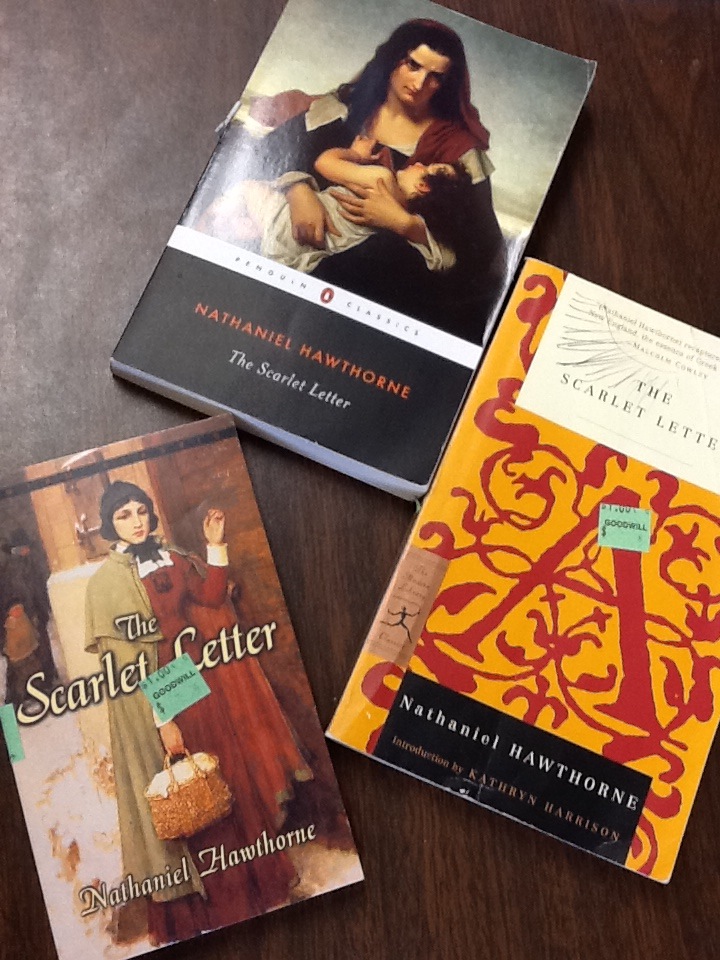
Three copies of "The Scarlet Letter" on the shelf at Goodwill. All new; never opened!

Three copies of “The Scarlet Letter” on the shelf at Goodwill this past week. All new; never opened, bearing their $1.00 each price tags.

Since Puritans are usually up for discussion in September in American History coursework, many English departments turn to Nathaniel Hawthorne’s novel The Scarlet Letter for their Advanced Placement or college bound students as a complementary read. Therefore, I was not surprised when, during this last week of January, copies of The Scarlet Letter began appearing, not in single copies, but in droves. I expected as much. The Scarlet Letter represents the “not keeping” trend. While a student may hesitate for a millisecond before placing The Great Gatsby or To Kill a Mockingbird or Catcher in the Rye in the “throw away” pile, I imagine there is universal delight in discarding The Scarlet Letter, a delight only exacerbated by discarding its equally loathed curriculum companion, Arthur Miller’s The Crucible.

The mention of The Scarlet Letter may set off groans. Woe to the teacher who attempts this book without the iron cast-backbone or the determination of an evangelist. Readers of The Scarlet Letter will need to be converted, and it is only the fear and damnation of another scarlet letter that keeps them plodding on, the scarlet “F”!

The tone of the book is set immediately with the opening line:

A throng of bearded men, in sad-colored garments and gray, steeple-crowned hats, intermixed with women, some wearing hoods, and others bareheaded, was assembled in front of a wooden edifice, the door of which was heavily timbered with oak, and studded with iron spikes.

Looking further down the page for some relief from the gloom, the reader should notice that he or she is being directly addressed, as if from a pulpit delivering a parable or allegory:

Finding it so directly on the threshold of our narrative, which is now about to issue from that inauspicious portal, we could hardly do otherwise than pluck one of its flowers and present it to the reader. It may serve, let us hope, to symbolize some sweet moral blossom, that may be found along the track, or relieve the darkening close of a tale of human frailty and sorrow.

Yes, Hawthorne will be delivering this sermon for 192 pages in the Dover Thrift Edition ($3.15).

Students are aware that this classic will improve SAT scores with the challenging vocabulary and complex structures of 19th Century prose, but they still seek help beyond the classroom. There are Sparknotes, Schmoop notes, E-Notes, Cliff Notes, and Bookrags available for this text, so as a result, the paperback text on the thrift store shelf may never have been opened. The copies available at thrift stores are generally pristine copies. I imagine they were purchased by parents who dutifully picked up the book because of a syllabus of some sort. Maybe this was a summer reading choice, a particularly deadening assignment. Actually, the effort in purchasing this text could have been avoided, because the text itself is online at no less than six places:

And there are free audio versions at:

But we still teach The Scarlet Letter, and our paperback collection of The Scarlet Letter distributed in class is comprised of at least 10 different editions. No student is on the same page number when the text is read aloud in class in order to share the conflicts between Dimmesdale, Hester Prynne, and Chillingsworth. Interestingly, what seems initially complex to the student is eventually understood as a really a ripping good love triangle of sex, intrigue, and irony. Once they see Hawthorne laying out hypocrisies of the Puritan society, they are more genuinely engaged. Plus, there is the lovely child Pearl, and they grow to sympathize for her.

In order to engage students in assessments, our Grade 11 teacher has organized “self-directed” projects for students to choose  and some of these have included:

  • Create a song telling the ballad of Hester Pyrnne.  You may compose the song, or write new words for an existing melody.  Share the song with the class either live or via audio or videotape.
  • Think of a sin associated with Dimmesdale and Chillingworth.  Create a badge that uses a letter or other symbol to represent the sin.  In addition, use art, needlework, or some other craft to make the badge reveal something about the man’s character, interests, or profession.  Write an explanatory caption or paragraph to accompany the badge.
  • Choose music to be the score for a film version of the novel.  Choose music for at least five major scenes.  Write explanatory notes for each selection

The harvesting of The Scarlet Letter texts from thrift store shelves is best from January-March. I can add as many as 10-12 copies during these months. Competition for the title grows during the summer, and the books are often more dog-earred by then.

But with all the negativity, why teach The Scarlet Letter? Because Hawthorne provides a bridge from this historical period to ours by using the empathy that is generated in fiction. Our brains are wired for stories more than facts, and reading The Scarlet Letter helps our students identify with characters in order to understand the politics and policies of this turbulent time when our nation was still in its infancy. Additionally, his story serves as a springboard for other stories. According to Canadian author Margaret Atwood, “The roots of totalitarianism in America are found, I discovered, in the theocracy of the 17th Century. The Scarlet Letter is not that far behind [the novel] The Handmaid’s Tale, my take on American Puritanism.”

Oh, and yes. We also assign The Handmaid’s Tale.

Today is Digital Learning Day! To mark the occasion, let me take you through a quick walkthrough of the halls of Wamogo Regional Middle/High School and give you a snapshot on how digital learning looks in the English classrooms grades 7-12. We have 1:1 computers in grades 7 & 8; in grades 9-12, we have a “bring your own digital device” policy. Here are the digital learning activities on Wednesday, February 6, 2013:

Grade 7: Students responded to a short story they read, “The Amigo Brothers”. They accessed the wiki (www.PBworks.com) in order to respond to “close reading” questions on the author’s use of figurative language. (Students are required to use evidence in their responses; digital copies of text helps student correctly add and cite evidence).

Grade 8: Students uploaded their reviews of the books (Mississippi Trial, 1955; Chains; The Greatest) they have been reading in literature circles to www.edmodo.com. These reviews are connected to the Common Core Writing Standard #6:

CCSS.ELA-Literacy.W.8.6 Use technology, including the Internet, to produce and publish writing and present the relationships between information and ideas efficiently as well as to interact and collaborate with others.

Grade 9: Students responded to a “writing on demand” journal prompt in preparation for the novel Of Mice and Men. This prompt is connected to the theme of hopes and dreams, and the students were asked:

What is your hope for life, your goal, or even your dream?  What do you think you want from the future? What would you live without, dream-wise?  What couldn’t you live without?

The students also posted their responses on a www.Edmodo.com discussion thread. Selections from responses included:

  • Something I couldn’t live with out would be my grandparents because they are like another set of parent to me, just better. They mean so much to me, that I really couldn’t see my life without them.
  • I hope to be a plant geneticist in the future, that is my hope but no matter what happens I would like to have a career involving plants and even if I can’t get a career in genetics I know it will always be a hobby of mine.
  • My house will be by the ocean, so close I can see it out of my kitchen window. I will grow old and drink coffee on my porch, while I read the paper and wave to my neighbors who walk by!
  • I could live without being famous around the world but I would like to be known town wise. I cannot live without family and their support in my decisions. They help me to stay confident and get through whatever I want to accomplish in life.
  • I think I could live without wanting a huge house or a huge boat “dream-wise”, but that still doesn’t mean I don’t want those things. I couldn’t live without music or my family.
  • My biggest hope and dream is to have a really big plot of land and have the world’s biggest tractor and a bunch of snowmobiles and ATV’s.
  • I want to be able to adopt kids from Uganda but also have my own, and I want to live in a nice house with a big yard. I want to work with little kids as a job.

10th grade Honors English students are reading Great Expectations. They took a quiz on www.quia.com, a software platform for timed quizzes. The College Prep English classes are reading Animal Farm. Today, they had to access “The International” MP3 and the www.youtube.video of the Beatle’s song “Revolution.

For homework tonight, students will write their own “protest” song.

Grade 11: Students can access the vocabulary list from the film The Great Debaters through the class wiki (www.pbworks.com) while the Advanced Placement English Language students watched a YouTube video of a Langston Hughes poem “I, Too, Sing America” read by Denzel Washington:

They prepared responses to the following questions which were posted on the class wiki:

  1.  To whom is the poet writing?  How do you know?
  2.  Choose one stanza and discuss what you feel is the key word in this stanza and explain why you chose this word?
  3.  What feelings does the poem create?  Which words create this feeling?

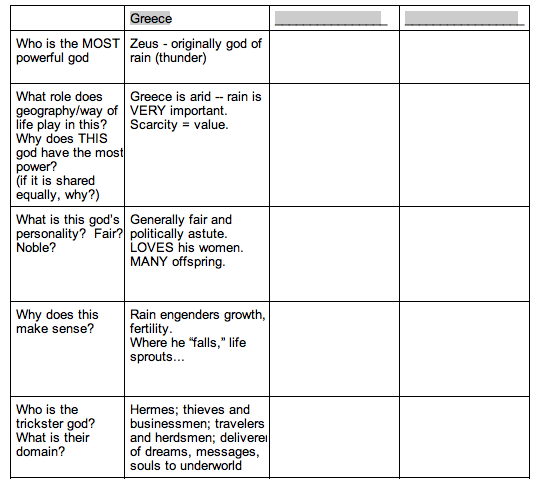
Grade 12: Students in the Grade 12 Mythology class accessed the following Google Doc Template and filled in the chart with their own research about the mythologies of different cultures. This activity meets the CCSS writing:

CCSS.ELA-Literacy.W.11-12.7 Conduct short research projects to answer a question; narrow or broaden the inquiry when appropriate; synthesize multiple sources on the subject

Screen Shot 2013-02-06 at 11.43.41 AM

The Film and Literature class “flips” the content by having students watch films for homework in order to discuss them during class. Tonight’s assignment? Watch the following YouTube clip and be ready for an open note quiz:

Students in the Advanced Placement English Literature class read the short story “Barn Burning” by William Faulkner that was embedded with a quiz on www.quia.com. They then created a list of four themes from the short story on a Google Doc. Each student selected a theme and placed his/her responses in the Google Drive folder to share with other members of the class. Examples included:

  • Actions we take with the grotesque: Shun? Avoid?

This story embodies an ultimate grotesque atmosphere. Even Colonel Satorius Snopes’ sisters are described as, “hulking sisters in their Sunday dresses” (2). These sisters are emulated throughout the story as disgusting, rotund, lethargic, and hog-like beings. This grotesque physical trait emulates the family’s condition in society. Satorius’ clothes are described as, “patched and faded jeans even too small for him.” (1).

  • Family over law or law over family

For the boy to go against his family in the end further proves his actions of courage and strength, and portrays the theme of law over family. “Then he began to struggle. His mother caught him in both arms, he jerking and wrenching at them. He would be stronger in the end, he knew that. But he had no time to wait for it” (10). His whole family is holding him back, but he chooses to go against all of them and do what is right.

This quick walkthrough demonstrating the use of technology in the English classrooms on one day demonstrates that for the teachers and students at Wamogo, everyday is a Digital Learning Day!

tragedy“On Friday noon, July the twentieth, 1714, the finest bridge in all Peru broke and precipitated five travelers into the gulf below.”

That is the opening sentence from Thornton Wilder’s novel The Bridge of San Luis Rey. A monk who witnesses the fall of those travelers searches for answers as to whether the accident was simply chance or an act of the Divine. In writing The Bridge of San Luis Rey, Wilder was addressing the genre of tragedy which was defined by Aristotle in his Poetics as “an imitation of a serious act” in literature. The purpose of tragedy is to provide the reader, or viewer in the case of drama, an experience of loss without having to suffer what a fictional character suffers. Through his literature, Wilder, like the authors and playwrights before him, provided the experience and language to us to respond when there is a tragedy. Great literature does this well which may be why the literature taught in high school classrooms is, more often than not, tragedy.

Of course, tragedy is not always a popular curriculum choice. I am always being confronted by students,  “Why do we have to read such depressing books?” or “Why does every book we read in English have to be so sad?” Predictably, when I hand out a book for a whole class read, student will examine the cover, the length of the text, and ask, “So, who dies?” Through literature, students learn a number of different approaches or definitions of  tragedy. In grades 9-12, students are taught about Greek tragedy (Oedipus, Antigone, Medea) where fate or Nemesis cannot be avoided. They learn about catharsis, the purging of pity and fear, and pathos, the empathy one has for the tragic hero. Students are taught about how the Shakespearean tragedy (King Lear, Macbeth, Richard III) centers on the willful downfall of a character who brings about the destruction of others. We have also included a modern interpretation of tragedy by Otto Reinherdt as students read contemporary works of literature (Death of a Salesman, The Road):

“Tragic Man demands that an imperfect world conform to his notions of right and good, and he is defeated because discord, injustice, pain, and moral evil are the world’s warp and woof. The final paradox is man in his tragic vision saying, ‘I do not believe in the invincibility of evil but in the inevitability of defeat’.. . . But in the absoluteness of his commitment, the tragic hero triumphs in the very inevitability of his defeat.”

The indoctrination to tragedy as a “serious action imitated” begins early in the student’s educational career. In grade 5, whole class reads can be The Giver, a dystopian novel that features the euthanasia of a small child. In grade 6, students may read The Devil’s Arithmetic, a book that brings students closer to an authentic understanding of the Holocaust and the deaths of six million Jews. In young adult (YA) literature, there are so many stories about the deaths of pet dogs  (Old Yeller, Where the Red Fern Grows, Love that Dog) that author Gordon Korman fought back against that literary trope with his  YA novel, No More Dead Dogs. Our 7th grade reads that book as an opening bonding experience in September, but they also read Pearl Buck’s short story “The Big Wave” about a tsunami that wipes out a small coastal village in Japan. The recent tsunami in Japan gave our young readers a new appreciation for the tragedy caused by nature.

In high school curriculums everywhere, students decry the death of a character, “Why does the author make us like him and then kill him?” They rail against the death of Johnny in The Outsiders (grade 8); the death of Lenny in Of Mice and Men (grade 9); the death of Kat in All Quiet on the Western Front (Grade 10); the death of John Proctor in The Crucible  (Grade 11); and the death of Hamlet (Grade 12). They claim to want a happy ending.

But do English teachers force an unwanted genre on students? Do students hate tragedy? Not really. Look at the two most popular series of books students chose to read independently. The Harry Potter series began with two deaths, the sacrifice of Lily and James Potter for their infant son, Harry. Seven books later,  JR Rowling had bumped off over 50 characters, and one beloved owl Hedwig (although, admittedly the death of Bellatrix Lestrange was satisfying). Student loved these novels. In Suzanne Collin’s The Hunger Games trilogy, killing and death is a form of entertainment, an entertainment made even more horrific when teenagers are the assassins. In the first book, eleven “tributes” are killed on the first day of the games. The protagonist Katniss kills four tributes herself before she “wins” this round of games with Peeta; the deaths pile up as the series continues with Collins disposing of major characters at a furious clip. I cannot keep these books on my classroom shelf.

Ultimately, tragedy in literature prepares a reader for the experience of tragedy in life. My own first experience with death was from Louisa May Alcott in Little Women when the sickly Beth March finally succumbed to illness:

“As Beth had hoped, the `tide went out easily’, and in the dark hour before dawn, on the bosom where she had drawn her first breath, she quietly drew her last, with no farewell but one loving look, one little sigh.”

I remember reading and re-reading that passage over and over and thinking: “Had I read correctly? Were there only three March sisters left? How could Alcott do this to me?” Well, she did this to me and millions of other readers because in real life people die. Nice people. Good people. Young people. Beth’s death was not a tragedy in the literary sense, but the hole left by her death for the fictional family was “a serious act imitated in literature” like the many real deaths that leave holes in the lives of real families.

Our society confronts news that is tragic everyday.  The recent death of 20 schoolchildren and six teachers in a school shooting not far from where I teach just before the Christmas holiday season is a tragedy so horrific that many have been left speechless; I hear, “There are no words.” But there are words, words in great literature written to prepare us, from a young age through high school and beyond, for exactly this experience. Thornton Wilder’s fictional story of The Bridge of San Luis Rey concludes with a paragraph that offers his response to a tragedy. Through literature, Wilder provides a language for readers to respond to a tragedy such as the one in Newtown, Connecticut, and other heartbreaking events:

“We ourselves shall be loved for awhile and forgotten. But the love will have been enough; all those impulses of love return to the love that made them. Even memory is not necessary for love. There is a land of the living and a land of the dead and the bridge is love, the only survival, the only meaning.”

I am sitting through a professional development session on how to use peer to peer writing conferences. I want to believe there will be a moment in this workshop when the “ah-ha” moment will happen, when I finally unlock the formula for successful in class peer to peer writing conferences at the high school level. The presenter reiterates how important this process is for writers to hear critical feedback to their writing. I hear again that “sticking with it and training students” to peer to peer conference are key ingredients that will improve student writing. Then I think of my students….my 9th, 10th and 11th grade students. This unspoken heresy forms in my mind:

Forgive me, well-intended and passionate presenter, but in my experience, in class peer to peer writing conferences do not work.

There, I admit it. Success in implementing face to face, peer to peer writing conferences, real critical encounters, has eluded me. I have 20 plus years in the English classroom, grades 6-12, and I have always come away from peer to peer writing conference sessions with the uncomfortable opinion that I have been wasting class time.

I now know why.
This summer, I am participating in the Connecticut Writing Project, and I have to write on demand, and then I must share that work. This is a horrible experience for me. I pass my paper wondering, “What will this person think of me?” and “What if there is a grammar error? I’m an English teacher!!” I have to provide feedback on a fellow teacher’s work, and I see the same kind of panic in her eyes.
I quickly reflect. How does my adolescent, pimply, over-stimulated teen-age boy feel as he hands in his rough draft for a critique by the fair skinned, sweet smelling young girl who sits behind him? How does that painfully shy artist who doodles his responses but has yet to complete a paragraph in writing feel about sharing his work with the amazingly popular class jock (boy or girl)?
I mention this to the presenter who says, “Yes, sometimes, there are student combinations that do not work.” That confirms my problem.

Problem #1: My struggle with peer to peer conferencing begins with setting up partnerships. Do I put the uneven writer with the good writer? Does the good writer need another good writer for good editing? Do I put two poor writers together and expect a miracle? Do I let the students choose their partners? How effective is the conference if friendship is in play?

Problem #2: The research shows that students should learn how to peer conference in the elementary and middle school grades to carry that behavior into the high school grades.However, I have found that training in writing conferences in the elementary and middle school grades is  erased in the high school environment. Many high school students claim to hate sharing their work with other members of the class; participation is mixed.

Problem #3: I teach in a regional school where one third of our freshman class comes from out of district schools. Several of these students have not had any training  in peer conferencing. The number of incoming students who are already uncomfortable in moving to a new regional school requires that I need to start at square one and  train everyone how to conference effectively.

Ultimately, I do not want to give up on students providing critical feedback to other student; I just want to take away the awkward immediacy of that face to face encounter. Since I teach in a 1:1 school district with digital literacy embedded in my curriculum, I will continue to use the solutions that have worked in place of those face to face, peer to peer writing conferences. I use digital conferencing.

Solution #1: I use blogs. Each blog is organized for a small group (8-10 students)   to use as a team. Only members of their team see their posts and comments over a period of time, say a semester or a school year. Students post book reviews, and other students comment on that post by asking questions about the book, or by making recommendations to improve the original book review  post. Each student must respond to the posted book reviews. Writing on the blogs allow students the physical distance they need to comfortably respond to each other. Written comments take time to construct, and students are more thoughtful if they know what they write will have a larger audience. Blogs let me  monitor the comments as well and determine which students are the most effective in providing good critical feedback to a student and which students are simply putting down, “great job!” or “I like what you wrote!” I might not have this information if the students were having face to face conferences. During my writing conferences with students I can follow up with the comment stream and target what is necessary to improve a critical response.

Solution #2: I use wikis. Students upload a report or story to a wiki page, and their peers can respond with questions and provide feedback in the comment section at the bottom of the digital page. Here too, the wiki page and the comment section will be seen by a larger audience and students are more thoughtful if they know their work will be read by an entire class. Responses in the comment section of the wiki also allows me to monitor who has provided good critical feedback to the writer.

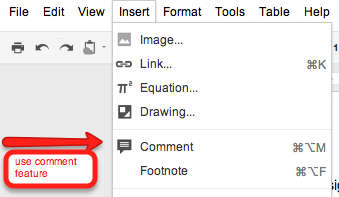
Solution #3: I use Google docs. Students can upload their work to a Google doc and share that link with one or more students. Each peer reviewer can use the comment feature to provide feedback. This feature also identifies the peer conference partner on each comment he or she makes. All  comments by the peer reviewer are recorded on the document’s margin. An student author can even post questions about his or her writing in a comment box. The document can be also shared with multiple students who could work on the same document at the same time if necessary. All  comments are part of the document’s history, and I can monitor changes made by the student writer before and after a peer review. This method is particularly helpful if I have specific students who are hesitant about facing another student in a peer review.

Of course, all this digital peer to peer conferencing is improved if I provide students with  guiding questions (“Did the opening engage you as a reader?”) they would use in written conferences or if they prepare specific questions for the peer reviewer.

Digital platforms: wikis, blogs, and Google docs, allow me the means to provide peer to peer writing conferences by removing those awkward face to face conferences that I have found so unproductive in my high school classrooms. These digital platforms also let me organize students across class periods, and if I found a teacher in a cooperating school who wanted to peer conference, the digital platforms would allow my students to conference outside the classroom. Students still have plenty of opportunities for face to face encounters during class discussions and presentations, but they are comfortable communicating their feedback about a peer’s writing in a digital environment. And, heresy or not, I am finally comfortable with the productive peer to peer (via the Internet) writing conference.