Archives For November 30, 1999

Saki

Author H.H. Munro also known as Saki

H.H. Munro was the NYTimes crossword across clue last week, and as it so often happens, I just happened to be talking about H.H. Munro to the sophomore English class these first days of school. Just name dropping Saki, his pseudonym, caught their attention.
“What kind of a name is that?” they asked.
When I told them he might have been referring to the Saki monkey, a small South American primate, they concurred that he had chosen a cool pen name. 

Saki’s short stories open our World Literature course which complements the Modern World History course offered the same year. Our students will be reading complex texts required by the English Language Arts Common Core State Standards (CCSS), and  complex texts are those that meet four criteria:

1) Meaning: Multiple levels of meaning (such as satires, in which the author’s literal message is intentionally at odds with his or her underlying message).
(2)  Structure: Complex, implicit, and (particularly in literary texts) unconventional structures.
(3) Language: Figurative, ironic, ambiguous, purposefully misleading, archaic or otherwise unfamiliar language
(4) Knowledge Demands: Everyday knowledge and familiarity with genre conventions required; cultural and literary knowledge useful.

Saki’s work meets the CCSS criteria above, but I have learned that the practice of close reading never follows the lengthy tortuous path suggested by Common Core developers who have no classroom experience. My students stray.

The text selected was “The Interlopers”. (SPOILER ALERT For those of you who are unfamiliar with the story and want to read it before I reveal the plot twist, link to the text. There is also an audio-text.)

To prepare students, but careful not to “overteach” before reading, I gave students slips of paper with 25 words from the story. The slips including some of the more difficult vocabulary (languor, succor, marauder) and some plot details (woodland, feud, detest). Some of the students sorted the words alphabetically, but others grouped words that shared some commonality. After a few minutes of discussion, we joined together to predict what the story would be about using the grouped words; there would be a dispute in the forest that was linked to some feud, just like the feud in Romeo and Juliet.
Then we read the story.

Thirteen minutes later, some heads shot up. They had reached Saki’s iconic last word…”wolves!”

“Wolves!” one student questioned, “does that mean they die?”
There was much stirring. Some seemed surprised; others seemed confused.
In contrast, I thought the ending was obvious. Two men, trapped under a tree, end a bitter feud over forest land only to eaten by wolves.

Several, but not all, of my students thought differently.

“They weren’t rescued?” asked Kailey, “but one of them said he had men that would be there to rescue them in the forest.”
“He was bluffing,” responded Logan. “He was trying to scare the other guy when they first met.”
“But there was a gun,” pointed out Stephan, “one could have used the gun.”
“They had their arms ‘pinioned’,” I responded, trying to slip in another vocabulary word, “pinioned means to tie up the arms of…”
“They could have wriggled out when they saw the wolves,” insisted Stephan, “the rush of adrenaline would make them so strong, they could un-pinion their arms.”
“But there is no evidence to show that,” I responded. “The last word is their last word because the wolves come upon them.”

I had thought the story was straightforward. There were no flashbacks, and no change in setting. This was, according to Aristotle, a story that demonstrated unity of time, unity of place, and unity of action.

Yet the conversations in the room showed the text’s complexity. Saki’s The Interlopers has all the elements suggested by the CCSS. There is the figurative language in the character Ulrich’s statement, “We have quarrelled like devils all our lives over this stupid strip of forest, where the trees can’t even stand upright in a breath of wind.” There is the ironic wish, “If only on this wild night, in this dark, lone spot, he might come across Georg Znaeym, man to man, with none to witness – that was the wish that was uppermost in his thoughts.” There is also the multiple meaning in the revenge sought by man and the revenge exacted by Nature. Our close reading should have been “textbook”. The evidence proved the characters’ demise…or did it? I began to consider the renegade students’ position.

“See,” insisted Kailey, “look at the text, Georg says he has seven men out with him before the tree fell. These seven men would hear their screaming.”
“Yes, there would be screaming. Their last words were, ‘AHHH!!! OUCH!!! THAT HURTS!!'”Jay yelled.
“But that does not mean they were definitely eaten,” corrected Kai, “this guy Saki wants you to make up your mind.”

Which is true. Saki does not end the story with screams of pain or with tales of rescue. He trusts the reader to use evidence to make up his or her own mind. Several of my students did not want to see Ulrich and Georg meet their demise, especially when they had settled their long standing feud.

The class discussion continued with each piece of evidence for the “eaten by wolves” side being countered by evidence from the “escaped with their lives” side. The students were definitely close reading, but they were exploiting Saki’s ambiguity to defend their differing positions. A case could be made for both.

Yes, they understood the importance of irony in the story, and yes, they were familiar with plot twists, but they still held out hope. Saki had made them care for these characters in the 2100 words of this short story. He had given just the right amount of contradictory information to leave room for just a sliver of hope. A 99 and 44/100’s sort of hope.

Did they hold out hope because of their youth? Aristotle suggests that, “Youth is easily deceived because it is quick to hope.” Yet, Aristotle is also credited with saying, “Hope is the dream of a waking man.” 

In retrospect, Saki himself would probably have enjoyed their commentary. I discovered too late for the discussion that Saki has been quoted as saying, “A little inaccuracy sometimes saves a ton of explanation.”

Continue Reading…

Literally….David Coleman

August 24, 2013 — 2 Comments

Literally added a new meaning this past month….literally.

A quick look at the Cambridge Dictionaries Online indicates that while the meaning of literally as ” having the real or original meaning of a word or phrase” will now include use of the word “to emphasize what you are saying”. A similar entry from an authority across the pond, Oxford Dictionaries notes:

In recent years an extended use of literally (and also literal) has become very common, where literally (or literal) is used deliberately in non-literal contexts, for added effect, as in they bought the car and literally ran it into the ground. This use can lead to unintentional humorous effects (we were literally killing ourselves laughing) and is not acceptable in formal contexts, though it is widespread.

This chatter about literally and literalness came to mind when I read the Frizzleblog on the Scholastic website ten “takeaways” from a presentation given by David Coleman, an architect of the Common Core State Standards (CCSS) and the current College Board president, to a group of New York City teachers. The blog entry was titled 10 Things Worth Doing in Your Classroom by  Suzanne McCabe, Editor in Chief at Scholastic, and she listed ten summaries from Coleman’s presentation on how to enrich classroom instruction.

Her summary statement #4 stopped me cold…literally.
4. Only draw conclusions that can be substantiated by the words on the page. Scrape away terms like “metaphorical,” and talk as simply as possible. Once you bring up metaphor and meaning, kids are out of the game.
McCabe may be misrepresenting Coleman in this statement, however, the Common Core State Standards promoted by Coleman centers on textual evidence, so the “conclusions substantiated by the words on the page” summarizes his preferred reading strategy.  In addition, his lack of classroom experience at any grade level explains why he may have said something akin to “kids are out of the game” when metaphors are discussed.
To the contrary, children of all ages understand metaphor according to Maria Popova in her post The Magic of Metaphor: What Children’s Minds Teach Us about the Evolution of the Imagination on her Brain Picking’s blog:

During pretend play, children effortlessly describe objects as other objects and then use them as such. A comb becomes a centipede; cornflakes become freckles; a crust of bread becomes a curb.

The combination of life experience and practice with similes (“pancakes are like nickels,”  “A roof is like a hat,”“Plant stems are like drinking straws,”) builds a student’s understanding of metaphors that are more complex (“”I am the good shepherd; I know my sheep and my sheep know me” John 10:14). 

So why would a teacher want to “scrape” away metaphorical terms at this important stage in developing a student’s understanding of more sophisticated metaphors?
Furthermore, how could Coleman reconcile an author’s choice in using a metaphor if that metaphor is scraped away in order to talk as “simply as possible”? McCabe’s summary of Coleman’s position reduces students to reading “literally”, rendering them unable to appreciate an author’s craft .
For example, if students had to scrape away the  metaphorical ideas in some of Shakespeare’s most recognized literary comparisons, what would they say?

“All the world’s a stage, and all the men and women merely players. They have their exits and their entrances.” As You Like It

Students may determine through textual evidence that Shakespeare was literally referring to the stage.

Night’s candles are burnt out, and jocund day
Stands tiptoe on the misty mountain tops.” Romeo and Juliet

Students may determine through textual evidence that Shakespeare was literally writing about candles.

Smiling sunStudents are more creative than Coleman recognizes in his untested design of the CCSS. From the beginning of their academic careers, they draw their metaphors: smiling suns, hearts in hands, trees with large red dots. They start simply “Freddie is a pig when he eats,” before moving to more sophisticated constructs on their own such as “Love is a chocolate fountain that never runs out.” They are capable of sustaining elaborate metaphors to explain the writing process:

I choose my audience very carefully when playing for an audience for the first time. I want constructive criticism, and therefore I prefer to have my peer musicians as well as my conductor or private instructor hear me play aloud for the first time. . . .When I have read and reread [the paper] so many times that I am unable to find any mistakes, I then like to read my paper aloud to my family or a group of my close friends in order to get their reactions. Maria, National Writing Project website

These students knew they were not writing about a pig, chocolate fountains, or conducting music. If Coleman had classroom experience, he would have first hand evidence about student creativity.

Finally, many of the most beloved children stories are saturated with metaphor.  Lewis Carroll’s Alice in Wonderland is filled with metaphors that address life’s absurdities, and one specific metaphor brings me back to an entry I wrote titled  David Coleman, the Cheshire Cat of Education.

While I did not mean that Coleman is a cat literally, I do mean that his philosophy of education is as contradictory as the character in Carroll’s imaginative classic. “Curiouser and curiouser,” wonders Alice, when the enigmatic Cheshire Cat appears and reappears at critical moments in the story. Likewise, Coleman’s curious contradictions may be the reason for any inaccuracies in McCabe’s summary of his presentation. On the other hand McCabe may have accurately recorded these contradictions and illustrated how Coleman’s inexperience makes his statements about how to teach in a classroom ridiculous…literally.

No common coreOne of the underlying problems in educational reform today is that so few reformers have any hands-on classroom experience. Reading about teaching is academic and informative, but the hands-on experience of standing in front of a class of 9, 14, 24, or (heaven forbid!) 31 students at any grade level is irreplaceable. Developing lesson plans is an academic exercise, however monitoring and adjusting that lesson plan for real time problems (fire drill, student absences, material shortage, technology glitch) during instruction is irreplaceable. Reading assessment data is an academic enterprise, but understanding that data in the context of the classroom with all the personalities, abilities, disabilities, and socio-economic influences is irreplaceable. Hands-on experience should be a major factor in education reform, but the education reform efforts in the  Common Core State Standards (CCSS) have little to no classroom credibility.

A recent entry on Twitter from Randi Weingarten, current president of the American Federation of Teachers, was an attempt to address the classroom experience of the creators of the CCSS. Weingarten herself does have hands-on experience in the classroom, but that experience is spotty.  From 1991 until 1997, and with the exception of a six month full time teaching load in the fall of 1994, Weingarten taught on per diem basis (substitute?) at Clara Barton High School in Crown Heights, NY. Total experience? Six years, but this short experience is six more than many of the educational reformers who participated in the creation of the CCSS.

Weingarten tweeted the following on June 29, 2013:

Teachers were part of the development of #CCSS from the beginning http://youtu.be/y1DlNpaKW38

She was posting a link that was supposed to demonstrate that teachers, real classroom teachers with hands-on experience, had been involved in the standards from the beginning. The link led to a YouTube video featuring an ELL classroom teacher Lisa Fretzin who reflects how she “…was part of the review process starting in August looking at the the first draft”:

While Ms. Fretzin certainly has classroom credibility necessary for developing the CCSS, her participation was not exactly at the “beginning” of this process. According to her statement on the video, she was not present at the creation; she was asked to “review” which is different than “from the beginning”. Furthermore, her name is not on the list of participants who did create the CCSS for English Language Arts (or feedback group) which clearly identifies only four of the 50 participants (8%) as “teachers”. The remaining 46 participants (92%) are identified with titles such as: “author”, “consultant”, “specialist”, “professor”,  “supervisor”, “director” or “senior fellow.” In all fairness, perhaps many of these participants had worked in the classroom before moving into higher ranking positions as one would hope, but their hands-on classroom work experience is unclear.

The most glaring examples of classroom incredibility are the lead authors for the CCSS, Susan Pimentel and David Coleman; their collective classroom experience is zero. Pimentel has a law degree and a B.S in Early Childhood Education from Cornell University. Coleman’s, (termed “Architect of the Common Core”) classroom experience is limited to tutoring selected students in a summer program at Yale. He later founded Student Achievement Partners and is currently serving as the President of the College Board.

Weingarten must also know that classroom teachers for PreK-Grade 3 and grade level experts were not included in the creation of the CCSS at all. Many of these educators have express concerns that students are not cognatively ready for many of the standards in math and reading. Valerie Strauss of The Washington Post put up an editorial (1/29/13) “A Tough Critique of Common Core on Early Childhood Education” by Edward Miller, teacher and co-author of Crisis in the Kindergarten: Why Children Need to Play in School, and Nancy Carlsson-Paige is Professor Emerita of Early Childhood Education at Lesley University in Cambridge, Massachusetts and author of Taking Back Childhood. They note that when the standards were first revealed in March 2010, “many early childhood educators and researchers were shocked. “

The promoters of the standards claim they are based in research. They are not. There is no convincing research, for example, showing that certain skills or bits of knowledge (such as counting to 100 or being able to read a certain number of words) if mastered in kindergarten will lead to later success in school. Two recent studies show that direct instruction can actually limit young children’s learning. At best, the standards reflect guesswork, not cognitive or developmental science.

Miller and Carlsson-Paige also include links to the Joint Statement of Early Childhood Health and Education Professionals on the Common Core Standards Initiative and summarize their statement:

 We have grave concerns about the core standards for young children…. The proposed standards conflict with compelling new research in cognitive science, neuroscience, child development, and early childhood education about how young children learn, what they need to learn, and how best to teach them in kindergarten and the early grades….

At all grade levels, therefore, there are concerns about how inclusive the creators of the CCSS were in engaging classroom teachers. The entire initiative, by its own admission, began politically, coming from the nation’s governors and education commissioners, “through their representative organizations the National Governors Association (NGA) and the Council of Chief State School Officers (CCSSO).”

Weingarten’s tweet was more than a little disingenuous when she indicated that “teachers were part of the development” when, to the contrary, there is much more evidence to prove that the ratio of teachers to individuals bearing education titles was disproportionate in favor of reformers and academics without classroom experience.

Real teachers, those with hands-on experience gained in the classroom, have had a limited say in the CCSS that they will be implementing day in and day out in their classrooms at every grade level. Excluding this important faction is why there has been pushback from teachers who recognize the difficulties in implementing many of the standards. Furthermore, there are growing concerns about the level of accountability for teachers in having students meet these same standards.

Ultimately, Weingarten should not tweet out misinformation about teachers developing the CCSS, especially when the evidence demonstrates that teachers were a only a tiny percentage in creating these standards. Weingarten must know that for any educational initiative to succeed, teachers must be engaged from the very beginning.

In these days of education reform, classroom credibility counts.

“Want to know the shortest poem in the world?” I asked my Advanced Placement students when they were overwhelmed with the epic poem Paradise Lost by John Milton. I wanted to use a related poem to demonstrate a close reading, one of the skills students should have in according to the Common Core Standards for English/Language Arts, but they needed a little fun.

“It’s called Fleas.”

I wrote the poem on the board:

Fleas

Adam
had’em

That’s it. Three words…actually two if you consider the contraction “had’em” as one word.

The poem attribution is generally given to Ogden Nash (1902-1971) although there are some who credit Shel Silverstein (1931-1999). An article by Eric Shackle, however, found the originator of the poem was Strickland Gillilan (1869-1954). The article notes:

“At last, after searching dozens of websites, we discovered the identity of the mystery poet. It was revealed on a US National Park Service website describing Mount Rainer National Park, in west-central Washington state. The Mt Rainier Nature News Notes of July 1, 1927 contained this brief item, tucked away as an end-of-column filler:

‘THE SHORTEST POEM
We like poetry but we cannot stand it in too large doses. The following, which according to its author, Strickland Gillilan, is the shortest poem existing, deals with the antiquity of “bugs”. It runs thus: Adam had em!'”

Authorship clarified, I asked my students, “So, what could you write about this poem?”

They stared at me. Surely I was joking…what kind of discussion or essay could a poem of this length generate?

After several minutes, however, here is what they came up with structurally:

  • iambic (duet?)
  • rhyming couplet
  • rhyme (am/em)
  • perfect internal rhyme (ad)
  • there is contraction
  • no punctuation
  • uneven number of letters; shorter first line

Here is what they came up on the topic of fleas:

    • Scientists have discovered that fleas probably fed on dinosaurs
    • Fleas feed on warm vertebrates’ blood
    • Fleas need Adam; Adam does not need fleas

Here is what they came up with figuratively:

  • the name in the first line establishes context
  • literary allusion: Adam from the Bible, the first man in literature
  • Eve was not mentioned, so the setting may be earlier than Genesis 2:20
  • the tone is casual and comical
  • the mood is humorous
  • Adam has fleas; the fleas don’t have Adam
  • the title is critical to the understanding of the message

Unanswered questions they had on the poem:

  • Could there have ever been just one flea?
  • Does Adam bathe?
  • Is the past tense verb “had” mean that he has cleaned up his act?

adam

Their conclusion?

  • Close reading three words yields a fun discussion;
  • Concise poetry captures the relationship between ancient man and an ancient insect pest.

Fleas– the world’s shortest poem!

Spoiler alertEnter the spoiler alert. Because the number of ways people hear about stories is increasing, spoiler alerts for books and films are offered as a “heads-up”, a means to prevent plot details from becoming public.  Knowing the end of a story might mean that the strategy of “predicting” a story has been compromised, however, there are genres of stories that absolutely count on predictability, for example, Nancy Drew will always solve a mystery with her best friend, Bess and George, while on TV, predictability has a time limit; the shipwrecked crew will never leave Gilligan’s Island (30 mins) and House will solve a medical mystery (60 mins).

Predictability means to state, tell about, or make known in advance, especially on the basis of special knowledge, and students are taught at an early age that making predictions can help them to determine what will happen in a story.

I noticed how predictions are important even if the end has already been decided when my six-year-old niece was watching the Disney film Running Brave. This was her favorite film, and she watched the VHS tape every afternoon. On one such afternoon, I noticed she was drifting asleep, so I made a move to turn off the video.

“Wait,” she cried out, “I think….I think he’s going to win again.”

From her perspective, the outcome of the race was still in doubt. The cinematic elements, the tight editing of shots , and a triumphant soundtrack created suspense where the viewer might doubt the inevitable. Krista had seen the movie hundreds of times, but she still was “testing” her prediction.

I admit that I have felt the same way watching Miracle, holding my breath for the final seconds wondering if the US ice hockey team would still win the Olympic medal. Krista’s experience is also mirrored in the classes where students often choose books based on a movie that they have seen.

In the independent reading allowed in our curriculum, the 9th graders can choose contemporary fiction or non-fiction, and many of the titles have movies in circulation, for example:

Some students purposefully choose these books because they know the endings, and in knowing how the book ends allows the reader to pay more attention to the craft of the author in bringing all the plot points together in a conclusion. Take for example, the Harry Potter series. Most readers predicted with certainty that Harry Potter would finally face his nemesis, Voldemort. The how and when, however, were still very much in the air, and J.K.Rowling’s crafting of the series’s magical settings and character development kept readers in a willing suspension of disbelief for the length of seven volumes. The final conclusion was satisfying to her fans who knew all along that Harry would prevail, after all, Good’s triumph over Evil is a predictable plot. Readers and filmgoers were not disappointed in following the story of a boy with the scar on his forehead because in each volume and subsequent film release, they correctly predicted that “I think…I think he will win again.”

So when I teach a whole class novel, I know there are some students who already know the ending. They may have reached the conclusion before others, or been informed by older students who notoriously share their opinions and critical information with younger students. In this case, my role is to impress on students that knowing the outcome will not destroy a well-told story, and to focus their attention on the other elements. This was the case with John Steinbeck’s Of Mice and Men.

“I heard this is a sad book,” one student said when I assigned the first chapter, “One guy kills another guy.”
Other students looked up for my confirmation.
“Yes, this is a sad book, but the reason for the sadness is really about caring. We will grow to care for these characters.”
“I already don’t care if I already know what happens,” was his reply.
Four weeks later, this student refused to watch the final scene in the film version.
“I know what happens, and I cannot watch,” he said sadly as he walked out into the hall.

The same sentiments are expressed at the beginning of our study of Shakespeare’s Romeo and Juliet.
“Guess what? They die,” said a student as I passed out the books.
“Yes, they die,” I kept passing out the copies.
“So why are reading this?” another asked.
“Because this is a great story,” I responded, “and the story’s ending will mean more after we finish because we will have read how Shakespeare writes about these ‘star-cross’d lovers’.”
“But we already know how it ends!” they whined.

Now that we are in Act III, no one cares that they know the end, instead, they are recognizing how Shakespeare creates the tragedy. They notice the “hints”: Juliet seeing Romeo “As one dead in the bottom of a tomb”, Friar Lawrence’s herbs of “Violent delights”, and “Love devouring death”.

This discovery of an author’s details makes students more appreciative of the craft in writing as they still try to predict. They notice Shakespeare’s allusions: “Such a wagoner/As Phaeton would whip you to the west/And bring in cloudy night immediately” (3.2.2-4), because we had studied the Phaeton myth earlier in the year.

“Uh-oh. That’s not good,” I heard one say, “Romeo’s gonna crash and burn like Phaeton.”

That kind of analysis is exactly what the English Language Arts Common Core would like to see in a close reading of a text. How interesting that students who already know “what happens” may be better at picking up on an author’s craft that a close reading generates.

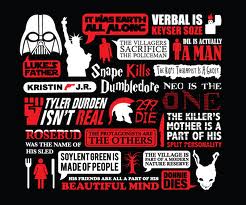
Spoiler alerts do warn those readers or viewers who want to be surprised, but knowing the ending does not necessarily ruin the reading or viewing experience. Want to experiment? Here are 50 plot spoilers for 50 novels. I predict that each novel will not disappoint, even if you already know the ending.

ScantronThe New York State Department of Education’s new standardized tests were administered last week. The tests for grades 3-8 were developed by the educational testing company Pearson and contained new “authentic” passages aligned to the new Common Core State Standards. State tests might have been routine news had not several teachers also noticed that the English Language Arts “authentic” passages mentioned products and trademark names including Mug ©Root Beer and Lego ©.

Product placement on standardized tests in elementary schools is bigger news. The public has grown accustomed to advertisements on webpages, before videos, on scoreboards, and with the well-placed beverage during a movie. Subtle and direct advertising to the youth market to develop brand loyalty at an early age is the goal of almost every corporation.

Consider a survey by Piper Jaffray, a leading investment bank and asset management firm, the  “Taking Stock With Teens” survey (taken March 1–April 3, 2013), that gathered input from approximately 5,200 teens (average age of 16.3 years). The survey is used to determine trends, and the most recent results note:

“Spending has moderated across discretionary categories for both upper-income and average-income teens when compared to the prior year and prior season. Yet nearly two-thirds of respondents view the economy as consistent to improving, and just over half signaled an intent to spend ‘more’ on key categories of interest, particularly fashion and status brand merchandise.”

Much attention, therefore, is placed on the youth market, and product placement on standardized testing could be a new marketing strategy. For example, corporations in the fashion industry could read this report and be inclined to offer some news stories or commission a short story that mentioned clothing brand names in the future to Pearson or another testing company in order to provide “authentic” passages. What better opportunity for corporations to build brand loyalty then to an audience, captive in a classroom during a state-mandated test?

The education reporter for the Washington Post, Valerie Strauss, reported on the “authentic” passages that mentioned products as “author’s choices”; Pearson’s response to her query:

As part of our partnership with NYSED, Pearson searches for previously published passages that will support grade-level appropriate items for use in the 3-8 ELA assessments. The passages must meet certain criteria agreed upon by both NYSED and Pearson in order to best align to Common Core State Standards and be robust enough to support the development of items. Once passages are approved, Pearson follows legal protocols to procure the rights to use the published passages on the assessment on behalf of NYSED. If a fee is required to obtain permission, Pearson pays this fee. NYSED has ultimate approval of passages used on the assessment.

Strauss’s report, “New Standardized Tests Feature Plugs for Commercial Products” also indicated that this practice is not exclusive to NY, and that “several different assessment programs have instances of brand names included due to use of authentic texts.” There were no specifics mentioned.

Following up with the NY Department of Education, Beth Fertig from the blog Schoolbook (WNYC),  Stories from the Front Line of Testing asked about the recent product placement:

“This is the first time we have had 100 percent authentic texts on the assessments,” said spokesman Tom Dunn. “They were selected as appropriate to measure the ELA standards. Any brand names that occurred in them were incidental and were cited according to publishing conventions. No one was paid for product placements.”

Perhaps no one was paid this year, but an unwritten taboo was broken with these standardized test. The New York Post reported one teacher response in the article  “Learn ABC’s – & IBM’s: Products in Kid Exams” by Yoav Gonen and Georgett Roberts

“I’ve been giving this test for eight years and have never seen the test drop trademarked names in passages — let alone note the trademark at the bottom of the page,” said one teacher who administered the exam.

They also reported that other commercial enterprises including the TV show “Teen Titans” and the international soccer brand FIFA  were also included on the tests.

While gaining the loyalty of the youth market is a necessary step for major corporations, the appearance of these brands on standardized tests brings our students one step closer to the future as envisioned by Stephen Spielberg in the film Minority Report. In one scene, the fugitive John Anderton (Tom Cruise) walks along a corridor while animated billboards market directly to him by calling his name:

The possibility of this kind of marketing exists and perhaps personalized advertising will call to us everyday; a cacophony of advertisements designed to keep brand names in our consciousness. Similarly, even the youngest students are the target of marketing campaigns as part of any corporation’s long term economic strategy; advertisements on multiple platforms are the “white noise” of their lives. So frequent are advertisements in students’ lives that any product placement, paid or unpaid, on these standardized tests may contribute to the definition of what is “authentic”. Students are exposed to ads so frequently and in so many genres that a text is not real without some brand name mentioned.

And if that product placement is a small part of what makes a passage “authentic” on a standardized test, can talking “authentic” billboards in the school hallways be far behind?

Here is an educational policy riddle: How much background knowledge does a student need to read a historical text?

According to New York Engage website: None.

The Common Core State Standards (CCSS) are being implemented state by state, and there is an emphasis from teaching students background knowledge to teaching students skills, specifically the skill of close reading.

The pedegogy is explained by The Partnership for Assessment of Readiness for College and Careers (PARCC):

Close, analytic reading stresses engaging with a text of sufficient complexity directly and examining meaning thoroughly and methodically, encouraging students to read and reread deliberately. Directing student attention on the text itself empowers students to understand the central ideas and key supporting details. It also enables students to reflect on the meanings of individual words and sentences; the order in which sentences unfold; and the development of ideas over the course of the text, which ultimately leads students to arrive at an understanding of the text as a whole. (PARCC, 2011)

There are many lessons that strongly advocate the use of close reading in teaching historical texts on the EngageNY.com website, including a set of exemplar lessons for Lincoln’s Gettysburg Address promoted by CCSS contributor and now College Board President, David Coleman. The lesson’s introduction states:

The idea here is to plunge students into an independent encounter with this short text. Refrain from giving background context or substantial instructional guidance at the outset. It may make sense to notify students that the short text is thought to be difficult and they are not expected to understand it fully on a first reading–that they can expect to struggle. Some students may be frustrated, but all students need practice in doing their best to stay with something they do not initially understand. This close reading approach forces students to rely exclusively on the text instead of privileging background knowledge, and levels the playing field for all students as they seek to comprehend Lincoln’s address.

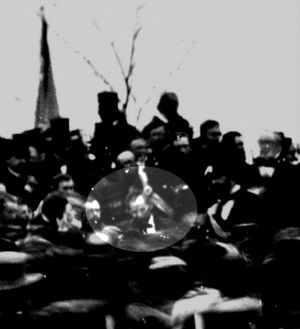
Photo of Lincoln delivering Gettysburg Address- (www.wikipedia.org)

Photo of Lincoln delivering
Gettysburg Address- (www.wikipedia.org)

The lesson plan is organized in three sections. In the first, students are handed a copy of Lincoln’s Gettysburg Address and perform several “cold” readings, to themselves and then with the class.

Lesson Plan SECTION 1 What’s at stake: a nation as a place and as an idea

Students silently read, then the teacher reads aloud the text of the Gettysburg Address while students follow along.

  • Students translate into their own words the first and second paragraph. 
  • Students answer guiding questions regarding the first two paragraphs

Please note, there is no mention of any historical context for the speech. Students will come to this 273-word speech without the background knowledge that the Battle of Gettysburg was fought from July 1 to July 3, 1863, and this battle is considered the most important engagement of the American Civil War. They will not know that the battle resulted in “Union casualties of 23,000, while the Confederates had lost some 28,000 men–more than a third of Lee’s army” (History.com). They will not know how the Army of Northern Virginia achieved an apex into Union territory with “Pickett’s Charge,” a failed attempt by General George Pickett  to break through the Union line in South Central Pennsylvania, and that the charge resulted in the death of thousands of rebel soldiers. They will not know how the newly appointed Major General George Gordon Meade of the Army of the Potomac met the challenges of General Robert E. Lee by ordering responses to skirmishes on Little Round Top, Culp’s Hill, and in the Devil’s Den. They will not know that Meade would then be replaced by General Ulysses S. Grant in part because Meade did not pursue Lee’s troops in their retreat to Virginia.

Instead of referencing any of this historical background, the guding questions in the lesson’s outline imagine the students as blank slates and mention another historical event:

A. When was “four score and seven years ago”? B. What important thing happened in 1776?

The guiding responses for teachers seem to begrudge an acknowledgement that keeping students bound to the four corners of a text is impossible, and that, yes, a little prior knowledge of history is helpful when reading a historical text:

This question, of course, goes beyond the text to explore students’ prior knowledge and associations. Students may or may not know that the Declaration of Independence was issued in 1776, but they will likely know it is a very important date – one that they themselves have heard before. Something very important happened on that date.  It’s OK to mention the Declaration, but the next step is to discover what students can infer about 1776 from Lincoln’s own words now in front of them.

In addition, there are admonishments in Appendix A of the lesson not to ask questions such as, “Why did the North fight the civil war?”

Answering these sorts of questions require students to go outside the text, and indeed in this particular instance asking them these questions actually undermine what Lincoln is trying to say. Lincoln nowhere in the Gettysburg Address distinguishes between the North and South (or northern versus southern soldiers for that matter). Answering such questions take the student away from the actual point Lincoln is making in the text of the speech regarding equality and self-government.

The lesson plan continues:

Lesson Plan SECTION 2  From funeral to new birth

  • Students are re-acquainted with the first two paragraphs of the speech.
  • Students translate the third and final paragraph into their own words.
  • Students answer guiding questions regarding the third paragraph of the Gettysburg Address.

Please note this does not provide the context of the speech that was given that crisp morning of November 19, 1863, at the dedication of the National Cemetery on a damp battlefield that only months before had been dampened red with the blood of tens of thousands of soldiers from either side. The students would be unaware that Lincoln had taken the train from Washington the day before and was feeling slightly feverish on the day of the speech. There is some speculation that he may have been suffering from the early stages of smallpox when he delivered the speech reading from a single piece of paper in a high clear voice. The students would not know that Lincoln’s scheduled time at the podium followed a two hour (memorized) speech by Edward Everett, who later wrote to Lincoln stating, “I should be glad if I could flatter myself that I came as near the central idea of the occasion in two hours as you did in two minutes.” The students would not know that many of the 15,000 crowd members did not hear Lincoln’s two minute speech; the 10 sentences were over before many audience members realized Lincoln had been speaking. The students would not know that this speech marked Lincoln’s first public statement about principles of equality, and they would not know that he considered the speech to be a failure.

Lesson Plan SECTION 3  Dedication as national identity and personal devotion

  • Students trace the accumulated meaning of the word “dedicate” through the text
  • Students write a brief essay on the structure of Lincoln’s argument

The lesson provides links to the five handwritten copies of the text, in the “Additional ELA Task #1: Comparison of the drafts of the speech” so that students can see drafts of the speech and the inclusion of “under God” in the latter three versions. There is also an additional Social Studies task that incorporates the position of respected historian Gary Wills from his book Lincoln at Gettysburg: The Worlds that Remade America. This activity suggests students use excerpts from Wills’s book and an editorial from the Chicago Times (November 23, 1863) to debate “Lincoln’s reading of the Declaration of Independence into the Constitution”. One excerpt from Wills’s book includes the statement,”The stakes of the three days’ butchery are made intellectual, with abstract truths being vindicated.” Finally, here is information about the battle itself; the battle lasted three days and soldiers died.

The enterprise of reading the Gettysburg Address without context defeats PARRC’s stated objective of having the students “arrive at an understanding of the text as a whole”. The irony is that in forwarding their own interpretation of the speech, David Coleman and the lesson plan developers have missed Lincoln’s purpose entirely; Lincoln directs the audience to forget the words of the speech, but never to forget the sacrifices made by the soldiers during that brutal conflict:

The world will little note, nor long remember what we say here, but it can never forget what they did here.

Lincoln wrote and delivered the Gettysburg Address to remind his audience “that these dead shall not have died in vain”. Analyzing the language of the address isolated from the Civil War context that created the tone and message is a hollow academic exercise. Instead, students must be taught the historical context so that they fully understand Lincoln’s purpose in praising those who, “gave the last full measure of devotion.”

“It is altogether fitting and proper that we should do this.”

Continue Reading…

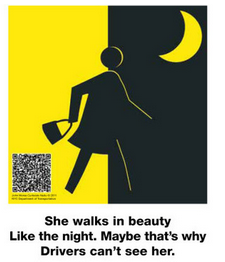
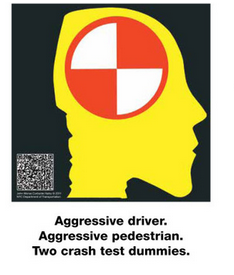
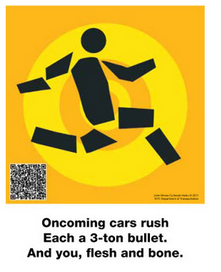
Mash-up are usually the blending of music from two or more sources. However a different mash-up was featured in a story by National Public Radio (NPR) where street signs in New York City were rewritten into Haiku poetry, Haiku Traffic Signs Bring Poetry To NYC Streets. This story illustrated how a mashup could be made of a very basic informational text with a strict poetic form. “Caution: Oncoming Traffic” was expanded into a poem of  of 5 syllables/7 syllable/5 syllables of “8 million swimming/The traffic rolling like waves/Watch for undertow.” In the NPR story,

“Traffic warning street signs written as haiku are appearing on poles around the five boroughs, posted by the New York City Department of Transportation. The poems and accompanying artwork were created by artist John Morse.”

Screen Shot 2013-03-03 at 5.35.21 PM Screen Shot 2013-03-03 at 5.35.31 PM Screen Shot 2013-03-03 at 5.35.39 PM

NYC’s Department of Transportation hoped the signs would catch new eyes in order to communicate important information. The unusual combination of graphics and verse on street signs presented pedestrians with additional information, a different point of view. The reordering of information is just one example of how presenting information in a different genre also provides new writing opportunities for new audiences.

Since the English Language Arts Common Core is rattling its standards calling for an increase in informational texts, the 9th grade curriculum is including a non-fiction unit where students choose a non-fiction text of their own to read. The CCSS  require this increase based on:

“…extensive research establishing the need for college and career ready students to be proficient in reading complex informational text independently in a variety of content areas. Most of the required reading in college and workforce training programs is informational in structure and challenging in content…”

Our students may choose a text to read on topics that range from animal or adventure topics to travel or war. There are titles that have been made available in bulk on the secondary market, such as public library book sales or thrift stores and added to our classroom book carts. The books purchased for $1.00 each (see how) include:

  • Girl Interrupted-Keysen
  • Guts-Paulsen
  • Tuesdays with Morrie-Albom
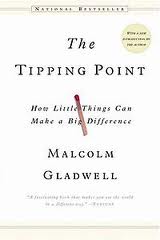
  • The Tipping Point– Gladwell
  • Left for Dead-Nelson
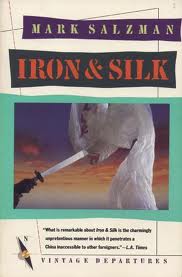
  • Iron and Silk-Salzman
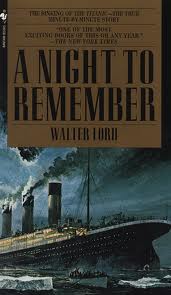
  • A Night to Remember-Lord
  • Hiroshima-Hersey
  • The Teammates-Halberstam

iron and silk Night to remember dog year Tipping

There are also a number of books that deal with animal literature that are stocked on the classroom book cart. Many of these texts will also be available for the senior elective, “Critter Lit”:

  • With Love from Baghdad-Kopelman
  • Tell Me Where It Hurts-Trout
  • Seabiscuit-Hillebrand
  • Winterdance– Paulsen
  • A Dog Year-Katz
  • Wesley the Owl-O’Brien
  • Alex and Me-Royte
  • Modoc-Helfer
  • The Pig Who Sang to the Moon-Masson

Students may chose from these titles or another non-fiction choice though the school library, which also offers the online book shelf Overdrive. The students organize themselves into thematic groups while the unit runs for four weeks (block schedule) with some overlap during the standardized testing weeks. The students spend time reading in class, and they organize themselves into thematic groups. Rather than respond in essays or traditional research papers, the students are given an opportunity to create genre mash-ups.

First, to prepare for writing mash-ups, the students generated a list of the kinds of non-fiction writing they see everyday including:

  • License plate
  • Newspaper article
  • Letter to the editor
  • Ad
  • food labels
  • Menu
  • Directions
  • Q&A Interview
  • Diary
  • Weather report
  • Sports report
  • Billboard
  • Tweet
  • Blog post
  • Directions

Next, the mini-lessons that begin each class are quick( 5-10 minutes) and focus on the characteristics of a particular genre from the list so that students can create rewrite each text in that genre. For example, students review how information is arranged on a food label before creating a “food label” for the books they are reading. Students read billboards and street signs before creating the same.  After each mini-lesson, students write about their text in the assigned genre and use a Google Docs folder to develop a portfolio of authentic writing. The result is a portfolio of mash-ups of informational texts rewritten by students into other genres.

Like the haiku and street sign mash-up, these mashups will still communicate essential information. Students can write about the texts they choose to read in the authentic genres they encounter everyday.

Finally, when April comes around, the students may try writing their essential information in poetry: sonnets, limericks, villanelles and even haikus. After all, April is National Poetry Month!

According to literary legend, Ernest Hemingway wrote a six word short story in response to a bet:

Screen Shot 2013-02-26 at 3.58.31 PM

So when my Advanced Placement English Literature class was suddenly shortened one day last week due to a  delayed opening, I thought that I would do a close reading on this famous short story. After all, how long could a discussion on six words last? I was confident there would certainly be enough time for each of them to craft an essay as well.

The usual procedure for close readings in class is to have a volunteer “read aloud” while students annotate their copies of the text. The text is also displayed on the SMARTboard so that notes can be added and shared with all members of the class.

After they settled down with copies, Sam volunteered to read. We listened and paused. I started to ask, “So how did Ernest Hemingway, the author of this short story, convey his meaning?” when I was cut off.

“Whose baby died?” asked Alexis. She had no notes on her page.

“The baby died?” Connor responded, “I thought this was about a tag sale.”

“Why do you say that?” I asked, “Look at the evidence in the text.”

“Because people who have tag sales put in ads, and the ads are short,” replied Connor.

“But that is why the ad is short,” Alexis retorted, “the parents are so upset, they cannot write a long ad to sell the baby’s shoes.”

“Where are parents in the text?” I demanded.

“I agree with Alexis,” said Sam, “the shoes were ‘never worn’. The baby is dead.”

“OK,” I agreed, ” the words ‘never worn’ are in the text, but…”

“But the baby shoes could have been a gift that was the wrong size,” interrupted Natalie.

We were drifting off in our discussion. I had chosen the story because of its brevity, but I also had considered how well the text responded to the Publisher’s Criteria for the English/Language Arts Common Core Standards:

The Common Core State Standards place a high priority on the close, sustained reading of complex text, beginning with Reading Standard 1. Such reading focuses on what lies within the four corners of the text. It often requires compact, short, self-contained texts that students can read and re-read deliberately and slowly to probe and ponder the meanings of individual words, the order in which sentences unfold, and the development of ideas over the course of the text.

This was a “compact, short, self-contained texts that students can read and re-read deliberately.” The students were beginning to probe the meanings of individual words, but they were drifting.  They were bringing up tag sales, upset parents, and poor present gifting;  we were far off the four corners of this text.

For a moment, a very brief moment, I consider that we were moving away from the goals of the Common Core to work with the text. However, they were so quickly engaged, that I grew far more interested in listening to how close to they were to determining Hemingway’s purpose. Hemingway had selected six specific words to excite the reader’s imagination. My students were not wrong in their suggestions, they were using his text to understand, to create meaning. They were working with Hemingway’s language and responding to his inferences.

Their written drafts also leapt beyond the evidence, much like the discussion:

  • “They have waited nine months in anticipation for this day, and that morning a pair of shoes, no larger than the size of a plum, arrived in the mail, a gift from an aunt. They run to the hospital; they cry, they yell, they cry, but their baby is dead. ‘Get rid of those shoes.’ He writes in the paper, “For sale: baby shoes, never worn.’ Auntie will be sad.”
  • “…whether it’s a parent/ guardian or a thief trying to make money, it is obvious from the syntax that the shoes need to go.”
  • “‘For sale’ is a general coupling of words that comes from a particular type of person….a person low on monetary resources or one who wants to get rid of something…”
  • “…by saying the word ‘never’, that means the parents have never had a baby and will never have a baby…never is finite”
  • “In reality, Hemingway’s story is less of a story and more of a jumping off point. The six words are a choke point, like that of an hourglass stretching of in infinity in either direction.”

These drafts, hastily written in response to the story, ranged from 2-3 handwritten pages; far more than the six words that stimulated their ideas. The students wrote furiously until the bell rang, and then begged for more time to finish.

Certainly, their responses could be judged by the CCSS criteria, “Student knowledge drawn from the text is demonstrated when the student uses evidence from the text to support a claim about the text.” However, their responses in discussion and in essays offer significant proof that the ideas that started in text cannot be limited by clocks or “four corners”.

The teachers at the professional development session were visibly frustrated; I could hear the irritation in their comments. The presentation on the use of digital technology was to help them improve digital literacy across the content areas, but many of the sites in the demonstration were blocked by the school’s Internet filter. I sympathized with their frustration because just three years ago, I was like them. Three years ago, our school’s Internet filter blocked everything.blocked youtube

Back then, members of my English department were finding excellent resources to use to teach the novels All Quiet on the Western Front, The Crucible, and the memoir Night. Unfortunately, many of these resources were unavailable because they were on YouTube or had descriptors such as “witchcraft in Salem, Massachusetts” or “Nazi” that were blocked by our filters. The filters were useless to a large degree since many of the students knew a variety of different strategies to get around each filter. So, the irony was that the students had access where the teachers did not.

Furthermore, the students were having a rich and very authentic experience of using the Internet outside of school. Once they came into our building, however, they were detached from the very technology that they would need to use in their future. Our school web filters  created an “un-authentic” web experience for our students. We were losing the opportunity to teach them digital citizenship because they were not digital citizens.

Fortunately, our administration took the position that teaching our students 21st Century skills meant that they should have access to the Internet in a technology rich learning experience. The filters were minimized. Our acceptable use policy was enforced, and teachers and students had access to the Internet resources.

We moved from exclusively computer lab use to 1:1 netbooks in English/Social Studies to a “Bring Your Own Digital Device” (BYOD) over the course of the next two years, and now, two years later, I can testify that unblocking the Internet has not created a problem for teachers or students. Yes, the students can watch YouTube videos, but they also make videos and share them with other students. They make videos for our “Friendship and Respect” Assemblies and share these on YouTube; they watch Oscar winning films for Film and Literature Class that are on YouTube; they embed YouTube videos into their blogs.

Furthermore, our students have access to the Internet to meet the state adopted Common Core Literacy Standard:

CCSS.ELA-Literacy.CCRA.W.6 Use technology, including the Internet, to produce and publish writing and to interact and collaborate with others.

Of course, our students are not perfect, and their behaviors using the Internet at school are not always tied to curriculum. I once came upon a group of young men huddled around a computer screen one morning. They were watching a video, and as I grew closer, I could hear a voice say, “She’s a beauty…” and another agree, “Oh, I want her!” I feared the worst, but when  I came up behind them to see what was on the screen, I got a eyeful of a 2006 Ford F250 XLT Powerstroke Turbo Diesel Pick Up Truck. Curriculum? No. Authentic experience? Yes.

The frustrated teachers who were sitting in the professional development asked what steps they could take to have their administrators review acceptable use policies and open the Internet filters for their students. They discussed looking at other school districts’ acceptable use policies. Perhaps there might be some testimony about the success of unlocking an Internet filter?

This post is one such testimony, and I offer this to any teacher that is looking to “unblock” the Internet in order to engage students in developing 21st Century skills. We are already in the second decade of this 21st Century, and the skills necessary to use the Internet are becoming more valuable in this Information Age. According to the 2012 data, using the Internet is a real world experience for 2,405,518,376 people. That is 1/3 of the world’s population, and there has already been a 566% increase in use since the beginning of the new millenium.

Our students are counted in those numbers already. While they use the Internet outside of school for social media; they should be taught to use the Internet for education and productivity in school. So once they have access to YouTube, they can never go back…they will only go forward.