Archives For November 30, 1999

tragedy“On Friday noon, July the twentieth, 1714, the finest bridge in all Peru broke and precipitated five travelers into the gulf below.”

That is the opening sentence from Thornton Wilder’s novel The Bridge of San Luis Rey. A monk who witnesses the fall of those travelers searches for answers as to whether the accident was simply chance or an act of the Divine. In writing The Bridge of San Luis Rey, Wilder was addressing the genre of tragedy which was defined by Aristotle in his Poetics as “an imitation of a serious act” in literature. The purpose of tragedy is to provide the reader, or viewer in the case of drama, an experience of loss without having to suffer what a fictional character suffers. Through his literature, Wilder, like the authors and playwrights before him, provided the experience and language to us to respond when there is a tragedy. Great literature does this well which may be why the literature taught in high school classrooms is, more often than not, tragedy.

Of course, tragedy is not always a popular curriculum choice. I am always being confronted by students,  “Why do we have to read such depressing books?” or “Why does every book we read in English have to be so sad?” Predictably, when I hand out a book for a whole class read, student will examine the cover, the length of the text, and ask, “So, who dies?” Through literature, students learn a number of different approaches or definitions of  tragedy. In grades 9-12, students are taught about Greek tragedy (Oedipus, Antigone, Medea) where fate or Nemesis cannot be avoided. They learn about catharsis, the purging of pity and fear, and pathos, the empathy one has for the tragic hero. Students are taught about how the Shakespearean tragedy (King Lear, Macbeth, Richard III) centers on the willful downfall of a character who brings about the destruction of others. We have also included a modern interpretation of tragedy by Otto Reinherdt as students read contemporary works of literature (Death of a Salesman, The Road):

“Tragic Man demands that an imperfect world conform to his notions of right and good, and he is defeated because discord, injustice, pain, and moral evil are the world’s warp and woof. The final paradox is man in his tragic vision saying, ‘I do not believe in the invincibility of evil but in the inevitability of defeat’.. . . But in the absoluteness of his commitment, the tragic hero triumphs in the very inevitability of his defeat.”

The indoctrination to tragedy as a “serious action imitated” begins early in the student’s educational career. In grade 5, whole class reads can be The Giver, a dystopian novel that features the euthanasia of a small child. In grade 6, students may read The Devil’s Arithmetic, a book that brings students closer to an authentic understanding of the Holocaust and the deaths of six million Jews. In young adult (YA) literature, there are so many stories about the deaths of pet dogs  (Old Yeller, Where the Red Fern Grows, Love that Dog) that author Gordon Korman fought back against that literary trope with his  YA novel, No More Dead Dogs. Our 7th grade reads that book as an opening bonding experience in September, but they also read Pearl Buck’s short story “The Big Wave” about a tsunami that wipes out a small coastal village in Japan. The recent tsunami in Japan gave our young readers a new appreciation for the tragedy caused by nature.

In high school curriculums everywhere, students decry the death of a character, “Why does the author make us like him and then kill him?” They rail against the death of Johnny in The Outsiders (grade 8); the death of Lenny in Of Mice and Men (grade 9); the death of Kat in All Quiet on the Western Front (Grade 10); the death of John Proctor in The Crucible  (Grade 11); and the death of Hamlet (Grade 12). They claim to want a happy ending.

But do English teachers force an unwanted genre on students? Do students hate tragedy? Not really. Look at the two most popular series of books students chose to read independently. The Harry Potter series began with two deaths, the sacrifice of Lily and James Potter for their infant son, Harry. Seven books later,  JR Rowling had bumped off over 50 characters, and one beloved owl Hedwig (although, admittedly the death of Bellatrix Lestrange was satisfying). Student loved these novels. In Suzanne Collin’s The Hunger Games trilogy, killing and death is a form of entertainment, an entertainment made even more horrific when teenagers are the assassins. In the first book, eleven “tributes” are killed on the first day of the games. The protagonist Katniss kills four tributes herself before she “wins” this round of games with Peeta; the deaths pile up as the series continues with Collins disposing of major characters at a furious clip. I cannot keep these books on my classroom shelf.

Ultimately, tragedy in literature prepares a reader for the experience of tragedy in life. My own first experience with death was from Louisa May Alcott in Little Women when the sickly Beth March finally succumbed to illness:

“As Beth had hoped, the `tide went out easily’, and in the dark hour before dawn, on the bosom where she had drawn her first breath, she quietly drew her last, with no farewell but one loving look, one little sigh.”

I remember reading and re-reading that passage over and over and thinking: “Had I read correctly? Were there only three March sisters left? How could Alcott do this to me?” Well, she did this to me and millions of other readers because in real life people die. Nice people. Good people. Young people. Beth’s death was not a tragedy in the literary sense, but the hole left by her death for the fictional family was “a serious act imitated in literature” like the many real deaths that leave holes in the lives of real families.

Our society confronts news that is tragic everyday.  The recent death of 20 schoolchildren and six teachers in a school shooting not far from where I teach just before the Christmas holiday season is a tragedy so horrific that many have been left speechless; I hear, “There are no words.” But there are words, words in great literature written to prepare us, from a young age through high school and beyond, for exactly this experience. Thornton Wilder’s fictional story of The Bridge of San Luis Rey concludes with a paragraph that offers his response to a tragedy. Through literature, Wilder provides a language for readers to respond to a tragedy such as the one in Newtown, Connecticut, and other heartbreaking events:

“We ourselves shall be loved for awhile and forgotten. But the love will have been enough; all those impulses of love return to the love that made them. Even memory is not necessary for love. There is a land of the living and a land of the dead and the bridge is love, the only survival, the only meaning.”

As the first semester begins to draw to a close, I need to check in and see what progress the 9th grade students are making with Silent Sustained Reading (SSR). Our school’s move to a block schedule (A/B) days of 83 minute classes has given us the opportunity to provide students with 10-20 minutes of SSR every English class period. I try very hard not to put any restriction on what students read, although I still urge them to try and “read up” to more complicated texts. I wrote about the rationale for this program in a previous post, “Be Vewy, Vewy Quiet…We’re Reading”.

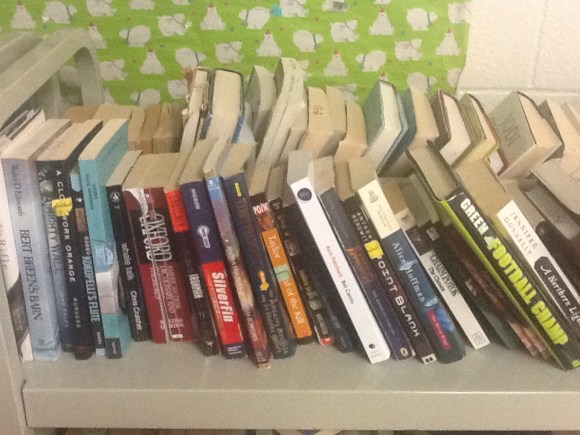
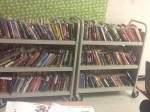
To facilitate the SSR program, there are two carts in the room with books I have purchased through the secondary market, mostly thrift stores and public library book sales (hence the title of the blog “Used Books in Class”). Each cart holds about 150 books; at $1-$2 a book, I have spent about $500 on the 300 books available for SSR.

A wide selection

A wide selection

The most popular titles in circulation these past few months have been:

Lauren Myracle’s TTFN and TTYL
John Flanagan’s Ranger’s Apprentice (any one in the series)
Catherine Gilbert Murdock ‘s Dairy Queen
Gabrielle Zevin’s Elsewhere
Alice Sebold’s The Lovely Bones
Patricia McCormack’s Cut
Carl Deuker’s Gym Candy
S. A. Bodeen’s The Compound
Sarah Dressen’s  Dreamland
Nicholas Sparks’s Dear John
Suzanne Collins’s The Hunger Games Trilogy (pick any one of these; they are on EVERYONE’S shelf)

The students are keeping their responses to the books they read on the Shelfari website this year. This is a commercial site tied to the retail giant Amazon, but there are ways to lock down the private groups we have established for each class. Last year, we used Blogger, but there were some glitches with Internet Explorer and Blogger; unless we used a browser like Firefox, the pages kept jumping and commenting was impossible. When students are on the Shelfari site, they can see what other students in the class are reading, and posting titles they have read or plan on reading is really easy. In addition, there are already reviews of the books, so students are forced to add something original to a review of the book. They can read recommendations (for and against the text) and they can participate in a discussion.

This morning I posted the following discussion prompt on Shelfari:

Hello,
You have had 16 weeks of SSR in class-most of the time with your choice of reading materials.
Tell me how you are progressing as a reader. Are you finding enough materials to read? Have you read at least ONE good book? Are you a better reader now that you were in September? Why or why not?

Some of the responses made my teacher’s heart pound proudly:

Over the past 16 weeks of SSR, I’ve probably read 5 or 6 books. Some of them were short, but some were a reasonable length. I’ve really been enjoying the SSR time we’ve been getting because the quiet period of time we get is really beneficial to my reading skills.

I am progressing in my reading. So far I have read three books this year. I am finding plenty to read. I have found many good books, including “Prom & Prejudice” and “Awkward”. I feel I am a better reader than I was in September because I am reading more difficult books than I was before and in September.

Yes I am better reader because last year I read even slower than I do now and I understand more because of the vocabulary words. I am finding enough materials to read. A good book I read this year was Miracle on 49th Street, this was good because it was a very suspenseful book.

But then, there are the honest appraisals that make me concerned about how students select books and a student’s ability to stay focused in a class for 10-20 minutes:

I’m an average speed reader, but I tend to get distracted. I’ve read a lot of good books, but they were in a lot of different genres. It’s hard for me to find books that interest me lately. I feel that my reading skills have changed a little, I’ve been able to understand things a little more.

During the past 16 weeks of SSR I haven’t really improved very much with my reading. I have only finished one book and I am working on another the first was a pretty good length and didn’t take long to read and the other is pretty long. I am a slow reader and I also just never find the time to sit down and read my book. Also, I get distracted while reading my book sometimes, so I haven’t progressed very much in the weeks of SSR.

And then, there are the even more painfully honest appraisals:

I’m a really really slow reader, and tend to get very distracted while reading, so I have a hard time making lots of progress in books. Books that are available to me don’t interest me. There was only one book that I’ve read and liked in my whole life; but there are no sequels. No I’m not a better reader, my reading skills never change, I’m always a slow and easily distracted reader.

The quiet time in SSR may not be “quiet” enough for some students, so I need to think about the physical space being more reader friendly. Apparently, I also need to have some students develop an understanding of what they like to read, and see how I can get those books onto my book carts.

Success with SSR is monitored through student self-appraisal, so I will be checking back in a few months to see if students note any changes in how they are reading. If nothing else, I know that there is power in the shared quiet reading experience we have twice or three times a week. When their heads are bent down in a book, I can feel them read.

Here is how to add an informational text to appease the Common Core State Standards without throwing out literature. Find an exceptionally well-written piece of non fiction and use that informational text as a centerpiece for a thematic unit.

Here is my example: On January 13, 1982, Air Florida Flight 90 crashed into Washington DC’s 14th Street Bridge and plunged into the Potomac River. There had been a heavy snowstorm which had closed National Airport earlier that day. Improper de-icing procedures were credited as a major reason for the crash; 78 people were killed, four of these fatalities were motorists from the bridge who had been caught in the traffic jam caused by the storm. Only five people were rescued from the icy waters, and their rescue was broadcast live during the evening news. A news media crew, stuck in traffic only a few hundred yards away from the plane crash, filmed one rescuer’s memorable plunge to pull a flight attendant  from the icy water. I remember; I watched that happen live on the evening news.

Twelve days later Roger Rosenblatt’s piece The Man in the Water appeared in TIME magazine (January 25, 1982). His opening paragraph starts with an ordinary sentence, “As disasters go, this one was terrible but not unique, certainly not among the worst on the roster of U.S. air crashes” He continues to comment on the setting, “There was the unusual element of the bridge, of course, and the fact that the plane clipped it at a moment of high traffic, one routine thus intersecting another and disrupting both.” But then, there is a shift; Rosenblatt suddenly shifts into the kind of figurative imagery usually reserved for poetry:

“Washington, the city of form and regulations, turned chaotic, deregulated, by a blast of real winter and a single slap of metal on metal. The jets from Washington National Airport that normally swoop around the presidential monuments like famished gulls were, for the moment, emblemized by the one that fell; so there was that detail. And there was the aesthetic clash as well—blue-and-green Air Florida, the name a flying garden, sunk down among gray chunks in a black river.”

Rosenblatt’s purpose was not to comment of the disaster itself, but rather to focus on the actions of one individual who rescued other crash survivors floundering amid the frozen chunks of ice and crash debris floating in the Potomac. This individual Rosenblatt christened “The Man in the Water.”

“Balding, probably in his 50s, an extravagant moustache.) He was seen clinging with five other survivors to the tail section of the airplane. This man was described by Usher and Windsor as appearing alert and in control. Every time they lowered a lifeline and flotation ring to him, he passed it on to another of the passengers.”

Rosenblatt called attention to the other resuers in this disaster including, Donald Usher and Eugene Windsor, a park-police helicopter team and Lenny Skutnik who jumped from shore to drag flight attendant Priscilla Tirado to shore. But it is the “Man in the Water” that Rosenblatt immortalizes in the essay:

“When the helicopter came back for him, the man had gone under. His selflessness was one reason the story held national attention; his anonymity another. The fact that he went unidentified invested him with a universal character. For a while he was Everyman, and thus proof (as if one needed it) that no man is ordinary.”

I use this essay, which is anthologized in an English literature textbook, as the thematic centerpiece for the senior elective Hero or Monster. The essay sets up the essential question: What makes a hero?

There are other resources to use with this text. A National Geographic Video Plane Crash in the Potomac (credit – Discovery/ National Geographic channel Seconds From Disaster)

After reading this essay and watching the video, student are charged to consider what makes a hero in literature. The required reading for the thematic unit will including selections from the Iliad, James Thurber’s short story The Greatest Man in the World, Ken Kesey’s One Flew Over the Cuckoo’s Nest, and an independent reading book. Students will also read about the monomyth or hero’s journey and trace the journey of a hero in a book of their choice.

While Rosenblatt’s essay never identifies the man in the water, forensic experts determined that his name was Arland Dean Williams Jr. Of course, by not naming the man in the water, Rosenblatt suggests anyone can be a hero,and concludes in a memorable last line, “He was the best we can do.” Similarly, if informational texts are required in the Common Core State Standards, than including an essay of this caliber for our students is also the best we can do.

Screen Shot 2012-12-02 at 10.44.58 AM

What SHOULD be a tenet of the Common Core State Standards.

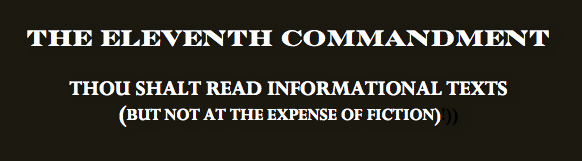
The 11th Commandment from Common Core State Standards (CCSS)? Thou Shalt Read Informational Texts.

This edict from on high, from current College Board President and co-architect/promoter of the CCSS David Coleman, has had a seismic shift in curriculum at all grade levels. English/Language Arts Curriculum directors and teachers are jettisoning fiction from their lesson plans in the mistaken belief that they alone are responsible for addressing this new found commandment. For the uninitiated, informational texts in the CCSS replaces the genre previously known as non-fiction and includes many other genres including essays, speeches, and reports.

Columnist Joel Stein exposes the foolishness of this effort in his commentary “How I Replaced Shakespeare” in the 12/10/12 issue of Time Magazine when he discovered that his writing was being analyzed by students. (Note: Diane Ravitch, education activist has the full post on her blog) His response to students who were assigned his articles and who were parsing them for literary devices or thesis?

“Transfer high schools immediately! To one that teaches Shakespeare and Homer instead of the insightful commentary of a first-rate, unconventionally handsome modern wit! Also, don’t do drugs!”

Stein readily admits that students should have some exposure to different genres and explains that he learns how to write in different genres by looking at examples. Similarly English/Language Arts curriculum require students to write in various genres as well through models as well; for example, students are taught with models as to how to write in the genres of essay, business or friendly letter, book review, and poetry.

However, Stein refutes one of Coleman’s most quoted talking points. Coleman said, “It is rare in a working environment that someone says, ‘Johnson, I need a market analysis by Friday, but before that I need a compelling account of your childhood.’” Stein’s response? “I agree with this, but only because no one has ever asked me for a market analysis.”

Stein points out that fiction provides the models that makes writers better. “No nonfiction writer can teach you how to use language like William Faulkner or James Joyce can,” he continues. Stein also mentions how the themes in fiction, and he mentions Shakespeare specifically, prepare students for real life choices. Othello, he notes, can help students make better choices about choices in working partnerships.

Instead, the shared blame for students not knowing how to write well or be able to read non-fiction lies with other disciplines such as history and science, a charge echoed by Gene Wilhoit, executive director of the Council of Chief State School Officers who, along the National Governors Association, created the Common Core. Stein quotes Wilhoit saying, “History class assignments tend to be short textbook summaries, not primary sources.” Indeed the CCSS anticipated that reading across the disciplines is the most effective way to increase student understanding, so the CCSS made clear that a student’s diet of reading should be 70% informational texts and 30% fiction. Unfortunately, the explanation as to how this percentage would play out in the average student’s school day was relegated to two footnotes. On page 5 of the CCSS English Language Arts (down load) is the footnote that illuminates the 11th commandment of how Thou Shalt Read Informational Texts:

1
The percentages on the table reflect the sum of student reading, not just reading in ELA settings. Teachers of senior English classes, for example, are not required to devote 70
percent of reading to informational texts. Rather, 70 percent of student reading across the grade should be informational.
2
As with reading, the percentages in the table reflect the sum of student writing, not just writing in ELA settings.

When the CCSS were announced, the misreadings of this the English/Language Arts standards began immediately. The footnote was largely ignored. Instead, the movement to jam informational texts into English classes began. Literature was dumped in order to meet the set ratio in English classes alone rather than a move to increase the reading of informational texts in all other disciplines.Stein recounts how Wilhoit highlights the reaction of the small, vocal group who objected. “It (CCSS) upset people who love literature. That happens to be a lot of high school teachers,” Wilhoit said.

In How I Replaced Shakespeare, Stein adds his voice to the small vocal group who love literature.  He is a former writer for the Los Angeles Times and now is a regular contributor to Time. He is a good writer who recognizes that all students would be far better served to read great literature (Shakespeare,Faulkner, Joyce)  rather than his column of “informational texts.” The loss of literature at every grade level in an attempt to serve ratios-50% fiction/50% informational text in elementary and 30% fiction/70% in high school- is too great a price to be paid to meet the goals of the yet unproven Common Core.

Two visibly dissimilar groups arrived at the Downtown Convention Center in Providence, Rhode Island, on Sunday, November 4, 2012.

The Literacy for All Convention organized by Lesley University attracted thousands of business casual educators-teachers, literacy specialists, reading consultants, etc. These attendees were easily identified by their large red book totes and sensible shoes.

In contrast there were thousands of attendees to the Rhode Island Comic Con dressed as Speed Racers, Waldos, Power Rangers, Luke Skywalkers, Hulks, Green Honets, Spidermans, Ghostbusters and others. These attendees were easily identified by masks and spandex.  

This slideshow requires JavaScript.

As I approached one of the ballrooms, a pair of ninja-attired ushers looked me up and down, and without a word pointed me to the left lane, down the “boring” hallway.

Was my dress that obvious? I looked around. My brand? Coldwater Creek. Their brand? Marvel.

I walked past the long lines of patient Comic Con attendees; spandex, glitter, togas, masks, and capes abounded. I heard an announcement, “Jedi training in this room!” Jedi training? I looked at my program to the upcoming session I would be attending: Writing the Persuasive Essay. Jedi training looked far more interesting.

And then it hit me. There is a deep bond between the educators who busily rushed from session to session with oversized bags and the strutting costume clad participants who preened through the lobbies. There is a literacy foundation for both conventions. Everyone in the convention center was there because of the power of story.

Comic Con celebrates of the characters of stories; stories are the ways educators build literacy.

Yes, the love of story is what drew two unlikely groups together. The love of story transcended age and wardrobe…I looked around with new perspective. These were my people!

Throughout the day, we shared the same lobby areas and escalators…Pincachu in front of me, Katniss behind me.

“Look,” I remarked as we got off at the top floor, “It’s the Red Power Ranger!”

“That’s Deadpool,”  the young man behind me sneered. I tried to laugh off my error, but I had obviously touched a nerve.

“I stand corrected,” I apologized.

This is Deadpool…NOT the Red Power Ranger.

I quickly looked up up Deadpool. According to the Marvel Universe website, Deadpool (aka Wade Winston Wilson) is an anti-hero, a disfigured and mentally unstable mercenary whose power is an accelerated healing factor,which provides him with regenerative healing powers for all known diseases including cancer. He first appeared as a villain in The New Mutants #98 (Feb. 1991). Deadpool’s complicated back story alternates from a possible genesis as character with a stolen identity or as the crazed son of a war hero. Reading his lengthy biography is as challenging as some classic literary texts. Deadpool‘s history is as complicated as Shakespeare’s Richard III, Mary Shelley’s Monster, or Emily Bronte’s Heathcliff…all classical anti-heroes.

While I am familiar with each of these literary characters, I simply did not recognize many of the costumes that passed me; my literacy level for Comic Con was seriously limited. I reflected how regularly, and with the same disdain as the young man so boldly corrected me, I had regularly corrected anyone who was mistaken about the relationship of Oedipus to Antigone (“He’s her father AND her grandfather”) about Romeo to Juliet (“She’s a Capulet not a Montague!”) or for George to Lenny (“Remember? Lenny needs George as a protector!”). Now I was the one at a loss for identifying characters or relationships.

Sadly, I was Comic Con illiterate. Apparently, so are many of my fellow educators, but that is changing as research is demonstrating the growth of the literacies associated with graphic novels, comic books, and video games. Several studies are collected in The Handbook of Research on New Literacies edited by Julie Coiro (‪Taylor & Francis, 2008)  Chapter 23 is titled A Literacy of Expertise by Kurt D. Squire and features a study at University of Wisconsin-Madison.

As critics lament the “decline of the book” (with Harry Potter presumably not counting as literature), those few scholars who have touched video-game controllers are noting that games are surprisingly long, difficult, and complex,requiring and developing new digital literacies” (246).

Squires defends these new literacies as complementing more traditional reading materials:

Perhaps the alarm bells sounding the decline of “reading” do not signal a “loss” of literacy, but the emergence of a new constellation of literacy practices that could someday transform our social institutions. If the history of media holds true, video games, like film or television, are not going to replace books but live along side them.  (666).

In the article, When Gaming is Good for You (3/5/12) on the Wall Street Journal online edition explained how  researchers at Michigan State University’s Children and Technology Project reported on a three year study of video games:

491 middle school students found that the more children played computer games the higher their scores on a standardized test of creativity—regardless of race, gender, or the kind of game played. The researchers ranked students on a widely used measure called the Torrance Test of Creativity, which involves such tasks as drawing an “interesting and exciting” picture from a curved shape on a sheet of paper, giving the picture a title, and then writing a story about it.

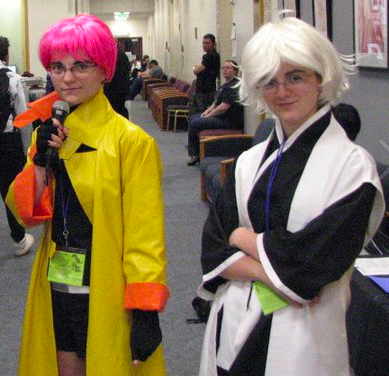
Lucy and Sarah, my nieces, at a Comic Con in Idaho. Their literacy levels are off the charts!

I should be more aware of the significant contributions that these new literacies are having on my students. I also should have been more prepared for the epiphany I experienced at this aptly named Literacy for All conference. My own nieces, Lucy and Sarah, participate regularly at Comic Cons organized in Idaho. Both young women are articulate advocates for anime characters and transform themselves in appearance and attitude. The reading level of some of their texts? 11.8 lexiles. The enjoyment they receive from sharing their knowledge with other like-minded people? Priceless.

The floor lobby areas of the convention center were probably more accurate in reflecting the literacy of today: traditional literacy standard bearers milling about with highly engaged new literacy consumers. These newer literacies may not be for all of my students, but the literacy demands on students who are involved in video games, graphic novels, comic books should be recognized. While teachers may not adopt the spandex, we all understand the importance role of story in our lives.

Who knows if there would be another convergence of the twain at the Literacy For All in future years, but I would like the opportunity to see what that Jedi training is all about.

Continue Reading…

In the classroom, the authors of children’s books are celebrities; the authors of young adult literature are rock stars. So when the National Conference of English Teachers (NCTE) and associated independent organizations the Council of English Leadership (CEL) and the The Assembly on Literature for Adolescents (ALAN) converged on Las Vegas last week, publishers made sure their authors were front and center, delivering keynote addresses and personally meeting and signing books for some of their greatest fans-teachers.

Highlights of the convention included Sherman Alexie (The Absolutely True Diary of a Part-Time Indian) delivering a keynote address to an enthusiastic audience of readers who know how he can reach their reluctant readers. Scott Westerfield (Uglies, Pretties) was there representing the oh-so-popular dystopian fiction. Nicholas Sparks (The Notebook) was there for the older readers, including the teachers themselves, with new educational materials for high school classrooms. Newbery Award winning Lois Lowery (The Giver, Number the Stars) spoke to an enthralled crowd of middle school teachers at ALAN.

The convention had invited many authors; book publishers arranged to bring even more to the exhibition hall. There were over 200 “signing” stations in exhibitor booths advertised in the conference program to alert teachers where to purchase and get books autographed.

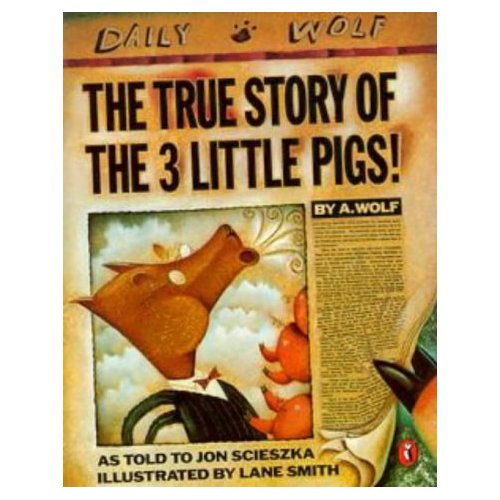
Most booths were mobbed, but on Sunday morning, I came upon a table where a solitary Jon Scieszka sat with a exhibitor. I could not believe my luck. For those who do not know, Scieszka is the author of  Math Curse,  The Stinky Cheese Man and Other Fairly Stupid Tales,and the series The Time Warp Trio, which was made into a TV series. His retelling of the The Three Little Pigs is told from the point of view of A.Wolf. The True Story of the Three Little Pigs was my first Scieszka book experience.In the book, A. Wolf explains how his requests for a cup of sugar from each of the pigs eventually led to his “sneezing” not “huffing and puffing” which sets off the unfortunate demise of the pigs. Illustrated by Lane Smith, this book was one of the “Top 100 Picture Books” of all time in a 2012 poll by School Library Journal. I concur, and I use the book to explain literary point of view to all grade levels. In 2008, Scieszka was named the National Ambassador for Young People’s Literature by the Librarian of Congress.

There Jon Scieszka sat, and there was no teacher in sight!

“Jon Scieszka!” I exclaimed, ” I can’t believe you are alone!”
“Neither can I,” he grinned.
“Me either,” said the exhibitor with him, much more uncomfortably..
“Well, now that I have you all to myself,” I was ready with a question I had asked so many times in my head, “Can I ask how you know so much about my brothers?” I was referring to his hilarious YA memoir Knuckleheads in which Scieszka relates his

experiences growing up. The publisher’s review:

“Growing up as one of six brothers was a good start, but that was just the beginning. Throw in Catholic school, lots of comic books, lazy summers at the lake with time to kill, babysitting misadventures, TV shows, jokes told at family dinner, and the result is Knucklehead. Part memoir, part scrapbook, this hilarious trip down memory lane provides a unique glimpse into the formation of a creative mind and a free spirit.”

The book is almost a mirror reflection of watching my younger siblings compete with each other, set fire to things, and survive Catholic school (with fewer nuns). “I swear you must have been watching my three brothers grow up!” I babbled on.
“You’d be surprised how many people say that,” he chuckled.
“And your short stories in Guy’s Read?” By this time, I was positively gushing, “they are exactly what I need for my 9th grade boys who only want a short read.”
“That’s why we wrote them,” he nodded appreciatively, “for short reads. Now, what name do you want in this book?”
Yes, I got a signed book Spaceheadz by Jon Scieszka! For free. A conversation and a book.

20 minutes later, I passed by the table again, but I caught only a glimpse of him. He was surrounded by a throng of teachers,the serpentine line of fans waiting to talk to him went down the long aisle. My brief and personal moment was obviously a fluke. That’s because he’s Jon Scieszka, children’s book author. Jon Scieszka, Rock Star.

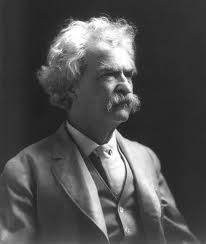
The health of the American Public school system is under debate in many different arenas: political, financial, social, ideological, and now, technological. At the root of these debates is our collective recognition or understanding confirmed by the author Mark Twain (Samuel Clemens):

“We believe that out of the public school grows the greatness of a nation.”

I have used this quote many times myself, but I had never researched the quotation’s context until recently. This quote comes from an address given to the Public Education Association at a Meeting of the Berkeley Lyceum, New York, November 23, 1900. The speech was given the title, “I am a Boxer”, and its brief 588 word composition means that Twain spoke onstage for all of six minutes, applause aside.

The historical background for the speech deals with European colonization in Africa and Asia, and the American efforts to annex the Philippines.  Predictably, there was resistance by the natives of a country resulting in serious and costly conflicts such as the Boer War in South Africa and the Boxer Rebellion in China. Twain had joined with a number of other Americans including William Jennings Bryan, Andrew Carnegie, John Dewey, and William James in an effort to stop a new rush to colonize. They formed the Anti-Imperialist League, and for a short time they coordinated efforts to stop the developing American Empire. Twain’s speech also referenced Russia’s involvement in the Boxer Rebellion in joint operations with US Marines and British troops.

On that Friday, Twain opened the speech to the Public Education Association with his familiar self-deprecating humor:

“I don’t suppose that I am called here as an expert on education, for that would show a lack of foresight on your part and a deliberate intention to remind me of my shortcomings.”

He explains that his extensive travels had improved his understanding of other cultures, and that may be a primary reason for the invitation to have him speak. His best seller The Innocents Abroad had been published the previous year (1899), and he was lecturing extensively on this travelogue. But he also considered his audience and noted another reason for this address:

“The other reason that I can see is that you have called me to show by way of contrast what education can accomplish if administered in the right sort of doses.”

His argument against Anti-Imperialism was satirically addressed in the next two paragraphs suggesting if the Public Education Association’s pictures that had been sent to an exhibition in Paris could convince Russia and France to withdraw troops from colonial conflict-how quickly world peace could be achieved!

He then illustrated his Anti-Imperialistic philosophy using the Boxer Rebellion by opening with a rhetorical question:

“Why should not China be free from the foreigners, who are only making trouble on her soil? If they would only all go home, what a pleasant place China would be for the Chinese! We do not allow Chinamen to come here, and I say in all seriousness that it would be a graceful thing to let China decide who shall go there.”

The last sentences in this section of the speech are the source for the title of this speech, “The Boxer believes in driving us out of his country. I am a Boxer too, for I believe in driving him out of our country.”

The anti-immigrant declaration of “I believe in driving him out of our country” is surprising coming from the liberal Twain. One hopes he was playing to the sentiments of his audience rather than some xenophobic desire to keep America free of the Chinese. The Boxers’s fierce opposition to Christianity did not make them popular in the United States. However, the statement could also be read as a converse to the statement that the Boxer is “driving us out of his country”, a form of quid pro quo.

So how does Twain get from the Boxer Rebellion to public schools? In the paragraph that follows the declaration of commonality with the Boxer, Twain updates his satirical comments to note that, sadly, Russia would not be withdrawing its troops; there would be no world peace. Russia could choose to  have an army or public schools, and as it could not afford both, Russia had chosen the army. Twain decries the choice:

“This is a monstrous idea to us. We believe that out of the public school grows the greatness of a nation.”

In using the pronouns “us” and “we” Twain joins the service of the Public Education Association. As he committed himself to the cause of the Boxer, Twain commits himself to the cause of the educator. Immediately after this statement, Twain includes a paragraph so prescient, a reader might think it came out of a recent town hall meeting:

“It is curious to reflect how history repeats itself the world over. Why, I remember the same thing was done when I was a boy on the Mississippi River. There was a proposition in a township there to discontinue public schools because they were too expensive. An old farmer spoke up and said if they stopped the schools they would not save anything, because every time a school was closed a jail had to be built.”

Twain wryly commented on his own anecdote with a familiar “Twain-ism”, commenting that the practice of not funding schools was  “like feeding a dog on his own tail. He’ll never get fat. I believe it is better to support schools than jails.”

He ended the speech with an off-handed compliment to the Public Education Association:

“The work of your association is better and shows more wisdom than the Czar of Russia and all his people. This is not much of a compliment, but it’s the best I’ve got in stock.”

Twain’s short address connected two unlikely ideas: the Boxer Rebellion and the American public school system. The speech is humorous, highly political, and frighteningly prescient. The thesis of his argument is not found in the title, but is found in the concerns he has about the funding of public education in America and abroad. In summary, Twain believed that nations who choose to fund armies over education will not be great. Education is necessary for world peace.

Mark Twain may have claimed that “I am a Boxer” in this short address, but he communicated quite clearly “I am an Educator.” Public education already had wonderful resources in the literature of Twain with The Adventures of Tom Sawyer and Huckleberry Finn. This speech solidly affirms his belief in the importance of our public education system. His contributions to the profession of education have not been matched since.

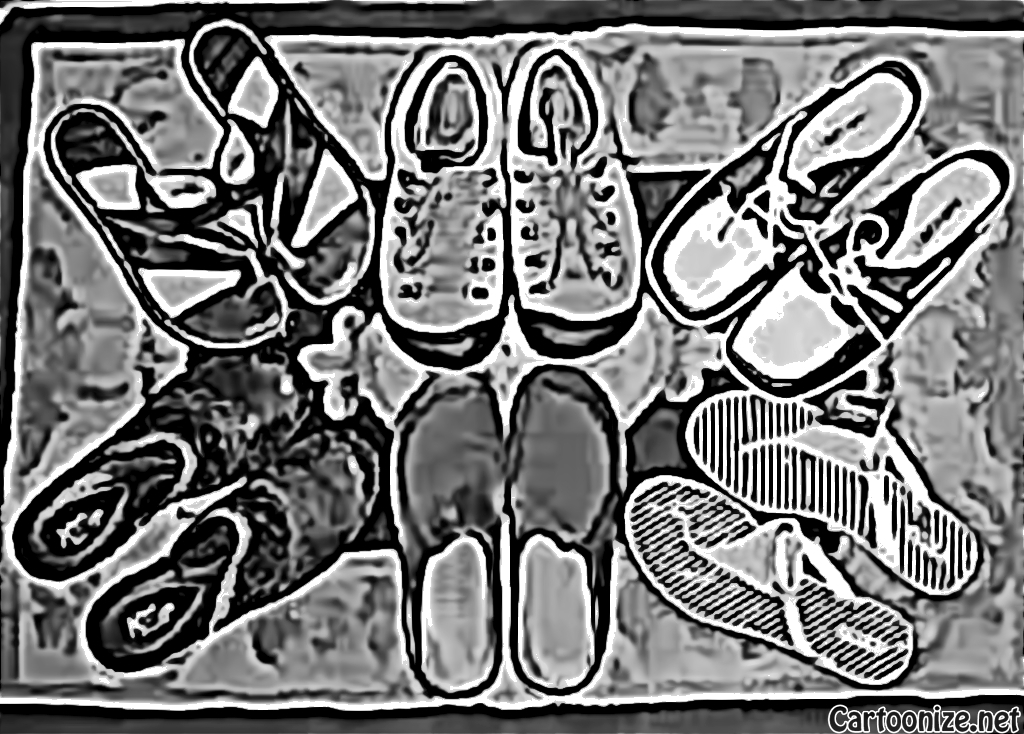
Sensible shoes dominate the NCTE Conference.

Spotting an English teacher in the crowds moving through the glitzy MGM Conference Center in Las Vegas is easy. Just look for the sensible shoes.

English teacher stamina is the stuff of legend, built up through hours of standing in front of a class, negotiating the space between groups of students and book bags tossed casually on the  classroom floor. We have perfected the quick sprint down a hallway to the copier for extra copies of a quiz or test.  Yes, we have learned from experience the necessitiy of wearing sensible, comfortable shoes. Our footwear choices came from our hard fought classroom experience, and that training was key to participation at the National Council of Teachers of English Conference (NCTE) since the MGM conference center has cavernous corridors and sessions are scattered over several acres of property. We walk, we walk, and we walk…quickly! There are hundreds of sessions, and only a few days to share new ideas and improvements to pedagogy.

“Dreams. Connect. Ignite.” is the motto of this NCTE 102nd Conference. While I have not personally witnessed much in the way of dreaming, the igniting is thankfully limited to the videos of pyrotechnics that are an element in the  Cirque de Soleil show “Ka.”. But I have participated in and witnessed plenty of connecting. My year of tweeting on Twitter has paid off!

Twitter gives teachers the opportunity to communicate with other teachers; to form communities of educators who ” follow” other educators. This is a very individualized form of professional development since I can pick those educators who are most helpful to me in helping me improve my practice. While I am attending sessions, I tweet what I am learning as notes to myself and to others.I  use the hashtag #NCTE12 to share my thoughts with other attendees. I have discovered many educators through the English Companion Ning and specific Twitter streams with hashtags such as  #engchat, #edchat, and #sschat. I follow the Twitter stream of conferences I attend, and my own school district’s stream #rsd6.

Here at the conference I have met other educators with whom I have been communicating over the past year, and the conversations we have had face to face are simply an extention of what we have been saying online. I have enthusiastically shared my use of Twitter with other attendees; “Look, you have to get on Twitter and follow this (speaker, educator)!” I greet those who tweet to me or follow me with the same enthusiasm I would greet old teaching companions. Meeting at this conference, we are free of the 140 character limit, the constant trimming of thought. Face to face we can complete a sentence without an abbreviation or a hashtag.

There are so many offerings at this conference that am I rushing from session to session. I do try and pay attention, however, to those who pass me in the maze of hallways and lobbies, scanning a name tag looking to see if one of attendees passing me might be one of my twitter “friends.” How do I know who to look at? Well, first, I look at the shoes.

The National Council of Teachers of English Annual Convention and the Council on English Leadership Convention begin this weekend (11/15-21) at the MGM Grand in Las Vegas, and I am so delighted to have the opportunity to present with my fellow faculty member, Stephanie Pixley, at three separate sessions. We are able to present to other teachers because of the great support and training our Regional School District #6 (Administration and Board of Education) has given its teachers in the use of technology in classrooms to improve student learning and develop 21st Century skills.

Wamogo High School in Litchfield, Connecticut, is a 1:1 Bring Your Own Digital Device (BYOD) school for grades 9-12, and we are learning everyday how our students’ use of technology has helped us differentiate our instruction, increase our students’ independence, and allow us to provide authentic tasks for our students. Last year, we used netbooks in our English and Social Studies classes and found how successfully technology could be used in reading and writing workshops at every grade level. This year, those netbooks have been moved to grades 7 and 8 for their use, and the high school students either provide their own devices or rent one from the school’s technology department..

The first session we will be offering is devoted to Cormac McCarthy’s novel The Road. We will feature work that the students have completed in using Abraham Maslow’s “Hierarchy of Needs” as a way to analyze characters in this post-apocalyptic novel. We will be demonstrating how our students, “Explore the poetic language of survival in Cormac McCarthy’s The Road the potential of 21st century connectivity and collaboration, and the use of mysteries to enhance students’ critical thinking abilities as presenters share literature experiences in three high school classrooms.”

Navigating the Mind: The Road Meets Maslow’s Hierarchy
Time:  Saturday 11/17 8:00 AM – 9:15 AM
Level:  Secondary (9-12)
Topic of Interest: Literature
Location:  Studio Room 6, Grand Arena, Main Floor by Grand Garden Arena, MGM Grand

The other two sessions will be offered to the Council on English Leadership:

You Ain’t Nothing but a Blog Hound
Monday 11/19 4-5:00 PM
D.3 Room 106

Description: You may already know that a blog platform offers students at all grade levels an opportunity to engage in an authentic writing experience in or outside the classroom. This workshop demonstrates the use of a blog platform for students to engage in thoughtful discussion on whole class or independent reading. This workshop will also feature how to organize, moderate, and assess both blog posts and comments on a variety of blog platforms. There will also be a focus on improving a student’s awareness of audience and purpose in a written response, and strategies will be provided so student comments are more sophisticated than a standard “I liked what you wrote.”

Writer’s Workshop Graduates to High Tech Literature Circles
Tuesday  11/20 10-11:00 AM
F.2  Room 106

Description: This session will feature strategies used in the teaching of writing at the middle and high school levels using a variety of 2.0 technologies, including blogs, wikis, and document sharing software. The emphasis will be on providing examples of differentiated student-centered activities that will develop independence in the writer’s transition from middle school to high school. High-tech writing provides opportunities for student accountability, group collaboration, and whole class communication

(NOTE: This session was presented this at Literacy for All Convention, 11/5 & 11/6 in Providence, RI)

We are looking forward to presenting and attending the wonderful selection of sessions over the next few days. This is certainly a wonderful opportunity for our own professional development and a chance for us to showcase our small but very forward thinking school district-Regional School District #6 !

Bond.

James Bond.

007.

On Her Majesty’s Secret Service, and (surprise!) a metaphor for why relying on the standardized test is flawed.

Honestly, I was not expecting Skyfall, the latest James Bond blockbuster, to resonate with issues being discussed in educational reform today, but sitting in the darkened theatre, I suddenly heard the same concerns about the validity of tests used in assessing secret agents that I hear in assessing students.

Apparently, M-I 6 wrestles with the question: Do tests really measure ability?

Spoiler Alert! If you are someone who intends to see the film, I may be giving away a few facts; not major plot points, but a few incidental pieces of information. Bond Purists-stop reading now, please.

Before Bond (Daniel Craig) returns to work for M (Dame Judi Dench), he needs to pass a set of standardized performance tests. He is first put through a series of grueling fitness tests. He is tested on his ability to shoot a pistol at various distances in a firing range. Finally, he faces a series of psychological tests. The results of how well he succeeded in this battery of objective tests is initially kept from the audience, but the viewers are not surprised when he eventually returns to service.

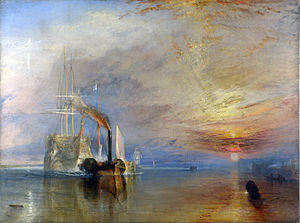
Painting at the National Gallery in London

The film’s screenwriters saw fit to combine the concerns about the results of these tests with M-I 6’s concerns about Bond’s age. No scene is more direct in confronting Bond’s age than in his first meeting with the young gadget supplier “Q”. The filmmakers placed Bond at a British National Gallery sitting on a bench looking at J.M.W. Turner’s painting Fighting Temeraire Tugged to Her Last Berth To Be Broken Up, 1838 .

Turner’s symbolic message of the painting depicts the shift from sail power to coal engine, the billowing white clouds swirling like sails a stark contrast to the blackened smokestack of the tug in the forefront of the painting.  Q enters, sits next to Bond, and strikes up a conversation:

Q: It always makes me feel a bit melancholy. Grand old war ship. being ignominiously haunted away to scrap… The inevitability of time, don’t you think? What do you see?
Bond:  A bloody big ship. Excuse me.
Q: 007. I’m your new Quartermaster.
Bond: You must be joking.
Q:  Why, because I’m not wearing a lab coat?
Bond: Because you still have spots.
Q: My complexion is hardly relevant.
Bond: Your competence is.
Q: Age is no guarantee of efficiency.
Bond:  And youth is no guarantee of innovation.

Skyfall (http://www.imdb.com/title/tt1074638/quotes)

Of course, the M-I 6 tests are designed to determine if Bond is too old, if his brand of “boots on the ground” spying should be replaced by agents in command of newer technologies. And of course, M is obligated to submit Bond to the required standardized tests, tests given on one particular day. However, she is not obligated to act on the results of the tests.

M’s response, therefore, is to weigh what audiences know are the 50 years of evidence on Bond’s unconventional performance as a creative problem solver. She recognizes that Bond possesses those intangible qualities of initiative and drive, and while a standardized test does measure a level of ability, what makes Bond a valuable British agent is his ability to confound a standard.

Watching James Bond puzzle the test-driven establishment is a large part of the enjoyment for the audience. Agent 007 cannot be limited by a test score if he is going to save the free world.

Which brings me back to the shared message about testing from Skyfall and its application to education reform. The audience understands that the testing in Skyfall is flawed because of the limited results; standardized testing in education is similarly limited. Like M, educators should not let their students be defined by test scores from standardized tests, those single metric assessments given on one day. Like M, educators should pay more attention to having students develop problem-solving skills and to consider other assessments that measure students’ critical thinking skills.  Students should have the opportunity to be evaluated on the intangible qualities of initiative and drive through project-based learning. Like Agent 007, students should be allowed the opportunity to confound those standards measured by objective testing.

Oh, and maybe they could also ask for their chocolate milk shaken, not stirred.