Archives For November 30, 1999

This past semester, each of my Advanced Placement English Literature students adopted one word as the subject of blog posts for ten weeks. After careful consideration, TJ chose the word “insanity”. For ten weeks , he wrote about insanity in literature, in science, in crime and in Dr. Who episodes. His final submission on insanity was written during the second week of May, when he was taking one AP exam after another. He was delighted to share the text of his final blog with the public, and hopefully, the College Board:

Dear College Board:
As a taker of two AP exams in the past (and 3 more in the near future), such challenging tests are nothing new to me. However, some tests have reached a new level of difficulty. This level can only be described as ludicrous, absurd, ridiculous, hysterical and, most importantly, completely and utterly insane.

Now, one may at first think that I am overreacting. Let that person read the following AP question:

At approximately what temperature will 40.0 grams of argon gas at 2.0 atmospheres occupy a volume of 22.4 liters?

A. 1,200 K
B. 600 K
C. 550 K
D. 270 K
E. 140 K

Now, before any taker of Junior level chemistry mocks me for using the simple question as an example, keep in mind that all chemistry multiple choice are WITHOUT A CALCULATOR. Now, most students know that to find the temperature of a gas, they would use the equation T=(PV)/(nR). Now, the formula mass of argon is approximately 40, and since we have 40 grams, n=1. The equation is now T=(PV)/R. With all other variables put in, T=((2)(22.4))/.0821=44.8/.0821. So, good luck doing that without a calculator. If one rounds these numbers to 45 and .1 respectively, however, their answer will still come out to 450. While closest to C, this leaves a huge margin of error. Not only does this test expect too much from the student, but it leaves doubt in any answer containing the words “Approximately, About, Closest To,” or “Near.”

The only reasonable explanation is that the good folks at College Board are complete lunatics. Who else would require a student to know specific uses of every single compound known to man (in addition to all other aspects of chemistry), charge $30.00 to have SAT scores rush-shipped ELECTRONICALLY (and still have it show up late), and all at the same time still think itself the world leader on college affairs?

We must stop this madness. Fellow Highschooligans, we must take up in arms against this insane, rogue organization. Like a precursor to Skynet, College Board is ruthless and will stop at nothing until full world domination is reached. Join me in the fight against insanity!

TJ is a senior graduating this June. I will miss his essays.

A question was posed on the Education Week column run by Larry Ferrlazzo. On this particular posting, he asked the question, “How Can We Teach Social Studies More Effectively?”

This year, I am the interim Social Studies Department Chair in addition to my role as English Department Chair.  As an academic interloper, I have had the opportunity to study how the scope and sequence of our middle/high school social studies program (7-12)  is delivered. I humbly offered  the following suggestions to Ferrlazzo’s question:

To be an effective Social Studies teacher, a teacher must be inter-disciplined.  The definition of social studies adopted by the National Council of Social Studies (NCSS)  in 1992 addresses the broad reach of the subject:

“Social studies provides coordinated, systematic study drawing upon such disciplines as anthropology, archaeology, economics, geography, history, law, philosophy, political science, psychology, religion, and sociology, as well as appropriate content from the humanities, mathematics, and natural sciences.”

In other words, social studies is the most interdisciplinary subject in our curriculum, therefore:

1. Collaborate:

Although English is  natural fit, social studies teachers should not stop there, but look to collaborate with all disciplines. Some subjects pair well (Renaissance=science+art), but do not discount the math necessary for economics and statistics needed to understand any period of history.Social studies teachers have the opportunity to collaborate with other departments in delivering curriculum using either the familiar chronological approach or by using a thematic approach (“Revolutions”). These teachers can help students make the connections between subject areas rather than see each information limited to four classroom walls.  For example, students in grade 10 were reading All Quiet on the Western Front in English at the same time when WWI was being studied in Modern World History. I was trying to make a point about how the narrator was confronting the shift from the man to man combat to the  battlefield which featured increasing mechanized warfare when a student interrupted me, “Mrs. P says that WWI showed that the increasing the technology and machines in war gets you get farther and farther from your enemy.” There was a pause, and then another student chimed in ,“And now we use drones in Afghanistan and we are farther from the enemy than ever before.”  I didn’t have to make my point at all. Mrs. P, 10th grade social studies teacher, had already covered weapons introduced in WWI and  was making connections from WWI to the war in Afghanistan. She was providing the setting while I was introducing the emotional impact on people/characters, and our collaboration made for greater student understanding.

2. Ditch the Textbook and Increase Non-Fiction Reading:

I have come to view the social studies textbooks as heavy…too heavy and too costly. I suggest social studies teachers use these in a classroom as a resource for note-taking only. These textbooks are ideal for teaching students about sub-headings, how to read charts and maps, and information sidebars in class, but there are other resources for delivering content. Use Livebinders.com to create online textbooks for reading home, perhaps in a flipped model, with a variety of reading materials-newspaper articles, magazine links, and websites. Use wikis to post links, upload materials, and receive comments from students. Check out the amazing amount of materials on Larry Ferrlazzo’s blog and Richard Byrne’s blog (updated almost hourly!) or Greg Kulowiec’s blog to see what software can be used for research or content delivery.  Place materials in Google Docs for student access and collaboration. After looking at all the new software available today, I am fully in favoring of ditching the textbook!
Of course, losing the textbook means a teachers can also assign more authentic reading. The Common Core State Standards require 70% informational texts for students by grade 12. The anchor standards and high school standards for reading and writing in social studies (history) in literacy work in tandem to define college and career readiness expectations. Increasing student access to reading materials is key to meeting increased requirements in reading of informational texts. I would suggest organizing classroom libraries with non-fiction materials and providing time in class to read these materials. Coordinate with the school librarian to pull books that deal with a topic currently studied and suggest students  choose a book off the cart. For example, we have added numerous popular trade non-fiction titles in the English classroom libraries that could be easily used in a social studies classroom such as:

Longitude: The True Story of a Lone Genius Who Solved the Greatest Scientific Problem of His Time by Dava Sobel
Patriots by Joseph J. Ellis
Hiroshima by John Hershey
Salt: A World History by Mark Kurlansky
Kaffir Boy: The Story of a Black Youth’s Coming of Age in Apartheid South Africa by Mark Mathebane
The Devil in the White City by Erik Larsson
Kon Tiki by Thor Heyerdahl

3. Increase the Project Based Learning:

There’s a lot to be said for the diorama. Every student has made at least one, and despite the loss of precious classroom real estate to 30 shoebox recreations of a medieval castle, these projects are incredibly powerful learning experiences because they are “hands-on”.  Debate, trials, and simulations are also all ways that project based learning can be used. Our 8th grade recreated the Ellis Island experience in the gym and hallways last month.  Teachers were “medical inspectors” and  Ellis Island staff asking questions about employment possibilities and each immigrant’s finances.  Each 8th grade student had prepared an immigration profile based on research on the Ellis Island website http://www.ellisisland.org/ and was “processed” individually or in family “groups.” This experience was only one of several simulations our teachers have used to immerse students in a historical context.

Project based learning can be delivered as games, in role-playing, or in developing living museums. Students need to BE the people of history to better understand how people and events from the past effect and connect to their present circumstances in their “study of the social sciences and humanities to promote civic competence.” (NCSS, 1992)

I have enjoyed this year of working with my social studies colleagues. They are responsible for many of the skills that are necessary for literacy, specifically writing and note-taking. They are critical to successfully implementing the newly adopted Common Core State Standards at every grade level. What joins our disciplines in English and social studies are the fundamental elements of story; while English teachers are centered on the individual character and “his-story”, the social studies teachers are responsible for what happens to the individual in “history”. Ours can be the continuing of a “beautiful friendship” in education.

Every generation of readers has one. That book. The book with racy passages. The book with the “reputation”. The naughty book.

The proliferation of  Fifty Shades of Grey-that book- means that is entirely possible that at least one of my high school students will bring in copy as an  independent choice reading text. Of course I will require the student choose something more age- appropriate if this particular book is being read for class credit, but there are many books that teeter on acceptable boundaries.  I have had middle school students bring in copies of Twilight, Eclipse, Breaking Dawn; a series built on heart-pounding sexual teasing for three prolonged book lengths. I have seen a 10th grade student engrossed in reading Girl with the Dragon Tattoo, and although I was aware of the steamy material, I saw no such reaction from the student who was being deeply exposed to Swedish misogyny. Popular culture books, particularly steamy popular culture books, are passing fads in literature.

Naughty book popularity rises and falls with readers. Every year there is some student who could be sneaking  “for mature audience” materials. When I was growing up, the paperback copies of The Godfather opened automatically, like Lucy for Sonny, on page 18. Yes, Mario Puzo’s bestseller was full of quivering and pulsing, when it wasn’t violently establishing the dominance of the Corleone family.  Coffee, Tea or Me? , which detailed the escapades of stewardesses during the sexual revolutionwas the other “naughty” text that I remember the adults keeping out of my reach. No matter. I “borrowed” my aunt’s copy during Thanksgiving dinner and read furiously in an upstairs hallway. Hiding from the relatives celebrating the holiday, I wasn’t missed, probably because I had been seated at the “kid’s table” with at least a dozen cousins.

I also know other adults have had brief flings with inappropriate literature in their youth. I know this also, because Pamela Munoz Ryan, author of the award winning  children’s book  Esperanza Rising, discussed her naughty book adventure at a keynote address at the 82nd Saturday Reunion at Columbia Teacher’s College in March 2012. Opening her remarks, Ryan claimed, “to read because it’s safe and to write because it’s dangerous.” She explained how her love of stories made her choose to write, and then she shared her own “naughty book” story.

When Ryan was young, she discovered racy romance novels in the home library shelves of a Coca-Cola addicted neighbor. Ryan would return those empty soda bottles for candy money, while at the same time, she would “borrow” a copy of a torrid romance novel. She recalled one specific incident, however, involving The Valley of the Dolls, a steamy best-selling fictional account of the rich and famous. She snuck the book out of her neighbor’s house in the back waistband of her pants. At the time, she explained, the only “safe” place for reading was the town public library, and Ryan was soon holed up in a little used aisle of books pouring through the Valley of the Dolls. There, she was approached by the town librarian.

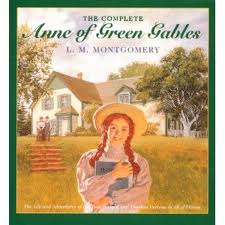
“I could not help notice how engrossed you are in reading,” said the librarian while Ryan desperately tried to hide the title of the book, “and I wondered if  you ever read this book?” In her hand the librarian held a copy of Anne of Green Gables.

Ryan said she had not read the book and feeling obliged, checked it out.

“I rode home on my bike that day,” says Ryan, “with a copy of Valley of the Dolls tucked in my waistband, and a copy of Anne of Green Gables  in my bicycle basket.” She paused for a moment with the recollection, “You know,” she stated to a congregation of teachers, “I have read the Valley of the Dolls only once, but I have read, reread, and revisited Anne of Green Gables many times.”

Teachers too know that a student will at some point in his or her life be exposed to reading materials that may be too mature, or too salacious, for his or her age. We can counter these sensational texts because we know what books will last, what books will transcend the effects of time, and what memorable characters will help our students as they mature and grow into adults. Students should read because, as Ryan stated, “it is safe”, and we need to encourage their reading as much as possible. We should be ready to help them make good choices, such as the classics Little Women or  A Tree Grows in Brooklyn. We should be ready to recommend a contemporary Esperanza Rising, The Book Thief  or Dairy Queen. We must allow students a choice in their reading but look for the opportunity to suggest a more appropriate title, because we know that the Fifty Shades of Grey tucked in the backpack ,or in their waistband, is a passing fad. Great literature endures, and fortunately, Anne of Green Gables will be there for the reader.

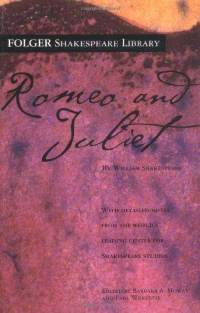
While my freshmen students knew Romeo and Juliet is a tragedy, the details on the relationship of the “star-crossed lovers” were a little fuzzy.  Romeo and Juliet is often a student’s first introduction to Shakespeare for not so surprising reasons. The characters Romeo and Juliet  are young-she is 13 years old. They are in love. Their families stand in the way of their love. They must meet in secret. They defy the authority of their parents. Many of these elements appealed to my 9th grade students. But there were surprises everyday when we performed scenes from the play in class.

The biggest surprise for me was the willingness of my students to take on the difficult meter and vocabulary of Shakespeare in order to play one of the parts in the play. Hands would go up, “I want to be Mercutio!” or “Can I be the Messenger?” and “Can’t a guy play the Nurse?”

Of course, they were almost always terrible. Shakespeare’s verse is difficult to read “cold”.

Billy stumbled but persisted in his reading Benvolio’s  lines while we patiently waited:

The fiery Tybalt, with his sword prepared,
Which, as he breathed defiance to my ears,
He swung about his head and cut the winds,
Who nothing hurt withal hiss’d him in scorn.

Each of the students stumbled over the strange vocabulary: prolixity, holp, God gi’ god-den, tetchy, sirrah, obsequy. Matthew wondered aloud why Capulet is always saying, “What? ho!” Michael regularly referred to the language of the play as Old English; he would not be convinced otherwise.

When we turned the page to Act Two, scene 3,  I saw Logan take big breath, visibly steeling himself to read Friar Lawrence’s lengthy speech. In Act Three Scene 5,  completely unaware of pace and more interested in finishing the scene before the bell rang, Malia raced through the Nurse’s teasing of Juliet. Not one of them (thankfully) really understood the allusions in Mercutio’s “Queen Mab” speech in Act One scene 5. Yet, everyday they entered the classroom asking, “Are we acting out the play today?”

We played the balcony scene three times in the large hallway on the stairs to the auditorium’s upper level seating. Students paired up to read a reduced script, so several Juliets had the chance to meet their Romeos that class period. Back in the classroom, I played the soundtrack to the Zefferelli film (“A Time for Us”) during Act Three scene 5 as Alexa asked her Romeo:

Wilt thou be gone? it is not yet near day:
It was the nightingale, and not the lark,

They memorized the Prologue; they wrote haikus to summarize each act to review the action of the play:

Act I:
Annoying Prologue
Romeo met Juliet,
Romeo loves her

Act II:
Balcony kisses,
They are married secretly,
The nurse keeps it quiet

Act III:
Tybalt is now dead,
Romeo must run away,
Juliet is scared

Act IV:
Juliet fakes death
Capulets are deeply hurt
Marriage is off

Act Five began last week, and the students were following the complicated plans of  Friar Lawrence and making predictions as to the plan’s success. There was a brief discussion about what an apothecary was in Shakespeare’s time, and the actual distance from Verona to Mantua, Italy. It was obvious, they all wanted the plan to work.

Then, Nick as Romeo entered Juliet’s “tomb” and  several lines later, he stepped over Chase who lay on the floor, slain as Paris.  Nick began his soliloquy with great seriousness. Holding the  dry erase marker, our stage prop for the vial, high in one hand, he read the verse aloud, “Here’s to my love! O true apothecary!/Thy drugs are quick.” He dramatically uncorked the marker, and then “drank”.  He gasped, ” Thus, with a kiss,” he leaned down to the sleeping Juliet, and quietly said,” I die.” Staggering, he fell to the ground.

Several students following along in the text, started and then sat in a palpable stunned realization.“He dies?”

“But Juliet’s still alive!”started as a murmur.

The chorus of voices grew louder. “He’s dead!” “She doesn’t know!”

There was a collective pause, followed by an audible, “This sucks.”

I was surprised. I thought they knew.

The final speech of the play begins, “A glooming peace this morning with it brings”; that speech captured the mood of my students. Of course they understood at some literal level that the play was a tragedy; this fact was clearly stated on the back cover of their text: This is the tragedy of Romeo and Juliet. However, until that moment of Romeo’s willful self-destruction, followed by Juliet’s suicide, my students did not appreciate the  play’s heartbreaking conclusion.

I was surprised by the level of their reaction. Ours was not a polished performance, the staging was clumsy and the actors read the lines without understanding much of what was being said. However, they did feel for the characters, always willing to summarize what had just happened or wanting to give advice. Despite our failures to interpret the language, the result was that the play made them grow up a little.

No one should ever be surprised at the ability of this Shakespeare play-however rudimentary in performance- to engage an audience.

Most stakeholders only have the experience of one point of view…from the student desk.

This coming week (May 7-11, 2012) is Teacher Appreciation Week. There will be the customary newspaper coverage of favorite teacher stories,  the hashtag #thankateacher will trend on Twitter, and celebrities will post videos thanking teachers as the most important influences in their lives. These are all wonderful and appropriate tributes to the profession that prepares our nation’s youth to become productive citizens.

But for the other 51 weeks of the year, the teaching profession is struggling under serious criticism. According to the National Education Association (NEA) website:

  • There are 3,232,813 teachers in K-12 public schools, and about 16 percent of these positions become vacant each year.
  • Forty-five percent of new teachers abandon the profession in their first five years.
  • More teachers believe collaborating with colleagues is essential to their work, but many districts still don’t provide time for teachers to learn, share and collaborate.
  • Teachers’ salaries still lag behind those for other occupations requiring a college degree, and the pay gap is growing larger.

The teaching profession dedicated to educating the nation has done a terrible job at self-promotion. Teachers today have failed to educate the public about the value of this great vocation in the same manner that they failed to teach the value of teaching to previous generations, most notably the parents and grandparents of students in schools today.  The result is that the very public that teachers need to enlist in support of the teaching profession is not confident in meeting the criticisms being leveled at educators today.

There is increasing negative political attention turned on the teaching profession. For example, in-between statements of  support for teachers, New Jersey Governor Chris Christie was quoted as saying, “They [teachers] only work 180 days,” voicing the popular perception that teachers work only part time.
Of course, there is evidence that counter his claims that teachers do not work that hard; the Wall Street Journal listed a series of facts about the teaching profession in the June 2011 article, Number of the Week: U.S. Teachers’ Hours Among World’s Longest:
  • U.S. educators work 1,097 hours teaching in the classroom, the most of any industrialized nation measured by the Organization for Economic Cooperation and Development.
  • American teachers work 1,913 hours a year, just shy of the U.S. average of 1,932 per year.
  • U.S. teachers are slightly more likely to work at home than private-sector workers, the U.S. Labor Department found. They aren’t paid to work weekends but are as likely to do so as private-sector employees — including those scheduled to work Saturdays and Sundays.
In my own state of Connecticut, during the February 2012 State of the State speech, Governor Dannel Malloy made a commitment to educational reform in one breath, and then slammed teachers and the practice of tenure in the next breath saying, “Basically the only thing you [teachers] have to do is show up for four years. Do that, and tenure is yours.” Not surprisingly, his educational  legislation promoting teacher evaluation reform is currently being met with serious resistance by the Connecticut State Teacher’s Union. Politics is polarizing the profession.
This negative attention is dangerous if schools are interested in attracting quality candidates to the teaching  profession. In his opinion piece in the 5/6/12 NYTimes “Teaching Me About Teaching” Charles M. Blow sounded this alarm pointing out,  “A big part of the problem is that teachers have been so maligned in the national debate that it’s hard to attract our best and brightest to see it as a viable and rewarding career choice, even if they have a high aptitude and natural gift for it.” His editorial was accompanied by statistics of the top tier college graduates who will not choose teaching for economic and social reasons; only 37% of responders believed a career in teaching is considered successful.
The irony is that for years teachers have not been effective advocates for their work. Teachers have demonstrated but not taught their students the rigors of teaching; the assumption is that the experience of being a student speaks for the entire profession. Certainly, all occupations have practitioners that can make work look easy to an uninformed public. Any product- a building, a meal, a vaccine, a championship trophy -cannot fully inform the public of the individual or collaborative preparation to make that product a reality. In addition, all work requires some level of training. Teachers study about their craft first at college and later implement these lessons in classrooms. However, the classroom is crucible, a brutal training ground that disputes the notion that “anyone can teach”  as almost half the nation’s new teachers vote for the profession with their feet, leaving within the first five years.

Being a student is only 1/2 of the educational relationship; teachers need to teach the significance of their role


For decades, K-12 teachers have collectively prepared students for careers in the sciences, in mathematics, in the arts, in the humanities, and in the industrial arts. Yet, in preparing students for careers beyond the classroom, there has been no direct instruction on the methodology on the craft of instruction for student learning. Consider how little students today understand about how much time and cognitive effort a teacher has to expend for each lesson plan. Day after day, period after period, students participate in an academic enterprise without acknowledging the multiple components that teachers have included in its construction: IEPs, multiple/emotional  intelligence strategies, Bloom’s levels of understanding, technology, curriculum content, available resources and facility limitations to name a few.
Teaching is challenging work, and in their commitment to provide the nation with all manner of numeracy and literacy skills, teachers have failed to express and assess student understanding of teaching. Students at all grade levels in public or private schools today have little understanding of the increasing demands of the teaching profession which now include incorporating Common Core State Standards, integrating technology for 21st Century Skills, and increasing scrutiny in newly designed evaluations. Ultimately, teachers have failed to communicate the significance of their contributions to a productive society that will result in recruiting the best and the brightest to the profession.
The public’s understanding of education often comes as a “recipient in the desk “point of view, not from the perspective of the teacher charged with engaging and educating every student. Unless the public is persuaded that teachers are critical for our democratic society, the profession will continue to suffer economically and socially. After basking in the attention from stories of the positive influence they have had on on the lives of individual students during Teacher Appreciation Week, teachers need to integrate one more lesson to their repertoire. How ironic that teachers must teach the significance of teaching.

Advice to Hamlet, “The main point here is you over think everything. You get deeper and deeper into these brilliant plans, but without execution they truly mean nothing!”

“Hamlet, you yourself had said that to dwell on an act too long leaves one part good, and ‘three parts cowardice;’ please, Hamlet, PLEASE learn to follow your own advice,” pleads TJ in his advice to Hamlet.

The Advanced Placement English Literature students are posting their advice to characters from Hamlet by responding to “Stop the Action!” prompts on a blog. Students “advise” Hamlet, Gertrude, Claudius, Laertes, and Ophelia in response to lines from the play. Students discuss whether the Ghost is from Heaven, Purgatory, or Hell; whether Hamlet is mad or acting mad; or choose between the soldier Fortinbras and the scholar Hamlet. Their online discussion is equitable and collaborative, and the format allows me the opportunity to assess student understanding of this play.

I organized the “Stop the Action, Hamlet” on the Google Blogger platform, an easy platform for posting comments or replies. I invited students by email to the site, and they needed only a minute or two to learn to navigate through the 10 prompts that I posted. The  “comment” feature on the Blogger dashboard was helpful in assessing their time stamped responses.

The advice my students gave to each character in the play makes for entertaining reading, but more importantly, each student  was able to share his or her ideas online in an academic manner that cannot be duplicated in class. Class discussions are notoriously short, limited in scope, or marginalize quiet students, unless they are moderated. The class period is limited in time, whereas online discussions can continue for weeks, 24/7 with students posting when they have time to focus. When my students blog online, they respond to each other thoughtfully, post citations to support their positions, and choose their words carefully. The blogging platform elvated the class discussion.

For example, Colleen’s first entry was on whether the Ghost is from Purgatory or from Hell:

“If the ghost was from heaven, I feel as if he would not ask Hamlet to commit such a foul crime. It is through hell that the Ghost is speaking like this. As the play continues on, the Ghost does not seem to leave his demon thoughts but rather continues to carry them out. It is clear that through these actions, the Ghost is from hell.”

Devin later responded to this post,

” I was re-reading the conversation that Hamlet had with the spirit, and another line I found interesting was when the Ghost says to Hamlet, ‘taint not thy mind.’ I think this is interesting because it suggests to the audience that the Ghost cares about Hamlet. If the Ghost was from Hell this wouldn’t make sense and if the Ghost was from Heaven he wouldn’t be there in the first place. The only compromise to this situation is if the Ghost was from Purgatory, then he could care about himself and Hamlet at the same time.”

Annie’s  post followed this argument when she posted a question for Shakespeare:

“Why if the controversy for the ghost is so divided between heaven and hell not bring up any religion? There are very few if any religious references except this whole ghost thing. ..I do think your choice to ignore religion is a reason for your timelessness. By discussing certain religious topics, you may only appeal to one audience. You doesn’t even hint as to what your own opinions are. Choosing not to discuss such controversial topics was a smart decision on your part, and is perhaps why you are so popular even today.”

Colette had advice for Gertrude and Claudius. To Gertrude, she posted, “Your son is clearly in pain and instead of stopping and trying to communicate personally with Hamlet, you’re taking Claudius’ advice to hire spies to keep ‘watch’ over Hamlet when in fact, that’s a mother’s duty. Your maternal switch is definitely shut off.” Her advice to Claudius was equally blunt, “Murder cannot simply be ‘washed’ away. Much like in Shakespeare’s Macbeth, you [Claudius] are searching for a way to wash the blood red off of your hands. However, they are forever stained. No matter how much you clean your hands, they will forever be tarnished and filthy.”

TJ humorously advised Polonius indicting him on the line, “Beware/ Of entrance to a quarrel; but being in, /Bear’t that the opposed may beware of thee” (I.iii.69-71). “Hey, Polonius,” TJ writes, “remember when you were hiding behind that curtain? Remember when Hamlet pulled out a knife on you and you screamed for help instead of present yourself so that ‘the opposed may beware of thee?'”

Kelsey begged Laertes to walk away from Claudius, She recalled his line, “And yet ’tis almost ‘gainst my conscience,” and argued:

“What I want you to do right now, Laertes, is just stop and think. Why would Claudius actually want to help you? He is a manipulative man that just wants power…. Some advice- stop and let Claudius fall to his own fate! He already basically showed that he knew the cup was poisoned by calling out. He is guilty to everyone in the room. Let him take the downfall and WALK AWAY MAN! Gah! Your pride is not worth your life!….you will realize your mistake in about 30 lines in the play….just thought I would let you know…”

Finally, Sara posed a question for Shakespeare:

“As we continue reading through the play, we notice how Hamlet is struggling with avenging his father – yet, he knows he must complete the task of murdering his uncle, as his father had ordered. I leave you with this question – do you [Shakespeare] believe we were all born to complete a task? Does this apply to other plays ? Romeo and Juliet? Macbeth? King Lear?”

In addition, the Hamlet blogs are a means for me to directly address educational technology standards that have been developed by different educational organizations.
Using the standards for the Partnership for 21st Century Skills, these blogs allow the students to:

  • Articulate thoughts and ideas clearly and effectively through writing
  • Be open and responsive to new and diverse perspectives

Using the standards for NCREL(North Central Regional Educational Laboratory)/engage, the blogs promote:

  • Teaming and collaboration to create to solve problems and master content
  • Willingness to make mistakes, advocate unconventional positions, or take on challenging problems to enhance growth.

Finally, using ISTE ( International Society for Technology in Education) standards, the blogs provide an opportunity for students to:

  • Interact, collaborate and publish with peers, experts and others employing a variety of digital tools and media
  • Communicate information and ideas effectively to multiple audiences
  • Apply existing knowledge to generate new ideas, products, or processes and diverse perspectives to explore alternate solutions.

More importantly, the “Stop the Action” blogs have allowed my students to function much like Horatio in the play whose advice to Hamlet, “If your mind dislike any thing, obey it…” goes unheeded. The characters also do not heed the advice of my students, but my students have become proficient in their ability to “tell my story” of Hamlet.

GOAL -School districts want to report their students to read great literature.
GOAL-School districts want to report good reading test scores.

Unfortunately, these two goals are currently incompatible; great literature’s complexity can be challenging to read, and schools can ill afford to have students get low test scores on reading because of great literature’s complexity.

Concerns about the removal of great literature from classrooms have been raised before, but NY public school English teacher Claire Needall Hollander passionately argues how intellectually damaging this practice has become in state testing. Her  op-ed piece in 4/21/12  NYTimes Teach the Books, Touch the Heart decries the elimination of great literature in the classroom in order to incorporate practice materials to prepare students to take the standardized tests. Hollander described her role as a reading enrichment teacher as an opportunity to provide great literature as academic equity for her students. She described several of her students as  the sons and daughters of immigrants or incarcerated parents; she noted some students lived in crowded, violent, or abusive homes. Great literature, she believed, was “cultural capital” that could help her students compete against more affluent peers. However, when the lackluster data from standardized reading tests came in, she felt pressured to abandon great literature and curtailed her efforts for the majority of these students in order to teach materials prescribed for the state test.  While the reading selections on the state tests did have some syntactical complexity, she eventually decided that these reading materials lacked the literary qualities that make literature great. Texts that are “symbolic, allusive or ambiguous are more or less absent from testing materials.” Hollander writes, “It is ironic, then, that English Language exams are designed for ‘cultural neutrality.'”

In one sense, great literature is already culturally neutral. The themes or characters in a great piece of literature are not limited to one decade or one millennium. The elements that make a work of literature great can transcend culture and context, can speak to a universal audience, can be read by any tradition and still connect to a reader. Ms. Hollander’s concerns about cultural neutrality are akin to concerns about cultural acceptability. Creators of standardized tests are particularly sensitive in selecting texts that are cultural acceptable because great literature  intentionally confronts morality, questions society’s rules, or challenges tradition. Great literature gives voice to the outsider, and authors of great literature are often on the margins of society or write to unsettle the status quo. For these reasons, selections from great literature may not be considered culturally acceptable.

I have some experience on what goes onto a standardized state test as I had a seat one year as a member of the text selection committee for the reading and writing sections of the Connecticut Academic Performance Test (CAPT)  given to grade 10 students. Much time was spent reviewing materials for inclusion on a future Response to Literature exam. Out of a number of mediocre short stories, the only selection given to educators that could meet some standards of great literature was a chapter from Lois Lowry’s Number the Stars, a young adult novel that is usually read in Grade 5.  That selection was eliminated not only because of the low reading level (5.1; Lexile 670) but because the manner in which Lowry portrayed the terrifying rounding up of Jews. One committee member actually wondered aloud if Lowry could be persuaded to “reword the chapter” to address the concern. Fortunately, that debate ended with the decision that the chapter was not “acceptable” for the committee.

One problem in great literature is difficult vocabulary; for example, the simple conversations between the Man and the Boy in Cormac McCarthy’s The Road (RL 4) are interspersed with diction describing the apocalyptic setting:  “rachitic “, “miasma”, “escarpment”, “crozzled”.  Another problem is vocabulary  considered vulgar or profane that has eliminated a number of literary pieces from standardized testing and even from school libraries. According to the American Library Association (ALA) website which  lists challenges to classic literature that Hollander might teach: To Kill a Mockingbird- “contains  racial slurs”;  Of Mice and Men – “takes God’s name in vain 15 times and uses Jesus’s name lightly.” Finally,  great literature almost always contains themes that can be considered dangerous  or offensive to someone in society:  The Color Purple is “sexually graphic and violent”;  1984 is “pro-communist”; and Catcher in the Rye– is infamously “blasphemous and undermines morality.”

Engineering English language tests in order to make them culturally neutral or culturally acceptable encourages intellectual dishonesty. Take the reading section on the Connecticut Academic Performance Test (CAPT)  where every 10th grader is required to read a short story and evaluate the quality of the story, “How successful was the author in creating a good piece of literature?” in a one page essay. I have spent over 10 years preparing students for this  question on the Response to Literature standardized test, and I know how students struggle with this question. Many students do not read challenging texts outside of the classroom, limiting their experience to develop critical evaluation skills. However, the more distressing problem is that year after year, the quality of the story on the CAPT pales in comparison to the classic short stories a student could encounter in even the most limited literature anthology. Classic short stories available in the public domain by Saki, Anton Chekhov, Kate Chopin, Stephen Crane, and Jack London, to name a few, are considered too difficult for independent reading by 3rd quarter 10th grade students. Copy-write requirements or an author’s unwillingness to truncate a story to comply with a maximum word requirement or to make textual changes to make the subject palatable to a text selection committee, prevents other literary materials from being used.   As a result, more recent selections have come from Teen Ink (stories written by teens) and Boy’s Life magazine, both publications not known for superior literary content. While some stories may meet a sentence complexity standard and have been vetted for acceptable content, most lack the literary depth that should generate thoughtful critical responses to a prompt that asks about “good literature.”

To further complicate the choice a student makes in a response, released materials from previous exams used to prepare students how to respond to “How successful was the author in creating a good piece of literature?” include student responses, and all of the exemplars, good and bad, argue that the story was “good”.  The  lack of reader experience coupled with the year to year see-saw quality of the text on the exam places  students in the uncomfortable position of defending a merely average quality story as good literature; therefore, the prompt promotes intellectual dishonesty.

Perhaps the problem of including good literature on a standardized test may be addressed with the adoption of the English Language Arts Common Core State Standards where text complexity is standard #10: “By the end of grade 9, read and comprehend literature, including stories, dramas, and poems, in the grades 9–10 text complexity band proficiently, with scaffolding as needed at the high end of the range.”

In other words, the use of good literature on a CCSS English Language Arts exam might be substantively different than the texts used on the Response to Literature section of the CAPT. This could make the response about the quality of text more authentic since a complex literary text can be analyzed as “good literature.” How this more complex literary text will be used in testing, however, remains to be seen since history demonstrates that cultural opposition to a story will often trump quality.

Comprehending and evaluating a text are desirable skills, and measuring those skills will still be difficult.  Multiple choice questions are quickly corrected, but they are limited to measuring reading comprehension, and a student essay response to a complex text will require considerably more time to write and correct. Anticipating this, Hollander calls for an assessment that is more reflective of student learning:

 “Instead, we should move toward extensive written exams, in which students could grapple with literary passages and books they have read in class, along with assessments of students’ reports and projects from throughout the year. This kind of system would be less objective and probably more time-consuming for administrators, but it would also free teachers from endless test preparation and let students focus on real learning.”

The CCSS should consider Hollander’s proposal as states develop assessments.  All stakeholders should also recognize that using anything less then quality literature to measure a student reading comprehension and evaluation skill on an English/Language Arts exam is intellectually dishonest.

In the film Looking for Richard, his tribute to Shakespeare’s historical play Richard III, Al Pacino asks a tourist standing on a street in Manhattan, “What do you know about Shakespeare?”

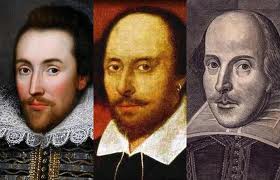
“Shakespeare? He’s our greatest export!” replies the Brit reaching into his wallet for a credit card. On the credit card was the Flower portrait of  Shakespeare as a security hologram. Rotating the card allowed the camera to pick up the image of Shakespeare, who appeared to be winking at the viewer.

Choose your favorite portrait for a T-shirt, mug, or I-phone cover!

As an export, Shakespeare sells. His image, in any one of three possible portraits, is plastered on mugs, teapots, coasters, coins, rugs, and notebooks. His verses are truncated to fit the length of garden stones, pens, bracelets, Ipad cases, and T-shirts.  I personally own six scarves with images from his plays or verses from his poems.

There are some more unusual, and certainly less dignified, items available as well for those bard-idolators:

Shakespeare Insult Gum-each box contains two gum balls and a wonderful Shakespearean insult;

Rubber Duckie Shakespeare: Celebriduck

A Shakespeare Celebriduck-Yes, Shakespeare has been turning into a quacking bard;

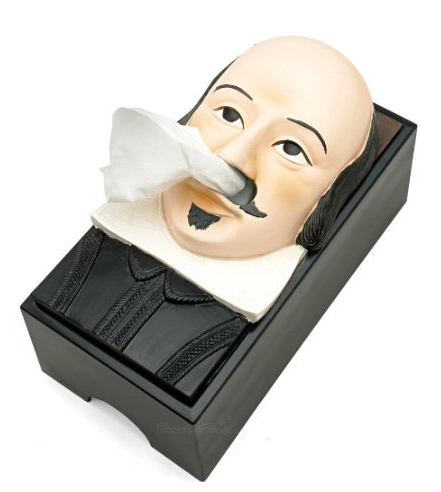
Shakespeare Tissue Box cover

A Shakespeare Tissue box cover-Tissue fly from his nose as fast as verses from his pen.

As a product, Shakespeare appeals to a niche market, but given the amount of Shakespeare paraphernalia on the web, that niche market must be very profitable.

Today marks Shakespeare’s 448th birthday. This past month, I have been sell-a-brating Shakespeare in each of my English classes.

Selling Shakespeare is one of the pleasures of teaching English at the high school level. This year, I have “sold” OthelloKing Lear, and Hamlet to the Advanced Placement English Literature class, and I am presently selling Macbeth to sophomores while at the same time selling Romeo and Juliet to freshmen.

Once students get past the Prologue; past witches meeting on a heath; past the Ghost’s appearance on the ramparts; past Act I, scene i;  I am on auto-pilot. English teachers accumulate Shakespeare materials in the form of lesson plans, essay prompts, quizzes, audio-tapes, film clips and activities that be pulled out at a moment’s notice. In addition, there are numerous clever resources or plans on the web to access. This past year, I added lesson plans from the websites that featured The Macbeth TangoRomeo and Juliet on Facebook, and  Stick Figure Hamlet.

Of course, the best way to sell Shakespeare to students is to have them attend a well-acted live performance . If there is no performance in the area, a DVD or video streamed production, and they are readily available on Netflix, Amazon, and PBS,  of one of the many adaptations of Shakespeare’s plays helps engage students. There are websites that list over 400 feature length films or TV shows that bear his name, so there are many options as to which versions might be used.

However, nothing can replace having students reading  and acting out the play in class. Without equivocation, all  students are initially  terrible at reading Shakespeare cold. Nevertheless, almost every student eventually wants  a chance to “strut and fret their hour upon the stage.” Even the brilliant Kenneth Branaugh, now instantly recognizable to my students as “that guy who plays all those characters” in film productions of Hamlet,Othello,  and Much Ado About Nothing, recalls in an interview how his first exposure to Shakespeare came in a class where everyone read from The Merchant of Venice. Kenneth remembered being terrified doing it, and that he “didn’t understand the language.” But having survived that experience, he quickly developed the acting bug.

All this exposure to Shakespeare in high school  does have an effect on his “brand” or name recognition. Recent reports estimate that Shakespeare’s brand is worth over $600 million, twice the amount of Elvis and Marilyn combined. According to the website Campaign Brief, Shakespeare is the best-selling author of all time, with book sales estimated between two and four billion. In contrast, J.K. Rowling’s unit sales are estimated to be less than 450 million. The company Brand Finance was commissioned to determine the commercial value of Shakespeare’s name. Tim Heberden, managing director of Brand Finance in Australia reported: “Not only do these figures make the Shakespeare brand one of the strongest in the world, but it also shows the potential commercial value the Shakespeare name has garnered.” His firm awarded Shakespeare a triple AAA rating noting that the brand could potentionally rise to 1 billion.

I believe that high school English teachers have had a direct hand in this industry. Shakespeare sells very well, because we have sold him very well. For us, the reward is spreading the poetry and drama of the bard, but for those who are literally selling Shakespeare, we have most certainly “put money in thy purse!”

Nothing beats a top-notch live performance for selling Shakespeare to students. While there are plenty of quality performances on DVD, streaming from  Netflix or the PBS website, or available piecemeal on Youtube, there is nothing quite like the collective heartbeat one experiences sitting in an audience. In live theatre, there is the moment of an audience-wide hypnosis; the palpable moment when the audience loses self-consciousness and synchronizes its breathing to watch and hear the play. The dramatist Shakespeare provided many opportunities for those moments.

Every year I try to organize a field trip so that my students have an opportunity to attend a live performance of one of Shakespeare’s plays.  Since our school is fortunate to be located an hour away from New Haven, CT, our students can attend matinees at Yale Repertory Theatre. For several years, I have arranged for field trips to see Shakespeare performed at the Yale Rep with Ruth Feldman, the Director of Education and Accessibility Services at the Yale School of Drama.  These plays are funded as part of the National Endowment for the Arts (NEA) initiative Shakespeare in American Communities:

“Yale Rep offers young people in the community two significant youth theater programs: WILL POWER! and the Dwight/Edgewood Project. WILL POWER! Arts-and-education initiative is designed to build on existing English and Theatre curricula for middle- and high- school educators and their students. The company continues as a leader for it community outreach and accessibility programs that promote audience diversity and participation. “

This year, 40 students attended Yale Rep’s production of The Winter’s Tale, one of the more difficult plays to teach, a “problem” play. On this particular trip, there were honors 9th graders who had been prepared for the production having used a prepared study guide sent in advance of the trip.  The 12th graders, in the throes of “senioritis”, came cold to the production.

No matter. The combination of elegant set and stage movement conveyed the plot-a jealous husband, a wronged wife, a betrayed friend in the opening scenes kept all students rapt. The famous stage direction, “exit pursued by a bear” was brilliantly executed with puppetry, and suddenly the audience was transported into the land of Bohemia with its rainfalls of tiny blossoms, colorful costumes, and infectious country dancing. One student leaned into me, “I would rather live in Bohemia,” she whispered.  The final stage trick of bringing the statue of Hermione to life was met with audible gasps-“She’s real?” The packed house of students cheered predictably louder for the “clowns”from the performance, and with nothing less than genuine admiration for the lead roles as the cast took their final bows. The Winter’s Tale was a hit!

Immediately after the performance, as they have for the entire WILL-POWER series, the cast and production team at Yale Rep offered a talk-back where students can ask questions for about 20 minutes after the show. Seeing the performers in street clothes, without costumes and make-up, sitting on the edge of the stage, tousled but charged up after the 3 hours of performing, is a bit unsettling…the illusion of theatre is laid bare. Awkwardly, for the first five minutes, students stammered out questions: How long did they rehearse? (8 weeks) How old are you (to a 10 year old actress)? Have you been on TV (yes)? Actors responded amiably enough.

Then, a teacher asked, “What was your first Shakespeare experience?” There was a momentary pause and then one actress offered her first memory of Shakespeare…a memory from  high school. “Shakespeare was supposed to be only for the smart kids, which really wasn’t fair,” she recounted, “He’s really for everyone, not just the smart kids.”  Another actor agreed, explaining that members of his class had acted out Shakespeare-very badly, stumbling over the words, but loving the experience. Then another actor spoke. “My mother took me to see Shakespeare when I was seven, so I was always around them[plays]. I grew up loving to watch the plays.” Another actor recounted his initial dislike of Shakespeare’s plays in high school,”I just didn’t get it,” but that an experience in college changed his mind, “Was this the same boring play? Yes! Why was it better now? I don’t know, maybe I was ready then.” Still another spoke of his love of the plays, his love of the language, and his ability “to speak the words really well because I understand them…which means that I have been able to stay employed!” One by one, each actor spoke of an initial Shakespeare experience, good or bad, and how each of them had been changed by that experience. There was such power in their personal stories, an English teacher could not have scripted better confessions. Their passion for Shakespeare and desire to pass that passion on to my students was inspiring; they were the better teachers!

A final question, posed again by an adult audience member, served  the play’s recap: “What was your favorite moment in the play?”she called out. The actors brightened and each took a turn, speaking about a favorite moment. One recounted a scene she could see from the wings, another a moment he shared on stage with another actor. The cast recapped the events of the play -out of sequence-the statue coming to life, the clown stealing the wallet, the dance, a set of choral lines shared between two actors, the moment when the newborn babe is brought before her dismissive father, and the magical transformation of the shepherd into Father Time. But it was the actor who spoke about the stage direction “pursued by a bear” that brought new understanding to one of my students as to how to look at one of Shakespeare’s seemingly improbable plot devices. “Why would Antigonus leave a baby alone on a beach unless he was trying to protect her?” asked the actor, ” Who would do that? Who would do that unless he was convinced he could save the baby? The bear chases him to his death, but the baby lives,” he continued, “I think amid so many acts of selfishness, this is one of the most selfless acts in the play.” Later, sitting at a local pizzeria, a student repeated his explanation word for word, “Seriously, who would leave a baby on a beach? Who would do that unless he was convinced…. That’s so true!”

Live theatre can engage students. Live Shakespeare -performed well-can enrich students. Talkbacks with actors and their experiences with Shakespeare can enlighten students. Perhaps one day my students may have the opportunity to share their first experience with Shakespeare. They may choose Yale Rep’s The Winter’s Tale.

A series of miscommunications left the eight members of the local Burnham Library Book Club wondering which book they should prepare to read for the next meeting. The month before, a decision was made to read a novel that shared the name of the next meeting; we would read a book titled  The March by E.L Doctorow for our March meeting date. How clever! Unfortunately, our plans went awry when the librarian posted the selection as March by Geraldine Brooks. Members arrived with copies of one or the other novel.

No matter. As it turned out, we could discuss both books easily, not only because of the similarity of each fictional story arc but because of the numerous historical references to people and the events in the Civil War.  What struck all members of the book club during the discussion was the amount of research that had gone into creating these works of historical fiction, since both contained a notable fidelity to events, customs, and manners of the Civil War era.

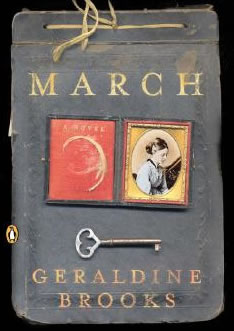
March-Geraldine Brooks

In March, Geraldine Brooks borrows her title character, Peter March, from Louisa May Alcott’s story Little Women. Her narrative is told from the alternating point of views of Marmee and the father of the March girls: Meg, Jo, Beth and Amy. In her explanation for his prolonged absence, the idealistic March enlists as a Union clergyman in 1861, at the beginning of the Civil War.

E. L. Doctorow’s The March is centered on real-life Union General William Tecumseh Sherman in his infamous “march to the sea”, as he burns Atlanta before pivoting north into the Carolinas. Multiple narrators are employed in this novel including a Union regimental surgeon, Colonel Sartorius; Emily Thompson, a daughter of a Southern judge; and Arly and Will, two soldiers who care little about loyalty and more about staying alive.  The scope of  this novel is epic as Sherman’s sixty thousand troops burn, pillage, and choke to death the final throes of the Civil War in 1864.

The similarity of major characters from each novel was uncanny: the mixed-race beautiful protagonist Pearl in The March and the strikingly attractive, educated slave Grace who captivates the title character in March. There were historical figures to people each novel: John Brown, the famous abolitionist; Henry David Thoreau; and Ralph Waldo Emerson make appearances in March. General Sherman, General Joseph E. Johnson, and Abraham Lincoln are present in The March. Both novels also extensively featured field hospitals as settings. March is a a Union chaplain who is wounded and ends up in a Civil War hospital; The March features a Union regimental surgeon, Colonel Sartorius  who curiously employs a number gruesome surgical procedures.

The novels reflected the tumult of a civil war, the hair-raising escapes from danger and the chaos and brutality that ensued from bitter and divided rivalries. Both novels highlighted the technological advancements that made each side more efficient killing machines, and Doctorow in particular noted the historical progress of mechanized warfare:

 “This in America was to be seen with one’s own eye’s. And as bloody and brutal were the contests of the Lancasters and York, they were hand to hand- battle-aves, pikes, maces. These chaps were industrial age killers: they had repeating rifles that could kill at a thousand yards, grape that could decimate an advancing line, cannon, field-pieces, munitions that could bring down entire cities. Their war was so impersonally murderous as to make quaint anything that had gone on before. (214)

Another element of comparison was the reflection in both novels on ancient wars that had preceded the Civil War. Brooks has her narrator, the cerebral Peter March, contemplate the historical continuum, from the Ancient World to the present, noting the how painful is the loss of loved one due to war:

“The waste of it. I sit here, and I look at him, and it is as if a hundred women sit beside me: the revolutionary farm wife, the English peasant woman, the Spartan mother-‘Come back with your shield or on it,’ she cried, because that was what she was expected to cry. And then she leaned across the broken body of her son and the words turned to dust in her throat.” (211)

In contrast, Doctorow uses a visiting English journalist in order to comment on how the echoes of  ancient conflicts are heard in the progression of battles he sees:

“Yet some of the ancient military culture endured. The brutal romance of war was still possible in the taking of spoils. Each town the army overran was a prize. In this village was an amazing store of wine, in that granary brimming to the rafters, a herd of beef here, an armory there, homes to loot, slaves to incorporate. There was something undeniably classic about it, for how else did the armies of Greece and Rome supply themselves? How else had Alexander’s soldiers made an empire? The invading army, when it camped, sat on the land as its owners, with all the elements of domesticity, including women, enlarging the purely martial function of their social order” (215)

The reasons for the Civil War are addressed more clearly in Brook’s tale. She incorporates the arguments offered by the real-life American Transcendentalist Branson Alcott in her creation of the  character of the naive March who is just beginning to doubt his involvement with the conflict he little understands:

“If war can ever be said to be just, then this war is so; it is action for a moral cause, with the most rigorous of intellectual underpinnings. And yet everywhere I turn, I see injustice done in the waging of it…”(65).

In contrast , Doctorow’s characterization of the West Point educated General Sherman suggests his weary recognition that while the physical act of war will run to its exhausted conclusion, the battlefield will move to another plane where the dispute will continue:

“And so the war had come down to words. It was fought now in terminology across a table. It was contested in sentences. Entrenchments and assaults, drum taps and bugle calls, marches, ambushes, burnings and pitched battles were transmogrified into nouns and verbs.  It is all turned very quiet, Sherman said to Johnson, who, not understanding, lifted his head to listen.

No cannonball or canister but has becomes the language here spoke, the words written down, Sherman thought. Language is war by other means” (348).

Ultimately, the members of book group determined that both books provided a fascinating blend of historical fact with fiction. As an educator, I was impressed about how much more effective both novels were in communicating the experiences of living through the Civil War from its beginning (1861) to its inevitable end concluding with Lincoln’s assassination in 1865. A textbook would have covered the information, but not provided the visceral quality a reader gains through a story….both novels succeeded in recreating history using a “his story” model. Both novels complement the study of the Civil War by blending each author’s thematic development and literary technique with historical fact. As a result, both novels will be placed on the 11th grade classroom shelves along with two other wonderful Civil War novels The Killer Angels by Michael Shaara (Gettysburg) and Cold Mountain by Charle Frazier.

All these books appeal to the imagination in recreating the  particulars in the  time and places of the Civil War. As a bonus,  how serendipitous that despite the near duplication of titles, both novels were so similar in subject matter as to allow for a great discussion? How surprising that the story of two “Marches” would ultimately be so similar?