Archives For November 30, 1999

Here is a “re-post” from last year, “At this festive time of the year…”

There has been some chatter on blogs that I follow that  centers on discussions of the many film versions of Charles Dickens’s novel A Christmas Carol. The networks always feature these films during the holidays. Additionally,  Dickens’s  200th birthday will be celebrated in  2012. A website dedicated to the celebrations marking his birthday is at http://www.dickens2012.org/

Dickens’s association with Christmas is best known through his characterization of Scrooge, a cultural icon whose name conjures visions of a cold-hearted, seemingly unredeemable money-lender.

For many film critics, the best portrayal of Dickens’s Ebenezer Scrooge was by Alistair Sims in the 1951 version Scrooge (Re-released as A Christmas Carol) filmed at Nettlefold Studios, Walton-on-Thames, Surrey, England.  Sims, a Scot by birth, was an elocution and drama lecturer at the University of Edinburgh before leaving for the stage as a character actor; his low voice was often described as critics as particularly “ghoulish”.

So why is his portrayal the best?

Watch Sims’s performance in black and white (heavens, not the colorized version!) and see how his Scrooge takes thrift to a new low in a pub where he huddles over a bowl of thin soup:

Ebenezer: Waiter! More bread.
Waiter: Ha’penny extra, sir.
Ebenezer: [pauses] No more bread.

Watch a terrified Sims, wedged protectively into a tufted high-backed chair, challenge the ghost of Jacob Marley who has come to chide Scrooge’s avarice:

Ebenezer: You see that toothpick?
Jacob Marley: I do.
Ebenezer: But you’re not looking at it!
Jacob Marley: Yet I see it, notwithstanding.
Ebenezer: Well, then, I’ll just swallow this and be tortured by a legion of hobgoblins, all of my own creation! It’s all HUMBUG, I tell you, HUMBUG!

Watch Sims, barefoot, shivering, and exceedingly rumpled, stumble out of bed to reluctantly confront the gentle Spirit of Christmas Past:
Ebenezer: Are you the spirit whose coming was foretold to me?
Spirit of Christmas Past: I am.
Ebenezer: Who and what are you?
Spirit of Christmas Past: I am the Ghost of Christmas Past.
Ebenezer: Long past?
Spirit of Christmas Past: No, your past.
Watch Sims, stunned by the largess celebrating the arrival of the Spirit of Christmas Present, rub his eyes in disbelief:
Spirit of Christmas Present: So! Is your heart still unmoved towards us, then?
Ebenezer: I’m too old and beyond hope! Go and redeem some younger, more promising creature, and leave me to keep Christmas in my own way!

And watch the following two minutes of the most touching moments in the film. Here, a redeemed Scrooge travels to his nephew Fred’s home on a snowy Christmas night. He is greeted by a wide-eyed maid who takes his hat, scarf and coat. Without saying a word, Sims shifts from his characterization of a brusque Scrooge to a Scrooge who is hesitant, filled with trepidation. The ballad of Barbra Allen plays in the background when Sims turns to the maid and pauses for several seconds; she nods to encourage him. A sheepish smile passes his lips as he reluctantly turns and opens the double doors to Fred’s parlour. The party inside immediately stops, all eyes turn to Sims, who with a new found grace and humility charms all with the following apology:

Dickens understood Christmas, and  he brilliantly committed to paper the emotional tug the holiday has on those who celebrate. In The Pickwick Papers, he writes “And numerous indeed are the hearts to which Christmas brings a brief season of happiness and enjoyment. How many families, whose members have been dispersed and scattered far and wide, in the restless struggles of life, are then reunited, and meet once again in that happy state of companionship and mutual goodwill, which is a source of such pure and unalloyed delight; and one so incompatible with the cares and sorrows of the world, that the religious belief of the most civilized nations, and the rude traditions of the roughest savages, alike number it among the first joys of a future condition of existence, provided for the blessed and happy! How many old recollections, and how many dormant sympathies, does Christmas time awaken!”

Merry Christmas, Charles Dickens. Merry Christmas, Alistair Sims. Thank you for A Christmas Carol and for Scrooge. My holiday favorite, hands down.

Here is how to add an informational text to appease the Common Core State Standards without throwing out literature. Find an exceptionally well-written piece of non fiction and use that informational text as a centerpiece for a thematic unit.

Here is my example: On January 13, 1982, Air Florida Flight 90 crashed into Washington DC’s 14th Street Bridge and plunged into the Potomac River. There had been a heavy snowstorm which had closed National Airport earlier that day. Improper de-icing procedures were credited as a major reason for the crash; 78 people were killed, four of these fatalities were motorists from the bridge who had been caught in the traffic jam caused by the storm. Only five people were rescued from the icy waters, and their rescue was broadcast live during the evening news. A news media crew, stuck in traffic only a few hundred yards away from the plane crash, filmed one rescuer’s memorable plunge to pull a flight attendant  from the icy water. I remember; I watched that happen live on the evening news.

Twelve days later Roger Rosenblatt’s piece The Man in the Water appeared in TIME magazine (January 25, 1982). His opening paragraph starts with an ordinary sentence, “As disasters go, this one was terrible but not unique, certainly not among the worst on the roster of U.S. air crashes” He continues to comment on the setting, “There was the unusual element of the bridge, of course, and the fact that the plane clipped it at a moment of high traffic, one routine thus intersecting another and disrupting both.” But then, there is a shift; Rosenblatt suddenly shifts into the kind of figurative imagery usually reserved for poetry:

“Washington, the city of form and regulations, turned chaotic, deregulated, by a blast of real winter and a single slap of metal on metal. The jets from Washington National Airport that normally swoop around the presidential monuments like famished gulls were, for the moment, emblemized by the one that fell; so there was that detail. And there was the aesthetic clash as well—blue-and-green Air Florida, the name a flying garden, sunk down among gray chunks in a black river.”

Rosenblatt’s purpose was not to comment of the disaster itself, but rather to focus on the actions of one individual who rescued other crash survivors floundering amid the frozen chunks of ice and crash debris floating in the Potomac. This individual Rosenblatt christened “The Man in the Water.”

“Balding, probably in his 50s, an extravagant moustache.) He was seen clinging with five other survivors to the tail section of the airplane. This man was described by Usher and Windsor as appearing alert and in control. Every time they lowered a lifeline and flotation ring to him, he passed it on to another of the passengers.”

Rosenblatt called attention to the other resuers in this disaster including, Donald Usher and Eugene Windsor, a park-police helicopter team and Lenny Skutnik who jumped from shore to drag flight attendant Priscilla Tirado to shore. But it is the “Man in the Water” that Rosenblatt immortalizes in the essay:

“When the helicopter came back for him, the man had gone under. His selflessness was one reason the story held national attention; his anonymity another. The fact that he went unidentified invested him with a universal character. For a while he was Everyman, and thus proof (as if one needed it) that no man is ordinary.”

I use this essay, which is anthologized in an English literature textbook, as the thematic centerpiece for the senior elective Hero or Monster. The essay sets up the essential question: What makes a hero?

There are other resources to use with this text. A National Geographic Video Plane Crash in the Potomac (credit – Discovery/ National Geographic channel Seconds From Disaster)

After reading this essay and watching the video, student are charged to consider what makes a hero in literature. The required reading for the thematic unit will including selections from the Iliad, James Thurber’s short story The Greatest Man in the World, Ken Kesey’s One Flew Over the Cuckoo’s Nest, and an independent reading book. Students will also read about the monomyth or hero’s journey and trace the journey of a hero in a book of their choice.

While Rosenblatt’s essay never identifies the man in the water, forensic experts determined that his name was Arland Dean Williams Jr. Of course, by not naming the man in the water, Rosenblatt suggests anyone can be a hero,and concludes in a memorable last line, “He was the best we can do.” Similarly, if informational texts are required in the Common Core State Standards, than including an essay of this caliber for our students is also the best we can do.

My two boys were raised on a steady diet of musicals and plays. I selected what we would attend with great care:

Annie, Get Your Gun
Les Miserables ( remember the Battle at the Barricades?)
The Pirates of Penzance
Oklahoma (the song-“Oh the Cowboy and the Rancher Should Be Friends”)

Do you see a pattern? When we first started to expose our sons to live theatre, my choices all had weapons or professions that could be deemed interesting to six and eight year olds. We graduated to other pieces, including A Midsummer Night’s Dream (“What was funny in this comedy?”) and A Servant of Two Masters (“Now, that is comedy!”) They became effective young theatre critics: Showboat was good, Cats was awful (“P-U”).

Their first big theatre experience was Miss Saigon on Broadway.  We sat up in the nose-bleed section, which turned out to be a blessing as the opening number takes place in a brothel with scatily clad singers and dancers. We did not rent the binoculars; we were really there for the helicopter scene. The overblown sound system did not disappoint; we could feel the whirr of the chopper blades in our bones.

I thought of these choices when I read Dwight Garner’s commentary in his NYTimes piece, “Going Beyond Cultural Kid Stuff With a Wary Sense of Adventure”. He had taken his 15 and 13 year old children to see Who’s Afraid of Virginia Woolfe? and reviewed their reaction to the play. They liked the set, the action and the performances; he was happy they had gotten so much from the “witty but sinister play, stocked like a nightmare bodega with adult themes.”

He also posed a good question, “When is it O.K. to introduce challenging cultural material — whether it is sexy or profane, creepy or violent, or simply adult and intense — to your children?” My response to him would be what I told to my own children when they asked to see adult or intense and violent films: “If you want to see it, read about it first.”

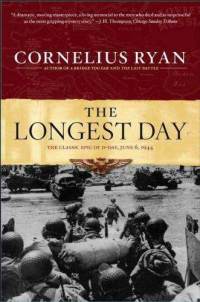
Saving Private RyanThe Longest Day CoverMichael was 13 when the film Saving Private Ryan came out in theaters in 1998. He begged to go. I was very hesitant, I had heard that the first 27 minutes of the film depicted the landing on the beaches of Normandy (Omaha Beach) very realistically; that director Stephen Spielberg was not interested in sugarcoating the gruesome damage machine gun and explosions can exact on a soldier’s body. But Michael had a keen interest in history.
“Come on, Mom, this is supposed to be just like the landing,” he argued.
That was what worried me.
“The only way you can see this film is if you read about the landing first,” I agreed.
“Ok, no problem,” he replied confidently, “done.” So he read The Longest Day by Cornelius Ryan; 362 pages of historical prose.

There are many opportunities for a student to read a book in advance of watching a film. Reading the book or background materials prepares students for many of the adult themes in a film or play. For example, students who read books from the Harry Potter series were prepared for the dark themes or the twisted violence that was wrought upon many of the characters. I cannot imagine how confusing the series must have been for those students who had not prepared themselves by reading about characters, spells, or the magic elements at Hogwarts. Likewise, the students who read books from The Hunger Games trilogy were certainly more prepared for scale of the brutality of the society that “sacrifices” children for entertainment. In fact, I felt the book was far less gruesome than many of the moments from the film. When books are in circulation before the film is announced (Twilight, The Life of Pi), parents should take the opportunity to hold out for a little reading before letting a child see a film with a mature rating.

Granted, there are sometimes when a parent may have no control over what other parents deem acceptable. Michael already read Edith Hamilton’s brutal explanation of Roman life in her classic The Roman Way when Gladiator (2000) was released on DVD. That Thanksgiving, we were invited to our friend’s home for dinner. After dinner, I was forced into an awkward agreement when I found that our hosts had a copy of the film in the downstairs “playroom” for the boys to watch with their son while we socialized. I cringed that my younger son, Kevin, then age 12, would also be watching, too late for me to assign the required background reading. Of course, the boys were both thrilled to have me in such an uncomfortable position, and both we delighted we reluctantly agreed they could watch the film.

“Now, you have to read The Roman Way,” Michael told Kevin as we drove home that night, “or read Marcus Aurelius’s letters.”

I was duly impressed; perhaps I had not failed parenting.

Bond.

James Bond.

007.

On Her Majesty’s Secret Service, and (surprise!) a metaphor for why relying on the standardized test is flawed.

Honestly, I was not expecting Skyfall, the latest James Bond blockbuster, to resonate with issues being discussed in educational reform today, but sitting in the darkened theatre, I suddenly heard the same concerns about the validity of tests used in assessing secret agents that I hear in assessing students.

Apparently, M-I 6 wrestles with the question: Do tests really measure ability?

Spoiler Alert! If you are someone who intends to see the film, I may be giving away a few facts; not major plot points, but a few incidental pieces of information. Bond Purists-stop reading now, please.

Before Bond (Daniel Craig) returns to work for M (Dame Judi Dench), he needs to pass a set of standardized performance tests. He is first put through a series of grueling fitness tests. He is tested on his ability to shoot a pistol at various distances in a firing range. Finally, he faces a series of psychological tests. The results of how well he succeeded in this battery of objective tests is initially kept from the audience, but the viewers are not surprised when he eventually returns to service.

Painting at the National Gallery in London

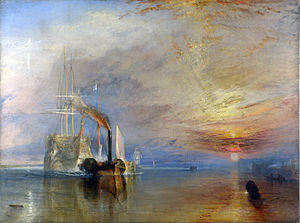
The film’s screenwriters saw fit to combine the concerns about the results of these tests with M-I 6’s concerns about Bond’s age. No scene is more direct in confronting Bond’s age than in his first meeting with the young gadget supplier “Q”. The filmmakers placed Bond at a British National Gallery sitting on a bench looking at J.M.W. Turner’s painting Fighting Temeraire Tugged to Her Last Berth To Be Broken Up, 1838 .

Turner’s symbolic message of the painting depicts the shift from sail power to coal engine, the billowing white clouds swirling like sails a stark contrast to the blackened smokestack of the tug in the forefront of the painting.  Q enters, sits next to Bond, and strikes up a conversation:

Q: It always makes me feel a bit melancholy. Grand old war ship. being ignominiously haunted away to scrap… The inevitability of time, don’t you think? What do you see?
Bond:  A bloody big ship. Excuse me.
Q: 007. I’m your new Quartermaster.
Bond: You must be joking.
Q:  Why, because I’m not wearing a lab coat?
Bond: Because you still have spots.
Q: My complexion is hardly relevant.
Bond: Your competence is.
Q: Age is no guarantee of efficiency.
Bond:  And youth is no guarantee of innovation.

Skyfall (http://www.imdb.com/title/tt1074638/quotes)

Of course, the M-I 6 tests are designed to determine if Bond is too old, if his brand of “boots on the ground” spying should be replaced by agents in command of newer technologies. And of course, M is obligated to submit Bond to the required standardized tests, tests given on one particular day. However, she is not obligated to act on the results of the tests.

M’s response, therefore, is to weigh what audiences know are the 50 years of evidence on Bond’s unconventional performance as a creative problem solver. She recognizes that Bond possesses those intangible qualities of initiative and drive, and while a standardized test does measure a level of ability, what makes Bond a valuable British agent is his ability to confound a standard.

Watching James Bond puzzle the test-driven establishment is a large part of the enjoyment for the audience. Agent 007 cannot be limited by a test score if he is going to save the free world.

Which brings me back to the shared message about testing from Skyfall and its application to education reform. The audience understands that the testing in Skyfall is flawed because of the limited results; standardized testing in education is similarly limited. Like M, educators should not let their students be defined by test scores from standardized tests, those single metric assessments given on one day. Like M, educators should pay more attention to having students develop problem-solving skills and to consider other assessments that measure students’ critical thinking skills.  Students should have the opportunity to be evaluated on the intangible qualities of initiative and drive through project-based learning. Like Agent 007, students should be allowed the opportunity to confound those standards measured by objective testing.

Oh, and maybe they could also ask for their chocolate milk shaken, not stirred.

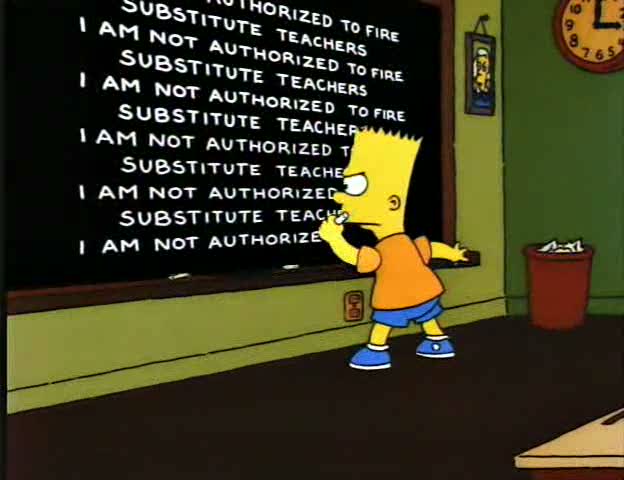
Wamogo High School (Region 6)  in Connecticut finished four days of teacher driven professional development. There were a few “requested sessions” which were organized to address concerns about the upcoming block schedule; we are moving from a sequence of 38-45 minute periods to alternating days of 80 minute blocks. The question came up, “What plans can a teacher leave a substitute teacher for this length of time?”

I suggested that a lesson plan that incorporates film is easy to prepare in advance, so I organized the following links that teachers can use to prepare a substitute lesson that incorporates film.

The substitute teacher may have students who think they have the “day off”, but a film lesson organized with a written reflection can be an effective way to promote new learning.

Film lessons are popular with substitute teachers. They are usually engaging, and they are easy to implement as long as the substitute can access the video online or operate the hardware to run a hard copy of the video.

Video/film lessons also meet many of the Common Core Standards as stated in the Overview for the ELA Standards: “Just as media and technology are integrated in school and life in the twenty-first century, skills related to media use (both critical analysis and production of media) are integrated throughout the standards.”

Our school has a subscription to Discovery Education which is jammed packed with digital content: film clips and prepared lesson plans are available for every grade level. However, other school systems may not have this resource.

The following free websites were reviewed in the presentation for teachers to use in order to find videos, lesson plans to use with videos, and/or worksheets that can be completed by students watching videos.

One major source to start looking for all video materials is the updated Edudemic 100 Video Sites on the Edudemic.com website.This website is organized with sub-headings General; Teacher Training; Science Math & Technology; History, Arts and Social Sciences; Lesson Planning; Video Tools and true to its name there are 100 sites, each rich with links to videos of all lengths in all subjects.

To accompany a selected film or video, I strongly recommend students have a writing assignment. The writing assignment can be in a variety of formats: notes, critical analysis, or reflection. I am not a fan of the worksheet, but substitutes benefit from a well-designed worksheet that students can complete and turn in at the end of class. For that reason, I located a number of websites that can be used to either develop a worksheet or websites that have worksheets already prepared:

Video documentaries are also popular; since these are often shorter than a feature length film, many can be run during one block period. A note of caution: several of these videos will need to be vetted to assure content appropriate materials are used. Many of the video clips on these sites are current and can be associated with news articles to use to supplement the viewing as a comparison or a contrast. 

The Oscars.com website offers a generic documentary worksheet. This prepared sheet is organized around political discourse, but the sheet has questions that can be used with any documentary. 

The Ted Talks website describes the numerous video presentations as “Ideas Worth Spreading.” TED began in 1984 as a “conference bringing together people from three worlds: Technology, Entertainment, Design.” There are very entertaining videos on every subject, but most recently, there has been a new category devoted to education TED-ED. These short film clips at  http://ed.ted.com/ are offered with interactive quizzes and writing prompts.

My Film and Literature class used many of the lessons off the Film English blog devoted to film and English Language Learners (ELL) http://film-english.com/. The lesson plans are very detailed and involve critical thinking skills that can be used outside of the ELL classroom as well.

Our English Department has been phasing out the department’s DVD library; so many DVDs were scratched or went missing during the school year. We now use commercial “instant streaming” websites where we can purchase videos for safekeeping “in the cloud”. Unfortunately, this means that one of the best features used for showing a film, the closed-captioning feature, is not available. If we cannot locate a film through an “instant streaming” service, we check with OpenCulture.com http://www.openculture.com/freemoviesonline which has hundreds of movies available. Some are subtitled in English; most are classic films. Suppose the DVD case is empty? Teachers can check here to see if the film is available for free on this site.

Finally, the “motherlode” of film lesson plans is on the NYTimes Learning Network website. This is a one stop shopping for plans website (no subscription required) with lessons written by “[freelance] educators with deep and broad experience in the classroom and in curriculum development. They work with the editors, Katherine Schulten and Holly Ojalvo, who are also longtime educators, to develop the lessons.” The lessons are thorough, tied to standards, and so easy to follow that a sick teacher need only browse for a few minutes to find a lesson, film or otherwise, that can connect to a discipline.

This year, the 80 minute time block is new for our school and for our substitutes, and this longer class period demands even more attention to preparation. No teacher or administrator wants to lose 80 minutes (X) times the number of students in the classroom; do the math- 20 students in a class X 80 mins = 1600 educable minutes! A film/video lesson should not be offered as babysitting, but rather a lesson that extends learning in another medium. This quick presentation of information was designed to help teachers design lessons that can be easily implemented by a substitute teacher and meaningful for the students.  A well-designed film lesson can be effective even if the classroom teacher is not the one clicking the “play” button.