Archives For November 30, 1999

blleding heartSt. Valentine’s Day traces its origins to the priest, Valentine, who was performing Christian marriages when the Roman emperor Claudius II (not to be confused with the more capable Claudius I) ordered his execution. Valentine was arrested, beaten to death with clubs, and then beheaded.
The date? February 14, on or about the year 270. Valentine’s Day was off to a painful start. But the legend of Valentine started to spread with a story of a farewell note for the jailer’s daughter, signed “From Your Valentine.”

The Feast of Lupercalia, a pagan festival of love, held around mid-February, became entwined with the legend of Valentine. Lupercalia had been celebrated Hunger Game style by placing the names of young women in a box, and then pairing up with men who drew their names. The debauchery was halted by Pope Gelasius in the 5th Century.

Edna St. Vincent Millay’s What Lips My Lips Have Kissed, and Where, and Why (Sonnet XLIII) offers the perfect blend of Valentine’s pain and Lupercalia after-party regret. As a plus, it is a sonnet, one of the easiest ways to teach author’s craft: 14 lines of rhymed iambic pentameter that pose a problem and a resolution after the volta or “turn” in the final line(s).

What lips my lips have kissed, and where, and why, 
I have forgotten, and what arms have lain 
Under my head till morning; but the rain 
Is full of ghosts tonight, that tap and sigh 
Upon the glass and listen for reply, 
And in my heart there stirs a quiet pain 
For unremembered lads that not again 
Will turn to me at midnight with a cry. 
Thus in winter stands the lonely tree, 
Nor knows what birds have vanished one by one, 
Yet knows its boughs more silent than before: 
I cannot say what loves have come and gone, 
I only know that summer sang in me 
A little while, that in me sings no more.

So, what is the problem? I asked my students every year I taught this poem:

“The problem is she kisses everyone,” say some students.
“The problem is she cannot remember every lover,” say others.
“Was she a little ahead of her time?” asked one who noted her birthdate:
“She’s a slut…” or “She’s a little loose…” or “She’s a man-eater…no, a lad-eater,” they judge collectively.
“The problem is …she’s grown old, and cannot get love the same way,” they conclude.

Their responses have followed this poem’s pattern; from promiscuity to regret, they follow the sequence in the pattern created by Millay.

When I taught any sonnet, I would ask, “Why did the poet choose this format? Why not a lyric poem of four stanzas of 16 lines total?”

Questions like that always puzzled my students; poetry for many of them springs Athena-like from the mind of the poet without regard to form or word craft.  Helping them to understand a poet’s choice leads to appreciating author’s craft, and in this case, Millay’s choice to bare her past using a sonnet.

The sonnet is Petrachan, the octave (first 8) lines with requisite abbaabba ryme scheme. This section is “haunting”, full of “w”s creating a whoooo sound, and to confirm how sound is related to the sense of the poem, the “rain if full of ghosts” that start howling at “midnight with a cry.”

The following part of the poem is the sextet (last 6) lines with the rhyme scheme cdedce dominated by images of winter and summer, the poet as the leafless and lonely tree. “I only know” marks the volta, the turn, into the resolution, where “summer sang” carefree love, but in winter “sings no more.” Two motifs, noise and time, connect the octave with the sextet.

One student suggested that Millay wrote this as sonnet for self-exploration, “Like she put herself on an analyst’s couch and worked her way to a solution.”
Another suggested she was a making poetic confession.
Several saw the poem as a warning, but they all agreed that understanding the structure of the sonnet helped them understand Millay’s message.

“Love hurts,” they said. St. Valentine would agree.
IRONY

Situational Irony

It was situational irony…staring me in the face.

In looking for lessons for poetry month, I came upon a worksheet that asked students to analyze a poem. The poem on the worksheet was “Introduction to Poetry” by former U.S. Poet Laureate Billy Collins.

Below the poem on the worksheet were two columns: “Examples of figurative language” go in the left hand column; “Types of Figurative Language” go into the right hand column.

When I came upon this worksheet in a curriculum guide, I was, at first, amused by the situational irony of this assignment.

But I became bothered once I considered that if this worksheet exists, there probably are others just like it in countless number of curriculum guides across the country.

In the poem’s 16 lines, Collins captures the kind of encounter that language arts teachers too often promote. He is able to highlight the absurdity of “worksheet”  analysis used to prepare students to discuss the elements of poetry without regard for the beauty of the poem itself.

Collins’s opening line sets up this poem as a gift, one worthy of wonder and imaginative speculation for the reader:

I ask them to take a poem   
and hold it up to the light   
like a color slide
or press an ear against its hive.

But Collins is familiar with how literature is “taught” to students. His  attitude towards literary analysis is in the last two lines of the poem. You can hear his speaker’s …what is it….frustration? exasperation? resignation?  in knowing what will happen to his gift of a poem:

But all they want to do
is tie the poem to a chair with rope   
and torture a confession out of it.
They begin beating it with a hose   
to find out what it really means.

So here is the situational irony. The poem that tries to make a case for admiring the beauty of a poem rather than reducing it to its elements to find out what it means is reduced to a worksheet in order to beat a confession out of the poem to find out what it means.

I really like this poem. In his typical gentle melancholy fashion, Collins makes a solid case against “teaching” a poem. I would like to think I could honor that purpose and not use a worksheet to teach Introduction to Poetry.

Accept this apology, Billy Collins.

Continue Reading…

Yesterday, Scott, the social studies teacher, brought an eighth grader into my office to recite a poem. He had arrived unannounced, and the young girl looked uncomfortable standing in front of teachers and 12th grade students. But, she had Scott by her side, and he encouraged her with small nudge. She took a breath, and holding a copy of the poem before her, she began to recite:

In Flanders Fields the poppies blow
Between the crosses row on row,
That mark our place; and in the sky
The larks, still bravely singing, fly
Scarce heard amid the guns below.

We are the Dead. Short days ago
We lived, felt dawn, saw sunset glow,
Loved and were loved, and now we lie
In Flanders fields.

Take up our quarrel with the foe:
To you from failing hands we throw
The torch; be yours to hold it high.
If ye break faith with us who die
We shall not sleep, though poppies grow
In Flanders fields.

No one said anything after she muffled the last line, and there was an awkward pause.  So, I asked her to read the last line again, and Scott pointed to the last sentence in the poem.

“Start here,” he told her, and she reread: If ye break faith with us who die /We shall not sleep, though poppies grow/In Flanders fields.

Only then did we all clap. Her relief was evident, and I noted just as they left, “That last line is the most important in the poem.”

Equally important is what Scott did when he supported this student in having her practice reciting a poem aloud to a group of people. Moreover, this Memorial Day weekend is the appropriate time to hear this particular poem read aloud.

Screenshot 2014-05-23 09.48.29

autographed copy from Arlington National Cemetery website

 In Flanders Field was composed by John McCrae, a poet and a physician who served in the Canadian army in World War I.

The most common account of the poem’s origin is that McCrae was sitting in the back of an ambulance after the Battle of Ypes in Belgium, when he scripted the poem on May 3, 1915, as a eulogy for his close friend Alexis Helmer, who was killed during the battle the day before.

There are other accounts that McCrae was unhappy with the poem and crumpled the paper before it was retrieved by another soldier who was so impressed that he committed it to memory. Another story is that McCrae had worked on the poem for months after the Battle of Ypes. Most stories about the poem agree, however, that McCrae was struck by how quickly poppies quickly grew around the graves of those who died, and he used this striking image that dominates the poem.

So powerful was this image of a brilliant red poppy that American professor Moina Michael promoted the wearing of red poppies year-round to honor the soldiers who died in the war.

By 1922, the Veterans of Foreign Wars (VFW) adopted the poppy as its official memorial, and when fresh poppies could not be found to sell as tributes, artificial poppies were made by veterans groups. These poppies are called “buddy poppies” and, according to the information on the VFW website, the proceeds from their sale,buddy poppy

“provides compensation to the veterans who assemble the poppies, provides financial assistance in maintaining state and national veterans’ rehabilitation and service programs and partially supports the VFW National Home for orphans and widows of our nation’s veterans.”

I appreciate Scott encouraging his student to share the poem. Hearing her read, “If ye break faith with us who die/We shall not sleep” reminded us listening to remember those who made the ultimate sacrifice for their country. The image of those red poppies, those blooming on Flanders Field or those buddy poppies taken from the hand of a veteran this coming Memorial Day, remind us as well.

Continue Reading…

On the Studio 360 website, the following photo of a poem written by a 1st grader is posted as the best poem to celebrate National Poetry Month 2014. I would agree that there is something universally appealing about this child’s observations that were created with considerable attention to the way words sound…

first_grade_poem_embed


We did the soft wind.
We danst slowly. We swrld
Aroned. We danst soft.
We lisin to the mozik.
We danst to the mozik. 
We made personal space. 

The poem by this 1st grader is strikingly similar to Gwendolyn Brook’s short poem. She also pays considerable attention to the way words sound:


THE POOL PLAYERS.
SEVEN AT THE GOLDEN SHOVEL.

We real cool. We
Left school. We

Lurk late. We
Strike straight. We

Sing sin. We
Thin gin. We

Jazz June. We
Die soon.

My students have always commented on the inferences that Brooks creates in her eight lines of verse in characterizing the seven pool players. They write about the pool players’ attitudes and their fatalistic approach to life. My students also comment on what is missing in drawing their conclusions. They are satisfied with providing interpretations in the “spaces” of the poem, filling in their own ideas what is not explicit. They agree with T.S. Eliot’s statement: “poetry communicates before it is understood.”

The unnamed 1st grade poet of the poem above communicates the slow, swirling, soft relationship between music and dance in seven short statements on six lines of verse. What does it matter if the reader may never understand if the personal space for the poet is made because of the room needed for the dance or the space made personal by the dance ? In filling in the “space” of the 1st grader’s poem, I like to think that line was probably added because of a teacher’s repeated plea to a room of dancing 6 year- olds:

“PERSONAL SPACE! Remember…PERSONAL SPACE!!”

Continue Reading…

April is Poetry Month. What should you do about this?
Take advice from Sir Philip Sidney and “Look in thy heart and write.”

Sidney composed “An Apology for Poetry”  (Defence of Poesie) in 1575, and in this essay maintains poetry combines the liveliness of history with philosophy, and this combination is more effective than either history or philosophy in inspiring readers. According to Sidney, poetry acts in a way that “awakens and enlarges the mind itself by rendering it the receptacle of a thousand unapprehended combinations of thought.”

Sidney himself was an accomplished poet who wrote a sequence of 108 English sonnets known as “Astrophil and Stella” where Astrophil is the star lover, and Stella is his star.

The first sonnet in the sequence sets the conceit; the meaning embedded in the last line (bolded):

Loving in truth, and fain in verse my love to show
That she (dear She) might take some pleasure of my pain:
Pleasure might cause her read, reading might make her know,
Knowledge might pity win, and pity grace obtain;
I sought fit words to paint the blackest face of woe,
Studying inventions fine, her wits to entertain:
Oft turning others’ leaves, to see if thence would flow
Some fresh and fruitful showers upon my sun-burn’d brain.
But words came halting forth, wanting Invention’s stay,
Invention, Nature’s child, fled step-dame Study’s blows,
And others’ feet still seem’d but strangers in my way.
Thus, great with child to speak, and helpless in my throes,
Biting my truant pen, beating myself for spite–
“Fool,” said my Muse to me, “look in thy heart and write.”

writeMeaning? Stop thinking about writing a poem and start writing a poem. Your heart will guide your pen.

So, what to write during Poetry Month?

  • Write a poem and share on a website. There are hundreds of sites. (ex: poetry.com)
  • Write about your favorite poem and share the poem.
  • Write about a lesson on poetry you remember.
  • Write about a lesson on poetry you taught.
  • Write a post for #PoetryFriday, a platform where poets and readers of poetry share their writing.  Each week, a blogger is tasked with rounding up the #PoetryFriday posts around the blogosphere and hosting posts on his or her website.

As Sidney suggests, the best way to know what you think about poetry is to sit and write about poetry.
It’s April.
It’s Poetry Month.
Your muse is impatiently waiting.

Write!

Continue Reading…

April is Poetry Month.
April also signals the return of flowers, and there were flowers in a small window box on the set of La Bohème in a rebroadcast from the New York City’s Metropolitan Opera at the local movie theatre this past week. The music from Puccini’s most popular opera might sound familiar to most, and the set design by Franco Zefferelli has been impressing audiences since its Christmas Eve reveal in 1981:

When the curtain rose on the second act of Franco Zeffirelli’s new production of ”La Bohème” at the Metropolitan Opera, the audience erupted in a roar of acclaim, amazement, and even disbelief – a roar that went on for nearly a minute. (Christian Science Monitor)

That is not to say that the sets for Act I were any less spectacular. The details accurately depicted the dim squalor of a Parisian garret in 1840s. The lovely seamstress Mimi, looking for a light for her candle, meets the handsome Rodolfo in a darkened room. She, painfully shy; he, eager to impress. I thought of #poetryfriday as he sang the following:

Who am I?
I am a poet.
What do I do here? I Write.
And how do I live? I live
in my contented poverty,
as if a grand lord, I squander
odes and hymns of love.
In my dreams and reveries,
I build castles in the air,
where in spirit I am a millionaire.
Yet sometimes from my safe,
all my gems are stolen
by two thieves, a pair of  lovely eyes!
They entered with you just now! (La Boheme: Puccini)

Pure poetry!

The blend of the visual with the Puccini’s score is as breathtaking in 2014 as it was in 1981 as the review in the Christian Science Monitor explained:

 Stage designer-director Zeffirelli has quite literally re-created a typical Montmartre hill street in Paris, circa1840. Rarely has the Met stage been more brilliantly used. The set is on three levels, with Cafe Momus on the ”ground” level receding back under the set. A huge staircase is on the audience’s left, the chorus milling around above the indoor Momus, and there is another large staircase in the back right-hand corner of the set. By the end of the act, the audience had interrupted three more times with applause for the Zeffirelli spectacle – which culminated in a huge parade, bringing some 240 people onto the Met stage.

The trailer below promotes the rebroadcast using the same Zefferelli’s sets:

During the three 20 minute intermissions, the cameras kept rolling backstage. The audience was able to watch stagehands from Local One, lighting technicians, prop managers maneuver the three movable stages;  a team of set “touch up painters” crawled all over the sets, addressing any nicks to the rooftops and snow scenes of Zefferelli’s 33 year-old design. These minutes watching the crew and actors wander backstage are a literal peek behind the curtain, and it is a very low tech peek. So low tech, in fact, that the stage manager admitted that the snowfall during Act IV on Zefferelli’s moonlit set is generated by paper confetti in a bag with small slits. Making snow means a stage hand, “rubs the bag so the paper snow falls out.”

In La Bohème’s Acts III and IV,  Mimi and Rodolfo’s passion reaches heights of jealousy, but they decide their love means they should stay together; they will stay warm together through the winter. They will part in the spring….when the flowers bloom.

Rodolfo
We’ll part…
Mimì
We’ll part when it’s

the season for flowers again…
Rodolfo
… when it’s the season for flowers again..

Mimì
I wish winter would be everlasting!

When the curtain for Act V opened, my friend whispered, “See the flowers in the window box?” Sadly, the cheerful red blossoms signaled that the lovers had broken up; it was April. Mimi and Rodolfo were not together, her illness contributing to the separation. But Puccini used the vibrant Musetta to reunite the lovers in the garret, and the final duet had them remembering their first encounter:

Rodolfo
You were frightened and nervous!
Then you lost your key…
Mimì
So to try and find it, you
had to grope your way around…

Rodolfo
…and I hunted and hunted.

Mimì
My fine young man,
Though now I can say;
it was found in an instant…

Rodolfo
I helped destiny…

Mimì
It was dark; and so you
didn’t see my blushes…

(she whispers the words of Rodolfo)
“This little hand is frozen…
let me warm it here in mine…”
In the darkness
you held my hand to warm it…

Such imagery. Such beautiful language. Even in opera, April is Poetry Month.

Continue Reading…

theatre-stage-81d434 copyShakespeare’s sonnets are little one-act plays.
I learned this one year when I was teaching drama to grades 9-12 and I discovered Will and WhimsySixteen Dramatically Illustrated Sonnets of Shakespeare by Alan Haehnel. The short comic/poignant skits in the collection are an excellent way for middle school and high school students to be exposed to the Bard’s 154 poems.
Consequently, when I began the study of sonnets with my Advanced Placement English Literature students, I thought they might benefit from a similar technique. In addition, I considered that this could be an opportunity for them to write a narrative as required by the Common Core State Standards:

CCSS.ELA-LITERACY.W.11-12.3
Write narratives to develop real or imagined experiences or events using effective technique, well-chosen details, and well-structured event sequences.

“Imagine a character in each sonnet is talking to you,” I explained, “you need to synthesize the ideas from the poem, and write that character’s story.”

Then, I handed out copies of Shakespeare’s Sonnet 29:

sonnet 29

When, in disgrace with fortune and men’s eyes,
I all alone beweep my outcast state,
And trouble deaf heaven with my bootless cries,
And look upon myself, and curse my fate,
Wishing me like to one more rich in hope,
Featur’d like him, like him with friends possess’d,
Desiring this man’s art and that man’s scope,
With what I most enjoy contented least;
Yet in these thoughts myself almost despising,
Haply I think on thee, and then my state,
Like to the lark at break of day arising
From sullen earth, sings hymns at heaven’s gate;
For thy sweet love remember’d such wealth brings
That then I scorn to change my state with kings.

On the bottom of the page I restated one simple direction, “Write the narrative.”

The results were unexpected. While my students are good at analyzing poems, I was unaware that a number of them are born storytellers. In their retellings, they captured the spirit, and sometimes the exact language, of the poem. They found ways to expand on the isolation and alienation of the speaker and incorporate the shift in the speaker’s attitude from despair to one of acceptance.

For example, Melissa used a pivotal moment in the lives of high school students…asking someone to go to the prom:

After weeks of preparation and endless nerves the day has come to ask her to come to prom with me!
I wrote her a poem listing all the things I liked about her and read it to her under the starlight sky just at sunset.
I ended the poem with “thy sweet love remember’d such wealth brings.”
My nerves ran through my body and I felt like I was going to pass out.
YES! SHE SAID YES!
I take her off to dinner and we planned for the night of prom. My dreams have come true! I am going to my senior prom with the girl of my dreams!

In contrast, Makayla began her narrative from the point of view of a frighteningly depressed teenager who observes others in a community park. The young girl’s attention is eventually drawn to one elderly couple, and their tenderness towards each other brings about an “epiphany,” a realization:

I inhale a summer thriving breathe and release the darkness out of my body. I turn to walk down the once sullen Earth path now as a gateway to sweet heaven’s gate. I take my phone out of the bag and dial my boyfriend’s number to make things right and explain myself to him. I pass the two elderly couple and smile.
In return I get a friendly, “Beautiful day, isn’t it?” and I respond, “Yes, yes ,it truly is, and I won’t beweep it again.”
As I near the running children, I pulled my bag off my shoulder and slipped it into a nearby trashcan. It’s time to change my state with kings.

Emma’s chose to use the point-of-view of an elderly woman suffering from Alzheimer’s in this poignant tale:

He doesn’t know that me is right underneath all of this forgotten memory. I’m right here, but I don’t know who I am. I bury my face in my wrinkled hands and trouble deaf heaven with my bootless cries. I can’t change. Curse my fate.
When I look up he’s standing over me. “Your appointment is at four.”
I swear I didn’t know. When I searched his face for recognition, I knew that he did not see me. He doesn’t know who I am and neither do I. He doesn’t understand that I can’t control my fate. But I am not my forgotten memory, I am his wife. That much, I know.

Finally, Jen’s story was humorous, told from the perspective of a jilted bride:

I’m sitting alone on altar steps in my once-worn Vera Wang wedding dress that’s as deflated now as I feel. My supposed-to-be husband left me for some California-toned, bottle-blond chick bustier than Dolly Parton. (Curses her and her awesome figure. I swear she was created by Russian scientists.) I all alone beweep my outcast state….

….That son-of-a-bitch should not be in my thoughts right now. Well, maybe he should considering he was a 10 thousand dollar mistake. Dammit I looked good in that dress.
Sullen Earth, why me?

What started out as an educated guess for an assignment on my part has yielded great results. Moreover, my students have written narratives based on  “this man’s art.”

“We loved writing these,” was their collective response.
Of course they did….hard to go wrong with Shakespeare as their mentor.

Continue Reading…

The poems of Seamus Heaney get a great deal of attention in mid-March probably because everything Irish gets attention around St. Patrick’s Day (March 17). Heaney is well represented in our curriculum; we read his Beowulf translation in grade 10. This Nobel prize-winning interpreter,, playwright and poet passed away in September 2013, leaving a legacy he described as one of “…words as bearers of history and mystery.”

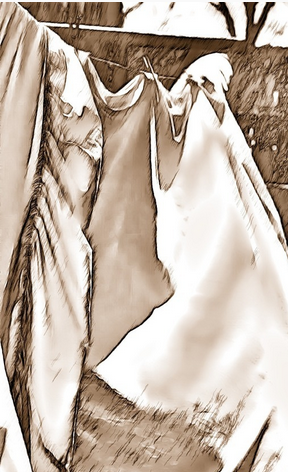
Screenshot 2014-03-14 07.32.13I taught his Sonnet, In Memoriam M.K.H., 1911-1984 to my Advanced Placement English Literature class this week. They listened first to hear him read the poem: (NOTE: be sure and listen to the little comment about “x’s and o’s” he makes at the end)

The cool that came off the sheets just off the line

Made me think the damp must still be in them

But when I took my corners of the linen

And pulled against her, first straight down the hem

And then diagonally, then flapped and shook

The fabric like a sail in a cross-wind,

They made a dried-out undulating thwack.       (sonnet continues…..)

“Is this about death?” asked my 4th period class. They were curious.
“This is about sex,” stated my 1st period class. They were emphatic.
Ultimately, they came to agree that the “thwack” could be either.

This past week has been “Sonnet Hell Week” where I teach my students to read, analyze, and then respond in draft form about a selected sonnet in preparation for the exam this coming May. This kind of exercise has the potential to poison anyone’s love for poetry, and they had written several essays before getting to this poem.
Despite the danger, I was confident that 
Heaney’s poem could withstand even the most jaded 2nd semester senior’s interpretation.

“I like it,” was the collective sentiment. These lines from a few of their quick draft essays reflect their appreciation:

Heaney uses comparisons to tell the reader that folding sheets makes him feel like his wife is still around, as the two end up “hand to hand” just from folding alone.

He describes their romance in moves when he was “x and she was o”…XOXO commonly represents hugs and kisses, creating the heartfelt connection.

This touching and pulling away symbolizes her physical existence on earth and her abrupt departure through the onomotopoeic “thwack.”

Just like the finality of the chore of folding sheets that they used to do together will never stop being a chore, she is forever present. She is in every fiber sewn in the sheets, every old flour sack used.

He must face the perils of household chores without help, endure his worst fears without his best friend. He must make his bed and sleep in it too.

The New York Times ran a wonderful opinion-documentary (Op-doc) on Heaney in December 2013. Watch and listen (yes, listen!) to the lovely tribute to Ireland’s great literary talent:

Continue Reading…

In New England this winter and in many other areas of the United States, we are experiencing the Polar Vortex, a phenomenon of cold-core low-pressure areas that strengthen during the winter. That is the scientific explanation for the record cold of early 2014.

A literary lens would suggest this uncomfortable freeze is akin to Dante’s ninth circle of Hell detailed in the Inferno section of The Divine Comedy. This last inner circle of Hell is reserved for those whose sins are related to treachery. The ninth circle is divided into four sections, and all sinners are trapped in the frozen lake, Cocytus. Satan himself is frozen waist deep in the lake with an icy wind ensuring his immobility.

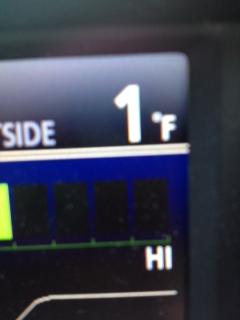
That icy wind sound familiar? Looking at my dashboard this morning, I noted the following temperature reading:

photo (18)Welcome to Hell!

Robert Frost, a New England man himself, considered the destructive power of cold and ice in his short poem “Fire and Ice” (read here by Richard Burton)

Fire and Ice

Some say the world will end in fire,
Some say in ice.
From what I’ve tasted of desire
I hold with those who favor fire.
But if it had to perish twice,
I think I know enough of hate
To say that for destruction ice
Is also great
And would suffice.

Frost’s association of fire with desire is recognizable. There are fires of passion or fires to make something “pure”. One symbol for knowledge is a lamp on fire, and a warm place by the fire is welcome during this recent freeze. Ending in fire may mirror the beginning, if one holds to the Big Bang Theory.

In contrast, his association of ice with hate creates a hostile tone. This association is also recognizable, describing someone as having  an icy heart or with ice in his/her veins leaves an unpleasant impression. The break-up song “Cold as Ice” by Foreigner lyrics state, “You’re as cold as ice/You’re willing to sacrifice our love…”. Economically, there is the dreaded “black ice,” a costly force of destruction on roads that sends thousands of vehicles to body shops annually. Scenes like these have played out all too frequently this year:

One final destructive power of ice to consider is the “melting” danger. National Geographic featured interactive maps in the story If All the Ice Melted  demonstrating what North America and the other six continents would look like if all the ice in the world melted. The result would increase the sea level by an estimated 216 feet.

Screenshot 2014-02-28 08.06.12

Frost’s short poem suggests that destruction by either ice or fire has the same result. However, I would like to point out that in the above-mentioned ice-melting scenario, my home would finally be waterfront, possibly with an ocean view!

Continue Reading…

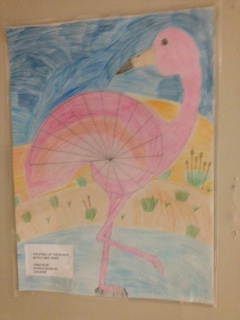
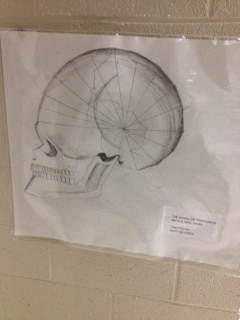
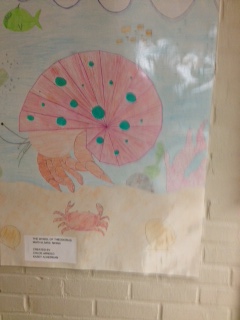
The amazing artwork in the hallways of the middle school was created by….(wait for it)…math classes!

Last week, Ms. Nihan, the 8th math teacher posted drawings created by students who were studying a geometrical pattern based on the work of a 5th Century Greek mathematician, Theodorous of Cyrene. He developed a pattern called the Spiral of Theodorous, a square root spiral composed of contiguous right triangles.

The artwork on the walls represents a Common Core Mathematical Standard:

CCSS.Math.Practice.MP7 Look for and make use of structure.

“Mathematically proficient students look closely to discern a pattern or structure.” This standard can also represent poetry patterns. Rhythm, rhyme scheme, repetition are all part of poetic patterns and structure that proficient students in English should use in close reading.

Therefore, a tribute to a few of student drawings is in order; each is matched with a poem with a distinct pattern.

First up, a “lullaby” with a rhyme scheme and refrain pattern  (a-a-a-refrain-b-b-b-refrain).  Like “Rock a Bye Baby”, this poem is more frightening than comforting, as the narrator clearly plans to place the child in a hazardous area!

photo (9)

Lullaby

Samuel Hoffenstein (1890-1947)

Yes, I’ll take you to the zoo,
To see the yak, the bear, the gnu,
And that’s the place where I’ll leave you–
Sleep, little baby!
You’ll see the lion in a rage,
The rhino, none the worse for age;
You’ll see the inside of a cage–
Sleep, little baby!

Next up, a quick tribute to the flamingo. This is an offering with the pattern of iambic tetrameter and a single rhyme (glum/gum).

photo (1)

The Flamingo Poem

Richard Medrington

Flamingos dress in fetching pink
can be rather glum, 

Their legs being made of plastic tubes
And bits of chewing gum.

from An Absird Book of Burds (Edinburgh: Puppet State, 2003)

The next poem is a humorous offering titled “X-ray” with two quatrains, each containing one rhyme (Jones/bones; sight/night):

photo (10)

X-Ray

by Joan Horton

“This is your x-ray,”

Said young Doctor Jones.

As he held up a picture

And showed me my bones.

(continued here)

In making these extraordinary drawings, students had to follow a specific pattern for the Spiral of Theodorus:

The spiral is started with an isosceles right triangle, with each leg having unit length. Another right triangle is formed, an automedian right triangle with one leg being the hypotenuse of the prior (with length √2) and the other leg having length of 1; the length of the hypotenuse of this second triangle is √3. The process then repeats; the ith triangle in the sequence is a right triangle with side lengths √i and 1, and with hypotenuse √i + 1.

Screenshot 2014-02-05 09.23.35 (wikipedia)

The original rendering by Theodorus is remarkably like a seashell, so here is an Amy Lowell poem matched with a seashell and its inhabitant, a small hermit crab. This poem has similarities to a Sonnetina Due-a 10 line poem with rhyming couplets. The poem also has a repeated “sing-song” line “Sea Shell, Sea Shell“:

photo (13)

Sea Shell

Amy Lowell

Sea Shell, Sea Shell,
Sing me a song, O Please!
A song of ships, and sailor men,
And parrots, and tropical trees,
Of islands lost in the Spanish Main
Which no man ever may find again,
Of fishes and corals under the waves,
And seahorses stabled in great green caves.
Sea Shell, Sea Shell,
Sing of the things you know so well. 

Some of the other drawings are seen here:

Patterns in math meet patterns in poetry, and I am happy to report that no square roots were harmed in this enterprise…Thanks to Ms. Nihan and the 8th grade practitioners of patterns!

Continue Reading…