Archives For November 30, 1999

Spoiler alertEnter the spoiler alert. Because the number of ways people hear about stories is increasing, spoiler alerts for books and films are offered as a “heads-up”, a means to prevent plot details from becoming public.  Knowing the end of a story might mean that the strategy of “predicting” a story has been compromised, however, there are genres of stories that absolutely count on predictability, for example, Nancy Drew will always solve a mystery with her best friend, Bess and George, while on TV, predictability has a time limit; the shipwrecked crew will never leave Gilligan’s Island (30 mins) and House will solve a medical mystery (60 mins).

Predictability means to state, tell about, or make known in advance, especially on the basis of special knowledge, and students are taught at an early age that making predictions can help them to determine what will happen in a story.

I noticed how predictions are important even if the end has already been decided when my six-year-old niece was watching the Disney film Running Brave. This was her favorite film, and she watched the VHS tape every afternoon. On one such afternoon, I noticed she was drifting asleep, so I made a move to turn off the video.

“Wait,” she cried out, “I think….I think he’s going to win again.”

From her perspective, the outcome of the race was still in doubt. The cinematic elements, the tight editing of shots , and a triumphant soundtrack created suspense where the viewer might doubt the inevitable. Krista had seen the movie hundreds of times, but she still was “testing” her prediction.

I admit that I have felt the same way watching Miracle, holding my breath for the final seconds wondering if the US ice hockey team would still win the Olympic medal. Krista’s experience is also mirrored in the classes where students often choose books based on a movie that they have seen.

In the independent reading allowed in our curriculum, the 9th graders can choose contemporary fiction or non-fiction, and many of the titles have movies in circulation, for example:

Some students purposefully choose these books because they know the endings, and in knowing how the book ends allows the reader to pay more attention to the craft of the author in bringing all the plot points together in a conclusion. Take for example, the Harry Potter series. Most readers predicted with certainty that Harry Potter would finally face his nemesis, Voldemort. The how and when, however, were still very much in the air, and J.K.Rowling’s crafting of the series’s magical settings and character development kept readers in a willing suspension of disbelief for the length of seven volumes. The final conclusion was satisfying to her fans who knew all along that Harry would prevail, after all, Good’s triumph over Evil is a predictable plot. Readers and filmgoers were not disappointed in following the story of a boy with the scar on his forehead because in each volume and subsequent film release, they correctly predicted that “I think…I think he will win again.”

So when I teach a whole class novel, I know there are some students who already know the ending. They may have reached the conclusion before others, or been informed by older students who notoriously share their opinions and critical information with younger students. In this case, my role is to impress on students that knowing the outcome will not destroy a well-told story, and to focus their attention on the other elements. This was the case with John Steinbeck’s Of Mice and Men.

“I heard this is a sad book,” one student said when I assigned the first chapter, “One guy kills another guy.”
Other students looked up for my confirmation.
“Yes, this is a sad book, but the reason for the sadness is really about caring. We will grow to care for these characters.”
“I already don’t care if I already know what happens,” was his reply.
Four weeks later, this student refused to watch the final scene in the film version.
“I know what happens, and I cannot watch,” he said sadly as he walked out into the hall.

The same sentiments are expressed at the beginning of our study of Shakespeare’s Romeo and Juliet.
“Guess what? They die,” said a student as I passed out the books.
“Yes, they die,” I kept passing out the copies.
“So why are reading this?” another asked.
“Because this is a great story,” I responded, “and the story’s ending will mean more after we finish because we will have read how Shakespeare writes about these ‘star-cross’d lovers’.”
“But we already know how it ends!” they whined.

Now that we are in Act III, no one cares that they know the end, instead, they are recognizing how Shakespeare creates the tragedy. They notice the “hints”: Juliet seeing Romeo “As one dead in the bottom of a tomb”, Friar Lawrence’s herbs of “Violent delights”, and “Love devouring death”.

This discovery of an author’s details makes students more appreciative of the craft in writing as they still try to predict. They notice Shakespeare’s allusions: “Such a wagoner/As Phaeton would whip you to the west/And bring in cloudy night immediately” (3.2.2-4), because we had studied the Phaeton myth earlier in the year.

“Uh-oh. That’s not good,” I heard one say, “Romeo’s gonna crash and burn like Phaeton.”

That kind of analysis is exactly what the English Language Arts Common Core would like to see in a close reading of a text. How interesting that students who already know “what happens” may be better at picking up on an author’s craft that a close reading generates.

Spoiler alerts do warn those readers or viewers who want to be surprised, but knowing the ending does not necessarily ruin the reading or viewing experience. Want to experiment? Here are 50 plot spoilers for 50 novels. I predict that each novel will not disappoint, even if you already know the ending.

sols_6Why do I stay? This question is circulating on blogs and in videos by teachers from across the country. My friend Catherine, a teacher and literacy specialist, brought this question to my attention in her post this week. She was participating in a challenge organized by Two Writing Teachers called  The Slice of Life. The instructions for participating are on a link that goes first to a definition (“Slice of life is a phrase describing the use of mundane realism depicting everyday experiences in art and entertainment“) while other links provide procedures:

WRITE your slice. SHARE your link. GIVE some comments to (at least three) other slicers.

On one post she linked her Slice of Life post to blogger Beth Shaum’s video “Why I Stay”.  Catherine listed her reasons for staying and noted that other teachers have written about their reasons for remaining in the classroom, “despite changes in curriculum because of Common Core State Standards, new testing, and new evaluations that are being imposed on educators.” The video on Shaum’s blog addresses startling statistics about the teaching and the education profession:

More than 30% of new educators quit teaching after three years, and nearly 50% leave before hitting the five-year mark. (USNews.com)

Shaum’s video showed dozens of teachers from around the country sharing their reasons for staying in education.

I have not written to The Slice of Life challenge, but I did think the idea of recording my personal reasons as to why I have stayed and taught for 22 years in grades 6-12 would be an exercise that could both help me frame my own thinking and possibly encourage younger teachers who are often overwhelmed.

My reason for “why I stay” is purely selfish.…I want to share the stories.

I want to share with children, teens, and adults the stories they have read, seen, or heard.

I want to share the stories in picture books.
I want to share the stories in chapter books.
I want to share the stories in the canon.

So, I teach students to read stories so that we can talk and share the stories that make us human..

I want to share books.

I want to share books at every grade level.

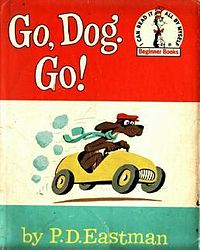
hungry Whales Go_Dog_Go

I want to share books:

  • Go, Dog, Go
  • Hungry Hungry Sharks
  • The Whales Go By

I want to share more books:

  • Nancy Drew’s The Password to Larkspur Lane
  • The Twenty-One Balloons
  • A Wrinkle in Time

Larkspur wrinkle 21 balloons

I want to share novels:

  • Of Mice and Men
  • The Road
  • The Curious Incident of the Dog in the Night-time

I want to share stories written as dramas. I want to talk about:

  • Hamlet
  • Medea
  • The Importance of Being Ernest

I want to share stories made into film. I want to talk about:

  • One Flew Over the Cuckoo’s Nest
  • The Wizard of Oz
  • The Shawshank Redemption

I want to share stories in poems. I want to talk about:

  • The Odyssey
  • Paradise Lost
  • The Cremation of Sam McGee

Guernica Fall of Icarus

GW Delaware

I want to share the stories in paintings. I want to talk about:

  • Guernica
  • The Fall of Icarus
  • George Washington Crossing the Delaware

I want to share the stories that were responsible for essays and speeches. I want to talk about:

  • The Gettysburg Address
  • A Modest Proposal
  • Self-Reliance

I want to share the stories of people’s lives, stories about nature, and stories that mark cultural trends. I want to share:

  • Will You Sign Here, John Hancock?
  • Silent Spring
  • The Tipping Point

From the ancient lights of the campfires to the soft glow from a Kindle, our stories record our humanity.I stayed 22 years in teaching because I want students to understand that record of humanity. I stayed 22 years in teaching because I want students to respond to stories through writing and through speaking. And I stayed because I wanted to encourage students to record their own stories. I want to read and hear and see their stories.

In this great cultural experiment of public education for ALL, I stay to share the stories.

Stephen King scares me. I have read only a handful of his books: Christine, The Green Mile, Carrie, but those have left a residue in my brain. My fear, created by the gruesome images in his fiction, would probably please him: he likes to tell stories that unsettle the reader.

I have, however, become a fan of his non-fiction book On Writing. While I am not as rabid as Annie Wilkes of Misery, I push this book on as many readers as possible. When I mention King’s name, however, I recognize the same uncomfortable flicker in their eyes. King scares them.

“No, really,” I urge, “this is nothing like the Stephen King books you don’t like. This is the Stephen King book you will like.”

On the surface, On Writing: A Memoir of the Craft is King’s memoir mixed with writing tips. The book is divided into three parts; the second part has two subsets of witty literary criticism.

In section one, the reader learns about King’s childhood, the history of his writing career, and the inspiration for several stories. He discusses his addictions, his stories, and his marriage to Tabitha, an author and his chief literary critic. In the second section, King discusses the craft of writing, first through the use of a “toolbox” of grammar  and then with application of these tips in various works of literature. The third and final section of the book covers his near death experience in June of 1999 when he was hit by a motorist on a side road in Maine.

We assign this book to our juniors who are taking the Advanced Placement English Language class, a course in familiarizing students with rhetoric and argument. The critical commentaries he offers in his “toolbox” section are especially helpful in helping students develop a style of writing.

He lectures the reader in a voice that is informal and wise. He gets the respect that English teachers struggling to impart the importance of subject-verb agreement crave to have from students. Plus, he swears; he swears a lot:

“You’ll also want grammar on the top shelf of your toolbox, and don’t annoy me with your moans of exasperation or your cries that you don’t understand grammar, you never did understand grammar, you flunked that whole semeste rin Sophomore English, writing is fun but grammar sucks the big one. Relax. Chill. We won’t spend much time here because we don’t need to. One either absorbs the grammatical principles of one’s native language in conversation and in reading or not.”

Some of his other observations include:

“Remember that the basic rule of vocabulary is use the first word that comes to your mind, if it is appropriate and colorful. If you hesitate and cogitate, you will come up with another word — of course you will, there’s always another word — but it probably won’t be as good as your first one, or as close to what you really mean.”

“Bad grammar produces bad sentences.”

The adverb is not your friend. … Adverbs, like the passive voice, seem to have been created with the timid writer in mind.”

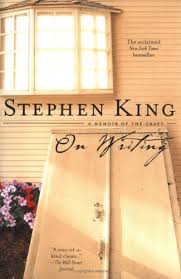
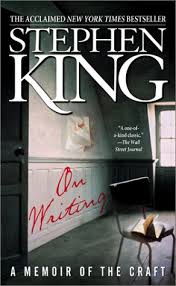
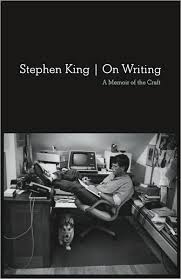
I have had some success in locating used copies of the book in its various editions. There are hardcovers and paperbacks in the secondary markets of thrift stores and library book sales, but I need to look close at the book spines since they are different in size and appearance. Our class set is a mish-mash of all editions.  The most frequent edition’s cover art is a picture of the cellar door, and if there was a book cover design that was dead wrong for the contents, this cover gets my vote. The cellar door may mean entrance to the “foundation” of writing, but the cream colored clapboards, bright window, and potted plant are an odd chice for King. The cover art with the letters of rejection nailed to a wall is macabre, perhaps a better choice for King and the contents. My favorite cover, though, is the most recent and centers on a photo of King working at his desk.

Cover simply did not match content!

Cover disconnect from content.

The macabre cover with rejection letters nailed to the wall

The macabre cover with rejection letters nailed to the wall; blood red title.

The most appropriate cover; one that matches the content

The most appropriate cover; one that matches the content-King writing On Writing

Last week, I offered this book to my own book group, an adult group of educated readers. Our discussion led to the question, “What is good writing?” We failed like so many others to come up with a definitive answer, but we did appreciate KIng’s four pages of suggested titles listed at the end of the memoir to read as examples of good writing. This list brings me to a major point in On Writing, King likes to read. This is repeated many times in the text:

“If you don’t have time to read, you don’t have the time (or the tools) to write. Simple as that.”

“If you want to be a writeryou must do two things above all others: read a lot and write a lot.

King’s dedication to the craft of writing is inspiring; the final paragraph captures his passion:

“Writing isn’t about making money, getting famous, getting dates, getting laid, or making friends. In the end, it’s about enriching the lives of those who will read your work, and enriching your own life, as well. It’s about getting up, getting well, and getting over. Getting happy, okay? Getting happy.”

On Writing has changed how I write. Because of On Writing, I hesitate to add an adverb (see? I consciously did not use “frequently hesitate”). I hear his voice say “I believe the road to hell is paved with adverbs” when I craft sentences,

My favorite part of the “toolbox” deals with his disdain for the passive voice. King tells the writer to “energize your prose with active verbs. … good writing is often about letting go of fear and affectation.”  My students tell me they write in write in passive voice to sound smart, so I need to counter with a clear example of why the use active voice is more powerful. King provides me a hilarious example:

“Everyone’s entitled to his/her opinion, but I don’t believe ‘With a hammerhe killed Frank‘ will ever replace ‘He killed Frank with a hammer.’”

“But how do you know when you are using passive voice?” my students ask. I offer my new “tool” to test, a tool I found on a Facebook post.

“If you can put ‘by Zombies’ after the verb, then you have passive voice,” I respond.

“Frank was killed…by Zombies?”

“Passive voice. To make the sentence active, you would have to write, ‘The Zombies killed Frank’. Much clearer, don’t you think?”

Passive voice and Zombies? I think Stephen King would enjoy that discussion.

There is always a “first mover”, the one who starts the action. A creator.

But is this creator an artist? Or is this creator a scientist?

A recent broadcast on National Public Radio puts the evidence solidly in artist’s corner. This evidence is in the form of the 3-D Doodler, a new device featured on Marketplace as an invention funded through Kickstarter. The 3-D Doodler is a thick pen not unlike a glue gun that exudes a ribbon of thin plastic that hardens into the shape being drawn. There was a team of scientists and engineers who created the 3-D Doodler.

The video demonstrates how the 3-D Doodler operates like a pen that continues to write even after it is lifted from a surface allowing the writer to operate without a canvas. There are no limits to the size of the creation; the only limit is the supply of plastic. Oh, and the power source.

But, a crayon does not need a power source. A crayon only needs a hand and an imagination. Especially if the crayon is the beautiful color purple.

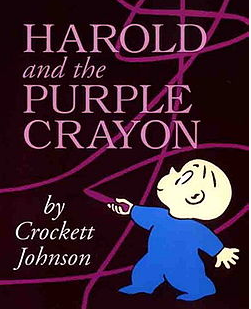
Before the 3-D Doodler, there was Harold and the Purple Crayon

Crockett Johnson’s Harold and the Purple Crayon was first published in 1955, and was voted one of the “Top 100 Picture Books” of all time in a 2012 poll by School Library Journal. Loved by children of several generations, Harold’s creativity endures.

Screen Shot 2013-03-27 at 9.40.03 PMHis story begins,

“One night, after thinking it over for some time, Harold decided to go for a walk in the moonlight.”

On the right hand side of the first page, Harold’s distinctive large round head and wide eyes are turned expectantly to a blank space in the top right corner of the page. Clenched in his right hand is a purple crayon; he has just completed a full page drawing of intersecting lines on the opposite page.

“There wasn’t any moon, and Harold needed a moon for a walk in the moonlight.”

On the next page, standing on his tiptoes in his full bodysuit, Harold draws a slice of the moon.

“And he needed something to walk on.”

Bending over, Harold draws a straight line and “sets off on his walk taking his big purple crayon with him.” Harold travels through a forest, past a dragon, on the ocean, to the beach, up a mountain, in a hot air balloon, through a maze of city buildings, until he finally finds his way back into his bedroom through an open window. At the end of the story, Johnson displays the sophisticated word play that makes the story so much fun to read aloud. Harold is in his bedroom, where he:

“…made his bed. He got in and he drew up the covers.”

Get it? He “made” the bed? “Drew” up the covers”? Johnson was a genius. An artistic genius.

The success of Harold and the Purple Crayon was extended by Johnson in a number of sequels. Harold’s imagination allowed him to travel through numerous landscapes:

  • Harold’s Fairy Tale 1956
  • Harold’s Trip to the Sky 1957
  • Harold’s Circus’s 1959
  • Harold’s ABC 1963

The series gave rise to a video puzzle game, Crayon Physics. However, the artist Harold was not limited by the laws of physics. The crayon was not bound to wear and tear. The canvases were large and blank and ready for a creator.

The new 3D Doodler can also be used to write on a large blank canvas. However, this new technology is seriously limited by the need for a power source and a continuous supply of “ink.”

In deciding the case of which came first, the artist or the scientist, the evidence is illustrated quite literally in doodles. These doodles are in purple, not plastic. Harold is a first mover whose imagination continues to inspire. Sorry, 3D Doodler, in this landscape of creation, Harold the artist comes first.

003-Great-Gatsby

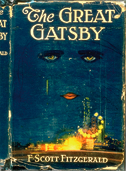
Charles Scribner’s and Son issued the first hardback edition in April 1925, adorning its cover with a painting of a pair of eyes and lips floating on a blue field above a cityscape.

The Great Gatsby film is coming out soon….” the English teacher said to me, “Can you believe Gatsby is almost 90?”

Wait, 90? The Great Gatsby is almost 90? That debonair, handsome American icon we met in his 30’s could be well over 100 years old?

“He had one of those rare smiles with a quality of eternal reassurance in it, that you may come across four or five times in life. It faced, or seemed to face, the whole external world for an instant and then concentrated on you with an irresistible prejudice in your favor. It understood you just as far as you wanted to be understood, believed in you as you would like to believe in yourself.”

F. Scott Fitzgerald began writing his great American novel in 1922, with some of the elements surfacing in the story “Absolution” in the June 1924 issue of the magazine The American Mercury.  During the years 1923–1924, Fitzgerald, his wife Zelda, and their baby daughter, Frances “Scottie”,  traveled from New York to the French Riviera, where the novel was finished. Fitzgerald went through several revisions between 1923 to 1925 before the  novel was finally published.

According to Brant Mangum in a publication from Virginia Commonwealth University: 

Fitzgerald’s ambitious goal as he approached the composition of The Great Gatsby was to “write something new–something extraordinary and beautiful and simple + intricately patterned.”

The reaction of the critics was harsh; one early review ran with the headline:

 “F. SCOTT FITZGERALD’S LATEST DUD.”

Praise, however came from recognized writers T. S. Eliot, Edith Wharton and Willa Cather. Ten days after the book came out, Maxwell Perkins, Fitzgerald’s editor, sent the telegram: “SALES SITUATION DOUBTFUL EXCELLENT REVIEWS.” The first printing of 20,870 copies was a slow seller; Scribner’s printed another 3,000 copies four months late and finished the run. According to an article Living on $500,000 a Year: What F. Scott Fitzgerald’s tax returns reveal about his life and times by William J. Quirk in American Scholar over 12 million copies have been sold, with approximately 300-400 hundred thousand sold annually. However, Fitzgerald never did match his famous protagonist’s wealth:

“Royalties from The Great Gatsby totaled only $8,397 during Fitzgerald’s lifetime. Today Gatsby is read in nearly every high school and college and regularly produces $500,000 a year in [F. Scott Fitzgerald’s daughter] Scottie’s trust for her children.”

Fitzgerald died young, age 44, in December of 1940.

“His estate was solvent but modest—around $35,000, mostly from an insurance policy. The tax appraisers considered the copyrights worthless. Today, even multiplying Fitzgerald’s estate by 30, it would not require an estate tax return.”

He did write other novels, stories, essays, but The Great Gatsby remains his most important addition to the canon. So why call this work the great American novel?

Jonathan Yardley makes his case by calling attention to the distinctively American elements in the novel in the Washington Post book review Gatsby”: The Greatest Of Them All (1/2/07) writes:

In an extraordinarily compressed space — the novel is barely 50,000 words long — Fitzgerald gives us a meditation on some of this country’s most central ideas, themes, yearnings and preoccupations: the quest for a new life, the preoccupation with class, the hunger for riches and “the last and greatest of all human dreams…”

Our contemporary American obsession with celebrity and wealth is obvious to students who are assigned The Great Gatsby. Our nation’s economy  from boom through a recent recession, echoes the experience the heady times of the  Roaring 20’s before the Great Depression. The narrative style is engaging and packed with imagery. Anyone who spent time in a high school literature classroom over the past 50 years can recall taking notes on Fitzgerald’s metaphors and complex symbols. Mangum discusses these in his essay:

 The green light, which carries meaning at every level of the story–as Gatsby’s go-ahead sign, as money, as the “green breast of the new world,” as springtime–is strategically placed in chapters one, five, and nine. The eyes of T.J. Eckleburg “brood on over the solemn dumping ground,” which is the wasteland that America has become (514).

The appeal of Jay Gatsby’s character is explained in a chapter in America: A Self-Made Country by political commentator Chris Matthews. He writes:

“The reader, like Nick Carraway, comes to like this guy. We love his dream  because we have, all of us, shared something very much like it. Gatsby for me is undeniably the great American novel. We celebrate its hero and his “heightened sensitivity” to the promise of life. his “extraordinary gift for hope”, his “romantic readiness” because we as a country share every bit of it” (20).

The final passage of the novel is Fitzgerald’s commentary on the American dream. Nick’s final stream of consciousness:

“Gatsby believed in the green light, the orgastic future that year by year recedes before us. It eluded us then, but that’s no matter—tomorrow we will run faster, stretch out our arms farther. . . . And then one fine morning—
So we beat on, boats against the current, borne back ceaselessly into the past.”

Such imagery naturally lends itself to the movie screen, and The Great Gatsby has had more than its fair share of remakes:

  • 2000:  Mira Sorvino, Toby Stephens, Paul Rudd (made for TV)
  • 1974: Robert Redford, Mia Farrow, Bruce Dern
  • 1949: Alan Ladd, Betty Field, Macdonald Carey
  • 1926: Warner Baxter, Lois Wilson, Neil Hamilton 

Now, the latest version is coming May (2013), when the Australian film director Baz Lurhman will put his spin on this American story:

Once more, Jay Gatsby will be glamorously immortalized in his youth; this time digitally mastered rather than in celluoid.

However, should someone want to try an even newer genre in order to experience a 21st Century Gatsby, there is the Nintendo Great Gatsby Game that can be played on a computer. While Gatsby is fixed forever as young and ambitious, he now is also amazingly spry for his years! ( “to jump, move arrow keys together right and left”)

For an “Old Sport”, Gatsby wears his age well.

As the Connecticut State Standardized tests fade into the sunset, teachers are learning to say “Good-bye” to all those questions that ask the reader to make a personal connection to a story. The incoming  English Language Arts Common Core Standards (ELA- CCSS) are eradicating the writing of responses that begin with, “This story reminds me of…..” Those text to self, text to text, and text to world connections that students have made at each grade level are being jettisoned. The newly designed state assessment tests will tolerate no more fluff; evidence based responses only, please.

sunsetPerhaps this hard line attitude towards literacy is necessary correction. Many literacy experts had promoted connections to increase a reader’s engagement with a text. For example,

 “Tell about the connections that you made while reading the book. Tell how it reminds you of yourself, of people you know, or of something that happened in your life. It might remind you of other books, especially the characters, the events, or the setting” (Guiding Readers and Writers Grades 3-6, Fountas and Pinnell) 

Unfortunately, the question became over-used, asked for almost every book at each grade level. Of course, many students did not have similar personal experiences to make a connection with each and every text. (Note: Given some of the dark literature-vampies, zombies- that adolescents favor, not having personal experience may be a good sign!) Other students did not have enough reading experience or the sophistication to see how the themes in one text were similar to themes in another text.  Some of the state assessment exemplars revealed how students often made limited or literal connections, for example:”The story has a dog; I have a dog.”

The requirement to make a connection to each and every story eventually led to intellectual dishonesty.  Students who were unable to call to mind an authentic connection faked a relationship or an experience. Some students claimed they were encouraged by their teachers to “pretend” they knew someone just like a character they read about. “Imagine a friend had the same problem,” they were told.   Compounding this problem was the inclusion of this connection question on the state standardized tests, the CAPT (grade 10) and the CMT (grades 3-8). So, some  students traded story for story in their responses, and they became amazingly creative in answering this question. I mentioned this in a previous post when a student told me that the sick relative he had written about in a response didn’t really exist. “Don’t worry,” he said brightly after I offered my condolences, “I made that up!”

Last week, our 9th grade students took a practice standardized test with the “make a connection question” as a prompt. They still need to practice since there is one more year of this prompt before ELA CCSS assessments are in place. The students wrote their responses to a story where the relationship between a mother and daughter is very strained. One of the students wrote about her deteriorating and very difficult relationship with her mother. I was surprised to read how this student had become so depressed and upset about her relationship with her mother. I was even more surprised that afternoon when that same mother called to discuss her daughter’s grade. I hesitated a little, but I decided to share what was written in the essay as a possible explanation. The next day, I received the following e-mail,

“I told M___that I read the practice test where she said I didn’t have time to talk and other things were more important. She just laughed and said that she had nothing in common with the girl in the story so she just made that up because she had to write something. We had a good laugh over that and I felt so relieved that she didn’t feel that way.”

After reading so many student “make a connection” essays, I should have seen that coming!

Good-bye, “Make a Connection” question. Ours was an inauthentic relationship; you were just faking it.

Screen Shot 2013-03-10 at 11.08.07 AMMarch in Connecticut brings two unpleasant realities: high winds and the state standardized tests. Specifically, the Connecticut Academic Performance Tests (CAPT) given to Grade 10th are in the subjects of math, social studies, sciences and English.

There are two tests in the English section of the CAPT to demonstrate student proficiency in reading. In one, students are given a published story of 2,000-3,000 words in length at a 10th-grade reading level. They have 70 minutes to read the story and draft four essay responses.

What is being tested is the student’s ability to comprehend, analyze, synthesize, and evaluate. While these goals are properly aligned to Bloom’s taxonomy, the entire enterprise smacks of intellectual dishonesty when “Response to Literature” is the title of this section of the test.

Literature is defined online as:

“imaginative or creative writing, especially of recognized artistic value: or writings in prose or verse; especially writings having excellence of form or expression and expressing ideas of permanent or universal interest.”

What the students read on the test is not literature. What they read is a story.

A story is defined as:

“an account of imaginary or real people and events told for entertainment.”

While the distinction may seem small at first, the students have a very difficult time responding to the last of the four questions asked in the test:

How successful was the author in creating a good piece of literature? Use examples from the story to explain your thinking.

The problem is that the students want to be honest.

When we practice writing responses to this question, we use the released test materials from previous years: “Amanda and the Wounded Birds”, “A Hundred Bucks of Happy”, “Machine Runner” or “Playing for Berlinsky”.  When the students write their responses, they are able to write they understood the story and that they can make a connection. However, many students complain the story they just read is not “good” literature.

I should be proud that the students recognize the difference. In Grades 9 & 10, they are fed a steady diet of great literature: The Odyssey, Of Mice and Men, Romeo and Juliet, All Quiet on the Western Front, Animal Farm, Oliver Twist. The students develop an understanding of characterization. They are able to tease out complex themes and identify “author’s craft”. We read the short stories “The Interlopers” by Saki, “The Sniper” by Liam O´Flaherty, or “All of Summer in a Day” by Ray Bradbury. We practice the CAPT good literature question with these works of literature. The students generally score well.

But when the students are asked to do the same for a CAPT story like the 2011 story “The Dog Formerly Known as Victor Maximilian Bonaparte Lincoln Rothbaum”, they are uncomfortable trying to find the same rich elements that make literature good. A few students will be brave enough to take on the question with statements such as:

  • “Because these characters are nothing like Lenny and George in Of Mice and Men…”
  • “I am unable to find one iota of author’s craft, but I did find a metaphor.”
  • “I am intelligent enough to know that this is not ‘literature’…”

I generally caution my students not to write against the prompt. All the CAPT released exemplars are ripe with praise for each story offered year after year. But I also recognize that calling the stories offered on the CAPT “literature” promotes intellectual dishonesty.

Perhaps the distinction between literature and story is not the biggest problem that students encounter when they take a CAPT Response to Literature. For at least one more year students will handwrite all responses under timed conditions: read a short story (30 minutes) and answer four questions (40 minutes). Digital platforms will be introduced in 2014, and that may help students who are becoming more proficient with keyboards than pencils.
But even digital platforms will not halt the other significant issue with one other question, the “Connection question (#3)” on the CAPT Response to Literature:

 What does this story say about people in general? In what ways does it remind you of people you have known or experiences you have had?  You may also write about stories or books you have read or movies, works of art, or television programs you have seen.  Use examples from the story to explain your thinking.

Inevitably, a large percentage of students write about personal experiences when they make a connection to the text. They write about “friends who have had the same problem” or “a relative who is just like” or “neighbors who also had trouble”.  When I read these in practice session, I sometimes comment to the student, “I am sorry to hear about____”.

However, the most frequent reply I get is often startling.

“No, that’s okay. I just made that up for the test.”

At least they know that their story, “an account of imaginary or real people and events told for entertainment,” is not literature, either.

What better way to celebrate International Women’s Day 2013 but to pay tribute to Canadian author Margaret Atwood? Poet, novelist, lecturer, inventor, tweeter, and celebrity ice hockey goalie, Atwood’s achievements in each of these roles is accomplished with wit, grace, and aplomb.

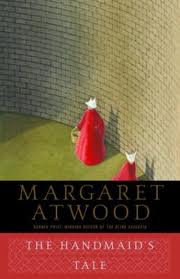
Handmaid's tale

There are other earlier covers, but this one is my personal favorite.

My Advanced Placement English Literature class just finished reading her novel, The Handmaid’s Tale. The novel is set in the dystopia of Gilead, where in response to political and ecological upheaval, a quasi-Christian theocracy is organized in the eastern section of the United States. Astute Sparknote writers, graduates of Harvard, recognized many of the landmarks in the novel’s setting (the brick wall, the gymnasium) as that of their alma mater, an indication of Atwood’s wry sense of irony. In the novel, fertility is an obsession. Rituals and “ceremonies” are enforced; offenders and outliers are publicly executed or sent to labor in toxic waste dumps. The main character Offred, who had a daughter before the establishment of the Republic of Gilead, is valued only for her ability to reproduce.

Because of the mature themes, The Handmaid’s Tale is often taught in senior high school classes. The title is often suggested on the exam for the open-ended Question #3 on the AP Literature exam which means other schools assign the book. There are always plenty of copies available in the secondary market. Our classroom library has over 60 copies from a variety of library book sales and thrift stores. I have spent under $100.00 in adding this title to our curriculum; I’d like to think that Atwood might be pleased with this “ecological” way to have students read the text despite her loss of possible retail revenue. However, if one wanted a new copy, they are available at Amazon for $10.20 paperback or an audio recording by Claire Danes is available  at Audible.com  for $24.95.

When we discuss the clothing that marks the different “castes” of people in Gilead,  I always use the endpaper story Atwood published in the New York Times Magazine published “When Afghanistan Was at Peace”

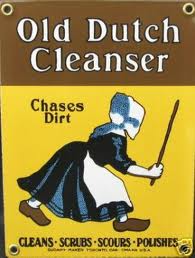
Six years after our trip, I wrote ”The Handmaid’s Tale,” a speculative fiction about an American theocracy. The women in that book wear outfits derived in part from nuns’ costumes, partly from girls’ schools’ hemlines and partly — I must admit — from the faceless woman on the Old Dutch Cleanser box, but also partly from the chador I acquired in Afghanistan and its conflicting associations. As one character says, there is freedom to and freedom from. But how much of the first should you have to give up in order to assure the second? All cultures have had to grapple with that, and our own — as we are now seeing — is no exception. Would I have written the book if I never visited Afghanistan? Possibly. Would it have been the same? Unlikely.”

Dutch Cleanser

The combination of the Dutch Cleanser girl with the chador is the inspiration for Offred’s clothing; the story and the visual always sparks a discussion on the symbolic effect of clothing.

My students always argue about the genre of The Handmaid’s Tale. This year there were a number of votes for political science book, others for a dystopian love story; no one said science fiction. Atwood would be relieved; she has always drawn the distinction between science fiction and her writing which she calls “speculative fiction”. Several of my students also read the other books Oryx and Crake and The Year of The Flood that are speculative fiction.

Here is Atwood with her take on the genre of specultive fiction.

The conclusion of The Handmaid’s Tale ends in an allusion to the story of Orpheus and Eurydice:

“We may call Eurydice forth from the world of the dead, but we cannot make her answer; and when we turn to look at her we glimpse her only for a moment, before she slips from our grasp and flees.”

After we finished the novel, the class read Atwood’s poem Eurydice. I asked them what they thought.

  • “There is a sense of longing in both.”
  • “The language is so similar. There is the white curtain…the gauze.”
  • “‘It is not through him you will get your freedom’ is just like
    from and freedom to…that is Offred’s problem”
  • “We could have just read the poem! They’re almost the same!”

One other area of speculative fiction where Atwood has shared her thoughts is on the topic of modernity…and Zombies. In an interview on George Stroumboulopoulos Tonight, Atwood was quite clear on the limits of Zombie stories:

“No zombie story is ever told from the zombie point of view… they’re not narrative…they don’t have language and that impedes one from telling a story.”

Outside of fiction, Atwood has also written about debt. Her non-fiction book Payback: Debt and the Shadow Side of Wealth came from her 2008 Massey Lectures. Not surprisingly, her interest in debt began in from her study of Victorian Literature. In an interview with Suzanne Ellis, CityLine “Margaret Atwood On Payback And The Concept Of Debt”  Atwood discussed how the Victorian stories that are on the surface about love and romance are really all about financial arrangements:

“In [Jane Austen’s] Sense and Sensibility, Marianne can’t marry the love of her life because he needs to marry a rich person. He doesn’t have any money. She’s devastated by that and gets a bad cold,” Atwood muses. “You start following the money in these novels and it takes you to the most amazing places. Where did Heathcliff get the money that he uses to buy Wuthering Heights, or I should say to gamble the owner of it out of it? How does he do that? We’re not quite sure but it’s something pretty shady.”

The book was made into a documentary and released in the spring of 2012. The New York Times critic A.O. Scott opens his film review with the premise of the documentary:

A glance at the headlines from Europe, the news from Washington or this month’s bills will confirm that we live in an age of debt. Debt, a concept at once straightforward and almost metaphysically complex, is a source of personal, national and global anxiety, and forms a link between the individual and the worldwide economic system.

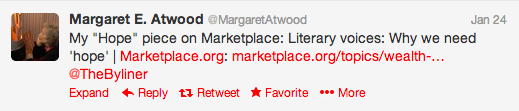
While the film did not receive critical acclaim, Atwood’s ability to connect herself and link to the world through Twitter is often lauded.  She is an avid twitterer with 383,430 followers and over 15,000 tweets of her own. She links to political issues, comments on travels, and gives recipe advice:

Screen Shot 2013-03-08 at 11.06.17 AM Screen Shot 2013-03-08 at 11.07.07 AM Screen Shot 2013-03-08 at 11.08.58 AM Screen Shot 2013-03-08 at 11.09.56 AM

She also is the inventor of the “long pen”, a device that allows her to attend book signings from distances and sign books “virtually”. When she is tired of traveling to sign books, she can now meet her adoring public in virtual space and provide them with an authentic signature. Fortunately, I saw her before the “long pen” at a Barnes and Noble reading/book signing for her short story collection Moral Disorder. She was amazingly articulate; in the 40 minute talk, she never hesitated or once said “um”.

And just when you thought that Atwood could not be more accomplished, she starred in a video explaining “How to Stop a Hockey Puck” for the comedian reporter Rick Mercer. I put the video below. (Too bad her “Dance Party Video” was removed from YOUTube for copyright violations.)

So, on this International Woman’s Day, let’s hear a cheer for Margaret Atwood!

She writes. She tweets. She scores!

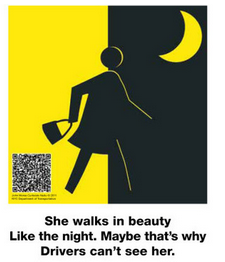
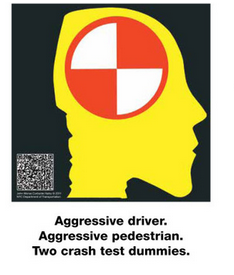
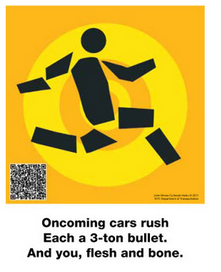
Mash-up are usually the blending of music from two or more sources. However a different mash-up was featured in a story by National Public Radio (NPR) where street signs in New York City were rewritten into Haiku poetry, Haiku Traffic Signs Bring Poetry To NYC Streets. This story illustrated how a mashup could be made of a very basic informational text with a strict poetic form. “Caution: Oncoming Traffic” was expanded into a poem of  of 5 syllables/7 syllable/5 syllables of “8 million swimming/The traffic rolling like waves/Watch for undertow.” In the NPR story,

“Traffic warning street signs written as haiku are appearing on poles around the five boroughs, posted by the New York City Department of Transportation. The poems and accompanying artwork were created by artist John Morse.”

Screen Shot 2013-03-03 at 5.35.21 PM Screen Shot 2013-03-03 at 5.35.31 PM Screen Shot 2013-03-03 at 5.35.39 PM

NYC’s Department of Transportation hoped the signs would catch new eyes in order to communicate important information. The unusual combination of graphics and verse on street signs presented pedestrians with additional information, a different point of view. The reordering of information is just one example of how presenting information in a different genre also provides new writing opportunities for new audiences.

Since the English Language Arts Common Core is rattling its standards calling for an increase in informational texts, the 9th grade curriculum is including a non-fiction unit where students choose a non-fiction text of their own to read. The CCSS  require this increase based on:

“…extensive research establishing the need for college and career ready students to be proficient in reading complex informational text independently in a variety of content areas. Most of the required reading in college and workforce training programs is informational in structure and challenging in content…”

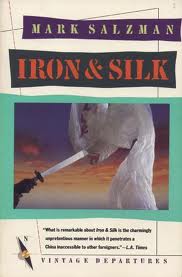
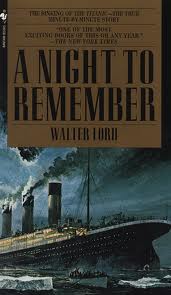
Our students may choose a text to read on topics that range from animal or adventure topics to travel or war. There are titles that have been made available in bulk on the secondary market, such as public library book sales or thrift stores and added to our classroom book carts. The books purchased for $1.00 each (see how) include:

  • Girl Interrupted-Keysen
  • Guts-Paulsen
  • Tuesdays with Morrie-Albom
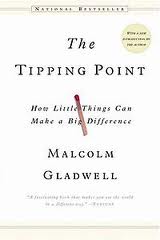
  • The Tipping Point– Gladwell
  • Left for Dead-Nelson
  • Iron and Silk-Salzman
  • A Night to Remember-Lord
  • Hiroshima-Hersey
  • The Teammates-Halberstam

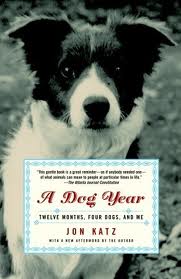
iron and silk Night to remember dog year Tipping

There are also a number of books that deal with animal literature that are stocked on the classroom book cart. Many of these texts will also be available for the senior elective, “Critter Lit”:

  • With Love from Baghdad-Kopelman
  • Tell Me Where It Hurts-Trout
  • Seabiscuit-Hillebrand
  • Winterdance– Paulsen
  • A Dog Year-Katz
  • Wesley the Owl-O’Brien
  • Alex and Me-Royte
  • Modoc-Helfer
  • The Pig Who Sang to the Moon-Masson

Students may chose from these titles or another non-fiction choice though the school library, which also offers the online book shelf Overdrive. The students organize themselves into thematic groups while the unit runs for four weeks (block schedule) with some overlap during the standardized testing weeks. The students spend time reading in class, and they organize themselves into thematic groups. Rather than respond in essays or traditional research papers, the students are given an opportunity to create genre mash-ups.

First, to prepare for writing mash-ups, the students generated a list of the kinds of non-fiction writing they see everyday including:

  • License plate
  • Newspaper article
  • Letter to the editor
  • Ad
  • food labels
  • Menu
  • Directions
  • Q&A Interview
  • Diary
  • Weather report
  • Sports report
  • Billboard
  • Tweet
  • Blog post
  • Directions

Next, the mini-lessons that begin each class are quick( 5-10 minutes) and focus on the characteristics of a particular genre from the list so that students can create rewrite each text in that genre. For example, students review how information is arranged on a food label before creating a “food label” for the books they are reading. Students read billboards and street signs before creating the same.  After each mini-lesson, students write about their text in the assigned genre and use a Google Docs folder to develop a portfolio of authentic writing. The result is a portfolio of mash-ups of informational texts rewritten by students into other genres.

Like the haiku and street sign mash-up, these mashups will still communicate essential information. Students can write about the texts they choose to read in the authentic genres they encounter everyday.

Finally, when April comes around, the students may try writing their essential information in poetry: sonnets, limericks, villanelles and even haikus. After all, April is National Poetry Month!

In keeping my classroom libraries filled with books, the trends I notice are not necessarily trends in book buying, but trends in book discarding. After exams, midterms or finals, assigned titles are discarded to make room on a bookshelf or in a school locker for new required reading. Following trends means knowing that three to four months after the curriculum unit ended, an assigned title begins to crowd its way onto the bookshelves of thrift stores such as Goodwill or St. Vincent’s or the Salvation Army.

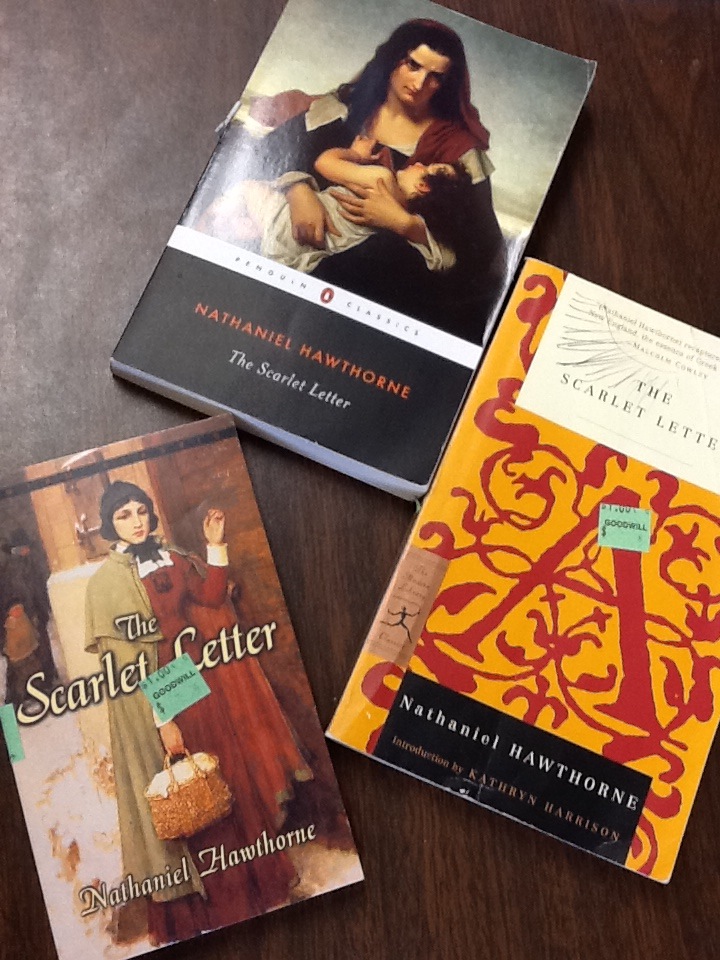
Three copies of "The Scarlet Letter" on the shelf at Goodwill. All new; never opened!

Three copies of “The Scarlet Letter” on the shelf at Goodwill this past week. All new; never opened, bearing their $1.00 each price tags.

Since Puritans are usually up for discussion in September in American History coursework, many English departments turn to Nathaniel Hawthorne’s novel The Scarlet Letter for their Advanced Placement or college bound students as a complementary read. Therefore, I was not surprised when, during this last week of January, copies of The Scarlet Letter began appearing, not in single copies, but in droves. I expected as much. The Scarlet Letter represents the “not keeping” trend. While a student may hesitate for a millisecond before placing The Great Gatsby or To Kill a Mockingbird or Catcher in the Rye in the “throw away” pile, I imagine there is universal delight in discarding The Scarlet Letter, a delight only exacerbated by discarding its equally loathed curriculum companion, Arthur Miller’s The Crucible.

The mention of The Scarlet Letter may set off groans. Woe to the teacher who attempts this book without the iron cast-backbone or the determination of an evangelist. Readers of The Scarlet Letter will need to be converted, and it is only the fear and damnation of another scarlet letter that keeps them plodding on, the scarlet “F”!

The tone of the book is set immediately with the opening line:

A throng of bearded men, in sad-colored garments and gray, steeple-crowned hats, intermixed with women, some wearing hoods, and others bareheaded, was assembled in front of a wooden edifice, the door of which was heavily timbered with oak, and studded with iron spikes.

Looking further down the page for some relief from the gloom, the reader should notice that he or she is being directly addressed, as if from a pulpit delivering a parable or allegory:

Finding it so directly on the threshold of our narrative, which is now about to issue from that inauspicious portal, we could hardly do otherwise than pluck one of its flowers and present it to the reader. It may serve, let us hope, to symbolize some sweet moral blossom, that may be found along the track, or relieve the darkening close of a tale of human frailty and sorrow.

Yes, Hawthorne will be delivering this sermon for 192 pages in the Dover Thrift Edition ($3.15).

Students are aware that this classic will improve SAT scores with the challenging vocabulary and complex structures of 19th Century prose, but they still seek help beyond the classroom. There are Sparknotes, Schmoop notes, E-Notes, Cliff Notes, and Bookrags available for this text, so as a result, the paperback text on the thrift store shelf may never have been opened. The copies available at thrift stores are generally pristine copies. I imagine they were purchased by parents who dutifully picked up the book because of a syllabus of some sort. Maybe this was a summer reading choice, a particularly deadening assignment. Actually, the effort in purchasing this text could have been avoided, because the text itself is online at no less than six places:

And there are free audio versions at:

But we still teach The Scarlet Letter, and our paperback collection of The Scarlet Letter distributed in class is comprised of at least 10 different editions. No student is on the same page number when the text is read aloud in class in order to share the conflicts between Dimmesdale, Hester Prynne, and Chillingsworth. Interestingly, what seems initially complex to the student is eventually understood as a really a ripping good love triangle of sex, intrigue, and irony. Once they see Hawthorne laying out hypocrisies of the Puritan society, they are more genuinely engaged. Plus, there is the lovely child Pearl, and they grow to sympathize for her.

In order to engage students in assessments, our Grade 11 teacher has organized “self-directed” projects for students to choose  and some of these have included:

  • Create a song telling the ballad of Hester Pyrnne.  You may compose the song, or write new words for an existing melody.  Share the song with the class either live or via audio or videotape.
  • Think of a sin associated with Dimmesdale and Chillingworth.  Create a badge that uses a letter or other symbol to represent the sin.  In addition, use art, needlework, or some other craft to make the badge reveal something about the man’s character, interests, or profession.  Write an explanatory caption or paragraph to accompany the badge.
  • Choose music to be the score for a film version of the novel.  Choose music for at least five major scenes.  Write explanatory notes for each selection

The harvesting of The Scarlet Letter texts from thrift store shelves is best from January-March. I can add as many as 10-12 copies during these months. Competition for the title grows during the summer, and the books are often more dog-earred by then.

But with all the negativity, why teach The Scarlet Letter? Because Hawthorne provides a bridge from this historical period to ours by using the empathy that is generated in fiction. Our brains are wired for stories more than facts, and reading The Scarlet Letter helps our students identify with characters in order to understand the politics and policies of this turbulent time when our nation was still in its infancy. Additionally, his story serves as a springboard for other stories. According to Canadian author Margaret Atwood, “The roots of totalitarianism in America are found, I discovered, in the theocracy of the 17th Century. The Scarlet Letter is not that far behind [the novel] The Handmaid’s Tale, my take on American Puritanism.”

Oh, and yes. We also assign The Handmaid’s Tale.