Literally….David Coleman

August 24, 2013 — 2 Comments

Literally added a new meaning this past month….literally.

A quick look at the Cambridge Dictionaries Online indicates that while the meaning of literally as ” having the real or original meaning of a word or phrase” will now include use of the word “to emphasize what you are saying”. A similar entry from an authority across the pond, Oxford Dictionaries notes:

In recent years an extended use of literally (and also literal) has become very common, where literally (or literal) is used deliberately in non-literal contexts, for added effect, as in they bought the car and literally ran it into the ground. This use can lead to unintentional humorous effects (we were literally killing ourselves laughing) and is not acceptable in formal contexts, though it is widespread.

This chatter about literally and literalness came to mind when I read the Frizzleblog on the Scholastic website ten “takeaways” from a presentation given by David Coleman, an architect of the Common Core State Standards (CCSS) and the current College Board president, to a group of New York City teachers. The blog entry was titled 10 Things Worth Doing in Your Classroom by  Suzanne McCabe, Editor in Chief at Scholastic, and she listed ten summaries from Coleman’s presentation on how to enrich classroom instruction.

Her summary statement #4 stopped me cold…literally.
4. Only draw conclusions that can be substantiated by the words on the page. Scrape away terms like “metaphorical,” and talk as simply as possible. Once you bring up metaphor and meaning, kids are out of the game.
McCabe may be misrepresenting Coleman in this statement, however, the Common Core State Standards promoted by Coleman centers on textual evidence, so the “conclusions substantiated by the words on the page” summarizes his preferred reading strategy.  In addition, his lack of classroom experience at any grade level explains why he may have said something akin to “kids are out of the game” when metaphors are discussed.
To the contrary, children of all ages understand metaphor according to Maria Popova in her post The Magic of Metaphor: What Children’s Minds Teach Us about the Evolution of the Imagination on her Brain Picking’s blog:

During pretend play, children effortlessly describe objects as other objects and then use them as such. A comb becomes a centipede; cornflakes become freckles; a crust of bread becomes a curb.

The combination of life experience and practice with similes (“pancakes are like nickels,”  “A roof is like a hat,”“Plant stems are like drinking straws,”) builds a student’s understanding of metaphors that are more complex (“”I am the good shepherd; I know my sheep and my sheep know me” John 10:14). 

So why would a teacher want to “scrape” away metaphorical terms at this important stage in developing a student’s understanding of more sophisticated metaphors?
Furthermore, how could Coleman reconcile an author’s choice in using a metaphor if that metaphor is scraped away in order to talk as “simply as possible”? McCabe’s summary of Coleman’s position reduces students to reading “literally”, rendering them unable to appreciate an author’s craft .
For example, if students had to scrape away the  metaphorical ideas in some of Shakespeare’s most recognized literary comparisons, what would they say?

“All the world’s a stage, and all the men and women merely players. They have their exits and their entrances.” As You Like It

Students may determine through textual evidence that Shakespeare was literally referring to the stage.

Night’s candles are burnt out, and jocund day
Stands tiptoe on the misty mountain tops.” Romeo and Juliet

Students may determine through textual evidence that Shakespeare was literally writing about candles.

Smiling sunStudents are more creative than Coleman recognizes in his untested design of the CCSS. From the beginning of their academic careers, they draw their metaphors: smiling suns, hearts in hands, trees with large red dots. They start simply “Freddie is a pig when he eats,” before moving to more sophisticated constructs on their own such as “Love is a chocolate fountain that never runs out.” They are capable of sustaining elaborate metaphors to explain the writing process:

I choose my audience very carefully when playing for an audience for the first time. I want constructive criticism, and therefore I prefer to have my peer musicians as well as my conductor or private instructor hear me play aloud for the first time. . . .When I have read and reread [the paper] so many times that I am unable to find any mistakes, I then like to read my paper aloud to my family or a group of my close friends in order to get their reactions. Maria, National Writing Project website

These students knew they were not writing about a pig, chocolate fountains, or conducting music. If Coleman had classroom experience, he would have first hand evidence about student creativity.

Finally, many of the most beloved children stories are saturated with metaphor.  Lewis Carroll’s Alice in Wonderland is filled with metaphors that address life’s absurdities, and one specific metaphor brings me back to an entry I wrote titled  David Coleman, the Cheshire Cat of Education.

While I did not mean that Coleman is a cat literally, I do mean that his philosophy of education is as contradictory as the character in Carroll’s imaginative classic. “Curiouser and curiouser,” wonders Alice, when the enigmatic Cheshire Cat appears and reappears at critical moments in the story. Likewise, Coleman’s curious contradictions may be the reason for any inaccuracies in McCabe’s summary of his presentation. On the other hand McCabe may have accurately recorded these contradictions and illustrated how Coleman’s inexperience makes his statements about how to teach in a classroom ridiculous…literally.

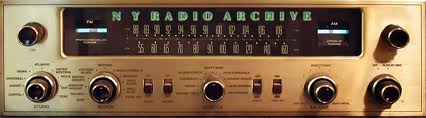
radio

Many WABC recordings are available on the NYRadio Archive website at http://www.nyradioarchive.com/wabc.html

In the midst of preparing lessons for back-to-school, I learned that August 20th was designated as National Radio Day. The convergence of radio tribute with my preparations for the start of school seemed appropriate. As I grew up, the music and chatter from an AM radio served as the soundtrack for school mornings, after school hang-outs, and evening homework sessions. The dial on our small transistor radio was fixed to one station and one station only- 77WABC. Like so many school children in the greater New York area, the echoic memory center of my brain imprinted the voices from three radio personalities from this radio station: Harry Harrison, Dan Ingram, and Cousin Brucie Morrow.

Harry Harrison’s morning program announced the weather and those oh-so-important school snow cancellations. Between songs and commercials, he would flirt with all the mothers rushing to get children out the door. “Come over to the radio,” he would coo, “I’ll zip you up!” There would be a sound-byte: <<<<ZIPPP!>>>> followed by a chorus of recorded female voices, “Thanks, Harry!” Political correctness was not in vogue during my youth.

After school hours were given over to Dan Ingram, a DJ who mastered artful repetition. While important geometric theorems, irregular French verbs, and the names of specific geographic land masses have left my memory, hearing a song from the 1960s-70s brings a clear recollection of the lyrics and stylized vocals of lead and background singers. He played (and over-played) The Beach Boys’s Good Vibrations, The Association’s Windy, The Carpenters’s Close to You, or The Monkees’s Daydream Believer; a mere three bars of the introduction is enough to trigger a flashback to a particular time or place.

Now that I teach, I try to use the powerful bond of audio recitation in order to help students memorize. I now recognize the success of WABC radio was in its formula of redundancy; if Ingram wanted an audience to know a song or product, he would play that musical selection or commercial unapologetically, sometimes 10-12 times during his show.

Finally, there was Cousin Brucie Morrow in the evenings. His contribution was his role in introducing  me, and thousands of other screaming pre-teens and teenagers, to the Beatles. As I would do my homework, the distraction by “All My Lovin'” necessitated a sing-a-long, “A Hard Day’s Night” needed a little dance, and “Penny Lane” was cranked loud enough for everyone -even the parents-to enjoy. Cousin Brucie’s patter was fast; his commercial promotions were smooth. His jester-like laugh was often the last sound heard before falling asleep.

The combined power of these three personalities was evident in the collective of fans who listened to 77WABC. There is a dedicated website WABC Music Radio  that offers a collection of audio clips, biographies, playlists, interviews and photos for those feeling nostalgic. A quick listen to two audio clips can flood a fan with memories:

WABC intro
The Most Music WABC

Thousands of schoolchildren grew up in this shared atmosphere of Motown soul, pop, hard rock, and surf music. The same, however, cannot be said for students today who have complete control over their individualized radio diet. They can personalize their own music selections through radio Internet stations such as Pandora, Rhapsody, Last.fm, iHeartRadio or Spotify. There are subscription radio formats such as Sirius and XM radio. There are the non-profit stations for National Public Radio and colleges, and all of these options have crowded out the once dominant commercial AM radio stations.

The range of choice for radio programming today is mind-boggling; students can tailor music to meet their every mood or occasion. Yet with this choice, the collective experience of sound, that audio community has vanished.  As one of the few options available, 77WABC developed a congregation of devoted listeners. We knew the personalities that shared songs with us. We knew their routines, their cliches, and their schtick. We knew the songs they played, over and over and over. 77WABC radio was a shared soundtrack for growing up, a sharing that does not exist today.

So, Happy Belated National Radio Day and thanks, Dan. Thanks, Cousin Brucie. Thanks, Harry…(but, I’ll zip myself up.)

“Are you upstairs hiding with a book?” my mother was exasperated as she called up the stairs.
“No-oo..” I would reply, stashing the copy of The Sign of the Twisted Candles, The Password to Larkspur Lane or The Secret in the Old Attic under the covers.
My mother would be looking for me for some chore I had left undone, but the lure of those yellow-spined mystery books was so hard for me to combat. I would succumb and lose track of time, and responsibilities, the minute I picked up one of the mysteries.

I was Nancy Drew addicted.

From the day I found my first copy at age eight under the Christmas tree, I read every Nancy Drew title available, a total 46 titles by the time I completed eighth grade.

“So, how’s that little blue roadster?” my father would ask, passing me while I was lost in a mystery.
“Oh! You are going to ruin your eyes,” my mother would complain finding me reading by hall light.

The contradictory message from my parents to read or not to read while feeding my addiction with new editions of Nancy Drew for birthdays and other holidays only heightened my regard for the series. Nancy Drew was the dessert to my reading diet, the forbidden fruit during Saturday chores, the delicious temptation to finish “just one more chapter” before falling asleep.

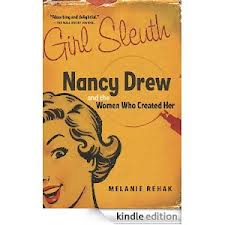
Girl SleuthSo, I was delighted when at a public library book sale I came across a “used” brand new copy of Girl Sleuth, Nancy Drew and the Women Who Created Her by Melanie Rehak.

Here was the story of Nancy’s origins, the brainchild of Edward Stratemeyer (1862-1930) who developed and ran a syndicate of writers of children’s fiction. I have only recently come to understand how much Stratemeyer influenced generations of young readers, myself included, by producing book series specifically geared to their interests.

He created the Tom Swift and The Hardy Boys series. He was responsible for the adventures of Nan, Bert, Flossie and Freddie in The Bobbsey Twins. Early in his writing career, Stratemeyer recognized that writing under different pseudonyms and with different publishers, he could offer more books each year. Unable to keep up with the demand for his stories, he began to outsource his work by hiring writers to complete stories he had outlined. By 1905, his book publishing syndicate mirrored the Henry Ford model of assembly linewriting; Stratemeyer editing the work of other writers who filled in the details from his summary notes.

It was Edward Stratemeyer that conceived of the young girl detective, and he developed five plots that he could offer a writer who could meet his exacting standards. Originally, the character Nancy Drew was named Stella Strong, and one of the plots that Stratemeyer developed was for Stella Strong at Mystery Towers:

How Stella visited the old Tower House and met the rich and eccentric maiden ladies, Patricia and Hildegarde Forshyne, who were much disturbed by unusual happenings about the place. She learns that some relatives are trying to get possession of the Forshyne fortune  Stella was once made a prisoner, but turned the tables and made a startling exposure (112).

Stratemeyer suggested other names for his new sleuth: Nell Cody, Nan Nelson, Diana Dare, Helen Hale, Nan Drew. The decision to expand Nan to Nancy was made by the publishing company Grosset & Dunlap who were enthused by this chance to have books for the growing market for young female readers. Stratemeyer had already decided that the pseudonym Carolyn Keene would be used for the series; each book would sell for fifty cents with two cents royalty going to his syndicate. From a number of applicants, he selected Mildred Wirt Benson, a “convention-flouting journalist” and agreed to pay her $125 for each manuscript (114). She, like all other writers in the Stratemeyer syndicate, signed away all rights to the stories and character.

Rehak’s extensive research clearly shows that Wirt was responsible for developing the character of Nancy Drew from the beginning. When Edward Stratemeyer passed away suddenly after the launch of the first Nancy Drew mystery, his daughter Harriet Stratemeyer Adams, took over the editing and eventually, the supervision of all things Nancy Drew. It was Wirt, however, who fleshed out the Nancy’s character against the backdrop of the Great Depression in 1930. Her Nancy was popular in school with two devoted friends, Bess and George. She was intelligent and attractive, moving stylishly between tweed suits and a “party frock of blue crepe which matched her eyes”. Blue was also the color of her little shiny roadster, a gift from her supportive father, Carson Drew. The mother figure, housekeeper Hannah Gruen, was also Wirt’s idea; the boyfriend Ned Nickerson came later in the series.

In recounting the success of the Nancy Drew series, Rehak notes that Wirt “later confessed  that Nancy Drew was “everything she -or any girl, in fact-wanted to be, and then some” (117). Rehak’s recounting of the success of the series is dampened by the deteriorating relationships in the Stratemeyer family, reduced pay for Wirt, and Harriet’s demands to keep the syndicate’s ghost writers from claiming their authorship.

Rehak also explores the other media ventures that featured Nancy Drew: TV series, movies, graphic novels, and a sordid connection to Playboy magazine.  Harriet’s control of her family’s publishing company’s intellectual property kept many of the writers like Wirt from claiming authorial attribution.

Subsequent revisions of Nancy Drew get less exploration by Rehak, who has little praise for the “loud flashy plots and clothing and crushes” that recent publishers have tried in order to “revamp the sleuth” (311). Nancy Drew’s back story is well organized by Rehak and a must read for all her fans who knew that it was not the plot that made the book exciting, but rather the “pleasure comes from her [Nancy Drew’s] autonomy, her taking events into her own hands”(307).

Rehak concludes with the feminist view that Nancy Drew was a guide for the ages as many of the problems for women (equal pay, inadequate day care, etc) still exist:

Nancy DrewThanks to Mildred and Harriet and the generation of women and girls who glimpsed in Nancy Drew a vision of what they might be someday, it doesn’t look like the sleuth is going away anytime soon, which is a good thing. There are fighting days still ahead of us, and we’re going to need her (314).

Perhaps this is why my memories of Nancy Drew are so salient, and my addiction forgivable. While my chores waited, Mildred Wirt Benson and Harriet Stratemeyer Addams offered me, and thousands of young girls like me, a role model.

So, Mom, I really was not hiding upstairs with a book…I was growing up.

Late August and early September means back to school for all students. Many primary school teachers are pulling out the traditional “apple” unit to welcome their students. Many of these teachers will be ready with “pumpkin”, also a fruit, for the following month of October. During the school year, teachers of all grade levels might find out that a lesson turned out to be a “lemon”, or one that is “not worth a fig.” Educational stakeholders can “cherry-pick” data to see if the efforts of a teacher “bears fruit”, while the focus on data-driven instruction can drive some teachers “bananas”.

Fruit metaphors are plentiful when discussing education, and a recent post by a friend and literacy specialist, Catherine Flynn, explains a possible reason. Consider that fruits, although uniform at first glance are, upon closer inspection, very different. Fruits flourish in different environments, and fruits require different nutrients. Fruits require different means of harvesting, and fruits ripen at different times.

blackberriesThis ripening was the point of Catherine’s blog post in her response to the Slice of Life blog challenge, a weekly prompt organized by Two Writing Teachers. Catherine’s response to their prompt on her Reading to the Core Blog was titled Ripe Blackberries.  Since she lives in a rural area, she had the opportunity to consider the ripening blackberries on a bush near her home:

 Each morning as I walk my dog, I notice that some of the fruit is deep black, as ripe as it’s going to get, while others still have just a hint of red. Why such variation on one bush? Each blackberry has gotten the same amount of rain and sun. Each one has the same genetic make up. So why are some ripening faster than others?

There are many forces in nature that cause the variations that Catherine noted as she admired the blackberry bush. These forces dictate the time for harvesting those blackberries, but this fruit is never uniformly ready for harvest at the same moment. For example, the advice for picking berries on several websites suggests that to “ensure that none of the fruit gets too ripe, berries should be picked every two or three days.” Berries are not the only fruit that may require a second or third harvest, and pinpointing the exact moment of any fruit’s maturity is a combination of science and practiced guessing.

In contrast to how nature influences fruit to ripen and mature, our educational system requires students to be “ripe” collectively at the same time, regardless of the variations in age, race, or gender of the students. The educational system measures how well a student meets a pre-determined standard through tests given on a prescribed date, picked perhaps years in advance. There is no accounting for arbitrary changes that may have happened in a school system, perhaps changes in staff, facility, or materials. There is no accounting for the arbitrary changes in a student’s personal life. Rather, there is a standardization for elements in our educational system that defies the individual nature of each student.

In her post Catherine notes:

Within every classroom, there will be a variety of strengths, abilities, and weakness. Students will arrive at school with a vastly different amounts of background knowledge and interests. Despite these differences, in the hands of a caring, knowledgable teacher in a supportive, nurturing environment, almost all children will learn and grow. Not at the same pace, and not to the same degree, but they will learn, just as most of the berries on those bushes will eventually ripen.

Screen Shot 2013-08-14 at 8.54.31 PM

Teachers see the differences in the nature of each student: the emotions, the ability, and the interests. Teachers see each student as more than a data point in achieving instruction, and teachers know that each student is more than what a test score represents. As Catherine suggests, in the hands of a caring and knowledgeable teacher, each student will learn and grow.

Yet, countering the forces in the nature of each student are the forces of educational reform that are increasing testing at every grade level. Tests focus on a limited range of skill sets with little consideration for other student aptitudes. To determine each student’s preparedness, students are bunched together by a “date of production” or birthdate, not when a student is “ripe” or cognitively mature.

Therefore, trying to compare student cognition through collective testing on any given day is the final metaphor of this post. It is like comparing apples to oranges. Yes, they are both fruit, but they are very different. So are our students.

A favorite New Yorker cartoon of mine is by Sidney Harris.

Screen Shot 2013-08-07 at 6.06.50 AMTwo men stand in front of a chalkboard. Their demeanor indicates they are mathematicians. Scrawled on the chalkboard to the left of them is step one, a complicated mathematical formula. To the right of them, step three, is the solution to that complicated formula. In the center of these numbers and symbols,one of the men is pointing to the phrase, “THEN A MIRACLE OCCURS…”.

Under the cartoon is the caption spoken by one of the mathematicians: “I think you need to be a little more explicit here in step two.”

There are so many scenarios that could be explained by this cartoon, but lately I have been thinking about how this cartoon represents the process of education. The missing “step two” is the miracle of how a teacher helps a student to learn, since by definition, a miracle is an extremely outstanding accomplishment. Good teaching is that miracle that blends both science and art. The science formula here is the diagnosis of student needs and the application of strategies that address these needs. The art is the manner in which a good teacher does both.

This blend of science and art is necessary since each student learns differently. Students’ brains are different. Students’ personalities are different. There are differences in how students mature physically and emotionally, and students’ learning styles are different. A great deal of time and energy has been expended in researching the science of teaching to address these differences.

For example, at the beginning of the 20th Century, researchers noted that those students who performed well on one type of test, say mathematics or verbal fluency, were also successful on other academic tests, while those who did poorly on one test tended to do poorly on other tests as well. British psychologist Charles Spearman, put forth a theory that a student’s mental performance across different could be consolidated in a single general ability rating, the g factor. In 1983, American developmental psychologist Howard Gardner countered with his Theory of Multiple Intelligences. He suggested that a measuring student’s intelligence should also include the following considerations:

Visual/Spatial – Involves visual perception of the environment, the ability to create and manipulate mental images, and the orientation of the body in space.
Verbal/Linguistic – Involves reading, writing, speaking, and conversing in one’s own or foreign languages.
Logical/Mathematical – Involves number and computing skills, recognizing patterns and relationships, timeliness and order, and the ability to solve different kinds of problems through logic.
Bodily/Kinesthetic – Involves physical coordination and dexterity, using fine and gross motor skills, and expressing oneself or learning through physical activities.
Musical – Involves understanding and expressing oneself through music and rhythmic movements or dance, or composing, playing, or conducting music.
Interpersonal – Involves understanding how to communicate with and understand other people and how to work collaboratively.
Intrapersonal – Involves understanding one’s inner world of emotions and thoughts, and growing in the ability to control them and work with them consciously.
Naturalist – Involves understanding the natural world of plants and animals, noticing their characteristics, and categorizing them; it generally involves keen observation and the ability to classify other things as well.

Gardner’s theory has been adopted by educators, including Sir Ken Robinson, an English author, speaker, and international advisor, who has stated that,

Many highly talented, brilliant, creative people think they’re not — because the thing they were good at at school wasn’t valued, or was actually stigmatized.

He has noted that organizing students by birthdate is not the best determiner of learning saying,

Students are educated in batches, according to age, as if the most important thing they have in common is their date of manufacture. 

Robinson advocates accounting for student differences in an educational system that has been standardized for ease of delivery, an educational system of definitions and measurement. Balancing these forces of measurement and definition in the science of good teaching demands another great force, the art of good teaching.

Good teachers practice the art of teaching in accounting for student differences in maturity, in personality, and in interest. Good teachers practice the art of teaching by choosing how to challenge or aid a student with new content. Good teachers practice the art of teaching when they distinguish between the look of confusion from a look of comprehension and respond appropriately. The art of teaching is knowing how to address the needs of the individual learner.

While there is a degree of science used in the “miracle” step two of the cartoon, the degree of art is trickier. Science is valuable to education as measuring the student; art is valuable to education because the art of teaching has an effect on the student that cannot be measured. The miracle of good teaching is a blend of the two, a blend of science and art for each individual student.

As to those mathematicians in the cartoon who need to be more explicit in step two? They should ask a teacher about performing miracles.

I hold up the book I will be reading aloud, Dr. Seuss’s The Cat in the Hat. The students start commenting:

This is one of my favorite books…
I love Thing #1 and Thing #2!
I (loved) or I (hated) the movie!
Can we read Green Eggs and Ham, too?

Cat in Hat book coverI settle the students down and begin,

“The sun did not shine.
It was too wet to play.
Just sit in the house all that cold, cold wet day.”

32 eyes blink brightly up at the pages as I turn them.
Several mouths move without sound to recite along with me.
The students are mesmerized.

Oh, did I mention that these are seniors in high school?

I am using a picture book to explain Freud’s theory of the Id, Ego and Superego (see post). Thing #1 and Thing #2 represent Id, and that righteous fish? The Superego. Yes, Dr. Seuss is great for psychological literary criticism, but he is not the only picture book in my repertoire of children’s literature used in high school. Here are a few of my favorites to use and why:

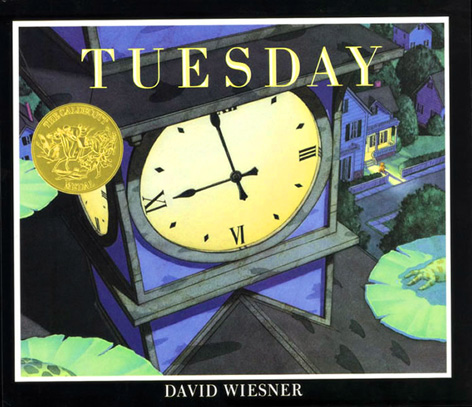
Tuesday by David Wiesner_CoverTuesday by David Weisner. We use this text for our 9th grade mythology unit because a myth explains the unexplainable. Our students have to create a myth for why frogs might lift off from a local pond and terrorize some inhabitants of a small town (see post).

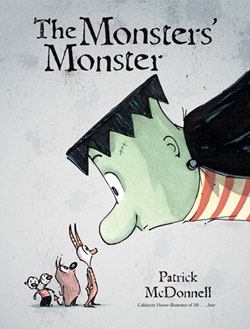
The Monsters’ Monster by Patrick McDonnell. This mash-up of the 1931 film Frankenstein and Mary Shelley’s 1818 novel is ideal to stimulate discussion on the relationship between a creator and the created. In McDonnell’s version, however, the Monster is sensitive, compassionate, with more of an interest in warm, powdered jelly doughnuts than in seeking vengeance…a nice break from the rigors of Advanced Placement English Literature.coverbook_monsters-monster

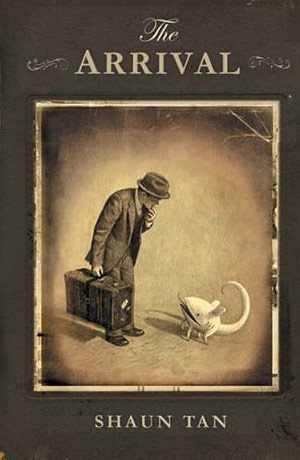
the-arrival-by-shaun-tanThe Arrival by Shaun Tan. Surreal images capture the point of view of an immigrant experience which makes this wordless text ideal for students who are studying Ellis Island or Angel Island. Many of the illustrations are available on the website so students can look at the haunting pictures on their own devices as well.

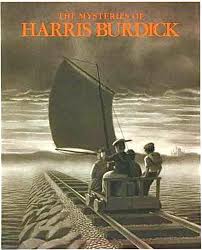
Harris BurdickThe Mysteries of Harris Burdick by Chris Van Allsburg. A book full of provocative images that has inspired thousands of stories explaining the mysteries in each sepia toned drawing. This book is wonderful for writing classroom, and there have been contests for the best stories written by children. Celebrated children’s authors have also taken an opportunity to try their imaginations using the pictures as story prompts in The Chronicles of Harris Burdick.

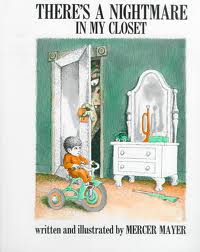
The Monster at the End of this Book by Jon Stone; illustrated by Mark Smollin and There’s a Nightmare in My Closet by Mercer Mayer. Both of these books have been incorporated into our Heroes and Monsters English IV (grade 12) elective. I use them as a starting point for an inquiry project about images of monsters given to children contrasted with the images of monsters we know as adults. Most students discuss the “fuzzy factor” with cute, loveable old Grover as something they remember fondly. They also remember very clearly the monster that lived in their closets. The anxiety of Mayer’s “Nightmare”, sobbing at the foot of the bed, usually brings about a discussion of facing fears.

grover

There are YouTube Videos for students to watch in advance of class (flipped classroom):  The Monster at the End of this Book and There’s a Nightmare in My Closet

Nightmare

Fredrick

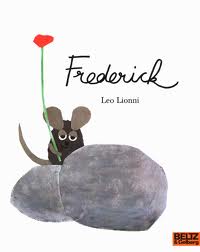
Fredrick by Leo Lionni. What does the poet do for society? This little fable answers that question and works well in any poetry unit. Frederick’s use of language paints pictures in the minds of the other mice who are struggling through a particularly bleak winter season. There is a delightful video recording of this to share in class or to have students watch on their own (flipped classroom).

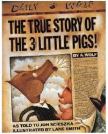
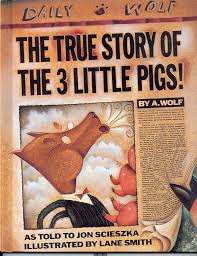
The True Story of the Three Little Pigs by Jon Scieszka; illustrated by Lane Smith. Want a lesson on point of view? This retake of the three little pigs is one of the best ways to present the advantages of this literary device to students of all ages. In his explanation of the story, A. Wolf comes across the first little pig after the house of straw caved in. With culinary justification, he says,

True story“It seemed like a shame to leave a perfectly good ham dinner lying there in the straw. So I ate it up. Think of it as a cheeseburger just lying there.”

The story presents opportunities to use other fairy tales for students to practice retelling stories from another point of view once they buy into Scieszka’s formula.

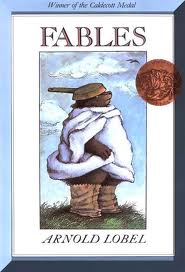
Fables by Arnold Lobel. Here are modern little fables that are one page long with morals such as “It is the high and mighty that have the farthest to fall.” One year, I used these fables with my drama class as short sketches. My favorite sketch to watch was the story of the Lobster and the Crab where the insanely spirited Lobster took timid Crab out for a ride in a boat during a tremendous storm. When the boat capsized, the student playing Crab cried out in despair, “Horrors!” while the student playing Lobster jumped and shouted with glee.”Down we go!” she yelled at the top of her lungs.
FablesLobel writes:

The Crab was shaken and upset.
The Lobster took him for a relaxing walk along the ocean floor.
“How brave we are,” said the Lobster. “What a wonderful adventure we have had!”

The moral? “Even the taking of small risks will add to the excitement of life.”

The same can be said for using children’s literature in high school.
The use of a well-chosen picture book will add to the excitement of a lesson! Continue Reading…

festival-crowd-cynthia-cagenello-cropped-copy

Photo on Sunken Garden Poetry website: http://sunkengardenpoetry.org/

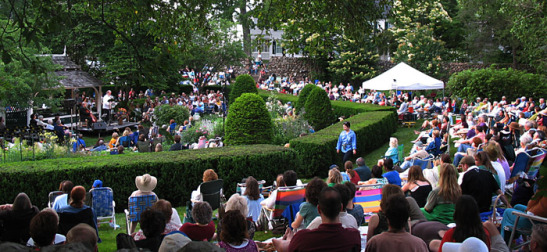
Last Wednesday night, the rain held off for Sunken Garden Poetry at Hill-Stead Museum in Farmington, Connecticut, and the largest crowd of the year heard the former United States Poet Laureate (2001–2003) Billy Collins read his poetry for a little more than an hour. His casual demeanor and the context of the garden setting, peopled with picnickers, contributed to a informal, intimate listening experience, a tone he tries to strike with his poetry:

 “I have one reader in mind, someone who is in the room with me, and who I’m talking to, and I want to make sure I don’t talk too fast, or too glibly. Usually I try to create a hospitable tone at the beginning of a poem. Stepping from the title to the first lines is like stepping into a canoe. A lot of things can go wrong.” (http://www.poetryfoundation.org/bio/billy-collins)

Based on the reaction from the crowd, his concerns about a wrong step was unfounded. Since most of his poems are fairly short, he was able to offer a broad range of topics and observations. There were mice, glistening bars of soap, ill-fitting dinner jackets, a few “frog-less” haikus, and commentaries on adolescent behavior. Screen Shot 2013-08-09 at 2.57.00 PM

He began the reading with You Reader:

I wonder how you are going to feel
when you find out
that I wrote this instead of you

He followed that up with the hilarious Another Reason Why I Don’t Keep a Gun in the House where the opening line explains “another reason why”…

The neighbors’ dog will not stop barking.

Over the course of the evening, Collins read his poems to the appreciative audience. His themes ranged from comical to heartbreaking. You can click the following links to the published texts or video recordings in the order he read them to “attend” your own Billy Collin’s reading:

The Sand Hill Cranes of Nebraska
Drinking Alone after Li Po
Cheerios
After the Funeral (p. 62)
Orient
Dress Code (pg.19)
To My Favorite 17-year-old High School Girl
The Dog on His Master and The Reverent
Oh My God (audio poor)
Divorce
Flock (poem read in interview)
Hippos on Holiday
Aimless Love
The Lanyard
Japan
I Chop Some Parsley While Listening To Art Blakey’s Version Of “Three Blind Mice”
Forgetfulness
The Dead
Aristotle
Nightclub

Collins delivered each of his poems in his conversational tone- dry, wry, and understated. Leaving the poetry reading, I could not help but start to “think” in Collins’s cadence. Later that evening, my thoughts matched his tempo:

I had heard the poet at a reading once before,
when he read the blind mice poem that made me laugh.

I bought the book Sailing Alone Around the Room
and found inside the poems Sonnet and Aristotle that I now use
with my Advanced Placement students, but I do not teach
Taking Off Emily Dickenson’s Clothes.

They do not appreciate the Belle of Amherst the way Billy and I do.

 and

The standing ovation
became a mass migration,
some to their cars and some to the table
where the poet scrawled his signature
repeatedly into book after book after book.

Later when I crushed my bedroom pillow
up to the headboard, I wondered
if he was still held hostage to his adoring fans?

Sunken Garden Poetry should be commended for organizing a memorable summer evening. This coming winter, I suspect that a number of those who attended will turn to a companion, and quote Billy Collins and say, “Too bad you couldn’t have been here six months ago.”

Read picture books.

Yes, I am talking to you.

(No, not you kids….)

I am talking to you….you, Advanced Placement English Literature teacher, pretentiously waving me off with your worn cover of Thomas Hardy’s Tess of the D’Urbevilles. Yes, you too..the one taking notes on Nathaniel Hawthorne’s The Scarlet Letter, the book you assigned for summer reading?

Time to do some other kind of reading.

Time to read for pleasure.

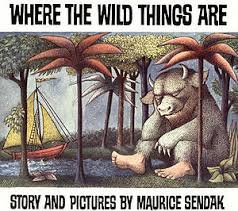
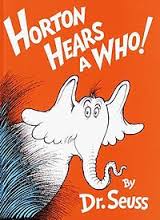
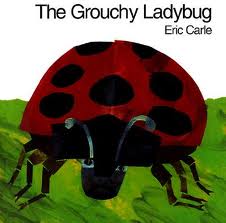
It’s time to wallow in Sendack (Maurice), Carle (Eric), and Seuss (Dr.).

Max Horton Ladybug

It’s time to discover Mo Williams’s Pigeon, Jon Scieszka’s Big Bad Wolf, and Jon Klassen’s hatless bear.

BearPigspigon

Why?

Primarily because teachers, all teachers, who are familiar with children’s literature can be positive role models for their students. They can engage students by making references to these books or they can make suggestions to young readers. They may even use them in lessons. But a new compelling reason has come out of a study by Jo Bowers and Dr Susan Davis, senior lecturers in primary education at Cardiff Metropolitan University. A review of responses by teacher trainees for primary grades indicates that reading children’s literature is good for your well-being.

An article in the British paper The Guardian Why Teachers Should Read More Children’s Books explains the study and promotes a paper Reflecting on Teacher Wellbeing that Bowers and Davis will give at Issues and Changing Perceptions conference in December 2013.

They had set up a year-long blog where teacher trainees could post reviews for three books they used with children over the course of the year. They then asked a focus group of these blog contributors a series of questions about their own reading experiences, such as, “What made you become a reader?”

The joys of reading became apparent, namely, how they had enjoyed “getting totally lost in a book” or “absorbed” by the narrative. It also became evident that they had close personal associations with certain texts from their own childhoods, and the fact that they could turn the page of a book and by knowing what was on that page gave them comfort and confidence to share that book with their class.

Trainee teachers reported they were using children’s books of all genres as a form of escapism from the stresses and strains of teaching in the primary classrooms. Researchers concluded that trainee teachers were using the book as a form of bibliotherapy, a therapy “increasingly moving away from its original medical model– whereby practitioners ‘prescribed’ self-help books to patients suffering from depression or eating disorders.” While the teacher trainees had to read the children’s literature selections as part of their professional development, they also found the experience pleasurable:

We have also found that trainee teachers often don’t read purely for pleasure, citing time constraints as the reason. Our blog project forced them to read as part of their professional development, and because they wanted to improve their subject knowledge. Wellbeing was secondary, but nonetheless became part of the project, almost by default. One of our students summed it up nicely: “Books are like best friends during stressful times.”

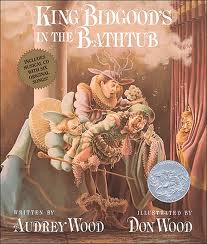
So, go ahead and pick up that copy of King Bidgood’s in the Bathtub and chant loudy the refrain “…and he won’t get out!”
Listen to the poetic wisdom of a small mouse who notes that everyone has a gift to bring in Leo Lionni’s Fredrick.
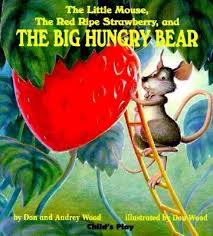
Or, share a red, ripe strawberry in The Little Mouse, The Big Hungry Bear and The Red Ripe Stawberry.

king Fredrick mouse

You will be reading for pleasure. You will be reading quickly, and you will probably feel better, things Thomas Hardy and Nathaniel Hawthorne may not do for you.

References according to The Guardian:

Jo Bowers and Dr Susan Davis are senior lecturers in primary education at Cardiff Metropolitan University. Follow them on Twitter: @Jo_Bowersand @drsuzyw. Reflecting on Teacher Wellbeing – Issues and Changing Perceptions conference will be held at Cardiff Metropolitan University on Wednesday 4 December 2013. For further information please contact:cseenterprise@cardiffmet.ac.uk.


JaneEyre-300x253

Jane Eyre audio offered by SYNC YA

This summer I have been visiting the family estate at Gateshead, the harsh boarding school Lowood, and the Gothic mansion called Thornfield Hall through the audio download of Charlotte Bronte’s Jane Eyre courtesy of SYNC YA. This free audiobook uses Overdrive software which is on both my computer and my mobile phone. As the recording of Jane Eyre is about eight hours long, the ability to move from device to device has proved most helpful in finishing the book.

This is not my first experience with this novel. I read the book when I was a teenager, and, like Jane, I fell in love with Mr. Rochester. Years later, I taught the book later to Advanced Placement students and marveled at Jane’s independence, her morality, and her ability to emphatically say “No” to the persistently persuasive Rochester.  Now, I am struck by Jane’s role as a governess and how Bronte characterizes attitudes towards that profession in Victorian England.

At one of Rochester’s soirees, Bronte has the spoiled but beautiful Blanche Ingram recount how she and her brother and sister, tormented their governesses and tutors as as they grew up. The incident begins when Blanche’s mother, Mrs. Ingram, calls the guests’ attention to Jane, isolated in a corner of the room. “I have just one word to say of the whole tribe,” whispers Blanche’s mother loud enough for Jane to hear, “they are a nuisance.”

Blanche cheerfully counters:

Not that I ever suffered much from them; I took care to turn the tables. What tricks Theodore and I used to play on our Miss Wilsons, and Mrs. Greys, and Madame Jouberts! Mary was always too sleepy to join in a plot with spirit. The best fun was with Madame Joubert: Miss Wilson was a poor sickly thing, lachrymose and low-spirited, not worth the trouble of vanquishing, in short; and Mrs. Grey was coarse and insensible; no blow took effect on her.

Not satisfied with those affronts to those poor teachers, Bronte has Blanche continue the list the indignities inflicted on one particular governess who was subjected to especially bad behavior from the Ingram children:

But poor Madame Joubert! I see her yet in her raging passions, when we had driven her to extremities–spilt our tea, crumbled our bread and butter, tossed our books up to the ceiling, and played a charivari with the ruler and desk, the fender and fire-irons. Theodore, do you remember those merry days?”

Blanche’s condemnation of those who tried to educate her backfires; Bronte’s desire to have the reader dislike this rival for Rochester’s affection is deliberate. Jane’s quiet moral intelligence wins out in the end.

Listening to the story, I considered that Bronte was making a case for the importance of education as a means to rise out of poverty. Jane’s education at the Lowood Institute, a boarding school, was hazardous and purchased at a terrible price. Her classmate, Helen, dies because of the stark conditions at Lowood, mirroring the real-life death of Bronte’s sister, Maria, who died from tuberculosis contracted because of hunger, cold, and privation at Cowan Bridge School. Despite the treacherous conditions, however, Bronte revisits the theme of education’s importance as it provided the character Jane with an independent profession. She is hired to teach Rochester’s ward Adele, and she proves to be a successful governess.

The conflict between Bronte’s belief that education was one way for a young woman to earn a small income, to have a marketable profession, clashes with the upper classes’s view of the teaching profession in 1847. Therefore, how disappointing to read polls (2009-2012) about contemporary economics of the teaching profession that demonstrate that a century and a half later, not much has changed. According to The Economix blog on the NYTimes, “Does it Pay to Become a Teacher?”, salary  may reduce attracting high quality graduates to the teaching profession:

The average primary-school teacher in the United States earns about 67 percent of the salary of a average college-educated worker in the United States. The comparable figure is 82 percent across the overall Organization for Economic Cooperation and Development (O.E.C.D.). For teachers in lower secondary school (roughly the years Americans would call middle school), the ratio in the United States is 69 percent, compared to 85 percent across the O.E.C.D. The average upper secondary teacher earns 72 percent of the salary for the average college-educated worker in the United States, compared to 90 percent for the overall O.E.C.D.

The findings also point out that teachers in the USA teach over 1000 hours annually, an amount well over the hours of their international peers. That number does not include time for preparation, training, or assessing. The article concludes:

Given the opportunity costs of becoming a teacher instead of using your college degree to enter another, more remunerative field, are the psychic rewards of teaching great enough to convince America’s best and brightest to become educators?

Bronte was one of England’s best and brightest who advocated education, but Bronte knew that teaching was not an economically successful profession. Jane Eyre only becomes financially independent when a relative leaves her a fortune; she only becomes wealthy when she confesses, “Reader, I married him.”

Over 150 years after Charlotte Bronte’s novel, the teaching profession still has its critics; there are real life Mrs. Ingrams and Blanches who hold the profession in contempt. There are also economic drawbacks to choosing the profession, as demonstrated in the O.E.C.D poll.

In the 21st Century, the teaching profession should be desirable to those who aspire to teach, but who, like Jane, want to be financially independent. Teachers should not have to wait for a Mr. Rochester in order to prosper.

Browsing at the Southport Pequot Library Book Sale, I overheard the following conversation:

“Why, here’s another book by Thackeray….”Pendennis”. Have you read that?”
“That’s a lovely read, but I’m not reading Thackeray this year; I told you that this is the summer I am reading Trollope.”
“Yes, you did..(*pause*)…Oh!…do we have a nice copy of “Ethan Frome”?”

Behind the two people conversing was a sign with an appropriate message:

Old (but Interesting) Books.

“Yes,”I thought, “that certainly was an interesting conversation about old books,”

The Pequot Library Book Sale
720 Pequot Avenue  Southport, CT 06890-1496  |  203.259.0346

Pequot library

Friday, July 26 to Tuesday, July 30, 2013
OVER 140,000 BOOKS, CDs, DVDs, RECORDS, etc.
Admission is FREE and all Sale proceeds benefit Pequot Library.
HOURS AND PRICING
Friday, July 26 9am to 8pm DOUBLE the marked price
Saturday, July 27 9am to 5:30pm Priced as marked
Sunday, July 28 9am to 5:30pm Priced as marked
Monday, July 29 9am to 6pm HALF the marked price
Tuesday, July 30 9am to 2pm $5 PER BAG DAY!
High quality books at reasonable prices
Visa, MasterCard, Discover, and American Express Accepted

Going to the Pequot Library in this small Fairfield County town reminds me of visiting my Grandma Rosie; she was eclectic, tousled and conversational with books and crosswords stacked around her armchair. This sale is equally eclectic, housed partially in a venerable mansion that is the main library and partially under the large white tents that cover the lawn.  Inside both the library and under the tents the books are laid out onto tables in rows, in stacks, in mounds; many tables bend with the weight and some books spill over to the boxes or tarps below.

As you shop, there are surprising little gems mixed in every genre. Admittedly, some of these surprises are probably due to volunteer book sorters who, when faced with the daunting task of organizing the 140,000 plus books, may have been a little unclear about the divide between fiction and non-fiction. What else could explain the placement of several copies of Mark Haddon’s The Curious Incident of the Dog in the Night Time on both the Fiction and the Animals and Nature Table? Or why would Dodie Smith’s I Capture the Castle be on the Art and Architecture table? But I quibble. Be polite and pretend that you are sorting though the library in Grandma Rosie’s house. Notice and enjoy the rich variety of texts available for purchase, regardless as to where they have been placed. Tidy the piles as you go, and you will be a welcome guest.

I secured a dozen hardly used copies of Cormac McCarthy’s All the Pretty Horses. The first time I read the book, I was so annoyed by the lack of punctuation for dialogue that I complained to several of my students. One student thoughtfully replied, “It’s like he is breaking down the walls between what is thought and what is spoken.” I have not complained about the lack of punctuation since.

New copies of All the Pretty Horses retail for $12.29 each and my 12 copies would have cost $147.48; I spent a total of $132.00 for four bags of books in addition to these copies. The titles I selected were mostly “replacement” books such as Harper Lee’s To Kill a Mockingbird, Cormac McCarthy’s The Road, Coehlo’s The Alchemist, Andersen’s Speak and Kesey’s One Flew over the Cuckoo’s Nest. I even purchased a number of copies of John Knowles A Separate Peace; I dislike the book, but the copies were too new to pass up, and the English I honors classes like the story. There were no copies of my target book The Help to be had, but I could have purchased a class set of 30 or more copies of Kidd’s The Secret Life of Bees.

Other notable qualities of the sale that provide hints to the character of Southport’s residents include:

  • an amazing array of cookbooks, many in pristine condition (may not be a good thing in a cookbooks; shouldn’t they be falling apart?)
  • well organized audio texts (someone knew his/her stuff!)
  • award-winning fiction seriously represented  (the Booker Prize, the National Book Award, the National Book Critics Circle Award, Pulitzer Prize, Newbery Medal, Nobel Prize for Literature, PEN/Faulkner Award, etc.)
  • a tremendously large section of biographies in the main library (My Grandma Rosie loved biographies as well…)
  • teachers from area schools are given vouchers (wish my school could be included??)

The drawbacks?

  • books under the table are hard to access and bending and straightening leads to awkward collisions of heads/buttocks/stomachs/elbows;
  • the children’s section was ransacked by…you guessed it…children;
  • not enough room around paperback fiction, while the romance section sat forlorn with wide aisle surrounding it;
  • the smell of the cookout is hard to bear on an empty stomach…be warned.

At the checkout line, the volunteers were characteristically more gracious than efficient. Your choice of books could be the start of a lovely conversation, but you should hasten the end of the pleasantries as long lines could be building behind you.
Like my Grandma Rosie, they understand, just as long as you promise to visit next year as well.