The New Year 2012 is here, and there is nothing more promising then a new calendar of opportunities. Now is the time to take stock of student progress and make plans for the second half of the year. Now is the traditional time to make a resolution. What resolution do I want to keep?

Resolution 2012

RESOLUTION: Assign less student writing that will be seen by the teacher alone.

Currently, the routine standard is student writing to teacher—teacher corrections back to student. So, why should a student’s writing be limited to this repeated stale volley of paper?

Classrooms, particularly language arts classrooms, are designed to be safe areas for students to engage in repeated practice. Unfortunately, that means school are limited in duplicating the demands of authentic world experiences. Yet, schools are charged with the responsibility of preparing students to become “productive citizens in an ever changing and dynamic society” (to paraphrase school mission statements everywhere…)  So, what can I resolve to do with the remainder of this school year  to try to make the student’s experience a real world experience?

I resolve to break the “assign, grade, return” cycle of student writing as much as possible.

The  purpose of writing is to communicate ideas, opinions,and/or information, and that purpose does not change once a student leaves school.The only differences may be that post-school writing will be on varied platforms, perhaps to wider audiences, or  limited in breadth or depth in ways that are not seen in the classroom.
Therefore, I resolve to assign writing that can be viewed by larger and diverse audiences, audiences outside the walls of the classroom.

I specifically resolve to:

-use persuasive  prompts in order to have students develop the skills to articulately express their opinions, and then share those opinions through different media;
-continue student blogging while encouraging students to write to each other on blogs beyond the standard “I liked what you wrote” response;
-place student presentations on school websites instead of limiting them to class time by posting links, QR codes, or embedding powerpoints for public viewing;
-use collaborative essays to improve transitions and organization in group assignments;
-encourage students to submit creative work to forums that actively seek to publish original work.

These five resolutions to make writing real in 2012 should also help me control the paperwork load and allow me the opportunity to give students the feedback they need in a more timely manner.

I also resolve not to grade everything a student writes, because sometimes students need to practice without penalties. That is also a real word experience.

The literary canon is good for you.

So is broccoli.

Anyone who has tried to cajole a floret of broccoli into the mouth of a picky toddler can imagine a similar experience in trying to cajole a (male?) 10th grader to read a chapter of Brave New World on his own. “Read about John the Savage; understanding his alienation is  good for you!” a teacher pleads with conviction in an attempt to fatten students with enough prose, poetry, and drama for a lifetime in the perceived literary wasteland of adulthood.

“Eat your canon!” …literally.

Perhaps English teachers see the canon as a means to provide students with a common language in order to understand cultural comparisons to a “Scrooge”, a “Frankenstein” , or a “Mr. D’Arcy.” English teachers know the value in having students recognize the characterization of the human spirit as seen in the camaraderie in the relentless hunt for the white whale, in traveling west on Route 66 in a 1949 Hudson, or in the imagining the filth of the trenches in Paul Baumer’s no-mans land. English teachers firmly believe that students should know how the characters of Huck Finn, Hester Prynne and Gatsby reflect the tumultuous history of our nation, a nation students will inherit.

But perhaps English teachers need to go on a diet. While there are arguments to stuffing students full of great literature before sending them out into the real world, there is also an argument for allowing students the opportunity to bring their choices to the conversations about literature. The recent survey results from Grant Wiggins , co-author of Understand by Design, of 7300 high school students  indicates that English Language Arts is near the bottom in the ranking of “favorite” classes. Many students complaints were directed at the literary canon:

  • The books chosen have no true connection to my life.
  • I do not like to read the books given
  • Because the books do not interest me and I feel like we never learn anything applicable to the real world
  •  do like reading. I don’t like reading books that I am not interested in and we have to read books and stories that I don’t like.

The literary canon is not fixed nor limited to yellowing copies of Conrad’s Heart of Darkness (admittedly, my least favorite) or Drieser’s An American Tragedy. The canon is a living body of writing, continuously  replenished with contemporary stories with unforgettable characters: Lt. Jimmy Cross (The Things They Carried), Sethe (Beloved), Abaline Clark (The Help), and Hazel (Watership Down). Moreover, what spoke to one generation, may not speak to another. A body of great literature is on the increase, and some English teachers need to open the door even wider in order to include student choice. The banquet of traditional literary offerings must be limited as a matter of practicality; we simply cannot teach everything.

One way to combat the complaints about “books I don’t like” while including more texts is to offer satellite texts which are linked thematically to a whole class read. Perhaps a survey of student interest in themes or genre could determine the course of study, for example, a unit on monsters in literature could include a wide range of materials from picture books to JK Rowling’s characterization of  Voldemort to  the more complicated stories of Stevenson’s Dr. Jekyll and Mr. Hyde or Gardner’s Grendel.

English teachers should not feel the overwhelming responsibility for the selection of all class materials when so much literature is available today in so many different formats. Students should begin to take responsibility for contributing (appropriate) materials for their own interests or to share with others. Even a simple addition of a weekly SSR period to include student selections would counter the arguments that all books read in high school are boring. With ownership in selection, students could be more invested.

Back in 1999, several teachers and I attended a Broadway performance of Death of a Salesman with Brian Dennehy.  During the intermission a man, obviously moved by the production, stood several seats away sloppily wiping his eyes with a handkerchief. “I know this play,” he was repeating to himself trying to grasp at some memory that was buried long ago, “how do I know this play?”

Of course he knew the play, we scoffed!  We envisioned the high school English teacher who years ago had probably forced him to read a part of the drama in class. Maybe the man read the part of Biff or Bernard as the teacher would have had difficulties in providing access to a performance, live or taped. The man may have done well on the final test; he may have relieved when the teacher unit was over. The problems of Willie Loman probably were “boring” or seem distant and trivial to the man, a teenager in high school back in the 1960s.

Years later in the plush seating of the mezzanine on a Friday night performance, the language of Miller’s drama, long ago buried in the man’s brain, suddenly rushed  into the his consciousness. His visceral reaction to the production was enhanced by this recollection, but most likely, the man was finally at the age where Willie’s dilemma made sense to him. By the end of the play, the man was sobbing quietly, a testament to Miller’s ability to produce a catharsis.

This incident reinforced my belief that the literary canon is a lifelong experience, not one stop at the “all-you-should-eat”  high school buffet  and that maybe English teachers should stop panicking that students will never be exposed to great literature in their lives after high school. Quite frankly, the man would have sobbed with or without us.

Most teachers of English recognize the importance of the literary canon as record of experience handed from one generation to the next. But we need to be judicious and select those works that will engage students while meeting our criteria of preparing students for the real world. And in this digital age of multiple media platforms, we also need to let the students share what matters to them. This could be a frightening proposal for some of us as there is risk and uncertainty as to how implementing choice and moving away from the canon could be perceived by stakeholders. For others, however, student selection could be a natural part of the progression in education today. Our standards should be our belief in the stories we teach, our passion for their message, our knowledge of these texts.

In including the students in their education, how will the increase of student choice  be accessed? Along with student selection should come the implementing of meaningful, authentic assessments which Wiggins discusses at length in his survey findings.  I will address these in my next posting,”Why Don’t They Love English Like We Love English?” Part III.

I happen to love both the literary canon AND broccoli, so when I am confronted with someone who does not like either, I do my best to cajole them into trying “just a bite.” Sometimes a taste is convincing; sometimes it is not. However,  I will not stop trying offering because they “don’t like it”.  I know the value of both.  I also know that many an adult broccoli eater started out as a fussy toddler.

A recent post (11/17/11) on the “Granted, but…” blog by the Understanding by Design guru and co-author Grant Wiggins discussed a survey that received 7300 student responses from middle and high school students nationally. “I am a big fan of student surveys,” notes Wiggins, “How can we achieve educational goals without the student’s perspective? We cannot.”

Wiggins organized the survey “to be instructive for readers to see the results from our study of student academic experience, conducted for the past year.” The alarming results should put English teachers everywhere on alert.

While math was both the most favorite and least favorite subject on the list, English Language Arts “fared poorly overall: not near the top of favorite subjects and second to last in least favorite.”

Whaa…?
English was NOT a favorite subject?
English is a LEAST favorite subject?

Wiggins does point out that the results do not reflect a “normal” national sample. “All the responses came from schools with which we either had a past or working relationship; or with schools whose educators heard about the survey in workshops and asked to participate. As a result, the sample skews toward schools doing some amount of reform work, toward suburban rather than urban, and has no schools represented from the Pacific time zone.”

Gender was also a factor. Boys voted English as a least favorite more than girls.
Moreover, the gender gap in English was worse than the gap in math.

However, English teachers should take note.
English is NOT a favorite subject.
Actually, English is a LEAST favorite subject…further down on the survey than math.

Thankfully, Wiggins notes that the survey indicates that teachers are not the problem. For example, one comment is indicative of student opinion, “I was just never really interested into it. The subject does not appeal to me which makes it boring to me. I love the teachers just not the subject.”

Hmmm. So what are we English teachers doing wrong? Wiggins posts many of the survey responses to give teachers a general idea of how students feel. Reading and writing were the targets of student ire. Wiggins posted a plethora of student responses in the survey; I chose a few samples.

Complaints about reading summed up in student responses:
We don’t get to pick the books we read.
It is boring because all we read is boring books.

Complaints about writing summed up in student response:
Way too many essays

And the for the heart-breaking coup de grace:
I find it unnecessary for us to continue to take english (sic) classes all the way through high school because at this point we have learned everything that is required of a non-english (sic) major.

Well, he/she may be right…with the exception of knowing how to capitalize.

English teachers may or may not agree with these statements, but these sentiments do reflect the attitude of many of my students (grades 7-12) in a small rural school in Connecticut.
English is not their favorite subject either.

* sigh *

After reading student responses, Wiggins suggests, ” if you like the topic and are good at it, you like the subject.” In middle school and high school, English classrooms are staffed by those who had been successful readers and writers as students. However, a teacher’s comfort level with a discipline or a even teacher’s passion for a subject may not be enough to engage students, and the survey suggests that students dislike English because of the teaching, not because of the teacher.

So what might be the problem with the teaching?

  • English teachers may teach the way they learned (considered “old school”);
  • English teachers may love the literary canon (maybe too much?);
  • English teachers feel may compelled to correct (and correct and correct…);
  • English teachers feel obligated to quiz/test every book (was it only Sparknotes?);
  • English teachers may have too few “authentic” assessments.

Maybe the pressure of standardized testing is a factor? In Connecticut, our students write to a series of prompts after reading a non-fiction piece in Grade 8, and respond to a short story with four essays in Grade 10; this represents four years of preparation for state testing. We prepare for the test knowing-teacher and students alike-that writing these essays is formulaic. There is little that is authentic about this testing. For example, no business/industry will have employees read a non-fiction or fiction piece and respond with a timed drafted essay, beyond an interview, anyway. Similarly, the SAT has students draft a essay response to a prompt. Unfortunately, many colleges admit they do not consider the written portion of this exam. Students then wonder why they bother?

Wiggins suggests that “English teachers need to face some cold, hard facts as well: the work they assign is not of interest to most students, even good students – and, especially boys.” I do not need a survey in my school to confirm his findings about boys; I have lots of anecdotal information that confirms his results at every grade level, 7-12.

I will be looking more at Wiggins’ survey in my next blog and considering methods I might employ to help English claim a more favorable position in my own school. I know the importance of employing English skills in the real world today, and so do the other English teachers on my faculty. We need to discuss and determine how to get students to understand the vital importance of English without killing the love of English.

There are more than 30 copies of Edith Hamilton’s Mythology in the Wamogo English Department Library; they are ancient, yellowing slowly in the catacombs of the bookroom, yet these copies are still a valuable resource for a student who may want to read about Greek and Roman Mythology. There is a patchwork collection of Homer’s Odyssey:  a class set of a prose re-telling  (McCaughrean) of the Odyssey, 25 very battered copies of the Richard Lattimore translation, and five highly prized copies of Robert Fitzgerald’s translation.  Two years ago we added a dozen copies of two books from Scholastic Mythopedia: O My Gods and She’s All That!: A Look-It-Up Guide to the Goddesses of Olympus. Like many schools, we have a mixed selection of materials in our resource library for Greek and Roman mythology.

Independent reading books added to the mythology book shelves tend to be those which”modernize” the myths. We have added 20 copies of books in Rick Riordan’s series Percy Jackson and the Olympians through the used book markets. The five books in the series follow a teenager who discovers he’s the descendant of a Greek god and sets out on an adventure to settle an on-going battle between the gods. There are five books in this series and they are very popular with students. In addition, our school hosted a visit from the author Neal Schusterman two years ago, so copies of his modern version of the Medusa story, Dreadlocks, were made available for students. Over the past five years, our total cost for new materials in the mythology unit have been minimal.

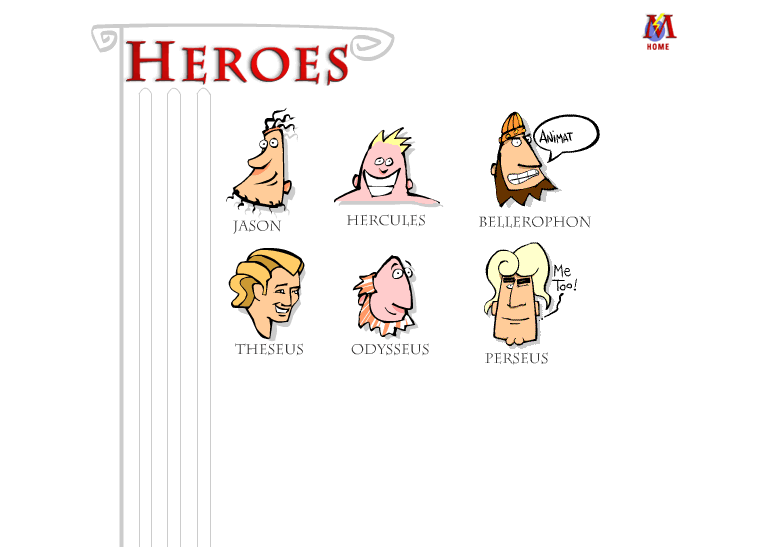
Screenshot of Mythweb.com page: All text and images on this site are copyright 1993-2011 Mythweb. Published by Fleet Gazelle. Students can click on the link and read the adventures of any of the heroes from the Ancient World.

However, if there was not a single book on the Greek and Roman gods in our classroom libraries, teaching a unit on Greek and Roman mythology would still be possible.There are a plethora of resources on the Internet for any teacher looking to teach mythology today.

One of the best resources we used was Mythweb, a site that is “kid friendly” for students and teachers. The author of the site Joel Skidmore and Advisor: William Saturno operate the site from the “real world” location of San Francisco, CA. Clever graphics depict the characters from Greek mythology; easy to read text makes th myths understandable to all levels of readers. Our students read the biographies of the gods and goddesses, and also many of the different myths on this site.

Another site that provided a great number of resources on myths is the History for Kids website. This site is a little less secure with pop-up ads, but the stories of human interaction with the gods and goddesses (Arachne, Pandora, Icarus) are all there with easy to read text that is interactive with links to background information.

This year, there were no quizzes or tests on the mythology materials. Instead, the final assessment for the mythology unit was a project titled “A Holiday Dinner Party with the Greek Gods and Goddesses.” The students were provided a graphic of a rectangle table with twelve seats positioned around the table. The assignment prompt read:

“Congratulations! You have been hired as a party planner by Dionysus, Greek god of wine, for a formal dinner on Mount Olympus.

One of your responsibilities is to set up the seating plans for one of the tables at the dinner party.

For this assignment, you need to demonstrate your ability to place six (6) gods or goddesses and six (6) mortals at a table that seats 12. You may choose the gods, goddesses, and mortals from the myths we have studied and from the Pantheon, however, you must have reasons as to why you would place these characters next to each other.”

The students were required to write a short paragraph explaining each seat placement, label the seating plan, and to design an invitation using any medium they wanted.

Some of the responses from students demonstrated diplomatic tendencies with careful placement of all mortals and deities in order to not offend.

One student suggested,”On the other side of Aphrodite is Ares. They were not only good friends but they had a fling a few different times!”

Another noted, ” Demeter is the goddess of agriculture and I put her next to Apollo to heal the crops and Poseidon to water them. They should be good friends if he meets with her to water his crops. ”

Other students had a “reality show” approach where classical antagonists are purposely placed in order to engage them in conflict. For example, “Arachne is next to Pandora. Arachne thought she was the best at everything and she thought she was the most beautiful person and no one was better than her. She was wrong though because since her attitude was so bad, she ended up turning ugly. They both think they’re always right and because of that I think it would make a good conversation at the dinner table.

Another wrote, “Next, Eros is next to Aphrodite and Psyche. It will be good to put these three next to each other because Aphrodite is furious at Eros for making it so he and Psyche were in love. It should cause a good fight and that would be fun to see. Also he is next to Psyche because they are in love.”

Finally, a student moralized, “Pandora next to Persephone because like Persephone who did not do as she was told neither Pandora when she was told not to open the box she did.  When you don’t follow direction bad things happen.”

The project was completed right after the Thanksgiving break when students had several days to experience their own celebrations. We considered how their decisions on seating the Greek gods and goddesses may have been influenced by holiday dinner with family relatives.Apparently, there is nothing more risky than a family get-together, for mortals or immortals!

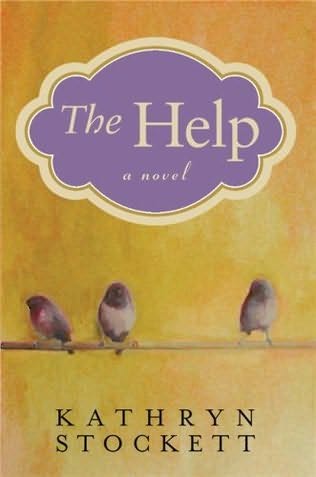
Just had a first sighting of The Help by Kathryn Stockett in a local Goodwill store. This best-selling fictional account of maids and the young reporter who records their stories during the Civil Rights decade (1960s) was first published in 2009 and has remained on the New York Times Best Seller List since then. Granted, this particular copy was a moderately water-damaged paperback selling for $2.00, but this sighting marks the moment when the book is cleared from the reading shelf to the donation shelf in order to make way for other titles.

Paperback copy of The Help sighted at local Goodwill store.

We are hoping to get a class set (30+ copies) of The Help over the next two years to offer with the English III Civil Rights unit (To Kill a Mockingbird; A Lesson Before Dying; The Bluest Eye; Mississippi Trial, 1955; Warriors Don’t Cry; The Color Purple). Thrift stores and public library book sales will probably be the best venues for getting inexpensive copies.

Currently, the book retails for $9.60 at Amazon.  That would be an expense of $288.00. We hope to get these copies for under $50.00 total.

Stay tuned for sighting #2.

In three short years, the Region 6 School District in Connecticut has rolled out several technology initiatives at the Wamogo High School -1:1 netbooks  in English/Social Studies classrooms, Smartboards in all classrooms, I-pads for teachers- in order to prepare all students with 21st Century skills.

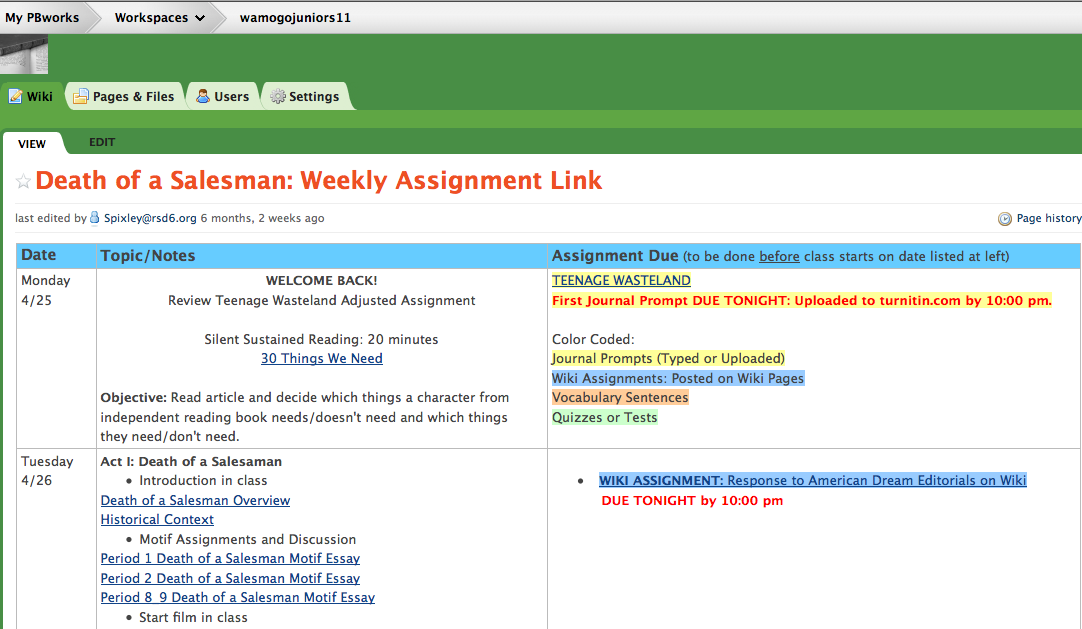
These technology initiatives have allowed members of the English Department to incorporate wikis,  specifically wikis hosted on the PBWorks site, in providing instruction to students in grades 7-12. These wikis serve in different ways in each of the English classrooms. Teachers can post assignments, provide links to websites or resources; students can make their own webpages with information or make comments on other students’ works.

Junior Wiki assignment page with links

One of the many advantages to using a wiki for a teacher is the ability to go “paperless” since worksheets can be uploaded to the wiki for students to download and complete.  Webpages can be developed by individual students, and students can comment on other student pages. Pages can be created collaboratively and teachers will have an accurate record of who contributed based on time stamp entries on a web page.

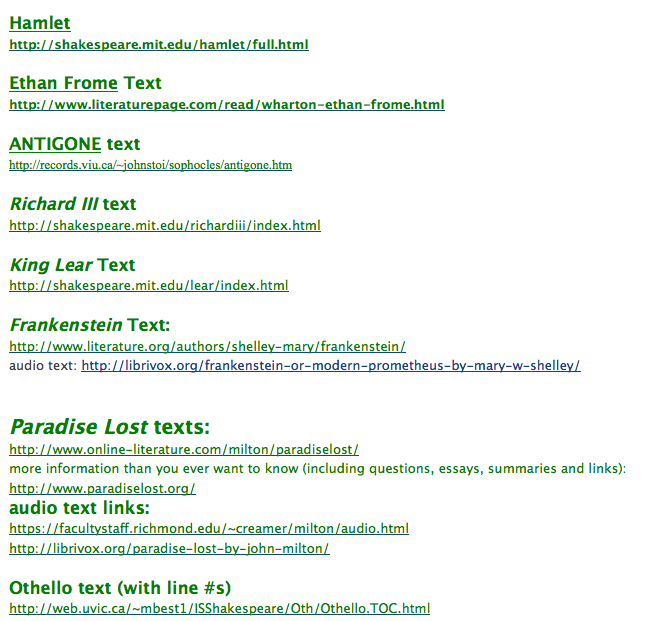
Students can also access their reading assignments through the wiki since teachers can post links to digital texts. The wiki can expand a school library by promoting the links to materials that can be read on any Internet ready device. Students, and parents, can access the wiki 24/7 from any Internet device.

Of course, the use of a classroom wiki means that much more of the responsibility for student learning is placed on the student.

Advanced Placement English Literature digital texts

Not surprisingly, there are some students who are not as enthused about the wikis as teachers are. Some are a little insulted that educators have co-opted the Internet for education. However, all of our students are becoming used to the following mantra, “It’s on the wiki!”

For example:

A student will ask what homework is due for tomorrow.

(“It’s on the wiki!”)

A student who has been out ill for a few days might ask what he/she has missed.

(“It’s on the wiki!”)

A student may say he/she left the assigned book in a locker.

(“It’s on the wiki!”)

A student may claim he was not sure exactly how long an essay response had to be for an assignment or she may say that she lost the worksheet that needed to be completed.

(“It’s on the wiki!”)

The wiki does hold the student more accountable for participation. Of course, this participation means that they actually have to go to the wiki.

Around this time of year, Edublogs, a free educational blogging platform that claims to be the, largest, most trusted, best supported and widely used way for teachers and students to engage with the world of blogging” asks for nominations for the best educational wikis. The Edublog Awards accept nominations also for the best blogs, web tools, twitter feed and educational use of social networks for the year. These awards were created “in response to community concerns relating to how schools, districts and educational institutions were blocking access of learner and teacher blog sites for educational purposes.  The purpose of the Edublog awards is promote and demonstrate the educational values of these social media.

I would love to share any one of the excellent wikis being used at Wamogo High School, by the English Department or by any other discipline at the school, but most of our subscription wikis are private for student and parent use only. While our wikis cannot be seen by the general public, which means they could not be nominated, there are a plethora of other educational wikis available that promote teacher professional development and/or student learning. Many of our teachers’ best ideas come from exploring the wonderful resources in blogs, wikis, and other social media available on the Internet. Sites that have won an Edublog Award are always exceptional in providing these resources.

Wamogo High School wikis will not win any of the Edublog Awards for 2011, however, our teachers already know how the use of wikis has improved delivery of material and student engagement these past three years. We chant a 21st Century mantra for success… “It’s on the wiki!”

Over the Thanksgiving weekend, Story Corps, “an independent nonprofit whose mission is to provide Americans of all backgrounds and beliefs with the opportunity to record, share, and preserve the stories of our lives”, organized a National Day of Listening.   Story Corps, whose stories are heard on National Public Radio (NPR) suggested that everyone reach out to their favorite teacher or mentor to say “Thank you for changing my life.”

Everyone has at least one favorite teacher. I have two.

I loved my 5th grade teacher, Mrs. Rowland, who made every task in class seem effortless. She was the Mary Poppins of my educational career who embodied the lyric, “in every task that must be done, there is an element of fun..” I was devastated when I had to leave her class midway through a school year to move to Connecticut. She was the teacher who impressed me in that short period of time as someone who visibly cared for each and every one of her students. My memories of the class are of a happy mixture of camaraderie and learning.

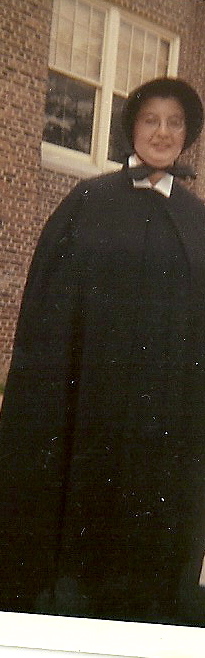
Sister Ella-1st Grade Teacher at Resurrection Elementary School in Rye NY, 1963

In contrast, my other favorite teacher, although I did not know this at the time, was the towering and imposing Sister Ella from first grade at Resurrection Elementary School in Rye, NY.

Sister Ella’s height was exaggerated by the dark pleated habit worn by the Sisters of Charity; yards of black fabric draped from her imposing shoulders to a breadth of an inch off the floor. Soaring atop this living obelisk was the commanding bonnet that framed a stern face and a set of steely black eyes. There was no hyperbole in seeing her as a Colossus; our small statures exaggerated her presence, but she could peer down on terrified parents as well. One glance from her could stop a speeding train, or more usefully, 33 six-year-olds lining up for recess…I am not exaggerating.

Sister Ella taught my classmates and me how to read. She accomplished this amazing feat with what I know now was an unsurpassed instinct for child psychology. At the beginning of the school year, she strategically placed the most challenging and difficult books, which I speculated by default must be the most interesting, well out of reach. We were allowed to access these treasures only by proving our reading prowess. The competitive streak in me was ignited at the onset of the school year, and so I speedily consumed the “easy readers” on the lower shelves as fast as I could. I poured through The Whales Go By, Sam the Firefly, and Go, Dog, Go. I plowed through the Dick and Jane series. I chugged through The Biggest Bear, Andy and the Lion and a multitude of Madeline stories. Determined to get to the prized collection ahead of the others, I lugged piles of books home to return them completed the following day.

Not all reading instruction was enjoyable. There was the tedious work in SRA workbooks which required a student read a nonfiction passage and answer multiple choice questions. Every student started at level purple, an infuriatingly slow level with terribly dull passages. Level Gold, the top level, was impossibly far away. Several months into SRA practice, I figured how to cheat by slipping the multiple choice answer keys from the next level into my workbook for easy access. Sister Ella caught on quickly, a terrifying moment in my nascent educational career. I was trembling when she silently moved me several levels ahead. In crossing out levels purple, blue, and green, she had acknowledged my frustration. I was promoted to level Aqua! I was skipped to the middle of the SRA series, my cheating days behind me.

By midyear, I had proved my reading was up to her exacting standards, and I was allowed to read the books from the top of the shelves while others students worked in more intermediate reading groups. She had correctly assessed my competitive nature and allowed me the freedom to read from the top shelf those books that I wanted. There were copies of  The Boxcar Children and the Bobbsey Twins series, Ginger Pye, and a copy of Charlotte’s Web.

By the end of the school year, the other students in class had joined me. Reading time was respected in 1st grade. We would read daily-quietly in groups or in read-alouds.  The Weekly Reader was introduced that year, I learned to appreciate reading the news as well.

Sister Ella had absolutely none of the warm characteristics that usually denote a first grade teacher, however, in retrospect, I came to recognize that her ability to stimulate intellectual curiosity in her students was above par. Her gift of reading has sustained me in all of my life’s activities. To foster a love of reading is the greatest gift a teacher can give. So, thank you Sister Ella.  I hope to do the same.

The holidays are upon us, so several of the writing projects at the high school have been “seasonal” in nature.
Journalism students have a running poll on pumpkin or apple pie (pumpkin is ahead). They have also asked faculty members to contribute a favorite Thanksgiving memory for a special holiday issue.
I will probably contribute my 17 years of memories sitting at the “kid” table.

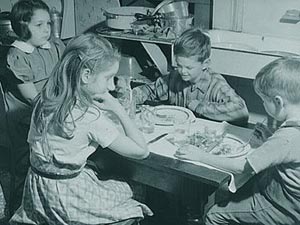
A traditional “kid’s” table at Thanksgiving needs at least one unhappy older kid. While this is not a photo of my family, this photo accurately captures the frustration of being excluded from the main table during the holiday meal. There are a plethora of similar photos available on the Internet!

The kid table is that humbling Thanksgiving tradition that separates the china from the melamine, the goblet from the tumbler, the ladder-back chair from the booster seat, in order to keep the adults from the five year old. The kid table is a table strategically placed within hearing distance, but not necessarily viewing distance, of the main table. The kid table is usually close enough for a surprise inspection by a suspicious aunt, but far enough away for a muffled paper napkin spitball contest. Should the conversation at the adult table increase in volume, burping contests are also an option.
The kid table is supervised by….well, more kids. Little kids are placed under the care of big kids. Little kids are usually delighted; big kids, not so much. Older cousins always recognize they are being exploited as unpaid babysitters.
Several of my students have also commented about their stints at the kid table. More than one has calculated the number of years it will take him or her to  travel the circuitous route from kid table to finally gaining a seat at the main table. I can sympathize. Ours is a large family and there were 14 cousins ahead of me, an accident of birth order that relegated me to the kid table my entire adolescence. A seat at the main table was in a distant horizon.
The main table! An affirmation of age. A holiday dinner free of toddlers and away from the din of childish chatter. The main table! With glowing candles on the table, crystal goblets filled with jeweled liquids and fresh flowers in the centerpiece…. The main table promised a meal free from spilled milk, piles of uneaten vegetables, and sticky sticky tablecloths.

Except there are adults at the main table as well…and good manners are expected.

While I sympathize with my students and all other adolescents stuck at the kid table this Thanksgiving, I would like them to consider the advantages of being able to sculpt mashed potato mountains, hang a spoon from one’s nose, and yes, engage in a paper napkin spitball fight.
When the year came for me to finally graduate from the kid table, it was time for me to host my own Thanksgiving dinner. My first Thanksgiving was for a small gathering of in-laws and nephews who were very few in number.While the dining table comfortably could seat a dozen adults, I still put a small kid table in the corner.

Traditions must continue.

There are standard “core” texts taught in English Language Arts classrooms, but should that text be the ONLY text students should be reading? Generally speaking, the pace for a book taught in class may be slower for some members of the class. There maybe a text, specifically a play by  Shakespeare where students cannot be expected to read by themselves. 183 teaching days in a school year does limit the number of texts a class can read as a group. Of course, a teacher can adjust the speed of unit dedicated to teaching a text, but occasionally a unit can stretch over seemingly endless weeks. Interruptions to a schedule (snow days, assemblies, etc.) can contribute to the “drag” on teaching a particular text.

So, how does a teacher keep up with student reading skills when the unit slows down? What to do to keep students reading independently? What to offer higher level readers when a taught text is lower than their reading ability? What to offer lower level readers when the taught text is to high? Use satellite texts!
Satellite texts are books that are connected to a taught text either by context or theme or author.  I wish I had coined this name, but full credit belongs to Stephanie, our grade 11 English teacher. In using satellite texts, she selects a multitude of texts and offers these to students to choose to read in conjunction with a taught text.

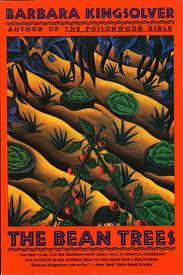
The core text or whole class novel for the Native American Influence and Culture unit in Grade 11

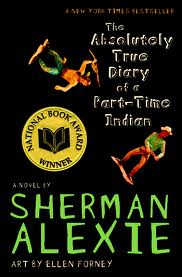
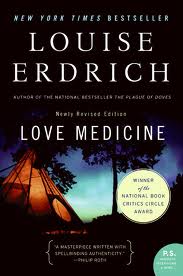
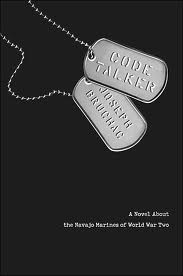
For example, for her unit on Native Americans Influence on Culture, Barbara Kingsolver’s novel The Bean Trees is the core text or whole class novel. Students are offered 10-15 other titles to read independently including (but not limited to)  Sherman Alexie’s The Absolutely True Diary of a Part-Time Indian or  Reservation Blues; Larry Watson’s Montana 1948; Louise Erdrich’s Love Medicine; Leslie Marmon Silko’s Ceremony; Tony Hillerman’s A Thief of Time; Dee Brown’s Bury My Heat at Wounded Knee; Kingsolver’s other two novels Pigs in Heaven and Animal Dreams; and Codetalker by Joseph Bruchac.

Independent reading choice or satellite text

Independent reading choice or satellite text

Independent reading choice or satellite text

Independent reading choice or satellite text

There are several ways to effectively use satellite texts to complement a taught text. The most obvious use in the above scenario is to have students compare and contrast the contexts, themes, and/or  characters between a whole class novel and the text they have chosen on their own. Stephanie can choose to have students work in literature circles, work with a book-buddy or communicate through blogs; she can have students work independently.
Satellite texts are the books that students can read during scheduled SSR period. Students are encouraged to set reading goals based on the number of pages in a text and their reading rate which is usually determined after reading the first 20 pages in a text. Satellite texts are not designed to provide assessments the same way that a taught text would; quizzes and tests should never be the focus. Instead, a satellite text is designed to increase opportunities to practice reading. Students may record their progress on an index card (# of pages read at a location, # of minutes) as a means of assessing their reading progress and reflect on this data.
Ideally, students should be able to draw comparisons (plot, character, theme, setting) from their satellite text to the text being taught. These comparisons can be made in class discussions or in written responses to the taught text. For example, students can draw conclusions about setting on a character’s coming of age or notice similarities in an author’s writing style. Contrasts can be made in recognizing differences by evaluating language or theme from the taught text to the satellite text.
Using satellite texts can expand a unit by an additional week, however, this additional time can provide some flexibility for a teacher in transitioning from one unit to another. Students in a class can be still be engaged in a book while the needs of a few students who need individual attention to improve understanding, or who may have make-up work, or who need more time to finish the taught text can be addressed. Using satellite texts is ideal for employing mini-lessons, or for transitioning from one unit to another that may overlap in theme or content.
Our classroom libraries are loaded with satellite texts purchased through the used book markets (thrift stores, public library book sales, online used book vendors) that sell books for $.50-$4.00. After two years of collecting, there are roughly 5-20 copies of each of the texts listed above; our total investment for this unit has been under $300.00.
Employing satellite texts in a classroom is a way to increase reading in the classroom and provide (limited) choice in texts. These books allow teachers the opportunities to expand reading beyond core texts…to increase a student’s reading experience….to infinity and beyond!

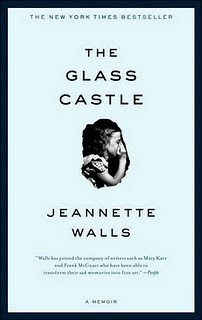
The second quarter of school has started, and The Glass Castle has been assigned to the seniors in Memoir class. There is much grumbling; “You’re kidding…we have to read a book when we are leaving in a few months????” (It’s November-graduation is in June) There is even more grumbling when I tell them they will need to do about five pages of responses; “You mean we have to write about a book when we are leaving in a few months???” (Again, it’s November-there are seven months to go).

There are about 50 copies in the book room-total investment of $250

So, I distribute the books, and I read aloud the opening paragraph,

“I was sitting in a taxi, wondering if I had overdressed for the evening, when I looked out the window and saw Mom rooting through a dumpster. It was just after dark. A blustery March wind whipped the steam coming out of the manholes, and people hurried along the sidewalks with their collars turned up. I was stuck in traffic two blocks from the party where I was heading. Mom stood fifteen feet away. She had tied rags around her shoulders to keep out the spring chill and was picking through the trash. It had been months since I laid eyes on Mom, and when she looked up, I was overcome with panic that she’d see me and call out my name. I slid down in the seat and asked the driver to turn around and take me home to Park Avenue” (3).

That certainly caught their attention.

Jeanette Walls, author and gossip columnist for MSNBC, incorporates both the misery of living in a dysfunctional family with the excitement and joys of childhood in her page-turner of a memoir. Chapter Two opens with the deadpan line-“I was on fire,” where Walls mater-of-factually recounts how she was set ablaze by the fire on the stove while cooking herself a hotdog at the young age of three. Her resilience is remarkable, but more remarkable is her generosity in the remembering her father who  employed the “skedaddle” staying one step ahead of the authorities, who bestowed stars as Christmas presents, and who promised a home to his children -a glass castle. Similarly, the portrayal of her mother as an talented artist who prized independence and who believed that “being homeless is an adventure” is unflinchingly honest.

I first bought 20 copies of The Glass Castle three years ago at the retail price of $10.50 each. This memoir was one of the first offered in the newly designed Memoir Class, in fact, the course was built around the book as a core requirement. Since then, there have been some 30+ copies added ranging in price from $.50-$2.00 from used book sales. The total investment for the 50 copies now in the book room is about $250.00. The book’s popularity with area readers makes it relatively easy to find at Goodwill and public library book sales.

After the students were introduced to the book, I showed a short video of Walls with her mother. At first, several of my students were outraged that Walls would admit to avoiding her mother who appeared so desperate. Indeed that was Walls’s fear when she first drafted the memoir, but as the students read the text, they have become more forgiving and understanding. In the memoir parental failure was complicated by a toxic mixture of mental illness and alcohol, problems unfortunately not unknown to some of the students. The video helped to reassure them that Walls is not the heartless daughter they initially believed.

Walls is a great storyteller in the genre of non-fiction. Her episodes in the The Glass Castle recalls to mind the work of the great fiction writer Tolstoy who famously stated, “Happy families are all alike; every unhappy family is unhappy in its own way. ” Walls combines the happy and the unhappy in an engaging read….especially since there are seven months left in the school year.