Today the genre of young adult literature (YA) for readers ages 14-21 is filled with choice. This was not so 40 years ago; young adult literature was limited to the classics like Treasure Island, Little Women, Anne of Green Gables or “higher reading level” children’s books.  The turbulent  1960s created changes politically and socially and hosted radical changes in young adult literature. Books with controversial themes and mature language became the literature read by young adults. Many critics believe that the genesis for YA literature can be found in The Outsiders, a novel written by S.E. Hinton when she was a teenager herself.
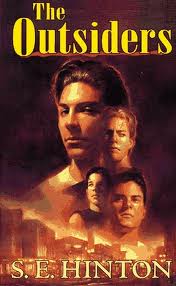
The book that started YA; we have the most copies of this edition

She began writing the book in her sophomore year in high school; the book was published in 1967 when she was 16 years old. “‘I wanted something to read,’states S.E. Hinton on the website dedicated to the book.  ‘I’d wanted to read books that showed teenagers outside of the life of, ‘Mary Jane went to the prom.’.  She recalls, ‘The books available just didn’t read true, they didn’t deal with the real lives of teenagers.'”

The story follows Ponyboy, a greaser and a member of a gang that rumbles against more the more affluent gang members known as the socs (short for “socials”) . His deep friendships with other members of his gang are tested when during a confrontation, Johnny, a greaser, accidentally kills a soc. While this murder sets off a series of  gang fights, Ponyboy and Johnny hide out in a church. When the church catches fire, the pair rescue several children who are trapped inside, but Johnny suffers a fatal injury. At the conclusion of the novel, Ponyboy is pushed to complete an English assignment by writing down the recent events of his life; these are the events that make up the novel.

We have The Outsiders as a reading text in Grade 8. Like most adolescents, our students love this book. They enjoy the style of the writing and the authenticity of the events of the novel.
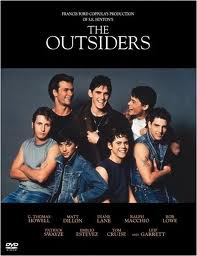
Film of the book directed by Francis Ford Coppola

There are always enough copies of this text at used book sales so that I can replace copies that may have been lost or fallen apart from use. We have have a mix of several different editions already, so I am not looking for any particular edition. The book currently retails at Amazon for $9.99. I have picked up a dozen copies this past year for about $6.00 because the book usually is priced at $.50/copy at used book sales since, regardless of the edition, it is a small paperback.

There was also a movie of The Outsiders directed by Francis Ford Coppola in 1983. The movie helped, or in some cases launched, the film careers of Patrick Swayze, Matt Dillon, Ralph Macchio, Rob Lowe, Emilio Estavez, Diane Lane, and Tom Cruise; C. Thomas Howell played Ponyboy, but he did not have achieve the same celebrity status as the rest of the cast.

The Outsiders marked a shift for YA literature by reflecting the crisis of adolescence in a manner that readers ages 14-21 found engaging and true. Once The Outsiders was embraced, the YA market was opened, and other books have followed in its powerful footsteps.

Angela’s Ashes by Frank McCourt is a text that is used in Memoir, a 12th grade semester elective. The book was first published in 1996 and won the Pulitzer Prize for autobiography. McCourt recounts the story of his impoverished childhood in Limerick, Ireland. He successfully recaptures the perspective of a child watching his mother Angela struggle with his father’s alcoholism and the loss of several of her young children to disease and malnutrition. Surrounded by overwhelming tragedy, McCourt manages to communicate his understanding of the world with great humor and grace.

Initially, students can have some problems reading the dialect of an Irish brogue and many of the colloquial phrases. Students can have problems developing the “voice” of the author as they read any text. For that reason, an audio tape or CD of Angela’s Ashes is imperative. Once the student hears McCourt’s reading the memories of his younger self, young “Frankie”, they have a much better understanding of the humor which makes the book so entertaining. Listen to McCourt read a selection from the text in a clip on YouTube:

There were 40 copies of Angela’s Ashes purchased at full price in the classroom library, so there is little reason to pick up additional copies even though there are always copies available in used book sales. The memoir’s trade paperback edition retails currently for $9.86 at Amazon. I did, however, find a copy of the audio text unabridged for $8.00 which normally retails for $32.87, a savings of $24.87.

I do let students choose memoirs to read, and Angela’s Ashes will be a choice this coming year. Listening to McCourt read a few pages from an audio text is enough to convince students they would enjoy reading this excellent memoir.

I have recently completed the Critical Thinking Conference in Berkley, California, so I have been trying to “think critically.” As I sat though several of the sessions, I considered how our school’s used book classroom libraries, with their increase in titles,  might be viewed by students in grades 7-12 this coming September.  Could I use a step on a critical thinking “logic wheel” where a topic or idea is consider from one or multiple points of view in order  to prepare for student response this coming school year? I thought about our most recent reading survey.

The English Department developed and gave a reading survey  for grades 7-11 in March 2011. Our students were asked to rate themselves as a reader and explain that rating.  The students were very candid in their responses.

There were  students who rated themselves as self-motivated readers:

“I rated myself  as a good reader because I love to read and spend a lot of time doing it.”
“I rated myself with Eager Reader because I love to read! I have read about 10-12 books in a 2 month period. I read every night and whenever I have extra time.”

I anticipate that these students will enjoy having choice, however, I also realize these students would be just as happy reading assigned core novels.

In contrast, there were students who rated themselves as reluctant readers who were quite blunt in stating they did  not like to read or did not read at all:

“because i usually never read. It shows in my english grade.”
“not a good reader i have an xbox 360.”
 “I would rather sleep.”

I anticipate that the increase in titles for these  readers will probably be overwhelming. These students will probably need more time to explore what books they should choose and will need serious coaching to see they complete reading at all!

Over 60% of our students, however, indicated that they would like to have more choice in what they read. They rated themselves as good, casual or average readers  across all grade levels. They expressed their frustrations with assigned reading quite clearly:

“I only want to read books I pick out for myself. There is a rare chance that my peers and myself will like the book the teacher picks out.”
“Sometimes I want to read, sometimes I don’t. Most of the time, I enjoy reading the books that I have to read for class. I always enjoy reading the books I pick because I only pick books that I like. I read when I want to, where I want to, and what I want to.”
” Sometimes the books we read in school aren’t interesting and that gets me to dislike reading. I used to read more.”
“I am almost a “reluctant reader” because I do not like to read the books we are assigned in school.”
“Because I often feel like im forced to read something when i was like 5 years old so now I have that habit.”
“I really do love to read, however, I hate most of the books assigned to me in the classroom.  The only material I usually like to read is sociology or psychology related.  I have enjoyed only a few books that I have been assigned in class, one of them being Wuthering Heights.”

These voices are the target audience for the used book classroom. 60% of students said they will read if given the choice; they will practice good reading habits if, like adults, they select what interests them enough to read. Choice is a step to being a life-long reader.

There will still be assigned reading, but the focus in the coming year will be to allow for more student choice in reading. In order to meet student needs and interests, we will be offering more independent reading, more titles, and hopefully, engaging more readers.  As I try to “think critically”, I am more convinced that the used book market will continue to be a resource for us in meeting the demands of students’ multiple points of view in how -and what- they read.

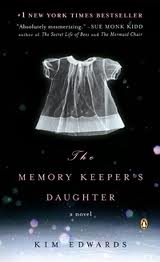
Answers.com defines a good beach book as “engaging and a quick enough read that you can finish most of it on the beach before your sunscreen wears off. A beach book isn’t necessarily literature, but a beach book will entertain.”So, what book could be assigned for summer reading that engages students but isn’t necessarily great literature? The Memory Keeper’s Daughter by Kim Edwards is a good choice.

Summer Reading Assignment for grades 11 and 12

The story opens with a snowstorm on the night Norah Henry goes into labor. On the way to the hospital, she anticipates that, “when we come back, we’ll have our baby with us…our world will never be the same,” not knowing how dramatically accurate that statement will be in the novel. Because of a staff shortage that wintry night, her husband, Dr. David Henry, delivers his twin children, Paul and Phoebe. However, while Norah is unconscious, David recognizes that Phoebe is a Down Syndrome baby, and decides to tell Norah that the little girl dies in childbirth. David instructs Caroline Gill, a nurse, to place the child for adoption. Caroline, however, keeps Phoebe as her own. The novel centers on David’s decision and its consequences for Norah and Caroline.

Edwards is a skilled writer, and there are many descriptive passages that qualify the book for its inclusion in a high school curriculum. For example, as Caroline Gill prepares to take the baby Phoebe to an adoption agency:

“There was an unnatural welling quite in the nearly empty lot, a silence that seemed to emanate from the cold itself, to expand in the air and flow outwards like ripples from a stone thrown in water. Snow billowed, stinging her face, when she opened the car door. Instinctively, protectively she curved herself around the box and wedged into the backseat where the pink blankets fell softly on the white vinyl upholstery. The baby slept, a fierce, intent newborn sleep, its face clenched, its eyes slits, its nose and chin mere bumps. You wouldn’t know, Caroline thought, if you didn’t know, you wouldn’t know” (21).

Edwards had published short fiction prior to her debut novel. The Memory Keeper’s Daughter was published in June 2005 and gained great interest via word of mouth in the summer of 2006. Apparently, the book was very popular as a beach read with book groups as well! There was also a made-for-television movie  on Lifetime Television in 2008 with Dermot Mulroney as David, Gretchen Mol as Norah, and Emily Watson as Caroline. This was the most watched movie of the week that April, and the film was released as a DVD.

There are always multiple copies of this title at used book sales. In one year, I have collected enough copies of the text so that Advanced Placement students each took home a copy to read this past June. In total, I have purchased over 40 copies of this text which retail for $9.20 at Amazon. I have spent $40-50 to have this text as summer reading; the same copies new would have cost $368.00.

So what if the copies of The Memory Keeper’s Daughter happen to get a little sand or salt water on them? I have enough back up copies to replace any summer-damaged texts. In fact, I am counting on them being read on the beach!

A fabulous resource for locating book sales anywhere in the United States is the web site http://www.booksalefinder.com/

Front page for booksalefinder.com

I happened on booksalefinder.com two summers ago, and the site has been great in helping me organize my shopping itinerary for used books.

The web site states that it is maintained by Helen and Tom Oram, who live in Massachusetts. Under the “About Book Sale Finder” tab, is the story of the site’s creators: “Helen works full time keeping the web page up-to-date: compiling all the sale information, answering e-mails, soliciting new sales, and working with advertisers. Tom works part time on the page and is responsible for writing the programs that create the web pages, keep track of the sales, build the Google Maps, and personalize the weekly Sale Mail notices.”

According to the website, “We don’t charge charitable non-profit organizations to list their traditional used books sales or bookstores on our web page.” They list the non-profit organizations who are likely to run book sales around the country. “The majority are sponsored by Friends of the Library volunteer groups who hold the sales to raise funds for such things as local cultural activities and book purchases for the library. Many other non-profit groups also run bookstores or sponsor regular sales for general fundraising. These include such national organizations as the American Association of University Women, Bryn Mawr Alumnae, Brandeis University National Women’s Committee, Goodwill Industries, and Planned Parenthood as well as neighborhood churches and charitable organizations.”

The site has “advertising supported content, charging book fair organizers and for-profit book dealers to advertise their sales.” There are also advertisements for book scanning equipment.
The website lists some statistics:
  • Web site established in 1997
  • Now lists over 6,000 sales per year
  • Weekly Sale Mail to about 18,000 subscribers (subscriptions are free)
  • About 180,000 page views every month
  • About 80,000 visits every month
  • Appears as first non-paid listing in Google and other search engines with key words ‘book sale’ or ‘book sales’

There is also a GPS download on booksalefinder.com for Tom-Tom and Garmin systems. This feature allows travelers to add Points of Interest (POI files) that alert them where to find book sales and non-profit book stores. The site explains that, “Each Tuesday, the Book Sales TO GO files are updated to contain sales for the next 9 days, so be sure to get a new download each week. You simply load the file into your GPS and you’re on your way!”

The e-mail feature is also very helpful. This service is call Sale Mail and is “a completely free service that we offer, where every week we check to see if there are any sales in your area and, if so, we send you an email telling you about them.”   The web site pledges that your email address will not be released to any other party, and they have a no spam policy.

The booksalefinder.com web site is a great resource for anyone looking for book sale in their state or community in quantities large or small. The information has helped me locate the necessary texts for my used book classrooms!

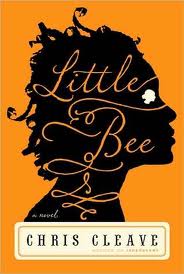
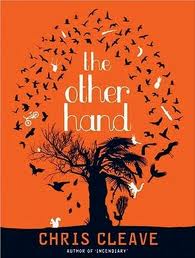
Little Bee by British author Chris Cleve was a disturbing read. Apparently, other readers feel the same because there are numerous copies hitting the used book market; apparently book owners wanted the book off their shelves fairly quickly! The book was first published in Britain in 2008 under the title The Other Hand, an ironic take on events in the novel. The book was published as a trade paperback in 2009 in the USA and Canada under the alternate title Little Bee. The novel’s climb up the best seller list has been attributed to “word of mouth”, and the book has enjoyed popularity with book clubs in the USA.

Recently added Little Bee to Advanced Placement English independent reads

The English Literature Advanced Placement curriculum in any high school is usually generated with texts suggested for a  free-response question on the exam.  Recently, more contemporary texts have been added to the suggested list which also includes the traditional canon of Thomas Hardy, Jane Austen, Shakespeare, and others. I anticipate that Little Bee will be added to to the list of suggested texts within the next two years.

I was surprised to see the book so soon in the secondary market and have collected eight copies of the text over the past two months. The book currently retails at Amazon for $8.04. The same copies which cost me $8.00 would have cost my department $64.32, a savings of $56.32.

Little Bee was originally published as The Other Hand in Britain

One of the reasons I am willing to experiment and add this text is the story’s complex structure. There are two different points of view: Little Bee, a young Nigerian refugee, and Sarah O’Rourke, a British editor for a magazine, who alternately narrate the story. There is also a flashback that explains the circumstances of Sarah and her husband Andrew’s initial encounter with Little Bee. Little Bee’s illegal arrival in Surrey, England, several years later causes such guilt in Andrew that he commits suicide. While Cleve allows Little Bee to make humorous observations, the events of the novel, including rape, amputation, and cannibalism, make for a disturbing read.

The other reason for the novel’s inclusion is the ethical dilemma Sarah and Andrew find themselves while on holiday in the Niger delta and the repercussions of their decisions on a beach. The author Cleve has been quoted in an interview saying, “We’re often told that we live in a globalized world, and we talk about it all the time, but people don’t stop to think about what it means.” His novel forces the reader to confront the rapidly closing geographic and cultural borders that are the political hot button issues of today.

A work of fiction is added to the Advanced Placement English curriculum(s) because of the quality of the writing and the universal message for the reader. Little Bee meets both criteria effectively  and hopefully will make my students question what globalization will mean for them in the future.

First impressions are made in seconds, which is why a book’s cover design is so important. While there are some wonderful book covers for the texts used in the high school classroom, there are are also some unappealing cover designs. Usually, the less attractive cover is the movie-tie in cover, and as I collect used texts for the classroom, I try to avoid these commercial texts.

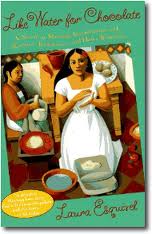
Original Cover for hardcover and tradeFor example, Like Water for Chocolate  was published in 1989 by first-time Mexican novelist Laura Esquivel. This book is an independent choice in grade 10, and there are several trade paperback versions available.

The book’s original cover is a lovely tribute to Diego Rivera; a lovely turquoise border frames a painting of a two women preparing food in a kitchen. One woman sits stirring in a bowl on the left side of the painting; the central figure is dressed in white wistfully stares out to the reader as she molds a tortilla.

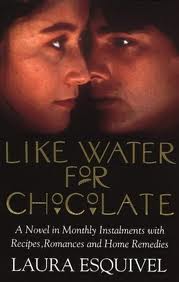
Cover with movie tie-in

The novel follows the story of a young girl named Tita is unable to marry Pedro, the man she loves, because a family tradition which requires her to care for her mother until the day she dies. The book is organized recipe by recipe, each marking Tita’s longing for Pedro. As Tita expresses herself when she cooks, the foods are bewitched with her emotions.

The movie tie-in cover for Like Water for Chocolate is not as charming. There is a close-up photo of Lumi Cavazos (Tita) and Marco Leonardi (Pedro) staring past each other; the effect is rather unsettling rather than engaging.

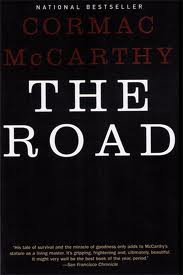
Likewise, the post-apocalyptic novel The Road by Cormac McCarthy, published in 2006, also has several cover versions. We teach this book in Grade 11. The original design is distinctive and bold with McCarthy’s name (brown ink) and title of the book (white ink) printed large across the front; there are no illustrations. This dramatic choice impresses the reader of both the book’s importance and the starkness of the world contained within. A father and his young son travel down through the Eastern states of a destroyed America. The environment has been destroyed, society has been destroyed, but the man and the boy struggle on maintaining a last hope for humankind. Their relationship, one of tenderness and compassion, is in sharp contrast to the nightmarish future McCarthy creates.

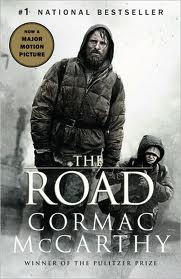
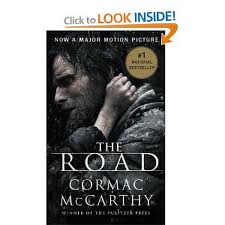
The film The Road was released in 2009 and the trade book movie tie-in cover depicts a weary Viggo Mortensen (the man) and Kodi Smit-McPhee (the boy) trudging down a road against a grey landscape. The mass-market tie-in is even worse with a close up profile of a filthy and distressed Mortensen. Both movie-tie in covers are commercial attempts to capture the book’s hostile setting and compassionate relationship between father and son.

The original bold cover for hardcovers and trade paperbacks in 2006

The trade paperback movie tie-in

The mass-market movie tie-in cover

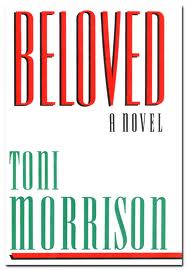
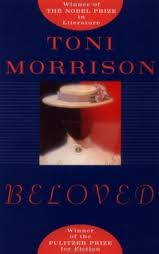
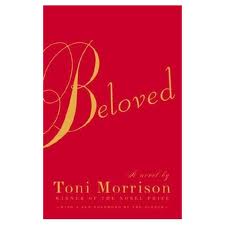
However, there are some movie-tie in covers which are more suited for the material within. The covers for the novel Beloved by Nobel prize-winning author Toni Morrison have undergone multiple transformations, which is confusing at first to many of my Advanced Placement students who may have one of several copies. The 1987 release simply has the title across the cover. This release was an over-sized trade that does not stack well with other books.

Then, there were two paperback covers (1988 and 1994) that shared the same image of a faceless woman in a hat centered on the front.  This design more artistically captured a central theme in the novel. When the book was chosen by Oprah for her book club, the book was released again with a red cover and the word Beloved in gold script across the cover.

1987 Paperback Cover

1988 Paperback cover was similar to this cover in 1994

2004 Paperback cover

Of these three designs, the most appropriate cover was the faceless woman whose ghostly image alludes to the character of Beloved, a child murdered in order to prevent her return to slavery. Opening in a post Civil War South, the main character Sethe confronts the ghosts and people from her past, and the evils of slavery are described in painful detail.

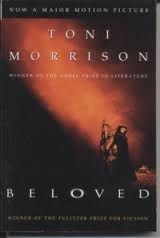
Beloved Movie-tie in paperback cover

The movie-tie paperback cover for the film Beloved (1998) is far more dramatic; the actress Thandie Newton is pictured in side profile, back arched, against distorted tree branch. The result is dramatic without focusing on the film’s actress; this cover is not a blatant movie tie-in.

I rarely buy these movie-tie in paperbacks for two reasons. The art design usually features the actor or actress and not the elements of the story, and these covers immediately alert students that there is a film to watch rather than a book to read! However, the contrast in covers is an interesting lesson for students, and I have asked them which cover they prefer. Can they judge the book by its cover?

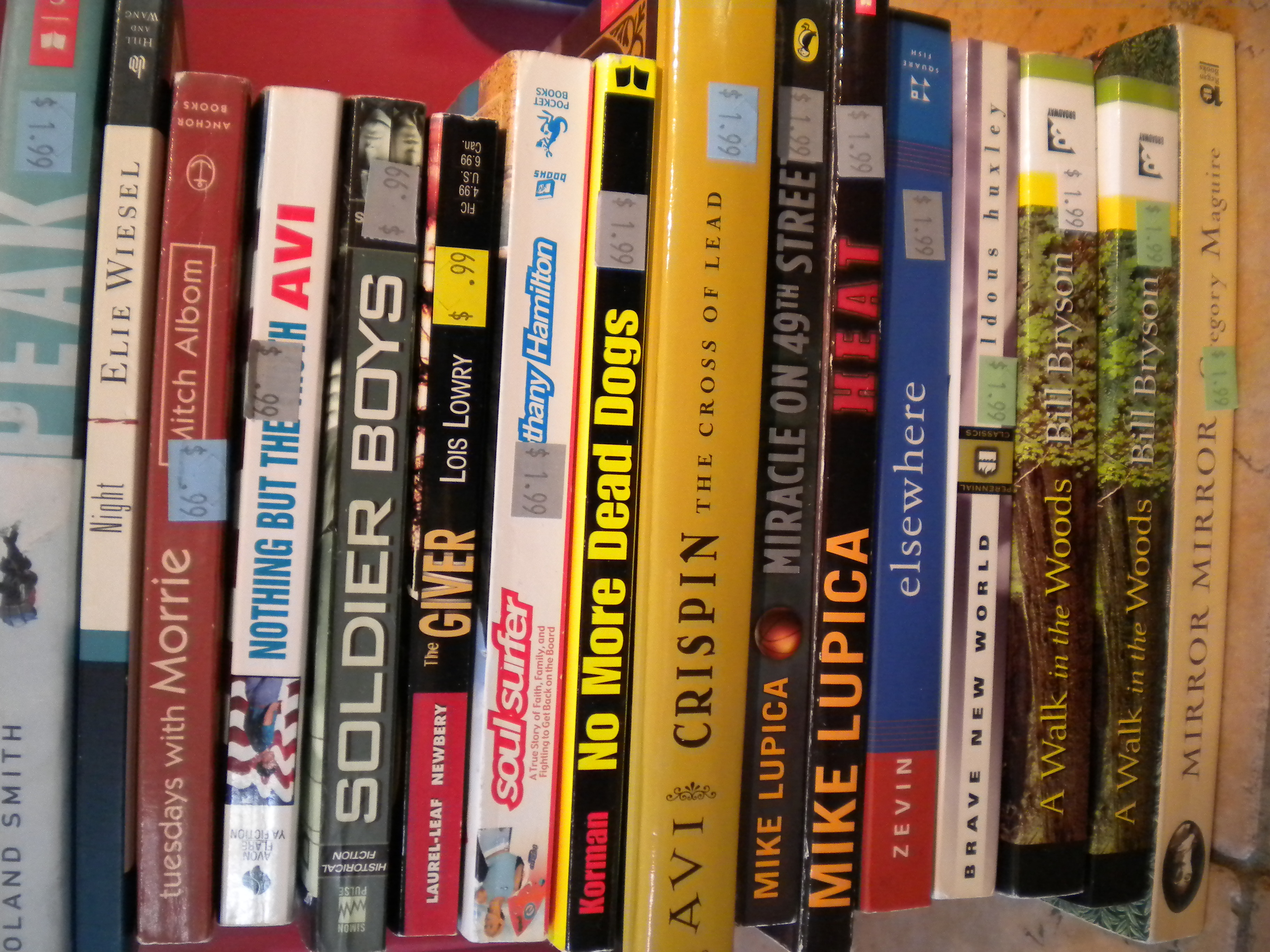
Southington Goodwill Store book haul....16 quality texts for $33.33!

Traveling back from an afternoon in Massachusetts, I stopped for quick break at exit 32 on I-84 (Queen Street) in Connecticut. Lucky for me, I noticed the Southington Goodwill Store store. In ten minutes, I collected a bagful of titles worth bringing back to school.

This Easter Seals Goodwill Industries store opened in January 2006 with 8100 square feet of space. According to the website, the mission of the store is to “to enhance employment, educational, social and recreational opportunities for people with disabilities and other challenges in the greater New Haven area.”

The prices for the books at this location were a little more expensive than the $1.00 or $2.00  books at the Goodwill Stores in Danbury, Brookfield, and New Milford. Maybe the Easter Seals affiliation has a different pricing criteria? Books here were marked $2.99, $1.99 or .99. These prices are still far below retail, and there were many bargains I left on the shelves for others to find. The organization of the books was excellent at this location.  Titles were correctly placed in genres (non-fiction, fiction, children’s literature, cookbooks, etc) and the quality of the books was very good.

I located five core texts: The Giver by Lois Lowery, No More Dead Dogs by Gordon Korman (Grade 7), Nothing but the Truth by Avi (grade 8), Night by Elie Wiesel and an edition of Brave New World (grade 10) by Aldous Huxley that matches our collection.

I also located a copy of Soldier Boys by Dean Hughes for our War and Conflict unit and two copies of A Walk in the Woods by Bill Bryson for our junior year Adventure unit or Transcendentalism study and a copy of Tuesdays with Morrie by Mitch Albom for Coming of Age. Soul Surfer by Bethany Hamilton, Peak by Roland Smith and two texts by Mike Lupica, Miracle on 49th Street and Heat, can be placed in literature circles for grade 7.  Mirror, Mirror by Gregory Maguire, and Elsewhere by Gabrielle Zevin (we now have four copies) will go into 9th grade independent choice. Finally, I am looking to include a historical fiction unit in middle school; Crispin: The Cross of Lead by Avi is a possible choice.

While I was on the webite for the Southington, CT store, I noted that Goodwill sells books on Amazon under the heading of Ivy League Books. The proceeds from sales on this site “help Easter Seals Goodwill Industries to enhance employment, educational, social and recreational opportunities for people with disabilities and other challenges.” Visit books.ctgoodwill.org to see a list of  available titles.

The Easter Seals branch of Goodwill Industries also “owns and operates 11 secondhand retail stores and 1 outlet throughout south-central and eastern Connecticut. All proceeds from store sales directly support the mission of Easter Seals Goodwill Industries. The stores also provide employment to Easter Seals Goodwill Industries’ clients with disabilities and other special needs.”

I am always pleased to shop at Goodwill. The budget for my department is stretched even farther with great bargains, and all proceeds help a worthy organization. I will make sure that Queen Street in a regular place for me to take a break on 1-84 because shopping at the Southington Goodwill location was a win-win!

There is not enough non-fiction reading assigned in high schools. There are textbooks and fiction, which is mostly assigned by English Departments, but there is a dearth of good non-fiction texts offered to students. However, there is one safe text to assign, Bill Bryson’s A Walk in the Woods first published in 1998.

The book chronicles Bryson’s attempts to walk the Appalachian Trail (2181 miles) which runs from Georgia to Maine with a friend “Stephen Katz” (according to Wikipedia , a pseudonym for Matthew Angerer). The book is informative, easy to read, and incredibly funny.  Bryson’s ability to move fluidly between the history of the trail and the encounters he has with people and animals makes the book very accessible to all readers.  Students make connections from the book to a wide variety of topics: geography, ecology, psychology and animal science. More importantly, the book can be added to different English Department curriculum units of adventure or memoir or the American Transcendental Movements.

A favorite non-fiction text for high school students

In preparing for the hike, Bryson discusses all the possible dangers, none of which seem more frightening than bear attacks:

“Imagine, if you will,” he writes, “lying in the dark in a little tent nothing but a few microns of trembling nylon between you and the chill night air listening to a 400-pound bear moving around your campsite. Imagine its quiet grunts and mysterious snufflings, the clatter of upended cookware, and sounds of moist gnawings, the pad of its feet and the the heaviness of its breath, the singing brush of its haunch along your tent side. Imagine the hot flood of adrenaline, that unwelcome tingle in the back of your arms, at the sudden rough bump of its snout against the foot of your tent, the alarming wide wobble of your frail shell as it roots through your backpack that you left casually propped by the entrance-with, you suddenly recall, a Snickers in the pouch. Bears adore Snickers.”

When Bryson’s friend Katz asks to join him on the trip, they agree to do a three day practice run, and Bryson happily realizes, “I would not have to do this on my own!” Katz flies in arriving at the airport carrying a 75-pound green army surplus bag; “Snickers,” he [Katz] explained, “lots and lots of Snickers.” Hilarious.

The book has had great success in the adult market, and there are always copies in the secondary market in one of three forms: hardcover, trade and mass-market paperbacks. I initially started collecting all three types in order to have enough copies for all students, but now I limit purchases to the trade copy which retails at Amazon for $9.59. We now have 54 copies which would cost $581.56 retail; our cost $55 dollars, a savings of $462.86.

I have also collected a dozen copies of Bryson’s other book, I’m a Stranger Here MyselfNotes on Returning to America After 20 Years Away published in 2000, which has the same humorous observations and interesting facts for students who might want to continue with this author. I only find the trade paperback copies in the used book market that are available retail at Amazon for $10.87. I have spent $12.00 instead of $130.44, but only one student has been tempted so far.

Bryson only covers about 500 miles of the Appalachian Trail, reasoning that amount of hiking was sufficient for him to understand the enormity of his goal. In undertaking this journey he brings all readers to an new appreciation for our nation’s East Coast geography and ecology. Students do enjoy his writing style and his running commentary on current ecological challenges along the trail. And he is very, very funny.

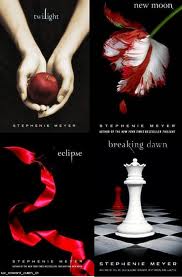
The Twilight books have been flooding into the secondary market recently, but I have not added these titles (New Moon, Eclipse, Breaking Dawn) to my selection of independent reads for students. While I would not censor a book a student wanted to read, there are some texts that are unnecessary in a classroom.

The Twilight series is popular with students without adding copies in the classroom

Fortunately, author Stephanie Meyer does not need to worry that my decision to exclude her books will damage her readership. In fact, my exclusion might even help the book’s cache.

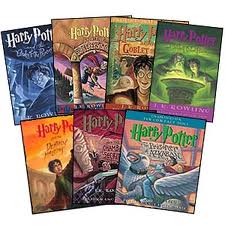
Simply put, there are some titles that have become so popular with my students, that I do not need to provide copies. For example, many students, elementary through high school, purchased their own copies of titles in JK Rowlings’ Harry Potter series. There is now a multitude of “well used” to “completely abused” copies of any one of the seven Potter books in the secondary market.

There are many Potter books in the used book market

The Harry Potter series was so heartily embraced and so well read by millions that I do not need to encourage these readers to read more about Harry. Similarly, students who began with Twilight went on to read New Moon, Eclipse and Breaking Dawn at their own expense.  Additionally, film releases for both Harry Potter and Twilight have kept these titles on best sellers lists, so used copies will continue to flood into the used book market.

Recently, several of my sophomore students were reading The Girl with the Dragon Tattoo, one of a series that is just starting to hit the secondary market. Again, I will not add this series of mysteries, but not for the same reason. The material in this series require  mature readers. However, if a student brought in a personal copy for independent reading, I would have no objection.

The Harry Potter and Twilight series are often stepping stones to other kinds of literature. I try to make the connections between Harry Potter and the epic adventures of other classic heroes who have been marked from birth: King Arthur, Theseus, and Achilles to name a few. I also try and make connections with Twilight, matching the book with the dark brooding romance between Heathcliff and Catherine in Emily Bronte’s Wuthering Heights rather than the more obvious vampire classic Dracula by Bram Stoker. In Eclipse, Bella Swan even borrows a line said by Catherine in Wuthering Heights in order to describe her love for the vampire Edward Cullen, “If all else perished, and he remained, I should still continue to be; and if all else remained, and he were annihilated, the Universe would turn to a mighty stranger.” Meyer knew Bronte had the ability to have her readers swooning!

While some titles need to be promoted in order to gain a reader’s attention, the Twilight and Harry Potter series need no help from me. I leave those books on the tables knowing they will hook readers on their own.