It’s official. Borders is liquidating. The company is closing 399 stores and laying off 10,700 people. The decision that has created a hole in the American literacy culture and economy happened so fast.

I will miss Borders bookstores. My reasons are selfish. There was a Borders store not far from the multi-cinema complex near my home. The proximity of the bookstore gave me an occasional excuse to kill 30 minutes reading while a family member would wait in lines for tickets or get to the movies for good seat. Sometimes after an early film, we would go to Borders for coffee or to extend the evening a little longer. Most times, however, we would go to Borders just to go to Borders to get books. We all loved the store.

Once inside, my credit card burn-rate would exceed the speed limit, but I would reason that since we were buying books, I could justify the expense. We bought many books at Borders-many, many books. There was always a tempting table of “2 for 1” books along with newly released hardcovers and paperbacks.

No more discounts at Borders mailed to e-mails addresses

There were coupons delivered to an e-mail address, and a Borders card allowed the holder to accrue discount points. Authors came to Borders to promote their books. The coffee shop served as a meeting place or reading place. There was a special section that held summer reading texts for local students. Our local Borders allowed students from the local high school to hold a poetry slam, and local charities held fundraisers by gift wrapping during the holidays.

When Borders announced the closing of my local branch, I knew that the steady stream of books that had been flooding my area of the state would slow down.  The increase in online book sales and e-books had pushed consumers to other venues for book purchases; the decade of leisurely browsing and choosing a book that ”looks interesting” came to an end.

A thank you hashtag on Twitter (#ThankUBorders) was created for people to tweet how they felt about the closing. Some of the comments included:
“So sad about Borders. Thank you so much to all the great booksellers for your support over the years.”
“I have many fond hours spent at Borders. I prayed there would be a different ending. Am thinking of 11k great employees.”
“Because bookstores are magical places, and the people who work there are kindred spirits.”
“You were my first bookseller and I am grateful for the chance you gave me to fall in love with the written world!”

Many of the used books I currently find in the secondary market are from Borders. Many donated used books still have the ISBN tag with a Borders’ name on the back or a “2 for 1” Borders’ discount label on the front. There will be fewer books in my area because of the store’s closing, and that will mean fewer books to add to my used book classrooms. For reasons selfish and unselfish, I will miss Borders.

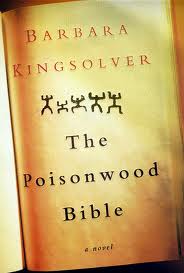
We now have enough copies of The Poisonwood Bible for several AP classes, and I have been warned that I am becoming dangerously close to a reality TV personality hoarding this text. At almost every sale, I pick up a few more copies.

I happen to love the book…all 560 pages of it, and that is the problem. 560 pages to the average teenager is 500 pages too many. The book was first published in 1998 and follows a missionary family who travels from Georgia to the Belgian Congo in 1959 during the height of the Cold War. Missionaries in the Congo? Kingsolver was way ahead of South Park’s musical creators of The Book of Mormon!

The other problem for most students with this text is Kingsolver’s use of multiple narrators: Rachel, Leah, Adah, Ruth May and their mother, Orleanna. Each daughter has a particular point-of-view of their attempt to “Save Africa for Jesus” ranging from the self-absorbed and shallow Rachel to the brilliant mathematician/linguist Adah and her dogmatic twin, Leah.

Someone placed the book on a list Best Page-Turners with Redeeming Social Value: “This Listopia is inspired by Nicholas D. Kristof’s “Best Beach Reading Ever” list, published by The New York Times, which includes great works of fiction with a social justice angle. He writes, ‘Summer reading often consists of mindless page-turners, equally riveting and vacuous. So as a public service I’m delighted to offer a list of mindful page-turners — so full of chase scenes, romance and cliffhangers that you don’t mind the redeeming social value.'” goodreads.com

I have amassed at least 50 copies of the paperback on a classroom shelf; a dozen more copies have been checked out for summer reading. Offering the book for summer reading will give me feedback on including the text next year. The students will keep dialectical journals (responding to quotes they select from the text), and I can review their notes about the plot, characters, and writing style.

560 pages! Daunting for students and teachers alike

The book currently sells at Amazon for $8.99. My total investment to date? Approximately $60.00 as opposed to the $539.40 the books would sell for new.

The book length is only matched by the number of themes, topics, allusions, literary devices, and clever word play used by Kingsolver. Her understanding of the post-colonial Africa wooed by the superpowers of the USA and USSR was an eye-opener for me. High school history for me ended sometime after the Civil War/Reconstruction. Similarly, I find that current high school history ends with a three day cursory treatment of the Vietnam War. 20th Century history-from 1950 to the present- is overlooked in schools today.

I am reminded of an episode from The Simpsons featuring students pouring out of the school ready to start summer vacation.
“Wait!” a teacher screams from the top of the stairs, “I forgot to tell you who won World War II…!”
The students stop their stampede for a moment while the teacher pauses before shouting, “We… WON!”
“YAY!” scream the students, streaming out of the building, chanting, “USA! USA!”

The failure of history classes to deal with recent history comically portrayed in Matt Groening’s scenerio is the reason to read The Poisonwood Bible. Fiction can make history very real, can make student readers more curious about a time or place, and can “sandpaper” their brains for understanding the past with a more critical lens. I am anxious about teaching The Poisonwood Bible because of the complexity of the politics,  but I believe the book is important enough to be included in a curriculum-as a core text or as an independent read.

While I am anxious about teaching the book, I have been banned from collecting more copies by members of my department…lest I be accused of hoarding!

There are always some concessions when a film is made based on a book rather than an original screenplay. A plot may be reduced to fit a film’s running time or plot altered to “please” an audience. Of course, there are exceptions of great adaptation of books to film: Margaret Mitchell’s Gone with the Wind, Larry McMurtry’s Lonesome Dove, and the 1946 version of of Charles Dickens’s Great Expectations. But there are also particularly heinous film versions of classic works of literature. Nathaniel Hawthorne’s The Scarlet Letter was released with Demi Moore as Hester Prynne in 1995, and Edith Wharton’s Ethan Frome was released with Liam Neeson in the title role in 1993. Both films included scenes that damage the integrity of the original work. Film versions of Mary Shelley’s Frankenstein starting in 1931 have brainwashed audiences into thinking The Monster cannot speak or has a square, green or bolted head. Other films have captured the spirit of a text, but renamed characters or rearranged events to the point of confusion such as the 1993 version featuring Daniel Day-Lewis in James Fenimore Cooper’s Last of Mohicans. There are students who watch these versions instead of reading, and they usually do poorly on quizzes or tests.

5.5 hours of viewing pleasure

Reduced to 2 hours of viewing

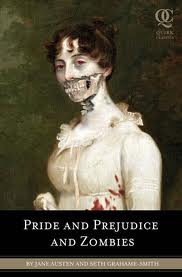
Zombies?? Not yet a movie; only a matter of time!

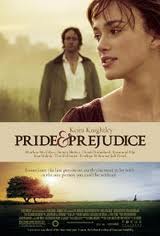
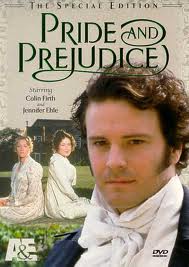
Students will always look for any “easy” way to complete an assignment and watching a film is certainly easy, but they cheat themselves of a wonderful reading experience. For example, there are many excellent versions of Jane Austen’s Pride and Prejudice. A student can commit to the 5.5 hours of the BBC 1995 mini-series starring Colin Firth and Jennifer Ehle or spend two hours watching the more recent 2005 film starring Keira Knightley and Matthew Macfadyen.Watching either film however, does not provide an appreciation for Austen’s language, her use of comic understatement. In the text, Elizabeth Bennet is confronted by her distant cousin, a Mr. Collins, who insists on proposing marriage. Despite her initial protestations, he relentlessly presses his case saying, “You may assure yourself that no ungenerous reproach shall ever pass my lips when we are married.” At that moment, Austen slips in the most hilarious one-sentence statement: “It was absolutely necessary to interrupt him now.” How cleverly Austen chose that word absolute: (adj)  not mixed or adulterated; pure, complete; outright; (noun) something that is free from any restriction or condition. Elizabeth does interrupts him…with comic genius.

When I want to add a popular contemporary novel, I do consider about how a film adaptation will impact student understanding. Should I invest department funds in this text when there is a well-publicized film available? When I introduced The Road by Cormac MacCarthy, there was no film. Once the film was released in 2009, however, I worried if students would have the same appreciation for the text. Thankfully, they do, thanks to a very bleak film production.

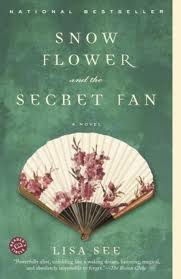
The book offered for independent reading

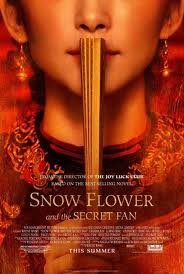
Snow Flow film; will students watch rather than read?

This past year, I accumulated 20 used copies of Lisa See’s Snow Flower and the Little Fan for my world literature curriculum. Several girls liked the story of friendship between women who have endured the Chinese custom of foot-binding, and a teachers’ book club also used the texts. The investment was $20-$30 rather than the retail cost $8.91/copy or $178.20 at Amazon. Unfortunately, the movie release is scheduled for this weekend, July 2011. I wonder the impact the film may have on my students. Will they read the book because of the film? Will they read the book despite the film? Will the film matter at all in their understanding?

Currently, classic novels are available as free downloads on the Internet (public domain), and in all likelihood, my department will not be purchasing new copies of the works of Jane Austen, Thomas Hardy, Upton Sinclair, Charlotte Bronte, or Stephen Crane. We will rely on the secondary market to provide copies for students who do not have electronic devices or who prefer reading a paper text. Teachers are painfully aware that there are films based on adaptations on the novels of these authors, but we hope to convince students that the films are no substitute for the original work. The message of the author is best understood in the written word. Absolutely.

My first exposure to Shakespeare was in fifth grade when a touring ensemble- from an early Joseph Papp company, I believe- came to my elementary school and performed two scenes from The Merchant of Venice.  I remember clearly  the casket scene where the suitors gamble on choosing the correct box in order to win Portia’s hand. The company performed in authentic Elizabethan style with sets limited to fabrics draped strategically, few props, and rich jeweled costumes. Minutes into the performance, I was hooked, I was in awe…. I was in love.

Two hours after returning from the Westport Book Sale on Saturday, I was delighted to find that I had won a pair of tickets for that night on the virtual ticket line to The Public Theatre’s production of Measure for Measure in Central Park. A successful book hunt AND tickets for Shakespeare? Wow! A white-knuckled ride into the city, and the coveted tickets were mine!

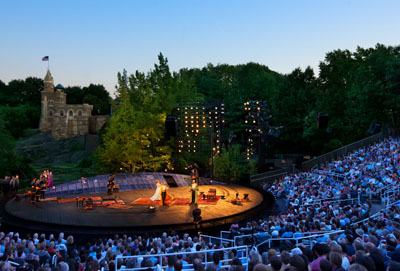
Shakespeare in the Park-The Delacorte Theater

There are only 1872 seats in the Delacorte Theater in Central Park, and most tickets are given away free the day of the performance. Unfortunately, there are usually several hundreds more people who wait in vain. Sharing “how I got my ticket” stories are great conversation starters while waiting for the show to begin. “I feel so guilty,” the man in front of me wailed, “I was the cut-off and the people behind me in line got nothing.” (Please note, he did not feel guilty enough to give them his tickets.)

On this warm summer evening, a diverse group of people of all ages, ethnicity, and economic status sat wholly engaged in the performance; reactions to the comedy or the complications of the play were genuine and spontaneous. All were caught up in the rhythm of the play’s ebb and flow, and the applause at the conclusion was thunderous. Again, I was hooked, I was in awe…. I was in love.

I doubt, however,  if many in the audience had read the play beforehand, which brings me to a dilemma I face as an English teacher. Is Shakespeare meant to be seen or to be read? I would not teach Measure for Measure in high school, but I do teach Macbeth, Romeo and Juliet, and Hamlet. I am most successful when I employ audio tapes of actors reading the lines, showing film clips of performances, or choosing scenes for students to act out themselevs. I do not hand out the text and say “read this.”

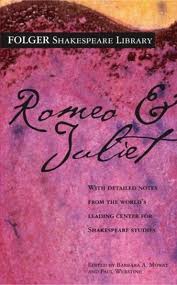
Folger's Text-$5.99 retailThe individual cost for Shakespeare texts is not terribly expensive. Mass market paperbacks of all Shakespeare plays are $5.99 at Amazon, and a whole class set will run about $600. We have several editions of each play because every year I toss more than a few overused copies into the trash. Now, there are technologies that are changing the classroom dynamic. I note that my students are choosing to use web sites such as Sparknotes and No-Fear Shakespeare to help them prepare for quizzes or tests. The site for E-notes provides an eText which contains embedded glossary and reader’s notes for the most popular plays. On E-notes, when a student sees a word or words underlined in red, a cursor reveals a word for the glossary or note entry. The use of iPads, iPods, and smart phones in the classroom is rapidly becoming a reality; students will be able to have the text delivered free to a device in an instant. But can these electronically enhanced texts enable students to enjoy Shakespeare? Are these devices really any different than paper texts? Not really.

Loving Shakespeare is all about the performance. I believe watching the staging, listening to the actors’ interpretation of the text, and discussing the director’s vision of any Shakespeare play is what creates the appreciation for the bard. Taking students to a live performance is the best way to recreate the original experience. Shakespeare’s audiences did not have to read the script to prepare for the play. Those lucky Elizabethans paid their pence and became caught up in the rhythm of a play’s ebb and flow. The way the crowd at The Delacorte Theatre did. The way I did in fifth grade.

So, with apologies to publishers,  I will not be buying any more new Shakespeare texts. I will allow students to download the electronic texts for free, and I will patch up our collection with a few used books at sales for students who want a book in hand. I will, however, rely on a performance, live or on film, to make students appreciate Shakespeare’s work, hopefully the way that the crowd appreciated Measure for Measure on a warm summer evening in Central Park in New York City some 400 years after the bard penned the script for performance, not publication.

As I anticipated, The Westport Book Sale offered the variety of texts I need to create the “book flood” in my classrooms. After two hours of “grazing” through three tents of books, I had another 10 bags of books to add to the department’s collections for grades 7-12. A quick breakdown of titles included:

Adding to mystery unit

Grades 7 & 8: Copies of The Giver by Lois Lowrey (6) , The Schwa Was Here by Neil Shusterman (2), and Stargirl by Jerry Spinelli (4).  All these are core texts. I also found a copy of the London Eye Mystery by Siobhan Dowd which is a great mystery for this age level. I am considering getting a set of 20 to add to our 8th grade mystery unit, but I would like some student feedback first.

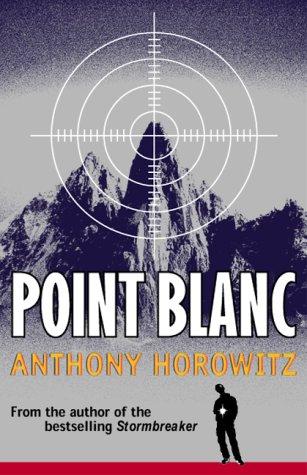
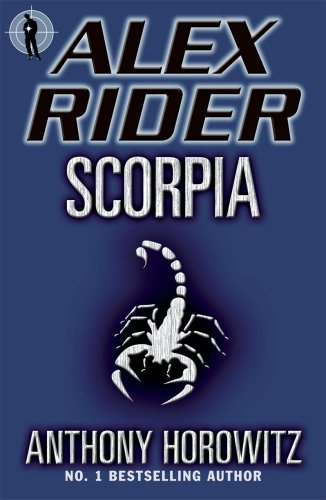
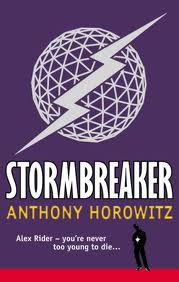
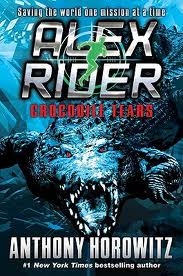
Grade 9: The curriculum for 9th grade is centered around independent reading and choice, but there are units devoted to Greek/Roman Mythology and Anglo-Saxon legends such as King Arthur. I did find a dozen assorted copies of The Lightning Thief, The Sea of Monsters and The Titan’s Curse all by Rick Riordan. While these books are a little below 9th grade level, they dovetail very nicely into the mythology units, and students who may have missed these books in middle school can now make connections to the gods and goddesses of ancient cultures. I also picked up a bagful (20+!) of Anthony Horowitz books: Point Blanc, Scorpia, Crocodile Tears, and Stormbreaker. Thank you to those avid Alex Rider fans!

Grade 10: Night by Elie Wiesel is a core text, as it is in most high schools, and I picked up 11 copies of this memoir. I added 14 almost new copies of Khaled Hosseini’s  The Kite Runner; we almost have 100 copies now for this core text for world literature.

A popular text for 10th grade boys

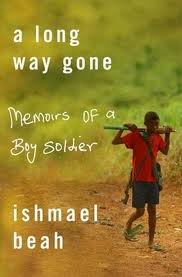
I found five copies of A Long Way Gone: Memoir of a Boy Soldier by Ishmael Beah.Many of my sophomore students, mostly boys, read this book as an independent read. When I asked them what was good about this book, several indicated the pace and action kept their interest. Perhaps the most important testimony came from a student who said the worst part of the book was, “that what happened to Ishmael was real.” Savings on this text ($7.20/paperback) alone was $31.00.

Grade 11: I found two brand new copies of Bury My Heart at Wounded Knee by Dee Brown. I was pleased to see this book re-released and I am planning on adding a few more copies to the Native American unit that starts the year. To complement this non-fiction classic, I located four copies of Michael Dorris’s Yellow Raft in Blue Water, a more contemporary view on Native American life.

Adding this to Memoir class

Adding this to Memoir class

Grade 12: The Memoir class is the easiest to find books for independent reading. I found two copies of It’s all over but the Shoutin‘ by Rick Bragg which came highly recommended. I also located more copies of Alice Sebold’s Lucky which is very popular with my female students. After today, I now have enough copies (50+) of our core text of The Glass Castle by Jeanette Walls, so other buyers will not have any more competition from me.

Will be a core Text in Journalism

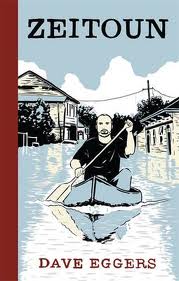
I found one copy of Dave Egger’s Zeitoun which will be a core text for Journalism in 2011. This amazing story follows Abdulrahman Zeitoun, a successful Syrian-born painting contractor, who stays in New Orleans after Hurricane Katrina. Eggers recounts Zeitoun’s journey through the city in acts of heroism, compassion, and tragedy in a riveting narrative. This text is always a “find” for me.

Other: I found five copies of Dava Sorbel’s Longitude, which I plan to share with some science class….not sure who will be the lucky group? The gentleman who tallied up my large order (Thank you, Dick L.?) asked if he could have the sixth copy I had found. I would have happily paid for that copy based on his service; tallying ten bags of books is serious work, but he was happy to have a copy to purchase on his own to give to his grandson. For the psychology teacher, I collected four copies of Deborah Tannen’s You Just Don’t Understand, and for social studies department, I located five copies of Founding Brothers by Joseph Ellis.

There was something for every reader at this book sale. The efficiency of the volunteers re-stacking the tables (always appreciated)  and those working the cashier’s tables made for a smooth event. The chairman of the sale, Mimi Greenlee, and her team of volunteers are to be credited for their efforts. Book dealer “return” bins, well-marked  sections for literary genres, and an express lane for smaller orders made the sale run efficiently. A tent full of Children’s Literature separated from the other genres this year was also appreciated; my biggest competitor here was an eleven year old girl with an armful of paperbacks, which is always a wonderful sight for a teacher.

Total cost for 10 bags of QUALITY TEXTS? $306.00 Several of these books retail for substantially more than $10.00 copy; I figure that my retail cost would have been over $3,000.00.

I felt like Julius Caesar: I came, I choose, I conquered!

 Mother-Load: A process in which mothers purchase books for their children, the children move up to the next reading level, the mothers load the discarded books into boxes, and donate those books to the Westport Public Library.

Not looking for a “Mother-load” of children’s books?  The Friends of the Westport Library Book Sale in Westport, CT, has plenty of discards from other members of the family as well. The sale is one of the biggest in the state, and one that I look forward to attending every summer. Last year, I was dizzy from the combined elements of book titles, literary genres, and heat; I loaded 12 boxes in the first hour!

The sale is held every July on the ground of the library (20 Jessup Road) under large tents. There are several cashier tables, and volume buyers can have a volunteer cashier work with them in the holding area. Parking is at a premium, but there is a loading area for buyers after checking out. You just need to be patient while people load up box loads!

Here is a very cute promotional video the Friends of the Westport Library prepared:

I will be blogging about my “finds” at the sale this year….stay tuned while I go and visit the Mother-Load!

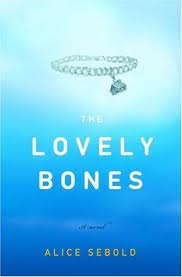
I could hardly breathe while reading the first chapters of The Lovely Bones by Alice Sebold. The novel was first published in 2002; the paperback was released in 2006, followed by a film release in 2010. The original cover of the novel features a charm bracelet centered against a calm, sky blue background, an image which belies the horror inside. The narrator, 14 year old Susie Salmon, calmly narrates how she was lured to an underground den by a neighbor where she was raped, murdered and then disembodied. The bulk of the novel focuses on her observing the effect this crime has on her family and friends from a distant setting – her personal Heaven. Sebold is a a victim of rape herself, an event she details in her memoir Lucky which was published in 1999. Her reading audience can trust her as a guide in confronting such acts of violence, in both fiction and non-fiction, which speaks to her power as a writer.

Pretty cover; frightening plot, but popular with students

Once I first heard the plot, I had no intention of reading the book, but other (adult) readers assured me that I once I got passed the murder (which was as gruesome and graphic as I feared), I would find comfort in the character of Susie. I note that many students, all girls, have a similar attitude. When they read The Lovely Bones, they do not focus on the horrible murder. Instead they share Susie’s curiosity of what is happening on Earth now that she is gone. What will happen to her parents? Her sister? Her friend Ruth? Will her murderer ever be discovered? These questions drive their interest. They are fascinated with the absent but “present-ness” of the main character. Susie is very self-aware; her observations are what make the tragic circumstances bearable.

There are always copies of The Lovely Bones at every used book sale, and I only pick the trade paperbacks with the original cover. The paperback had a re-release with the film with a less attractive cover featuring an ominous Stanley Tucci looking back at the young actress Saoirse Ronan.  That book is bargain priced at Amazon for $6.00. Sebold’s novel is one of a growing number of contemporary novels, adult and young adult, where the a deceased narrator observes or interacts with the living. She was not the first to use this technique, but I think she made this point of view commercially viable.

We offer The Lovely Bones at the high school level (grades 9 and up only) as an independent read; I do not think we will ever teach this book, but we have enough copies for a group discussion or book buddy read. The title was one of the first I began collecting in 2009 once I heard from enough students who thought others would like to read the book. We have a set of 20 copies now, enough for several more years of use by students.  While they may not be  upset by the novel’s opening, I am still squeamish whenever I pick up a copy  remembering how my heart raced at the story’s nightmarish beginning.


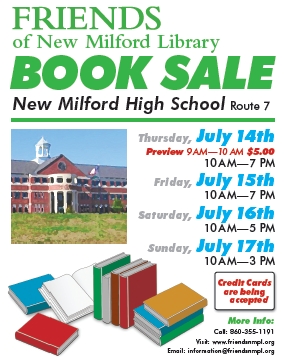
Book Sale flier 2011

New Milford Public Library  in New Milford, CT, stages its annual sale run by the Friends of the New Milford Library in the cafeteria of the New Milford High School, usually the middle of July. This library has a very dedicated set of volunteers who make this sale a very easy sale to attend. 

There is an “early bird” charge of $5.00 for buyers before 10:00 am, but the crowds were still very manageable even after there was no admission charge to enter. This summer, there were a  fair number of used book dealers, but everyone had plenty of room to negotiate through the aisles-even those buyers carrying large, overflowing bags or boxes. Book genres were clearly marked with signs on the tables: non-fiction mixed with paperbacks and hardcovers; fiction divided onto mass-market, trade and hardcover tables. There was a much needed holding area based on the honor system. Several cashiers tables allowed volunteers to check out large and express orders easily.

Last year, I found many biographies and books about animals on the non-fiction tables. Cultural anthropologists could have decided in 2010 that New Milford was a town concerned about the lives of people and their interactions with animals. This year, however, the table labelled Parent/Child Books was overflowing, which could lead one to determine that there must have been a recent baby boom and that animals are of little current interest.

The trade fiction book section was divided into boxes set on low platforms. The made the books easy to see, but required constant bending to pick out a text. The books were not organized by author or title, which slows me down as I try to quickly scan for familiar covers. Standing next to a used book dealer plopping books quickly into a box only heightens my anxiety. “Was that a copy of The Road he just put in his case?” I’ll wonder. “Well, there goes a copy of Girl, Interrupted!” I’ll sigh and move away to the next box. Such pressure resulted in my almost overlooking three copies of Toni Morrison’s The Bluest Eye on my first pass!

Found six nearly new copies!

The section of mass market fiction; romance, mystery, and science fiction, was more organized with author names clearly marked on boxes. There were also tables of hardcover which also were generally alphabetized-or grouped. Again, I wonder who buys all these James Patterson books?

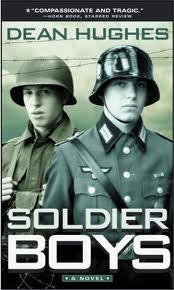
This year, the section for older children (YA), which was also on low floor pallets,  yielded six new or gently used copies of Dean Hughes’s Soldier Boys which is $6.99 at Amazon  that can be added to my War Units in Grades 10 or 11. The book follows two young soldiers an American and a German at the Battle of the Bulge. The reading level is grade 8, but there are always some low-level readers who like this book. To complement these, I found three copies of Sebastian Junger’s Fire, $8.15 at Amazon  on the non-fiction table; Fire is the more grade 11 appropriate text.Found two copies-this is an "untested" book

Other “finds” included two copies of Winter’s Bone by Daniel Woodrell at Amazon for $10.95 for the Coming of Age Unit. This harrowing adventure follows 16 year-old Ree Dolly through the Ozark Mountain territory of meth-labs and family land disputes. The book was recently made into a successful indie film centering on a very powerful female character. I have not “tested” this book with student groups, and I am interested in seeing how they like the book.

Will use in People in Conflict Unit for Grade 10

I also was happy to find three copies of The Bookseller of Kabul by Asne Seierstad at Amazon for $13.97 for my People in Conflict Unit in Grade 10, and three copies of Julia Alverez How the Garcia Girls Lost Their Accents at Amazon for $8.93  for an Immigration Unit we are planning for next year.

Total cost of all the 17 copies books mentioned? $157.03 retail at Amazon or $14.00 used.

All told, I spent $193.00 for seven very full bags of books.

I am familiar with the many of book titles taught at area high schools and New Milford is a neighboring school. I was happy to pick up replacements for some of the same texts that we teach(Frankenstein, Animal Farm, etc). The woman who checked out my order was an English teacher who has taken time off for a family. She was excited about the selection and the number of titles I was able to get, “These are so interesting, and so much better than some classics in high school,” she claimed, “I would love to see how they [students] like them!” I am hoping the students will share her enthusiasm, but I do recognize that we English teachers get very excited about all books! A kindred soul.

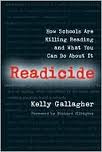
Readicide is defined as, “the systematic killing of the love of reading, often exacerbated by the inane, mind-numbing practices often found in schools.” I fear I was a Readicide practitioner in my early years of teaching, but I am now trying to recover and adopt practices suggested in Kelly Gallagher’s book Readicide.

Gallagher points to a crisis in America’s schools that we experience in our classrooms at Wamogo.  Our students do not read well; our test scores (recently released) are low. My English Department members hear all the time, “I hate to read” or “This book is too hard” or “I don’t have time.”

Readicide advocates for student choice in reading

Readicide (160 pages) was published by Stenhouse Publishers in 2009 and has been influential in many discussion on educational reform. Gallagher recognizes several factors have contributed to the reading crisis. One of these factors he discusses under the heading “There is a Dearth of Interesting Reading Materials in Our Schools.” In this section, Gallagher poses the following questions:|

  • Shouldn’t schools be the places where students interact with interesting books?
  • Shouldn’t the faculty have on-going, laser-like commitment to put good books in our students’ hands?
  • Shouldn’t this be a front-burner issue at all times?

Gallagher advocates for interesting materials saying, “Let me be clear: if we have any chance at developing a reading habit in our students, they must be immersed in a K-12 ‘book flood’-a term coined by researcher Warwick Elley (1991). Students must have ready access to a wide range of reading materials. This goal should be the priority of every faculty….We must start all discussions about the state of reading on our campuses with a simple, direct question: do our students have ample access to high interest reading-materials?”

I know that the increase of titles I have purchased in the secondary market is a step in the right direction. In two years, English Department members have added over 200 titles to our collection; some in small sets of three copies and other sets with as many as 60 copies.  We will continue to teach “core texts”, but we offer independent reading books as well. We organized titles by theme and now let a student choose which book he or she would like to read. We have noted that our students are more enthused -and therefore more likely to finish – when they select a text. We now organize literature circles around student book choice….and we are offering more and more choice in a cost-effective way by using used books. We are changing how we teach and what we teach in order to stop the practice of readicide. We hope that others will too!

Student choice is the driving force behind purchasing used books, and we (the junior English teacher and I) just finished loading in the 800+ books purchased at the Newtown, CT, and Stockbridge, MA, book sales into the closet we use as a book room. (They certainly FELT like 800 books!) The room is conveniently (?) located behind a large bathroom, and teachers must patiently wait for us to leave when we rummage for texts during the school year. There are shelves along the walls and a set of two mobile (and very unstable) wooden rolling shelf units. We have successfully expanded our holdings enough in one year to crowd out all other groups using the room as storage.

Since the books I am purchasing average $1.00 in cost, I have the ability to experiment with texts for independent reading. Before I started purchasing used books, I would spend a great deal of time researching a book, looking for the best price, and anxiously await complaints from students (“…this is the worst book EVER!”) or teachers (“…does not work in this unit…”). I have had my successes in The Things They Carried and The Road; I have had few takers with Nectar in a Sieve. When new trade paperbacks average $8/copy from discount booksellers, I have concerns about committing $240.00 of the department’s money for 30 copies of an untested title. However,  at $1.00/text, or $30 for a class set, I can afford to make a few mistakes in determining what students might read.

One required text

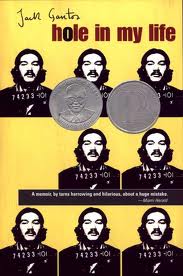
As I have shopped, I have been adding to the Memoir elective that runs during the fall semester for 12th grade students. Students are assigned two core texts, one of which is A Hole in My Life by Jack Gantos but this title is never available in used book sales.

One Required Text

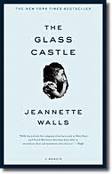
The other assigned text is The Glass Castle by Jeanette Walls, and there are usually several used copies at each book sale. Students will have to choose at least two other memoirs to read independently during the course as well as write an abbreviated  memoir of their own.

Seniors are 17-18 years old, so I do not have the same concerns about censorship due to topic or language. Since independent reading is a matter of choice, I am comfortable offering some of the more “mature” texts. This year, there are several new titles I will be offering to students as independent choice books this fall since I have found 5-6 copies of each of the following:

New option for Memoir Class

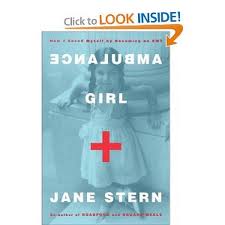
Ambulance Girl by Jane Stern-$11.16/paperback at Amazon: “Ambulance Girlis the absorbing true story of how and why Jane Stern, a depressed and anxious borderline agoraphobic, decides to become an Emergency Medical Technician.” ($55.80 for 5 new copies versus $5 for 5 used copies)

New Option for Memoir Class

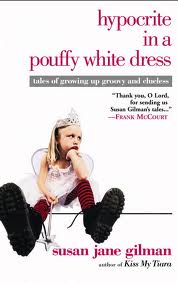
Hypocrite in a Pouffy White Dress by Susan Jane Gilman – $11.19/paperback at Amazon: “Gilman has a gift for showing the humor in the ordinary. Her memoir takes readers from her childhood in the late 1960s and early ’70s through adulthood and marriage.” ($55.95 for 5 new copies versus $5 for 5 used copies)

New Option for Memoir class

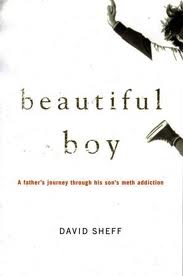
Beautiful Boy by David Sheff- $9.60/paperback at Amazon: “Sheff chronicles his son’s downward spiral into addiction and the impact on him and his family. A bright, capable teenager, Nic began trying mind- and mood-altering substances when he was 17. In months, use became abuse, then abuse became addiction.”
($48.00 for 5 new copies versus $5 for 5 used copies)

Total savings of including offering used titles versus new? $144.75

These new titles will be placed alongside the other titles I have already collected in the used book market including:

Lucky by Alice Sebold
Lost in Place and Iron and Silk by Mark Salzman
Running with Scissors by Augusten Burroughs
Zippy by Haven Kimmel
This Boy’s Life by Tobias Wolff
The Liar’s Club by Mary Karr
A Million Little Pieces by James Frey (Yes, I know….a discredited memoir, but some students like this gritty story)
The Tender Bar by J. R. Moehringer

The other book used during the course is Angela’s Ashes by Frank McCourt. There are already 60 copies in the bookroom that were purchased new. I could always add extra copies because there are always copies of this title on used book tables and shelves. Students are also free to choose another memoir from the school library if they want.

I give students some time to choose a book, so I need to have copies available for them to try. When a student lingers over a text on the shelf, I’ll say, “Try it…you might like it!”