What came first…the NAEP Chicken or the CCSS Egg?
Screenshot 2016-03-29 10.37.46First, let’s define terms:

The National Assessment of Educational Progress (NAEP) is the “largest nationally representative and continuing assessment of what America’s students know and can do in various subject areas.”

The Common Core State Standards (CCSS) are “a set of goals and expectations for the knowledge and skills students need in English language arts and mathematics at each grade level.”

Back in 1992 and through 2007, the test reading framework for the NAEP centered on three broadly defined genres for assessment content: literary, informational, and document. By 2009, however, the NAEP was revised to offer eight defined genres of assessment content, part of a larger shift to separate reading content into distinct categories.  Of the eight genres in the 2009 reading frameworks, reading content was categorized into more specific forms of nonfiction: literary nonfiction; informational text; exposition; argumentation and persuasive text; and procedural text and documents. There was fiction included on the 2009 test along with selections of poetry, some of which could also be categorized as fiction.

Before 2009, a nonfiction selection might fall into any one of the broadly defined genre categories. After 2009, 5/8 of the NAEP or 63% of the reading frameworks on the NAEP test were in well defined sub-sets of nonfiction.

Now consider, while the NAEP was being revised, in 2009 the Common Core State Standards (CCSS) were in development. The CCSS designers for literacy placed an emphasis on complex informational texts (nonfiction) stating:

“Most of the required reading in college and workforce training programs is informational in structure and challenging in content; postsecondary education programs typically provide students with both a higher volume of such reading than is generally required in K-12 schools and comparatively little scaffolding.”

These designers were pushing to expand reading beyond the fiction and literary analysis that traditionally dominated the ELA classes, particularly at the high school level. This was an effort to include reading in other content areas as necessary for the post-secondary experience. As a result, there were standards developed for literacy in grades 6-12 in History/Social Studies, Science, & Technical Subjects

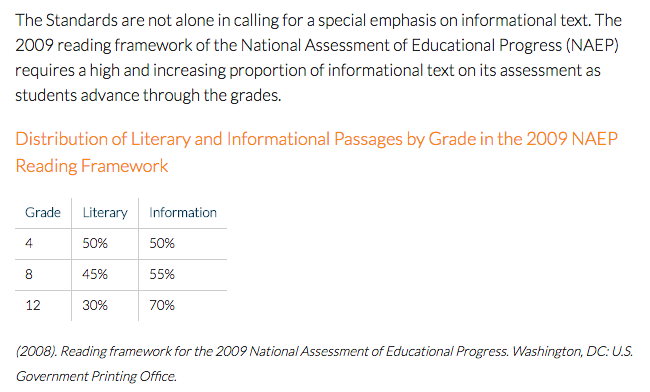
By 2010, 42 states had adopted the Common Core standards  and began revising curriculum to align with  the The Key Shifts of the CCSS and reducing fiction from being 50% of a student’s reading diet in 4th grade to 30% of the reading diet of a graduating senior.

The connection between NAEP and the CCSS was evident, and the recommendations in the literacy standards of the Common Core called attention to this connection:
Screen Shot 2016-03-28 at 7.51.04 PM

Six Years Later: The Rise of NonFiction

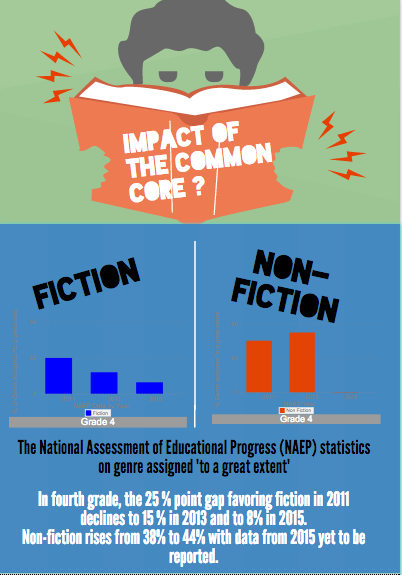
Not surprisingly, six years later, one of the anecdotal findings released from the 2015 NAEP is the increase in nonfiction assigned by teachers in both grades 4 & 8 . This  information came from a voluntary survey where teachers could select the genre they emphasized in class “to a great extent.”

In 2015, fourth grade teachers who had previously created a 25% point gap favoring fiction over nonfiction in 2011, led the reduction of fiction to 15%  in 2013 and to single digit 8% in 2015.

Similarly, in eighth grade, the 34% preference for emphasizing fiction declined to 24% in 2013, and to 16% in 2015.
Screenshot 2016-03-25 17.06.47

The Egg Hatches…and It Looks a Little Different

The truth is, all the emphasis on increasing nonfiction in schools at the expense of fiction has had an positive impact on the genre. An article in the October issue Publisher’s Weekly Moment of Truth: Trends in Nonfiction for Young Readers by Sophie McNeill offered comments from bookstore owners and librarians about the increased interest in factual prose:

Suzanna Hermans of Oblong Books & Music in Rhinebeck, New York who says,

“Common Core has raised awareness of kids’ nonfiction. We are seeing parents and teachers talking about it differently in home and at school.”

Sharon Grover, head of youth services at Hedberg Public Library in Janesville, Wisconsin, adds:

“Nonfiction has really improved in recent years. Books are more readable, with more pictures and less straight recitation of facts. Kids really appreciate that, since they have become used to reading websites and apps.”

The article also referred to the 21st Century Children’s Nonfiction Conference (2014) which advertised its aim “to display the verve and capabilities of nonfiction, and to show that it can be just as creative as fiction.”

Creative?
Verve?

All this added attention to increasing nonfiction appears having an impact on the genre itself, not only in the in quantity produced but also in the characteristics of nonfiction itself. While the nonfiction genre is generally understood to be based on real events, a statement by the Newbery Award winning children’s nonfiction author Russell Freedman seems to blur those clear lines that the NAEP and Common Core have tried to separate as distinct. Freedman has stated:

“A nonfiction writer is a storyteller who has sworn an oath to tell the truth.”

Note the word storyteller?
Can truth be that objective?

Sounds a little like non-fiction is borrowing a little from the fiction genre playbook.

Eggs and Evolution

Whether it began with the the NAEP Chicken or the CCSS egg, the pressure to emphasize nonfiction is like any other evolutionary force in nature. While the Common Core has fallen out of favor with many states, with at least 12 states introducing legislation to repeal the CCSS standards outright, the nonfiction genre is growing and responding and adapting under the current favorable conditions.

The reduction of fiction in favor of more readable nonfiction in grades 4 & 8, as evidenced by the NAEP survey, continues. The evolution of the nonfiction genre may increase readership as well, especially if engaging texts increase interest in reading in the content areas of history, social studies, science and the technical subject areas.

Today’s educators may break a few more fictional eggs, but the end result could be a better omelet.

This Sunday’s end paper for the New York Times Magazine on 2/28/16 presented the latest in the millennial generation’s dream jobs list. The results were aggregated from a 2015 survey organized by the National Society of High School Scholars (NSHSS).

The article, The New Dream Jobs was organized by  by Jenna Wortham and subtitled “What a survey of millennials might tell us about the workplaces of the future.” The survey results were described as a “scattershot” that “offer a glimpse into the ambitions of the millennial generation.”

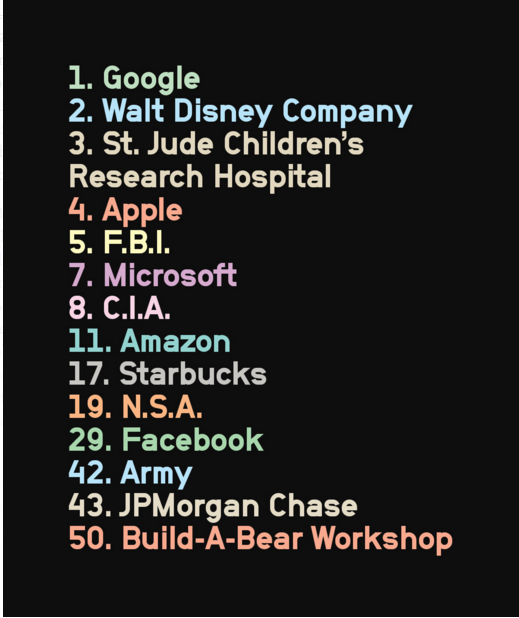
The 18,000 participants (high school students, college students, and young professionals) ages 15-29, parsed through a list of more than 200 companies before selecting Google as their top choice. The Walt Disney Company (with an appropriate song lyric, “a dream is a wish your heart makes”) came in second, and St Jude’s Hospital that pioneers research and treatments for kids with cancer and other life-threatening diseases came in third.

NYTimes graphic on Dream Jobs

NYTimes graphic on Dream Jobs; Illustration by JAMES GRAHAM

The factors that were important to students included employee welfare, flexible scheduling, and a sense of purpose. 89% of the respondents indicated that their dream jobs could be an opportunity to gain job skills. They also expressed their highest interest in medicine and health related and STEM (Science, Technology, Engineering, and Math) focused fields (40%), technology/engineering (21%), science (28%), and arts/entertainment/media (20%).

The exceptionally high level of interest in the sciences may be in part due to efforts over the past several years to engage female students in STEM related activities, noting that there was a disproportionate number (75%) of the respondents were female students. The was, however, a greater diversity in respondent ethnicity: Caucasian 38%, Latino 18%, African-American 21%, Asian 12%.

While there were 200 companies offered in the survey for selection, there were also some (traditional) hometown favorites. Respondents selected Local Hospital at #6, Local Police Department at #53, and Local Fire Department at #90.

What about Education as a Choice?

What is surprising is that the field of education did not have a Local Public School as an option for respondents. Respondents could choose to be a doctor, fireman, police officer….but not a teacher? Instead, what was offered for the education option was the organization Teach for America.  While many public school systems require educational degrees, the Teach for America promotion on its website states:

“A degree in education isn’t a prerequisite for you to apply to the corps. However, nearly all corps members must receive a state-issued teaching credential, certificate, license, or permit to be hired by a school and must be considered “highly qualified” under federal law.”

What do students who have attended or plan to attend a four year college for education, understand about Teach for America as a career choice? “Highly qualified” for Teach for America can be the “rigorous summer training program and extensive coaching”, a very different training than college coursework (undergraduate or graduate) in instruction.  When the NSHSS  offers Teach for America on a list of 200 companies, they communicate that an education is associated with a “company” rather than a profession. Based on the data, it should be noted that Teach for America  fallen in popularity from #26 on the Dream Job list in 2014 to #34 this year.

Irony in Dream Job List

The irony is, that without the choice of education as a Dream Job, many of the dream jobs on the list would be unattainable. If education as a profession is not a choice represented on this list (as police, firemen careers are represented) a problem is created for all future lists.

For example, without recruiting best and brightest of scientists to the Dream Job of science teachers, students will not be ready for the medicine and health related careers that they want as Dream Jobs. Similarly, learning to communicate effectively in media jobs comes from attracting excellent English Language Arts teachers, while artistic talents are honed by bringing the finest in fine arts teachers (music, art, drama, etc) to classrooms K-12. In short, this year’s interest in STEM comes from teachers who have communicated a passion for these subject so much, that their students want to continue in that particular field as a Dream Job.

Finally, if one of the qualities that millennials are looking for in a career is the ability to work on a team (40%), then a choice for education is a choice for a Dream Job. Educators know how to work collaboratively as a team: in a district, in a school, in a class. And, of course, educators are the ones who train students to work as a team as well.

On the NSHSS 2015 survey on Dream Jobs, a choice of the F.B.I. (#5)  beat out the choice of the National Security Administration (#19). According to the survey, students would rather build up the military by selecting the Army (#42) as a career over Building a Bear (#50)…but note, without educators, building the skills for a Dream Job would be only a dream.

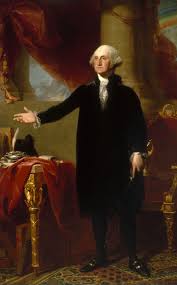
My life-long admiration for George Washington has been increasing exponentially.GW speech

This past summer, I finished the book The Quartet: Orchestrating the Second American Revolution, 1783-1789  by Joseph Ellis. His narrative centers on the four individuals brought the confederation of states together into a nation during the 1787 Constitutional Convention:  Alexander Hamilton, John Jay, James Madison and, most important, George Washington.

In recounting how Hamilton and Madison prepared the groundwork for the Constitutional Convention, Ellis details how they strategized and recruited Washington to preside over the Convention.  Both knew that Washington’s reputation and his relationship with the delegates to the Convention was critical to its success. They knew that of the 55 delegates who attended the Constitutional Convention, at least 29 had served in the Continental forces, most of them in positions of command. In The Quartet, Ellis acknowledges that Washington’s military leadership had been proven during the American Revolution, but he also provides another example of Washington’s deft touch at command off the battlefield.

What I Did Not Know About the Newburgh Conspiracy:

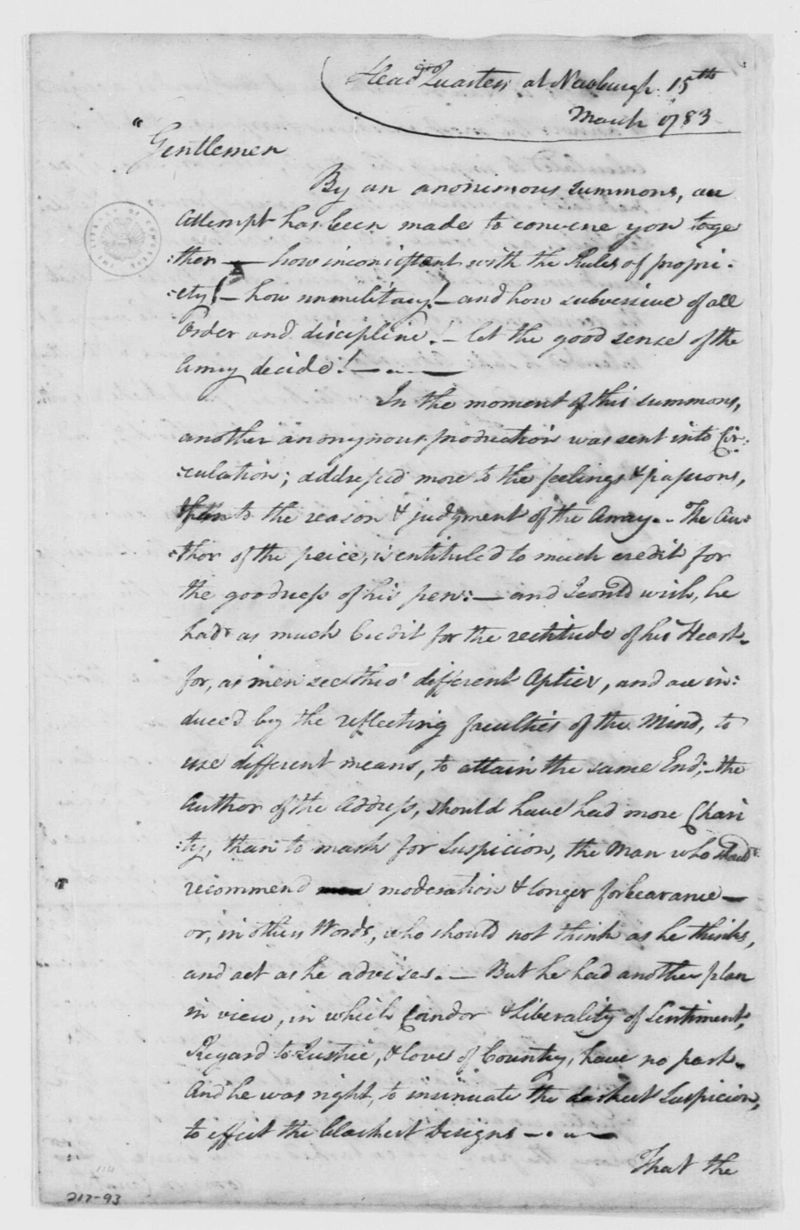
This amazing event Ellis relates deals with an uprising in Newburgh, New York, in March of 1783 led by Continental Army officers, that nearly brought the newly liberated country to a halt. This incident, known as the Newburgh Conspiracy, developed when the unpaid officers circulated an anonymous letter that suggested officers should riot in New York City, a dangerous challenge to the authority of the Confederation Congress. When Washington learned about the letter, he expressed his objections to the “disorderly” and “irregular” nature of the officers’ meeting. He sent word that he would meet with them on 15th.

Once he arrived in Newburgh, Washington delivered a speech  during which he declared his convictions that the entire war had been about a fundamental principle. He asked the officers in attendance about the letter being circulated::

“My God! What can this writer have in view, by recommending such measures? Can he be a friend to the Army? Can he be a friend to this Country? Rather, is he not an insidious Foe? Some Emissary, perhaps from New York, plotting the ruin of both, by sowing the seeds of discord and separation between the Civil and Military powers of the Continent?”

800px-Newburgh_AddressIn his speech, Washington recognized their frustration, but he also expressed his belief that Congress would do the army “complete justice” and eventually pay the soldiers:

“But, like all other large Bodies, where there is a variety of different Interests to reconcile, their deliberations are slow.”

The officers in attendance respected Washington. They had counted on his sympathies, and they were quickly humbled by his unwavering commitment to the nation.

But then came that moment…. That moment when Washington changed the course of events. After reading his own speech, Washington then attempted to tried to read a letter from a Congressman from Virginia that supported the officers’ demands. According to Ellis, Washington fumbled a little in reading the opening words of this letter.

He took out a pair of spectacles.

He wiped those spectacles, and stated:

Gentlemen, you will permit me to put on my spectacles, for I have not only grown gray, but almost blind in the service of my country.”

Ellis notes that at Washington’s  words, many of his officers openly wept, “…they remembered how much Washington had endured alongside them.”

With this simple gesture, the wiping of a pair of spectacles, and his own pledge of dedication to the fledgling nation, Washington ended the Newburgh Conspiracy. In that moment he demonstrated both the strength of a Founding Father, and the psychological wiles of a Founding Mother…guilt included.

In The Quartet, Ellis confirms Washington’s civic virtue, his lack of personal ambition, and his modesty. He portrays Washington as without peer. Four years after the Newburgh incident, Washington presided over the Constitutional Convention. When he was elected president, he received the support of each of the 69 participating electors.

Ellis reminds us that Washington is a true Founding Father…and a parent who know that guilt works, especially with unruly children!


George Washington… poet.

Poet?

Yes, I know.

The descriptor that follows George Washington is usually something like:

….statesman.
….leader.
….patriot.
….father of our country.

While poet is not a word usually used to describe Washington, a visit to an exhibition at the Wadsworth Atheneum Museum of Art in Hartford, Connecticut, suggests Washington was gifted in expressing his romantic sentiments through verse.

The exhibit titled Sound & Sense: Poetic Musings in American Art (November 14, 2015 – April 17, 2016). The installation

“…explores the connections between American poetry and painting, sculpture, and decorative arts from the Wadsworth Atheneum Museum of Art. The exhibition presents a diverse landscape of masterpieces from the museum’s collection that incorporate poetic inscriptions in their composition or have direct relationships to America’s rich poetic traditions….”

In the exhibition, a painting by Rockwell Kent and sculpture by Daniel Chester French are paired (predictably) with verses by Robert Frost and Walt Whitman. The walls are painted a soft grey with generous space allotted between each object and its curated verse. The space allows the viewer to appreciate each new composition of word and art.

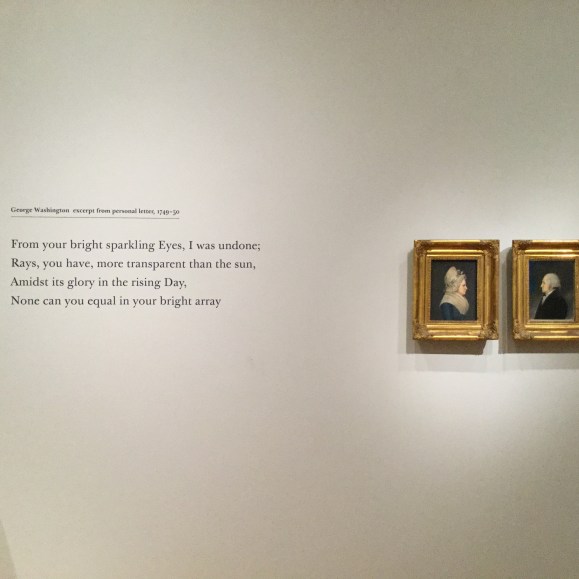
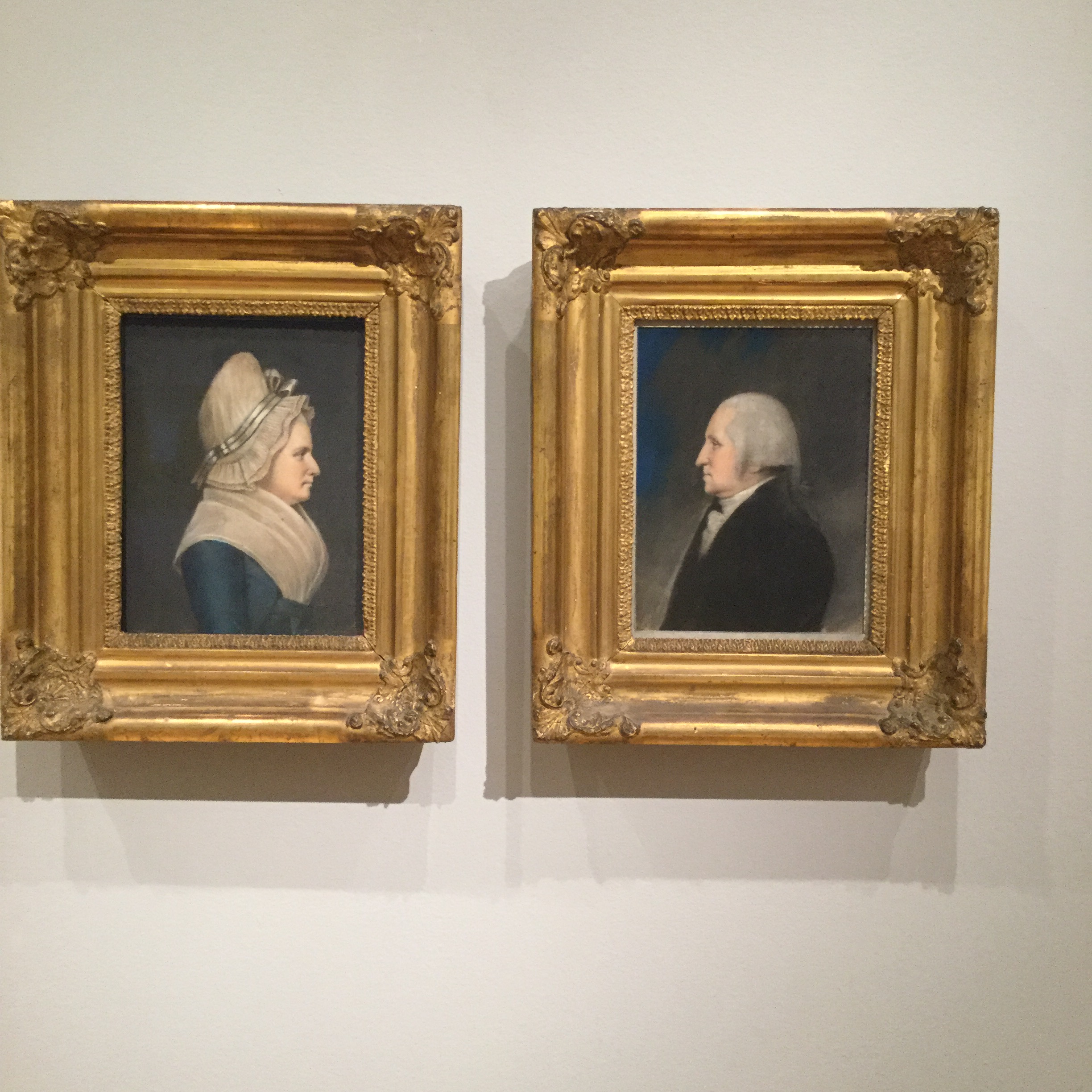
On one wall, the portraits of Martha (left) and George Washington (right) are placed so they appear to be gazing at each other. Moreover, at first glance, the poem appears to be a a expression of George’s love for Martha. However, the note above Washington’s verse explains the sentiment was taken from a personal letter 1749-50, nine years before he married Martha. IMG_0028


The verse placed on the wall reads:

From your sparkling Eyes, I was undone;
Rays you have, more powerful than the sun,
Amidst its glory in the rising Day
None can you equal in your bright array

The text next to the portraits -painted by James Sharples (1798)- explains that at the time the letter was written, Washington was a “lovesick teenager” who “penned a passionate sentimental verse to an unknown maiden” before he served as Commander-in-Chief of the Continental Army.

Historians suggest that young Washington had crushed on several young women including Sally Fairfax, the wife of a friend. Regardless, the evidence that Washington had dabbled in romantic poetry in addition to the genres of letter-writing and speeches, speaks to his early comfort with expressing himself with the written word.

Granted, the comparison of the maiden in question with the sun is not terribly original. Shakespeare used the comparison in a more surprising manner when he began Sonnet 130 with the line

My mistress’ eyes are nothing like the sun;

But Washington’s conceit, or extended metaphor, does reveal his sophistication in convincing the maiden the depth and sincerity of his affections.

IMG_0026

Pastels on paper; James Sharples (1798) bequest of Daniel Wadsworth; property of Wadsworth Atheneum

On January 6, 1759, Washington, age 27, married the wealthy widow Martha Dandridge Custis, age 28 years old. According to historians, their marriage was successful, and the union increased Washington’s property holdings and social standing. He acquired a portion of the Custis estate upon his marriage, worth about $100,000 at the time. Although he and Martha never had children of their own, he cared for Martha’s two children from her previous marriage.

On this extended weekend (2/13-2/15/16) , one that combines Valentine’s Day with President’s Day, we have yet one more reason to celebrate George Washington, our first President, and our first Poet-in-Chief.

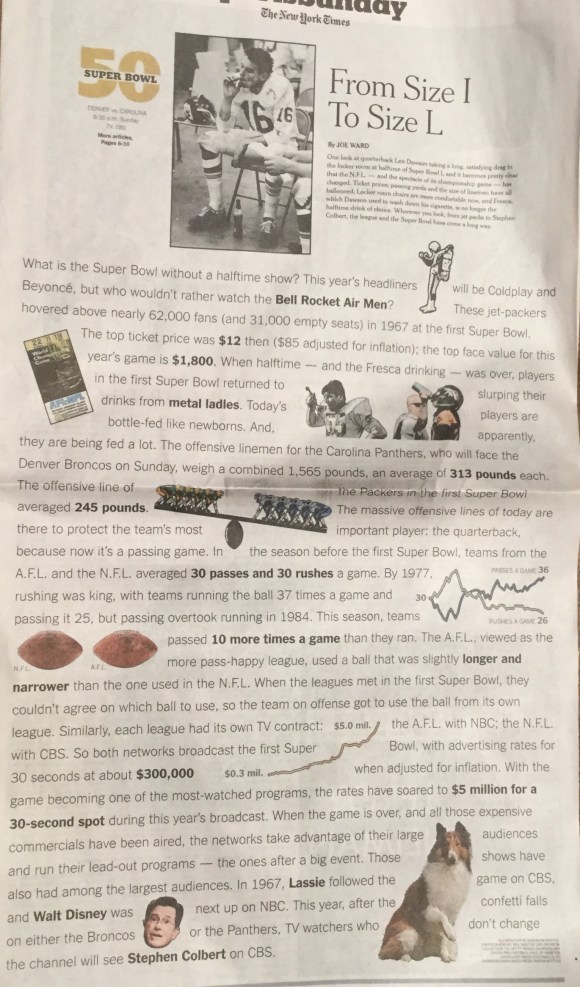
The NY Times Sports Sunday Preview  by Joe Ward on 2/7/16 for Super Bowl 50 was part rebus, part infographic and wholly adaptable for a model lesson on annotating text for students in middle or high school. The article charted the growth of the Super Bowl from different elements: tickets, football players, and attendance. Cultural icons from the entertainment industry associated with this sports cultural icon are included. Here is the model for a lesson to increase a student’s background knowledge on a topic (preferably chosen and not assigned).

NYTimes Sports Sunday

Illustration by Sam Manchester; Photographs by: Bill Ray/The LIFE Premium Collection, via Getty Images (Dawson and ladle); Pro Football Hall of Fame, via Associated Press (footballs); Ed Andrieski/Associated Press (water bottle)


There is the cryptic title, Size I to Size L, that requires that students understand Roman Numerals.

There is the quarterback Len Dawson of the Kansas City Chiefs smoking a cigarette during half-time in the locker room, a picture that requires understanding what was acceptable before the  the Public Health Cigarette Smoking Act, banned the advertising of cigarettes January 2, 1971.

There are the references that can drive student research into the Bell Rocket Air Men, the dog Lassie star of film and TV, and the changes in size of the American football (inflated or deflated arguments, notwithstanding).

The page dedicated to Super Bowl 50 is a model for students to take any informational text and “annotate” by adding pictures, just as the editors added the picture of the 1st Super Bowl ticket ($12.00).

There can be cross-disciplinary links by having students use calculations as charts, just as the editors calculated the price increases in ticket sales and in advertisements, and the increase in player weight.

Students could also embed links within the text (as I have done) to their research as part of the Common Core Writing Standards:

CCSS.ELA-LITERACY.CCRA.W.6
Use technology, including the Internet, to produce and publish writing and to interact and collaborate with others.

Finally, teachers can teach a lesson or two on how to correctly cite evidence used in their research, or how to use a citation generator:

Ward, Joe. “Size I to Size L.” New York Times. 7 Feb. 2016. Web. 8 Feb. 2016.

Teachers can use the page as a model for other topics of inquiry.

Need suggestions? Here are some “starters” to try with students:

Students could use different forms of software to create their informational text graphic; the Google suite of software (Docs, Drawing, etc.) is easy to use to create a PDF document. Students can experiment with different fonts to mimic the NYTimes fonts on the model front page. (FYI: NYTimes fonts changed changed to Georgia, as many people find easier to read wide print. They  use Arial as the sans serif font.)

Finally, engaging students in authentic writing prompts like this one from the NYTimes is inquiry based learning that is student-directed and can be linked to John Dewey’s philosophy that education begins with the curiosity of the learner with many of these characteristics:

  • Student voice and choice
  • Strategic thinking
  • Authentic investigations
  • Student responsibility
  • Student as knowledge creator
  • Cross-disciplinary studies
  • Multiple resources
  • Multimodal learning
  • Engaging in a discipline
  • Real purpose and audience
  • Authentic model

A model lesson, ripped (quite literally) from the front page!

Wednesday night, January 13. 82nd Street branch of Barnes and Noble Booksellers, NYC:

After a full morning of delivering professional development to the K-12 grade literacy team combined with an afternoon working with 6th grade teachers, I was getting my literary reward. I was sitting in the second row at an author event, listening to the writer Colum McCann (Thirteen Ways of Looking, Let the Great World Spin) interview the writer Elizabeth Strout (Abide with Me, Amy and Isabelle).

"There are writers that leave porous holes [in their works] with air pockets for the reader," said Colum McCann, introducing Elizabeth Strout, whose novel I am Lucy Barton was recently released. "She whispers, 'trust me I m going to take you somewhere' and when we get there..she has told me secrets."

“There are writers that leave porous holes [in their works] with air pockets for the reader,” said Colum McCann, introducing Elizabeth Strout, whose novel I am Lucy Barton was recently released. “She whispers, ‘trust me I m going to take you somewhere’ and when we get there..she has told me secrets.”

McCann was interviewing Strout about her latest novel I am Lucy Barton and it was obvious that they both were happy to be having this intimate conversation in a room packed with their fan base.

I slid into a seat saved by my loyal friend Catherine-traveling  2 hours and 40 minutes after the aforementioned teacher PD- to hear McCann begin the interview with the question:

“Elizabeth, are you happy?”

“Yes,” replied Strout, and for a brief and worrisome moment it seemed as if the interview would end with that response, but McCann pushed a little more on the relationship writers have with their readers….and proved to be charmingly deft at teasing out ideas:

  • On writing a narrative: (McCann)“There is a agreement that the writer will tell you some thing you sort of knew… you knew that you sort of knew, but now you know it.”

  • On telling secrets:( McCann) “Any good story teller is saying to the reader come with me, and I’ll tell you something….an intimacy.”

  • On writing about a writer: (Strout) “I don’t know how I do what I do, that’s why writers are boring…”

  • On the process of writing: (Strout) “We just don’t know what we are doing…but I know who is charge.”

  • On how we know we are writers: (McCann) “I don’t think what we know what we are going to do…until we do it it’s only when people tell us what we’ve done that we know what we have done.”

As I listened, I thought of how all the effort I had expended that afternoon (from train, to shuttle, to subway, and run) had been worth it. So many of these statements by contemporary authors might seem oddly disconcerting for middle and high school students, and I began to wonder what was the best way to share what they were saying.

Teachers know that many students are convinced that novels spring, “Athena-like”, fully-formed from the mind of the author.
There is little regard for craft. The idea that authors say that they “don’t know,”and are waiting to hear from readers to know what their writing means strains credulity.

Paradoxically, many of these same students also believe that some readers -or at least all English teachers-make too much of what the author meant: too much of the symbols and motifs and themes in literature. They are quick to contend that maybe the author “did not know” and just wrote without a plan. They reject the notion of craft.

The conversation I was hearing suggested that that the relationship between a writer and the student does not need the English Teacher filter…and that teachers need to get out of the way. Whether or not students will find it…author’s craft is there.

But, I digress…and so did they.

Strout spoke of the experience of having her book Olive Kitteridge turned into a film:

McCann: “Directors come and actors come….and they put a language on what you have done…is that odd…? Do you think, Like T.S. Eliot That’s not what I meant at all?”

Strout: “No…they did a wonderful job. When I saw the character Henry, I thought,’I know that Henry…I made that Henry…'”

McCann: “And are there Lucy Barton’s walking about?”

Strout: “Sweetie…She’s fictional.”

Fiction aside, Strout commented on how she intentionally writes about people struggling with an real obstacle…and one real obstacle she includes is class.

“How do people fit into the world?” she asked. “I like to write about class…The poverty that does not let people belong to a community. They exist more now; They are hungry. So much of our literature does not want to talk about poverty.”

Her sentiment, I suspect, is what initially frustrates students when they complain about the steady diet of what they consider “depressing literature.”

Both Strout and Mcann saw the issue of class differently, and spoke about the power of literature in developing empathy.
“We know what it like in a world without it,” Strout responded to an audience member’s question, “Literature can make us understand briefly for a moment what it is like to be another…. than that would be a wonderful wonderful thing.”

The audience murmured their agreement, and Mccann echoed his opening question:

“So, Elizabeth, are you happy?”

“I am,” she responded.

We all were.

“Diametrically”

“Diametrically…May I have a definition, please?”

“completely; utterly”

“Diametrically…May I hear it in a sentence, please?”

“The debaters held diametrically opposed viewpoints.”

“Diametrically….D-I-A-M-E-T-R-T-R-I-C-A-L-L-Y…Diametrically.”

“That is correct.”

BeeThis past week, two 5th grade students from Carrigan Intermediate School went 24 rounds participating in the West Haven Public School District’s 35th annual Spelling Bee. In 20 minutes, they had defeated a series of challengers going head to head, word for word. Some of these words posed a challenge for anyone, regardless of grade:

“Hubris: H-u-b-r-i-s ”
“That is correct.”
“Infrastructure: I-n-f-r-a-s-t-r-u-c-t-u-r-e”
“That is correct.”
“Resilience: R-e-s-i-l-i-e-n-c-e”
      “That is correct.”

I am not sure who was more nervous….Me? (My first year coordinating this event at the district level) The parents ? The teachers? the  Board of Education members in attendance?


“Arboreal: A-r-b-o-r-e-a-l”
      “That is correct.”
“Commodious: C-o-m-m-o-d-i-o-u-s”
      “That is correct.”

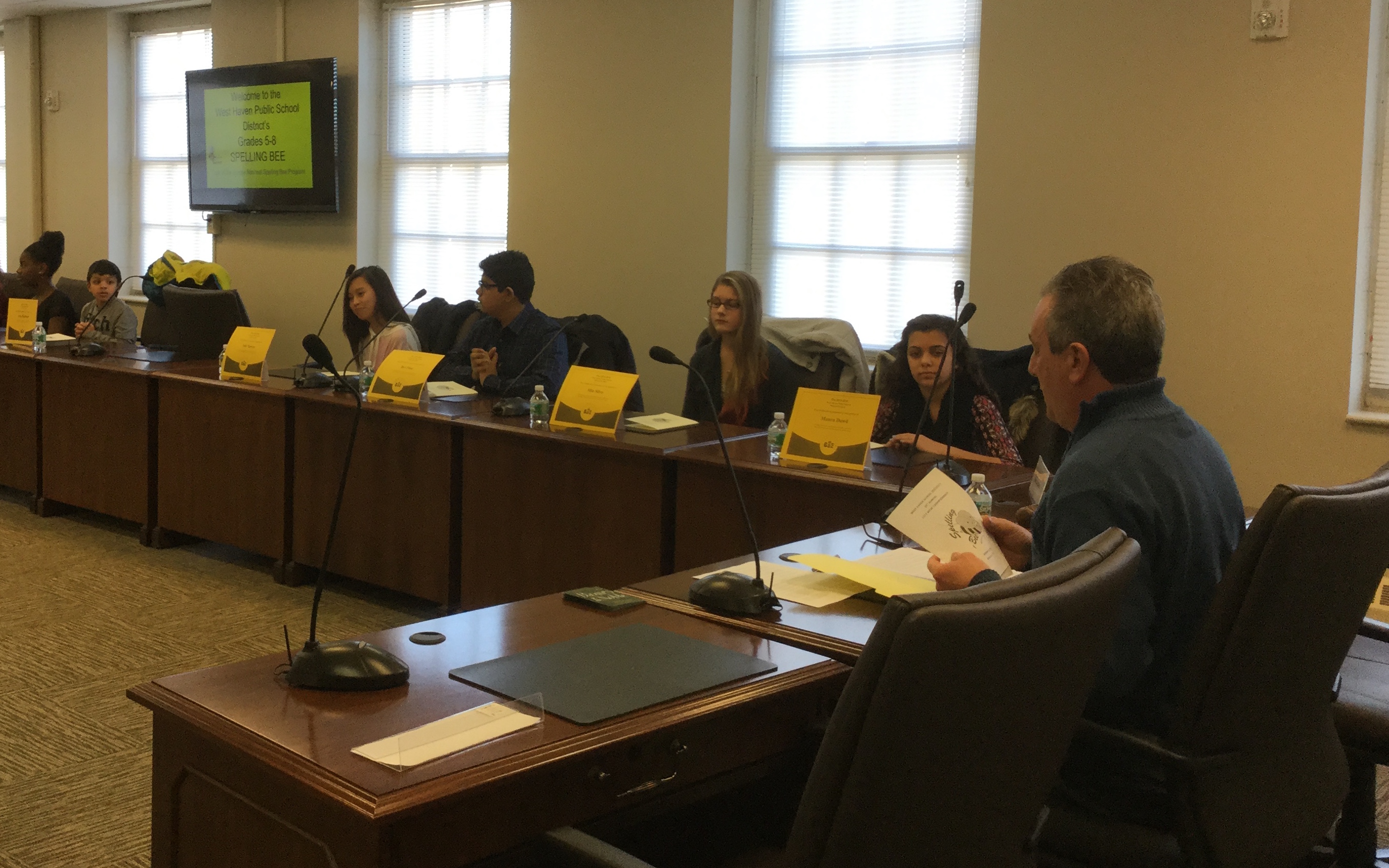
There were eight students who qualified for this district final. They had been bussed to the City Hall that morning, and they sat in office chairs reserved for members of the Board of Education. These chairs had never swiveled so nervously.

The Superintendent of Schools, Neil C. Cavallaro, was the moderator. After congratulating the students on reaching this final round, he began to read from the list of the words organized on the Scripps National Spelling Bee website.

West Haven Spelling Bee 2016

Six of the eight contestants waiting to spell in the West Haven Spelling Bee 2016

The tradition of qualifying for the National Spelling Bee began in 1925. The E.W. Scripps, a broadcasting company, took over sponsorship of the National Spelling Bee in 1941. The purpose:

Our purpose is to help students improve their spelling, increase their vocabularies, learn concepts, and develop correct English usage that will help them all their lives.

The sponsor for this year’s event for our school district is Quinnipiac University, a new sponsor for our region. They will be hosting the 2016 regional finals and sending a champion to the national finals held May 1-2. Our local spelling bee was set up to determine that champion who would go to the regional challenge. and the grade level winners received $25 gift certificates to Barnes and Noble from the schools’ PTA.

The final two challengers-two 5th graders -were a study in contrasts: Ayannah, calm and collected, facing off against Arin, confidently enthusiastic. The adults in the audience watching the contest sat mentally spelling each of the words or mouthing the spelling: “languish”, “germane”, “ostensibly”. The only sound coming from their area were the audible sighs of relief after each “That is correct” from the moderator.

The word “acoustics” proved to be too tricky for Ayannah. There was hush…and the audience sat riveted as Arin mastered “acoustics” and then spelled “molasses” correctly for the win. Cheers and applause erupted with the last “That is correct!” 5th grade Arin will move onto the regionals, and (hopefully) the national round.  He will be a great representative for the West Haven School District.

Watching our small event was akin to watching a sporting match, so it is no wonder that the National Spelling Bee is broadcast live on ESPN channels. Want to know how exciting a spelling be can be? Watch the final moments of last year’s Scripps National 2015 Spelling Bee, and try not to have your heart race:

“Tachycardia”
“May I have a definition, please?”
“an abnormally rapid heart rate”

Today is the third Monday in January, a national holiday commemorating Martin Luther King, Jr., and if you have not already seen Nancy Duarte’s visualization of Martin Luther King’s “I Have a Dream” speech, then here it is below on YouTube (or the Vimeo link here):

If you have not heard of Nancy Duarte or how she happened on this form of presentation, here is the her TED Talk link. In this presentation, she explains how she compared the simple “structure” of a story as first suggested by Aristotle (having a beginning, middle and end) to the structure suggested by Gustav Freytag’s in his story “pyramid”.

You may remember Freytag’s structure as something called a “plot mountain” from 4th or 5th grade:

250px-Freytags_pyramid.svg

Freytag diagrammed the strict dramatic structure that the Roman critic Horace defined in his Ars Poetica:

“Neue minor neu sit quinto productior actu fabula” (lines 189-190)

“A play should not be shorter or longer than five acts”

Good drama, Horace maintained, is based on a five act structure with an exposition, a rising action, a climax, a falling action and a denouement (unraveling or resolution) of the story. Freytag’s model provided the visual to Horace’s critical analysis.

Duarte praised Freytag’s visual in her TED Talk saying:

“I love this shape. So we talk about shapes. Story has an arc, well an arc is a shape. We talk about classical music, having a shapeliness to it. So I thought, hey, if presentations had a shape, what would that shape be? And how did the greatest communicators use that shape or do they use a shape?”

She wondered about this connection between story arc and how a presenter is the same as someone telling a story when she came up with the idea to overlay two great speeches to see if they followed the same story arc that Frytag suggested:

“So I took the obvious, I took Martin Luther King’s “I Have a Dream” speech, and I took Steve Jobs’ 2007 iPhone launch speech, I overlaid it over it, and it worked. I sat in my office, just astounded. I actually cried a little, because I was like, “I’ve been given this gift,” and here it is, this is the shape of a great presentation.

In her TED Talk, she explains how the shape of the both presentations follows the pattern established in Freytag’s pyramid.

Now, I could go one step further and make another connection from Duarte and Freytag to the Mathematical Practice Standards as outlined in the Common Core State Standards. These eight Mathematical Practice Standards “describe varieties of expertise that mathematics educators at all levels should seek to develop in their students.”

It is Mathematical Practice Standard #7 (MP7) that connects to Duarte’s visualization of text. It states that students should:

Look for and make use of structure.

In explaining how “mathematically proficient students look closely to discern a pattern or structure,” educators are developing the interdisciplinary and cross-curricular skills required to discover the patterns in other subjects as well, the patterns in literature and the patterns of history.

In her analysis of Martin Luther King’s speech, Duarte brought attention to the patterns created through his figurative language: the call and response, allusions, metaphors, etc., and she lays them out in multi-colored vertical bars for audiences to see. There is a geometric shape, there are patterns, and so, there is math.

From speeches as stories, to stories as visualized patterns, and to visualized patterns as part of mathematical practice, helping students understand the structure of  Martin Luther King, Jr’s speech can help them better appreciate the brilliance of his craft in both creating and then in delivering his unforgettable message, “I Have a Dream.”


BigShortThe film The Big Short based on a book by Michael Lewis– a funny but frustrating recap of the economic crisis of 2008. The last scenes of the film detailed the fallout using a voice over by Ryan Gosling playing the role of Jarred Varnett:

“The banks took the money the American people gave them and used it to lobby the Congress to kill big reform. And then America blamed immigrants and poor people. And this time… even teachers. And when all was said and done, only one single banker went to jail.” (PDF script)

I bolded “And this time… even teachers” because I was surprised to hear such a clear connection between a “they” and “blame teachers” when the film was entirely about the financial industry.

To be truthful, there was some highly entertaining educating going on in the film. The “teachers” were celebrities Margot Robbie (actress), Anthony Bourdain (cook, author) and Selena Gomez (singer, actress) who broke the 4th wall to “teach” audiences about credit-default swaps and collateralized debt obligations. But, as an educator, I have long suspected that teachers have been a convenient scapegoat, even before the No Child Left Behind (NCLB) initiatives.

Upon further investigation, “blaming the teachers” is not the only connection that is made between education and mortgage crisis. The film also highlights how several individual financial advisors saw the financial crisis coming, and then bet against the mortgage market (hence the name “The Big Short”).

In following the path of inquiry from mortgage fraud jumped to education, I found that the financial expert Steven Eisman (played by Christian Bale)  gave a speech in May of 2010 titled “Subprime Goes to College,” at the Ira Sohn Investment Research Conference.

Mother Jones reporter  wrote about the speech (May 2010) titled Steve Next Big Short: For-Profit Colleges He reported that  Eisman compared the for-profit education companies (ITT and Apollo Group) to, “seamy mortgage brokers who peddled explosive subprime loans over the past two decades.”

In his presentation (PDF) Eisman explained how federally guaranteed debt through Title IV student loans,one-quarter of the $89 billion in available, went to these companies that enrolled only 10 percent of the nation’s postsecondary students.

Kroll notes that in this speech -two years after the mortgage crisis, Eisman ended with a warning:

“Are we going to do this all over again? We just loaded up one generation of Americans with mortgage debt they can’t afford to pay back. Are we going to load up a new generation with student loan debt they can never afford to pay back? The industry is now 25 percent of Title IV money on its way to 40 percent…But if nothing is done, then we are on the cusp of a new social disaster.”

Eisman’s warning generated negative attention for him by April of 2011, reported in the CNN Money website, The article noted:

 The Citizens for Responsibility and Ethics in Washington (CREW) called upon the Securities and Exchange Commission to investigate whether Eisman had used his relationship with the Department of Education as a way to  “manipulate the market price” of for-profit education stocks.

By October of 2015, however,Eisman’s warning was being taken more seriously by other federal agencies. According to the Wall Street Journal Marketwatch Report:

The University of Phoenix (Apollo Group) was placed on probation by the US Department of Defense. They have barred recruiting on military bases and are active in “preventing troops from using federal money for classes.”

This must have an adverse impact on Apollo Group; net income growth for as of August 2015 was -131.88%.

Similarly, ITT Educational Services (ESI) reported their net income growth September 2015 as -83.65%. Truth in advertising might be part of the reason for the drop, one of the top bullets on the Consumer Information Page on the ITT website lists one powerful reason that potential students might not enroll:

Credits earned are unlikely to transfer.

The Inside Higher Ed website reporter Paul Fain also wrote about the souring relationship between ITT  and the Department of Education (10/20/15):

Troubles are deepening for ITT Educational Services, with the U.S. Department of Education on Monday announcing stricter financial oversight and reporting requirements on the embattled for-profit chain.

In a letter to the company, the department cited federal fraud allegations against two ITT executives and the company’s “failure of the general standards of financial responsibility” in justifying its decision to tighten the screws.

The attention Steven Eisman brought to the mortgage crisis eventually gave him credibility….and lots of money. He positioned this credibility towards another crisis…this one involving for-profit colleges.

Which starts a new line of inquiry as to who could get the blame this time? OR should audiences expect a repeat:  “And this time… even teachers.”

The Best Persuasive Argument of 2015 was not presented in the form of the standard five paragraph essay.

Instead, the best persuasive argument made this year featured 1000 musicians playing the song “Learn to Fly” in a field in order to persuade the rock band Foo Fighters to play a concert in a small town in Italy.

The entire project was the brainchild of Fabio Zaffagnini and his creative team. They named themselves the Rockin’1000 with the tag line: Romanga Calling the Foo Fighters and they extended an invitation to the band perform in Cesena, Italy.

The diary on their website chronicles how they raised $45,000 in order to film their appeal.Screenshot 2015-12-31 22.13.39

Their effort began in May 2014 (“The idea pops out”), and the diary records their emotional responses as the team met each challenge:

  • September 2014-“a miracle is needed!”

  • March 2015-“we launched a cartoon spoken in our regional dialect that explains how to donate and be part of Rockin’1000  (no translations for that, sorry, but we assure you: it’s very funny!)”

  • July 30 2015-KABOOOOOM! “The Rockin’1000 video is out and in a few hours it becomes a worldwide success with more than 10 million views. We’re literally overwhelmed by email, interviews, social media just go crazy!”

  • August 2015-“The Rockin’1000 people just made it, with little money and a lot of passion.”

Consider that a standard argumentative essay has five critical parts, and then consider how the argument made by the Rockin’1000 in creating their video meets each requirement:

PART #1  Introduce the topic of the paper and the thesis statement.

“We needed a crazy idea. We had to organize something that kicks ass worldwide and can be seen by Dave Grohl [of the Foo Fighters]: we will ask one thousand rockers to play one of their songs, all together and at the same time.”

PART #2  Presents the facts of the case:

“The Foo Fighters have not been in Romagna since 1997, ‘it’s time to get them back.'”

PART #3 Prove the thesis with your arguments.

“We got the money, so now we cannot back out, there are no more excuses.”

“Italy is a country where dreams cannot easily come true, but it’s a land of passion and creativity…”

PART #4  Disprove your opponent’s arguments.

“…the budget is extremely tight and we cannot afford many expenses, we borrow anything that is available, we implore technicians to work for free or to be under paid. We need experienced professionals, but the challenge is so cool that we are able to recruit real bigwigs.”

PART #5  End the essay. 

The video: (Fabio speaking) “To be true…this (gestures to musicians) is just to 5 people They just did for one song…your song. Our call is to ask you, the Foo Fighters, to come and play for us…Please… (begging motion)….Make noise!….

(CROWD) Foo Fighters! Foo Fighters!

The video can be seen here:

Meeting the requirements of an argumentative essay is not the reason for writing an argumentative essay, although there are students who are convinced that requirements = reasons.

Moreover, the reason this is the BEST argumentative essay for 2015 is that David Grohl of the Foo Fighters did see the video, and he posted his own video response:

“Hello, Cesena. It’s David,” Grohl said, “Hi. I am sorry I don’t speak Italian, just a bit, a bit. This video was good! Super nice. Thank you so much. We’re coming, I swear. We’ll see each other soon. Thank you so much. I love you. Ciao.” (BBC News)

On November 4, 2015, the Foo Fighters performed in Cesena, Italy, for an audience of 3,000 donors and musicians from Rockin’1000. They opened with  “Learn to Fly,” and invited one of the drummers from the video onto the stage to perform. According to the New York Times review of the 11/4/15 show, Grohl told the audience, “The whole world saw what you did…Millions and millions of people saw what you did. It’s a beautiful thing.”

The 26 million views of this video on YouTube confirms the truth in Grohl’s statement. There will be more views as this video appeal was included in many of the end of the year “best” moments for 2015 (Google). The standard 5 paragraph essay never reaches that kind of audience.

Consider, then, if this was the best argument for 2015, what can students do to persuade someone to take action in 2016…and what format would make the best persuasive argument?