Archives For October 31, 2012

Two visibly dissimilar groups arrived at the Downtown Convention Center in Providence, Rhode Island, on Sunday, November 4, 2012.

The Literacy for All Convention organized by Lesley University attracted thousands of business casual educators-teachers, literacy specialists, reading consultants, etc. These attendees were easily identified by their large red book totes and sensible shoes.

In contrast there were thousands of attendees to the Rhode Island Comic Con dressed as Speed Racers, Waldos, Power Rangers, Luke Skywalkers, Hulks, Green Honets, Spidermans, Ghostbusters and others. These attendees were easily identified by masks and spandex.  

This slideshow requires JavaScript.

As I approached one of the ballrooms, a pair of ninja-attired ushers looked me up and down, and without a word pointed me to the left lane, down the “boring” hallway.

Was my dress that obvious? I looked around. My brand? Coldwater Creek. Their brand? Marvel.

I walked past the long lines of patient Comic Con attendees; spandex, glitter, togas, masks, and capes abounded. I heard an announcement, “Jedi training in this room!” Jedi training? I looked at my program to the upcoming session I would be attending: Writing the Persuasive Essay. Jedi training looked far more interesting.

And then it hit me. There is a deep bond between the educators who busily rushed from session to session with oversized bags and the strutting costume clad participants who preened through the lobbies. There is a literacy foundation for both conventions. Everyone in the convention center was there because of the power of story.

Comic Con celebrates of the characters of stories; stories are the ways educators build literacy.

Yes, the love of story is what drew two unlikely groups together. The love of story transcended age and wardrobe…I looked around with new perspective. These were my people!

Throughout the day, we shared the same lobby areas and escalators…Pincachu in front of me, Katniss behind me.

“Look,” I remarked as we got off at the top floor, “It’s the Red Power Ranger!”

“That’s Deadpool,”  the young man behind me sneered. I tried to laugh off my error, but I had obviously touched a nerve.

“I stand corrected,” I apologized.

This is Deadpool…NOT the Red Power Ranger.

I quickly looked up up Deadpool. According to the Marvel Universe website, Deadpool (aka Wade Winston Wilson) is an anti-hero, a disfigured and mentally unstable mercenary whose power is an accelerated healing factor,which provides him with regenerative healing powers for all known diseases including cancer. He first appeared as a villain in The New Mutants #98 (Feb. 1991). Deadpool’s complicated back story alternates from a possible genesis as character with a stolen identity or as the crazed son of a war hero. Reading his lengthy biography is as challenging as some classic literary texts. Deadpool‘s history is as complicated as Shakespeare’s Richard III, Mary Shelley’s Monster, or Emily Bronte’s Heathcliff…all classical anti-heroes.

While I am familiar with each of these literary characters, I simply did not recognize many of the costumes that passed me; my literacy level for Comic Con was seriously limited. I reflected how regularly, and with the same disdain as the young man so boldly corrected me, I had regularly corrected anyone who was mistaken about the relationship of Oedipus to Antigone (“He’s her father AND her grandfather”) about Romeo to Juliet (“She’s a Capulet not a Montague!”) or for George to Lenny (“Remember? Lenny needs George as a protector!”). Now I was the one at a loss for identifying characters or relationships.

Sadly, I was Comic Con illiterate. Apparently, so are many of my fellow educators, but that is changing as research is demonstrating the growth of the literacies associated with graphic novels, comic books, and video games. Several studies are collected in The Handbook of Research on New Literacies edited by Julie Coiro (‪Taylor & Francis, 2008)  Chapter 23 is titled A Literacy of Expertise by Kurt D. Squire and features a study at University of Wisconsin-Madison.

As critics lament the “decline of the book” (with Harry Potter presumably not counting as literature), those few scholars who have touched video-game controllers are noting that games are surprisingly long, difficult, and complex,requiring and developing new digital literacies” (246).

Squires defends these new literacies as complementing more traditional reading materials:

Perhaps the alarm bells sounding the decline of “reading” do not signal a “loss” of literacy, but the emergence of a new constellation of literacy practices that could someday transform our social institutions. If the history of media holds true, video games, like film or television, are not going to replace books but live along side them.  (666).

In the article, When Gaming is Good for You (3/5/12) on the Wall Street Journal online edition explained how  researchers at Michigan State University’s Children and Technology Project reported on a three year study of video games:

491 middle school students found that the more children played computer games the higher their scores on a standardized test of creativity—regardless of race, gender, or the kind of game played. The researchers ranked students on a widely used measure called the Torrance Test of Creativity, which involves such tasks as drawing an “interesting and exciting” picture from a curved shape on a sheet of paper, giving the picture a title, and then writing a story about it.
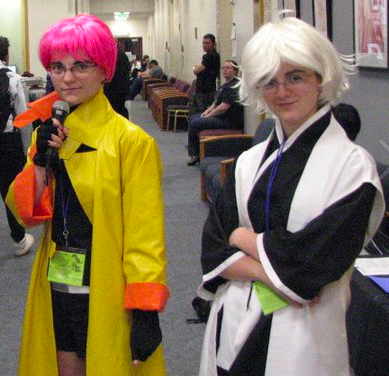
Lucy and Sarah, my nieces, at a Comic Con in Idaho. Their literacy levels are off the charts!

I should be more aware of the significant contributions that these new literacies are having on my students. I also should have been more prepared for the epiphany I experienced at this aptly named Literacy for All conference. My own nieces, Lucy and Sarah, participate regularly at Comic Cons organized in Idaho. Both young women are articulate advocates for anime characters and transform themselves in appearance and attitude. The reading level of some of their texts? 11.8 lexiles. The enjoyment they receive from sharing their knowledge with other like-minded people? Priceless.

The floor lobby areas of the convention center were probably more accurate in reflecting the literacy of today: traditional literacy standard bearers milling about with highly engaged new literacy consumers. These newer literacies may not be for all of my students, but the literacy demands on students who are involved in video games, graphic novels, comic books should be recognized. While teachers may not adopt the spandex, we all understand the importance role of story in our lives.

Who knows if there would be another convergence of the twain at the Literacy For All in future years, but I would like the opportunity to see what that Jedi training is all about.

Continue Reading…

In the classroom, the authors of children’s books are celebrities; the authors of young adult literature are rock stars. So when the National Conference of English Teachers (NCTE) and associated independent organizations the Council of English Leadership (CEL) and the The Assembly on Literature for Adolescents (ALAN) converged on Las Vegas last week, publishers made sure their authors were front and center, delivering keynote addresses and personally meeting and signing books for some of their greatest fans-teachers.

Highlights of the convention included Sherman Alexie (The Absolutely True Diary of a Part-Time Indian) delivering a keynote address to an enthusiastic audience of readers who know how he can reach their reluctant readers. Scott Westerfield (Uglies, Pretties) was there representing the oh-so-popular dystopian fiction. Nicholas Sparks (The Notebook) was there for the older readers, including the teachers themselves, with new educational materials for high school classrooms. Newbery Award winning Lois Lowery (The Giver, Number the Stars) spoke to an enthralled crowd of middle school teachers at ALAN.

The convention had invited many authors; book publishers arranged to bring even more to the exhibition hall. There were over 200 “signing” stations in exhibitor booths advertised in the conference program to alert teachers where to purchase and get books autographed.

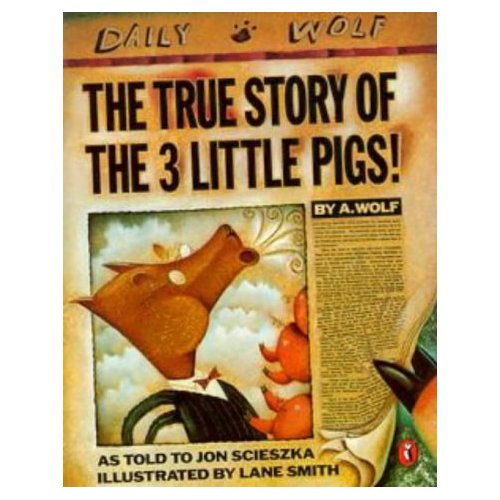
Most booths were mobbed, but on Sunday morning, I came upon a table where a solitary Jon Scieszka sat with a exhibitor. I could not believe my luck. For those who do not know, Scieszka is the author of  Math Curse,  The Stinky Cheese Man and Other Fairly Stupid Tales,and the series The Time Warp Trio, which was made into a TV series. His retelling of the The Three Little Pigs is told from the point of view of A.Wolf. The True Story of the Three Little Pigs was my first Scieszka book experience.In the book, A. Wolf explains how his requests for a cup of sugar from each of the pigs eventually led to his “sneezing” not “huffing and puffing” which sets off the unfortunate demise of the pigs. Illustrated by Lane Smith, this book was one of the “Top 100 Picture Books” of all time in a 2012 poll by School Library Journal. I concur, and I use the book to explain literary point of view to all grade levels. In 2008, Scieszka was named the National Ambassador for Young People’s Literature by the Librarian of Congress.

There Jon Scieszka sat, and there was no teacher in sight!

“Jon Scieszka!” I exclaimed, ” I can’t believe you are alone!”
“Neither can I,” he grinned.
“Me either,” said the exhibitor with him, much more uncomfortably..
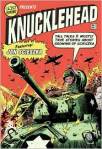
“Well, now that I have you all to myself,” I was ready with a question I had asked so many times in my head, “Can I ask how you know so much about my brothers?” I was referring to his hilarious YA memoir Knuckleheads in which Scieszka relates his

experiences growing up. The publisher’s review:

“Growing up as one of six brothers was a good start, but that was just the beginning. Throw in Catholic school, lots of comic books, lazy summers at the lake with time to kill, babysitting misadventures, TV shows, jokes told at family dinner, and the result is Knucklehead. Part memoir, part scrapbook, this hilarious trip down memory lane provides a unique glimpse into the formation of a creative mind and a free spirit.”

The book is almost a mirror reflection of watching my younger siblings compete with each other, set fire to things, and survive Catholic school (with fewer nuns). “I swear you must have been watching my three brothers grow up!” I babbled on.
“You’d be surprised how many people say that,” he chuckled.
“And your short stories in Guy’s Read?” By this time, I was positively gushing, “they are exactly what I need for my 9th grade boys who only want a short read.”
“That’s why we wrote them,” he nodded appreciatively, “for short reads. Now, what name do you want in this book?”
Yes, I got a signed book Spaceheadz by Jon Scieszka! For free. A conversation and a book.

20 minutes later, I passed by the table again, but I caught only a glimpse of him. He was surrounded by a throng of teachers,the serpentine line of fans waiting to talk to him went down the long aisle. My brief and personal moment was obviously a fluke. That’s because he’s Jon Scieszka, children’s book author. Jon Scieszka, Rock Star.

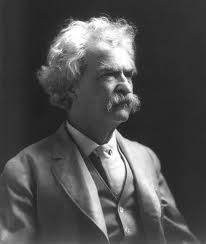
The health of the American Public school system is under debate in many different arenas: political, financial, social, ideological, and now, technological. At the root of these debates is our collective recognition or understanding confirmed by the author Mark Twain (Samuel Clemens):

“We believe that out of the public school grows the greatness of a nation.”

I have used this quote many times myself, but I had never researched the quotation’s context until recently. This quote comes from an address given to the Public Education Association at a Meeting of the Berkeley Lyceum, New York, November 23, 1900. The speech was given the title, “I am a Boxer”, and its brief 588 word composition means that Twain spoke onstage for all of six minutes, applause aside.

The historical background for the speech deals with European colonization in Africa and Asia, and the American efforts to annex the Philippines.  Predictably, there was resistance by the natives of a country resulting in serious and costly conflicts such as the Boer War in South Africa and the Boxer Rebellion in China. Twain had joined with a number of other Americans including William Jennings Bryan, Andrew Carnegie, John Dewey, and William James in an effort to stop a new rush to colonize. They formed the Anti-Imperialist League, and for a short time they coordinated efforts to stop the developing American Empire. Twain’s speech also referenced Russia’s involvement in the Boxer Rebellion in joint operations with US Marines and British troops.

On that Friday, Twain opened the speech to the Public Education Association with his familiar self-deprecating humor:

“I don’t suppose that I am called here as an expert on education, for that would show a lack of foresight on your part and a deliberate intention to remind me of my shortcomings.”

He explains that his extensive travels had improved his understanding of other cultures, and that may be a primary reason for the invitation to have him speak. His best seller The Innocents Abroad had been published the previous year (1899), and he was lecturing extensively on this travelogue. But he also considered his audience and noted another reason for this address:

“The other reason that I can see is that you have called me to show by way of contrast what education can accomplish if administered in the right sort of doses.”

His argument against Anti-Imperialism was satirically addressed in the next two paragraphs suggesting if the Public Education Association’s pictures that had been sent to an exhibition in Paris could convince Russia and France to withdraw troops from colonial conflict-how quickly world peace could be achieved!

He then illustrated his Anti-Imperialistic philosophy using the Boxer Rebellion by opening with a rhetorical question:

“Why should not China be free from the foreigners, who are only making trouble on her soil? If they would only all go home, what a pleasant place China would be for the Chinese! We do not allow Chinamen to come here, and I say in all seriousness that it would be a graceful thing to let China decide who shall go there.”

The last sentences in this section of the speech are the source for the title of this speech, “The Boxer believes in driving us out of his country. I am a Boxer too, for I believe in driving him out of our country.”

The anti-immigrant declaration of “I believe in driving him out of our country” is surprising coming from the liberal Twain. One hopes he was playing to the sentiments of his audience rather than some xenophobic desire to keep America free of the Chinese. The Boxers’s fierce opposition to Christianity did not make them popular in the United States. However, the statement could also be read as a converse to the statement that the Boxer is “driving us out of his country”, a form of quid pro quo.

So how does Twain get from the Boxer Rebellion to public schools? In the paragraph that follows the declaration of commonality with the Boxer, Twain updates his satirical comments to note that, sadly, Russia would not be withdrawing its troops; there would be no world peace. Russia could choose to  have an army or public schools, and as it could not afford both, Russia had chosen the army. Twain decries the choice:

“This is a monstrous idea to us. We believe that out of the public school grows the greatness of a nation.”

In using the pronouns “us” and “we” Twain joins the service of the Public Education Association. As he committed himself to the cause of the Boxer, Twain commits himself to the cause of the educator. Immediately after this statement, Twain includes a paragraph so prescient, a reader might think it came out of a recent town hall meeting:

“It is curious to reflect how history repeats itself the world over. Why, I remember the same thing was done when I was a boy on the Mississippi River. There was a proposition in a township there to discontinue public schools because they were too expensive. An old farmer spoke up and said if they stopped the schools they would not save anything, because every time a school was closed a jail had to be built.”

Twain wryly commented on his own anecdote with a familiar “Twain-ism”, commenting that the practice of not funding schools was  “like feeding a dog on his own tail. He’ll never get fat. I believe it is better to support schools than jails.”

He ended the speech with an off-handed compliment to the Public Education Association:

“The work of your association is better and shows more wisdom than the Czar of Russia and all his people. This is not much of a compliment, but it’s the best I’ve got in stock.”

Twain’s short address connected two unlikely ideas: the Boxer Rebellion and the American public school system. The speech is humorous, highly political, and frighteningly prescient. The thesis of his argument is not found in the title, but is found in the concerns he has about the funding of public education in America and abroad. In summary, Twain believed that nations who choose to fund armies over education will not be great. Education is necessary for world peace.

Mark Twain may have claimed that “I am a Boxer” in this short address, but he communicated quite clearly “I am an Educator.” Public education already had wonderful resources in the literature of Twain with The Adventures of Tom Sawyer and Huckleberry Finn. This speech solidly affirms his belief in the importance of our public education system. His contributions to the profession of education have not been matched since.

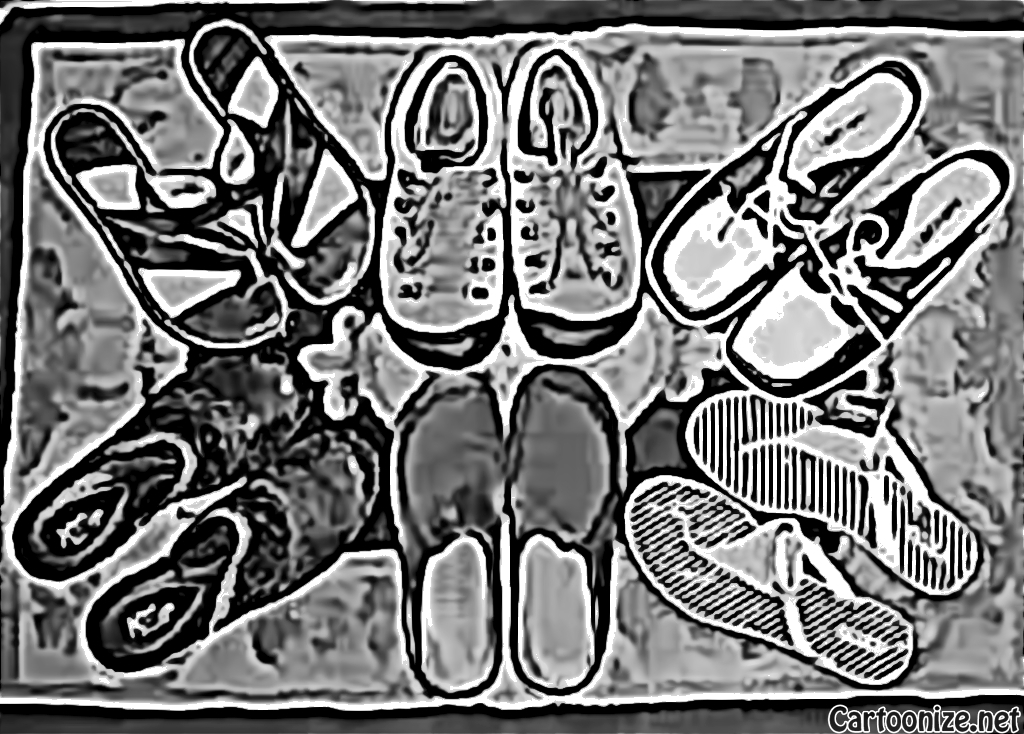
Sensible shoes dominate the NCTE Conference.

Spotting an English teacher in the crowds moving through the glitzy MGM Conference Center in Las Vegas is easy. Just look for the sensible shoes.

English teacher stamina is the stuff of legend, built up through hours of standing in front of a class, negotiating the space between groups of students and book bags tossed casually on the  classroom floor. We have perfected the quick sprint down a hallway to the copier for extra copies of a quiz or test.  Yes, we have learned from experience the necessitiy of wearing sensible, comfortable shoes. Our footwear choices came from our hard fought classroom experience, and that training was key to participation at the National Council of Teachers of English Conference (NCTE) since the MGM conference center has cavernous corridors and sessions are scattered over several acres of property. We walk, we walk, and we walk…quickly! There are hundreds of sessions, and only a few days to share new ideas and improvements to pedagogy.

“Dreams. Connect. Ignite.” is the motto of this NCTE 102nd Conference. While I have not personally witnessed much in the way of dreaming, the igniting is thankfully limited to the videos of pyrotechnics that are an element in the  Cirque de Soleil show “Ka.”. But I have participated in and witnessed plenty of connecting. My year of tweeting on Twitter has paid off!

Twitter gives teachers the opportunity to communicate with other teachers; to form communities of educators who ” follow” other educators. This is a very individualized form of professional development since I can pick those educators who are most helpful to me in helping me improve my practice. While I am attending sessions, I tweet what I am learning as notes to myself and to others.I  use the hashtag #NCTE12 to share my thoughts with other attendees. I have discovered many educators through the English Companion Ning and specific Twitter streams with hashtags such as  #engchat, #edchat, and #sschat. I follow the Twitter stream of conferences I attend, and my own school district’s stream #rsd6.

Here at the conference I have met other educators with whom I have been communicating over the past year, and the conversations we have had face to face are simply an extention of what we have been saying online. I have enthusiastically shared my use of Twitter with other attendees; “Look, you have to get on Twitter and follow this (speaker, educator)!” I greet those who tweet to me or follow me with the same enthusiasm I would greet old teaching companions. Meeting at this conference, we are free of the 140 character limit, the constant trimming of thought. Face to face we can complete a sentence without an abbreviation or a hashtag.

There are so many offerings at this conference that am I rushing from session to session. I do try and pay attention, however, to those who pass me in the maze of hallways and lobbies, scanning a name tag looking to see if one of attendees passing me might be one of my twitter “friends.” How do I know who to look at? Well, first, I look at the shoes.

The National Council of Teachers of English Annual Convention and the Council on English Leadership Convention begin this weekend (11/15-21) at the MGM Grand in Las Vegas, and I am so delighted to have the opportunity to present with my fellow faculty member, Stephanie Pixley, at three separate sessions. We are able to present to other teachers because of the great support and training our Regional School District #6 (Administration and Board of Education) has given its teachers in the use of technology in classrooms to improve student learning and develop 21st Century skills.

Wamogo High School in Litchfield, Connecticut, is a 1:1 Bring Your Own Digital Device (BYOD) school for grades 9-12, and we are learning everyday how our students’ use of technology has helped us differentiate our instruction, increase our students’ independence, and allow us to provide authentic tasks for our students. Last year, we used netbooks in our English and Social Studies classes and found how successfully technology could be used in reading and writing workshops at every grade level. This year, those netbooks have been moved to grades 7 and 8 for their use, and the high school students either provide their own devices or rent one from the school’s technology department..

The first session we will be offering is devoted to Cormac McCarthy’s novel The Road. We will feature work that the students have completed in using Abraham Maslow’s “Hierarchy of Needs” as a way to analyze characters in this post-apocalyptic novel. We will be demonstrating how our students, “Explore the poetic language of survival in Cormac McCarthy’s The Road the potential of 21st century connectivity and collaboration, and the use of mysteries to enhance students’ critical thinking abilities as presenters share literature experiences in three high school classrooms.”

Navigating the Mind: The Road Meets Maslow’s Hierarchy
Time:  Saturday 11/17 8:00 AM – 9:15 AM
Level:  Secondary (9-12)
Topic of Interest: Literature
Location:  Studio Room 6, Grand Arena, Main Floor by Grand Garden Arena, MGM Grand

The other two sessions will be offered to the Council on English Leadership:

You Ain’t Nothing but a Blog Hound
Monday 11/19 4-5:00 PM
D.3 Room 106

Description: You may already know that a blog platform offers students at all grade levels an opportunity to engage in an authentic writing experience in or outside the classroom. This workshop demonstrates the use of a blog platform for students to engage in thoughtful discussion on whole class or independent reading. This workshop will also feature how to organize, moderate, and assess both blog posts and comments on a variety of blog platforms. There will also be a focus on improving a student’s awareness of audience and purpose in a written response, and strategies will be provided so student comments are more sophisticated than a standard “I liked what you wrote.”

Writer’s Workshop Graduates to High Tech Literature Circles
Tuesday  11/20 10-11:00 AM
F.2  Room 106

Description: This session will feature strategies used in the teaching of writing at the middle and high school levels using a variety of 2.0 technologies, including blogs, wikis, and document sharing software. The emphasis will be on providing examples of differentiated student-centered activities that will develop independence in the writer’s transition from middle school to high school. High-tech writing provides opportunities for student accountability, group collaboration, and whole class communication

(NOTE: This session was presented this at Literacy for All Convention, 11/5 & 11/6 in Providence, RI)

We are looking forward to presenting and attending the wonderful selection of sessions over the next few days. This is certainly a wonderful opportunity for our own professional development and a chance for us to showcase our small but very forward thinking school district-Regional School District #6 !

Bond.

James Bond.

007.

On Her Majesty’s Secret Service, and (surprise!) a metaphor for why relying on the standardized test is flawed.

Honestly, I was not expecting Skyfall, the latest James Bond blockbuster, to resonate with issues being discussed in educational reform today, but sitting in the darkened theatre, I suddenly heard the same concerns about the validity of tests used in assessing secret agents that I hear in assessing students.

Apparently, M-I 6 wrestles with the question: Do tests really measure ability?

Spoiler Alert! If you are someone who intends to see the film, I may be giving away a few facts; not major plot points, but a few incidental pieces of information. Bond Purists-stop reading now, please.

Before Bond (Daniel Craig) returns to work for M (Dame Judi Dench), he needs to pass a set of standardized performance tests. He is first put through a series of grueling fitness tests. He is tested on his ability to shoot a pistol at various distances in a firing range. Finally, he faces a series of psychological tests. The results of how well he succeeded in this battery of objective tests is initially kept from the audience, but the viewers are not surprised when he eventually returns to service.

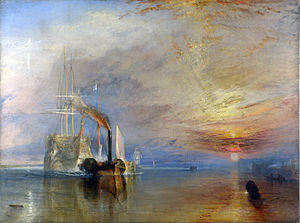
Painting at the National Gallery in London

The film’s screenwriters saw fit to combine the concerns about the results of these tests with M-I 6’s concerns about Bond’s age. No scene is more direct in confronting Bond’s age than in his first meeting with the young gadget supplier “Q”. The filmmakers placed Bond at a British National Gallery sitting on a bench looking at J.M.W. Turner’s painting Fighting Temeraire Tugged to Her Last Berth To Be Broken Up, 1838 .

Turner’s symbolic message of the painting depicts the shift from sail power to coal engine, the billowing white clouds swirling like sails a stark contrast to the blackened smokestack of the tug in the forefront of the painting.  Q enters, sits next to Bond, and strikes up a conversation:

Q: It always makes me feel a bit melancholy. Grand old war ship. being ignominiously haunted away to scrap… The inevitability of time, don’t you think? What do you see?
Bond:  A bloody big ship. Excuse me.
Q: 007. I’m your new Quartermaster.
Bond: You must be joking.
Q:  Why, because I’m not wearing a lab coat?
Bond: Because you still have spots.
Q: My complexion is hardly relevant.
Bond: Your competence is.
Q: Age is no guarantee of efficiency.
Bond:  And youth is no guarantee of innovation.

Skyfall (http://www.imdb.com/title/tt1074638/quotes)

Of course, the M-I 6 tests are designed to determine if Bond is too old, if his brand of “boots on the ground” spying should be replaced by agents in command of newer technologies. And of course, M is obligated to submit Bond to the required standardized tests, tests given on one particular day. However, she is not obligated to act on the results of the tests.

M’s response, therefore, is to weigh what audiences know are the 50 years of evidence on Bond’s unconventional performance as a creative problem solver. She recognizes that Bond possesses those intangible qualities of initiative and drive, and while a standardized test does measure a level of ability, what makes Bond a valuable British agent is his ability to confound a standard.

Watching James Bond puzzle the test-driven establishment is a large part of the enjoyment for the audience. Agent 007 cannot be limited by a test score if he is going to save the free world.

Which brings me back to the shared message about testing from Skyfall and its application to education reform. The audience understands that the testing in Skyfall is flawed because of the limited results; standardized testing in education is similarly limited. Like M, educators should not let their students be defined by test scores from standardized tests, those single metric assessments given on one day. Like M, educators should pay more attention to having students develop problem-solving skills and to consider other assessments that measure students’ critical thinking skills.  Students should have the opportunity to be evaluated on the intangible qualities of initiative and drive through project-based learning. Like Agent 007, students should be allowed the opportunity to confound those standards measured by objective testing.

Oh, and maybe they could also ask for their chocolate milk shaken, not stirred.

Jack Gantos stood on the steps of the altar at NYC Riverside Chapel blinking through large black glasses as he addressed the large crowd of educators who sat eager to hear him speak, “I feel compelled to throw a little fairy dust teaching into this…to educate and illuminate simultaneously.” Then, looking back at the large screen that projected the cover of his Newbery Award winning book, Dead End in Norvelt, he grinned broadly, “Yes, I wrote this book!”

Jack Gantos was the final keynote speaker at the Teachers College 83rd Saturday Reunion on Saturday, October 27th, and he was clearly enjoying this opportunity to talk about his evolution as a reader and as a writer.  The large screen projected other images, handwritten notes and neatly drawn “spy” maps. “Here are some pages from a journal I kept,” explained Gantos, “ and you should know, that the boy that wrote this journal in fifth grade is the same man who writes today.” And write he does. Gantos is the author of the Rotten Ralph series and several books dedicated to the character Joey Pigza. In addition to this most recent Newbery Award, Gantos has also won Michael L. Printz and Robert F. Sibert honors, and he has been a National Book Award Finalist.

“The very first award you give yourself to set the bar high,” he intoned earnestly. “What everybody needs to do is to honestly come to some sense of literary standards, and those standards are defined by your reading.”

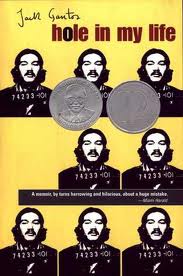
As a teacher, I am most familiar with Gantos’s memoir A Hole in My Life, which is a core text for our 12th grade Memoir elective. At 208 pages, the small paperback is much less intimidating than other memoirs, but its small size packs an amazing punch. With brutal honesty, Gantos details the year when just out of high school he became involved in smuggling drugs, and how he survived his prison sentence. A pattern of his prison mug shots covers the front of the text, and Gantos remarks about that picture early in the memoir:

“The prisoner in the photograph is me. The ID number is mine. Th ephoto was taken in 1972 at the medium-security Federal Correctional Institution in Ashland, Kentucky. I was twenty-one years old and had been locked up for a year already -the bleakest year of my life-and I had more time ahead of me” (3).

The memoir also chronicles Gantos’s development as a writer, and how, “dedicating himself more fully to the thing he most wanted to do helped him endure and ultimately overcome the worst experience of his life.” (Amazon)

I have one class set (30) of these memoirs, and I occasionally find additional copies at used book sales which indicates that the book is often assigned for summer reading.

When they read A Hole in My Life, many students have strong reactions to the prison scenes, which take place in the last third of the memoir. “This is NOT a kid’s book,” more than one of them has told me, “this guy cannot be a children’s author!”  They are notorious for trying to “protect” younger readers from any sordid incidents recounted in a book, and Gantos spares no details in describing some of the violent injuries he witnessed while working in the prison’s hospital ward. A Hole in My Life carries differences in age recommendations. Publisher’s Weekly suggests ages 12 and up, the book is a 2003 Bank Street – Best Children’s Book of the Year, and the Amazon recommendation is for ages 14 and up.

During his address, Gantos talked about the importance talking to teachers and students had in his creative process. Pointing to a picture of the cover, he said proudly, “This is the book that gets me into the front door of some high school where I can I get to talk about books and writing. This book is just like a key where I get to meet those high school kids.”

Usually, I usually assign the memoir to be read and discussed in literature circles and frequently students take these instructions to simply restate plot, “what happened? What happened next?” However, since Gantos was eager to share his structure with his audience, I may employ this strategy with this text. “When you think about a story,” he paused to show a graph projected on the big screen, ”you don’t think about the 50% invisible side called the structure. When I write, I draw 16 boxes and I fill them” he gestured to his sketches, “Beginning, middle,…action, story, character,” proving to this audience that their time pushing graphic organizers onto their students is still a worthwhile endeavor. As for the ending? “A book always has a double ending; the first is the physical ending, but the second is the emotional ending.” This is true in A Hole in My Life. Gantos relates the heartbreaking loss of his prison diary, written in between the lines of The Brother’s Karamazov, Gantos sharing the page space with the words of Dostoevsky. This diary was the more expensive the price to pay for his felonious actions, not the physical time he had spent behind bars.

He explained to his audience, “the reader wants to know how has the character been changed by an experience…the reader wants to have been inspired.” Gantos continued with more passion as he continued, “You read a book, and the next day, the book will be the same, but that you won’t. The that book will infects you and add to that little Library of Congress you have in your head.”

Gantos’s use of the Library of Congress, with the marble and beautiful domed ceiling as a metaphor for the reader’s brain is particularly vivid. The Library of Congress is the largest library in the world, with millions of books, recordings, photographs, maps and manuscripts in its collections. That powerful image is one every teacher in the room hopes for their students.  After all, what could be better than producing a nation of graduates who have the resources of Library of Congress readily available in their brains?