
Archives For November 30, 1999

Books read in Grade 9-Three core texts and lots of student selected reading

Book Choice Questions

March 1, 2014 — 1 Comment

book loveIndependent reading in our school grades 7-12 means students read books of their own choosing, make recommendations, and keep records of what they read. Recently, however, one of the English teachers in my department suffered a concussion and while the substitutes delivered the curriculum (John Steinbeck’s Of Mice and Men and Laurie Halse Anderson’s Speak), student independent reading had fallen out of regular practice.

Our latest substitute (Natalie) is an enthusiastic graduate of our high school school who has a BS degree in Creative Writing. She has been serious in tackling her lack of experience in the classroom through her best characteristic…she asks questions. She asks a lot of questions.

One of the latest questions she asked was about independent reading. When I expressed my concerns about having the practice reestablished, she seemed doubtful. I suggested that she have students use books they read independently to make connections with the most recent whole class novels.

“You can ask them if they can make a generic ‘coming of age’ connection between Speak and a book of their choosing,” I suggested.

“But what if they choose a book that doesn’t have that connection? What if they choose a book that is too young for them?” she continued, “or a book that they already read? How do I know what they should be reading?”

I recognized her questions; I had those same questions myself several years ago.

So, I sat her down and showed her the following Penny Kittle video that is available through Heinemann Publishers on YouTube under the title “Why Students Don’t Read What is Assigned in Class”:

She had the same reaction I did when I first saw that video.

“Wow,” she said, “I get it. They should read what they want.”

Question answered.

My department is just noticing the benefits after a few years of implementing book choice. We are lucky to have an 80 minute block schedule with the luxury of offering 15-30 minutes a class for Silent Sustained Reading (SSR) independent choice books. We have large classroom libraries with high interest titles and a wonderful school library (with Overdrive e-books available)  to offer students choice in what they read. When we tell students to pull out their SSR book, they are prepared and settle in to read.

Some classes suggest that a book be in a particular genre. Our English IV-Memoir class reads memoirs or biographies. The English II class is based on World Literature, and students read at least one book during the year by an author who is not American. The critical requirement is that each student chooses a book. There is no leveled reading; students can choose a book below their reading ability or they can attempt a book above their lexile level. They learn what to choose to read because they have control of what they want to read.

Penny Kittle, an English teacher and literacy coach at Kennett High School in North Conway, New Hampshire, wrote a guide to helping students read independently titled Book Love. In this text, Kittle offers strategies to help teachers increase the volume of what students read and to deepen student thinking about what they read.

One of the strategies several of our teachers use is to have students respond to reading through the software Shelfairi (Amazon) where they record what they are reading and make connections to other books. I can organize each class in virtual groups and pose general questions for responses. These short responses prepare me for conferences or allow me to respond directly on the software with links or information or suggestions. For example, the English IV Mythology/Fantasy class reads mythologies or fantasies, and I posed a simple question last week and left quick responses for a conference:

How are you doing with your book? What are the connections to myth/fantasy that can you make?

STUDENT: Eragon: So far I am doing well with this book. My book connects with mythology because it is about Eragon who finds a stone which ends up being a dragon egg, and he bonds with the dragon over time. He and Saphira (the dragon) learn to communicate with one another and have a good connection. Saphira and Eragon create a good relationship with one another.

My response: This is a great fantasy…and a series. This novel has elements of the hero’s journey: http://www.thewritersjourney.com/hero’s_journey.htm

STUDENT: Ranger’s Apprentice-The Royal Ranger: Good. I have 10 pages left until its over. Its the final book in the series. There is a giant myth that rangers have special and mystical powers. But that is just false. They are just super stealthy which gives them the appearance of just appearing out of no where.

My response: Now what will you read? Another series?

STUDENT: The Alchemist: The Alchemist is a good book. It has to do more with fantasy than mythology, but there is a myth about a treasure in the pyramids.

My response: And the “stones” have a story behind them as well. Did you know this book is on the NY Times Bestseller list for 291 weeks?

While there are multiple software platforms for sharing book choices, I also find that the features on Shelfari are helpful in having students “shop” for books (without purchasing) and/or write responses using evidence. There are tabs for a book’s Description, a Ridiculously Simplified Synopsis, Characters/People, Quotes, and First sentence. There are recommendations and reviews by other readers for each title as well. The student responses can agree or refute other reviews; they can add information to a book’s page as well.

Regardless of platform, sharing what students choose to read is critical to helping them develop a love of reading. The advertisement for Kittle’s Book Love states,

“Books matter.  Stories heal.  The right book in the hands of a kid can change a life forever.  We can’t wait for anyone else to teach our students a love of books—it’s up to us and the time is now.  If not you, who?”

And that is a very good question.

The English I Honors teacher in my department recently suffered a serious concussion; no reading or writing for several weeks. Her classes must go on, however, and the new unit on John Steinbeck’s Of Mice and Men is next in the curriculum.  A long term substitute is scheduled for next week, and the students could easily read the novel before her arrival.

Moreover, there is a packet of information and worksheets in the file cabinet with background information on the 1930s and the author, John Steinbeck. The practice of providing such a lengthy introduction, however, is associated with “over-teaching”, a practice now discouraged in the Common Core English Language Arts Standards. In statewide tests students will have to meet the standards of the Common Core, and they will encounter texts from many different sources. The recommendation is that students should practice “close reading” where they can independently mine the language of the text for meaning:

“Students who meet the Standards readily undertake the close, attentive reading that is at the heart of understanding and enjoying complex works of literature. They habitually perform the critical reading necessary to pick carefully through the staggering amount of information available today in print and digitally” (ELA Common Core)

The 9th graders could be staggering indeed; they have just completed a unit on Greek tragedy using Oedipus the King. Some students might suffer whiplash in the jump from 5th Century BCE Ancient Greece to 20th Century California in the Salinas Valley. There needed to be a powerful “bridge” to prepare students for this leap in time and ensuing debate between free will and fate.  What could be accomplished without the teacher directed lecture, especially if the teacher is not available? What format could saturate students in an environment of the 1930s?

A few minutes of research on YouTube provided an answer; I could have a substitute show students several versions of the Bing Crosby’s song recording of Yip Harburg and Jay Gorney’s anthem for the Great Depression, “Brother, Can You Spare a Dime?”

The historical accuracy of some of the photos in this first rendition may be questionable, but the message of an average man’s struggle to find employment in the early 1930s is made very clear. The second version below is a sing-a-long-version that is particularly good as a karaoke opportunity. After watching the first version, all students sang along, some with more gusto than others, following Crosby’s cadence in the second version:

After singing, the students reviewed the lyrics:

“Brother, Can You Spare a Dime”

lyrics by Yip Harburg, music by Jay Gorney (1931)

They used to tell me I was building a dream, and so I followed the mob,
When there was earth to plow, or guns to bear, I was always there right on the job.
They used to tell me I was building a dream, with peace and glory ahead,
Why should I be standing in line, just waiting for bread?

Once I built a railroad, I made it run, made it race against time.
Once I built a railroad; now it’s done. Brother, can you spare a dime?
Once I built a tower, up to the sun, brick, and rivet, and lime;
Once I built a tower, now it’s done.

Brother, can you spare a dime?

Once in khaki suits, gee we looked swell,
Full of that Yankee Doodly Dum,
Half a million boots went slogging through Hell,
And I was the kid with the drum!

Say, don’t you remember, they called me Al; it was Al all the time.
Why don’t you remember, I’m your pal?

Buddy, can you spare a dime?

Once in khaki suits, gee we looked swell,
Full of that Yankee Doodly Dum,
Half a million boots went slogging through Hell,
And I was the kid with the drum!

Say, don’t you remember, they called me Al; it was Al all the time.
Say, don’t you remember, I’m your pal?

Buddy, can you spare a dime?

These lyrics provided students an opportunity to “close read” the context of the Great Depression, particularly in the lyrics “Once in khaki suits, gee we looked swell” and “Half a million boots went slogging through Hell.” While they understood that after the stock market crash there were unemployed men who had helped in the building of railroads and towers, more than one student made the connection that there are currently soldiers who have returned from serving in Iraq or Afghanistan who have not found employment either. Their brief discussion was enough to set up Steinbeck’s tale of Lennie and George, who share a dream of finding employment to be independent farmers raising rabbits.

Once the background was established, students could then read the novel independently, the way the Common Core recommends in the reading standards. Additionally, the long-term substitute can now complete the leap from classical to contemporary tragedy without having to dwell on historical context. The only downside might be getting rid of “Brother, Can You Spare a Dime?”… a song-worm now in their brains!

In the spirit of all end of the year reviews, I have condensed the year 2013 by offering month by month posts from this blog that illustrated the best student (and subsequently, teacher) learning:

January 2013: A Freshman’s Modern Odyssey in the Style of Homer

"Dawn spread her rosy fingers..."

“Dawn spread her rosy fingers…”

The Freshmen final project after reading The Odyssey is a narrative that students complete called “The Wamogossey: A Day in the Life of a Freshman at Wamogo High School.” Writing narratives are once again favored in  Common Core State Standards, and this post explained how students made their own attempt at an epic adventure.

February 2013:  Spilling Over the Corners of a Six Word Text

Short Story in 6 words

Short Story in 6 words

This exercise proves that keeping students “within the four corners of the text” is impossible, even when the text, attributed to Ernest Hemingway, is only six words long. This post also serves as evidence that that admonitions on best practices should be limited to those with actual classroom experience, not to the “architects of the Common Core.”

March 2013 If You Want to Watch the Cow Give Birth

Watching the arrival of our latest calf

Watching the arrival of our latest calf

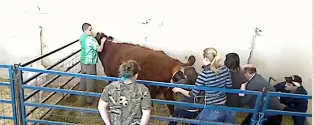
Yes, “If you want to watch the cow give birth, turn on U-stream now!” was an announcement over the PA system. Normally, I am irritated by interruptions to class time, but this announcement cued students about opportunity watch the birth of a calf in the Agricultural Science wing of our high school. The combination of technology in broadcasting and recording the birth of the newest member of the agricultural program with old-fashioned “hands on” physical labor illustrates 21st Century authentic learning.

April 2013 You Never Forget Your First Hamlet

Members of the senior class were fortunate enough to see Paul Giamatti’s “Hamlet” at Yale Repertory Theatre. I’ll let their words speak for the experience:

The performance was a wonderful experience, especially since it was my first time to see Shakespeare.

I wouldn’t mind going to another because it was so enjoyable that I didn’t even realize the 4 hours passing by.

I like the way that a play has a certain kind of vibe. It’s like a live concert, where there’s a certain kind of energy.

It was like seeing a live performance of a film. I would especially like to see another Shakespeare because it is the way that he intended his works to be portrayed.

After seeing Hamlet so well done, it would definitely be worth going to see another one whether it be Shakespeare or a different kind of performance.

May 2013 Kinesthetic Greek and Latin Roots

Spelling "exo"=outside

Spelling “exo”=outside

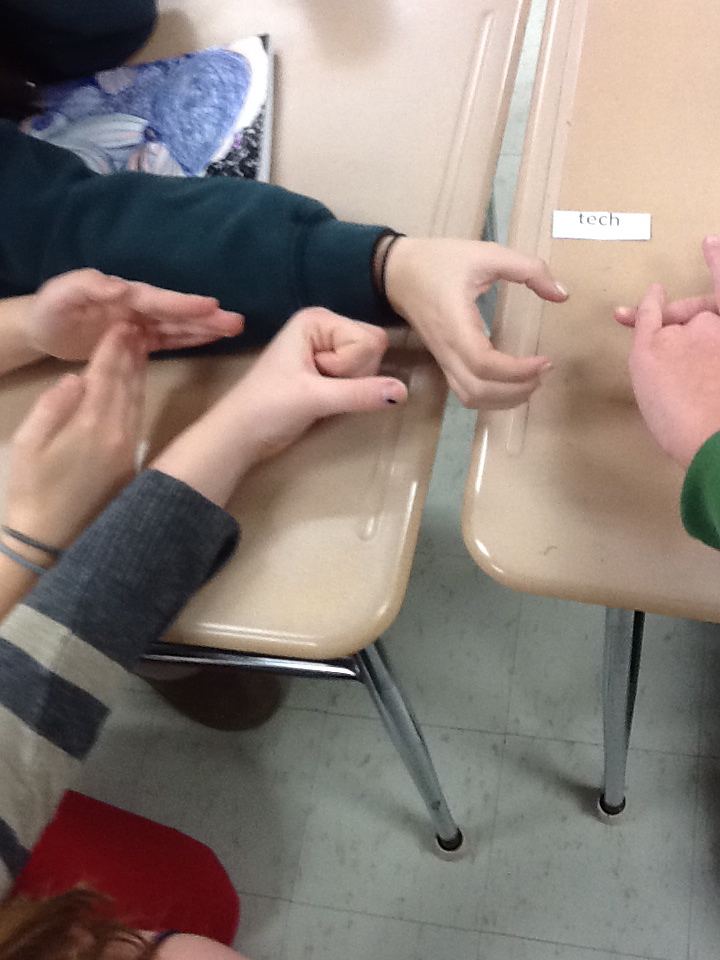
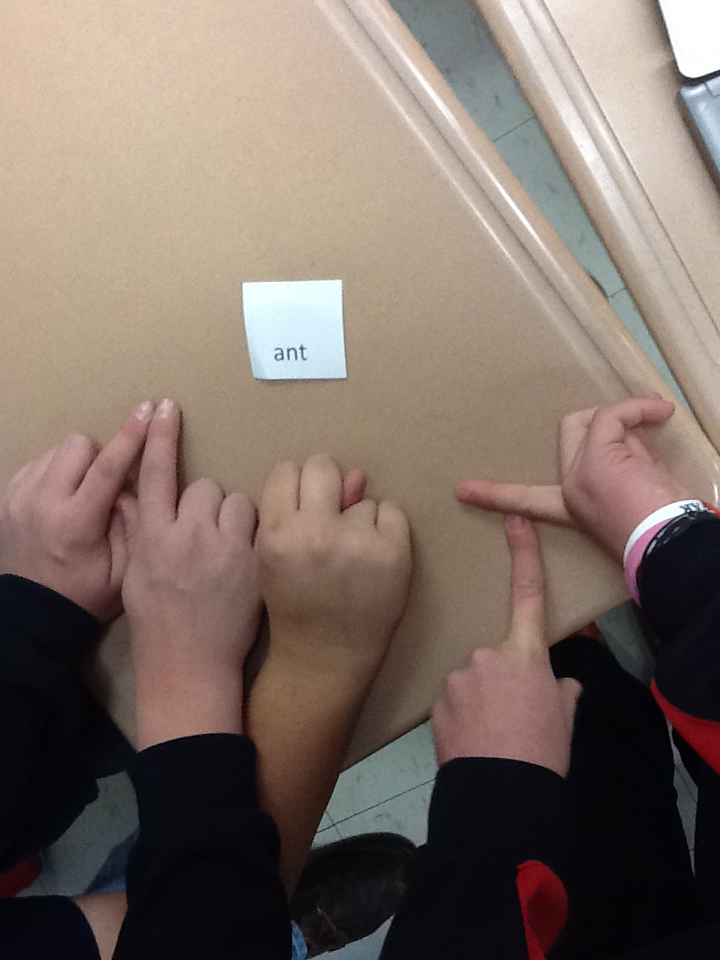
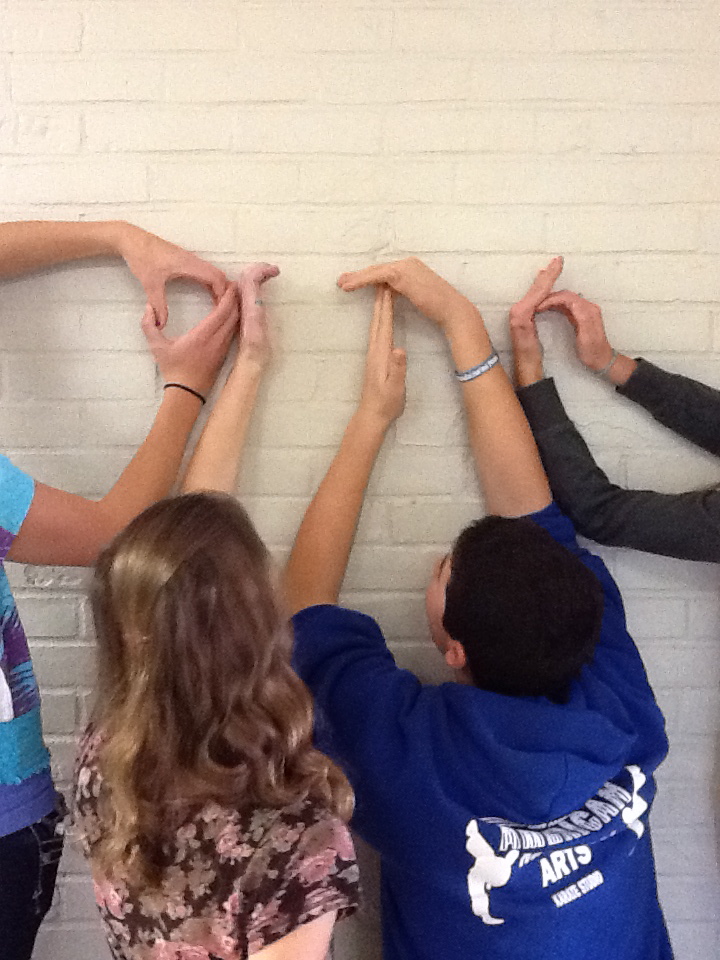
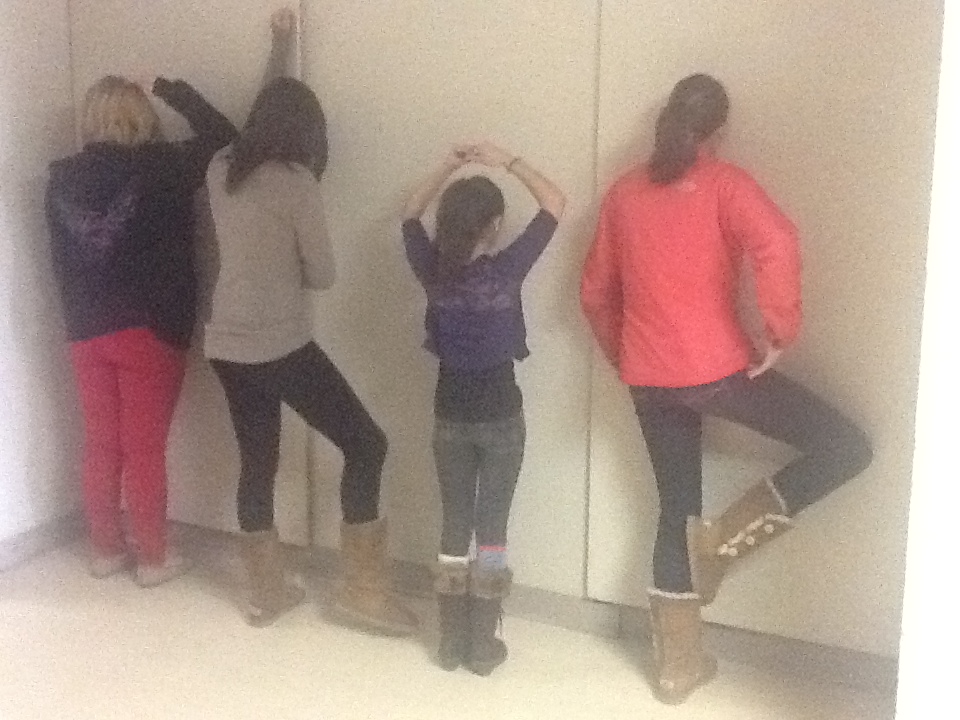
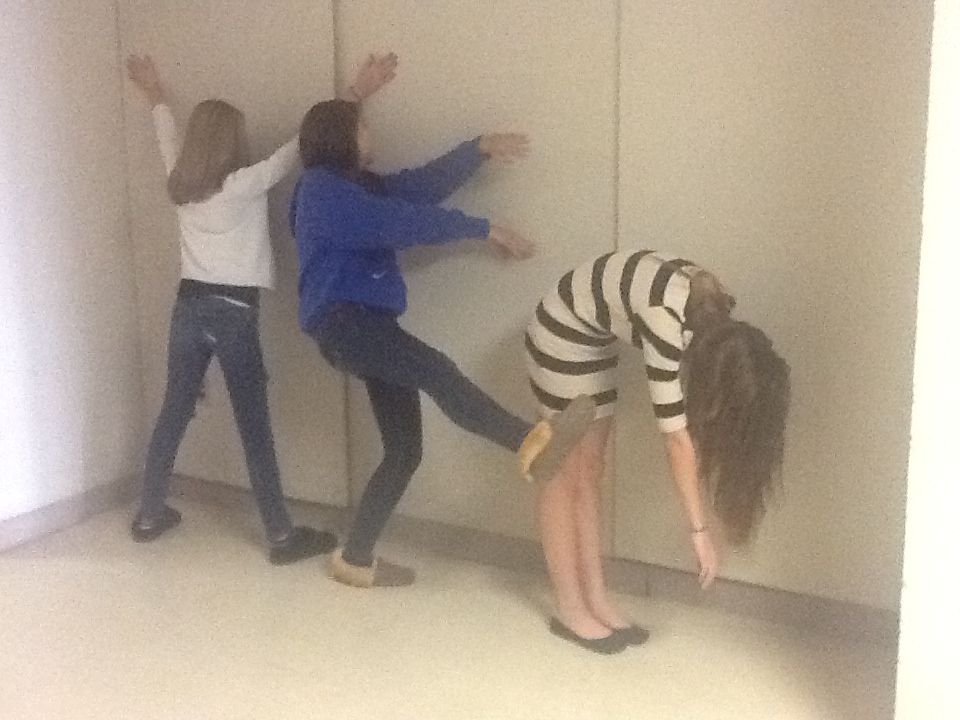
Understanding Greek and Latin roots is critical to decoding vocabulary, so when the freshman had a long list of roots to memorize, we tried a kinesthetic approach. The students used their fingers to spell out Greek roots: ant (against), tech (skill), exo (outside).  They twisted their bodies into letters and spread out against the wall spelling out xen (foreign), phob (fear). They also scored very well on the quizzes as a result!

June 2013 Superteachers!

Superteacher!

Superteacher!

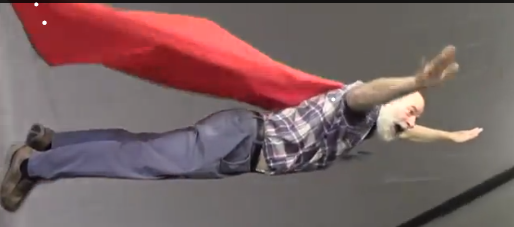
At the end of the 2012-2013 school year, teachers rose to a “friendship and respect” challenge to make a video. With a little help from a green screen, 27 members of the faculty representing a wide variety of disciplines jumped into the nearby closet wearing the big “W” (for Wamogo). Students in the video production class watched and filmed in amazement as, bearing some artifact from a particular subject area, each teacher donned a flowing red cape.

July 2013 Library Book Sales: Three Bags Full!

The original purpose of this blog was to show how I filled classroom libraries with gently used books. The Friends of the C.H. Booth Library Book Sale in Newtown, Connecticut, is one of the premier books sales in the state: well-organized tables filled with excellent quality used books, lots of attentive check-out staff, and great prices. This year, I added three large bags of books to our classroom libraries for $152.00, a discount of 90% off retail!

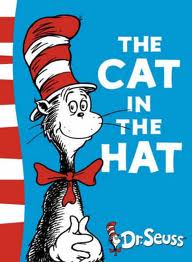
August 2013 Picture Books Are not for Kindergarten Any More!Cat in Hat book cover

At used book sales, I am always looking for picture books I can use in high school classrooms. For example, I use The Cat in the Hat to explain Freud’s theory of the Id, Ego and Superego . Thing #1 and Thing #2 represent Id, and that righteous fish? The Superego. Yes, Dr. Seuss is great for psychological literary criticism, but he is not the only picture book in my repertoire of children’s literature used in high school. This post features a few of my favorite picture books to use and why.

September 2013 Close Reading with Saki and the Sophomores

Saki’s short stories open our World Literature course in which our students will be reading complex texts required by the English Language Arts Common Core State Standards (CCSS). After a “close reading” the conversations in the room showed the text’s complexity. Saki’s The Interlopers has all the elements suggested by the CCSS:  figurative language, the ironic wish, and multiple meaning in the revenge sought by man versus the revenge exacted by Nature. Our close reading should have been “textbook”. The evidence proved the characters’ demise…or did it? The ensuing discussion forced the class to consider other positions.

October 2013 Close Reading Art

The Fighting Temeraire

The Fighting Temeraire

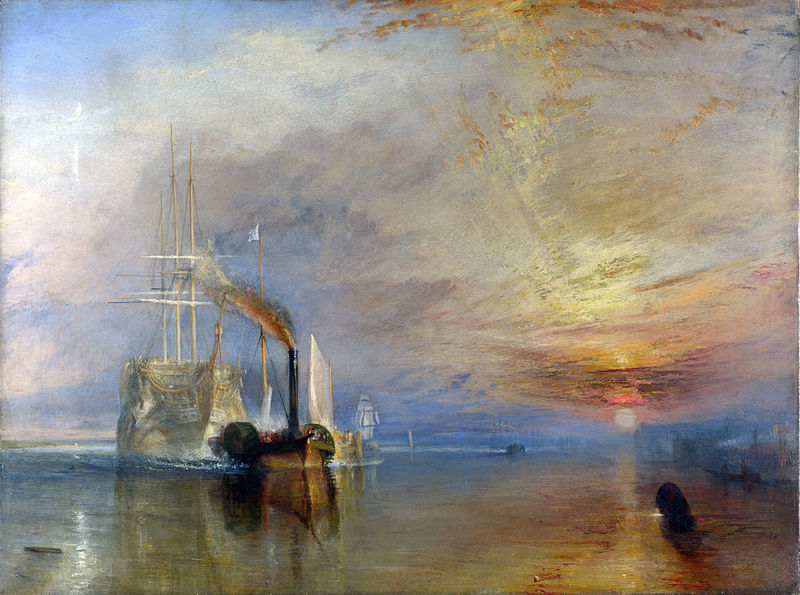
After “close reading” short stories, the sophomores were asked to use the same skills to “close read” several paintings that thematically connected to the Industrial Revolution. They studied a Constable pastoral painting, before J.M.W. Turner’s famous painting, The Fighting Temeraire. While some called attention to the the dirty smoke stack, others saw the energetic paddling as a sign of progress. They noticed the ghost-like ship hovering in the background, the light created by the sunset which gave the painting “warmth”or “light extinguishing”. When they were asked to use these elements as evidence to determine the artist’s message, there were some succinct responses to the painting’s “text.”

November 2013 Thanks for the NCTE Conference

Five members of the English Department attended the conference and selected from over 700 sessions at the National Council of Teachers of English and the Conference on English Leadership.  District support for such great professional development is truly appreciated. We are also grateful that four of our proposals were chosen to share as presentations for other educators. The explanations of our presentations with links to these presentations are included in this post.

December 2013 Drama Class Holiday Miracle

Cast photo!

Cast photo!

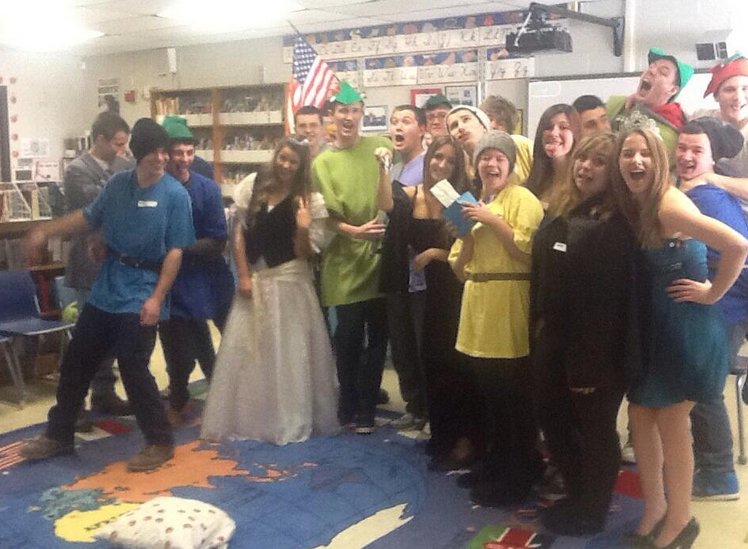
An ice storm two weeks before performance caused a car pile-up, and the drama club teacher was left with a concussion. She could not be in school; the students were on their own, and I was left to supervise their performances of Snow White and the Seven Dwarves at three local elementary schools.

Their “dress rehearsal” was a disaster, but, as the adage says, “The show must go on!” and once they arrived at the elementary schools, the students were anxious to do well. They naturally changed their staging moving from gym floor to library floor, the Evil Queen tossed her hair with anger, and the Prince strode onto the stage with more confidence. The dwarves were a source of comic relief, intentionally or not. I watched the holiday miracle of 2013 repeated three times that day. The students in drama class at each school were applauded, with congratulatory e-mails from the principals that offered praise.

End of the year note:

I am grateful to be an educator and to have the privilege to work with students that I learn from everyday. In this retrospective, I can state unequivocally that 2013 was a memorable year… as you can see from many of the reasons listed above.

Welcome to 2014! May this coming year be even more productive!

The headline in The New York Times (6/13/2013) was a little misleading, Study Gauges Value of Technology in Schools. The topic of gauging the value of technology is particularly significant given the investment by school districts everywhere in laptops, tablets, computer labs, Smartboards, whiteboards and projectors; but the article only referred to the use of technology in math or science.

The article by Motoko Rich referred to the “student survey data conducted in conjunction with the federal exams known as the National Assessment of Educational Progress,” This data was reviewed by the nonprofit Center for American Progress, which determined that middle school math students were using computers for math drills and other low level exercises. One of the more interesting points in the article noted that “no state was collecting data to evaluate whether technology investments were actually improving student achievement.” One of the problems noted in the report was the “lack of discrete learning goals” set by educators that results in the “use of devices in ways that fail to adequately serve students, schools, or taxpayers.”

When states do begin to collect data on the use of technology in the classroom, their studies should be broadened to include how technology is being used in other disciplines, specifically the language arts/English classrooms to facilitate writing.  In contrast to reports of math and science technology use, language arts teachers are using a multitude of digital platforms to facilitate communication between students; technology offers opportunities for students to engage in formal and informal writing at every grade level.

Multiple digital platforms such as blogs or wikis allow students to post responses to questions posed by teachers. Students can share essays in order to peer edit or collaborate on projects, or students can follow links and create data in surveys and respond to the data created.

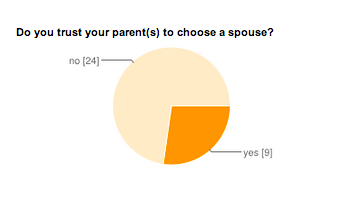
Screen Shot 2013-06-23 at 9.38.55 PMFor example, an assignment for 9th grade students as part of a Romeo and Juliet unit to respond to a writing prompt can use multiple digital platforms to generate sophisticated responses. The assignment was posted on EDMODO and contained data from a student/parent survey on arranged marriages that students and their parents had completed on a Google Doc form. The survey results were posted on PBWorks for students to access for homework. Students needed to review the scene where Lord Capulet arranges Juliet’s marriage to the Count Paris before writing a response. Each response that was posted was available for the class to review and to discuss.

The assignment’s directions read:

The worldwide wide divorce rate for arranged marriages is 4%; this could be due to cultural taboos regarding divorce.
Look at the data on the page that you and your parents created.
What differences do you notice in your attitudes towards arranged marriages?
Now, Consider how the Capulet’s choice of Paris for Juliet may have been the better choice.
Was Romeo and Juliet’s choice to follow their passion the right decision?
Should they have followed their parent’s wishes?

Respond in a well developed paragraph that includes:

  • Introductory sentence that gives your opinion;
  • evidence from the survey;
  • evidence from R&J;
  • Why this decision is important for future couples.

This assignment required a sophisticated analysis of data that the students had created, and an general analysis of characters from Shakespeare’s play.

Here are three responses generated by the prompt:

If Romeo and Juliet had listened to their parents almost all of this never would have happened. Even though just letting their parents choose would have solved everything, it was their decision. Romeo and Juliet had every right to choose their lives. Even the data from the survey shows that most children and parents don’t approve and less than 40% of people thought parents should choose. The Capulets didn’t know anything about their daughter and is trying to match her with someone who is completely wrong for her. This is why Eharmony uses Math equations because that is a lot more reliable than your parents.
In my opinion, Romeo and Juliet’s choice to follow their passion was the right choice. In the survey, some parents said that they could pick their child’s spouse. “I think I know my daughter well enough to know what kind of spouse she is looking for.” This parent has the same idea that Juliet’s did when they arranged for her and Paris to be married. Obviously in Juliet’s case, an arranged marriage did not work. She rebelled and went for Romeo. “Where is my Romeo?” was one of the first things Juliet said when she awoke from her sleep. Romeo and Juliet were love drunk and when they died they were both insanely happy. This is an important for future couples because if they’re in an arranged marriage it may end in death because one or both people are miserable.

I think that maybe Romeo and Juliet should have followed what their parents want. In our survey, 1/3 of the parents said they would be ok choosing their kid’s spouse, and 1/4 of us said that they would be ok with that. Romeo would still be in love with Rosaline, and he and Juliet would still be alive, their families would still be fighting but still they might have  been happy. If Juliet haven’t meet Romeo she might have fallen in love with Paris, and who knows that if Romeo and Juliet were married they wouldn’t have divorced?

While there may be some question as to the effectiveness of technology in the classroom, the language arts/English classroom must be included in future studies by NAEP and in each state. There are multiple ways that digital platforms are being used to facilitate discussion and the sharing of ideas in language arts/English is far more sophisticated than the use of technology to “simply drill math problems.”

Freshman year is hard: new school, new people, increased responsibilities, increased work load. By June, however, most freshmen feel a sense of accomplishment. They are 1/4 of the way through high school, and they are no longer intimidated by the urban legends of pool passes or promises of being stuffed in lockers by seniors.

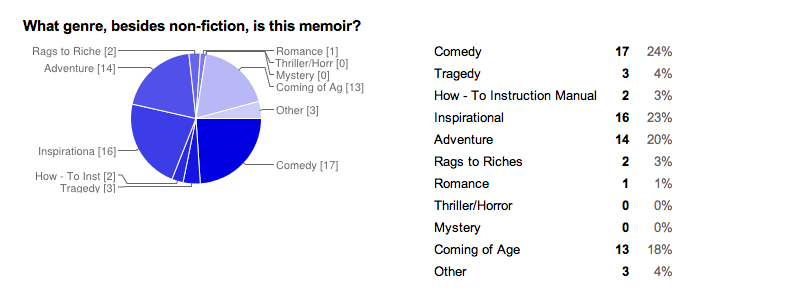
Successful completion of Grade 9 is indicated by a final grade, a percent that indicates the material student earned in each subject. There are other ways, however, to measure success and self-reflection is an excellent way to wrap-up the year. One way to have students to reflect is using a Google Doc form. The form can be tailored for subjective or objective questions. The quantitative data collected (checkboxes, multiple choice, polls, true/false) can be summarized in graphics (see picture below). Students can write longer responses in paragraph form or short answers.

Screen Shot 2013-06-19 at 9.47.21 PMGoogle Doc forms were used all year to measure student understanding or to allow students to record opinions. In September, the 9th grade had started with the theme “Journeys”, therefore, we returned to this theme to have them reflect on their year’s journey. They took this survey after they completed the final exam for credit points only.

The form was titled “My Memoir of 9th grade” and featured 10 questions that required the students to imagine writing a memoir or autobiography about 9th grade. Several of the responses were very “21st Century” addressing the complications of living with the temptations of social media, but other responses from students were timeless and not entirely different from the high school experiences of generations of students before them. Some responses were funny. Many were very clever.  At least one was alarming. Each response captured both a student’s self-awareness in reflecting on the year and a willingness to be critically, sometimes painfully, honest.

There were 79 responses to the questions; here are some highlights:

What is the title of your memoir?

  • No Procrastinating 
  • Thank God for 9th grade
  • The Spin-Cycle that this Year has Been
  • The Story of a Teenage Drama Queen: Or Something Like That

What is the significance of the title?

  • Like a spin-cycle on a washing machine, everything in my freshman year seemed to be moving very rapidly around me as I was caught up in it.
  • This means that the year was torture but in the end I have learned so much more than I did in middle school.
  • The significance is that some parts of this year will be wounds turning into scars that will be with me forever. The wounds weren’t caused by bad things but good things and that’s why I would want the ever lasting scars so I can remember.
  •  It shows how to get through 9th grade without being stupid like some other people because they could do something stupid and not make it through the year and will have to repeat it sophomore year.
  • It is the first level of your high school campaign.

  • I want my memoir to be named the dirt road because a dirt road is bumpy and rough this had been one of the hardest years for me and I want to show that by showing that the road is bumpy and hard to drive on and this year has been bumpy and hard and there is no way to make it go by any faster.

To what novel, myth, epic, fairy tale, or other non-fiction work will critics compare your story? WHY? What is the connection?

  • I’d compare it to Icarus. I’m not the best at listening
  • Of Mice and Men because I go through struggles that many other people are going through at some times I mostly feel like the main character George because sometimes I have to clean up my friends or my own mistakes and live with them behind me.
  • They will compare this story to Phaeton because he has something great that he is using to proceed but it might be the end of him.
  • Probably The Odyssey because of some of the trickery.
  • This can be compared to Hercules because people always told him he couldn’t do it, but in the end he finished strong no matter what other people thought.
  • This would be like The Odyssey because of my constant battle with each teacher in every class, some harder than others.
  • The Wizard of Oz because I always get home in the end. And being here really makes me realize that there is NO place like home. (Not that I hate school I’m just really over it by June)

What would the synopsis or description say? What is your memoir about?

  • This memoir is all about freshman who find out high school isn’t as easy as middle school.  They have to grow up to get all their work done, and not to mention worry about other stuff like sports, extracurricular activities, and friends.
  • My memoir is about my experience in 9th grade and how I got to where I am now. (Maturity, strength, knowledge, etc.)
  • Basically the adventures of this year but in more detail, the fast flying year for a 9th grader who has had fun on field trips and days when there has been a sub or no work.
  • i think it would say that if you are stressed out in high school and need some metaphorical advice then read this book.
  • A young man new to the world of high school embarks on the greatest adventure to see how any ways he could get in trouble. You will be with him in the ups the downs the tragedy the success.

What is your protagonist’s (your) greatest challenge or conflict? What is the goal?

  • The Internet, so alluring and wonderful, but deadly and destructive to my career.
  • The weakness that interfered with my goal is that I was too overwhelmed with after school activities that I had no time to do my homework. I think by next year I’ll figure out.
  • Annoying kids
  • Weaknesses include: being annoying and clingy, losing your best friend over something that you don’t even know what happened like really what happened ugh, being lied to about important things, holding extremely long grudges, and being bothered by simple memories from like years ago, and never having enough video games.
  • Not wanting to talk to new people at first.

What strengths help your protagonist (you) succeed?

  • Some days I just do the work to get through it, not because I actually care about it. You’ve got to keep going through the stuff you don’t like to get to the stuff you do like.
  • My strength is my stubbornness because no matter what the challenge I refuse to give up.
  • Probably not having a phone, that stunk so I made sure I did all of my work to try and get it back.
  • I have a great ability to focus when I wants to. I need a little bit of a push to get going but after that it’s smooth sailing.
  • Time management.
  • Getting sleep helped me succeed alot because I could never focus when I was tired.
  •  My family and my teacher.

Self-reflection is a great way to have students express what they feel they learned, and a Google Doc form is easily created and accessed. The student answers are digitally recorded and because of the Google Docs platform, these responses will be available for the freshmen in 2016, when they are graduating seniors. Hopefully their entire high school experience remains 0% horror!

 I hear the chatter from elementary school teachers: 
  • They can’t wait for reading!
  • Oh, they love to read!
  • When we have to cancel reading, they are so disappointed.

Yet, what happens when I get the ninth graders in my class? I hear:

  • Reading is so boring.
  • I hate to read.
  • I don’t like reading.

What caused the change in students’ attitude towards reading?

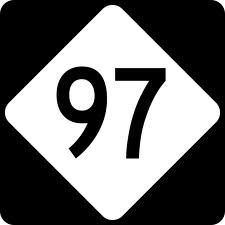
97%

Reading Speed Limit?

I have been attending graduate courses on reading instruction for pre-K-6 in order to find out the reason for the shift in attitudes. One of the textbooks used was Guiding Readers and Writers (Grades 3-6), a 672 page tome packed with information written by authors Irene Fountas and Gay Su Pinnell. The 2001 edition reflected the ideal reading and writing workshop schedule; 3.5 hours of uninterrupted reading and writing daily.So, how did the instructional strategies for elementary students in the Fountas and Pinnell book prepare students for grades 7-12 ?

The Fountas and Pinnell strategies use a Benchmark Assessment System that allowed for leveled literacy intervention for very early readers. Texts were rated (A to K) on their difficulty for the reader in fluency and comprehension at instructional or independent levels. Each level suggests a percentage of accuracy that a student should achieve before moving to the next level, for example:

 For levels A to K, a text read at 90%-94% accuracy (with satisfactory or excellent comprehension) is considered an instructional level text. That means that the student can read it effectively with teacher help–a good introduction, prompting, and discussion).

For levels A to K, a text read at 95%-100% accuracy (with satisfactory or excellent comprehension) is considered to be an independent level text. That means that the student can read it without help. Reading at the independent level is extremely valuable because the reader gains fluency, reading “mileage,” new vocabulary, and experience thinking about what texts mean (comprehension).

Fountas and Pinnel are very clear that these percentages should not be fixed, stating:

We wouldn’t want anyone to interpret these percentages in a rigid way, of course. A child might read one text at 91% and then experience a few tricky words in the next book and read it with 89%.

They also note that reading broadly increases a student’s vocabulary, and they suggest that schools could mandate their own policies in insuring that students reading smoothly and easily with satisfactory accuracy and comprehension before moving to the next level.

I heard, however, a number of literacy specialists/instructors from elementary schools in my classes representing different districts in the state explaining, “We hold students to a 97% accuracy rate before moving them on” or “I would not move a student who isn’t reading at a 95%-97% accuracy rate.” Are these literacy specialists/instructors misreading the Fountas and Pinnell book? Furthermore, is a district’s adherence to this 97% accuracy rule hurting students as they transition to the higher grade levels? If a student is directed to read only those books that can be read at 97% or even a 91% or 89% accuracy, what happens when he or she is handed a required text that is above his or her reading level?

The problems in reading accuracy are clearly evident in when students enter middle school, and they are handed textbooks and whole class novels from the literary canon. Richard Allington, a past president of the International Reading Association and the National Reading Conference, wrote an article that directly addressed the problem of difficult texts for the journal Voices from the Middle (May 2007, NCTE) titled, “Intervention All Day Long: New Hope for Struggling Readers “ In this article, Allington makes the argument that districts should not mandate the same grade level texts for readers of varying ability:

This means that districts cannot continue to rely on one-size-fits-all curriculum plans and a single-period, daily supplemental intervention to accelerate struggling readers’ academic development. Districts cannot simply purchase grade-level sets of materials—literature anthologies, science books, social studies books—and hope to accelerate the academic development of students who struggle with schooling. There is no scientific evi- dence that distributing 25 copies of a grade-level text to all students will result in anything other than many students being left behind.

He argues for an extension of the 97% accuracy rate using easier texts and explains that the more difficult texts at the middle and high school levels will have many more words per page than the texts in elementary school. He notes that in a book of 250 and 300 running words on each page, 97% accuracy would mean 7–9 words will be misread or unreadable on every page:

 In a 20-page chapter, the student would encounter 140–180 words he or she cannot read. And typical middle school textbooks have twice as many words per page, creating the possibility that a reader reading at 97% accuracy would be unable to correctly read 14–20 words per page or 250–400 words per chapter.

As a result, Allington argues that struggling readers will not be helped by reading these texts, regardless as to the amount of support.
The very texts that are supposed to be a resource for a discipline’s content, “won’t help them learn to read.”  Many upper grade level texts are  textbooks are  heavy, difficult to read with all the subject specific vocabulary embedded in passages; the different fonts, pictures, and information boxes may confuse a poor reader.

I am, however, a little skeptical about Allington’s point regarding students who miss words in texts. I am not sure that the multiplication factor Allington uses to calculate the number of words missed since words are repeated in a novel.  Yes, a student may miss “purloined” on page 12, and on page 17, but should that word be counted twice? There is a context that eventually brings about an understanding; by the third “purloined” a student may have a better understanding of the word because of that context. As an additional concern, requiring a 97% accuracy rate would stop most middle/high school literature programs that use whole class texts. For example, we teach Romeo and Juliet to our 9th graders, and the accuracy rate for Shakespeare, even for teachers with Master degrees in English, is about 80%. Yet, year after year, as we read the play aloud, students do understand generally what is going on. Perhaps some literature is as the poet T.S. Eliot wrote, “Poetry communicates before it is understood.”

On the other hand, Allington has every reason to be concerned that students entering middle school and high school will encounter texts that are complex with high exile levels.  These texts will not be modified to accommodate struggling readers, instead the Common Core State Standards (CCSS) are moving in the opposite direction with Lexile levels being raised at all grade levels. Allington’s concerns are not the concerns for publishers who want to meet the CCSS in order to sell as many textbooks as possible. Ultimately, a 97% accuracy rate is not realistic with the materials in each subject area at the middle school and high school levels.

The students who have been swimming in the shallow end of the reading pool throughout their elementary school experience are suddenly tossed into the deep end of literature and informational texts when they hit middle school. The aforementioned elementary literacy specialists/instructor’s adherence to the 97% accuracy with Fountas and Pinnell benchmark assessments limit students to highly filtered reading experiences as opposed to challenging students to develop their own strategies when they encounter difficult texts. More practice with difficult reading materials should be part of an elementary school literacy regimen, just like a batter at the plate who must learn how to swing at a number of different kinds of pitches; not every pitch comes in the strike zone over the plate, and not every book is at a prescribed accuracy rate.

Requiring every student read at a 97% accuracy rate was not the intention of the Fountas and Pinnell directives, but the directives of others may be contributing to the comments I hear from my grade 9 students that “Reading is so boring” or “I hate to read.” A steady diet of the same level of reading caused by requirements to achieve a 97% (or A+) accuracy may hem in or deaden a student’s independent nature or curiosity. Furthermore, when a student gets to middle school, the requirement to read at 97%, or any literacy rate, is not enforced in all disciplines; students who have been spoon-fed reading materials may feel betrayed. Their 97% or A+ reading excellence is suddenly plunged to lower percentiles, which ultimately results in much lower grades. Any confidence or trust a struggling reader may have developed with purified texts is quickly lost, and “I hate to read” is the result.

Maybe they don’t hate to read; maybe with years of preparation at 97%, they are unprepared for any other speed.

Catcher-in-the-rye-red-cover“I heard about this book called ‘Catcher in the Rye,” said Peyton. She was lining up a “book buddy” extra credit assignment to read with Madison.
I reached for two dog-eared copies with the familiar brick red cover, “Meet Holden Caufield,” I said.

Requests for Catcher in the Rye happen every year. Since we do not teach the novel as a whole class read, I am always happy to see the many copies we have circulating for independent reading. J.D. Salinger passed away in 2010, almost sixty years after his bildungsroman, (coming of age story) of a young man’s wanderings one day in New York City captured the angst of late adolescence for an audience familiar with that angst. Houlden Caufield’s voice was unlike any other, and readers adopted the book with a fervor that bordered on fanaticism. As evidence, there are well-worn copies at every used book sale.

In most high schools today, Catcher in the Rye has a reputation, a cult status. Its “banned book” pedigree  interests both conformist and non-conformists. According to World.edu:

Between 1961 and 1982, The Catcher in the Rye was the most censored book in high schools and libraries in the United States. In 1981, it was both the most censored book and the second most taught book in public schools in the United States.

Many of my students know about the book’s banning history from the South Park episode from Season 14: The Tale of Scrotie McBoogerballs.  In this episode, the students at South Park Elementary are given copies of Catcher in the Rye and learn that the book is “filthy, is inappropriate, and made a guy shoot the king of hippies.”
“Can we PLEASE read this book now?” Cartman pleads.
(View at: http://www.southparkstudios.com/clips/267355/lets-read-it-now )
Very quickly, however, the South Park students learn that 60 years after its publication, the language and themes in the story of Holden Caufield’s day are tame by today’s standards; they are dumbfounded and more than a little annoyed that anyone would consider the book inappropriate. My students have expressed the same puzzlement.

With only one major book to his credit, Salinger still commands the media’s attention. A tweet last week by OpenCulture linked the video below of the reclusive 91-year-old Salinger out for a stroll in Windsor, Vermont (2010):

Under the video, Open Culture also posted a series of anecdotes about Salinger, for example, a story about Nicholas Carr (Is Google Making Us Stupid?)

Nicholas Carr, who was working behind the circulation desk at the college library one summer when “a tall, slender, slightly stooped man” walked in. He remembers his boss whispering, “That’s J.D. Salinger”:

Holy crap, I thought. I just saw J.D. Salinger.

About ten minutes later Salinger suddenly reappeared at the desk, holding a dollar bill. I went over to him, and he said he needed change for the Xerox machine. I took his dollar and gave him four quarters.

That’s my claim to fame: I gave J.D. Salinger change for a buck.

Another recent news item on Salinger was published in the New York Times April 23, 2013, “The Young Salinger, Mordant Yet Hopeful” by Dave Itzkoff. The article described that a recent discovery of nine letters by a 22-year-old Salinger “revealed himself to be as playful, passionate and caustic as Holden Caulfield, the self-questioning adolescent who would become his most enduring creation.” The letters refer to other stories “unpublished and presumably lost works from this period”, tantalizing clues that will set Salinger fans hoping for yet unpublished materials to surface.

Salinger’s reclusiveness fascinates my students. In this day and age, his deliberate choice for isolation starkly contrasts from their uber-connected world of social media. Ironically, social media is a place where Holden thrives today. There are several facebook pages devoted to him. A Google map of his adventures complete with quotes details each step of his journey from the Wicker Bar at the Seton Hotel through the Central Park Zoo and into the Museum of Natural History. He would probably appreciate the myriad of Sparknotes, or Schmoop Notes, that help students who fail to complete assigned reading, or fail to listen to the audio book as available on YouTube. Holden has a Twitter account, @holdencaulfield, and a Tumblr account.  A  blog post on Flavorwire in July 2012 lists 10 Things Holden Caulfield Hates About Everyone including phonies:

“You never saw so many phonies in all your life, everybody smoking their ears off and talking about the play so that everybody could hear and know how sharp they were.”

Predictable, we know. But no Holden Caulfield hate list would be complete without it.

Holden is out there mingling with audiences of this connected age, and now he is mingling with two more. Heads down, they are engrossed with his misadventures during our 20 minute silent sustained reading period.
“How’s Holden?” I ask quietly.
“Good,” they chorus without looking up. They have been caught by Salinger, caught by The Catcher in the Rye.

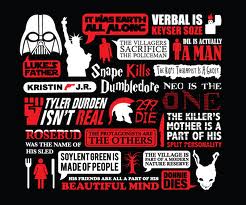
Spoiler alertEnter the spoiler alert. Because the number of ways people hear about stories is increasing, spoiler alerts for books and films are offered as a “heads-up”, a means to prevent plot details from becoming public.  Knowing the end of a story might mean that the strategy of “predicting” a story has been compromised, however, there are genres of stories that absolutely count on predictability, for example, Nancy Drew will always solve a mystery with her best friend, Bess and George, while on TV, predictability has a time limit; the shipwrecked crew will never leave Gilligan’s Island (30 mins) and House will solve a medical mystery (60 mins).

Predictability means to state, tell about, or make known in advance, especially on the basis of special knowledge, and students are taught at an early age that making predictions can help them to determine what will happen in a story.

I noticed how predictions are important even if the end has already been decided when my six-year-old niece was watching the Disney film Running Brave. This was her favorite film, and she watched the VHS tape every afternoon. On one such afternoon, I noticed she was drifting asleep, so I made a move to turn off the video.

“Wait,” she cried out, “I think….I think he’s going to win again.”

From her perspective, the outcome of the race was still in doubt. The cinematic elements, the tight editing of shots , and a triumphant soundtrack created suspense where the viewer might doubt the inevitable. Krista had seen the movie hundreds of times, but she still was “testing” her prediction.

I admit that I have felt the same way watching Miracle, holding my breath for the final seconds wondering if the US ice hockey team would still win the Olympic medal. Krista’s experience is also mirrored in the classes where students often choose books based on a movie that they have seen.

In the independent reading allowed in our curriculum, the 9th graders can choose contemporary fiction or non-fiction, and many of the titles have movies in circulation, for example:

Some students purposefully choose these books because they know the endings, and in knowing how the book ends allows the reader to pay more attention to the craft of the author in bringing all the plot points together in a conclusion. Take for example, the Harry Potter series. Most readers predicted with certainty that Harry Potter would finally face his nemesis, Voldemort. The how and when, however, were still very much in the air, and J.K.Rowling’s crafting of the series’s magical settings and character development kept readers in a willing suspension of disbelief for the length of seven volumes. The final conclusion was satisfying to her fans who knew all along that Harry would prevail, after all, Good’s triumph over Evil is a predictable plot. Readers and filmgoers were not disappointed in following the story of a boy with the scar on his forehead because in each volume and subsequent film release, they correctly predicted that “I think…I think he will win again.”

So when I teach a whole class novel, I know there are some students who already know the ending. They may have reached the conclusion before others, or been informed by older students who notoriously share their opinions and critical information with younger students. In this case, my role is to impress on students that knowing the outcome will not destroy a well-told story, and to focus their attention on the other elements. This was the case with John Steinbeck’s Of Mice and Men.

“I heard this is a sad book,” one student said when I assigned the first chapter, “One guy kills another guy.”
Other students looked up for my confirmation.
“Yes, this is a sad book, but the reason for the sadness is really about caring. We will grow to care for these characters.”
“I already don’t care if I already know what happens,” was his reply.
Four weeks later, this student refused to watch the final scene in the film version.
“I know what happens, and I cannot watch,” he said sadly as he walked out into the hall.

The same sentiments are expressed at the beginning of our study of Shakespeare’s Romeo and Juliet.
“Guess what? They die,” said a student as I passed out the books.
“Yes, they die,” I kept passing out the copies.
“So why are reading this?” another asked.
“Because this is a great story,” I responded, “and the story’s ending will mean more after we finish because we will have read how Shakespeare writes about these ‘star-cross’d lovers’.”
“But we already know how it ends!” they whined.

Now that we are in Act III, no one cares that they know the end, instead, they are recognizing how Shakespeare creates the tragedy. They notice the “hints”: Juliet seeing Romeo “As one dead in the bottom of a tomb”, Friar Lawrence’s herbs of “Violent delights”, and “Love devouring death”.

This discovery of an author’s details makes students more appreciative of the craft in writing as they still try to predict. They notice Shakespeare’s allusions: “Such a wagoner/As Phaeton would whip you to the west/And bring in cloudy night immediately” (3.2.2-4), because we had studied the Phaeton myth earlier in the year.

“Uh-oh. That’s not good,” I heard one say, “Romeo’s gonna crash and burn like Phaeton.”

That kind of analysis is exactly what the English Language Arts Common Core would like to see in a close reading of a text. How interesting that students who already know “what happens” may be better at picking up on an author’s craft that a close reading generates.

Spoiler alerts do warn those readers or viewers who want to be surprised, but knowing the ending does not necessarily ruin the reading or viewing experience. Want to experiment? Here are 50 plot spoilers for 50 novels. I predict that each novel will not disappoint, even if you already know the ending.

The Twitter English Chat (#engchat) last night (5/6/13) was on vocabulary, and I was too late to join the conversation. There was, however, one tweet went by that I would like to answer. Shawn White (@swpax) posted:

Does anyone have fun, effective ways to teach/learn Latin & Greek roots?

Yes. Try a kinesthetic approach.

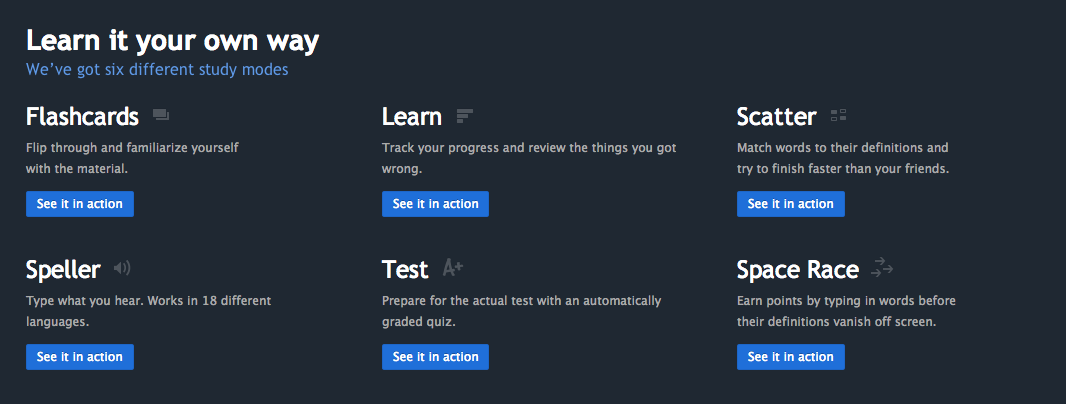
This past January, I posted two sets of Greek Root vocabulary words on Quizlet. This free software allows anyone to “study anything” or “find or create what you need to learn.” I found two sets of Greek roots that were already posted. Quizlet allows teachers to share materials, so I copied the words and posted them to an account that students could access.

Set I:http://quizlet.com/14668765/greek-root-list-i-flash-cards/

Set II: http://quizlet.com/14668889/greek-root-list-iii-flash-cards/

Quizlet also posts the lists to Twitter so students can access the lists. There are a variety of ways that students and teachers can use Quizlet. The flashcard mode has an audio mode which is really helpful for students to hear the correct pronunciation.

Screen Shot 2013-05-06 at 8.32.41 PM

After the 9th graders had the lists, we practiced the words and their meanings kinesthetically. The students used their fingers to spell out Greek roots: ant (against), tech (skill), exo (outside).

TECH-(Skill)

TECH-Skill

ANT-against

ANT-against

ORTH-Correct

ORTH-Correct

EXO- Outside

EXO- Outside

They twisted their bodies into letters and spread out against the wall spelling out xen (foreign), phob (fear).

This was fun. (Sorry you cannot see their smiles)

This was also effective. The class average was  96% on Set I and 87% on Set II.

Greek roots are difficult to memorize, but they are essential to decoding other vocabulary words. Between 5-25% of English words are derived from the Greek. The Greek roots are particularly important in understanding today’s vocabulary in science and medicine.

How fitting, then, that kinesthetic is a synonym for biomechanics. And guess what the etymology of biomechanics is? Greek, of course!  Bios (living organism) + mechane, (machine).

This connection between my activity and the root might just be Greek fate…. but that’s another lesson!

PHOB-Fear

PHOB-Fear

XEN-Foreign

XEN-Foreign

Yes, I make my student memorize Shakespeare’s prologue to Romeo and Juliet.

Two households, both alike in dignity,
In fair Verona, where we lay our scene,
From ancient grudge break to new mutiny,
Where civil blood makes civil hands unclean.
From forth the fatal loins of these two foes
A pair of star-cross’d lovers take their life;
Whose misadventured piteous overthrows
Do with their death bury their parents’ strife.
The fearful passage of their death-mark’d love,
And the continuance of their parents’ rage,
Which, but their children’s end, nought could remove,
Is now the two hours’ traffic of our stage;
The which if you with patient ears attend,
What here shall miss, our toil shall strive to mend. (I.i.1-14)

To prepare them for the poem, I opened with the 2009 video Darrin Landroché:

We discussed the images and the music choices to communicate a message. Most of the student know that Romeo and Juliet is a tragedy; this was not a “plot spoiler.”

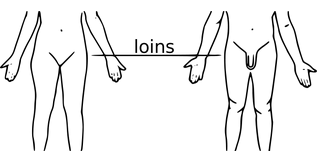
Right now, however, they are baffled by some of the vocabulary contained in the lines of the opening sonnet. (“Mrs. B, What are ‘loins’?”)  On the other hand, there are certain phrases they have already committed to memory. I hear them repeat “where civil blood makes civil hands unclean” and “star-cross’d lovers” under their breath when I ask what they remember.

This morning, I gave them a CLOZE exercise, leaving out words for them to fill in: “_____households both alike in dignity”. They could research the missing words by looking at the small copy of the poem I had them glue into their notebooks.

The best idea, however, has come from my fellow teacher (Ms. S-V) who designed an “annotated prologue” project. We are a BYOT (Bring Your Own Technology) high school, so digital platforms are used regularly, especially the Google Apps.  For this assignment, students illustrate the poem with pictures and links and embed those with the lines of the poem onto a Google Doc.

We did not require a works cited; I would require one if we do this again in the future.

So far, the project is going well. The Google images features are familiarizing students with Verona, Italy. They are also having to  find ways to illustrate “piteous overthrows”. Most all of their responses are literal connections.  Some of the first efforts are heavy with links to songs or movies. All of the annotated prologues have visual elements; some are exclusively visual. Here one example from a student that looks much better that the formatting on this blog. While I love the “two hours traffic”, it’s the “patient ears” that makes me smile. Good work, Molly!

Screen Shot 2013-04-30 at 9.32.33 PM

Two households, both alike in dignity

In fair Verona, where we lay our scene,

In fair Verona, where we lay our scene,\

From ancient grudge break to new mutiny,

From ancient grudge break to new mutin

.
Where civil blood makes civil hands unclean

Where civil blood makes civil hands unclean

From forth the fatal loins of these two foes

From forth the fatal loins of these two foes

A pair of star-cross'd lovers take their life;

A pair of star-cross’d lovers take their life;

Whose misadventured piteous overthrows

Whose misadventured piteous overthrows

Do with their death bury their parents' strife.

Do with their death bury their parents’ strife.

The fearful passage of their death-mark'd love,

The fearful passage of their death-mark’d love,

And the continuance of their parents' rage,

And the continuance of their parents’ rage,

Which, but their children's end, nought could remove,

Which, but their children’s end, nought could remove,

Is now the two hours' traffic of our stage;

Is now the two hours’ traffic of our stage;

The which with patient ear you shall attend

The which if you with patient ears attend

What here shall miss, our toil shall strive to mend.

What here shall miss, our toil shall strive to mend.