Archives For November 30, 1999

Books read in Grade 9-Three core texts and lots of student selected reading

Here is an educational policy riddle: How much background knowledge does a student need to read a historical text?

According to New York Engage website: None.

The Common Core State Standards (CCSS) are being implemented state by state, and there is an emphasis from teaching students background knowledge to teaching students skills, specifically the skill of close reading.

The pedegogy is explained by The Partnership for Assessment of Readiness for College and Careers (PARCC):

Close, analytic reading stresses engaging with a text of sufficient complexity directly and examining meaning thoroughly and methodically, encouraging students to read and reread deliberately. Directing student attention on the text itself empowers students to understand the central ideas and key supporting details. It also enables students to reflect on the meanings of individual words and sentences; the order in which sentences unfold; and the development of ideas over the course of the text, which ultimately leads students to arrive at an understanding of the text as a whole. (PARCC, 2011)

There are many lessons that strongly advocate the use of close reading in teaching historical texts on the EngageNY.com website, including a set of exemplar lessons for Lincoln’s Gettysburg Address promoted by CCSS contributor and now College Board President, David Coleman. The lesson’s introduction states:

The idea here is to plunge students into an independent encounter with this short text. Refrain from giving background context or substantial instructional guidance at the outset. It may make sense to notify students that the short text is thought to be difficult and they are not expected to understand it fully on a first reading–that they can expect to struggle. Some students may be frustrated, but all students need practice in doing their best to stay with something they do not initially understand. This close reading approach forces students to rely exclusively on the text instead of privileging background knowledge, and levels the playing field for all students as they seek to comprehend Lincoln’s address.
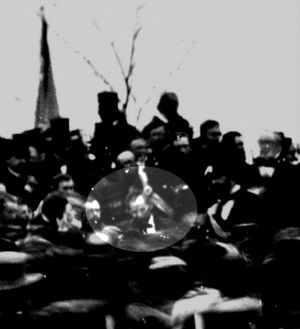
Photo of Lincoln delivering Gettysburg Address- (www.wikipedia.org)

Photo of Lincoln delivering
Gettysburg Address- (www.wikipedia.org)

The lesson plan is organized in three sections. In the first, students are handed a copy of Lincoln’s Gettysburg Address and perform several “cold” readings, to themselves and then with the class.

Lesson Plan SECTION 1 What’s at stake: a nation as a place and as an idea

Students silently read, then the teacher reads aloud the text of the Gettysburg Address while students follow along.

  • Students translate into their own words the first and second paragraph. 
  • Students answer guiding questions regarding the first two paragraphs

Please note, there is no mention of any historical context for the speech. Students will come to this 273-word speech without the background knowledge that the Battle of Gettysburg was fought from July 1 to July 3, 1863, and this battle is considered the most important engagement of the American Civil War. They will not know that the battle resulted in “Union casualties of 23,000, while the Confederates had lost some 28,000 men–more than a third of Lee’s army” (History.com). They will not know how the Army of Northern Virginia achieved an apex into Union territory with “Pickett’s Charge,” a failed attempt by General George Pickett  to break through the Union line in South Central Pennsylvania, and that the charge resulted in the death of thousands of rebel soldiers. They will not know how the newly appointed Major General George Gordon Meade of the Army of the Potomac met the challenges of General Robert E. Lee by ordering responses to skirmishes on Little Round Top, Culp’s Hill, and in the Devil’s Den. They will not know that Meade would then be replaced by General Ulysses S. Grant in part because Meade did not pursue Lee’s troops in their retreat to Virginia.

Instead of referencing any of this historical background, the guding questions in the lesson’s outline imagine the students as blank slates and mention another historical event:

A. When was “four score and seven years ago”? B. What important thing happened in 1776?

The guiding responses for teachers seem to begrudge an acknowledgement that keeping students bound to the four corners of a text is impossible, and that, yes, a little prior knowledge of history is helpful when reading a historical text:

This question, of course, goes beyond the text to explore students’ prior knowledge and associations. Students may or may not know that the Declaration of Independence was issued in 1776, but they will likely know it is a very important date – one that they themselves have heard before. Something very important happened on that date.  It’s OK to mention the Declaration, but the next step is to discover what students can infer about 1776 from Lincoln’s own words now in front of them.

In addition, there are admonishments in Appendix A of the lesson not to ask questions such as, “Why did the North fight the civil war?”

Answering these sorts of questions require students to go outside the text, and indeed in this particular instance asking them these questions actually undermine what Lincoln is trying to say. Lincoln nowhere in the Gettysburg Address distinguishes between the North and South (or northern versus southern soldiers for that matter). Answering such questions take the student away from the actual point Lincoln is making in the text of the speech regarding equality and self-government.

The lesson plan continues:

Lesson Plan SECTION 2  From funeral to new birth

  • Students are re-acquainted with the first two paragraphs of the speech.
  • Students translate the third and final paragraph into their own words.
  • Students answer guiding questions regarding the third paragraph of the Gettysburg Address.

Please note this does not provide the context of the speech that was given that crisp morning of November 19, 1863, at the dedication of the National Cemetery on a damp battlefield that only months before had been dampened red with the blood of tens of thousands of soldiers from either side. The students would be unaware that Lincoln had taken the train from Washington the day before and was feeling slightly feverish on the day of the speech. There is some speculation that he may have been suffering from the early stages of smallpox when he delivered the speech reading from a single piece of paper in a high clear voice. The students would not know that Lincoln’s scheduled time at the podium followed a two hour (memorized) speech by Edward Everett, who later wrote to Lincoln stating, “I should be glad if I could flatter myself that I came as near the central idea of the occasion in two hours as you did in two minutes.” The students would not know that many of the 15,000 crowd members did not hear Lincoln’s two minute speech; the 10 sentences were over before many audience members realized Lincoln had been speaking. The students would not know that this speech marked Lincoln’s first public statement about principles of equality, and they would not know that he considered the speech to be a failure.

Lesson Plan SECTION 3  Dedication as national identity and personal devotion

  • Students trace the accumulated meaning of the word “dedicate” through the text
  • Students write a brief essay on the structure of Lincoln’s argument

The lesson provides links to the five handwritten copies of the text, in the “Additional ELA Task #1: Comparison of the drafts of the speech” so that students can see drafts of the speech and the inclusion of “under God” in the latter three versions. There is also an additional Social Studies task that incorporates the position of respected historian Gary Wills from his book Lincoln at Gettysburg: The Worlds that Remade America. This activity suggests students use excerpts from Wills’s book and an editorial from the Chicago Times (November 23, 1863) to debate “Lincoln’s reading of the Declaration of Independence into the Constitution”. One excerpt from Wills’s book includes the statement,”The stakes of the three days’ butchery are made intellectual, with abstract truths being vindicated.” Finally, here is information about the battle itself; the battle lasted three days and soldiers died.

The enterprise of reading the Gettysburg Address without context defeats PARRC’s stated objective of having the students “arrive at an understanding of the text as a whole”. The irony is that in forwarding their own interpretation of the speech, David Coleman and the lesson plan developers have missed Lincoln’s purpose entirely; Lincoln directs the audience to forget the words of the speech, but never to forget the sacrifices made by the soldiers during that brutal conflict:

The world will little note, nor long remember what we say here, but it can never forget what they did here.

Lincoln wrote and delivered the Gettysburg Address to remind his audience “that these dead shall not have died in vain”. Analyzing the language of the address isolated from the Civil War context that created the tone and message is a hollow academic exercise. Instead, students must be taught the historical context so that they fully understand Lincoln’s purpose in praising those who, “gave the last full measure of devotion.”

“It is altogether fitting and proper that we should do this.”

Continue Reading…

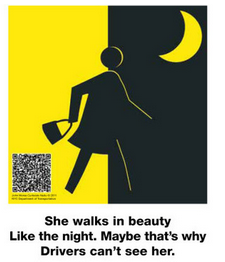
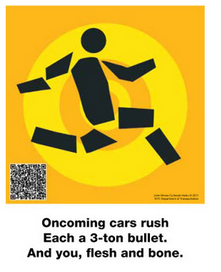
Mash-up are usually the blending of music from two or more sources. However a different mash-up was featured in a story by National Public Radio (NPR) where street signs in New York City were rewritten into Haiku poetry, Haiku Traffic Signs Bring Poetry To NYC Streets. This story illustrated how a mashup could be made of a very basic informational text with a strict poetic form. “Caution: Oncoming Traffic” was expanded into a poem of  of 5 syllables/7 syllable/5 syllables of “8 million swimming/The traffic rolling like waves/Watch for undertow.” In the NPR story,

“Traffic warning street signs written as haiku are appearing on poles around the five boroughs, posted by the New York City Department of Transportation. The poems and accompanying artwork were created by artist John Morse.”

Screen Shot 2013-03-03 at 5.35.21 PM Screen Shot 2013-03-03 at 5.35.31 PM Screen Shot 2013-03-03 at 5.35.39 PM

NYC’s Department of Transportation hoped the signs would catch new eyes in order to communicate important information. The unusual combination of graphics and verse on street signs presented pedestrians with additional information, a different point of view. The reordering of information is just one example of how presenting information in a different genre also provides new writing opportunities for new audiences.

Since the English Language Arts Common Core is rattling its standards calling for an increase in informational texts, the 9th grade curriculum is including a non-fiction unit where students choose a non-fiction text of their own to read. The CCSS  require this increase based on:

“…extensive research establishing the need for college and career ready students to be proficient in reading complex informational text independently in a variety of content areas. Most of the required reading in college and workforce training programs is informational in structure and challenging in content…”

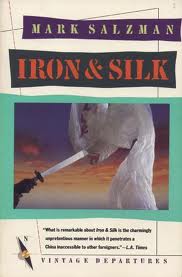
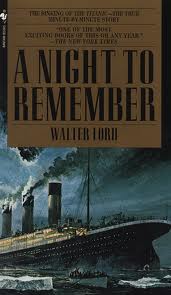
Our students may choose a text to read on topics that range from animal or adventure topics to travel or war. There are titles that have been made available in bulk on the secondary market, such as public library book sales or thrift stores and added to our classroom book carts. The books purchased for $1.00 each (see how) include:

  • Girl Interrupted-Keysen
  • Guts-Paulsen
  • Tuesdays with Morrie-Albom
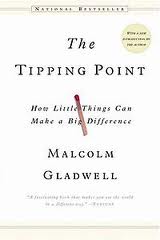
  • The Tipping Point– Gladwell
  • Left for Dead-Nelson
  • Iron and Silk-Salzman
  • A Night to Remember-Lord
  • Hiroshima-Hersey
  • The Teammates-Halberstam

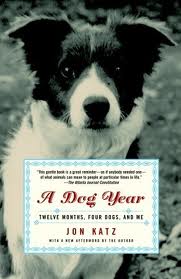
iron and silk Night to remember dog year Tipping

There are also a number of books that deal with animal literature that are stocked on the classroom book cart. Many of these texts will also be available for the senior elective, “Critter Lit”:

  • With Love from Baghdad-Kopelman
  • Tell Me Where It Hurts-Trout
  • Seabiscuit-Hillebrand
  • Winterdance– Paulsen
  • A Dog Year-Katz
  • Wesley the Owl-O’Brien
  • Alex and Me-Royte
  • Modoc-Helfer
  • The Pig Who Sang to the Moon-Masson

Students may chose from these titles or another non-fiction choice though the school library, which also offers the online book shelf Overdrive. The students organize themselves into thematic groups while the unit runs for four weeks (block schedule) with some overlap during the standardized testing weeks. The students spend time reading in class, and they organize themselves into thematic groups. Rather than respond in essays or traditional research papers, the students are given an opportunity to create genre mash-ups.

First, to prepare for writing mash-ups, the students generated a list of the kinds of non-fiction writing they see everyday including:

  • License plate
  • Newspaper article
  • Letter to the editor
  • Ad
  • food labels
  • Menu
  • Directions
  • Q&A Interview
  • Diary
  • Weather report
  • Sports report
  • Billboard
  • Tweet
  • Blog post
  • Directions

Next, the mini-lessons that begin each class are quick( 5-10 minutes) and focus on the characteristics of a particular genre from the list so that students can create rewrite each text in that genre. For example, students review how information is arranged on a food label before creating a “food label” for the books they are reading. Students read billboards and street signs before creating the same.  After each mini-lesson, students write about their text in the assigned genre and use a Google Docs folder to develop a portfolio of authentic writing. The result is a portfolio of mash-ups of informational texts rewritten by students into other genres.

Like the haiku and street sign mash-up, these mashups will still communicate essential information. Students can write about the texts they choose to read in the authentic genres they encounter everyday.

Finally, when April comes around, the students may try writing their essential information in poetry: sonnets, limericks, villanelles and even haikus. After all, April is National Poetry Month!

Today is Digital Learning Day! To mark the occasion, let me take you through a quick walkthrough of the halls of Wamogo Regional Middle/High School and give you a snapshot on how digital learning looks in the English classrooms grades 7-12. We have 1:1 computers in grades 7 & 8; in grades 9-12, we have a “bring your own digital device” policy. Here are the digital learning activities on Wednesday, February 6, 2013:

Grade 7: Students responded to a short story they read, “The Amigo Brothers”. They accessed the wiki (www.PBworks.com) in order to respond to “close reading” questions on the author’s use of figurative language. (Students are required to use evidence in their responses; digital copies of text helps student correctly add and cite evidence).

Grade 8: Students uploaded their reviews of the books (Mississippi Trial, 1955; Chains; The Greatest) they have been reading in literature circles to www.edmodo.com. These reviews are connected to the Common Core Writing Standard #6:

CCSS.ELA-Literacy.W.8.6 Use technology, including the Internet, to produce and publish writing and present the relationships between information and ideas efficiently as well as to interact and collaborate with others.

Grade 9: Students responded to a “writing on demand” journal prompt in preparation for the novel Of Mice and Men. This prompt is connected to the theme of hopes and dreams, and the students were asked:

What is your hope for life, your goal, or even your dream?  What do you think you want from the future? What would you live without, dream-wise?  What couldn’t you live without?

The students also posted their responses on a www.Edmodo.com discussion thread. Selections from responses included:

  • Something I couldn’t live with out would be my grandparents because they are like another set of parent to me, just better. They mean so much to me, that I really couldn’t see my life without them.
  • I hope to be a plant geneticist in the future, that is my hope but no matter what happens I would like to have a career involving plants and even if I can’t get a career in genetics I know it will always be a hobby of mine.
  • My house will be by the ocean, so close I can see it out of my kitchen window. I will grow old and drink coffee on my porch, while I read the paper and wave to my neighbors who walk by!
  • I could live without being famous around the world but I would like to be known town wise. I cannot live without family and their support in my decisions. They help me to stay confident and get through whatever I want to accomplish in life.
  • I think I could live without wanting a huge house or a huge boat “dream-wise”, but that still doesn’t mean I don’t want those things. I couldn’t live without music or my family.
  • My biggest hope and dream is to have a really big plot of land and have the world’s biggest tractor and a bunch of snowmobiles and ATV’s.
  • I want to be able to adopt kids from Uganda but also have my own, and I want to live in a nice house with a big yard. I want to work with little kids as a job.

10th grade Honors English students are reading Great Expectations. They took a quiz on www.quia.com, a software platform for timed quizzes. The College Prep English classes are reading Animal Farm. Today, they had to access “The International” MP3 and the www.youtube.video of the Beatle’s song “Revolution.

For homework tonight, students will write their own “protest” song.

Grade 11: Students can access the vocabulary list from the film The Great Debaters through the class wiki (www.pbworks.com) while the Advanced Placement English Language students watched a YouTube video of a Langston Hughes poem “I, Too, Sing America” read by Denzel Washington:

They prepared responses to the following questions which were posted on the class wiki:

  1.  To whom is the poet writing?  How do you know?
  2.  Choose one stanza and discuss what you feel is the key word in this stanza and explain why you chose this word?
  3.  What feelings does the poem create?  Which words create this feeling?

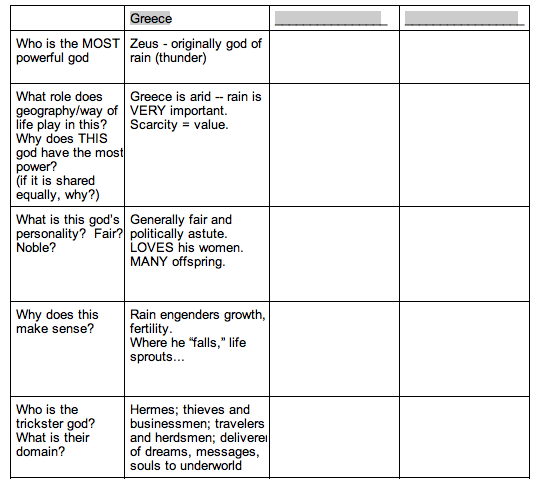
Grade 12: Students in the Grade 12 Mythology class accessed the following Google Doc Template and filled in the chart with their own research about the mythologies of different cultures. This activity meets the CCSS writing:

CCSS.ELA-Literacy.W.11-12.7 Conduct short research projects to answer a question; narrow or broaden the inquiry when appropriate; synthesize multiple sources on the subject

Screen Shot 2013-02-06 at 11.43.41 AM

The Film and Literature class “flips” the content by having students watch films for homework in order to discuss them during class. Tonight’s assignment? Watch the following YouTube clip and be ready for an open note quiz:

Students in the Advanced Placement English Literature class read the short story “Barn Burning” by William Faulkner that was embedded with a quiz on www.quia.com. They then created a list of four themes from the short story on a Google Doc. Each student selected a theme and placed his/her responses in the Google Drive folder to share with other members of the class. Examples included:

  • Actions we take with the grotesque: Shun? Avoid?

This story embodies an ultimate grotesque atmosphere. Even Colonel Satorius Snopes’ sisters are described as, “hulking sisters in their Sunday dresses” (2). These sisters are emulated throughout the story as disgusting, rotund, lethargic, and hog-like beings. This grotesque physical trait emulates the family’s condition in society. Satorius’ clothes are described as, “patched and faded jeans even too small for him.” (1).

  • Family over law or law over family

For the boy to go against his family in the end further proves his actions of courage and strength, and portrays the theme of law over family. “Then he began to struggle. His mother caught him in both arms, he jerking and wrenching at them. He would be stronger in the end, he knew that. But he had no time to wait for it” (10). His whole family is holding him back, but he chooses to go against all of them and do what is right.

This quick walkthrough demonstrating the use of technology in the English classrooms on one day demonstrates that for the teachers and students at Wamogo, everyday is a Digital Learning Day!

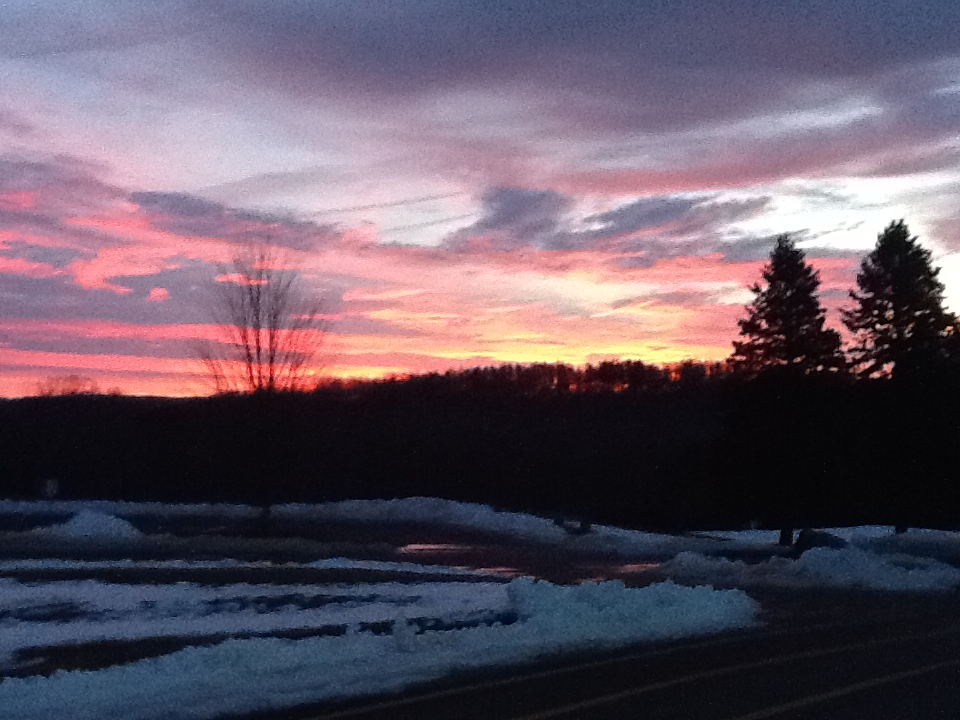
"Dawn spread her rosy fingers..."

“Dawn spread her rosy fingers…”

Our 9th grade classes have been reading Robert Fitzgerald’s excellent translation of The Odyssey. At the beginning of every book, “young Dawn spreads her fingertips of rose to make heaven bright”. My students have heard this phrase so often that they chorus back to me “fingertips of rose” when we read aloud. One morning this past week, I raced up the hill to school to get my iPad so I could capture this picture of the “rosy fingers” and put it on the class wiki.

We dutifully started The Odyssey with the “Invocation to the Muse” and Books 1-4, but the Telemachus “coming of age” story did not really capture their interest. Meeting Odysseus in Book 5 did not improve their respect for the “worthy man of twists and turns.” Once we read Book 9,  the meeting with the Cyclops, Polyphemus, their interest was revived. Apparently, they enjoy a good story of man-eating monster as much as previous generations from 2020 years ago.

I have only been able to locate about a dozen copies of this translation in the secondary market, so we did have to buy a class set. These replaced a worn set of the Richmond Lattimore translation. There will be an audio version of the Fitzgerald translation available in November 2013 I will be ordering so I will finally be able to hear how to pronounce all those Greek names!.

Our final project for the Odyssey is a narrative that students complete called “The Wamogossey: A Day in the Life of a Freshman at Wamogo High School.” Happily,  writing narratives are once again favored in curriculum aligned to the Common Core State Standards:

CCSS.ELA-Literacy.W.9-10.3 Write narratives to develop real or imagined experiences or events using effective technique, well-chosen details, and well-structured event sequences.

The inclusion of the narrative confirms what most writing teachers recognize, that writing a narrative gives a students a better appreciation for reading a narrative.

In writing The Wamogossey, we allow students to organize themselves as individual narrators or in groups of two or three. Our instructions to the students are based on the following premise:

You and your partners are to create a modern equivalent of The Odyssey. The setting is Wamogo High School; the hero a 9th grader – Fresheus or Freshiope.

Your character must make their way through a day at school, facing modern equivalents of the Lotus Eaters, Cyclops, Sirens, and all that Odysseus encountered. The goal is simply to get home alive, where the or she can relax and feel safe.You must mirror Odysseus’ adventures, including how he solves the problems (trickery, patience, skill, self-control, etc).  The essential nature of the obstacles must be the same, in the same order, but set in modern Wamogo.

Each student in a group working on The Wamogossey is required to write three adventures: a single narrator needs three (3) adventures; two people writing the Wamogossey need six (6) adventures; three members of the group need nine (9) adventures. This organization assures that there is an equal sharing of responsibilities regardless as to the size of the group. They compose the narrative on Google Docs; each narrator writing in a different color ink.

In addition, to assure fairness in grading, we allow students to have some feedback on the distribution of points. The project is assigned a base grade (EX: 40 points) Once the project is graded based, that number is multiplied by the number of students in group. For example a project worth 40 points may be awarded only 34 points. If there were three members of the group, then there are 34 X 3 points available, or a total of 102 points. The members of the group then determine a fair distribution of points; slackers are usually “outed” by members of their group. We rarely need to intervene.

The Wamogossey narratives must begin with an invocation to their muse. These are usually very personal and often reflect that we have a vocational agricultural program. For example, from this year’s submissions:

Sing in me, Brandon,
and help me tell the story of tractors, you, skilled in all ways of contending,
the fixing, harried for hours on end,
after the break downs and endless driving in the field.
I saw the end of the last row of corn
and learned that good crops come slowly
and weathered many bitter days
in the early morning cold, while I fought only
to save my life, to get home to the barn.
But not by will nor valor could I save all the gas I use,
Of these adventures, Brandon, tell about me in my school day, lift the great song again.
Begin when the alarm rang, calling me to adventure, when all I hungered for was for home, my  Farm All tractors, and being ready…

In addition to the modernized twists of Homer’s plot, each adventure needs an epithet (“grey-eyed goddess”) and one Homeric simile. My students call these similes “enough already; we get the point” similes.There is also extra credit for using vocabulary from The Odyssey.

So far, several of The Wamogossey entries parallel Odysseus’s adventure very nicely. One student’s encounter with “Eaganphemus” (the Cyclops/our principal) is clever:

Encounter with the Cyclops- Book 9
I was hurrying to class, I was going so fast, I felt like I was in a race car, and the people around me are in a fuzz.  All of a sudden, I saw the huge Eaganphemus standing in my way. I almost slammed into him, my wheels spinning so fast. I tried to get around him, but I couldn’t  But, I happened to have M&M’s in my pocket, so I threw them at him. He seemed overwhelmed! He tried to catch all of them at once!! Once he was trying to gobble them down I raced past, now that he was distracted. I somehow survived getting past him.

As the semester ends next week, the students will have finished their hero’s journey. Odysseus will return to Ithaka and to Penelope, and, yes, another “Dawn will spread her rosy fingers…”.  I may get to run up the hill again to snap another picture.

tragedy“On Friday noon, July the twentieth, 1714, the finest bridge in all Peru broke and precipitated five travelers into the gulf below.”

That is the opening sentence from Thornton Wilder’s novel The Bridge of San Luis Rey. A monk who witnesses the fall of those travelers searches for answers as to whether the accident was simply chance or an act of the Divine. In writing The Bridge of San Luis Rey, Wilder was addressing the genre of tragedy which was defined by Aristotle in his Poetics as “an imitation of a serious act” in literature. The purpose of tragedy is to provide the reader, or viewer in the case of drama, an experience of loss without having to suffer what a fictional character suffers. Through his literature, Wilder, like the authors and playwrights before him, provided the experience and language to us to respond when there is a tragedy. Great literature does this well which may be why the literature taught in high school classrooms is, more often than not, tragedy.

Of course, tragedy is not always a popular curriculum choice. I am always being confronted by students,  “Why do we have to read such depressing books?” or “Why does every book we read in English have to be so sad?” Predictably, when I hand out a book for a whole class read, student will examine the cover, the length of the text, and ask, “So, who dies?” Through literature, students learn a number of different approaches or definitions of  tragedy. In grades 9-12, students are taught about Greek tragedy (Oedipus, Antigone, Medea) where fate or Nemesis cannot be avoided. They learn about catharsis, the purging of pity and fear, and pathos, the empathy one has for the tragic hero. Students are taught about how the Shakespearean tragedy (King Lear, Macbeth, Richard III) centers on the willful downfall of a character who brings about the destruction of others. We have also included a modern interpretation of tragedy by Otto Reinherdt as students read contemporary works of literature (Death of a Salesman, The Road):

“Tragic Man demands that an imperfect world conform to his notions of right and good, and he is defeated because discord, injustice, pain, and moral evil are the world’s warp and woof. The final paradox is man in his tragic vision saying, ‘I do not believe in the invincibility of evil but in the inevitability of defeat’.. . . But in the absoluteness of his commitment, the tragic hero triumphs in the very inevitability of his defeat.”

The indoctrination to tragedy as a “serious action imitated” begins early in the student’s educational career. In grade 5, whole class reads can be The Giver, a dystopian novel that features the euthanasia of a small child. In grade 6, students may read The Devil’s Arithmetic, a book that brings students closer to an authentic understanding of the Holocaust and the deaths of six million Jews. In young adult (YA) literature, there are so many stories about the deaths of pet dogs  (Old Yeller, Where the Red Fern Grows, Love that Dog) that author Gordon Korman fought back against that literary trope with his  YA novel, No More Dead Dogs. Our 7th grade reads that book as an opening bonding experience in September, but they also read Pearl Buck’s short story “The Big Wave” about a tsunami that wipes out a small coastal village in Japan. The recent tsunami in Japan gave our young readers a new appreciation for the tragedy caused by nature.

In high school curriculums everywhere, students decry the death of a character, “Why does the author make us like him and then kill him?” They rail against the death of Johnny in The Outsiders (grade 8); the death of Lenny in Of Mice and Men (grade 9); the death of Kat in All Quiet on the Western Front (Grade 10); the death of John Proctor in The Crucible  (Grade 11); and the death of Hamlet (Grade 12). They claim to want a happy ending.

But do English teachers force an unwanted genre on students? Do students hate tragedy? Not really. Look at the two most popular series of books students chose to read independently. The Harry Potter series began with two deaths, the sacrifice of Lily and James Potter for their infant son, Harry. Seven books later,  JR Rowling had bumped off over 50 characters, and one beloved owl Hedwig (although, admittedly the death of Bellatrix Lestrange was satisfying). Student loved these novels. In Suzanne Collin’s The Hunger Games trilogy, killing and death is a form of entertainment, an entertainment made even more horrific when teenagers are the assassins. In the first book, eleven “tributes” are killed on the first day of the games. The protagonist Katniss kills four tributes herself before she “wins” this round of games with Peeta; the deaths pile up as the series continues with Collins disposing of major characters at a furious clip. I cannot keep these books on my classroom shelf.

Ultimately, tragedy in literature prepares a reader for the experience of tragedy in life. My own first experience with death was from Louisa May Alcott in Little Women when the sickly Beth March finally succumbed to illness:

“As Beth had hoped, the `tide went out easily’, and in the dark hour before dawn, on the bosom where she had drawn her first breath, she quietly drew her last, with no farewell but one loving look, one little sigh.”

I remember reading and re-reading that passage over and over and thinking: “Had I read correctly? Were there only three March sisters left? How could Alcott do this to me?” Well, she did this to me and millions of other readers because in real life people die. Nice people. Good people. Young people. Beth’s death was not a tragedy in the literary sense, but the hole left by her death for the fictional family was “a serious act imitated in literature” like the many real deaths that leave holes in the lives of real families.

Our society confronts news that is tragic everyday.  The recent death of 20 schoolchildren and six teachers in a school shooting not far from where I teach just before the Christmas holiday season is a tragedy so horrific that many have been left speechless; I hear, “There are no words.” But there are words, words in great literature written to prepare us, from a young age through high school and beyond, for exactly this experience. Thornton Wilder’s fictional story of The Bridge of San Luis Rey concludes with a paragraph that offers his response to a tragedy. Through literature, Wilder provides a language for readers to respond to a tragedy such as the one in Newtown, Connecticut, and other heartbreaking events:

“We ourselves shall be loved for awhile and forgotten. But the love will have been enough; all those impulses of love return to the love that made them. Even memory is not necessary for love. There is a land of the living and a land of the dead and the bridge is love, the only survival, the only meaning.”

As the first semester begins to draw to a close, I need to check in and see what progress the 9th grade students are making with Silent Sustained Reading (SSR). Our school’s move to a block schedule (A/B) days of 83 minute classes has given us the opportunity to provide students with 10-20 minutes of SSR every English class period. I try very hard not to put any restriction on what students read, although I still urge them to try and “read up” to more complicated texts. I wrote about the rationale for this program in a previous post, “Be Vewy, Vewy Quiet…We’re Reading”.

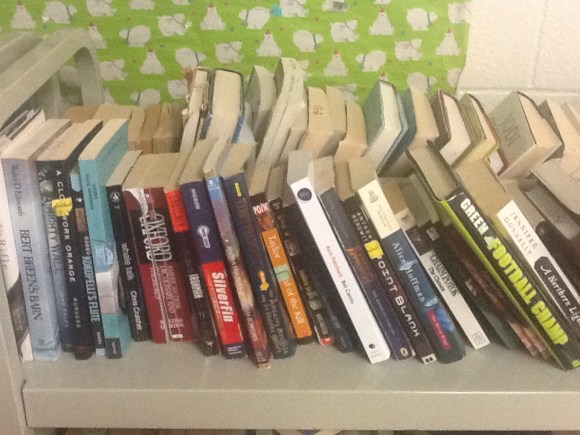
To facilitate the SSR program, there are two carts in the room with books I have purchased through the secondary market, mostly thrift stores and public library book sales (hence the title of the blog “Used Books in Class”). Each cart holds about 150 books; at $1-$2 a book, I have spent about $500 on the 300 books available for SSR.

A wide selection

A wide selection

The most popular titles in circulation these past few months have been:

Lauren Myracle’s TTFN and TTYL
John Flanagan’s Ranger’s Apprentice (any one in the series)
Catherine Gilbert Murdock ‘s Dairy Queen
Gabrielle Zevin’s Elsewhere
Alice Sebold’s The Lovely Bones
Patricia McCormack’s Cut
Carl Deuker’s Gym Candy
S. A. Bodeen’s The Compound
Sarah Dressen’s  Dreamland
Nicholas Sparks’s Dear John
Suzanne Collins’s The Hunger Games Trilogy (pick any one of these; they are on EVERYONE’S shelf)

The students are keeping their responses to the books they read on the Shelfari website this year. This is a commercial site tied to the retail giant Amazon, but there are ways to lock down the private groups we have established for each class. Last year, we used Blogger, but there were some glitches with Internet Explorer and Blogger; unless we used a browser like Firefox, the pages kept jumping and commenting was impossible. When students are on the Shelfari site, they can see what other students in the class are reading, and posting titles they have read or plan on reading is really easy. In addition, there are already reviews of the books, so students are forced to add something original to a review of the book. They can read recommendations (for and against the text) and they can participate in a discussion.

This morning I posted the following discussion prompt on Shelfari:

Hello,
You have had 16 weeks of SSR in class-most of the time with your choice of reading materials.
Tell me how you are progressing as a reader. Are you finding enough materials to read? Have you read at least ONE good book? Are you a better reader now that you were in September? Why or why not?

Some of the responses made my teacher’s heart pound proudly:

Over the past 16 weeks of SSR, I’ve probably read 5 or 6 books. Some of them were short, but some were a reasonable length. I’ve really been enjoying the SSR time we’ve been getting because the quiet period of time we get is really beneficial to my reading skills.

I am progressing in my reading. So far I have read three books this year. I am finding plenty to read. I have found many good books, including “Prom & Prejudice” and “Awkward”. I feel I am a better reader than I was in September because I am reading more difficult books than I was before and in September.

Yes I am better reader because last year I read even slower than I do now and I understand more because of the vocabulary words. I am finding enough materials to read. A good book I read this year was Miracle on 49th Street, this was good because it was a very suspenseful book.

But then, there are the honest appraisals that make me concerned about how students select books and a student’s ability to stay focused in a class for 10-20 minutes:

I’m an average speed reader, but I tend to get distracted. I’ve read a lot of good books, but they were in a lot of different genres. It’s hard for me to find books that interest me lately. I feel that my reading skills have changed a little, I’ve been able to understand things a little more.

During the past 16 weeks of SSR I haven’t really improved very much with my reading. I have only finished one book and I am working on another the first was a pretty good length and didn’t take long to read and the other is pretty long. I am a slow reader and I also just never find the time to sit down and read my book. Also, I get distracted while reading my book sometimes, so I haven’t progressed very much in the weeks of SSR.

And then, there are the even more painfully honest appraisals:

I’m a really really slow reader, and tend to get very distracted while reading, so I have a hard time making lots of progress in books. Books that are available to me don’t interest me. There was only one book that I’ve read and liked in my whole life; but there are no sequels. No I’m not a better reader, my reading skills never change, I’m always a slow and easily distracted reader.

The quiet time in SSR may not be “quiet” enough for some students, so I need to think about the physical space being more reader friendly. Apparently, I also need to have some students develop an understanding of what they like to read, and see how I can get those books onto my book carts.

Success with SSR is monitored through student self-appraisal, so I will be checking back in a few months to see if students note any changes in how they are reading. If nothing else, I know that there is power in the shared quiet reading experience we have twice or three times a week. When their heads are bent down in a book, I can feel them read.

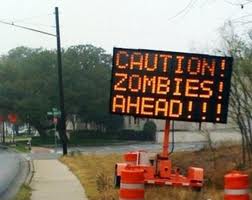
The cover is not at all frightening, but the contents are. I had found two copies of Max Brooks’s World War Z: An Oral History of the Zombie Wars at summer book sales ($1.00 each) and placed them on the 9th grade independent reading book carts.  There was not much interest; the paperback measures a hefty 342 pages. But lately, the book is gaining some tractions with some of the freshmen boys.

“It’s about these interviews with survivors of the Zombie apocalypse ” explained Paul to the class yesterday when he volunteered to share what he was reading, “and it is really realistic. You hear how the zombie plague started and how the governments are corrupt.”

When a classmate endorses a book, the other students listen; first person testimonials are very powerful in our independent reading program. I had touted the book early in September to students when they were first perusing the book carts  The storyline was compelling enough for me, a squeamish reader, to appreciate how Brooks made a zombie war a study in political science. How would governments react to an epidemiological disaster? What would our military do to contain a potent virus? What rules would govern the survivors? I found the book to be a heart pounding read, and I read a few paragraphs to the class who listened with interest.

World War Z is told through a series of eye-witness accounts that occasionally connect characters and events. For example, there is the testimony of the fictional Dr. Kwang Jingshu, Greater Chongqing, United Federation of China:

“I found ‘Patient Zero’ behind the locked door of an abandoned apartment across town. . . . His wrists and feet were bound with plastic packing twine. Although he’d rubbed off the skin around his bonds, there was no blood. There was also no blood on his other wounds. . . . He was writhing like an animal; a gag muffled his growls. At first the villagers tried to hold me back. They warned me not to touch him, that he was ‘cursed.’ I shrugged them off and reached for my mask and gloves. The boy’s skin was . . . cold and gray . . . I could find neither his heartbeat nor his pulse.”

There is also very realistic testimony from the fictional General Travis D’Ambrosia, Supreme Allied Commander, Europe:

“Two hundred million zombies. Who can even visualize that type of number, let alone combat it? . . . For the first time in history, we faced an enemy that was actively waging total war. They had no limits of endurance. They would never negotiate, never surrender. They would fight until the very end because, unlike us, every single one of them, every second of every day, was devoted to consuming all life on Earth.”

What was most frightening as I read was my increasing doubt that the hundreds of characters interviewed in this story were fictional at all. Brooks has written post-zombie war interviews of doctors, generals, mayors, and newspaper reporters with remarkable authenticity.

But World War Z is not the only post-apocolyptic zombie book making the rounds in class. Another popular book making the rounds is Jonathan Mayberry’s Rot and Ruin (Benny Imura) the first novel in a series. I often see the rather grotesque cover art sitting on a desk, one eyeball staring up at the ceiling.

A review of Rot and Ruin on Amazon states:
In the zombie-infested, post-apocalyptic America where Benny Imura lives, every teenager must find a job by the time they turn fifteen or get their rations cut in half. Benny doesn’t want to apprentice as a zombie hunter with his boring older brother Tom, but he has no choice. He expects a tedious job whacking zoms for cash, but what he gets is a vocation that will teach him what it means to be human.
Zombie literature seems to cross our class’s gender lines, although Rot and Ruin seems to be more popular with the girls in the class. At present, there are only a few copies available through our school library, so I will be looking out for it at book sales. In addition to these titles, we also have several copies of James Dashner’s The Maze Runner, a series also loosely connected to the zombie phenomenon.
I am not entirely sure what my students’ fascination with zombies means. There are always trends or fads in literature; several years ago handsome vampires were all the rage, and several year before that, wizards ruled the reading lists. So I am aware that this infatuation with all things zombie will eventually fade, but maybe I can convince them to use their own brains as “food” for thought.

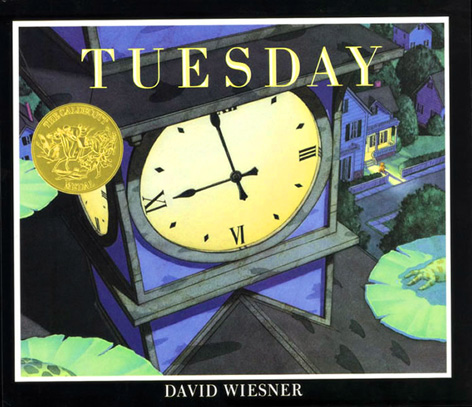
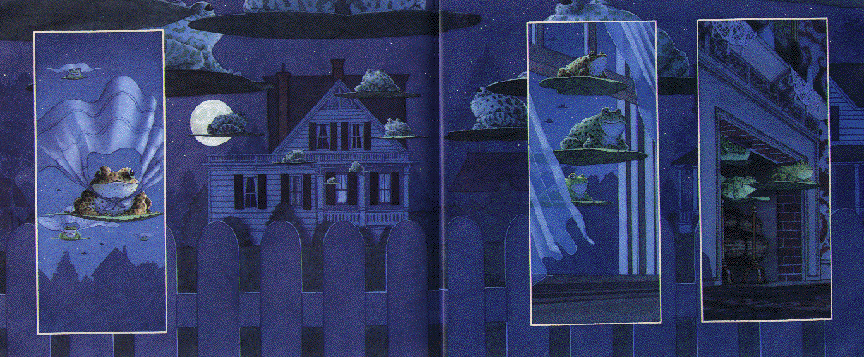
David Weisner’s Tuesday is one of the funniest picture books ever. Really. Watch the video. The funniest pictures, ever, hands down.  The few words in this picture book are only for context when an invasion of frogs floating on lily pads invade a small town on a Tuesday night.

I was so happy when I found a copy for $.25 at the New Milford Public Library book sale this summer. I have a well-worn hardcover of my own that I do not want to lose; this paperback will be perfect to share in class. Wiesner’s picture book is ideal to start the 9th grade mythology unit which leads up to students reading Homer’s Odyssey (Fitzgerald translation).

Our 9th grade curriculum centers on the idea that stories make us human, so our freshmen will spend the year studying the elements of stories and archetypes. For example, in each story they read, they will be able to identify the “call to action” and the moment the protagonist or hero “crosses the threshold”. They will recognize the “challenges” for the hero as being a repeated pattern, especially when the hero is confronted with “temptations”. The students will be familiar with the ideas of “redemption” and “atonement” as the hero travels on the journey from the comfort of the known world to the trials of the unknown world. They will develop an appreciation for the wisdom of the hero’s mentor and the importance of the “elixir” that helps the hero succeed.  They will look for these patterns in the stories they will read throughout high school.  They will review myths as traditional stories that are accepted as history which serve to explain a phenomenon. The flying frogs in Tuesday are most certainly a phenomenon.

We want the students to appreciate the “call to adventure” as demonstrated in the lily pads which lift the frogs from their “known” locale, the swamps and ponds outside the town to the “unknown” territories of living rooms. We want students to predict consequences as the  lilypads float the enthusiastic frogs literally “cross the threshold” of many of the homes.

We also want them to enjoy how Wiesner’s frogs cheerfully wave at disbelieving occupants or cavort using the lily pads as F-16s performing barrel rolls in backyard airspace, while other frogs sit comfortably and devise methods for changing channels in order to watch late night TV. We want them to note how all the frogs are “transformed” from their natural swampy state into comical caricatures.

The flight of the frogs is “challenged” by sheets hung on laundry lines or more directly by a slobbering guard dog. The frogs’ inexplicable journey is cut short when the “elixir” that made this incident possible mysteriously ends the spell. The frogs return to their “known” habitat. The mystery of the remaining lily pads scattered on the concrete roads and sidewalks all over town is wonderfully illustrated in the perplexed look on a detective’s face. Weisner uses a Orsen Welles look-alike in a rumpled raincoat who puzzles holding a dripping wet lily pad, a cadre of police officers and bloodhounds behind him ready to track down the invaders.

Tuesday, by David Wiesner (New York: Clarion, 1991)

Tuesday will provide the students an opportunity to “write  the myth” of what made the frogs fly. The student will need to reference the illustrations in the text as evidence in creating their own personal myth about the flying frogs. We are interested in the explanations the students will need to develop for why the lily pads floated so effortlessly from the pond.  How will the detective explain the limp lilypads strewn around the streets and sidewalks? What predictions do they have for the next possible phenomenon? Some early suggestions started in class are:

  • A new species of lilly pads grew legs and carried the frogs all over the town
  • The lily pads are lunar charged when the moon comes up, then when the sun comes up, the power wears off.
  • Lily pads were made radioactive when a battery fell off the space shuttle into their pond

David Wiesner’s picture book Tuesday provides my students an opportunity to identify universal story elements and create their own myths for the phenomenon of the hilarious frog invasion. This year is the year when they will recognize the elements of this story are the elements in all of literature.  Thus, the picture book Tuesday prepares students for the epic poem The Odyssey, where the equally magic flights and fantastic adventures of the hero Odysseus await their explanations.

But before we start out for Ithaca, we had to spend Tuesday with some frogs.


…..the little mermaid’s tongue was cut out by the sea witch.”

…..the stepsisters cut off parts of their feet in order to fit into the golden shoe.”

…..the prince’s eyes were pierced by thorns after he was thrown from the tower.”

…..the children will not find the way home again, and we shall be rid of them.”

“Eugh,” says Nick. “These are horrible stories”

“They are so bloogory, …a combination of bloody and gory!” exclaims Loghan.

“Really, really gory,” adds Cassie.

We are in the middle of a fairy tale unit for my 9th grade English class which was designed so that students can begin to identify patterns in classical stories and match those patterns to the contemporary stories they read independently.

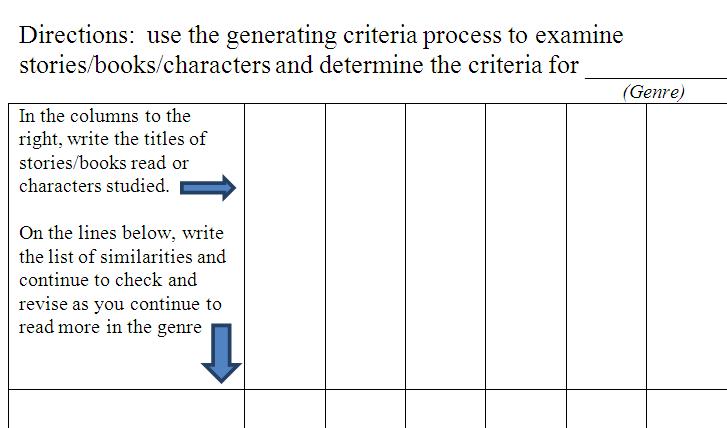
Each student has a “criteria” sheet to complete while reading the fairy tales in this unit. We share these lists of  repeated elements in fairy tales in class after reading.

Our form for generating the criteria for fairy tales


So far they have listed elements that would be expected from comparison by reading fairy tales such as castles, giants, and magic objects from their readings of Jack and the Beanstalk, Rapunzel, The Valiant Little Tailor, and Cinderella. They have also compiled a list of elements I did not expect: birds; thieves and lies; trees and bushes; and wives, not mothers. There is also a great deal of “love at first sight” discussion.

“Cinderella only saw the prince once!” says Casey. While Louisa notes that the prince is the only man Rapunzel has ever seen, “and the next time she sees him, she has a set of twins!”

Our fairy tale unit is a first exposure to the genre without the Disney treatment for many of my students, and a number of the students have commented how they think these original  fairy tales are too frightening for children. On the other hand, there are a few students who have enjoyed the dark and edgy nature of Grimms (aptly named) fairy tales. “At least the characters aren’t breaking out in song,” muttered Christopher reading The Little Mermaid.

We have no trade books or anthologies on fairy tales and have been using online texts only. Some of the texts are difficult, so we have posted resources such as the site Lit2go where most of the stories in the Andrew Lang fairy tale books and Grimm’s collection of stories have been recorded; clicking on links brings a student to the text and supporting audio.

Once the students have generated the criteria for the genre of fairy tales, we have asked them to match the fairy tale story plot to one of the  “Seven Plots in Storytelling.” Students need to explain why the fairy tale plot matches one of the seven plots in literature:

  • Overcoming the Monster
  • Rags to Riches .
  • The Quest 
  • Voyage and Return 
  • Comedy 
  • Tragedy
  • Rebirth

The “rags to riches” plot is easily understood by most students through the story of Cinderella. Similarly, they easily identify the “overcoming the monster” plot with Jack and the Beanstalk. The more tricky plots of “redemption” and “tragedy” challenge them to incorporate evidence from the story. For example, Michael suggested that the Giant’s fall from the beanstalk, “was tragic for the Giant”, but others in the class argued back that tragedy means the main character suffers the tragedy. Other students put The Little Mermaid into the “redemption” plot because, as Cassie noted, “she gave up her life to spare the life of the Prince, and she becomes immortal as a result.”

We have also had the students create original stories that address one of the seven plots using the software Storybird. The art on this website helps to inspire the story; according to the website, “Storybird reverses the process of visual storytelling by starting with the image and ‘unlocking’ the story inside.” The stories are quick to produce, but they do require Adobe Flash. So far, we have watched several “rags to riches” stories, but no student has written a “quest.” However, I am not worried about the “quest” plot because the conclusion of this fairy tale unit will bring us to the unit on Greek myths before we begin The Odyssey.

Michael was looking ahead at the syllabus and asked suspiciously, “Is The Odyssey any good?”

“Oh, yes,” I assured him, “the Odyssey is the ultimate quest!”

He looked unconvinced until I added,  “and there are parts that are really gory!”

I am sitting through a professional development session on how to use peer to peer writing conferences. I want to believe there will be a moment in this workshop when the “ah-ha” moment will happen, when I finally unlock the formula for successful in class peer to peer writing conferences at the high school level. The presenter reiterates how important this process is for writers to hear critical feedback to their writing. I hear again that “sticking with it and training students” to peer to peer conference are key ingredients that will improve student writing. Then I think of my students….my 9th, 10th and 11th grade students. This unspoken heresy forms in my mind:

Forgive me, well-intended and passionate presenter, but in my experience, in class peer to peer writing conferences do not work.

There, I admit it. Success in implementing face to face, peer to peer writing conferences, real critical encounters, has eluded me. I have 20 plus years in the English classroom, grades 6-12, and I have always come away from peer to peer writing conference sessions with the uncomfortable opinion that I have been wasting class time.

I now know why.
This summer, I am participating in the Connecticut Writing Project, and I have to write on demand, and then I must share that work. This is a horrible experience for me. I pass my paper wondering, “What will this person think of me?” and “What if there is a grammar error? I’m an English teacher!!” I have to provide feedback on a fellow teacher’s work, and I see the same kind of panic in her eyes.
I quickly reflect. How does my adolescent, pimply, over-stimulated teen-age boy feel as he hands in his rough draft for a critique by the fair skinned, sweet smelling young girl who sits behind him? How does that painfully shy artist who doodles his responses but has yet to complete a paragraph in writing feel about sharing his work with the amazingly popular class jock (boy or girl)?
I mention this to the presenter who says, “Yes, sometimes, there are student combinations that do not work.” That confirms my problem.

Problem #1: My struggle with peer to peer conferencing begins with setting up partnerships. Do I put the uneven writer with the good writer? Does the good writer need another good writer for good editing? Do I put two poor writers together and expect a miracle? Do I let the students choose their partners? How effective is the conference if friendship is in play?

Problem #2: The research shows that students should learn how to peer conference in the elementary and middle school grades to carry that behavior into the high school grades.However, I have found that training in writing conferences in the elementary and middle school grades is  erased in the high school environment. Many high school students claim to hate sharing their work with other members of the class; participation is mixed.

Problem #3: I teach in a regional school where one third of our freshman class comes from out of district schools. Several of these students have not had any training  in peer conferencing. The number of incoming students who are already uncomfortable in moving to a new regional school requires that I need to start at square one and  train everyone how to conference effectively.

Ultimately, I do not want to give up on students providing critical feedback to other student; I just want to take away the awkward immediacy of that face to face encounter. Since I teach in a 1:1 school district with digital literacy embedded in my curriculum, I will continue to use the solutions that have worked in place of those face to face, peer to peer writing conferences. I use digital conferencing.

Solution #1: I use blogs. Each blog is organized for a small group (8-10 students)   to use as a team. Only members of their team see their posts and comments over a period of time, say a semester or a school year. Students post book reviews, and other students comment on that post by asking questions about the book, or by making recommendations to improve the original book review  post. Each student must respond to the posted book reviews. Writing on the blogs allow students the physical distance they need to comfortably respond to each other. Written comments take time to construct, and students are more thoughtful if they know what they write will have a larger audience. Blogs let me  monitor the comments as well and determine which students are the most effective in providing good critical feedback to a student and which students are simply putting down, “great job!” or “I like what you wrote!” I might not have this information if the students were having face to face conferences. During my writing conferences with students I can follow up with the comment stream and target what is necessary to improve a critical response.

Solution #2: I use wikis. Students upload a report or story to a wiki page, and their peers can respond with questions and provide feedback in the comment section at the bottom of the digital page. Here too, the wiki page and the comment section will be seen by a larger audience and students are more thoughtful if they know their work will be read by an entire class. Responses in the comment section of the wiki also allows me to monitor who has provided good critical feedback to the writer.

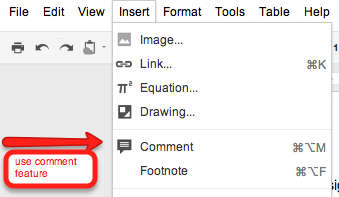
Solution #3: I use Google docs. Students can upload their work to a Google doc and share that link with one or more students. Each peer reviewer can use the comment feature to provide feedback. This feature also identifies the peer conference partner on each comment he or she makes. All  comments by the peer reviewer are recorded on the document’s margin. An student author can even post questions about his or her writing in a comment box. The document can be also shared with multiple students who could work on the same document at the same time if necessary. All  comments are part of the document’s history, and I can monitor changes made by the student writer before and after a peer review. This method is particularly helpful if I have specific students who are hesitant about facing another student in a peer review.

Of course, all this digital peer to peer conferencing is improved if I provide students with  guiding questions (“Did the opening engage you as a reader?”) they would use in written conferences or if they prepare specific questions for the peer reviewer.

Digital platforms: wikis, blogs, and Google docs, allow me the means to provide peer to peer writing conferences by removing those awkward face to face conferences that I have found so unproductive in my high school classrooms. These digital platforms also let me organize students across class periods, and if I found a teacher in a cooperating school who wanted to peer conference, the digital platforms would allow my students to conference outside the classroom. Students still have plenty of opportunities for face to face encounters during class discussions and presentations, but they are comfortable communicating their feedback about a peer’s writing in a digital environment. And, heresy or not, I am finally comfortable with the productive peer to peer (via the Internet) writing conference.