Archives For November 30, 1999

I admit that I am the first to have heart palpitations the moment I hear a problem begin, “Say, a train leaves a station 500 miles east of the city traveling at 60 m.p.h…..”.

Yet, given time, I am confident I can calculate the answer to a word problem, in part because my early teaching career included two years in a grade 8 pre-algebra class. At that time, I feared my expertise in English/Language Arts was not helpful for covering the math curriculum, so I taught as close to the textbook as anyone can imagine. I depended on worksheets. I was inflexible in my methods. I did exactly what the book suggested I do.

Several weeks into the pre-algebra class, I told a fellow faculty member that I was concerned I could be doing more harm then good. Ms. C had graduate degrees in math, and she was responsible for the more advanced math classes.

keep-calm-and-persevere-13“Nonsense,” she advised, “just make sure they know their math facts; students who do not know their multiplication tables will never succeed in higher math.”
I nodded.
Multiplication tables…I could do that.
“That, and never, ever let them give up.” She was firm, “all problems have a solution.” 

Ms. C was right. I could never let them give up, which meant that I could never give up either. Her prescience about the Common Core State Standards, adopted some 20 years later, is reflected in Mathematic Practice Standard #1:

CCSS.Math.Practice.MP1 Make sense of problems and persevere in solving them.

I now understand that this standard should not be not limited to applications in math classes; I believe this standard should be shared with multiple academic disciplines.  As evidence, I offer a “retranslation” of this standard’s descriptors, explained on the Common Core Website, that I use in every lesson everyday:

Mathematically proficient students start by explaining to themselves the meaning of a problem and looking for entry points to its solution.

If you drop the word “mathematically”, this standard measures any student’s ability to comprehend a problem, or question, in any subject area, and encourages students to be self-selective on determining the best way to solve a problem. In the English/Language Arts class, this “entry point for a solution” could be anything from selecting an independent book to read, to choosing a thesis for a research paper, or to picking a presentation software for an oral report to name a few examples.

Mathematically proficient students analyze givens, constraints, relationships, and goals.

In the English Language Arts classrooms, I teach students to analyze literary texts, fiction and non-fiction, for givens and constraints crafted by an author; to analyze the relationships between characters or author and audience; and to evaluate the goals these characters or authors achieve or fail to achieve.

Mathematically proficient students monitor and evaluate their progress and change course if necessary.

In the English/Language Arts classrooms, a student often begins writing with one idea or thesis, but by the end of the paper, the idea has changed; the thesis must be re-written. Students must monitor the progression of their ideas, and when the ideas cannot be supported or expressed, then they must change course in their writing.

Mathematically proficient students can explain correspondences between equations, verbal descriptions, tables, and graphs or draw diagrams of important features and relationships, graph data, and search for regularity or trends.

In the English Language Arts classroom, students should be able to explain the correspondence created with parts of speech in each sentence construction; they should understand the features and relationships created with punctuation; they should look for patterns in rhetoric; and they should be able to recognize the purpose of a selected genre used to communicate.

Mathematically proficient students check their answers to problems using a different method, and they continually ask themselves, “Does this make sense?”

English Language Arts students must read their writing and the writings of others while keeping in mind the question, “Does this make sense?”For the record, I add the question, “So what?” as well.

The particulars in the MP#1 standard are not limited to mathematics as demonstrated in this almost line by line interpretation. All academic disciplines incorporate the ideas in this standard which, when combined, are the tools of perseverance. Teaching students to persevere is the ultimate goal of MP#1, and there are plenty of opportunities to practice perseverance in the classroom. The incorporation of technology in lessons at any grade level and in any subject can be such an opportunity.

My school has a B.Y.O.D. (Bring Your Own Digital Device) policy for grades 9-12. Our grading system is online, assignments are visible to stakeholders, and almost all of my lessons incorporate some technology during the class period. I have learned first hand, however, that the use of any technology in the classroom requires perseverance because no matter how well a lesson is planned, SOMETHING WILL GO WRONG!

For example: a link on a web page will not work; a platform selected by a student might need Java, which is not available on every device; another student will forget a password; or the network becomes overloaded when 30 students try and access a program at the same time.

I think of the MP#1 when I work on these problems everyday, and I know I am modeling perseverance for my students when I persevere and deal with each problem. I cannot give up and blame technology; I cannot blame the Internet. I must model how to problem solve, how to look for solutions, and show how I regularly ask myself if what I am doing “makes sense.”

“Use a different browser,” I suggest when a link does not work.
“Let’s reset your password,” I advise a student.
“OK, Row 3? You will have to wait a minute before trying to log on…we can’t all access this site at once,” I might recommend.
Sometimes I discover the problem is simply the power supply,
“Wait….is this even plugged in?”

Every day, I consider what Ms. C told me years ago as I model the MP#1 standard in my English/Language Arts classroom. From her words to the Common Core Mathematical Practice Standard #1: “Never, ever let them give up. All problems have a solution.”

January weather forecast? Frigid.
Blogger forecast? Sunshine.
Specifically, “Sunshine Awards.”
Nominating or receiving a Sunshine Award is a way for bloggers to get to know each other. There are unlimited winners to this award because this operates much like the chain letters of old. Get an award from a fellow blogger, and then nominate 11 other bloggers to participate. I suspect that sooner or later, every blogger in the world will be nominated proving the blogging universe has no degrees of separation blogger to blogger.
That said, I was delighted to get a mention….really!!
The Sunshine award does give other bloggers an opportunity to learn about each other, although I am not sure any of the following random facts on me will be useful.
There are five “official” rules (in green):

RULE #1 Acknowledge the nominating blogger:

For me, that was Vicki Vinton of To Make a Prairie “A blog about reading, writing, teaching and the joys of a literate life.” Her blog is an amazing combination of education application and literature tie-ins. Her blog looks so organized and engaging. I know if I am thinking that something might be possible, Vicki proves that what I am thinking is doable. I will reread her posts before I write on a topic (ex: Cautionary Tale Close Reading).You owe it to yourself to visit her blog.

RULE #2 Share 11 random facts about yourself.
Okay…..11 random facts about me:

a. I have 31 nieces and nephews (no twins) from my eight younger brothers and sisters.

b. I made my prom dress in high school; I thought pink calico was adorable!

c. The famous clown Emmett Kelly, Jr. patted me on the head when I was a toddler; I am terrified of clowns.

d. I learned to drive a stick shift on my family’s white 68 VW bus that we called “Moby Dick”; consequently, I also know how to jump start a car with a stick shift.

e. I have one “attached” ear lobe and one “unattached” earlobe which is not the genetic abnormality  you might think.

Kindergarten

Kindergarten narrator

f. I was the “lead”narrator in my kindergarten play which surprised my mother and father. NOTE: I am still comfortable onstage.

g. I can recite Marc Anthony’s speech from Julius Caesar III.i.253-275(“O pardon me, thou bleeding piece of earth…”) because my high school teacher made me memorize a soliloquy.

DSCN0868

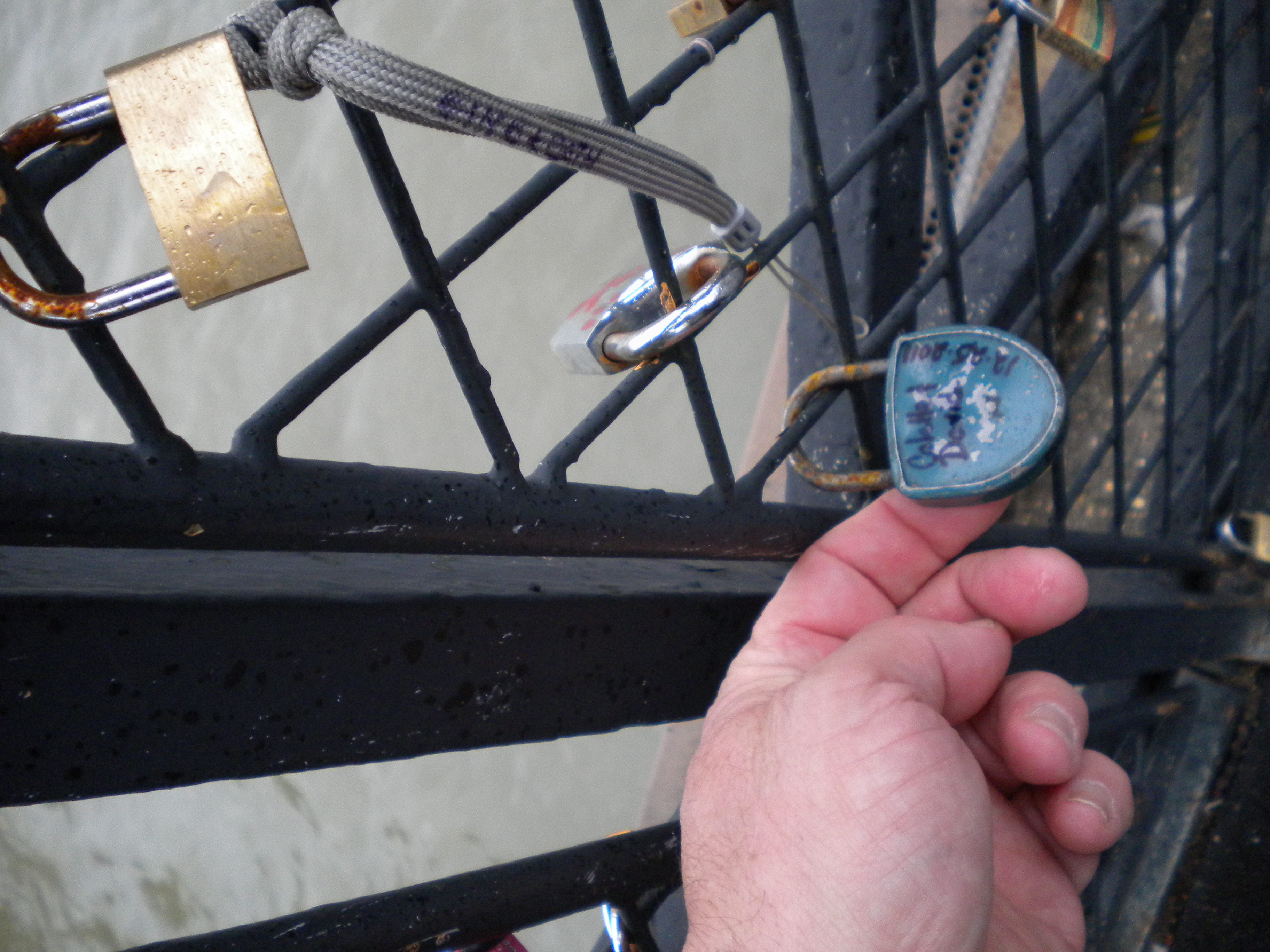
Lock on the Pont L’Archevêché in Paris

h. My husband and I (married 32 years) left a lock on a bridge fence in Paris near Notre Dame in 2011.

i. I tear up at at flash-mob videos. Example? (USAirForce Band at Air & Space Museum)

j. I buy white cars because I want to be seen at night. Paradoxically, these cars always look cleaner than black cars.

Haunted House

My Halloween Haunted House

k. For many years,I had a haunted house for Halloween in my barn while my two sons were young. Now, I shut off all the lights on October 31st and pretend I am not home.

RULE #3. Answer the 11 questions the nominating blogger has created for you.

(Yikes….11 more facts? Aren’t you tired of all this?)

1. What book would you want with you if you were stranded on a deserted island?
How to Build a Ship and Navigate if You Are Ever Stuck on a Desert Island. The more romantic answer, however, would be James Joyce’s Ulysses or Ulysses S. Grant’s letters. Both are on a “to do” list that would require hours of uninterrupted reading time (the connection to Ulysses trying to get back home should not overlooked either…)

2. What did you learn from your mother?
I learned how to cook for a family of eleven; food was plentiful at our dinner table. Cooking is a great skill, but this early training resulted proportion miscalculations and substantial weight gain for my husband. I just cannot get used to cooking for two.

3. Where do you write?
There is a small table in my kitchen where I do much of my writing, but when the weather is nice, I will write on my back patio table. I imagine if I was driving by, I would think, “Oh! I would like to be writing there!”

4. Where do I find joy in my classroom or my work?
When I hear a student correct another student by saying, “a lot is two words.”

5. What do I do to recharge?
I watch movies. I am a movie addict which is not surprising given my addiction to stories.

6. What was my favorite book as a child and why did I love it?
Without question, my favorite book as a child was Little Women. I am the first born, the practical Meg, but in my heart, I am the second born Jo March.

7. If you could have dinner (or coffee or drinks) with anyone living or dead, who would it be and what would you want to ask him or her?
Sister Ella, my first grade school teacher who taught me to read. I want to know if she predicted my interest in reading. She was incredibly -almost frighteningly- tall, and I could never tell if she was smiling or not.

8. Do you have a quote that you keep (in your mind, a notebook, a pocket, your desk, etc.) that captures something that seems important to you? If so, what is it?
The most recent is by Carl Sagan, “What an astonishing thing a book is. It’s a flat object made from a tree with flexible parts on which are imprinted lots of funny dark squiggles. But one glance at it and you’re inside the mind of another person, maybe somebody dead for thousands of years. Across the millennia, an author is speaking clearly and silently inside your head, directly to you.” That’s impressive.

9. How do you feel about the age you are currently in?
Emotionally, I am fine with being 57. I have come to terms with things I will never accomplish (play piano, hike the Appalachian Trail) and still hopeful on other things I want to accomplish (PhD in English, speak French). Physically, I am surprised at how often I need to get up from reading or writing so I don’t get stiff and cramp up. Mentally, I am surprised that 57 sounds old, but 58 sounds wise.

10. What are you afraid of?
I do not like turning off the lights downstairs. To this day, I will race up the stairs as if something is chasing me.

11. If you could go back to one moment in time, when & where would that be & why?
In Our Town Thornton Wilder cautions against revisiting the past; the character Emily finds it too painful. Therefore, I would choose to relieve something I did as a child but not go as myself. I would go back to the 1964-65 World’s Fair in NYC and spend the day with all the exhibits that “predicted” our future.

Now for the fun part:

RULE #4. List 11 bloggers. They should be bloggers you believe deserve some recognition and a little blogging love!

NOTE: Should any of the following bloggers want to accept this award WITHOUT the chain letter-like activities, they have my permission. I have no demands for their participation in what could be a Ponzi-scheme of blogging. These bloggers represent a cross-section of  Bloggers and Tweeters that I read regularly.

 HOWEVER, readers who visit these blogs will benefit. I learn so much from all of these writer/educators…I feel their “love”:

1. First and foremost, my dear friend Catherine Flynn blogged so often in 2013 on Reading to the Core that I could not keep up. I walk with Catherine on the weekends (and I can hardly keep up!), so I am always interested in how our conversations show up in a post. She is a literacy specialist…and a specialist in keeping me focused on the real issues in literacy.

2. I love Bryan Crandall, Connecticut Writing Project (CWP) Director at Fairfield University. He supervised my CWP experience in 2012. His blog this year is Creative Crandall and his entry for January 1st, 2014, reads: “I will spend the next 365 pontificating what creativity means to my world, the people I love, the students I work with, and the teachers that need desperate rejuvenation. The goal is to counter the dreary, maddening, and absolutely criminal doings of governmental leaders and corporate partners who are undoing public schools.” Love that.

3.  Another amazing Connecticut Writing Project Director is Jason Courtmanche at the University of Connecticut. His blog is The Write Space. His posts on Facebook/Twitter alert me to any gem I might overlook in the news that is tied to literature/education. He has worked very hard to outline the transitions of Common Core State Standards to the Early College Experience at UCONN for hundreds of high school teachers.

4.  I met Kate Baker of Baker’s B.Y.O.D.– Bring Your Own Device, Dog, & Deconstruction of Literature in person at the Council of English Leadership (#CEL13) this fall. I had seen many of her posts/tweets. The meeting was kismet…in minutes we had covered The Odyssey, Moby Dick, and other classics. She gave a dynamite presentation of Stop Bleeding Red Ink! at the conference. (FYI: Kate already has posted 11 random facts about herself on her blog!)

5. My mom is in Idaho…and so is Glenda Funk at Evolving English Teacher. I first read her entries on the English Companion Ning; then, I stalked her at the National Conference of English Teachers in 2011.  I LOVED her post about the impact of high school sports on academics: “What We Don’t Talk about When We Talk about Ed Reform in the U.S.A.” In that post she discusses the everyday impact of sports from practice schedules to concussions. Very informative.

6. I read Judy Artz at her blog  Intergrating Learning and Technology-“Here you will find ideas for promoting literacy through the use of technology.” I met her in person also at Council of English Leadership (#CEL13) where I greeted her as an old friend. That is because she tweets (@JudyArtz) at a rapid fire pace, and sometimes mentions me!

7. I also met Daniel Weinstein of The Creativity Core at the National Conference of Teachers of English (@NCTE13) this November. I have used his ideas in my classroom, especially the semantic mapping, with enormous success. The blog is gorgeous with student work as exemplars.

8. Guilty pleasure? The observations of the Anonymous Blogger @ English Teacher Confessions. Entry “This book made me vomit” about Cormac McCarthy’s Child of God is an intriguing homage to McCarthy’s genius as well as a warning. Reading this post will give you an appreciation for this blog writer’s style…who is no slouch herself!

9. Buffy Hamilton, former high school English Teacher and current school librarian, writes at The Unquiet Librarian. She provides interesting and very practical ways to engage students in literacy (Writing Around Texts) through this dual lens. I am more appreciative of advice from educators who have actually been in a classroom.

10. I have participated in the “Slice of Life” challenge series originated by Ruth & Stacey:Two Writing Teachers this year. I admit, I do not always follow the rules (responding to others?!?), but I appreciate their tireless support of teacher writing. I have found that writing my blog (and slices) are the most educational experience I can have. They are to be congratulated for pushing teachers to engage in writing regularly.

11. Not sure where to start? Try The Reading Zone, Sarah Mulhern Gross who writes, “My blog focuses on reading, with a lot of writing and writing workshop thrown in. I also talk about my classroom and classroom projects.” What makes her blog even more legit? She is a regular contributor to The New York Times Learning Network Blog, my “go-to” spot for literacy in content area classrooms. (See how I snuck in two blogs on one entry?)

RULE #5. Post 11 questions for the bloggers you nominate to answer and let all the bloggers know they have been nominated. You cannot nominate the blogger who nominated you.

Here are Vicki’s 11 questions to me, and they are as good as anything I could design. I am plagiarizing them:

  1. What book would you want with you if you were stranded on a deserted island?
  2. What did you learn from your mother?
  3. Where do you write?
  4. Where do you find joy in your classroom or work?
  5. What do you do to recharge?
  6. What was your favorite book as a child and why did you love it?
  7. If you could have dinner (or coffee or drinks) with anyone living or dead, who would it be and what would you want to ask him or her?
  8. Do you have a quote that you keep (in your mind, a notebook, a pocket, your desk, etc.) that captures something that seems important to you? If so, what is it?
  9. What are you afraid of?
  10. How do you feel about being the age you currently are?
  11. If you could go back to one moment in time, when & where would that be & why?

So, dear selected Sunshine Award recipient, here is YOUR choice. You can answer any or all of the 11 questions listed above OR (and I am breaking the rules here) answer this ONE important question….

1. Why write on a blog?

Thanks again, Vicki of To Make a Prairie….this was fun to do on a bitterly cold winter afternoon!

Best two words in winter? “Snow Day”.

Yes. I will look back in mid-June and see the extension of school days to meet mandatory requirements, and I will sigh. I  might question the wisdom of school administrators who would keep students cooped up in classrooms on warm sunny summer afternoons, but even then I will still admit, I love a snow day.

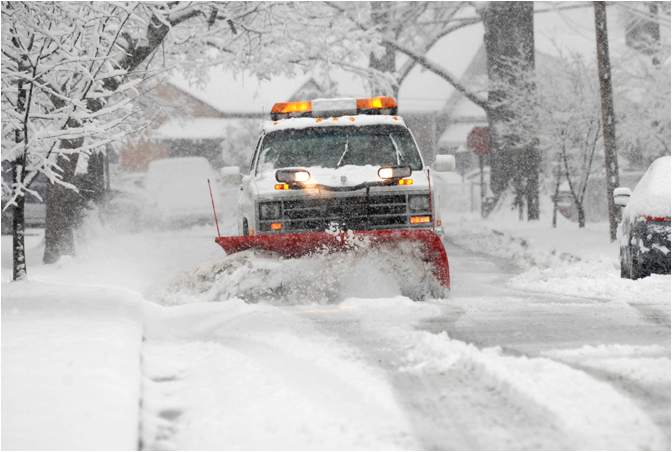
snowremovalThe outside lights were on all night so I could check on the progress of snow mounting on the barn roof. I could hear the town’s plows, chained tires rattling, working throughout the night. My eyeglasses were handy so that I could grab them and read the small print of scrolling school closings on the TV screen, but this morning I did not need them since my school district thoughtfully sent a robo-call.

I am not surprised that one of my favorite poets, Billy Collins, has a poem titled “Snow Day” where he expresses his appreciation of weather-induced holidays. In stanzas 4-6, he mimics the listings of school closings on the radio:

But for now I am a willing prisoner in this house,
a sympathizer with the anarchic cause of snow.
I will make a pot of tea
and listen to the plastic radio on the counter,
as glad as anyone to hear the news
that the Kiddie Corner School is closed,
the Ding-Dong School, closed.
the All Aboard Children’s School, closed,
the Hi-Ho Nursery School, closed,
along with—some will be delighted to hear—
the Toadstool School, the Little School,
Little Sparrows Nursery School,
Little Stars Pre-School, Peas-and-Carrots Day School
the Tom Thumb Child Center, all closed,
and—clap your hands—the Peanuts Play School.
                    …read more from “Snow Day”
Sailing Alone Around the Room: New and Selected Poems (New York: Random House, 2001).

I have written about Collins’s poetry (see links below) several times in this blog for Poetry Friday. His lyrics run parallel to my experiences of growing up, so there is a sense of nostalgia, a familiarity, when I read his poems. His poetry is accessible to all grade levels, but it is his wry humor in his observations on the universal human experience that makes me want to share him with students. So much of literature can be serious, or downright depressing, that I am grateful, even a little giddy, to have several books of Collins’s poetry on my shelf ready for an opportune moment.

“Look,” I will say, “here’s a funny poem about Emily Dickinson!” or “Hey, want me to read a comic take on the elements of a sonnet?

This snow day is one more excuse to share Collins’s poetry with others- whatever the climate. And for just a day, I can pity those in those waking up in sunny Southern California who are going to school. They may have the warm sun on their toes sticking out of their sandals, but they will never know the pleasure of warm toes stretching out under warm blankets just as there is the announcement of a school cancellation….to roll over…and to hit the snooze button.

Sleep in. It’s a snow day.

Continue Reading…

In the spirit of all end of the year reviews, I have condensed the year 2013 by offering month by month posts from this blog that illustrated the best student (and subsequently, teacher) learning:

January 2013: A Freshman’s Modern Odyssey in the Style of Homer

"Dawn spread her rosy fingers..."

“Dawn spread her rosy fingers…”

The Freshmen final project after reading The Odyssey is a narrative that students complete called “The Wamogossey: A Day in the Life of a Freshman at Wamogo High School.” Writing narratives are once again favored in  Common Core State Standards, and this post explained how students made their own attempt at an epic adventure.

February 2013:  Spilling Over the Corners of a Six Word Text

Short Story in 6 words

Short Story in 6 words

This exercise proves that keeping students “within the four corners of the text” is impossible, even when the text, attributed to Ernest Hemingway, is only six words long. This post also serves as evidence that that admonitions on best practices should be limited to those with actual classroom experience, not to the “architects of the Common Core.”

March 2013 If You Want to Watch the Cow Give Birth

Watching the arrival of our latest calf

Watching the arrival of our latest calf

Yes, “If you want to watch the cow give birth, turn on U-stream now!” was an announcement over the PA system. Normally, I am irritated by interruptions to class time, but this announcement cued students about opportunity watch the birth of a calf in the Agricultural Science wing of our high school. The combination of technology in broadcasting and recording the birth of the newest member of the agricultural program with old-fashioned “hands on” physical labor illustrates 21st Century authentic learning.

April 2013 You Never Forget Your First Hamlet

Members of the senior class were fortunate enough to see Paul Giamatti’s “Hamlet” at Yale Repertory Theatre. I’ll let their words speak for the experience:

The performance was a wonderful experience, especially since it was my first time to see Shakespeare.

I wouldn’t mind going to another because it was so enjoyable that I didn’t even realize the 4 hours passing by.

I like the way that a play has a certain kind of vibe. It’s like a live concert, where there’s a certain kind of energy.

It was like seeing a live performance of a film. I would especially like to see another Shakespeare because it is the way that he intended his works to be portrayed.

After seeing Hamlet so well done, it would definitely be worth going to see another one whether it be Shakespeare or a different kind of performance.

May 2013 Kinesthetic Greek and Latin Roots

Spelling "exo"=outside

Spelling “exo”=outside

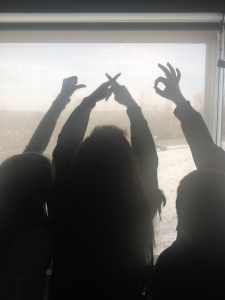
Understanding Greek and Latin roots is critical to decoding vocabulary, so when the freshman had a long list of roots to memorize, we tried a kinesthetic approach. The students used their fingers to spell out Greek roots: ant (against), tech (skill), exo (outside).  They twisted their bodies into letters and spread out against the wall spelling out xen (foreign), phob (fear). They also scored very well on the quizzes as a result!

June 2013 Superteachers!

Superteacher!

Superteacher!

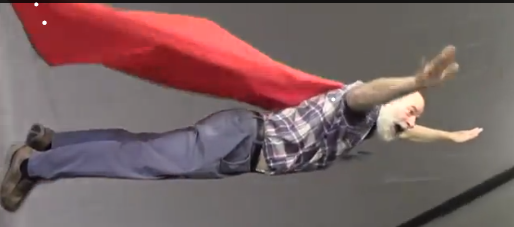
At the end of the 2012-2013 school year, teachers rose to a “friendship and respect” challenge to make a video. With a little help from a green screen, 27 members of the faculty representing a wide variety of disciplines jumped into the nearby closet wearing the big “W” (for Wamogo). Students in the video production class watched and filmed in amazement as, bearing some artifact from a particular subject area, each teacher donned a flowing red cape.

July 2013 Library Book Sales: Three Bags Full!

The original purpose of this blog was to show how I filled classroom libraries with gently used books. The Friends of the C.H. Booth Library Book Sale in Newtown, Connecticut, is one of the premier books sales in the state: well-organized tables filled with excellent quality used books, lots of attentive check-out staff, and great prices. This year, I added three large bags of books to our classroom libraries for $152.00, a discount of 90% off retail!

August 2013 Picture Books Are not for Kindergarten Any More!Cat in Hat book cover

At used book sales, I am always looking for picture books I can use in high school classrooms. For example, I use The Cat in the Hat to explain Freud’s theory of the Id, Ego and Superego . Thing #1 and Thing #2 represent Id, and that righteous fish? The Superego. Yes, Dr. Seuss is great for psychological literary criticism, but he is not the only picture book in my repertoire of children’s literature used in high school. This post features a few of my favorite picture books to use and why.

September 2013 Close Reading with Saki and the Sophomores

Saki’s short stories open our World Literature course in which our students will be reading complex texts required by the English Language Arts Common Core State Standards (CCSS). After a “close reading” the conversations in the room showed the text’s complexity. Saki’s The Interlopers has all the elements suggested by the CCSS:  figurative language, the ironic wish, and multiple meaning in the revenge sought by man versus the revenge exacted by Nature. Our close reading should have been “textbook”. The evidence proved the characters’ demise…or did it? The ensuing discussion forced the class to consider other positions.

October 2013 Close Reading Art

The Fighting Temeraire

The Fighting Temeraire

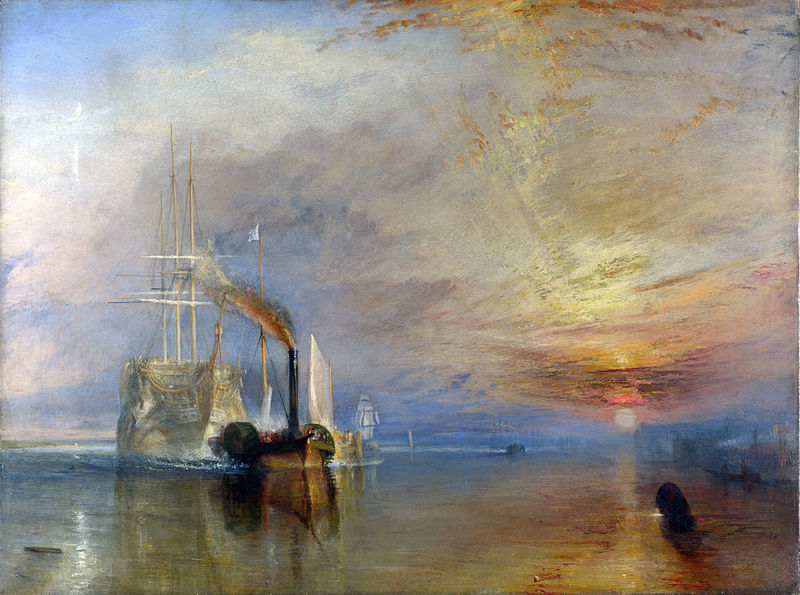
After “close reading” short stories, the sophomores were asked to use the same skills to “close read” several paintings that thematically connected to the Industrial Revolution. They studied a Constable pastoral painting, before J.M.W. Turner’s famous painting, The Fighting Temeraire. While some called attention to the the dirty smoke stack, others saw the energetic paddling as a sign of progress. They noticed the ghost-like ship hovering in the background, the light created by the sunset which gave the painting “warmth”or “light extinguishing”. When they were asked to use these elements as evidence to determine the artist’s message, there were some succinct responses to the painting’s “text.”

November 2013 Thanks for the NCTE Conference

Five members of the English Department attended the conference and selected from over 700 sessions at the National Council of Teachers of English and the Conference on English Leadership.  District support for such great professional development is truly appreciated. We are also grateful that four of our proposals were chosen to share as presentations for other educators. The explanations of our presentations with links to these presentations are included in this post.

December 2013 Drama Class Holiday Miracle

Cast photo!

Cast photo!

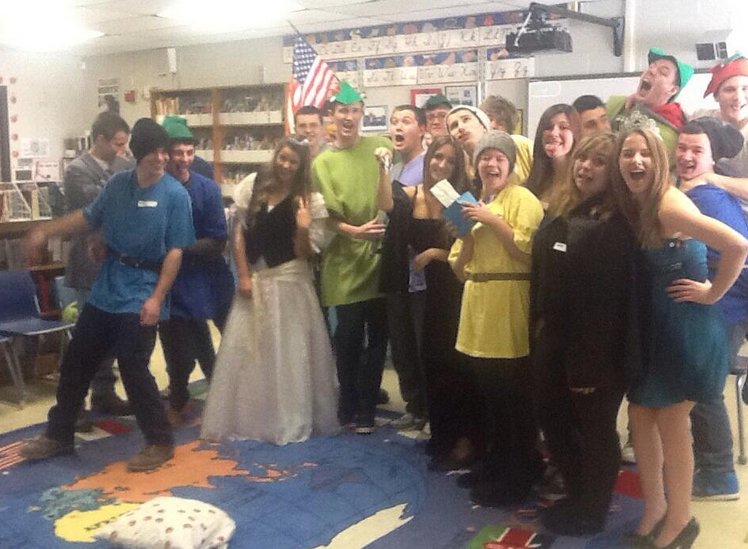
An ice storm two weeks before performance caused a car pile-up, and the drama club teacher was left with a concussion. She could not be in school; the students were on their own, and I was left to supervise their performances of Snow White and the Seven Dwarves at three local elementary schools.

Their “dress rehearsal” was a disaster, but, as the adage says, “The show must go on!” and once they arrived at the elementary schools, the students were anxious to do well. They naturally changed their staging moving from gym floor to library floor, the Evil Queen tossed her hair with anger, and the Prince strode onto the stage with more confidence. The dwarves were a source of comic relief, intentionally or not. I watched the holiday miracle of 2013 repeated three times that day. The students in drama class at each school were applauded, with congratulatory e-mails from the principals that offered praise.

End of the year note:

I am grateful to be an educator and to have the privilege to work with students that I learn from everyday. In this retrospective, I can state unequivocally that 2013 was a memorable year… as you can see from many of the reasons listed above.

Welcome to 2014! May this coming year be even more productive!

I teach English in a Bring Your Own Device (BYOD) school, and that means that there is  wireless for all kinds of devices: notebooks, Kindles, laptops, and phones. Internet access is also open for social media sites, except Facebook, since many teachers use them for resources or to communicate with students. There is a school policy  requiring a 7″ screen on a device for classroom use, but students access their cell phones throughout the day.

Once class has begun, students can be online for tasks assigned by a teacher. What is not surprising is that, like students of previous generations, they might drift. For example, while their parents may have passed notes on bits of paper, this generation texts their notes. Their phones are a continuous source of temptation, the same way that their phones will be a temptation in the real world when they leave school. Educators recognize that students must be trained in the effective and appropriate use of technology, yet, with the exponential changes in the use of technology in education, educators may not know or practice the best strategies.

Students, however, often develop best practices in the use of technology themselves. Students can surprise us.

The good example of this sort of surprise is the message of recent holiday ad by Apple. In the ad, a Christmas family reunion begins with the arrival of a family including a teenager preoccupied with his iPhone.  He looks to be missing out on all the festivities: the sled-riding, the cookie-decorating, the dinners, the snowman-building (although he does have the carrot for a snowman’s nose in his pocket). But, on Christmas morning he presents his family with a video he has filmed to celebrate the reunion. In a twist of perception, the video shows that he has not been distracted by the phone; he has recorded and edited all the family events in making the “Harris Family Holiday”. He even makes Grandma cry in gratitude.

The short commercial is brilliantly cast; the teenager looks like any one of a number of my students. His head is constantly bent over the glowing screen; he looks up only briefly to acknowledge a word or gesture thrown in his direction. He could be in my classroom…so is he an example of the distracted  student or is he an example of creativity in my classroom?

The commercial is both an attempt to sell iPhones as well as justify the perception of distraction. “You are mistaken,” Apple is telling the viewer, “the iPhone is not a distraction; the iPhone is a tool.” In an advertising paradox, Apple is telling the truth…the iPhone is both.

I have witnessed students in my class be completely distracted by the cell phone  and other digital tools. I have also witnessed them use these tools to complete assignments beyond my expectations. I have been as surprised as the family in the holiday video. 

Perhaps the most important lesson from Apple is that the “every-teenager” featured in the commercial does the video on his own. There is no assignment. The video is his gift to his family. His choice to use this particular tool for a specific purpose illustrates the goal of a 21st Century education. The commercial also provides teachers with an example of a student practicing 21st Century skills.

The word surprise is derived from the past participle of Old French surprendre meaning “to overtake”. There is no surprise that Apple’s promotion of the iPhone in this commercial overtakes the heart in an attempt to overtake the competitive cell phone market. There should be no surprise that a cell phone is already in most students’ pockets or book bags. Those cell phones need not overtake the classroom if educators encourage their use as a tool and let the students surprise us with what they can do.

Screen Shot 2013-12-22 at 10.51.28 PMSeveral of the 12th graders had taken the elective of Drama Class for their English IV because they did not think they would have to read. They were wrong; they read Our Town. A few of the 12th graders had taken the elective of Drama for their English class because they did not think they would have to write. They were wrong. They had journals. What was most surprising was the number of 12th graders who did not think that they had to act…or memorize lines.

As a precaution, the drama class teacher chose the play Snow White and the Seven Dwarves as their final production in the hopes that since the students already knew the plot, “They could always ad-lib.”

The play was cast with some additional dwarves (“Shorty” and “Weepy”) increasing the company to accommodate the number of students in the class. Rehearsals began, but the progress was slow. The principal parts were invested, but the dwarves were not, and their large numbers cluttered the small classroom stage area. They missed entrances, missed cues, missed lines, and when they were on set, they stood swaying or whispered so loudly as to drown out the lines of others. They were collectively the most awkward set of gigantic dwarves ever to inhabit a stage.

Nevertheless, the production was scheduled for appearances at three local elementary schools two days before the winter break. Props were prepared, costumes fitted, and sound cues burned onto a CD. Then, an ice storm two weeks before performance caused a car pile-up, and the drama club teacher was left with a concussion. She could not be in school; the students were on their own, and I was left to supervise.

There was a “dress rehearsal” the morning of the show; it was, as all dress rehearsals go, a disaster. “I don’t think you should take them,” advised a student who was watching. I had a sinking feeling; perhaps she was right. But, as the adage says, “The show must go on!”

Our first stop was in the elementary school gym, a cavernous space.
“You are going to have to be loud,” I cautioned, as members of the cast set up the magic mirror. Just then the announcements came on.

“Good morning,” chirped a little voice over the speakers, “Today is Thursday, December 19th…..” The announcements continued with students from the elementary school listing off birthdays, lunch menu details, and finally, the Pledge of Allegiance.

“Guys,” interrupted the most uncooperative dwarf to the other cast members, “listen to them….I mean…they’re so innocent! We can’t screw up now!” The others looked startled. There was no turning back; there was only forward movement, and that forward movement was going to have to be kid-friendly. For the first time since the auditions, they were quiet, and in that moment of recognition, the 22 students in drama class became a theatre troupe. I was certainly not a factor; this was entirely their decision. They had been prepared by their drama teacher for this moment, but they had never truly risen to the occasion. As they watched the audience of elementary school students file in, the gravity of their roles became real. The show was going on…

“Once upon a time….” the narrator began, and each cast member found their place on the gym floor stage. They recalled lines locked in the file drawers of recent memory or ad-libbed as needed. The Mirror told the Evil Queen she was no longer the most beautiful, the huntsman let Snow White run away, the dwarves found Snow White in their cottage, and the Evil Queen tricked Snow White with a poisoned apple.

There were plenty of errors. The sound cue for the Evil Queen (never used before) drowned out her entrance, the poisoned apple rolled into the hands of some smaller audience members, and when the Prince first kissed Snow White on the hand, there was a critique from an audience member who called out, “Now, that was lame.” But when the Prince finally kissed Snow White with “love’s first kiss”, there were cheers from the crowd, and an astonished cast stood together, hand in hand, taking their first (and again, unrehearsed) bow.

Piling on the bus to perform at the next elementary school, the cast was all business. During the 30 minute ride, they practiced lines and advised each other on what should happen for the next show. They were serious.

The next two performances at other elementary schools became more polished as students internalized their roles. They naturally changed their staging moving from gym floor to library floor. The Evil Queen tossed her hair with anger and the Prince strode onto the stage with more confidence. The dwarves were still cluttering the stage, and each time Doc announced the “death” of Snow White, they were unconcerned. While they were not “actors”, they were a source of comic relief, intentionally or not.

So, I watched the holiday miracle of 2013 repeated three times that day. The students in drama class at each school were applauded, and later that afternoon there were e-mails from the principals that offered praise.

The holiday season is a time for miracles. Their drama teacher should have been there to witness this one, but for now the videos will have to suffice. The end of 2013 has ended on a high note for those seniors. Heigh-ho to 2014!

Cast photo!

Cast photo!

No sooner are essays on Mary Shelley’s Frankenstein handed in, then the copies of Paradise Lost are handed out to the Advanced Placement English Literature Students. Yes, there are over 10,000 lines of blank verse in the poem, but don’t shudder for them…they will be fine. This epic poem is a trip to the “dark side” like no other in literature. All it takes is a reading of Book One; a reading that says “Welcome to Hell”!

The connection is obvious. In her novel, Shelley has Frankenstein’s Monster explain how he gained his knowledge, not with the help of his “father”, but instead by reading several books while he hid from humanity. One of the books in his possession was the epic poem Paradise Lost. When the Monster finally confronts his creator, Victor Frankenstein, on a mountain glacier on Mount Montanvert, the Monster dramatically intones:

“I ought to be thy Adam, but I am rather the fallen angel, whom thou drivest from joy for no misdeed.”

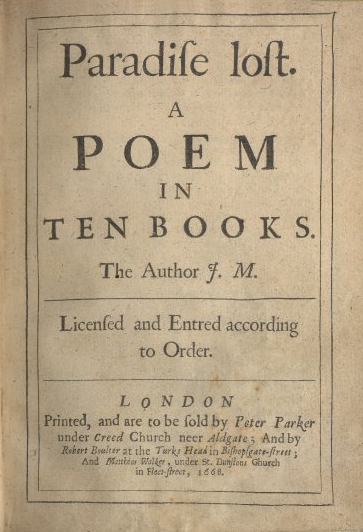
Originally published as 10 books, Milton expanded the epic poem to 12 books in later printings.

Originally published as 10 books, Milton expanded the epic poem to 12 books in later printings.

The “fallen angel” the Monster references is a hero/anti-hero of Paradise Lost: Satan, aka Lucifer, aka the  “infernal serpent”, aka the ‘Arch-fiend’ (and a myriad of other Miltonic epithets).

Students in previous classes have always found Satan the most memorable character in this epic poem since he is given the most memorable lines. They have been particularly intrigued that John Milton’s purpose in writing the poem, “to justify the ways of God to man,” is soon drowned out by the creation of Pandemonium (Hell’s Seat).  From the moment in Book One of Paradise Lost when Satan frees himself from the adamantine chains that bind him to a burning lake, students are taken with his attitude and his defiance as read in his great challenge:

Here at least
we shall be free; the Almighty hath not built
Here for his envy, will not drive us hence:
Here we may reign secure, and in my choice
to reign is worth ambition though in Hell:
Better to reign in Hell, than serve in Heaven. (PL 1 258-263)

No matter that in Book Six’s battle scenes in heaven are an exercise in futility, known as  the “great pie fight in the sky”, students root for the former archangel. They understand the sentiment in his statement,

‘The mind is its own place, and in itself can make a heaven of hell, a hell of heaven…” (PL 211-214).

Paradise Lost was only one of Milton’s great contributions to literature. He was not only a brilliant poet, but he was also a powerful statesman and a Puritan. He became associated with the Puritan partisanship in Parliament, which was credited with banning Christmas in England in 1644. This would seem to be a contradiction since he was already known for the beautiful Christmas Ode, “On the Morning of Christs Nativity Compos’d 1629”. Perhaps it was the general Puritan aversion to Christmas carols that could be blamed for such a heinous act!.

His political career experienced the extreme highs of an appointment as Secretary for Foreign Tongues (1648) and his association with Oliver Cromwell in the execution of Charles I (1649). In contrast there were the lows of an imposed exile upon the return of Charles II and the arrival of the Restoration in 1660. One of the reasons he was not executed for his implicit participation in Charles I’s regicide was that he was struck blind in 1654, and there were many who argued that this blindness was punishment enough. Milton was used to pain and suffering as the deaths of his first and second wives and several children were tragic interludes throughout his life.

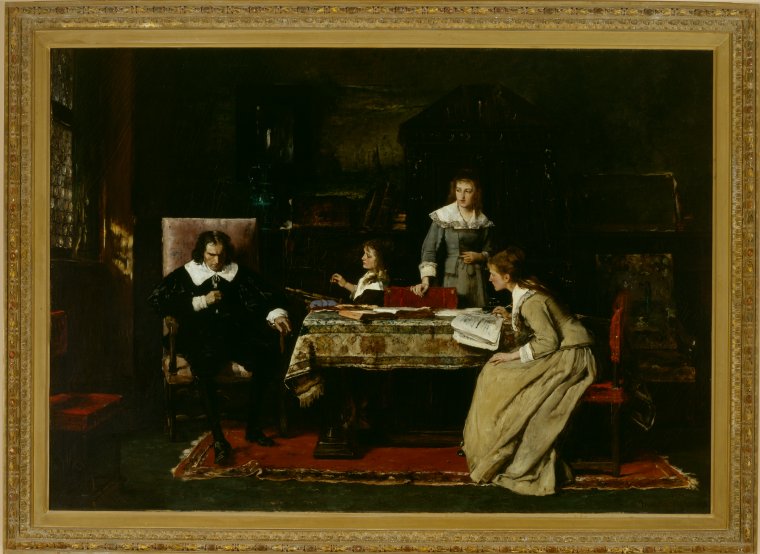
Like another blind poet, Homer, Milton achieved greatness with an “inner sight”. Critics generally agree that his best poetry came after he became blind and dictated all the lines of verse to his remaining daughters. A painting by Mihály Munkácsy (1877) hangs in the New York Public Library (NYPL) and depicts a scene of a head-bowed Milton reciting to one daughter who is scribing lines into a book.

Milton & daughtersThe picture is an apt illustration for his opening thesis in Paradise Lost:

What in me is dark
Illumine, what is low raise and support;
That to the height of this great argument
I may assert eternal Providence,
And justify the ways of God to men. (PL I:18-22)

In 2008, the NYPL held an exhibition, “John Milton at 400: ‘A Life Beyond Life'” which featured illustrated etchings by Gustave Doré for Paradise Lost. One illustration was of Satan on his flight to the Garden of Eden. As he travels, Satan pauses to tell the Sun how conflicted he is over his fallen state:

O Sun, to tell thee how I hate thy beams
That bring to my remembrance from what state
I fell, how glorious once above thy Spheare;
Till Pride and worse Ambition threw me down
Warring in Heav’n against Heav’ns matchless King:
Ah wherefore! he deservd no such return
From me, whom he created what I was
In that bright eminence, and with his good
Upbraided none; nor was his service hard. (PL IV:37-41)

Speaking these lines is a tragic Satan, fully aware that he has brought himself to ruin, as told by a poet, who had also come to political ruin. The reader can sympathize with such a character, and isn’t that the role of great literature? To draw on the reader’s empathy?

By the end of the poem, however, Milton restores the balance of sympathy towards Adam and Eve. They walk bravely, hand-in-hand, out of the Garden, into the sunset, ready to begin “his-story”.  In contrast, the character of Satan is reduced to a hollow hero, receiving accolades from a hissing mob of demi-devils. He is cursed, and like the Monster in Frankenstein, he is unreconciled with his creator.

So happy Birthday, John Milton, (December 9th), but let us not forget, that while your character Satan may dwell in evil, it was you who helped to cancel Christmas!

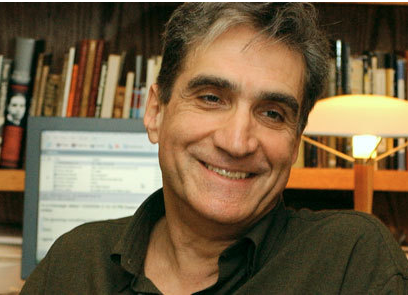
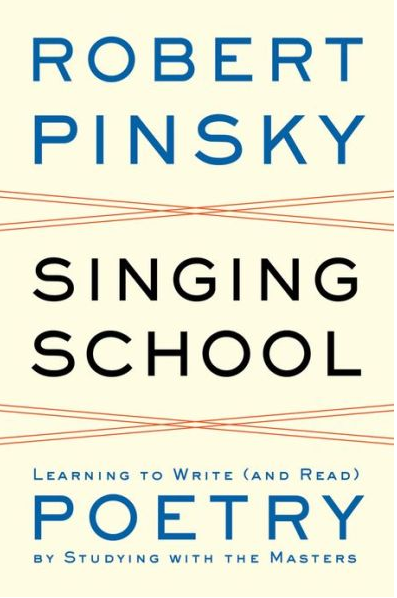
Screen Shot 2013-12-05 at 11.08.36 PMThe sonorous voice delivering the keynote address at the Conference on English Leadership (CEL) on Sunday, November 24, 2013, belonged to the poet Robert Pinsky. He was there to promote his latest book Singing School, which is promoted as, “A bold new approach to writing (and reading) poetry based on great poetry of the past.” This collection of 80 poems includes selections from  Sappho to Allen Ginsberg, Shakespeare to Emily Dickinson. In an interview on NPR,  Pinsky explained that the poems for the book were selected “because of the music of the language, and not from the meaning of the words.” In the interview he explained:

“Even just the cadence of pauses,” he explains. “I stop. I think. I wait. I wait a little longer. Then less. … Something like that generates the poem. And for me, if anything I do is any good, it’s carried by that kind of cadence or melody.”

To prove his point, Pinsky filled his address with reciting lines of poetry, once challenging the crowd of English teachers in attendance to identify the poet; “That was Robert Frost, your New England poet,” he gently chastised when no one responded correctly. (To give you a taste of the experience, you can hear Pinskey read Frost’s poem “Mowing” courtesy of Slate Magazine by clicking here.)

As we listened, I heard someone remark that Pinsky could make a parking ticket sound lyrical.

Screen Shot 2013-11-29 at 2.27.16 PM

Pinsky’s voice was not the only one reciting poems in his keynote. He turned to the presentation screen to show videos from the Favorite Poem Project website. This project  is “dedicated to celebrating, documenting and encouraging poetry’s role in Americans’ lives.”

Pinsky founded the project when he served as the 39th Poet Laureate of the United States, from 1997-2000. The Favorite Poem Project website details how,

“During the one-year open call for submissions, 18,000 Americans wrote to the project volunteering to share their favorite poems — Americans from ages 5 to 97, from every state, of diverse occupations, kinds of education and backgrounds.

Pinsky purposely selected a video to show as a tribute to the City of Boston, host of the CEL. The selected video featured John Ulrich, a student from South Boston, MA, reading Gwendolyn Brooks’s  “We Real Cool”:

We Real Cool
by Gwendolyn Brooks

THE POOL PLAYERS.
SEVEN AT THE GOLDEN SHOVEL.

We real cool. We
Left school. We

Lurk late. We
Strike straight. We

Sing sin. We
Thin gin. We

Jazz June. We
Die soon.

Each video available on the Favorite Poem Project’s website begins with the reader’s reason for choosing the a particular poem. Ulrich provided a touching admission of how Brooks’s short poem reminds him about several childhood friends he lost to suicide. He read her 1950s tribute to the players in a pool hall in the South Side of Chicago with a heavy South Boston accent twice. The defiance on his face during the second reading is visible in the video.

I have taught this poem in my classes, and inevitably one of the more musical students, usually a drummer, will notice, “Hey, this is written in jazz!” The brevity of Brooks’s verse belies the amount of discussion the poem generates for students, particularly with the ending line, “We/ Die soon.”

Pinsky shared other videos: Nick and the Candlestick by Sylvia Plath read by Seph Rodney and Poem by Frank O’Hara read by Richard Samuel. The production quality of these videos garnered admiration from the crowd.

“Are you still taking entries for this project?” one teacher asked.
“We may be,” replied Pinsky.

His final comment sent a ripple that went through the audience as people considered, “What poem could I read for the project?”

Continue Reading…

“A bad dress rehearsal foretells a great performance.”

red curtain

This theatrical superstition is a great comfort to those who botch lines, drop lines, break props, or miss entrance cues before performing in front of an audience. Rehearsals are for practice, to fix what could go wrong so that the performance before a critical audience is perfect.

In contrast, there are no “rehearsals” in the classroom, yet the language of teacher evaluation standards repeatedly uses the word “perform” and “performance”.  There are teacher performance standards, and there are student performance measurements.

Perhaps the most authentic way to describe what happens in any classroom is that each lesson is a dress rehearsal. A teacher can plan the elements of a lesson, ( objective, resources/materials, directions, and assessment), and those scripted elements can look good on paper. A teacher can design a lesson for for a particular audience,  but what can happen in the classroom is a guess. Sometimes, a lesson plan fails; a teacher has a bad dress rehearsalEven if that lesson plan is repeated over the course of a day, there was a first audience of students that was engaged in that dress rehearsal of a lesson.

What teachers do is practice teaching, and practice is another word repeated in teacher evaluation. There are, however,  two meanings of the word practice, each depending on its syntactical use. When the word practice is used as a noun, as in the “practice of teaching”, then the word means:

  • the actual application or use of an idea, belief, or method as opposed to theories about such application or use.

When the word practice is used as a verb, it means:

  • to do something again and again in order to become better at it
  • to do (something) regularly or constantly as an ordinary part of your life

The language of teacher evaluation focuses on the word practice as a noun. There is limited use of the word practice as a verb except as an expectation. A teacher is expected to have practiced, or rehearsed, teaching strategies with a group of students. For this reason, teachers try to schedule a “no-fail” lesson plan for a formal observation, perhaps a lesson that has been practiced successfully in previous classes. This small advantage means that an evaluator will see a lesson with all the bells and whistles, a kind of performance.

But what about the “drop-in” evaluation? What kind of teaching practice will an evaluator see in the raw rehearsal environment of the classroom? What happens when a lesson goes horribly wrong, and an evaluator is in the room?

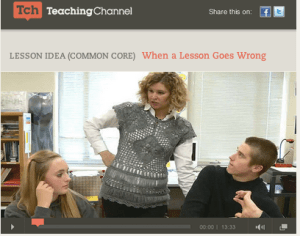
At a session offered by the Council of English Leadership at the National Council of Teachers of English Conference held last month in Boston, Massachusetts, nationally recognized teacher of the year Sarah Brown Wessling openly admitted to lesson failure. Wessling, a English/Language Arts teacher in Johnston, Iowa, was being filmed by The Teaching Channel when the lesson she designed went wrong, a true bad dress rehearsal taking place in real time in front of the cameras.

“I knew they (Teaching Channel) would want this footage,” she admitted laughing to crowded room of teachers, “Oh, I knew they would want this failure!”

The videos that resulted from her failure are some of the most popular on The Teaching Channel website. There are uncut versions plus the final production video (16 mins) that records how she quickly reconfigures the lesson for a different class. The transcript from the video is included on the website. 

Wessling’s voice-over begins:

For a teacher, some days you win, some days you lose.  My third hour tenth-grade English class came completely unhinged, and I had five minutes in which to repurpose it for fourth hour.

She readily admits that even the most veteran teachers experience problems:

No matter how accomplished you are or how effective you are as a teacher, I think these days are going to happen, so when they do, you have to make adjustments.

In her narration, she noted that, “By the time we get to this point, I’ve been in front of the class almost the whole class period, and that was not my intention.”

The video shows her trying to re-engage students in her planned activity. She considers:

Then there was this moment where I realized that I had completely misfired because one of my students did start to read when I asked them to, and she read the first paragraph, and she raised her hand and she said, “I don’t know what any of these words mean.”

Wessling’s final analysis of the lesson’s failure is her admission that:

I opted to try to meet the standards, make sure that the common assessment that I share with the rest of my department meets the criteria of what we had talked about earlier in this year.  In thinking about the adults, I compromised the needs of the kids.

The power of this video is that while this nationally recognized teacher’s bad dress rehearsal informed her practice, it is her training in classrooms that allowed her to redesign the lesson on the fly. Wessling’s second attempt, five minutes after the first class left, is much smoother, as she admits:

We have to be careful with our expectations and realize that we can still teach to these heightened expectations, but it’s going to have to come at a pace that makes sense to the kids who are in front of us.

So how would an evaluator who dropped in on Wessling’s first attempt rate her as a teacher? Would there be a consideration of this first lesson as a “dress rehearsal”?More important, what is the possibility that an evaluator could have stayed to watch the redesign of the lesson to see how her repeated and authentic training in the classroom, her practice, helped her with her teaching practice, her application of teaching methods? Wessling’s first attempt would not meet the criteria in the higher ratings (proficient, exemplary) of many teacher evaluation programs, but her training allowed her to address the needs of the students in subsequent efforts.

The video captures Wessling and her students a rehearsal of learning, which is what happens in every classroom everyday, to nationally ranked teachers, to veterans, and  to novices. Teachers and their students are always rehearsing. Evaluators must consider that the language of teacher evaluation should not be misconstrued. 

There is no performance in the classroom, and even a bad dress rehearsal can still be a great lesson.

Screen Shot 2013-11-29 at 12.50.41 PMThe National Council of Teachers of English (NCTE) and the Council on English Leadership (CEL) met for a convention last week (11/21-26/13) at the Hynes Convention Center in Boston, Massachusetts. Thousands of English teachers and educators (happily) put aside their piles of essays and their red pens in order to attend to participate in a nationwide conversation on teaching English/Language Arts at all grade levels. This annual conference runs the weekend before the Thanksgiving holiday, and this year there were many reasons to be thankful that such a great opportunity exists. Here are our specific thanks to all of those who made this conference amazing.

Thanks to our Regional School District #6 in Connecticut for allowing us to attend:

Our first and most important thanks is to the administration, Board of Education, and staff from Regional School District #6 that allowed five members of the English Department at Wamogo Middle/High School to attend the conference and select from over 700 sessions offered from Thursday night-Sunday afternoon.  District support for such great professional development is truly appreciated!

Thanks to the program chairs who selected our proposals:

Members of Wamogo Middle/High School English/Language Arts department submitted a variety of proposals last year to demonstrate how we use technology in our classrooms. We are grateful that four of our proposals were chosen to share as presentations for other educators. The explanations of our presentations with links to these presentations are included below:

The Blog’s the Thing! (NCTE) roundtable discussion

This presentation demonstrated the use of the blog platform for students to engage in thoughtful discussion on characters and themes from Hamlet by having students “stop the action” of the play to offer advice to characters during different scenes.

Reinventing the Writing Workshop with Digital Literacy to Improve Student Engagement (NCTE)

Technology has reinvented the Writing Workshop in meeting the needs of 21st Century learners with the addition of digital literacies. This presentation features open source software platforms appropriate to the different tasks, purposes and audiences for writing instruction along with examples of student work and grading criteria.

How We Mooo-ved Our District from Cows to Computer (CEL)

This presentation illustrated how professional development in our district was organized on the ED Camp model to allow any teacher who would like to share their expertise or simply discuss a problem with fellow staff or faculty members.These technology initiatives have allowed members of the English Department to help teachers assess, organize, deliver context materials and related readings (fiction and non-fiction) that improve students’ digital literacy as well as foster independence in each student’s growth in reading.

Digital Writing with Collaboration (CEL)

This presentation showed how preparing students to write for the real world  (21st Century skills) must include the collaborative experience, from the initial creation to the final product. The use of digital platforms allows students to be college and career ready through the production and distribution of collaborative writing.

Thanks to the many teachers and educators who presented:

We are also thankful that so many other classroom teachers and educators from all over the USA shared their best classrooms practices. Our collective regret is that we could not attend every session that appealed to us; the jam-packed schedule defied our best attempts at strategic selection. We agreed, however, that quality of the presentations we did get to attend was amazing and relevant to what we do every day. The conference reinforced the importance of teacher-to-teacher professional development.

Thanks to the book publishers who made books available for classroom libraries:

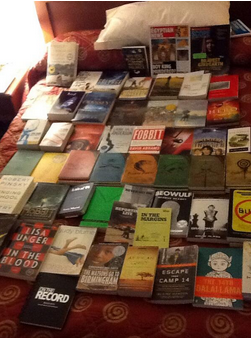
The NCTE Convention offers book publishers opportunity to put advanced reader copies of fiction and non-fiction into the hands of teachers at every grade level. While publishers hope to catch the attention of teachers who will recommend the book to students, teachers look for books to add to their classroom library collection. Many publishers also make books available at a reduced cost  for the same reason. For example, I picked up several copies of books in the “After the Dust Settled” series (apocalyptic young adult literature) by Jonathan Mary-Todd for $2/copy, a purchase made necessary because these books keep disappearing off our classroom library shelves.

Screen Shot 2013-11-29 at 12.51.29 PM

Our “haul” from the NCTE Convention from book publishers and authors…headed for our classroom libraries.


Thanks to the authors who gave away signed copies of their books:

The tote bags distributed free to all registrants bore popular author Nicholas Spark’s imprimatur, a visual testament to the celebrity draw of authors at this convention. Authors are the rock stars at this convention: the children’s book authors rock, the young adult authors rock, and the educator trade book authors rock. Attendees stood in lines snaking around booths on the convention floor waiting to meet authors and have books signed. In the past, my request to an author is to have the book signed with the phrase “READ ME!” on the inside cover. I had the same done this year, so when a student asks what to read, I will point that the author has already made a suggestion to read the book.

There were also a number of authors representing a variety of genres who served as keynote speakers including: Neal ShustermanTeri Lesesne, Laurie Halse AndersonKelly Gallagher, Walter Dean MyersIshmael Beah, and Robert Pinsky. 

We are so thankful to have the opportunity to personally meet and mingle with the rock stars of the convention!

Thanks for the Tweeters:

Finally, the fingers of dedicated Tweeters attending the convention kept us abreast of all the events at the conference. There was a steady stream of information from sessions we could not attend, summaries of keynotes addresses, and updates as to upcoming book signings. The hashtags #NCTE13 and #CEL13 were invaluable sources for notes and quotes during the convention and for well after we left Boston.  For example, some Friday session tweets were archived onto the Storify platform for later use.

Next year, the NCTE Convention is scheduled for Washington, D.C., which gives me one more reason to be thankful…the convention is within driving distance!