Archives For November 30, 1999

Classrooms are several feet deep in a “book flood” at the Wamogo Middle and High School.
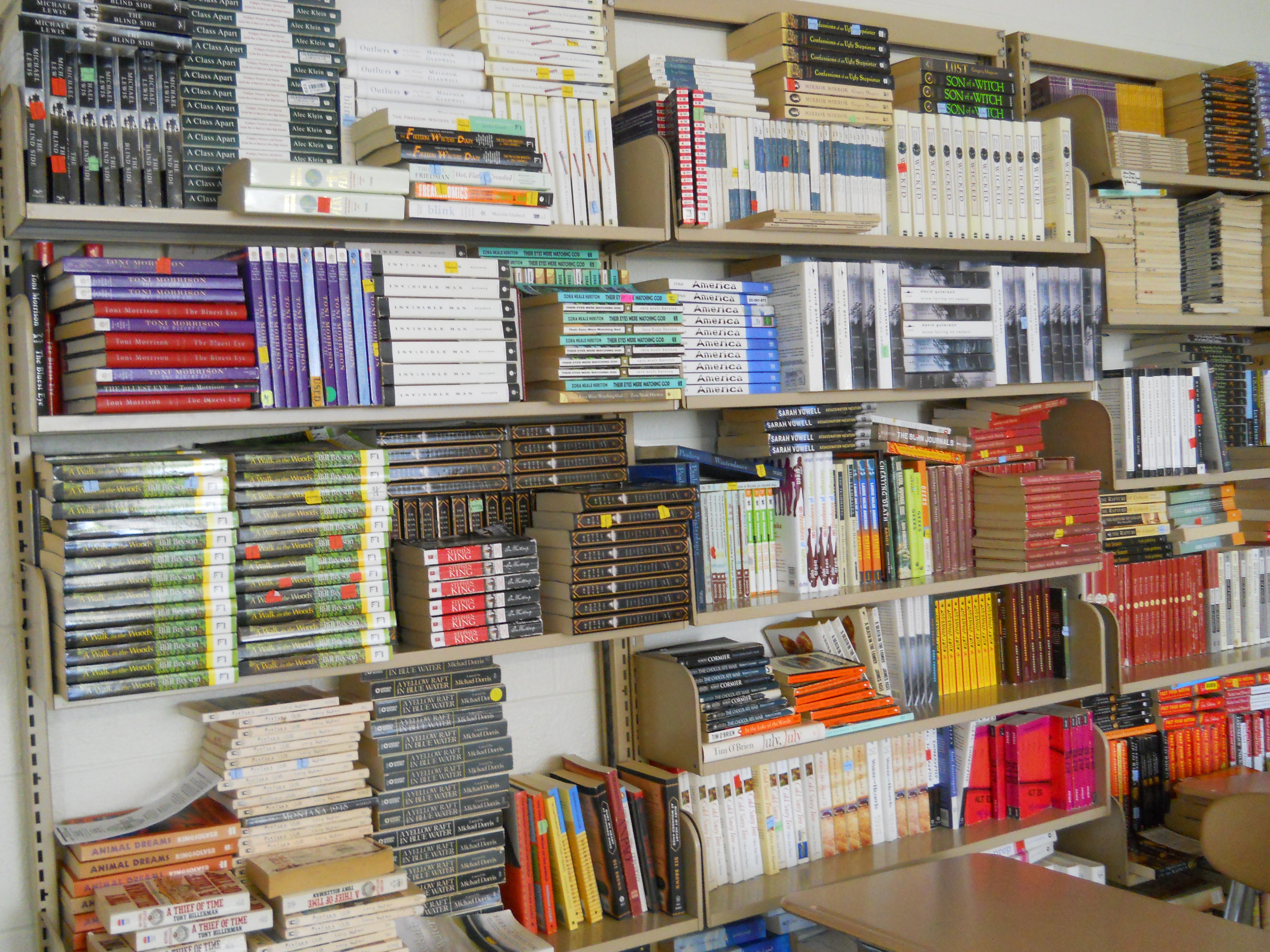
Junior classroom library created with used books

While there has been a torrent of late summer rains that have closed roads and delayed schools in the Northwest corner of Connecticut, our students are experiencing a deluge of an entirely different nature. Gently used books spill over in classroom bookcases; they slop on to counters and swamp several double-sided carts.

The term “book flood” is used by Kelly Gallagher in Readicide.  He states, “Let me be clear: if we are to have any chance of developing a reading habit in our students, they must be immersed in a K­12 ‘book flood’–a term coined by researcher Warwick Elley (1991)” (43). Book flood is a theory, recently tested in countries (Fiji, Sri Lanka, Singapore) where English is not part of the culture.  The theory is that students exposed to quantities of literature will learn English as a second language more effectively.

The abstract for The Potential of Book Floods for Raising Literacy Levels by Warwick B. Elley states that “the evidence is now strong that it is possible to double the rate of reading acquisition of Third World primary school pupils with a ‘Book Flood’ of about 100 high-interest books, per class, and short teacher training sessions. The benefits for reading skill and enthusiasm are consistent across diverse cultures, mother tongues and age levels, and they appear to generate corresponding improvements in children’s writing, listening comprehension, and related language skills. Such skills are typically found to develop very slowly under traditional textbook styles of teaching.”

Gallagher suggests that American educators do the same in their classrooms by asking, “Do students at your school have access to a wide range of interesting reading materials? Is providing access to interesting text a priority among your administration and faculty? Are students on your campus immersed in a book flood? Are we giving them every opportunity, via reading, to build vital knowledge capital?” (49).

Well, we are.
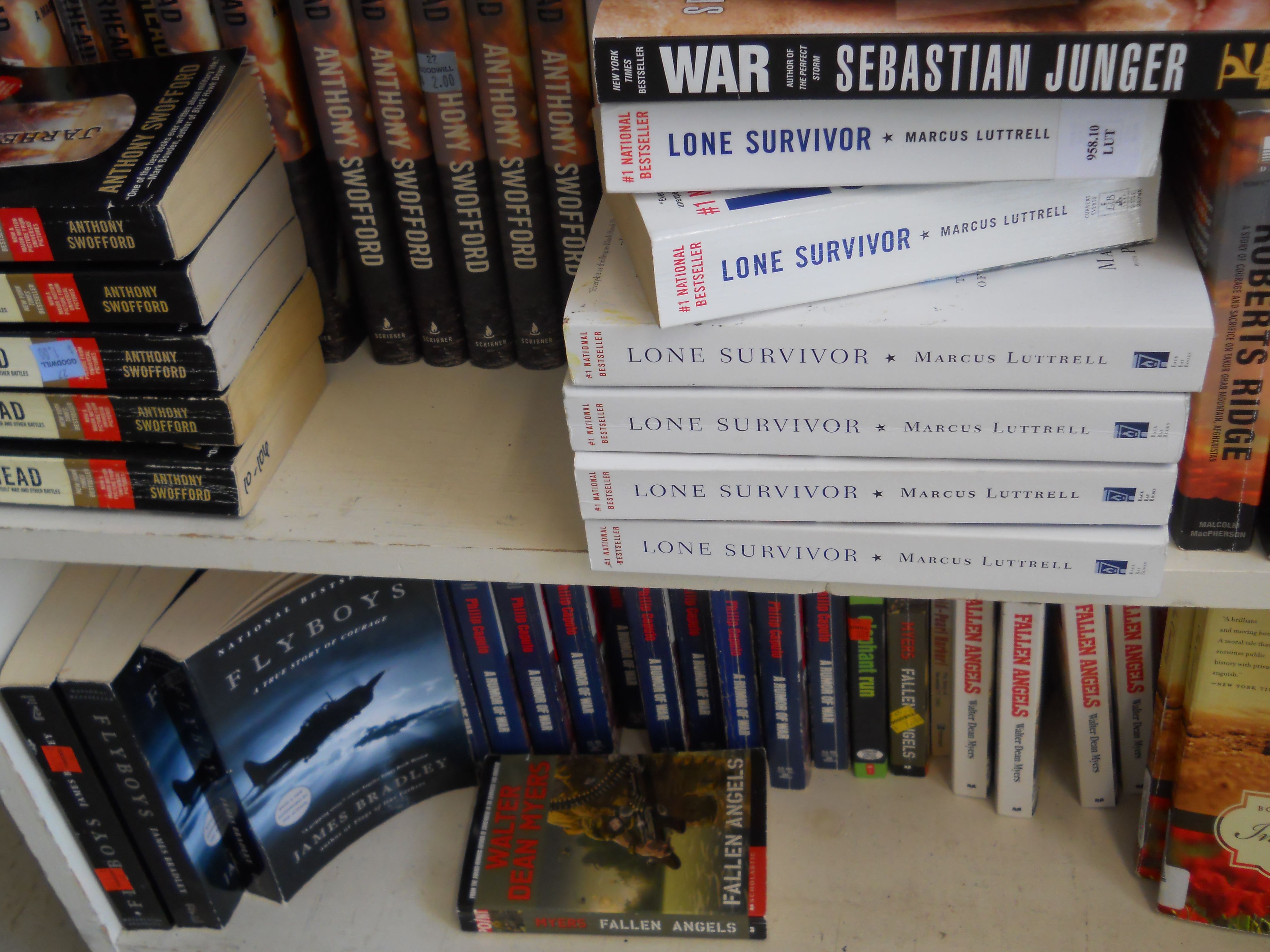
11th grade choices that accompany the Contemporary War unit with The Things They Carried

Over the course of one year (June 2010-2011), the Wamogo English Department had added 2,500 books previously used books to the classroom collections. Many of these books are familiar titles that are taught in grades 9-12 (EX: The Great Gatsby, Lord of the Flies, Animal Farm, Speak, The Glass Castle, A Lesson before Dying, The Bean Trees, To Kill a Mockingbird, The Handmaid’s Tale) or titles taught in  grades 7 & 8 (EX: Stargirl, Nothing but the Truth, The Giver, The Light in the Forest, The Outsiders, No More Dead Dogs).

Additionally, class sets of books (20 -30 copies) that were already purchased as new books were expanded with used copies for each student at grade level. For example, the 10th grade library started with 20 copies of The Kite Runner. After two years, there are now 116 copies for 10th graders, one for every student, plus all teachers and teachers’ aides. There are also 15 copies of A Thousand Splendid Suns for students who would like to read another novel by Khaled Hossani. Similarly, 20 copies of Mark Haddon’s The Curious Incident of the Dog in the Night-Time were purchased new in 2009. An additional 67 used copies have been added since; 13 more copies will make a grade level set of 100 copies.
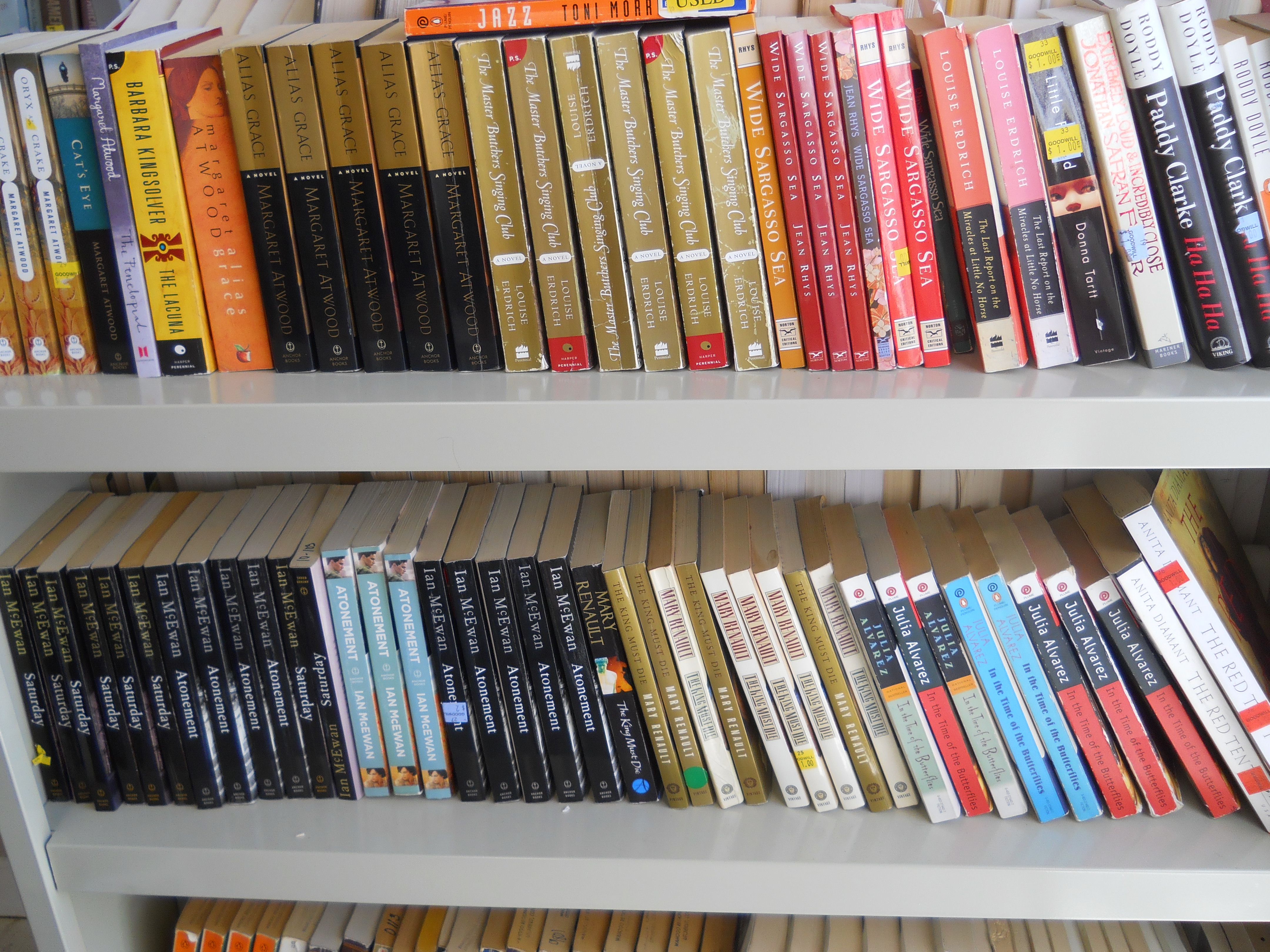
Books offered to Advanced Placement English Literature students for independent reading

In order to offer independent choices for the Advanced Placement English Literature and English Language classes, newer titles have been added including multiple copies (4-30) of  The Plot Against America, Alias Grace, The Adventures of Kavalier and Clay, Middlesex, The Story of Edgar Sawtelle, The Poisonwood Bible, In Cold Blood, Love in the Time of Cholera, Paddy Clarke Ha-Ha,  Dinner at the Homesick Restaurant, The Elegance of the Hedgehog, Cold Mountain, Ironweed, The Wide Sargasso Sea, Gertrude and Claudius, Atonement, The Hours, and The Memory Keeper’s Daughter.

There are thematically connected texts for 10th grade World Literature such as a unit centered on adolescents growing up in conflict. These books include A Long Way Gone, The Power of One, What is the What, and First They Killed My Father. Students can choose to read one of these titles in literature circles. There are also thematically connected texts for non-fiction (A Walk in the Woods, Into the Wild, The Perfect Storm, Touching the Void, The Hungry Ocean, Between a Rock and a Hard Place) and fiction  (The Bluest Eye, Their Eyes Were Watching God, The Color Purple, Invisible Man, The Known World, Monster, Precious, Native Son) for students in English III American literature to read independently or in groups.
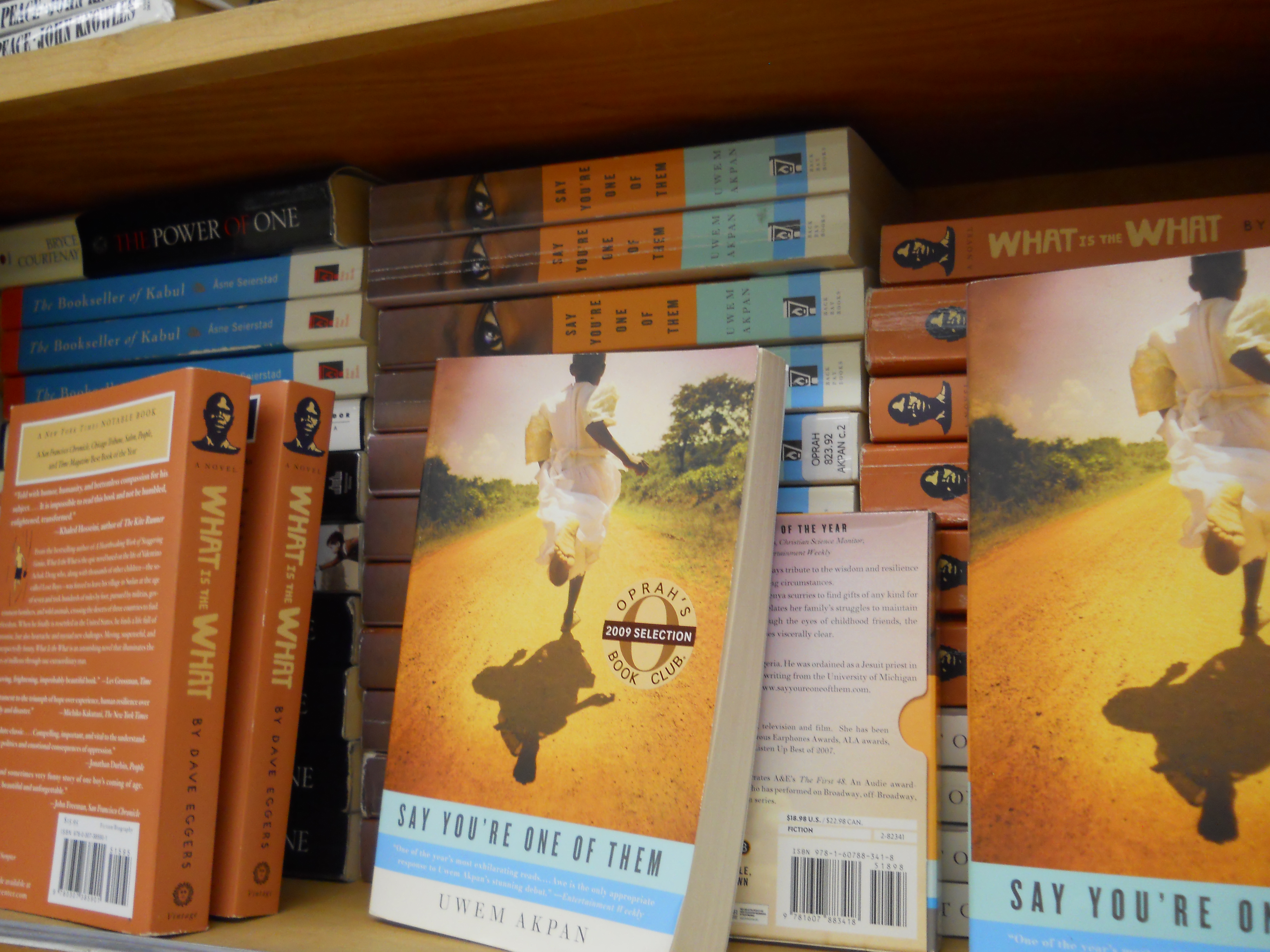
10th grade "choice" books for Adolescents in Conflict unit

But, it is in the area of providing book choice for independent reading that the largest gains have been made in the classroom collections. There are book series (Percy Jackson and the Olympians, The Ranger’s Apprentice, Maximum Ride) available for 9th students to choose during Silent Sustained Reading (SSR) sessions. There are many different titles from popular teen authors: Meg Cabot, Anthony Horowitz, Jodi Picoult, Sarah Dessen and Scott Westerfield.

There are several (5-10) copies of books such as The Lovely Bones, Dairy Queen, So Be It, Where the Heart Is, and The Thirteenth Tale. There are pairs of books such as The Chosen, The Good Thief, Bad Kitty, Shadow of the Wind, Sleeping Freshmen Don’t Lie, Prom, and Life As We Knew It. There are single copies of The London Eye Mystery, The Off Season, The Compound, The Maze Runner, Black Duck, and Copper Sun.
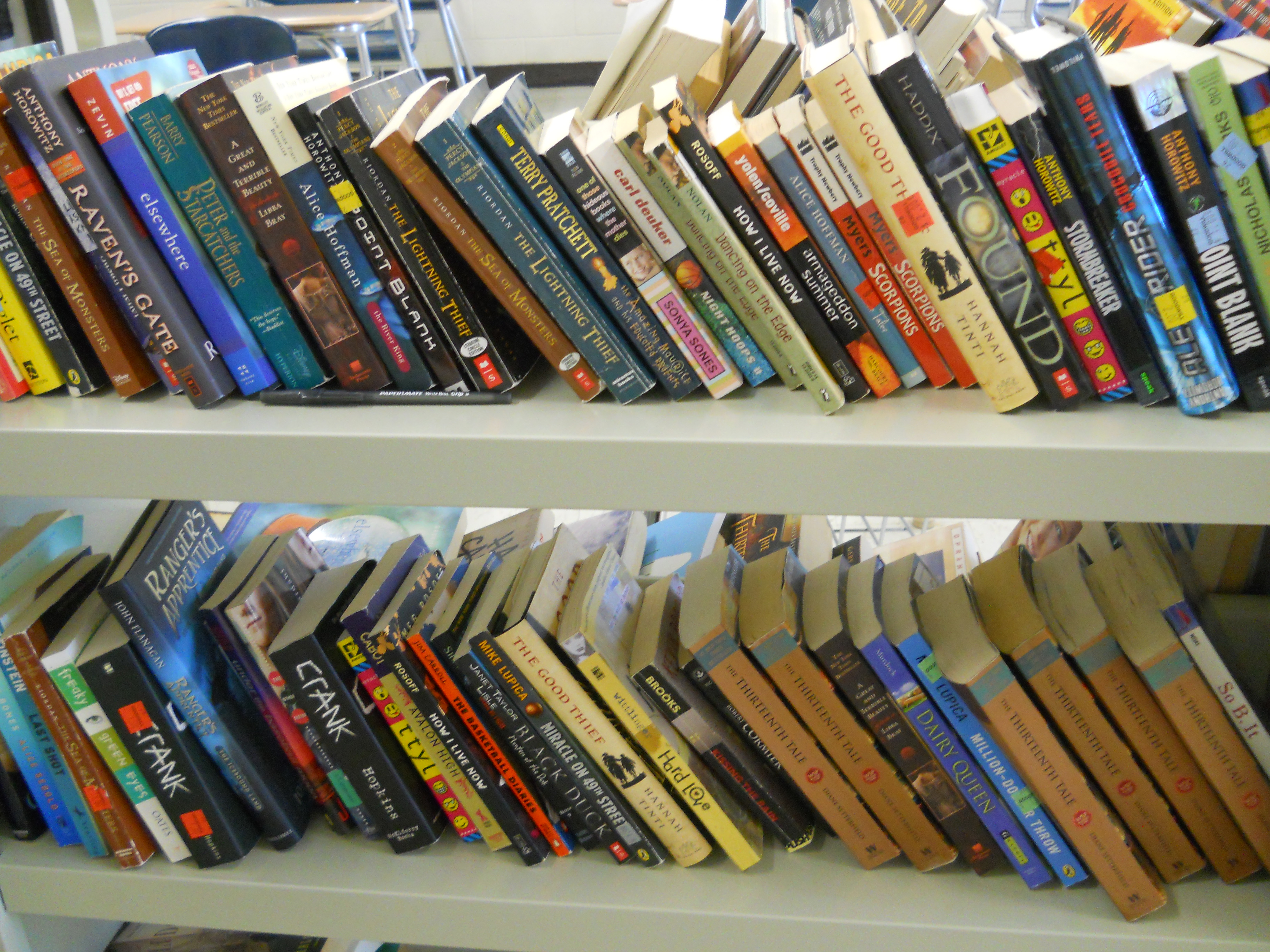
Independent reading texts for SSR Grade 9
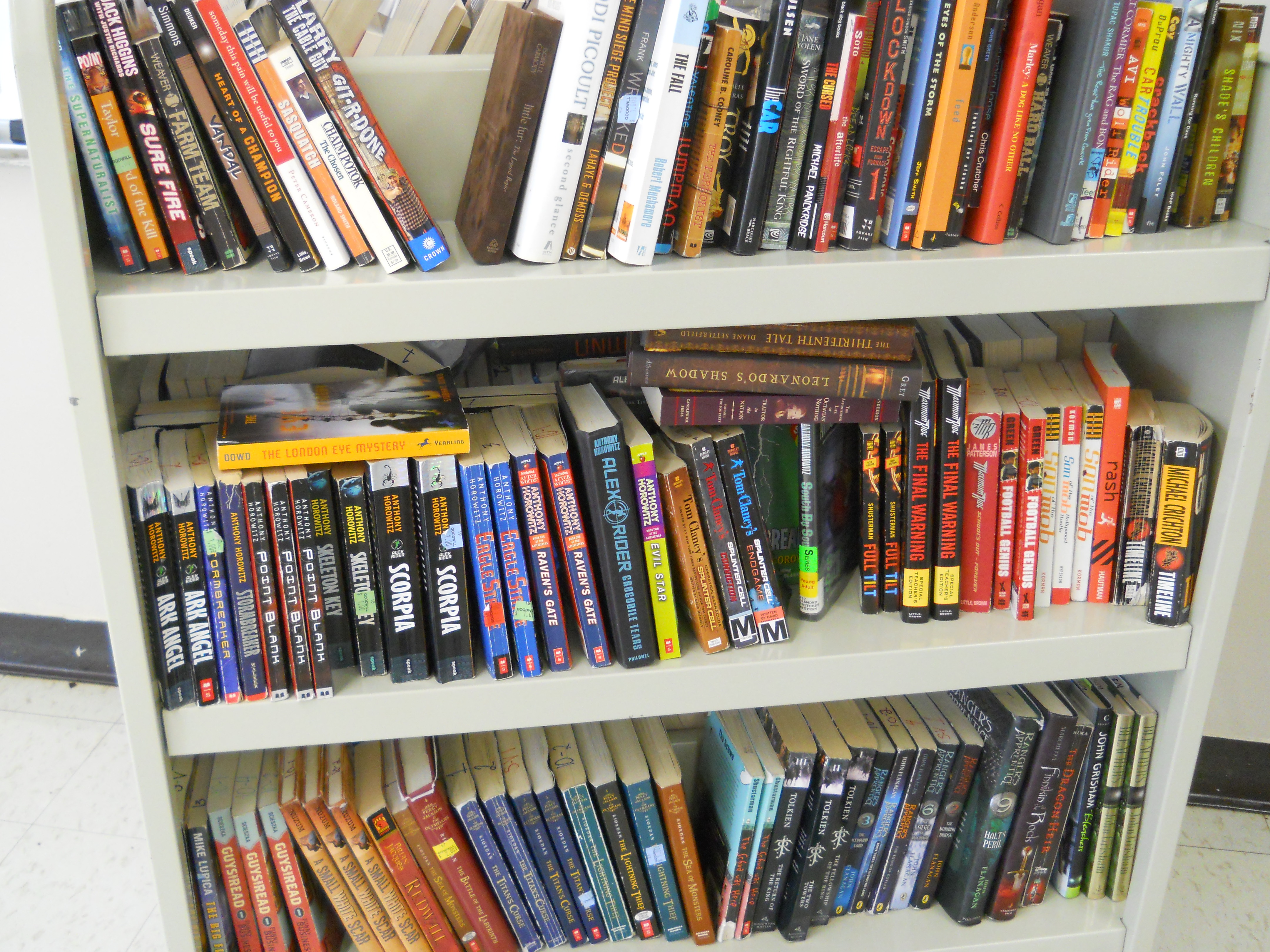
More Independent SSR choices for Grade 9

At the conclusion of the summer of 2011, after trips to thrift stores and public library book sales throughout Connecticut, another 1,700 copies of books have been added to our shelves at a cost of  approximately $2,300.00.

The “book flood” straining the banks of Wamogo’s classroom shelves is, as Gallagher suggests, wide-ranging; it is a flood saturated with interesting material to read. Our students are now inundated with titles; our teachers have an overflow of suggestions. We have created the one flood in which I could happily watch students drown.

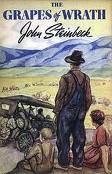
This summer, 11th and 12th grade Advanced Placement students at Wamogo High School are reading The Grapes of Wrath. John Steinbeck developed the novel from a series of articles commissioned in October of 1936 by the San Francisco News under the title “The Harvest Gypsies”. The novel was published in 1939, won the Pulitzer Prize for Steinbeck in 1940, and is largely credited for winning Steinbeck the Nobel Prize for Literature in 1962.

The novel is centered around the story of the Joads, a family forced by economic hardship and drought to abandon their homestead to seek jobs and a future in California. The book chapters alternates between their story and the stories of others, including the point of view of a turtle watching the diaspora of the “Okies”, sharecropper families who fled the Dust Bowl and travelled across the mid-west in search of migrant farm work. Steinbeck’s depiction of the treatment of these migrant workers and the migrant camps was controversial, and he was attacked by political and social organizations from the right and the left. Undeterred, Steinbeck wrote, “I want to put a tag of shame on the greedy bastards who are responsible for this [the Great Depression and its effects].”

Advanced Placement Students in grades 11 & 12 will read this American classic and create a digital museum

In order to understand the social and political turmoil that marked the 1930s, we are having the students organize an online museum of digital artifacts from that decade on a wiki, a website that allows for the collaborative creation and editing of any number of interlinked web pages via a web browser. Students have been organized in teams of three or more and assigned a particular topic from the time period. Topics include:

  1. Okies
  2. Entertainment of the 1930s-Movies-Radio Shows
  3. Herbert Hoover-The Crash of 1929
  4. Franklin Delano Roosevelt
  5. Journalism in the 30s-William Randolph Hearst-Dorthea Lange
  6. John Steinbeck-the author
  7. Migrant Workers-Farming in California 1930s
  8. Hoovervilles-Weedpatch-Community Associations within the Camps
  9. 1930 Fashion
  10. Dustbowl
  11. Works Project Administration in the 1930s
  12. Woolworth-General Store
  13. Sears Catalog and other Catalogs
  14. Music of the 1930s–1940s
  15. Route 66-Jalopies- Truckstops and Cafes

Click here to see a sample of one of the online museum pages from past years.

In doing this project, students are able to become an “expert” on one of the topics explored in the novel. They scan the Internet looking for primary documents, videos, audio recordings, photos, and art from the 1930s. For example, the Library of Congress website and the Internet Archives website  are excellent sources for digital museum artifacts. Members of the team embed these digital items onto a wiki page and make the page attractive for the reader. Each page must have the bibliographic information; links to other web pages are also permitted. Once the topic pages are completed, every team will have a chance to reflect and review their own web page and the other web pages created by other teams. Using wiki software, students are able to build a body of knowledge that helps them better understand the context that created Steinbeck’s novel.

We have several copies of The Grapes of Wrath on our library shelves; some editions are newer than others. There was a special 50th anniversary publication published in 1989, and the book received an Oprah “bump” when another Steinbeck classic, East of Eden, was picked for her book club in 2003. I will pick up copies at used book stores that are in very good to excellent condition only. The full text of the book was scanned by Google as part of their efforts to make the world’s great books available online, so I can place the link to the text on the same wiki webpages as the online museum. Students can choose to read a hard copy or a digital copy of the text.

This book should only be assigned for summer reading to students who expect to encounter a more challenging text.  The alternating narrative points of view and the length of the text can be stumbling blocks to an inexperienced reader. However, there is the opportunity to have students draw connections from the 1930s to today’s current economic difficulties and political problems. For example, in Chapter 25, food crops are destroyed in order to keep the prices high. This chapter contains the title phrase, “…and in the eyes of the hungry there is a growing wrath. In the souls of the people the grapes of wrath are filling and growing heavy, growing heavy for the vintage.” Steinbeck’s biblical allusion to social justice and workers is powerful and current in the light of statistically high unemployment today. He also incorporates environmental complications, issues in immigration and migration, and the role of government  in ways that reverberate in the politics of America today.

The novel will be 75 years old in 2014 and celebrate its centennial in 2039. Political issues facing America in the future will differ from today, however, Steinbeck’s The Grapes of Wrath can inform every generation about the clash between the promises of democracy and stark economic realities. Steinbeck himself noted the power of this novel when he said,  “I’ve done my damndest to rip a reader’s nerves to rags.”

The pressure is on. School starts in another two weeks. Summer reading still needs to be done!

Right about this time, there are some parents who are reminding (nagging?) students about their summer reading assignments, there are librarians and book stores scrambling to locate books posted on reading list, there are some students trying to cram in a little reading, while there are some students trying to cram in a few Spark Notes instead of the summer reading book. Is this commotion necessary? Is all this activity to have students read books over the summer vacation a worthwhile endeavor?

Yes. Yes, it is.

On the New York State Department of Education website, there is a summary of research on summer reading:

“In a 2009 government web cast, Secretary of Education Arne Duncan described summer learning loss as ‘devastating.’ This is what researchers have often referred to as the “summer slide.” It is estimated that school summer breaks will cause the average student to lose up to one month of instruction, with disadvantaged students being disproportionately affected (Cooper, 1996).”

“Researchers conclude that two-thirds of the 9th grade reading achievement gap can be explained by unequal access to summer learning opportunities during the elementary school years, with nearly one-third of the gap present when children begin school (Alexander, Entwistle & Olsen, 2007).”

“The body of existing research demonstrates the critical importance that the early development of summer reading habits can play in providing the foundation for later success.”

We assign summer reading for all grades 7-12. Academic level students in grades 7-11 have a choice of books, fiction and non-fiction, from suggested lists. Our excellent media specialist is a great resource for making recommendations and coordinating these lists for distribution. Honors level students are required to read specific titles; Advanced Placement students are assigned four to five books. Seniors read books that are directly connected to the elective they have chosen. All summer reading is due the first week of school.

We use the dialectical journal as an assessment tool. Students are required to find passages (5 from the first half of the book, 5 from the second half) that they think help them better understand the bigger issues of the book– theme, characterization, narrative voice, the author’s attitude towards his subject (tone), etc. The passages can be either narration or dialogue. Students respond to each passage in one of several ways such as:
1. Make a connection
2. Interpret/make a prediction
3. Ask a question (attempt to answer it)
4. Extend the meaning
5. Challenge the text

Dialectical_Journal Instructions
The first weeks of school are all about assessing individual student and evaluating class learning. Reading student responses in dialectical journals is one method a teacher can use to quickly assess a student’s comprehension and writing skills at the beginning of the school year.

I have located many of the required texts for summer reading in the used book market to make access easier for honors level students. We are able to offer gently used copies of all of the assigned texts including:
Grade 9 Honors: The Alchemist, Paul Coehlo
Grade 10 Honors: Nectar in a Sieve, Kamala Markandaya OR The God of Small Things by Arundhati Roy OR The Life of Pi by Yann Martel
Grade 11 AP Language: On the Road, by Jack Kerouac AND The Memory Keeper’s Daughter by Kim Edwards AND On Writing by Stephen King AND The Grapes of Wrath by John Steinbeck
Grade 12 AP Literature: The Grapes of Wrath by John Steinbeck AND The Tempest Shakespeare AND The Story Of Edgar Sawtelle by David Wroblewski OR The Poisonwood Bible by Barbara Kingsolver AND Reservation Blues by Sherman Alexie OR Ceremony by Leslie Marmon Silko
Grade 11 & 12 Journalism:
Zeitoun by Dave Eggers OR Firehouse by David Halberstam
Grade 12 Drama
: Our Town, Thornton Wilder
Grade 12 Creative Writing: On Writing, Stephen King
Grade 12 Memoir: A Girl Named Zippy by Haven Kimmel OR Lost in Place by Mark Salzman OR Running with Scissors by Augusten Burroughs OR Lucky by Alice Sebold

Unfortunately, the agrarian school calendar has created summer months where many students do not engage in any academic activity. Summer reading requirements for students at any grade level, choice or assigned, are speed bumps in slowing down the “summer slide.”

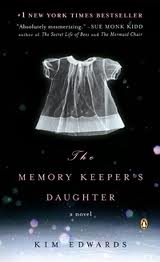
Answers.com defines a good beach book as “engaging and a quick enough read that you can finish most of it on the beach before your sunscreen wears off. A beach book isn’t necessarily literature, but a beach book will entertain.”So, what book could be assigned for summer reading that engages students but isn’t necessarily great literature? The Memory Keeper’s Daughter by Kim Edwards is a good choice.

Summer Reading Assignment for grades 11 and 12

The story opens with a snowstorm on the night Norah Henry goes into labor. On the way to the hospital, she anticipates that, “when we come back, we’ll have our baby with us…our world will never be the same,” not knowing how dramatically accurate that statement will be in the novel. Because of a staff shortage that wintry night, her husband, Dr. David Henry, delivers his twin children, Paul and Phoebe. However, while Norah is unconscious, David recognizes that Phoebe is a Down Syndrome baby, and decides to tell Norah that the little girl dies in childbirth. David instructs Caroline Gill, a nurse, to place the child for adoption. Caroline, however, keeps Phoebe as her own. The novel centers on David’s decision and its consequences for Norah and Caroline.

Edwards is a skilled writer, and there are many descriptive passages that qualify the book for its inclusion in a high school curriculum. For example, as Caroline Gill prepares to take the baby Phoebe to an adoption agency:

“There was an unnatural welling quite in the nearly empty lot, a silence that seemed to emanate from the cold itself, to expand in the air and flow outwards like ripples from a stone thrown in water. Snow billowed, stinging her face, when she opened the car door. Instinctively, protectively she curved herself around the box and wedged into the backseat where the pink blankets fell softly on the white vinyl upholstery. The baby slept, a fierce, intent newborn sleep, its face clenched, its eyes slits, its nose and chin mere bumps. You wouldn’t know, Caroline thought, if you didn’t know, you wouldn’t know” (21).

Edwards had published short fiction prior to her debut novel. The Memory Keeper’s Daughter was published in June 2005 and gained great interest via word of mouth in the summer of 2006. Apparently, the book was very popular as a beach read with book groups as well! There was also a made-for-television movie  on Lifetime Television in 2008 with Dermot Mulroney as David, Gretchen Mol as Norah, and Emily Watson as Caroline. This was the most watched movie of the week that April, and the film was released as a DVD.

There are always multiple copies of this title at used book sales. In one year, I have collected enough copies of the text so that Advanced Placement students each took home a copy to read this past June. In total, I have purchased over 40 copies of this text which retail for $9.20 at Amazon. I have spent $40-50 to have this text as summer reading; the same copies new would have cost $368.00.

So what if the copies of The Memory Keeper’s Daughter happen to get a little sand or salt water on them? I have enough back up copies to replace any summer-damaged texts. In fact, I am counting on them being read on the beach!

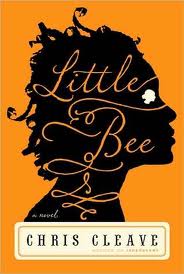
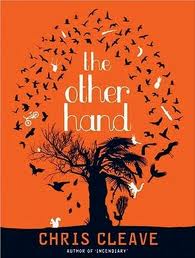
Little Bee by British author Chris Cleve was a disturbing read. Apparently, other readers feel the same because there are numerous copies hitting the used book market; apparently book owners wanted the book off their shelves fairly quickly! The book was first published in Britain in 2008 under the title The Other Hand, an ironic take on events in the novel. The book was published as a trade paperback in 2009 in the USA and Canada under the alternate title Little Bee. The novel’s climb up the best seller list has been attributed to “word of mouth”, and the book has enjoyed popularity with book clubs in the USA.

Recently added Little Bee to Advanced Placement English independent reads

The English Literature Advanced Placement curriculum in any high school is usually generated with texts suggested for a  free-response question on the exam.  Recently, more contemporary texts have been added to the suggested list which also includes the traditional canon of Thomas Hardy, Jane Austen, Shakespeare, and others. I anticipate that Little Bee will be added to to the list of suggested texts within the next two years.

I was surprised to see the book so soon in the secondary market and have collected eight copies of the text over the past two months. The book currently retails at Amazon for $8.04. The same copies which cost me $8.00 would have cost my department $64.32, a savings of $56.32.

Little Bee was originally published as The Other Hand in Britain

One of the reasons I am willing to experiment and add this text is the story’s complex structure. There are two different points of view: Little Bee, a young Nigerian refugee, and Sarah O’Rourke, a British editor for a magazine, who alternately narrate the story. There is also a flashback that explains the circumstances of Sarah and her husband Andrew’s initial encounter with Little Bee. Little Bee’s illegal arrival in Surrey, England, several years later causes such guilt in Andrew that he commits suicide. While Cleve allows Little Bee to make humorous observations, the events of the novel, including rape, amputation, and cannibalism, make for a disturbing read.

The other reason for the novel’s inclusion is the ethical dilemma Sarah and Andrew find themselves while on holiday in the Niger delta and the repercussions of their decisions on a beach. The author Cleve has been quoted in an interview saying, “We’re often told that we live in a globalized world, and we talk about it all the time, but people don’t stop to think about what it means.” His novel forces the reader to confront the rapidly closing geographic and cultural borders that are the political hot button issues of today.

A work of fiction is added to the Advanced Placement English curriculum(s) because of the quality of the writing and the universal message for the reader. Little Bee meets both criteria effectively  and hopefully will make my students question what globalization will mean for them in the future.

First impressions are made in seconds, which is why a book’s cover design is so important. While there are some wonderful book covers for the texts used in the high school classroom, there are are also some unappealing cover designs. Usually, the less attractive cover is the movie-tie in cover, and as I collect used texts for the classroom, I try to avoid these commercial texts.

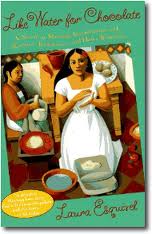
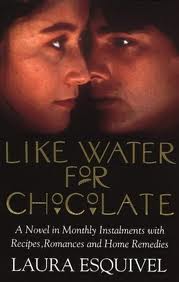
Original Cover for hardcover and tradeFor example, Like Water for Chocolate  was published in 1989 by first-time Mexican novelist Laura Esquivel. This book is an independent choice in grade 10, and there are several trade paperback versions available.

The book’s original cover is a lovely tribute to Diego Rivera; a lovely turquoise border frames a painting of a two women preparing food in a kitchen. One woman sits stirring in a bowl on the left side of the painting; the central figure is dressed in white wistfully stares out to the reader as she molds a tortilla.

Cover with movie tie-in

The novel follows the story of a young girl named Tita is unable to marry Pedro, the man she loves, because a family tradition which requires her to care for her mother until the day she dies. The book is organized recipe by recipe, each marking Tita’s longing for Pedro. As Tita expresses herself when she cooks, the foods are bewitched with her emotions.

The movie tie-in cover for Like Water for Chocolate is not as charming. There is a close-up photo of Lumi Cavazos (Tita) and Marco Leonardi (Pedro) staring past each other; the effect is rather unsettling rather than engaging.

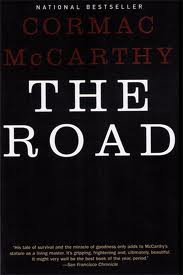
Likewise, the post-apocalyptic novel The Road by Cormac McCarthy, published in 2006, also has several cover versions. We teach this book in Grade 11. The original design is distinctive and bold with McCarthy’s name (brown ink) and title of the book (white ink) printed large across the front; there are no illustrations. This dramatic choice impresses the reader of both the book’s importance and the starkness of the world contained within. A father and his young son travel down through the Eastern states of a destroyed America. The environment has been destroyed, society has been destroyed, but the man and the boy struggle on maintaining a last hope for humankind. Their relationship, one of tenderness and compassion, is in sharp contrast to the nightmarish future McCarthy creates.

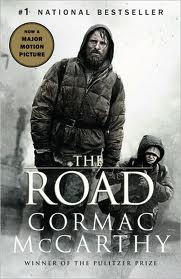
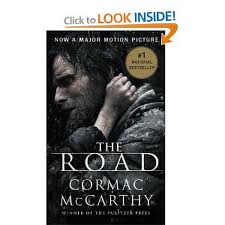
The film The Road was released in 2009 and the trade book movie tie-in cover depicts a weary Viggo Mortensen (the man) and Kodi Smit-McPhee (the boy) trudging down a road against a grey landscape. The mass-market tie-in is even worse with a close up profile of a filthy and distressed Mortensen. Both movie-tie in covers are commercial attempts to capture the book’s hostile setting and compassionate relationship between father and son.

The original bold cover for hardcovers and trade paperbacks in 2006

The trade paperback movie tie-in

The mass-market movie tie-in cover

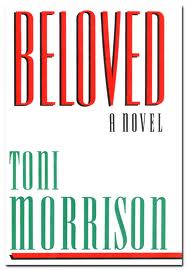
However, there are some movie-tie in covers which are more suited for the material within. The covers for the novel Beloved by Nobel prize-winning author Toni Morrison have undergone multiple transformations, which is confusing at first to many of my Advanced Placement students who may have one of several copies. The 1987 release simply has the title across the cover. This release was an over-sized trade that does not stack well with other books.

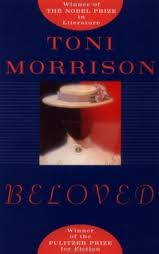
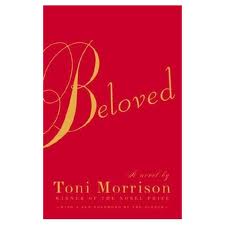
Then, there were two paperback covers (1988 and 1994) that shared the same image of a faceless woman in a hat centered on the front.  This design more artistically captured a central theme in the novel. When the book was chosen by Oprah for her book club, the book was released again with a red cover and the word Beloved in gold script across the cover.

1987 Paperback Cover

1988 Paperback cover was similar to this cover in 1994

2004 Paperback cover

Of these three designs, the most appropriate cover was the faceless woman whose ghostly image alludes to the character of Beloved, a child murdered in order to prevent her return to slavery. Opening in a post Civil War South, the main character Sethe confronts the ghosts and people from her past, and the evils of slavery are described in painful detail.

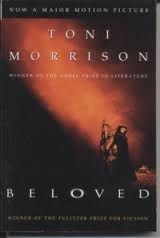
Beloved Movie-tie in paperback cover

The movie-tie paperback cover for the film Beloved (1998) is far more dramatic; the actress Thandie Newton is pictured in side profile, back arched, against distorted tree branch. The result is dramatic without focusing on the film’s actress; this cover is not a blatant movie tie-in.

I rarely buy these movie-tie in paperbacks for two reasons. The art design usually features the actor or actress and not the elements of the story, and these covers immediately alert students that there is a film to watch rather than a book to read! However, the contrast in covers is an interesting lesson for students, and I have asked them which cover they prefer. Can they judge the book by its cover?

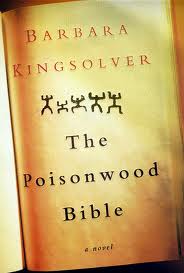
We now have enough copies of The Poisonwood Bible for several AP classes, and I have been warned that I am becoming dangerously close to a reality TV personality hoarding this text. At almost every sale, I pick up a few more copies.

I happen to love the book…all 560 pages of it, and that is the problem. 560 pages to the average teenager is 500 pages too many. The book was first published in 1998 and follows a missionary family who travels from Georgia to the Belgian Congo in 1959 during the height of the Cold War. Missionaries in the Congo? Kingsolver was way ahead of South Park’s musical creators of The Book of Mormon!

The other problem for most students with this text is Kingsolver’s use of multiple narrators: Rachel, Leah, Adah, Ruth May and their mother, Orleanna. Each daughter has a particular point-of-view of their attempt to “Save Africa for Jesus” ranging from the self-absorbed and shallow Rachel to the brilliant mathematician/linguist Adah and her dogmatic twin, Leah.

Someone placed the book on a list Best Page-Turners with Redeeming Social Value: “This Listopia is inspired by Nicholas D. Kristof’s “Best Beach Reading Ever” list, published by The New York Times, which includes great works of fiction with a social justice angle. He writes, ‘Summer reading often consists of mindless page-turners, equally riveting and vacuous. So as a public service I’m delighted to offer a list of mindful page-turners — so full of chase scenes, romance and cliffhangers that you don’t mind the redeeming social value.'” goodreads.com

I have amassed at least 50 copies of the paperback on a classroom shelf; a dozen more copies have been checked out for summer reading. Offering the book for summer reading will give me feedback on including the text next year. The students will keep dialectical journals (responding to quotes they select from the text), and I can review their notes about the plot, characters, and writing style.

560 pages! Daunting for students and teachers alike

The book currently sells at Amazon for $8.99. My total investment to date? Approximately $60.00 as opposed to the $539.40 the books would sell for new.

The book length is only matched by the number of themes, topics, allusions, literary devices, and clever word play used by Kingsolver. Her understanding of the post-colonial Africa wooed by the superpowers of the USA and USSR was an eye-opener for me. High school history for me ended sometime after the Civil War/Reconstruction. Similarly, I find that current high school history ends with a three day cursory treatment of the Vietnam War. 20th Century history-from 1950 to the present- is overlooked in schools today.

I am reminded of an episode from The Simpsons featuring students pouring out of the school ready to start summer vacation.
“Wait!” a teacher screams from the top of the stairs, “I forgot to tell you who won World War II…!”
The students stop their stampede for a moment while the teacher pauses before shouting, “We… WON!”
“YAY!” scream the students, streaming out of the building, chanting, “USA! USA!”

The failure of history classes to deal with recent history comically portrayed in Matt Groening’s scenerio is the reason to read The Poisonwood Bible. Fiction can make history very real, can make student readers more curious about a time or place, and can “sandpaper” their brains for understanding the past with a more critical lens. I am anxious about teaching The Poisonwood Bible because of the complexity of the politics,  but I believe the book is important enough to be included in a curriculum-as a core text or as an independent read.

While I am anxious about teaching the book, I have been banned from collecting more copies by members of my department…lest I be accused of hoarding!

I am not a fan of the hardcover book, and for the most part, neither are my students. They are often heavy, and the book jackets bruise easily in lockers or backpacks. However, while I am also not a fan of the mass market paperback, my students often prefer the small sized text. While I have trouble with the font size in these publications, my students –with their younger eyes- want books they can pop into a backpack or purse…they want the mobile edition. Occasionally, I will have a student look for the “smaller-sized” version, “because it’s shorter.” This logic escapes me, but I am happy to comply.

The length of a text is definitely an issue for my students. While they do understand from experience that the quality of the writing (complexity of sentences, vocabulary, point-of-view, etc) are all factors in making a book readable, the damaging effect of a hefty text on a teenage brain cannot be underestimated. I applaud JK Rowling for conquering the size of text criteria in book selection.

Hard cover texts are plentiful in book sales, but they usually do not attract the box-toting buyers with whom I have jostled while perusing the trade paperback tables. I am puzzled that hardcovers are more expensive at most of these sales. If I were loading and unloading these heavier texts, I would advocate they be sold at bargain prices….everything must go! But, hardcover texts, with the exception of Danielle Steele romances and James Patterson mysteries, often sit forlorn, while their cheaper and more popular paperback offspring receive all the attention. Book dealers armed with scanners and mobile apps that identify first or rare editions are the most likely buyers.

I have had to resort to buying some hardcover titles when I am short specific titles for instruction or when I know students are looking for a particular book.  These titles include:
Jarhead
by Anthony Swofford
Black Hawk Down
by Mark Bowden
A Thousand Splendid Suns
by Khaled Hosseini
The Bluest Eye by Toni Morrison  (Oprah Book Club edition)

Summer Reading for AP Lit students...all 562 pages!

Recently, I assigned The Story of Edgar Sawtelle  by David Wroblewski to my Advanced Placement English Literature students; this is a retelling of Hamlet using a modern family of dog breeders. The book was a 2008 Oprah book club pick and is 562 pages in the hardcover. There are far more hardcover copies than paperback copies of this title in the used book markets that I follow. So, I have purchased about a dozen hardcovers for students to borrow as beach books…some heavy lifting required.

In shopping for books, I have noticed the strategies of some publishers to delay going into the paperback market (mass market or trade) with their titles. Dan Brown’s The DaVinci Code is an example of this delay. There are a plethora of hardcover DaVinci Codes, while there are fewer mass market paperbacks and  no trade paperbacks of this title. The popularity of this text kept the publication in hardcover which was more profitable for publishers and for Dan Brown. The same,however, does not hold true for his Angels and Demons; the number hardcovers and mass market paperbacks for this title are about the same in used book sales.

Currently, the book experiencing a publication popularity is The Help by Katheryn Stockett . I would like to add this text to my Civil Rights Unit for Grade 11, but I will have to wait for at least another summer. The Help will be available in record numbers in hardcover as the book has remained on the best seller list for weeks; paperback copies will be available in another two years.

The trade paperback is currently my edition of choice for use in the classroom…but the onset of the Kindle and Nook are shifting book availability of these texts for the future. My strategy will have to change.