Archives For November 30, 1999

At the intersection of data and evaluation, here is a hypothetical scenario:Screenshot 2014-06-08 20.56.29
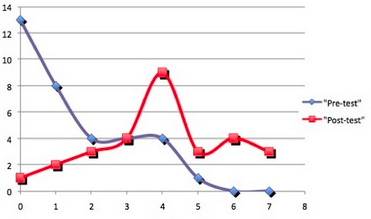
A young teacher meets an evaluator for a mid-year meeting.

“85 % of the students are meeting the goal of 50% or better, in fact they just scored an average of 62.5%,” the young teacher says.

“That is impressive,” the evaluator responds noting that the teacher had obviously met his goal. “Perhaps,you could also explain how the data illustrates individual student performance and not just the class average?”

“Well,” says the teacher offering a printout, “according to the (Blank) test, this student went up 741 points, and this student went up….” he continues to read from the  spreadsheet, “81points…and this student went up, um, 431 points, and…”

“So,” replies the evaluator, “these points mean what? Grade levels? Stanine? Standard score?”

“I’m not sure,” says the young teacher, looking a bit embarrassed, “I mean, I know my students have improved, they are moving up, and they are now at a 62.5% average, but…” he pauses.

“You don’t know what these points mean,” answers the evaluator, “why not?”

This teacher who tracked an upward trajectory of points was able to illustrate a trend that his students are improving, but the numbers or points his students receive are meaningless without data analysis. What doesn’t he know?

“We just were told to do the test. No one has explained anything…yet,” he admits.

There will need to be time for a great deal of explaining as the new standardized tests, Smarter Balanced Assessments (SBAC) and the Partnership for Assessment of Readiness for College and Careers (PARCC), that measure the Common Core State Standards (CCSS) are implemented over the next few years. These digital tests are part of an educational reform mandate that will require teachers at every grade level to become adept at interpreting data for use in instruction. This interpretation will require dedicated professional development at every grade level.

Understanding how to interpret data from these new standardized tests and others must be part of every teacher’s professional development plan. Understanding a test’s metrics is critical because there exists the possibility of misinterpreting results.  For example, the data in the above scenario would appear that one student (+741 points) is making enormous leaps forward while another student (+81) is lagging behind. But suppose how different the data analysis would be if the scale of measuring student performance on this particular test was organized in levels of 500 point increments. In that circumstance, one student’s improvement of +741 may not seem so impressive and a student achieving +431 may be falling short of moving up a level. Or perhaps, the data might reveal that a student’s improvement of 81 points is not minimal, because that student had already maxed out towards the top of the scale. In the drive to improve student performance, all teachers must have a clear understanding of how the results are measured, what skills are tested, and how can this information can be used to drive instruction.

Therefore, professional development must include information on the metrics for how student performance will be measured for each different test. But professional development for data analysis cannot stop at the powerpoint!   Data analysis training cannot come “canned,” especially, if the professional development is marketed by a testing company. Too often teachers are given information about testing metrics by those outside the classroom with little opportunity to see how the data can help their practice in their individual classrooms. Professional development must include the conversations and collaborations that allow teachers to share how they could use or do use data in the classroom. Such conversations and collaborations with other teachers will provide opportunities for teachers to review these test results to support or contradict data from other assessments.

Such conversations and collaborations will also allow teachers to revise lessons or units and update curriculum to address weakness exposed by data from a variety of assessments. Interpreting data must be an ongoing collective practice for teachers at every grade level; teacher competency with data will come with familiarity.

In addition, the collection of data should be on a software platform that is accessible and integrated with other school assessment programs. The collection of data must be both transparent in the collection of results and secure in protecting the privacy of each student. The benefit of technology is that digital testing platforms should be able to calculate results in a timely manner in order to free up the time teachers can have to implement changes suggested because of data analysis. Most importantly, teachers should be trained how to use this software platform.

Student data is a critical in evaluating both teacher performance and curriculum effectiveness, and teachers must be trained how to interpret rich pool of data that is coming from new standardized tests. Without the professional development steps detailed above, however, evaluation conversations in the future might sound like the response in the opening scenario:

“We just were told to do the test. No one has explained anything…yet.”

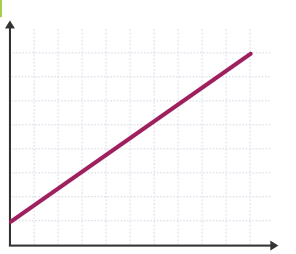
Screenshot 2014-05-31 14.25.03As the school year comes to a close, the buzzphrase is “student growth.” All stakeholders in education want to be able to demonstrate student growth, especially if student growth could be on an upwards trajectory like the graph at left.

Last week I had an opportunity to consider student growth with a different lens, and that lens was provided by a graduating senior who was preparing a presentation to a group of 7th & 8th graders.
I had assigned Steven and his classmates the task of developing  TED-like-Talks that they would give to the middle schoolers. The theme of these talks was “The Most Important Lesson I Learned in 13 Years of Education.” The talk was required  to be short (3-5 minutes), to incorporate graphics, and to make a connection between what was learned and the outside world. I asked students to come up some “profound” idea that made the lesson the most important lesson in their academic career. I gave them several periods to pitch ideas and practice.

Steven’s practice presentation was four slides long on the lesson “Phase Changes of Water.” There was a graphic on each slide that illustrated the changes of water from solid ice to liquid to vapor. The last slide illustrated the temperatures at which water underwent a change and the amount of heat energy or calories expended to make that phase change (below):

phaseplot

“What you see in this graph,” Steven explained, “is that there is a stage, a critical point, where the amount of energy needs to increase to have water change from solid to liquid. The graph shows that stage of changing from solid to liquid is shorter than the stage where the amount of energy needs to increase to change water into steam.”
He pointed to the lines on the graph, first the shorter line labeled melting and then longer line labeled vaporizing.
“So how is this a profound idea?” he asked. “Well, this chart is just like anything you might want to improve on. Sometimes you are working to go to the next level, but you hit a plateau, a critical point. You need to expend more energy for a longer period of time to get to that next level. Thank you.”

We clapped. Everyone sitting in class agreed that Steven had met the assignment. He met the time limit. He had graphics. He made a connection.
I saw something even more profound.

In less than three minutes, Steven had used what he had learned in physics to teach me a new way to consider the learning process. I could see phase changes or phase transitions to illustrate the relationship between energy expended over time and academic performance. I could relabel the side marked heat energy to a label of “energy expended over time.”  Some phase changes would be short, as in the change from ice to a liquid state. Other phase changes would be longer, as in the change from liquid to gas. Each line of phase change would be different.

For example, if I applied this idea to teaching  English grammar, some student phase changes would be short, as in a student’s use of pronouns to represent a noun. Other phase changes could be much longer, such as that same student employing noun-pronoun agreement. Time and energy would need to be expended to improve individual student performance on this task.

But whose energy is measured in this re-imagined transition? Perhaps the idea of phase changes could be used to explain how a teacher’s energy expended in instruction over time, or during a critical point, could improve academic performance. The same idea could be used to demonstrate how a student must expend additional energy at a critical point to improve understanding in order to advance to the next level.

At the end of the school year, teachers need to provide evidence of individual student growth, but perhaps a student is in a transitioning phase and growth is not yet evident?  The major variable in measuring student achievement is the length of the critical point of transition from one level to another, and that length of that critical point could extend for the length of a school year or maybe even longer. Growth may not be measured in the time provided and more energy may need to be expended.

What was so interesting to me was how Steven’s use of phase changes had given me another lens to view the students I assess and the teachers I evaluate. Because measuring academic progress is not fixed by the same physical laws where 540 calories are needed to turn 1 gram (at 100 degrees Celsius) of water to steam, each student’s graph of academic achievement (phase changes) varies. Critical points will be at different levels of achievement measured by different lengths of energy expended. Despite the wishes of teachers, administrators, and students themselves, “growth” is rarely on that 45º trajectory. Instead, growth is represented by moving up a series of stages or critical points that illustrate the amount of energy, by student and/or teacher, spent over time.

Energy matters, in physics and in student achievement. Steven’s TEDTalk gave me a new way to think about that. He was profound. I think he gets an A.

Yesterday, Scott, the social studies teacher, brought an eighth grader into my office to recite a poem. He had arrived unannounced, and the young girl looked uncomfortable standing in front of teachers and 12th grade students. But, she had Scott by her side, and he encouraged her with small nudge. She took a breath, and holding a copy of the poem before her, she began to recite:

In Flanders Fields the poppies blow
Between the crosses row on row,
That mark our place; and in the sky
The larks, still bravely singing, fly
Scarce heard amid the guns below.

We are the Dead. Short days ago
We lived, felt dawn, saw sunset glow,
Loved and were loved, and now we lie
In Flanders fields.

Take up our quarrel with the foe:
To you from failing hands we throw
The torch; be yours to hold it high.
If ye break faith with us who die
We shall not sleep, though poppies grow
In Flanders fields.

No one said anything after she muffled the last line, and there was an awkward pause.  So, I asked her to read the last line again, and Scott pointed to the last sentence in the poem.

“Start here,” he told her, and she reread: If ye break faith with us who die /We shall not sleep, though poppies grow/In Flanders fields.

Only then did we all clap. Her relief was evident, and I noted just as they left, “That last line is the most important in the poem.”

Equally important is what Scott did when he supported this student in having her practice reciting a poem aloud to a group of people. Moreover, this Memorial Day weekend is the appropriate time to hear this particular poem read aloud.

Screenshot 2014-05-23 09.48.29

autographed copy from Arlington National Cemetery website

 In Flanders Field was composed by John McCrae, a poet and a physician who served in the Canadian army in World War I.

The most common account of the poem’s origin is that McCrae was sitting in the back of an ambulance after the Battle of Ypes in Belgium, when he scripted the poem on May 3, 1915, as a eulogy for his close friend Alexis Helmer, who was killed during the battle the day before.

There are other accounts that McCrae was unhappy with the poem and crumpled the paper before it was retrieved by another soldier who was so impressed that he committed it to memory. Another story is that McCrae had worked on the poem for months after the Battle of Ypes. Most stories about the poem agree, however, that McCrae was struck by how quickly poppies quickly grew around the graves of those who died, and he used this striking image that dominates the poem.

So powerful was this image of a brilliant red poppy that American professor Moina Michael promoted the wearing of red poppies year-round to honor the soldiers who died in the war.

By 1922, the Veterans of Foreign Wars (VFW) adopted the poppy as its official memorial, and when fresh poppies could not be found to sell as tributes, artificial poppies were made by veterans groups. These poppies are called “buddy poppies” and, according to the information on the VFW website, the proceeds from their sale,buddy poppy

“provides compensation to the veterans who assemble the poppies, provides financial assistance in maintaining state and national veterans’ rehabilitation and service programs and partially supports the VFW National Home for orphans and widows of our nation’s veterans.”

I appreciate Scott encouraging his student to share the poem. Hearing her read, “If ye break faith with us who die/We shall not sleep” reminded us listening to remember those who made the ultimate sacrifice for their country. The image of those red poppies, those blooming on Flanders Field or those buddy poppies taken from the hand of a veteran this coming Memorial Day, remind us as well.

Continue Reading…

capt As the 10th grade English teacher, Linda’s role had been to prepare students for the rigors of the State of Connecticut Academic Performance Test, otherwise known as the CAPT. She had been preparing students with exam-released materials, and her collection of writing prompts stretched back to 1994.  Now that she will be retiring, it is time to clean out the classroom. English teachers are not necessarily hoarders, but there was evidence to suggest that Linda was stocked with enough class sets of short stories to ensure  students were always more than adequately prepared. Yet, she was delighted to see these particular stories go.
“Let’s de-CAPT-itate,” we laughed and piled up the cartons containing well-worn copies of short stories.
Out went Rough Touch. Out went Machine Runner. Out went Farewell to Violet, and a View from the Bridge.
I chuckled at the contents of the box labelled”depressing stories” before chucking them onto the pile.
Goodbye to Amanda and the Wounded Birds. Farewell to A Hundred Bucks of Happy. Adios to Catch the Moon. We pulled down another carton labeled  “dog stories” containing LibertyViva New JerseyThe Dog Formally Known as Victor Maximilian Bonaparte Lincoln Rothbaum. They too were discarded without a tear.
The CAPT’s Response to Literature’s chief flaw was the ludicrous diluting of Louise Rosenblatt’s Reader Response Theory where students were asked to “make a connection:”

What does the story say about people in general?  In what ways does it remind you of people you have known or experiences you have had?  You may also write about stories or other books you have read, or movies, works of art, or television programs you have seen.

That question was difficult for many of the literal readers, who, in responding to the most obvious plot point, might answer, “This story has a dog and I have a dog.” How else to explain all the dog stories? On other occasions, I found out that while taking standardized test in the elementary grades students had been told, “if you have no connection to the story, make one up!” Over the years, the CAPT turned our students into very creative liars rather than literary analysts.


The other flaw in the Response to Literature  was the evaluation question. Students were asked,  

How successful was the author in creating a good piece of literature?  Use examples from the story to explain your thinking.

Many of our students found this a difficult question to negotiate, particularly if they thought the author did not write a good piece of literature, but rather an average or mildly enjoyable story. They did manage to make their opinions known, and  one of my favorite student responses began, “While this story is no  Macbeth, there are a few nice metaphors…”

Most of the literature on the CAPT did come from reputable writers, but they were not the quality stories found in anthologies like Saki’s The Interlopers or Anton Chekhov’s The Bet. To be honest, I did not think the CAPT essays were an authentic activity, and I particularly did not like the selections on the CAPT’s Response to Literature section.

Now the CAPT will be replaced by the Smarter Balanced Assessments (SBAC), as Connecticut has selected SBAC as their assessment consortium to measure progress with the Common Core State Standards, and the test will move to 11th grade. This year (2014) is the pilot test only; there are no exemplars and no results.  The SBAC is digital, and in the future we will practice taking this test on our devices, so there is no need to hang onto class sets of short stories. So why am I concerned that there will be no real difference with the SBAC? Cleaning the classroom may be a transition that is more symbolic of our move from paper to keyboard than in our gaining an authentic assessment.

Nevertheless, Linda’s classroom looked several tons lighter.

“We are finally de-CAPT-itated!” I announced looking at the stack of boxes ready for the dumpster.

“Just in time to be SBAC-kled!” Linda responded cheerfully.

An ad supporting the Common Core State Standards posted by the Bill and Melinda Gates Foundation featured a Missouri Teacher of the Year, Jamie Manker, saying, “I support the Common Core because it’s asking kids to think.”

Screen Shot 2014-05-03 at 7.31.27 AM

My immediate reaction was, “Good Heavens! What did Manker’s students do before the implementation of the Common Core? Thinking should have been happening all along!”

Of course her students had been thinking or she would not have been a teacher of the year. Her statement may have been truncated to fit on on the #SupporttheCore poster. Yet, she is not alone in making such statements. There have been a number of teachers of the year who state that their students are doing better work because of the Common Core:

From Nancie Lindblom Arizona 2013 Teacher of the Year, The new standards provide the opportunity to do this by increasing the expectations for all students, allowing me to challenge my students to think analytically.”

From Ms. Sponaugle 2014 West Virginia Teacher of the Year, “My students are engaged, they’re motivated, and they’re learning, and that’s what the common core standards are all about-preparing our children to be confident and capable in an ever-more competitive world.”

Again, these admissions are puzzling. Why would a teacher whose credentials and instructional practice are exemplary enough to warrant a state award wait for an “opportunity” to challenge students to think analytically? Or how would a teacher of the year not already be engaging students in order to prepare them for an ever-more competitive world? Did they not already use a set of standards before the Common Core in their classrooms?

Without context, these teachers’ statements make them appear less competent. In an ironic twist, the Bill and Melinda Gates Foundation’s use of teachers of the year as promotional tools has the unfortunate effect of leaving them open to the following line of criticism: What kind of teachers were they B.C.C.(Before the Common Core) when they admit their students were not being challenged?

Their overstatements on behalf of the Common Core contribute to the unfortunate generalization that B.C.C.(Before the Common Core) students were not engaged. They were not being prepared for a competitive world. They did not think.

Collectively, their statements open up a single tricky question for these teachers of the year…..Why not?

On the Studio 360 website, the following photo of a poem written by a 1st grader is posted as the best poem to celebrate National Poetry Month 2014. I would agree that there is something universally appealing about this child’s observations that were created with considerable attention to the way words sound…

first_grade_poem_embed


We did the soft wind.
We danst slowly. We swrld
Aroned. We danst soft.
We lisin to the mozik.
We danst to the mozik. 
We made personal space. 

The poem by this 1st grader is strikingly similar to Gwendolyn Brook’s short poem. She also pays considerable attention to the way words sound:


THE POOL PLAYERS.
SEVEN AT THE GOLDEN SHOVEL.

We real cool. We
Left school. We

Lurk late. We
Strike straight. We

Sing sin. We
Thin gin. We

Jazz June. We
Die soon.

My students have always commented on the inferences that Brooks creates in her eight lines of verse in characterizing the seven pool players. They write about the pool players’ attitudes and their fatalistic approach to life. My students also comment on what is missing in drawing their conclusions. They are satisfied with providing interpretations in the “spaces” of the poem, filling in their own ideas what is not explicit. They agree with T.S. Eliot’s statement: “poetry communicates before it is understood.”

The unnamed 1st grade poet of the poem above communicates the slow, swirling, soft relationship between music and dance in seven short statements on six lines of verse. What does it matter if the reader may never understand if the personal space for the poet is made because of the room needed for the dance or the space made personal by the dance ? In filling in the “space” of the 1st grader’s poem, I like to think that line was probably added because of a teacher’s repeated plea to a room of dancing 6 year- olds:

“PERSONAL SPACE! Remember…PERSONAL SPACE!!”

Continue Reading…

April is Poetry Month. What should you do about this?
Take advice from Sir Philip Sidney and “Look in thy heart and write.”

Sidney composed “An Apology for Poetry”  (Defence of Poesie) in 1575, and in this essay maintains poetry combines the liveliness of history with philosophy, and this combination is more effective than either history or philosophy in inspiring readers. According to Sidney, poetry acts in a way that “awakens and enlarges the mind itself by rendering it the receptacle of a thousand unapprehended combinations of thought.”

Sidney himself was an accomplished poet who wrote a sequence of 108 English sonnets known as “Astrophil and Stella” where Astrophil is the star lover, and Stella is his star.

The first sonnet in the sequence sets the conceit; the meaning embedded in the last line (bolded):

Loving in truth, and fain in verse my love to show
That she (dear She) might take some pleasure of my pain:
Pleasure might cause her read, reading might make her know,
Knowledge might pity win, and pity grace obtain;
I sought fit words to paint the blackest face of woe,
Studying inventions fine, her wits to entertain:
Oft turning others’ leaves, to see if thence would flow
Some fresh and fruitful showers upon my sun-burn’d brain.
But words came halting forth, wanting Invention’s stay,
Invention, Nature’s child, fled step-dame Study’s blows,
And others’ feet still seem’d but strangers in my way.
Thus, great with child to speak, and helpless in my throes,
Biting my truant pen, beating myself for spite–
“Fool,” said my Muse to me, “look in thy heart and write.”

writeMeaning? Stop thinking about writing a poem and start writing a poem. Your heart will guide your pen.

So, what to write during Poetry Month?

  • Write a poem and share on a website. There are hundreds of sites. (ex: poetry.com)
  • Write about your favorite poem and share the poem.
  • Write about a lesson on poetry you remember.
  • Write about a lesson on poetry you taught.
  • Write a post for #PoetryFriday, a platform where poets and readers of poetry share their writing.  Each week, a blogger is tasked with rounding up the #PoetryFriday posts around the blogosphere and hosting posts on his or her website.

As Sidney suggests, the best way to know what you think about poetry is to sit and write about poetry.
It’s April.
It’s Poetry Month.
Your muse is impatiently waiting.

Write!

Continue Reading…

Screen Shot 2014-04-06 at 11.16.51 AMNot so long ago, 11th grade was a great year of high school. The pre-adolescent fog had lifted, and the label of “sophomore,” literally “wise-fool,” gave way to the less insulting “junior.” Academic challenges and social opportunities for 16 and 17 years olds increased as students sought driver’s permits/licenses, employment or internships in an area of interest. Students in this stage of late adolescence could express interest in their future plans, be it school or work.

Yet, the downside to junior year had always been college entrance exams, and so, junior year had typically been spent in preparation for the SAT or ACT. When to take these exams had always been up to the student who paid a base price $51/SAT or $36.50/ACT for the privilege of spending hours testing in a supervised room and weeks in anguish waiting for the results. Because a college accepts the best score, some students could choose to take the test many times as scores generally improve with repetition.

Beginning in 2015, however, junior students must prepare for another exam in order to measure their learning using the Common Core State Standards (CCSS). The two federally funded testing consortiums, Smarter Balanced Assessments (SBAC) or the Partnership for Assessment of Readiness for College and Careers (PARCC) have selected 11th grade to determine the how college and career ready a student is in English/Language Arts and Math.

The result of this choice is that 11th grade students will be taking the traditional college entrance exam (SAT or ACT) on their own as an indicator of their college preparedness. In addition, they will take another state-mandated exam, either the SBAC or the PARRC, that also measures their college and career readiness. While the SAT or ACT is voluntary, the SBAC or PARRC will be administered during the school day, using 8.5 hours of instructional time.

Adding to these series of tests lined up for junior year are the Advanced Placement exams. There are many 11th grade students who opt to take Advanced Placement courses in a variety of disciplines either to gain college credit for a course or to indicate to college application officers an academic interest in college level material. These exams are also administered during the school day during the first weeks of May, each taking 4 hours to complete.

One more possible test to add to this list might be the Armed Services Vocational Aptitude Battery (ASVAB test) which, according to the website Today’s Military,  is given to more than half of all high schools nationwide to students in grade 10th, 11th or 12th, although 10th graders cannot use their scores for enlistment eligibility.

The end result is that junior year has gradually become the year of testing, especially from the months of March through June, and all this testing is cutting into valuable instructional time. When students enter 11th grade, they have completed many pre-requisites for more advanced academic classes, and they can tailor their academic program with electives, should electives be offered. For example, a student’s success with required courses in math and science can inform his or her choices in economics, accounting, pre-calculus, Algebra II, chemistry, physics, or Anatomy and Physiology. Junior year has traditionally been a student’s greatest opportunity to improve a GPA before making college applications, so time spent learning is valuable. In contrast, time spent in mandated testing robs each student of classroom instruction time in content areas.

In taking academic time to schedule exams, schools can select their exam (2 concurrent) weeks for performance and non-performance task testing.  The twelve week period (excluding blackout dates) from March through June is the nationwide current target for the SBAC exams, and schools that choose an “early window” (March-April) will lose instructional time before the Advanced Placement exams which are given in May. Mixed (grades 11th & 12th) Advanced Placement classes will be impacted during scheduled SBACs as well because teachers can only review past materials instead of progressing with new topics in a content area. Given these circumstances, what district would ever choose an early testing window?  Most schools should opt for the “later window” (May) in order to allow 11th grade AP students to take the college credit exam before having to take (another) exam that determines their college and career readiness. Ironically, the barrage of tests that juniors must now complete to determine their “college and career readiness” is leaving them with less and less academic time to become college and career ready.

Perhaps the only fun remaining for 11th graders is the tradition of the junior prom. Except proms are usually held between late April and early June, when -you guessed it- there could be testing.

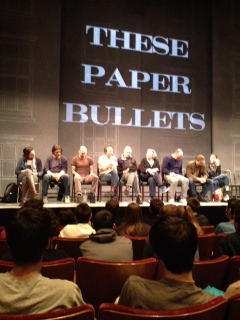
Yesterday, I took a group of 11th and 12th grade on a field trip to Yale Repertory Theatre to see These Paper Bullets, a “modish remake” of Shakespeare’s Much Ado About Nothing. We arrived early enough to have a little time before the show to stroll the sidewalks of Yale/New Haven and grab a cup of coffee before filing into the University Theatre. The weather cooperated for the first time this year, a bright warming sun made the wait before the show a pleasurable experience.

Talkback with the actors at Yale Repertory 4/3/14

Talkback with the actors at Yale Repertory 4/3/14

The comedy was adapted by Rolin Jones, with original songs by Green Day’s Billie Joe Armstrong. The production, offered as part of the Will Power! program, was high spirited fun, featuring live music from the stage and digital projections engulfing the audience.

We remained after the curtain call for the “talkback” with the actors and crew, an experience that always provides my students the most authentic look at the theatre profession. When a student from the audience asked how long it took the cast to memorize lines for the play, actress Liz Wisan made every English and Drama teacher’s heart happy by responding, “Before you can memorize, you have to know the meaning of the words…to understand what the author says …and you must see through the character’s eyes.” She had no need for Common Core or curriculum guides to express her deep appreciation for author’s craft.

After the talkback, we stopped for pizza (this was New Haven, after all) and the students chattered about the play. “Best show ever!” was their collective response, and I agreed.

This was a great field trip, one the students will remember.

Certainly, the educational institution known as the field trip presents any teacher with one of education’s most complex dilemmas: it can be both fraught with peril and, at the same time, infinitely rewarding.  In taking a field trip students are removed from the safe confines of the school building to participate in a volatile mix of authenticity and liability. The only guarantee of success is that while students will forget homework, lessons, and classroom rules, students will always remember going on a field trip.

There are teachers who hate field trips, which can be difficult to organize. There is a laundry list of possible disasters associated with field trips:

  • Final expense could mean that some students may be excluded or choose not to be included;
  • Bad weather cancels activities or negatively impacts trip;
  • Students could be injured;
  • Students could get lost;
  • Busses could break down.

In addition, field trips disrupt class schedules, and even though students are told in advance that they are to complete any work they miss in class due to a field trip, they rarely do. For all these reasons, field trips are sometimes limited in number in a school year. This limit is unfortunate because any field trip is a powerful educational tool.

Field trips are what students remember.

This morning, the entire eighth grade left for a day trip to NYC. The students were scheduled to visit Ellis Island, the Statue of Liberty, and the aircraft carrier Intrepid. However, they were not so fortunate as we had been only 24 hours earlier. The weather was dismal, and a light rain kept the temperatures chilly. Oh, and one of the buses broke down; something about a wheel falling off.

On a positive note, students used social media to keep their parents and friends updated on their 3.5 hour delay. Just before midnight, their organizing teacher posted, “They [students] were well-mannered, patient, resilient, and cooperative.”

Their trip was a great field trip, too; one the students will remember.

Opening speeches generally start with a “Welcome.”
Lucy Calkins started the 86th Saturday Reunion, March 22, 2014, at Teacher’s College with a conjunction.

“And this is the important thing” she addressed the crowd that was filling up the rows in the Riverside Cathedral, “the number of people who are attending has grown exponentially. This day is only possible with the goodwill of all.”

Grabbing the podium with both hands, and without waiting for the noise to die down, Calkins launched the day as if she was completing a thought she had from the last Saturday Reunion.

“We simply do not have the capacity to sign you up for workshops and check you in. We all have to be part of the solution.”

She was referring to the  workshops offered free of charge to educators by all Teachers College Reading and Writing Project (TCRWP) staff developers at Columbia University. This particular Saturday, there were over 125 workshops advertised on topic such as “argument writing, embedding historical fiction in nonfiction text sets, opinion writing for very young writers, managing workshop instruction, aligning instruction to the CCSS, using performance assessments and curriculum maps to ratchet up the level of teaching, state-of-the-art test prep, phonics, and guided reading.”

“First of all, ” she chided, “We cannot risk someone getting hit by a car.” Calkin’s concerns are an indication that the Saturday Reunion workshop program is a victim of its own success. The thousands of teachers disembarking from busses, cars, and taxis were directed by TCRWP minions to walk on sidewalks, wait at crosswalks, and “follow the balloons” to the Horace Mann building or Zankel Hall.

“Cross carefully,” she scolded in her teacher voice, “and be careful going into the sessions,” she continued, “the entrances to the larger workshops are the center doors, the exits are to the sides. We can’t have 800 people going in and out the same way.”

Safety talk over, Calkins turned her considerable energy to introducing a new collaborative venture, a website where educators can record their first hand experiences with the Common Core State Standards and Smarter Balanced Assessments (SBAC) or the Partnership for Assessment of Readiness for College and Careers (PARCC) testing.

And, as unbelievable as this sounds, Calkins admitted that, sometimes, “I get afraid to talk out.”
That is why, she explained, she has joined an all-star cast of educators (including Diane Ravitch, Kylene Beers, Grant Wiggins, Robert Marzano, Anthony Cody, Kathy Collins, Jay McTighe, David Pearson, Harvey “Smokey” Daniels and others-see below) in organizing a website where the voices of educators with first hand experience with standardized testing can document their experiences. The site is called Testing Talkhttp://testingtalk.org/) The site’s message on the home page states:

This site provides a space for you to share your observations of the new breed of standardized tests. What works? What doesn’t? Whether your district is piloting PARCC, Smarter Balanced, or its own test, we want to pass the microphone to you, the people closest to the students being tested. The world needs to hear your stories, insights, and suggestions. Our goal is collective accountability and responsiveness through a national, online conversation.

Screenshot 2014-03-31 21.56.01 Calkin’s promotion was directed to educators, “This will be a site for you to record your experience with testing, not to rant.” She noted that as schools “are spending billions, all feedback on testing should be open and transparent.” 

Winding down Calkins looked up from her notes. “You will all be engaged,” she promised. “Enter comments; sign your name,” she urged before closing with the final admonishment, “Be brave.”

Continue Reading…