Archives For November 30, 1999

Wordpress Reader for Freshly Pressed

Yesterday, Scott, the social studies teacher, brought an eighth grader into my office to recite a poem. He had arrived unannounced, and the young girl looked uncomfortable standing in front of teachers and 12th grade students. But, she had Scott by her side, and he encouraged her with small nudge. She took a breath, and holding a copy of the poem before her, she began to recite:

In Flanders Fields the poppies blow
Between the crosses row on row,
That mark our place; and in the sky
The larks, still bravely singing, fly
Scarce heard amid the guns below.

We are the Dead. Short days ago
We lived, felt dawn, saw sunset glow,
Loved and were loved, and now we lie
In Flanders fields.

Take up our quarrel with the foe:
To you from failing hands we throw
The torch; be yours to hold it high.
If ye break faith with us who die
We shall not sleep, though poppies grow
In Flanders fields.

No one said anything after she muffled the last line, and there was an awkward pause.  So, I asked her to read the last line again, and Scott pointed to the last sentence in the poem.

“Start here,” he told her, and she reread: If ye break faith with us who die /We shall not sleep, though poppies grow/In Flanders fields.

Only then did we all clap. Her relief was evident, and I noted just as they left, “That last line is the most important in the poem.”

Equally important is what Scott did when he supported this student in having her practice reciting a poem aloud to a group of people. Moreover, this Memorial Day weekend is the appropriate time to hear this particular poem read aloud.

Screenshot 2014-05-23 09.48.29

autographed copy from Arlington National Cemetery website

 In Flanders Field was composed by John McCrae, a poet and a physician who served in the Canadian army in World War I.

The most common account of the poem’s origin is that McCrae was sitting in the back of an ambulance after the Battle of Ypes in Belgium, when he scripted the poem on May 3, 1915, as a eulogy for his close friend Alexis Helmer, who was killed during the battle the day before.

There are other accounts that McCrae was unhappy with the poem and crumpled the paper before it was retrieved by another soldier who was so impressed that he committed it to memory. Another story is that McCrae had worked on the poem for months after the Battle of Ypes. Most stories about the poem agree, however, that McCrae was struck by how quickly poppies quickly grew around the graves of those who died, and he used this striking image that dominates the poem.

So powerful was this image of a brilliant red poppy that American professor Moina Michael promoted the wearing of red poppies year-round to honor the soldiers who died in the war.

By 1922, the Veterans of Foreign Wars (VFW) adopted the poppy as its official memorial, and when fresh poppies could not be found to sell as tributes, artificial poppies were made by veterans groups. These poppies are called “buddy poppies” and, according to the information on the VFW website, the proceeds from their sale,buddy poppy

“provides compensation to the veterans who assemble the poppies, provides financial assistance in maintaining state and national veterans’ rehabilitation and service programs and partially supports the VFW National Home for orphans and widows of our nation’s veterans.”

I appreciate Scott encouraging his student to share the poem. Hearing her read, “If ye break faith with us who die/We shall not sleep” reminded us listening to remember those who made the ultimate sacrifice for their country. The image of those red poppies, those blooming on Flanders Field or those buddy poppies taken from the hand of a veteran this coming Memorial Day, remind us as well.


Continue Reading…

capt As the 10th grade English teacher, Linda’s role had been to prepare students for the rigors of the State of Connecticut Academic Performance Test, otherwise known as the CAPT. She had been preparing students with exam-released materials, and her collection of writing prompts stretched back to 1994.  Now that she will be retiring, it is time to clean out the classroom. English teachers are not necessarily hoarders, but there was evidence to suggest that Linda was stocked with enough class sets of short stories to ensure  students were always more than adequately prepared. Yet, she was delighted to see these particular stories go.
“Let’s de-CAPT-itate,” we laughed and piled up the cartons containing well-worn copies of short stories.
Out went Rough Touch. Out went Machine Runner. Out went Farewell to Violet, and a View from the Bridge.
I chuckled at the contents of the box labelled”depressing stories” before chucking them onto the pile.
Goodbye to Amanda and the Wounded Birds. Farewell to A Hundred Bucks of Happy. Adios to Catch the Moon. We pulled down another carton labeled  “dog stories” containing LibertyViva New JerseyThe Dog Formally Known as Victor Maximilian Bonaparte Lincoln Rothbaum. They too were discarded without a tear.
The CAPT’s Response to Literature’s chief flaw was the ludicrous diluting of Louise Rosenblatt’s Reader Response Theory where students were asked to “make a connection:”

What does the story say about people in general?  In what ways does it remind you of people you have known or experiences you have had?  You may also write about stories or other books you have read, or movies, works of art, or television programs you have seen.

That question was difficult for many of the literal readers, who, in responding to the most obvious plot point, might answer, “This story has a dog and I have a dog.” How else to explain all the dog stories? On other occasions, I found out that while taking standardized test in the elementary grades students had been told, “if you have no connection to the story, make one up!” Over the years, the CAPT turned our students into very creative liars rather than literary analysts.


The other flaw in the Response to Literature  was the evaluation question. Students were asked,  

How successful was the author in creating a good piece of literature?  Use examples from the story to explain your thinking.

Many of our students found this a difficult question to negotiate, particularly if they thought the author did not write a good piece of literature, but rather an average or mildly enjoyable story. They did manage to make their opinions known, and  one of my favorite student responses began, “While this story is no  Macbeth, there are a few nice metaphors…”

Most of the literature on the CAPT did come from reputable writers, but they were not the quality stories found in anthologies like Saki’s The Interlopers or Anton Chekhov’s The Bet. To be honest, I did not think the CAPT essays were an authentic activity, and I particularly did not like the selections on the CAPT’s Response to Literature section.

Now the CAPT will be replaced by the Smarter Balanced Assessments (SBAC), as Connecticut has selected SBAC as their assessment consortium to measure progress with the Common Core State Standards, and the test will move to 11th grade. This year (2014) is the pilot test only; there are no exemplars and no results.  The SBAC is digital, and in the future we will practice taking this test on our devices, so there is no need to hang onto class sets of short stories. So why am I concerned that there will be no real difference with the SBAC? Cleaning the classroom may be a transition that is more symbolic of our move from paper to keyboard than in our gaining an authentic assessment.

Nevertheless, Linda’s classroom looked several tons lighter.

“We are finally de-CAPT-itated!” I announced looking at the stack of boxes ready for the dumpster.

“Just in time to be SBAC-kled!” Linda responded cheerfully.

On the Studio 360 website, the following photo of a poem written by a 1st grader is posted as the best poem to celebrate National Poetry Month 2014. I would agree that there is something universally appealing about this child’s observations that were created with considerable attention to the way words sound…

first_grade_poem_embed


We did the soft wind.
We danst slowly. We swrld
Aroned. We danst soft.
We lisin to the mozik.
We danst to the mozik. 
We made personal space. 

The poem by this 1st grader is strikingly similar to Gwendolyn Brook’s short poem. She also pays considerable attention to the way words sound:


THE POOL PLAYERS.
SEVEN AT THE GOLDEN SHOVEL.

We real cool. We
Left school. We

Lurk late. We
Strike straight. We

Sing sin. We
Thin gin. We

Jazz June. We
Die soon.

My students have always commented on the inferences that Brooks creates in her eight lines of verse in characterizing the seven pool players. They write about the pool players’ attitudes and their fatalistic approach to life. My students also comment on what is missing in drawing their conclusions. They are satisfied with providing interpretations in the “spaces” of the poem, filling in their own ideas what is not explicit. They agree with T.S. Eliot’s statement: “poetry communicates before it is understood.”

The unnamed 1st grade poet of the poem above communicates the slow, swirling, soft relationship between music and dance in seven short statements on six lines of verse. What does it matter if the reader may never understand if the personal space for the poet is made because of the room needed for the dance or the space made personal by the dance ? In filling in the “space” of the 1st grader’s poem, I like to think that line was probably added because of a teacher’s repeated plea to a room of dancing 6 year- olds:

“PERSONAL SPACE! Remember…PERSONAL SPACE!!”

Continue Reading…

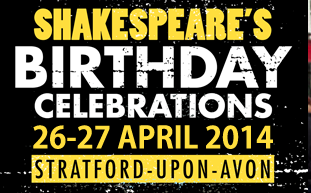
Shakespeare would be 450 years old this year, April 2014. To celebrate this milestone the Shakespeare’s Birthplace Trust has a number of activities scheduled including performances and parades in Shakespeare’s hometown of Stratford-Upon-Avon the weekend of April 26/27:

Screenshot 2014-04-22 08.35.28

The birthday weekend brings together performers, artists, the local community and ambassadors from around the world in a vibrant celebration of the life and works of William Shakespeare. During the two day event, the town’s streets overflow with music, pageantry and drama and you are invited to enjoy a packed programme of special activities and great days out at the five Shakespeare houses.

Whatever activities they plan, I am sure Shakespeare would be honored to be the cause of merry-making and revelry. He would love to the be the cause of festivity; he would enjoy a celebratory bash. But the committee planning the events has been careful not to use the word “party.” That word would confuse Shakespeare because for all of his prowess as a dramatist and poet, Shakespeare does not know the word “party.”

In penning 37 plays and 154 sonnets Shakespeare is credited with contributing an estimated 1,700 words to the English language. In his verse, he used six different meanings to the word party. Using the Shakespeare Navigator, owned by Philip Weller, I researched how the word “party” was used in Shakespeare’s works:

party (n.) 1 side, faction, camp
party (n.) 2 litigant, disputant, side
party (n.) 3 side, part, function
party (n.) 4 participant, accessory, supporter
party (n.) 5 person, fellow
party (n.) 6 side, position, viewpoint

Note: none of these means “celebration.”

Perhaps this is not so much of a surprise since the word “party” as a noun was not used as an occasion for celebration until 1716, a century after Shakespeare’s death. The Online Etymology Dictionary records the first use of “party” as:

Sense of “gathering for social pleasure” is first found 1716, from general sense of persons gathered together (originally for some specific purpose, such as dinner party, hunting party).

“To Party,” the verb derived from the noun was not added until the Roaring 20’s”

“have a good time,” 1922, from party (n.)

Shakespeare was acquainted with the word “birthday” since it had been in use for at least two hundred years before he was writing:

birthday (n.) late 14c., from Old English byrddæg, “anniversary celebration of someone’s birth” (at first usually a king or saint); see birth (n.) + day. Meaning “day on which one is born” is from 1570s. 

He does note “birthdays” in plays:

Antony and Cleopatra: AC III.xiii.184.2 It is my birthday.
Julius Caesar: JC V.i.71 This is my birthday; 
Pericles: Per II.i.109 is It is her birthday, and there are princes and knights come
The Two Noble Kinsmen: TNK II.iv.36 You have honoured her fair birthday with your virtues,

Still Shakespeare chose other ways of expressing birth, as evidence by a particularly sad admission from Beatrice in Much Ado abut Nothing about the death of her mother in childbirth:

BEATRICE
334   No, sure, my lord, my mother cried; but then there
335   was a star danced, and under that was I born. (2.1)

So, members of the Shakespeare’s Birthplace Trust, have a wonderful gala. Have a fabulous social gathering.  Celebrate Shakespeare’s 450th birthday, but please, do not party. 

Shakespeare does not know “party” that way.

17 minutesI was researching websites for the Film and Literature class when I first heard about the “17 Minute Rule;” a rule that suggests the real plot is revealed to the audience 17 minutes into any film.  Todd Pack’s Messy Desk Blog uses a number of examples to illustrate  The 17 Minute Rule:

George Bailey tells his father he couldn’t face being cooped up the rest of his life in a shabby little office at his father’s building and loan 17 minutes into It’s a Wonderful Life.

The rest of the movie is about everything that happens that stops him from leaving Bedford Falls and drives him to consider jumping off that bridge on Christmas Eve.

  • Luke’s uncle buys the droids 17 minutes into Star Wars. The droids are what leads Luke to Obi-Wan Kenobi and Princess Leia and, ultimiately, the Death Star.
  • Buddy leaves the North Pole to find his real dad 17 minutes into Elf.
  • The shark eats the little boy on the raft 17 minutes intoJaws. It’s the second attack that forces the town to close the beach and go after the shark.
  • The Iowa farmer is thinking about plowing under the baseball field he built in his cornfield until Shoeless Joe appears 17 minutes after the credits in Field of Dreams.

This 17 minute phenomenon was corroborated on other blogs as well.  Writer and Director Nathan Marshall posted Screenplay Structure: Three Acts & Five Points Script Frenzy! blog where he also called attention to minute 17:

3) Page 17. Next time you watch a DVD, pause it 17 minutes into the film. Trust me—any film. What’s happening at that point in the story? Most likely, the essential character conflict has just been laid out. A teenage Indiana Jones runs to his father for help, but is shushed instead. Shaun convinces his girlfriend to trust him in Shaun of the Dead. Captain Renault asks Rick why he came to Casablanca. On page 17, your audience should realize what the film is really about. It’s not about finding the Holy Grail, Indy—it’s about learning to forgive dad!

The same was outlined on the  All About Screenwriting blog. In addition to explaining the rule, this post made the claim that the ratio of screenplay to minute of film is 1:1; and page 17 will be the 17th minute of a film. The site provides a basic outline for a screenplay of the average movie made today:

FADE IN: 

  • Between pages 1-5: The HOOK, something that grabs our attention and pulls us in.
  • Page 10: At this point in your script you should have the “MINI CRISIS”. The “MINI CRISIS” should lead us into…
  • Page 17: …The DILEMMA. Creation of the team and what the movie is about.
  • Page 30: The REACTION to the dilemma or situation.
  • Page 45: First “REVERSAL” of the 17 minute point. This point furthers the characters and pushes them deeper into the situation or the dilemma.
  • Page 60: The “TENT POLE” of the movie. Where the passive characters become active or vice versa.
  • Page 75: Second “REVERSAL” to the 17 minute point. To reaffirm what the story is about.
  • Page 90: The LOW POINT of action. The place from which our main character has to rise up from.

FADE OUT.

So when I noticed students picking up books for independent reading and discarding them after the first few pages, I wondered if they were giving the book a real chance. Could a 17 page rule apply to books student might choose to read? And, if the rule applied, would a student become more engaged once he or she reached page 17?

In a short experiment, I grabbed three books off the top of the book cart, and noted the following:

The Hobbit (The Dwarves and Gandalf invade Bilbo’s home)

“The poor little hobbit sat down in the hall and put his head in his hands, and wondered what had happened, and what was going to happen, and whether they would all stay to supper. Then the bell rang again louder than ever, and he had to run to the door.”

Little Women -Marmee gives  Meg, Jo, Beth, and Amy their Christmas gifts with her words of encouragement to survive the difficulties of life.

‘We never are too old for this, my dear, because it is a play we are playing all the time in one way or another.Out burdens are here, our road is before us, and the longing for goodness and happiness is the guide that leads us through many troubles and mistakes to the peace which is a true Celestial City. Now, my little pilgrims, suppose you begin again, not in play, but in earnest, and see how far on you can get before Father comes home.’”

Lord of the Flies-The boys Ralph and Piggy discover they are on their own in a hostile environment:

“They’re all dead,” said Piggy, “an’ this is an island. Nobody don’t know we’re here. Your dad don’t know, nobody don’t know—”
His lips quivered and the spectacles were dimmed with mist.
“We may stay here till we die.”
With that word the heat seemed to increase till it became a threatening weight and the lagoon attacked them with a blinding effulgence.”

Yes, the rule was working for books from the canon. Later that same afternoon, I was working with a “reluctant reader” who had selected James and the Giant Peach as a guided reading text. I glanced at page 17 and noticed the wonderful passage where James finds the entrance to the giant peach.

James and the Giant Peach 

“Almost without knowing what he was doing, as though drawn by some powerful magnet, James Henry Trotter started walking slowly toward the giant peach. He climbed over the fence that surrounded it, and stood directly beneath it, staring up at its great bulging sides. He put out a hand and touched it gently with the tip of one finger. It felt soft and warm and slightly furry, like the skin of a baby mouse. He moved a step closer and rubbed his cheek lightly against the soft skin. And then suddenly, while he was doing this, he happened to notice that right beside him and below him, close to the ground, there was a hole in the side of the peach.”

Not every text has a page 17 moment…sometimes the dilemma is posed on page 16 or page 18 or 19. I suspect the rule holds up because the 17 minute rule/page 17 is part of a pattern in storytelling, and stories always follow a pattern.  Sharing this rule with students gives me another “tool” in my teaching toolbox, so when I see a student toss a book aside after reading only a few pages, I casually remark, “Did you get to page 17 yet? There’s a rule about page 17…. on page 17, something important always happens.”
I may get a quizzical look, but several minutes later, I have seen that same student engrossed in the text.
“The book got better,” says the student.
“Well, you got past page 17,” I respond.

The poems of Seamus Heaney get a great deal of attention in mid-March probably because everything Irish gets attention around St. Patrick’s Day (March 17). Heaney is well represented in our curriculum; we read his Beowulf translation in grade 10. This Nobel prize-winning interpreter,, playwright and poet passed away in September 2013, leaving a legacy he described as one of “…words as bearers of history and mystery.”

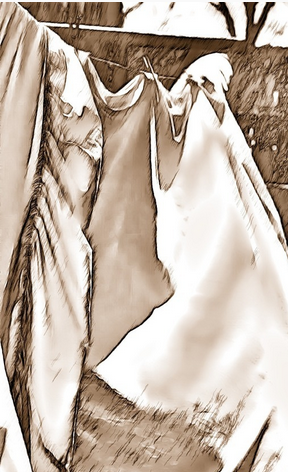
Screenshot 2014-03-14 07.32.13I taught his Sonnet, In Memoriam M.K.H., 1911-1984 to my Advanced Placement English Literature class this week. They listened first to hear him read the poem: (NOTE: be sure and listen to the little comment about “x’s and o’s” he makes at the end)

The cool that came off the sheets just off the line

Made me think the damp must still be in them

But when I took my corners of the linen

And pulled against her, first straight down the hem

And then diagonally, then flapped and shook

The fabric like a sail in a cross-wind,

They made a dried-out undulating thwack.       (sonnet continues…..)

“Is this about death?” asked my 4th period class. They were curious.
“This is about sex,” stated my 1st period class. They were emphatic.
Ultimately, they came to agree that the “thwack” could be either.

This past week has been “Sonnet Hell Week” where I teach my students to read, analyze, and then respond in draft form about a selected sonnet in preparation for the exam this coming May. This kind of exercise has the potential to poison anyone’s love for poetry, and they had written several essays before getting to this poem.
Despite the danger, I was confident that 
Heaney’s poem could withstand even the most jaded 2nd semester senior’s interpretation.

“I like it,” was the collective sentiment. These lines from a few of their quick draft essays reflect their appreciation:

Heaney uses comparisons to tell the reader that folding sheets makes him feel like his wife is still around, as the two end up “hand to hand” just from folding alone.

He describes their romance in moves when he was “x and she was o”…XOXO commonly represents hugs and kisses, creating the heartfelt connection.

This touching and pulling away symbolizes her physical existence on earth and her abrupt departure through the onomotopoeic “thwack.”

Just like the finality of the chore of folding sheets that they used to do together will never stop being a chore, she is forever present. She is in every fiber sewn in the sheets, every old flour sack used.

He must face the perils of household chores without help, endure his worst fears without his best friend. He must make his bed and sleep in it too.

The New York Times ran a wonderful opinion-documentary (Op-doc) on Heaney in December 2013. Watch and listen (yes, listen!) to the lovely tribute to Ireland’s great literary talent:

Continue Reading…

There is no surprise in reading the word “precision” in the language of the Common Core’s Mathematical Practice Standards. Mathematics requires precision:

CCSS.Math.Practice.MP6 Attend to precision.

Mathematically proficient students try to communicate precisely to others. They try to use clear definitions in discussion with others and in their own reasoning.

Writing requires precision as well. Proficient writers in every genre communicate precisely to others. Yet, one of the most difficult concepts to teach to students in recognizing the precision in an author’s craft. Word choice and punctuation are committed with intent by an author, yet, there are students who doubt these steps of precision made by an author. They believe that any text has stepped, as if full-formed or Athena-like, from the mind of an author. They think that novels pop into existence…unless, they are reading Toni Morrison.

Screenshot 2014-02-27 21.57.19

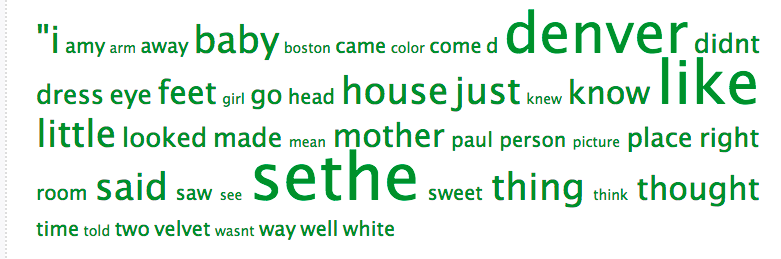
A “Wordsift” of precise language in Chapter 3 of “Beloved”; Denver and Sethe dominate as does the simile generator “like”.

My Advanced Placement English Literature students are currently reading Morrison’s 1988 Pulitzer Prize winning novel, Beloved. This story confronts the horrors of slavery by fictionalizing the true story of Margaret Garner who, in a failed bid for freedom, killed her baby daughter rather than have her returned to slavery.

A look at the opening two lines to Toni Morrison novel Beloved demonstrate her power as a storyteller and highlight her precision with language:

“124 was spiteful. Full of baby venom.”

An quick analysis of the specificity of language in these two short statements reveals:

  • 124 is the address (setting) where Paul D arrives looking for the run-away slave, Sethe.
  • 124 is also a combination of 1and 2 and 4…the first-born, the second-born, and the fourth-born children of Sethe. The third-born child (3), the child named Beloved, is missing numerically. That child chooses to make her presence known in more ghostly ways.
  • Morrison is exacting in her selection of word choice from her opening personification of the house as spiteful (“having or showing a desire to harm, anger, or defeat someone; malicious”) to the incongruous pairing of the words “baby” and “venom”.

So, when I asked students to write about the precision in word choice Morrison uses to craft imagery in the novel in the first 100 pages, they had much to choose from:

“In describing the choke cherry tree of scars on Sethe’s back, Morrison writes, ‘See, here’s the trunk it’s red and split wide open, full of sap and here’s the parting for the branches'(79). A history textbooks do not give details of slave wounds like that.”

“Sethe and Denver even accept ‘the lively spite the house felt for them'(3) …. Morrison utilizes this personification to show how objects took on the role of companionship when Sethe and Denver were ignored by their community.

“Sethe describes seeing the sunrise as menacing with ‘red baby blood’ with ‘pink gravestone chips'(34)  instead of seeing the colors as warm and inviting.”

In making these and other observations, students called attention to Morrison’s specific use of dialect, alliteration, hyperbole, synecdoche, repetition, smilies, symbols as well as the differences in syntax to serve her purpose in making the reader confront the irreparable harm of slavery. The closer the students read, and they were “close reading”, the more appreciative they became of Morrison’s style. They became more appreciative of her power to select specific words in creating a particular image. They had no idea they could have just as easily be applying a mathematical practice standard (“attend to precision”) in their literary analysis.

Morrison was awarded the Nobel Prize in 1993 in for her body of work that included the novel Beloved. In her acceptance speech, she addressed how precise language is used to describe; to depict [as if] by painting or drawing:

The vitality of language lies in its ability to limn the actual, imagined and possible lives of its speakers, readers, writers. … When a President of the United States thought about the graveyard his country had become, and said, “The world will little note nor long remember what we say here. But it will never forget what they did here,” his simple words are exhilarating in their life-sustaining properties because they refused to encapsulate the reality of 600, 000 dead men in a cataclysmic race war. Refusing to monumentalize, disdaining the “final word”, the precise “summing up”, acknowledging their “poor power to add or detract”, his words signal deference to the uncapturability of the life it mourns.

Morrison’s admiration for Lincoln’s precise language in the Gettysburg Address is a shared admiration. The speech is a suggested 9th/10th grade text for the Common Core Common Core State Standards for Literacy in History/Social Studies. Moreover, educators should note the literary connection between the president who led the nation to abolish slavery with authors like Morrison who use their craft in pressing the reader to face the horrors of slavery.

Finally, the Mathematical Practice Standard #6 states that by high school, students will “have learned to examine claims and make explicit use of definitions.” There could be no better claim on the damage inflicted on humans in bondage than Morrison’s story of Sethe and her Beloved.  The last lines of the novel, “This is not a story to pass on” communicates “You [reader] may not pass [or avoid] this story.” She explicitly defines the experiences of those “60 million or more” and captures their love and their longing for familial bonds by writing precisely what they could not.

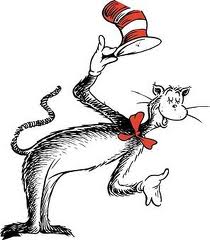
Cat in the HatMarch 2nd is Theodor Geisel’s (aka Dr. Seuss’s) birthday.

March 2nd is Read Across America Day as well, and Read Across America is an annual nationwide reading celebration sponsored by the National Education Association (NEA).

The impact of Dr. Seuss’s texts on young readers is enormous, but the impact does not stop there. Even at the high school level, I have made extensive use of Dr. Seuss’s classic The Cat in the Hat. I have posted about using this text to introduce Freudian psychology in I Wish I Had Thought of Id, Ego, and the Superego in Dr. Seuss’s “The Cat in the Hat”.

At the end of that lesson, my students have a clear understanding about the differences between the Id, represented by the wild Thing 1 and Thing 2, and the Superego, represented by the dutiful Fish. The also have one lingering question:

“Does the Cat want the kids to lie to their Mom?”

Their question encouraged me to look more closely at the text as a possible means to introduce other literary concepts. But I am not the only one who thought there were other lessons to be gained from this text. I recently found a series of philosophical topics and questions for The Cat in the Hat on The Teaching Children Philosophy Wiki

The home page states:

This website is dedicated to helping adults conduct philosophical discussion with and among elementary school children.Contrary to what many people think, young children are both interested in and good at discussing philosophical questions. Picture books are a great way to initiate a philosophical discussion with young children and this site will help you get started.

Along with a long list of picture books, there are a number of Dr. Seuss texts represented on this wiki including Green Eggs and Ham for educators to teach a lesson on arguing reason vs. experience by Taiba Akhtar or The Sneetches for lessons on defining differences and noting prejudice by Lena Harwood.

The lesson for The Cat in the Hat was posted by Joey Shaughnessy and includes five topics and related follow-up questions, some of which include:

Trust

The Cat reassures the children that what he is doing is okay and that their mother won’t mind…

  • Would have you trusted the cat?
  • When can you trust strangers? What if they’re a teacher, or a policeman?
  • How do you know that you can trust your friends?
  • What is trust?

Responsibility

The Cat, with all of his games, made quite a mess in Sally and Sam’s house…

  • Is it okay that the Cat made a mess?
  • Since the Cat cleaned up his mess, was it more okay that he made it?
  • When is it okay to make a mess?

Wrongness

In the story, Sally and Sam had a very different view on what is right and wrong than the Cat did…

  • Is it okay if the children were entertained by the Cat, even though what he was doing was dangerous?
  • Is it okay to do things that are wrong to try and impress people?
  • Is it more okay to do something wrong if it’s fun? Why or why not?

Social Expectations

In the story, the Cat invited himself in, and started taking action…

  • Was what the Cat did an okay way to act?
  • What are inappropriate things to do in a friend’s home?
  • What makes them inappropriate?

Lying

At the end of the story, the reader is left to wonder if they would tell their mom what had happened…

  • Would have you told your mother what happened? Why?
  • Is it okay to lie to hide something that you’ve done wrong?
  • If we lie and get away with it, can people still be hurt by what we’ve done?
  • Should we tell the truth, even if no one would believe us?
  • If you tell someone only part of what happened, is this lying?

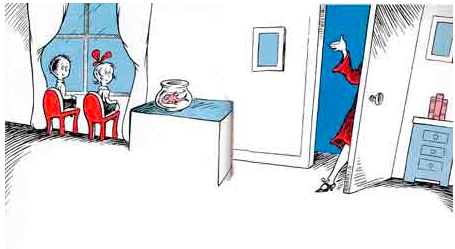
Screenshot 2014-03-02 19.37.23The last question (If you tell someone only part of what happened, is this lying?) was easy to discuss. My students agreed telling someone only part of what happened was lying.

They also mentioned something about speaking from experience.

Book Choice Questions

March 1, 2014 — 1 Comment

book loveIndependent reading in our school grades 7-12 means students read books of their own choosing, make recommendations, and keep records of what they read. Recently, however, one of the English teachers in my department suffered a concussion and while the substitutes delivered the curriculum (John Steinbeck’s Of Mice and Men and Laurie Halse Anderson’s Speak), student independent reading had fallen out of regular practice.

Our latest substitute (Natalie) is an enthusiastic graduate of our high school school who has a BS degree in Creative Writing. She has been serious in tackling her lack of experience in the classroom through her best characteristic…she asks questions. She asks a lot of questions.

One of the latest questions she asked was about independent reading. When I expressed my concerns about having the practice reestablished, she seemed doubtful. I suggested that she have students use books they read independently to make connections with the most recent whole class novels.

“You can ask them if they can make a generic ‘coming of age’ connection between Speak and a book of their choosing,” I suggested.

“But what if they choose a book that doesn’t have that connection? What if they choose a book that is too young for them?” she continued, “or a book that they already read? How do I know what they should be reading?”

I recognized her questions; I had those same questions myself several years ago.

So, I sat her down and showed her the following Penny Kittle video that is available through Heinemann Publishers on YouTube under the title “Why Students Don’t Read What is Assigned in Class”:

She had the same reaction I did when I first saw that video.

“Wow,” she said, “I get it. They should read what they want.”

Question answered.

My department is just noticing the benefits after a few years of implementing book choice. We are lucky to have an 80 minute block schedule with the luxury of offering 15-30 minutes a class for Silent Sustained Reading (SSR) independent choice books. We have large classroom libraries with high interest titles and a wonderful school library (with Overdrive e-books available)  to offer students choice in what they read. When we tell students to pull out their SSR book, they are prepared and settle in to read.

Some classes suggest that a book be in a particular genre. Our English IV-Memoir class reads memoirs or biographies. The English II class is based on World Literature, and students read at least one book during the year by an author who is not American. The critical requirement is that each student chooses a book. There is no leveled reading; students can choose a book below their reading ability or they can attempt a book above their lexile level. They learn what to choose to read because they have control of what they want to read.

Penny Kittle, an English teacher and literacy coach at Kennett High School in North Conway, New Hampshire, wrote a guide to helping students read independently titled Book Love. In this text, Kittle offers strategies to help teachers increase the volume of what students read and to deepen student thinking about what they read.

One of the strategies several of our teachers use is to have students respond to reading through the software Shelfairi (Amazon) where they record what they are reading and make connections to other books. I can organize each class in virtual groups and pose general questions for responses. These short responses prepare me for conferences or allow me to respond directly on the software with links or information or suggestions. For example, the English IV Mythology/Fantasy class reads mythologies or fantasies, and I posed a simple question last week and left quick responses for a conference:

How are you doing with your book? What are the connections to myth/fantasy that can you make?

STUDENT: Eragon: So far I am doing well with this book. My book connects with mythology because it is about Eragon who finds a stone which ends up being a dragon egg, and he bonds with the dragon over time. He and Saphira (the dragon) learn to communicate with one another and have a good connection. Saphira and Eragon create a good relationship with one another.

My response: This is a great fantasy…and a series. This novel has elements of the hero’s journey: http://www.thewritersjourney.com/hero’s_journey.htm

STUDENT: Ranger’s Apprentice-The Royal Ranger: Good. I have 10 pages left until its over. Its the final book in the series. There is a giant myth that rangers have special and mystical powers. But that is just false. They are just super stealthy which gives them the appearance of just appearing out of no where.

My response: Now what will you read? Another series?

STUDENT: The Alchemist: The Alchemist is a good book. It has to do more with fantasy than mythology, but there is a myth about a treasure in the pyramids.

My response: And the “stones” have a story behind them as well. Did you know this book is on the NY Times Bestseller list for 291 weeks?

While there are multiple software platforms for sharing book choices, I also find that the features on Shelfari are helpful in having students “shop” for books (without purchasing) and/or write responses using evidence. There are tabs for a book’s Description, a Ridiculously Simplified Synopsis, Characters/People, Quotes, and First sentence. There are recommendations and reviews by other readers for each title as well. The student responses can agree or refute other reviews; they can add information to a book’s page as well.

Regardless of platform, sharing what students choose to read is critical to helping them develop a love of reading. The advertisement for Kittle’s Book Love states,

“Books matter.  Stories heal.  The right book in the hands of a kid can change a life forever.  We can’t wait for anyone else to teach our students a love of books—it’s up to us and the time is now.  If not you, who?”

And that is a very good question.

I planned a “Poetry Passion Smack-down” for Valentine’s Day 2014, but the Nor’easter that roared across the state of Connecticut kept the school shuttered over an extended President’s Day weekend. So, here is a chance for you, the reader, to be in the class and vote.

The plan was to pit 16th Century poet Christopher Marlowe against 21st Century Pop Star Justin Bieber in a “wooing” contest. The question?: Which poem speaks to you?

Each artist tries to persuade his beloved of his desire using the same two arguments:

  1. I’ll buy you anything;
  2. If you agree, we’ll spend lots of time dancing and singing.

Each artist also sounds a bit desperate. Marlowe’s “Passionate Shepherd” escalates his promises, maybe because of her lack of response to each line. His intentions intensify from one quatrain to the next, offering gifts from “beds of roses” to “silver dishes for thy meat.” One wonders, however, how likely such riches would be if one married a shepherd, passionate or not.

Bieber, on the other hand, works the pity angle, pleading that he will be “going down, down, down, down” because his “…first love won’t be around.” To establish the level of his desperation, he drags in his friend and rap artist Ludacris who makes the metaphorical connection between love and a caffeine rush from Starbucks, and who suggests there’s a headache coming from caffeine withdrawal.

But let us allow the poets to entreat their own cases:

First up, Christopher Marlowe making his petition from “The Passionate Shepherd to His Love”:

The Passionate Shepherd to His Love

Come live with me and be my Love,
And we will all the pleasures prove
That hills and valleys, dale and field,
And all the craggy mountains yield.

There will we sit upon the rocks
And see the shepherds feed their flocks,
By shallow rivers, to whose falls
Melodious birds sing madrigals.

There will I make thee beds of roses
And a thousand fragrant posies,
A cap of flowers, and a kirtle
Embroider’d all with leaves of myrtle.

A gown made of the finest wool
Which from our pretty lambs we pull,
Fair linèd slippers for the cold,
With buckles of the purest gold.

A belt of straw and ivy buds
With coral clasps and amber studs:
And if these pleasures may thee move,
Come live with me and be my Love.

Thy silver dishes for thy meat
As precious as the gods do eat,
Shall on an ivory table be
Prepared each day for thee and me.

The shepherd swains shall dance and sing
For thy delight each May-morning:
If these delights thy mind may move,
Then live with me and be my Love.

Next up, The Bieber’s plea, with his catchy refrains that are easily remembered in a song that was the first ever to go 12-times platinum. They may be simple lyrics, but there is no doubting the economic riches that came with this hit:

Baby, Baby

You know you love me, I know you care
Just shout whenever, and I’ll be there
You are my love, you are my heart
And we will never ever ever be apart

Are we an item? Girl, quit playing
We’re just friends, what are you saying?
Say there’s another and look right in my eyes
My first love broke my heart for the first time
And I was like…

Baby, baby, baby oooh
Like baby, baby, baby nooo
Like baby, baby, baby oooh
I thought you’d always be mine (mine)

Baby, baby, baby oooh
Like baby, baby, baby nooo
Like baby, baby, baby oooh
I thought you’d always be mine (mine)

Oh, for you I would have done whatever
And I just can’t believe we ain’t together
And I wanna play it cool, but I’m losin’ you
I’ll buy you anything, I’ll buy you any ring
And I’m in pieces, baby fix me
And just shake me ’til you wake me from this bad dream
I’m going down, down, down, down
And I just can’t believe my first love won’t be around

And I’m like
Baby, baby, baby oooh
Like baby, baby, baby nooo
Like baby, baby, baby oooh
I thought you’d always be mine (mine)

Baby, baby, baby oooh
Like baby, baby, baby nooo
Like baby, baby, baby oooh
I thought you’d always be mine (mine)

[Ludacris:]
Luda! When I was 13, I had my first love,
There was nobody that compared to my baby
And nobody came between us or could ever come above
She had me going crazy, oh, I was star-struck,
She woke me up daily, don’t need no Starbucks.
She made my heart pound, it skipped a beat when I see her in the street and
At school on the playground but I really wanna see her on the weekend.
She knows she got me dazing cause she was so amazing
And now my heart is breaking but I just keep on saying…

Baby, baby, baby oooh
Like baby, baby, baby nooo
Like baby, baby, baby oooh
I thought you’d always be mine (mine)

Baby, baby, baby oooh
Like baby, baby, baby nooo
Like baby, baby, baby oooh
I thought you’d always be mine (mine)

I’m gone (Yeah Yeah Yeah, Yeah Yeah Yeah)
Now I’m all gone (Yeah Yeah Yeah, Yeah Yeah Yeah)
Now I’m all gone (gone, gone, gone…)
I’m gone

To be sure his public understood the lyrics, Bieber shared the message of the song with MTV News, “I’m chasing her around, trying to get her, and she’s kind of playing hard to get, but I’m persistent. I keep going.”

Over four hundred years earlier, Marlowe said much the same; he did not have the advantage of MTV to explain.

Continue Reading…